Contents
DJI vs. Insta360
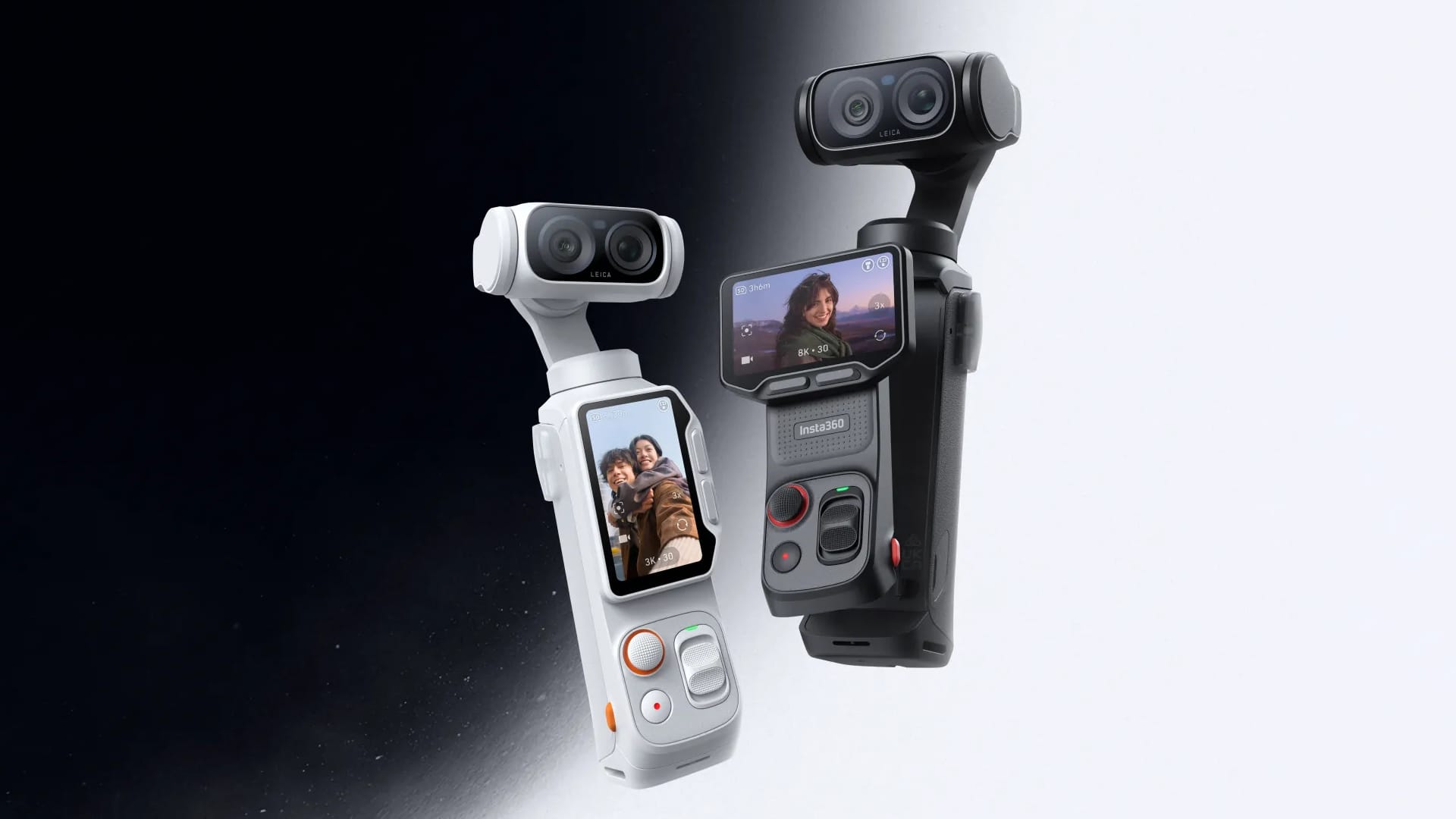
It emerged only at the weekend that DJI has filed several lawsuits against Insta360 in the US. The reason is none other than the new Luna Ultra (as we reported), which DJI claims infringes both protected design features of the Osmo Pocket series and various patents relating to gimbal control. Insta360 denies the allegations and has now filed a countersuit. In it, the company accuses DJI of patent infringement in the areas of gimbal stabilisation, tracking and panorama technologies.
While the two manufacturers are battling it out in court, they are also competing ever more directly in the compact gimbal camera market. With the Osmo Pocket 4P and the Luna Ultra, two technically very similar high-end models are going head to head for the first time.
DJI opts for a dual-camera system and higher video quality
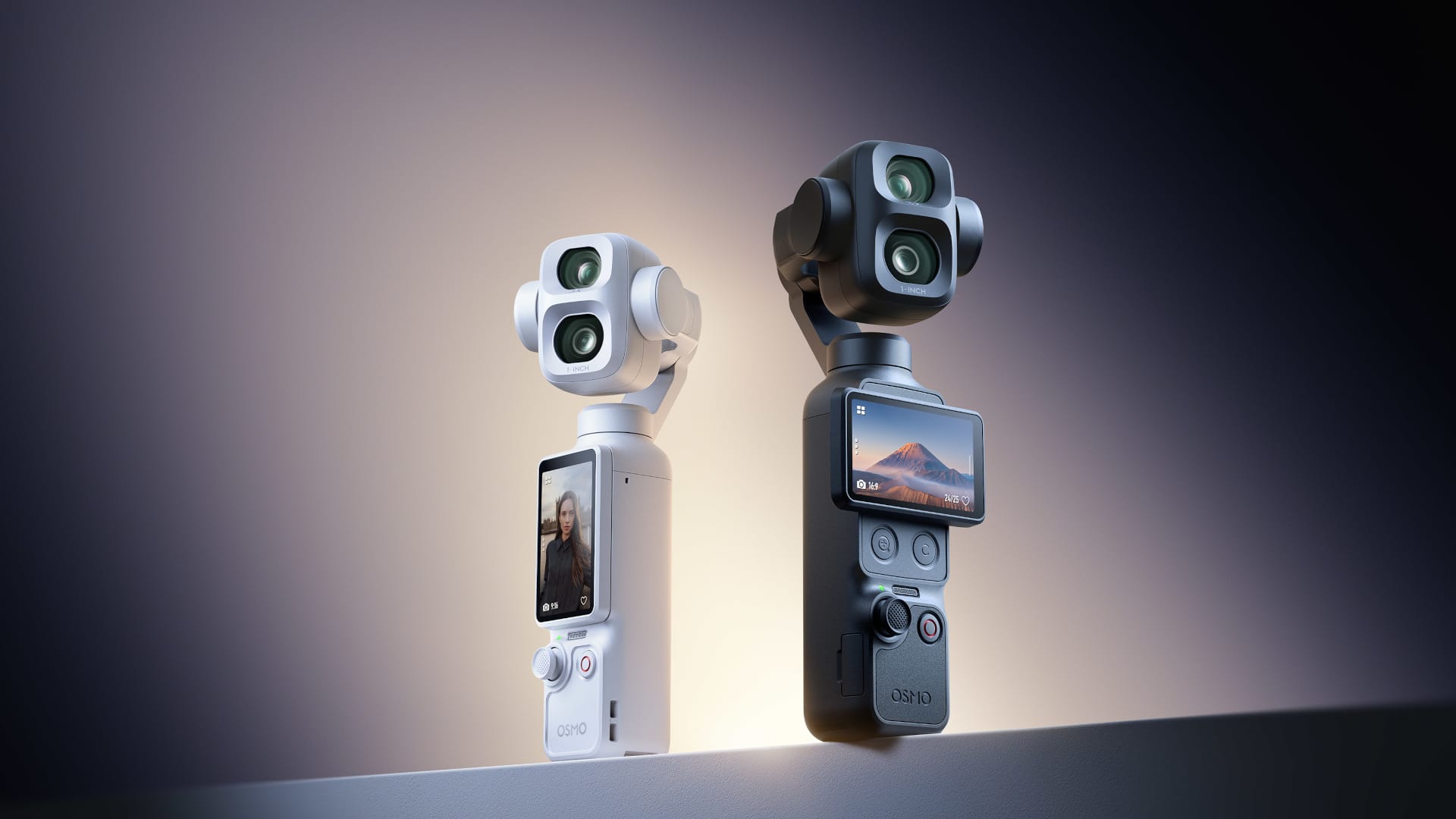
The Osmo Pocket 4P follows directly on from the Osmo Pocket 4 and is the first to adopt a concept also used by the Luna Ultra. Alongside a main camera, it has an additional telephoto camera.
It features a 1-inch CMOS sensor with a 20 mm wide-angle lens and an f/2.0 aperture, as well as a second camera with a 60 mm focal length, f/1.8 aperture and a 1/1.28-inch sensor.
For video features, DJI focuses less on maximum resolution than on image quality and flexibility. The camera records video at up to 4K60, supports 4K slow motion at up to 240 frames per second and achieves a maximum video bitrate of 180 MBit/s. It also supports DJI's D-Log 2 colour profile for maximum dynamic range and 10-bit colour depth.
Other features include a dedicated low-light mode with ISO values up to 51,200, 103 GB of built-in storage, and support for microSD cards with up to 1 TB of capacity.
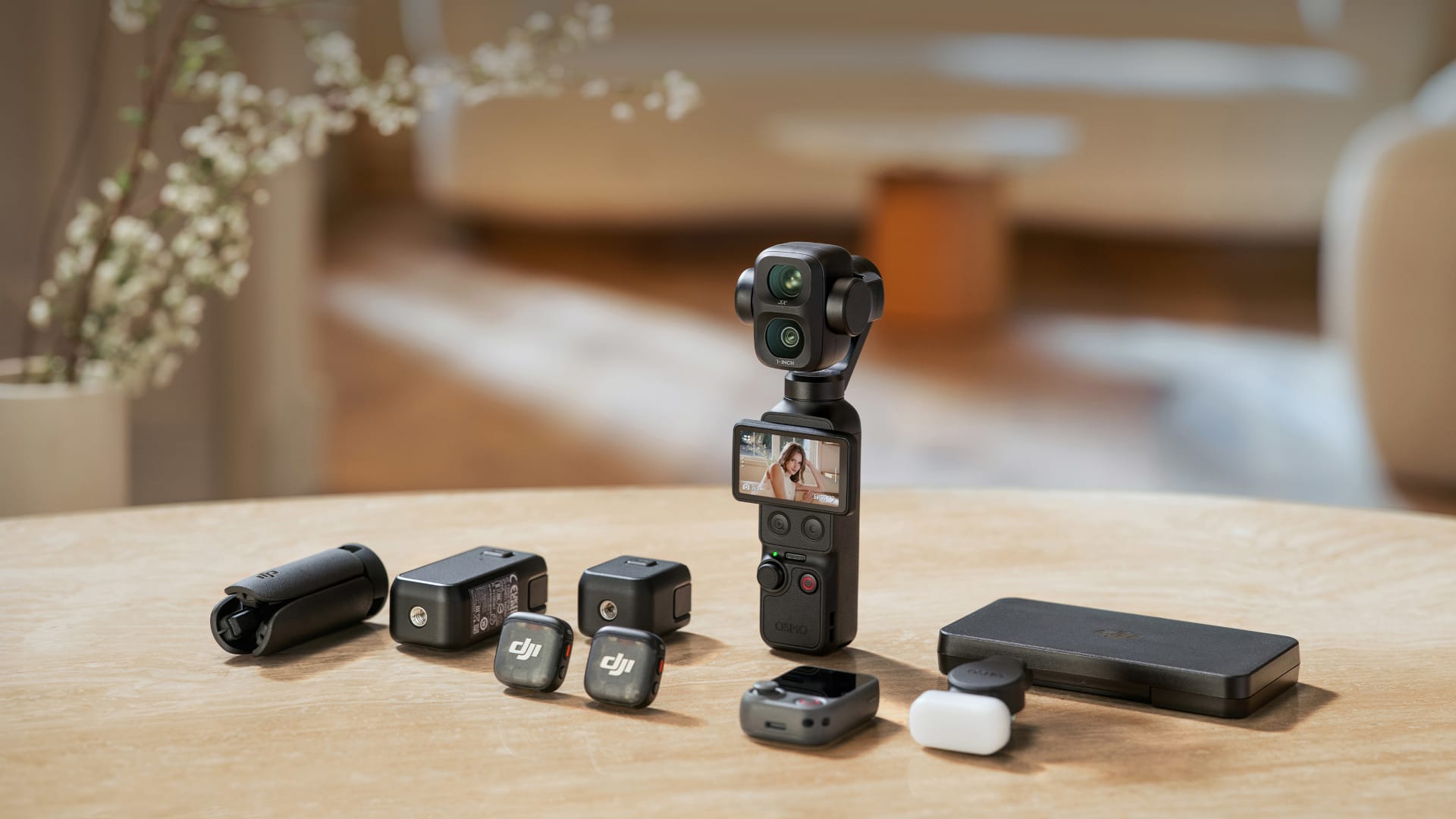
Direct comparison: Osmo Pocket 4P vs. Luna Ultra
It's hard to miss that DJI has been keeping a close eye on the Luna Ultra. The technical specifications of the two cameras are strikingly similar.
| Feature | DJI Osmo Pocket 4P | Insta360 Luna Ultra |
|---|---|---|
| Main sensor | 1 inch | 1 inch |
| Telephoto camera | 1/1.28 inches | 1/1.3 inches |
| Main lens | 20 mm, f/2.0 | 20 mm, f/1.8 |
| Telephoto lens | 60 mm, f/1.8 | 60 mm, f/2.0 |
| Maximum video resolution | 4K at up to 60 fps | 8K at up to 30 fps |
| Slow motion | 4K at up to 240 fps | 4K at up to 120 fps |
| Low-light mode | 4K at up to 30 fps, ISO up to 51,200 | PureVideo at up to 4K60 |
| Maximum video bitrate | 180 Mbit/s | 120 Mbit/s |
| Photo resolution | approx. 37 MP | up to 37 MP |
| Internal storage | 103 GB | 47 GB |
| microSD | up to 1 TB | up to 1 TB |
| Display | 2-inch touchscreen, fixed | 2-inch OLED, detachable |
| Microphones | 3 | 4 |
| Battery life | up to 210 minutes | up to 240 minutes |
| Fast charging | 80% in 18 minutes, 100% in 32 minutes | 80% in 23 minutes |
| Weight | 230 g | 233 to 235 g |
| Dimensions | 159.5 × 63.3 × 33.5 mm | 169.9 × 52.4 × 38.5 mm |
Different priorities
Although their technical foundations are very similar, DJI and Insta360 focus on different things.
Insta360 positions the Luna Ultra as a particularly innovative camera for creators. Its key selling points include 8K recording, Dolby Vision, 10-bit I-Log, AI-powered image processing, and the detachable display, which can also be used as a remote control.
DJI, by contrast, takes a more conventional approach. Instead of promoting maximum resolutions, the Osmo Pocket 4P focuses on high data rates, faster slow-motion functions and more internal storage, with an overall specification geared more towards professional video recording.
The maximum bit rate of 180 MBit/s is particularly striking. It is considerably higher than the Luna Ultra’s 120 MBit/s and could offer advantages in post-production for more demanding productions.
The most interesting comparison is still to come
On paper, the two cameras are neck and neck. However, only independent tests will show which one ultimately comes out on top. Differences in image quality, dynamic range, autofocus, tracking performance, heat development and low-light performance are particularly difficult to assess from a spec sheet alone.
One thing is already clear, though: the pocket gimbal camera market has long been a one-man show dominated by DJI. With the Luna Ultra, Insta360 has introduced its first serious challenger. The newly unveiled Osmo Pocket 4P shows that DJI is taking this challenge seriously—not just in the market, but now also in court.
Comments