Contents
Nothing Ear (3a): Design and build quality
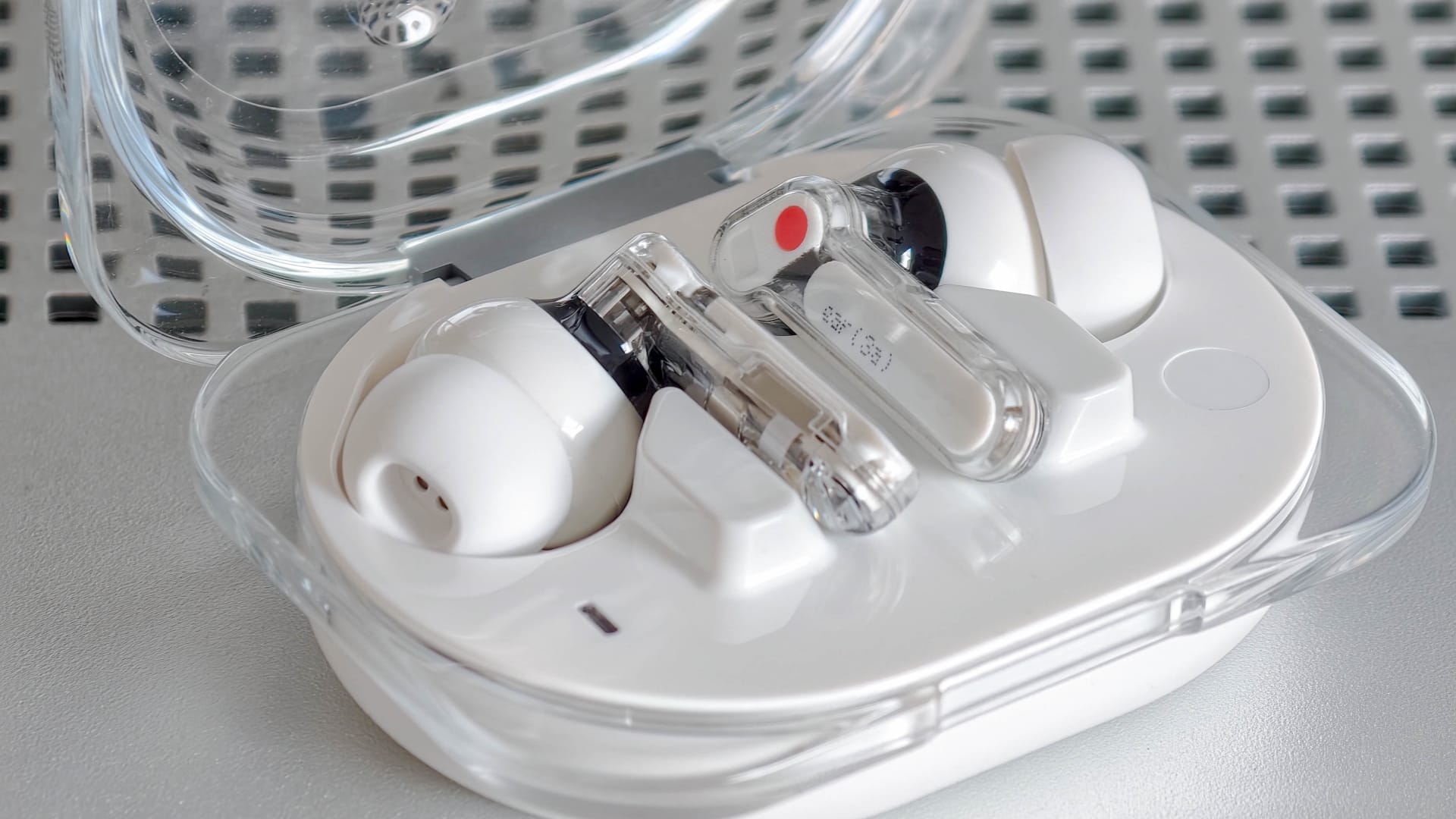
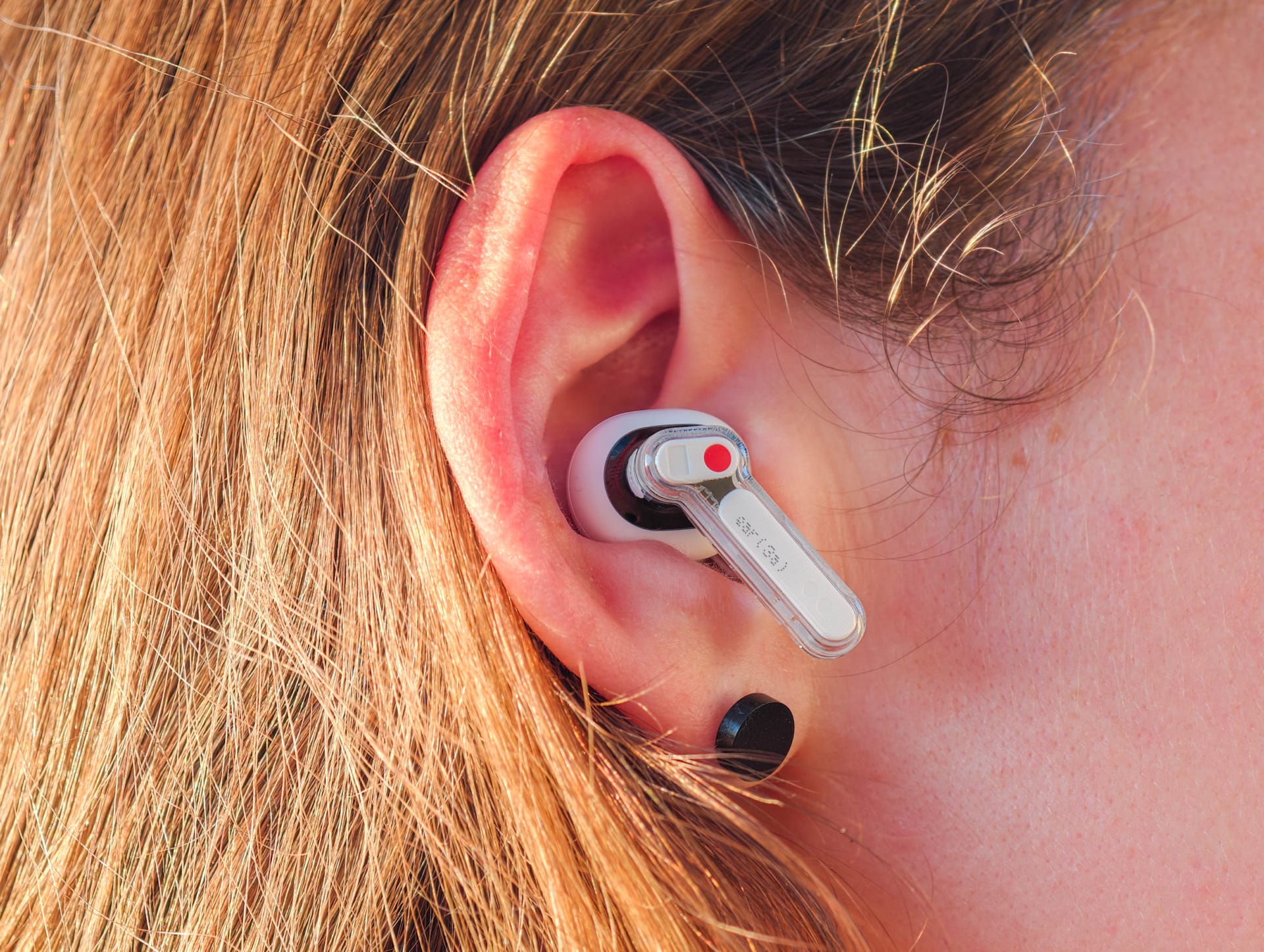
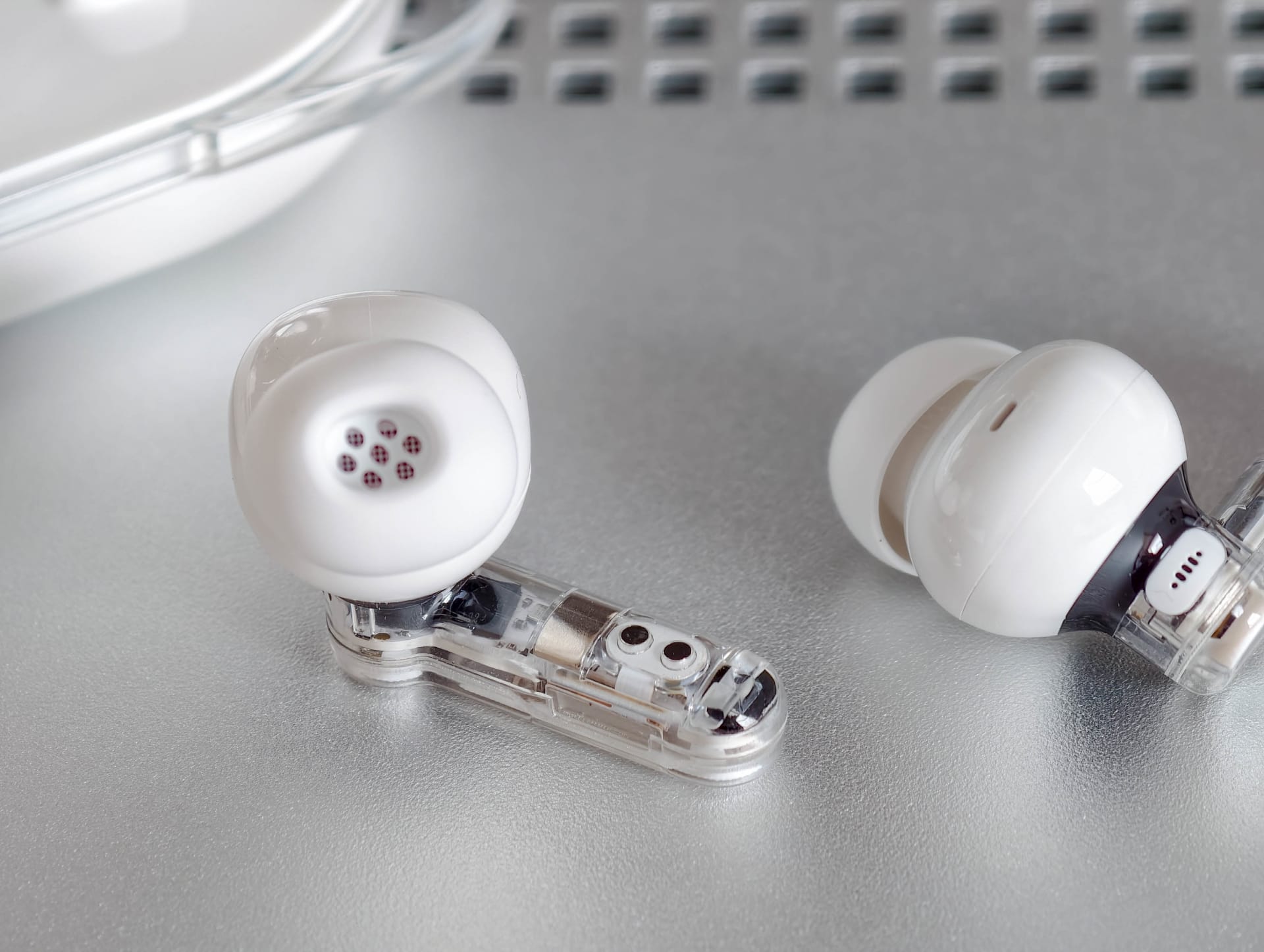
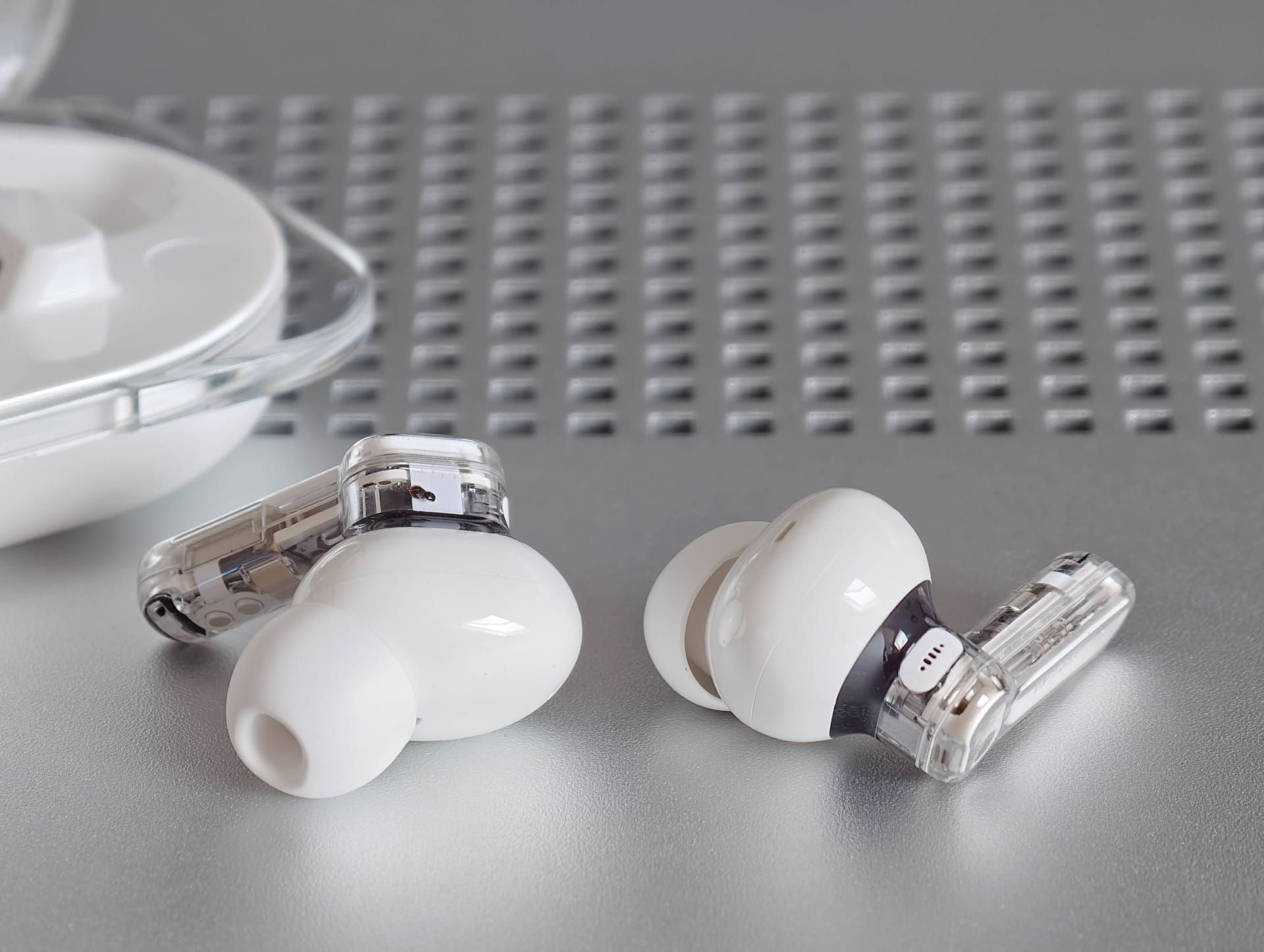
The Ear (3a) once again feature transparent elements, clean lines and the now-typical stem design. If you know the Ear (a) (review here), you’ll have to look a little closer to spot the differences.
There’s more choice when it comes to colors. Alongside white, black and yellow, the Ear (3a) are available for the first time in a vibrant pink, somewhere between Barbie and Telekom magenta. It’s anything but subtle, but that suits Nothing pretty well.
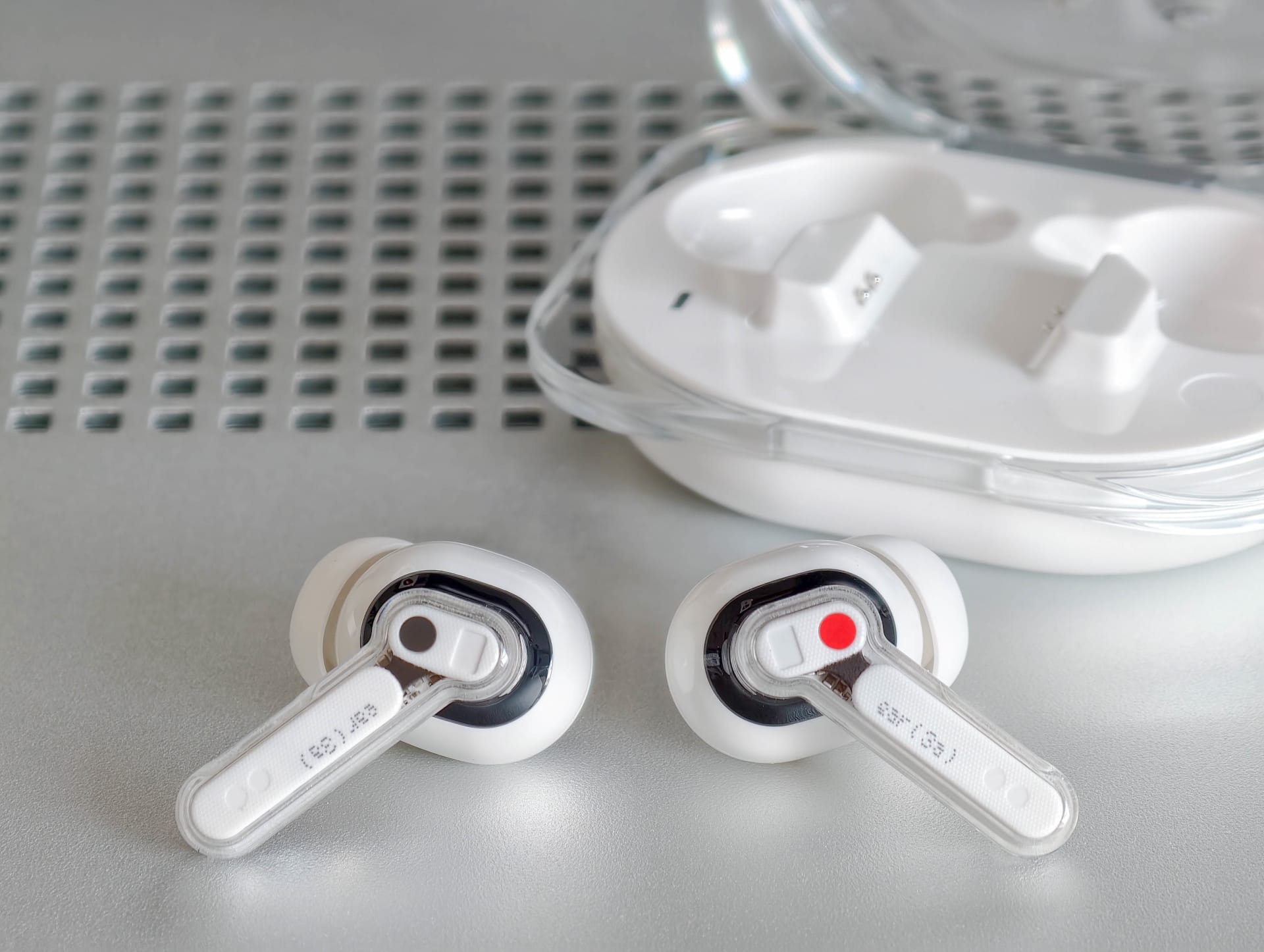
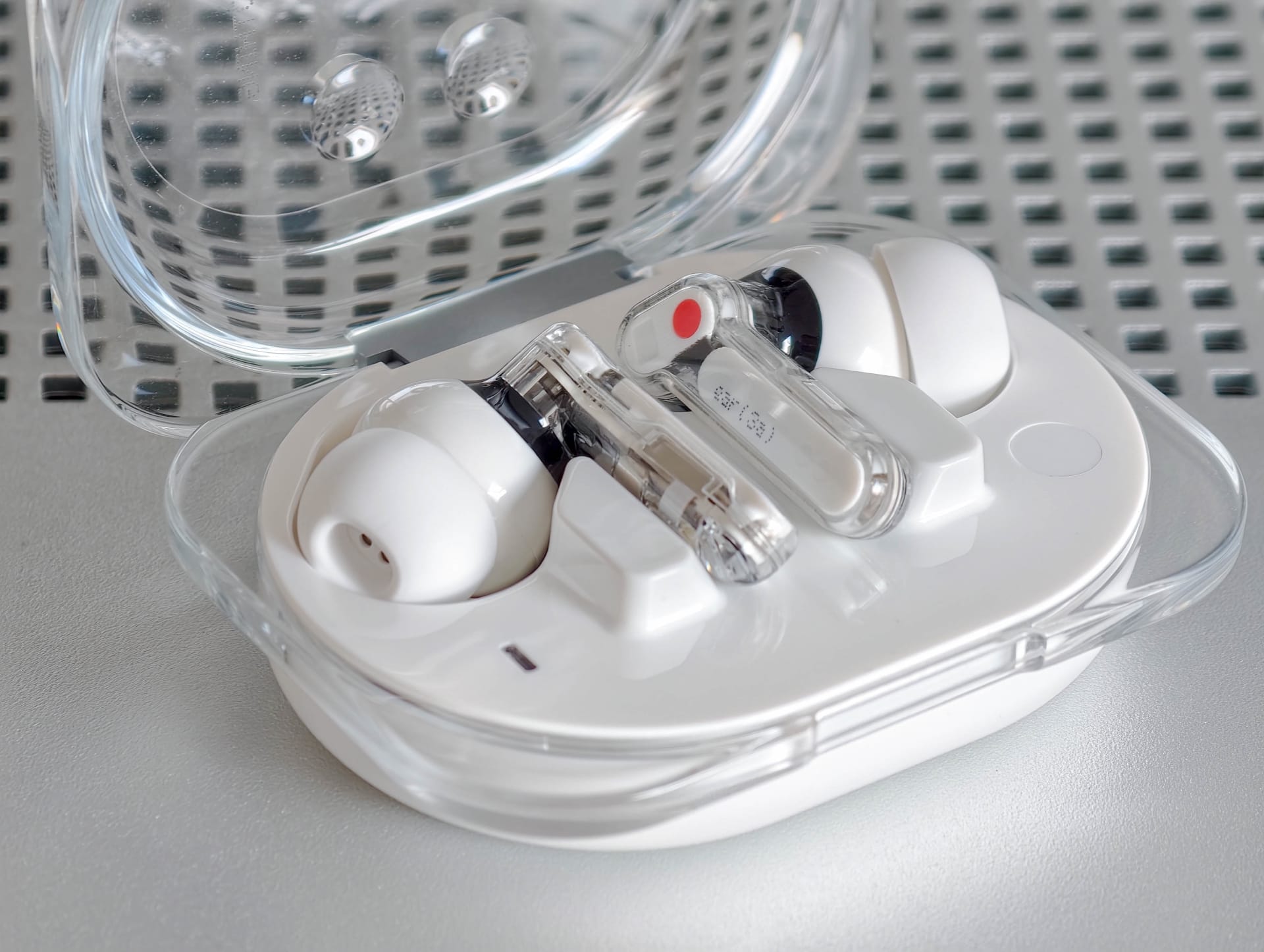
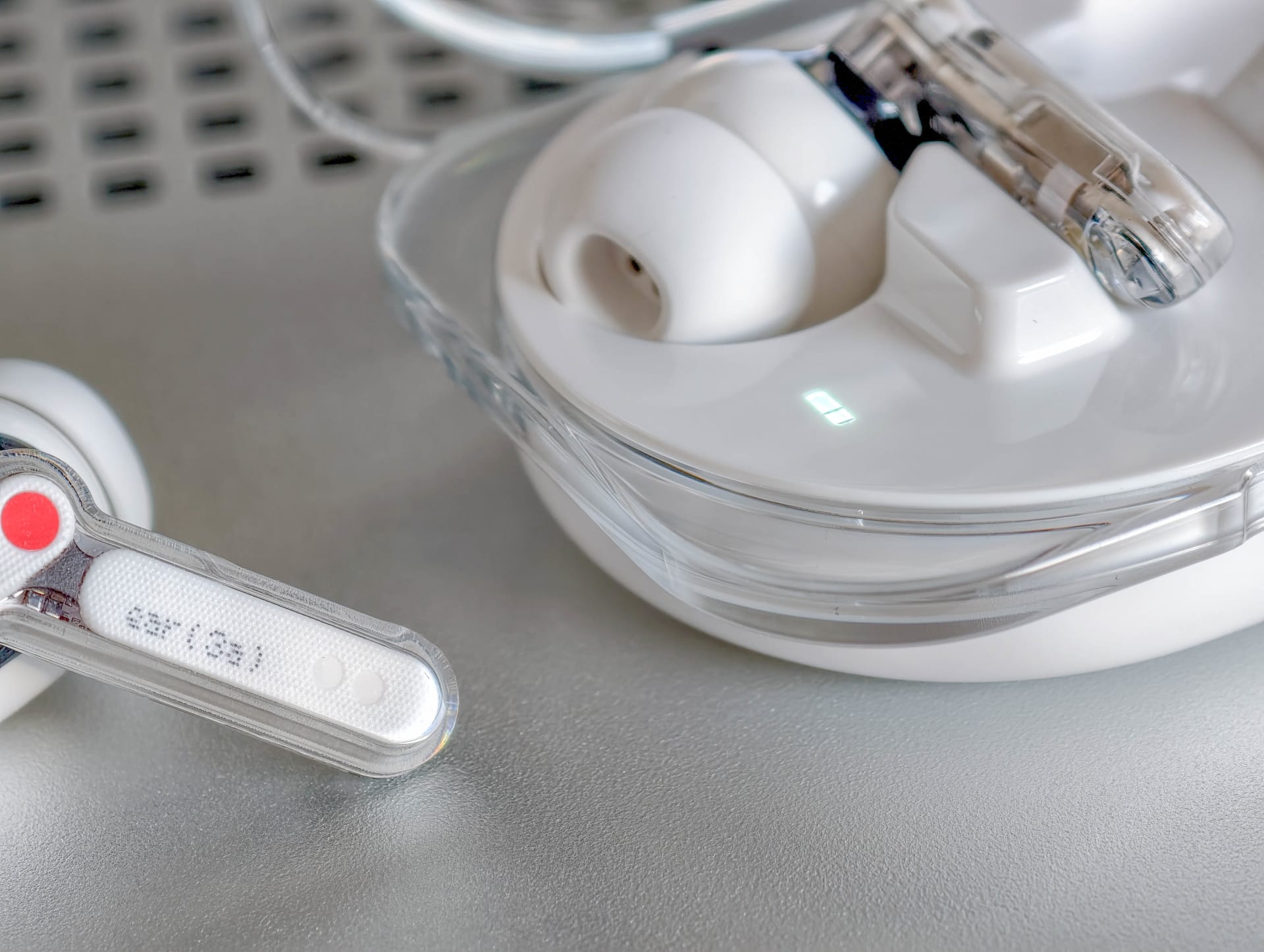
The charging case has also been slightly revised. It’s a little rounder than its predecessor, but remains pleasantly light at 40.92 grams and slips easily into a pocket. The buds themselves weigh just 4.53 grams each.
New is the LED indicator on the side of the case. Three small lights give a rough indication of the battery level. If only the bottom pixel is lit, it's gradually time to charge. Two or three white LEDs indicate more remaining capacity, respectively. While charging, the indicator fills up step by step from bottom to top.
Nothing hasn’t experimented with the fit either. The Ear (3a) sit relatively flush in the ear and come with four pairs of silicone tips. That’s one additional size compared with the Ear (a), which should be especially helpful for people with smaller ears. Thanks to their low weight, the buds are barely noticeable during longer listening sessions while still fitting securely enough for exercise.
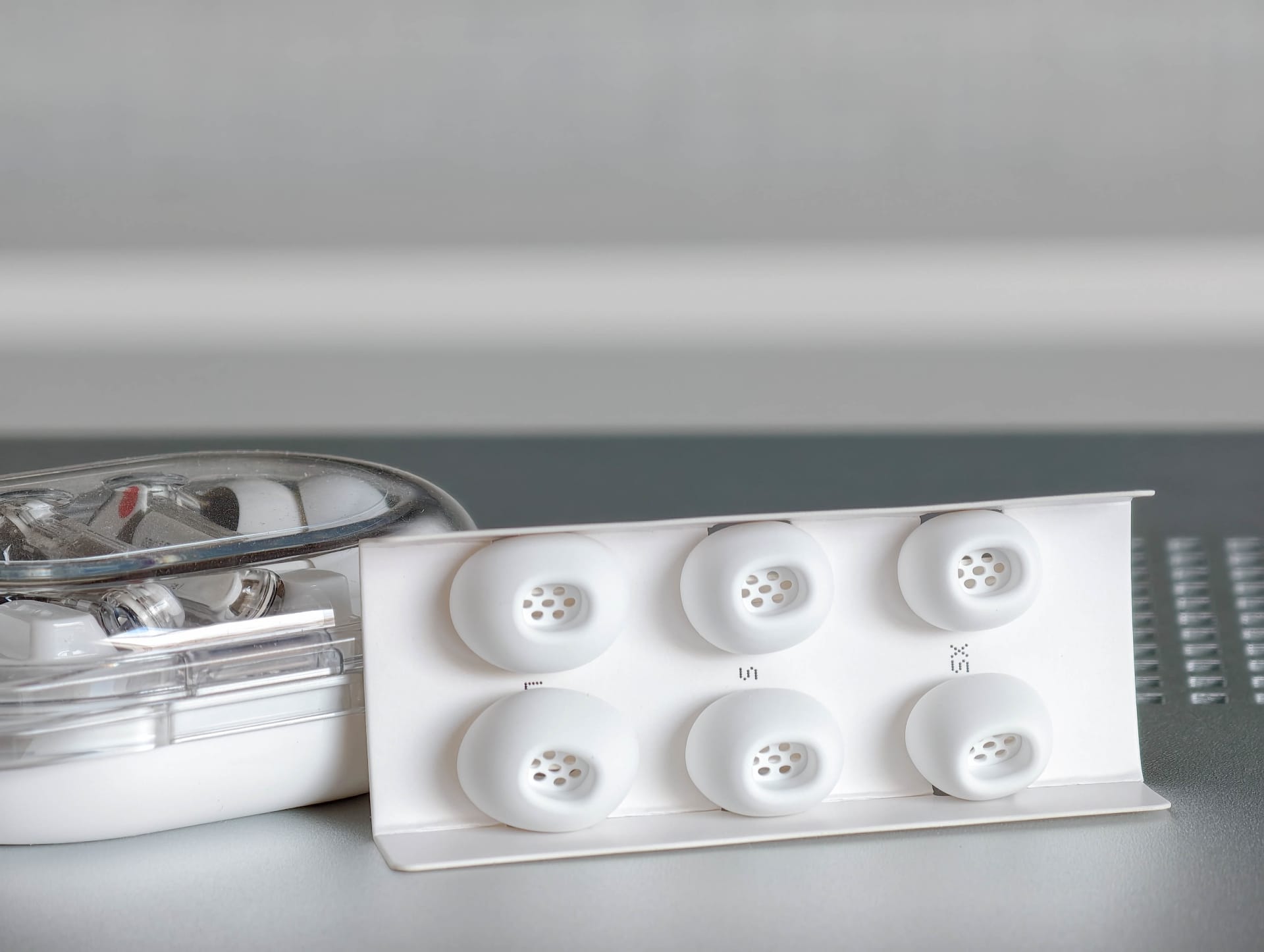
In keeping with this, both the earbuds and the charging case are now protected against dust and splashes according to IP54. Sweat during a workout or a rain shower on the way home are no problem.
When it comes to build quality, Nothing has mostly stuck with plastic. That’s appropriate for the price range and feels solid overall, though it doesn’t quite match the premium feel of the more expensive Ear (3) with their metal accents. The case is more compact and lighter, though.
A charging cable is not included this time. Given that most people’s cable drawers are already well stocked, this probably won’t be a major issue for most, but it’s still worth mentioning.

Nothing Ear (3a): Controls and Nothing X app
Nothing continues to use pressure-sensitive areas on the stems for operation. I still prefer these to conventional touch controls, because an actual press is much less prone to accidental input.
Press once to start or pause playback. Press twice to skip to the next track, and three times to go back. Pressing and holding can be used, for example, to switch between ANC and Transparency modes or adjust the volume. The action assigned to each gesture can be customised in the Nothing X app.
They also support Google Fast Pair and Microsoft Swift Pair, making the first connection to compatible devices quick and easy. Dual Connection connects the Ear (3a) to two devices at the same time. This is quite useful, for example, if you’re listening to music on your laptop and get a call on your smartphone.
A low-lag mode for games and videos is also included. Latency hardly matters when streaming normally, but the reduced latency can be helpful for mobile games.
Significantly better equaliser
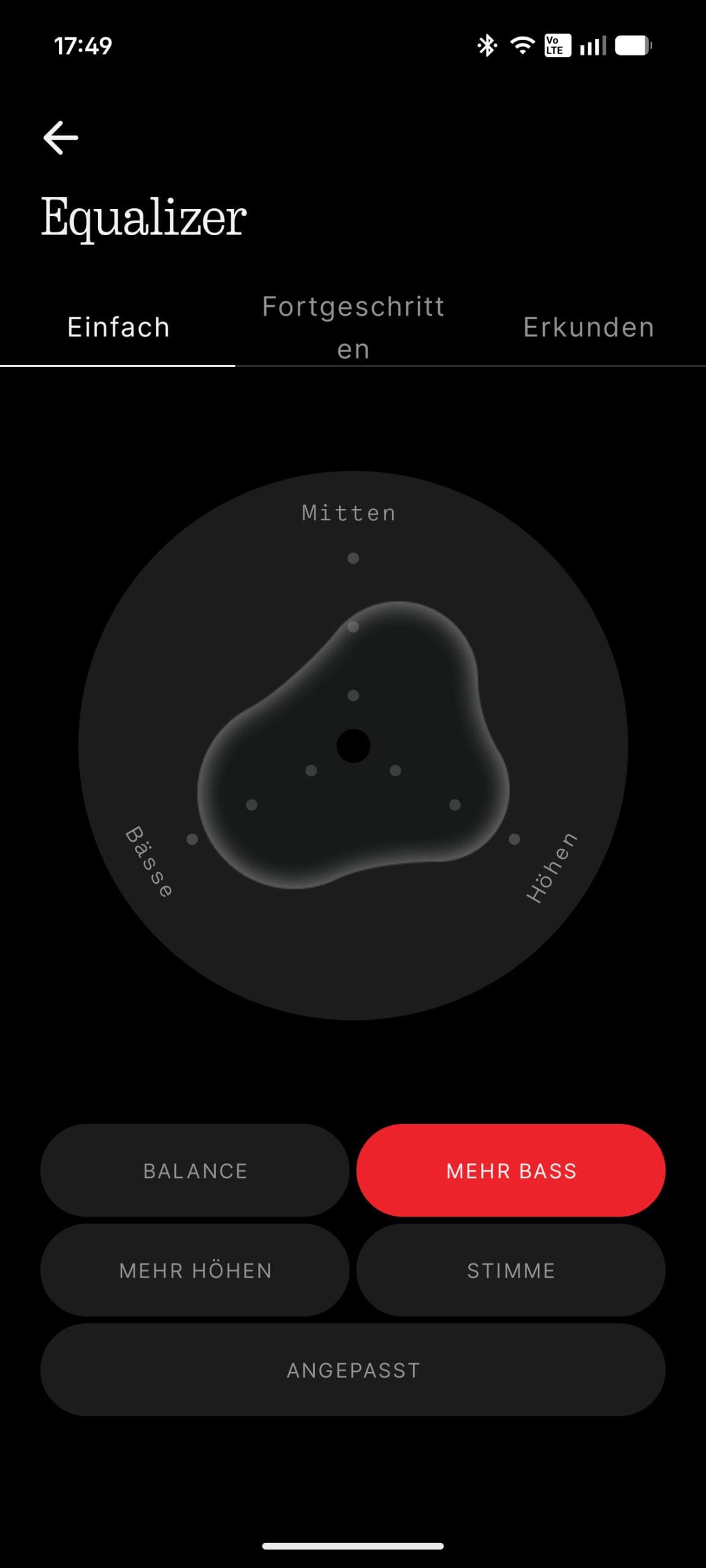
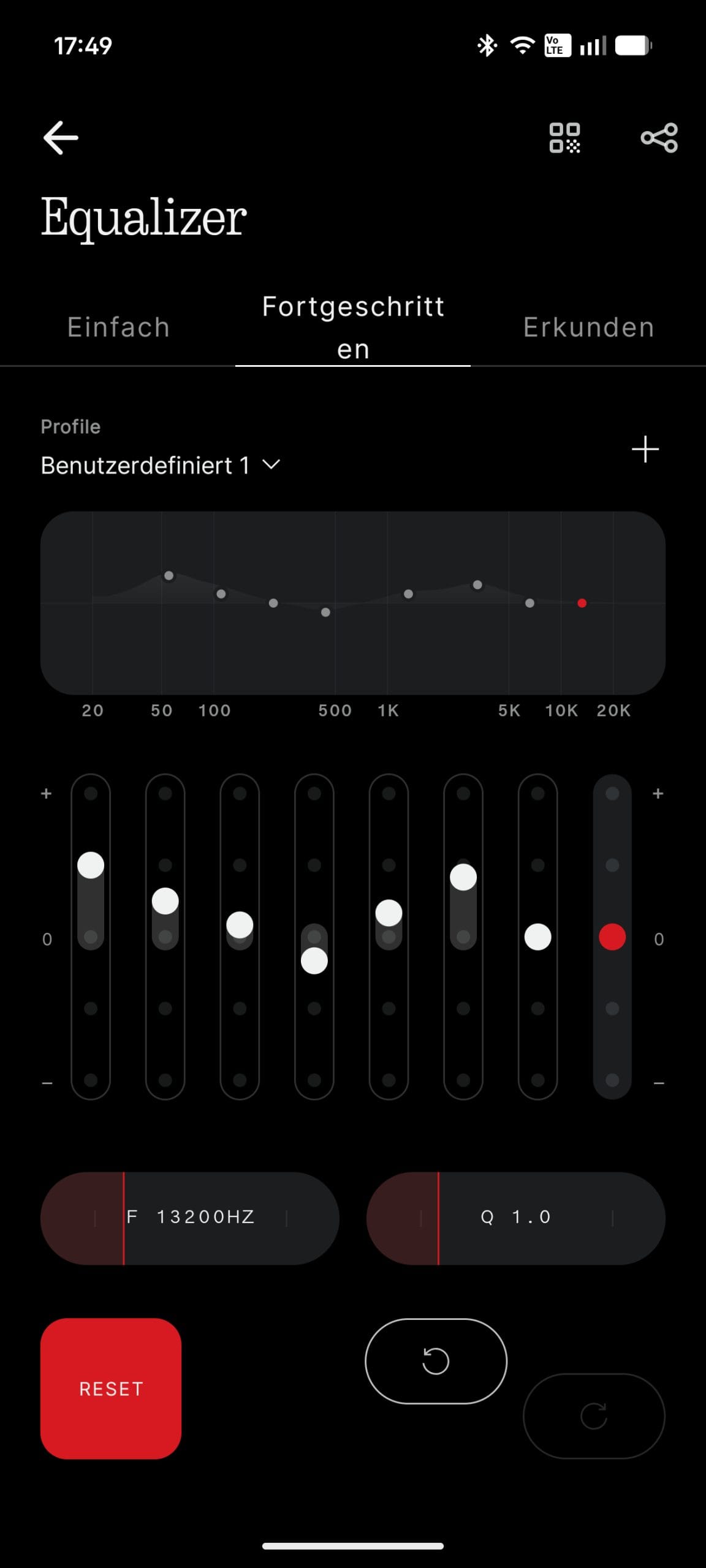
The biggest improvement in the Nothing X app is the equaliser. The sound adjustment on the old Ear (a) was still fairly rudimentary. The Ear (3a) now also gets an expanded 8-band EQ, allowing individual frequency ranges to be adjusted much more precisely.
Those who want to delve deeper can even work with the Q factor, which determines how broadly or narrowly an adjustment affects frequencies around a specific point.
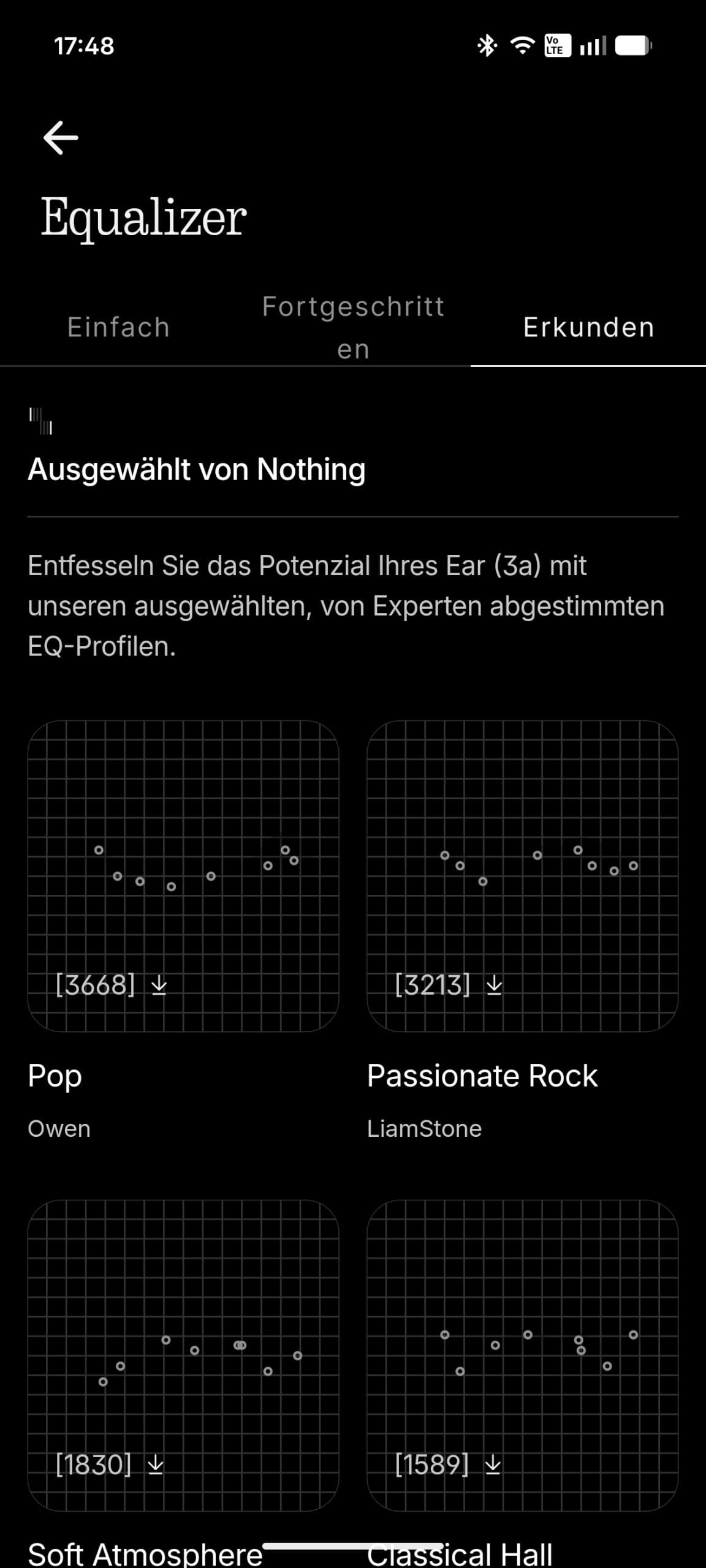
Custom EQ profiles can be saved and shared with other users. If you don't want to deal with frequency curves, you can still use the simpler view and ready-made presets.
Spatial audio is a matter of taste
Also new is static spatial audio. It artificially widens the stereo soundstage to make music and films feel more immersive. However, there is no head tracking.
The effect is audible, but quickly comes across as somewhat artificial. Voices seem further away, and some of the immediacy is lost when listening to music. Spatial Audio can certainly be enjoyable for films or TV series, but for everyday music listening, conventional stereo with a well-adjusted EQ is the better choice in my opinion.
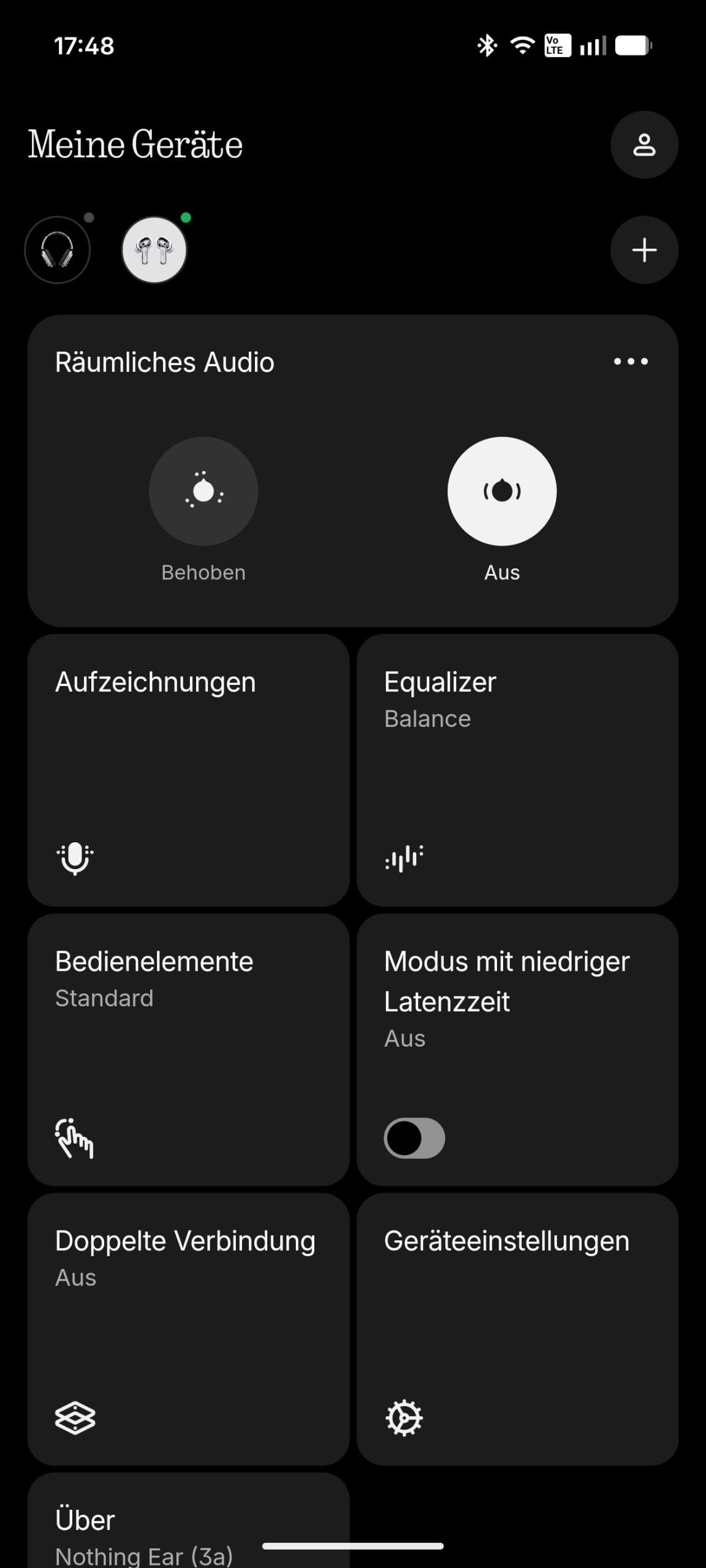
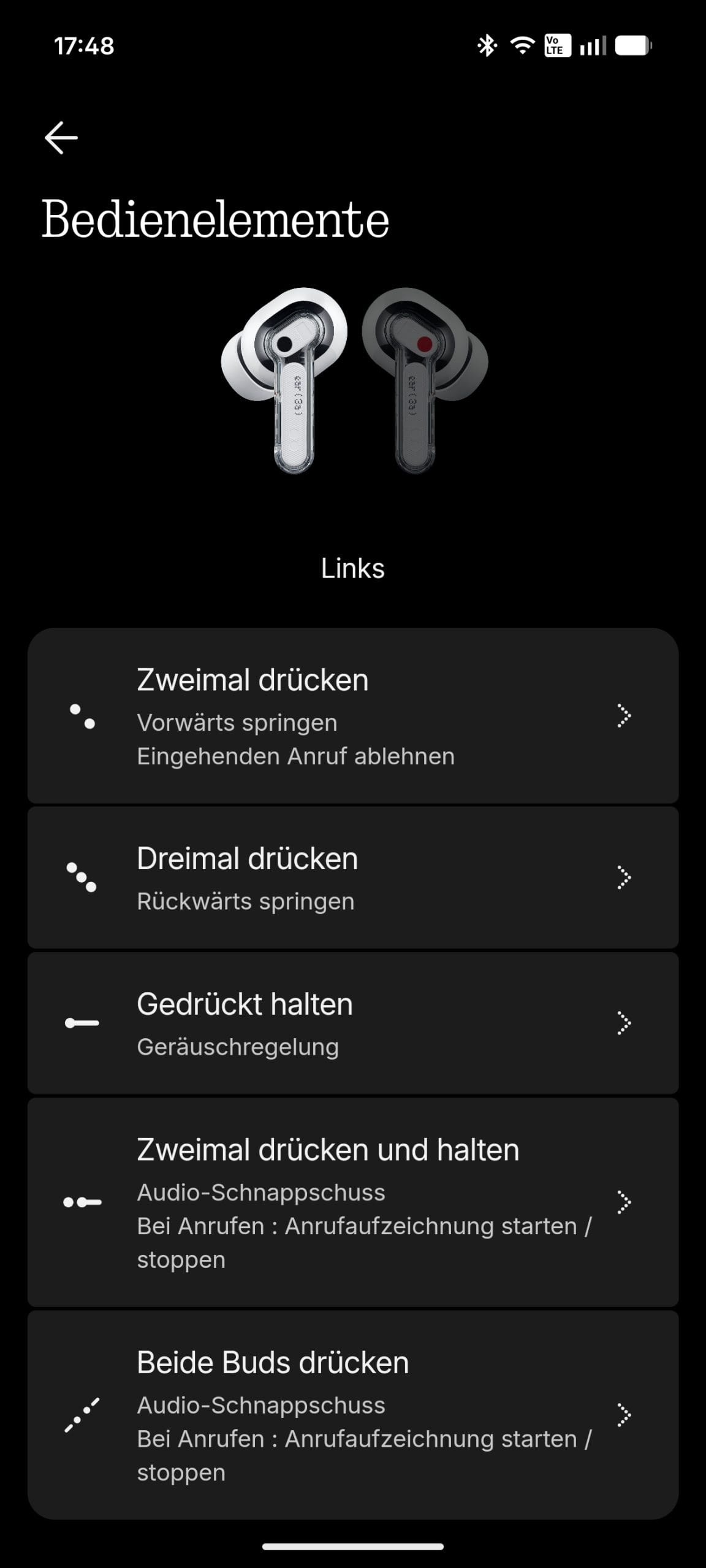
Audio Snapshot and Call Recording
New to the Ear (3a) are Audio Snapshot and Call Recording. Both features use the earbuds' internal 32 MB storage and can be started directly using the pinch gestures.
Audio Snapshot lets you save a short clip of what is currently playing through the earbuds. A snapshot can be up to 60 seconds long, and you can optionally include the 30 seconds before you triggered it.
Call Recording, on the other hand, records ongoing phone calls and online meetings. A recording can be up to two hours long and is initially saved directly on the earbuds. It then appears in the Nothing X app, where it can be played, exported and transcribed.

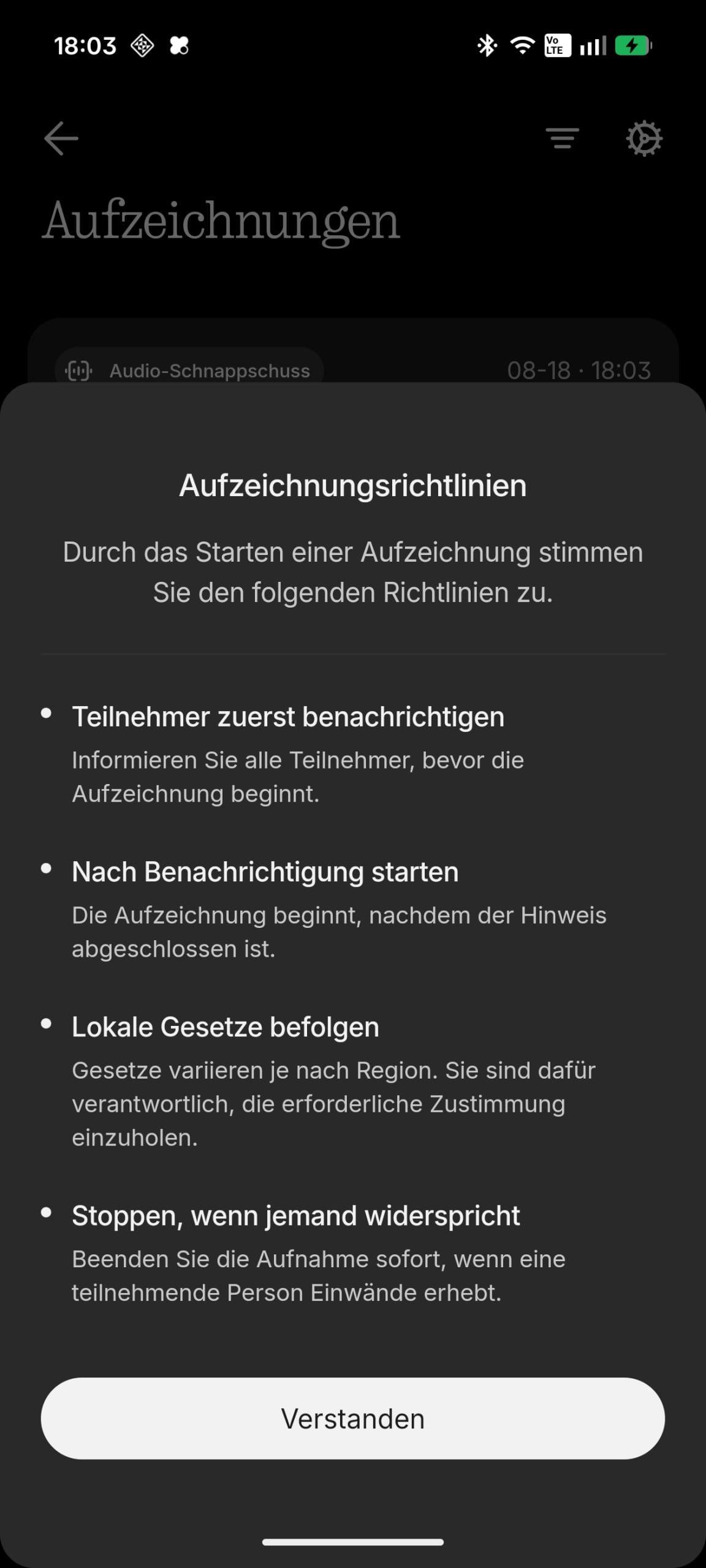
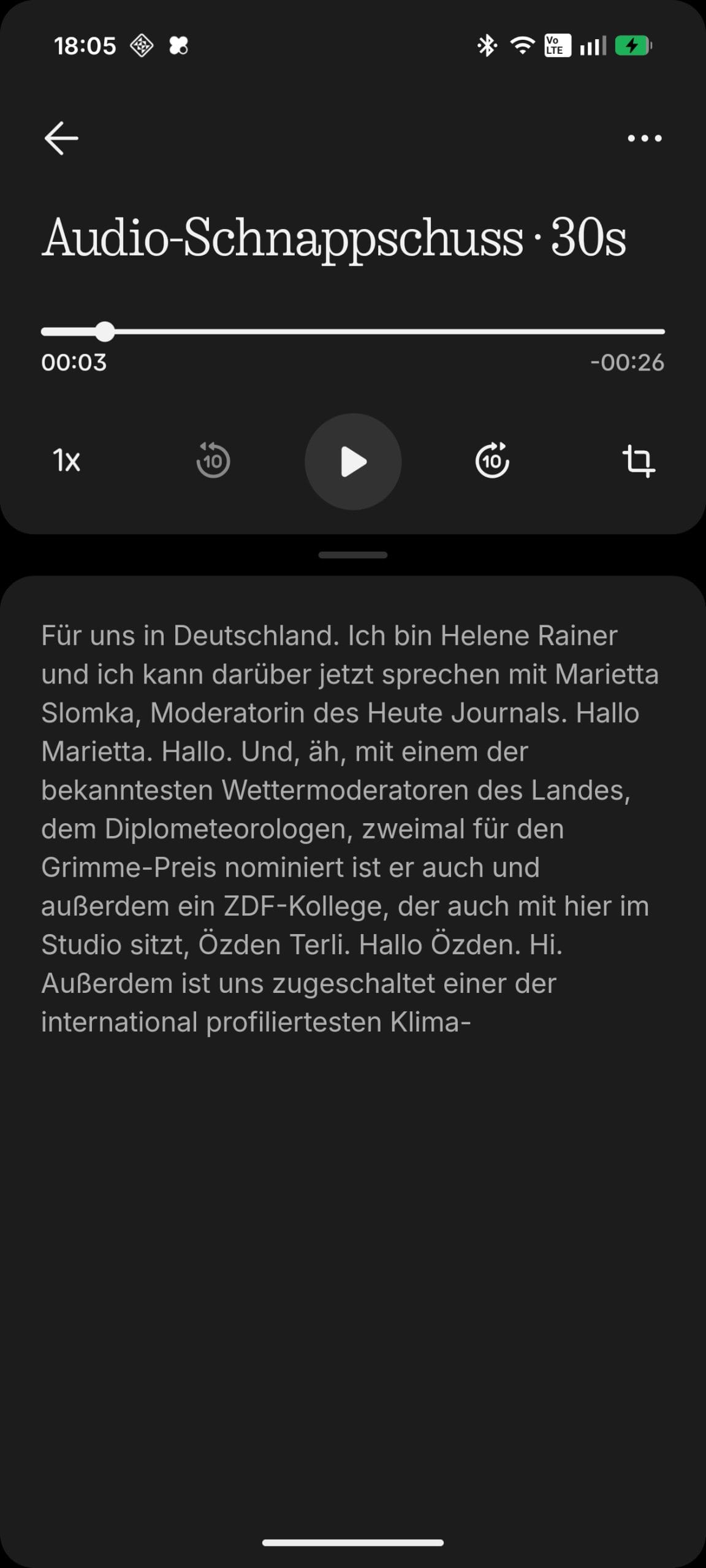
There are two ways to transcribe recordings. Standard transcription runs locally on your smartphone, so it also works offline. Pro transcription, on the other hand, uses cloud-based AI models and is said to offer better results, speaker recognition and summaries, among other things. Three months of Pro are included with purchase, with 120 minutes per month.
Call recording is not meant to happen secretly. When a call recording starts, a non-disableable notification is played to alert the other person that the call is being recorded.
Nothing Ear (3a): Sound
Nothing has made some solid technical upgrades. Instead of an 11 mm driver like the Ear (a), each bud now houses a 12 mm dynamic driver. The diaphragm consists of a rigid PMI center and a flexible TPU edge. The frequency range extends from 20 Hz to 40 kHz.
The supported codecs are SBC, AAC and LDAC. The latter enables high-resolution streaming on compatible Android devices and remains a plus at this price point. For the first time, the connection uses Bluetooth 6.0.
They’ve got bass
It becomes clear within the first few minutes what kind of tuning Nothing is aiming for. The Ear (3a) sound noticeably more powerful and warmer than the Ear (a). They deliver plenty of punch, especially in the low bass.
Electronic music, hip-hop and pop benefit from this. Kick drums hit hard, basslines have plenty of depth and the Ear (3a) sound very lively overall. If you like a bit more punch from your in-ear headphones, you’ll probably take to their tuning quickly.
At times, Nothing overdoes the bass a little. In songs that are already mixed with plenty of bass, the low end comes strongly to the fore and can somewhat mask vocals and instruments in the lower midrange. It is definitely not neutral.
This is where the new equalizer pays off. Pulling the bass back a little and raising the mids slightly makes the sound noticeably more balanced.
The mids offer good detail, and vocals sound clear and well-positioned as long as the bass gives them enough room. Instruments are easy to distinguish, and even with more complex arrangements, the sound doesn’t immediately fall apart.
In the treble, the Ear (3a) play it safe. They deliver sufficient detail and do not sound muffled, but avoid unpleasant harshness. Compared with the more expensive Ear (3), they lack a little in refinement and airiness. The Ear (3) sound more open and assured overall, which is no surprise given the price difference.
Nothing Ear (3a): ANC and transparency mode
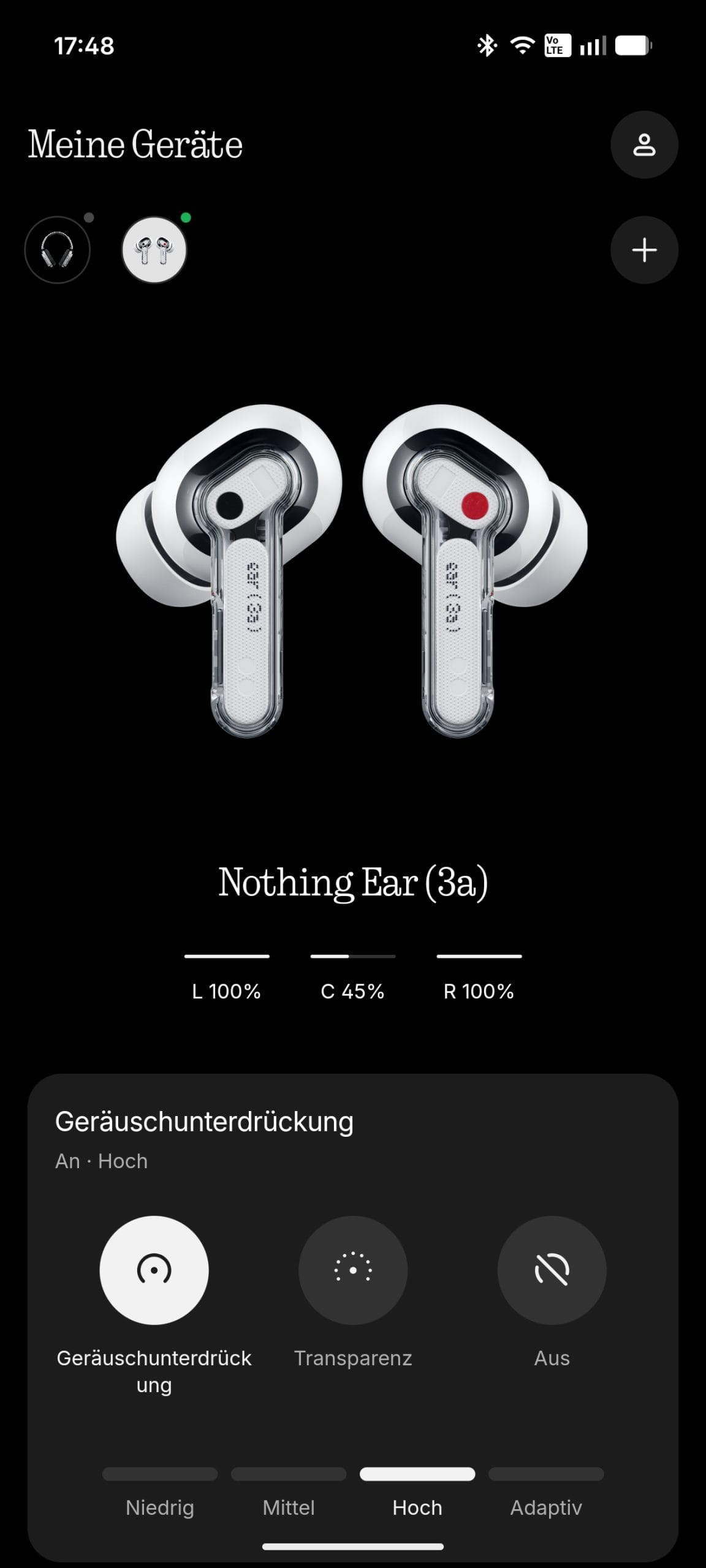
Nothing has also improved the active noise cancellation. The adaptive ANC is said to reduce noise by up to 45 dB and operates in the 40 to 5,000 Hz range.
As with the Ear (a), noise cancellation can be adjusted in several levels or adapted automatically to your surroundings. It’s particularly effective at reducing consistent low-frequency noise. The hum of an air conditioner, traffic noise or the monotonous rumble of a bus or train fades noticeably into the background.
Voices, keyboard clatter and other sudden sounds still come through more. That is perfectly normal for most in-ear headphones, though. At 99 euros, the Ear (3a) performs very well and is more than adequate for commuting, the office or travel.
The transparency mode does the opposite, routing ambient sounds through the microphones to your ears. Voices sound comparatively natural, allowing you to have a conversation or understand an announcement without removing the earbuds. It does not quite sound as though you have nothing in your ears, but the effect is not unpleasantly artificial either.
Nothing Ear (3a): Microphone and calls
Each earbud has three MEMS microphones for calls, for a total of six. An ENC algorithm is designed to detect ambient noise and emphasize your voice.
Call quality is one of the Ear (3a)’s strongest points. In quiet surroundings, the other person can hear the speaker clearly. It also does a good job of filtering out steady background noise.
In strong winds or very noisy surroundings, the voice is naturally processed more heavily and loses some of its natural quality. However, the quality is more than good enough for calls on the go and is above average for this price range.
Nothing Ear (3a): battery
With AAC and ANC turned off, Nothing claims up to 10 hours of playback from the earbuds. The total runtime increases to up to 42 hours with the case. Turning on ANC reduces these figures to 6 and 25 hours, respectively.
Things look quite different with LDAC. With ANC off, you get up to 6 hours from the buds or 28 hours including the case. With ANC on, you get a maximum of 4.5 hours per charge and 20 hours in total with the case.
If you enable LDAC and use ANC at the same time, you sacrifice a good part of the battery life compared with AAC. Bear this in mind if you are planning a longer trip.
Each earbud has a 55 mAh battery, while the charging case contains 500 mAh. A full charge via USB-C takes around 70 minutes. Fast charging is also supported. Five minutes in the case provides about an hour of playback. Wireless charging, as with the predecessor, is not supported.
Our verdict
They’ve got bass, they’ve got ANC, and Nothing gives you plenty of scope to fine-tune the sound this time with the 8-band equalizer. The rest of the package is solid too, and the feature set is only missing a few things, with LDAC, Bluetooth 6.0 and Dual Connection on board.
Of the new recording features, I found Call Recording more useful in my tests. It can certainly come in handy for interviews or important phone calls. Audio Snapshot, on the other hand, feels more like a nice extra to me.
It’s a shame that Qi charging is still missing, and I’m happy to leave Spatial Audio turned off. But there’s very little else to complain about, giving yesterday’s insider tip a very convincing successor.
Specifications
General
- Drivers
- Dynamic driver
- Size
- 12 mm
- Diaphragm
- PMI + TPU
- Frequency range
- 20 Hz – 40 kHz
- Impedance
- 32 Ω
- Sensitivity
- Unbekannt
Bluetooth
- Standard
- 6.0
- Range
- up to 15 metres
- Codec
- *SBC
- *AAC
- *LDAC
Functions
- *Google Fast Pair
- *Microsoft Swift Pair
- *Dual Connection
- *Low Lag Mode
- *Custom EQ
- *Enhanced 8-band EQ
- *Static Spatial Audio
- *Find My Earbuds
- *Audio Snapshot
- *Call Recording
Battery
- Capacity
- 55 mAh (earbuds), 500 mAh (case)
- AAC battery life (ANC off)
- 10 hours / 42 hours
- AAC battery life (with ANC)
- 6 hours / 25 hours
- Battery life with LDAC (ANC off)
- 6 hours / 28 hours
- Battery life with LDAC (with ANC)
- 4.5 hours / 20 hours
- Charging time
- approx. 70 minutes
- Fast charging
- 5 minutes for 1 hour of playback
- Fast charging (Buds + Case)
- 10 minutes for up to 10 hours of playback
- Wired
- USB-C
- Wireless
- No
Other
- ANC
- Yes, adaptive, up to 45 dB (40–5,000 Hz)
- Microphone
- 6x MEMS, 3 per earbud, ENC
- Operation
- Pressure gestures, app (Nothing X)
- Water resistance
- IP54 (earbuds), IP54 (case)
- Size (Earbud)
- 31.2 x 21.7 x 24 mm
- Size (case)
- 64.8 x 48.95 x 22.8 mm
- Weight (Earbud)
- 4,53 g
- Weight (case)
- 40,92 g
Price comparison
| Store | Price | Link |
|---|---|---|
| Nothing | 79,00 € | Go to store |
| Amazon | 79,00 € | Go to store |

Comments (2)
Was this (worthwhile) review based on the current firmware xxx.65?
Hi Ralf, it was tested with a preliminary beta version.