Contents
Review: Redmi 10
Just over a year after the release of the Redmi 9, Xiaomi sends its successor – the Redmi 10 – into the race. In addition to numerous upgrades, we also expect a fresh design. We start the test with this aspect.
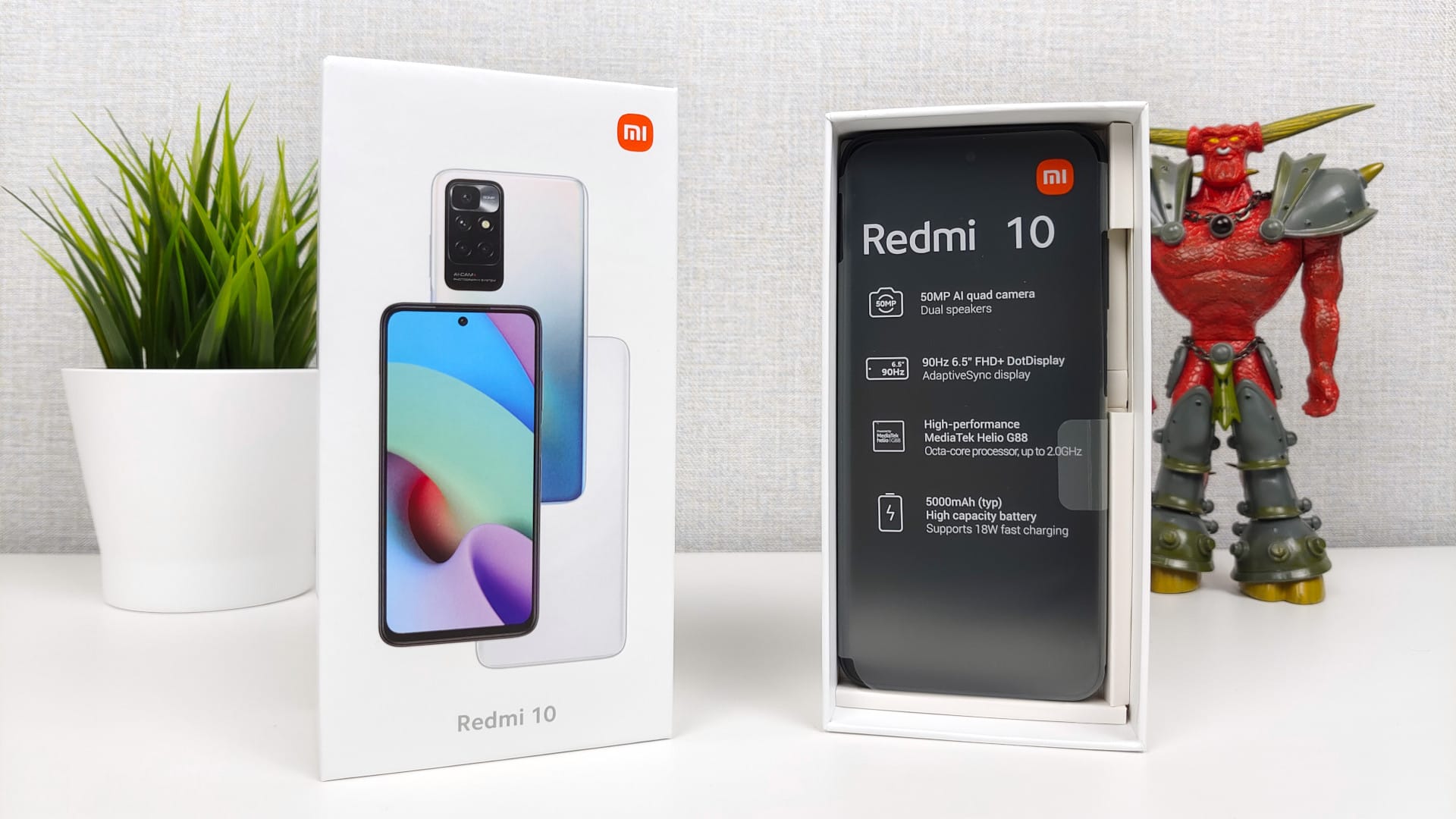
Redmi 10: Design, build quality and package contents
They have moved away from the Redmi 9 design. Instead, the Redmi 10 has borrowed the design from its big brother – the Redmi Note 10 (Pro).
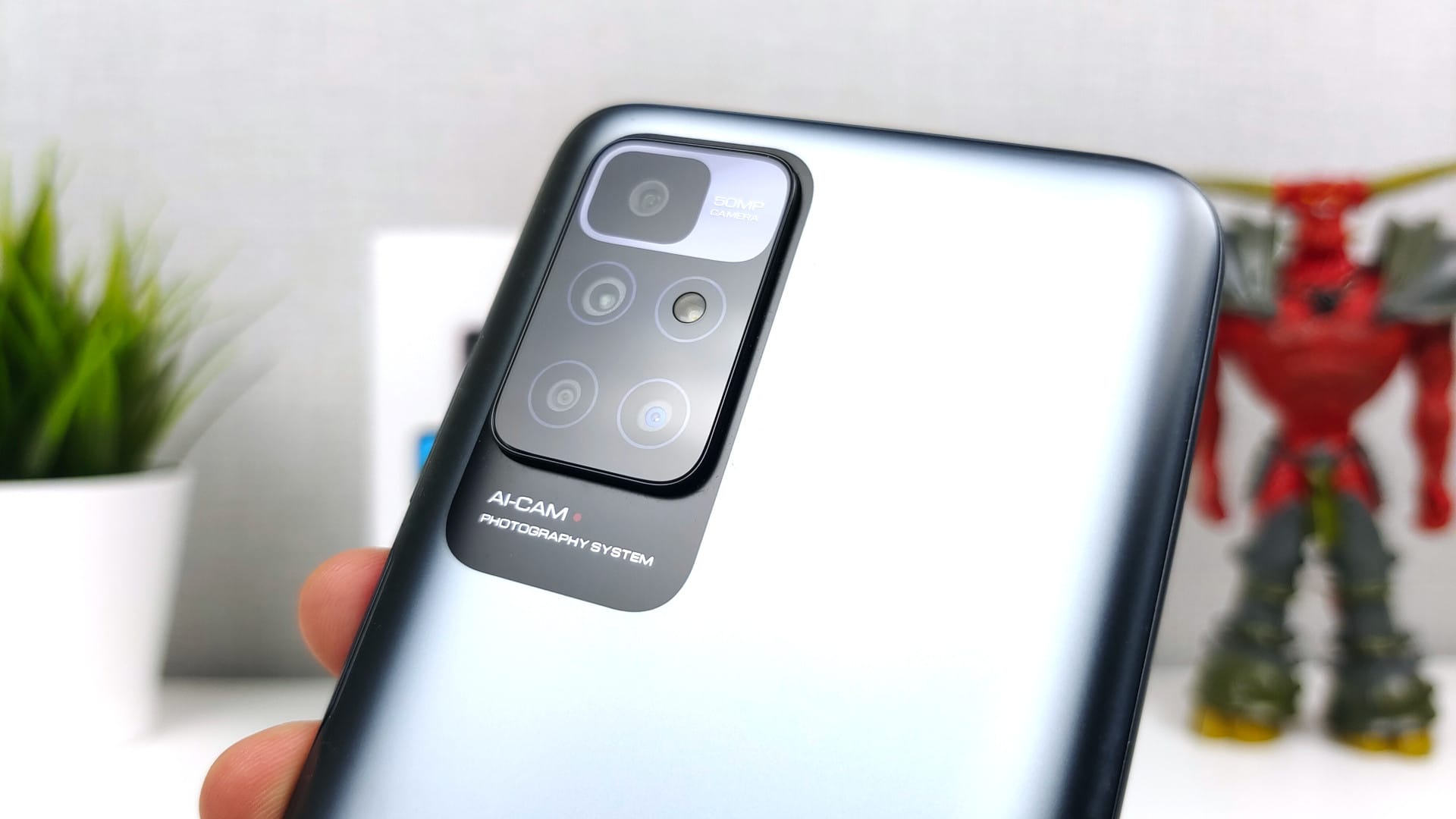
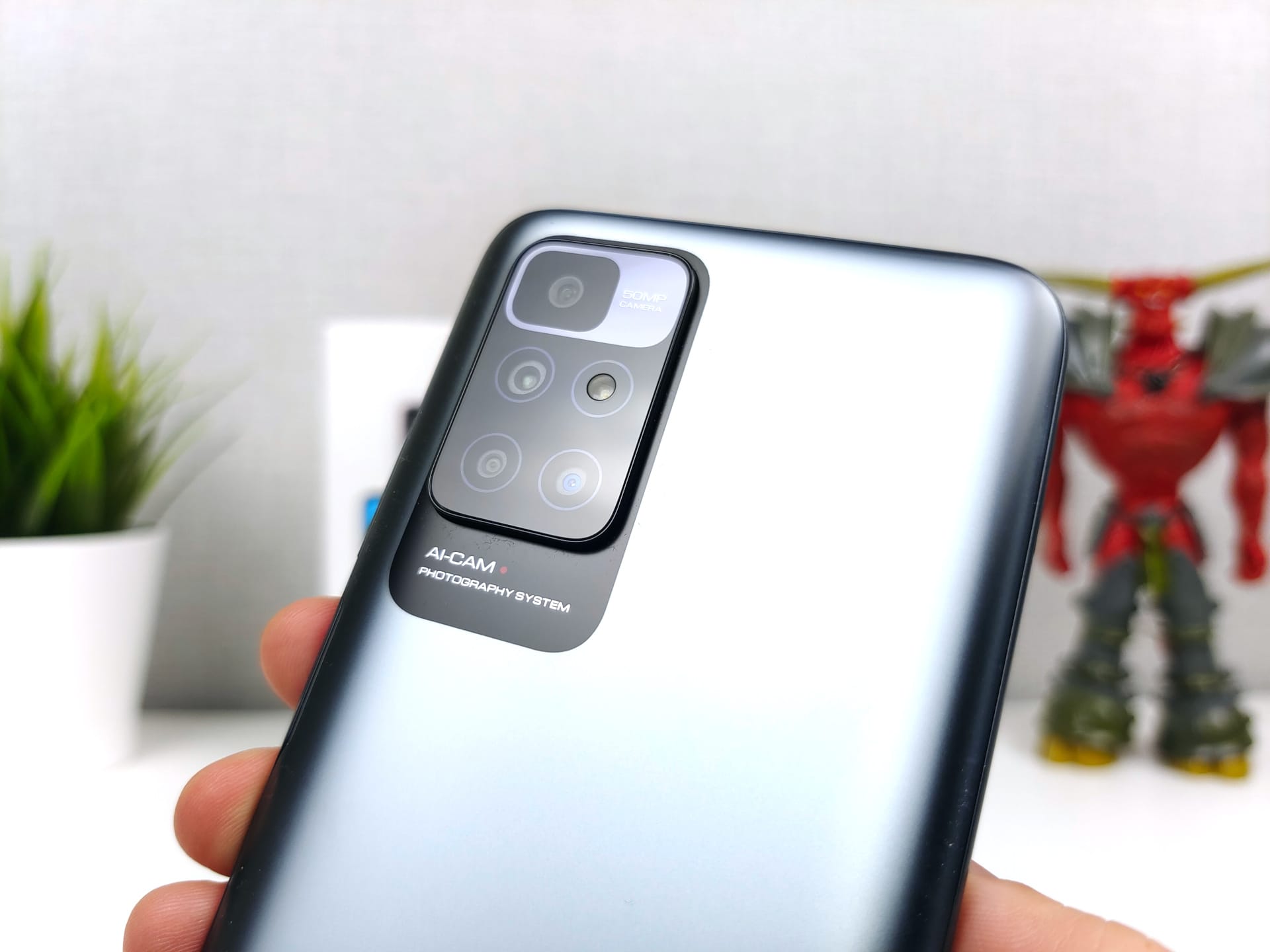
The first glance falls directly on the camera bump, which separates the main camera from the remaining cameras with a silver border. Next to the main camera, you find the text "50MP Camera". And also under the camera bump, "AI-CAM PHOTOGRAPHY SYSTEM" indicates that great importance is attached to the Redmi 10's camera. More on that later.
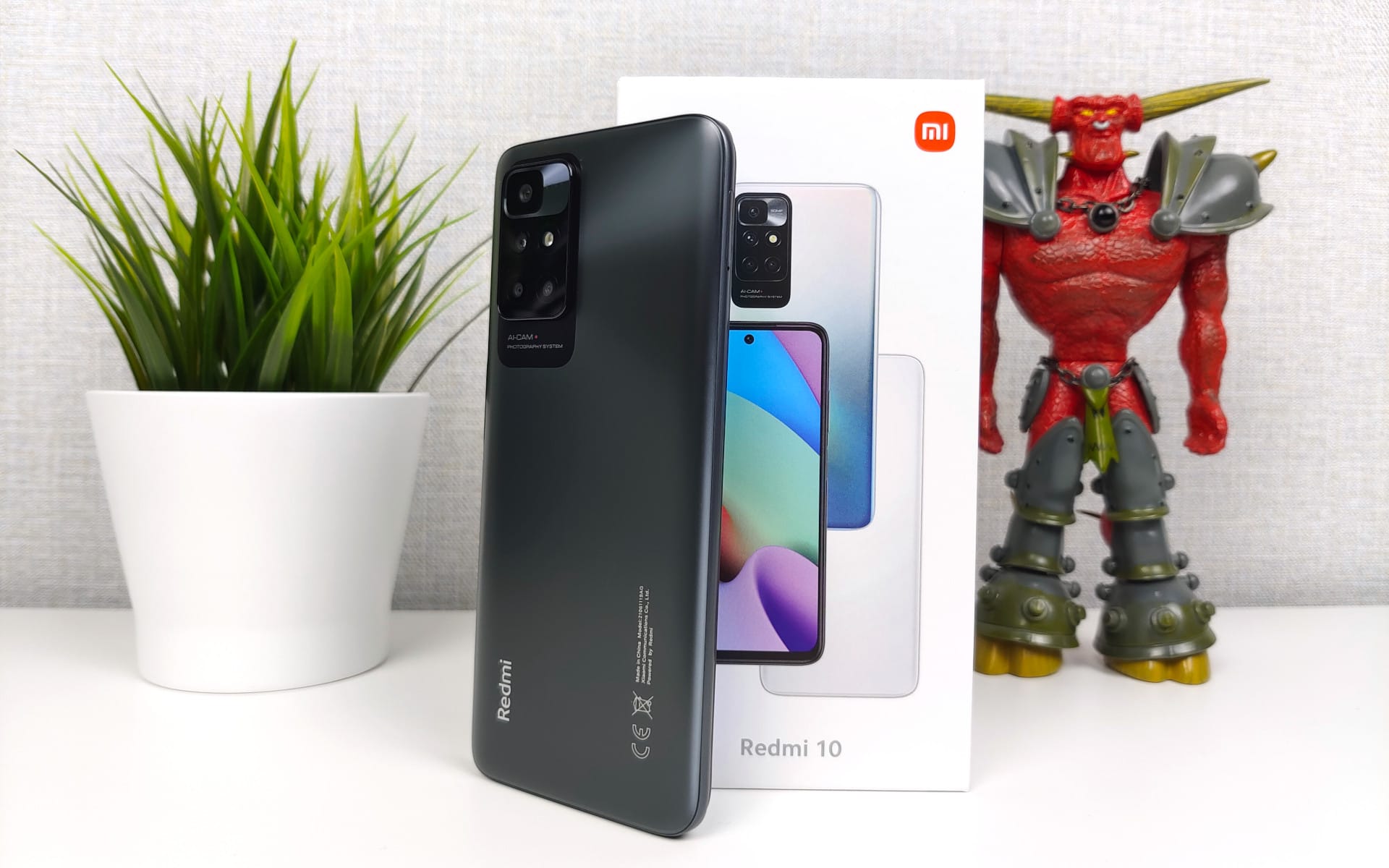
Incidentally, the camera bump protrudes a full 2.5 mm from the back, which means that in the prone position the smartphone inevitably rests on the camera and wobbles when being used.
The frame and back of the Redmi 10 are made of plastic. The matte finish of my test device in the colour "Carbon Grey" shimmers stylishly in the light. Fingerprints are unavoidable here too and slightly mar the appearance. Other colours in which the smartphone is available are "Pebble White" and "Sea Blue".
On the front of the smartphone, which measures 161.95 x 75.53 x 8.92 mm and weighs 181g, is the 6.5-inch DotDisplay. The 8MP front camera is placed top-centre in classic punch-hole style. Above it is the narrow and barely visible earpiece. Despite the lack of an always-on feature, there is no notification LED.
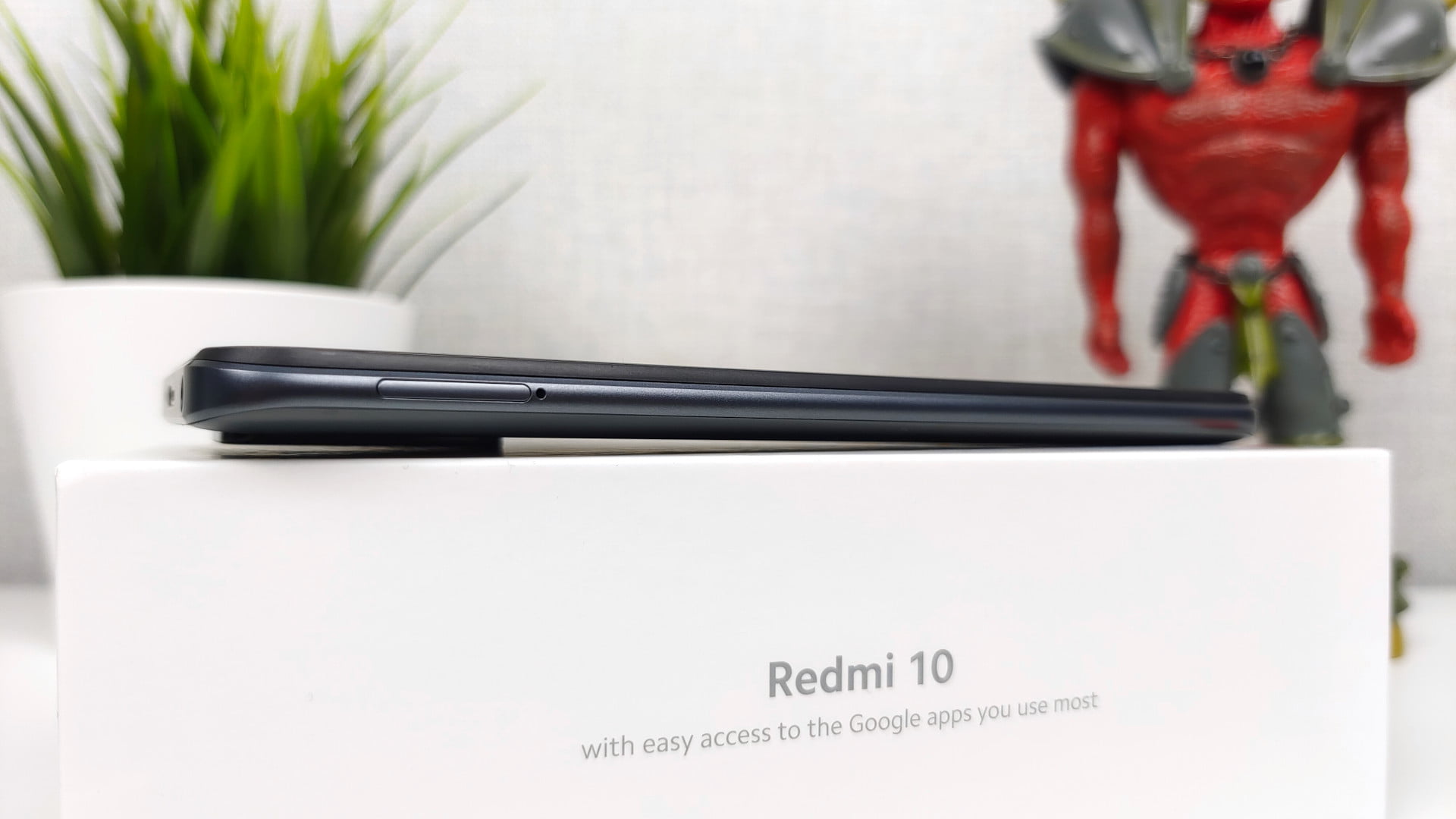
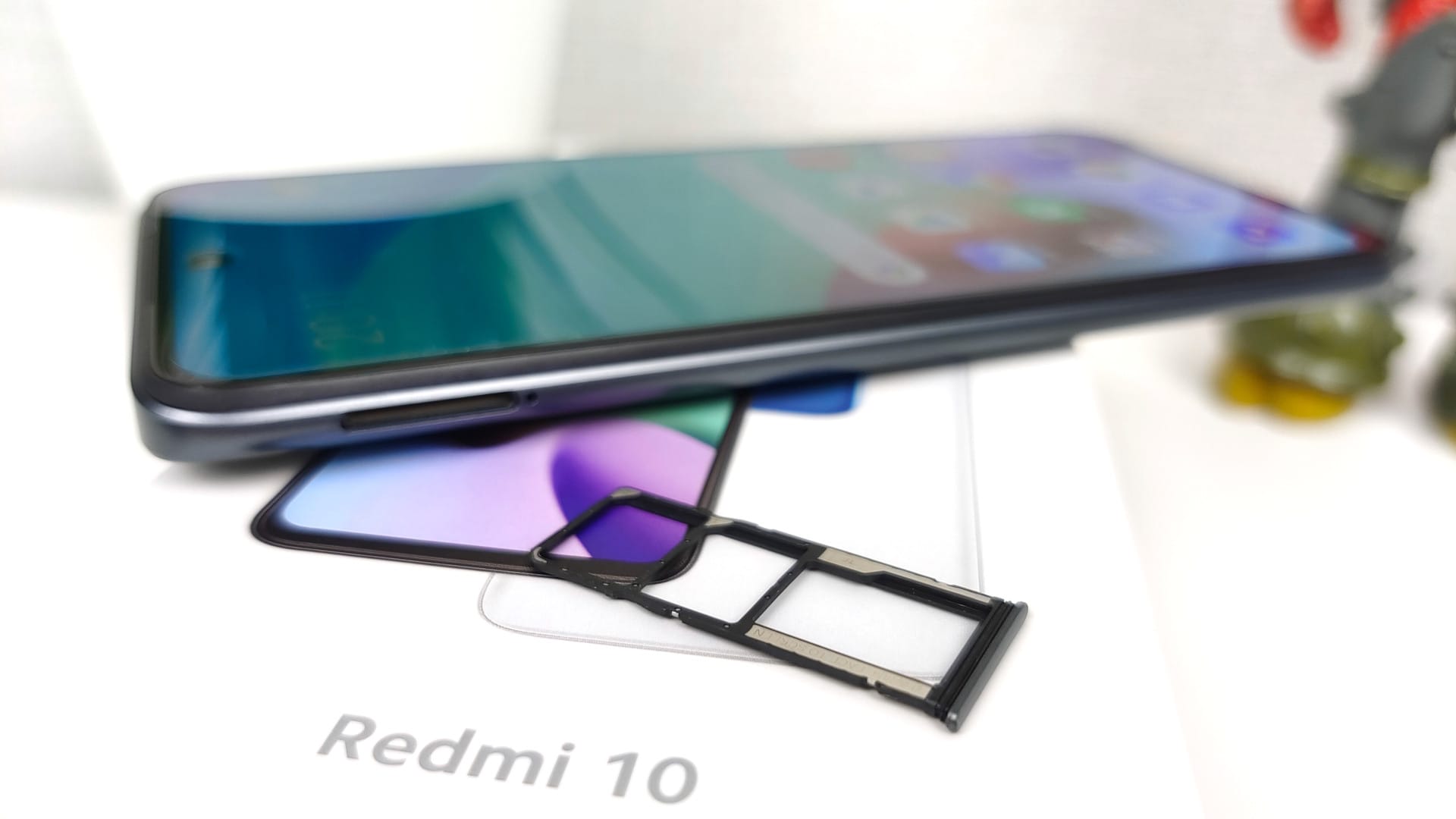
On the left side of the frame is the SIM tray, which can accommodate two nano SIM cards and one microSD memory card. On the opposite side are the volume rocker and the power button, which also houses the fingerprint scanner.
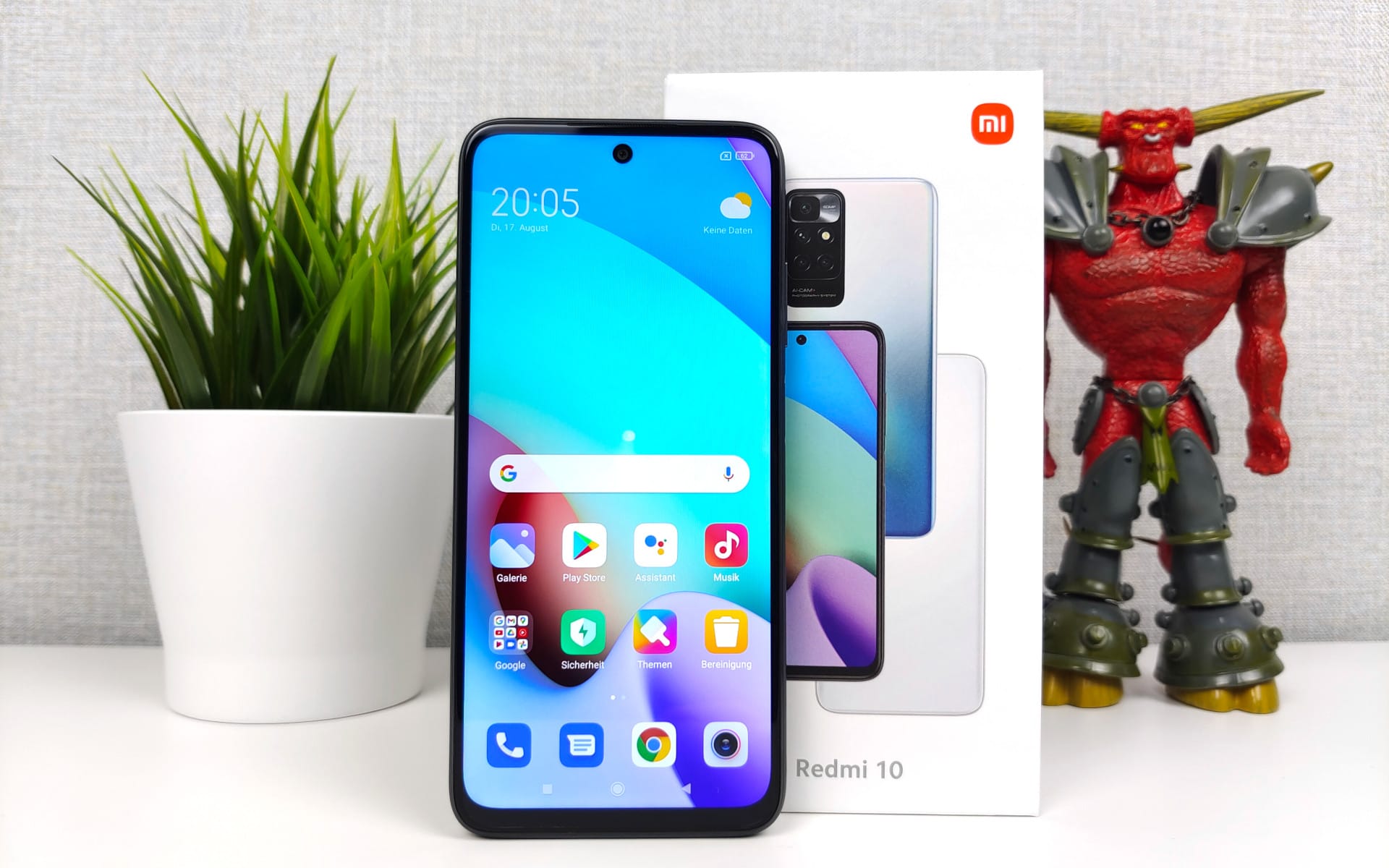
A special feature of the Redmi 10 is the stereo loudspeaker, which is not usually found in this price range. Regarding connections, there is a USB-C port at the bottom centre and a 3.5 mm headphone jack at the top. Finally, there is an infrared emitter for controlling TV sets and two microphones for phone calls.
There is nothing negative to say about the build quality of the Redmi 10. Nothing creaks, squeaks or failed after a two-week test period. Only the plastic back might be somewhat susceptible to scratches depending on use.
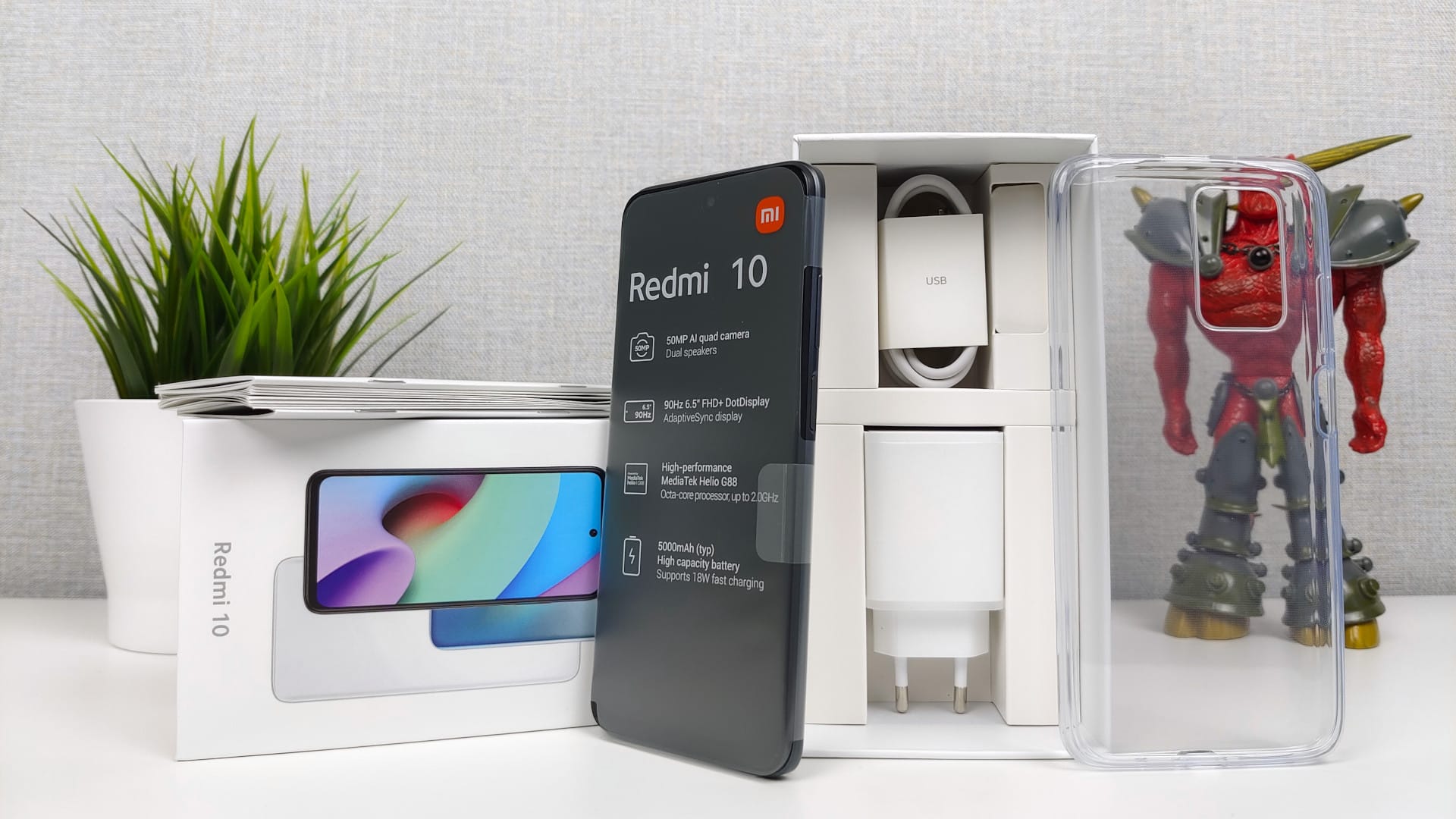
The scope of delivery includes, in addition to the smartphone, a silicone protective case, a 22.5W fast charger, a USB-C cable, a SIM pin and a quick guide.
Redmi 10: Display
The display is a 6.5-inch DotDisplay with 2400 x 1080 pixel resolution. Naturally, I would have preferred an AMOLED display, but that wasn't necessarily to be expected at this price point. At least Xiaomi offers us a 90 Hz refresh rate, which makes the display appear much smoother.
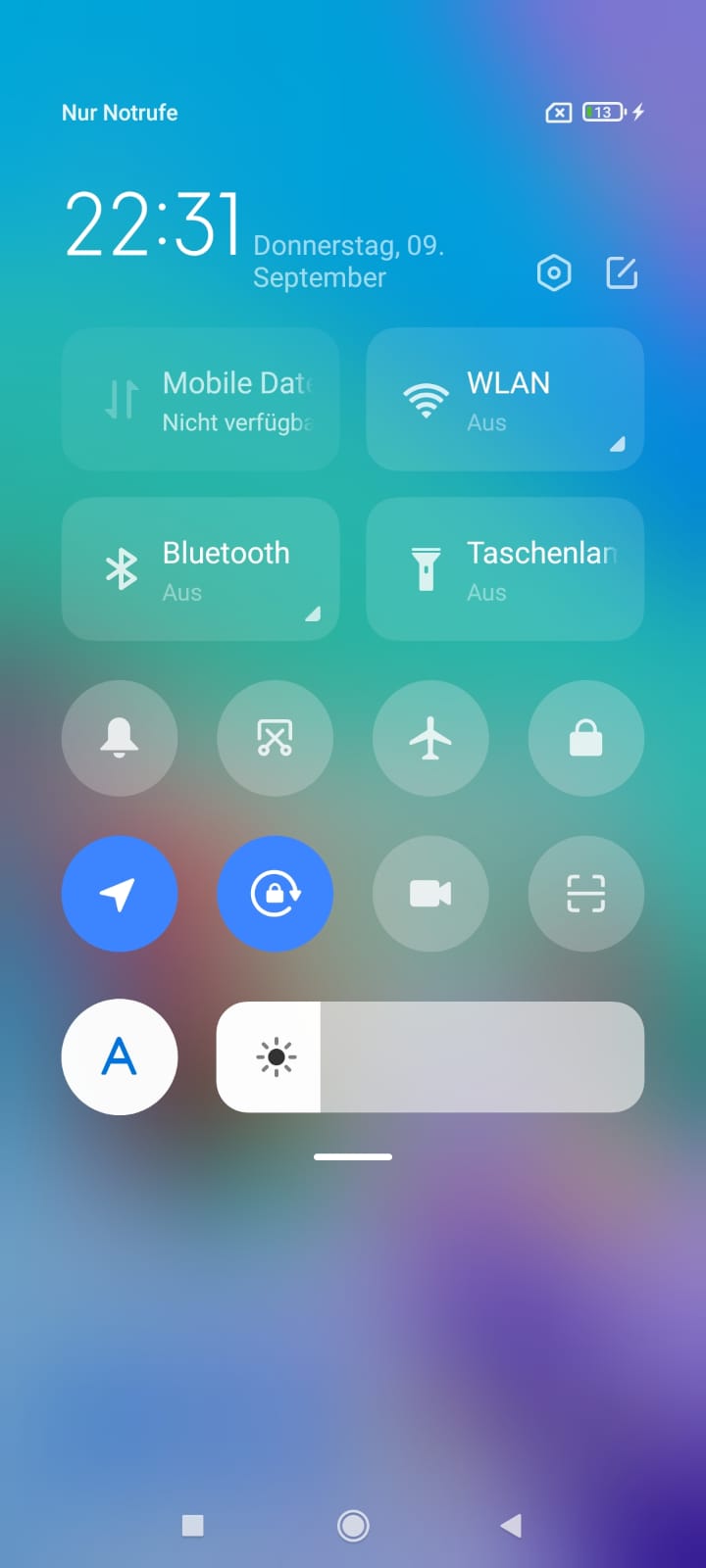
With my test unit, I had to change the refresh rate to 90 Hz in the settings. 60 Hz is set by default. There is no Adaptive Sync mode in the settings, meaning no automatic adjustment of the refresh rate. Although Xiaomi advertises the Redmi 10 with this feature.
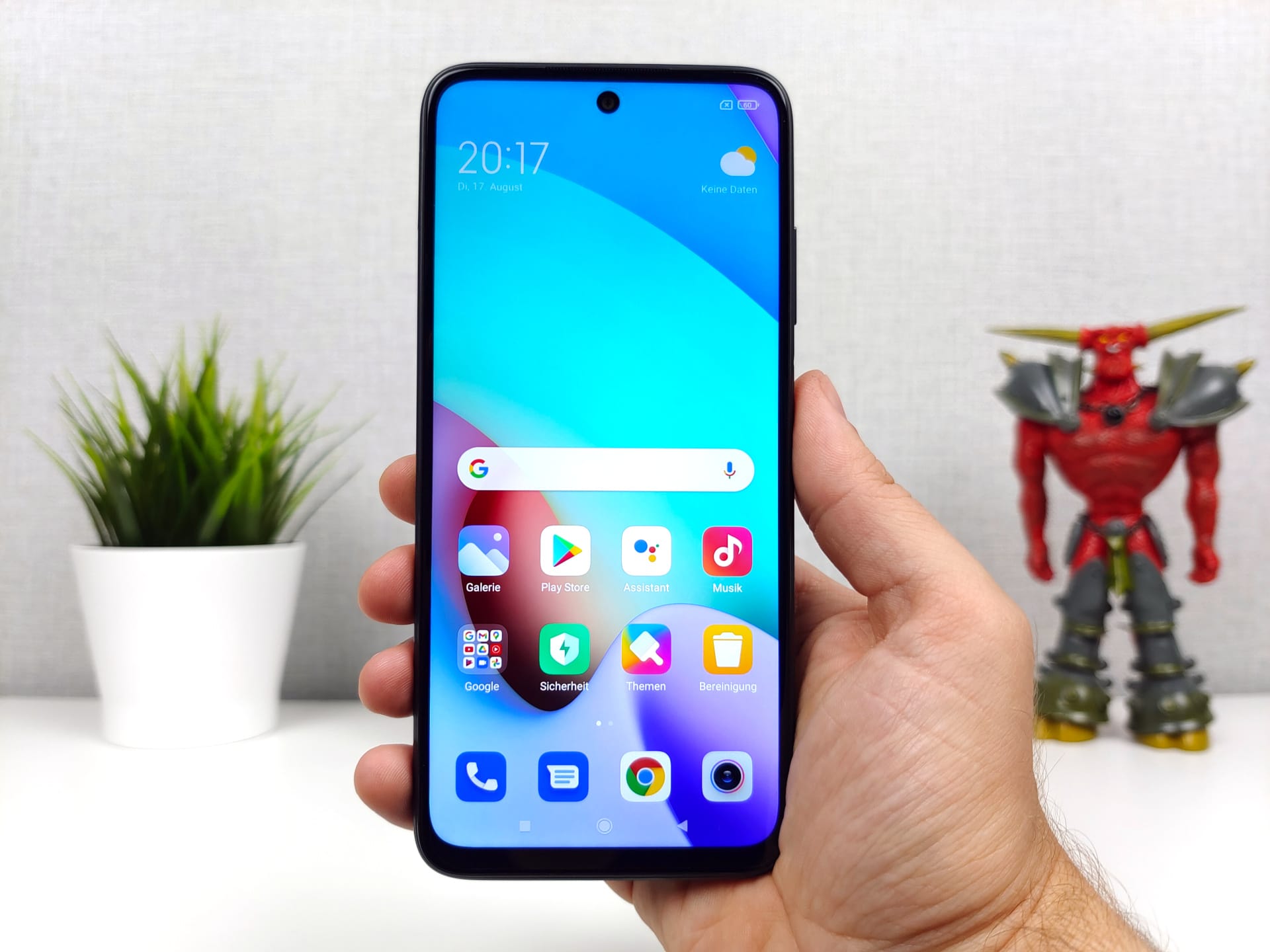
The colour reproduction of the display is good, although moderate and far removed from the vibrant colours of an AMOLED. Colour temperature and colour mode (Vivid, Saturated and Standard) can be adjusted afterwards in the settings. The contrast of the display is somewhat weak. A declining contrast ratio becomes noticeable, particularly when viewing the display at an angle. Content nevertheless remains legible. It is quite possible that Xiaomi has not installed an IPS panel here, but rather a conventional LCD. At least the display type is not specified in the specifications.
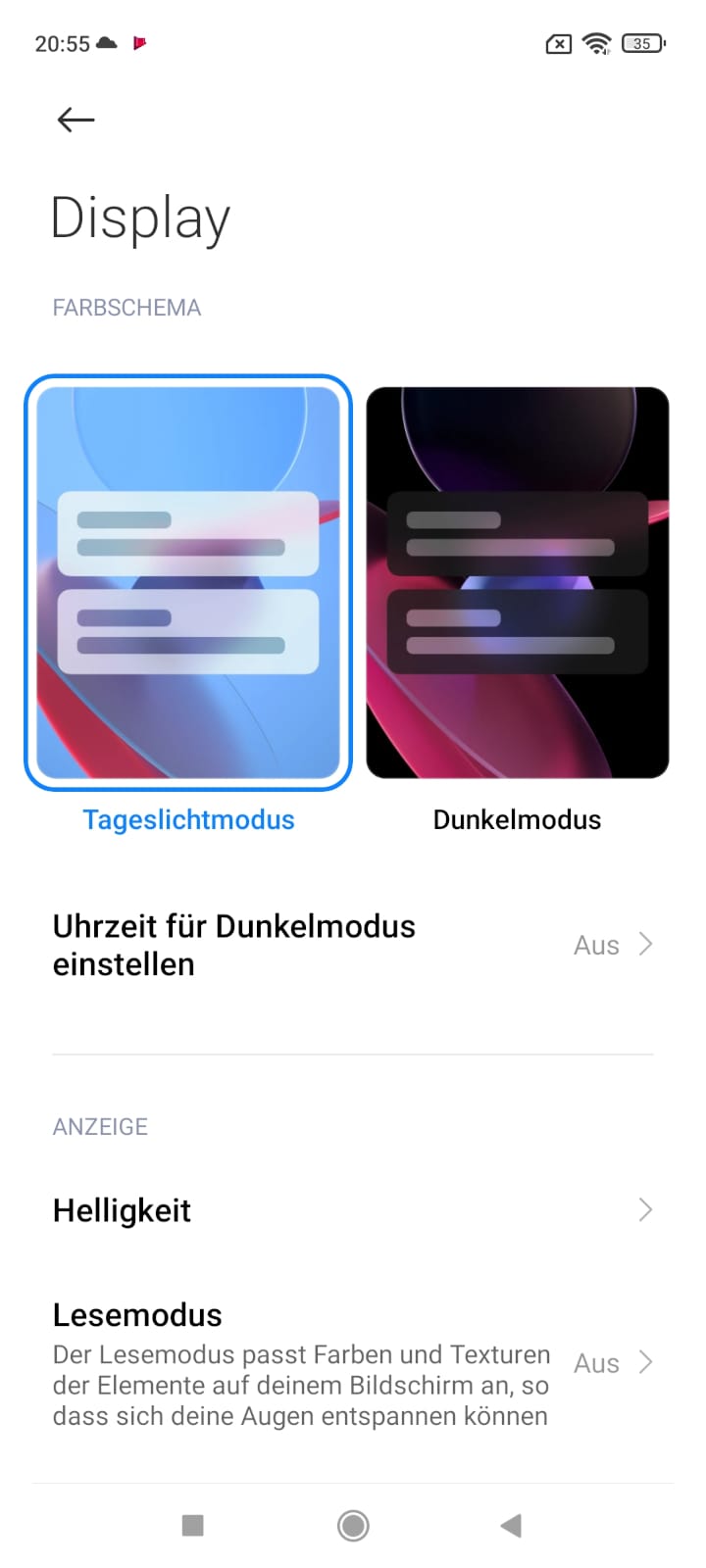
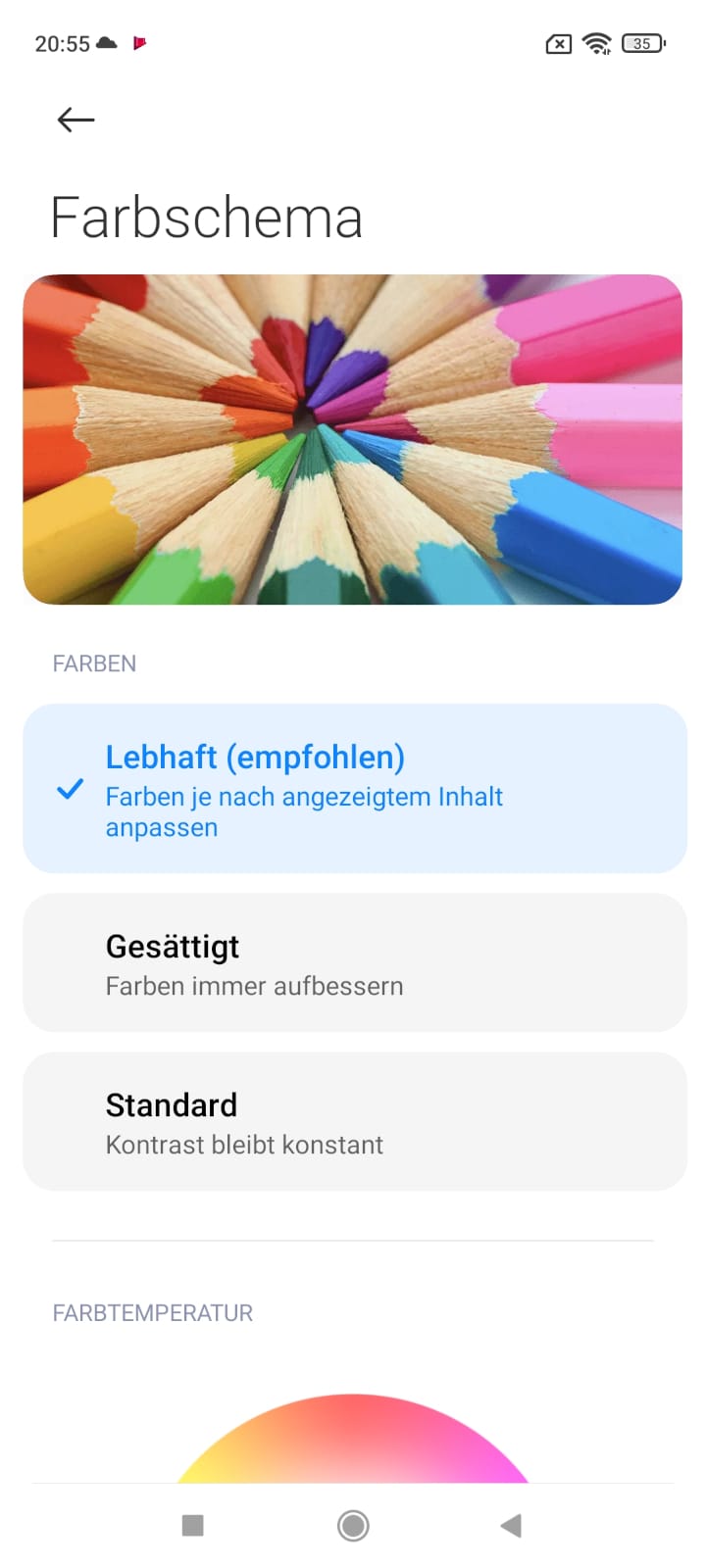
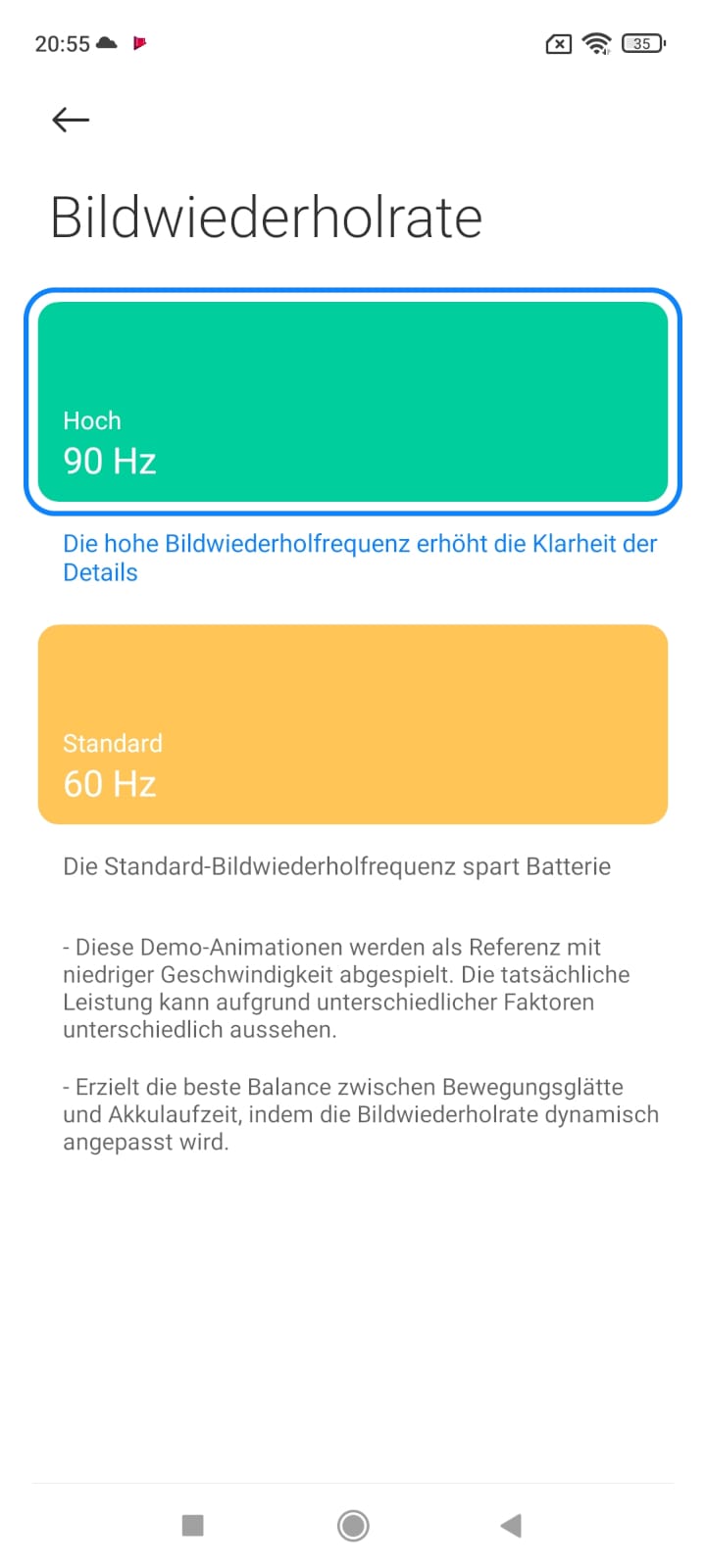
The maximum display brightness is sufficient to keep the display readable in sunlight. However, the display of the Redmi 10 reaches its limits in direct light. The automatic brightness adjustment works promptly.
The display is protected by Corning Gorilla Glass 3, a protective glass that is considered scratch-resistant and shatterproof. The touchscreen responds quickly and recognises inputs precisely.
Redmi 10: Performance and user interface
The heart of the Redmi 10 is the MediaTek Helio G88 system-on-chip, which consists of an octa-core CPU (2x Cortex A75 @ 2.05 GHz & 6x Cortex A55 @ 1.8 GHz), a Mali G52 MC2 GPU and a Cat7 LTE modem.
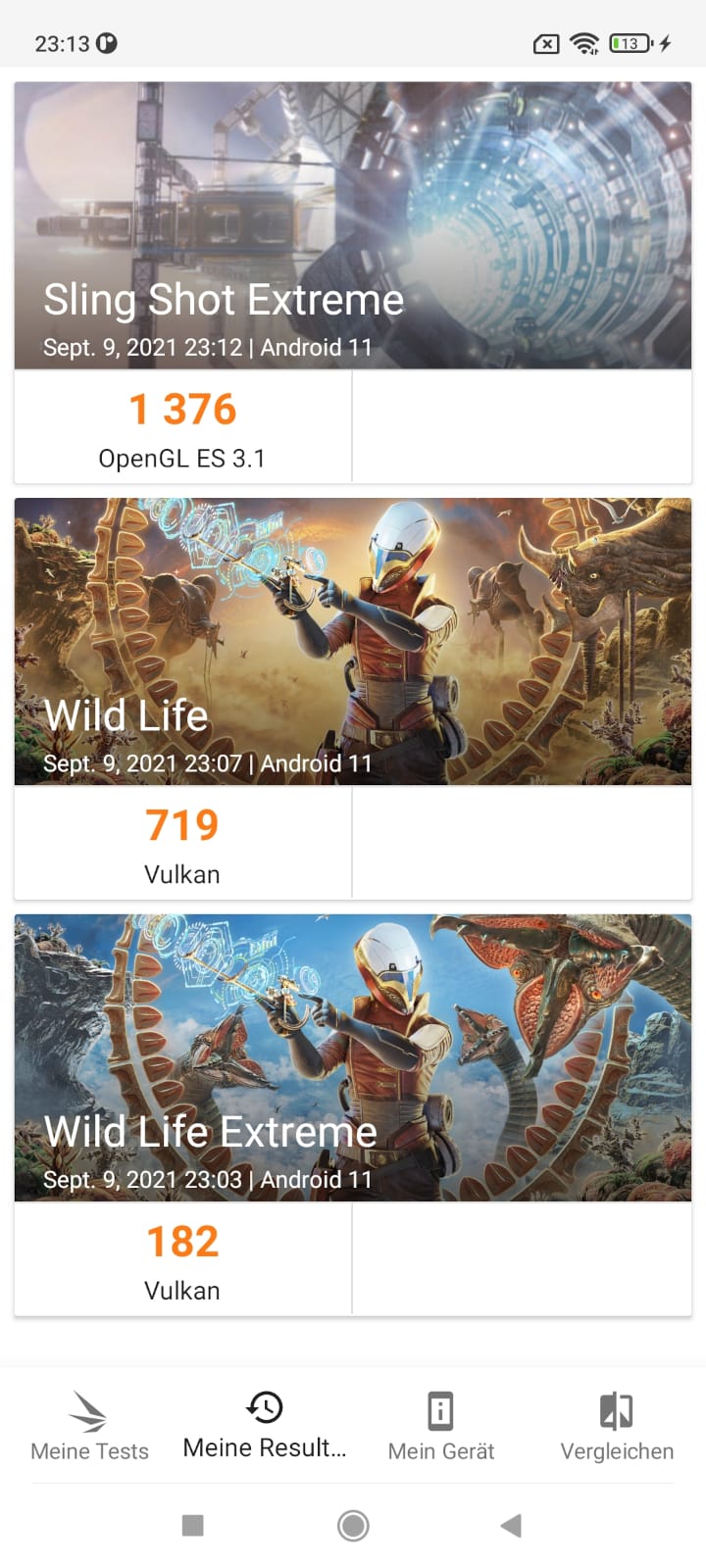
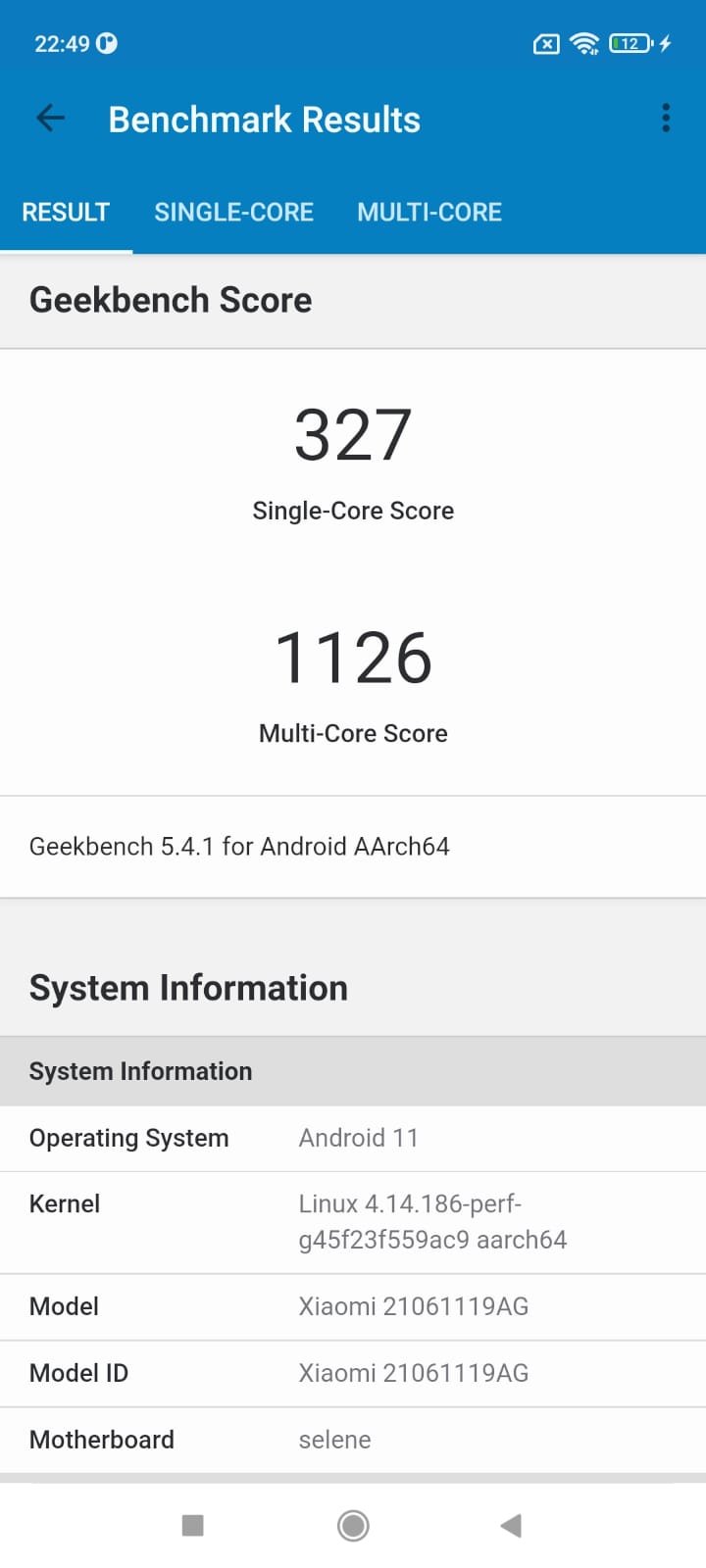
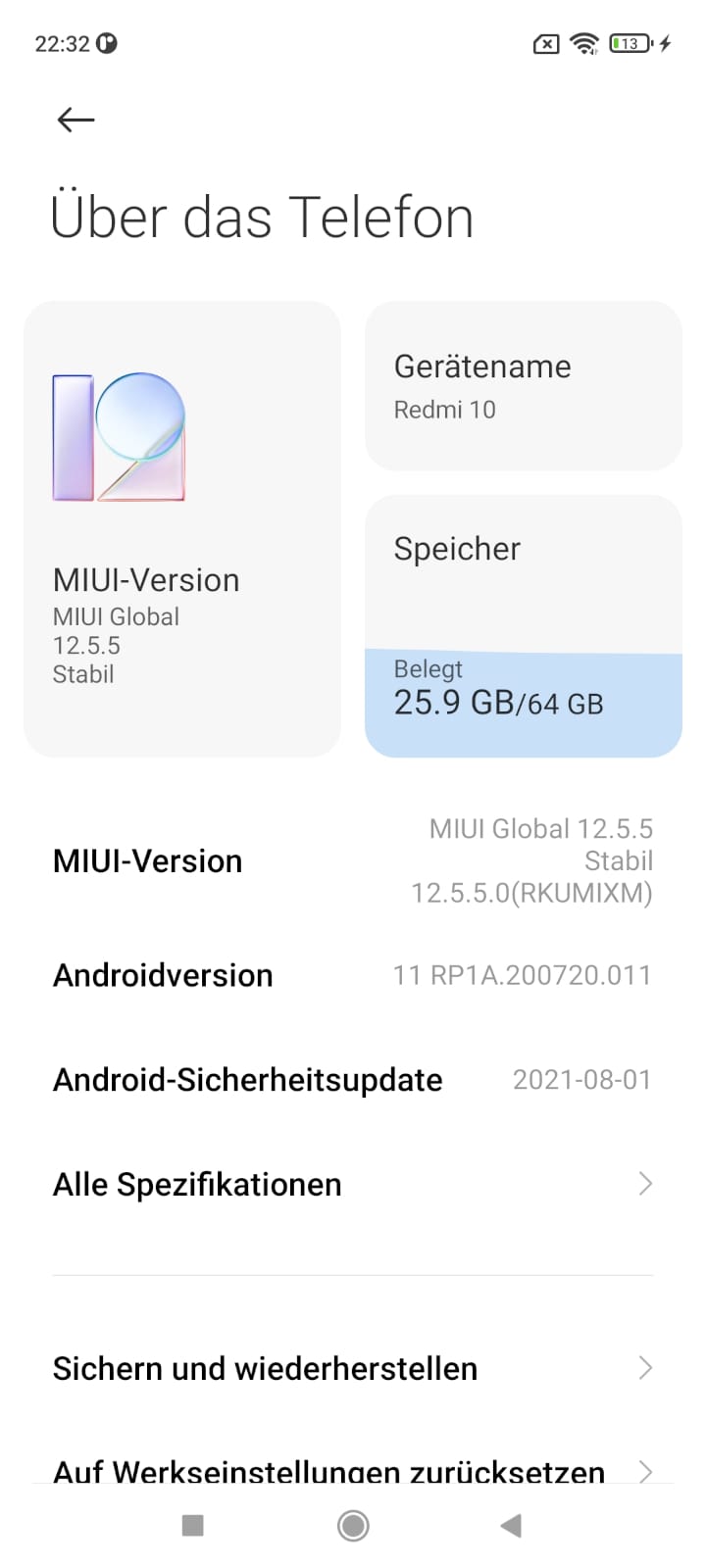
The Helio G88 is the successor to the Helio G85. The only differences lie in the 90 Hz display support and compatibility with 64 MP camera sensors. For storage, you can choose between 4+64GB, 4+128GB or 6+128GB. The RAM is of the type LPDDR4x, and the internal data storage is of the type eMMC. The data storage can be expanded with a MicroSD memory card.
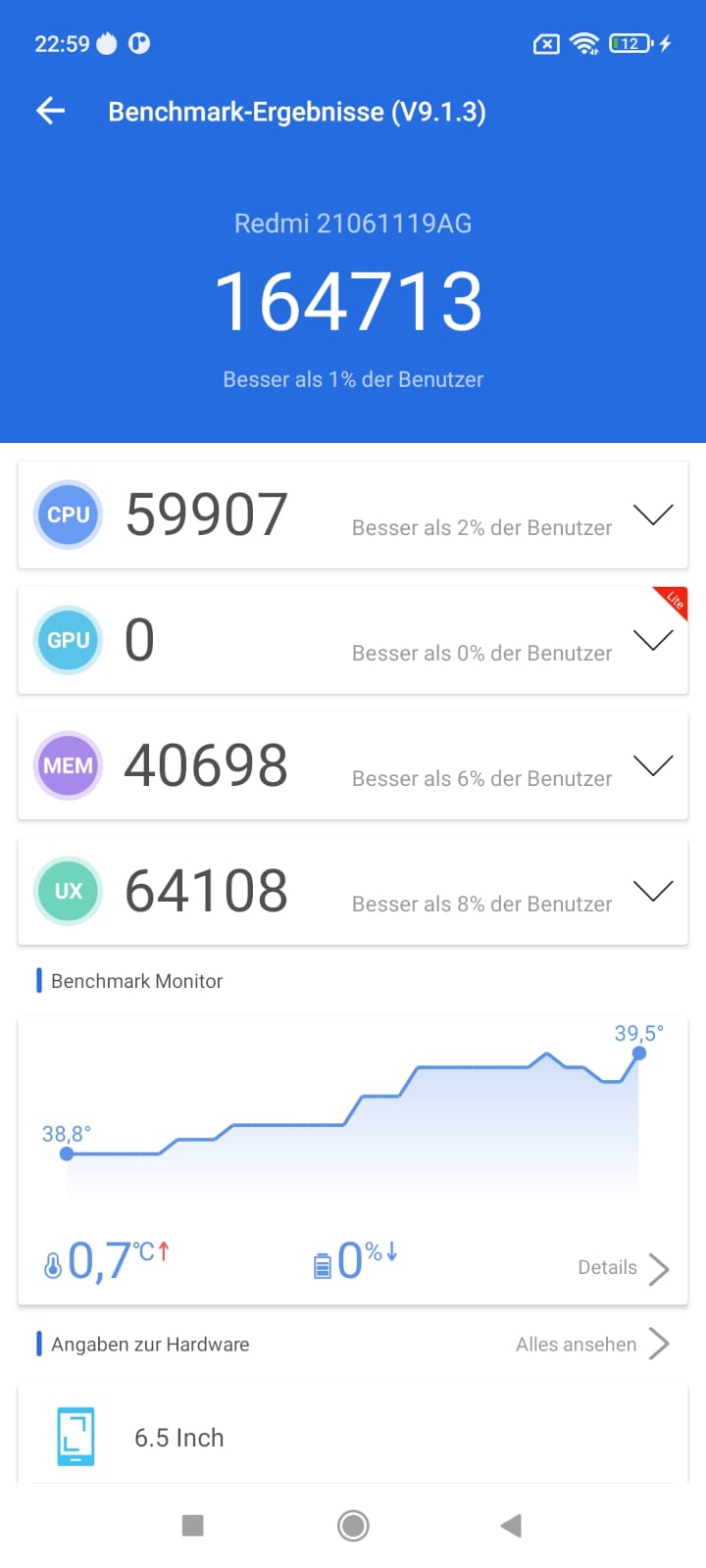
So much for the technical side. More important is how to rate the performance of the Redmi 10. Although the SoC is not one of the most powerful, the smartphone is largely smooth to operate. The Redmi 10 handles fast scrolling and swiping through the MIUI 12.5 user interface (Android 11) well. It only becomes a bit jerky during fast scrolling in the web browser on demanding websites. But that is already nitpicking at a high level.
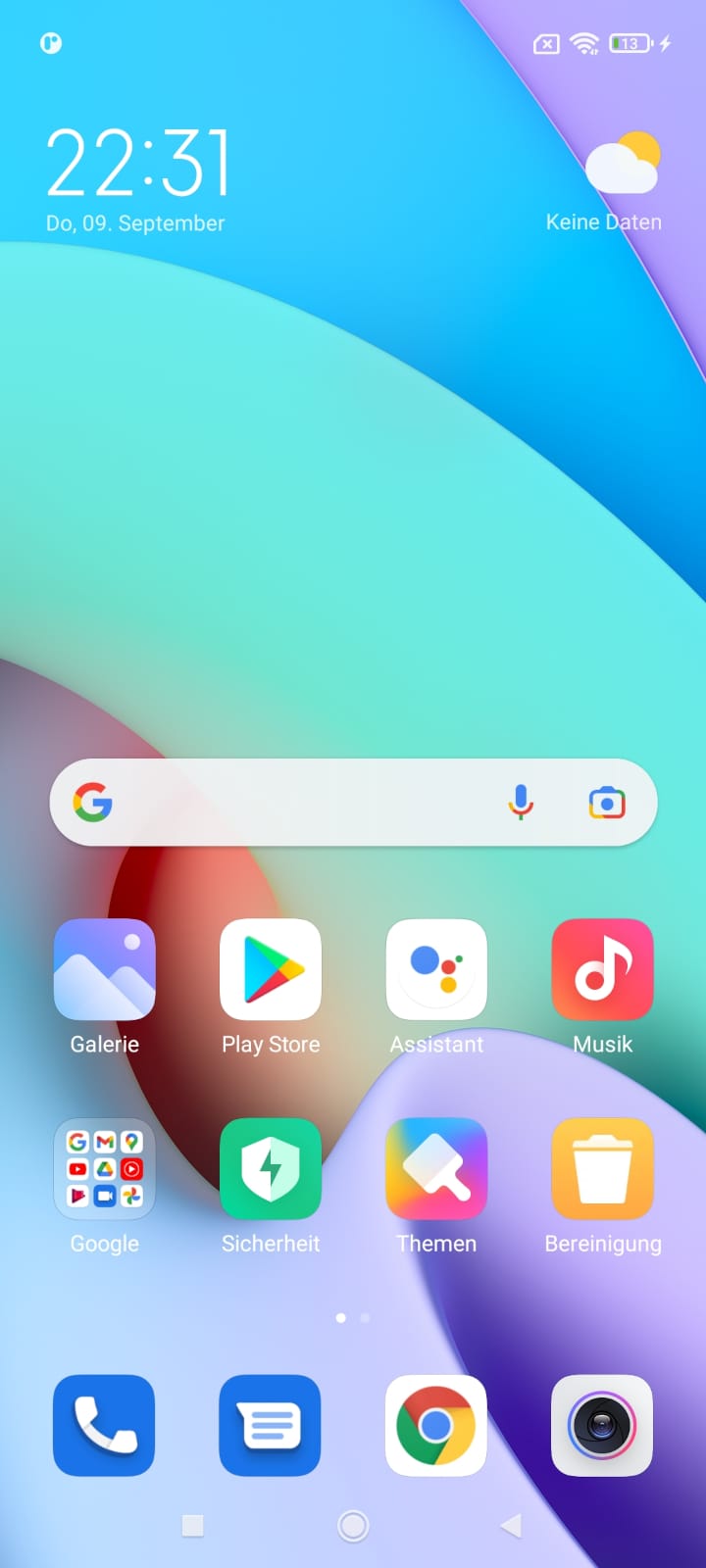
Loading times for apps and games are average. However, this aspect is not unpleasantly conspicuous and matches the price range. Mobile games such as PUBG were playable at HD graphics and high refresh rate in our test. Stuttering mainly occurs when textures are being loaded. Casual gamers will certainly enjoy it. However, if you require high performance in mobile games, you should look at a higher price bracket.
Redmi 10: Camera
The rear features a quad-camera setup with a 50 MP main camera (f/1.8), an 8 MP ultra-wide-angle camera (f/2.2 FOV 120°), a 2 MP macro camera (f/2.4) and a 2 MP depth sensor (f/2.4). At the front, there is also a 8 MP front camera for selfies.
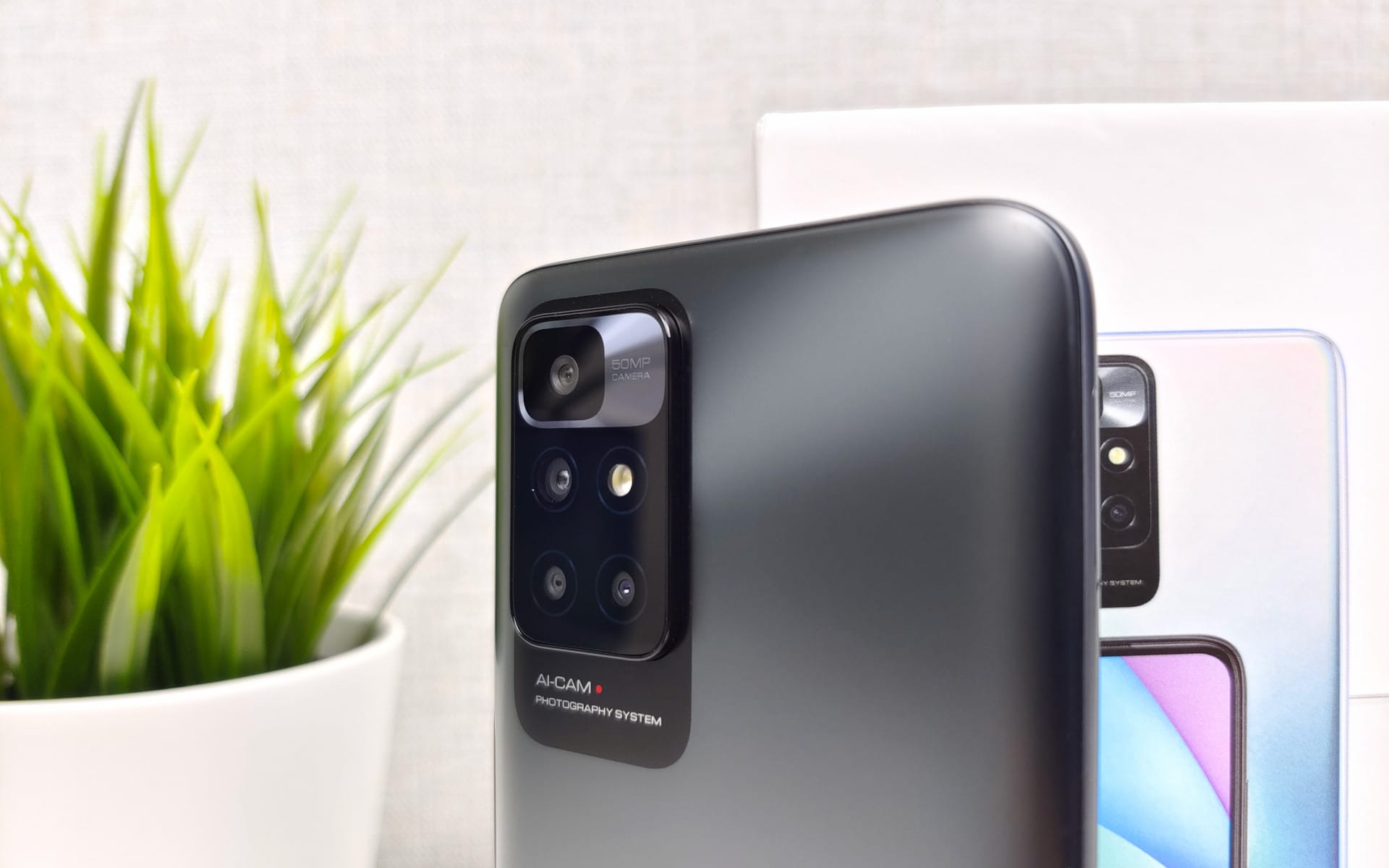
The Redmi 10 is the first smartphone to use the new 50 MP Samsung S5KJN1 image sensor.
Main camera
In daylight, the main camera produces usable shots. Image sharpness, colors and level of detail are accurate and appropriate for this price class. Noise levels are also kept low.






So-called pixel binning, which combines pixel blocks, achieves higher light sensitivity while simultaneously improving the signal-to-noise ratio. Therefore, despite the 50 MP sensor, photos are saved in only 12 MP. A separate 50 MP shooting mode is also available, but is much more of a nice-to-have rather than offering significant added value.
High-contrast scenes pose difficulties for the Redmi 10. Here, the dynamic range quickly reaches its limits. However, the automatic HDR mode provides good compensation. You should definitely enable it!





In poor lighting conditions, especially at night, image quality noticeably declines. Details are increasingly lost and colours appear washed out. The night mode only helps to a limited extent by slightly increasing image dynamics and detail.
Ultra-wide-angle
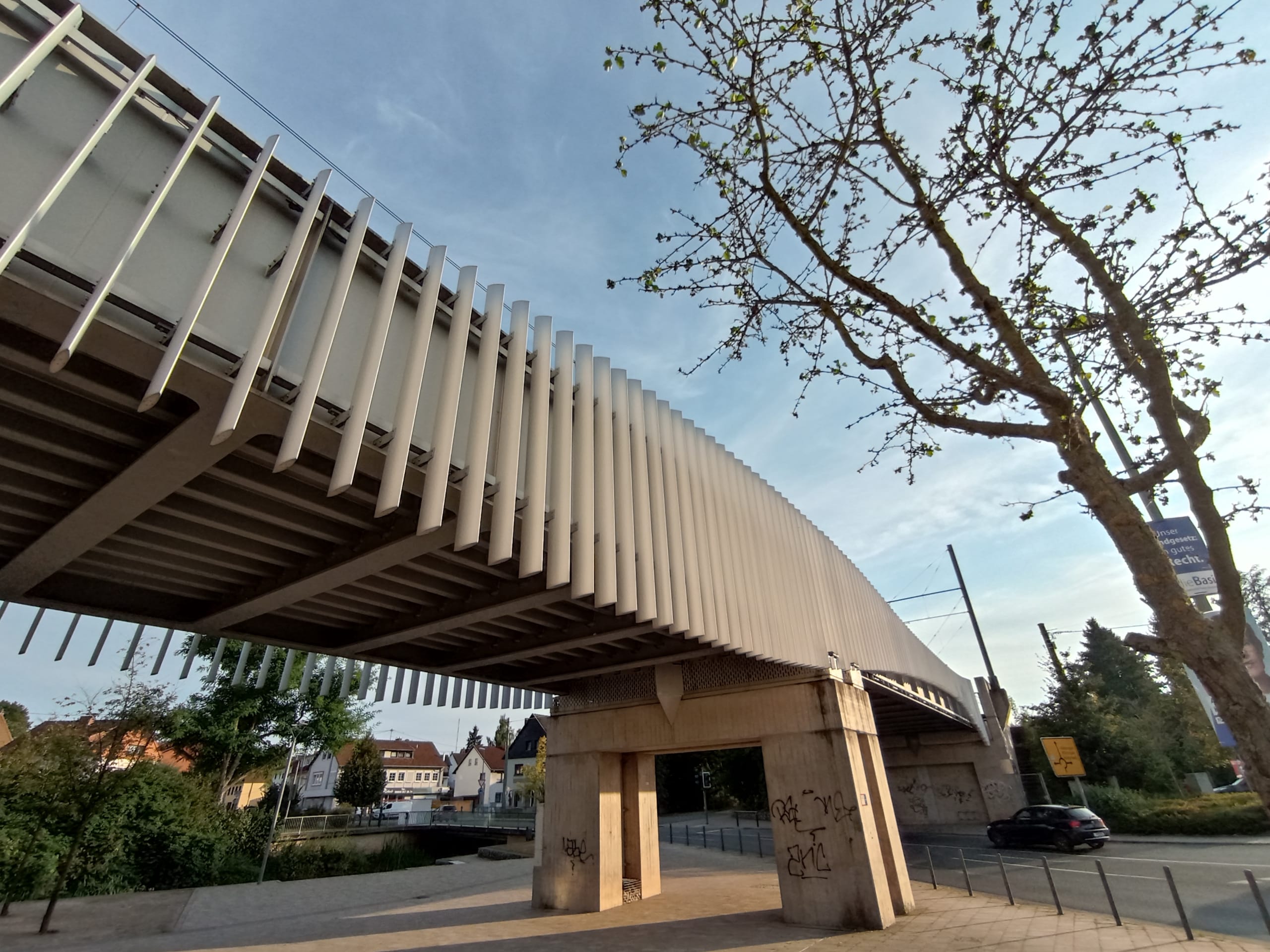
The ultrawide camera is a positive surprise, delivering surprisingly good shots for this price range. Vibrant colours, good sharpness and hardly visible distortions at the edges characterise the image quality.

Other sensors
Macro camera and depth sensor are – as is often the case – no functional gain. You will probably try the macro function only 1-2 times. Bokeh shots work well in good lighting with clean blur separation. The 8 MP front camera is adequate for selfies or video calls.
Video recording
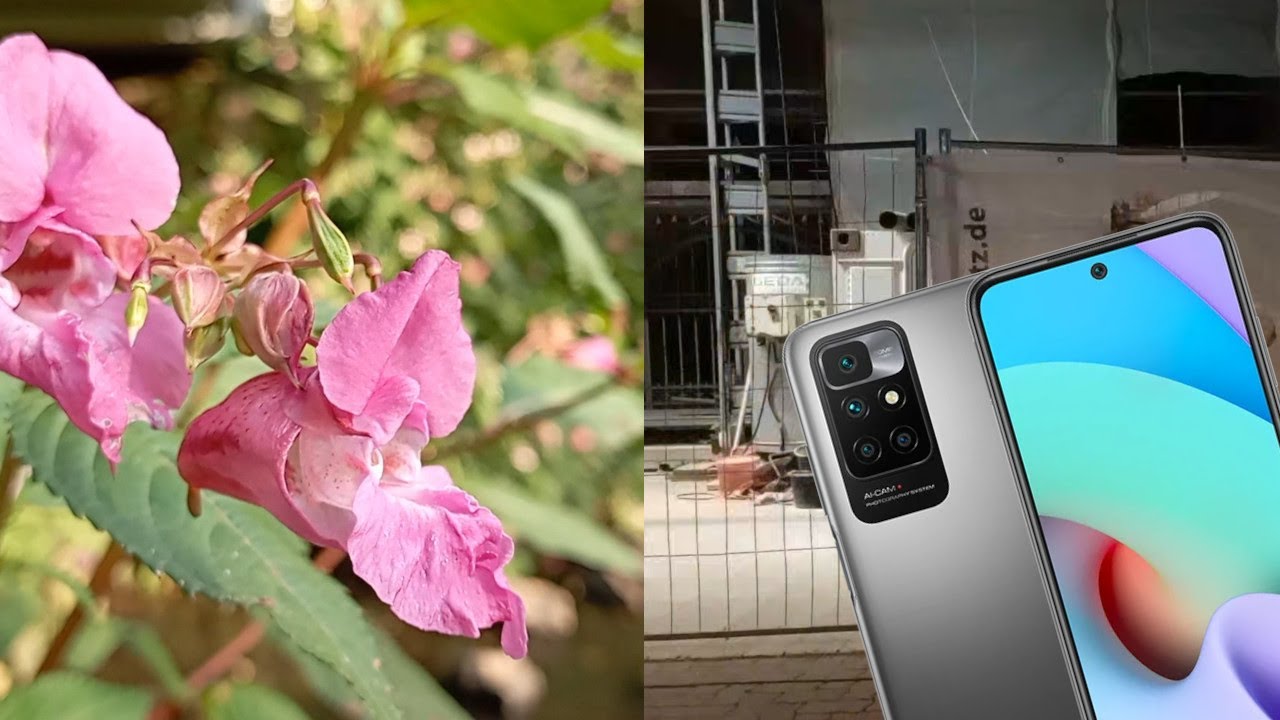
In contrast to the photo shots, the video function is disappointing. On the one hand, videos are recorded at a maximum of 1080p at 30 frames per second, and on the other hand, a useful electronic image stabilisation is missing. If you are as shaky as I am, it is simply not possible to record usable videos. You can get an idea of the video quality here:
 Play video on YouTube
Redmi 10: Connectivity
Mobile network
The Redmi 10 scores points mainly on connectivity. The smartphone supports all 2G, 3G and 4G mobile network frequencies or bands commonly used in Europe. Mobile reception is strong, and voice quality is excellent both via the earpiece and the speakerphone. Interference noise is very effectively suppressed by the second microphone without compromising quality. Both VoLTE and VoWiFi are supported.
Wi-Fi and Bluetooth
Again, there is nothing to complain about. Over Wi-Fi, the Redmi 10 convinces with good range and decent data throughput. Bluetooth version 5.1 is available.
GPS and sensors
The Redmi 10 is capable of navigating without deviations or dropouts. The smartphone determines the exact position within seconds. For positioning, the smartphone relies on GPS and the satellite navigation systems Galileo, GLONASS and Beidou.
The sensors include an accelerometer, an e-compass, a proximity sensor, an ambient light sensor, a virtual gyroscope and an e-compass. This is fairly standard so far.

A special feature is the IR blaster (infrared transmitter). In combination with the pre-installed “Mi Remote” app, various electronic devices such as TVs, audio systems or DVD players can be controlled via the smartphone. The device must, however, have an infrared receiver. A broad list of manufacturers and devices is already pre-configured in the app.
The availability of NFC is significant, particularly for mobile payments. It is essential to check which version of the Redmi 10 you intend to buy. The global version does not include NFC. The EU version, however, supports NFC and thus enables mobile payments (Google Pay).
Fingerprint scanner
The fingerprint scanner is integrated into the side power button. The recognition rate is good and the smartphone unlocks quickly.
Stereo speakers
A stereo speaker is not usually found in this price range. Instead of using the earpiece as an additional speaker, the Redmi 10 has a speaker built into the top and bottom of the frame. The sound quality is good and exceeds that of a standard mono speaker. However, you should not expect powerful sounds with deep bass.
Redmi 10: Battery
The 5000 mAh battery of the Redmi 10 easily gets you through the day. With average usage, such as occasional calls, WhatsApp, web browsing and a bit of YouTube, more than 2 days of runtime is realistic.
The 18 watt “fast charging feature” is not as fast as one might possibly suspect. A charge from 1 to 100 per cent takes just over 2 hours. Incidentally, you can use the Redmi 10 as a power bank. In the reverse direction (reverse charging), devices can be charged with up to 9 watts.
Our verdict
How high should the price for a smartphone actually be? As the Redmi 10 very well demonstrates, there is already a smartphone for less than 200 euros that offers pretty much everything the average consumer needs.
A modern 90 Hz display, sufficient storage and processor performance, NFC for mobile payments, excellent battery life and outstanding voice quality with VoLTE and VoWiFi support speak in favour of the Redmi 10.
Nevertheless, the Redmi 10 won't have an easy time. Anyone willing to spend just a few euros more will partly get better devices that, for example, feature an AMOLED panel instead of a 90 Hz DotDisplay or support fast 5G mobile connectivity. Such devices can be found not only from competitors but also from Xiaomi itself, which seems to launch new smartphones on the market almost weekly. The differences usually lie only in design and details. So where do you draw the line?
If your personal (price) limit is under 200 euros, the Redmi 10 is a very interesting entry-level smartphone with a good price-performance ratio that we can recommend without hesitation.
Specifications
Processor and memory
- CPU
- MediaTek Helio G88
- GPU
- Mali-G52 GPU
- Storage
- 4+64GB, 4+128GB, 6+128GB (LPDDR4X + eMMC)
- Storage expansion
- Yes
Display
- Display size
- 6.5 inches
- Display resolution
- 2400 x 1080 pixels
- Display refresh rate
- 90 Hz
- Display type
- LCD
- Screen protector
- Corning Gorilla Glass 3
- Multitouch
- 10 fingers
Cameras
- Main camera
- 50 MP Samsung S5KJN1 (f/1.8 aperture)
- Ultra-wide-angle camera
- 8 MP Sony IMX355 (120° - f/2.2 aperture)
- Macro camera
- 2 MP (f/2.4 aperture)
- Depth camera
- 2 MP (f/2.4 aperture)
- Front camera
- 8 MP (f/2.0 aperture)
Mains
- Dual SIM
- Yes
- SIM size
- Nano SIM
- eSIM
- No
- 2G GSM
- 850 900 1800 1900MHz
- 3G WCDMA
- 1/2/4/5/8
- 4G LTE FDD
- 1/2/3/4/5/7/8/20/28
- 4G LTE TDD
- 38/40/41
Wireless
- Wi-Fi
- 802.11 a/b/g/n/ac
- Bluetooth
- 5.1
- GPS
- Yes
- NFC
- Yes (EU version)
Sensors
- *Ambient light sensor
- *Accelerometer
- *Proximity sensor
- *E-compass
- *Gyroscope (virtual)
- *Fingerprint sensor
- *IR transmitter
Battery
- Battery
- 5,000 mAh
- Fast charging function
- 18 watts
- Qi charging
- No
Other
- Operating system
- Android 11 (MIUI 12.5)
- Audio
- 3.5mm headphone jack / stereo loudspeaker
- Connection
- USB-C
- Size
- 161.95 x 75.53 x 8.92 mm
- Weight
- 181g
What’s included
1x Smartphone 1x Protective case 1x Charger (22.5W) 1x USB cable 1x SIM needle 1x Manual
Price comparison
| Store | Price | Link |
|---|
Comments (1)
Thanks for the interesting and helpful report. I'm currently looking for a new phone.