Contents
Design and build quality
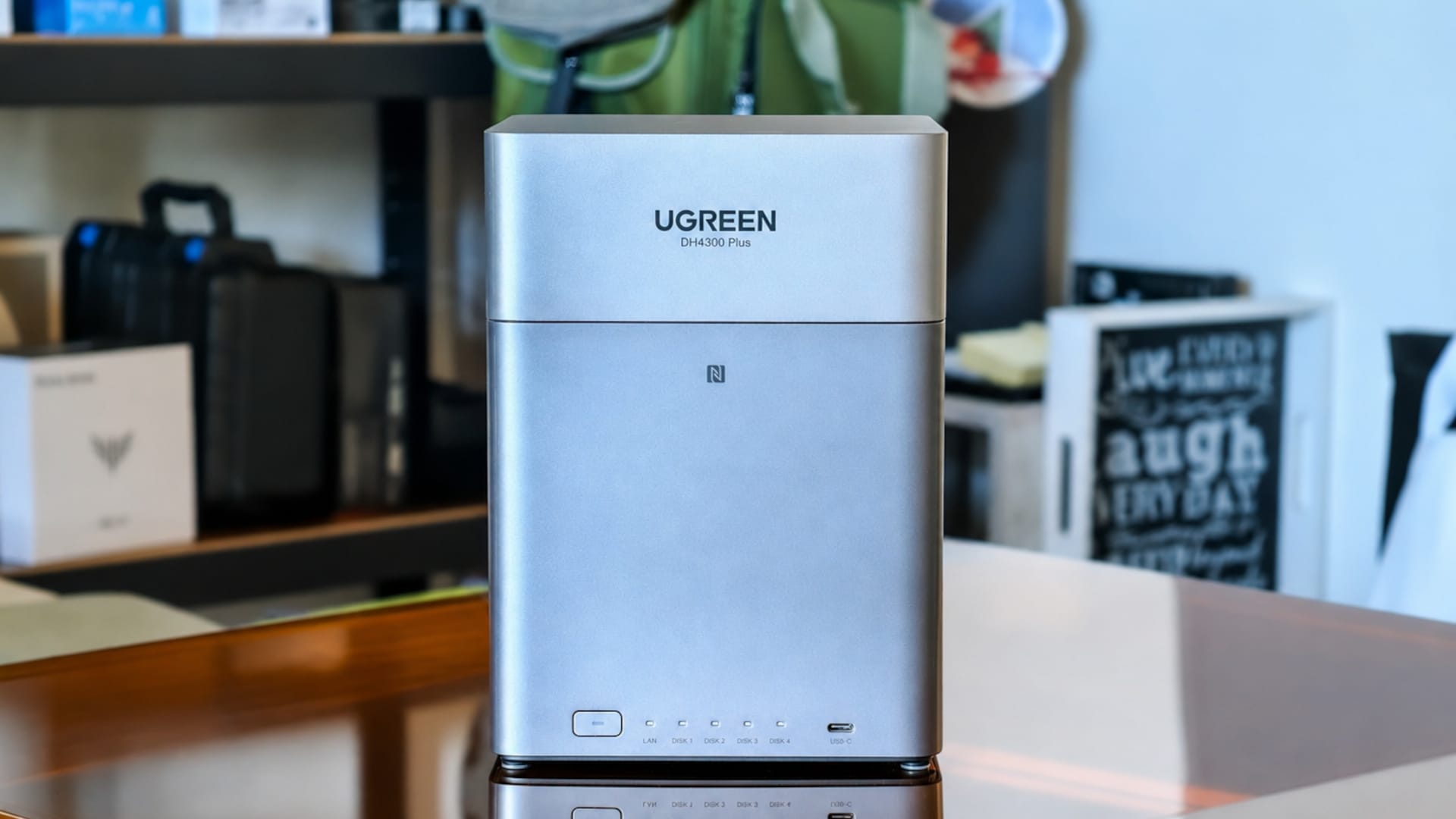
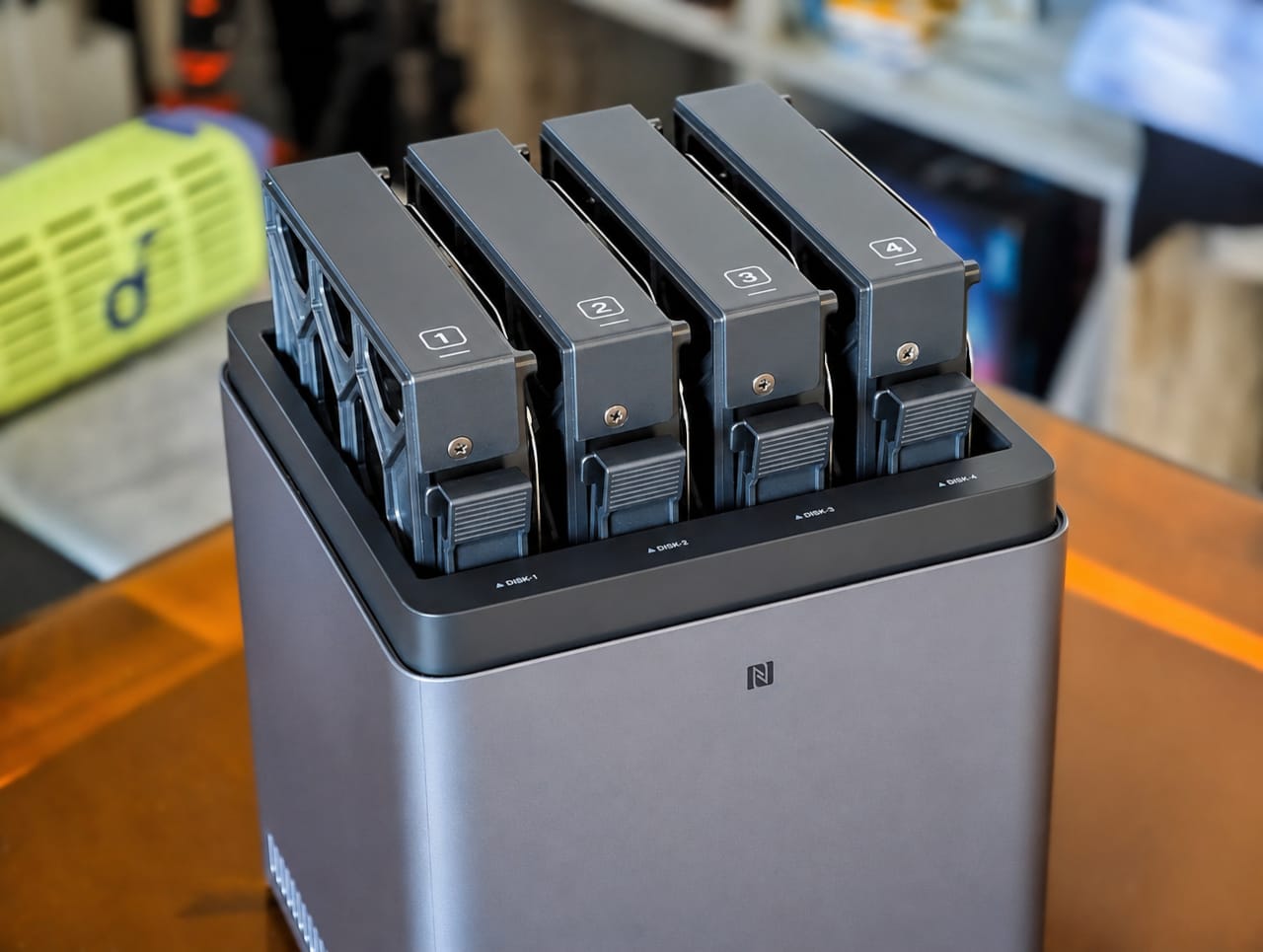
UGREEN does away with the traditional wide front panel with visible hard drive bays and positions the case vertically. The four HDDs are inserted from above and hidden beneath a magnetic cover. This makes the DH4300 Plus pleasantly compact for a 4-bay NAS, with its 155 × 155 × 215.7 millimetres taking up very little space. The build quality is also good. The matt case looks neat, ventilation works well, and there were no failures even after six months of continuous operation.
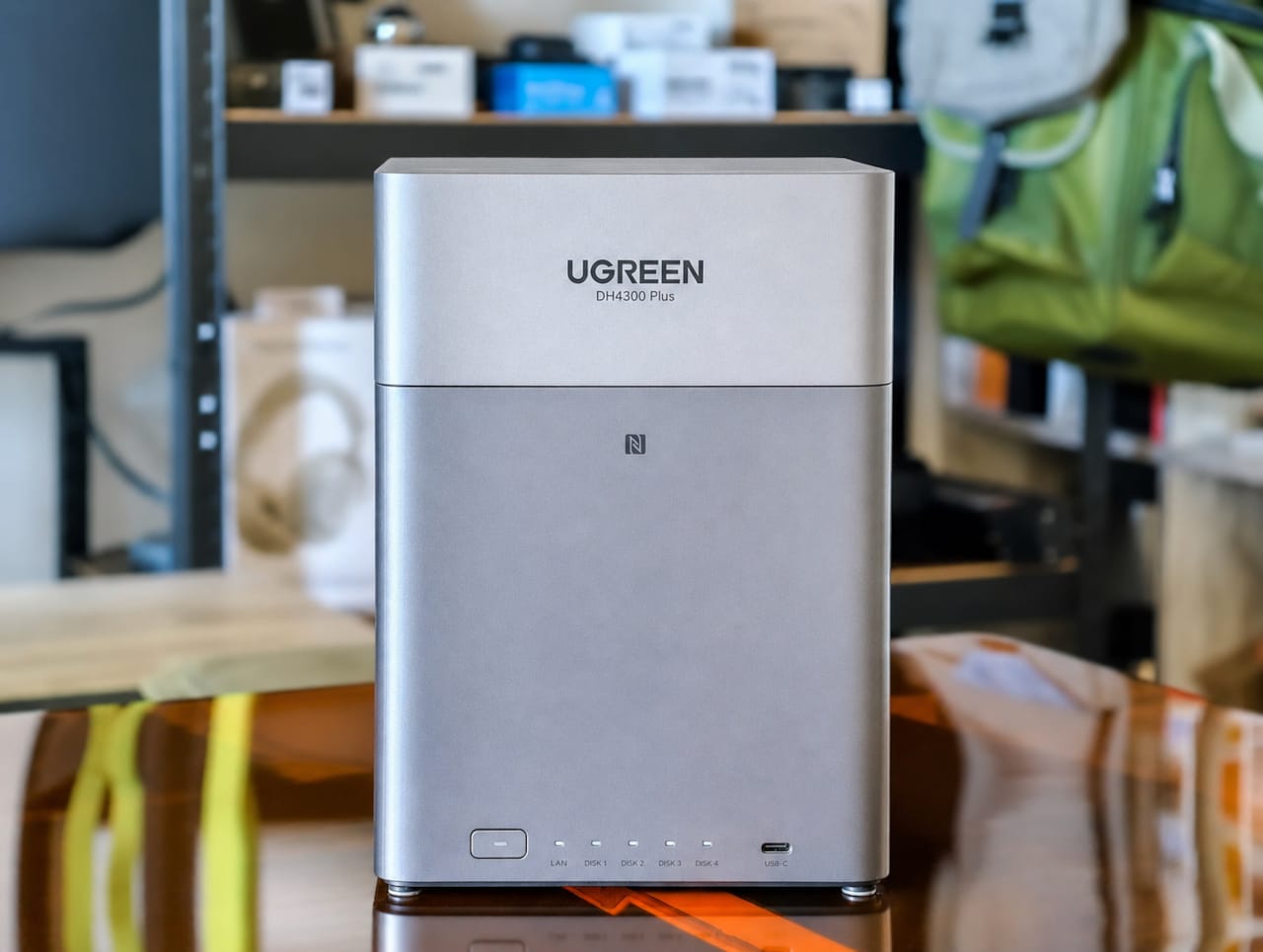
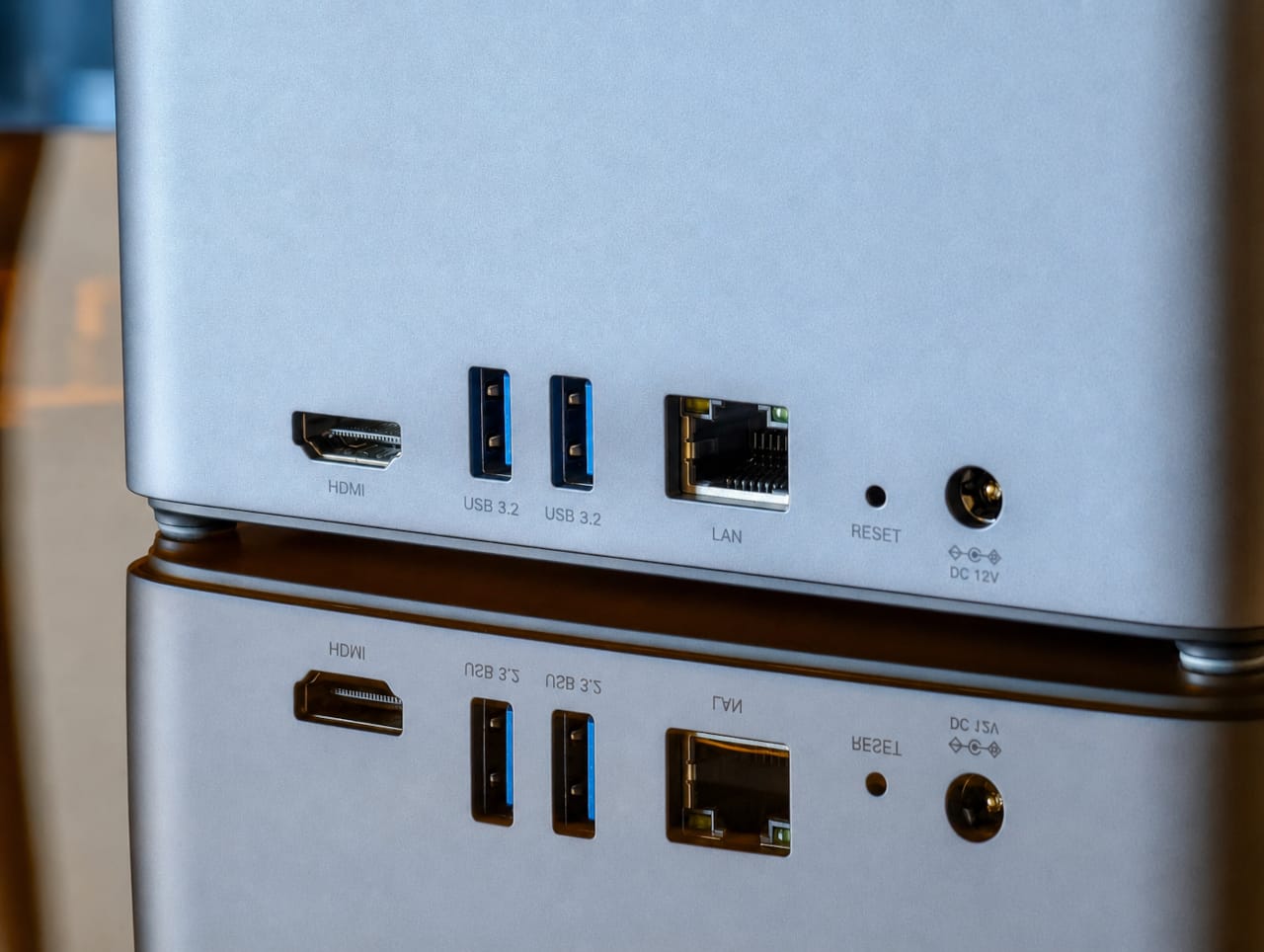
The ports on the back include a 2.5 Gigabit LAN port, USB-A, and HDMI with up to 4K output. On the front are the power button, drive LEDs, and a USB-C port. Instead of being installed tool-free, the 2.5" or 3.5" hard drives are screwed into the brackets. Screws and a screwdriver are included. For the test, I installed four WD Red Plus drives, each with 4 TB of storage. The maximum supported storage capacity is 128 TB.
Hardware and performance
The NASync DH4300 Plus is powered by a Rockchip RK3588. The ARM chip combines four high-performance Cortex-A76 cores with four power-efficient Cortex-A55 cores. It also features a Mali-G610 GPU and a 6 TOPS NPU. UGREEN also includes 8 GB LPDDR4X RAM and 32 GB eMMC storage for the operating system.
File sharing, backups, photo management, and smaller server services don't put the RK3588 under much strain. The hardware has enough headroom to keep the system feeling fast even when it's running more than just an SMB share. However, UGREEN limits expandability. The RAM is soldered in place, there are no internal M.2 slots, and there is no second network port.
The setup itself is straightforward. The NAS is detected on the network through the UGREEN app or web interface, after which you can create a storage pool, configure RAID, and add users step by step. It supports Basic, JBOD, and RAID 0, 1, 5, 6, and 10, covering the standard configurations.
With four 4-TB hard drives in RAID 5, I achieved average speeds of around 280 MB/s for reading and 245 MB/s for writing . Speeds predictably drop with many small files, although an SSD cache could certainly have helped here. Power consumption with four HDDs is around 8 watts at idle and about 25 watts during intensive writes.
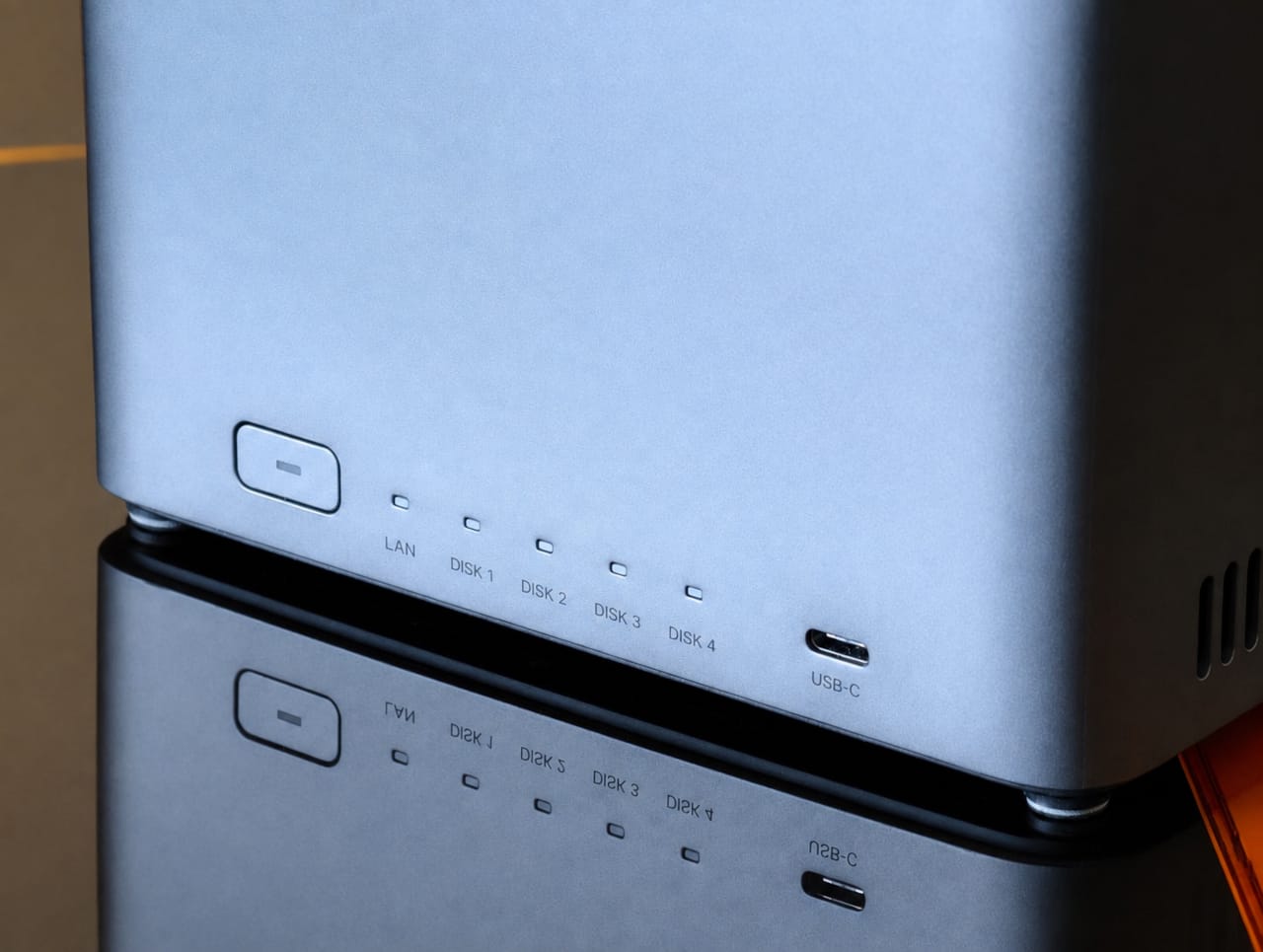
Acoustically, the NAS is also restrained. The fan is barely an issue; the usual HDD access noises are more noticeable.
UGOS Pro
The interface resembles a classic desktop and clearly displays storage, network, system load, and the status of the installed drives. In terms of features, UGREEN still doesn't quite match Synology DSM or QNAP QTS. However, backups, synchronization, Time Machine, media management, remote access, and smartphone backups are available. Docker is also integrated, although the ARM64 platform requires compatible containers and the 8 GB of RAM leaves little room to spare.

What I particularly liked was the local photo management without any cloud. Images are analysed directly on the NAS by people, subjects and places where they were taken. Facial recognition worked well with my collection and sometimes recognised people even when they were not looking directly at the camera. Search terms such as "dog", "car" or "mountains" also produced useful results.
Those planning to use the NAS as a media server can hardware-decode formats including H.264, H.265, VP9 and AV1 at up to 8K and 60 frames per second. It also has HDMI 2.1, so it can be connected directly to a TV or monitor.

Unlike many models in the DXP series, the DH4300 Plus is not designed for alternative operating systems such as Unraid or TrueNAS. Because of its ARM platform, there is no conventional BIOS access, so UGREEN expressly advises against replacing UGOS with another operating system.
Our verdict
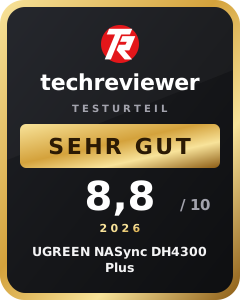
After more than six months, the UGREEN NASync DH4300 Plus has proved to be a reliable 4-bay NAS for me. Its hardware is no longer at the top of the NASync range, but it still offers more than enough performance for backups, photo archives and central file storage.
UGOS Pro has also developed well during this time. The operating system runs reliably, includes the key NAS features and can be flexibly expanded using Docker. I particularly like the local photo management, especially for larger image collections. Synology and QNAP still offer a more comprehensive software ecosystem, but this advantage now matters considerably less for many typical NAS tasks.
The weaknesses are almost entirely related to expandability. The RAM is soldered in place, there are no NVMe slots, and the device is not designed to run another operating system. However, anyone who simply wants to back up files, manage photos, and run a few services is unlikely to mind.
Specifications
General
- Model
- DH4300 Plus
- Operating system
- UGOS Pro
- Dimensions
- 155 × 155 × 215.7 mm
- Operating temperature
- 0–40 °C
Hardware
- CPU
- A76 + A55 octa-core, up to 2.4 GHz
- RAM
- 8 GB LPDDR4X (not expandable)
- System memory
- 32 GB eMMC
- AI performance
- 8 TOPS
Storage
- 4× SATA (6 Gbps)
- Supported drives
- 2.5" / 3.5" HDD/SSD
- Maximum total capacity
- up to 120 TB
- RAID
- 0/1/5/6/10, JBOD, Basic
Ports
- 1× 2.5 GbE LAN
- 1× HDMI (4K)
- 1× USB-C 3.2 Gen 1 (5 Gbps)
- 2× USB-A 3.2 Gen 1 (5 Gbps)
Energy
- Consumption active
- 22,89 W
- Idle consumption
- 7,23 W
- Power adapter
- DC 12V / 6A
Safety
- Firewall
- DoS protection
- Auto-block
- Two-factor authentication
- Real-time virus scan
- User and folder permissions
What’s included
1x UGREEN NASync DH4300 Plus main unit 1x external power supply (12V/6A) 1x Ethernet cable (CAT 6) 1x set of mounting screws for drives 1x screwdriver 1x quick-start guide and warranty card Hard drives are not included.
Price comparison
| Store | Price | Link |
|---|---|---|
| Amazon | 309,98 € | Go to store |

Comments