Contents
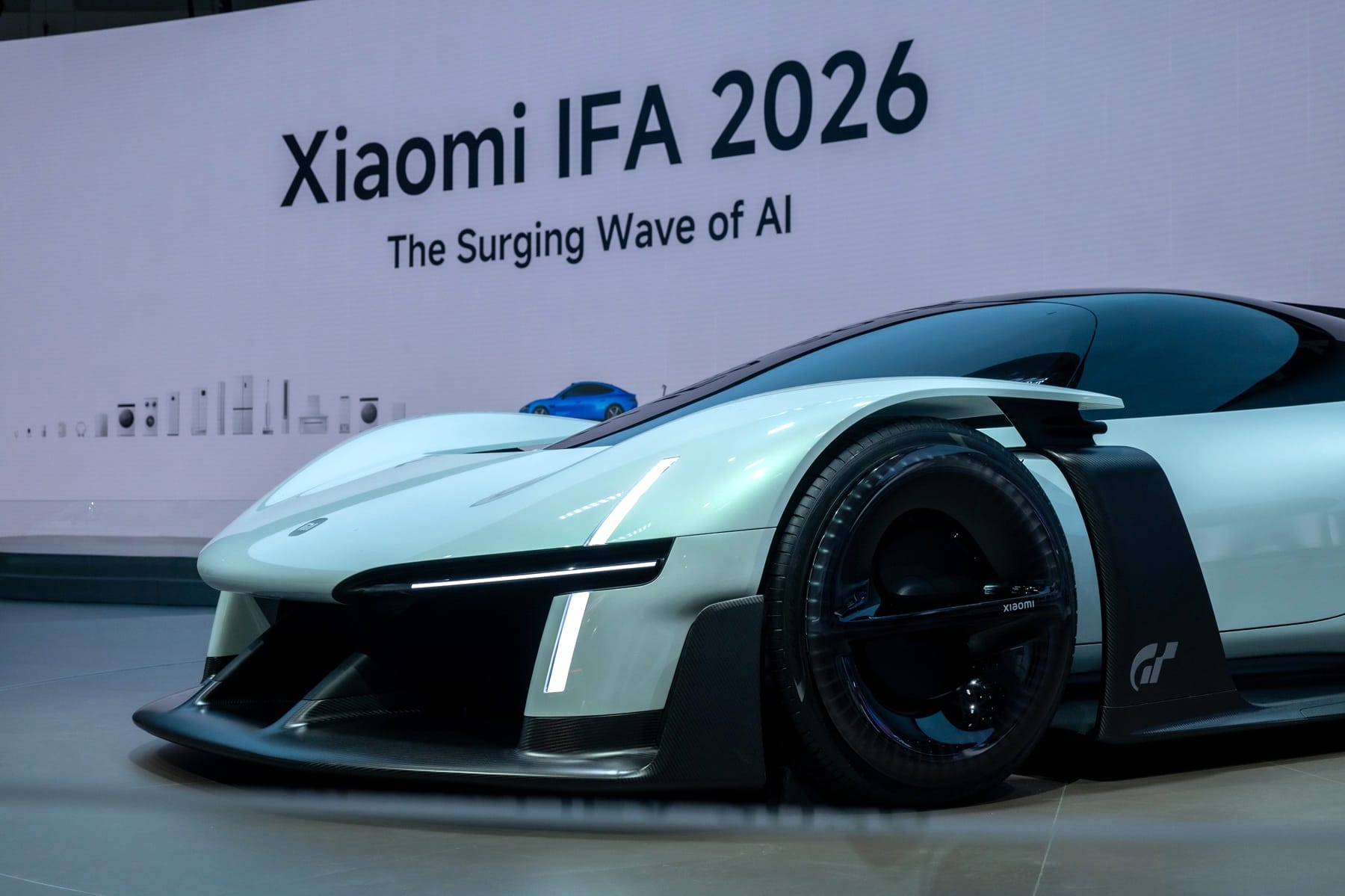
At IFA 2026, Xiaomi is presenting its first standalone trade show booth in Europe, covering more than 3,300 square meters. The focus is on the “Human x Car x Home” concept, which the company aims to use to better integrate smartphones, wearables, home appliances, smart home products and vehicles.
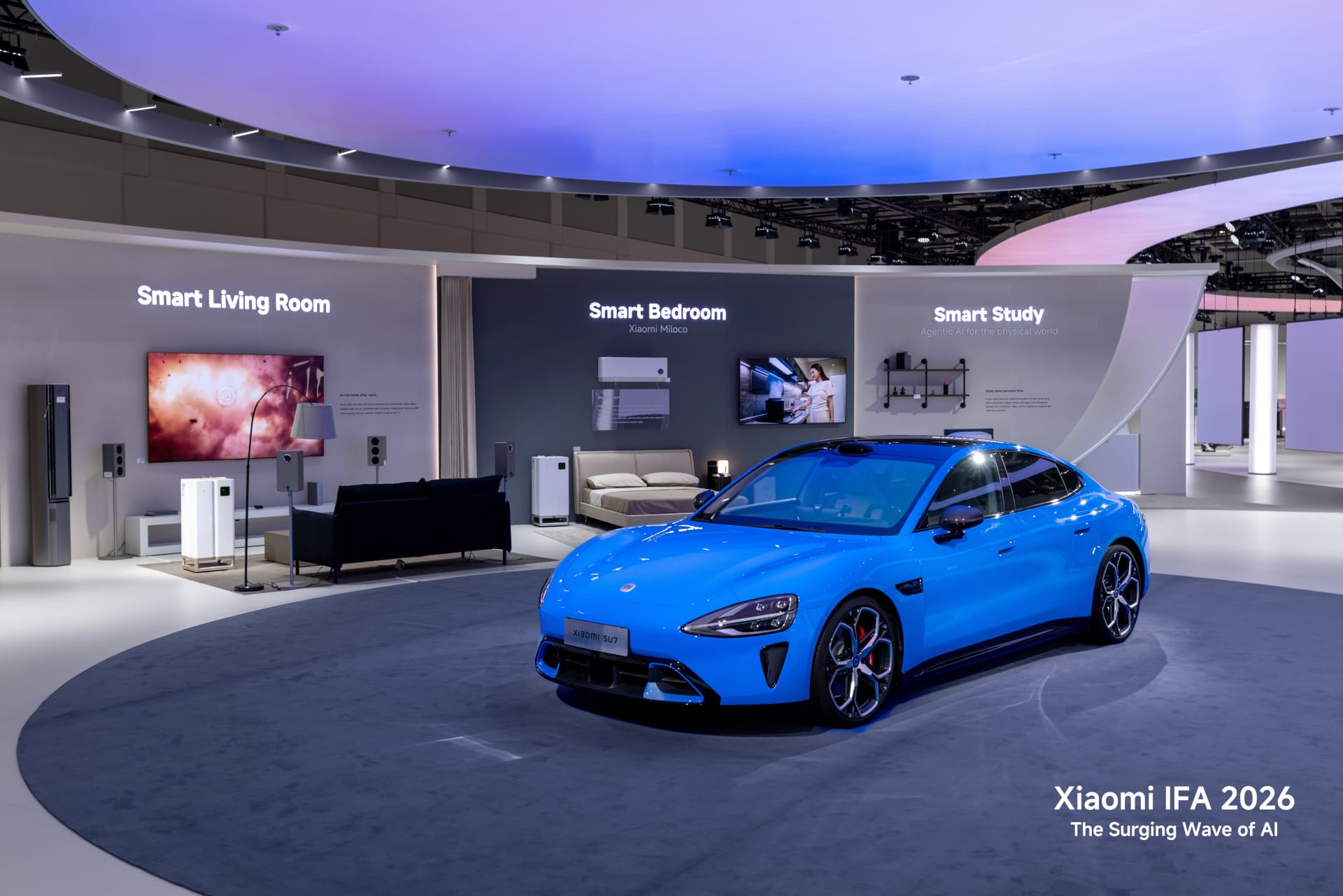
Xiaomi HyperOS and artificial intelligence are expected to provide the main technological foundations for this. In future, devices are not just meant to be connected to one another, but also to combine information from different everyday situations and respond accordingly. In Berlin, for example, Xiaomi demonstrated a scenario in which the lighting and air conditioning are adjusted based on the time, location and weather before the user returns home.
Xiaomi divides its IFA appearance into three areas
Xiaomi has divided the exhibition into the areas “AI Tomorrow” and “AI Today”, as well as the “Human x Car x Home” product portfolio itself.
“AI Tomorrow” aims to offer a glimpse of future mobility concepts with the Xiaomi Vision Gran Turismo concept car. In the “AI Today” section, Xiaomi presents more concrete use cases involving vehicles and connected living spaces. The exhibition portfolio comprises more than 380 products across seven categories, including household cleaning, air quality, entertainment, security, personal devices and mobility.
The ambition goes beyond that of a conventional smart-home platform. Xiaomi wants to connect personal devices, vehicles and household products through a shared software and AI infrastructure. According to the company, more than 1.1 billion IoT devices are already connected to its platform, not including smartphones, tablets and notebooks.
AI should be more than a voice assistant
Xiaomi is focusing on AI that does more than answer individual queries: it is designed to recognize situations and coordinate multiple devices.
For example, a smartphone, a printer and other devices could all respond to the instruction to print the photo that was just taken. Lighting, blinds and room temperature are also supposed to adjust automatically to certain activities.
Xiaomi is also continuing to develop its own AI models. At IFA, the company names MiMo-V2.5-Pro, Xiaomi Miloco and Xiaomi Miclaw, among others. They are intended to enhance capabilities in understanding, logical reasoning and carrying out more complex tasks.
Xiaomi 18 Fold with its own XRING-O3 chip
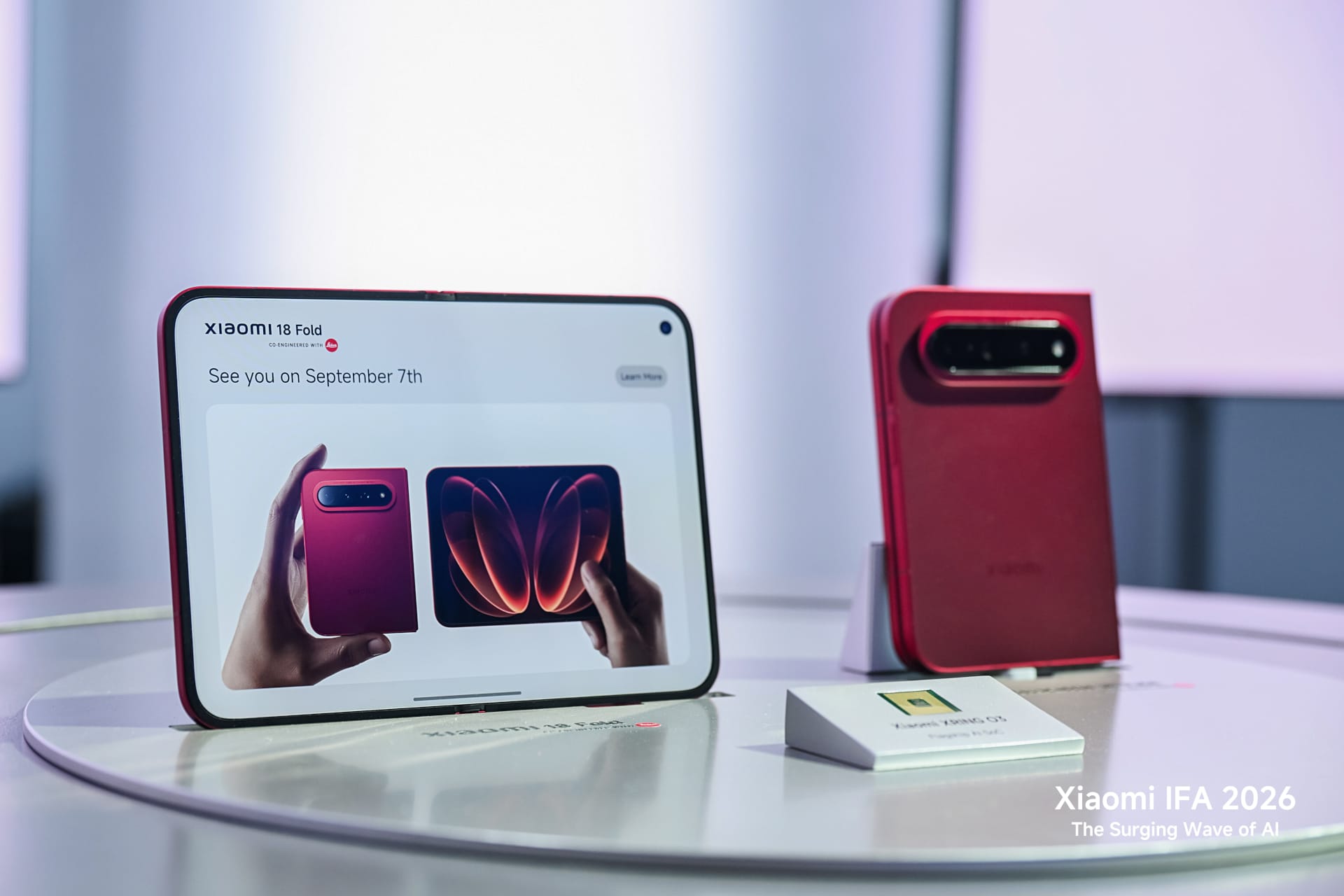
Xiaomi also aims to become more independent in hardware. At IFA, the company is showcasing the Xiaomi 18 Fold, which is the first to feature its in-house XRING O3.
Xiaomi sees its own chips as an important building block for local AI computing, performance and energy efficiency. The company is also presenting a new AI computing platform, which is intended to provide AI features across devices.
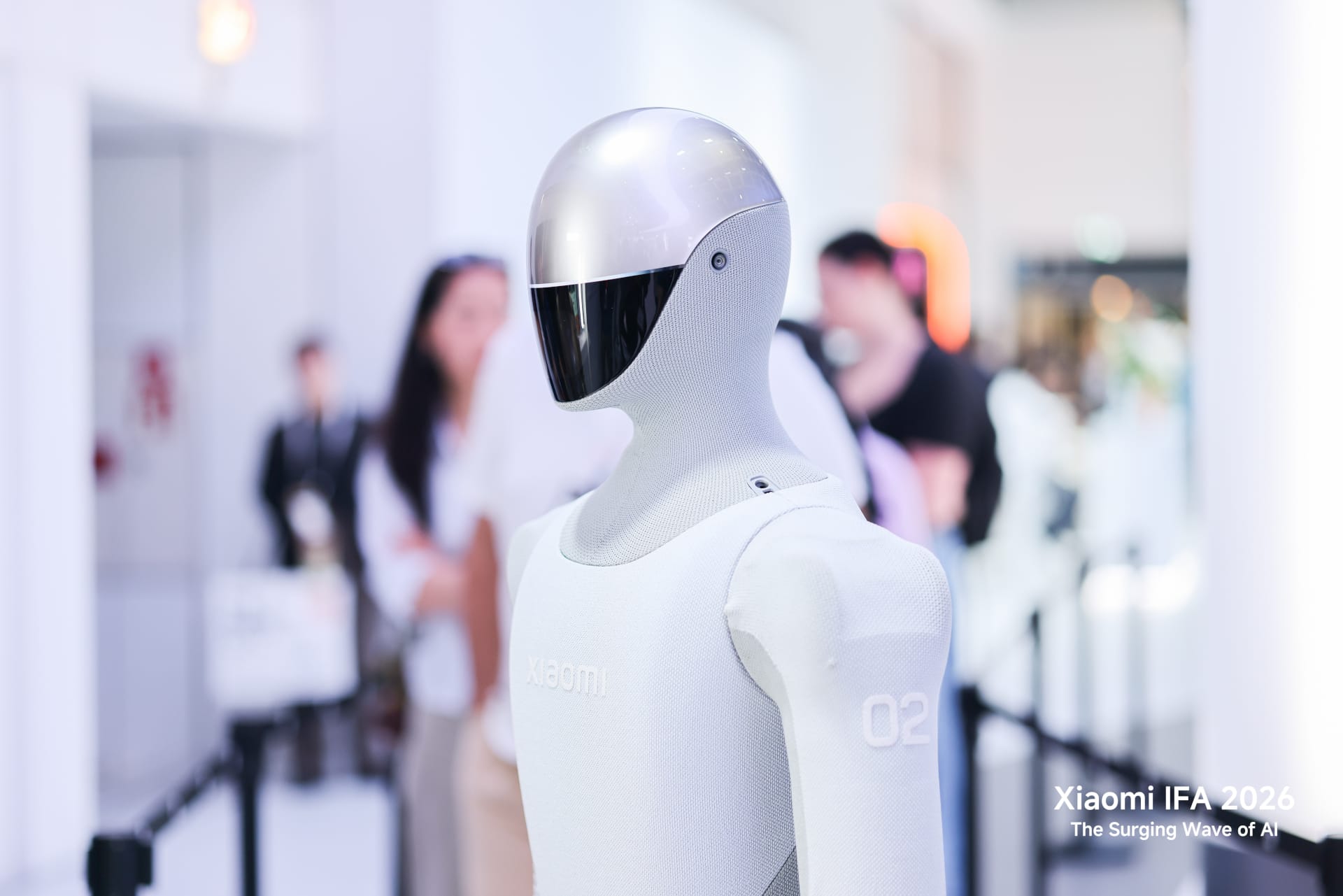
Another part of the technology strategy is automating in-house production. Xiaomi’s factories already use intelligent manufacturing systems. Humanoid robots are also being tested. According to the company, the success rate for certain assembly tasks at the Xiaomi Auto Factory rose from around 90 to 98 per cent within four months.
Xiaomi Auto is set to arrive in Europe in 2027
The automotive division is likely to be of particular interest to European customers. Xiaomi is showcasing three vehicles at IFA.
Alongside the virtual Xiaomi Vision Gran Turismo concept, the new generation of the Xiaomi SU7 series and the Xiaomi SU7 Ultra are on display. The vehicles are intended to work closely with smartphones and smart home products via HyperOS.
Since its market launch in March 2024, Xiaomi says it has delivered more than 700,000 vehicles in mainland China. Entry into the European market, including Germany, is planned for 2027.
This would also bring the previously missing component of the “Human x Car x Home” concept to Europe. It remains unclear whether Xiaomi will offer the same models as in China when they launch.

Mijia is set to grow significantly in Europe
Xiaomi plans to expand its smart home business before then. The Mijia brand is set to gradually gain a significantly broader portfolio in Europe.
According to Xiaomi, Mijia includes more than 2,000 products across over 130 categories worldwide. Compatible devices can be controlled and combined using the Xiaomi Home app.
Xiaomi has not said exactly which new Mijia products will be released in Germany, or when. The only thing that is clear is that the range will be expanded gradually in Europe and more closely connected with other parts of the Xiaomi ecosystem.
Source: Xiaomi press release



Comments