Contents
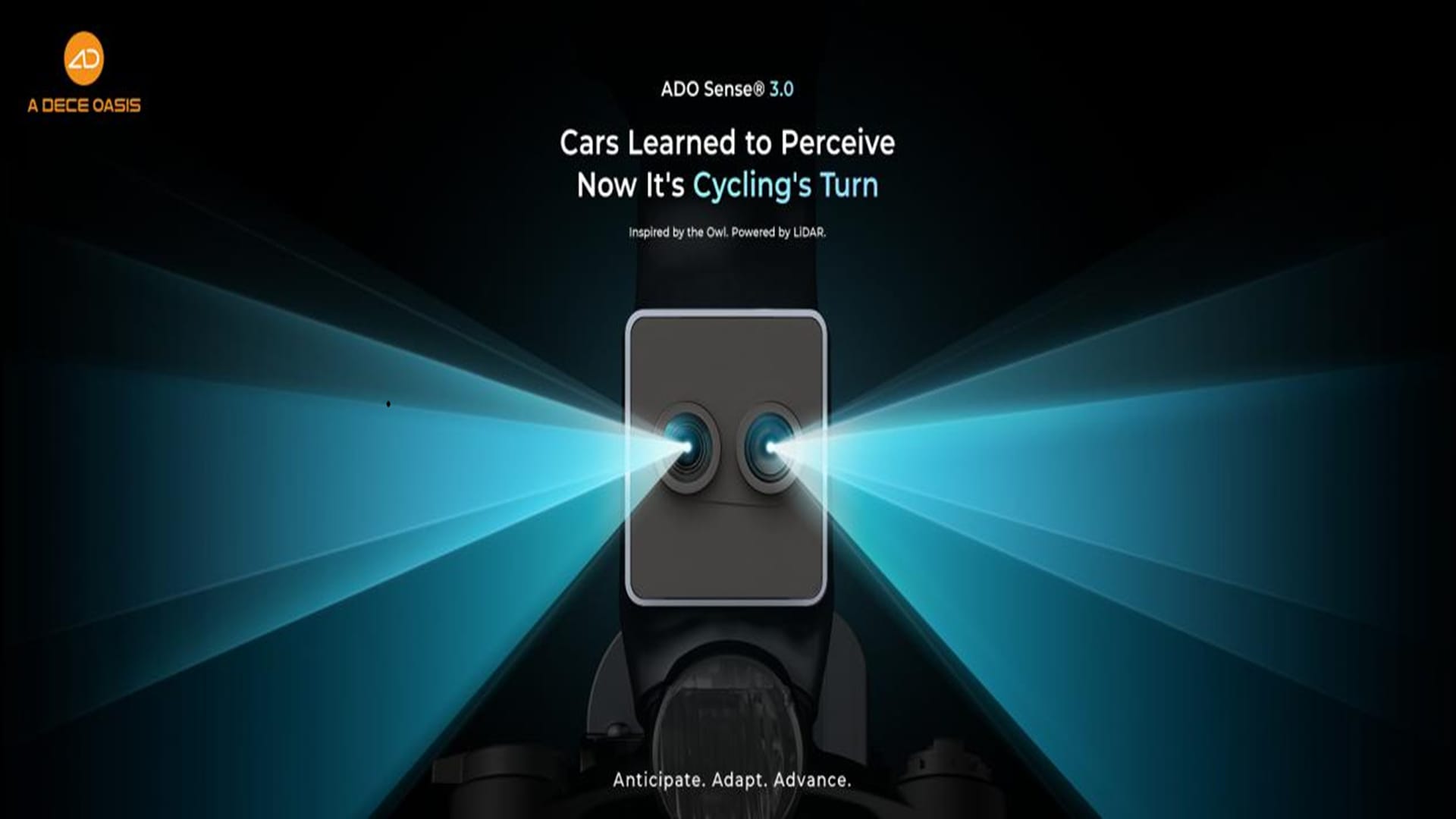
ADO Sense 3.0
In recent years, it is not only powertrain technology that has advanced in the automotive industry. A vehicle’s ability to perceive its surroundings is also becoming increasingly important. Sensors detect obstacles, monitor other road users and provide information about the current traffic situation.
By contrast, development in the e-bike sector focused for a long time primarily on longer ranges, lighter frames and the most natural possible motor assistance. Riders still have to keep almost exclusive track of what is happening on the road themselves.
ADO wants to change that with Sense 3.0. The new system was developed for use on e-bikes and combines two different types of sensor, each monitoring a different area around the bike.
LiDAR scans up to 20 metres ahead
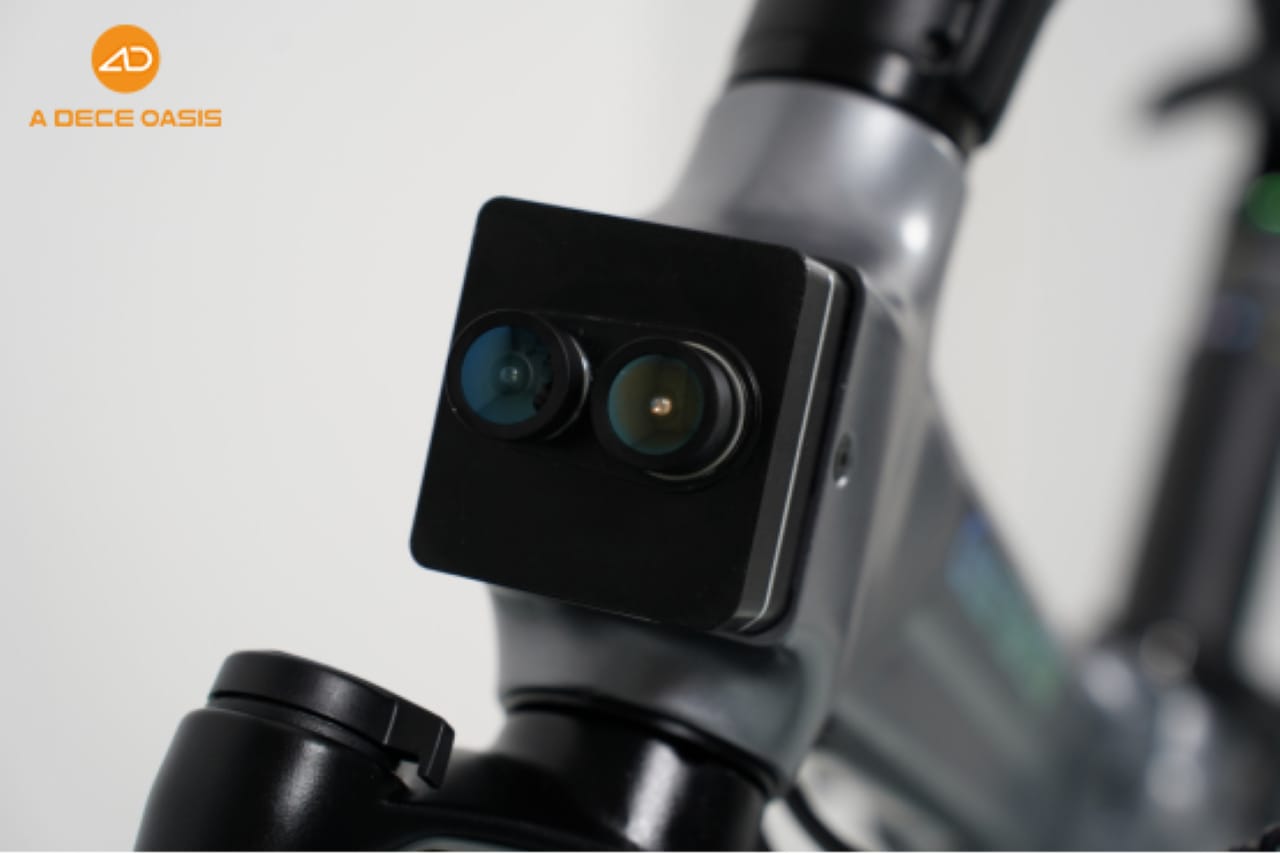
A LiDAR sensor is used at the front of the e-bike. As you ride, it continuously scans the area up to 20 meters in front of the bike, generating 3D data about its surroundings in real time.
LiDAR works by emitting pulses of light. The time these pulses take to travel to an object and back can be used to determine distances and spatial structures.
According to ADO, Sense 3.0 is designed to detect obstacles, the course of the road and changes in the surface. This gives the system a spatial picture of the area the e-bike is moving towards. The information could help identify difficult situations earlier and make riding through complex urban environments smoother.
Radar monitors traffic from behind
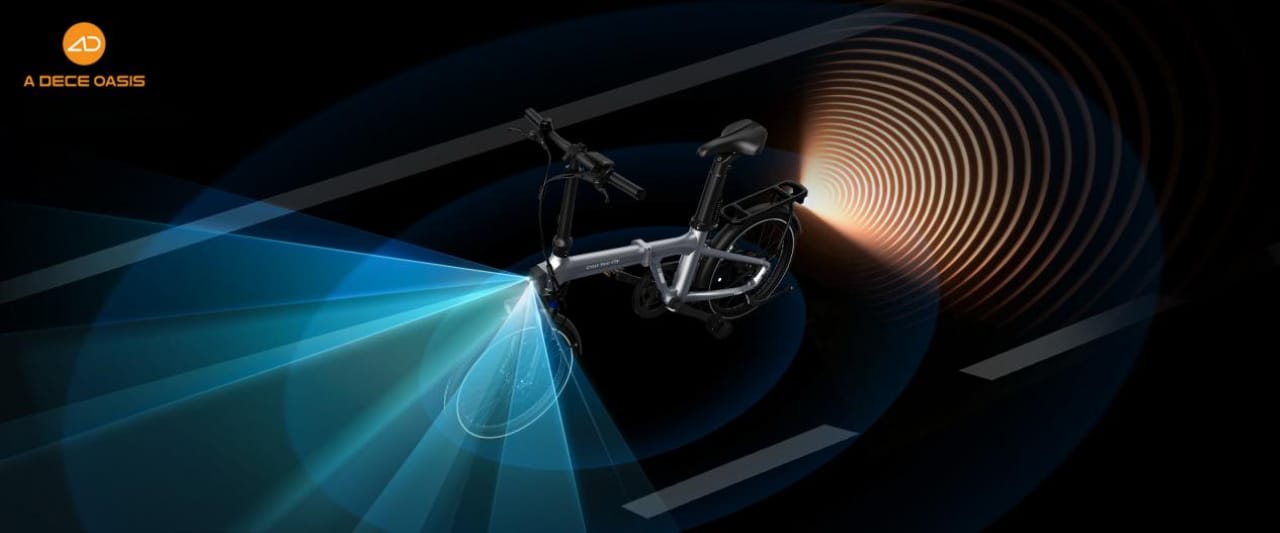
While the LiDAR looks ahead, a millimetre-wave radar at the rear monitors traffic behind. The sensor is designed to detect objects approaching the e-bike from behind and determine both their position and speed.
For blind-spot detection, ADO specifies a monitored area of five by five metres. According to the manufacturer, the lane-change assist reaches up to 40 metres behind the vehicle and covers a five-metre-wide corridor.
For example, the system could detect approaching vehicles before they are right beside the e-bike.
Both sensors work together
The LiDAR at the front and the radar at the rear do not provide their data independently of one another. Sense 3.0 combines information from both sensors using what is known as sensor fusion.
This creates a more comprehensive picture of the immediate traffic situation. LiDAR scans the road ahead, while radar simultaneously monitors what is approaching from behind. ADO aims to cover areas that the rider cannot constantly monitor themselves while riding.
“We believe the next generation of e-bikes should not only provide electric assistance to riders, but also have a genuine understanding of their surroundings,” explains Sen, founder of ADO E-Bike.
Sense 3.0 is not intended to replace the rider. Instead, the goal is to gather additional information about the surroundings and make it available for assistance features.
Combination with an automatic shifting system
ADO also links environmental awareness to automatic gear-shifting systems. These systems usually select a gear based on riding data such as speed, cadence or pedalling power.
Additional information about the route could provide another basis for adjusting the e-bike in future. This could mean that electric assistance and gear selection take account not only of the rider's inputs, but also of the current riding situation.
The company has yet to reveal exactly how closely ADO Sense 3.0 will be integrated with the motor and gears. For now, the manufacturer describes the combination mainly as a glimpse of future generations of e-bikes
Source: ADO

Comments