Contents
DJI Power 1000 Mini: Design, build quality and contents
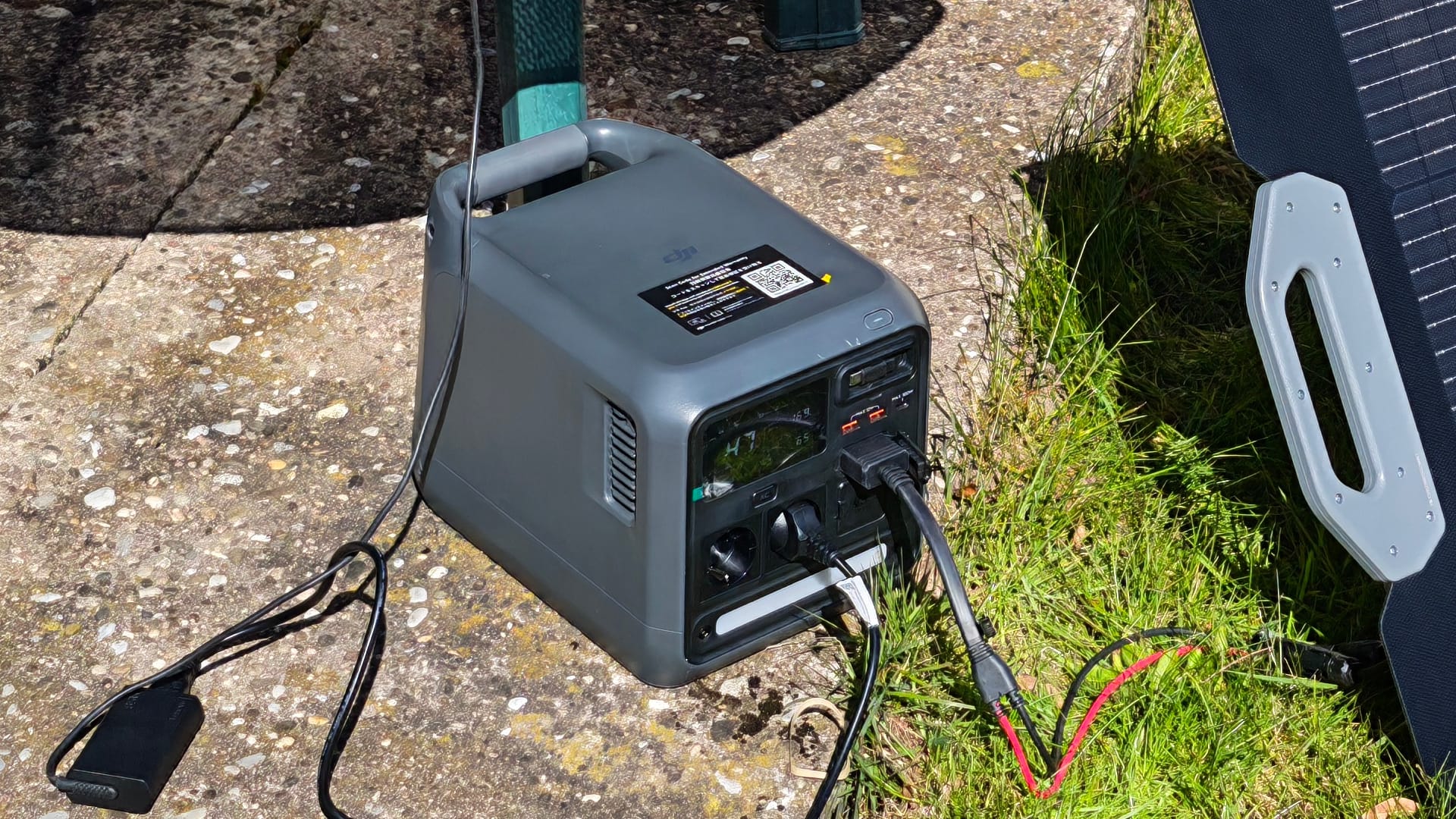
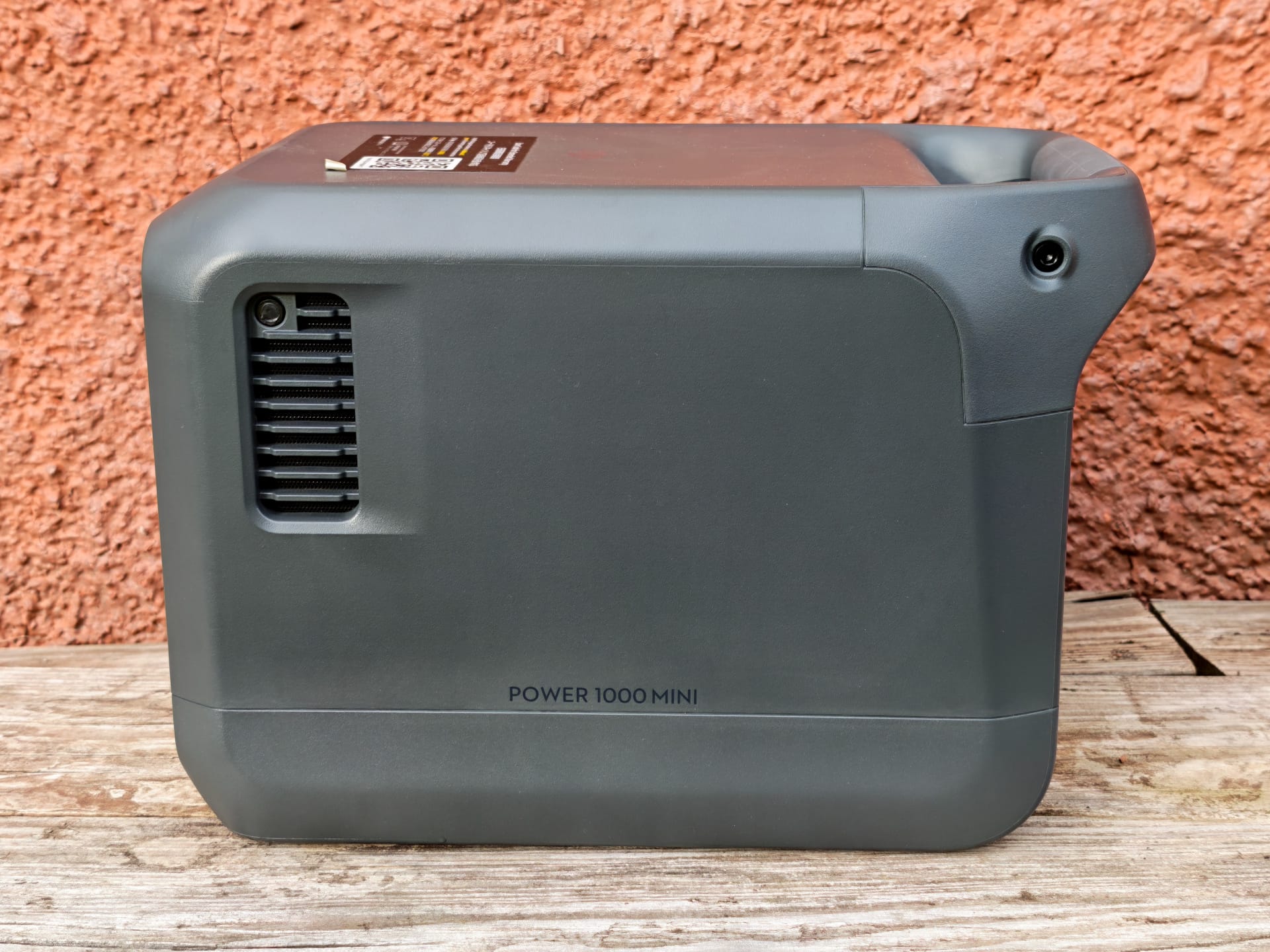
The DJI Power 1000 Mini comes in DJI's unmistakable dark grey, measures around 31.4 x 21.2 x 21.6 cm and weighs 11.5 kg. Unlike many other power stations, its casing is not elongated but rather cube-shaped. Think of it as two shoeboxes stacked on top of each other.
For transport, a handle integrated into the housing is located on the back. It’s perfectly adequate for short distances, but you might wish for a second handle on longer trips. Rubber feet on the bottom keep it stable. Fresh air is drawn in through the back, while warm air escapes through the sides.

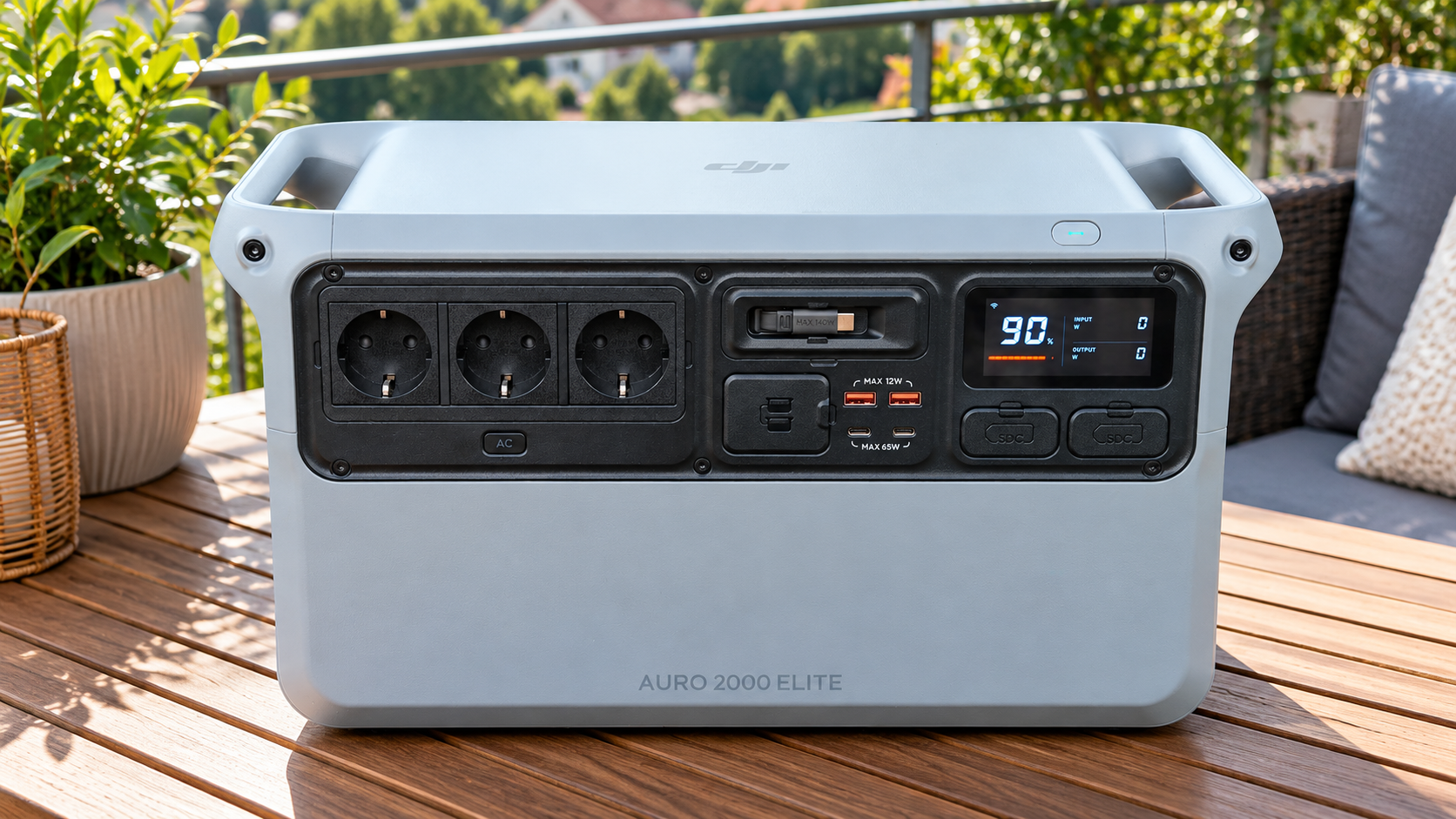
All the ports are easily accessible on the front. These include two 230-volt sockets with sufficient spacing, two USB-C ports supporting up to 100 W, one of which is integrated as a retractable cable, as well as two USB-A ports rated at 24 W. There is also an SDC port for DJI accessories such as car chargers or solar panels. Below the ports is an LED light strip that can be dimmed and also has a flashing function.
DJI keeps things minimalist when it comes to the contents. Alongside the power station itself, the box contains only a standard power cable, a quick-start guide and the usual documents. Car or solar charging, as well as other accessories such as SDC adapters, must be purchased separately.
DJI Power 1000 Mini: output
The two AC outlets deliver around 800 W continuously, with short-term output of up to around 1,000 to 1,200 W. That is enough to power many devices, but not everything at once. A kettle or coffee machine will work, but a hairdryer on full power or several high-power appliances running in parallel will draw too much.

Things get critical when devices with high starting currents are involved. A refrigerator may work, depending on the model, but it’s not guaranteed. Power tools and compressors are also a bit of a gamble. In such cases, the power station shuts down cleanly before things get problematic.
As usual, the usable capacity is lower than the stated 1.008 Wh. In practice, around 850 to just under 900 Wh is realistic from the sockets, and slightly less at lower loads. Overall efficiency is good, especially at low loads. The power station loses comparatively little energy when only small devices are connected.
The sine wave is smooth, so computer power supplies also run reliably on it. That was to be expected, though.
DJI Power 1000 Mini: Charging
The DJI Power 1000 Mini charges from a power socket at up to 1,000 W, reaching a full charge in just over an hour. That is more than advantageous when time is short. Alternatively, the power station can also be charged via USB-C at up to 100 W. This is considerably slower and is better suited as a backup option, for example when you only have a compatible power adapter to hand while travelling. A full charge will take several hours this way.

Optional accessories make things more interesting. The SDC port supports charging at up to 400 W, for example via a solar panel or directly from a car battery. When charging from a car battery, the power station is connected directly to it and charges while you drive, using the running engine. This is significantly faster than using a standard 12-volt socket.
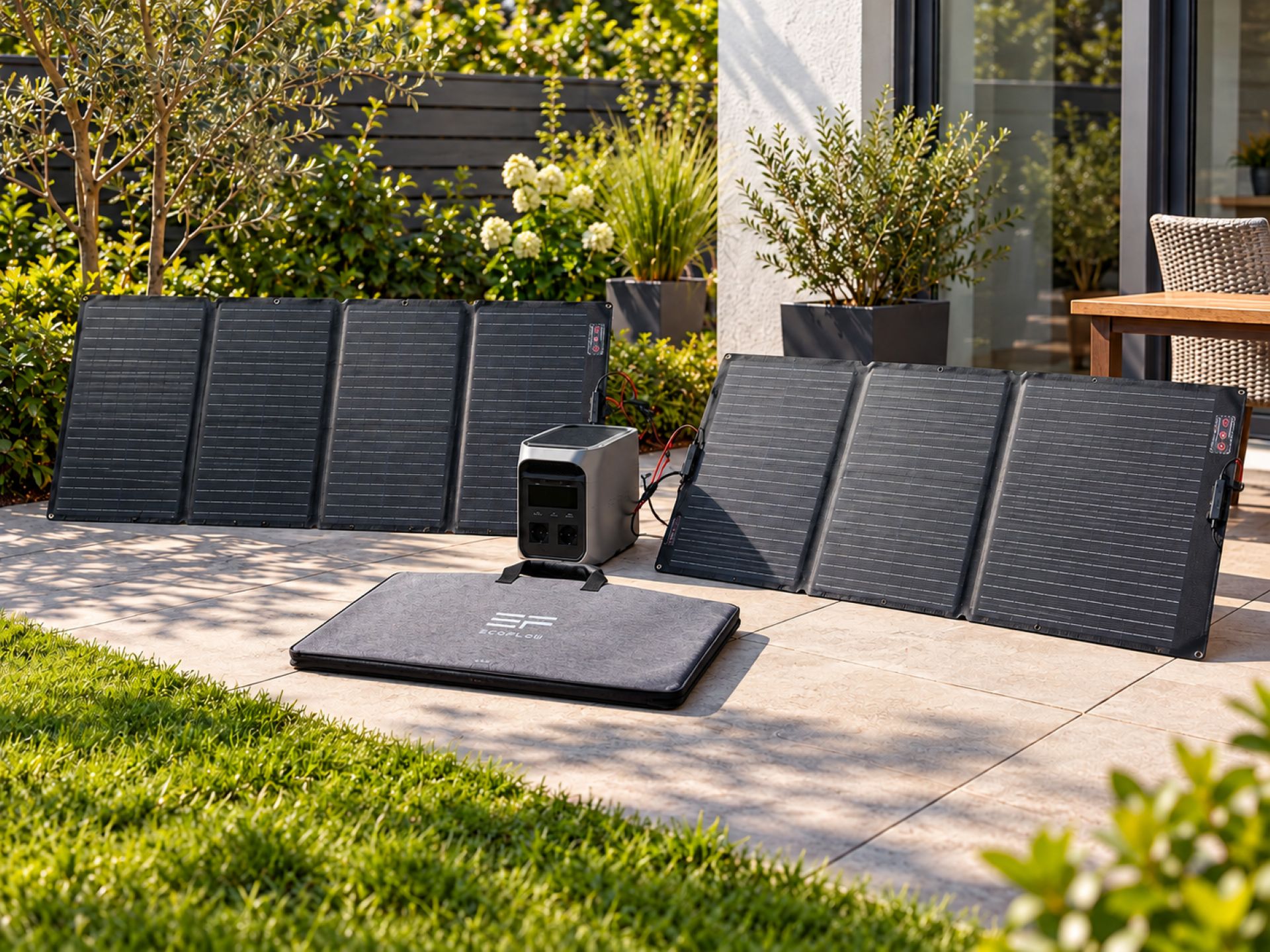
When charging with solar power, the charging rate naturally depends heavily on the conditions, but in good weather the power station can be topped up in just a few hours. An MPPT controller is already integrated, so you only need an MC4 cable.
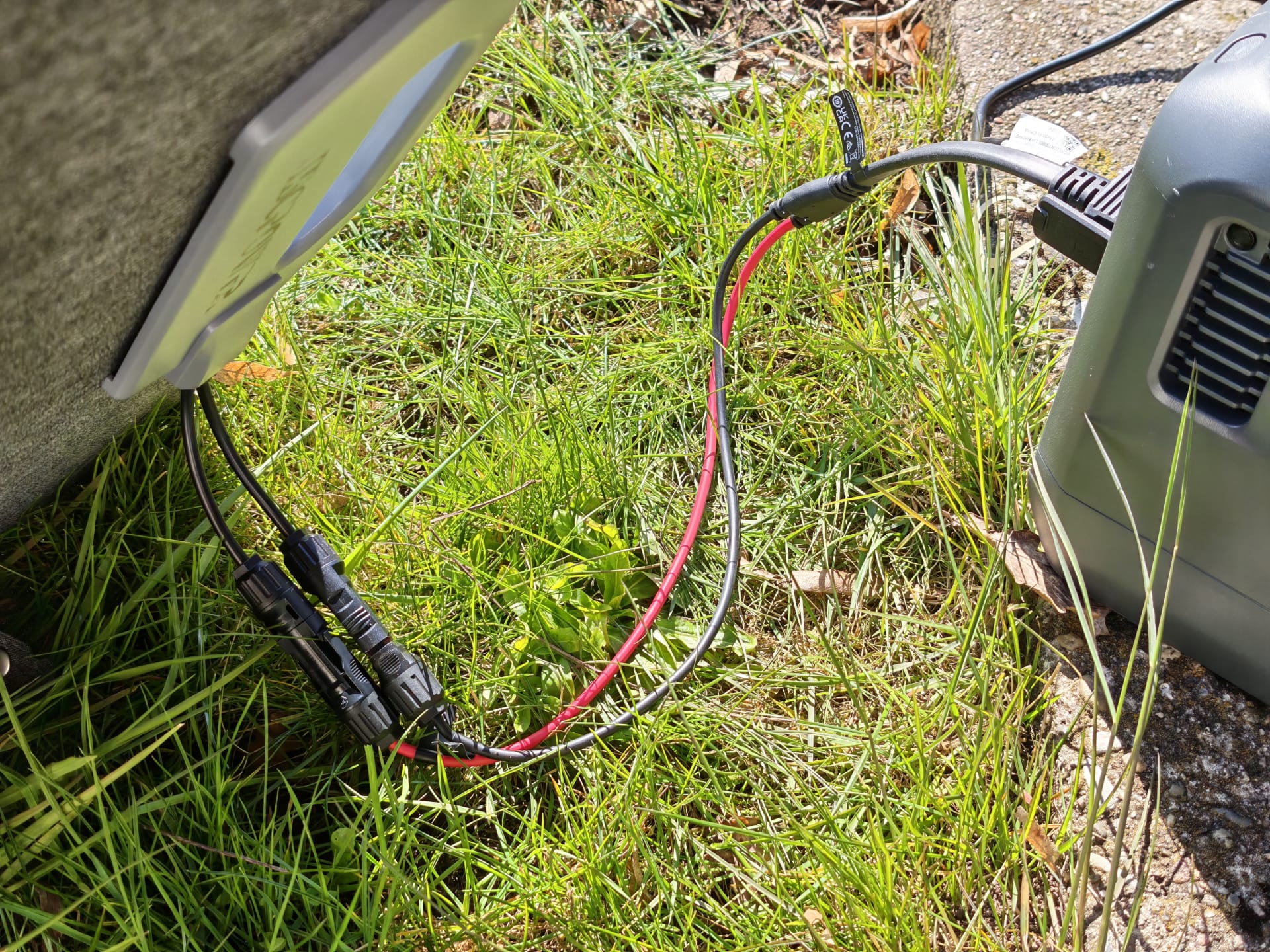
A suitable car battery charging cable or MC4 solar charging cable is available directly from DJI for 49 euros each. All charging options can also be combined, and charging and discharging can take place at the same time. There is also a UPS mode, which switches over in less than 10 ms in the event of a power cut.
DJI Power 1000 Mini: Noise and temperature
Noise levels remain low while charging and discharging. At low loads, the power station is virtually inaudible. The fans only become noticeable under heavy loads or during fast charging, but they remain fairly unobtrusive. It won’t be bothersome in a camper or at home, though you will notice it nearby.
The temperatures show a similar picture. Even under heavy load, the casing remains moderately warm overall. Most of the heat escapes through the side vents, while the surfaces remain comfortable to handle. There is no need to worry about this during normal operation.
DJI Power 1000 Mini: App and controls
Powering on, activating the outlets, and controlling the light are all handled with a few buttons. The display shows the key information, such as battery level, input and output power, and remaining runtime.
There is also the DJI Home app (Android and iOS), which lets you control the power station via Bluetooth or Wi-Fi. The app provides a good overview of its current status. You can also switch the outputs on and off, which is particularly useful when the power station is in the boot during a journey, for example.
A few settings can also be changed in the app. These include charging limits, standby times and charging power. The latter is particularly useful if you want to charge the power station more quietly. Instead of charging at 1,000 W, you can reduce the power.
Our verdict
The DJI Power 1000 Mini hits a clear sweet spot. It’s small enough to actually take with you, charges fast enough to be ready at a moment’s notice, and is much easier to use day to day than many larger power stations.
Its strengths are clearly in mobile setups. Laptops, cameras, drone batteries or a small workstation run without any problems and, above all, for a long time. It is also quiet and easy to use. That is exactly what it is designed for.
But you need to know what you’re getting into. Its power output is limited, it’s not suited to large appliances, and the SDC system adds extra hassle if you want to use more than the standard ports.
If maximum power is what you’re after, there are better alternatives. But if you want a compact, practical power station that you’ll actually use rather than just own, the Power 1000 Mini gets a lot right.
Specifications
General
- Model
- DJI Power 1000 Mini
- Capacity
- 108 Wh
- Battery type
- LiFePO4
- Weight
- 11.5 kg
- Dimensions
- 314 x 212 x 216 mm
Performance
- Maximum performance
- 1000 W
- Supported devices
- up to approx. 1200 W (short-term peak)
Ports
- AC sockets
- 2
- USB-C
- 2x up to 100 W (PD 3.1)
- USB-A
- 2x 12 W
- SDC port
- available
Charging
- Mains charging
- 80% in 58 min / 100% in 75 min
- Solar charging
- supported (MPPT integrated, max. 400 W)
- Car charging
- integrated (supported via SDC)
Functions
- App control
- yes (DJI Fly / DJI Power App)
- UPS function
- yes (10 ms switching)
- LED light
- available
What’s included
1x DJI Power 1000 Mini 1x AC power cable (Schuko to IEC connector) 1x documentation pack (manual, warranty card) (Optional: 1x IBCPOWER 200W solar panel incl. SDC adapter)
Price comparison
| Store | Price | Link |
|---|---|---|
| Amazon | 458,00 € | Go to store |
Comments (2)
Well explained, Chris?
Thanks, ma’am xD