Contents
Almost ten per cent lighter than the Pixel 10 Pro Fold
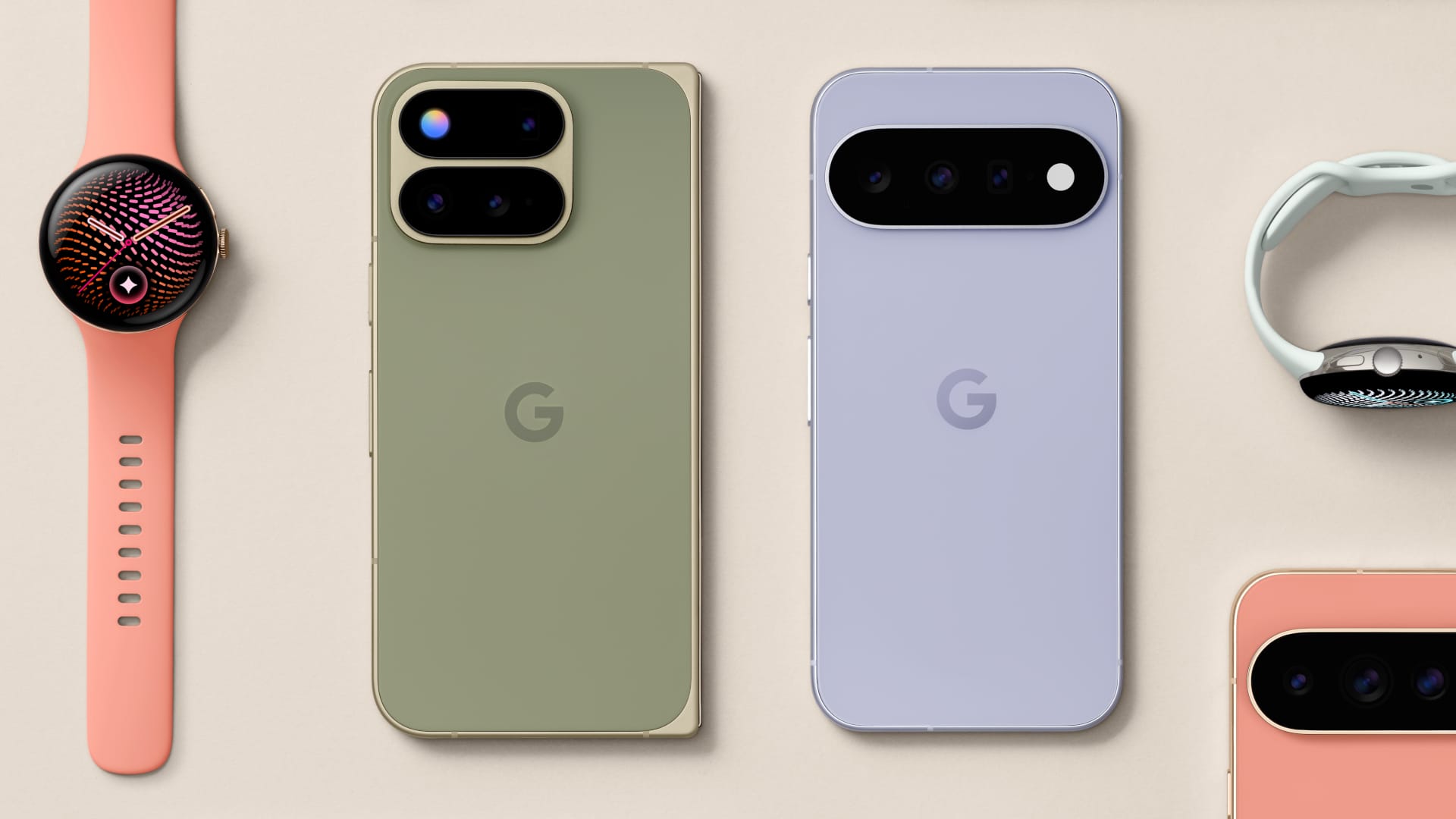
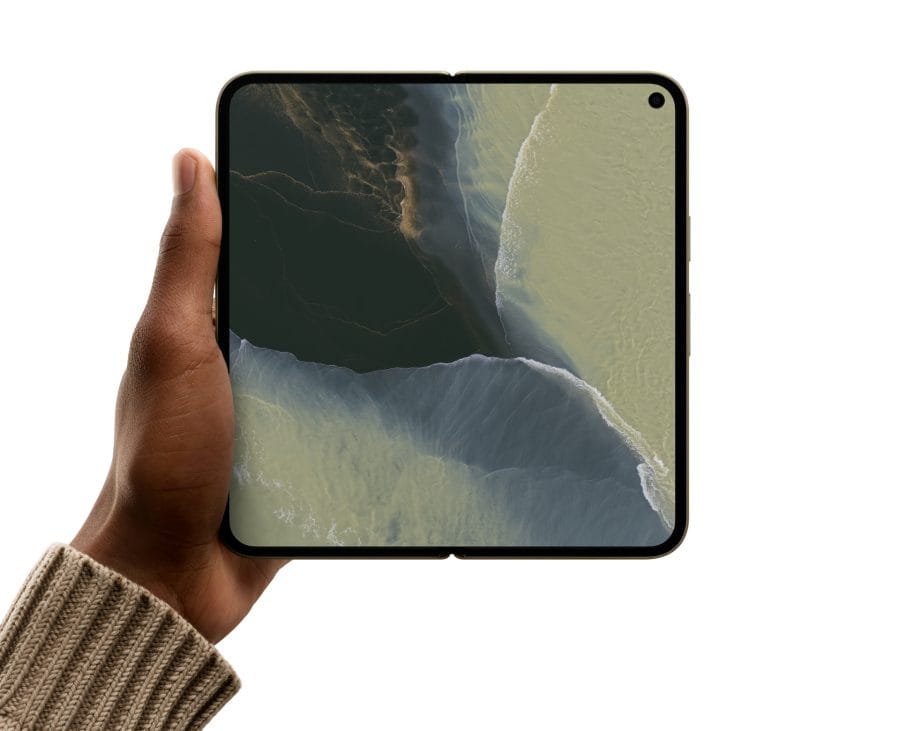
Google has stuck with its existing concept for the basic design. When folded, the Pixel 11 Pro Fold can be used like a conventional smartphone; unfolded, it offers an 8-inch inner display.
Google has mainly reduced the weight and thickness. At 239 grams, the Pixel 11 Pro Fold is almost ten percent lighter than the Pixel 10 Pro Fold. When folded, it measures 155.2 × 76.0 × 10.1 millimeters; unfolded, it measures 155.2 × 150.4 × 5.0 millimeters. According to Google, the new model is around one millimeter thinner than its predecessor.
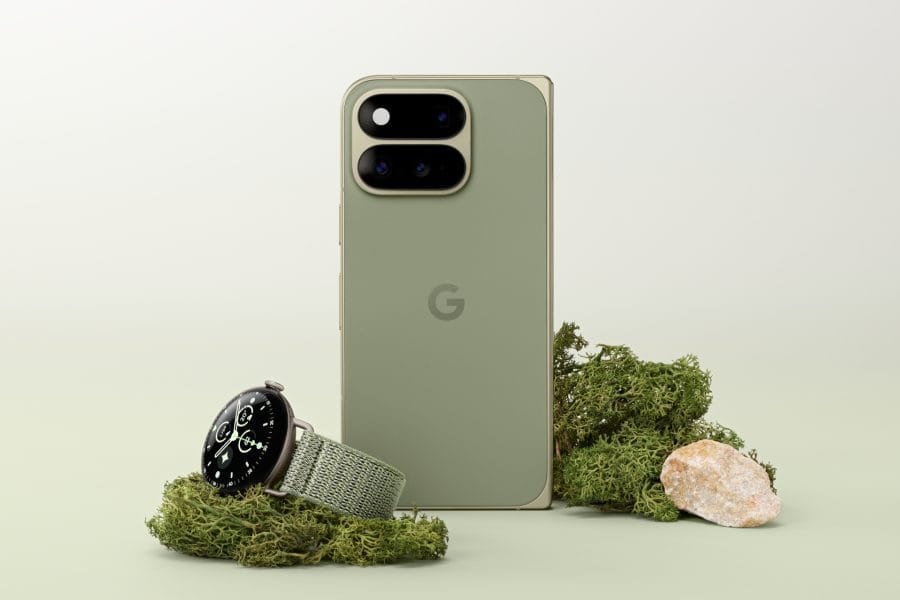
The display bezels have also been made smaller. The choice of colors is limited to Obsidian and Olive. Google pairs Olive with a gray metal frame, while Obsidian has a dark, matte finish.
New hinge and more durable back
The foldable’s construction has undergone more significant changes. For the first time, Google is using a gearless hinge, whose larger bend radius is also intended to make the crease in the inner display less visible. The glass layer beneath the flexible display has also been reinforced.
On the back, Google no longer uses glass exclusively, opting instead for a glass-fiber composite. The outer display is protected by an especially durable ceramic cover glass.
Overall, according to internal tests, this should make the Pixel 11 Pro Fold three times more durable than the Pixel 10 Pro Fold. The IP68 certification already found on its predecessor is retained, protecting the foldable from dust and temporary immersion in water.
6.5 inches on the outside, 8 inches inside and up to 3,600 nits
The outer Super Actua display measures 6.5 inches and has a resolution of 1,080 × 2,342 pixels. The OLED panel dynamically adjusts its refresh rate between 1 and 120 Hz.
When unfolded, an 8-inch Super Actua Flex display is available. It has a resolution of 2,076 × 2,152 pixels and also uses an adaptive refresh rate between 1 and 120 Hz.
Google has made a significant improvement in brightness. Both the outer and inner displays reach up to 2,400 nits for HDR content, with a peak brightness of 3,600 nits. According to the manufacturer, this makes the screens 20 per cent brighter than those on the Pixel 10 Pro Fold.
This is particularly relevant for the outer display, which is often used like the screen of a regular smartphone in everyday use on a foldable.
HiLight comes to the Fold, too
Like the Pixel 11 Pro and Pixel 11 Pro XL, the foldable also gets the new HiLight feature. LEDs around the camera flash on the back can display information without needing to turn on the display.
For calls from favorite contacts, for example, you can display a custom color. When using Gemini hands-free, HiLight also indicates whether Gemini is listening, processing a request, or responding.
At launch, the feature set is still relatively limited. Google plans to expand HiLight with additional uses in the future, including notifications about messages from selected contacts.
Tensor G6 and 16 GB of RAM
Inside, like the rest of the Pixel 11 series, it uses the new Google Tensor G6. It also comes with 16 GB of RAM and the new Titan M3 security chip.
According to Google, the new processor offers 50 percent more TPU computing power for AI tasks than the Tensor G5, while also being up to 20 percent more energy-efficient. The additional AI performance benefits Gemini Nano and the new camera features, among other things.
The internal storage is available in 256 GB, 512 GB or 1 TB configurations. According to Google, the two larger versions use Zoned UFS to speed up certain storage accesses.
The Pixel 11 Pro Fold ships with Android 17. Google promises seven years of OS, security, and Pixel Drop updates.
More multitasking on the large display
A foldable smartphone is about more than just a larger screen; it also depends on how the software makes use of it. Google is expanding the so-called Bubbles, among other things.
Apps can be saved as floating bubbles and quickly reopened on the unfolded display. The bubbles appear in the bottom-right corner and are intended to make it easier to switch between multiple applications.
Familiar foldable features such as drag and drop, split screen, and Instant View also remain. Look and Talk, which displays animations on the outer screen to help, for example, children look toward the camera during a recording, adds two new animations.
Circle to Search has also been expanded. You can now use Search directly within the Pixel Camera app. Objects in the camera view can be identified, text translated, or information about the surroundings retrieved without taking a photo first.
New 48-megapixel main camera
The back still houses a triple-camera system, but the main camera has been updated.
The new 48-megapixel main camera uses a 1/1.56-inch sensor and an f/1.7 aperture. According to Google, it captures 56 per cent more light than the main camera on the Pixel 10 Pro Fold.
It is complemented by a 10.5-megapixel ultra-wide-angle camera with autofocus and a macro function, as well as a 10.8-megapixel telephoto camera. The latter offers optical image stabilisation and five times optical magnification.
Digitally, Super Zoom reaches up to 30x. This leaves the Fold behind the Pixel 11 Pro and Pixel 11 Pro XL, whose larger telephoto cameras enable Pro Zoom of up to 120x.
There are 10-megapixel cameras on both the front and inside the foldable.
Magic Capture and camera styles
The Pixel 11 Pro Fold inherits several new features from the rest of the Pixel 11 series. These include Magic Capture. The new camera mode takes photos and videos of a moment, so you don't have to keep watching for the right time to press the shutter. The Pixel then processes the footage, including by cropping and sharpening it.
With Camera Looks, Google is also introducing new ways to style photos and videos visually as they are captured. Google’s Real Tone tuning is designed to ensure consistent representation of different skin tones, even with stronger looks.
Special foldable features such as Dual Screen Preview, taking selfies with the rear camera, and hands-free shooting while partially unfolded also remain.
25 watts wireless instead of 15 watts
The battery has a typical capacity of 4,806 mAh. Google quotes a battery life of more than 24 hours.
When charging by cable, the Pixel 11 Pro Fold is expected to reach 50 per cent in around 30 minutes with a suitable power adapter.
The improvement is greater when it comes to wireless charging. Pixelsnap now supports Qi 2.2 at up to 25 watts. The Pixel 10 Pro Fold was limited to 15 watts. Google says wireless charging is up to 20 per cent faster.
Pricing and availability
Purchasing the Pixel 11 Pro Fold, like either of the other two Pro models, includes six months of access to Google AI Pro. This includes higher usage limits for Gemini, 5 TB of cloud storage, and Google Health Premium, among other benefits.
The Google Pixel 11 Pro Fold can be pre-ordered starting August 12 and will be available from August 20. Prices start at 1,999 euros.
Source: Google press release
Comments