Contents
First impressions
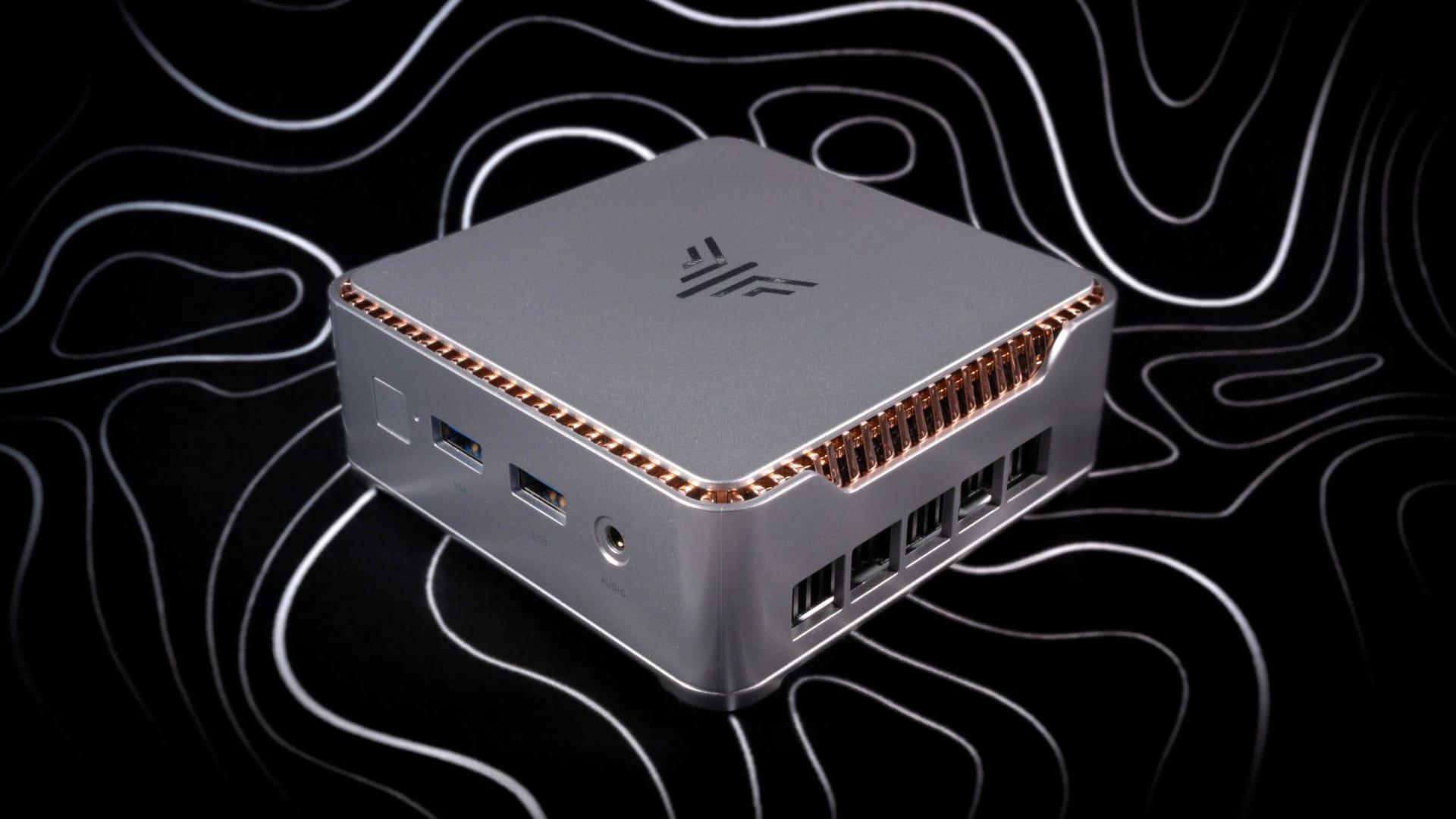
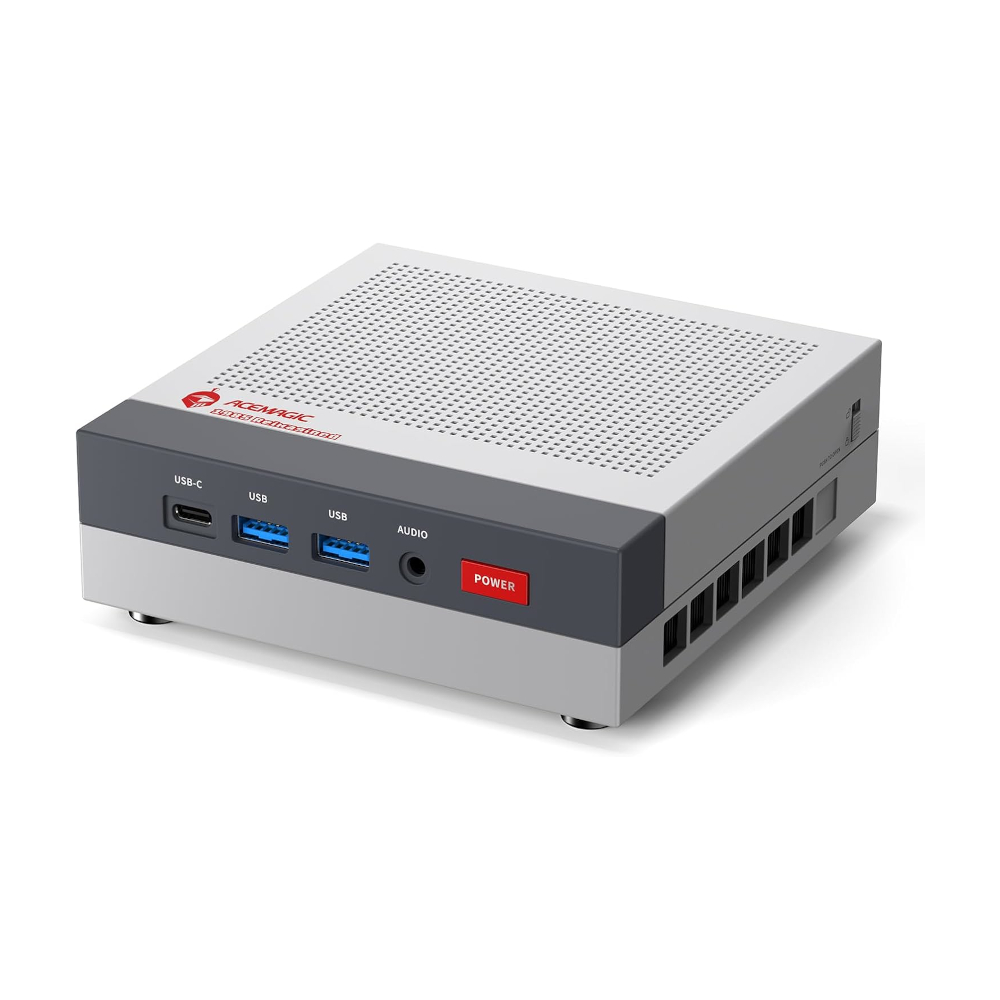
The casing of the NiPoGi E2 initially stands out due to its ultra-compact dimensions. Measuring just 10 x 10 x 4 cm, this small computer can be easily placed on a desk, behind a monitor or even hidden in the living room.
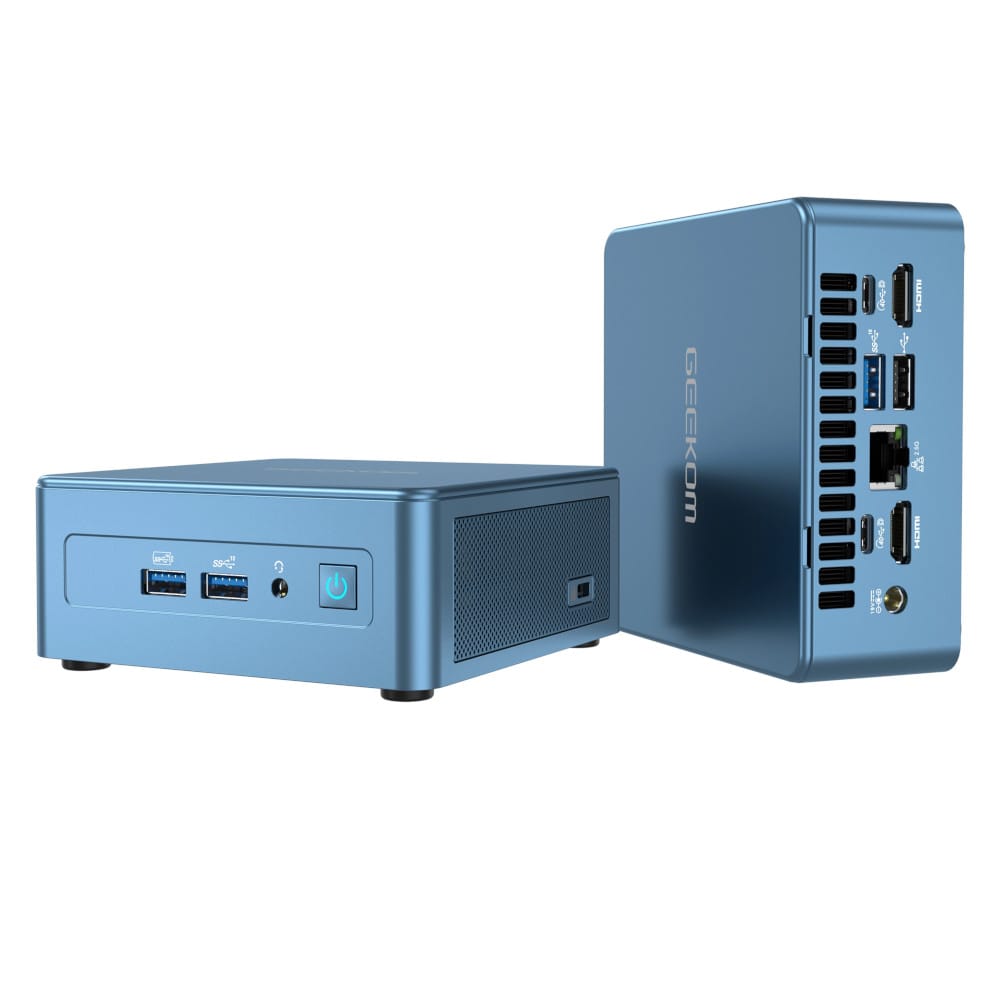
The housing consists entirely of plastic, but appears higher quality at first glance than it actually is. Above all, the copper-coloured trim around the casing initially suggests premium materials, but everything is indeed plastic. Compared to the robust aluminium housings from competitors like GEEKOM, the housing feels significantly less high-quality.
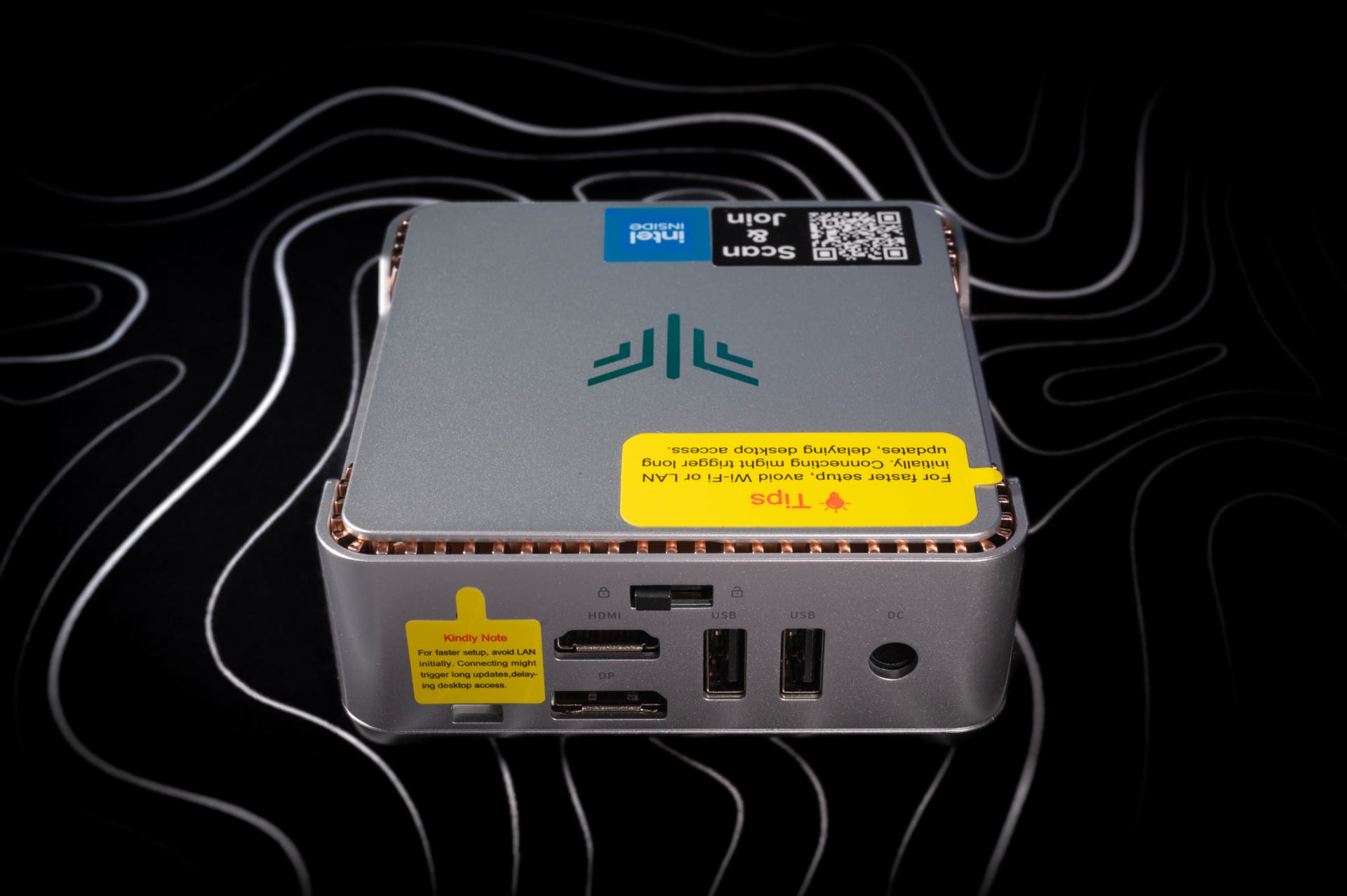
A noticeable disadvantage is the numerous stickers covering almost all sides of the casing. These are difficult to remove without residue, which detracts from the otherwise tidy impression.
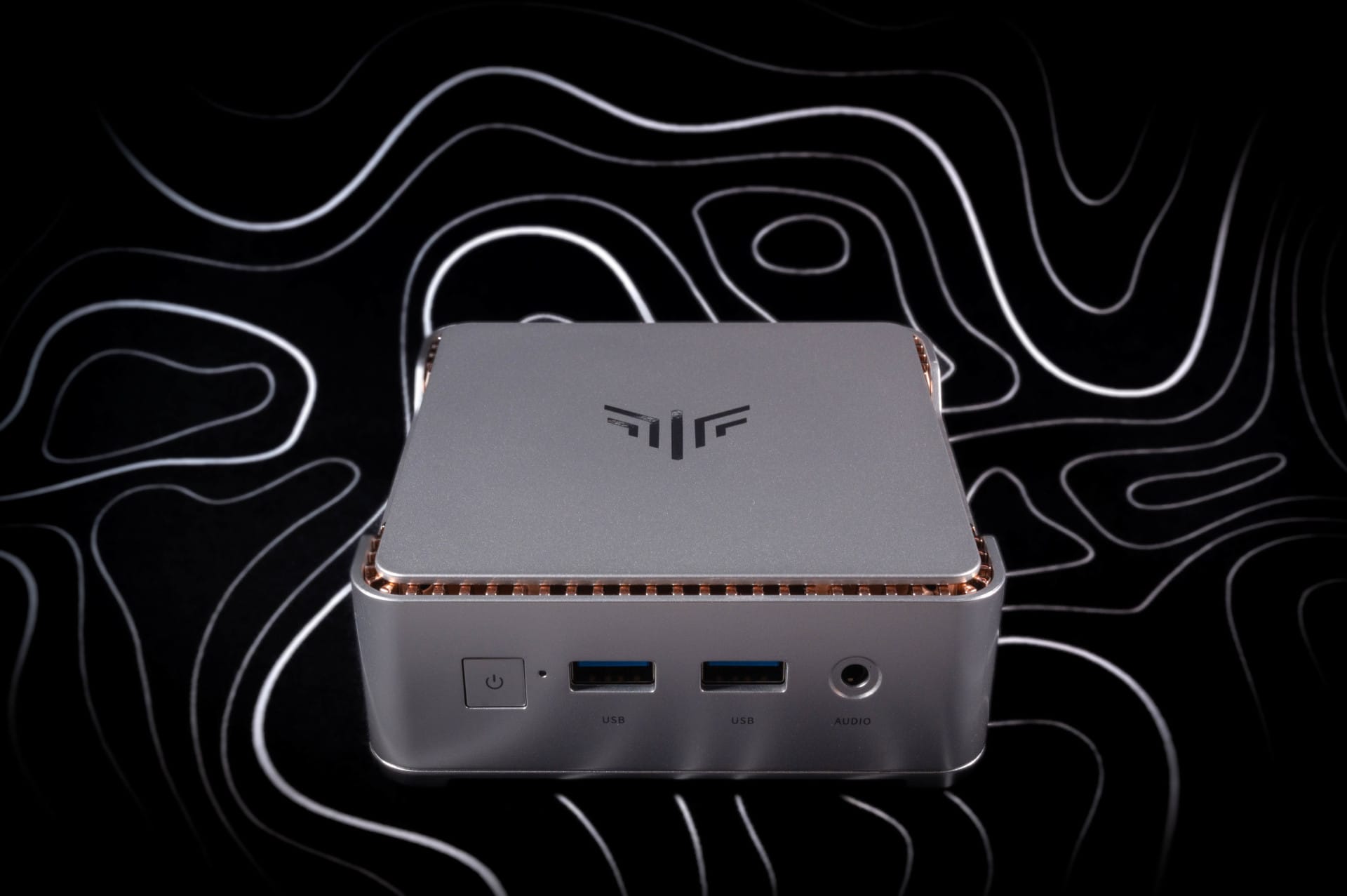
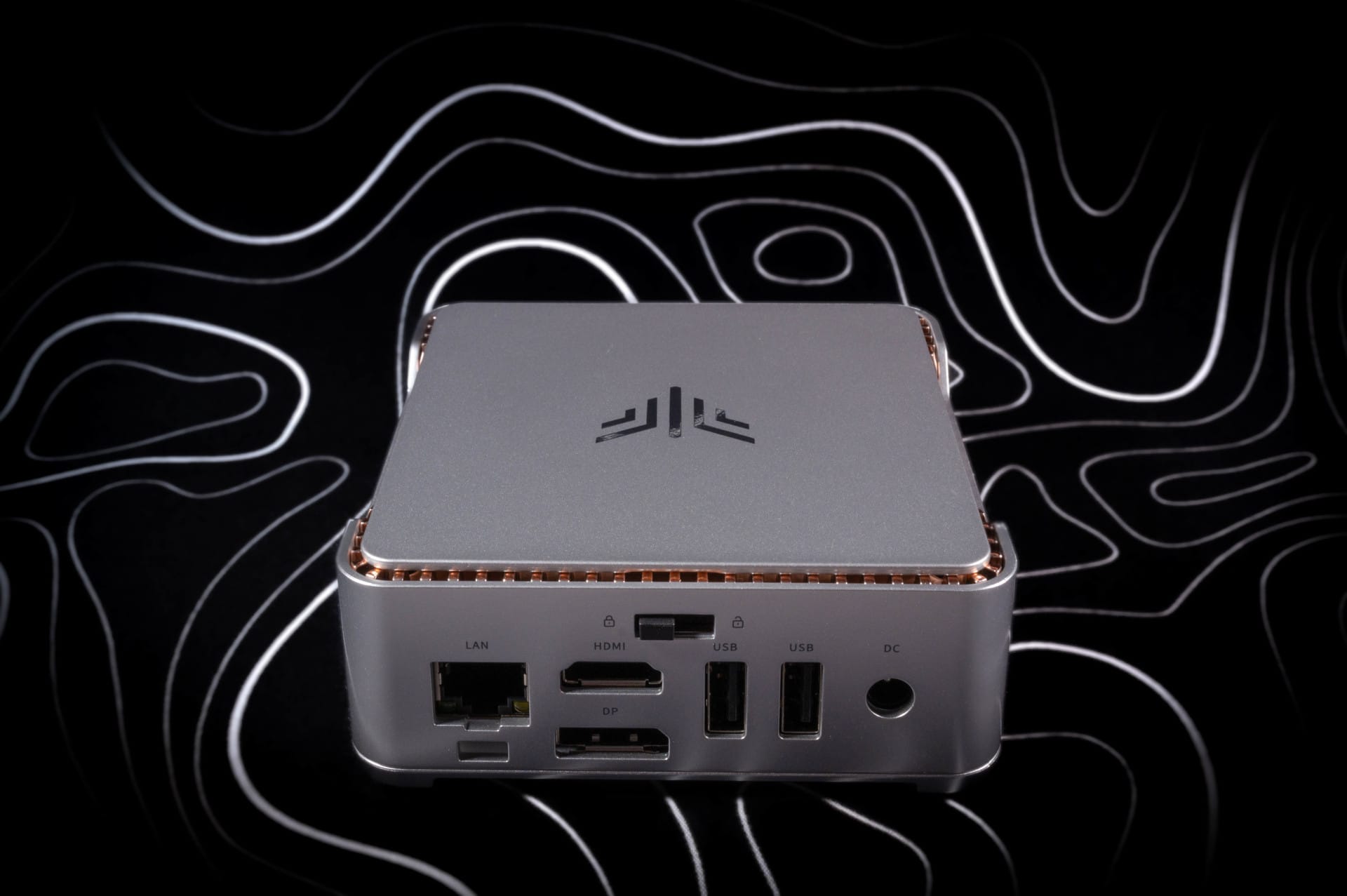
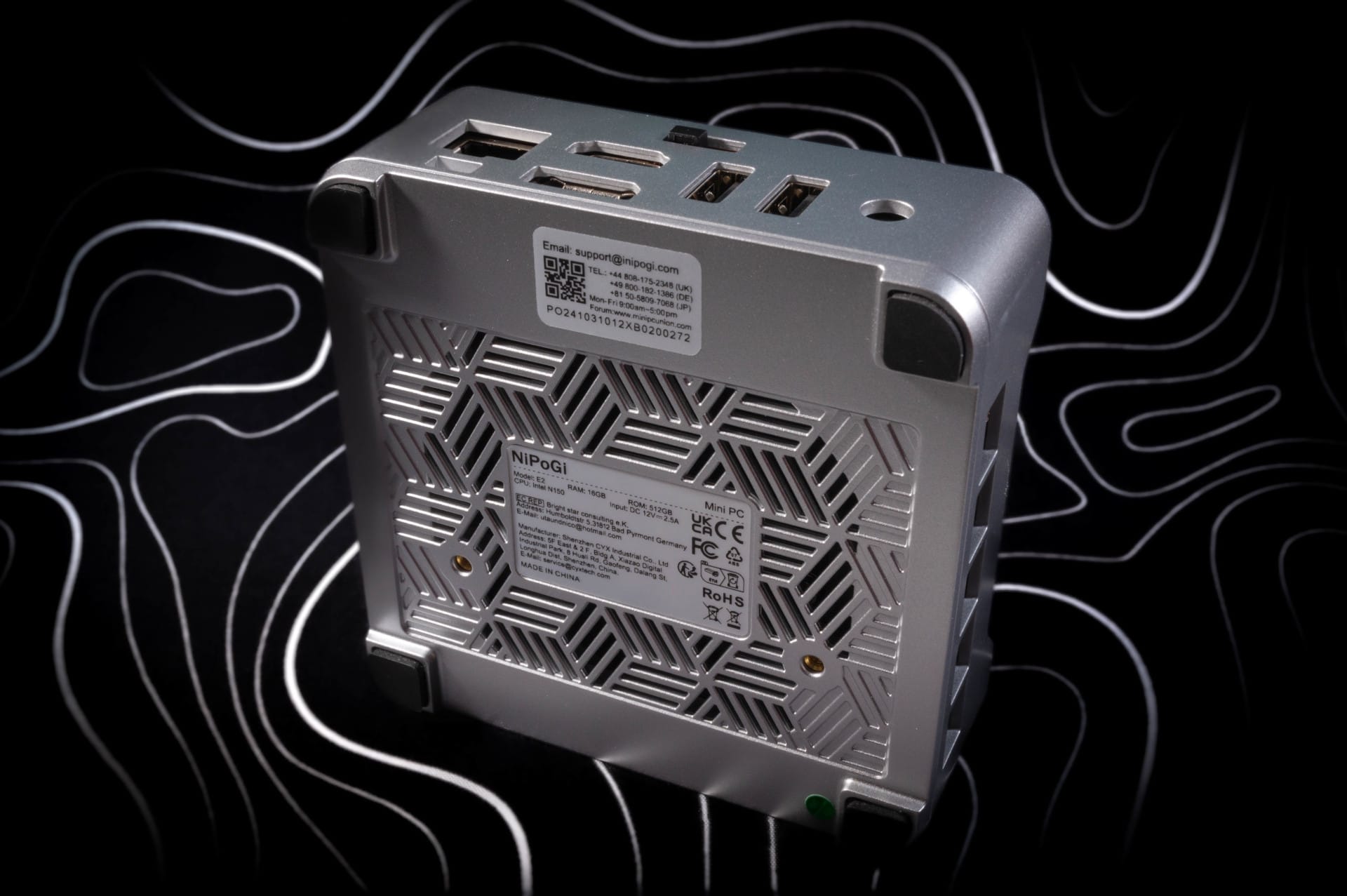
The ports are surprisingly extensive for a PC of this size. At the front are two USB 3.2 ports as well as a combined headphone and microphone socket. At the rear are a Gigabit Ethernet port, HDMI 2.0, DisplayPort 1.4, two USB 2.0 ports and a Kensington lock for anti-theft security.
Ventilation slots on the left, right and bottom ensure fresh air circulation. The underside also features practical rubber feet and two threaded holes for the included VESA mount. Also included in the box are an HDMI cable and a power supply (30 watts).
Easy SSD and RAM upgrade
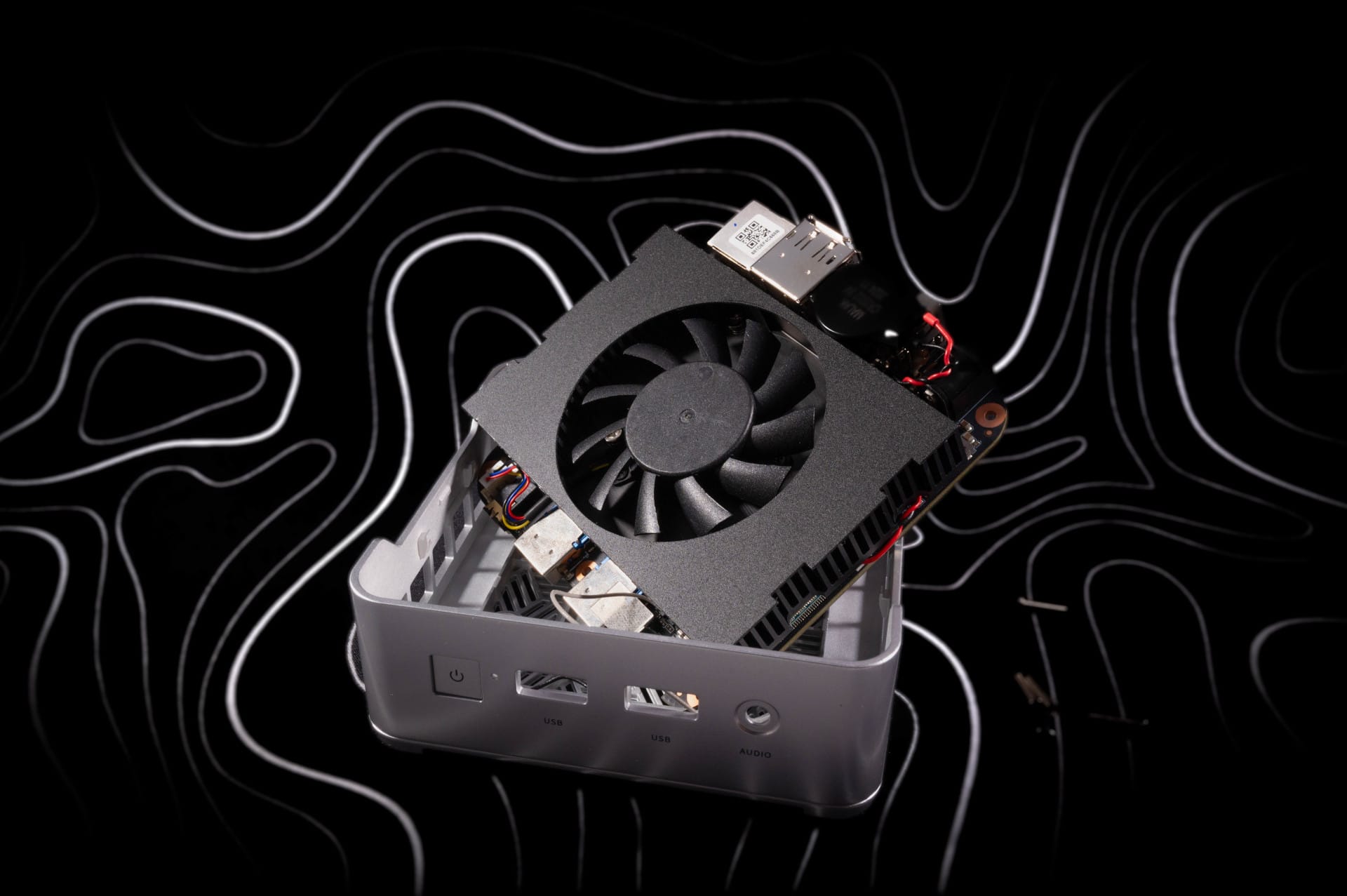
A clear advantage is the quick access to the internal components. A small slide switch on the rear unlocks the case cover, which can then be easily lifted off. This provides direct access to the SSD and RAM.
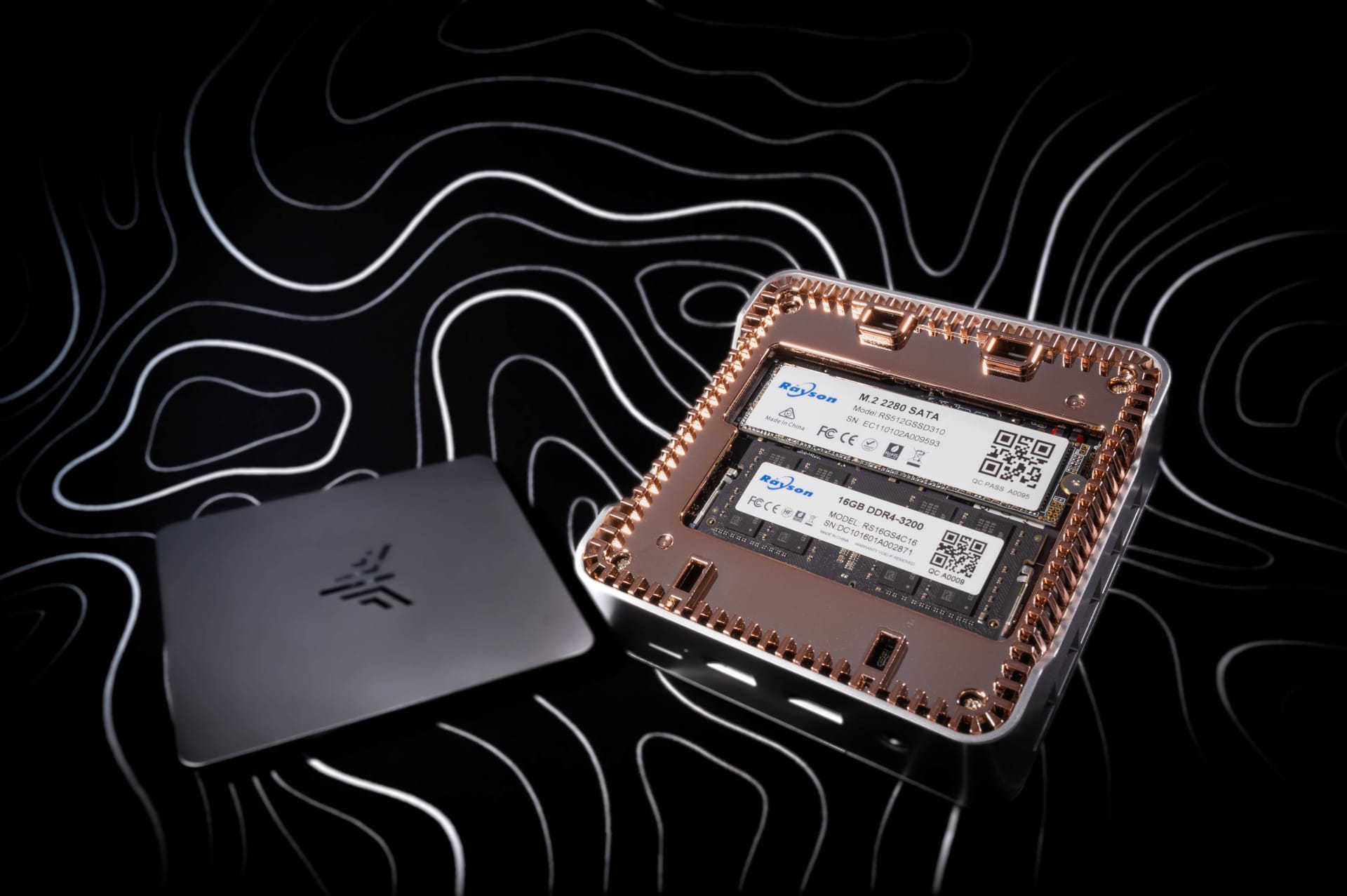
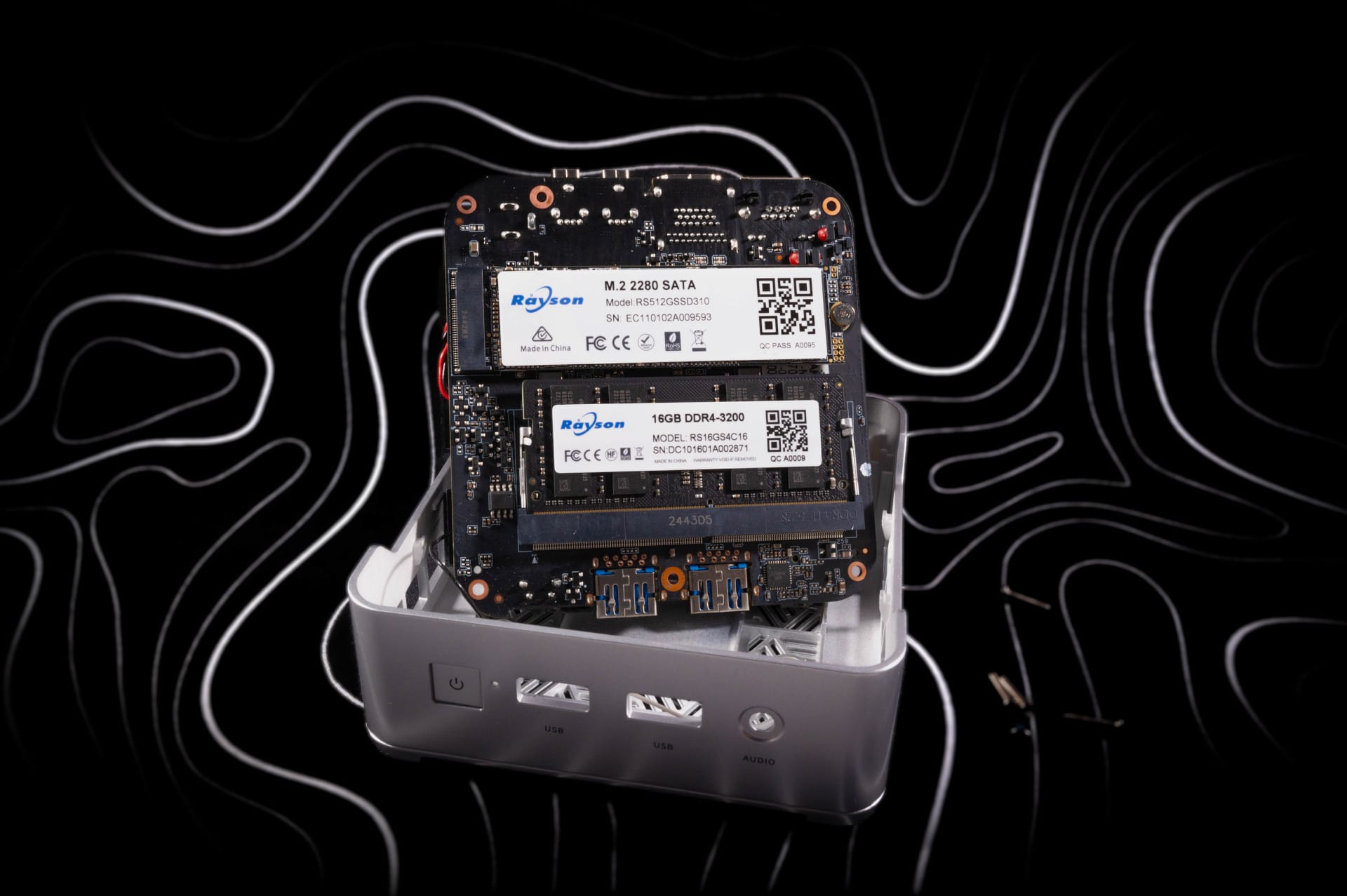
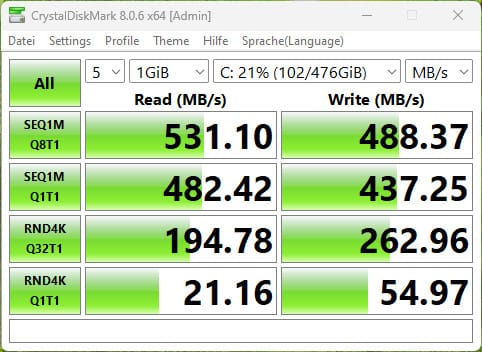
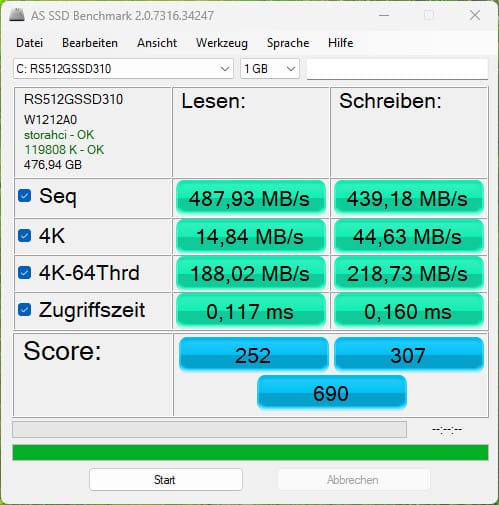
The test device contained a 512GB M.2 SATA SSD from Rayson (model RS512GSSD310) and 16GB DDR4-3200 RAM, also from Rayson (RS16GS4C16). Both components can be easily replaced or expanded with higher-quality parts.
Those wishing to delve deeper inside must undo five screws, but a large black fan obscures the view of the interior, making further glances hardly worthwhile. Hidden beneath the fan in this model is the Intel N150 processor. Alternatively, the NiPoGi E2 is also available with the slightly more powerful Intel N97.
Performance and daily usability
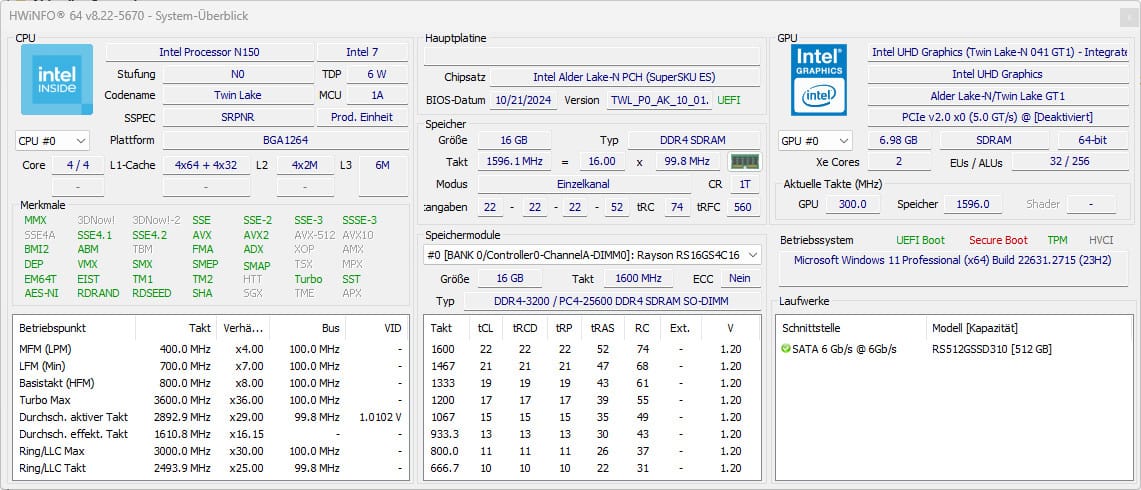
The Intel N150 belongs to the current Twin Lake series, but technically it is a refresh of the Alder Lake N generation. There are no major innovations, with only the clock rates having been slightly increased. In everyday use, the processor nevertheless delivers solid performance.
Playing YouTube and Netflix videos in 4K resolution runs smoothly, without loading times or stuttering. When surfing in Chrome or Edge, numerous tabs can be opened simultaneously without the mini PC seeming overwhelmed.
Typical office tasks such as creating documents in Word or Excel also work without issues. Even larger spreadsheets or PowerPoint presentations are handled confidently by the small computer. Video conferences via Microsoft Teams or Zoom also run reliably, as long as not too many other programs are open in parallel.
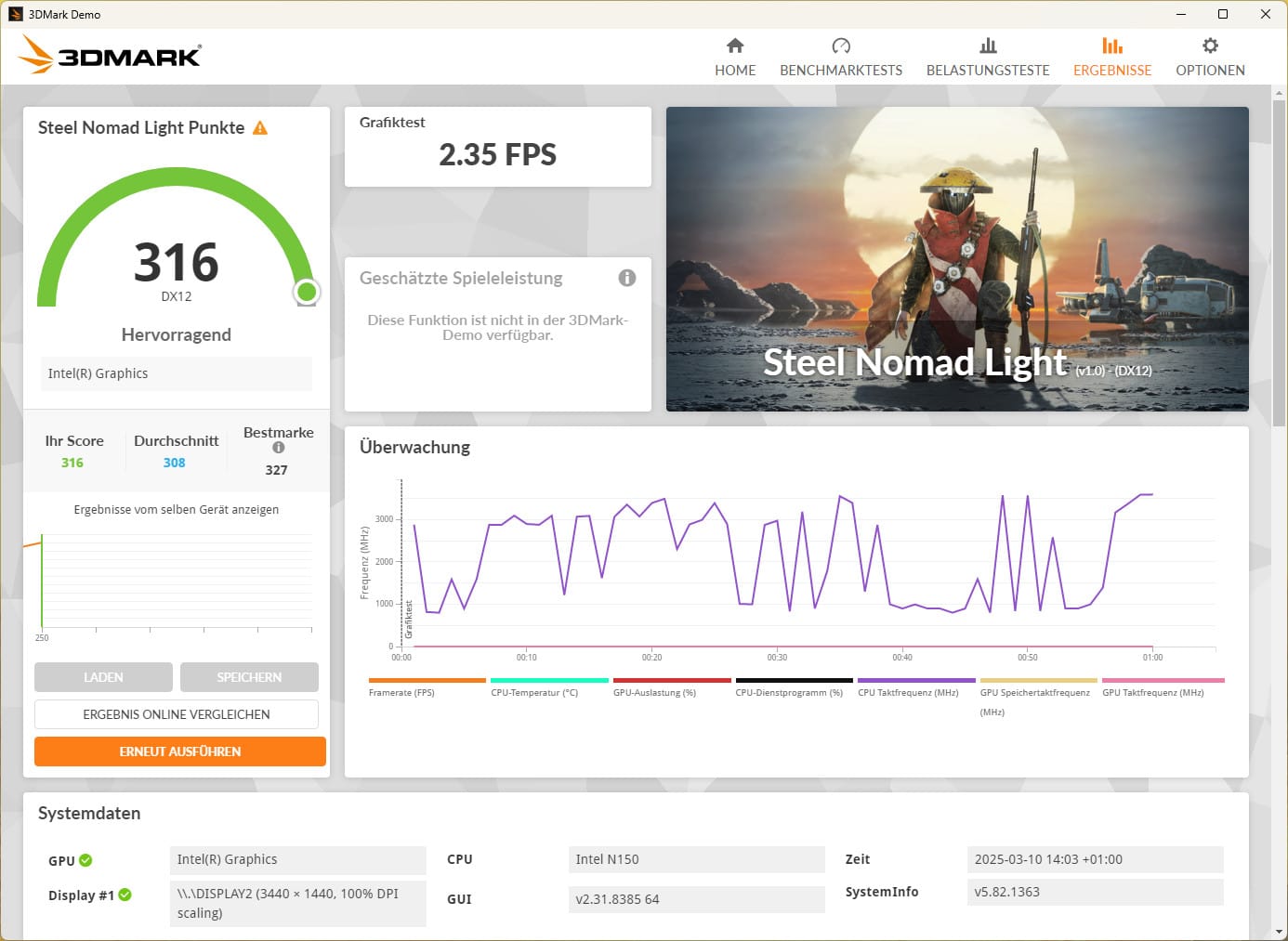
The NiPoGi E2 is only suitable for gaming to a limited extent. Emulators for retro games and older titles still run acceptably, but the power of the integrated graphics is not enough for more. However, game streaming via Geforce Now is a good alternative, allowing even current games to be played smoothly and stably. Only the refresh rate is limited to 60 Hz in 4K and 2K.
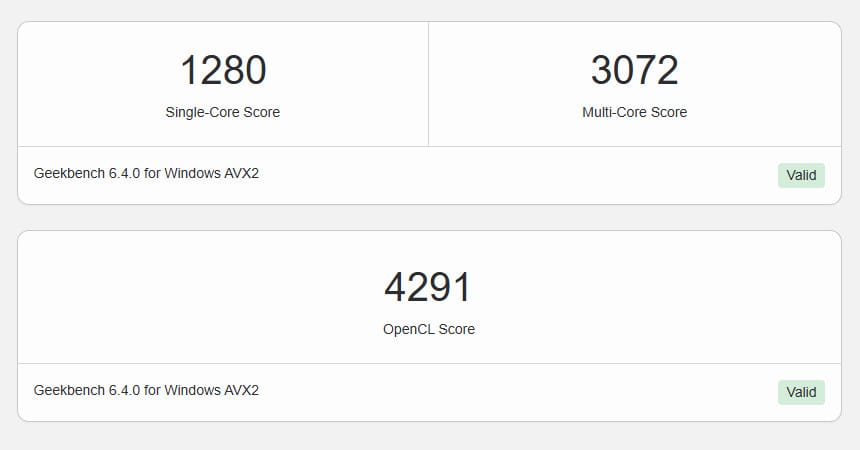
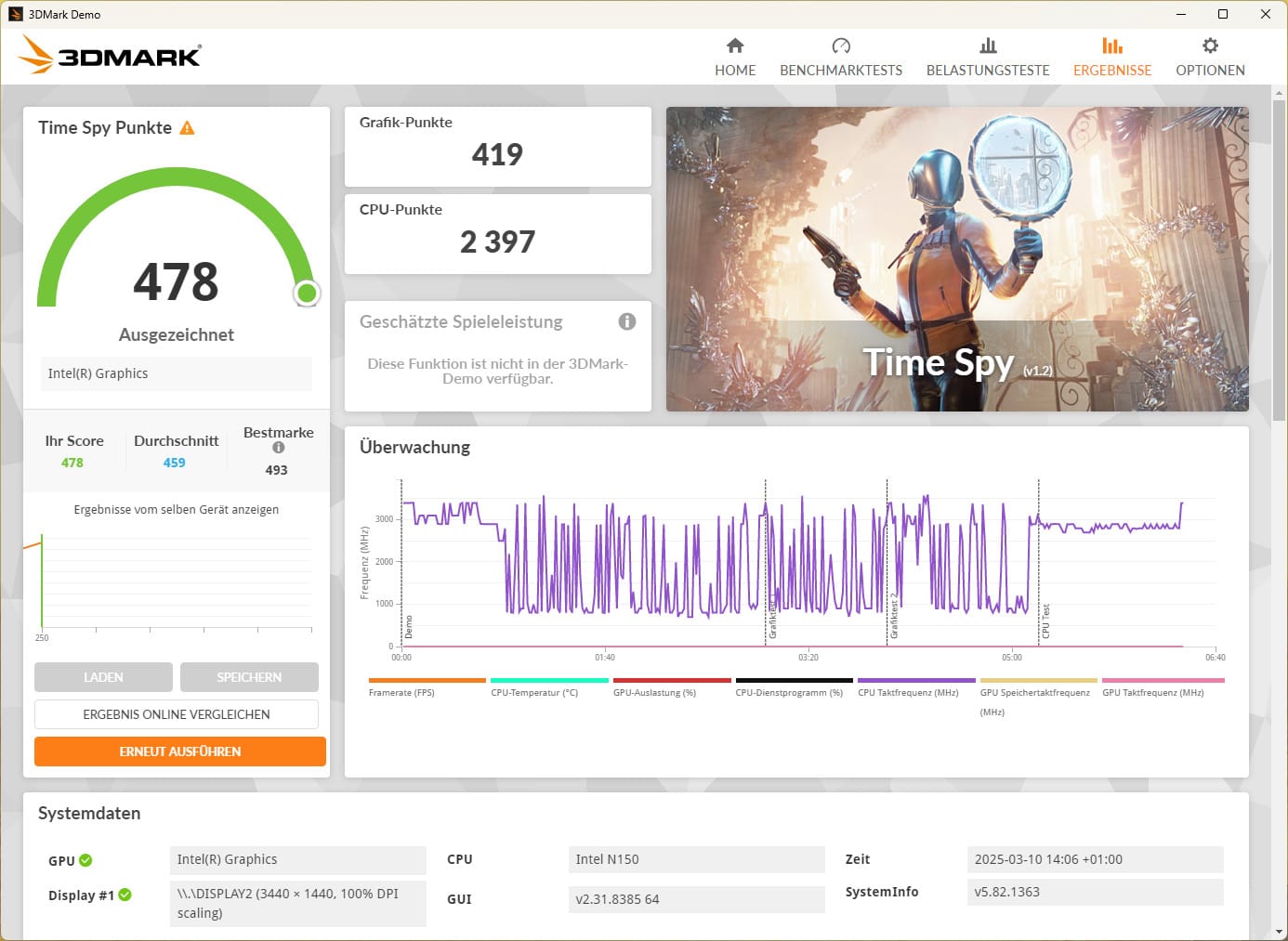
Benchmarks
NiPoGi E2 as a home server or media center
Besides typical daily use, the NiPoGi E2 is excellent as an energy-saving home server. The pre-installed Windows 11 Pro (digitally licensed) can be easily replaced with a lean Linux. The Intel N150 processor is optimally supported from kernel 6.11 onwards.
In our test, we easily installed Ubuntu 22.04 and used the NiPoGi E2, for example, as a lightweight file server or web server with NGINX. The system performance is fully sufficient to run services such as Nextcloud, Pi-Hole or simple Docker applications.
The NiPoGi E2 also makes a convincing figure as a compact media center. Especially Plex runs excellently on the small computer. Local media in 1080p or even 4K could be played back directly without problems and streamed via Plex to multiple end devices simultaneously. The performance is only sufficient if no complex transcoding is required. Direct playback, on the other hand, works without problems.
Volume, network and power consumption
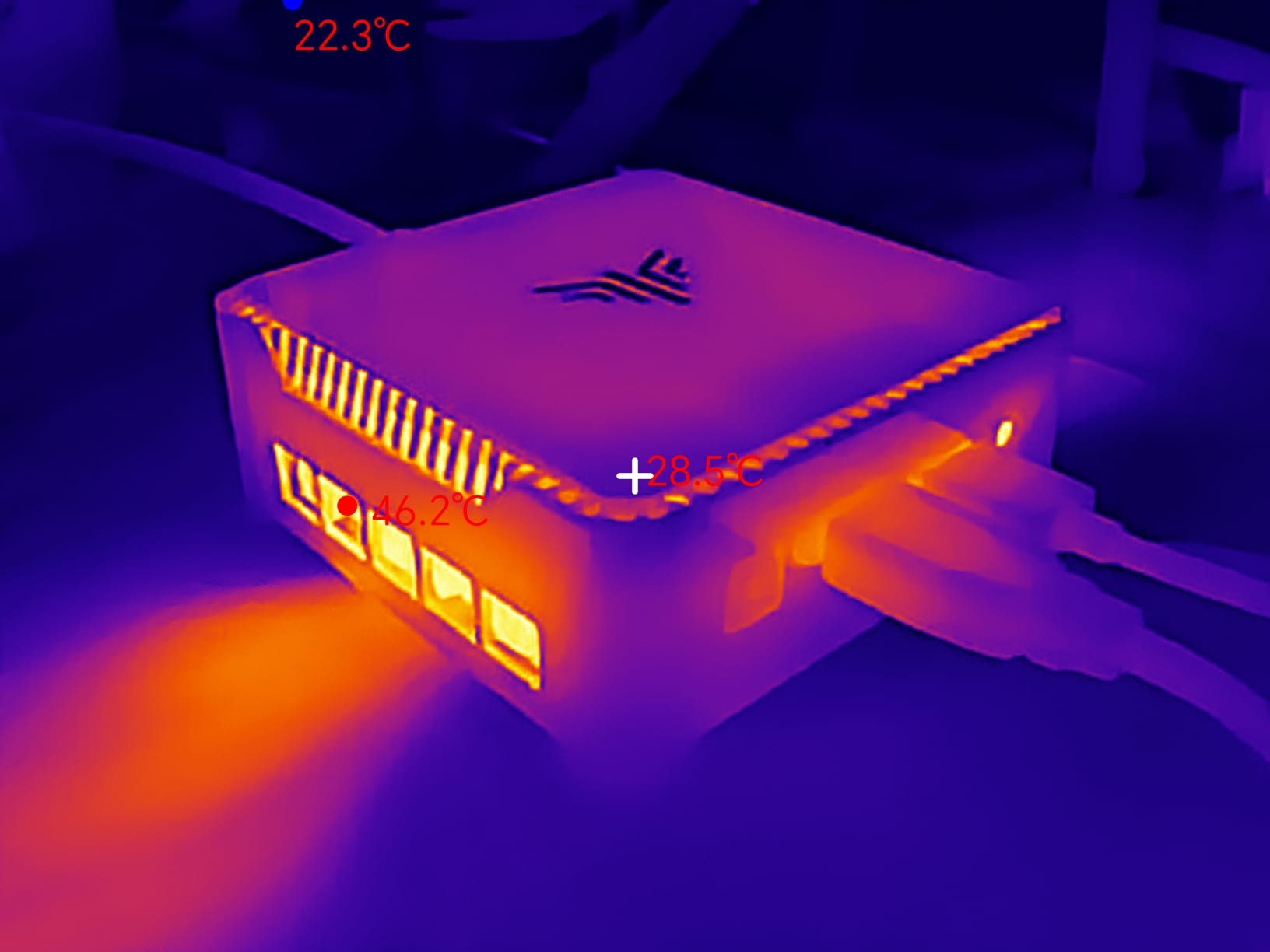
Its pleasantly quiet operation is worth highlighting. The fan is audible but barely noticeable. Even under higher loads, the noise level remains pleasantly low. This makes it ideal for use in the living room.
The network performance is acceptable. Gigabit Ethernet enables fast data transfers, while the Wi-Fi performance with WiFi 5 (~45 MB/s) remains only average. Large data transfers take noticeably longer than with modern standards like WiFi 6.
The power consumption is around 8 watts at idle, 12 watts during everyday tasks and up to 23 watts under full load. Especially under full load, this is pleasingly low, even if the performance is not particularly high. The idle power consumption could be better, however. Here, even more powerful systems are often more economical.
Our verdict
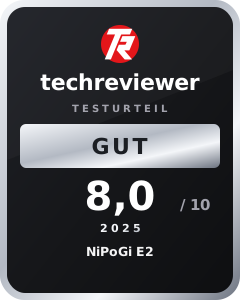
The NiPoGi E2 scores with its compact size, low power consumption and surprisingly good performance in everyday applications. There are minor weaknesses in the build quality of the plastic housing and the distracting stickers. Genuine manufacturer support in the form of driver updates or BIOS downloads is also completely missing so far.
Nevertheless, the mini PC performs well in everyday use, particularly as a space-saving desktop PC, flexible home server or energy-saving media centre with Plex. Anyone looking for a cheap and reliable solution for typical tasks, rather than a high-end PC, will find the NiPoGi E2 to be a versatile companion.
Specifications
Processor
- Designation
- Intel Processor N150
- Codename
- Twin Lake
- Release date
- Q1 2025
- Number of cores
- 4
- Number of threads
- 4
- Max. turbo clock frequency
- 3.6 GHz
- GPU
- Intel Graphics 1 GHz
- Power consumption
- 6W TDP
Storage
- Max. storage size
- 16GB
- Maximum Memory Speed
- 4800 MHz
- Memory (expandable)
- 16 GB 3200 MHz DDR4 (Rayson RS16GS4C16)
- SATA SSD (expandable)
- 512GB (Rayson RS512GSSD310)
Ports
- * 2x USB 3.2 Gen 2.
- * 2x USB 2.0
- * 1x HDMI 2.0
- * 1x DP 1.4
- * 1x Audio (headphones / microphone)
Other
- Ethernet
- Realtek RTL8111/8168 Gigabit LAN
- Wi-Fi
- Realtek RTL8821CE WiFi 5 802.11ac (433 Mbit/s)
- Multi-display
- Yes, dual
- Monitor mount
- Yes
- Size
- 10 x 10 x 4 cm
What’s included
1x Mini-PC 1x HDMI cable 1x Power adapter 1x Mounting bracket with screws 1x Manual
Price comparison
| Store | Price | Link |
|---|---|---|
| Amazon | 439,99 € | Go to store |
Comments (2)
Hi Julian, the ones with the N150 and N97 cost the same. Then I'd better buy the N97, wouldn't you say, or am I missing something?
Hi Meret, they are both nearly identical, although the N97 is a bit better. However, it also has double the TDP (12W), so it is not quite as efficient as the more recent N150.