Contents
Nothing Ear (2) – Unboxing, design and build quality
Unboxing
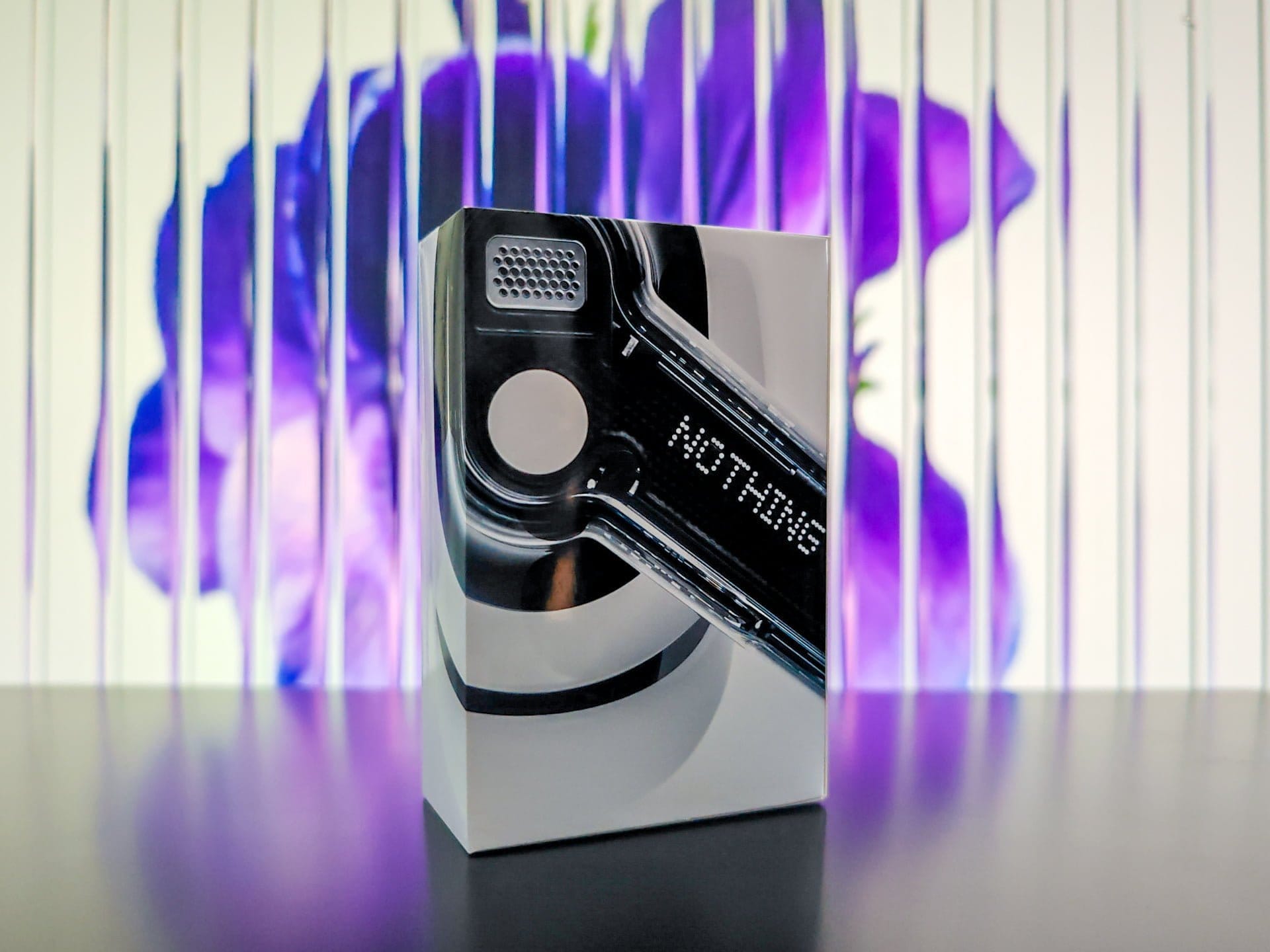
Nothing focuses on sustainability for the Ear (2) packaging, completely foregoing plastic. Instead, recyclable paper and cardboard materials are used, demonstrating the company's commitment to ecological responsibility.
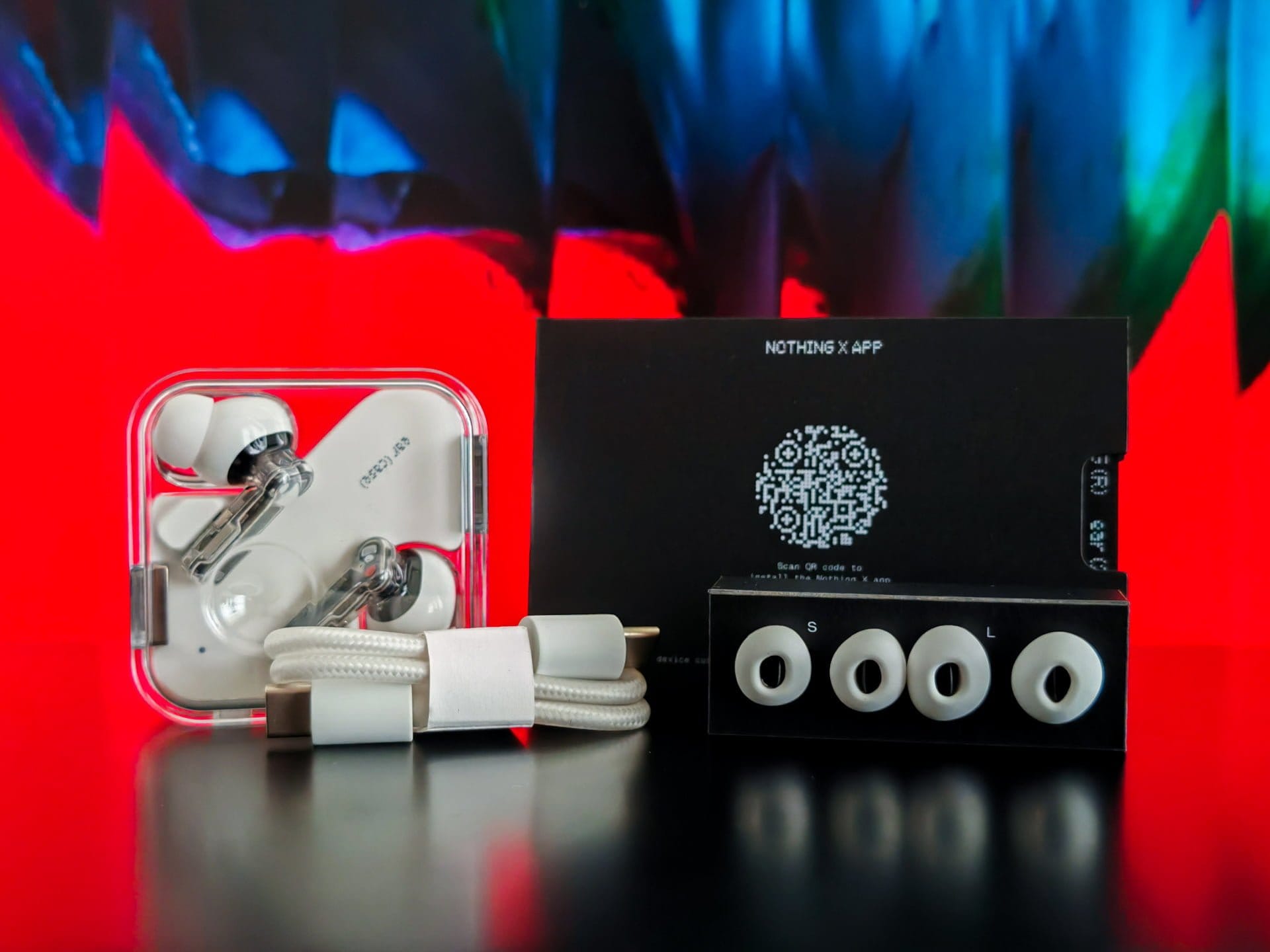
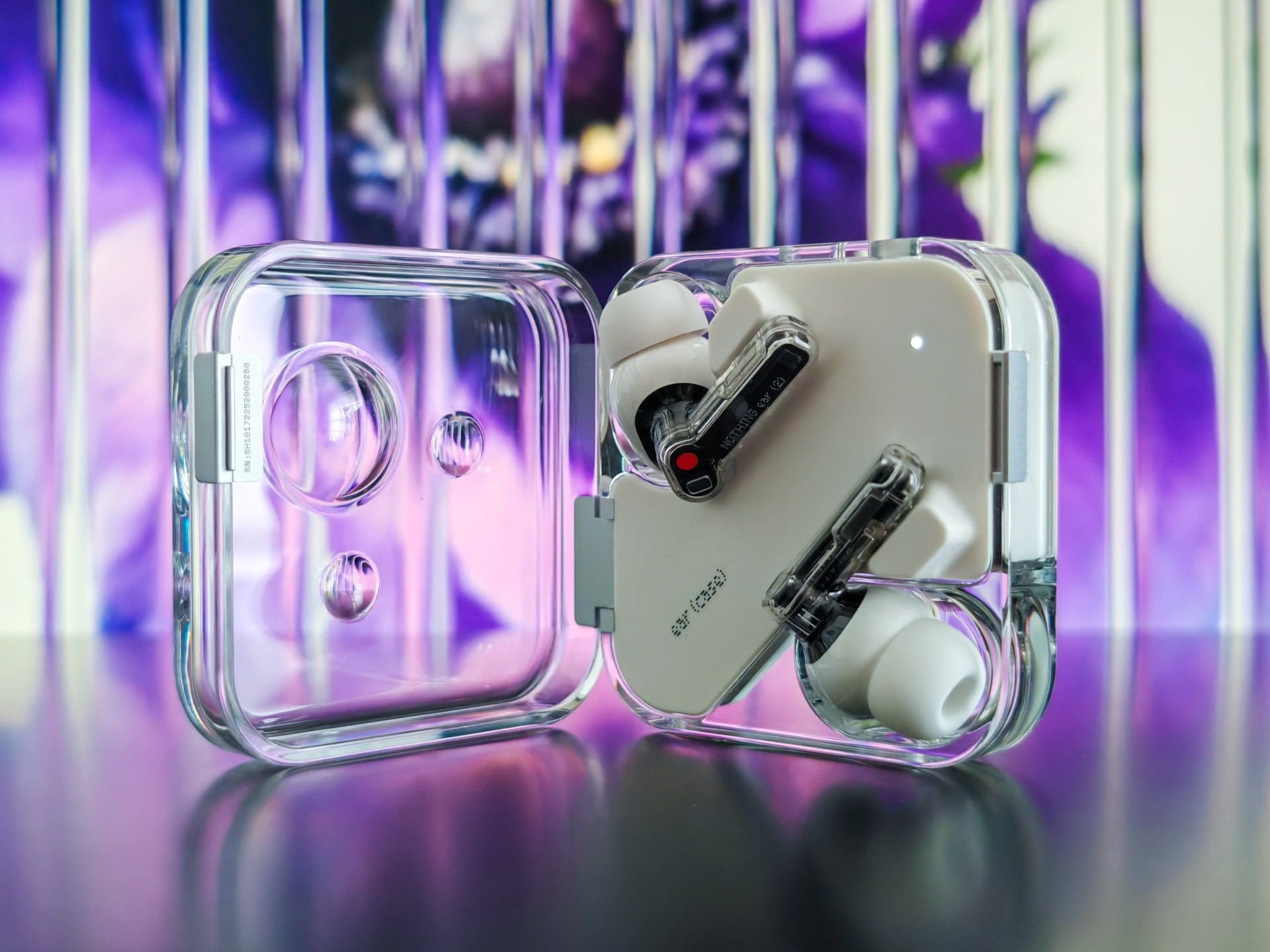
Upon opening the box, you are immediately confronted with the slim and elegant charging case containing the earbuds. Also included are ear tips in three different sizes, a USB-C charging cable, and a quick guide.
Design and build quality
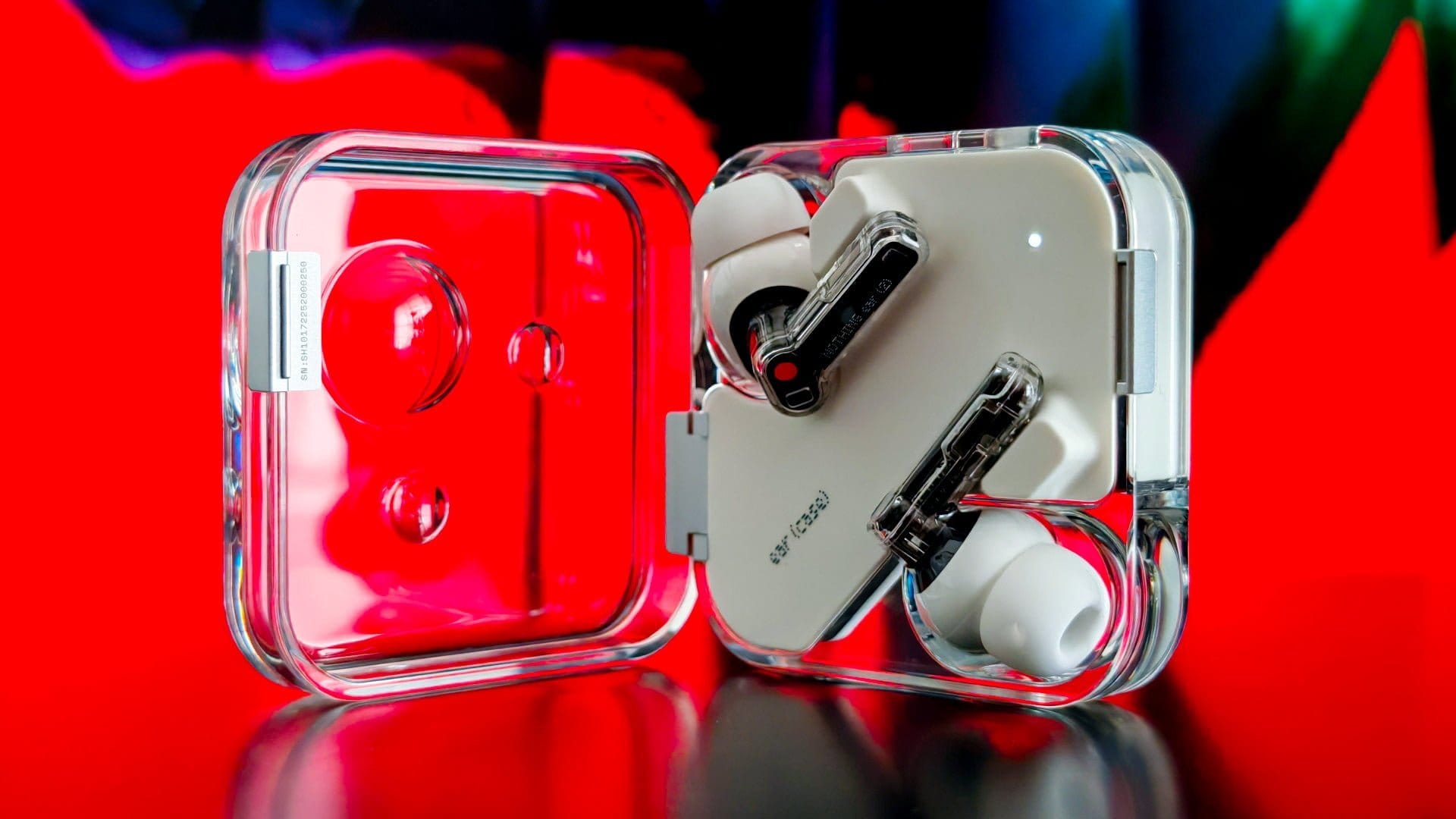
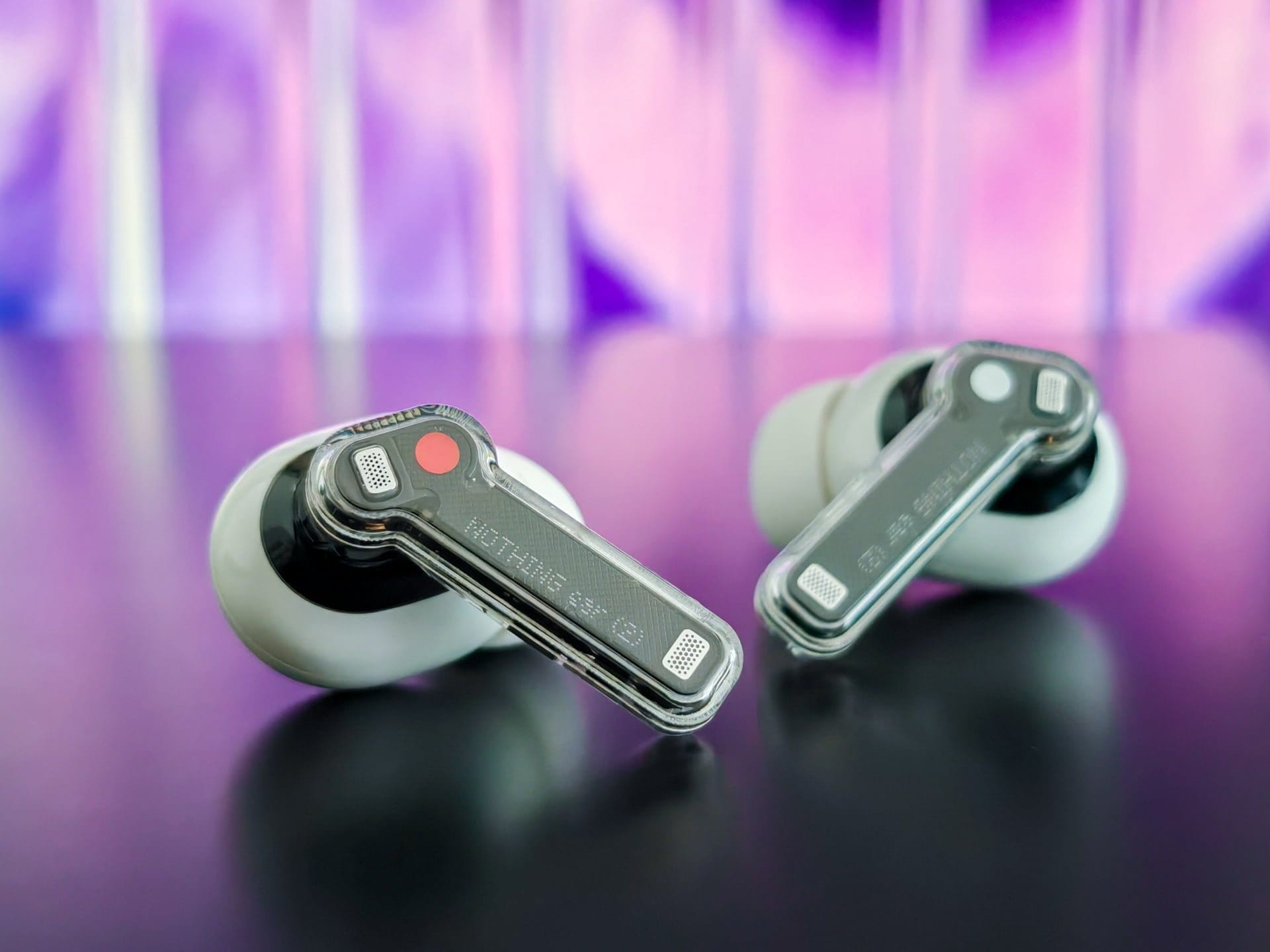
In terms of design, the Nothing Ear (2) looks almost identical to its predecessor, the Nothing Ear (1). Nothing decided to retain the successful, characteristic design with its transparent components, which was by no means a bad decision.
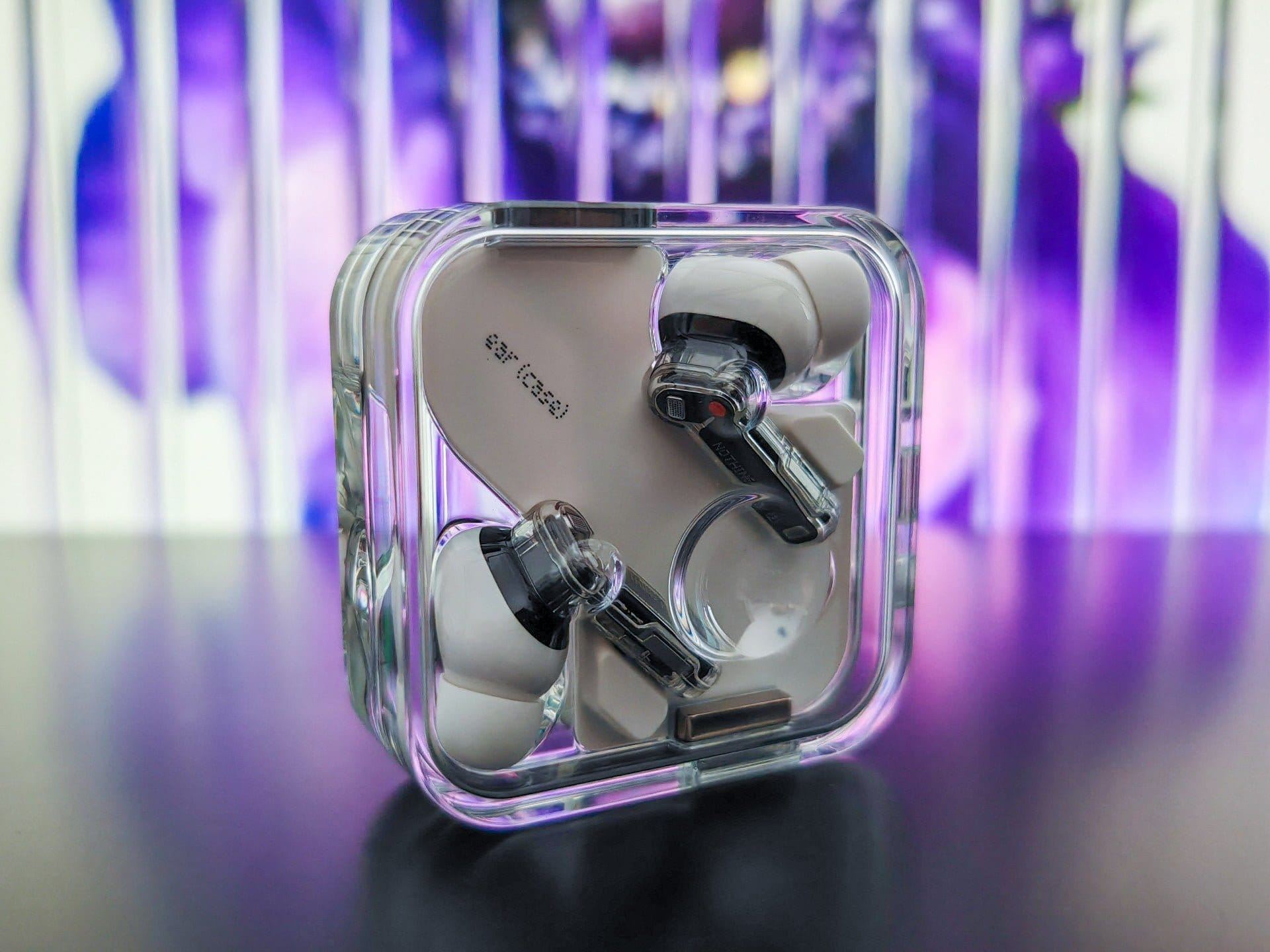
This aesthetic, which the company considers its signature, gives the Ear (2) a distinctive and refreshingly different look in a market flooded with similar-looking headphones.
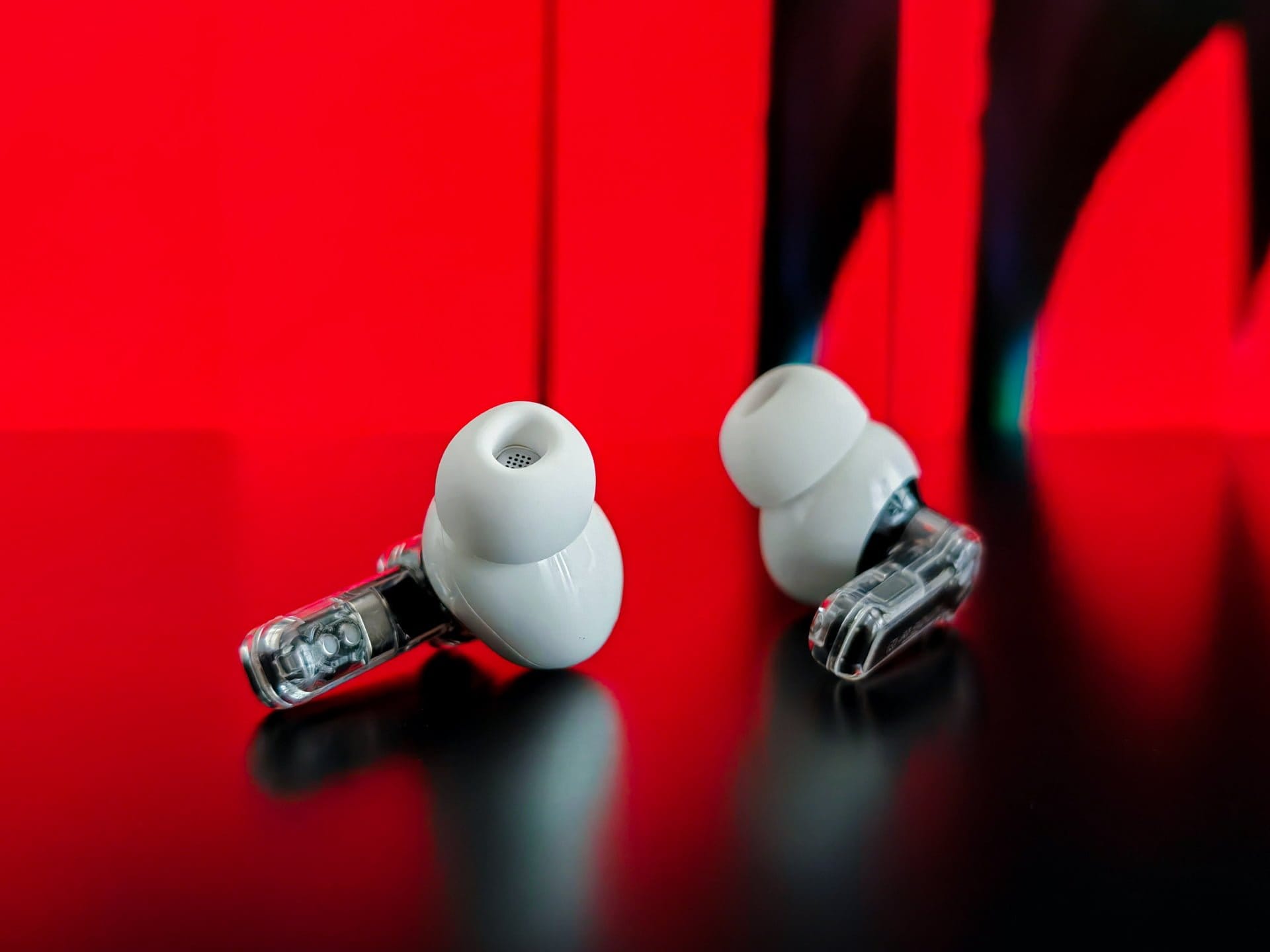
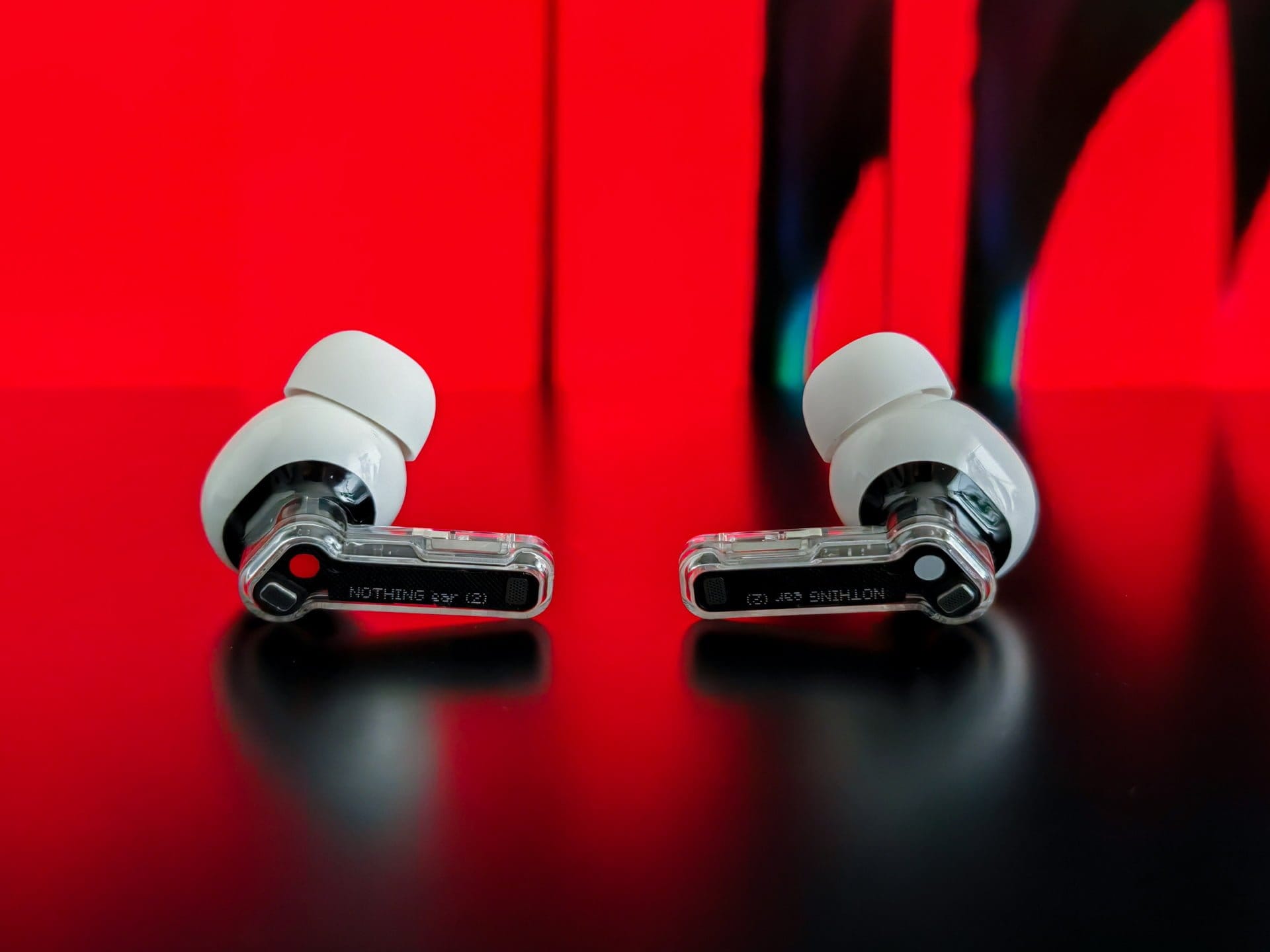
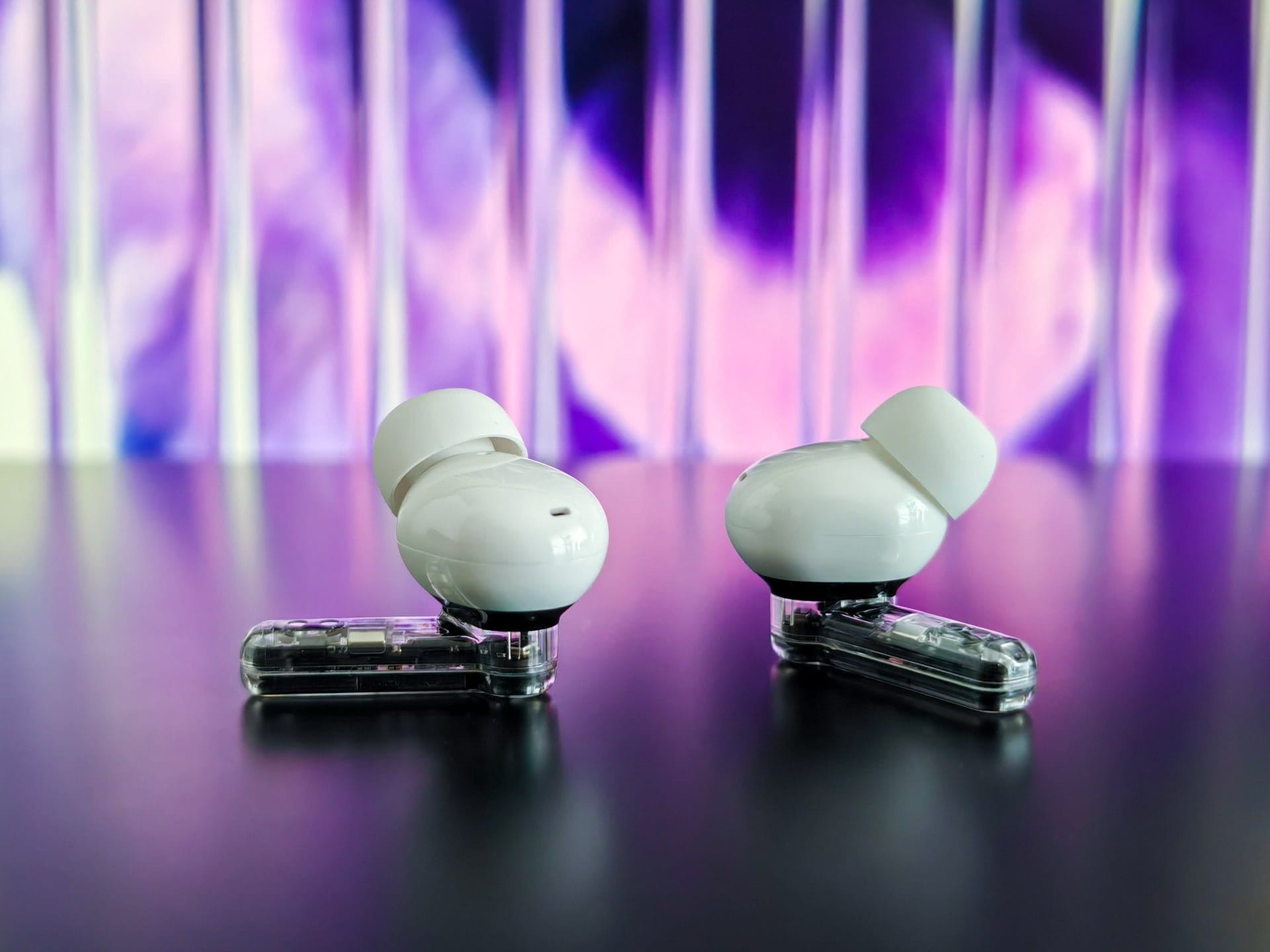
The Ear (2) is made of transparent plastic that allows a view of the internal components. The earbuds themselves, at 4.5 g, are a shade lighter than the Ear (1) with 4.7 g. However, they feature the same shape, the white driver housing and the transparent stem. Black is not offered as a colour option (so far).
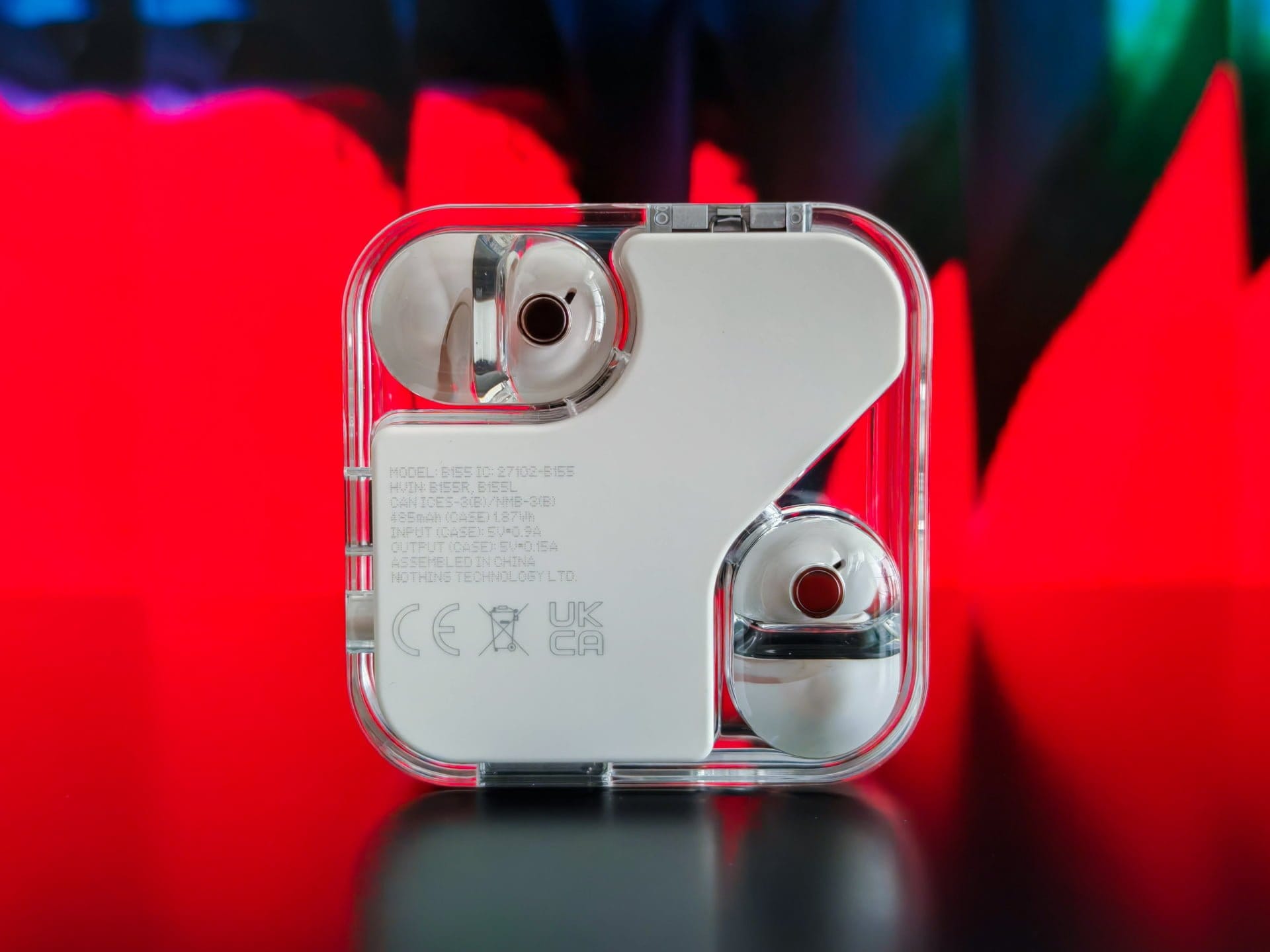
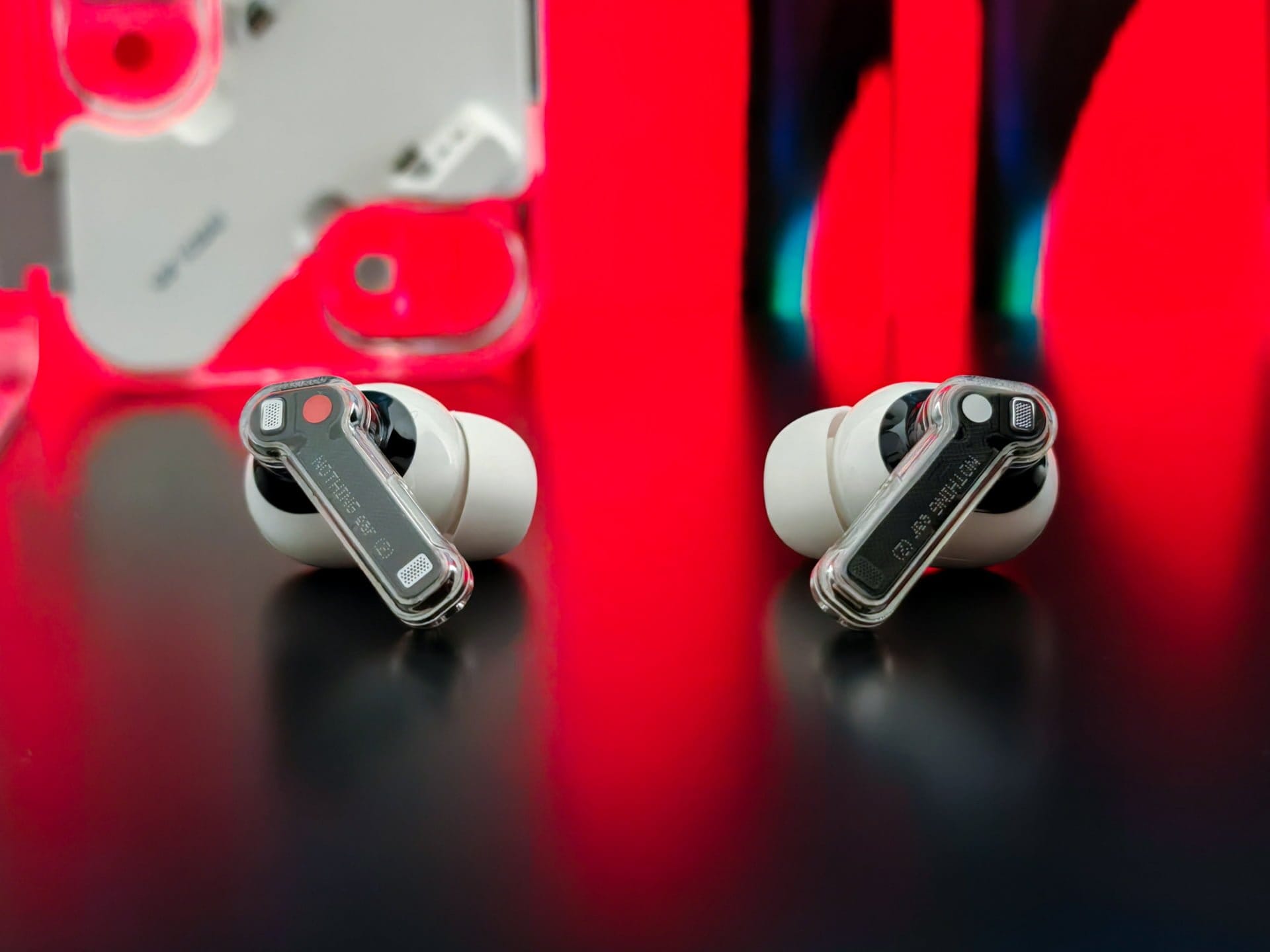
To prevent confusion when inserting them into the charging case, the stems feature a prominent red dot on the right and a white dot on the left earbud.
The charging case has also changed slightly. It is now smaller (55.5 x 55.5 x 22 mm) and lighter (51.9 g), which is due to a change in the housing design.
The lid is flatter and the circular indentation is slightly smaller. The symmetrical case sides ensure an aesthetic balance, but they can also make the correct opening direction of the charging case less obvious at first glance. When closing the lid, the magnetic attraction is pleasantly noticeable.
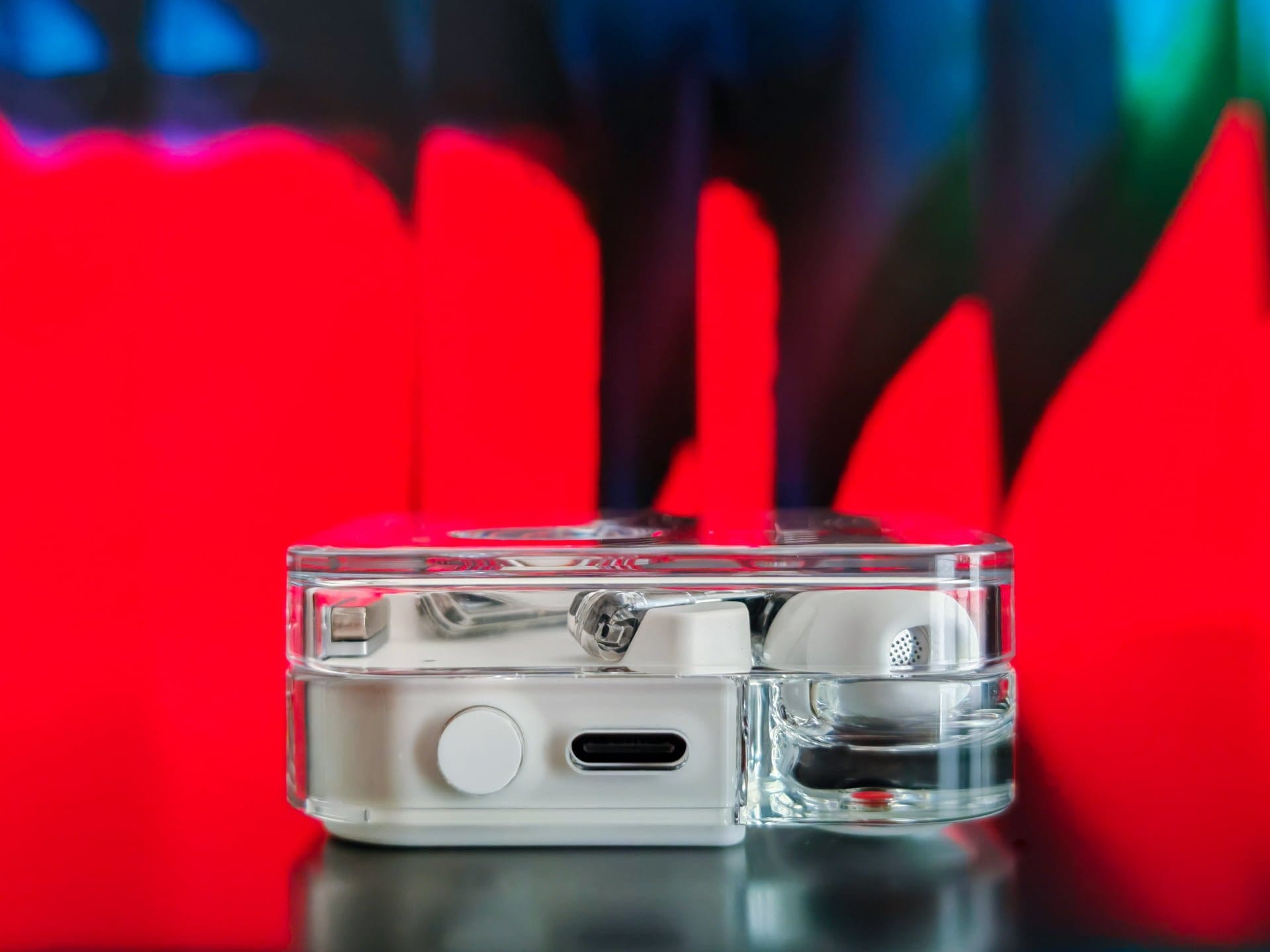
Nothing has not only focused on design and aesthetics but also improved the durability and functionality of the Ear (2). The plastic used is robust and shows no scratches even after several weeks of use.
In addition to durability, the Ear (2) features improved water and dust resistance. With an IP54 rating, the earphones are protected against moisture, such as sweat or rain. The charging case is even more resistant, boasting an IP55 protection class.
Nothing Ear (2) – wearing comfort
The Nothing Ear (2) headphones impress with good wearing comfort and an appealing style. During the test, no excessive pressure or unwanted slipping was noticed at any point, which is particularly noteworthy for stationary wear.
Selecting the appropriate ear tip size is facilitated by Nothing's personalised "fit test". A useful tool to assess how well the earbuds sit in the ear. The medium-sized ear tips fit me optimally, ensuring a soft and pleasant contact with the ear.
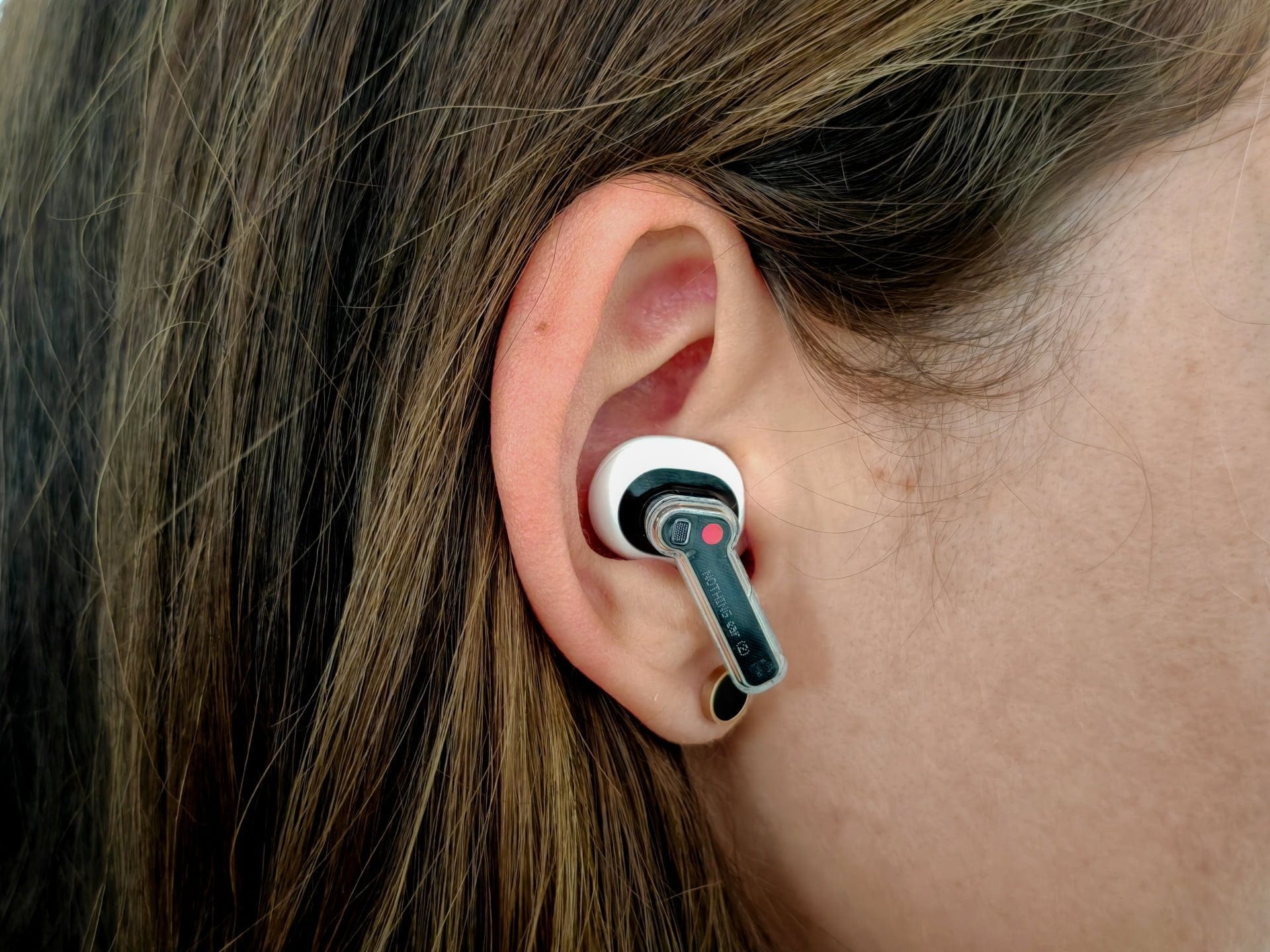
The Ear (2) is designed so that the majority of the earbud sits discreetly in the ear, with only a small part hanging out. In combination with the slightly oval shape, the earbuds feel secure even during physical activity. However, it should be noted that, as with all in-ear models, the fit of the earbuds can vary from person to person.
Nothing Ear (2) – Hardware
The Nothing Ear (2) brings some significant hardware improvements compared to the previous model. Despite the unchanged dynamic 11.6 mm driver design, the developers have upgraded the diaphragm with a new combination of graphene and polyurethane. This, according to Nothing, improves the reproduction of high and low frequencies and thus helps to refine the sound.
Nothing has also revised the internal design of the earbuds, introducing a new dual-chamber design. This provides the driver with more space and contributes to a clear, undistorted sound.
A technological advancement concerns codec support. In addition to the standard SBC and AAC codecs, the LHDC 5.0 codec is now also supported.
LHDC enables the lossless transmission of high-resolution music with up to 24-bit/192 kHz, provided the connected smartphone supports the codec. Compatible devices include the Nothing Phone (1) as well as selected models from Xiaomi, OPPO, realme and OnePlus.
Nevertheless, it is worth mentioning that support for LDAC and aptX is missing – two widely used codecs that would certainly have appealed to a broader audience.
Nothing Ear (2) – Sound quality
As for sound quality, the Ear (2) has taken a significant step forward. The sound is generally more balanced and fuller, thanks to what appears to be careful tuning by the design team.
Sound signature and spatiality
The Nothing Ear (2) has a V-shaped sound signature. This means that the bass and treble are emphasised, while the mids are slightly reduced. This frequency response creates a lively and energetic sound profile that particularly suits genres such as pop, hip-hop and electronic music.
In terms of spatial reproduction, the Ear (2) shines with a wide soundstage. The instrument separation is well executed, allowing for a clear perception of depth and width, and immersing the listener.
Bass, mids and treble
In the bass range, the Ear (2) delivers a powerful yet restrained reproduction. Compared to the Ear (1), the lower frequencies offer more precision and punch. They do not dominate the entire soundstage but provide a solid foundation on which the rest of the sound can build.
For example, in The White Stripes - Seven Nation Army, the bassline in the background is pleasantly robust without compromising the vocals or other instruments.
The mid-range also shows excellent performance. They are full and harmonise with the rest of the frequency spectrum. Although there is a slight dip in the mid-frequencies, which can cause certain male voices to lose some presence, the mid-range reproduction is solid overall.
Regarding the highs, I have mixed feelings. While the highs help to highlight details and give the sound a certain sparkle, they can be somewhat too emphasized in certain songs. A good example here is Dio - Rainbow In The Dark, where the "pinch harmonics" of the guitar solo can quickly become unpleasant.
With some finesse and patience, the peaks can be slightly mitigated via the equalizer of the Nothing X app without compromising overall sound quality.
LHDC codec
The difference between the active LHDC codec and the standard AAC codec is clearly noticeable. With LHDC activated, the sound becomes more dynamic and fuller. Fine details stand out more, creating an even more intense sense of spaciousness.
Nothing Ear (2) – Noise cancellation
The Nothing Ear (2) features Active Noise Cancellation (ANC) to reduce distracting ambient noise. The ANC can be adjusted via the Nothing X app in the levels 'High', 'Medium', 'Low' and 'Adaptive'.
The test revealed that the effectiveness of noise cancellation fluctuates with varying ambient noise, particularly in the mid and high frequency range, which can lead to an uneven listening experience. With changing wind noise outdoors, the ANC of the Ear (2) finally reaches its limits.
However, in more static environments, such as on a train or plane, monotonous and particularly low-frequency noises are filtered well.
An interesting innovation introduced by Nothing with the Ear (2) is personalized noise cancellation, which is tailored to specific ambient noises and the individual shape of the user's ear canal. However, I did not notice any significant differences between personalized ANC and standard ANC during the test.
In addition to noise cancellation, there is a transparency mode that lets ambient sounds through. This is a feature that should not be underestimated, especially in road traffic. The transparency mode works quite well but can lead to a slight drop in sound quality.
Nothing Ear (2) – Controls
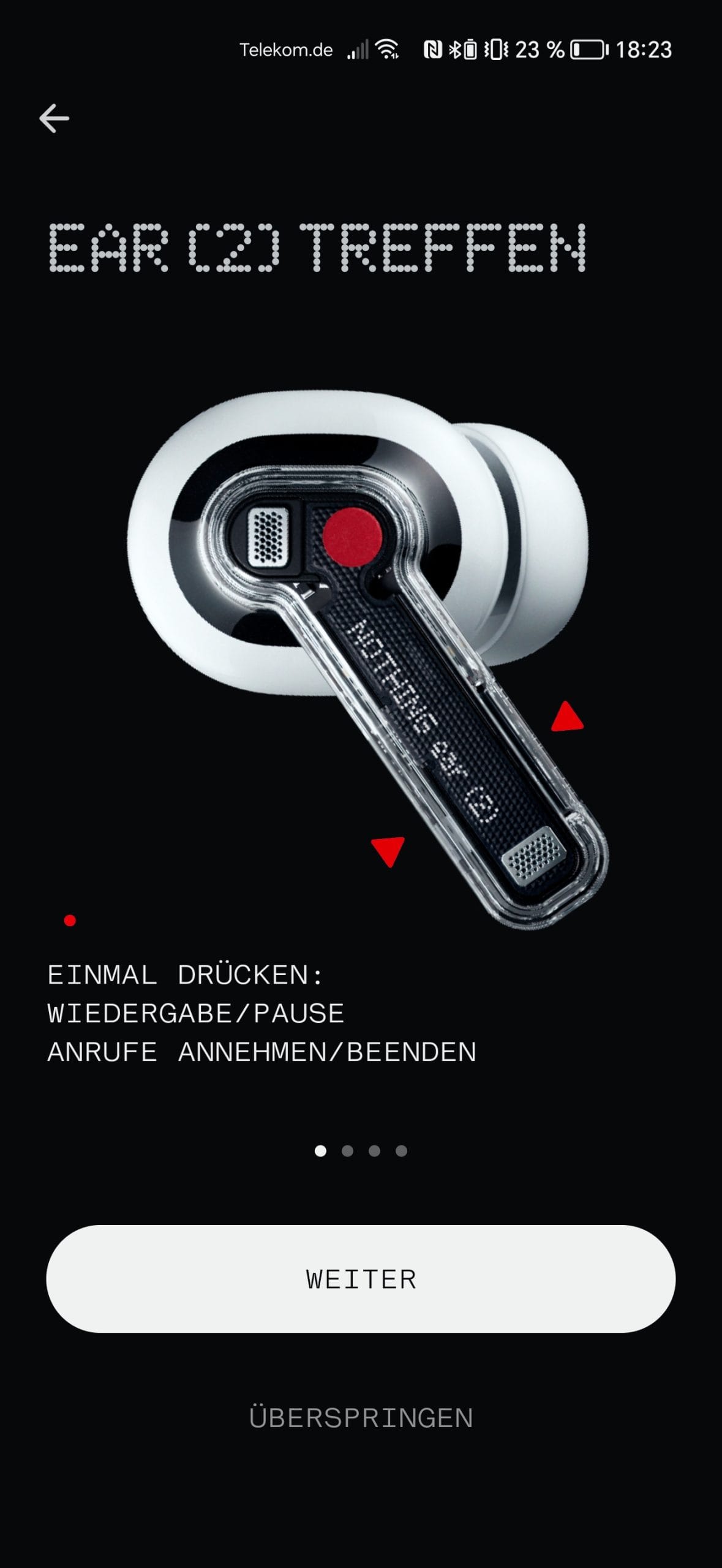
A clear upgrade over the predecessor model is the switch from touch control to press control via a "pinch gesture". Interactions are triggered on the stem with a pinching movement between thumb and index finger, and confirmed by a clicking sound.
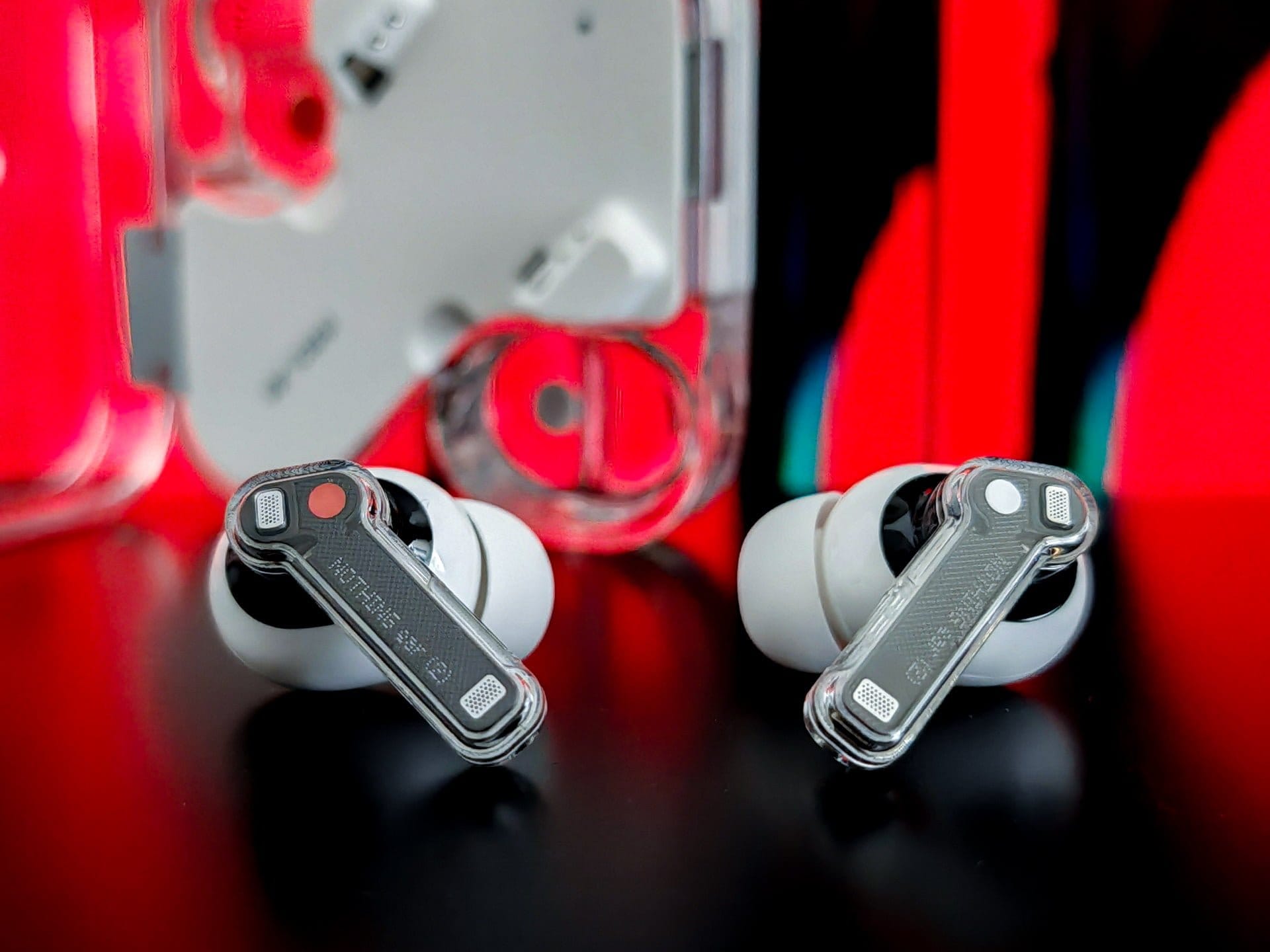
The "Pinch" system recognises single, double and triple pinches as well as long presses to trigger various functions, such as starting and stopping playback or skipping tracks. Volume control or activation of the voice assistant can also be assigned to a gesture. The actions can be customised via the Nothing X App, but the gesture control cannot be completely disabled.
Compared to the traditional touch gesture, the new mechanism proved to be more consistent and reliable. Only in rare cases did the pressure-sensitive stems react too sensitively, which occasionally led to unintended interactions when inserting and removing them.
However, the lag between the gesture and command execution is somewhat irritating, slightly detracting from the user experience.
Nothing Ear (2) – Latency
To improve the gaming experience and eliminate any audio-video latency, the Ear (2) offers a special "low-latency mode" that can be activated via the Nothing X app.
Interestingly, this mode doesn't seem relevant for everyone. During my tests, I didn't notice any significant delays in videos or games even without this mode. However, it's worth noting that I'm not a heavy mobile gamer, and this feature could be quite useful for that specific target audience.
Nothing Ear (2) – Voice quality
In quiet surroundings, the Nothing Ear (2) delivers impressive voice quality with clear and distinct voice reproduction.
In noisy environments, the algorithm for suppressing background noise behaves comparatively aggressively. Although interference noises are effectively filtered out, this makes speech sound somewhat muffled. A gentler adjustment of the noise suppression would certainly be advantageous in such situations to maintain speech clarity.
Nothing Ear (2) – Nothing X App
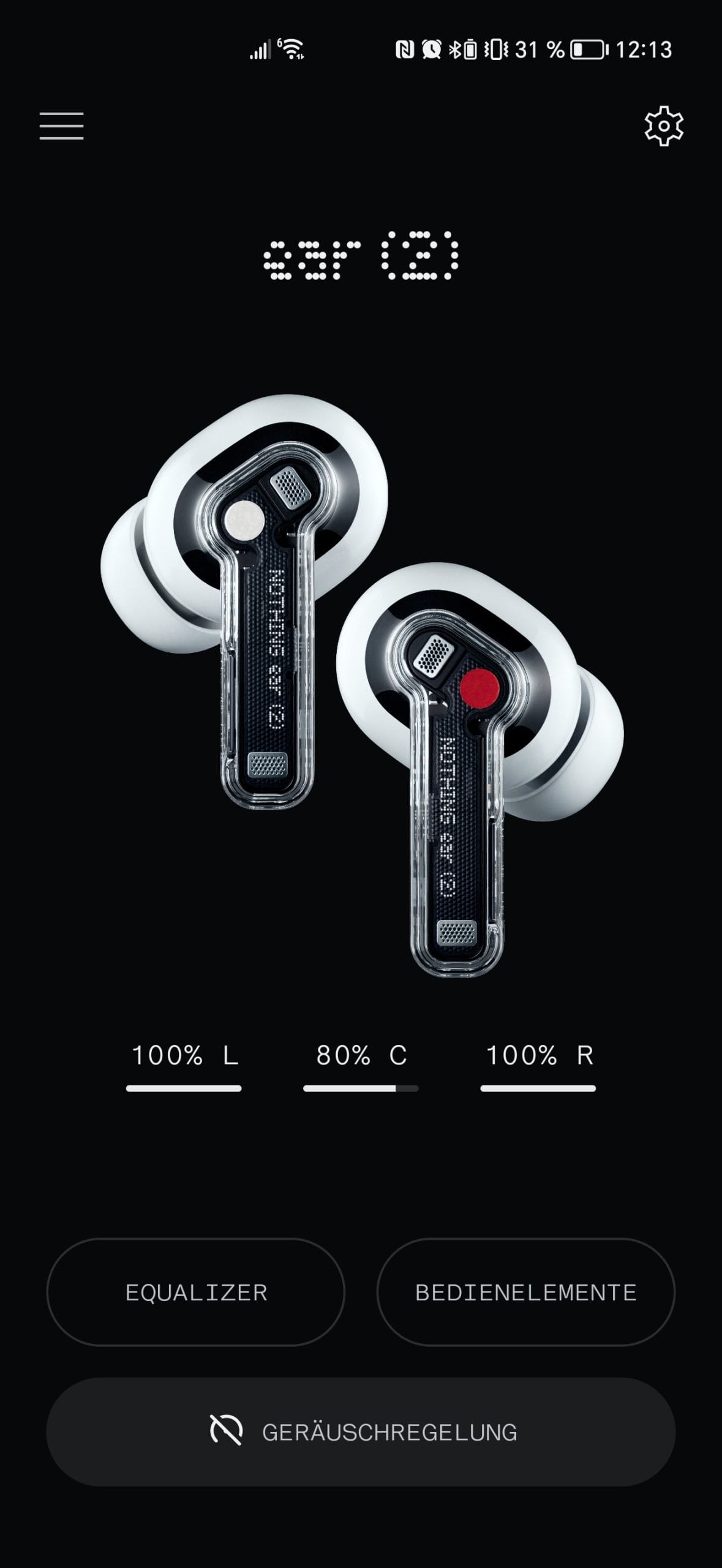
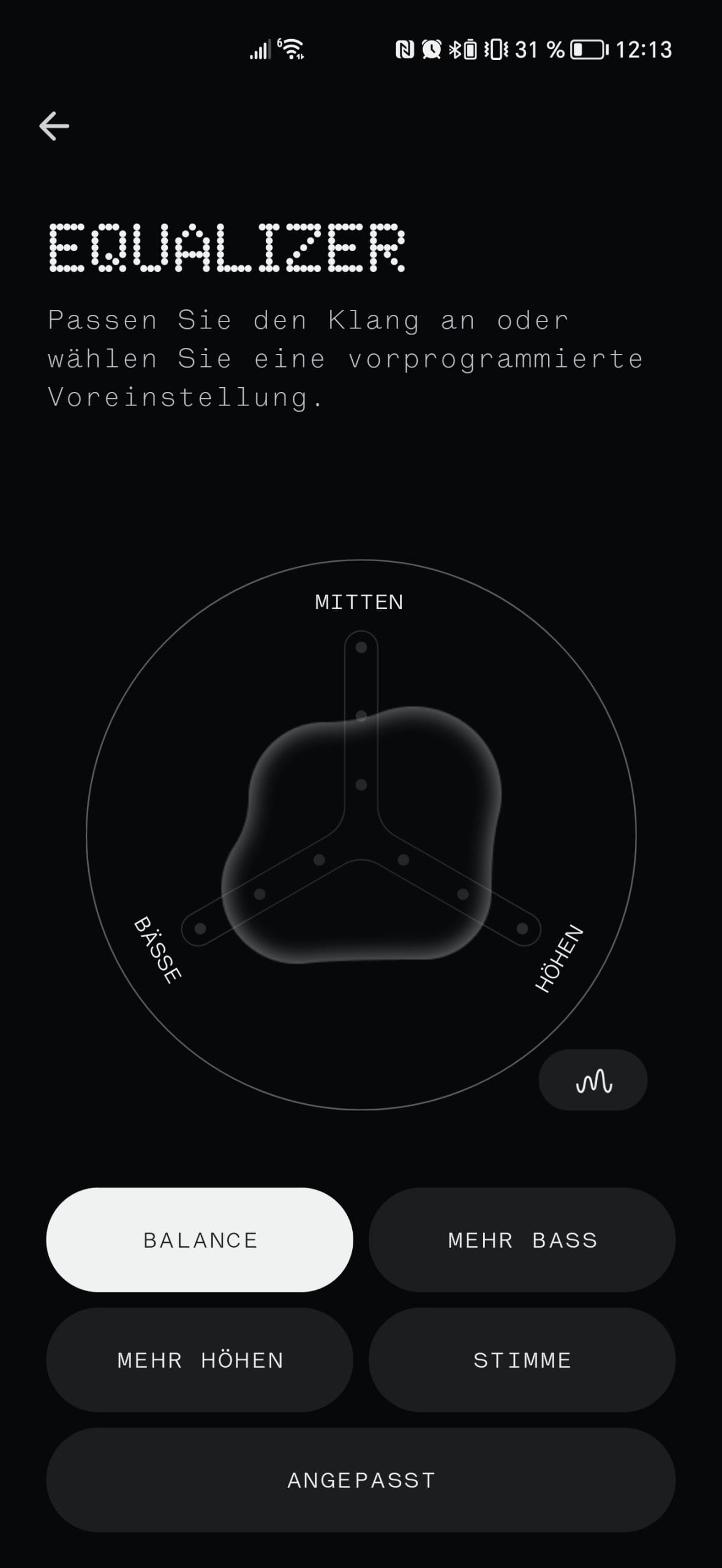
All functions of the Nothing Ear (2) are controlled via the Nothing X app (iOS and Android). In addition to the functions already mentioned, the app offers an individually adjustable equaliser. The equaliser has a three-band setting with which bass, mids and treble can be adjusted in 12 levels each.
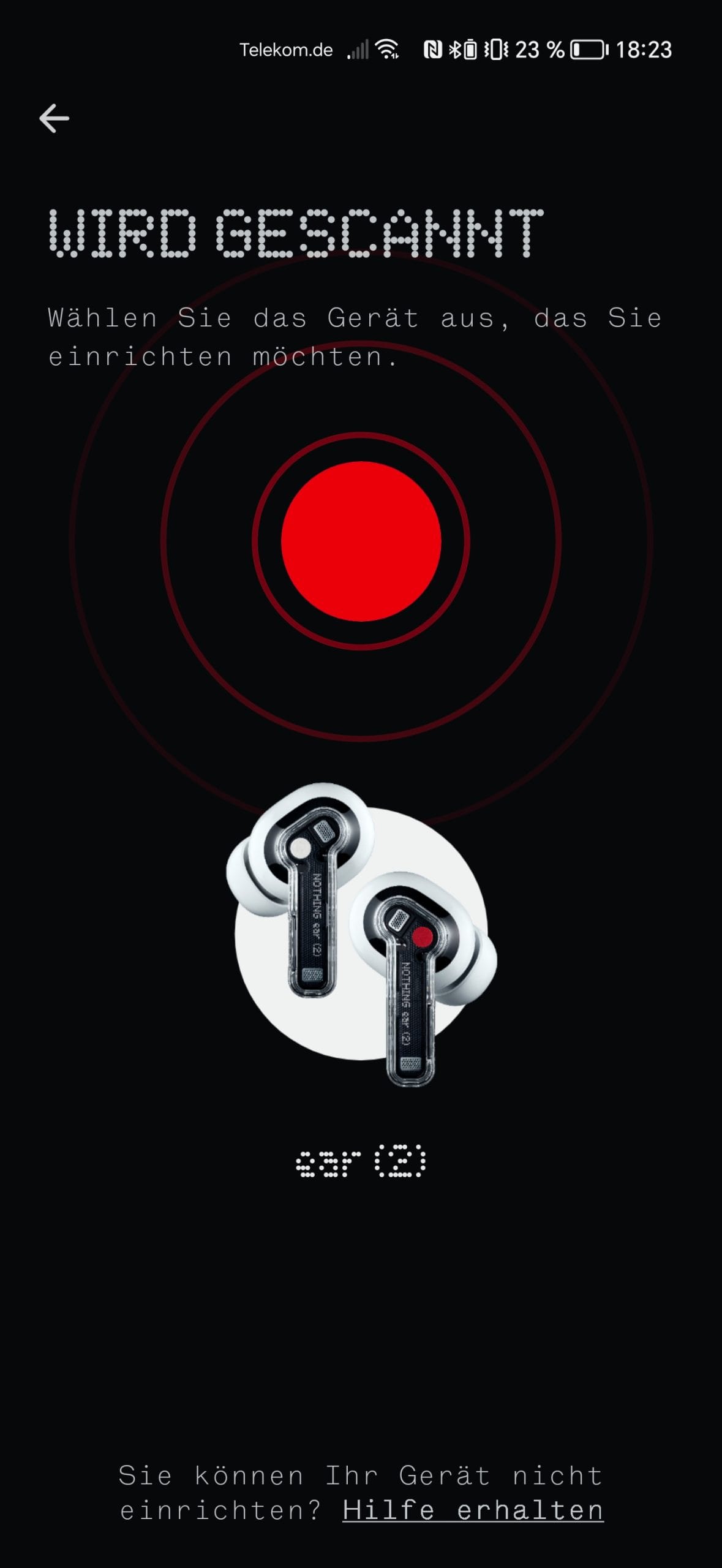
Alternatively, users can choose between the sound profiles "Balance", "More Bass", "More Treble", and "Voice", or create a personal sound profile.
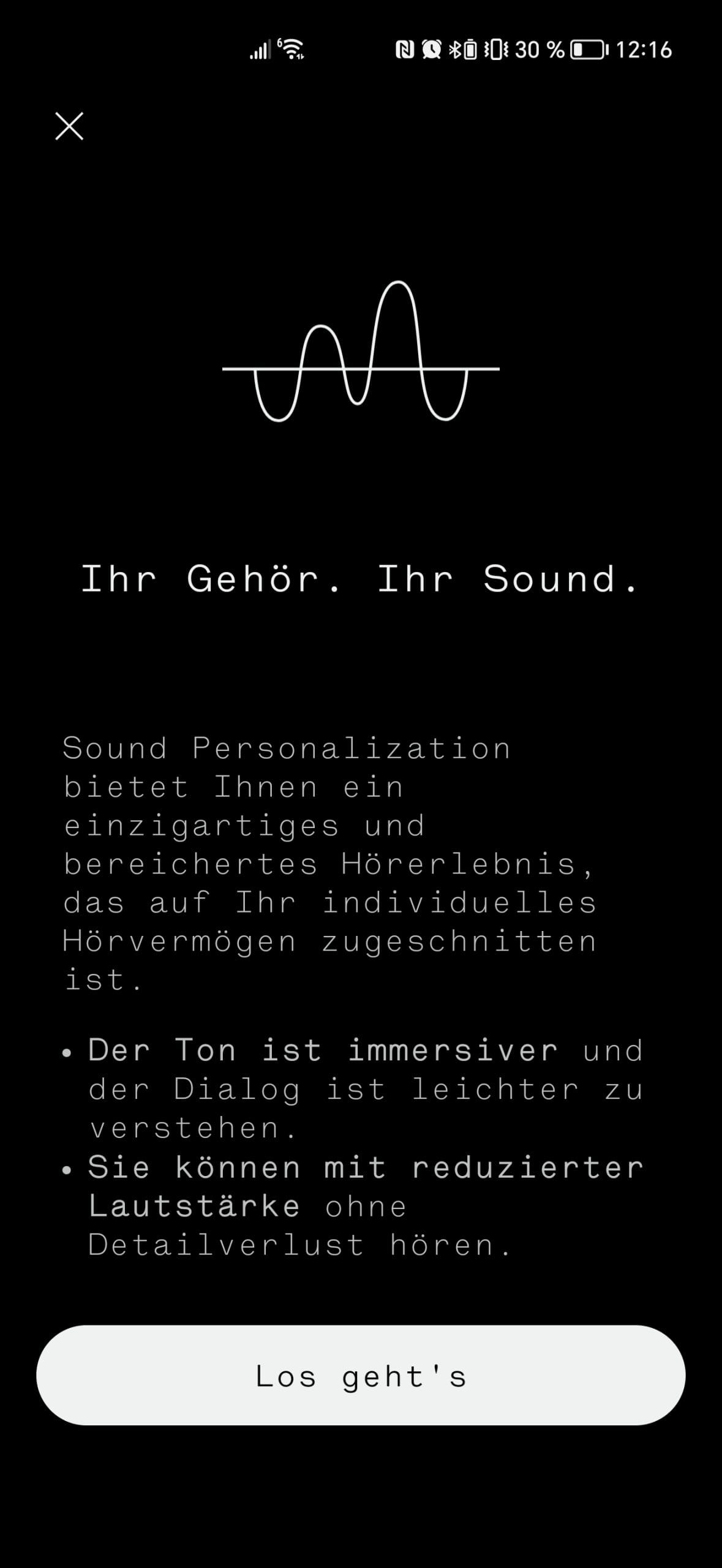
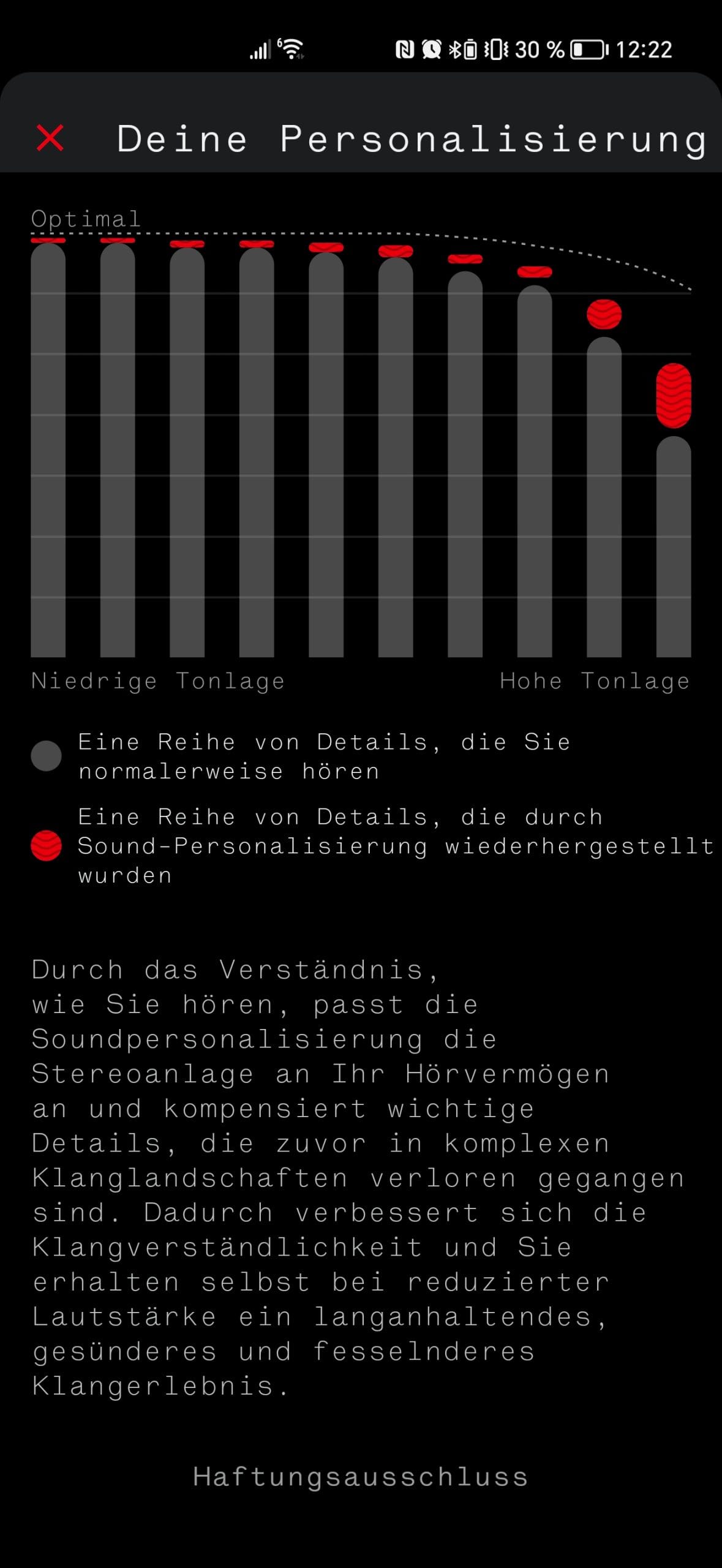
When creating a sound profile, users go through various hearing tests. The tests are designed to determine a frequency response tailored specifically to individual hearing preferences. I found the result to be extremely appealing, and the feature proved quite useful for me.
Another highlight and at the same time a new feature is the support for Bluetooth multipoint. This makes it possible to connect the Ear (2) to two different audio sources simultaneously. In testing, switching between devices worked seamlessly.
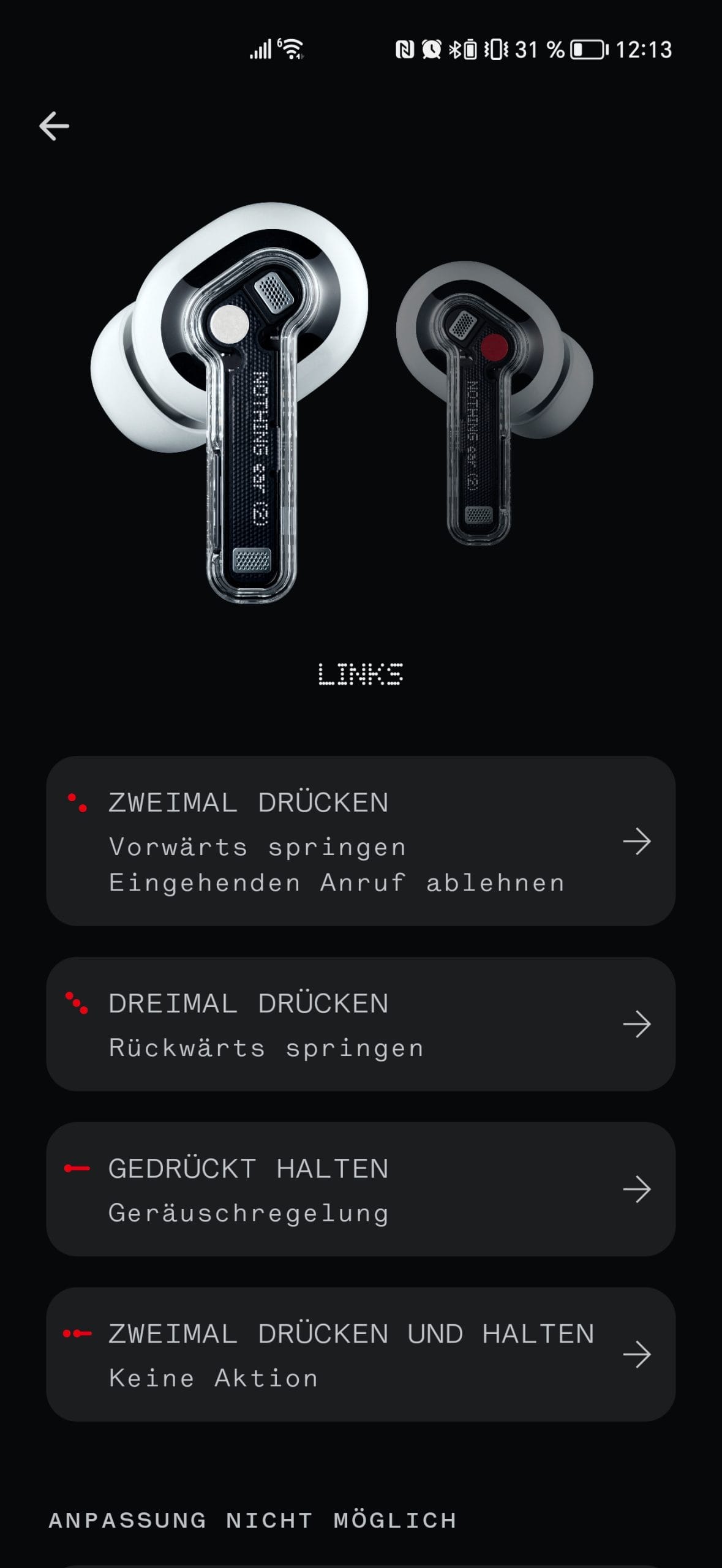
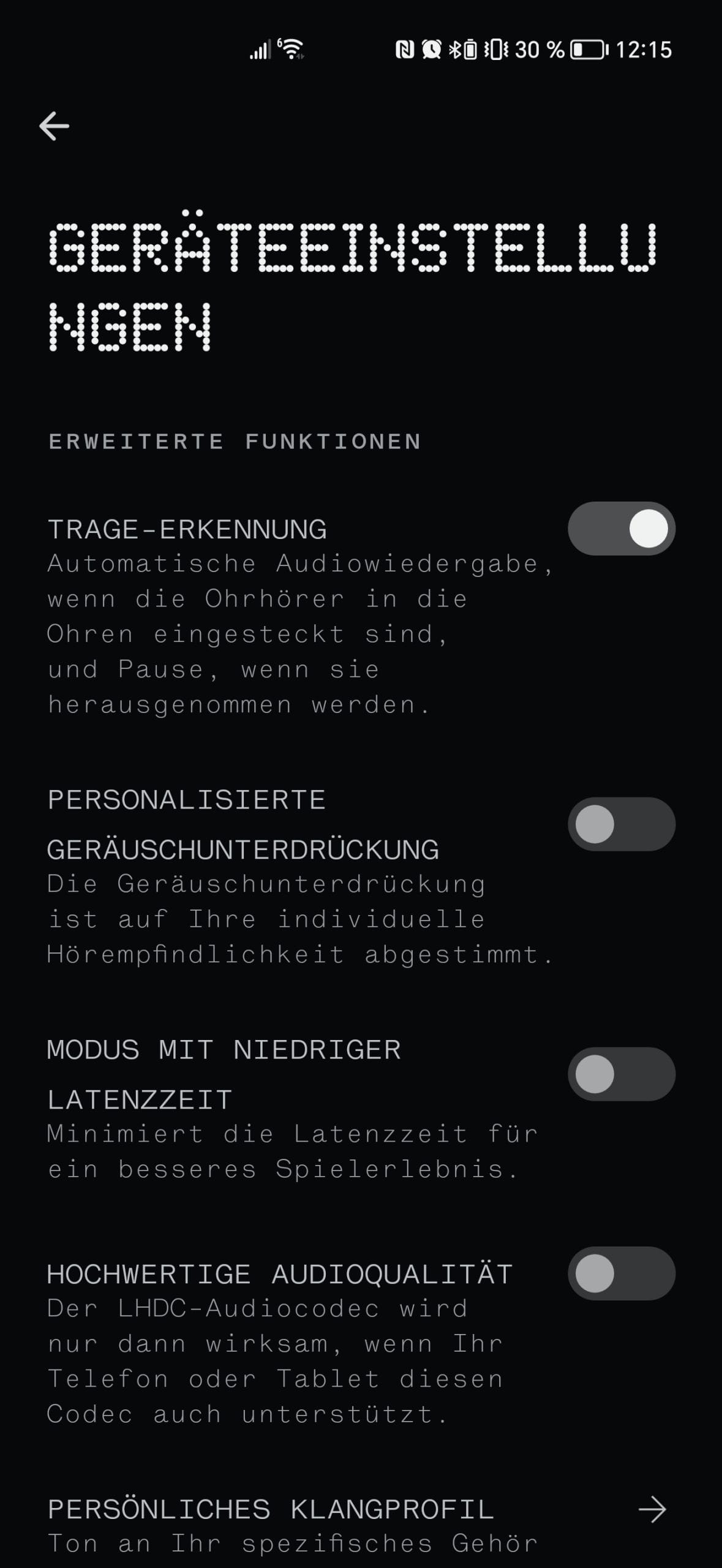
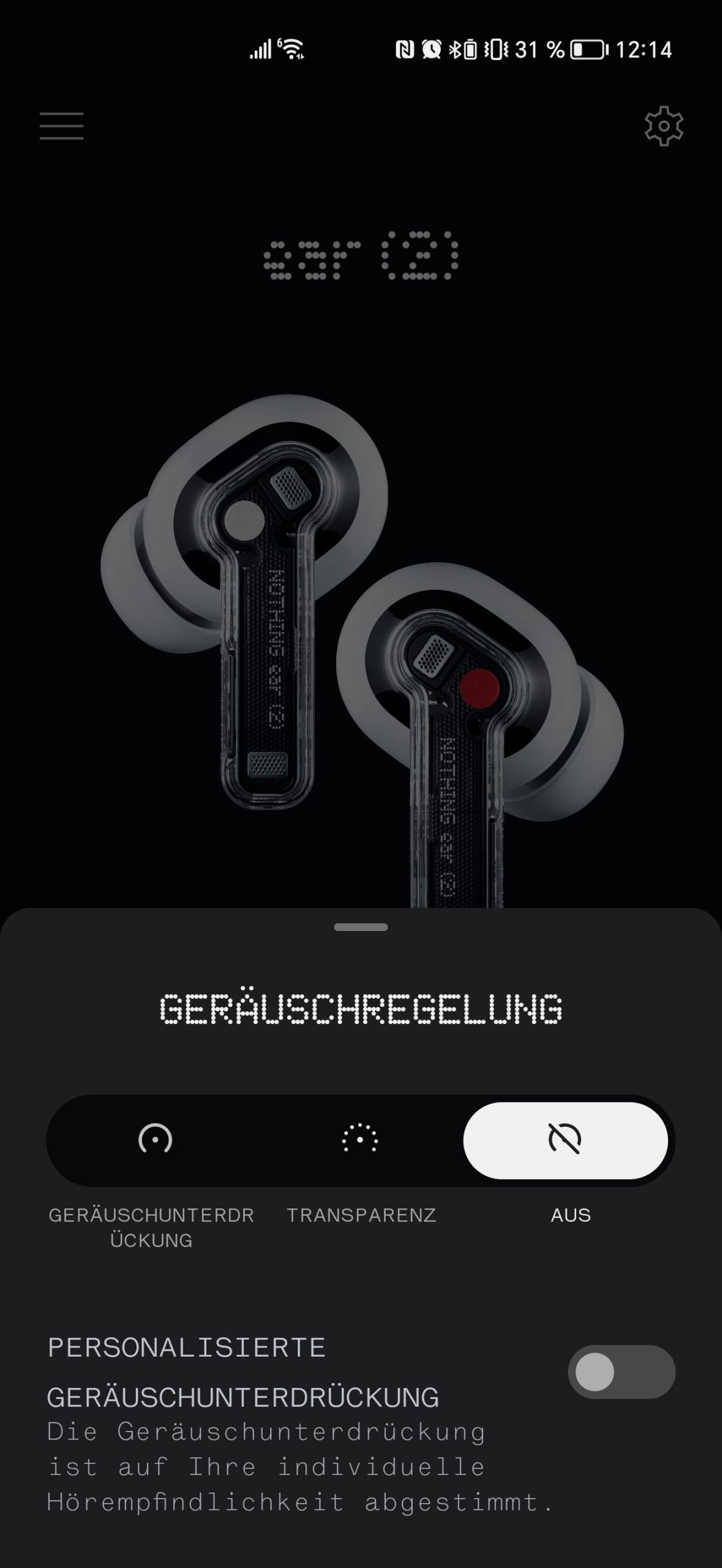
Despite the generally good software of the Nothing Ear (2), there is one aspect that still requires improvement: the wear detection. In particular, playback did not always stop automatically when the earbuds were removed from the ears. This is an area that could be further optimised in the future.
Nothing Ear (2) – Battery life
Battery life of the Nothing Ear (2) is a critical issue. According to Nothing's specifications, it should last around 6.3 hours with noise cancellation disabled and about 4 hours with ANC active.
My experiences during testing were different, however. With the AAC codec, I achieved an average battery life of around 5.7 hours, which is relatively close to the manufacturer's claim. Using the LHDC codec, on the other hand, resulted in a disappointing battery life of just 4 hours. With ANC activated, the battery life shrinks to only 3 hours. By comparison, competing products usually achieve 5 to 6 hours of runtime with active ANC.
Despite the suboptimal battery life of the earbuds themselves, the included charging case allows the earbuds to be fully recharged from 0 to 100 per cent four times. The earbuds are fully charged after approximately 40 minutes. The charging case can be charged either via USB-C fast charging (approx. 45 minutes) or wirelessly via Qi (approx. 150 minutes).
Our verdict
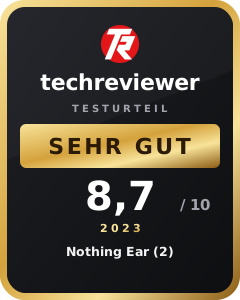
With the Ear (2), Nothing has improved its iconic headphones further. The remarkable sound quality, unique design and comfortable fit make the Ear (2) stand out in its price class and an attractive option for music lovers.
Advanced features, such as the pressure-sensitive control element and the personalised sound profile, underscore Nothing's commitment to innovation and user experience.
Nevertheless, there are areas that leave room for improvement. Battery life is the biggest point of criticism – it lags significantly behind the competition. In addition, there are some software issues, particularly in connection with the wear detection, that should be noted.
Given the price, Nothing offers an overall solid package that only needs some fine-tuning.
Specifications
General
- Drivers
- Dynamic driver
- Size
- 11.6 mm
- Diaphragm
- Graphite + PU
- Frequency range
- Unbekannt
- Impedance
- Unbekannt
- Sensitivity
- Unbekannt
Bluetooth
- Standard
- 5.2
- Range
- up to 10 meters
- Codec
- *SBC
- *AAC
- *LHDC 5
Battery
- Capacity
- 33 mAh (earbuds), 485 mAh (case)
- Runtime
- 6.3 hours / 36 hours
- Charging time
- 10 minutes for 8 hours of playback
- Wired
- USB-C
- Wireless
- Qi with 2.5 W
Other
- ANC
- Yes, up to 40 dB
- Microphone
- Yes
- Operation
- Touch, App
- Water resistance
- IP54 (earbuds), IP55 (case)
- Size (Earbud)
- 9.4 x 21.5 x 23.5 mm
- Size (case)
- 55.5 x 55.5 x 22 mm
- Weight (Earbud)
- 4,5 g
- Weight (case)
- 51,9 g
Price comparison
| Store | Price | Link |
|---|---|---|
| MediaMarkt | 99,00 € | Go to store |
| Nothing | 149,00 € | Go to store |
Comments (6)
Hi Timo, I’ve been eyeing up the Ear 2 for quite some time. But in my case, silicone ear tips don’t stay in well. For my old in-ear headphones, I specifically bought foam-padded tips. Do you think those would fit the Ear 2 as well?
Hi Olli, you can of course also use other ear pads. In my case, the Comply TX-100 fit without any problems.
How do I know if my smartphone supports LHDC? I have a Google Pixel 6a.
Hi RA, the list of compatible devices is rather short. It mainly supports devices from Chinese manufacturers (Xiaomi, realme, OPPO). Unfortunately, Google’s Pixel devices are not among them.
Okay, too bad. Are the Ear 2 still worth it if you can't use the codec, or would that be a dealbreaker?
Hello Timo,
In my research on in-ear headphones, I came across your article on the Nothing Ear 2. I use an iPhone 12 and the AirPods are unfortunately too expensive for me. You often read that the Ear 2 are at least on par with the AirPods, if not slightly better. If I buy the Ear 2 now, will I have any disadvantages as an iPhone user, or will all features work? Regards Nelli