Contents
Headphone (1): Design and wearing comfort
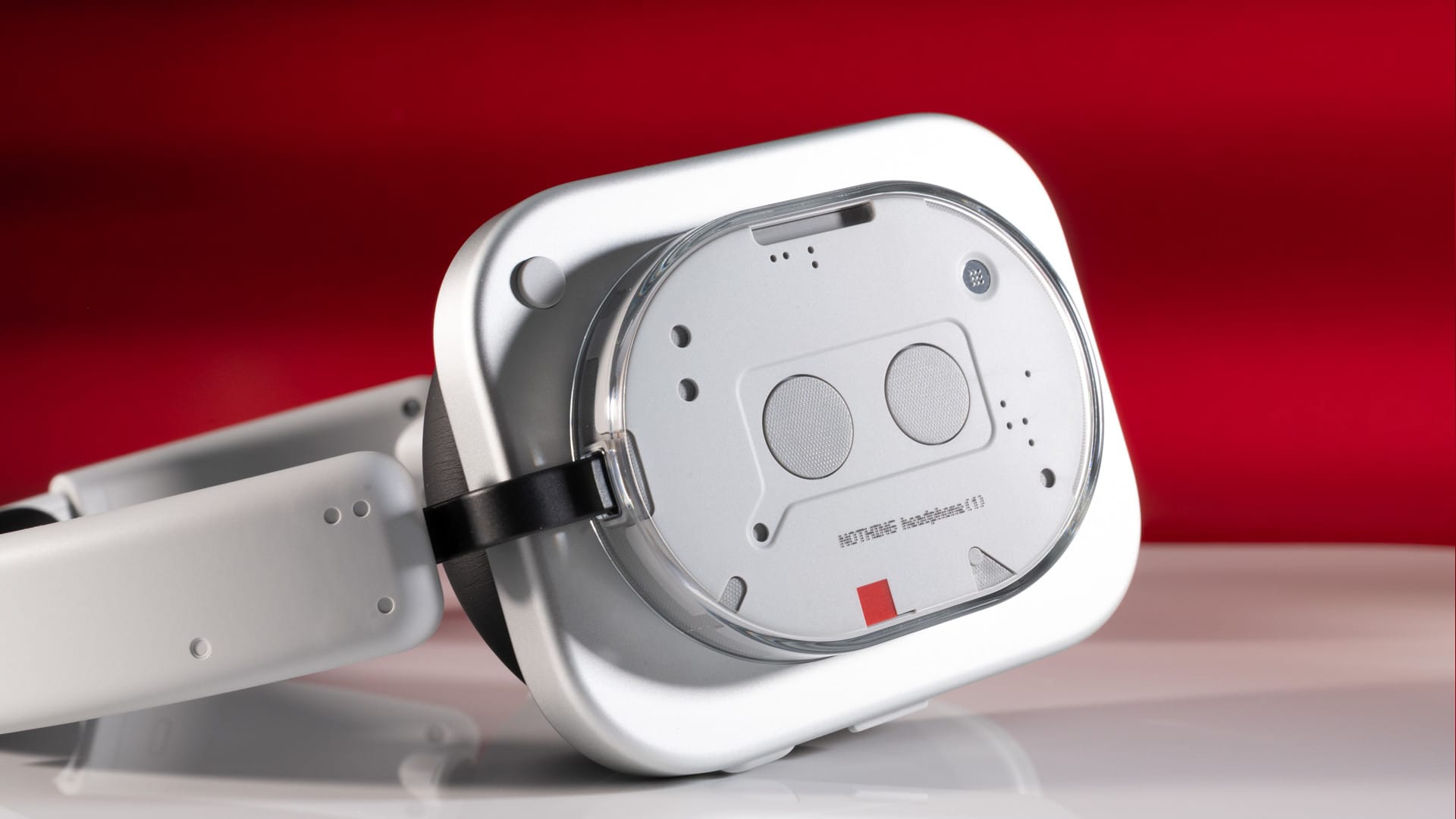
The Headphone (1) are unmistakably a Nothing product. As with the brand's smartphones, the transparent plastic housing focuses on visibility by revealing parts of the construction, even if there is more show than technical relevance behind them.
Together with the squircle-shaped earcups and clean lines, the design recalls a mix of an 80s Walkman and a Stranger Things prop. A bold, deliberately different approach that either appeals to you or does not.
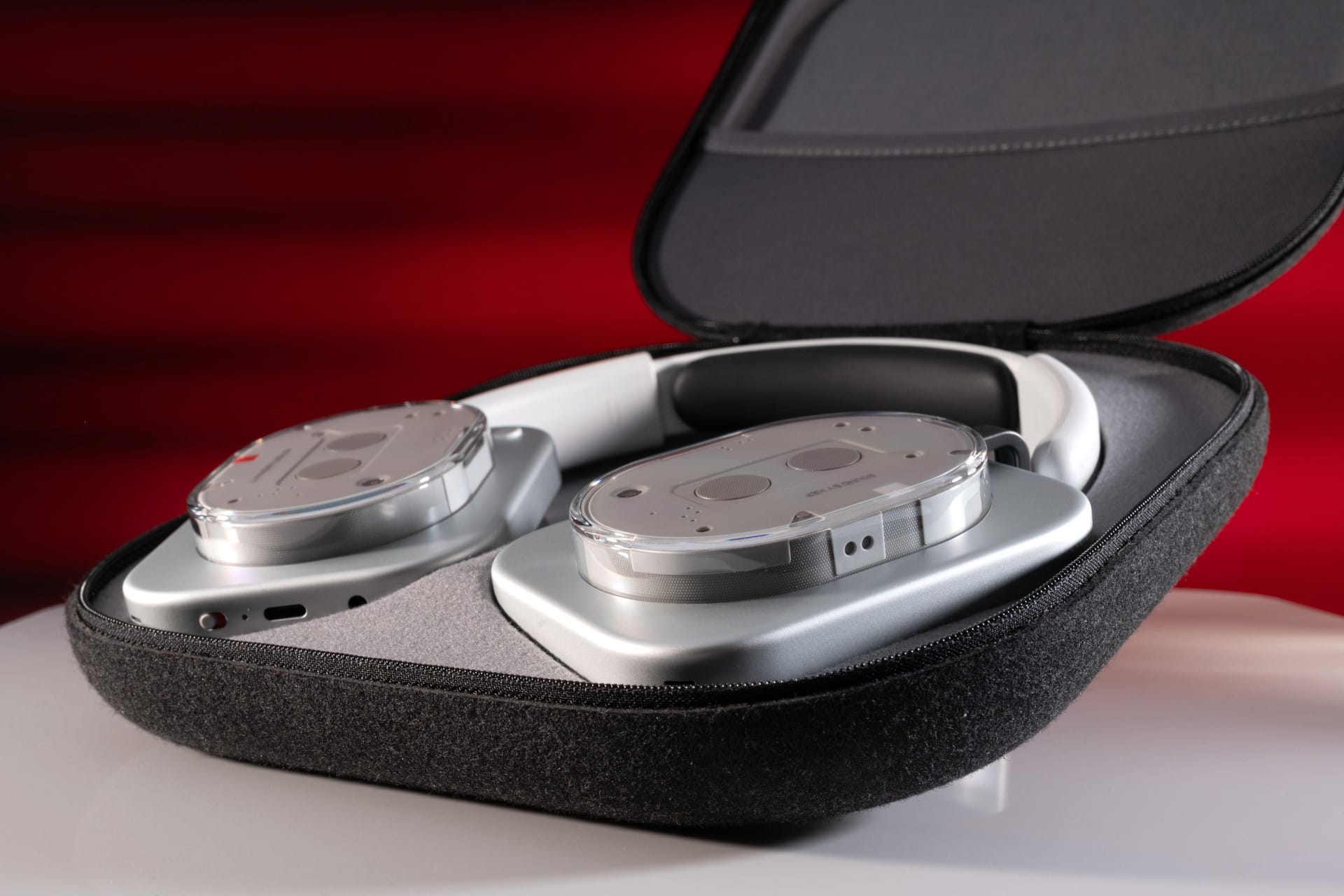
The build quality matches the brand's ambition. The frame is made of aluminium, complemented by robust plastic, creating an overall premium impression. At 329 grams, the Headphone (1) are no lightweights, but they are surprisingly comfortable to wear.
The memory-foam pads conform neatly to the shape of the head and ears, the headband is softly padded and distributes pressure evenly. This pays off in everyday use. Even after hours-long train rides, long home-office sessions or light workouts, the headphones sit comfortably and securely, without noticeable pressure points or excessive heat buildup.
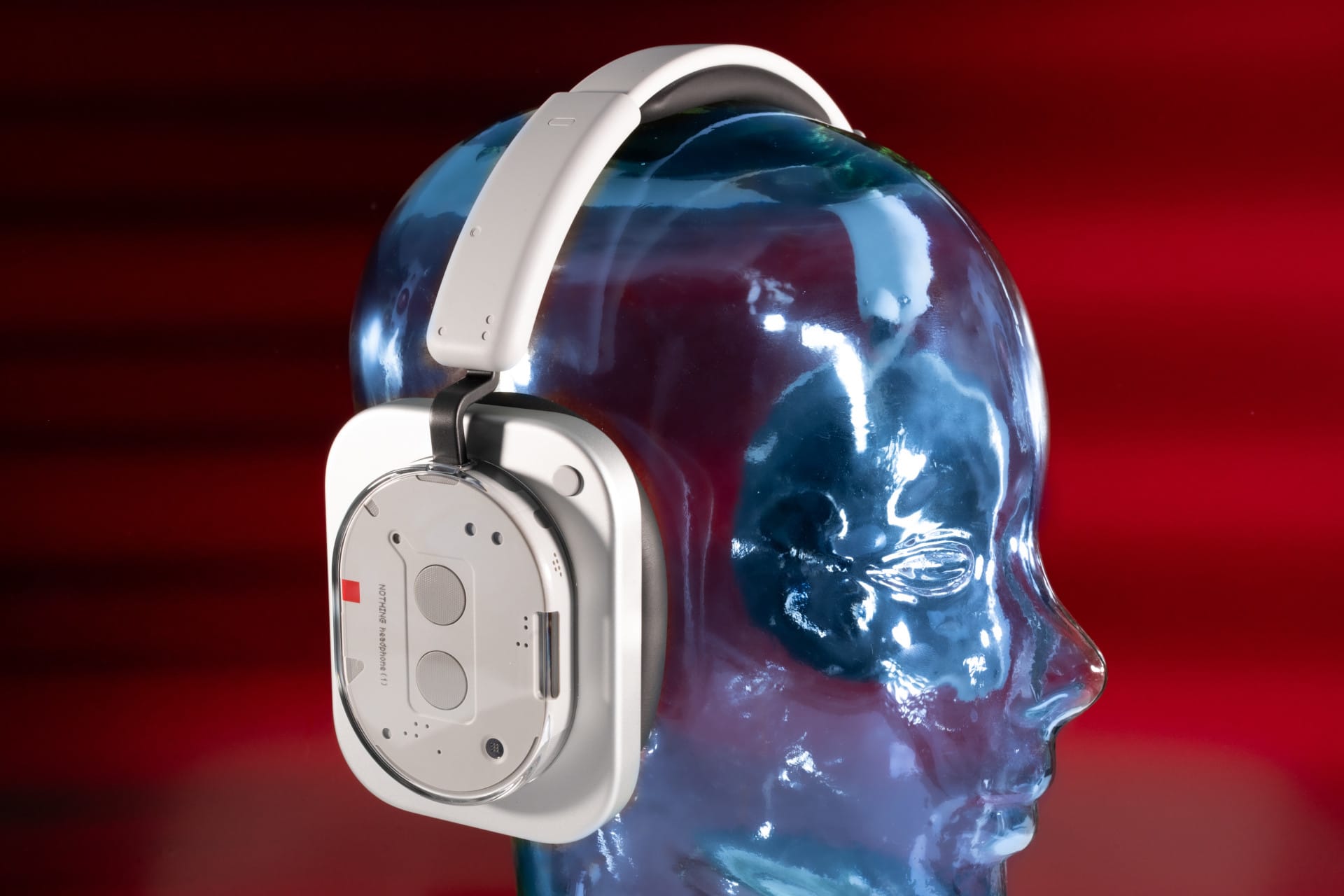
With an IP52 rating, the housing withstands dust and splashing water. This means nothing stands in the way of a walk in the rain or intense workouts. However, the design does come with some compromises. Since the headphones cannot be folded, the supplied hard case is larger than users might be used to with other models. This is fine for a backpack but can quickly become a nuisance in smaller bags.
In addition, the ear pads are not easy to replace. With daily use, wear is likely to become visible at some point. Replacement is then only possible via Nothing support. This is not necessarily optimal for heavy users.
Headphone (1): Technology and connectivity
Nothing does little wrong in terms of technical features. The Headphone (1) communicates via Bluetooth 5.3 and supports the common codecs AAC, SBC and LDAC. LDAC in particular is likely to please hi-res fans, as it transmits audio at up to 990 kbps, provided the source device supports it. In practice, the connection was stable and unobtrusive in tests with iPhone, Android and MacBook. No delays or dropouts occurred.
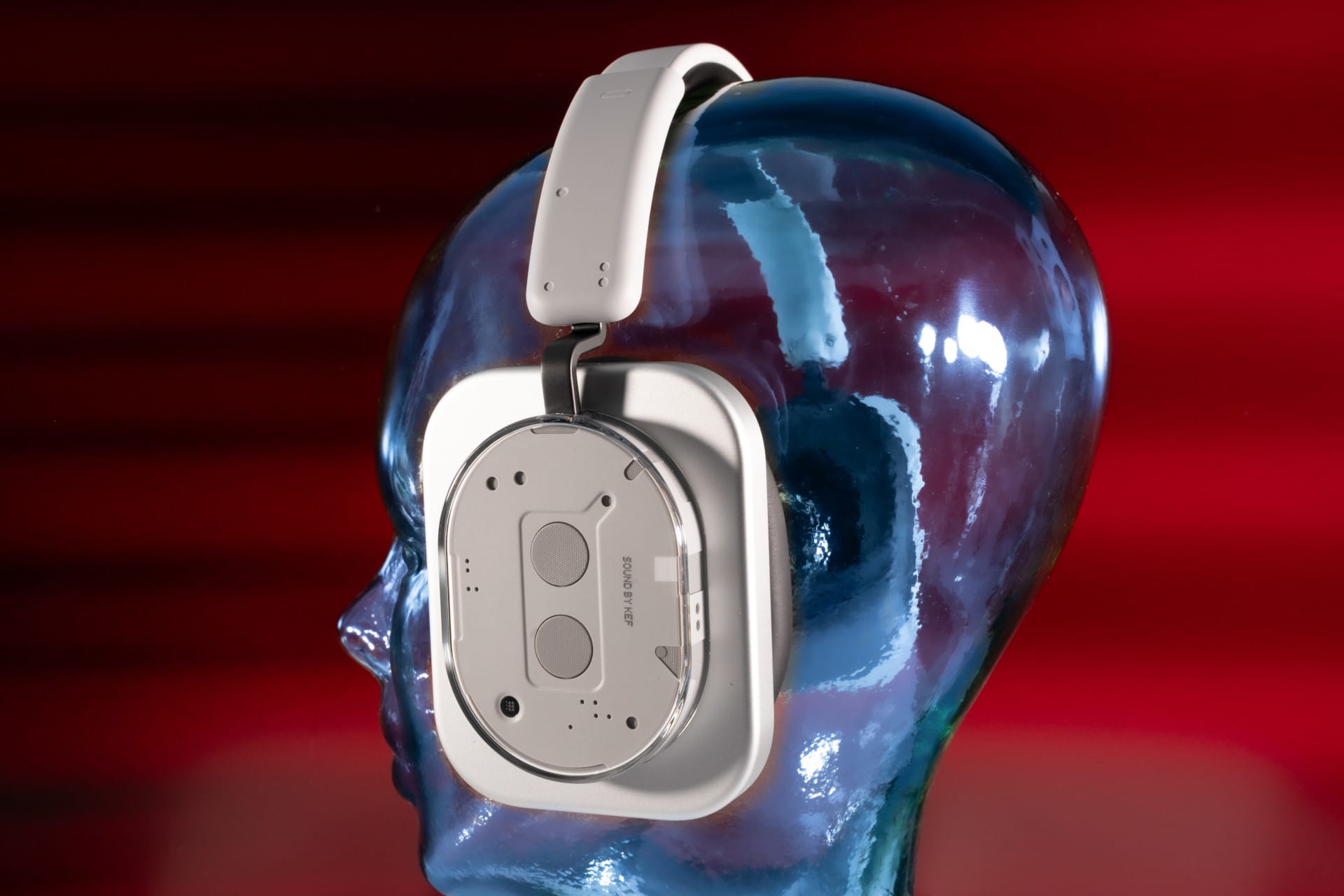
If you use multiple devices, you benefit from multipoint support. This allows the headphones to be connected to two devices simultaneously. Pausing a YouTube video on your laptop and seamlessly taking a call on your smartphone works without interruption. Pairing is also quick thanks to Google Fast Pair and Microsoft Swift Pair, although the physical pairing button inside the right earcup requires a bit of dexterity at first.
You are not left stranded with wired connections either. The package includes both a jack to jack cable and a USB-C audio cable. The latter enables digital audio input without relying on the often mediocre DAC in the smartphone. Operation via the jack only works when the headphones are switched on, meaning the battery must be charged. Purely passive operation is not possible.
Also on board is Wear Detection. When you take the headphones off, the music pauses automatically; when you put them back on, it resumes. This is complemented by a gaming mode, which reduces latency, especially when watching videos and occasionally gaming.

Headphone (1): Sound and tuning
When it comes to sound, Nothing relies on external expertise. The 40 mm drivers inside were tuned in collaboration with the British hi-fi manufacturer KEF, which enjoys a certain reputation among audiophiles. And indeed, the Headphone (1) deliver solid sound that can appeal straight away, but doesn't necessarily have to.
In its factory state, the tuning tends to be on the darker side. Bass is clearly present without excessive boominess, mids are slightly recessed, and highs appear slightly laid back. This makes tracks like "Seven Nation Army" punchy but somewhat dull in the details. Vocals sound pleasantly warm but lose clarity in places. Instruments such as hi-hats or acoustic guitars could benefit from more presence. Especially in more complex arrangements, they sometimes appear a bit flat.
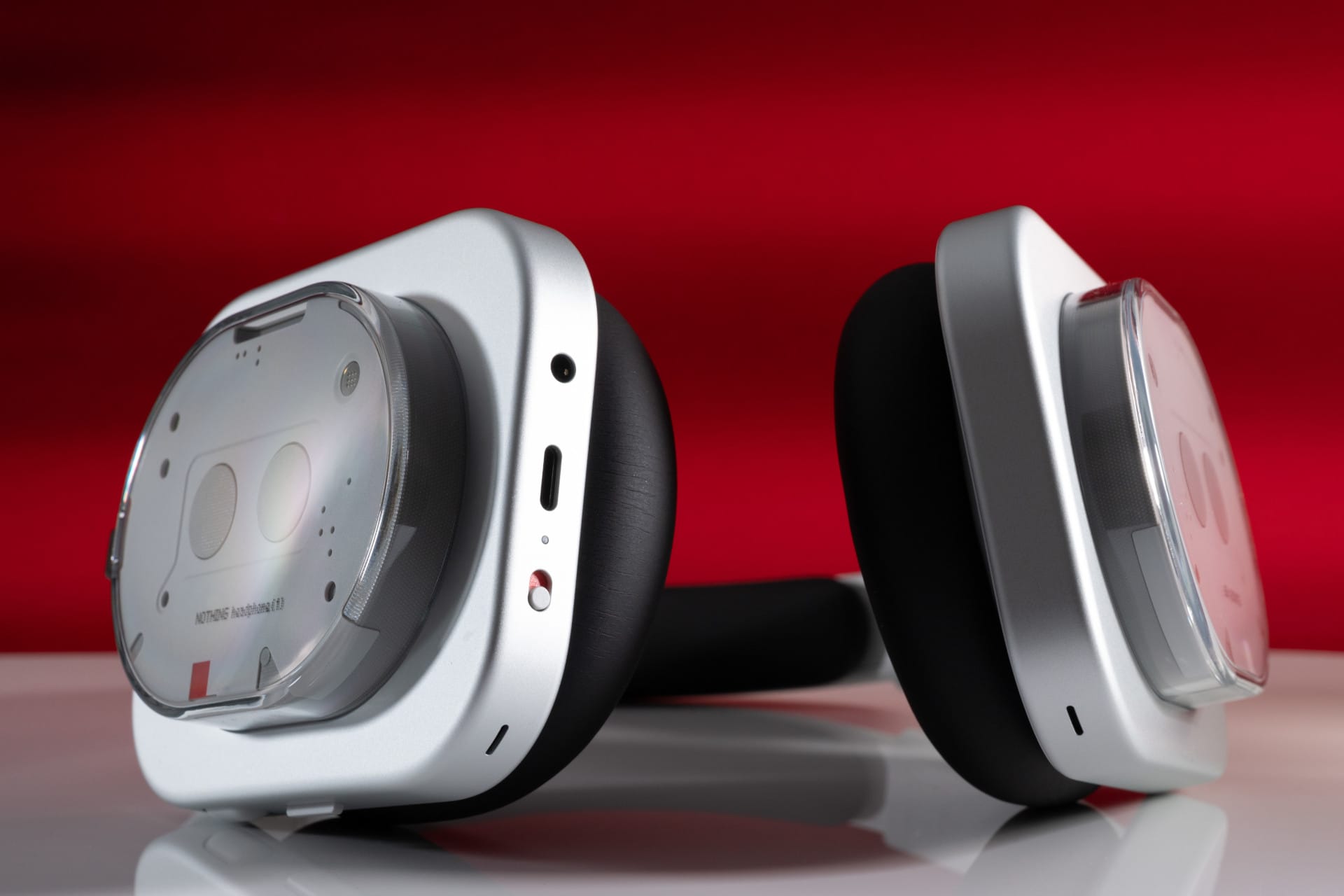
What the Headphone (1) do handle well, however, is the spatial presentation. The soundstage appears wide, almost open, with clear instrument separation. This particularly shines in live recordings or orchestral pieces. Here, the KEF influence is most noticeable.
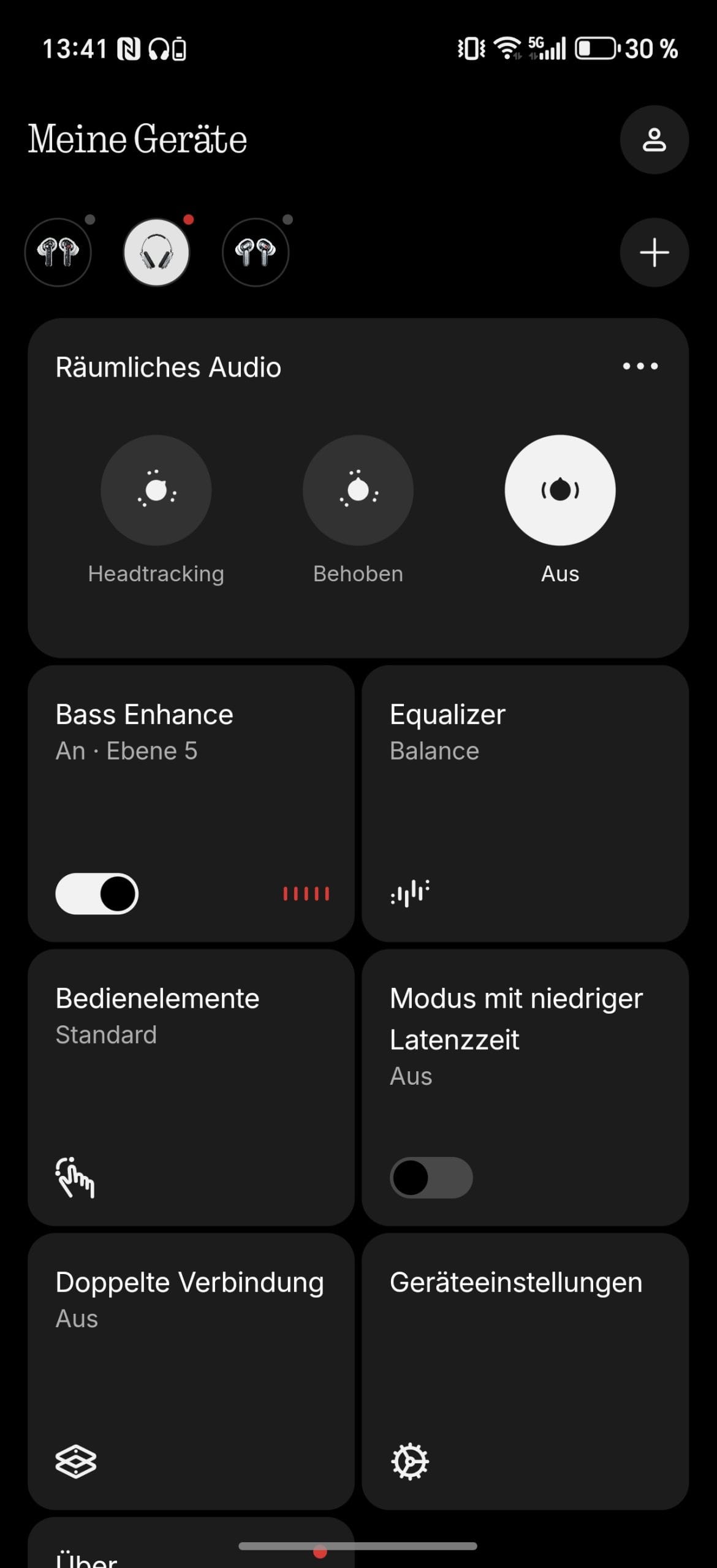
However, the full potential is only realised with the equalizer in the Nothing X app. It offers eight bands, including an adjustable Q factor, i.e., bandwidth. Those willing to spend some time here can specifically compensate for weaknesses in the treble range and significantly increase sound transparency. For those who prefer a quick solution, pre-made presets such as "More Treble", "More Bass" or "Voice" are available. Additionally, custom settings can be exported and shared via QR code. A neat gimmick with genuine added value.
For movies and series, Nothing introduces Spatial Audio with Head-Tracking. In compatible apps, the stereo signal is virtually distributed across multiple channels. While this does not create a true surround sound effect, Spatial Audio provides noticeably greater spatial depth, especially in action-packed scenes or gaming. An individual hearing test for audio personalization, as offered by Nothing for its in-ear models, is missing, however. This would have been quite useful for an over-ear model.
Headphone (1): Operation and app
Regarding controls, Nothing follows a refreshingly classic approach. Instead of sensitive touch gestures, the Headphone (1) use haptic controls that respond precisely and can be operated blindly. All buttons and controls are located on the right earcup and are easily accessible. A slide switch located at the bottom is used to turn it on or off. For Bluetooth pairing, there is a separate button on the inside of the headphones.
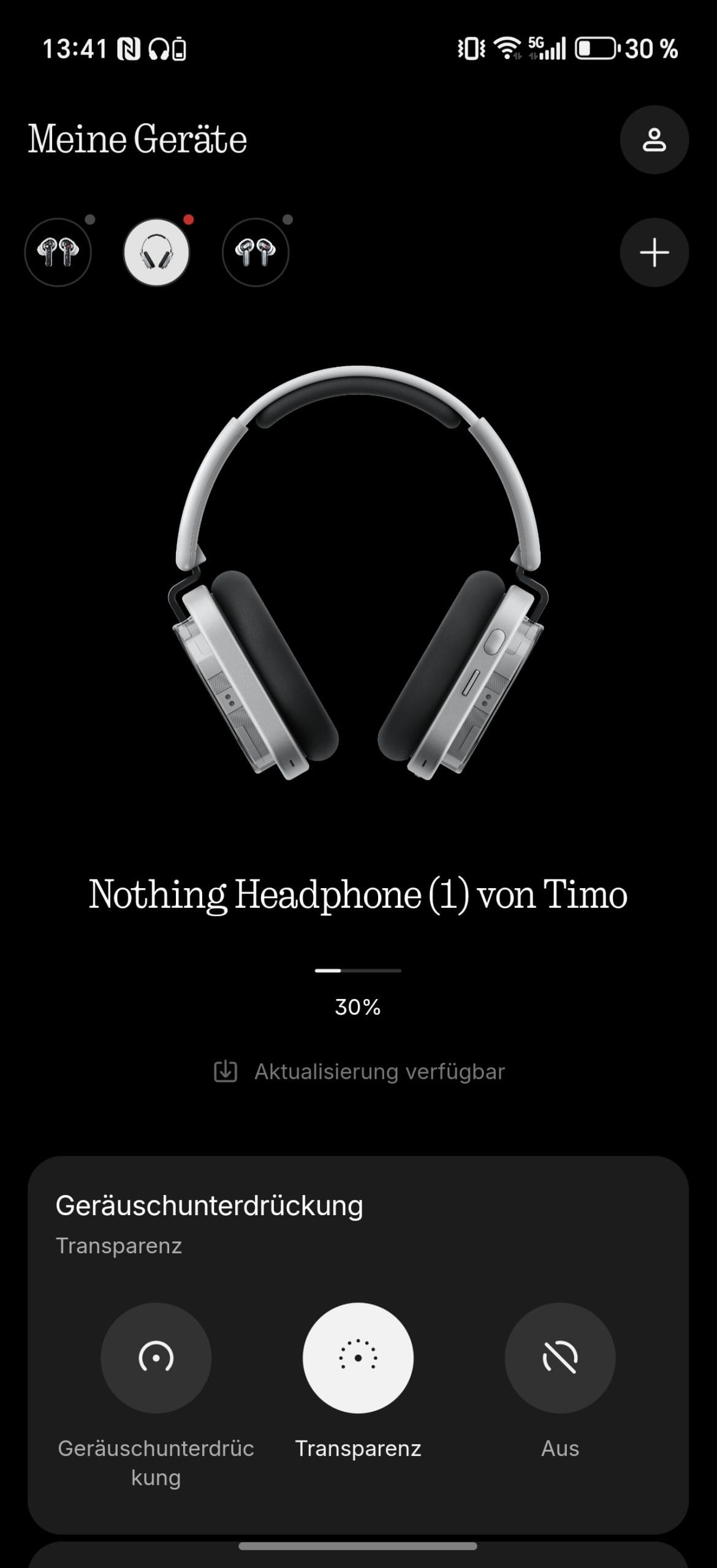
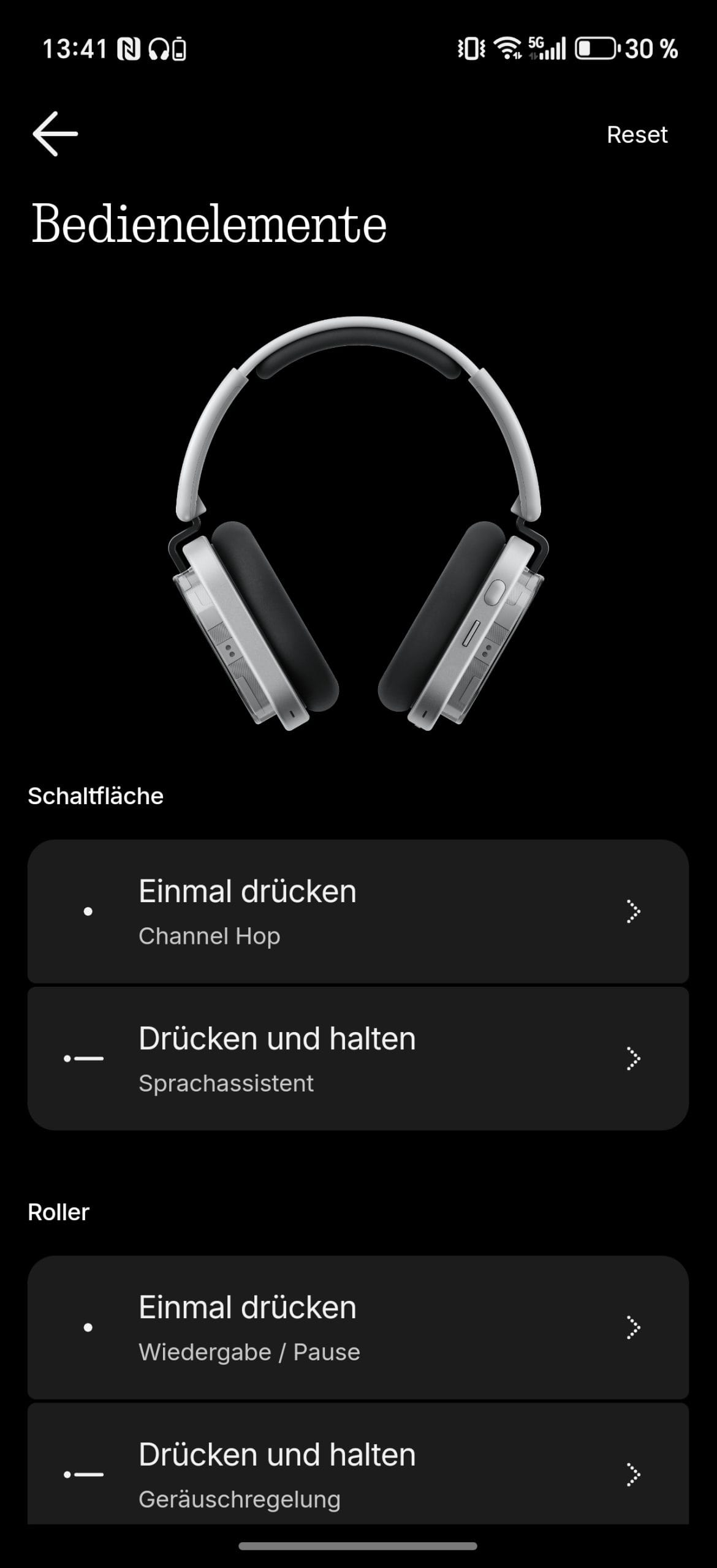
The most striking element is the "Roller", a volume wheel that feels pleasantly grippy and provides light feedback when turned. A turn upwards increases the volume, a turn downwards decreases it again, and pressing it starts or stops playback. Directly below is the so-called "Paddle-Switch", which allows you to skip tracks or jump forward and backwards in 10-second steps. The controls feel unfamiliar at first but quickly become second nature and offer more control than simple skip gestures.
This is complemented by a multi-function button, which can be individually configured in the Nothing X app. For example, it can switch between ANC and transparency mode, launch the voice assistant, or activate Spatial Audio. Under Nothing OS, it can also be used for "Channel Hop", a quick switch between different audio applications. If the button is held down for longer, a second function can be assigned.
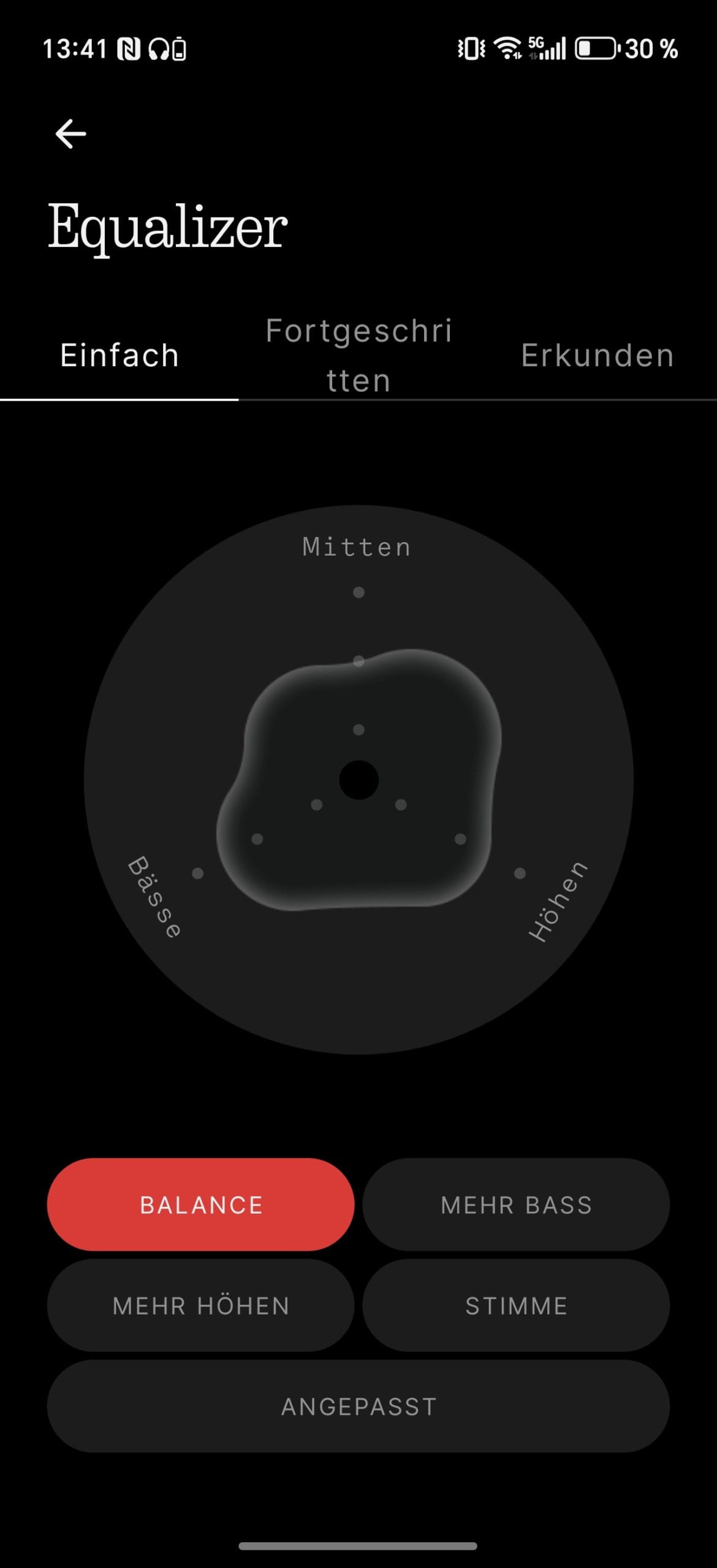
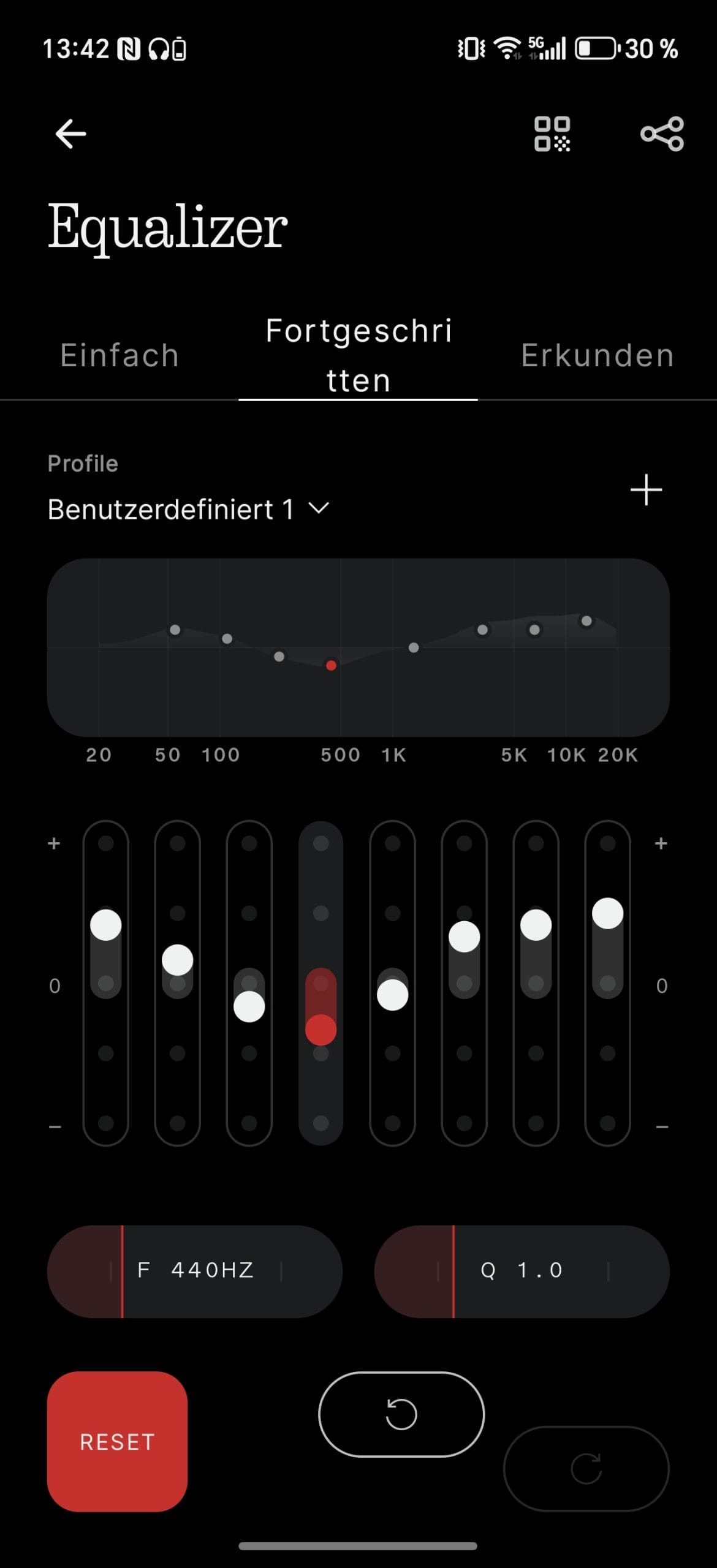
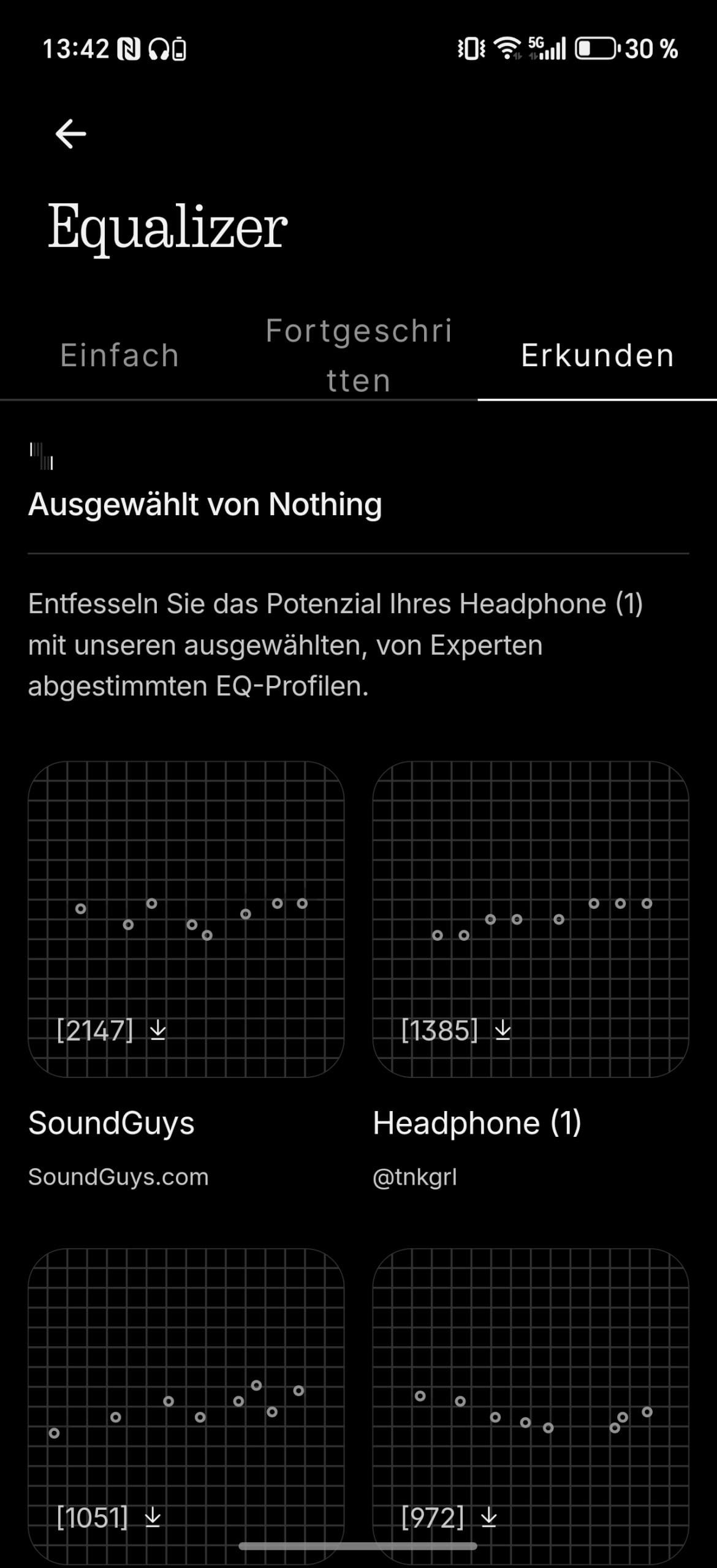
The Nothing X app is well implemented. It has a clear structure and extends operation with all important additional features. In addition to key mapping, you can control ANC and transparency mode, activate gaming mode and install firmware updates. All settings made are saved directly in the headphones and thus remain intact even when switching playback devices.
Headphone (1): ANC and transparency mode
Nothing markets the Headphone (1) with adaptive Active Noise Cancelling (ANC) and promises attenuation of up to 42 dB. In practice, the performance is slightly below the top models from Sony or Bose, but still remains at a high level.
Low-frequency noises from engines, turbines or air conditioning systems are reliably filtered out. The ANC also noticeably, though not completely, reduces voices and everyday noises in mid frequencies. In the app, you can set whether ANC automatically adapts to the environment or works at a fixed intensity manually.
The evenly balanced tuning stands out positively. While many headphones dampen ambient noise strongly but generate slight pressure on the ears in return, the wearing comfort here remains pleasantly relaxed. Even during long sessions, there is no annoying "suction feeling" known from aggressive ANC.
Also included is a transparency mode, which lets through ambient sounds selectively. Conversations, announcements and street noise sound more natural with this mode, although not quite as clear as on the AirPods Max. However, the quality is sufficient for everyday use, especially when making calls or if you want to keep track of your surroundings in traffic.

Headphone (1): Battery Life and Charging
With a battery life of up to 80 hours (without ANC), the Headphone (1) are among the most enduring over-ears in their class. According to the manufacturer, up to 35 hours are possible even with active noise cancelling. In practice, this was confirmed. In a test with ANC and LDAC at medium volume, the battery life was over 40 hours, slightly exceeding the stated value.
Even with intensive use, a single charge easily lasts for several days, or a complete trip including the outbound and return flight. Those who need to charge spontaneously benefit from the quick-charge mode. Five minutes on the charger provide around five hours of playback without ANC or just under two and a half hours with active noise cancelling. This makes the headphones usable even at the last minute.
Charging is via USB-C. A power adapter is not included, but the corresponding cable is. The Headphone (1) do not support wireless charging, which would hardly make sense given the 1,040 mAh battery.
The headphones are also energy-efficient in standby. Thanks to automatic shutdown and wear detection, the battery only drains very slowly when not in use. Those who do not charge daily need not worry about sudden drop-outs.
Our verdict
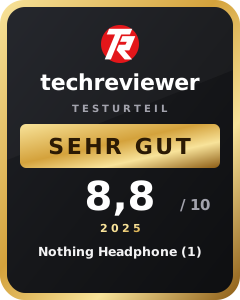
With the Headphone (1), Nothing makes a successful entry into the over-ear headphone market. The design is bold, consistent and unmistakable, which is likely to appeal to many who are fed up with the grey status quo. Substance also impresses. Comfort is convincing, build quality is high, and battery life is well above average.
In terms of sound, the Headphone (1) delivers a solid performance with significant potential for fine-tuning. Those who cannot get along with the factory settings' rather dark sound profile will have plenty of options via the capable EQ to adapt the profile to their own taste.
The ANC is solid, although not quite at the level of the top models, and the button operation is pleasantly direct. The app is also functional and clear, without unnecessary frills. Criticisms such as the large carrying case or the non-removable ear tips should be kept in mind, especially if the headphones are used daily.
All in all, the Headphone (1) are an exciting all-rounder with character. Technically well thought out, visually distinctive and therefore anything but generic.
Specifications
General
- Drivers
- 40 mm dynamic
- Impedance
- 16 Ω
- Frequency range
- 20 Hz – 40 kHz
- Diaphragm
- PU
- Tuning
- Sound by KEF
- Size (headphones)
- 173.85 × 78 × 189.25 mm
- Weight (headphones)
- 329 g
Case
- Dimensions
- 220 × 220 × 52 mm
- Weight
- 264 g
Bluetooth
- Standard
- 5.3
- Range
- up to 10 meters
- Multipoint
- Yes
- Codecs
- AAC,
- SBC,
- LDAC
Battery
- Type
- Rechargeable lithium-ion battery
- Capacity
- 1,040mAh
- Charging time
- approx. 120 minutes
- Fast charging (ANC off)
- 5 minutes for 5 hours of playback
- Fast charging (ANC on)
- 5 minutes for 2.4 hours of playback
- Playback time
- AAC with ANC off
- up to 80 hours
- AAC with ANC on
- up to 35 hours
- LDAC with ANC off
- up to 54 hours
- LDAC with ANC on
- up to 30 hours
- Talk time
- Without ANC
- up to 53 hours
- With ANC
- up to 37 hours
Noise cancellation
- Type
- Adaptive real-time ANC
- Damping
- up to 42 dB
- Frequency range
- up to 2,000 Hz
- Microphones
- 6 (3 per side)
- Additional features
- – Transparency mode
- – 4-microphone ENC for calls
Control
- On/Off
- Switch up (off), down (on)
- Pair
- Press and hold the Bluetooth button (white LED flashes)
- Roller
- – Right/Left
- Volume up/down
- – Press
- Play/Pause
- – Hold
- ANC/transparency mode
- Paddle
- – Press right
- Next track / answer call
- – Press left
- Previous track / reject call
- – Hold right
- Fast-forward
- – Hold left
- Rewind
- Button
- – Android/iOS
- Press = Voice assistant
- – Nothing OS
- Press = channel hop, hold = voice assistant
LED status
- Battery <30%
- Red
- Battery ≥30%
- White
- Charging
- White LED flashes
- Fully charged
- White LED always on
- Pairing
- White LED flashes
- Reset
- Red LED flashes 3 times, then white LED
Functions
- – Wear detection
- – Google Fast Pair
- – Microsoft Swift Pair
- – Low-latency mode
- – Hi-Res & LDAC certified
- - Media personalisation (Nothing OS only)
- – IP52 certified (dust and splash water resistant)
Sustainability
- CO₂ footprint
- 14.84 kg CO₂e
- Final assembly
- 100% renewable energy
- Packaging
- plastic-free
- Certification
- Amazon Climate Pledge Friendly
What’s included
Nothing Headphone (1) Softshell case USB-C cable 3.5 mm audio cable User manual Safety & warranty information
Price comparison
| Store | Price | Link |
|---|---|---|
| Amazon | 179,00 € | Go to store |
| Nothing | 179,00 € | Go to store |
Comments