Contents
Nothing Phone (2): Introduction
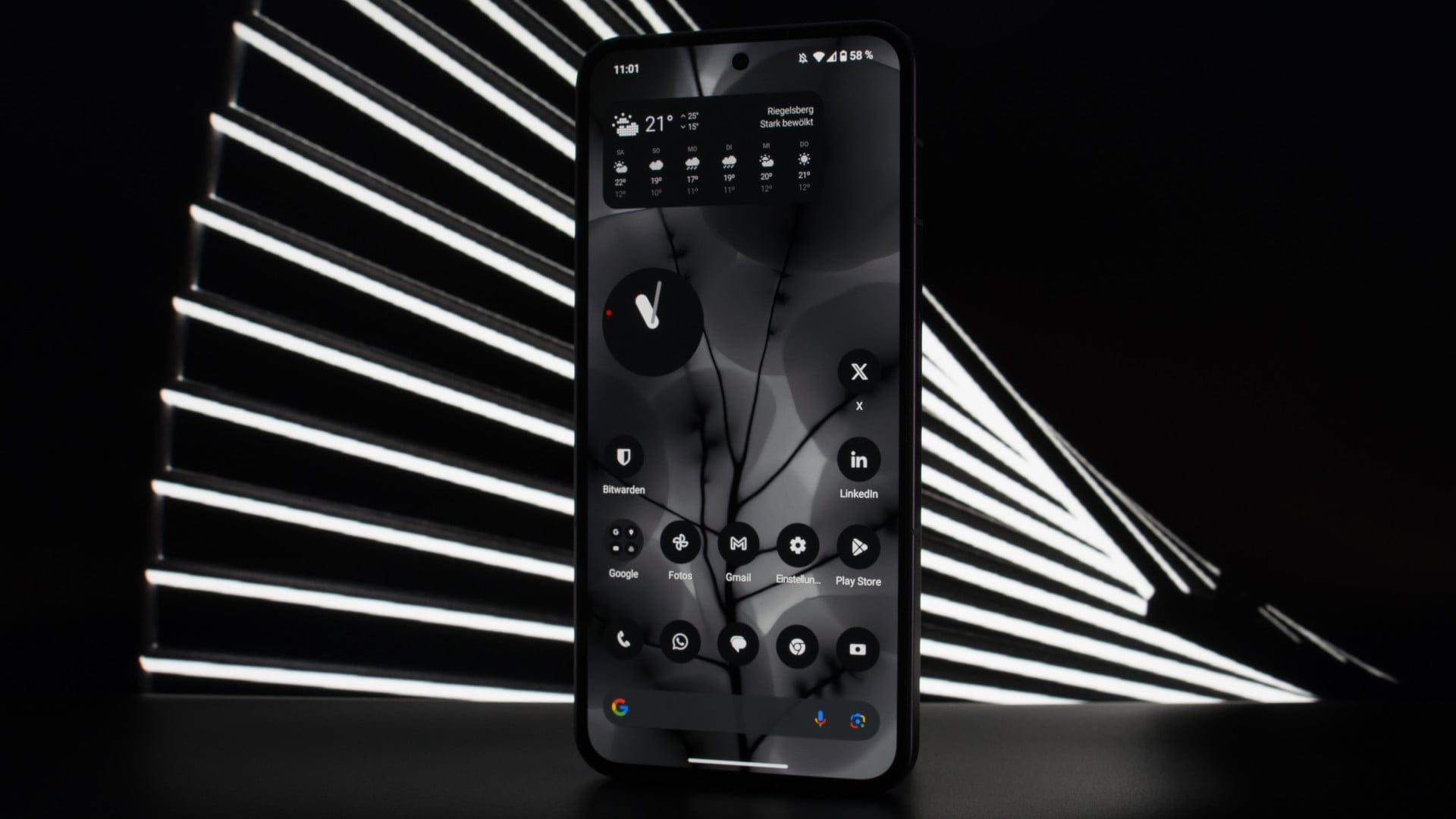
In times when design often degenerates into an empty marketing buzzword, the Nothing Phone (2) stands as an advocate for a different philosophy. Inspired by Dieter Rams' timeless principle "Good design is as little design as possible", Nothing strives to understand design as something more than just cosmetic aesthetics.
With minimalist shapes, understated colours and a focus on functionality, the Nothing Phone (2) embodies the idea that less is often more. Nothing's decision to carry over the basic design concept of the first model to the Phone (2) is no accident.
By retaining the essence of the predecessor model, they not only emphasise the resilience of their design to fast-paced trends, but also the conceptual depth that resonates in every one of their product decisions.
Nothing Phone (2): Design and build quality
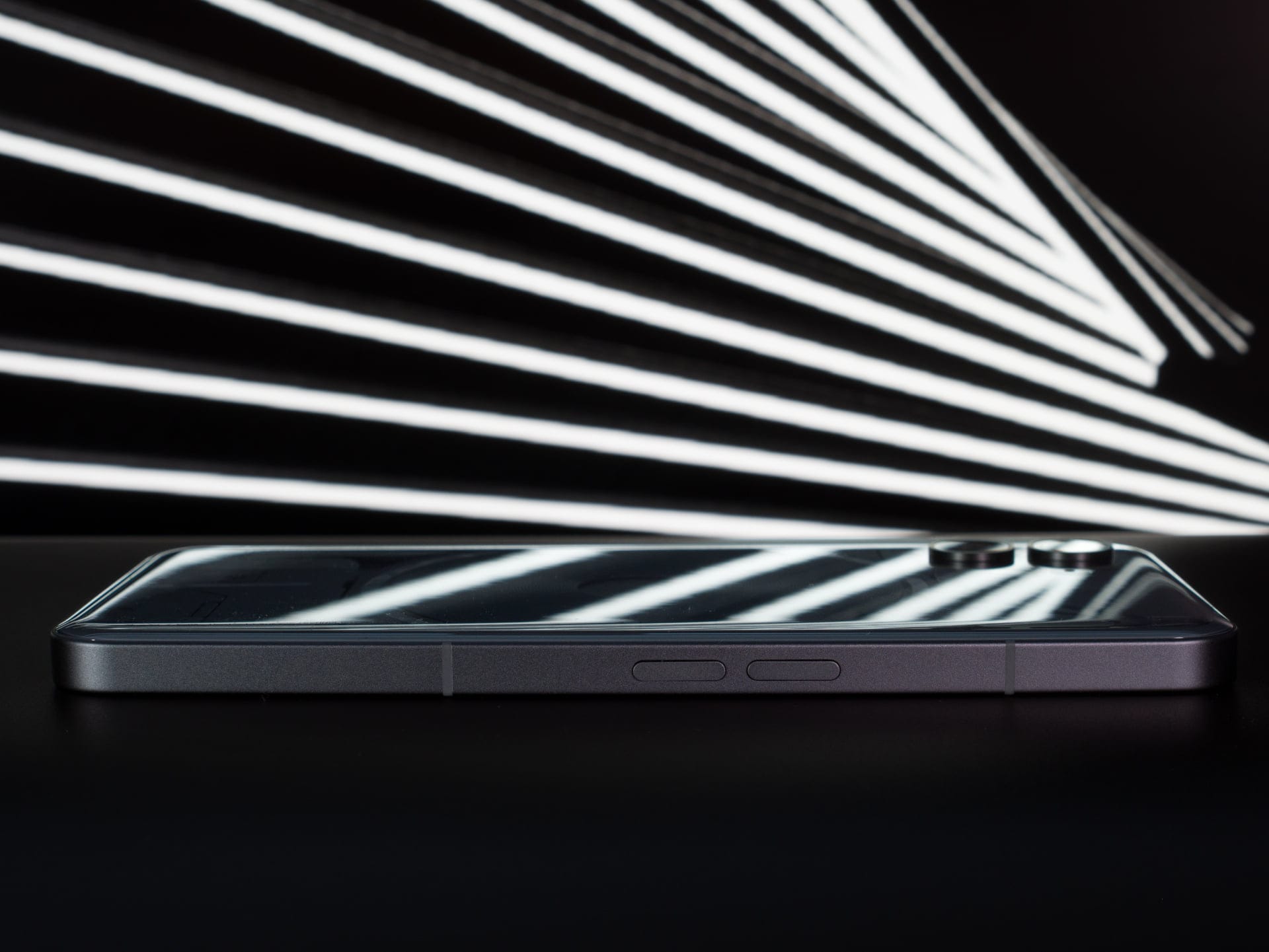
The Nothing Phone (2) features a familiar front, which is almost entirely screen. Framed by a flat metal bezel and complemented by a transparent glass back, the Glyph Interface is concealed behind it.
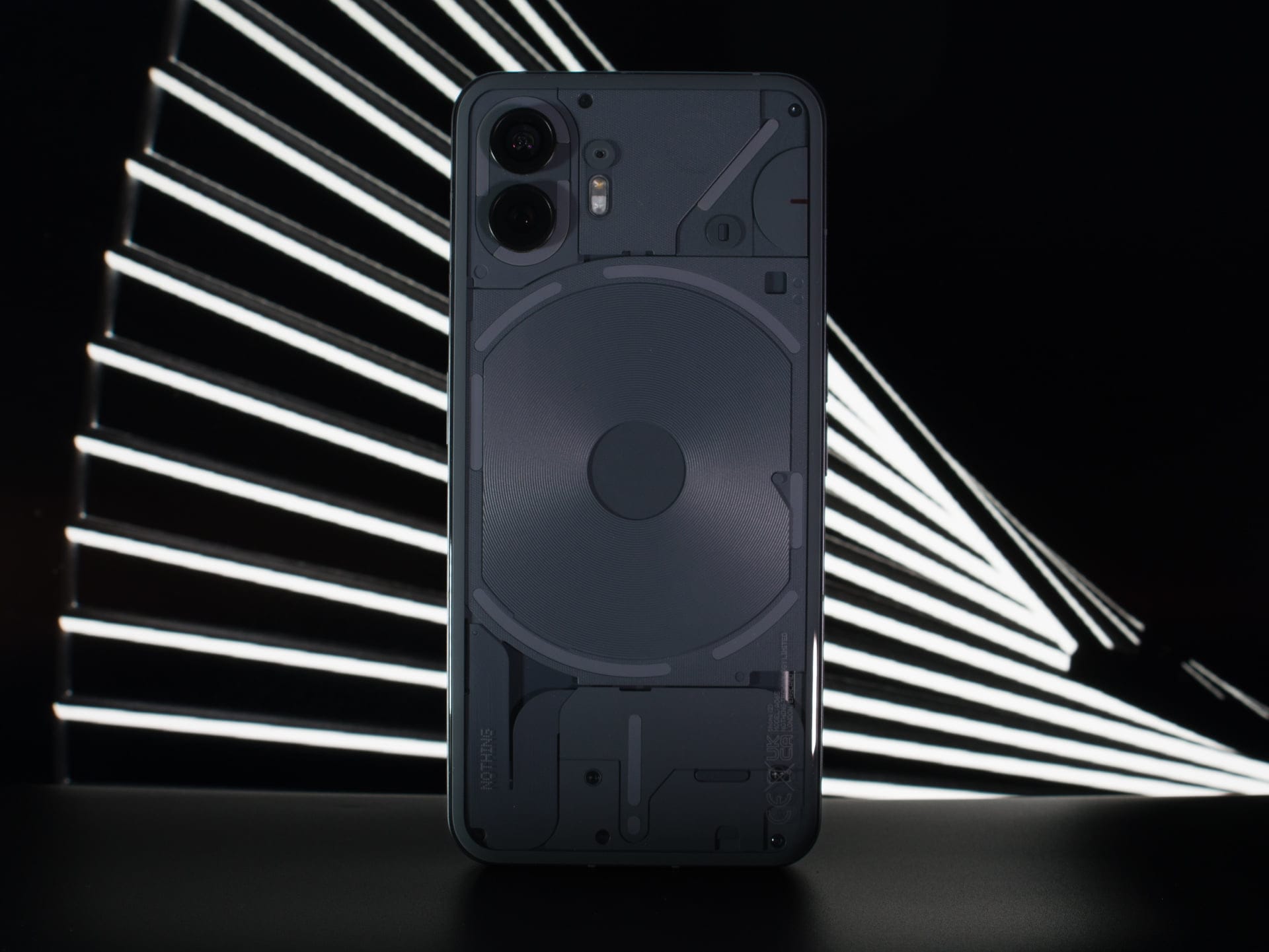
With a total of 33 individually addressable zones, the Glyph interface of the Nothing Phone (2) goes far beyond the 12 zones of the Nothing Phone (1) – a clear sign of increased functionality and customisability.
Despite the transparent back, Nothing manages to maintain a clear and structured design in which the internal hardware is well hidden. Only the wireless charging coil hints at the hardware behind it. A clever way to showcase the device's technical capabilities without compromising its aesthetics.
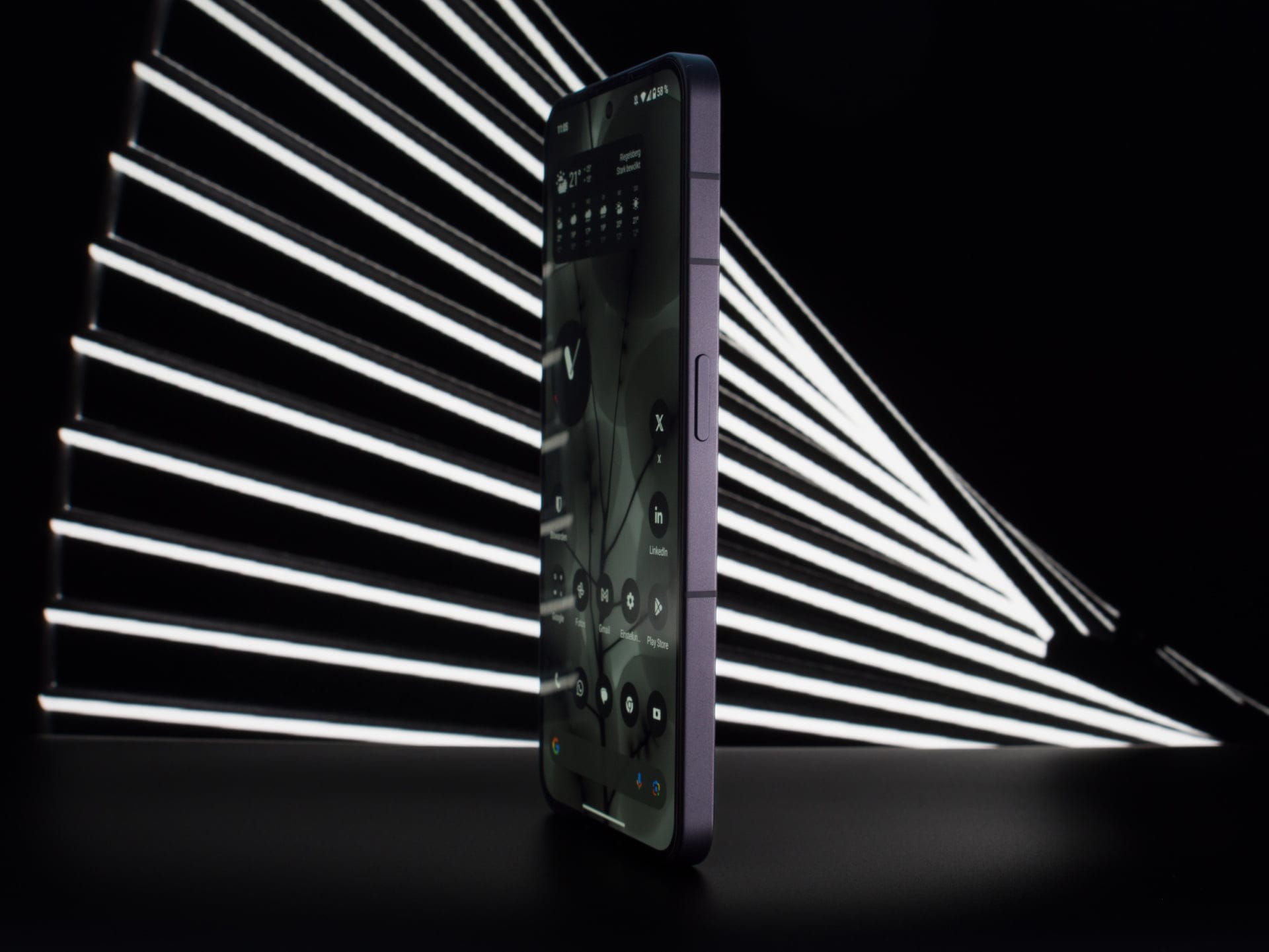
Significant differences to the Nothing Phone (1) become visible upon closer inspection. The Nothing Phone (2) features a slightly larger display and a slightly curved glass back, which noticeably improves haptics. This makes the smartphone more comfortable to hold, and interaction with the device feels “rounder”.
Nothing has also upgraded the protection rating from IP53 to IP54. This does not mean the phone is now completely waterproof, but it is definitely more splash-proof than its predecessor. We would of course have preferred IP68 protection at this point, which would have protected the smartphone from temporary submersion as well.
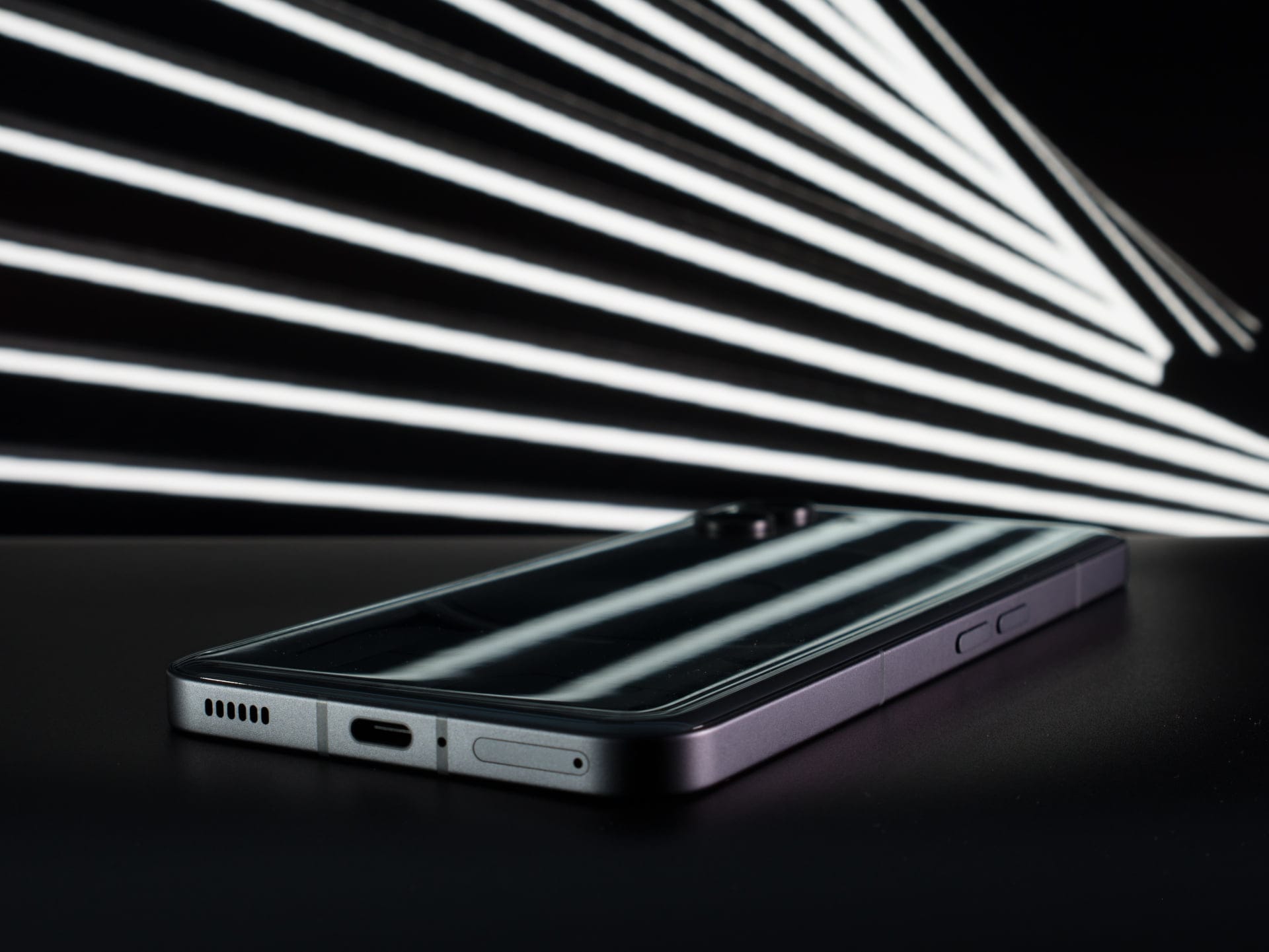
Both the front and back are made of scratch-resistant and shatterproof Corning Gorilla Glass 5. Despite daily use without a protective case in a pocket, the display and back have remained scratch-free so far. One does not feel that a protective case is necessary here, and without one, the smartphone certainly looks more elegant.
If you want to be on the safe side, you can order a matching protective case from Nothing, as none is included in the box. Neither is a charger. However, a screen protector is already fitted to the display glass from the factory.

The Nothing Phone (2) was conceived down to the smallest detail as one of the most sustainable smartphones on the market. For instance, the middle frame consists of 100% recycled aluminium and features a pleasant matte finish. All plastic parts come from 80% sustainable sources, the CO2 footprint is only 53.45 kg, and the packaging is completely plastic-free.
Nothing Phone (2): Display
With a diagonal of 6.7 inches, the AMOLED screen is larger than on the predecessor model, which settled for a 6.5-inch diagonal. The resolution, however, remains unchanged at 1080p.
The real novelty lies in the dynamic 120 Hz refresh rate, made possible by the LTPO panel. This feature not only ensures smoother display but also contributes to battery efficiency. In static scenes where high refresh rates are not necessary, the display can scale its refresh rate down to 1 Hz. In practice, the dynamic adjustment is so seamless that there is never a sensation of slowing down.
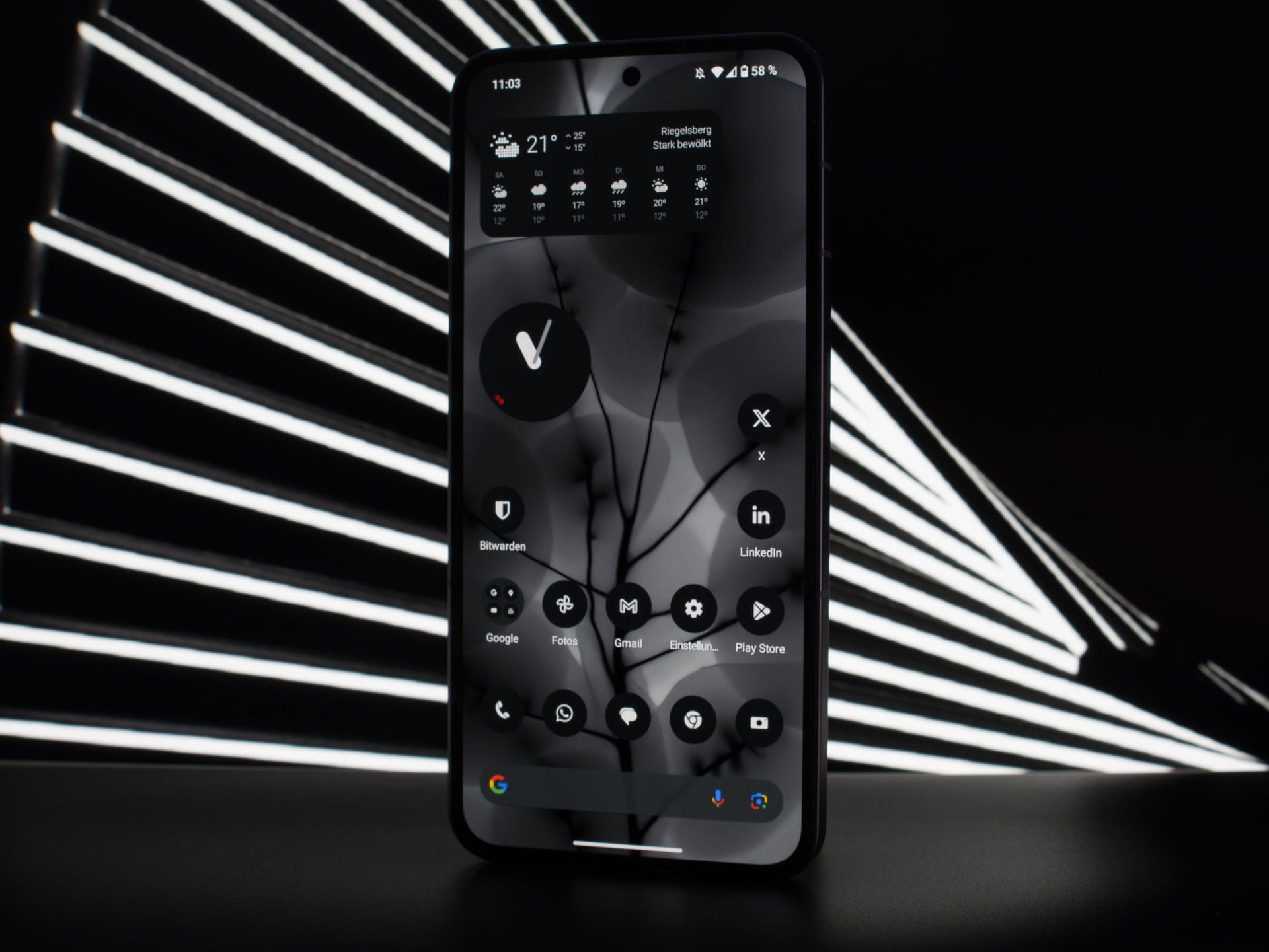
The display brightness has also seen a noticeable improvement. With a maximum brightness of 1,000 nits in automatic brightness mode, the display remains clearly readable even under difficult lighting conditions such as strong sunlight.
The impressive HDR peak brightness of 1,600 nits also ensures that HDR content shines in all its glory. There is no lack of support for common HDR standards: both HDR10 and HDR10+ are supported. In our tests, HDR content playback on YouTube worked flawlessly, while Netflix did not utilize this standard despite theoretical HDR support.
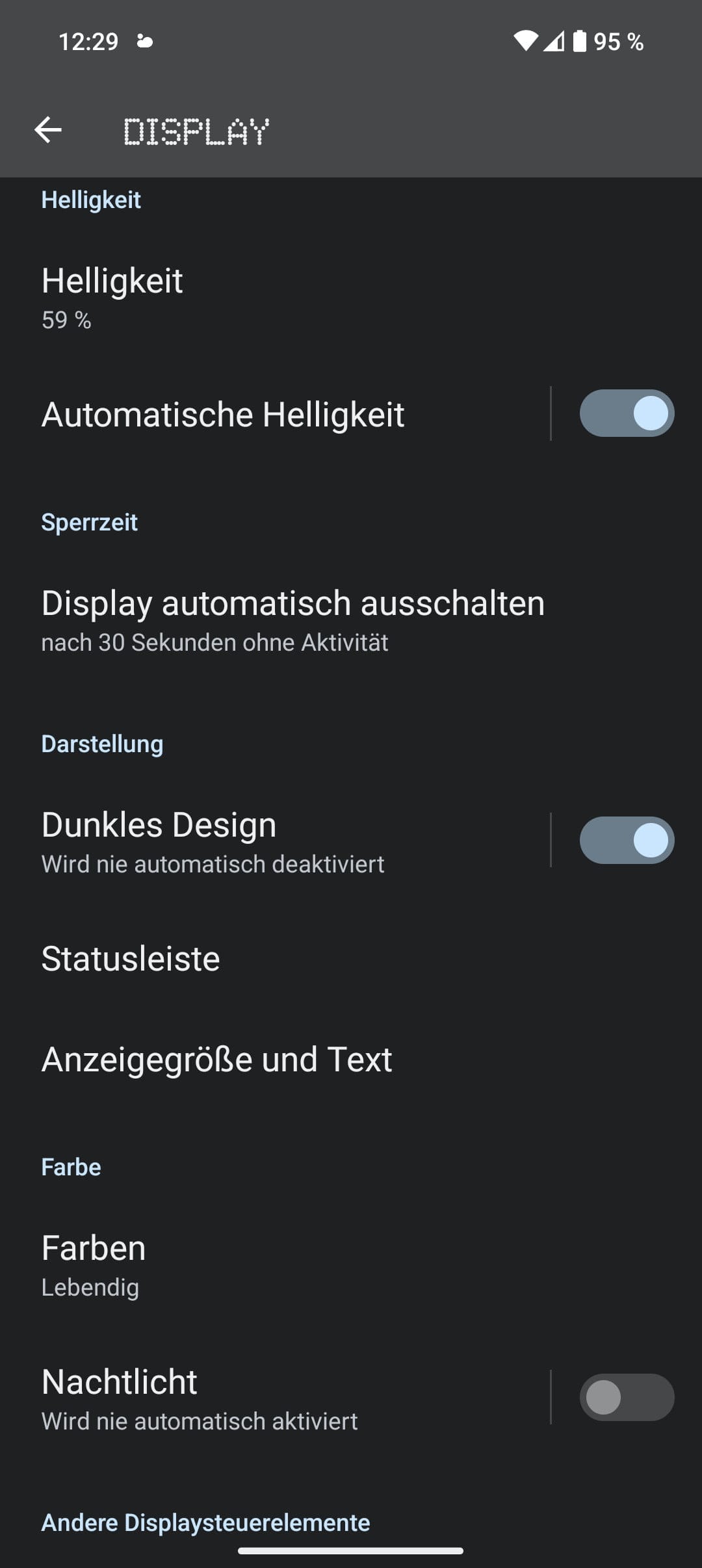
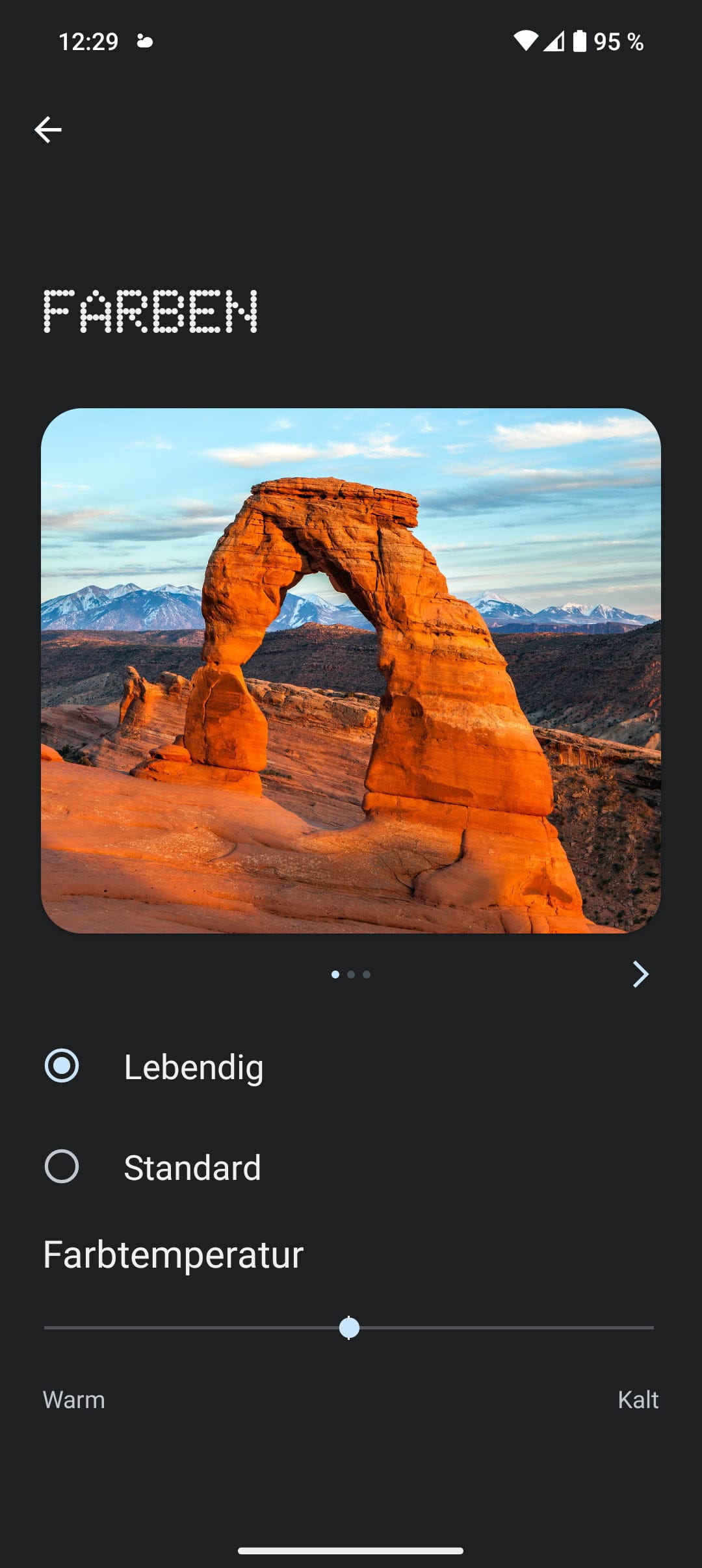
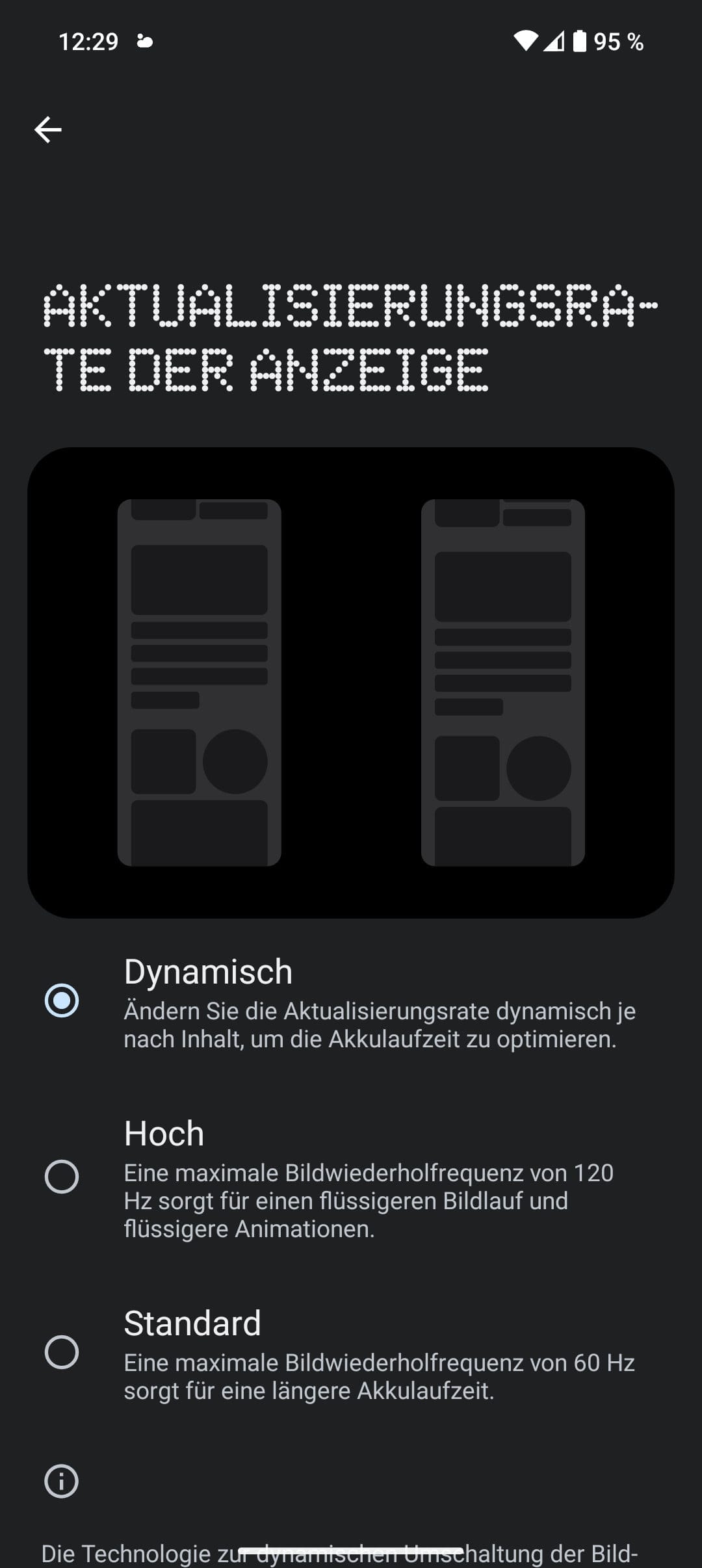
In terms of colour reproduction, the Nothing Phone (2) supports the DCI-P3 and sRGB colour spaces. Users can switch between the two colour modes, 'Vivid' and 'Standard', via the display settings menu, which correspond to DCI-P3 and sRGB respectively. Regardless of the mode selected, the display exhibits excellent colour accuracy that is convincing across all nuances.
Finally, the device’s excellent haptic feedback should not go unmentioned. It is among the best we have ever experienced. The typing feel is enriched by precise and pleasant vibrations that are felt exactly where you type.
Nothing Phone (2): Performance
For those who wanted more performance from the Nothing Phone (1), here is good news: the Nothing Phone (2) is powered by a Snapdragon 8+ Gen 1, representing a significant upgrade over the Snapdragon 778G used in its predecessor. This clearly positions the device in the (lower) high-end segment of the current smartphone generation.
It is interesting to note that the version of the Snapdragon 8+ Gen 1 used in the Nothing Phone (2) has been slightly modified. For instance, all three CPU clusters operate at lower clock speeds than in the original version. The main Cortex-X2 core runs at 3.0 GHz instead of the usual 3.2 GHz, the Cortex-A710 cluster is clocked at 2.5 GHz instead of 2.75 GHz, and the energy-efficient Cortex-A510 cores operate at 1.8 GHz instead of 2.0 GHz. For graphics-intensive applications, the powerful Adreno 730 GPU is used.
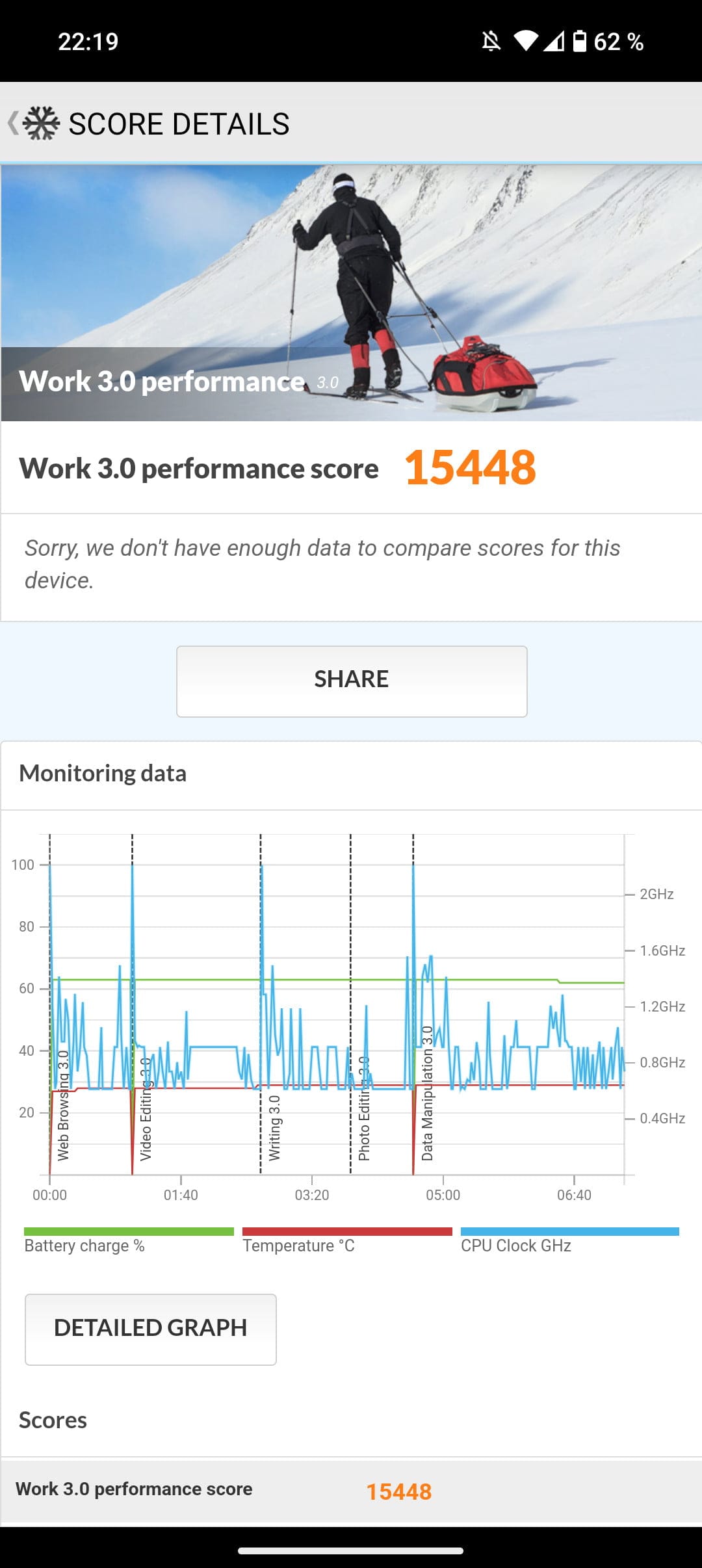
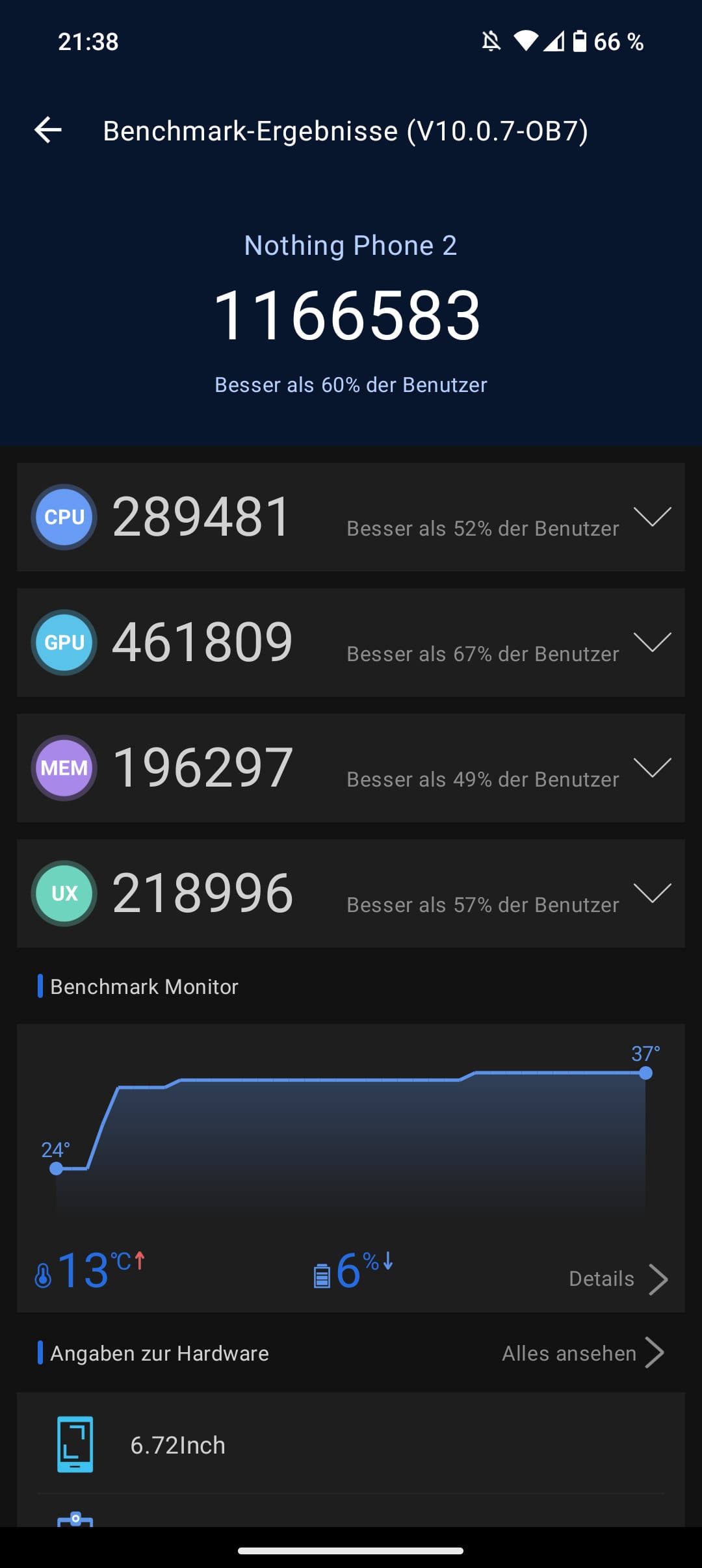
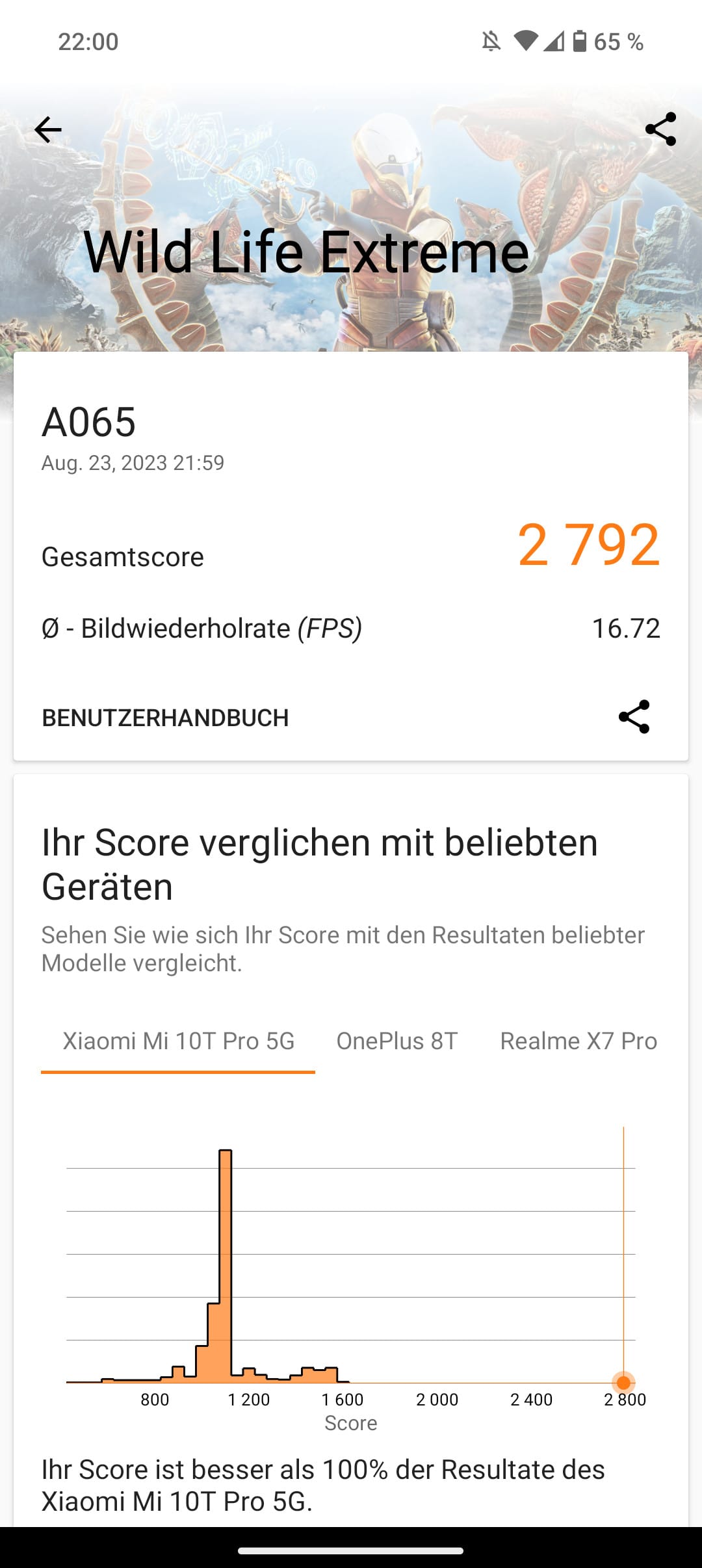
In terms of memory configuration, the Nothing Phone (2) is available in three variants: 8GB RAM with 128GB internal storage, 12GB RAM with 256GB storage (our test model) and finally a flagship model with 12GB RAM and a hefty 512GB of storage. The memory is of the LPDDR5 (RAM) and UFS3.1 (storage) type.
In various benchmark tests, the smartphone showed performance in line with other devices with the Snapdragon 8+ Gen 1. Although the benchmark scores are slightly lower due to the reduced clock speeds, this has no impact in everyday use. The smartphone convinces with excellent performance in almost all areas of application.
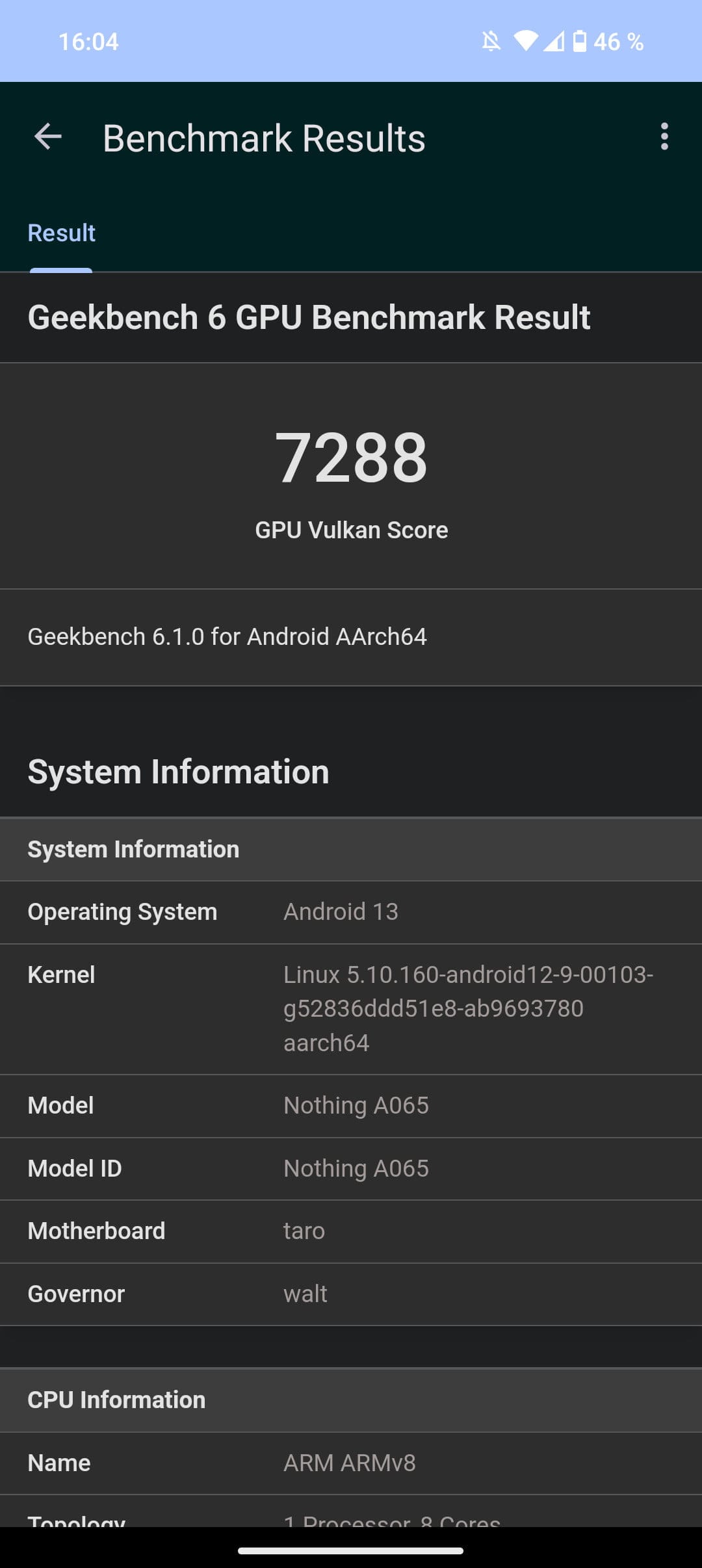
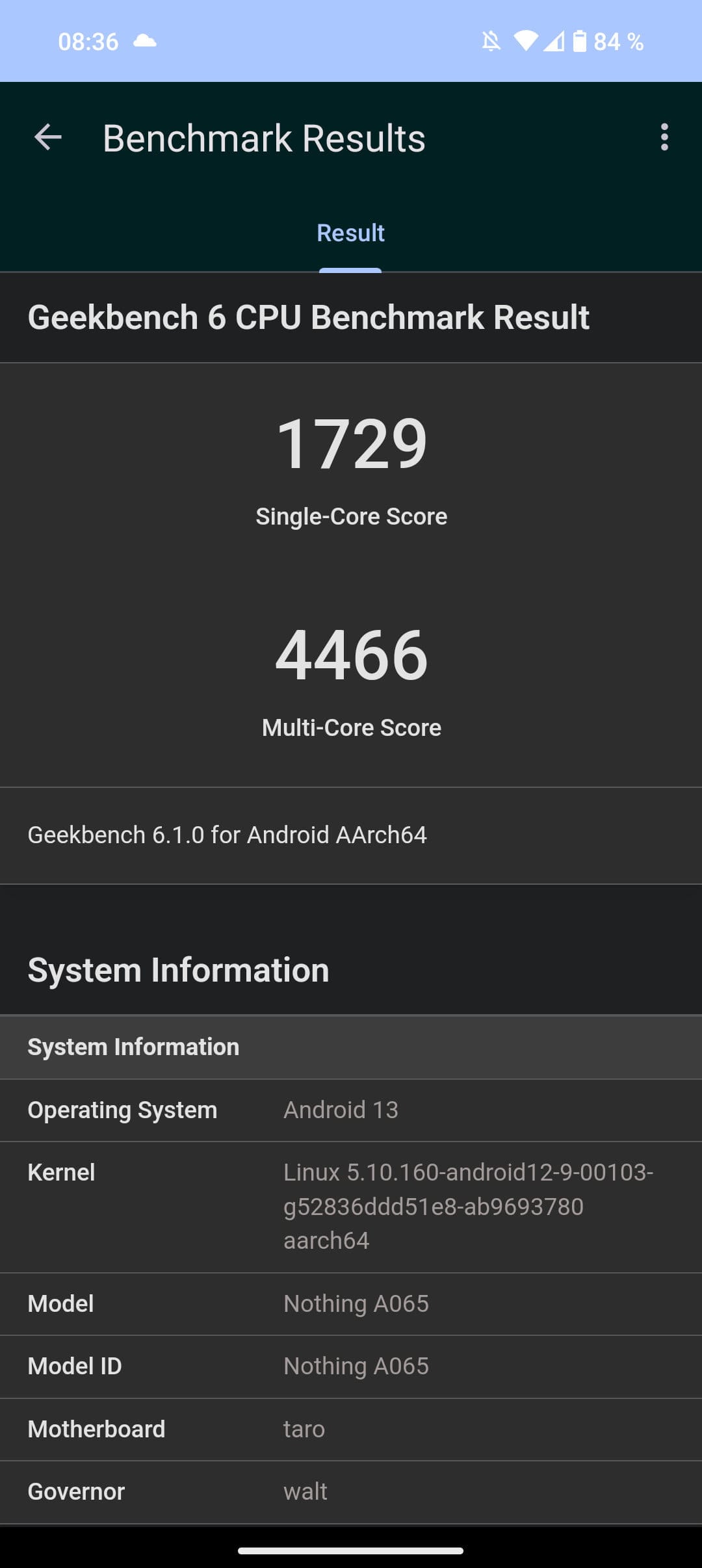
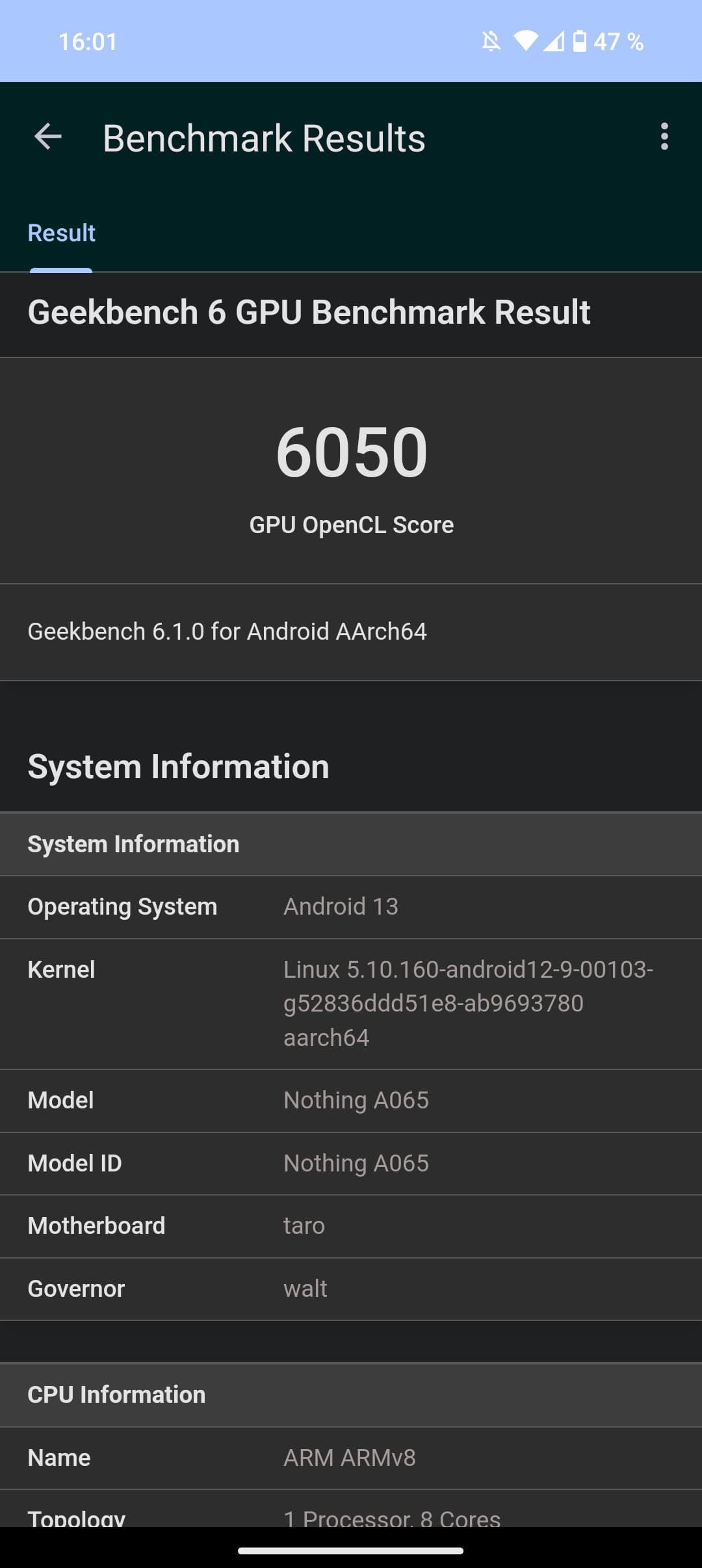
The only exceptions are graphics-intensive games like Genshin Impact or PUBG Mobile, where the frame rate occasionally falls below 30 frames per second, causing noticeable stuttering. Under sustained load, the smartphone warms up noticeably but does not become uncomfortably hot.
Nothing Phone (2): Connectivity and audio
The connectivity features of the Nothing Phone (2) leave little to be desired and position the device as a serious competitor in the (lower) high-end smartphone category. Equipped with WiFi 6, it enables a stable and fast internet connection. The WLAN connectivity is complemented by Bluetooth 5.3, NFC with Google Pay support, and all major satellite navigation systems.
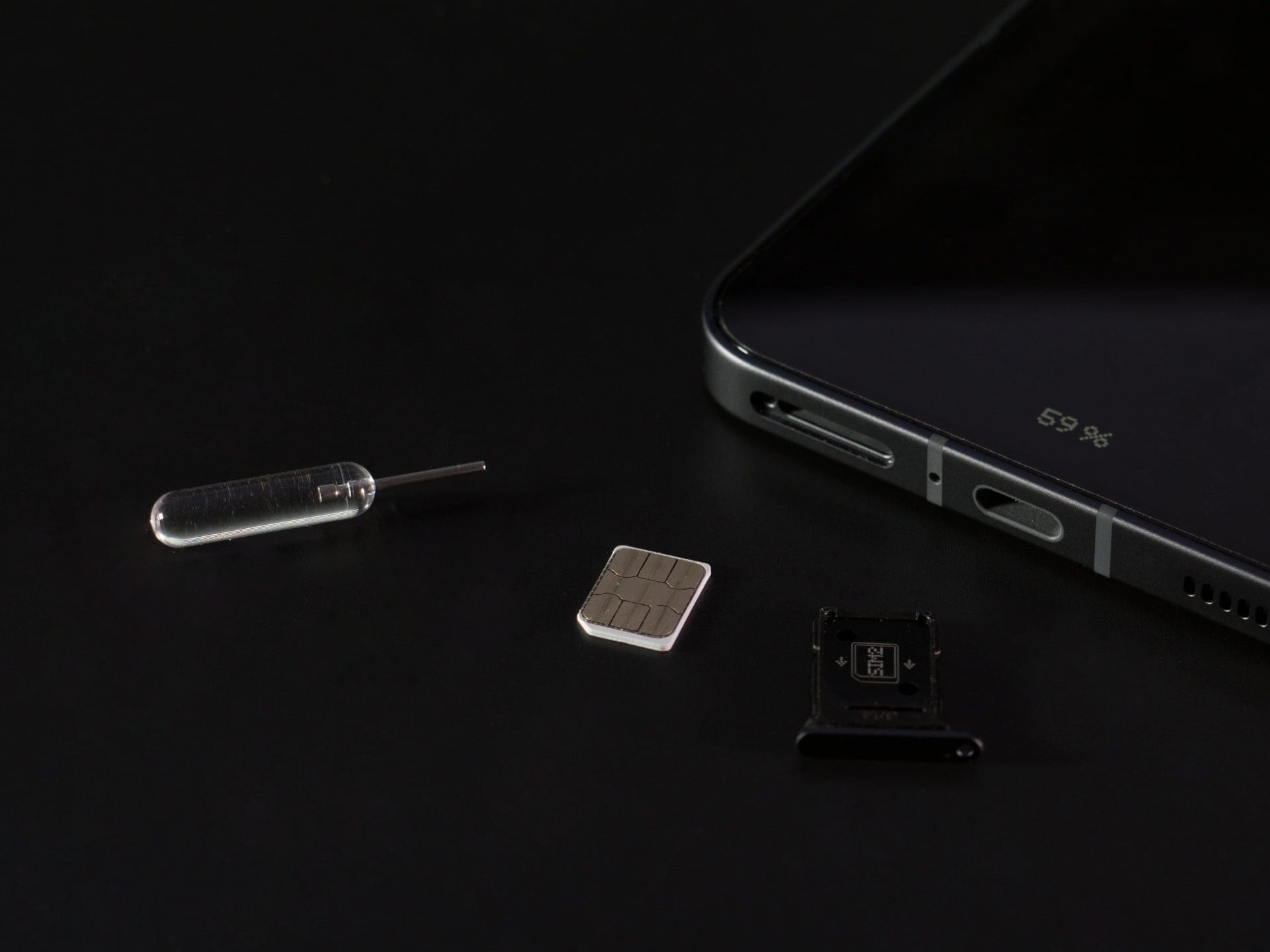
The device also relies on modern standards for mobile connectivity: with broad support for 4G and 5G frequency bands, the Nothing Phone (2) is suitable for use worldwide. The dual-SIM slot, which can hold two nano-SIM cards, also ensures flexibility. However, what is missing is the option to use an eSIM – a feature that is becoming increasingly important.
The signal quality is consistently high and matches what one would expect from a high-end smartphone. Call quality is also solid, although the audio through the earpiece sounds a bit muffled.
In the audio department, the Nothing Phone (2) scores points for clarity and high volume. The earpiece, which acts as the second speaker here, is slightly quieter and delivers less bass than the main speaker at the bottom edge, but in combination they create a balanced sound profile. Thus, the device is well-equipped for media playback and entertainment, leaving little to be desired.
Nothing Phone (2): Software
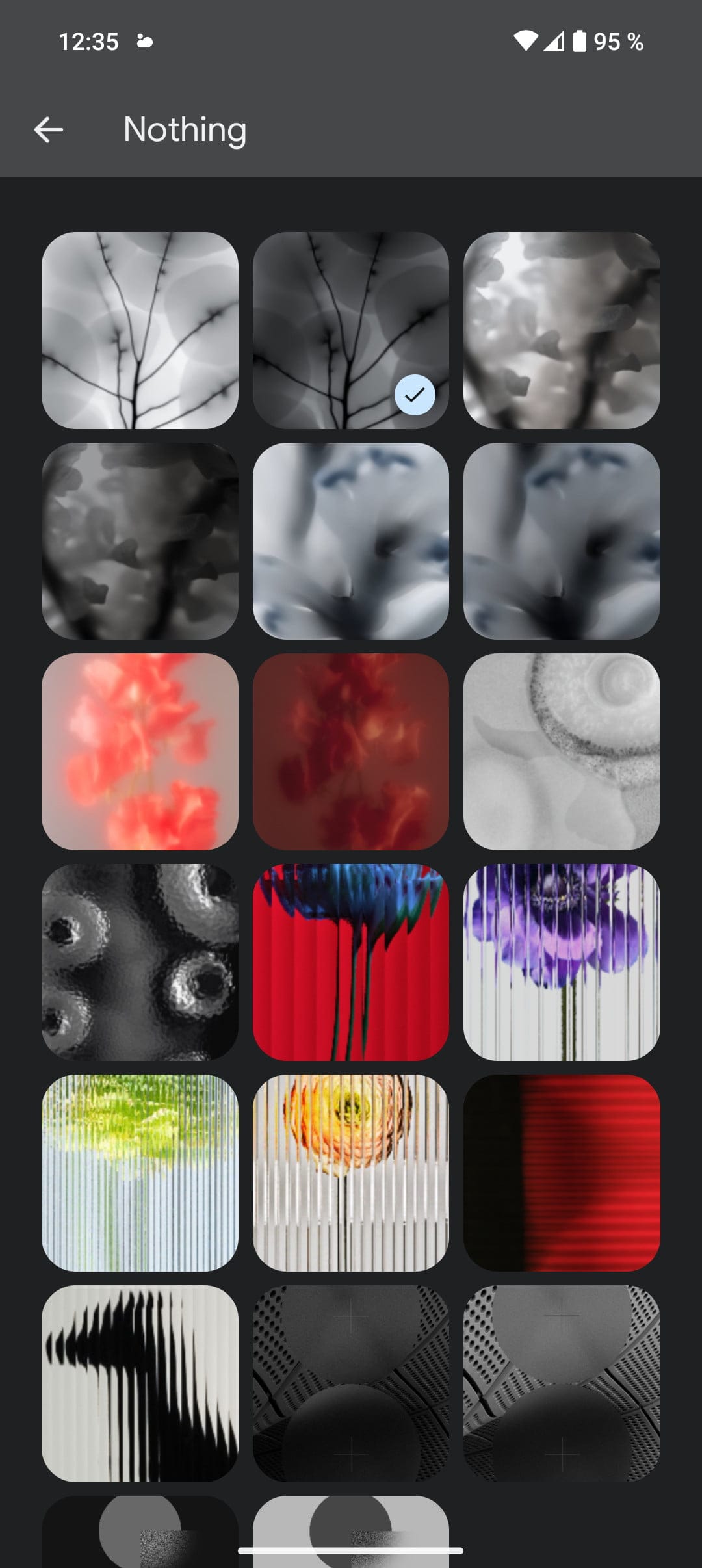
The software of the Nothing Phone (2) is based on the proprietary Nothing OS 2.0 on Android 13. Particularly striking is the company's characteristic Dot-Matrix font, which is used in a variety of UI elements and widgets. Combined with the exclusive Nothing wallpapers, Nothing OS 2.0 achieves a distinctive look.

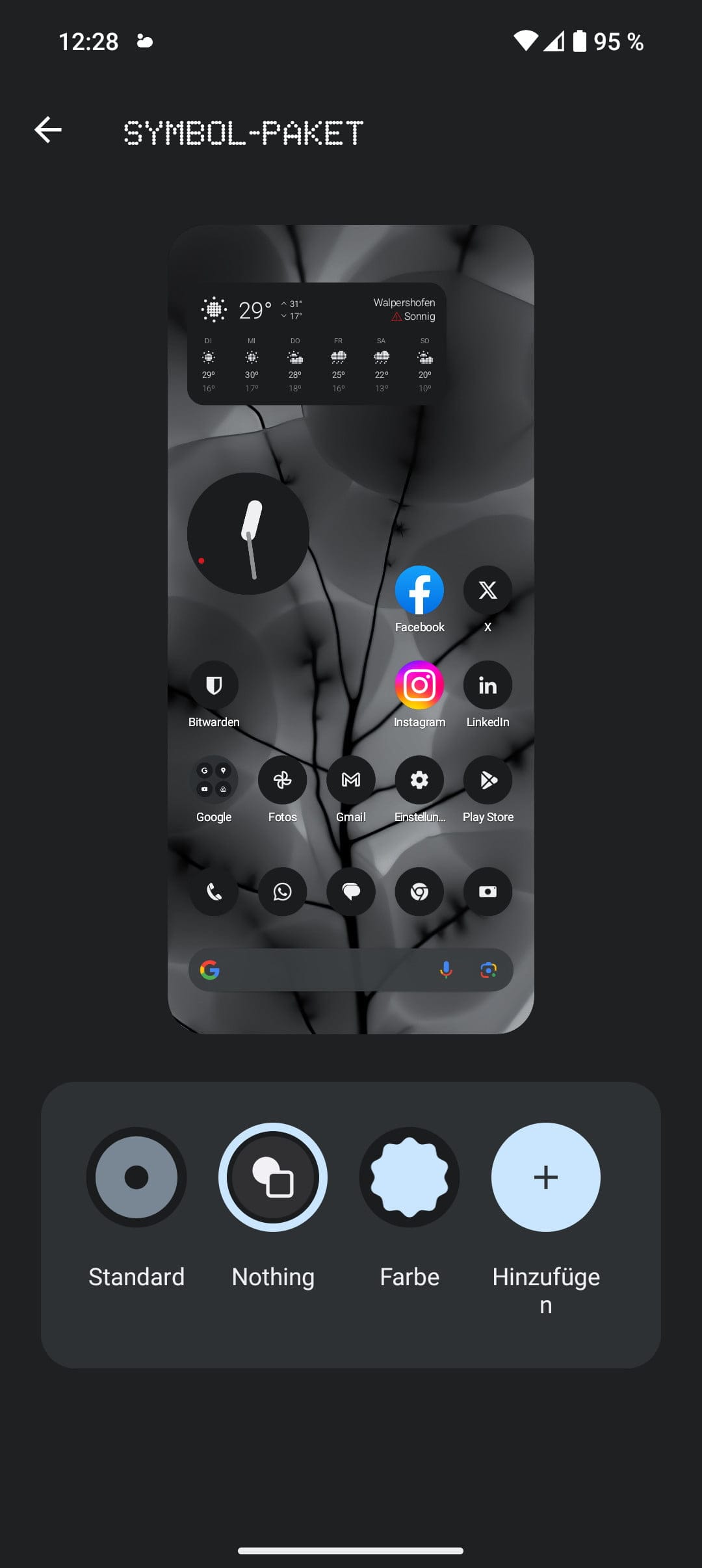
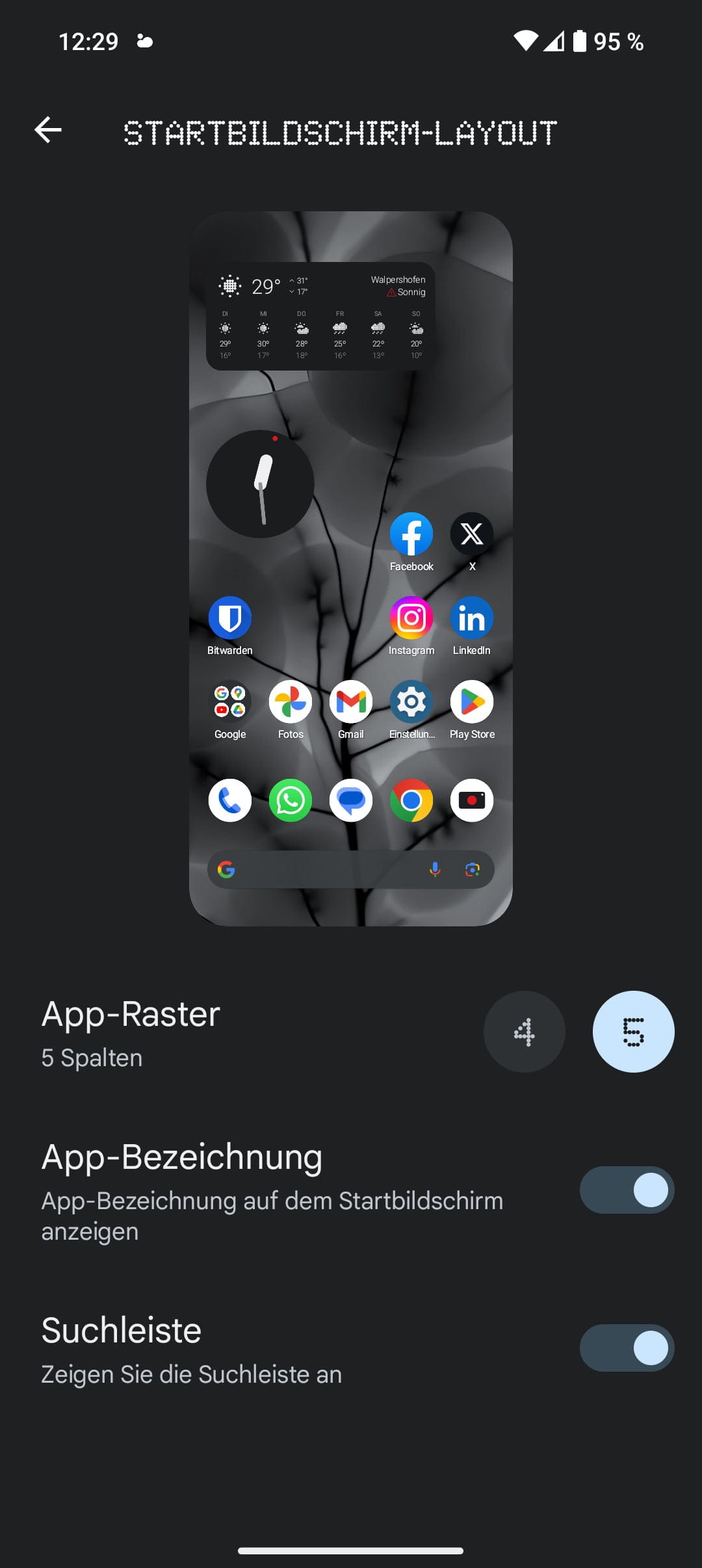
The Nothing Phone (2) keeps things modest when it comes to pre-installed apps. Apart from the Google apps, the software selection is pleasingly slim. Nothing limits itself to a few in-house applications, including the camera app, the Composer app, a weather app and a recorder app. Particularly appealing is that the latter two feature a dot-matrix design, further underlining the company's design philosophy.
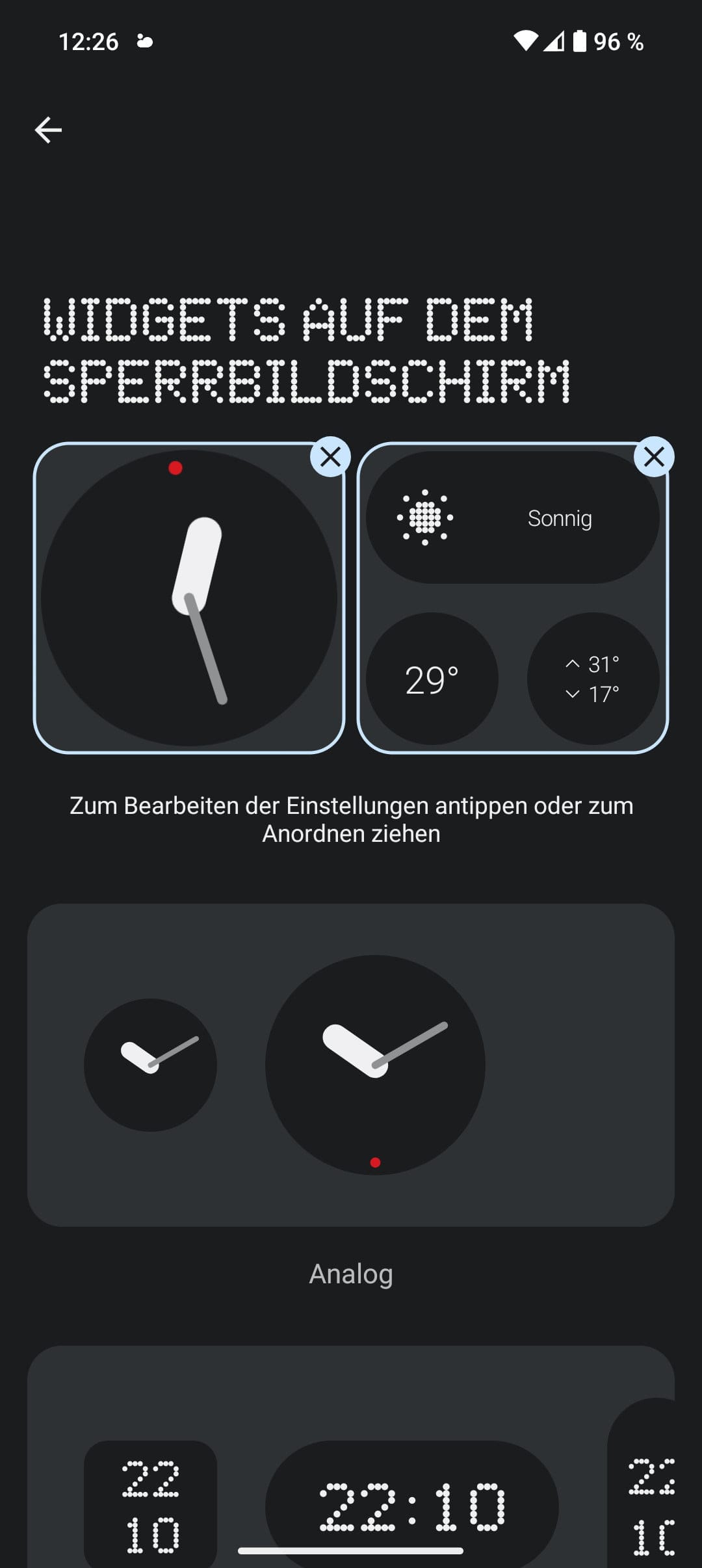
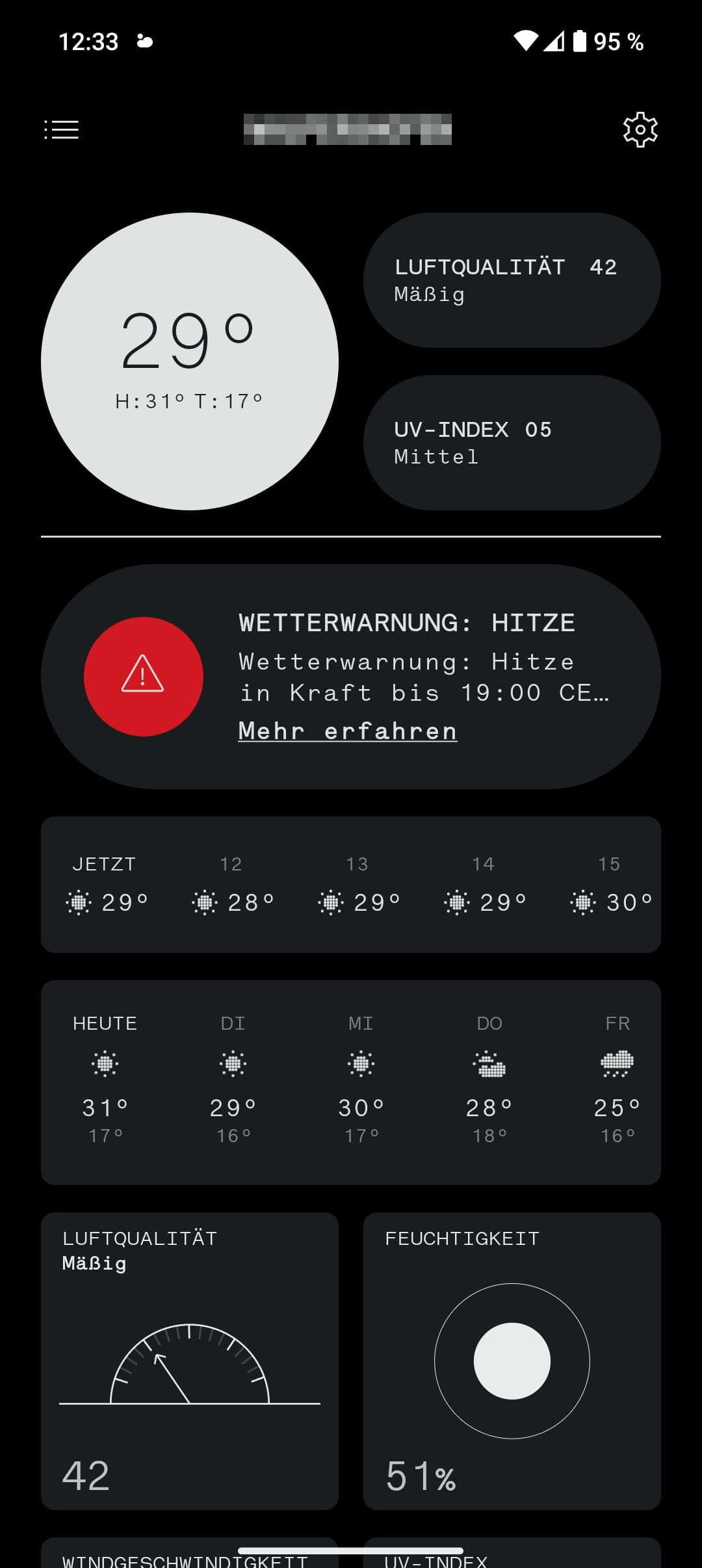
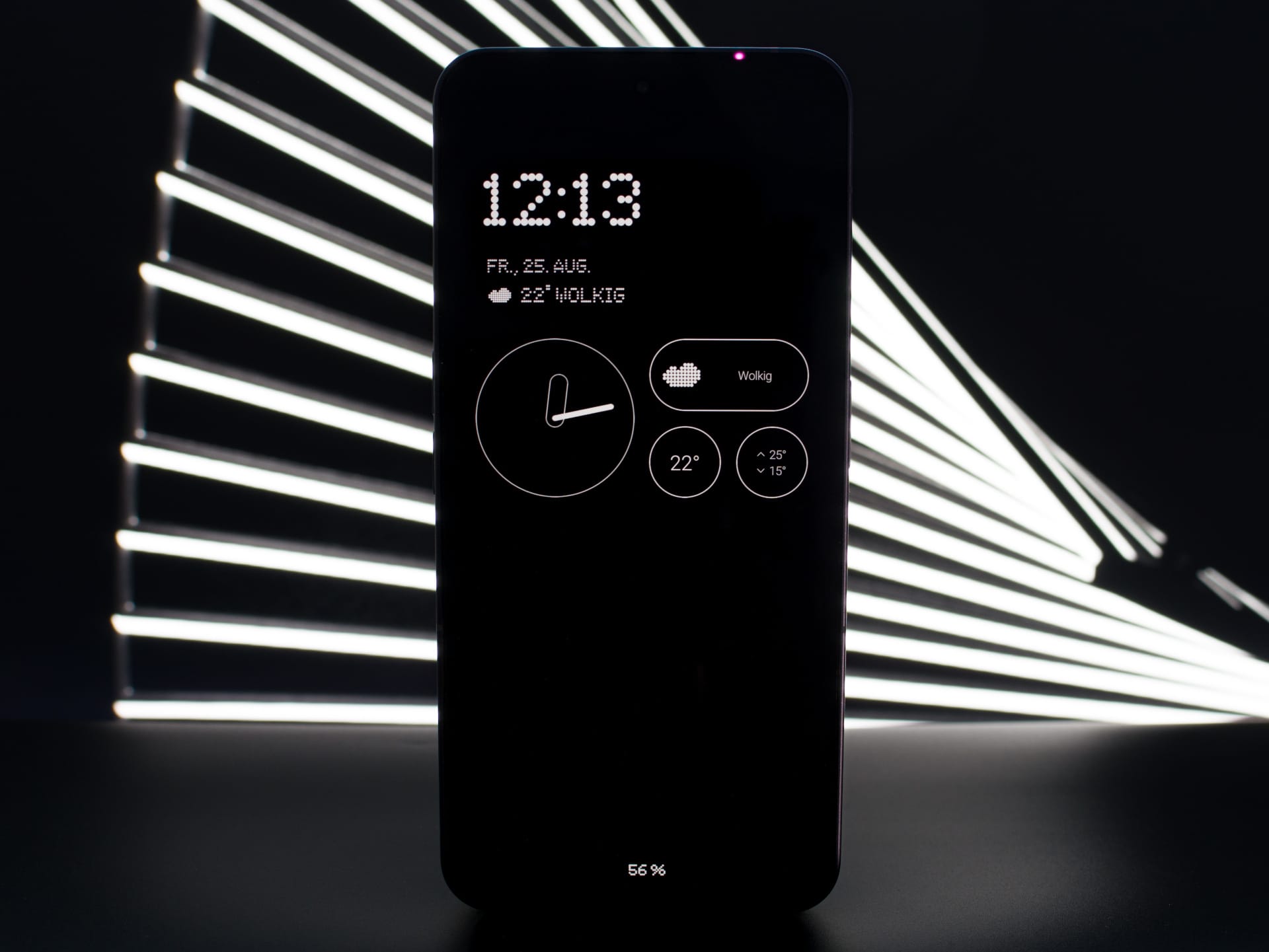
The widgets include analogue and digital clocks, weather displays, and quick settings. Incidentally, Nothing OS 2.0 can also display widgets on the lock screen. This facilitates quick access to important information and features without having to fully activate the device. It is a subtle but effective design element that noticeably improves the user experience.
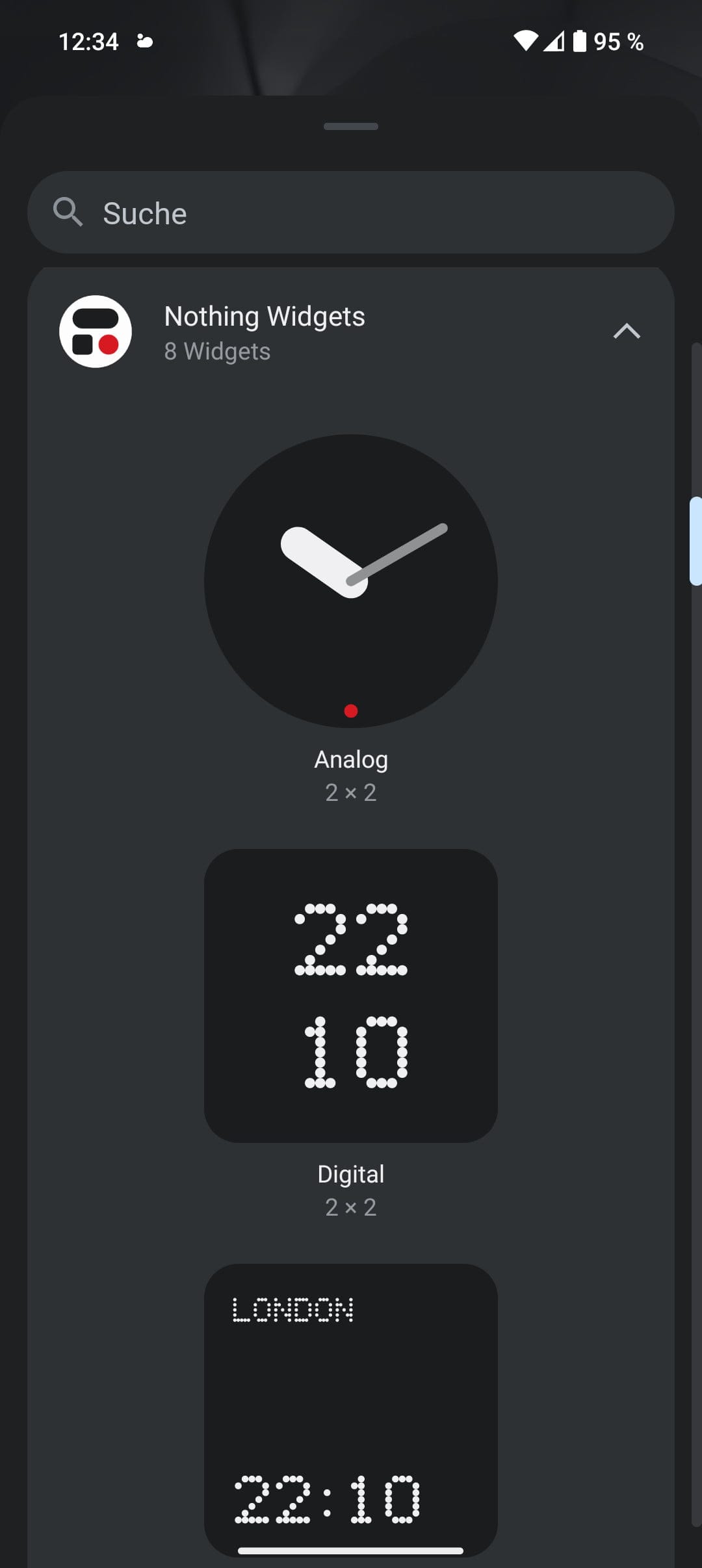
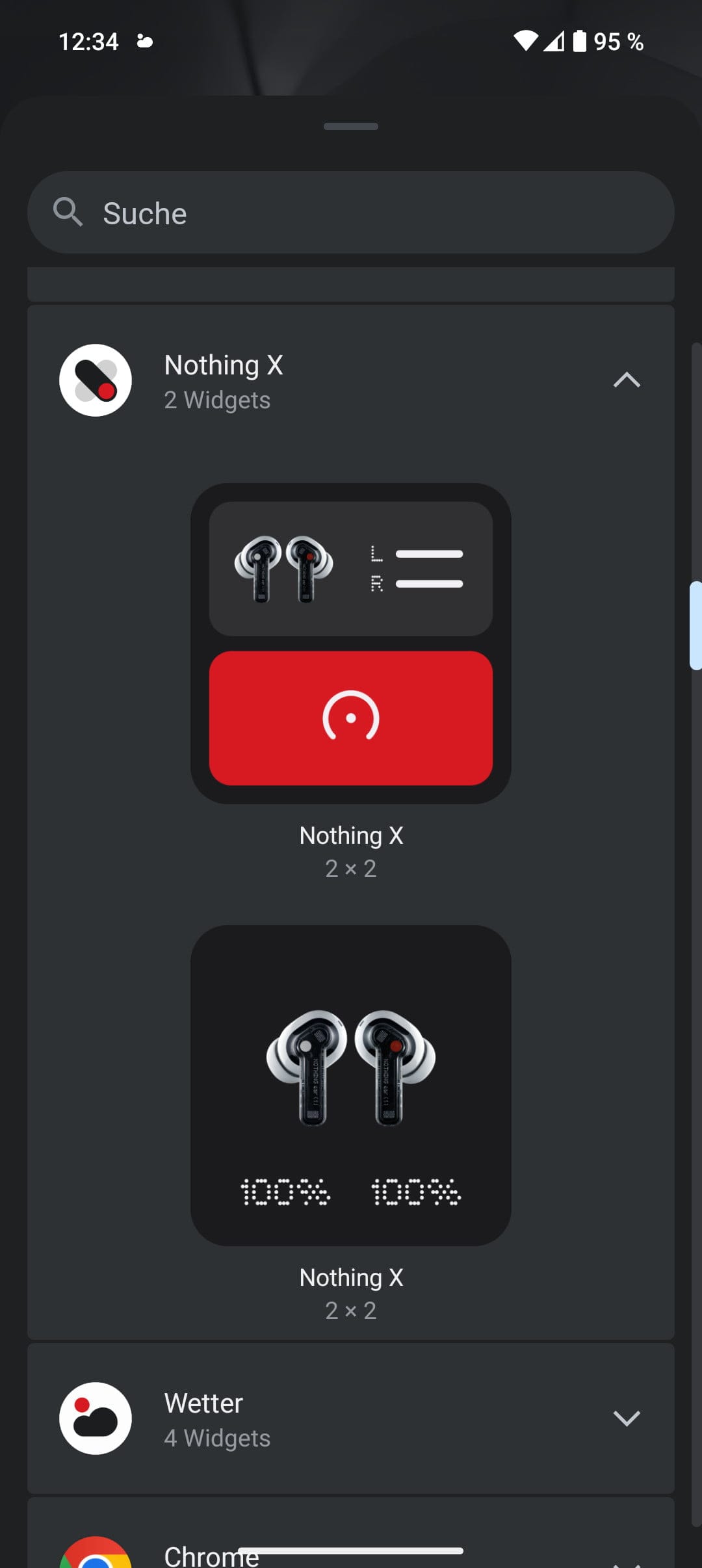
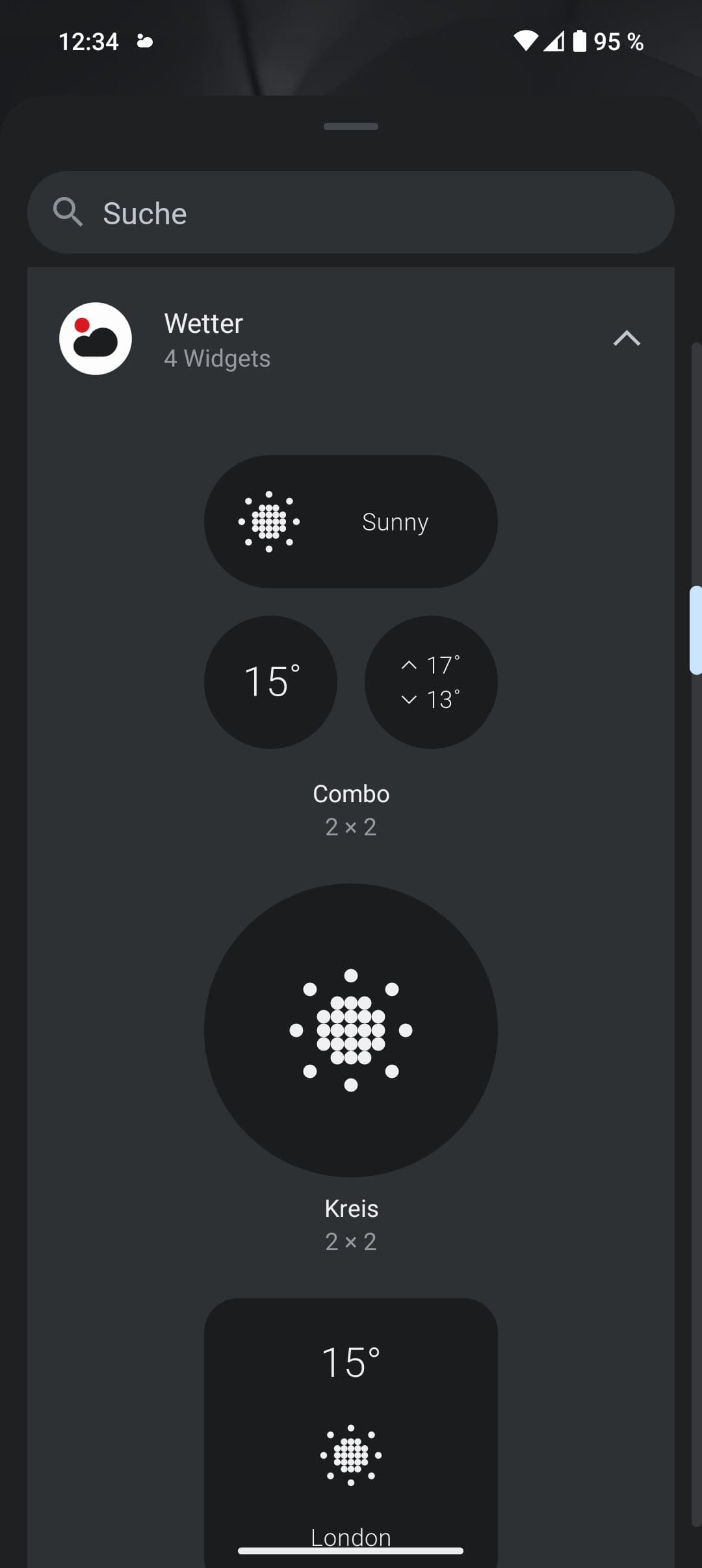
However, Nothing OS 2.0 is much more than just a pretty user interface. The built-in Nothing Launcher stands out for its ability to display app icons and folders in various sizes. Additionally, it supports app shortcuts, which offers users more personalisation options and quick access.
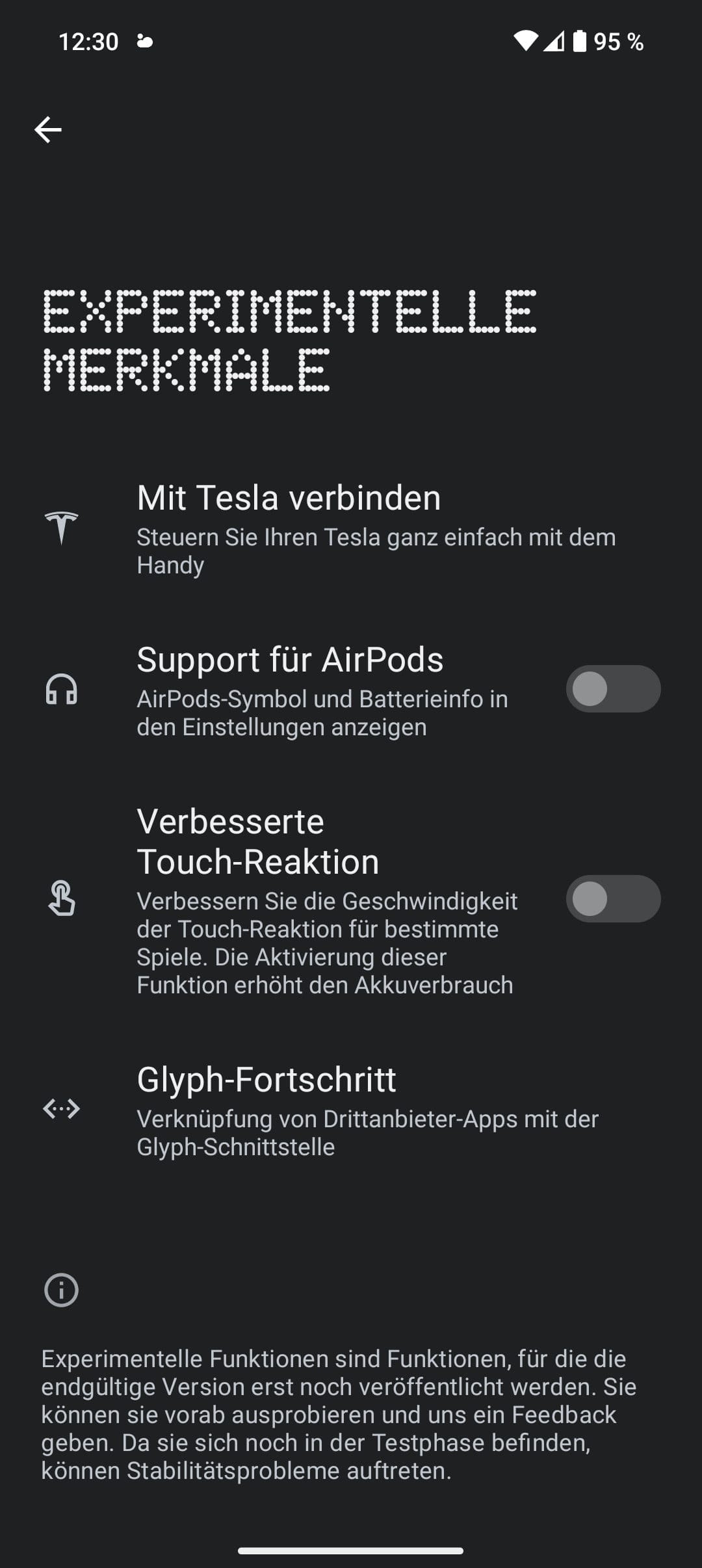
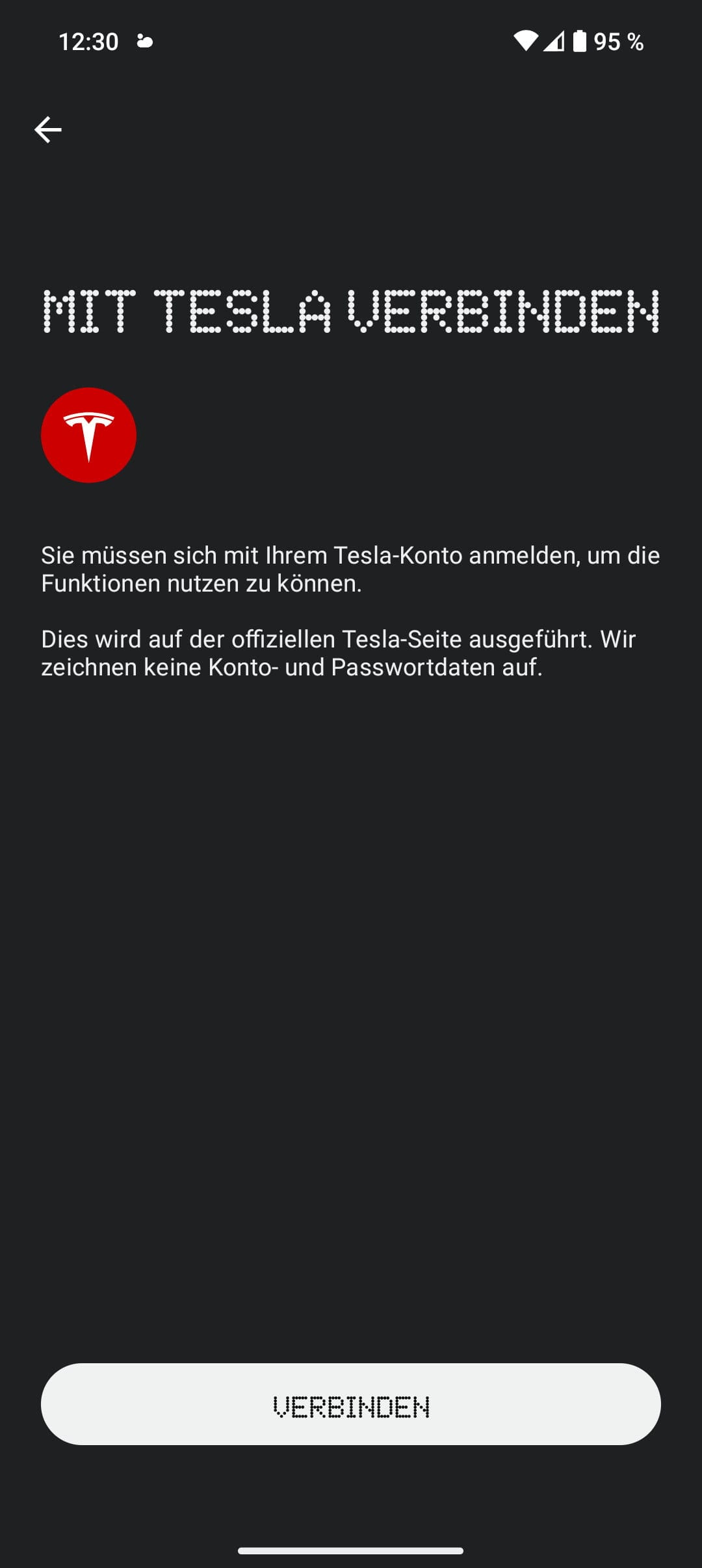
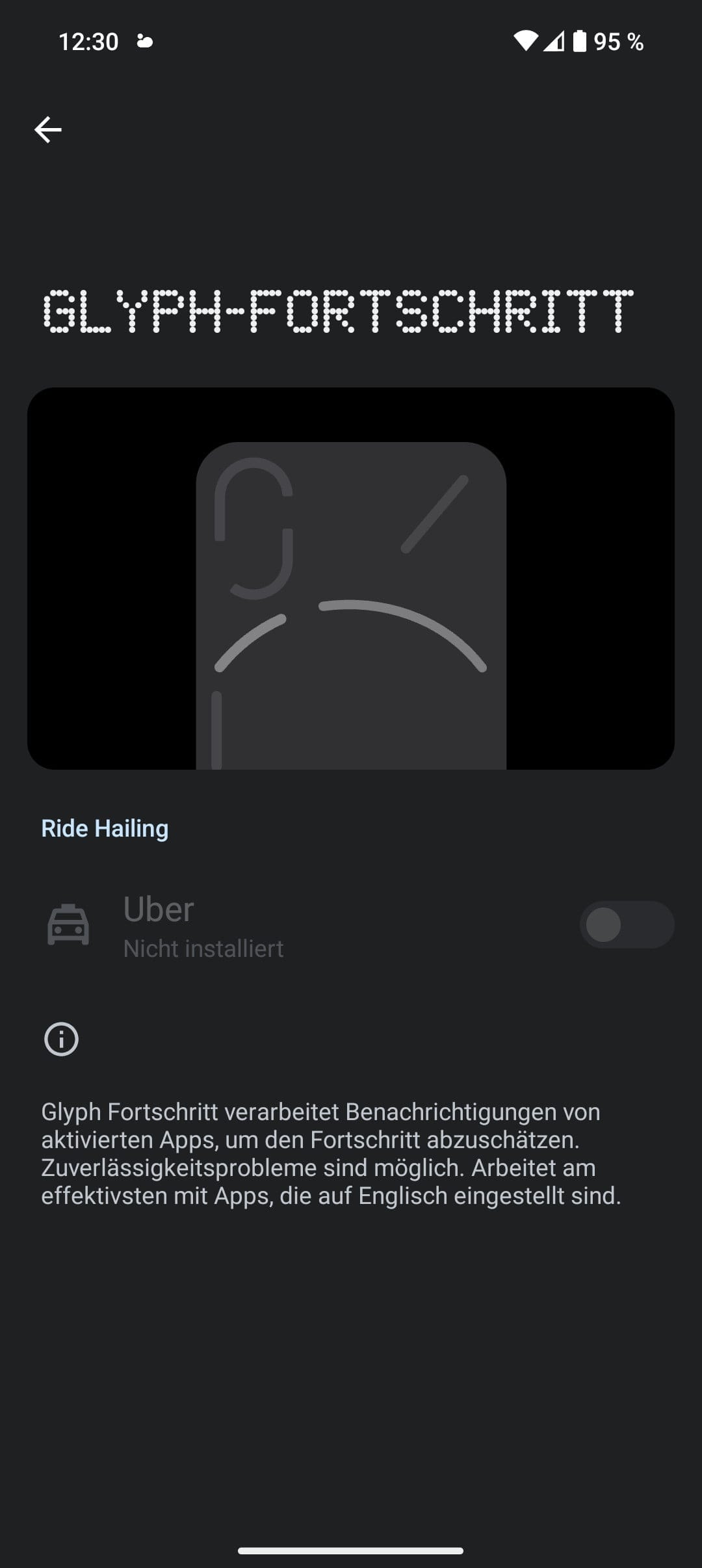
A special category is the "Experimental Features", which provide a glimpse into future developments. One of the most promising is integration with Tesla vehicles. This allows control of the car directly from the smartphone, entirely without the Tesla app. But AirPods owners and gamers are not left out either: extended battery information for the popular Apple headphones and an "Improved Touch Response" for a more responsive gaming experience are just some of the additional features that Nothing OS 2.0 has to offer.
Another advantage of the Nothing Phone (2) is the company's update promise. Nothing guarantees three years of Android updates and four years of security patches for its latest model, which are set to appear every two months. Most other Android devices in this price range are often only supplied with new software versions for two years.
Nothing Phone (2): Glyph
The Glyph interface is one of the most innovative features of the Nothing Phone (2) and significantly expands the possibilities of LED usage in smartphones. This interface is not just an aesthetic element but also offers practical applications that go beyond the usual functions of LEDs – such as notifications and alarms.

The function of the LEDs can be extensively configured via the Glyph menu. Here, not only can the brightness of the LEDs be adjusted, but it is also possible to set a schedule for their activation. This way, everyone can decide for themselves when the LEDs should be visible and when not.

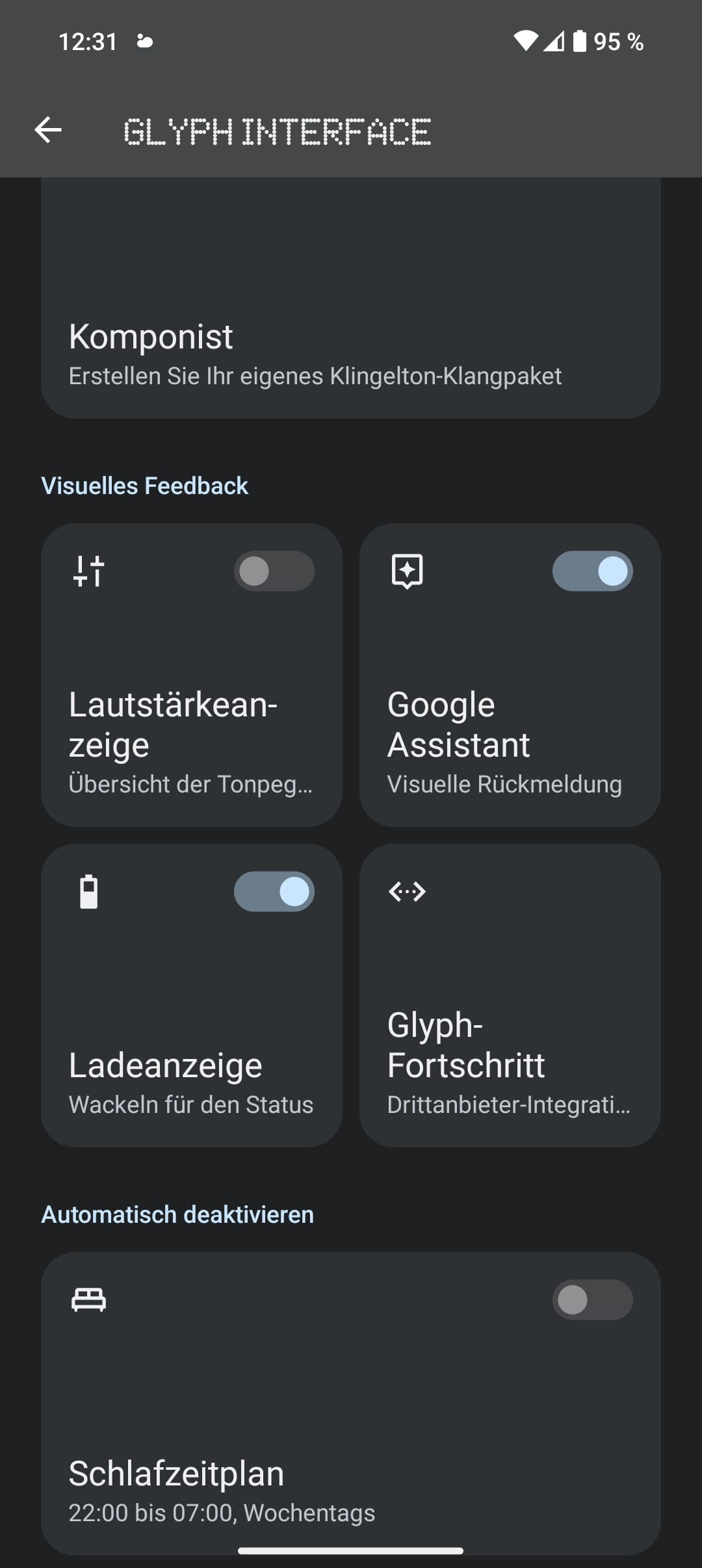
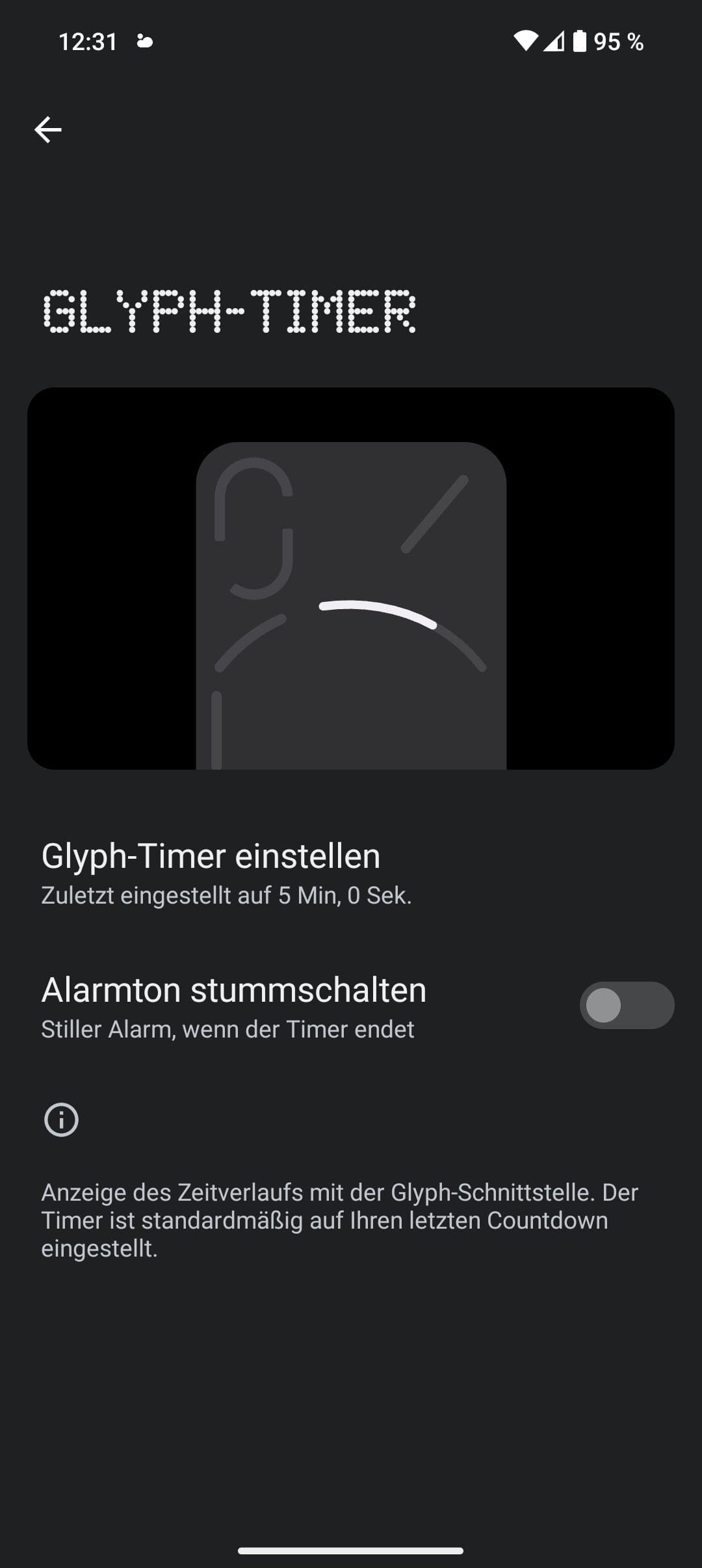
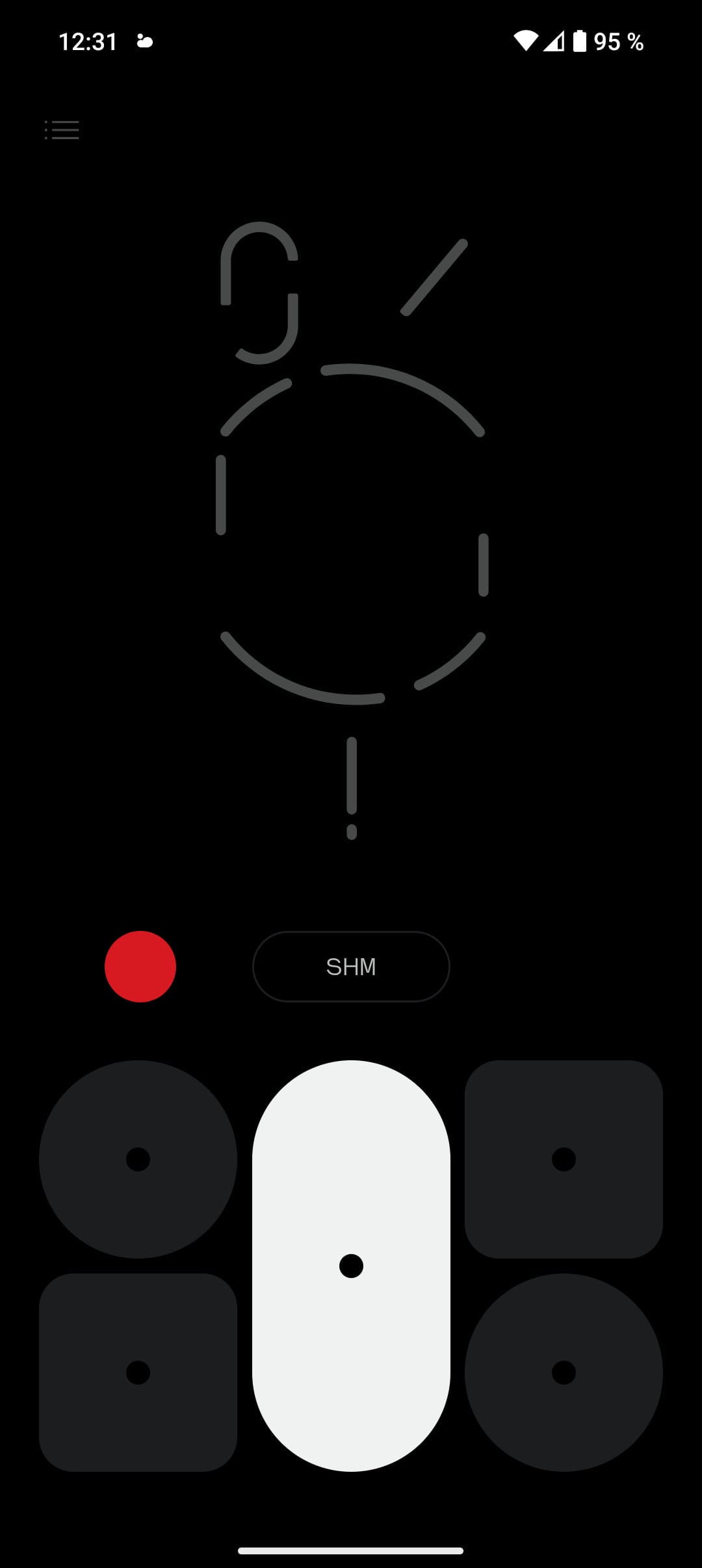
One of the most exciting aspects of the Glyph Interface is the integration with pre-programmed ringtones (10 in total), each combined with its own specific LED pattern. Those who wish to unleash their creativity can use the integrated Glyph Composer. The tool allows the creation of custom LED and sound patterns, enabling visual and acoustic notifications to be tailored to personal preferences.
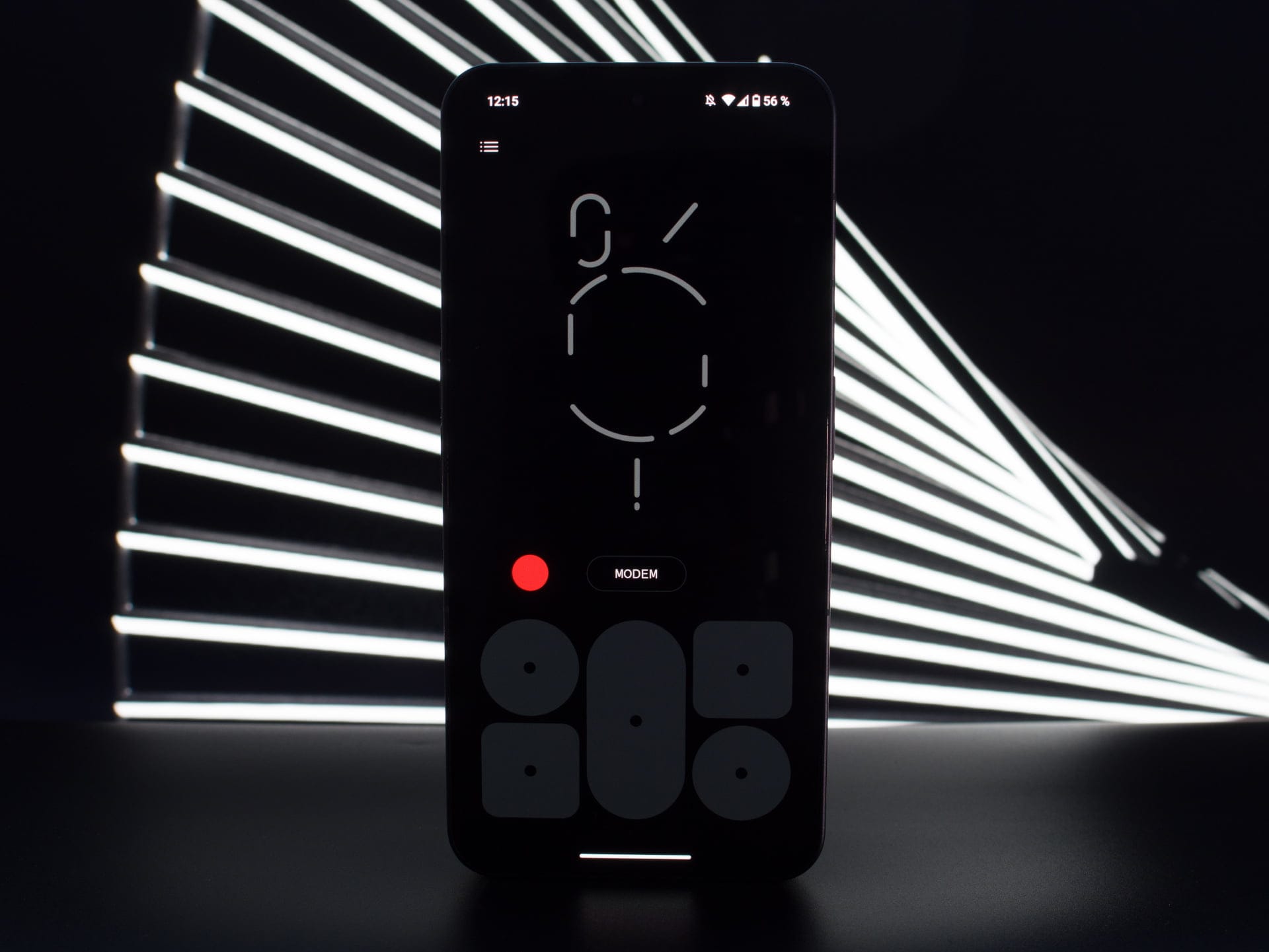
Furthermore, the interface allows for individual assignment of LED patterns to contacts in the address book. This means callers can be identified solely by the light pattern on the back. The practical use of the LEDs goes even further. They can be used as fill light for video recordings or portrait photography, and even the battery charge level can be read via the light pattern.


A particularly clever feature is the "Flip for Glyph" function: when you flip the smartphone over, the Glyph interface automatically activates and the device switches to silent mode. Incoming calls and notifications are then displayed via the LEDs.
Nothing Phone (2): Camera
The Nothing Phone (2) offers a promising camera setup, consisting of two 50-megapixel sensors on the back and a 32-megapixel front camera.
- 50 MP Sony IMX890 main camera | 23mm, f/1.88 aperture, 1/1.56" sensor size and 1.0 μm pixel size, EIS + OIS
- 50 MP Samsung JN1 ultra-wide-angle camera | 14mm, f/2.2 aperture, 1/2.76" sensor size and 0.64 μm pixel size, 4cm macro
- 32 MP Sony IMX615 front camera | 19mm, f/2.45 aperture, fixed focus

Nothing focuses on the essentials when it comes to the camera sensors. Only two cameras adorn the back of the Nothing Phone (2), raising the question: Is less really more in this case?
At first glance, the absence of a separate depth sensor or a dedicated macro camera might appear to be a disadvantage. But Nothing proves that clever software can achieve a lot. Artificial intelligence handles the depth of field in portrait shots, and the ultra-wide-angle camera is also used for macro shots.
However, the omission of a periscope camera is a drawback for the smartphone in one area: optical zoom. While many competitors advertise optical zoom capabilities of up to 100x, the Nothing Phone (2) caps out at 10x digital zoom. This may be sufficient for the average user, but for camera enthusiasts it represents a noticeable limitation.
Main camera
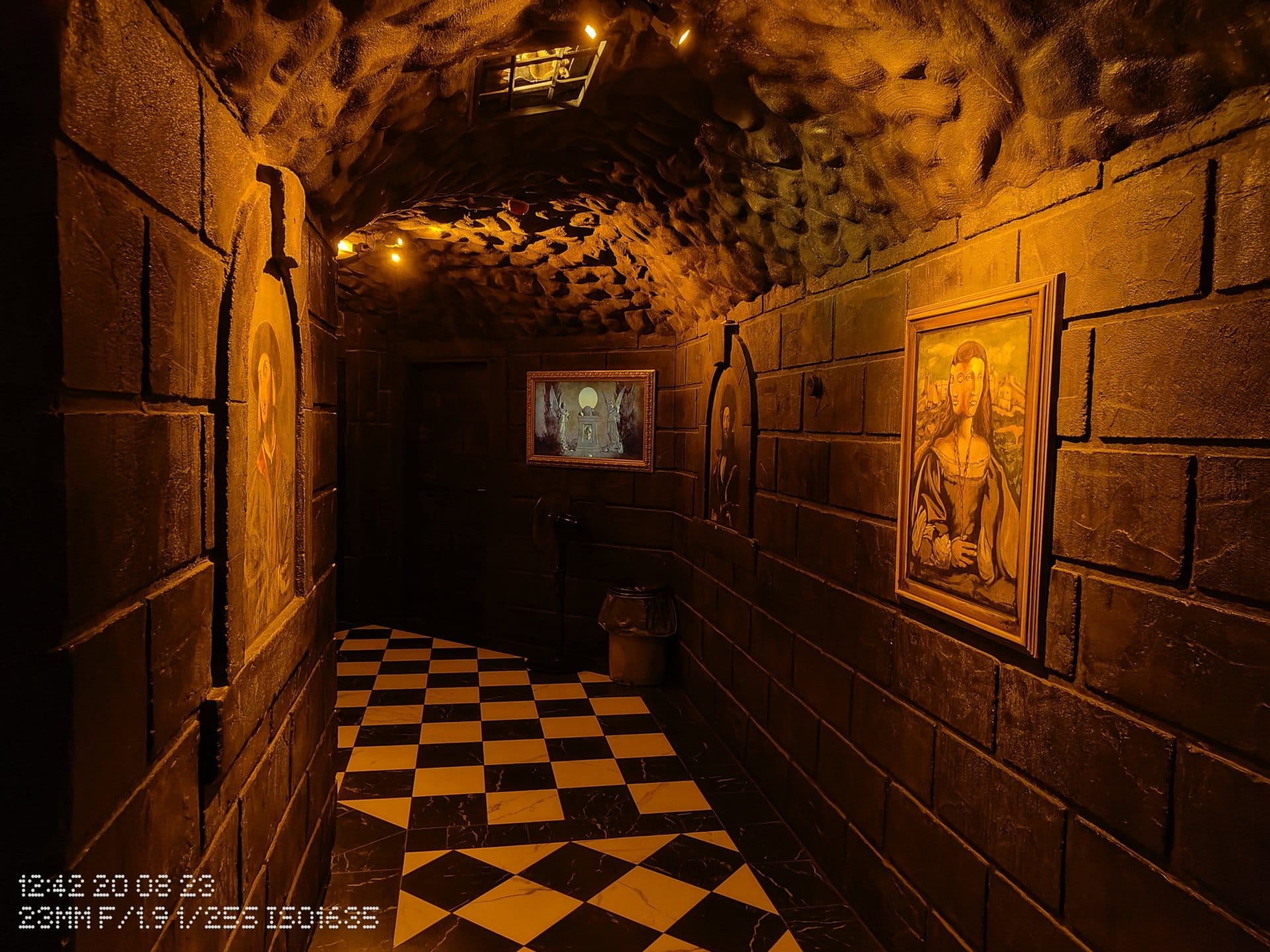
The main camera of the Nothing Phone (2) uses a 50-megapixel Sony Quad-Bayer sensor, which by default captures photos in 12.5 megapixels. The compromise between resolution and pixel size pays off: detail retention is high, sharpness is adequate and not overstated. Image noise is virtually non-existent.
The main camera also impresses with its colour reproduction. The colours look authentic and are not oversaturated, unlike some competitors. The dynamic range is good, though not outstanding. The fast and reliable autofocus particularly deserves praise. It reacts quickly to subject changes, which is a great help in practice.
Here are our test shots with the main camera, taken at Europa-Park Rust.





In terms of low-light performance, the Nothing Phone (2) also shows competence, albeit with limits. The automatic night mode, recognisable by the moon icon, results in longer exposure times, but thanks to the combination of optical and electronic image stabilisation, photos remain largely free of blur.
The night mode artificially brightens the scene, with colours surprisingly well preserved. In very poor light conditions, however, detail retention suffers, resulting in smooth structures in the image. Without night mode, image noise is visible, but image quality remains acceptable.



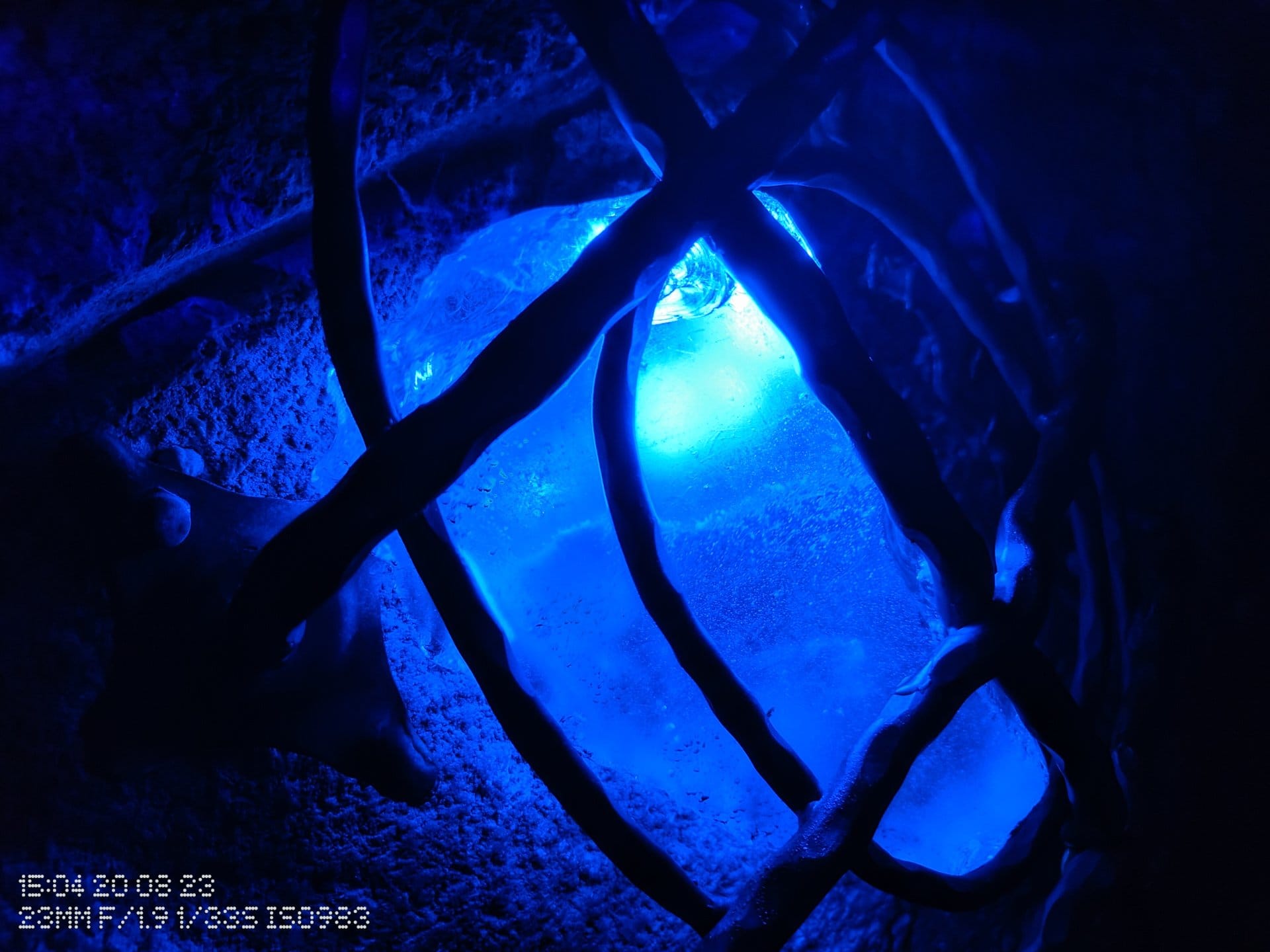


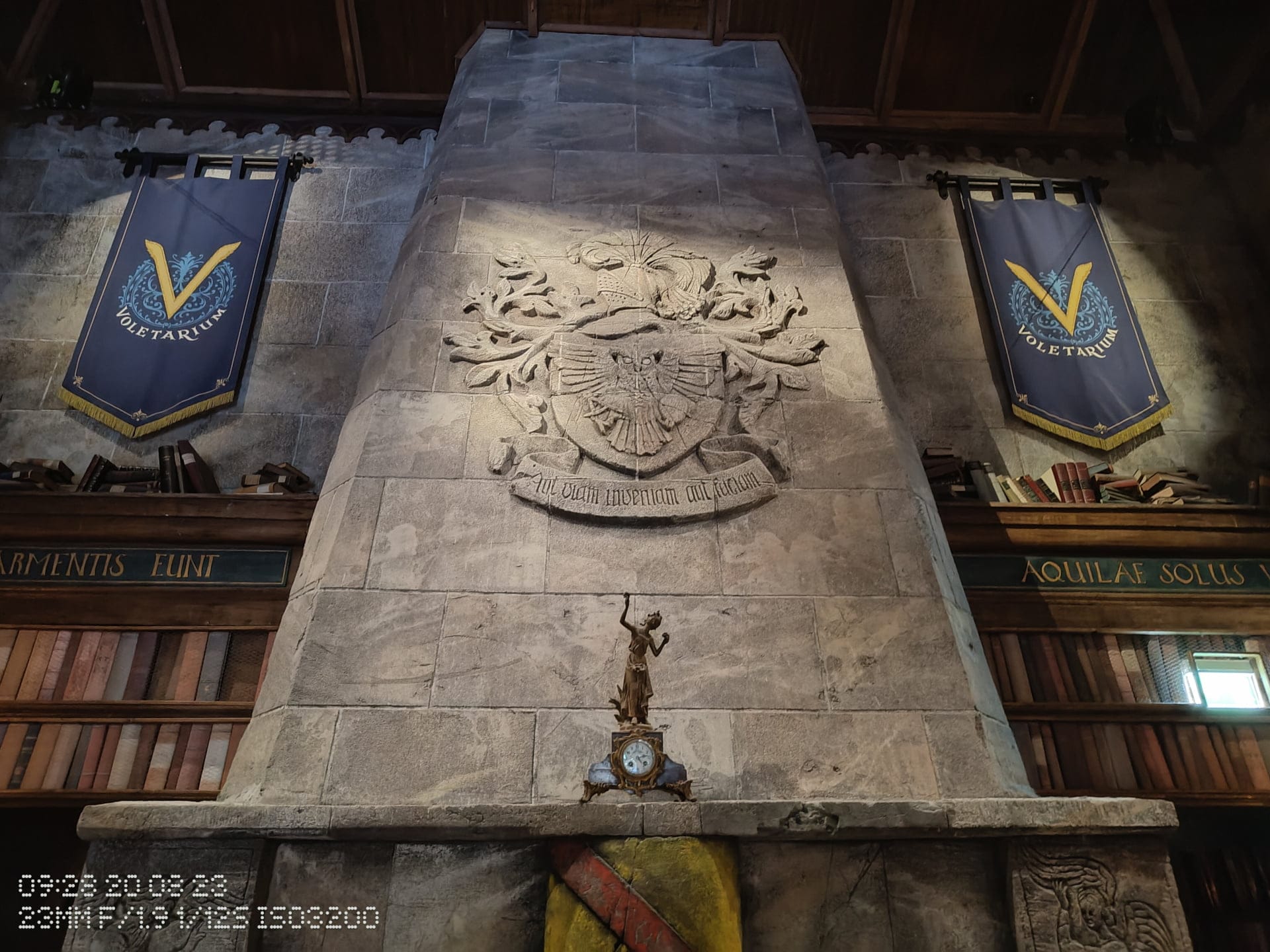

In terms of zoom capabilities, the Nothing Phone (2) offers so-called 2x Super Res Zoom. This is not simply digital zoom, but a technology that leverages the sensor’s high 50-megapixel resolution. The result is impressive: zoomed photos show remarkable detail and sharpness. On close inspection, it is evident that this is not simple digital zooming.
However, there is also a small catch here: In more complex image areas, such as delicate structures or intricate patterns, the shots appear slightly artificial. This effect is, however, marginal and only noticeable upon close inspection. Overall, the impression remains one of solid performance, which is significantly above average for zoomed photos.



However, users have to make compromises with zoom levels beyond 2x magnification. While the 2x Super Res-Zoom function still delivers good results, image quality decreases significantly at higher zoom levels.
The maximum 10x zoom is hardly usable in practice and shows clear weaknesses in terms of sharpness and detail fidelity. The omission of a periscope camera is noticeable here, which is almost considered standard in today's smartphone landscape. Unfortunately, users with high zoom requirements will be disappointed here.
Ultra-wide-angle camera
The Nothing Phone (2)'s ultra-wide camera delivers acceptable, though not outstanding, performance. It is worth highlighting its good colour matching with the main camera. Colours appear similarly natural and balanced. The smartphone also satisfactorily handles image distortion and offers solid overall wide-angle performance.


One criticism, however, is the image sharpness, which decreases specifically towards the edges of the image field. Here, noticeable blurring becomes apparent, which slightly detracts from the overall result.
Under poor lighting conditions, the ultra-wide-angle camera performs less well than the main camera. It becomes clear that it reaches its limits sooner regarding detail retention. The smoothening of structures occurs more quickly, which is particularly noticeable when examining images closely.


However, it is positive to note that the ultra-wide-angle camera remains quite stable in terms of colour representation and dynamic range, and also delivers appealing results even in low light.
In terms of macro shots, the Nothing Phone (2) also relies on its ultrawide camera. The camera supports autofocus and allows close-ups from a minimum distance of just 4 cm.

Our test delivered impressive results: details are excellently visible, the sharpness of the focused object is excellent, and both contrast and dynamic range prove to be robust.
Front camera
The Nothing Phone (2) selfie camera has several special features. First, it is notable that, like the main camera, it uses a quad-bayer sensor. Unlike the main camera, however, the selfie camera stores photos at full 32-megapixel resolution. Another highlight is the wide-angle lens, which allows the choice between two fields of view: a wide angle and a cropped standard view.
The contrast is good, the dynamic range is generous, and the colour reproduction is in no way inferior to the other cameras on the smartphone. However, the level of detail and sharpness could be slightly better.
Videos
The video recording capabilities of the Nothing Phone (2) are certainly respectable. Users can record videos in 4K at up to 60 frames per second with the main and ultrawide cameras. In addition, recordings in 1080p at 30 and 60 frames per second are also possible. The resolution of 1080p is also the maximum for the front camera.
Here is a sample video, shot in 4K at 50 frames per second.
 Play video on YouTube
It is interesting that the electronic image stabilisation (EIS) is enabled by default on all cameras and resolutions. This ensures remarkably steady footage, although it has its drawbacks. The main camera's 4K recordings are characterised by high contrast, good dynamic range and natural colours.
The detail reproduction is satisfactory but not as impressive as on some competing models. This could partly be due to the constantly active EIS, which may slightly impair image quality. Nevertheless, the videos are pleasing due to their noise-free nature and the absence of any oversharpening.
Nothing Phone (2): Battery
Battery life is often the unsung hero or the secret villain of a smartphone – for the Nothing Phone (2), it is definitely the hero. On paper, the increase in capacity to 4,700 mAh compared to the predecessor model's 4,500 mAh might seem unremarkable.
In practice, however, this difference is noticeable. Thanks to the more efficient Snapdragon 8+ Gen 1 processor and the frugal LTPO display, the device achieved an impressive screen-on-time of 16 hours in our benchmarks at medium brightness and dynamic refresh rate.
In everyday use, characterised by normal usage such as WhatsApp, calls and browsing, the smartphone only needed to be plugged in approximately every day and a half. This corresponds to an approximate screen-on time of 8 hours in everyday use. However, an extreme test at Europapark, where the GPS-intensive Europapark app was running in the background, posed a greater challenge to the device. Here, the battery only lasted until the evening.
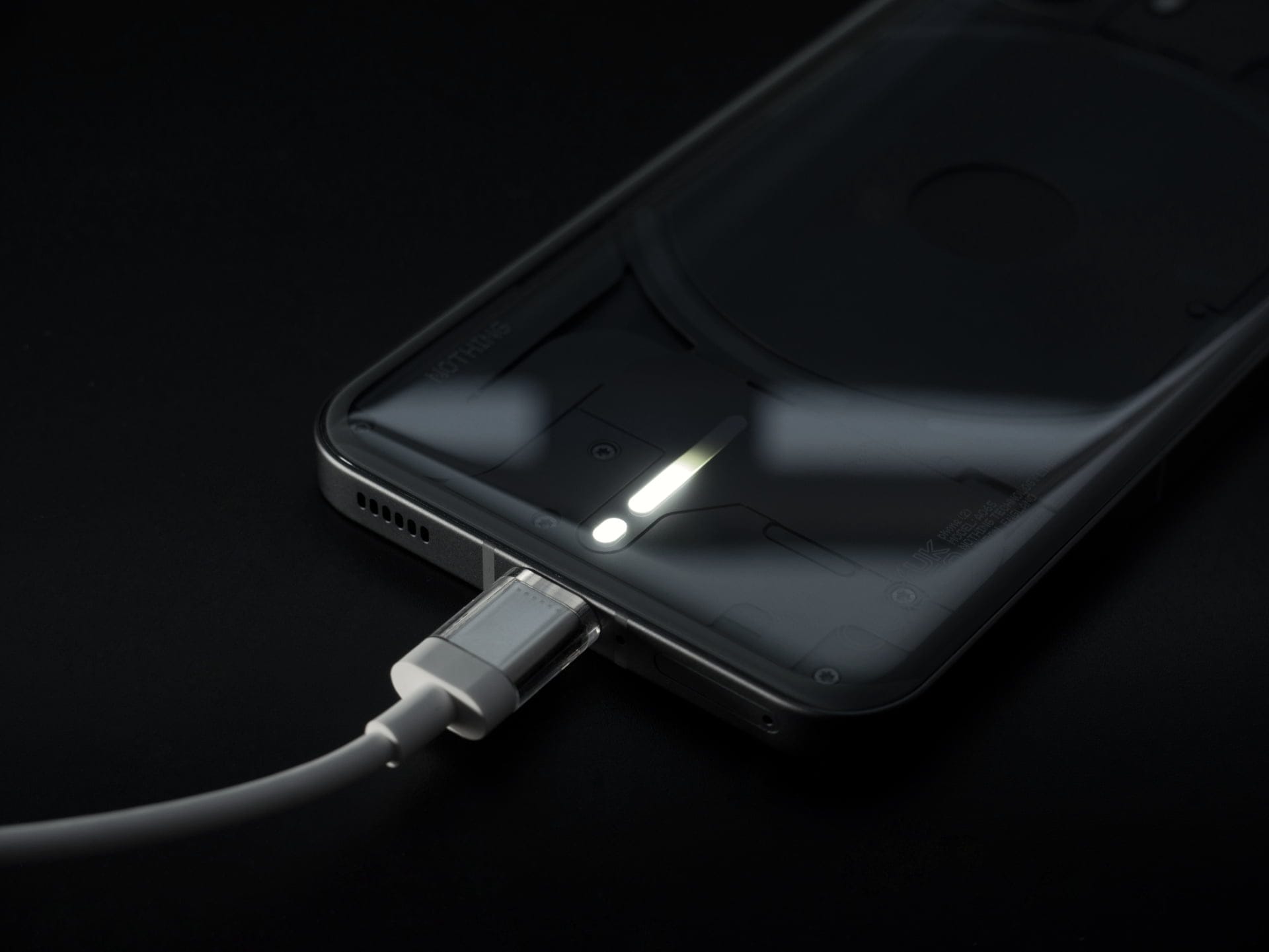
Charging performance has also improved: from 33 watts in the previous model to now 45 watts. With a 65-watt GaN charger, the battery reached 20% in just 10 minutes, 60% in 30 minutes and was fully charged within an hour.
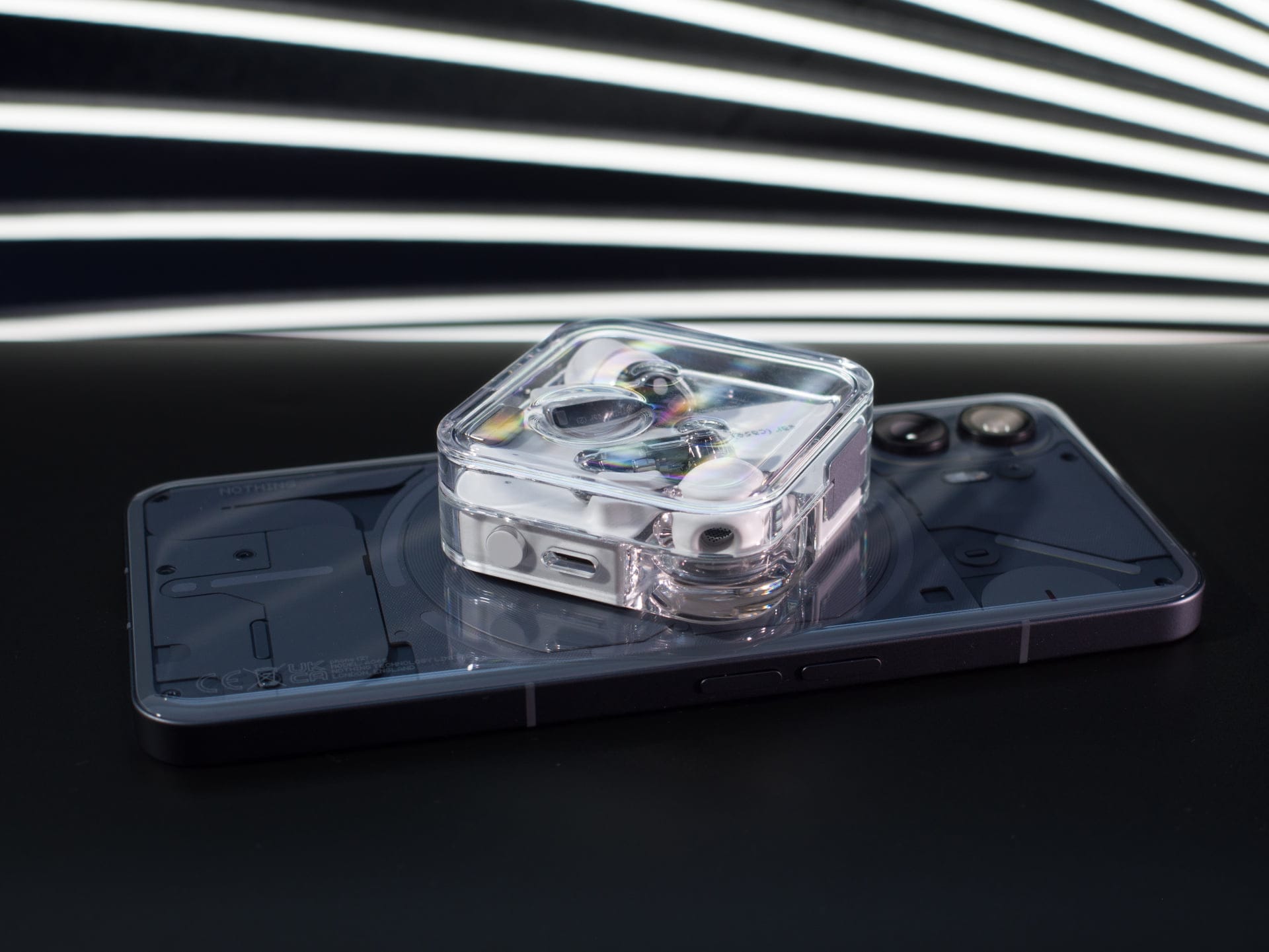
There is also good news for fans of wireless charging: The Nothing Phone (2) supports 15 watt wireless charging and even reverse wireless charging. This allows, for example, charging the Nothing Ear (2) headphones directly via the smartphone.
Our verdict
In the dense smartphone jungle, innovations have become rare. The Nothing Phone (2) offers a ray of hope here. With its unique Glyph Interface, it makes a distinct accent that sets it apart from the uniformity. Admittedly, the hardware specs do not compete with the current smartphone elite, which are usually twice as expensive. But with the Phone (2), Nothing has achieved an impressive balance between performance and efficiency: High performance meets long battery life, rounded off by the lean and efficient Nothing OS 2.0.
However, where there is light, there are shadows too. The camera system lacks a periscope camera, and the overall image quality is not sufficient to reach the podium in smartphone photography. The device also reaches its limits when it comes to gaming: those who want to enjoy Genshin Impact at high settings must expect frame drops.
Nevertheless, the Nothing Phone (2) is much more. It offers a thoughtful mix of features, a touch of premium feel, and a generous portion of innovation. For those looking for a fresh and unique smartphone experience, the Nothing Phone (2) could be just the right choice.
Specifications
Processor and memory
- CPU
- Qualcomm Snapdragon 8+ Gen 1
- GPU
- Adreno 730
- RAM
- 8GB/12GB LPDDR5
- Internal storage
- 128GB/256GB/512GB UFS3.1
- Storage expansion
- No
Display
- Display size
- 6.7 inches
- Display resolution
- 2412 x 1080 pixels
- Display refresh rate
- 1Hz - 120 Hz (Adaptive)
- Display brightness
- 1600 nit (peak)
- Display type
- OLED (LTPO)
- Screen protector
- Corning Gorilla Glass
- Sampling rate
- 240 Hz
- Other
- *HDR10+
- *10-bit
- *SGS Low Blue Light
Cameras
- Main camera
- 50 MP Sony IMX890 (f/1.88 aperture, OIS + EIS)
- Ultra-wide-angle camera
- 50 MP Samsung JN1 (f/2.2 aperture, 114°, macro 4 cm)
- Front camera
- 32 MP Sony IMX615 sensor (f/2.45 aperture)
Mains
- Dual SIM
- Yes
- SIM size
- Nano SIM
- eSIM
- No
- GSM
- 850/900/DCS/PCS
- WCDMA
- B1/B2/B4/B5/B6/B8/B19
- FDD LTE
- B1/B2/B3/B4/B5/B7/B8/B12/B17/B18/B19/B20/B25/B26/B28/B30/B32/B66/B71
- TDD LTE
- B34/B38/B39/B40/B41/B42/B48
- 5G NSA/SA
- n1/n2/n3/n5/n7/n8/n12/n20/n25/n28/n30/n38/n40/n41/n66/n71/n75/n77/n78
Wireless
- Wi-Fi
- 802.11 a/b/g/n/ac/ax (WiFi 6)
- Bluetooth
- 5.3
- GPS
- Yes
- NFC
- Yes
Sensors
- *Ambient light sensor
- *Accelerometer
- *Proximity sensor
- *E-compass
- *Gyroscope
- *Fingerprint sensor (in-display)
Battery
- Battery
- 4,700 mAh
- Fast charging function
- 45 watts
- Qi charging
- 15 watts
Other
- Operating system
- Android 13 (Nothing OS 2.0)
- Audio
- Stereo speakers
- Connection
- USB-C (2.0)
- Size
- 162.13 x 76.35 x 8.55 mm
- Weight
- 200,68 g
What’s included
1x Nothing Phone (2) 1x USB-C to USB-C charging cable 1x SIM ejector tool 1x Quick guide
Price comparison
| Store | Price | Link |
|---|---|---|
| MediaMarkt | 699,00 € | Go to store |
Comments (1)
Hello,
I am currently still torn between getting a Nothing Phone 2 or a Pixel 7a. I like the Phone 2's design much better, but the Pixel 7a is supposed to have the better camera. Gaming is important to me too, as I like playing Clash Royale. How does the battery compare between the two devices, and which would you choose if you had the option?