Contents
Nothing Phone (3): Design
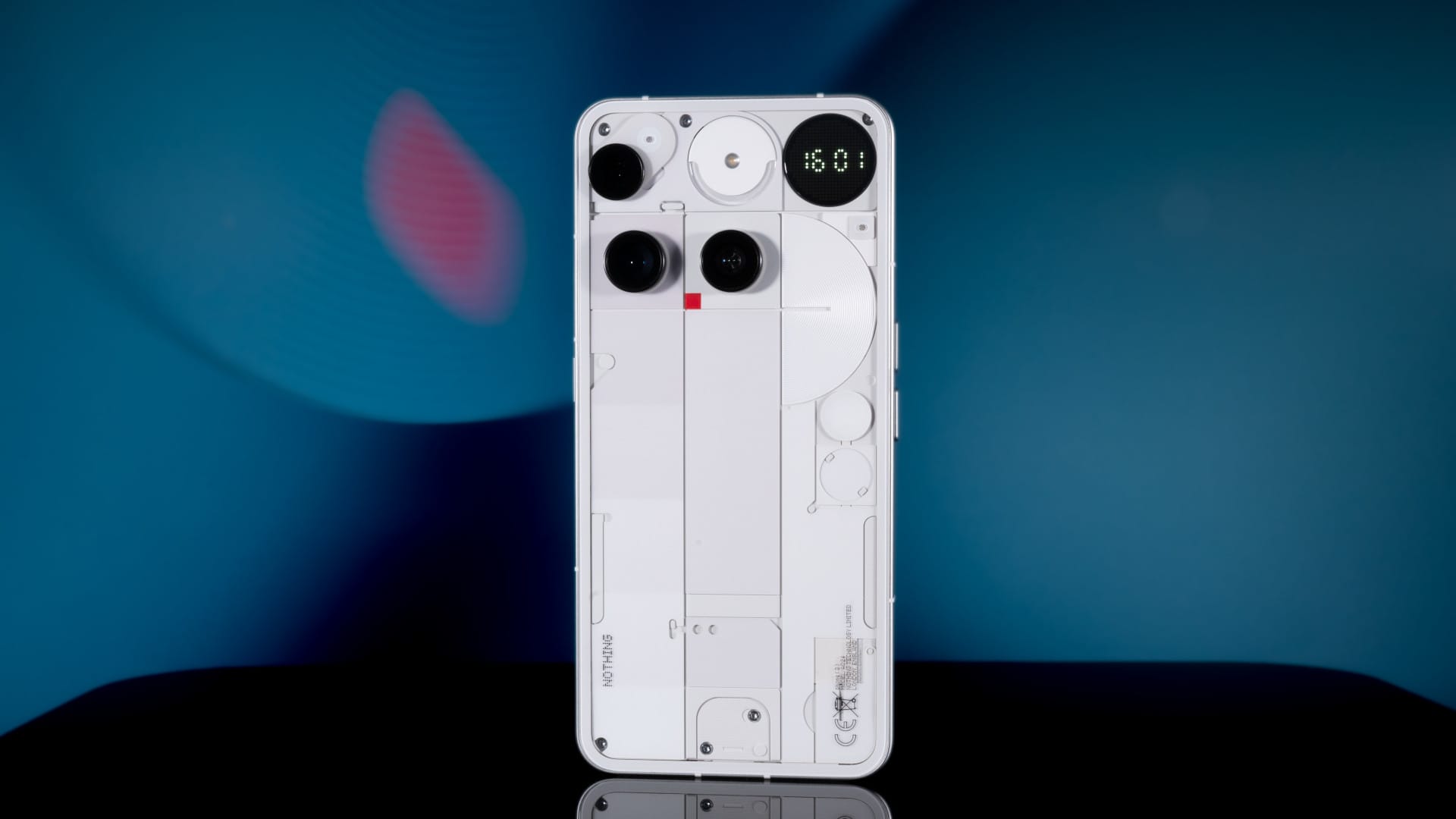
It is rare that a smartphone design really surprises me, but the Nothing Phone (3) did just that. Instead of relying on smooth symmetry and high-gloss aesthetics, the Phone (3) presents itself as angular, playful and unusually assembled.
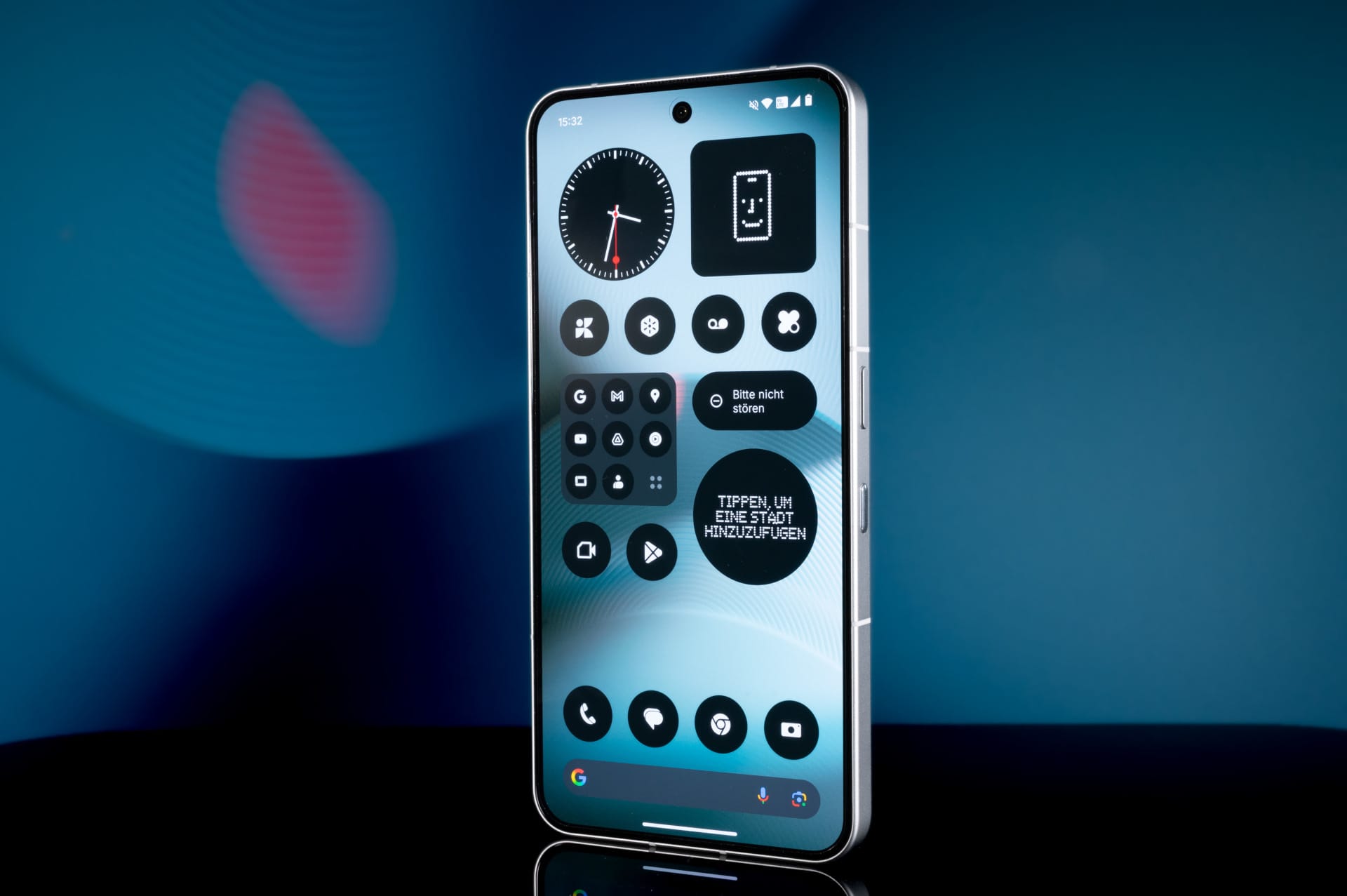
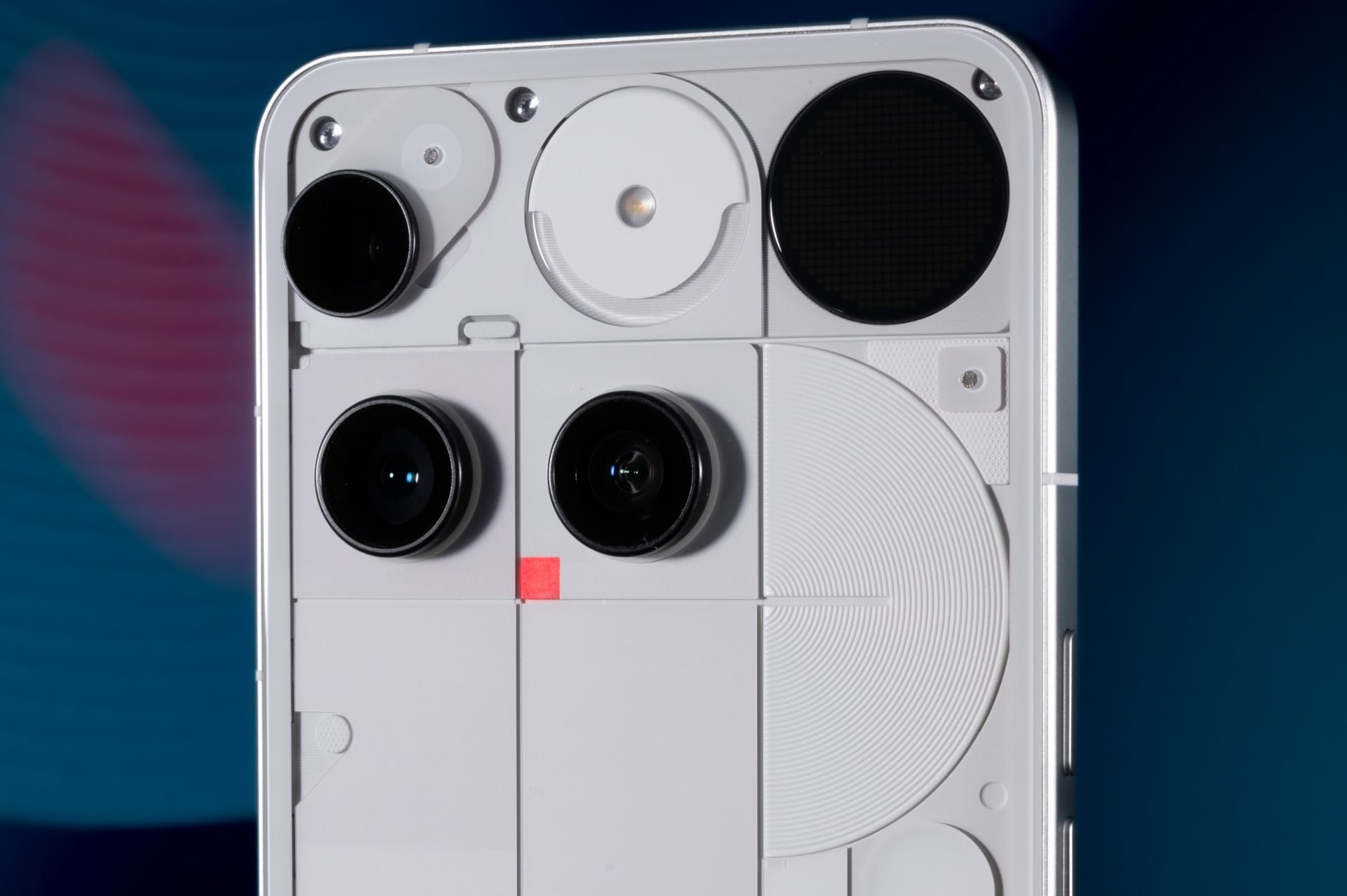
The camera layout on the back is particularly striking. The lenses are not arranged in a row or in a module as on many other models, but instead seem to be distributed at random. However, there is a clear concept behind this apparent disorder. The asymmetrical design deliberately stands out, attracts attention and breaks with the claim of visual perfection that pervades many current flagships.
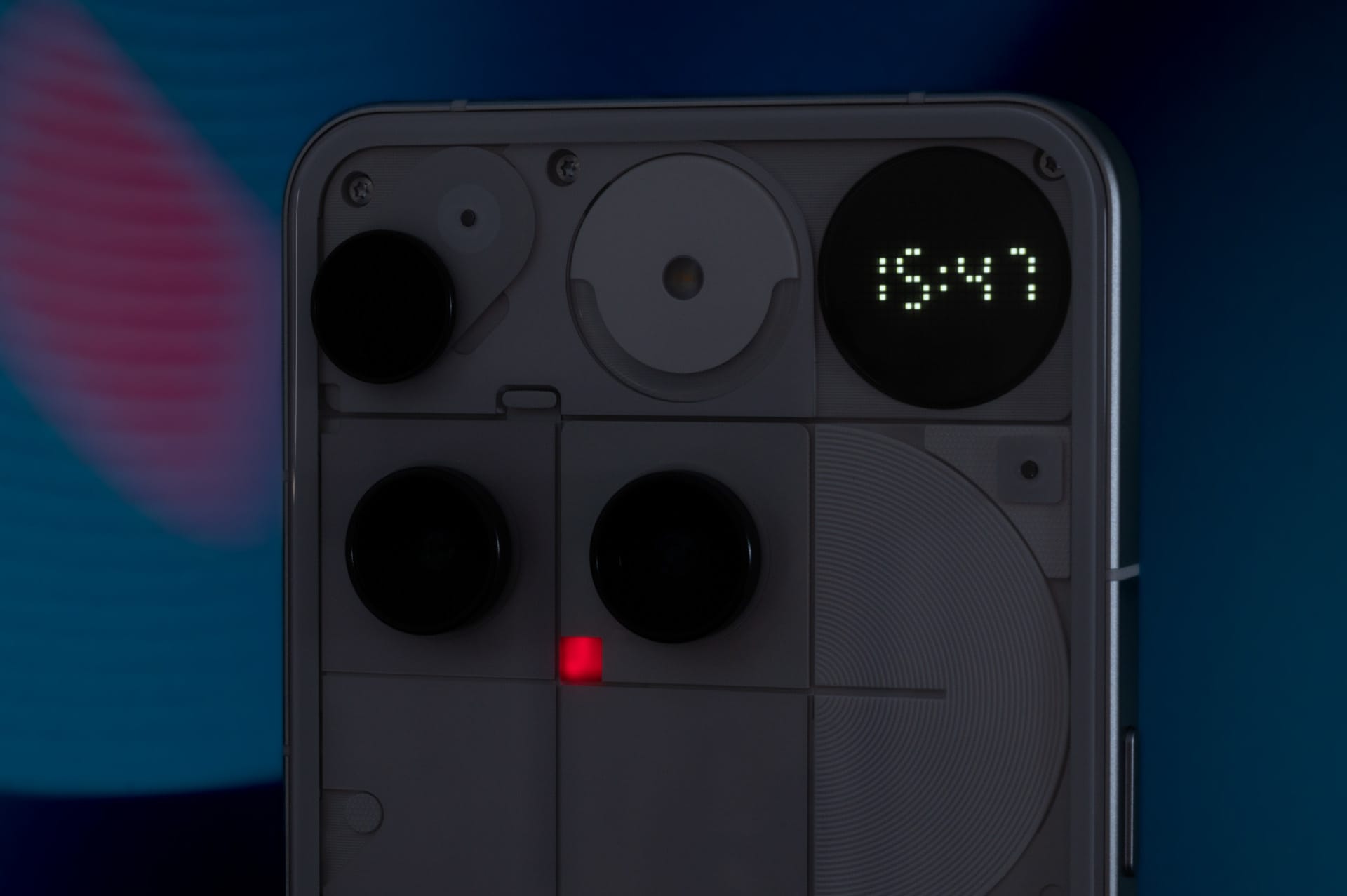
The glass on the back offers a view of the interior as usual, but the new LED system steals the show from the previous models' Glyph strips. Instead of long light strips, there is a monochrome LED display (Glyph Matrix) in the top right corner, opening up new possibilities. More on that shortly.
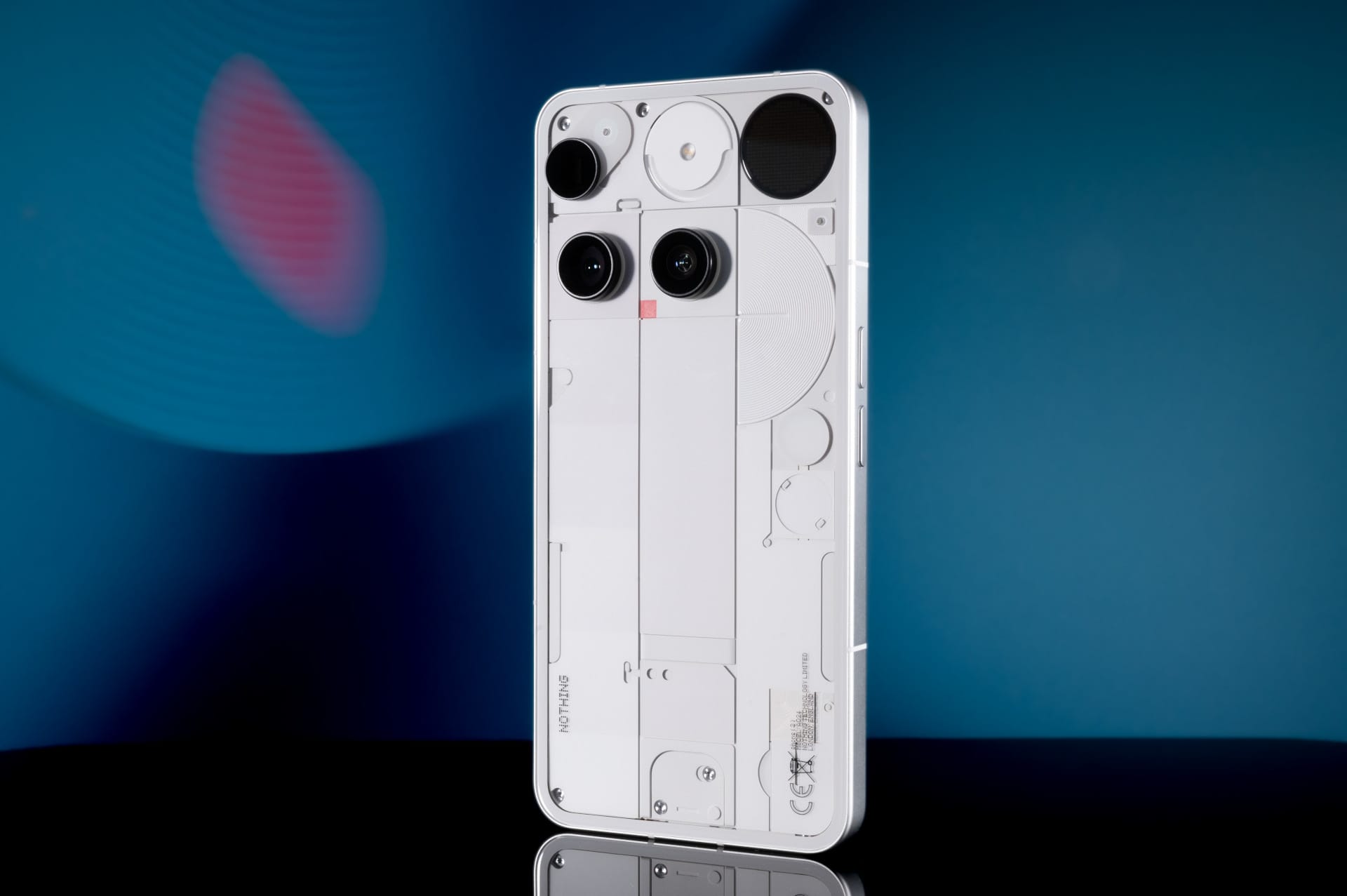
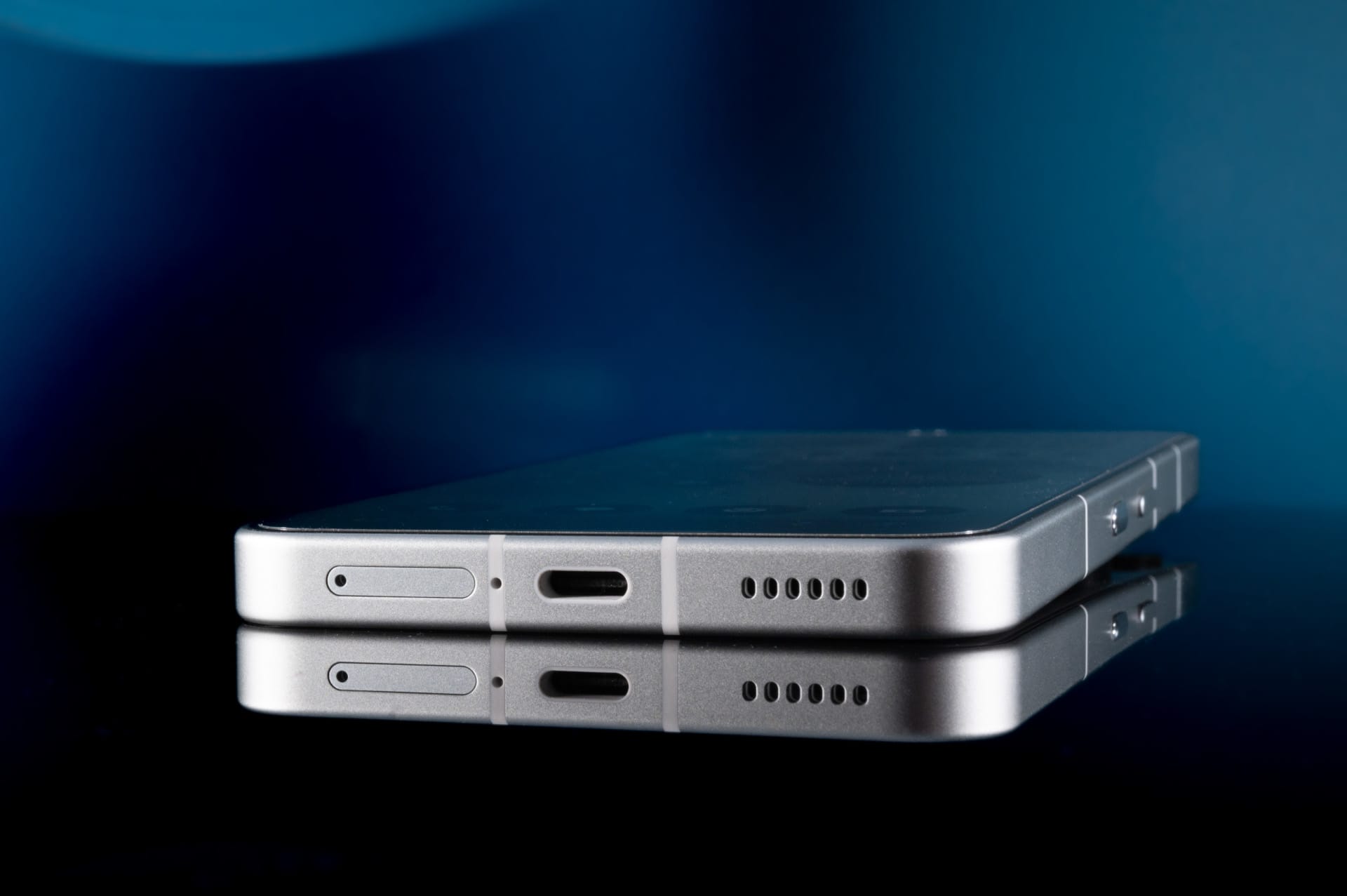
The tactile feel also works well together. The recycled aluminium frame is more angular than the predecessor, the casing sits solidly in the hand and the glass back feels pleasantly grippy. The slightly recessed display glass provides a distinctive finish. For everyday use, it also offers IP68 protection against water and dust, which makes the Phone (3) surprisingly robust despite its extravagance.
Design is always a matter of taste, no question. Some will shake their heads when seeing the Phone (3). Others see it as a bold statement. Amidst all this, there is a feeling reminiscent of the quirky phone experiments of the early 2000s. Devices like the Nokia 7280, which twisted like a lipstick, or the eccentric Siemens Xelibri come to mind.
Although the Phone (3) is technically far from achieving this, it does provoke similar reactions and sends a subtle wink in the direction of everyone content with generic smartphone design. The Nothing Phone (3) definitely contains a desire to experiment, which is exactly the DNA of the brand.
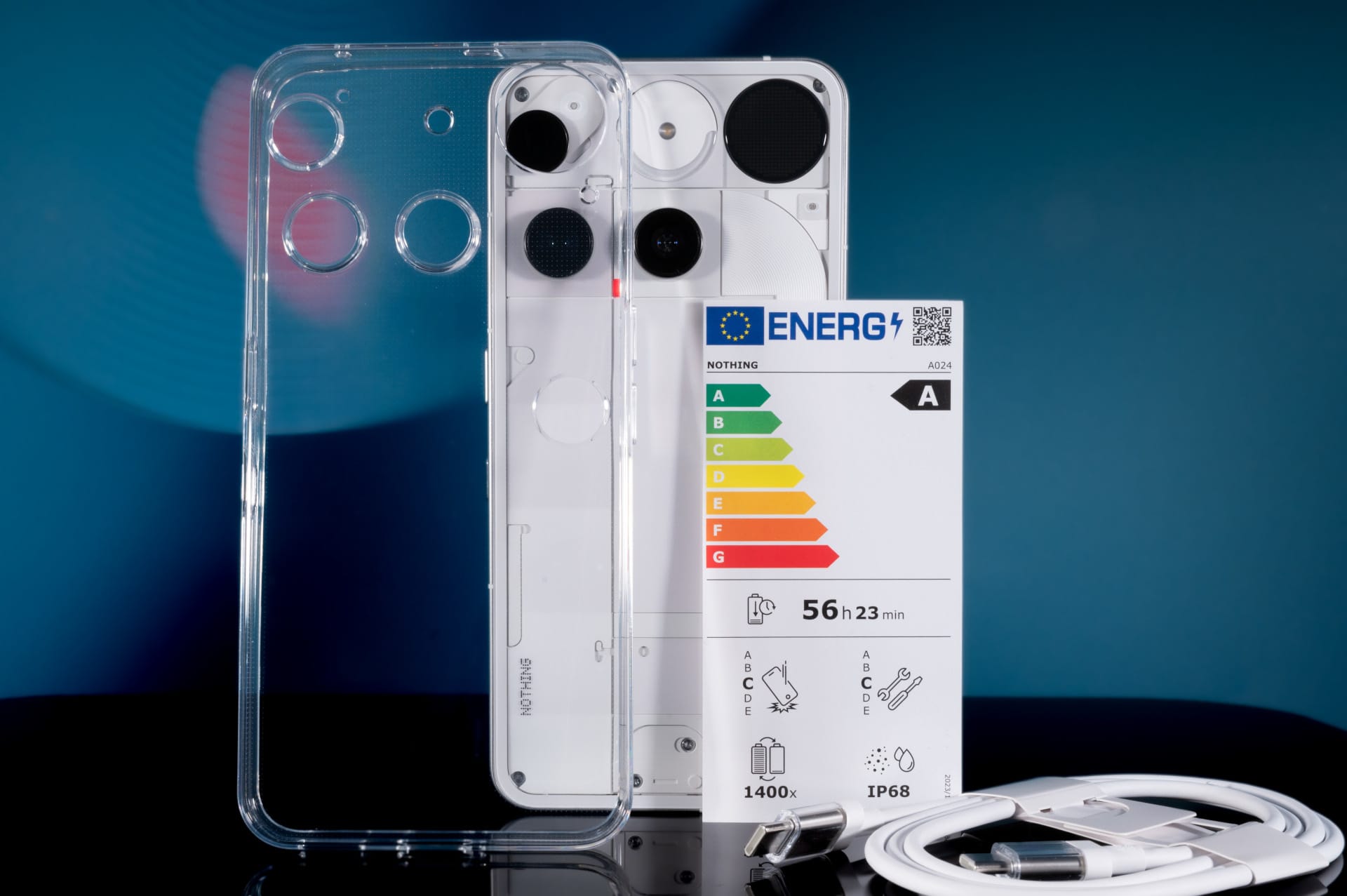
Nothing Phone (3): Glyph Matrix
Technically, however, the matrix is an exciting advancement. Instead of distributing light bars across the housing as previously, the new system consists of 489 individually addressable LEDs that together form a kind of mini display. This can be adjusted in four fixed brightness levels or operated in automatic mode.
The Glyph Matrix is controlled via the touch-sensitive Glyph Button, which is invisibly embedded in the back. It is located exactly where the index finger usually rests when holding the device in the right hand. For right-handers, the button is therefore comfortably accessible. Left-handers, however, have to switch hands or adapt, as the button is significantly less convenient for them.
The Glyph button cycles through the so-called Glyph Toys. At the time of testing, nine such “toys” were available. These include a digital clock, a mirror, a battery indicator and games like rock-paper-scissors, spin the bottle or Magic 8 Ball. More are to follow, as Nothing provides the community with an SDK (link). Developers can use it to program and submit their own Glyph experiences.

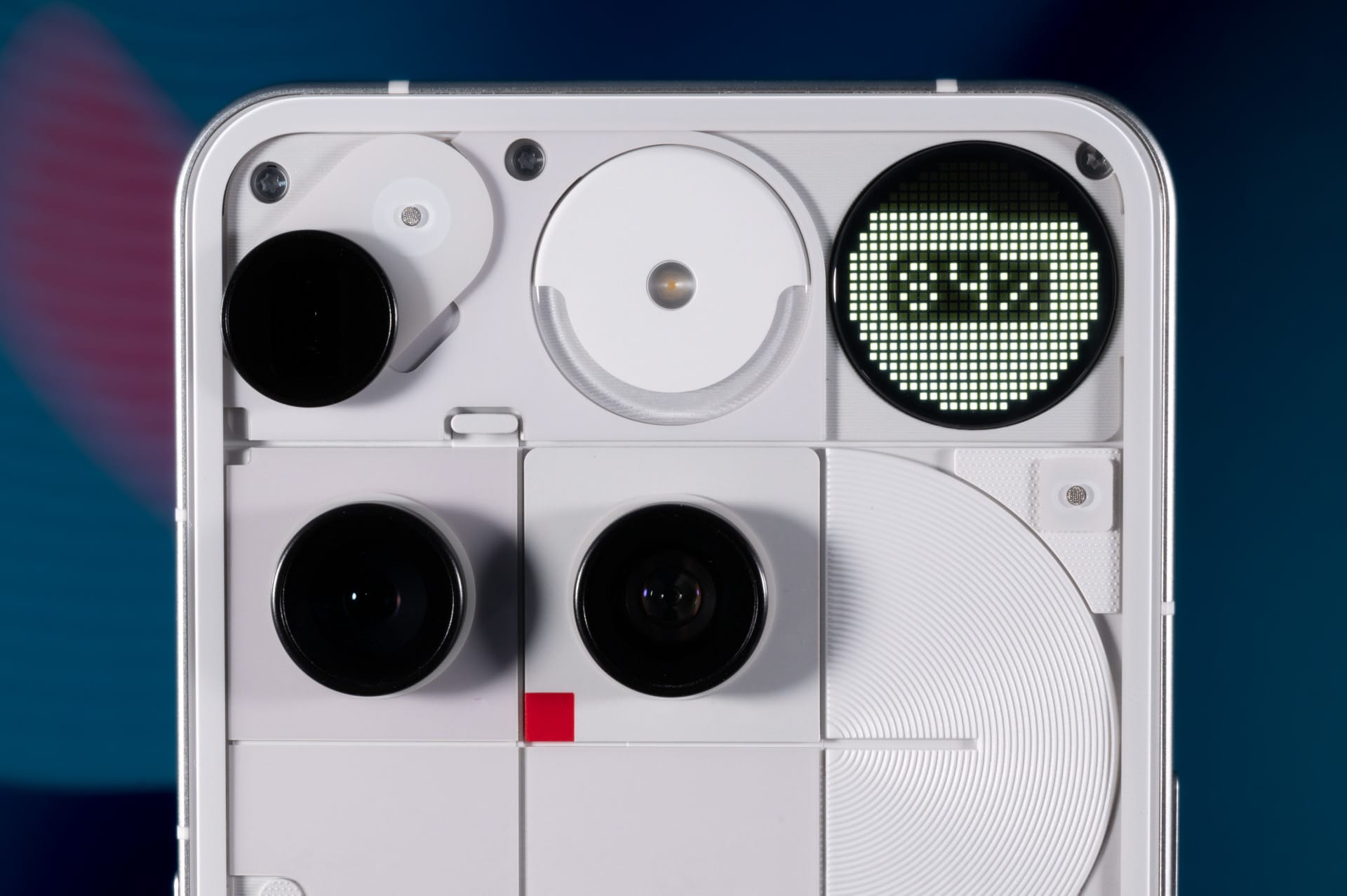
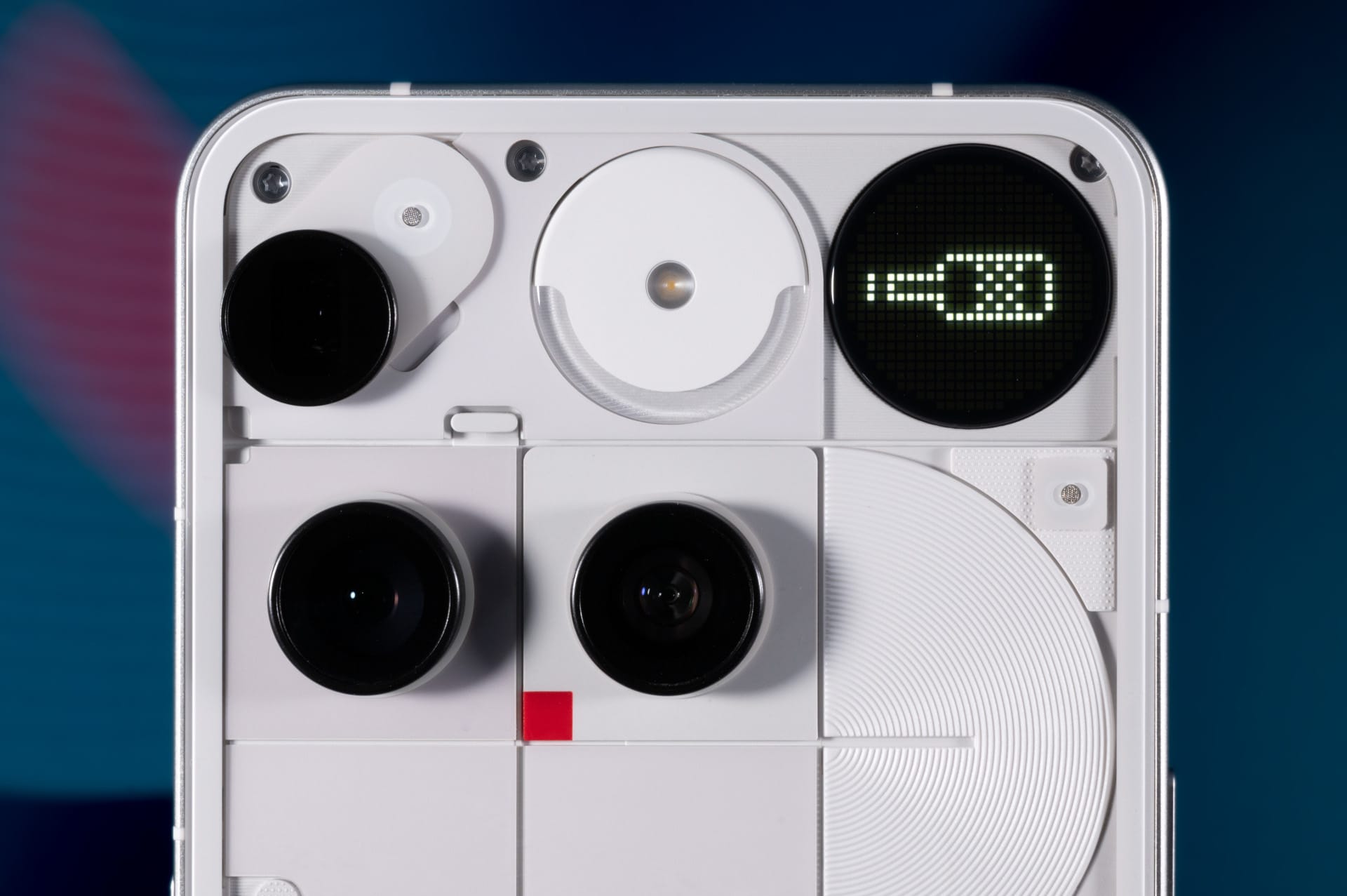
As charming as the concept of the new Glyph Matrix is, it brings along a problem that already affected the Glyph strips of the predecessors. Most people automatically place their smartphone screen-up on the table. This causes the Glyph Matrix to disappear from view.
Those who want to exploit its full potential must therefore adapt their usage behaviour. Place the device face down more often, or even use a case. A transparent silicone case is included in the delivery.
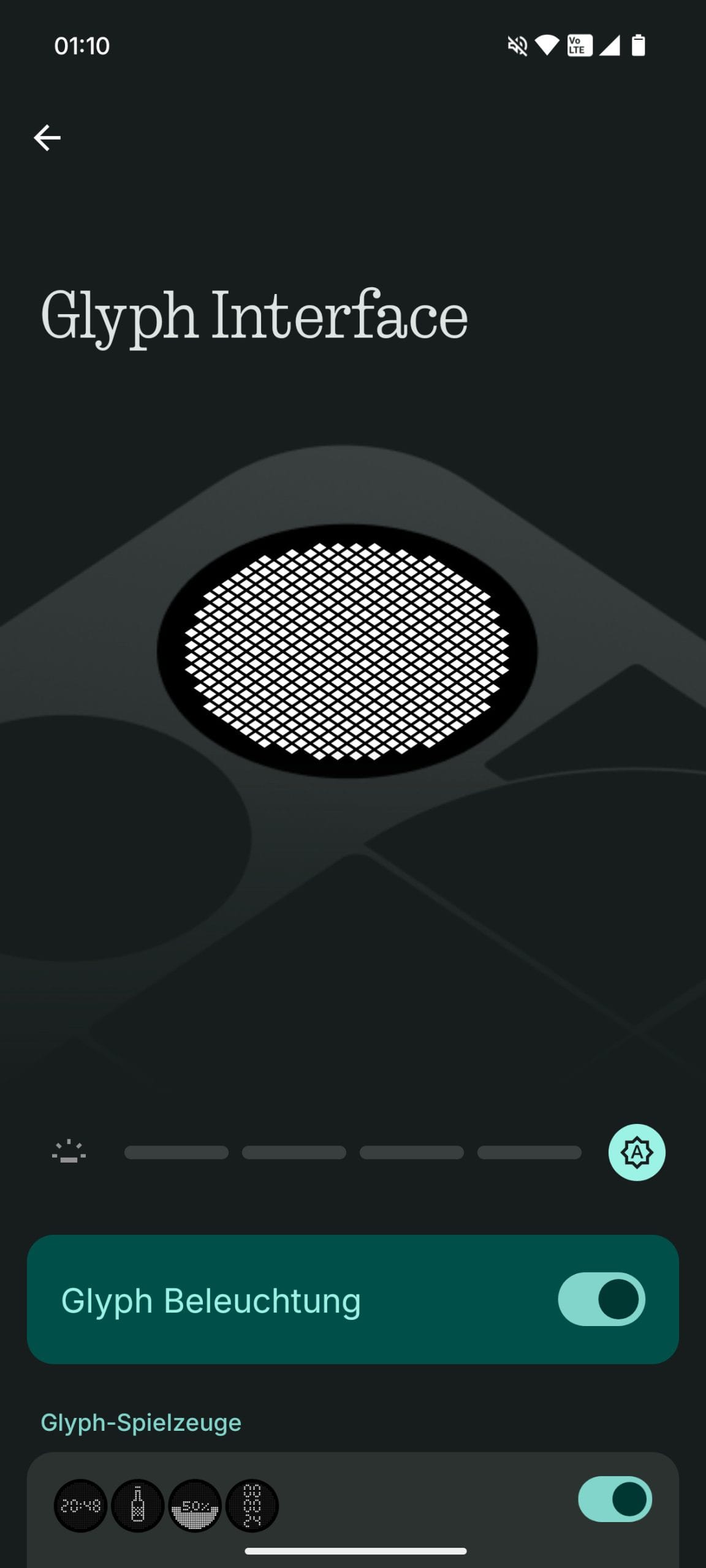
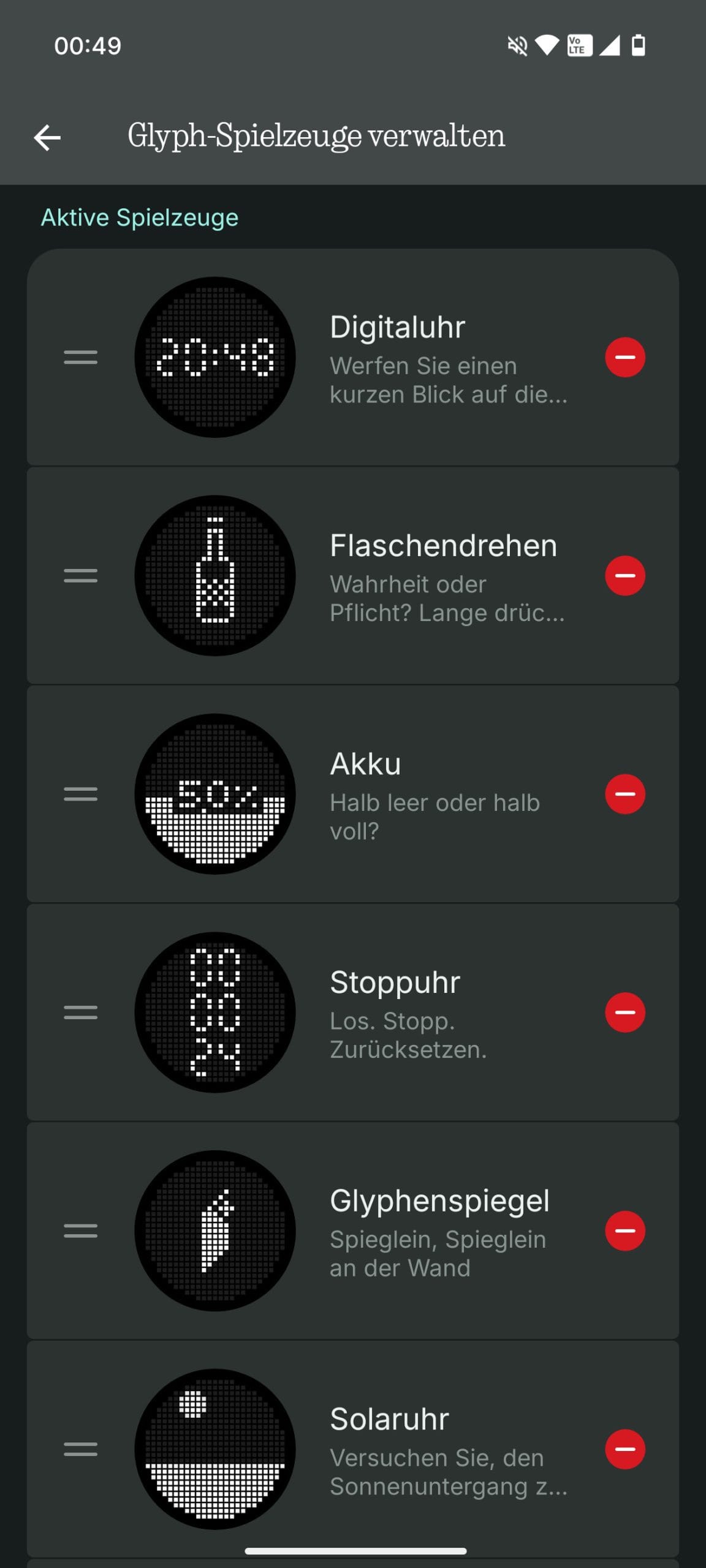
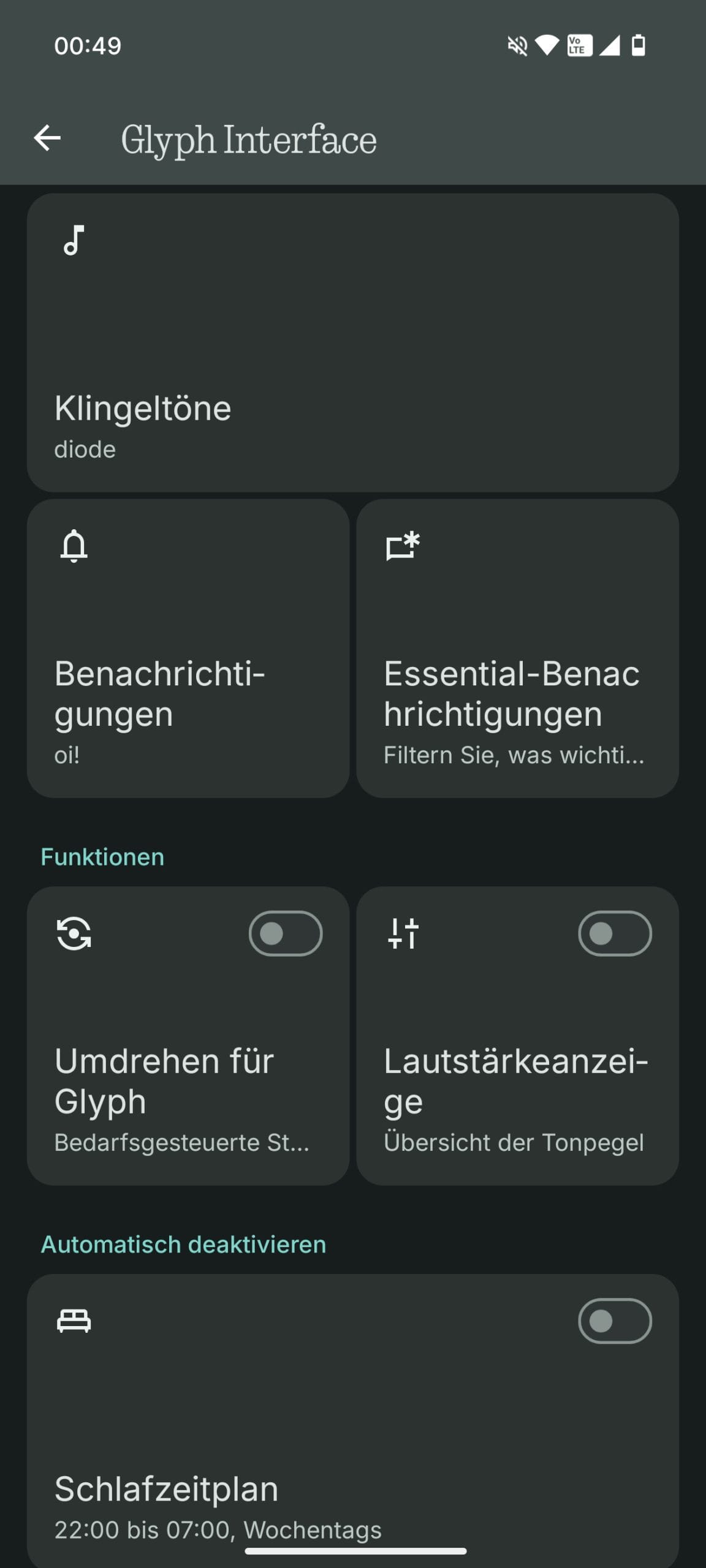
A few things also remain room for improvement. An Always-On display mode would be desirable. A permanently visible time or charging indicator would not only be practical but, given the low LED power consumption, would hardly have a negative impact on the battery.
The Glyph button itself also feels somewhat stubborn during testing. It can be clearly felt, but needs to be pressed quite firmly. If the sensitivity could be individually adjusted here, it would improve usability somewhat.
Nothing Phone (3): Display
Regarding the front, Nothing stays grounded. The Phone (3) is equipped with a flat 6.67-inch AMOLED display, offering a resolution of 2800 × 1260 pixels at a pixel density of 460 ppi.
With bezels measuring just 1.87 mm on all sides, the display borders are pleasantly narrow. The refresh rate reaches 120 Hz, combined with a high touch sampling rate of 1000 Hz. This makes content appear smooth and the panel responds quickly to input.
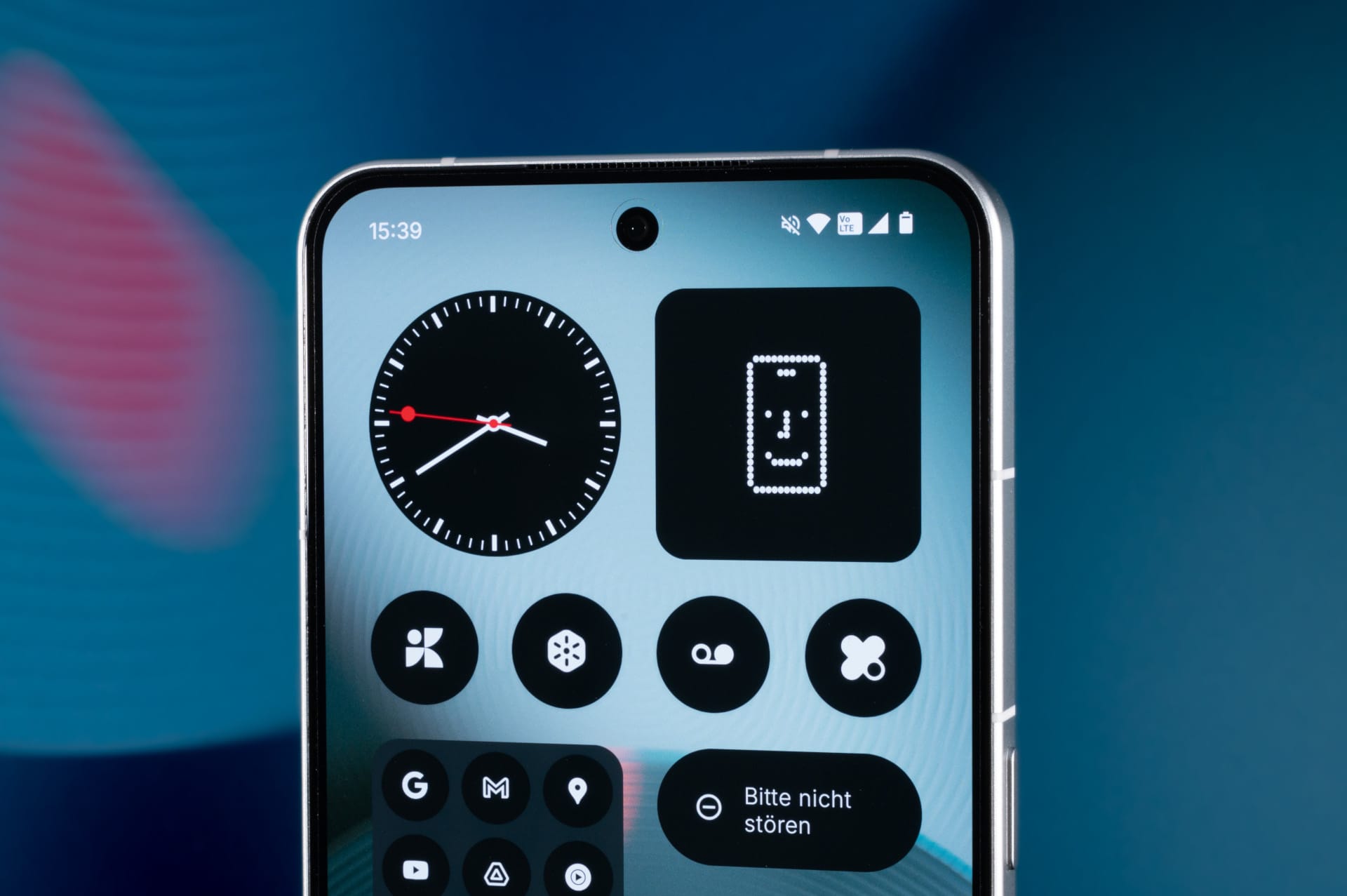
Instead of using a power-saving LTPO panel that could dynamically reduce the refresh rate to 1 hertz, Nothing uses a classic AMOLED with fixed switching levels. Especially with always-on features or static content, an LTPO display would have been more efficient and would probably have benefited the battery life. Especially since that is exactly what you should actually expect in this price range nowadays.
When it comes to brightness, Nothing goes all out, achieving 800 nits in normal operation, up to 1,600 nits in sunlight and even 4,500 nits for HDR content. These are solid figures even in the high-end segment. A minor point of criticism here is the automatic brightness control, which sometimes reacts with a slight delay. It takes a moment to adjust specifically when switching to darker environments.
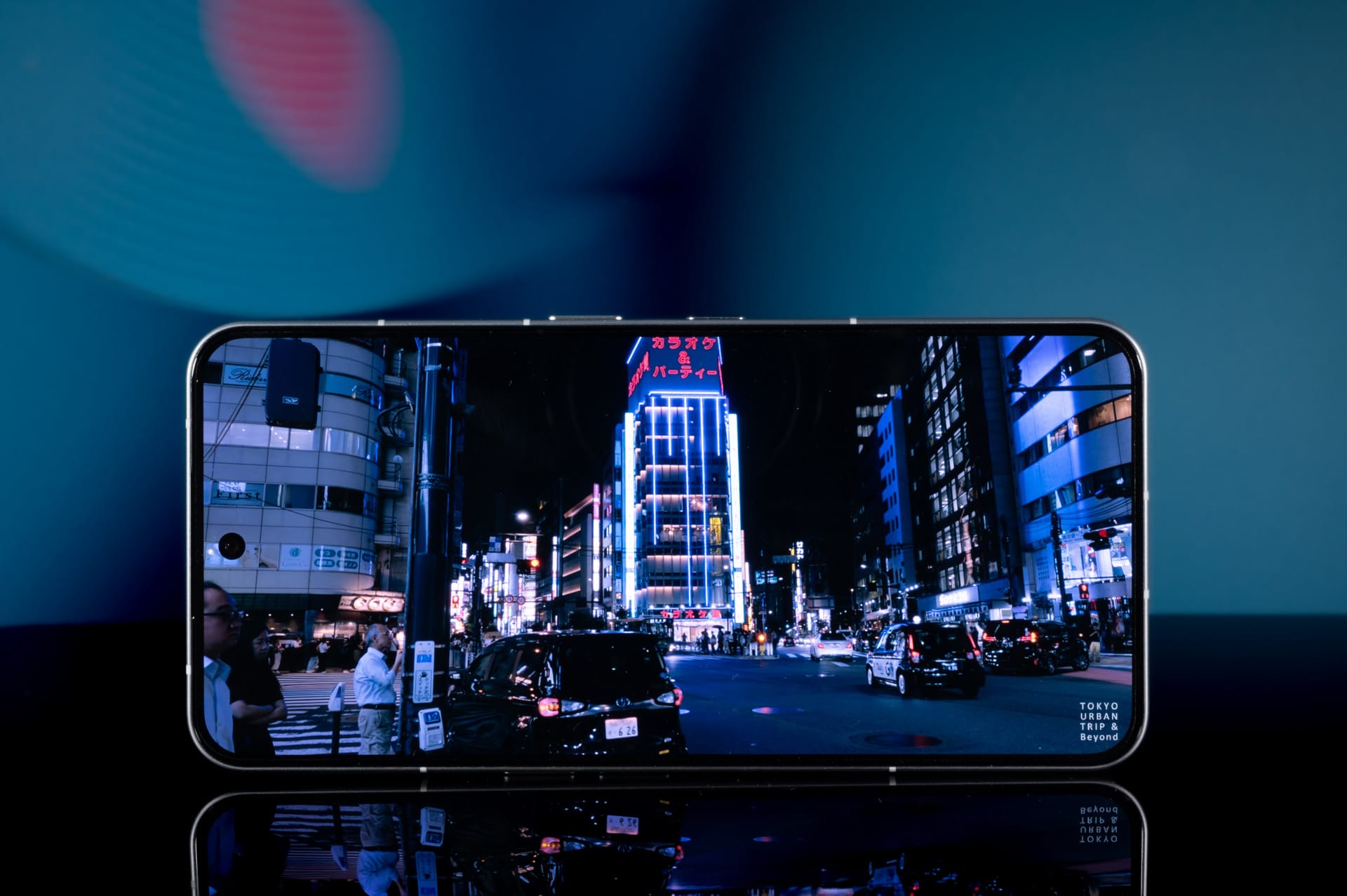
Thanks to HDR10+ and 10-bit colour depth, the panel supports over a billion colours and delivers rich contrasts with a ratio of 1,000,000:1. Unlike the back, which uses Gorilla Glass Victus, the front is protected by Gorilla Glass 7i .
Nothing Phone (3): Performance
Just like the design, the choice of processor causes many to furrow their brows. While other manufacturers use the Snapdragon 8 Elite in their current flagships, Nothing consciously opts for the cheaper Snapdragon 8s Gen 4. A decision that looks like a compromise on paper and immediately raises the question of whether this is still a true high-end smartphone.
In fact, the Snapdragon 8s Gen 4 is not based on Qualcomm's proprietary Oryon cores but on classic ARM reference cores. However, performance suffers very little from this. According to Qualcomm, CPU performance is around 31 per cent higher than that of the predecessor, with GPU performance sitting at a solid 49 per cent.
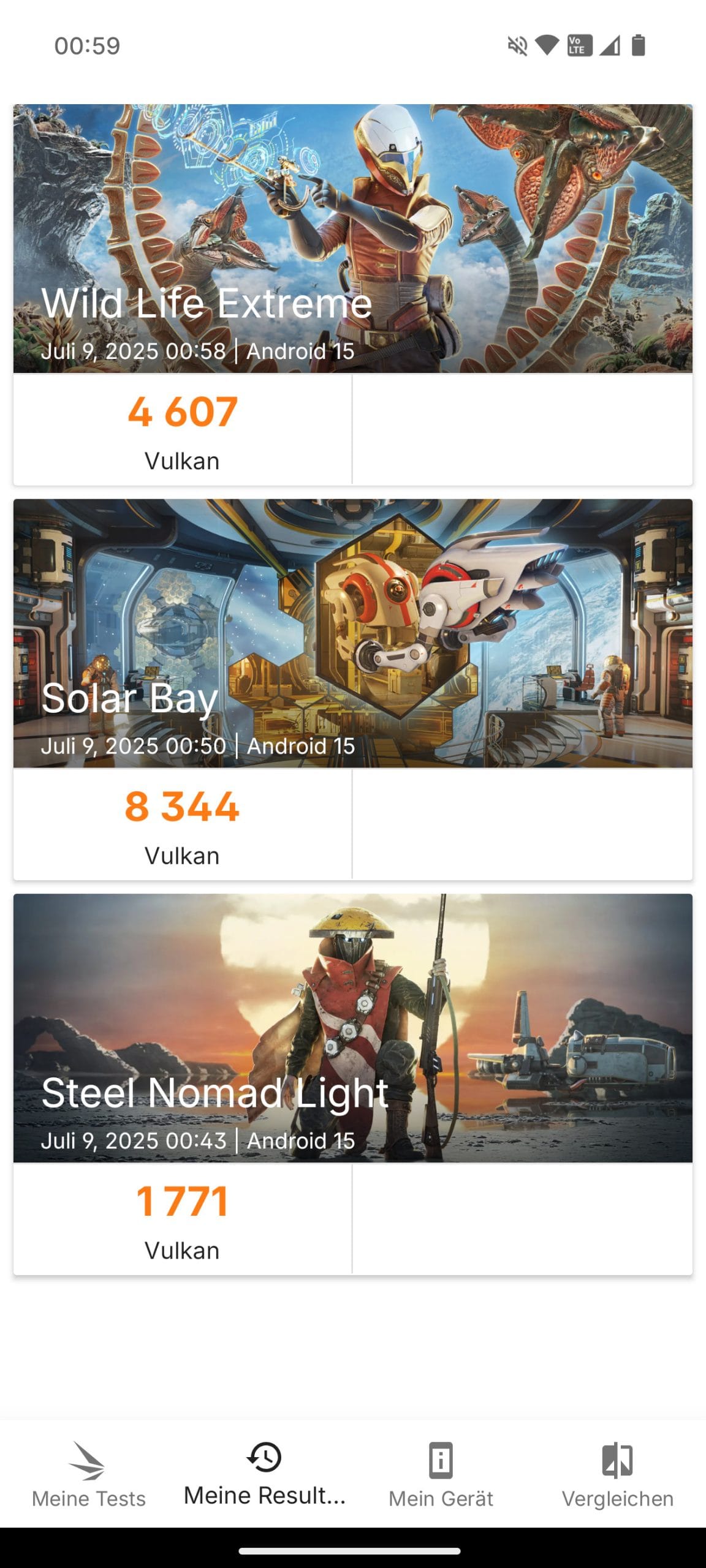
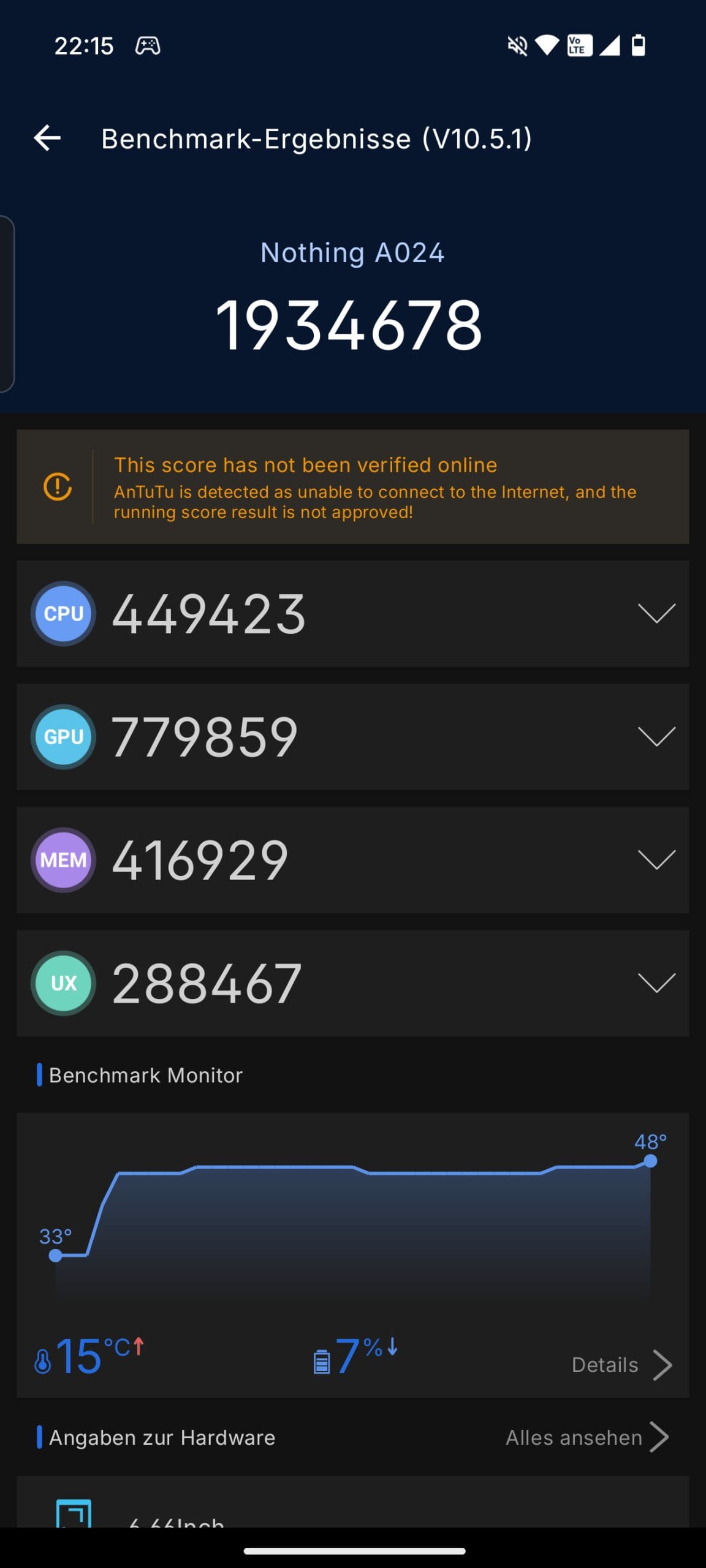

In everyday use, this is noticeably positive. The Phone (3) reacts lightning-fast to inputs, apps open without delay, multitasking runs smoothly, and even photo editing or 4K video editing does not bring the device to its knees.
Mobile gaming is no problem for the Phone (3) and the frame rate remains stable even in graphically intensive games. However, in very demanding scenarios or after long gaming sessions, the back becomes quite hot, with temperatures exceeding 50 degrees. It quickly becomes uncomfortable in the hand then. Nevertheless, heat-induced performance drops or stuttering did not occur in the test.

The combination of the Snapdragon 8s Gen 4, up to 16 GB of LPDDR5X RAM and fast UFS 4.0 storage delivers everyday performance that doesn't need to hide behind devices with the Elite chip, and in places feels even more agile than some other flagships.
Connectivity
With Wi-Fi 7, Bluetooth 6.0, tri-band support and a full 5G stack including eSIM, the Phone (3) is technically up to date. Positioning is fast and precise. Supported systems include GPS (L1+L5), Galileo, Glonass, BDS and NavIC.
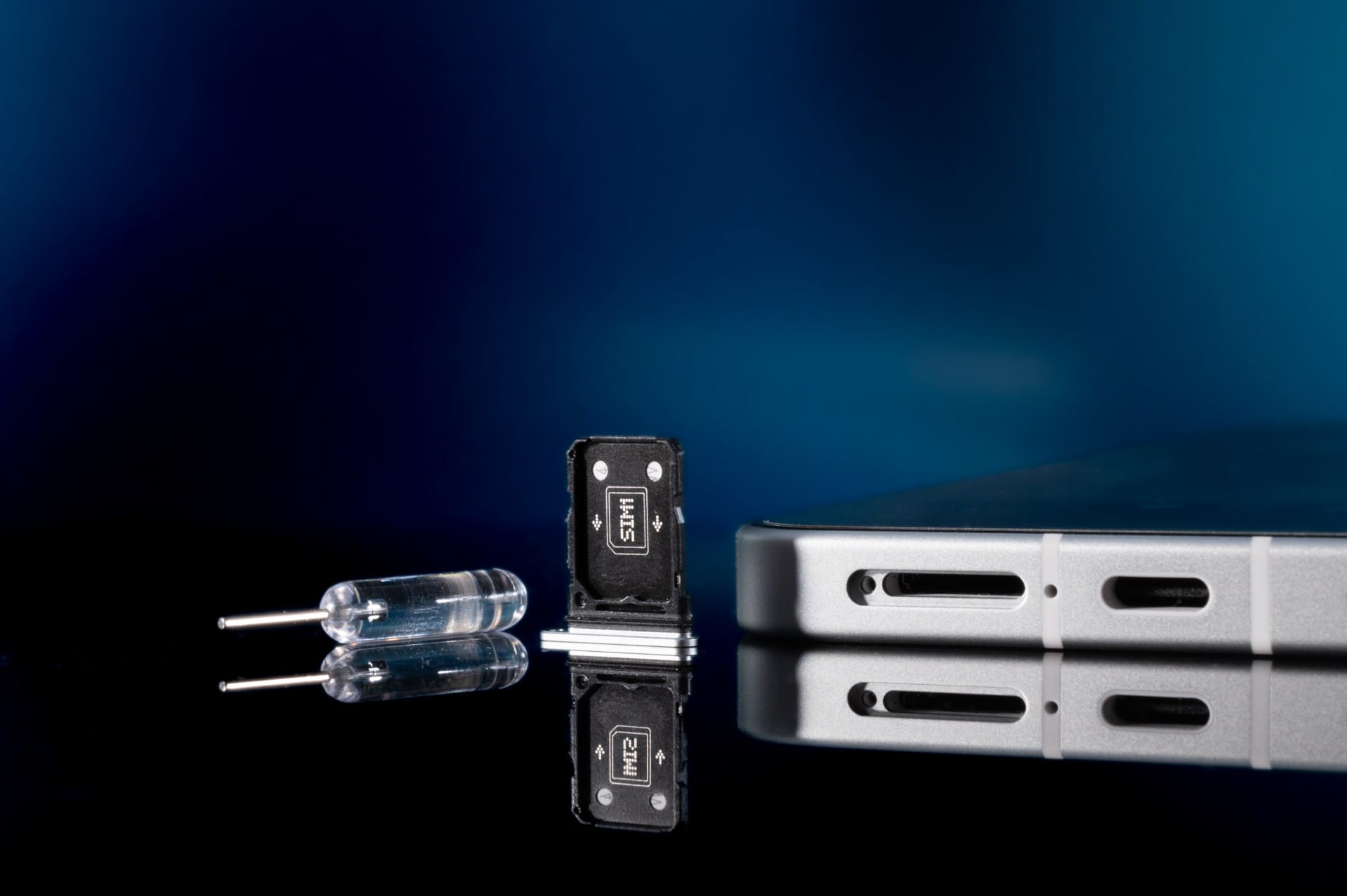
It is somewhat unfortunate that Nothing does not include a fast USB-C 3.1 port and only uses USB-C 2.0. Transferring large amounts of data via cable takes a bit longer as a result. For many, this is a minor drawback, but it is still not optimal in this price range.
Audio and fingerprint scanner
In terms of audio, the Phone (3) offers a solid stereo setup with clear highs and a sufficient bass foundation. Two microphones record speech in good quality. A headphone jack is missing, which has become standard nowadays.
The in-display fingerprint sensor works precisely but, like many optical sensors, is sensitive to moisture or oblique angles. An ultrasonic sensor would have been expected here for the ultimate flagship experience.
Nothing Phone (3): Software
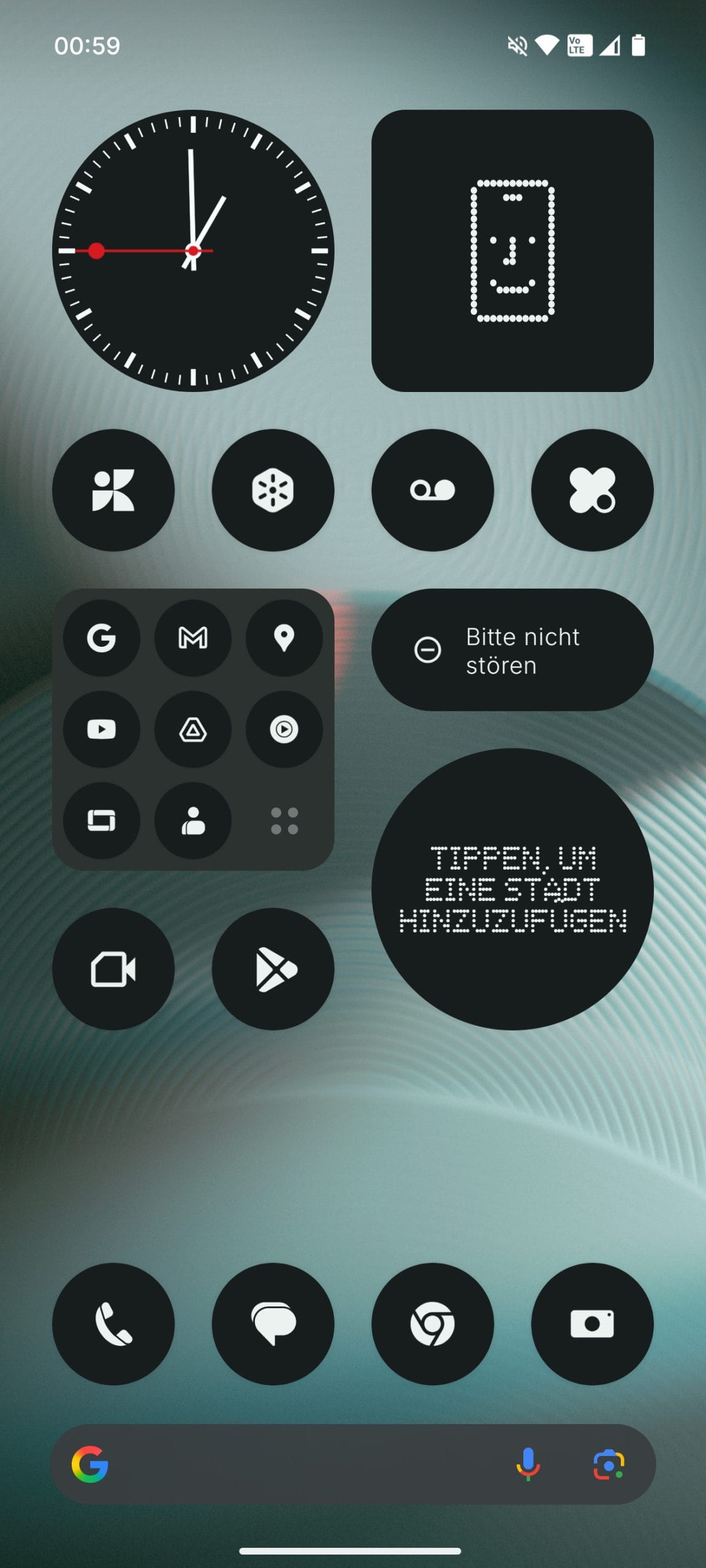
With the Phone (3), Nothing takes the next step with its in-house Nothing OS user interface. Nothing OS 3.5 comes pre-installed, based on Android 15, and as usual features a minimalist aesthetic without bloatware and clean lines.
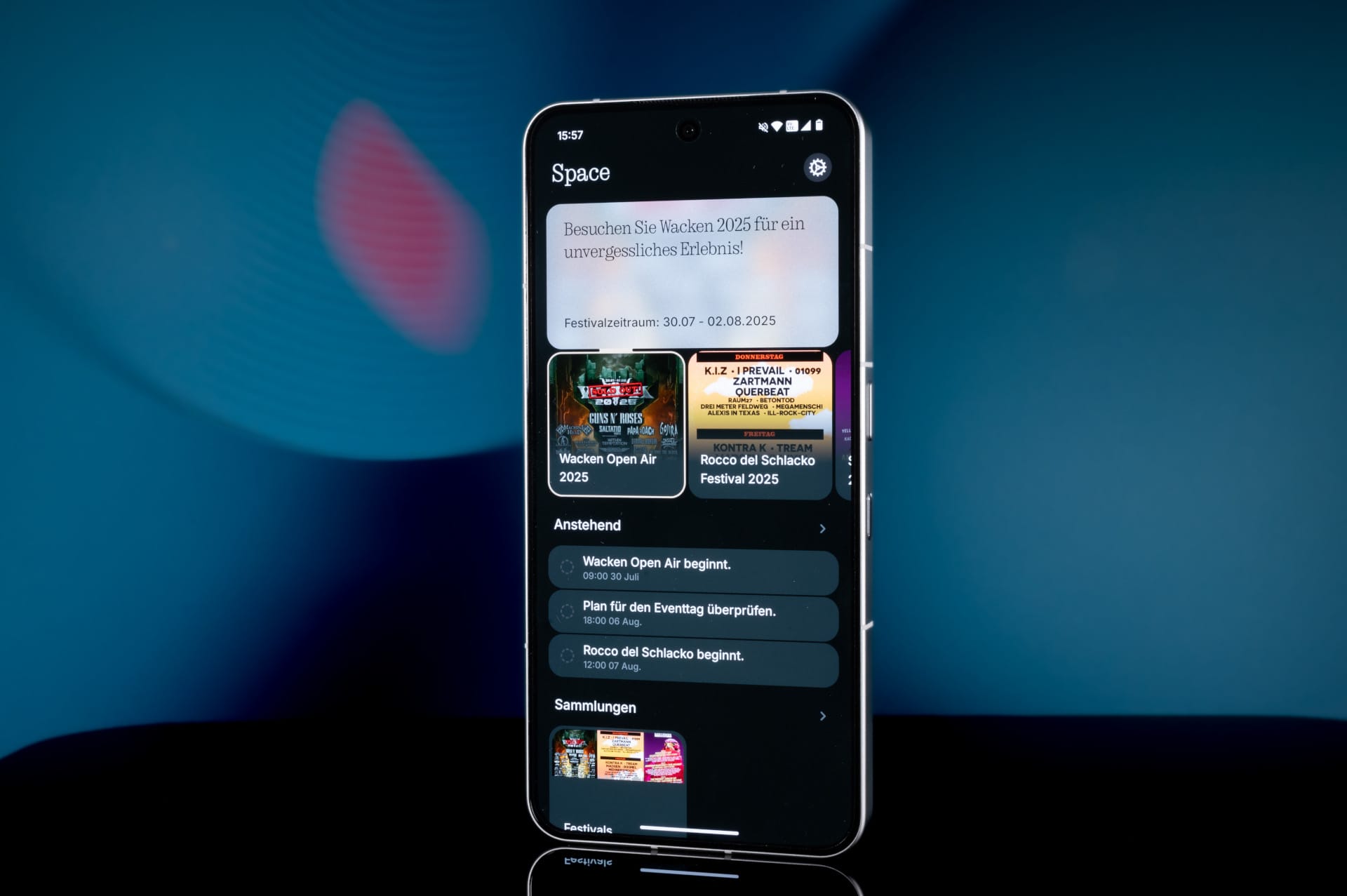
The design language remains minimalistic but stands out with numerous small animations, a standalone widget system, and the typical dot-matrix look that runs through the entire system, distinguishing the user interface from generic Android designs.
Essential Space, Search, Recorder
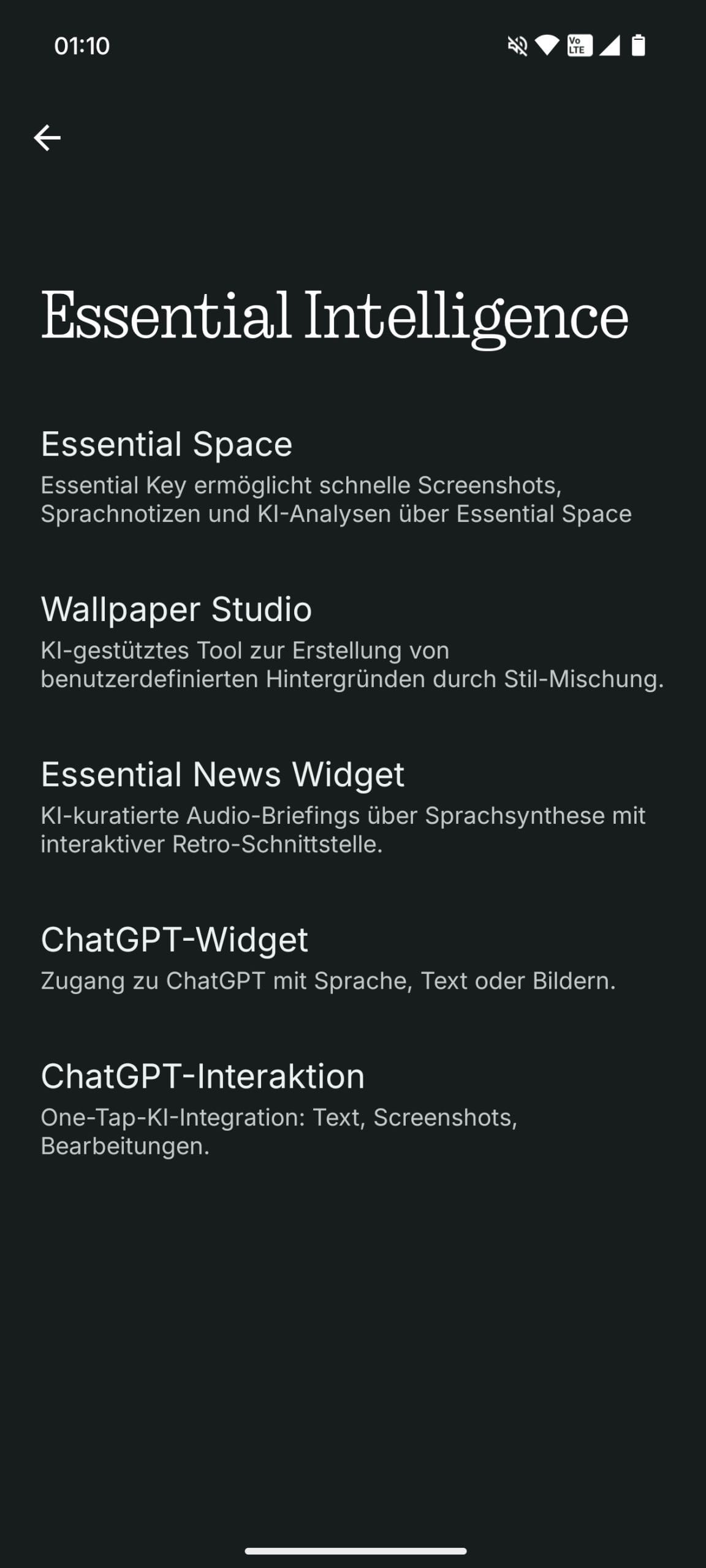
Nothing is also increasingly thinking along the lines of AI and has further expanded the Essential Space, which was first introduced with the 3a series. In Essential Space, content such as screenshots, voice memos or camera recordings can be stored directly, organised and summarised with AI support.
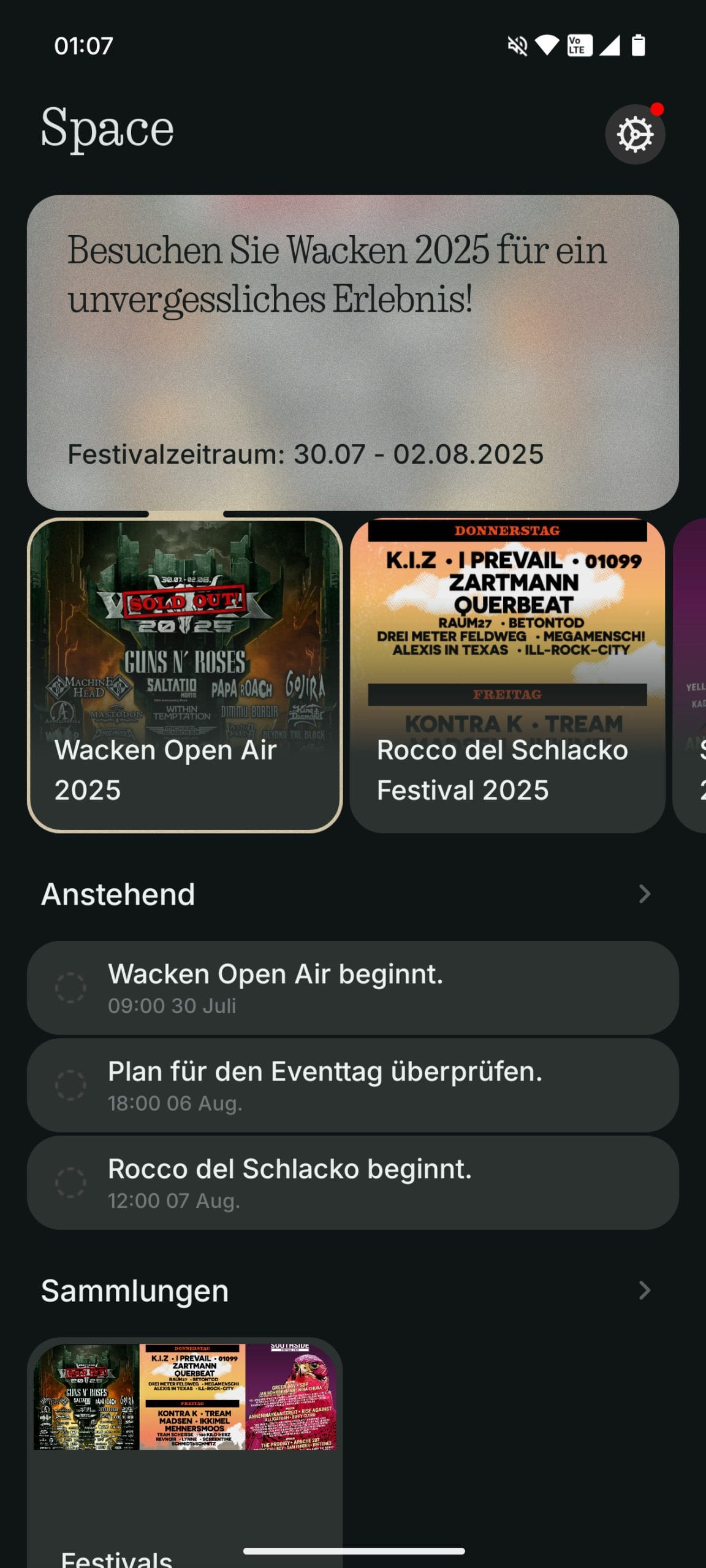

Newly added is Essential Search, a system-wide intelligent search. It not only searches through apps and contacts, but also provides results from files, notes, calendar and the web.
Also new is the Essential Recorder, which automatically transcribes conversations and voice memos. If you press the side Essential key during recording, you can mark important moments. These are highlighted in the subsequent transcript, making meetings or interviews much easier to structure and edit later on.


Update policy
Nothing promises five years of Android updates and seven years of security patches. This is more than many competitors offer but still falls short of the seven years that Google and Samsung now promise. Android 16 with Nothing OS 4 has been announced for the third quarter of 2025.
Nothing Phone (3): Camera
Cameras at a glance
With its four 50 MP sensors, the Nothing Phone (3) confidently takes aim with its cameras. Here is an overview:
- 50 MP main camera with f/1.68 aperture, 1/1.3" sensor, PDAF and OIS
- 50 MP periscope telephoto camera with f/2.68 aperture, 1/2.75" sensor, 3x optical zoom, 6x in-sensor zoom, 60x digital zoom, PDAF and OIS
- 50 MP ultra-wide-angle camera with f/2.2 aperture, 1/2.76" sensor and 114° field of view
- 50 MP front camera with f/2.2 aperture, 1/2.76" sensor and 81.2° field of view
Main camera
The main camera on the rear uses a large 1/1.3-inch sensor with optical image stabilisation and captures noticeably more light than its predecessor. The results are convincing, particularly in daylight, thanks to good sharpness, dynamic range and colour tuning. Details remain well preserved even in difficult lighting conditions.
Motifs can be beautifully captured using the lossless zoom steps of 1.5x and 2x. While the quality does not quite match camera leaders like the Pixel 9 or Galaxy S25 Ultra, the image quality of the main camera is absolutely convincing for a €799 phone.













Periscope telephoto lens
It gets exciting with the new periscope telephoto lens. Here too, Nothing relies on 50 MP, with 3x optical zoom and up to 6x lossless zoom. Those who want can get really close via 60x AI zoom, although this mode is expected to interpolate heavily and quality drops significantly.
In practice, the telephoto lens is suitable for sharp portraits with pleasant bokeh and for distant subjects with surprisingly much residual sharpness. However, there are occasionally visible deviations in colours and contrast compared to the main camera, which can be disturbing in mixed zoom shots. It remains to be hoped that Nothing will make further software adjustments here.



Ultra-wide-angle camera
The ultra-wide-angle camera also offers 50 MP with a 114-degree field of view. In good lighting, it produces solid shots, but quality visibly drops compared to the main camera. Details appear softer, edges lose sharpness, and dynamic range is more limited.
Colour differences compared to the main camera are also noticeable in places, making the overall image impression appear inconsistent. As with the periscope telephoto lens, software fine-tuning would be desirable here.


Front camera
The front also offers 50 MP. Selfies are crisp, skin tones are reproduced pleasantly neutrally, and exposure remains balanced even in backlight. This is a plus point for content creators, because the front camera also supports 4K video at 60 fps.
Those who prefer to use the main camera for selfies can theoretically resort to the Glyph Matrix. The Mirror Toy displays the main camera's framing on the LED display, serving as a focusing aid on the back. However, a photo cannot (yet) be taken with it, because as soon as the camera app is launched, the Glyph Toy automatically deactivates. In the future, this would be a sensible extension with real added value for selfie fans.
Video and TrueLens Engine 4
The entire camera setup, by the way, consistently supports 4K at 60 frames per second, including HDR10+ and Ultra XDR video. The latter ensures particularly high-contrast shots with natural light gradients via dual exposure. As a result, videos appear richer and more dynamic without looking excessively artificial.
The whole package is rounded off by the new TrueLens Engine 4, which, according to Nothing, enables significantly faster image processing. In our test, the camera starts quickly, focuses reliably, and processes shots noticeably faster than its predecessor. Short waiting times can only occur with burst shots or complex HDR scenes.
Nothing Phone (3): Battery life and charging
Nothing has fitted the Phone (3) with a 5,150 mAh silicon-carbon battery, which delivers noticeably longer battery life than its predecessor. With intensive use involving the camera, navigation, video streaming and gaming, the device reliably lasts through the day. If you take it easier, you can even go two days without plugging it in.
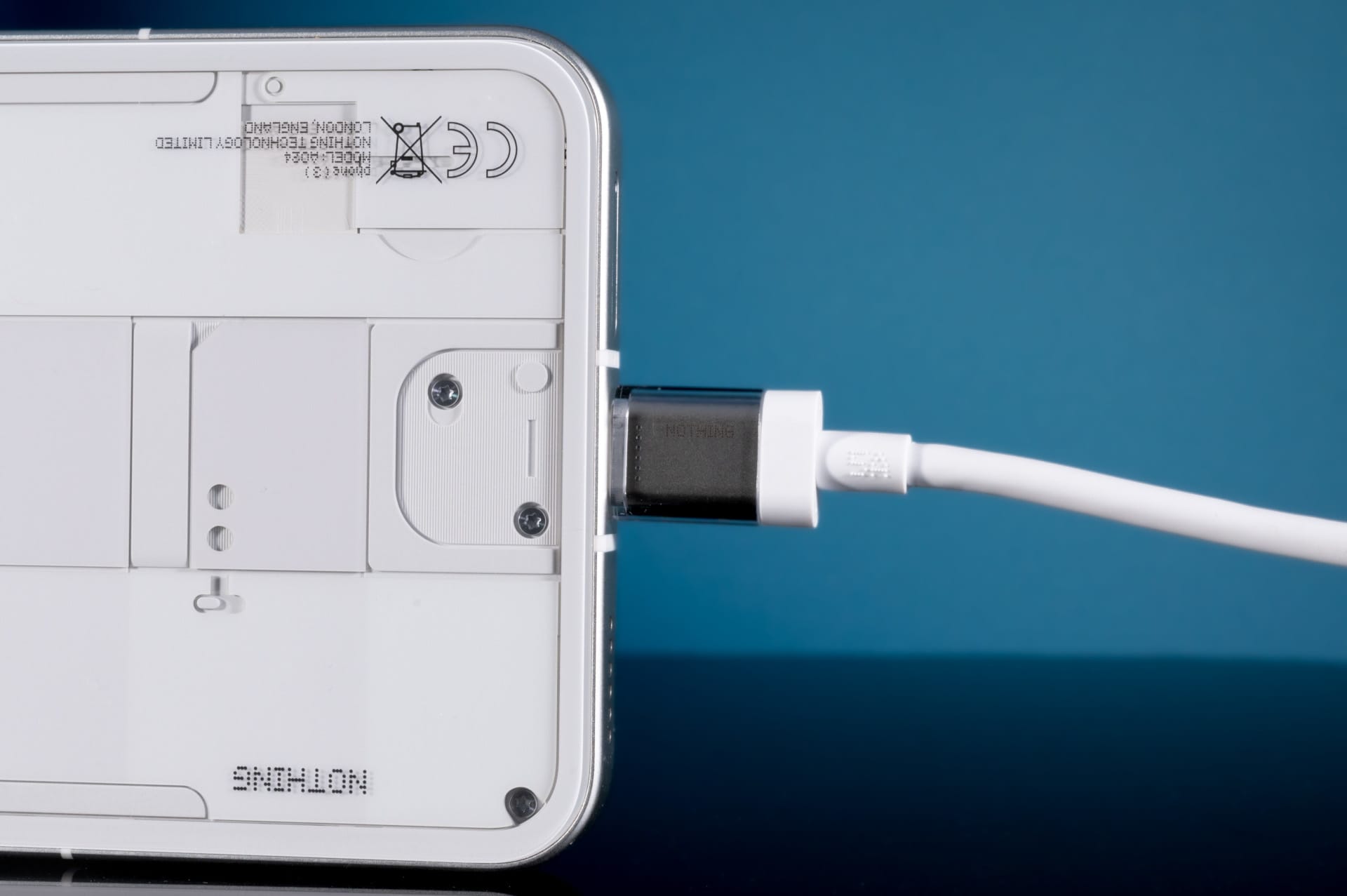
It charges via cable with up to 65 W. This is enough for nearly 50 percent in under 20 minutes and a full charge in less than an hour. Wireless charging (Qi 1.2) is possible at 15 W, and smaller devices such as headphones can be charged via reverse charging at up to 5 W.
Our verdict
The Nothing Phone (3) is one of those smartphones you buy not just for the specs, but because it is different. It looks different, feels different and consciously does not aim to please everyone. It is certainly not an off-the-shelf device.
Yes, a few high-end checkboxes are missing. No LTPO, no Snapdragon 8 Elite. But honestly? You hardly notice. The display is superb, the battery lasts a long time and the chip provides more than enough power for everything that matters in everyday life. If you didn't know, you would hardly feel the difference compared to the absolute top tier.
With the Glyph Matrix, Nothing is once again venturing out of its comfort zone. Not every feature is a bullseye yet, but the concept is fresh, consistent and full of potential. Just like the software ecosystem, which with Nothing OS 3.5 now seems amazingly mature.
It only really becomes critical with heat development. Anyone who plays or films for longer noticeably brings temperatures to the pain threshold. This is definitely one of the points Nothing should address in the future.
All in all, it remains a smartphone with attitude, character and a clear design line. Not perfect, ambitiously priced, but different and therefore exciting. Anyone who wants something unconventional and is willing to accept a few technical compromises will find that the Phone (3) is a smartphone that stands out, distinguishes itself and is fun to use.
Specifications
Processor and memory
- CPU
- Qualcomm Snapdragon 8s Gen 4 (4 nm, TSMC)
- – 1x Cortex-X4 up to 3.2 GHz
- – 7x Cortex-A720 up to 3.0 GHz
- GPU
- Qualcomm Adreno 825
- NPU
- Qualcomm Hexagon NPU, Qualcomm AI Engine
- ISP
- Qualcomm Spectra 18-bit Triple AI ISP
- RAM
- 12 GB / 16 GB
- Internal storage
- 256 GB / 512 GB
- Storage expansion
- Not supported
Display
- Display size
- 6.67 inches
- Display resolution
- 2800 × 1260 pixels (460 PPI)
- Display refresh rate
- 120 Hz (adaptive)
- Display brightness
- – Peak brightness
- 4,500 nits
- – Outdoor
- 1,600 nits
- – Average
- 800 nits
- Display type
- Flexible AMOLED
- Colour reproduction
- 1.07 billion colours (10-bit)
- HDR support
- Ultra XDR
- Touch sampling rate
- 1,000 Hz
- Protective glass
- Corning Gorilla Glass 7i
Cameras
- Main camera (wide-angle)
- – 50 MP, f/1.68, 1/1.3", OIS, EIS
- – 2x sensor-in zoom, 2x2 OCL PDAF
- Periscope camera (telephoto)
- – 50MP, f/2.68, 1/2.75", OIS, EIS
- – 3× optical zoom, 6× in-sensor zoom
- – 60× Ultra Zoom
- Ultra-wide-angle camera
- – 50 MP, f/2.2, 1/2.76", 114° field of view
- Front camera
- – 50 MP, f/2.2, 1/2.76", 81.2° field of view
- – Features
- TrueLens Engine 4, Ultra XDR, Auto Tone, Portrait Optimiser, Motion Capture, Night Mode, Macro Mode, Action Mode
- Video recording
- – Ultra XDR 4K at 60/30 FPS
- – 1080p at 60/30 FPS
- – Slow motion
- 1080p at 240/120 FPS
- – Time-lapse
- 4K / 1080p
Mains
- Dual SIM
- Yes (Nano + Nano, eSIM supported)
- Mobile network technologies
- GSM / UMTS / LTE / 5G
- 5G modes
- SA / NSA
- 2G
- GSM 850 / 900 / 1800 / 1900
- 3G
- UMTS B1 / B2 / B4 / B5 / B6 / B8 / B19
- 4G
- LTE B1–5 / 7–8 / 12 / 17–20 / 25–26 / 28 / 30 / 34 / 38–42 / 48 / 66 / 71
- 5G
- n1 / n2 / n3 / n5 / n7 / n8 / n12 / n20 / n25 / n28 / n30 / n38 / n40 / n41 / n48 / n66 / n71 / n77 / n78
Wireless
- Wi-Fi
- Wi-Fi 7, 802.11 a/b/g/n/ac/ax/be (tri-band), 2x2 MIMO, MU-MIMO, Wi-Fi Direct, Hotspot
- Bluetooth
- 6.0
- GPS
- L1+L5 dual-band, A-GPS, GLONASS, BDS, Galileo, QZSS, NavIC, SBAS
- NFC
- Yes
- USB
- USB-C (Protocols: PPS, PD3.0, PD2.0, QC4.0, QC3.0, QC2.0, DCP, SDP, CDP, UFCS)
Sensors
- In-display fingerprint sensor
- Accelerometer
- Gyroscope
- Electronic compass
- Proximity sensor
- Ambient light sensor (front)
- Linear X-axis haptic motor
Battery
- Battery (Europe)
- 5,150 mAh (Si/C Li-Ion)
- Battery (India)
- 5,500 mAh
- Fast charging
- 65 W wired
- Wireless charging
- 15 W
- Reverse charging (wireless)
- 5 W
- Reverse charging (wired)
- 7,5 W
Audio
- Speakers
- Dual stereo speakers
- Microphones
- 2 high-definition microphones
Multimedia formats
- Audio formats (playback)
- MP3, AAC, AAC+, WMA, AMR-NB, AMR-WB, WAV, FLAC, APE, OGG, MID, M4A, IMY
- Audio formats (recording)
- WAV, AAC, AMR
- Video formats (playback)
- MKV, MOV, MP4, H.265 (HEVC), AVI, WMV, TS, 3GP, FLV, WEBM
- Video formats (recording)
- MP4
- Image formats
- JPEG, PNG, BMP, GIF, WEB, HEIF, HEIC, DNG
Operating system
- OS
- Nothing OS 3.5 (based on Android 15)
- Software updates
- – 5 years of Android updates
- – 7 years of security patches
Design & dimensions
- Colors
- White, Black
- Water and dust resistance
- IP68
- Dimensions
- 160.60 × 75.59 × 8.99 mm
- Weight
- 218 g
What’s included
1x Nothing Phone (3) 1x Nothing USB-C to USB-C cable (100 cm) 1x Phone (3) protective case 1x screen protector (already applied) 1x SIM tool 1x safety data sheet and warranty card
Price comparison
| Store | Price | Link |
|---|---|---|
| Amazon | 619,00 € | Go to store |
| Nothing | 799,00 € | Go to store |
Comments (3)
Honestly, I think €799 is too much. The design is appealing and I like the software too, but with this chip and without LTPO… I would take it immediately for €649.
I don't find this overly expensive now. The Phone 2 was also priced high back then, but its price dropped quickly. I bet you will get it for €649 in a month.
I would also be interested to know how the Glyph Toys work. Is there a store, meaning will there be paid toys too, and who decides which community toys are actually integrated?
Exactly. Anyone buying at the RRP has only themselves to blame. Wait a month, and the price will have dropped. Buying at release is really only for hardcore fans. For my part, I will get the Phone 3. I started with the 2 series on Nothing and have grown so accustomed to the OS since then that I am sticking with it. Nobody needs high-end hardware anyway. Today, software plays a much bigger role, and in my opinion, Nothing is really good at that.