
Contents
Nothing Phone (3)
It was already clear at the event what importance both products have for Nothing. The presentation was elaborate and the ambition great to make a statement against uniform tech design.
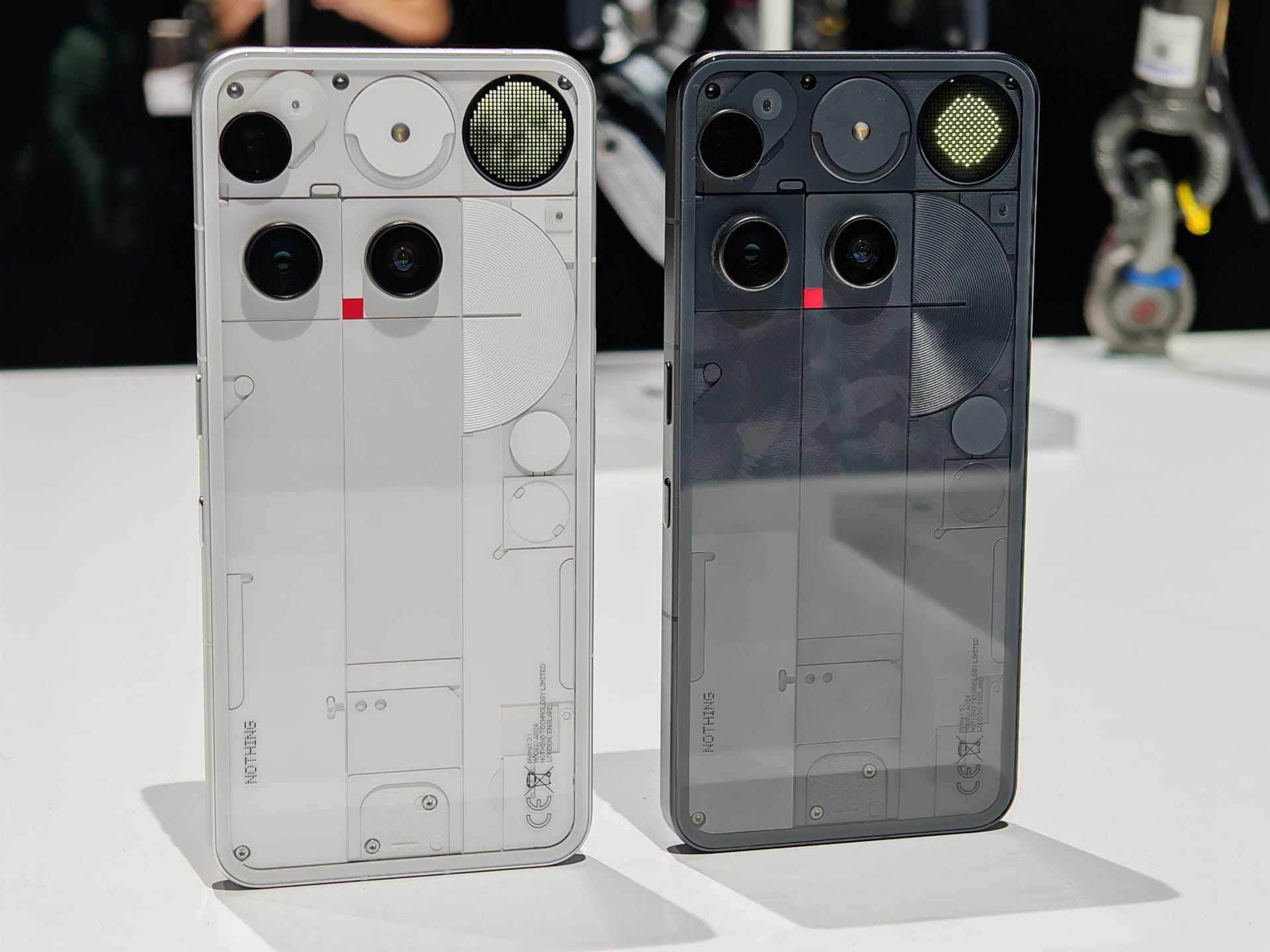
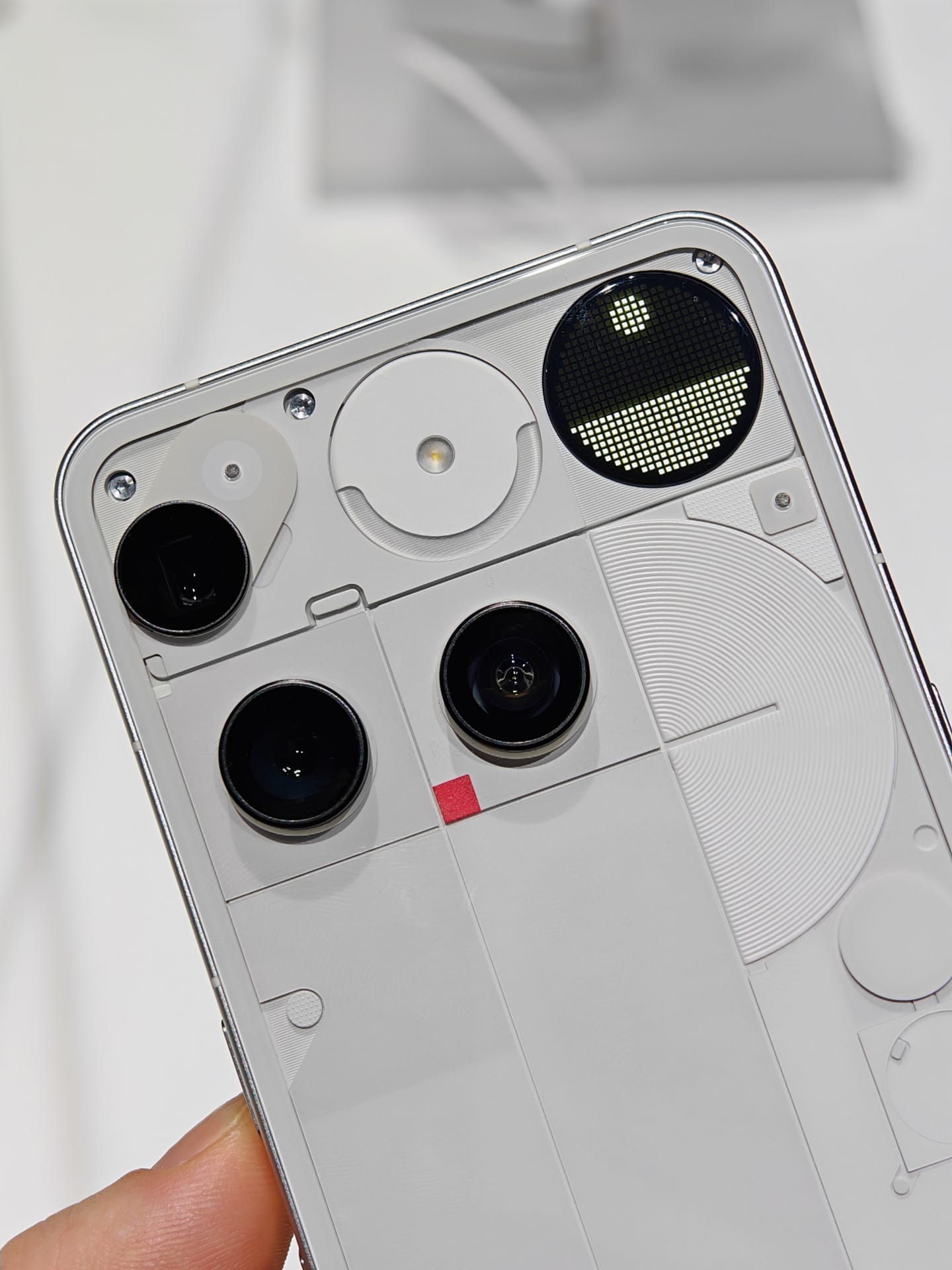
The Phone (3) follows the brand’s transparent look, but takes new paths in design. The back does without symmetry. Geometric shapes, a visible coil and screw pattern, and the large LED circle form a restless yet unmistakable surface.

The biggest redesign concerns the Glyph lighting. Nothing has moved away from illuminating LED strips. Instead, the top-right corner features a round Glyph Matrix with 489 individually addressable LEDs. It displays incoming calls, messages or battery status and allows the community to develop their own small widgets for it via an SDK. Directly below it is the new Glyph Button. Pressing this area on the casing switches between the different Glyph widgets.
The display measures 6.67 inches, has a resolution of 1260 x 2800 pixels and achieves a smooth 120 Hz refresh rate. In HDR peak mode, it reaches 4500 nits of brightness. Gorilla Glass protects the front and back, and the housing itself is well protected against dust and water according to IP68.

Inside works a Snapdragon 8s Gen 4 with up to 16 GB RAM and 512 GB storage. This is not a flagship chip like the Snapdragon 8 Elite, but experience shows it still delivers sufficient power in apps and games. It is also energy-efficient in terms of battery consumption. Incidentally, the battery has a capacity of 5150 mAh and, according to Nothing, fully charges in under an hour at 65 watts. Additionally, wireless charging at 15 watts is supported.
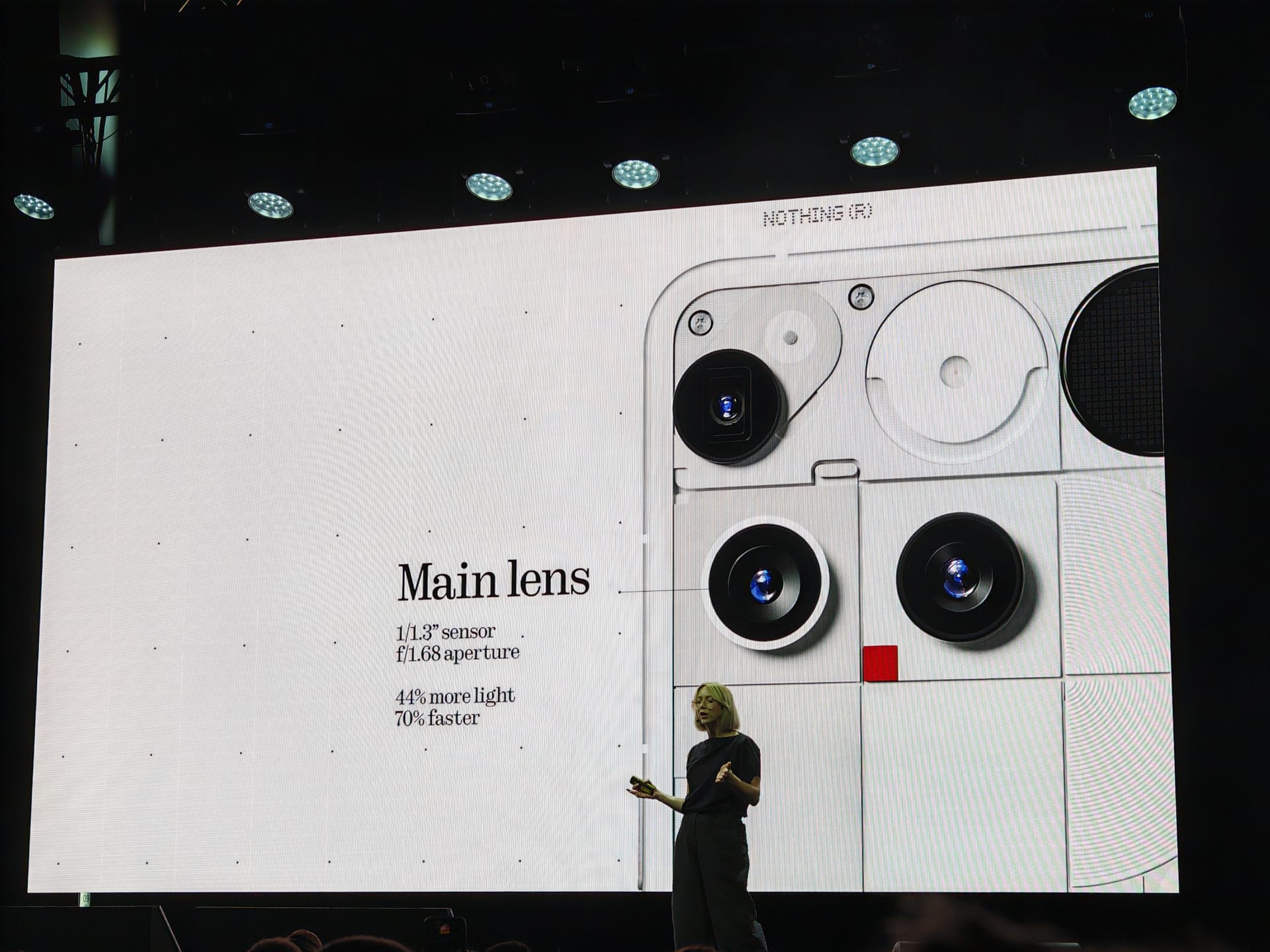
The Phone 3 camera system consists of four modules with 50 megapixels each. The main camera uses a large 1/1.3-inch sensor with optical image stabilisation. There is also a periscope telephoto lens with a 70-millimetre focal length, which allows lossless zoom levels up to 6x and digital zoom up to 60x.
The ultra-wide-angle module covers a field of view of 114 degrees and is suitable for landscapes or large subjects. The front camera also works with 50 megapixels and is optimised for high-resolution selfies and video calls. All four cameras support video recording in 4K at up to 60 frames per second. The new Ultra XDR technology ensures balanced exposure by capturing each video frame with two exposures and better enhancing shadows and highlights.
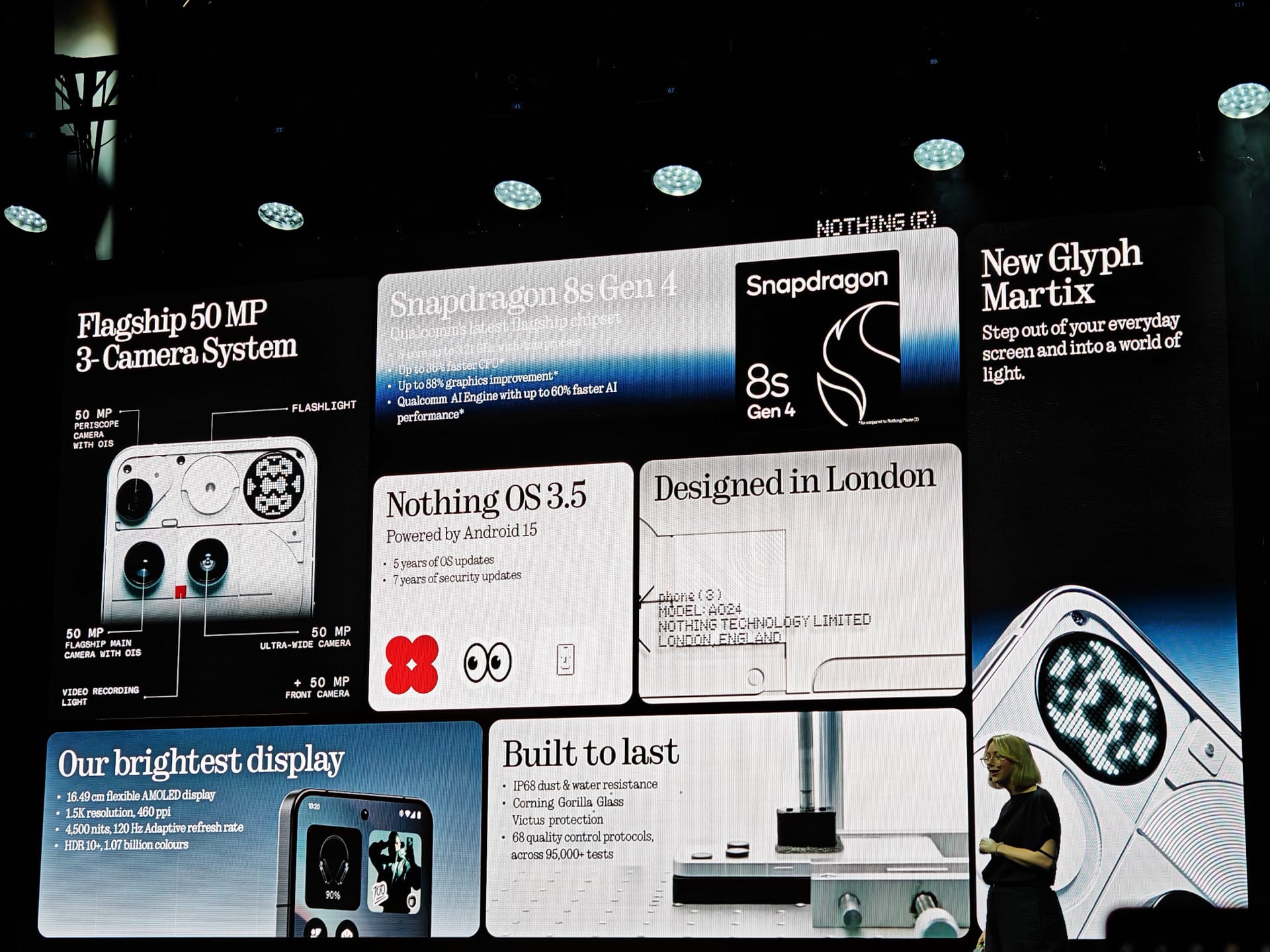
The Nothing OS 3.5 operating system is based on Android 15. Essential Space has been further expanded and now also transcribes voice recordings and collects them in Essential Space. The Essential Key on the side opens Essential Space. In Flip to Record mode, simply flip the device and start the recording with the Essential Key. Essential Search was also announced, an intelligent search feature that allows you to directly search content such as photos, documents and apps on the device.
For the Phone (3), Nothing promises five years of major Android updates and seven years of security patches.
Nothing Headphone (1)
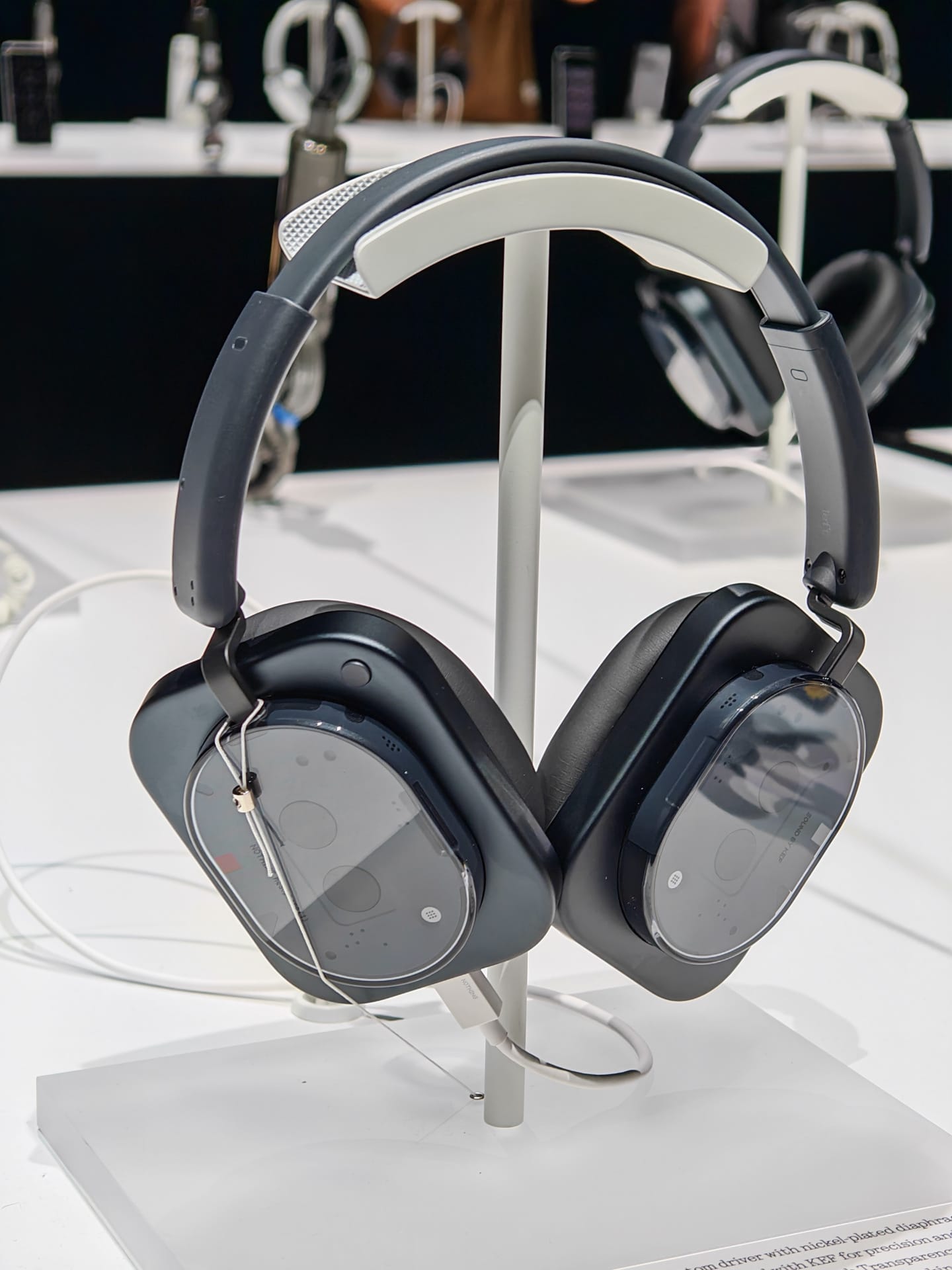
The Headphone (1) is Nothing's first over-ear headphone. It was developed in collaboration with KEF and aims to combine minimalist HiFi with extensive functionality. The design recalls 80s cassette recorders and Walkmans, yet remains clearly part of the Nothing product line.

The controls are exceptionally versatile. On the side of the right earcup is a scroll wheel that allows stepless volume adjustment without swiping or tapping. This is complemented by a flip switch (paddle) for targeted fast-forwarding and rewinding of tracks. Additionally, classic buttons are available to control playback and calls. The controls are fully physical and deliberately not touch-based, meaning Nothing is not following the touch trend of many other manufacturers.

When used with a Nothing phone, system functions such as Essential Space can be accessed via a shortcut. Voice notes or thoughts can be saved directly from the headphones without picking up the smartphone.

The Headphones (1) focus on a balanced HiFi sound profile, powered by a 40 mm dynamic driver. An integrated 8-band equalizer allows for detailed sound adjustment that goes far beyond simple presets. The setup is complemented by active noise cancellation (ANC) and immersive 360-degree spatial audio. The whole system is controlled via the Nothing X App, as is customary with Nothing.
Nothing promises that the Headphone (1) will deliver clear, unadulterated sound with a high focus on detail accuracy, without exaggerated bass and artificial highs.
Pricing and availability
The Phone (3) is available in black and white. The model with 12+256 GB of storage costs 799 Euro, and with 16+512 GB of storage, the price is 899 Euro.
The Headphone (1) are available in black and white and cost €299.
Pre-orders for both devices start on 4 July via Nothing and partners such as MediaMarkt, Amazon or Galaxus. Regular sales begin on 15 July.
Comments (2)
And that has meant Nothing has reached a price region for me that is no longer interesting...
I cannot understand the critical comments about the design. A smartphone does not always have to look like Samsung, Apple and co. do. Personally, I like the individual look, but I also think the price is €100 too high for what is offered. I am curious to see if there will be any discounts.