Contents
Design, build quality, and included accessories
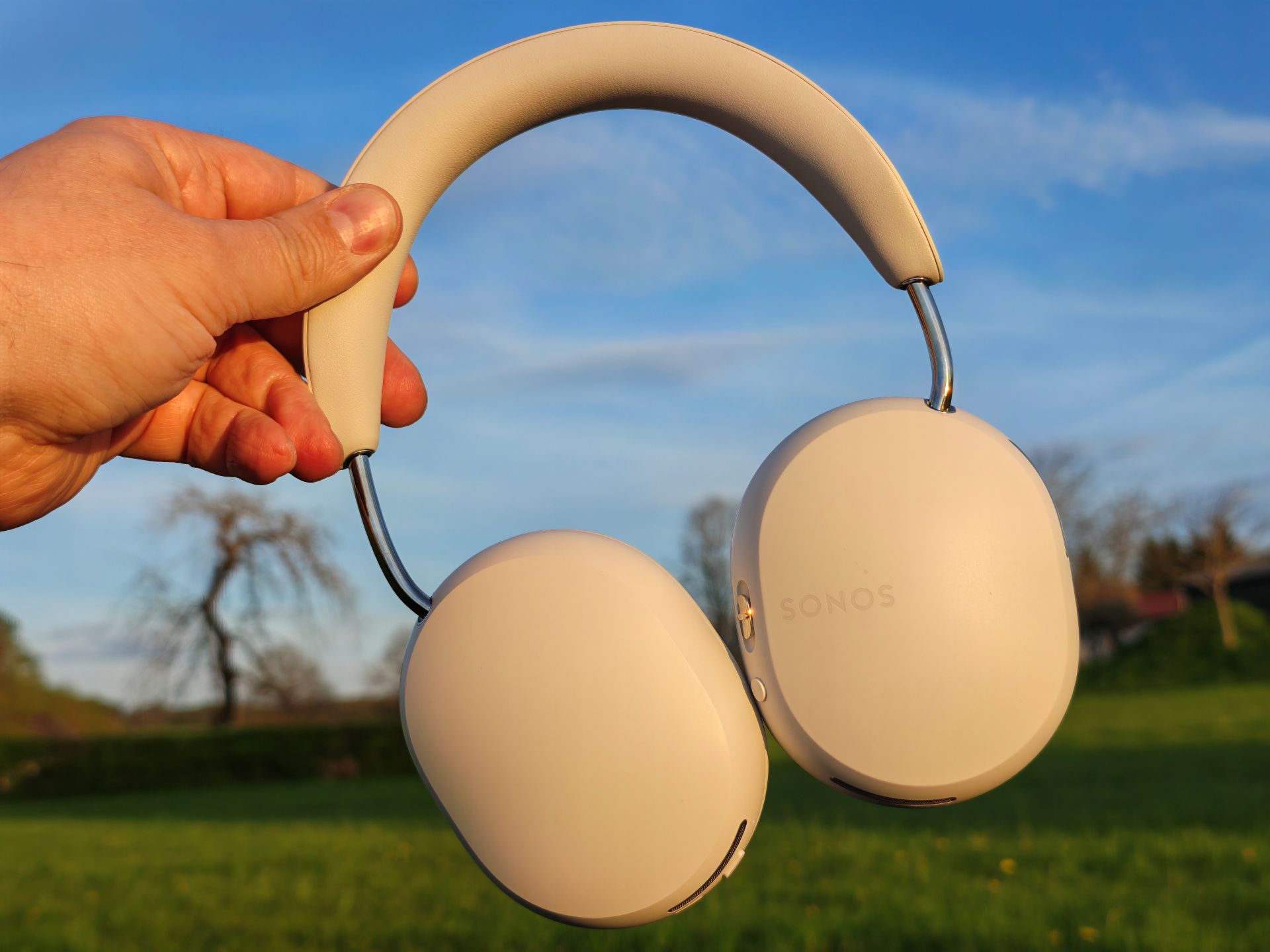
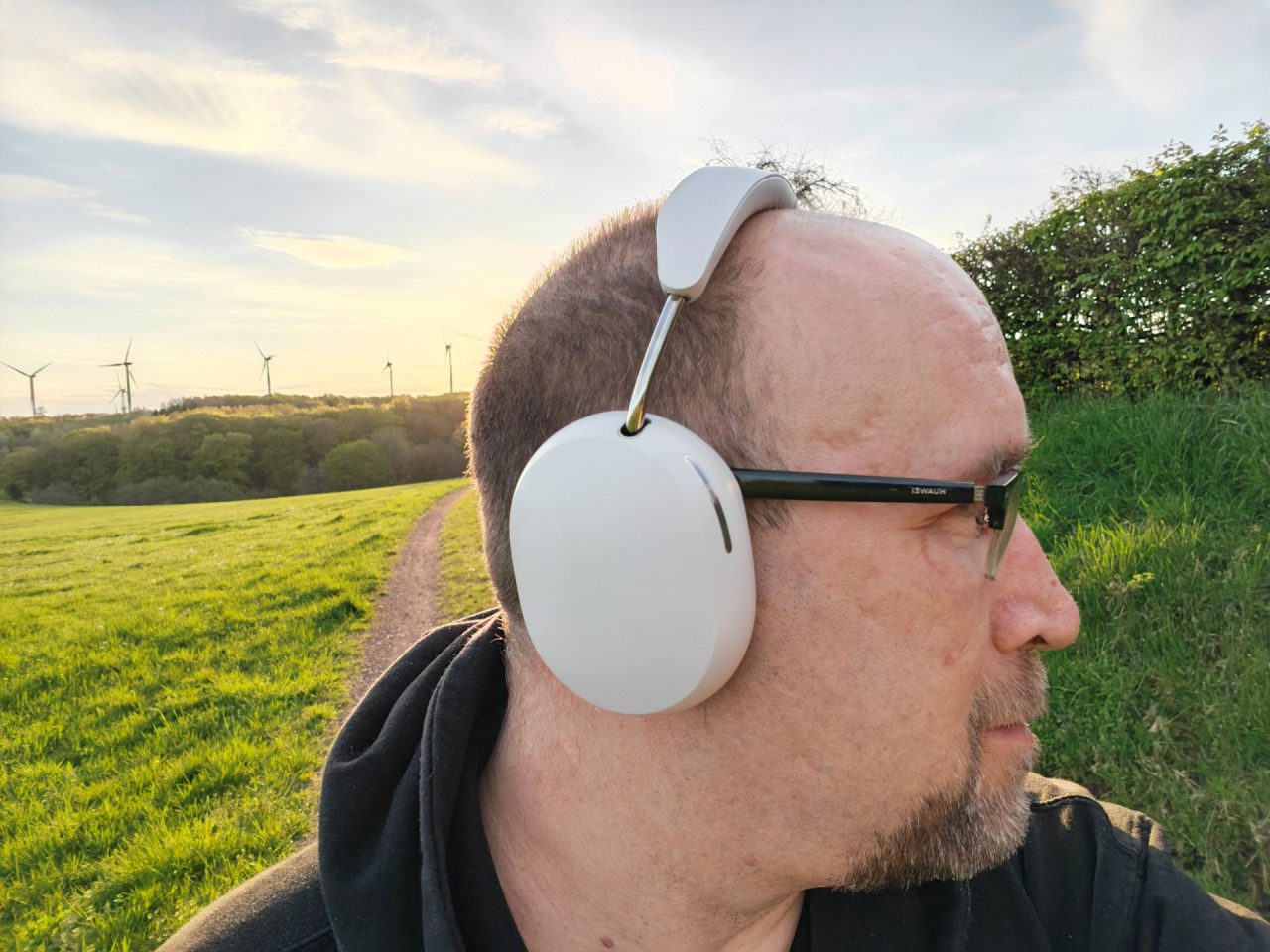
With the Sonos Ace, the manufacturer has opted for a simple design with clean lines, matte surfaces and subtle curves. There are no large logos or striking design elements. Instead, the headphones have a pleasantly understated look that fits well with Sonos' existing design language. Build quality is high. The combination of plastic and metal feels sturdy, the hinges move smoothly, and there is nothing to fault when adjusting the headband. The matte surfaces also have the advantage that fingerprints are barely noticeable.
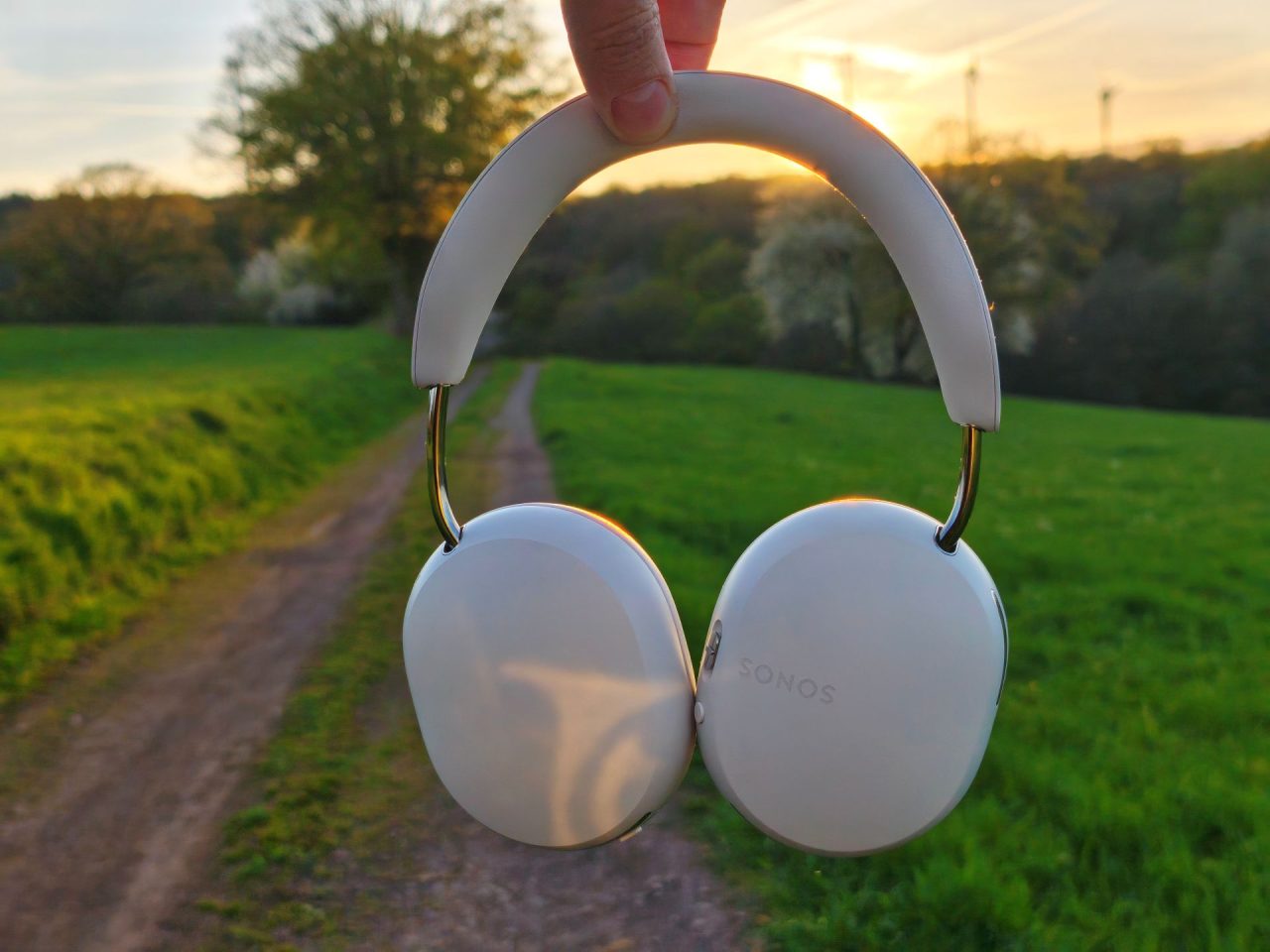
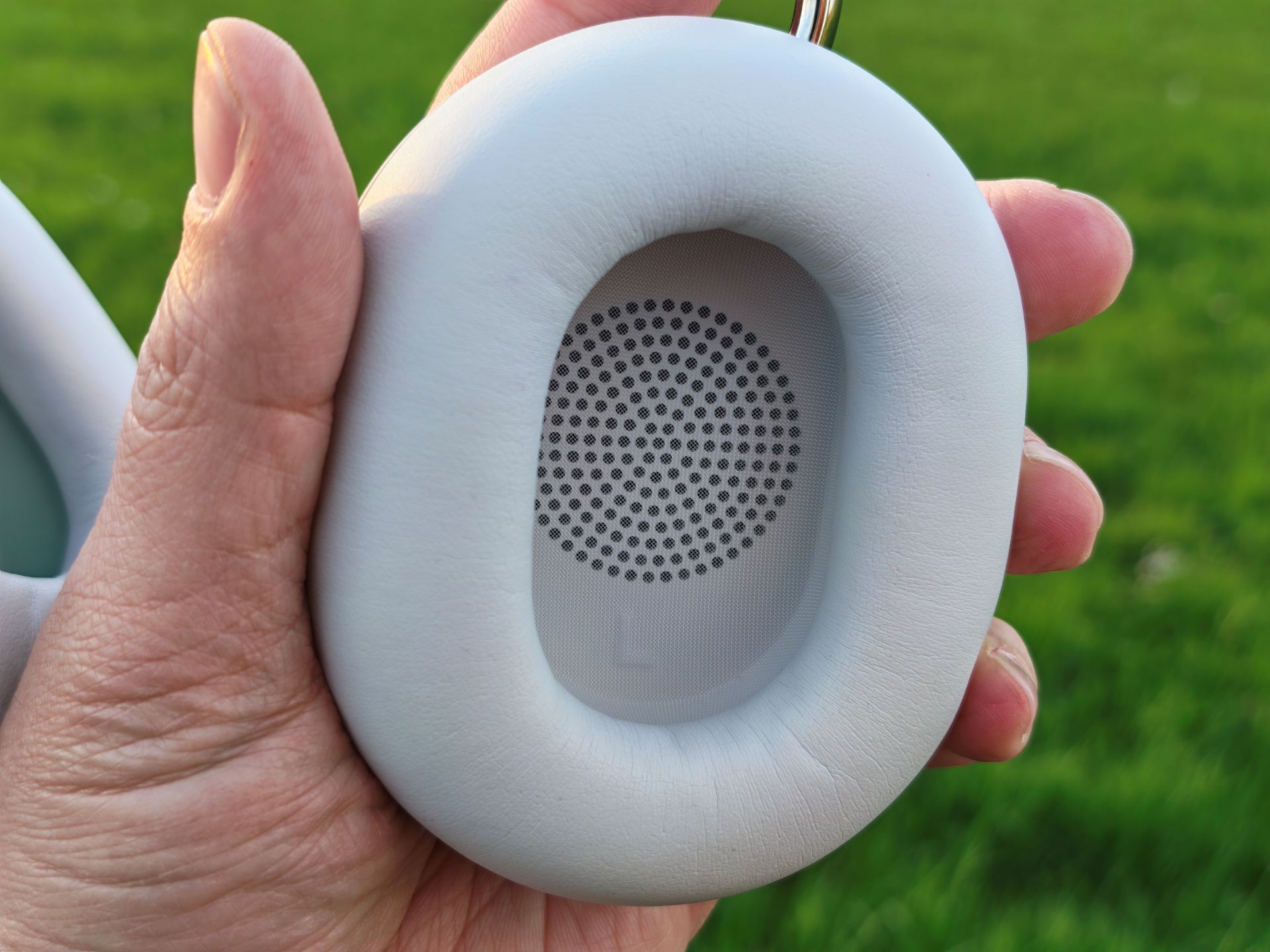
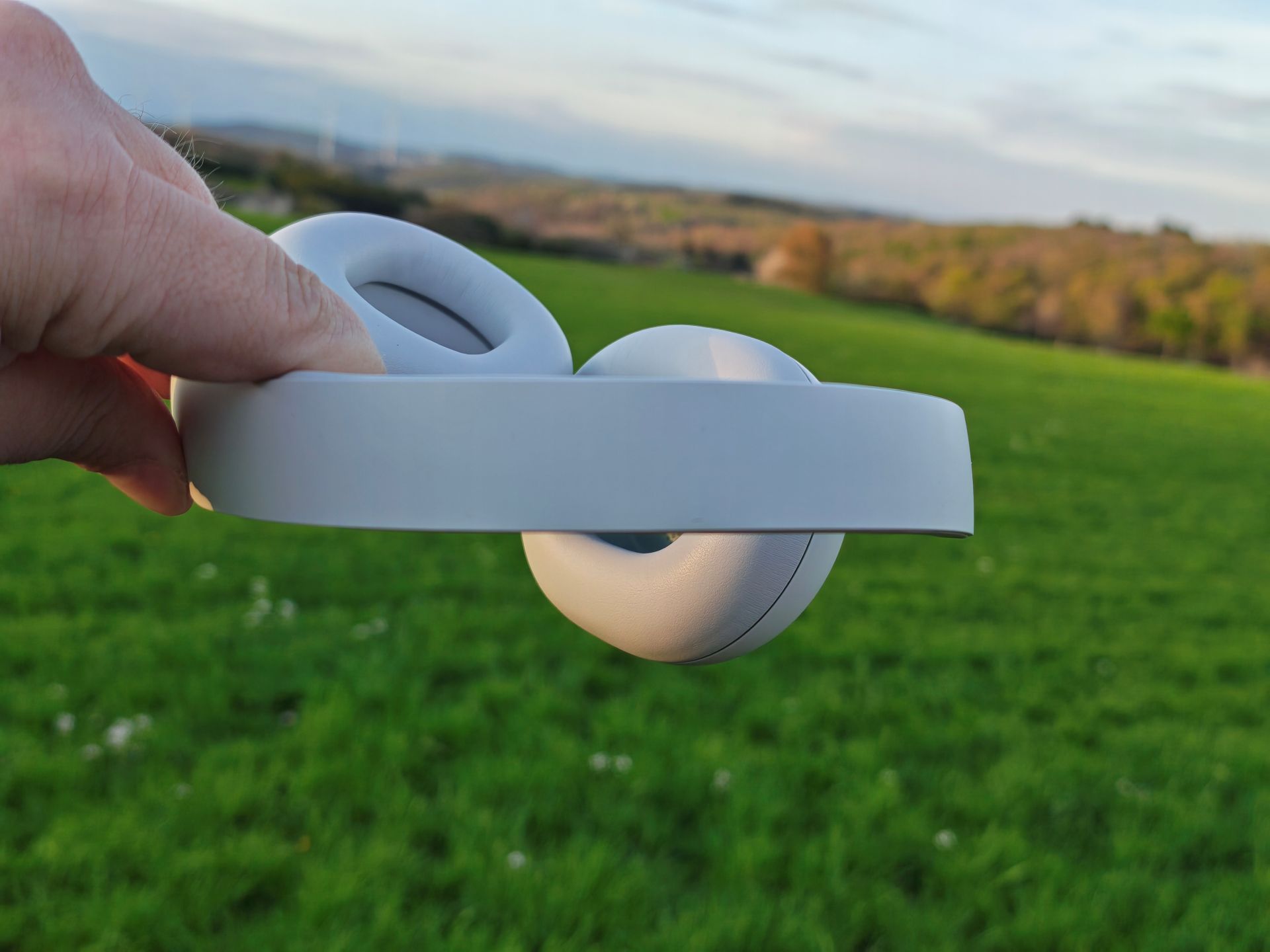
At around 312 grams, the Sonos Ace is no lightweight. However, it feels less noticeable on your head than the figure might suggest. The padded headband distributes the weight evenly, while the soft leatherette cushions surround your ears without pressing uncomfortably. The headphones remain comfortable even over several hours. The clamping force is pleasant even when wearing glasses, though this naturally depends on the glasses and the shape of your head. Only in higher temperatures do your ears start to feel a little warm under the closed ear cups.
The magnetically attached ear cushions are well designed. They can be removed without tools and replaced when needed. This makes cleaning easier and is a sensible contribution to longevity, especially for headphones in this price range. Included are a flat carrying case with a detachable cable pouch, a USB-C to USB-C cable and a USB-C to 3.5 mm jack cable. The case is sturdy enough to carry in a backpack and has ample room for the accessories.
Setup, operation and connectivity
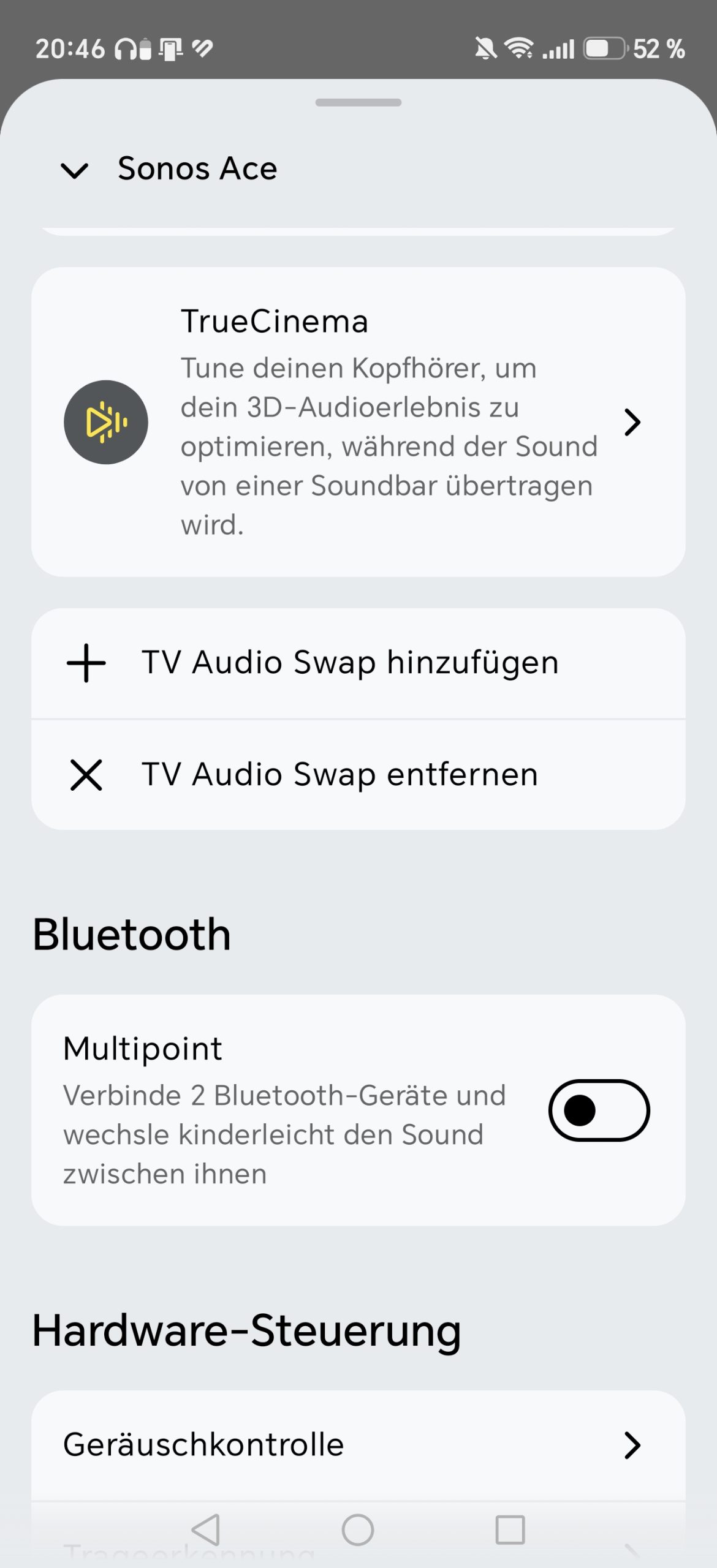
The device connects to a smartphone, tablet or notebook via Bluetooth 5.4. It supports SBC, AAC and aptX Adaptive, as well as aptX Lossless with compatible devices. Initial pairing is quick, and thereafter the Ace automatically connects to previously paired devices. Bluetooth Multipoint is useful, allowing two devices to remain connected at the same time. For example, if you are listening to music on a notebook and receive a call on your smartphone, you do not have to switch the Bluetooth connection first. It works reliably in everyday use.
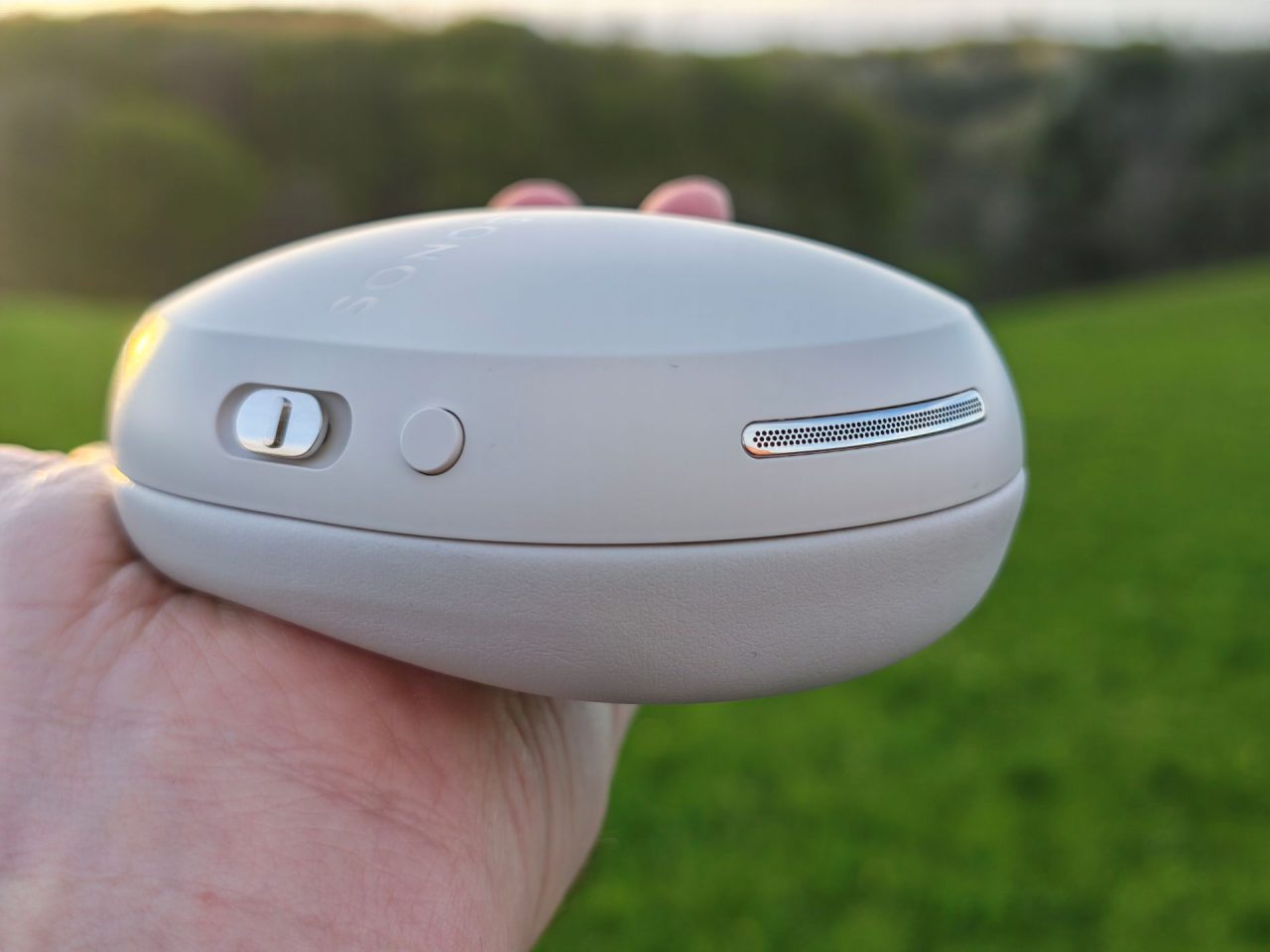
Sonos uses physical buttons rather than touch-sensitive surfaces. The most important one is the Content button on the right earcup. Slide it up or down to adjust the volume, or press it to control playback and calls. Another button switches between noise cancellation and transparency mode. After a brief learning period, this works almost entirely by feel and is more convenient when out and about than touch controls, where you occasionally swipe in the wrong place.
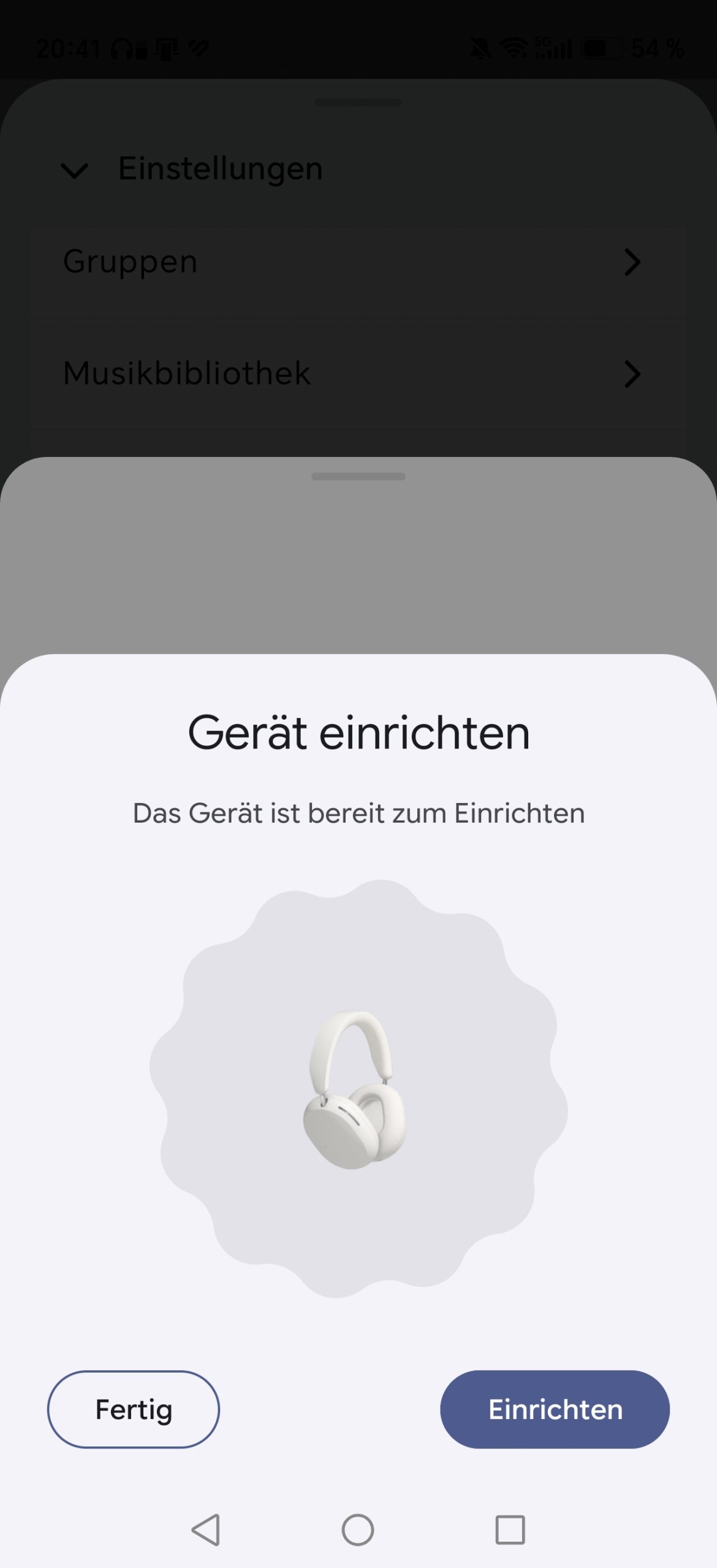
The Sonos app lets you install software updates, configure features, and adjust the sound. However, the range of settings is limited. The equalizer offers only bass and treble controls, as well as a loudness feature. Anyone who likes to adjust specific frequency ranges will miss having a more comprehensive equalizer. Another special feature is its integration with the Sonos system. The Ace cannot be added to a multiroom group like a regular Sonos speaker. Music plays over Bluetooth or a cable, while the Wi-Fi connection is intended for working with compatible Sonos soundbars.
Sound quality in hands-on testing
The Sonos Ace uses specially developed 40 mm dynamic drivers. In terms of sound, the headphones deliver full and lively playback that makes listening to a variety of music genres enjoyable. The bass has plenty of punch but remains largely controlled. This provides a solid foundation, especially for electronic music and pop, without vocals or instruments getting lost in the mix. However, listeners who prefer a strictly neutral sound signature may find the low end a little too prominent.
The midrange sounds good, with clear vocals and good instrument separation. Podcasts and audiobooks are easy to understand, while acoustic music benefits from the clear presentation. The treble is also finely resolved, bringing out plenty of detail. However, it can sound a little sharp on some recordings. Overall, the Ace is tuned for a more entertaining rather than completely analytical sound. The bass and treble controls allow you to adjust the sound somewhat, but the app lacks the options needed for more extensive changes.

With well-recorded tracks, the headphones show that they can also bring out fine details clearly. Individual instruments remain easy to distinguish, and even quieter passages don't get lost. In addition to Bluetooth, the Ace also supports digital audio playback via USB-C. This allows you to enjoy lossless audio without the limitations of wireless transmission. Whether you can hear the difference depends largely on the source material and listening conditions. For everyday music listening, the wireless connection already delivers convincing quality.
Dolby Atmos and dynamic head tracking
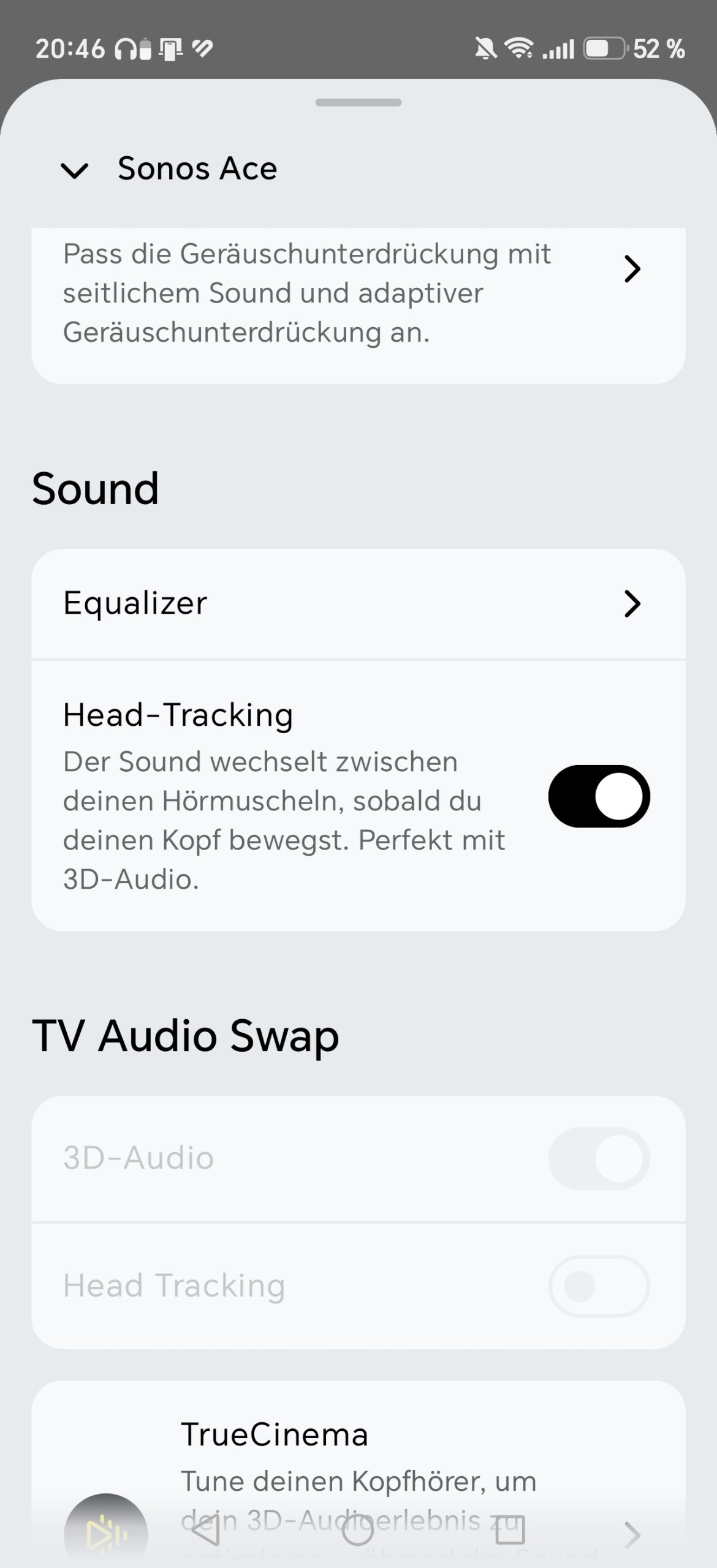
Another strength of the Sonos Ace is its support for Dolby Atmos and dynamic Head Tracking. With compatible films and series, it creates a more spacious sound that goes beyond conventional stereo playback. Sounds no longer seem to come exclusively from right next to your ears, but are spread across a larger virtual soundstage. This makes an audible difference, particularly in films with complex sound mixes.
Head tracking takes movements of the head into account. When you turn to the side, the virtual soundstage remains in position during compatible playback. This can feel a little unusual at first, but can certainly add to the atmosphere when watching films. Its benefit for music is a matter of taste. Some recordings gain a sense of space, while others sound better in conventional stereo. It is also important that both the content and the playback device support the relevant features.
Active noise cancellation and transparency mode
The Sonos Ace performs very well when it comes to active noise cancellation. The adaptive ANC significantly reduces steady sounds in particular, such as engine noise, fans or the hum of an air conditioner. This makes things noticeably quieter on trains and aeroplanes. Voices and sudden noises are also subdued, but do not disappear completely. Overall, the noise cancellation is on a level that can hold its own against the familiar premium models from Sony and Bose.
Sonos calls its transparency mode Aware; it deliberately lets in sounds from outside. This is useful when you want to hear an announcement or briefly talk to someone without taking off your headphones. The natural sound reproduction is particularly impressive. Voices do not sound excessively artificial, and distracting noise is also kept to a minimum. You can switch directly between ANC and Aware using the button on the headphones. Both modes are well balanced for everyday use and are among the Ace’s most compelling features.
TV Audio Swap extends the Sonos home cinema
With TV Audio Swap, Sonos has given the Ace a feature that is particularly useful for owners of a compatible Sonos soundbar. TV audio can be transferred directly from the soundbar to the headphones. This works via the Content button or the Sonos app and saves you the hassle of changing the audio output on your TV. It's a practical solution, especially when someone wants to watch a movie in the evening while others are already asleep.
The connection is designed for minimal latency and also supports spatial audio with compatible content. Combined with Dolby Atmos and head tracking, this creates a genuinely impressive home cinema experience through headphones. However, TV Audio Swap is limited to explicitly supported Sonos soundbars, such as the Sonos Arc. If you do not own a compatible soundbar, you cannot use this feature. It is a real bonus for existing Sonos home cinema systems, but for everyone else it remains a nice extra with no practical use for now.
Microphone quality and calls
The Sonos Ace is also well suited to phone calls and video conferences. Its integrated microphones provide clear voice transmission in quiet surroundings. They also filter out ordinary background noise, such as in an office, effectively. Callers remain easy to understand, and your own voice sounds sufficiently natural.
However, in louder surroundings, the microphones’ noise cancellation has to work harder. This can make the voice sound slightly compressed. That is not unusual for wireless over-ear headphones and is barely noticeable during normal phone calls. The quality is perfectly adequate for occasional video conferences or longer conversations. The Ace does not replace a specialised headset with a boom microphone, but it does not need to.
Wear detection and everyday usability
Automatic wear detection is designed to pause playback as soon as you take off the Sonos Ace, then resume when you put it back on. It's practical in principle, but the detection isn't always as reliable as you'd like. Occasionally, playback is paused with a delay or doesn't resume immediately when you put the headphones back on. This isn't a serious flaw, but it can be a little annoying in everyday use. If you don't need the feature, you can disable it in the Sonos app.
Another drawback is the lack of moisture protection. The Ace has no official IP rating, making it less suitable for sweaty workouts or extended periods in the rain. This usually isn't a major concern when using it at home, in the office, or while traveling. Still, some basic splash resistance would have been welcome in headphones at this price point.
Battery life and fast charging
Sonos promises up to 30 hours of music playback with noise cancellation enabled for the Ace. In mixed testing with Bluetooth, ANC, and occasional use of spatial audio features, battery life was about 26 to 28 hours. That's close to the manufacturer's claim and easily enough for several workdays or a longer trip. Actual battery life naturally depends on volume and the features you use.
The fast charging function is also practical, as even a short charge provides enough power for further use. However, how long the battery then lasts depends heavily on the settings selected. As well as the volume, features such as ANC, transparency mode and spatial audio also play a role. It is therefore difficult to guarantee a fixed playback time.
A full charge takes around three hours. Charging is via USB-C, and the same port can also be used for digital audio playback. Overall, the Sonos Ace offers decent battery life, although other premium headphones now last longer.
Our verdict
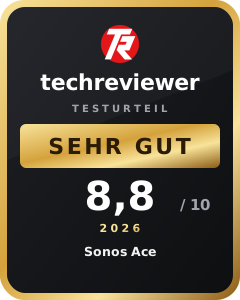
The Sonos Ace is a solid entry into the premium ANC segment.
It impresses with its sound quality, good build and clever integration into the Sonos ecosystem. TV Audio Swap is a particularly strong selling point for existing Sonos users. However, anyone looking for maximum ANC performance or an extremely bass-heavy tuning will find slight advantages with Sony or Bose.
The Sonos Ace is still an easy recommendation for anyone who appreciates high-quality sound, Dolby Atmos and solid build quality.
Specifications
General
- Manufacturer
- Sonos
- Model
- Ace
- Design
- Closed-back over-ear headphones
- Dimensions
- 191 × 160 × 85 mm
- Weight
- 312 g
- Colors
- Black, Soft White
- Water and dust resistance
- No IP rating
Audio
- Drivers
- 40 mm, dynamic
- Spatial audio
- Dolby Atmos
- Dynamic head tracking
- Yes
- Lossless playback
- USB-C and aptX Lossless with compatible devices
- Equaliser
- Bass, treble and loudness via the Sonos app
Noise cancellation and microphones
- ANC
- Adaptive
- Transparency mode
- Sonos Aware
- Microphones
- 8
- Voice processing
- Noise reduction
Connectivity
- Bluetooth
- 5.4
- Bluetooth multipoint
- Yes
- Audio codecs
- SBC, AAC, aptX Adaptive, aptX Lossless
- Wired playback
- USB-C and 3.5 mm jack via the included cable
- TV Audio Swap
- With compatible Sonos soundbars
- Wi-Fi
- For connecting to compatible Sonos home cinema devices
Operation and software
- Controls
- Physical buttons and content button
- Wear detection
- Yes
- App
- Sonos app
- Compatibility
- Android and iOS
- Firmware updates
- Via Sonos app
Battery
- Capacity
- 1,060 mAh
- Music playback
- Up to 30 hours with ANC or Aware
- Talk time
- Up to 24 hours
- Fast charging
- 3 minutes for up to 3 hours of playback
- Full charging time
- Around 3 hours
- Charging port
- USB-C
What’s included
1x Sonos Ace headphones 1x carrying case with detachable cable pouch 1x USB-C-to-USB-C cable 1x USB-C-to-3.5 mm jack cable 1x product documentation
Price comparison
| Store | Price | Link |
|---|---|---|
| Amazon | 199,00 € | Go to store |
Comments