Contents
First impression of the NuForce uDAC5
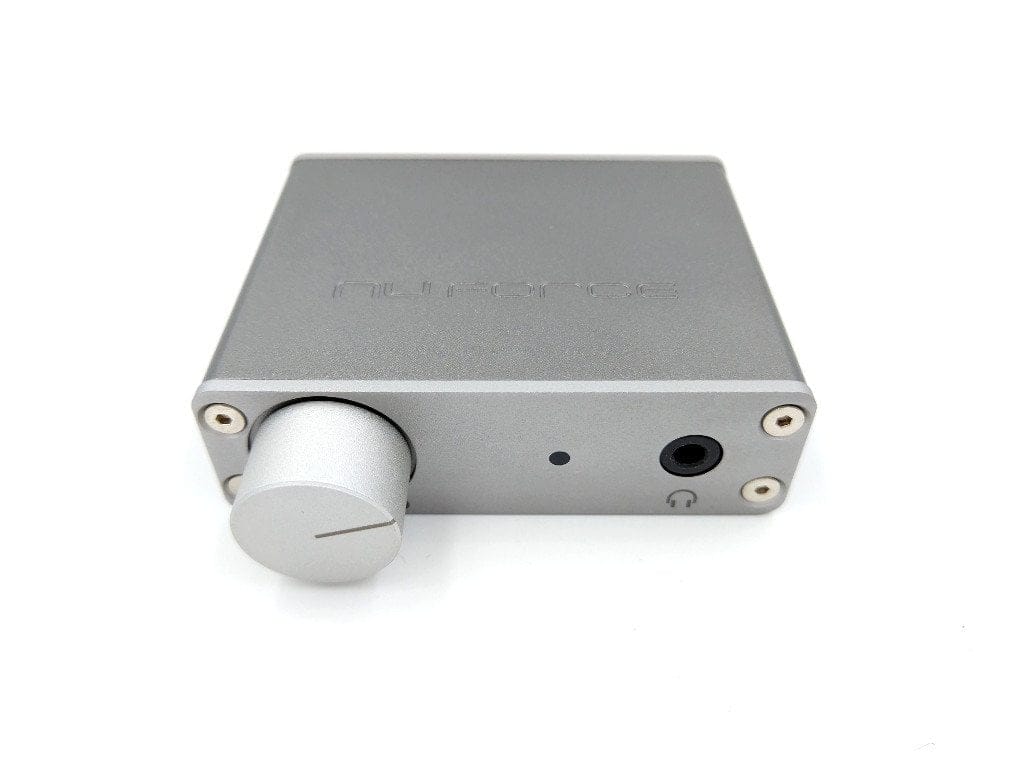
The uDAC5 measures an unassuming 68 x 45 x 21 mm and weighs just 100 g. Due to its compact design, one might naturally think that it is a portable headphone amplifier intended primarily for use with mobile sources, but the uDAC5 clearly wants to be more through its combination of Hi-Fi DAC and headphone amplifier.
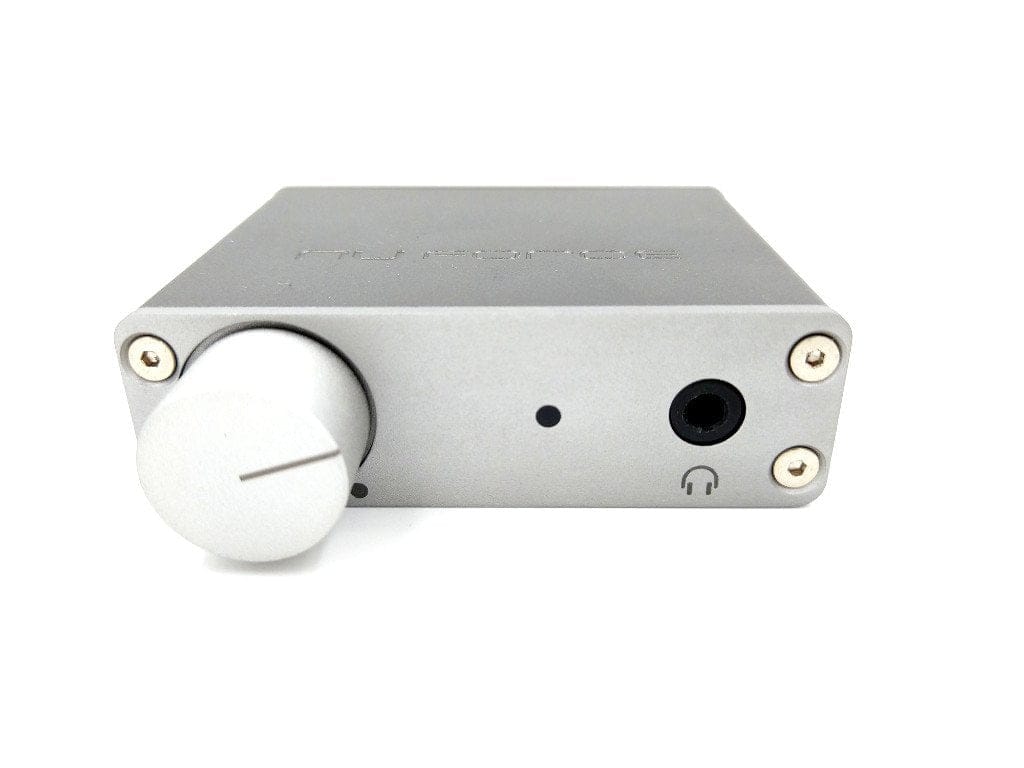
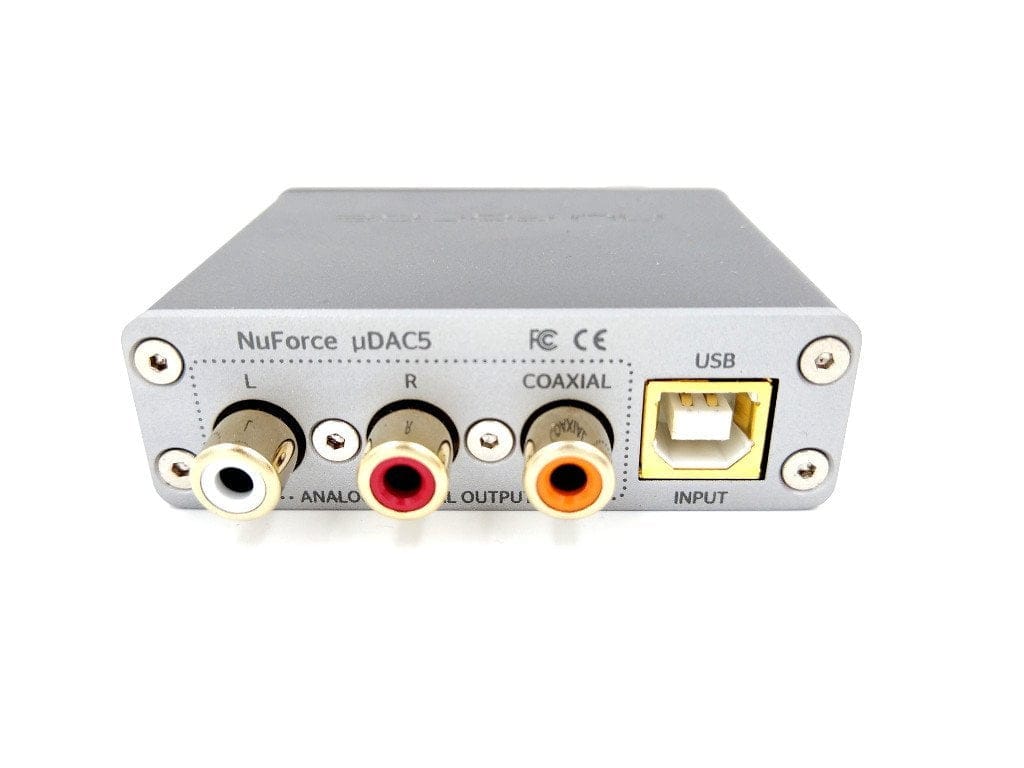
A battery has been completely omitted, which again somewhat restricts mobility. Instead, power is supplied exclusively via a USB Type-B port, which is also how the DAC is connected to a PC or Mac. Further connection options include an analogue RCA output, a digital coaxial output and a 3.5 mm jack output. An analogue rotary control for adjusting the volume is located on the front of the housing. The uDAC5 is also switched on via the rotary control, and a white LED indicates whether the tiny device is actually active.
The build quality is high and beyond reproach. The entire housing is made of metal and presents itself in an elegant metallic look. The volume control sits firmly, offers a good grip, and turns precisely. The fit of the ports is also first-class.
Setup
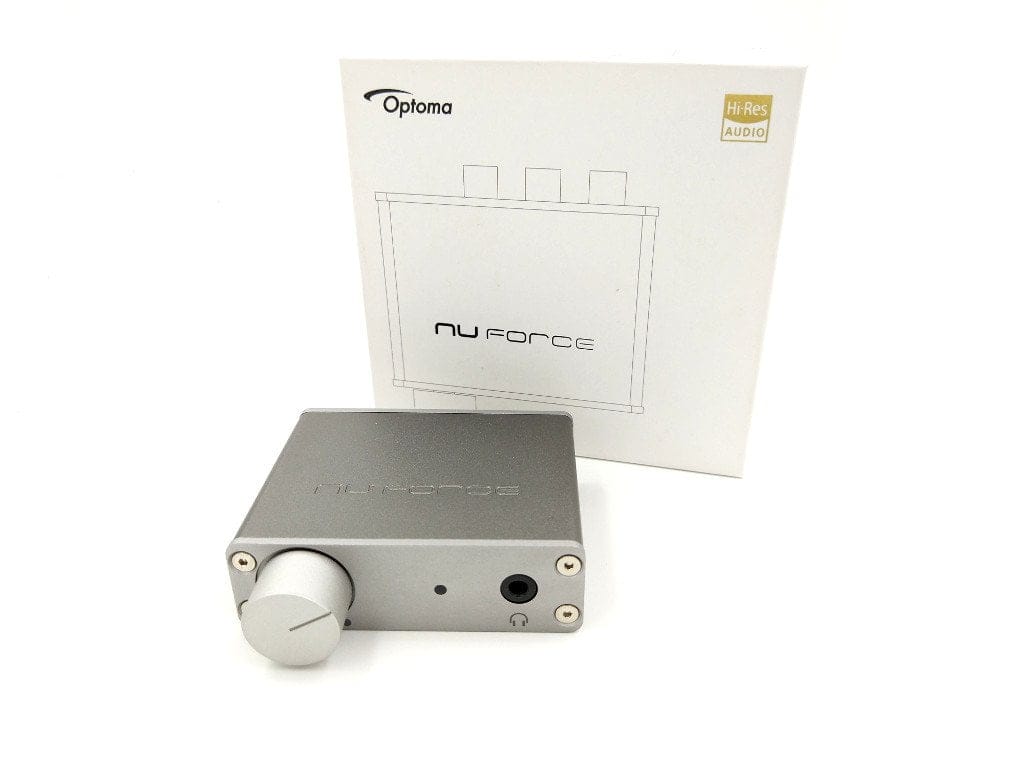
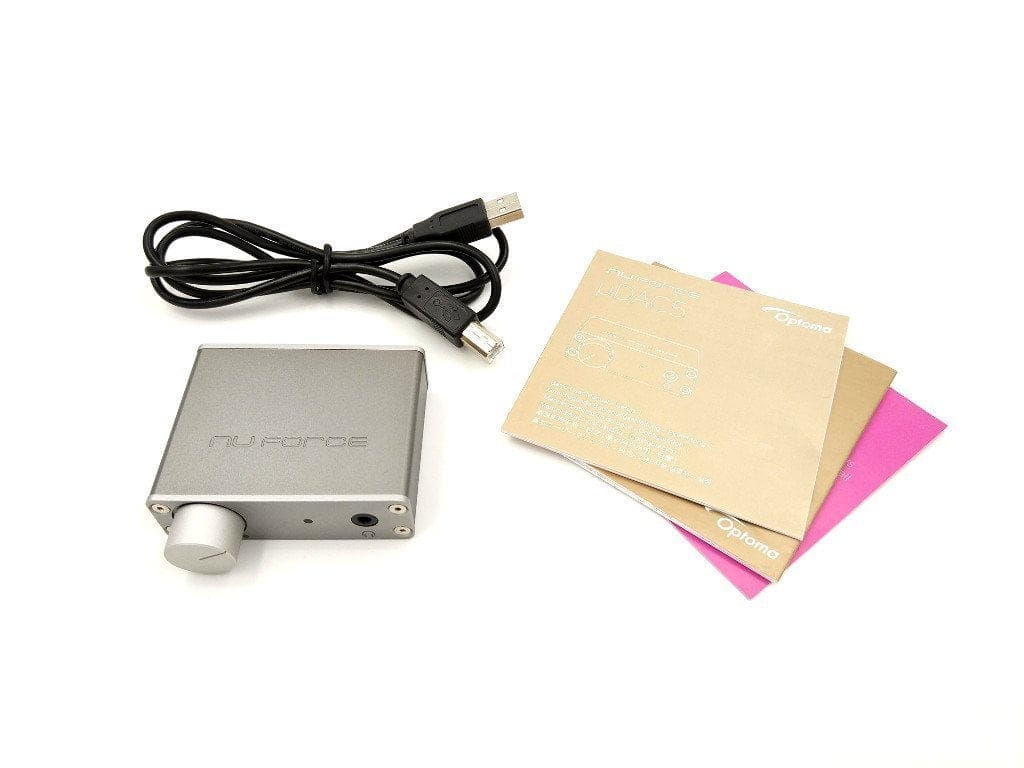
Setup is simple. To use with a PC or Mac, connect the NuForce uDAC5 via the USB Type-B port. For the DAC to be correctly recognised by Windows, you need a suitable driver. The package includes a note card with a link to the driver. Optoma has dispensed with a driver CD. If you want to connect the uDAC5 to a Mac, no additional drivers are required. Using a USB-OTG cable, the DAC can even be operated with an Android smartphone or tablet.
Sound
Let's move on to the most important sub-point – the sound. The NuForce uDAC5 was tested on a Windows 10 PC and an Android 6 smartphone with a beyerdynamic MMX300 (600 ohm) headphone and an AKG K530 (55 ohm) headphone. In-ear headphones of different price categories were used for a mobile test.
The uDAC5 almost perfectly utilises the entire frequency range. In the song “Last Flowers” by “Radiohead”, the piano and singer “Thom Yorke”’s high voice come into their own brilliantly and, above all, harmoniously. Even at truly high volumes, the song is played back with exceptional clarity. The DAC demonstrates its sonic detail using the song “Hotel California” by the “Eagles”. One can almost imagine the band standing in front of you and hear from which direction the instruments are played. The DAC only had trouble working with in-ear headphones. Particularly at low volume, background noise was clearly audible.
The NuForce uDAC5 is also suitable for PC gamers. In tactical games like Counter-Strike, on-board sound cards often miss the spatial representation and, more generally, the representation of subtle sonic details. The uDAC5 enables very good spatial orientation in tactical games, where every smallest detail is crucial. Using the aforementioned example of Counter-Strike, footsteps and gunshots can be precisely localised.
DSD (Direct Stream Digital)
A real rarity among DACs in this price range is support for DSD (Direct Stream Digital). This is enabled by the integrated “ESS Sabre Hyperstream” chip. DSD is one of the highest quality audio formats and supports a sampling rate of up to 11.2 MHz. To play the format at all, you need a special audio player. It is also not uncommon for the few pieces of music - mostly classical - available in DSD to be several gigabytes in size. Naturally, we compared a DSD 256 sample (Britten: Frank Bridge Variations – Romance) with the same 24-bit/192 kHz sample. Audible differences can be heard, but the added value is primarily for audiophiles rather than the average listener. Additionally, music tracks in DSD format remain relatively rare.
Our verdict
The NuForce uDAC5 from Optoma is more capable than it looks! In addition to its highly versatile usability, the DAC and headphone amplifier combo impresses primarily with its sound. Thanks to a very even frequency response and the resulting neutral – almost analytical – sound, the uDAC5 may not appeal to everyone, but surprises with a wealth of sonic detail.
Specifications
General
- Rated power
- 2.0 Vrms
- Output impedance
- *RCA
- 100 ohms
- *Aux
- 4.7 Ohm
- Sampling rate
- max. 384 kHz PCM DSD256
- Resolution
- 16/24 bit
- Signal-to-noise ratio
- 112 dB
- Distortion factor
- 0.01%
Outputs
- 3.5mm jack
- Analog Cinch
- Digital coaxial
Inputs
- USB Type-B
Other
- Power consumption
- 2W
- Size
- 68 x 45 x 21 mm
- Weight
- 100g
What’s included
1x NuForce uDAC5, 1x USB Type-B cable, 1x user manual
Comments (2)
Thanks for the report. I also own a Nuforce uDAC2. Unfortunately, it doesn't work as desired for me with a USB-B to USB-C cable on a MacBook Air or iPad Pro. It remains completely silent (no sound). How did you manage it? Thanks for a quick reply.
Kind regards
Werner Lakomy
Hi Werner, unfortunately, I can't help you with that. The test is already 9 years old and the test device has long been returned. Regards