Contents
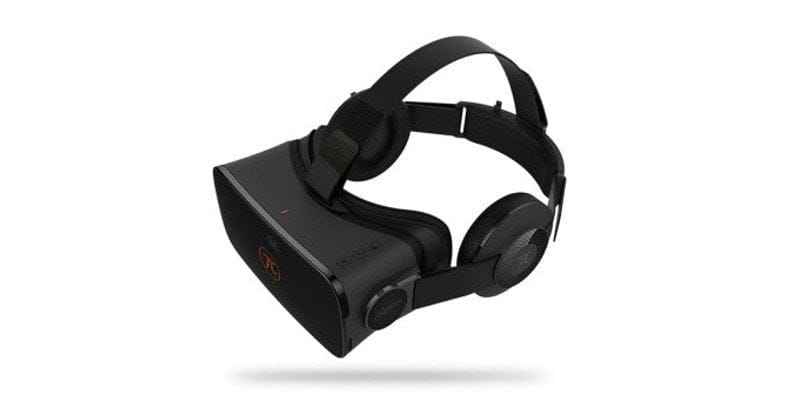
2016 is the year of virtual reality headsets, and many Chinese manufacturers have jumped on the bandwagon, announcing and releasing various VR products in recent months. The PIMAX 4K VR Headset is another contender slated for release in August, which connects to the PC much like the HTC Vive. What makes this VR headset special is its 4K UHD panel, which resolves images at 3840x2160 pixels. There are no reviews of the PIMAX 4K headset yet, which is why we take a closer look at the device in this preview.
PIMAX 4K VR headset
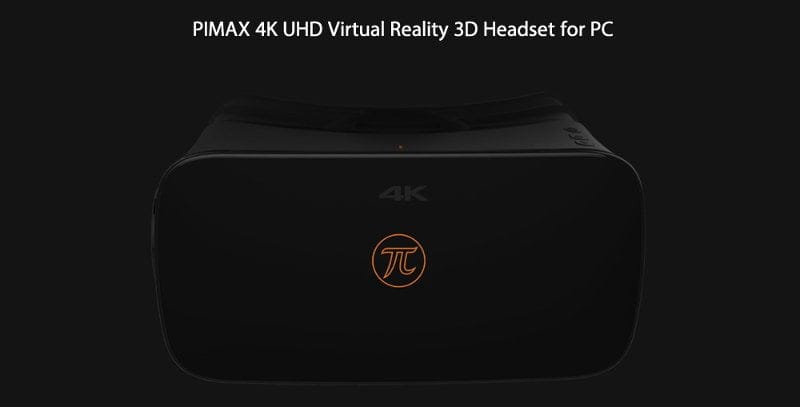
The PIMAX 4K headset was already announced in April and was released on 20 August 2016. The main focus is on the considerable resolution of 3840x2160 pixels (806 PPI), which even the well-known brand products HTC Vive or Oculus Rift have not yet achieved. Thus, the PIMAX 4K belongs to the first VR headsets that resolve in UHD. Especially display resolution plays a crucial role in VR headsets. If the resolution is too low, the so-called "screen-door effect" occurs, where individual pixels stand out clearly. Already with VR models with 2K resolution, this effect was immensely reduced, but remains visible. With a 4K resolution, this effect will still occur, but will not be nearly as disturbing as with the first VR models equipped with Full HD panels.
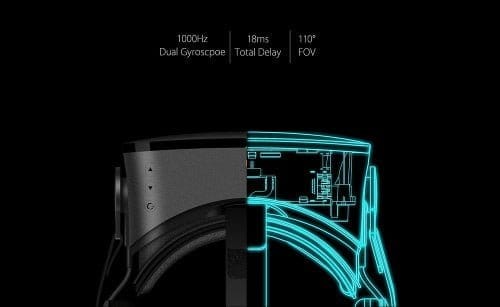

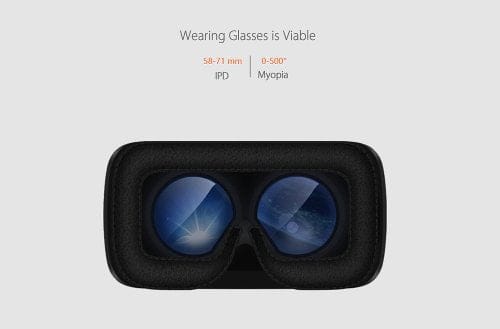
To prevent the similarly unpleasant "afterimage effect", the PIMAX 4K glasses feature a dual gyroscope with 1000Hz, and input lag is reduced to 18 milliseconds. The field of view is 110°, making it identical to that of an HTC Vive. The lenses used (53mm; aspherical) also differ from those of conventional Chinese VR headsets. The lenses are said to have an "anti-blur" coating, which prevents general blurring, and they are also said to be fog-proof in humid conditions. Brightness is automatically adjusted to protect the eyes. The PIMAX VR headset can also be used without problems even if you have short-sightedness. A clear view is guaranteed up to -5 dioptres short-sightedness and an interpupillary distance of 58-71mm.
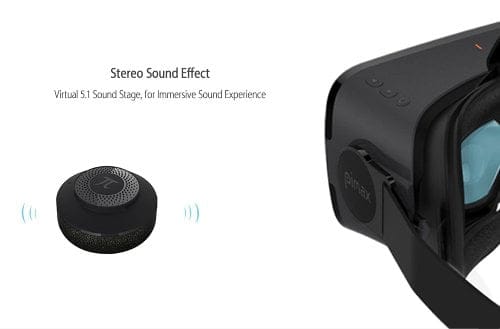
A key purchasing argument for the PIMAX 4K headset is the included HDMI port. Many Chinese VR headsets lack PC compatibility and are released as so-called standalone headsets, which possess the hardware of a smartphone and use Android as their operating system. Such headsets are very successful in China, but here, users generally prefer a conventional VR headset connected to a PC. According to the manufacturer, head movements are tracked. Position tracking is highly unlikely to be supported. Virtual 5.1 surround sound is enabled via speakers integrated into the headband. An SDK is expected to be available upon the headset's release, and compatibility with SteamVR is guaranteed.
Conclusion
The PIMAX 4K Virtual Reality Headset is an affordable VR headset with an impressive UHD display. However, it should be noted that such a high resolution also requires corresponding computing power to display a smooth 60 frames per second. Even a high-end gaming PC can quickly struggle here. Also because of the lack of a position tracker, the PIMAX VR headset is not a direct competitor to the well-known brand products. If you want a full VR experience, you should by no means do without positional tracking.
Specifications
General
- FOV
- 110°
- Pupillary distance correction
- Yes
- Pupil distance
- 58 - 71mm
- Ports
- HDMI, USB
- Resolution
- 3840 x 2160P
- OS
- Windows 7 / 8 / 10
- Weight
- 499g
- Size
- 18.00 x 11.70 x 9.00 cm
What’s included
1x PIMAX 4K 1x Cleaning cloth



Comments (1)
I am curious whether they have built in a single display or two displays. A 4K display sounds great, but my PC could never render that resolution smoothly, lol. 2K would have been sufficient.