Contents
POCO M8 5G: design and build quality
Anyone who remembers the smartphone landscape of a few years ago is likely to associate curved displays primarily with expensive flagships. After all, curved screens were long one of the features manufacturers used to distinguish their premium models from cheaper devices. But the situation has since changed.
While many premium smartphones are once again opting for flat displays, POCO is bringing this once-prestigious feature to the budget class with the M8 5G. The curved screen does not offer any real everyday benefit, but it makes the device look more modern at first glance and makes the already not particularly slim display bezels seem a little less prominent.
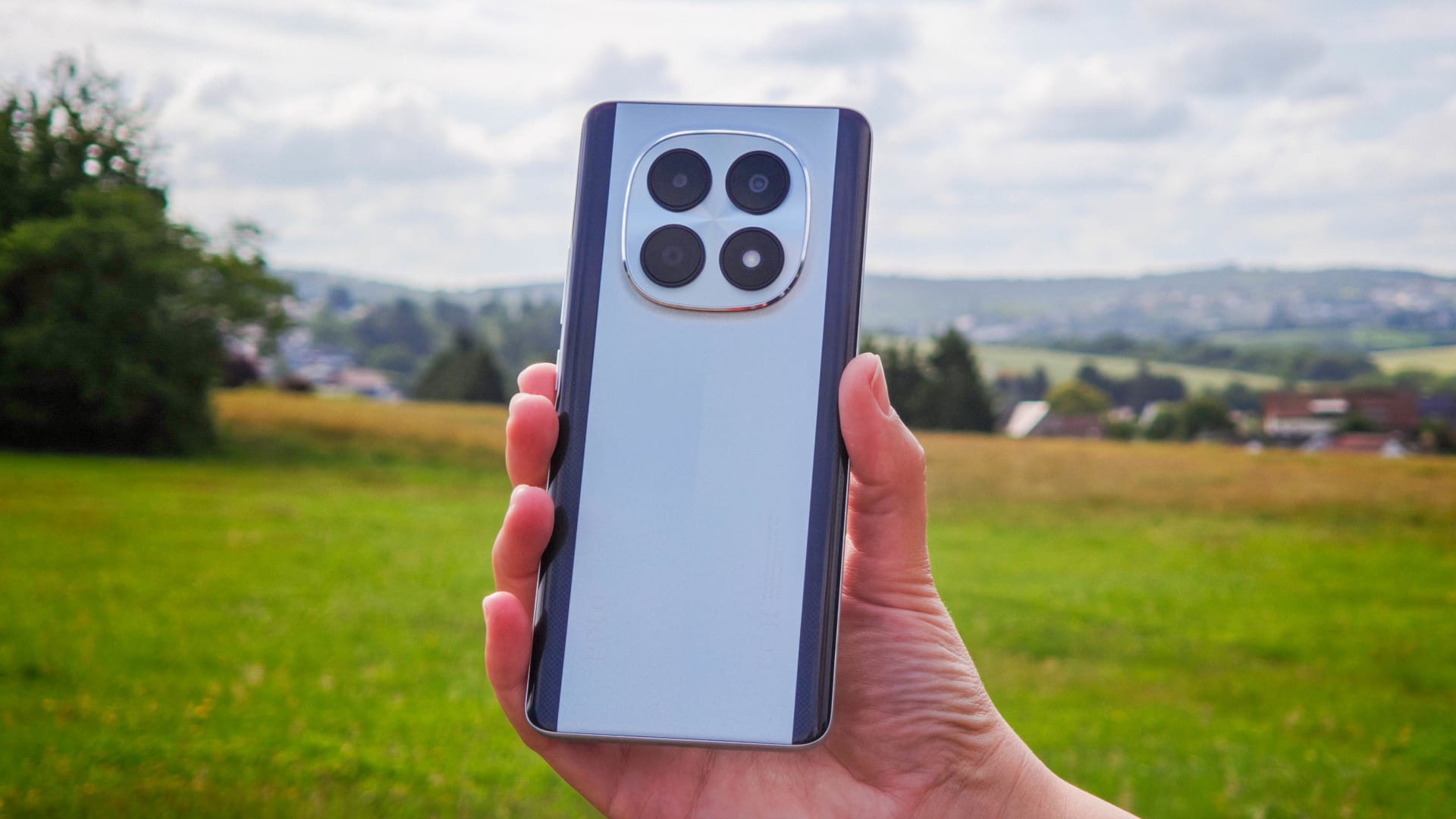
POCO takes a similar approach on the back, which is intended to stand out visibly from the increasingly interchangeable designs of many affordable smartphones. Instead of a plain plastic surface, the manufacturer combines a grey central section with carbon-fibre strips along the sides, giving the M8 5G a slightly technical look that is almost reminiscent of motorsport.
However, it’s hard to overlook the fact that the back is ultimately made of plastic as soon as you pick it up. That’s neither surprising nor problematic given the price, but it does somewhat temper an otherwise very positive first impression.
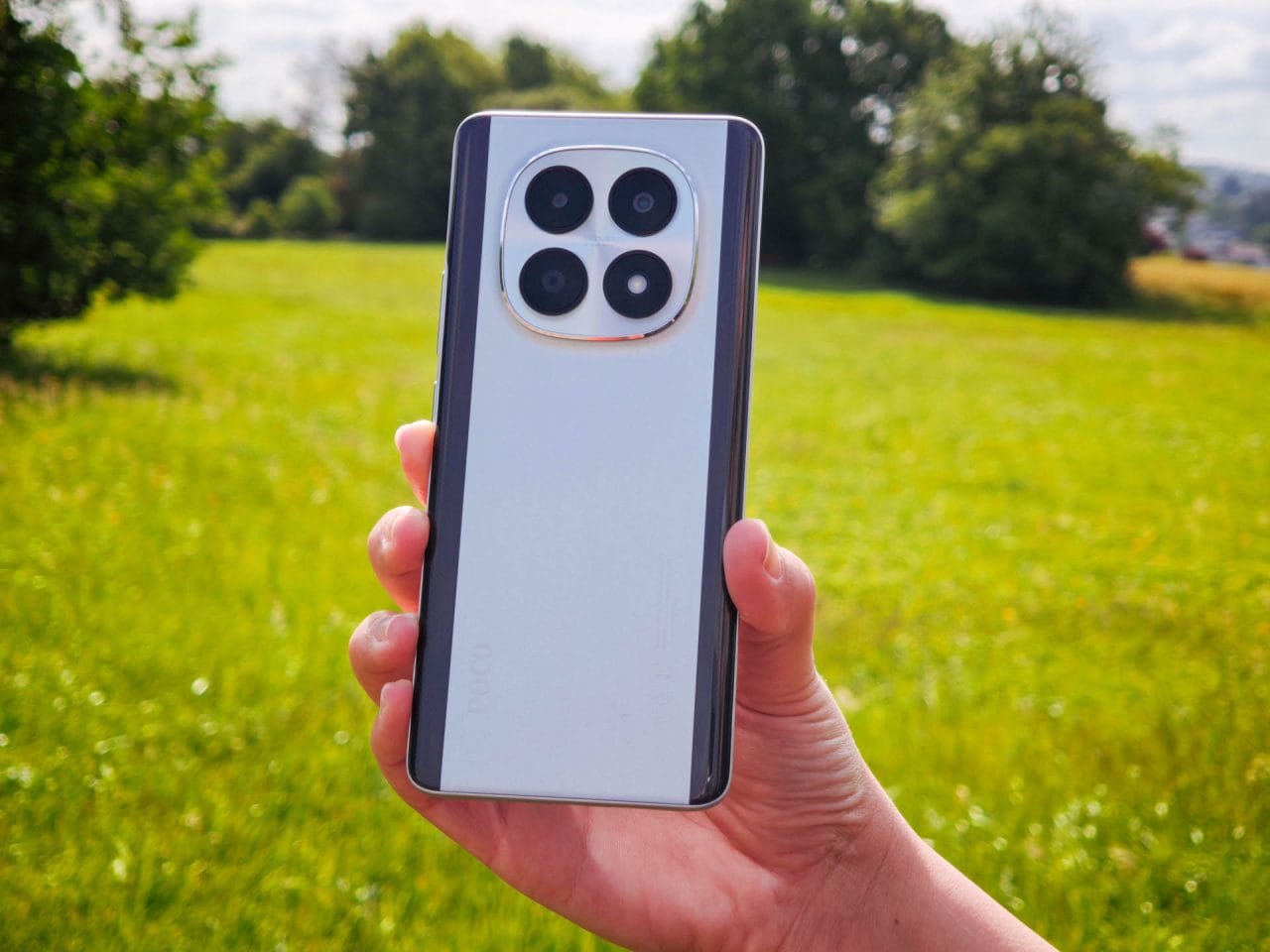
In everyday use, the casing nevertheless makes a consistently good impression. This is partly because the M8 5G is relatively light at 178 grams and feels very slim in the hand at 7.35 millimetres thick.
At the same time, the construction feels sufficiently rigid against twisting, so nothing creaks or gives way even when pressed a little harder. It also has an IP65 rating, which promises at least protection against dust and rain—something you cannot always count on in this price range.
It’s also worth noting that POCO has stuck with some of Xiaomi’s little quirks that are now rarely found among other manufacturers. For example, there’s still an infrared blaster on the top, which can be used to control TVs or air conditioners, while the bottom still houses a second speaker alongside the dual nano-SIM tray and USB-C port (USB 2.0), providing stereo sound.
The fingerprint sensor hidden beneath the display worked reliably and without fuss during the test period. That is hardly cause for excitement, but it is ultimately exactly what you would expect from a device of this class for everyday use.
POCO M8 5G: display
Fortunately, poor displays have largely disappeared from the budget segment, too. While the 6.77-inch screen has a resolution of “only” Full HD+ (2392 x 1080 pixels), that makes little difference in everyday use, since content looks sharp and individual pixels aren’t noticeable even at close range. More importantly, POCO uses AMOLED technology here, which simply makes for a good impression.
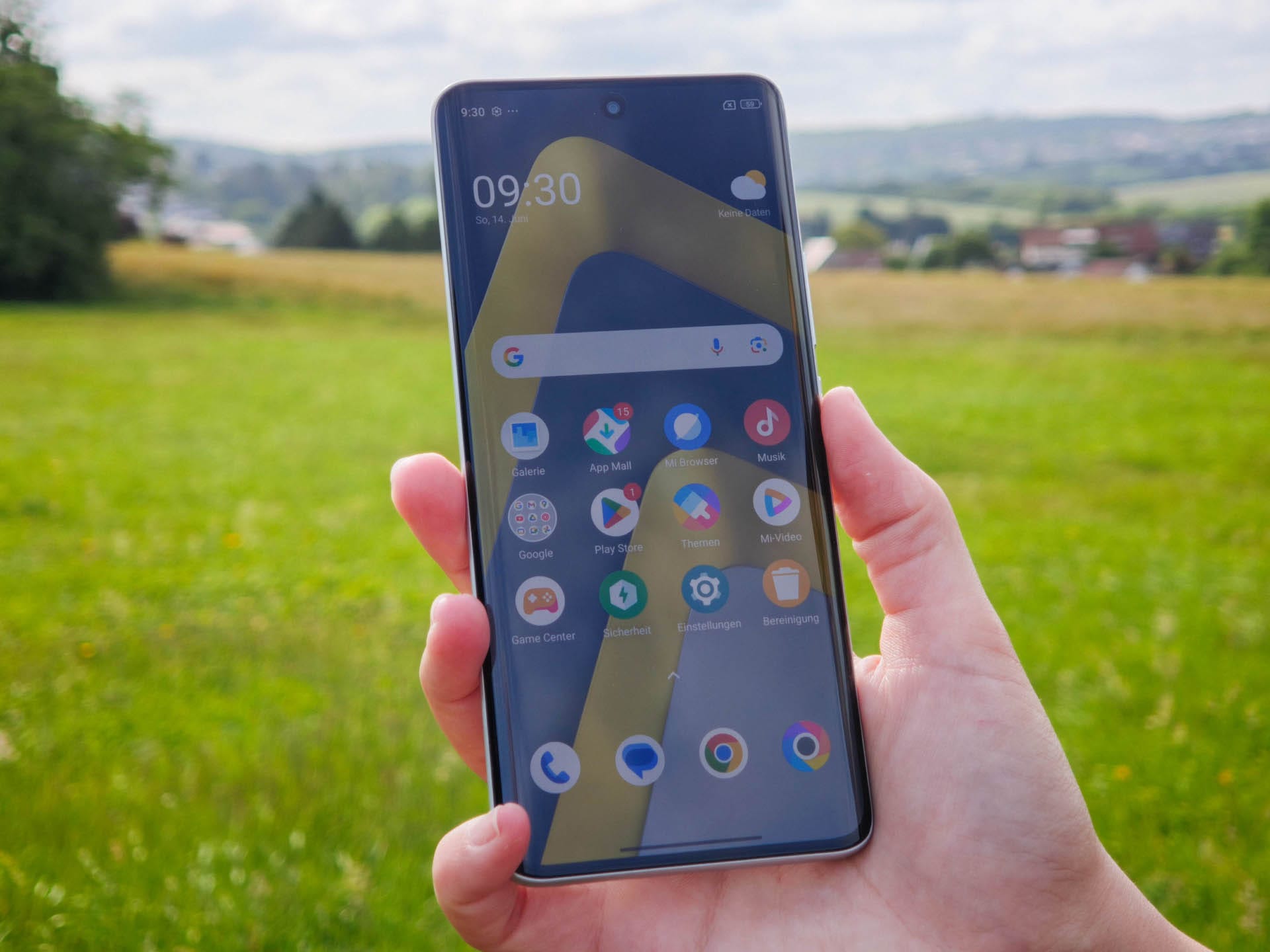
Colors look vibrant without becoming overly saturated, black is truly black rather than dark gray, and the maximum brightness (3200 nits peak / 800 nits typical) is more than enough to read messages or follow navigation even on sunny days.
A smartphone in this price range now offering refresh rates of up to 120 Hz almost feels like a given, although just a few years ago this was a selling point for considerably more expensive devices. As a result, animations, menus, and scrolling through social networks all feel smooth.
The display is not entirely beyond criticism, though. Xiaomi advertises the panel as supporting HDR, but in practice the benefits are limited. Streaming services cannot fully make use of the screen’s capabilities, so HDR content offers hardly any noticeable advantage over standard video. For most people, this is likely to remain a spec-sheet feature rather than a real drawback in everyday use.
The stereo speakers also deliver decent sound for this price range, although at high volume it is clear that the focus is more on loudness than sound quality.
POCO M8 5G: Performance
With budget smartphones, it often takes only a few minutes to see where costs have been cut. Apps start with a delay, animations stutter and the system bogs down when switching between several apps. Fortunately, the POCO M8 5G does not fall into this category. The Snapdragon 6 Gen 3 inside may not thrill benchmark fans, but there is rarely cause for complaint in everyday use.
This starts as soon as you unlock the device and continues when scrolling through social networks, switching between messaging apps, the browser and camera, or watching videos. The system usually responds quickly without giving the impression that it is constantly working at its limits. The fact that this is not high-end hardware only really becomes apparent when demanding games come into play or several processor-intensive applications are running at the same time.
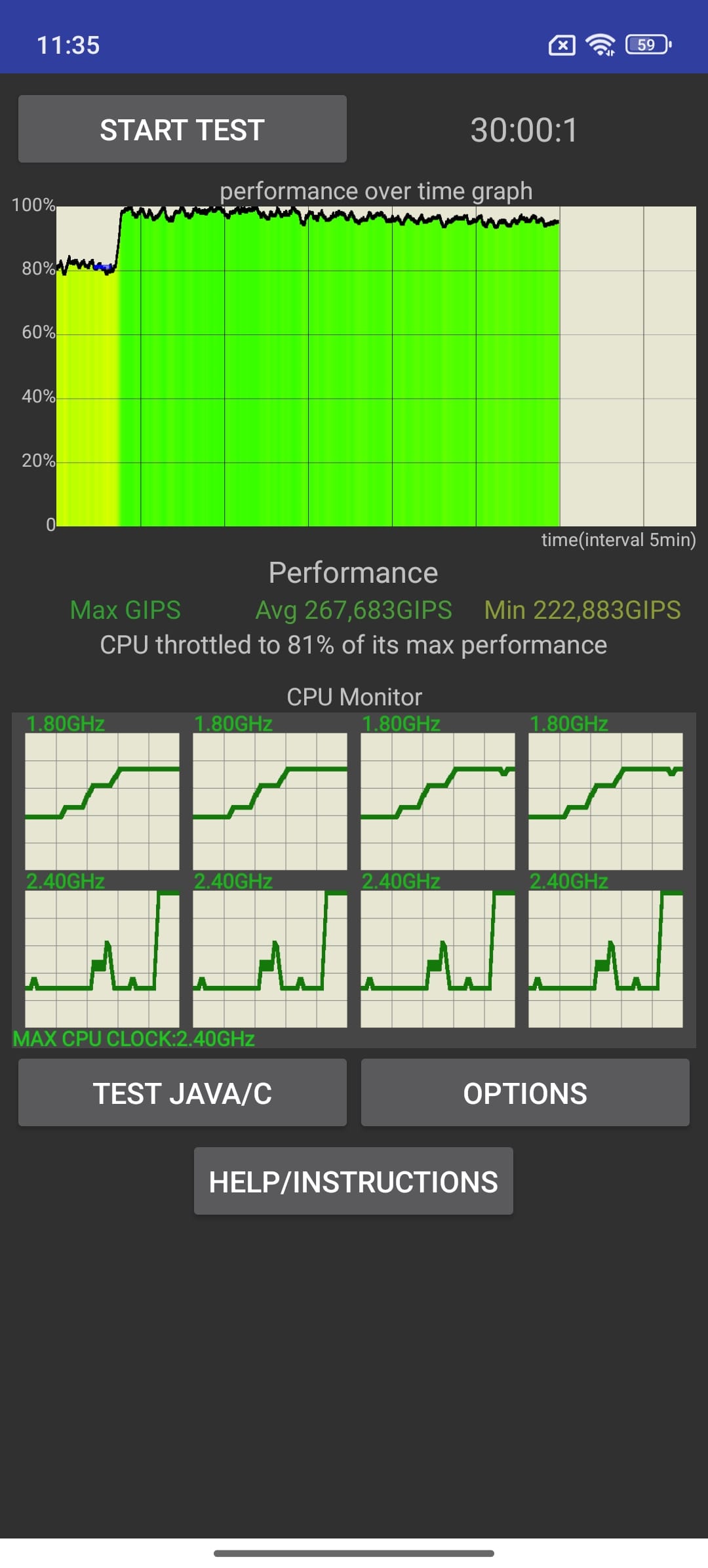
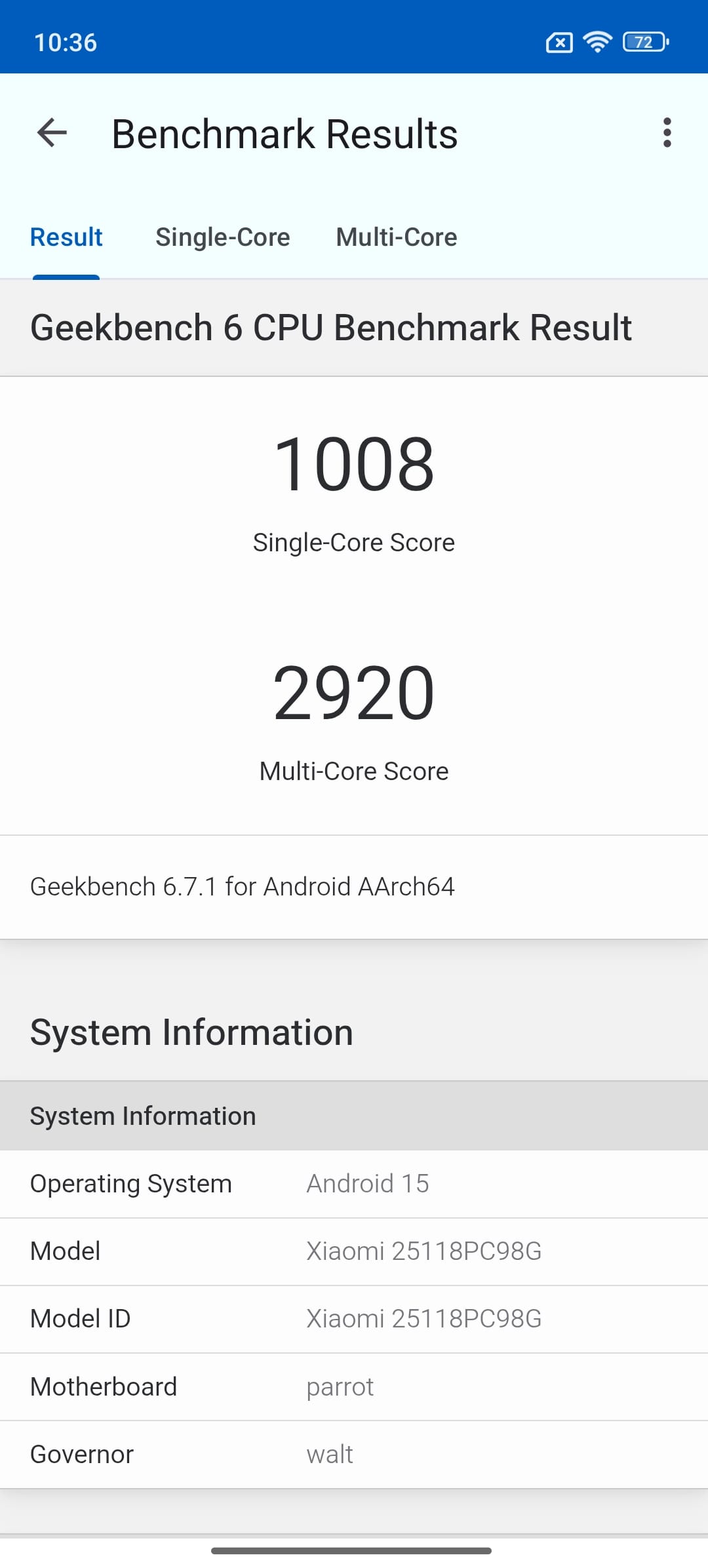
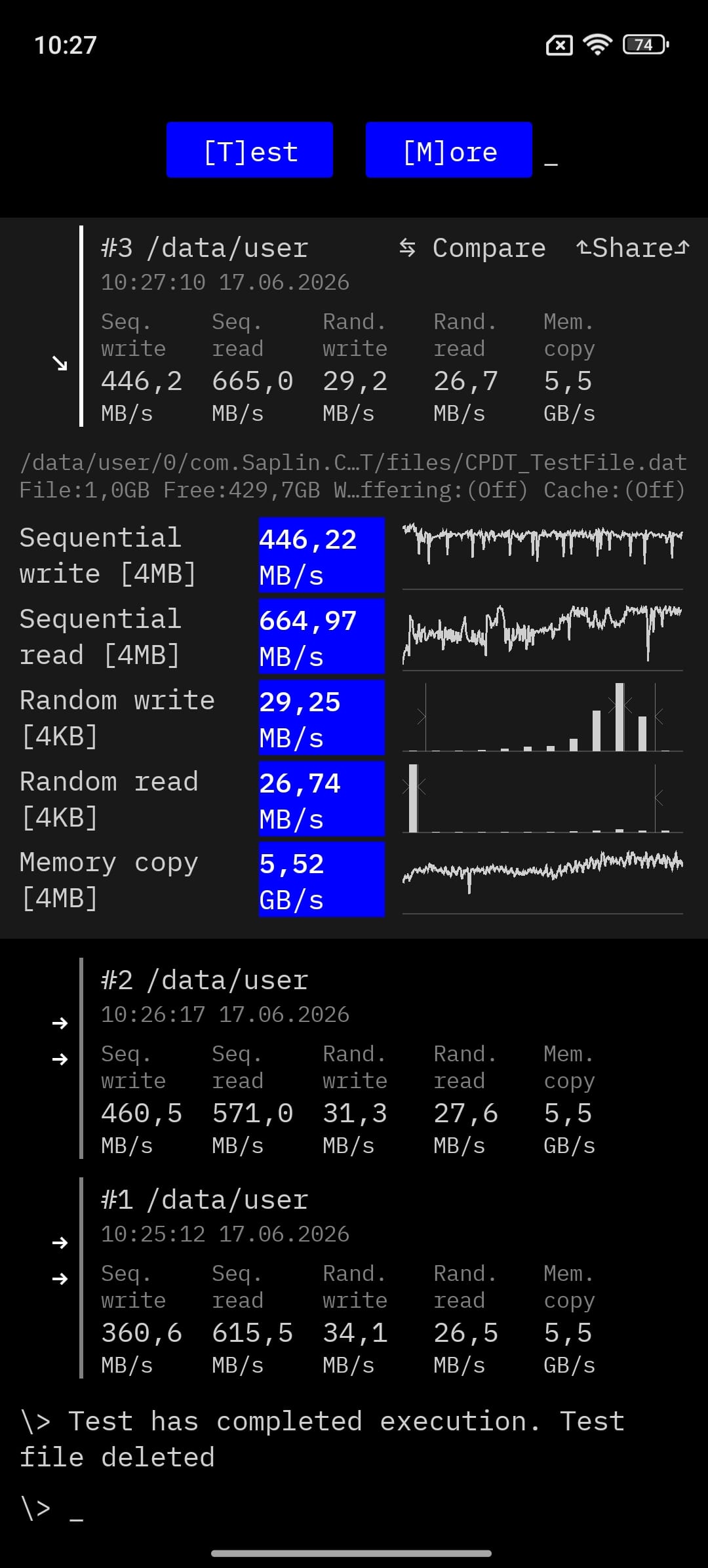
POCO has also given the M8 5G enough headroom to avoid looking completely outdated in the years to come. Particularly noteworthy is how little the device heats up, even under prolonged load. While some competitors have to throttle performance after just a few minutes, the M8 5G stays pleasantly cool and remains unobtrusive during longer gaming sessions or video recordings.
The smartphone is generally available with 8 GB of RAM and 256 or 512 GB of internal storage, which can be expanded by up to 1 TB with a microSD card if needed. Our test device was an international variant, equipped with as much as 12 GB of RAM. This mainly benefits multitasking, although in everyday use the difference is usually less noticeable than the figures might suggest at first. The memory technologies used are LPDDR4X RAM and UFS 2.2 .
POCO M8 5G: Software
The operating system is HyperOS 2, based on Android 15. Anyone who has already used a Xiaomi, Redmi, or POCO smartphone will feel right at home. This applies both to the many customization options and to the still fairly generous number of preinstalled apps, not all of which every user is likely to need. HyperOS now feels much tidier than earlier MIUI versions, but it still hasn’t completely done away with the occasional unnecessary app.
The update policy is more encouraging. While software updates were long a secondary concern in the entry-level segment, Xiaomi promises four major Android version updates and six years of security updates for the M8 5G. That doesn’t automatically mean every new Android version will be available right away, but it does at least give buyers the assurance that the smartphone won’t be put out to pasture after just two years.
POCO M8 5G: Camera
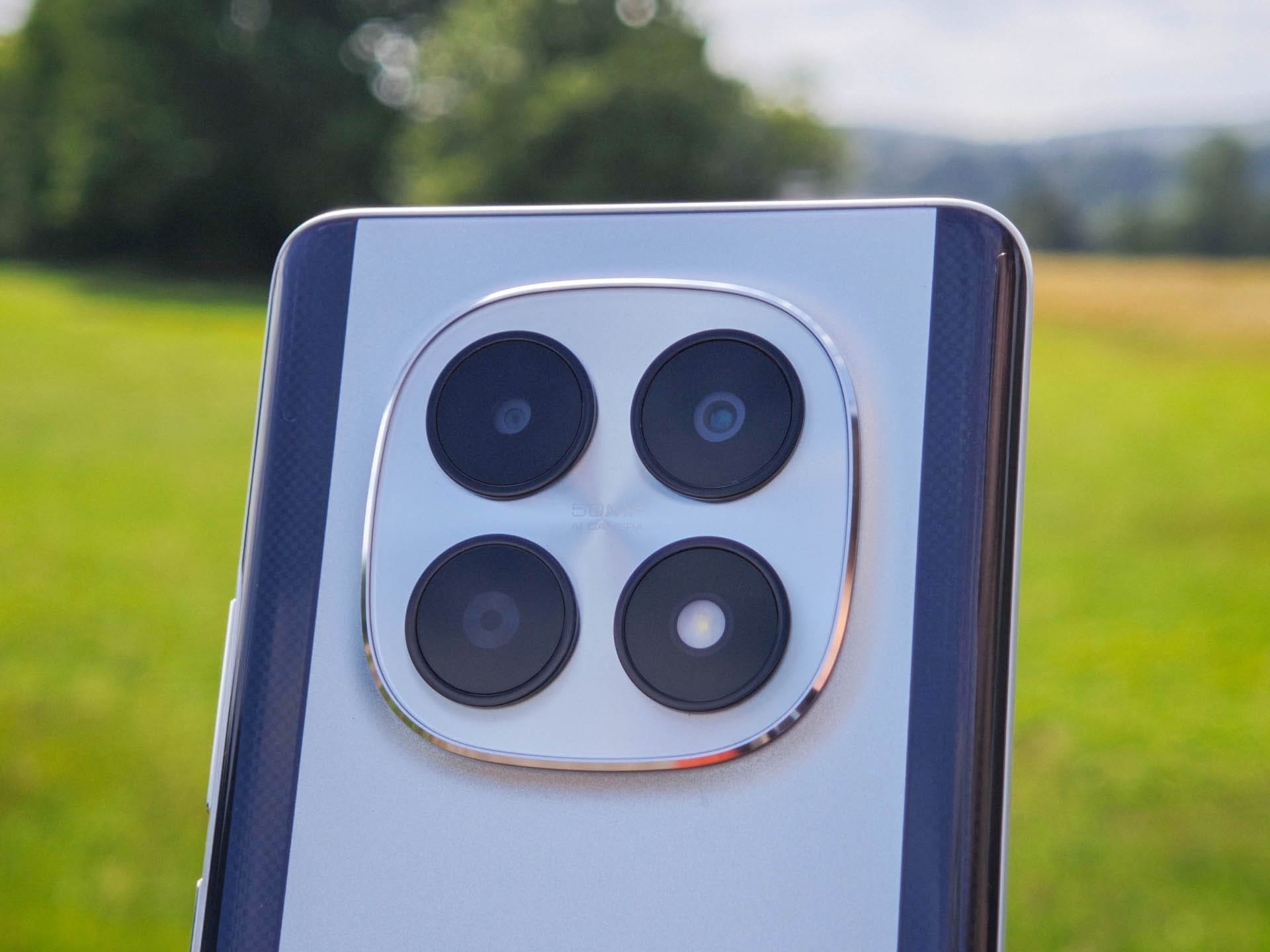
While many affordable smartphones now advertise two, three or sometimes even four lenses, the M8 5G essentially makes do with a single 50 MP main camera (Light Fusion 400, 1/2.88-inch, f/1.8 aperture). Xiaomi's data sheet barely explains the additional camera sensors, which primarily support the main camera rather than offering a noticeable photographic benefit. The POCO M8 5G does without an ultra-wide-angle camera altogether.
Main camera
In good lighting conditions, the main camera produces usable results, with good detail, natural colors, and pleasing overall image processing. The photos don’t look excessively artificially sharpened, which is quite a compliment these days. The camera occasionally tends to overexpose bright areas a little, but overall, image quality is impressively good for this price range.


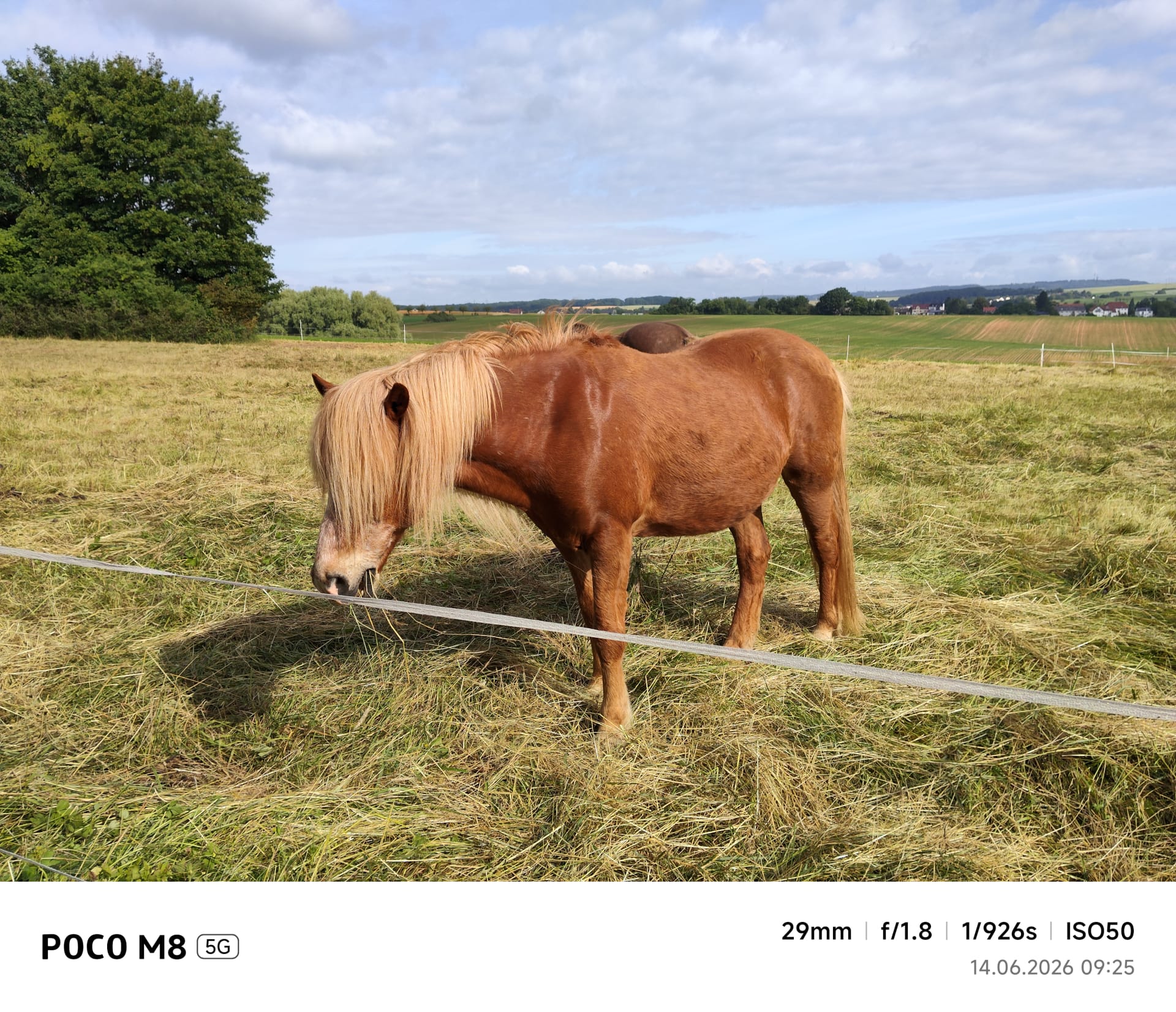


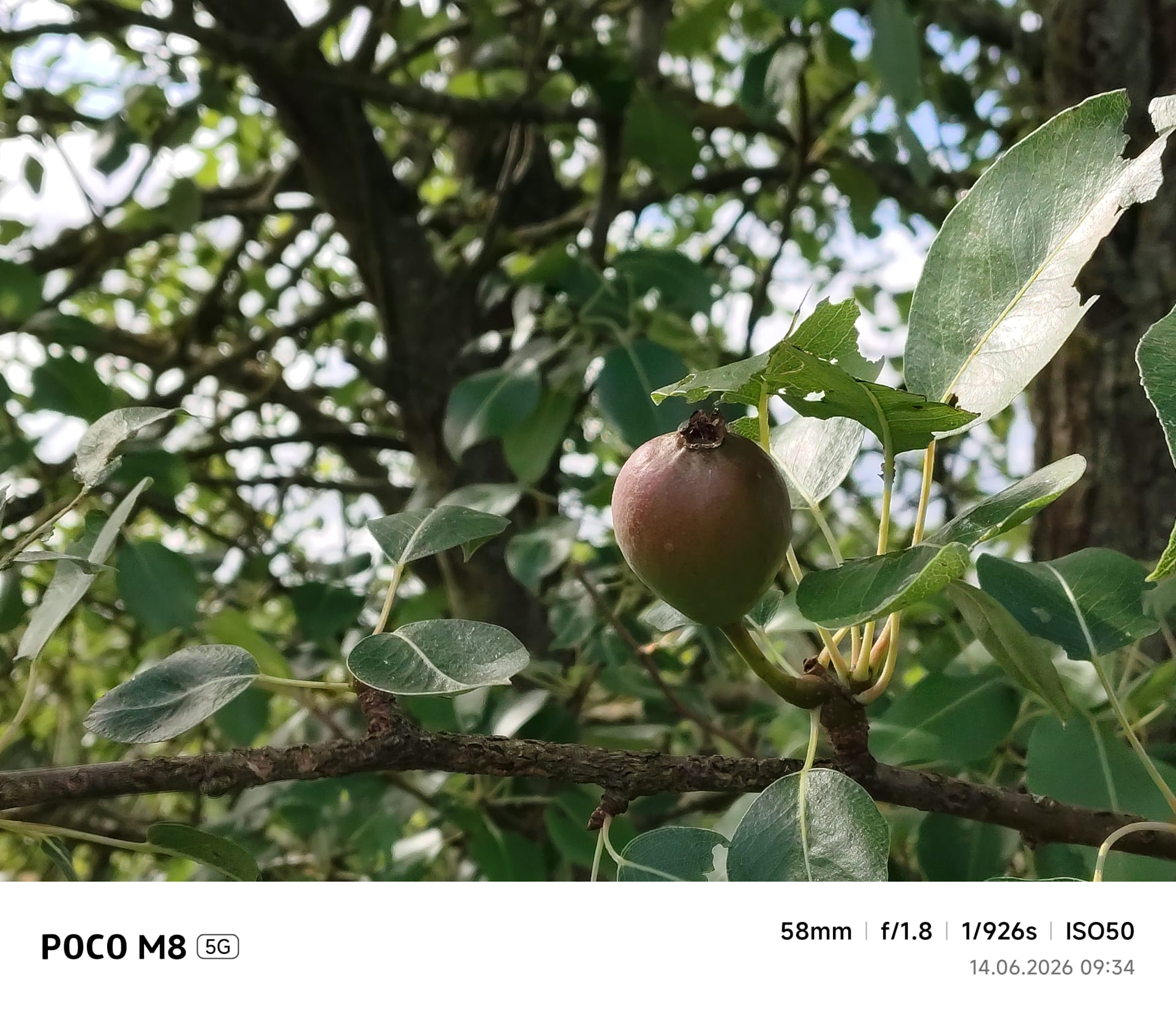

The versatility is less impressive. Anyone who likes taking landscape photos or wants to fit as much as possible into a shot in tight indoor spaces will quickly notice the lack of an ultrawide camera. The 2x zoom is also ultimately based on a crop from the main sensor and naturally can’t compete with a true telephoto lens. It’s enough for the occasional snapshot, but don’t expect miracles.
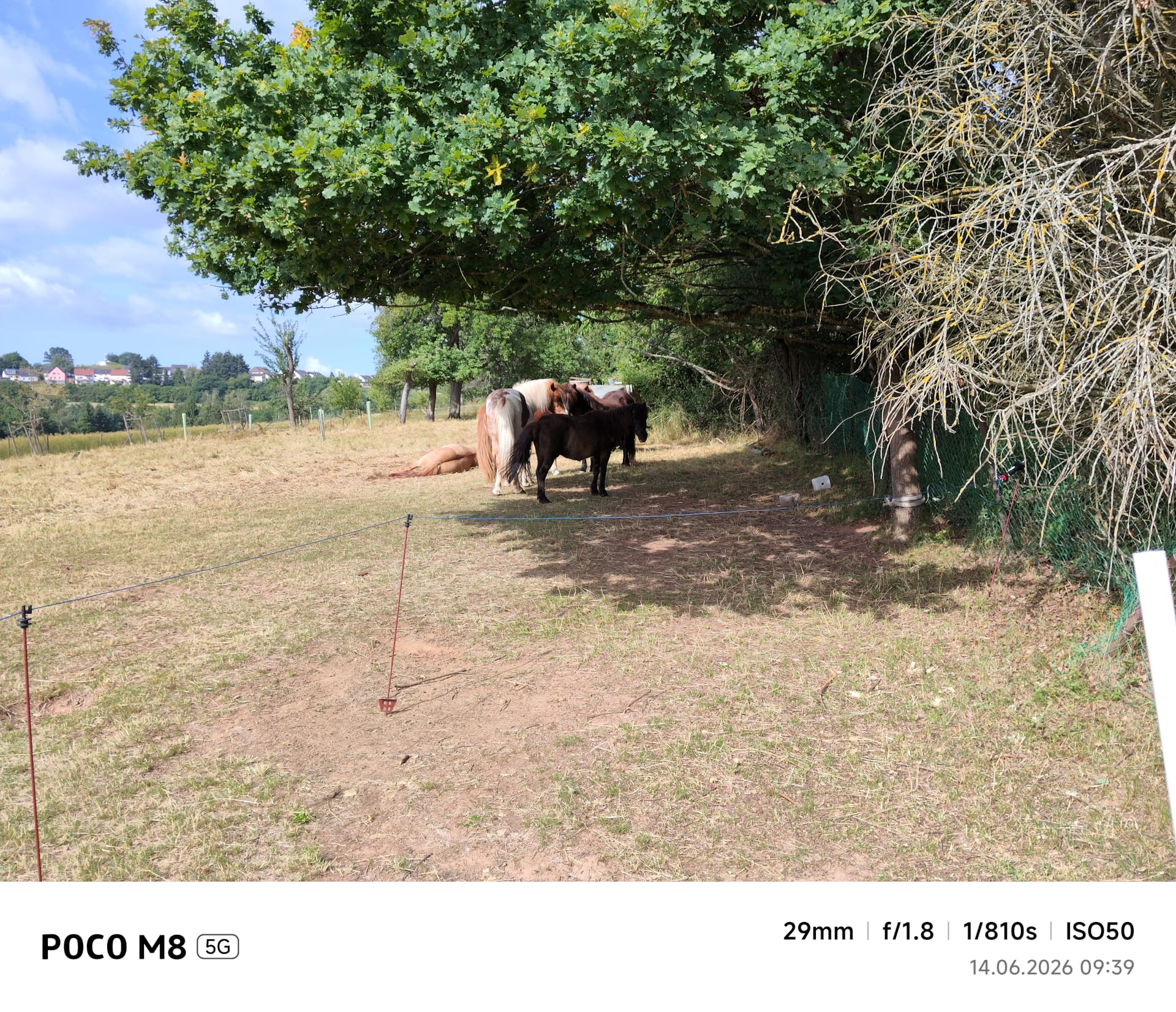


Once the sun goes down, the usual reality of budget smartphone cameras becomes apparent. The shots remain usable and benefit from balanced colour reproduction, but fine details are increasingly lost and image noise becomes visible. This is not a specific problem with the POCO M8 5G, but rather a reminder that good night photography is still one of the areas for which you usually have to spend significantly more.
Front camera
The front camera is a positive surprise. Selfies turn out reliably in sufficient light and look neither excessively softened nor artificially processed. The camera delivers more than enough quality for video calls, social networks or the occasional story.
Videos
Video recording is available at up to 4K at 30 frames per second, although image stabilisation is limited to Full HD. So if you film in 4K, you should try to keep your hands steady or place the smartphone on a tripod. The image quality itself is impressive, with convincing colours and dynamic range, but the lack of stabilisation makes the smartphone less appealing for video.
POCO M8 5G: Battery
At 5,520 mAh, the POCO M8 5G has a generous battery, although there are now devices offering even greater reserves of 6,000 or even 7,000 mAh. During the review period, the smartphone reliably lasted through the day, even on more intensive days, and usually still had enough charge left in the evening. Those who mainly write messages, scroll through social networks or stream videos will often not need to look for a charger until the second day.
This is due not only to the battery capacity but also to the efficient hardware. The Snapdragon 6 Gen 3 is not one of the most powerful chips in its class, but it is comparatively energy-efficient. Charging is supported at up to 45 watts, bringing the POCO M8 5G back to full charge in around an hour. Reverse charging other devices via cable is supported at up to 18 watts.
Fortunately, Xiaomi hasn’t skimped on essential accessories and includes a 45-watt power adapter and a USB-C to USB-A charging cable in the box. In 2026, that’s far from a given.
Our verdict
In the price range around 200 euros, the POCO M8 5G is one of the more well-rounded options. Its curved display, long software support, good battery life, and extensive feature set set it apart from many competitors, while the camera and plastic materials remain the most noticeable compromises made to meet the price.
Specifications
Processor and memory
- CPU
- Qualcomm Snapdragon 6 Gen 3 (SM6475-AB, 4 nm)
- CPU clock speed
- 4× Cortex-A78 up to 2.4 GHz + 4× Cortex-A55 up to 1.8 GHz
- GPU
- Adreno 710
- RAM
- 8 GB LPDDR4X (test device: 12 GB RAM, international version)
- Internal storage
- 256GB / 512GB UFS 2.2
- Storage expansion
- microSD up to 1 TB (hybrid slot)
Display
- Display size
- 6.77 inches
- Display resolution
- 2392 × 1080 pixels
- Aspect ratio
- 19,93:9
- Pixel density
- 388 ppi
- Display refresh rate
- 120 Hz
- Touch sampling rate
- 240 Hz (up to 2560 Hz Instant Touch in Game Turbo)
- PWM dimming
- 3840 Hz
- Display brightness
- 800 nits (typical), 3200 nits (peak)
- Display type
- Flow AMOLED (12-bit)
- Other
- HDR
- DCI-P3 colour space
- 68.7 billion colors
- Sunlight mode
- Reading mode
- TÜV Rheinland Low Blue Light
- TÜV Rheinland Flicker Free
- TÜV Rheinland Circadian Friendly
Cameras
- Main camera (wide-angle)
- 50 MP (f/1.8, 1/2.88", PDAF)
- Depth sensor
- 2 MP
- Features
- HDR
- Panorama
- Portrait mode
- AI eraser
- AI sky
- AI bokeh
- AI beautification
- Video (rear camera)
- 4K@30fps
- 1080p@30fps
- 720p@30fps
- EIS only at 1080p
- Front camera
- 20 MP (f/2.2, 1/4")
- Video (front camera)
- 1080p@30fps
- 720p@30fps
Mains
- Dual SIM
- Yes
- SIM size
- Nano-SIM + hybrid slot (Nano-SIM or microSD)
- GSM
- Yes
- HSPA
- Yes
- LTE
- Yes
- 5G NSA/SA
- Yes
Wireless
- Wi-Fi
- Wi-Fi 802.11 a/b/g/n/ac (Wi-Fi 5), dual-band, Wi-Fi Direct
- Bluetooth
- 5.1
- GPS
- GPS, GLONASS, BDS, Galileo, QZSS
- NFC
- Yes (depending on market)
- Infrared
- Yes
Sensors
- Fingerprint sensor (optical, in-display)
- AI face unlock
- Virtual proximity sensor
- Ambient light sensor
- Accelerometer
- Electronic compass
- Gyroscope
- IR blaster
Battery
- Battery
- 5520 mAh
- Fast charging
- 45W TurboCharge
- Reverse charging
- 18W wired
Other
- Operating system
- Android 15 (HyperOS 2)
- Android updates
- 4 major Android version updates
- Security updates
- 6 years
- Audio
- Stereo speakers
- Dolby Atmos
- Hi-Res Audio
- 300% volume boost
- Connection
- USB-C 2.0
- OTG
- Case
- Plastic frame
- Plastic back cover
- Protection rating
- IP65 (Europe)
- IP66 (international)
- Drop-resistant up to 1.7 m
- Size
- 164.0 × 75.4 × 7.35 mm
- Weight
- 178 g
- Colors
- Black
- Silver
- Green
- Special features
- Curved Flow AMOLED display
- microSD expansion up to 1 TB
- IR blaster
- Google Gemini
- Circle to Search
- 45W fast charging
Price comparison
| Store | Price | Link |
|---|---|---|
| AliExpress | 264,02 € | Go to store |
Comments