Contents
realme TechLife Robot Vacuum
Already at the end of 2020, realme Europe CEO Madhav Sheth announced that realme would also be actively involved in the IoT segment in 2021. On the home market in China and in India, realme is already represented with smart plugs, TVs, body analysis scales and many other IoT or smart home products.
While some Smart Life products have also appeared here, the selection is rather modest by comparison. It is therefore all the more interesting that realme has launched a robot vacuum cleaner that is also available to European customers.
Design, build quality, and included accessories
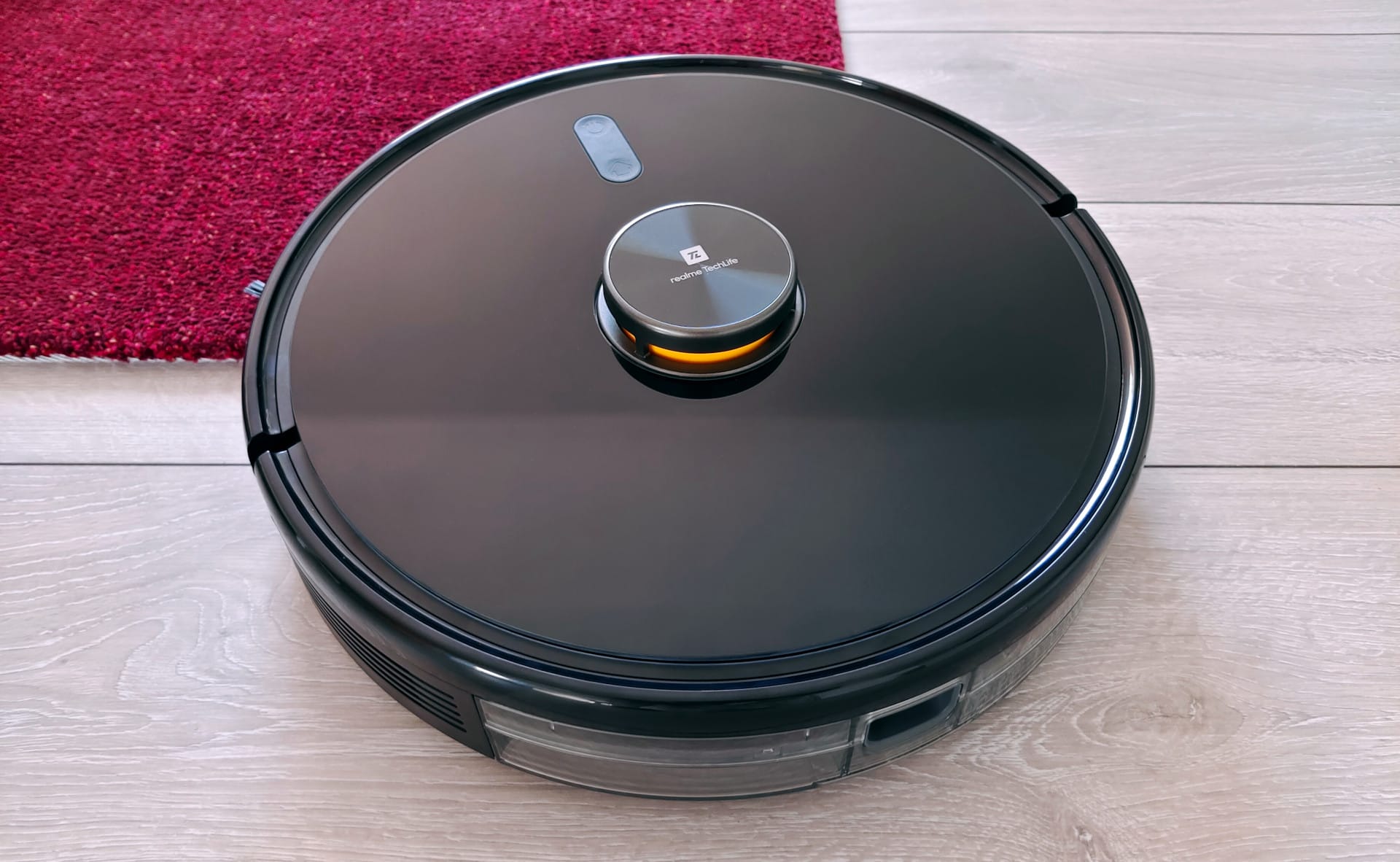
In terms of design, the realme TechLife robot vacuum hardly differs from other models of its kind. The round housing has a diameter of 35 cm and is 10 cm high. This makes it comparable in size to a Roborock S7. With a weight of 3.3 kg, the robot vacuum is one of the lighter models.
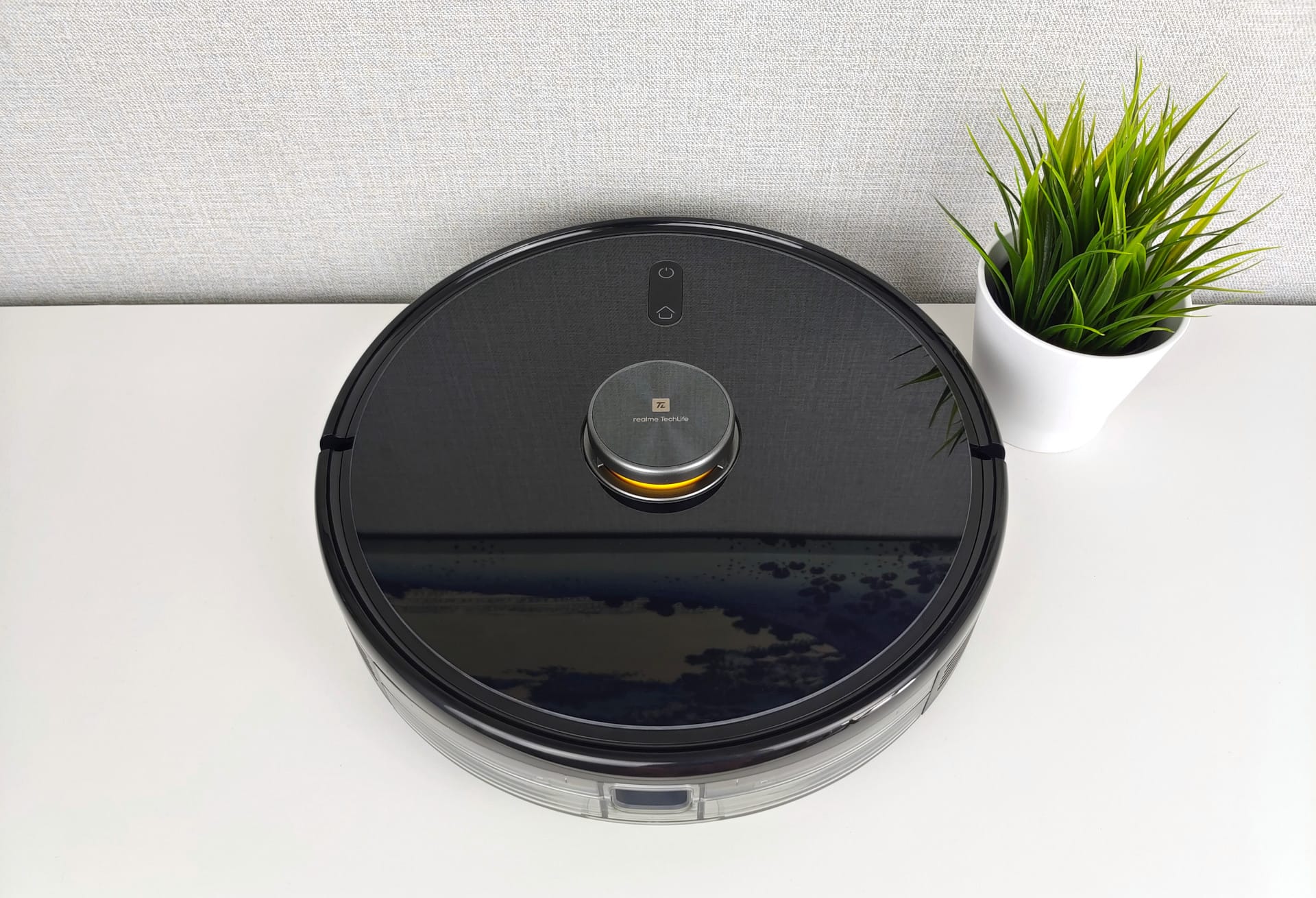
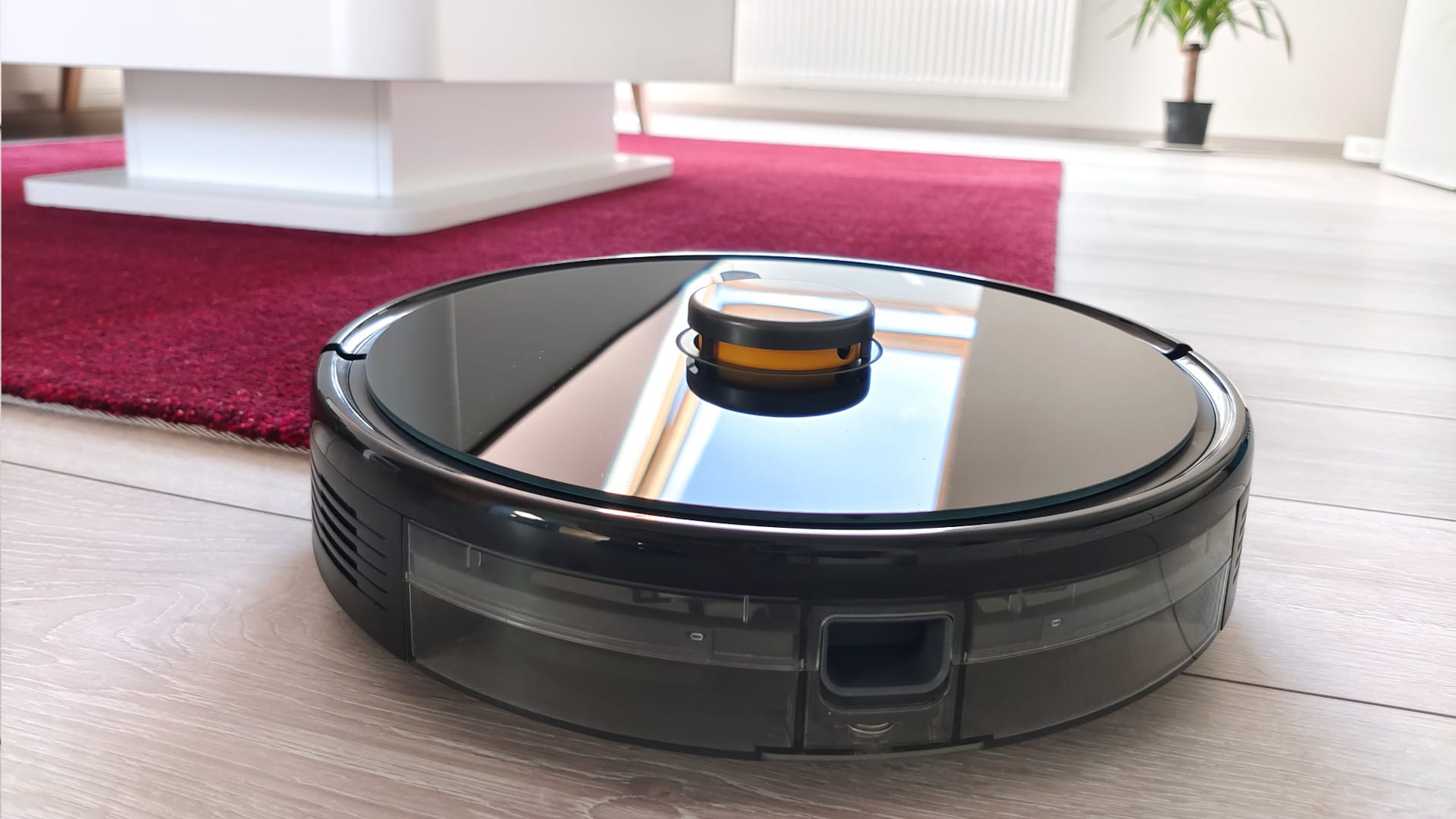
Most of the casing is made of plastic. However, for the top cover plate, they chose break- and scratch-resistant glass. While this looks smart, fingerprints and dust accumulate there over time, which are hard to miss on the high-gloss surface.
The LiDAR tower is located in the centre of the top surface. The cover features the realme logo and the realme TechLife inscription. The rotating part of the laser tower, which is kept in the typical realme yellow, adds a touch of colour. Also positioned on the top surface are a power button and a home button. Both buttons are illuminated and covered with rubber for protection.
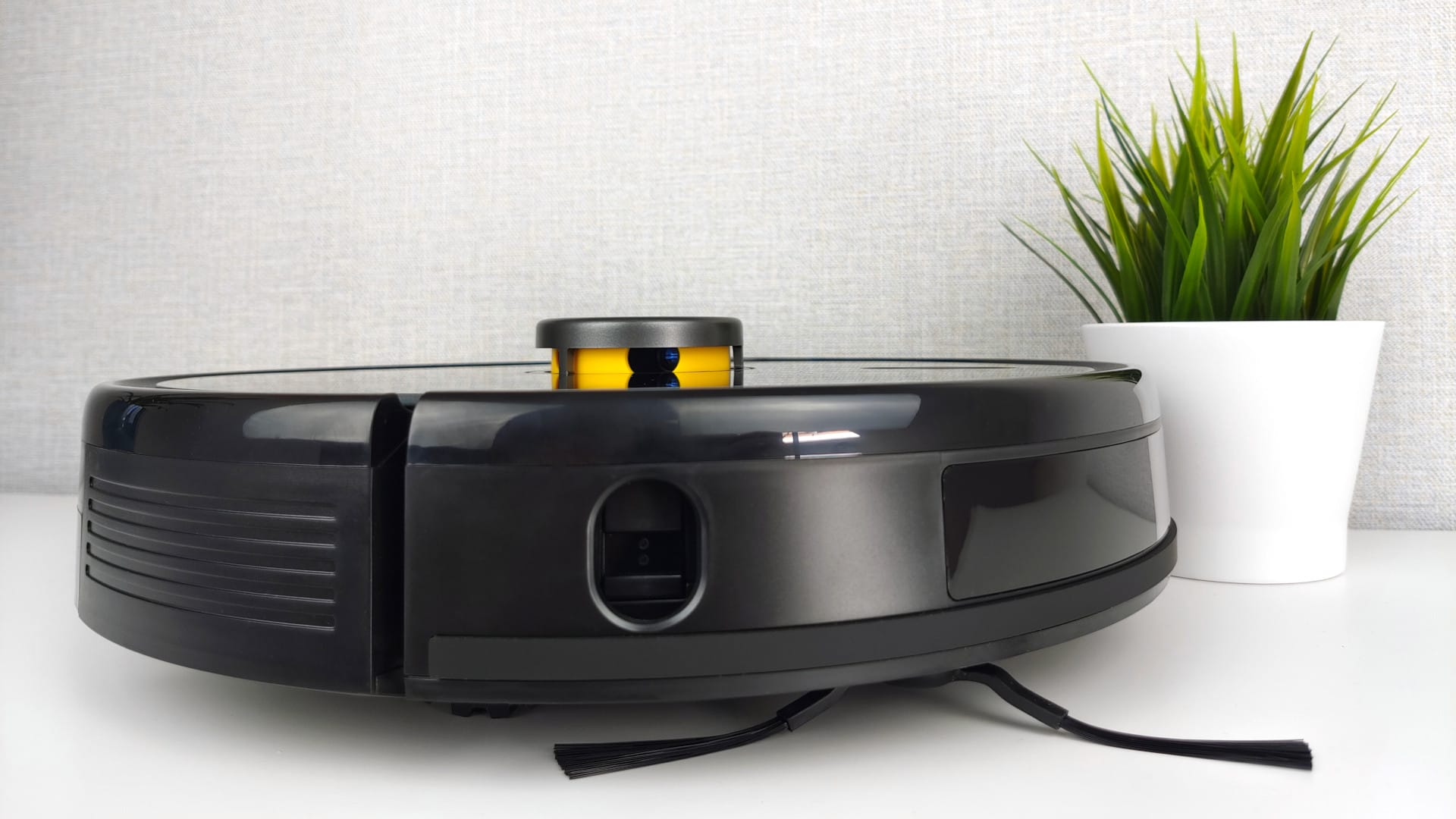
In addition to the LiDAR tower, the realme robot vacuum is equipped with a total of 38 sensors. Obstacles are detected using side-mounted (infrared) sensors. The robot vacuum approaches obstacles in close proximity via a pressure-sensitive bumper oriented in the direction of travel.
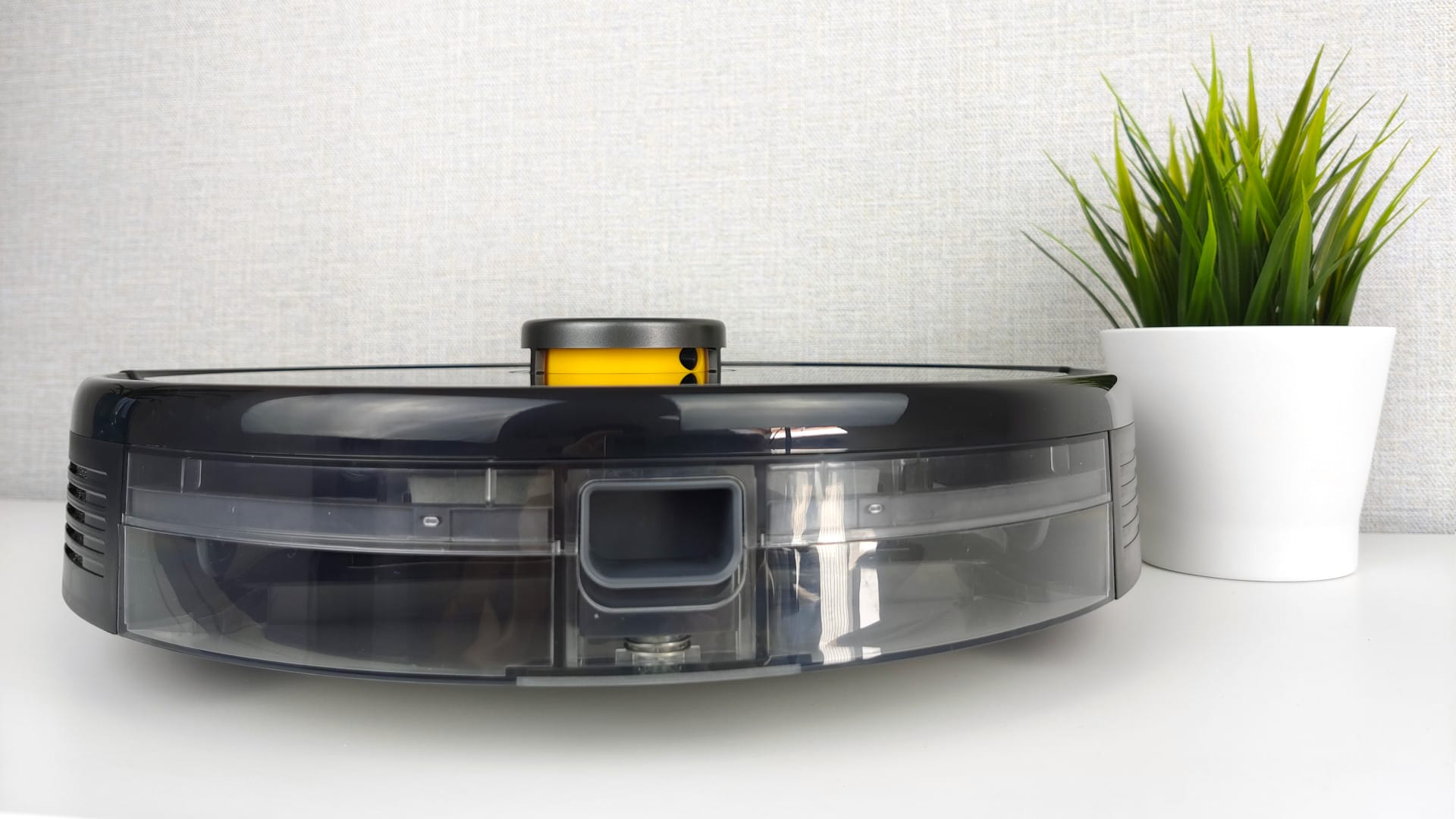
The dust container is inserted from the side, not from the top. The generous capacity of 600 ml offers enough room for dirt from multiple cleaning runs. A HEPA filter in the dust container prevents fine dust from being released into the surrounding air.
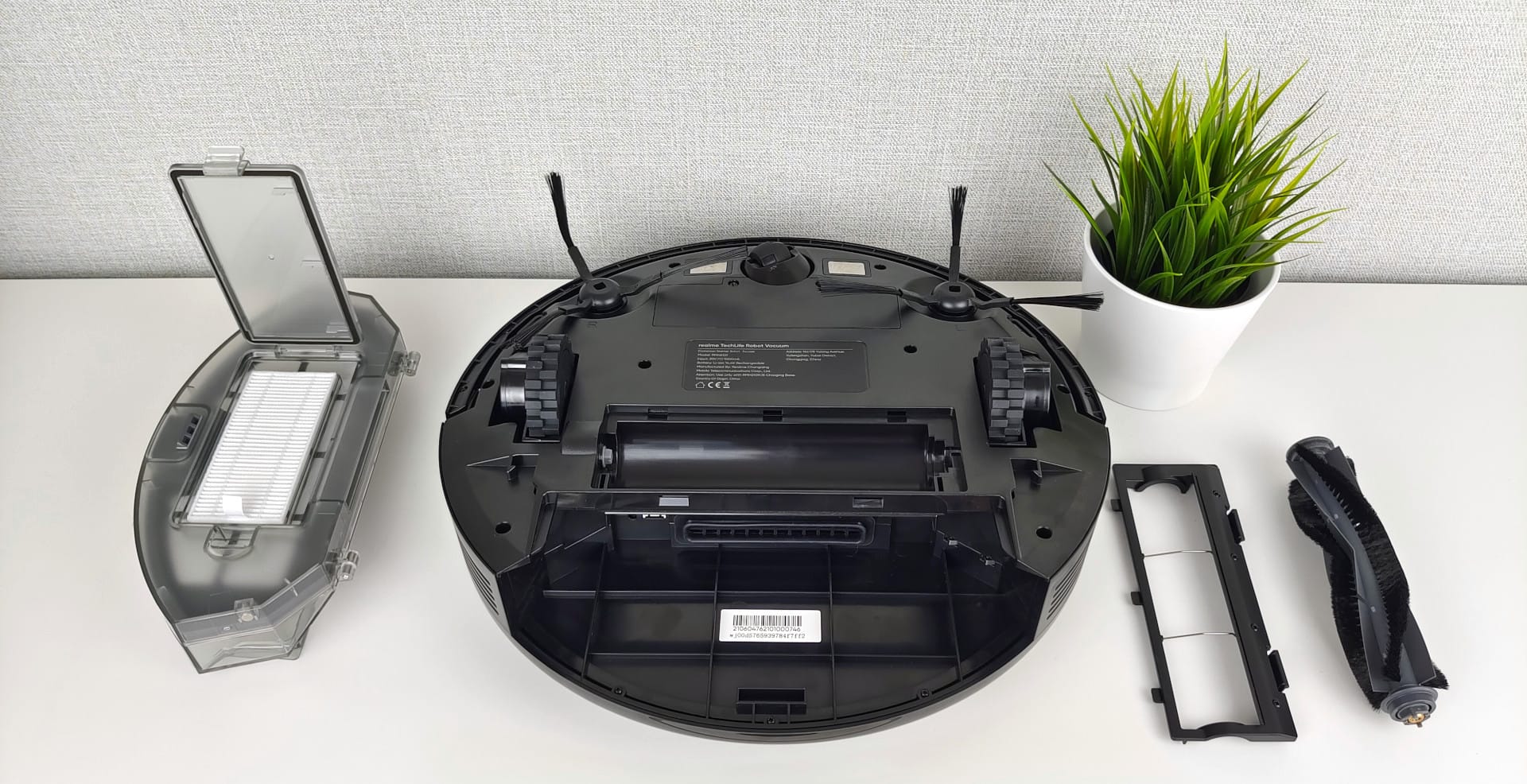
The underside also differs little from other robot vacuums. Here we find the drop sensors, the drive wheels and a castor wheel, the two charging contact points and the removable main brush with V-shaped bristles and a rubber strip. For the side brushes, realme opted for not just one but two. This allows the robot vacuum to reach corners more effectively.
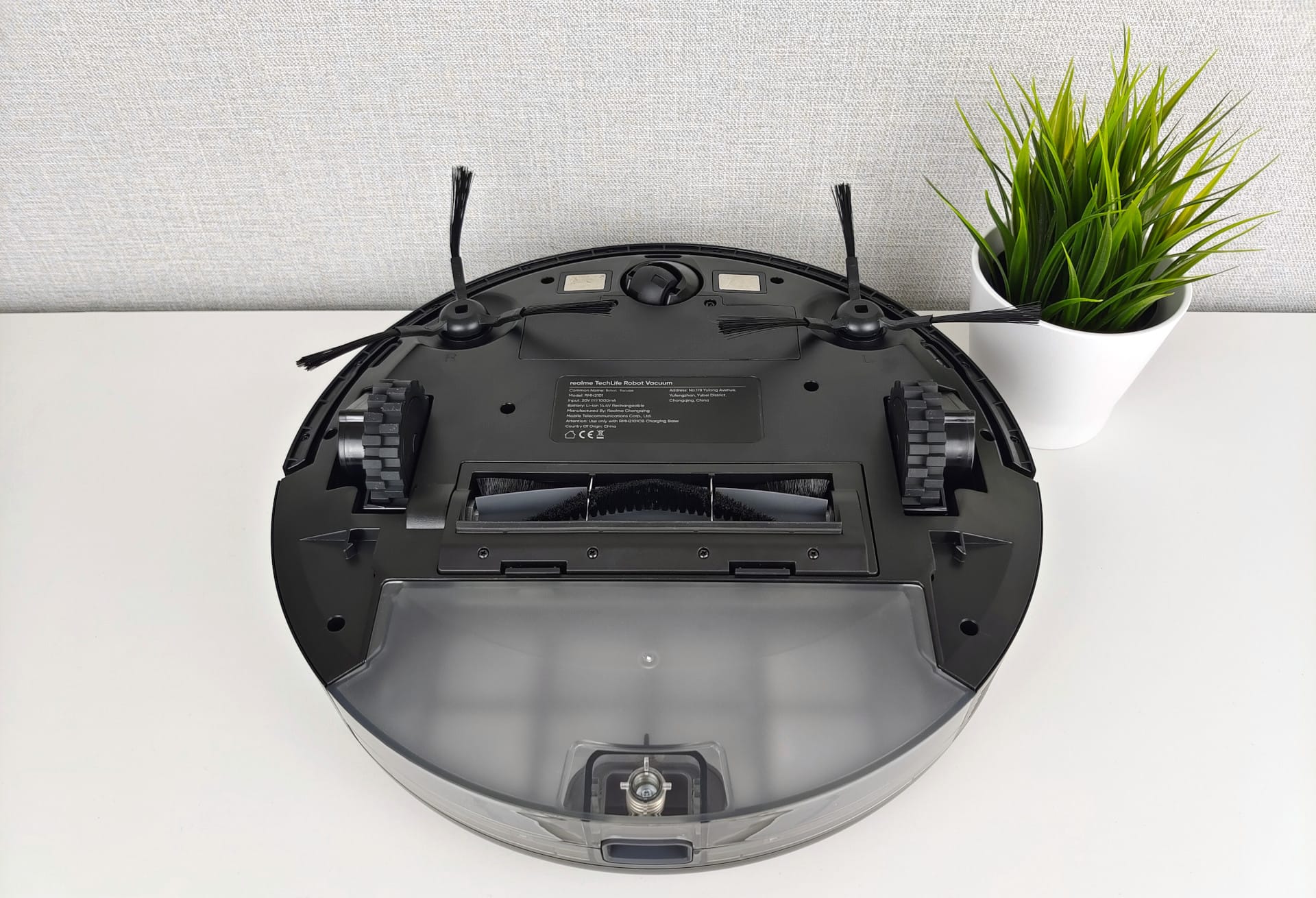
In terms of build quality, the realme TechLife vacuum robot can keep up with the competition. Nothing rattles, and regarding wear, there are no notable issues after multiple cleaning runs.
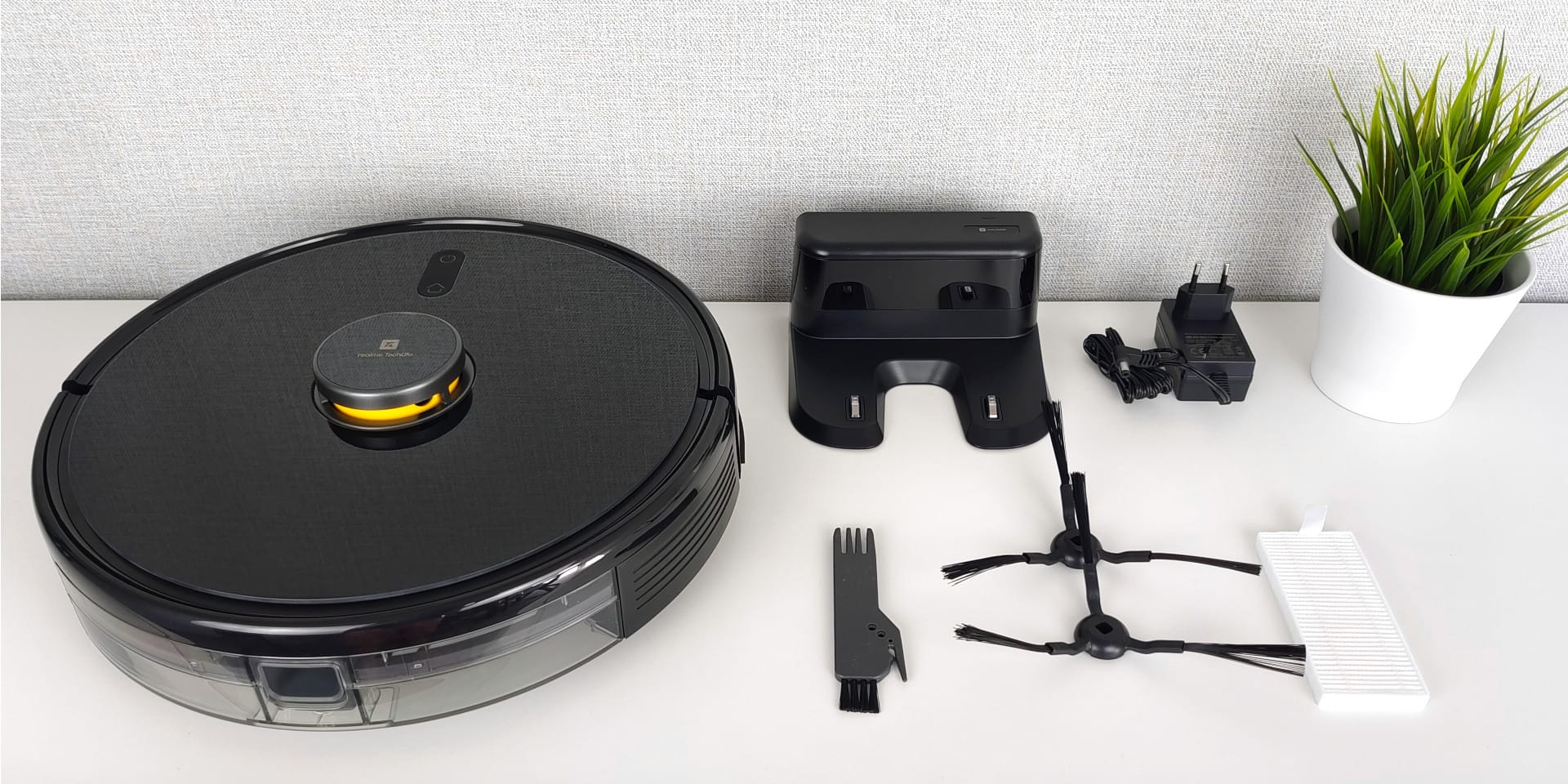
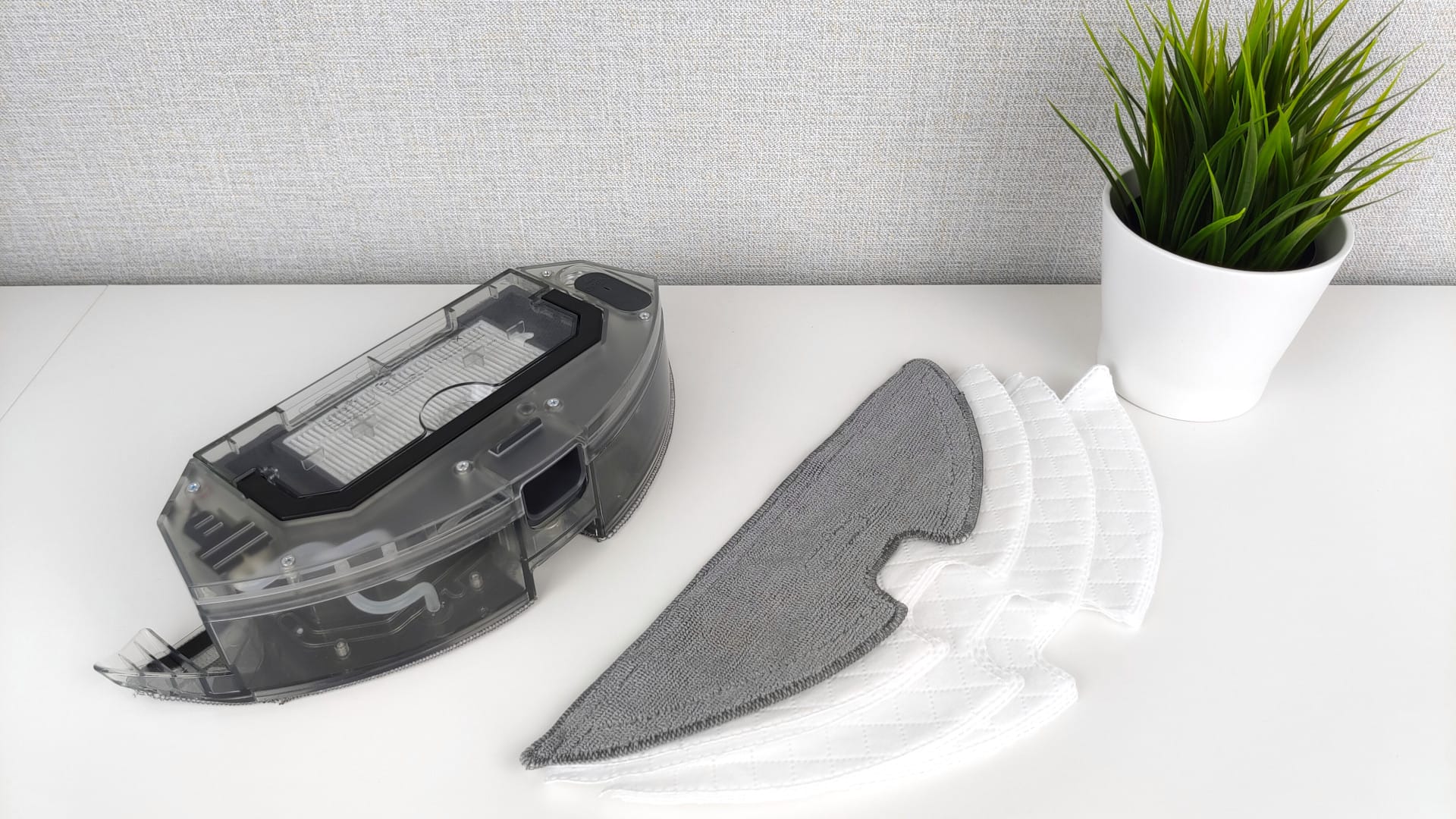
The delivery scope is limited. In addition to the robot vacuum, it includes a typical tool with brush and blade for removing hair, a spare filter, the charging station with power adapter, and an instruction manual. If you want to use the realme robot vacuum for mopping as well, the "Mopping Kit", consisting of a water tank and mop cloths, must be purchased separately. This is unfortunate, as mopping equipment is typically included with other manufacturers.
Setup and App
Setting up the realme robot vacuum requires the ‘realme Link’ app and a realme user account. The app is available free of charge for download from the respective app stores (Android and iOS). The app manages all realme Smart Life products, from fitness trackers and headphones to security cameras. When you click ‘Add device’ within the app, various realme products are suggested for connection.
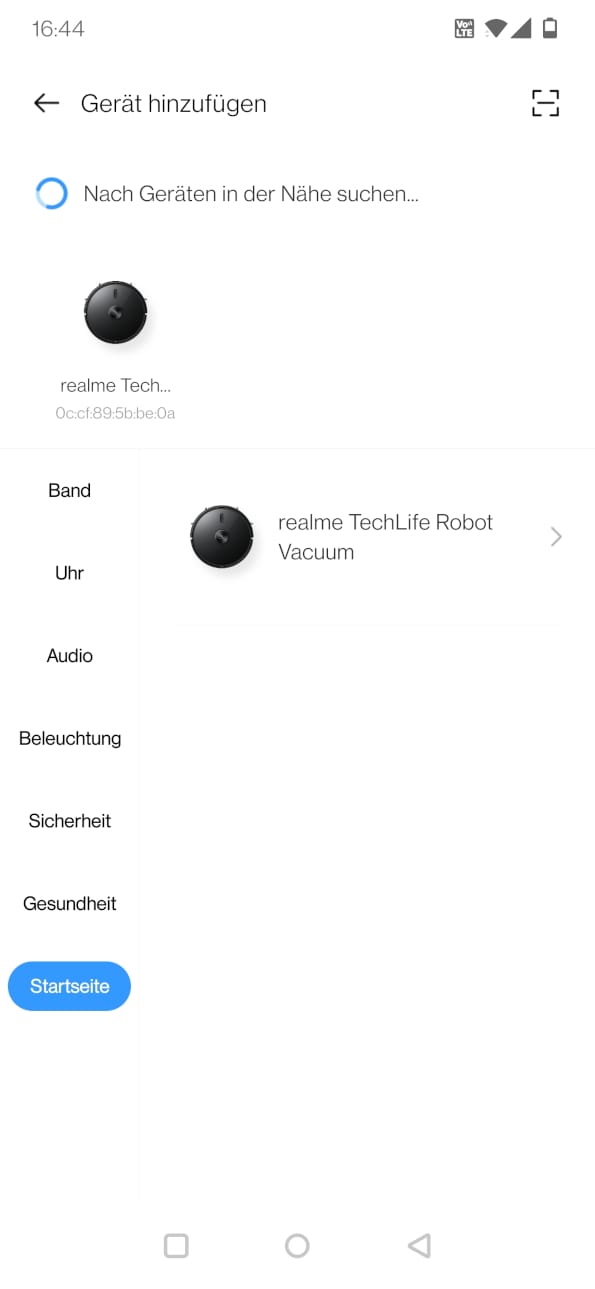
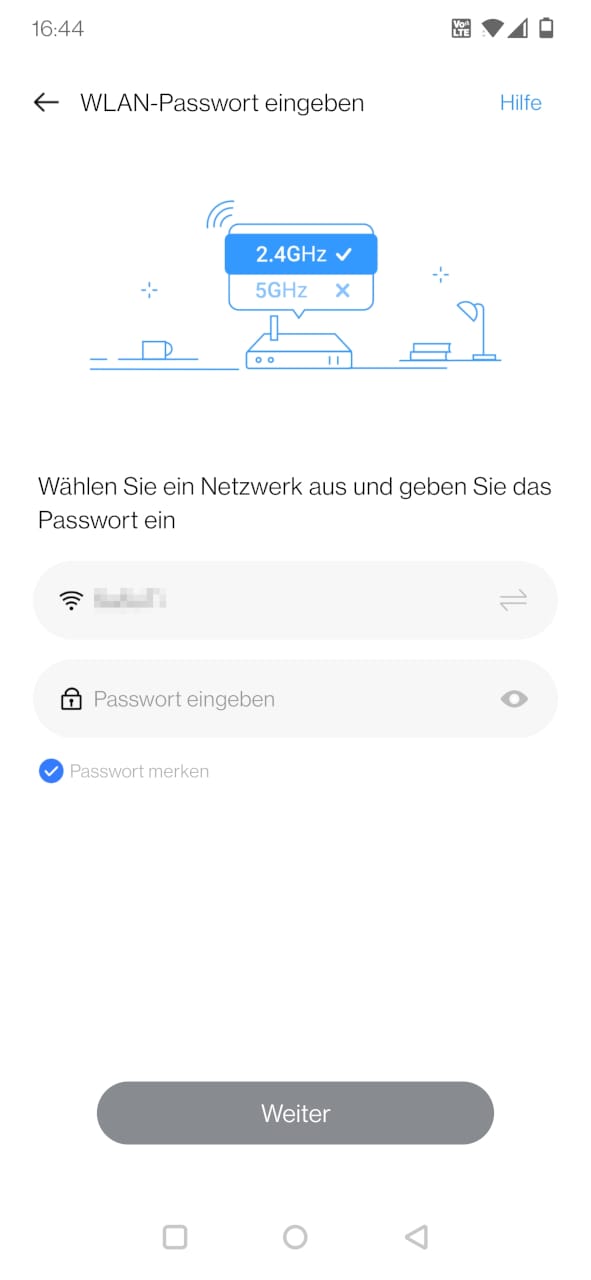
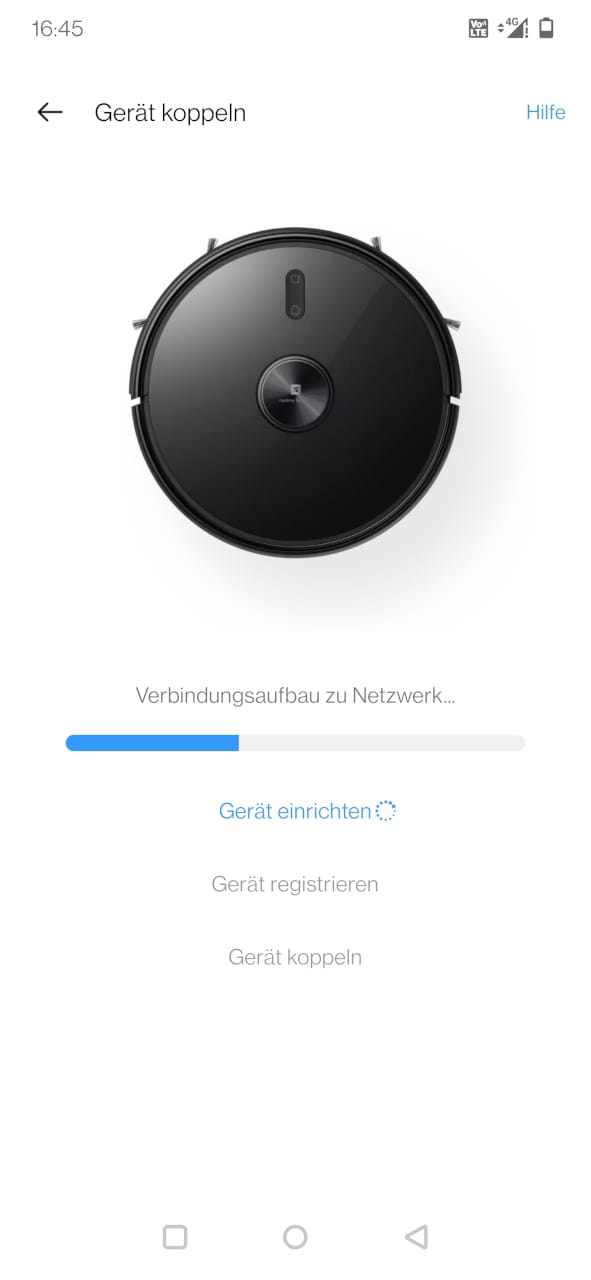
In testing, the app directly detected the realme robot vacuum. The necessary setup steps are easy to understand and uncomplicated. Basically, you only need to enter your Wi-Fi details so that the robot vacuum is connected to the home network (2.4 GHz only). Then enter a name for the robot vacuum, and the device is ready to go.
The app's structure is clear. The home screen presents the cleaning map with room layout and the current route, if the robot vacuum is currently cleaning. Below the map, you can set the cleaning task (spot, zone, room and auto). In addition to a Return-to-Home button, there is a start button, a button to set the suction power (Quiet, Normal, Turbo and Max) and a button to access further settings. Above the map, you get useful information about the completed cleaning area, the cleaning time and the remaining battery.
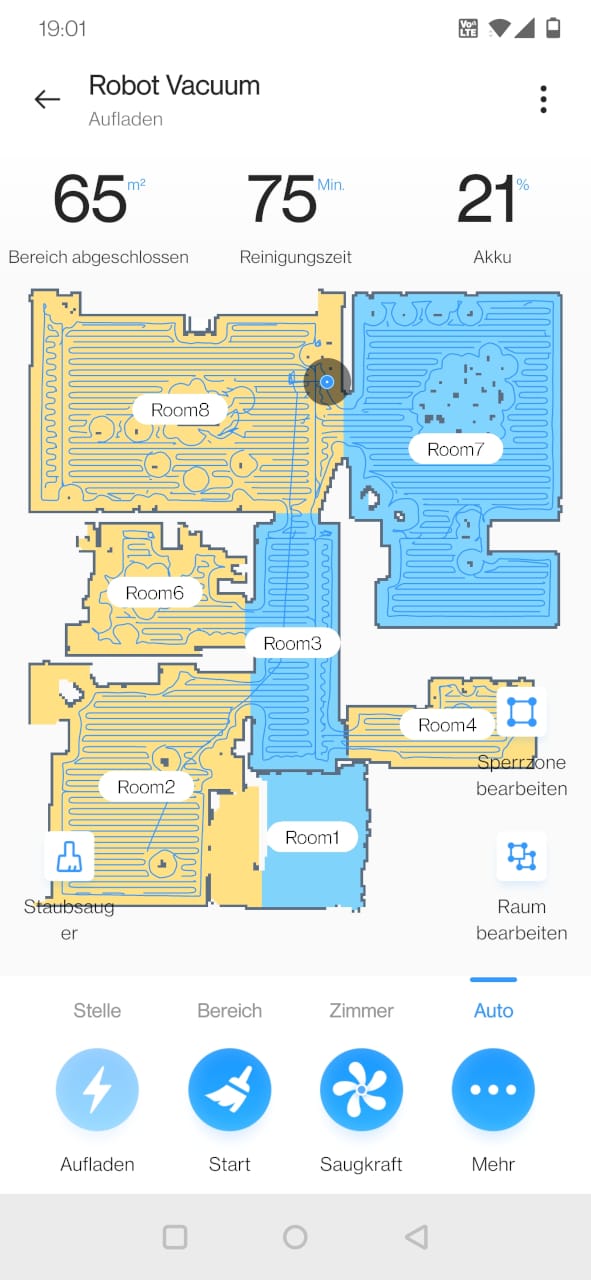
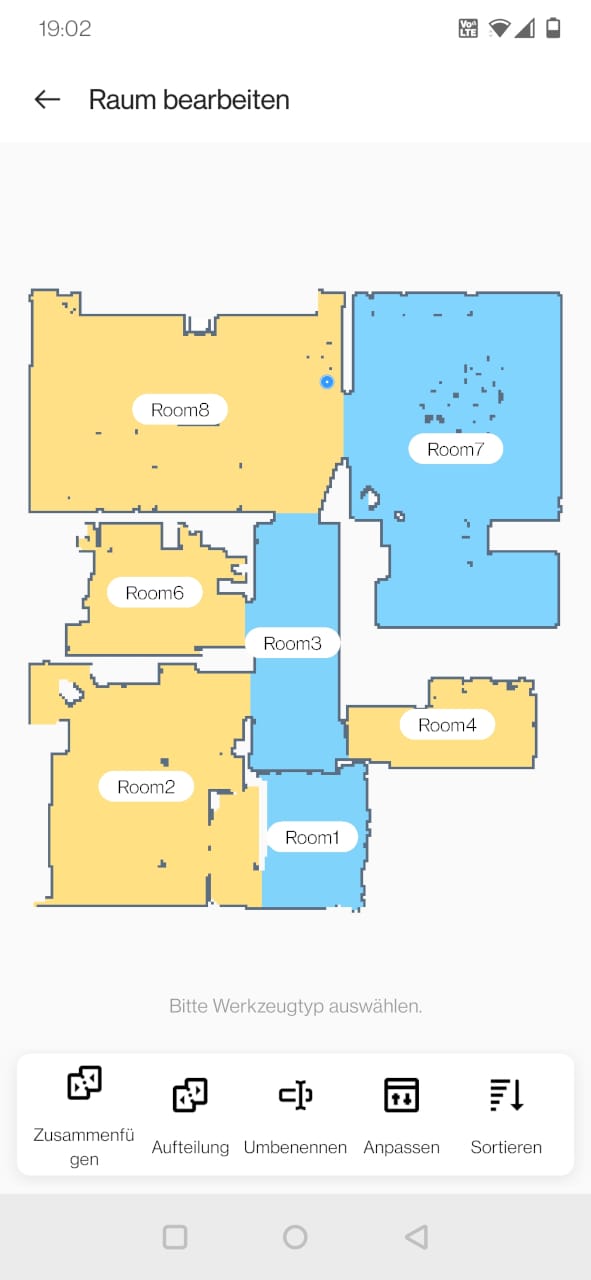
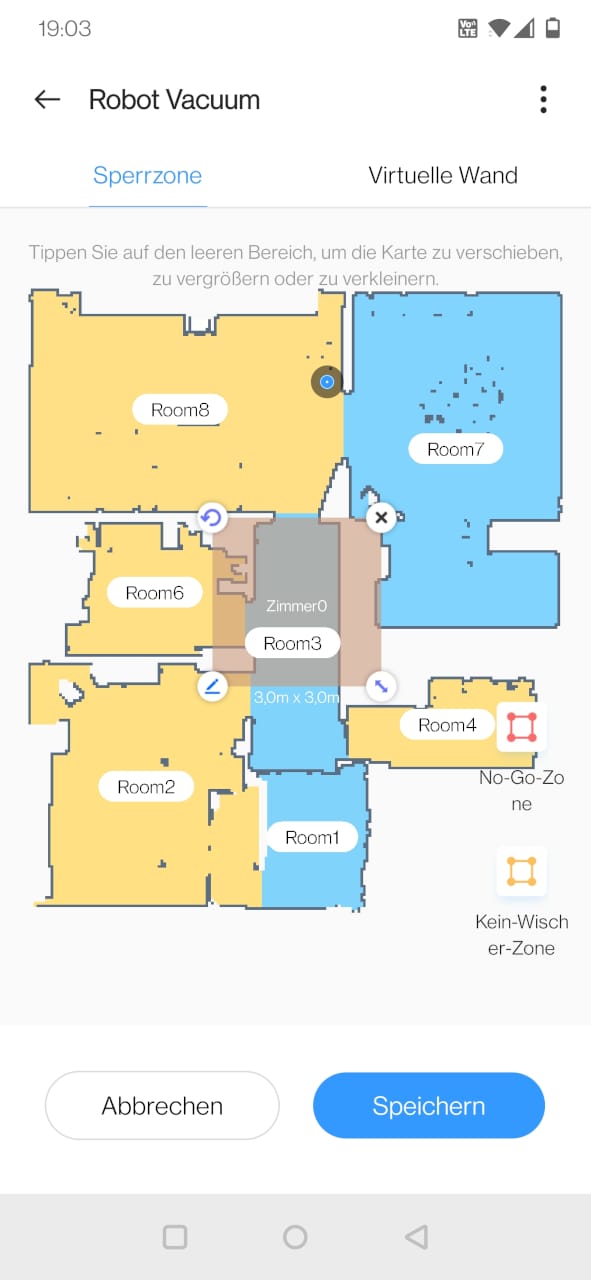
The settings allow you to define cleaning profiles. These profiles are based on time, suction power, water level and cleaning area. The ‘Do Not Disturb’ mode ensures that the voice output remains silent. Other features include a virtual remote control, a find function, an auto-boost for carpets and settings for voice and volume. The voice output is limited to Chinese, English female voice and English child voice.
The map management provides access to stored maps (maximum 5). This is especially useful with multiple floors, so the vacuum robot doesn’t have to create a new room map every time. The room map is divided into individual rooms, which can be separated or merged via the app. Restricted areas can be drawn or marked on the map as “No-Go zones” and “No-mop zones”. The “Virtual wall”, which can also be drawn anywhere on the map, prevents the vacuum robot from crossing the drawn line.
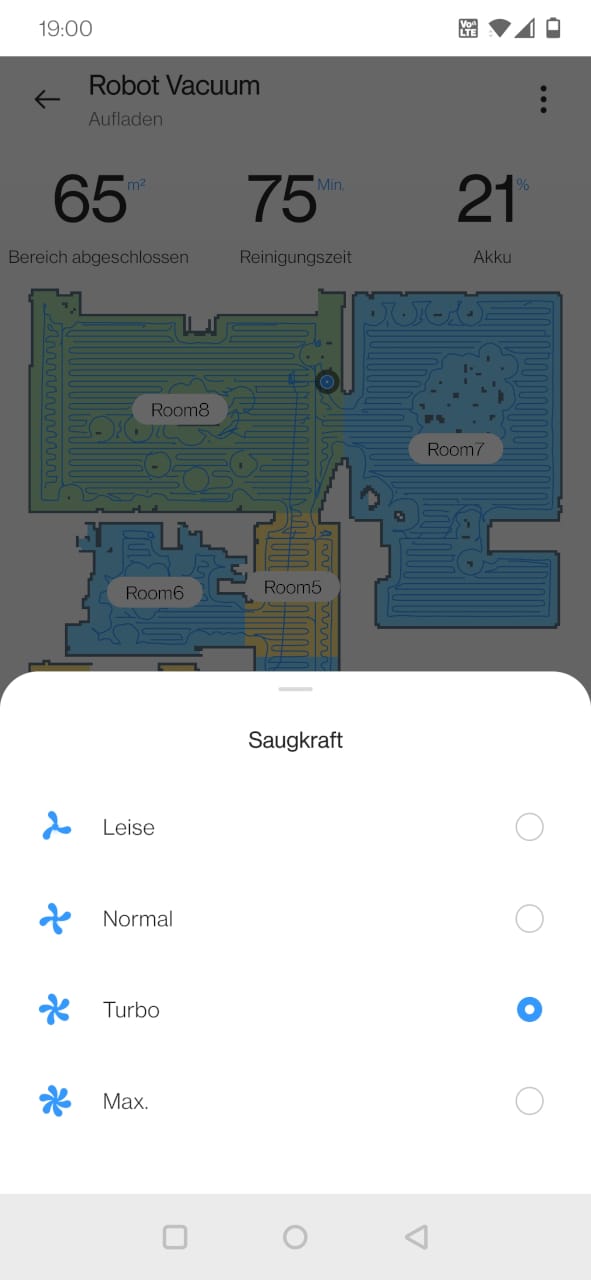
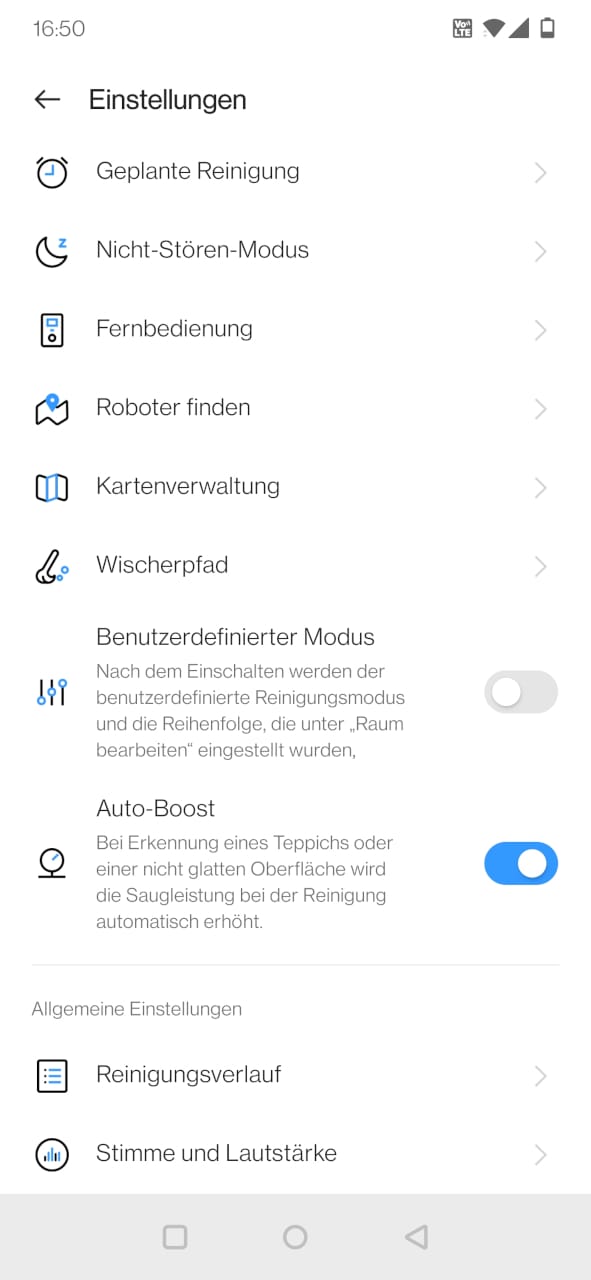
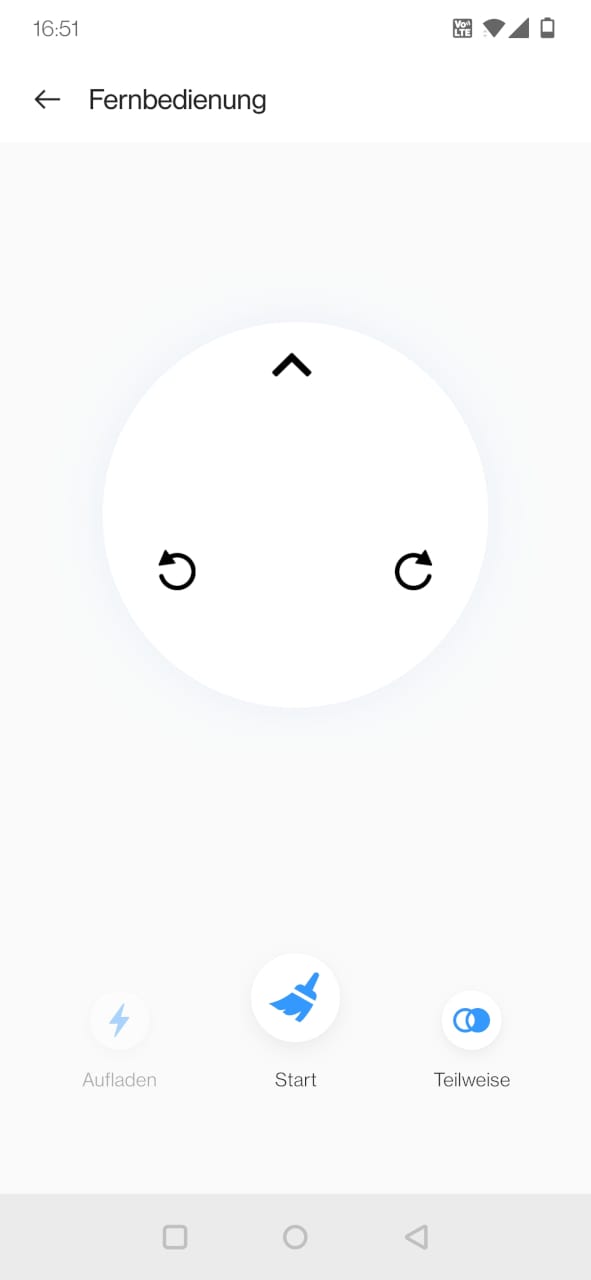
Incidentally, the robot vacuum cleaner can also be integrated into the smart home. A skill for Amazon's Alexa and an interface for Google Home are already available.
Practical test
Suction power
With a suction power of 3000 Pa, the realme robot vacuum is one of the more powerful models on the market. It only achieves this, however, in the “Max” suction level. In “Turbo”, the suction power is 2500 Pa. In “Normal” mode, which is active by default, the suction power is 1200 Pa. Coarse and fine dirt can be easily vacuumed from hard floors in this mode.
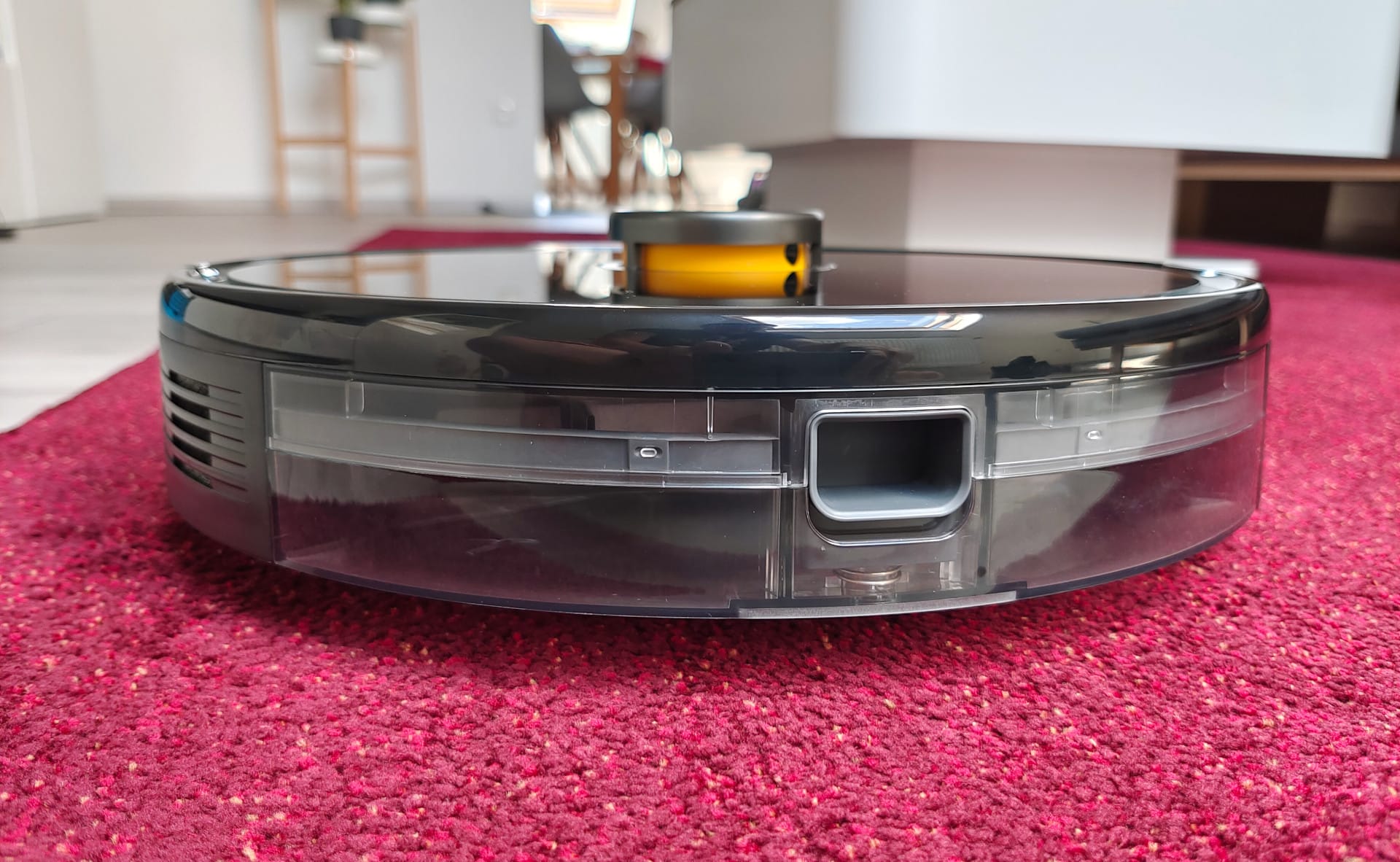
For carpets, turbo mode is recommended, which activates automatically when the auto-boost function is active. This worked flawlessly in testing. However, note that the realme robot vacuum only handles steps up to 1.5 cm. It tends to get stuck on higher carpet edges and long pile. After several unsuccessful attempts to free itself, the vacuuming process is paused and the error is signalled via voice output.
Those who want it particularly quiet choose the "Quiet" mode. In this mode, the suction power is throttled to 500 Pa. The noise level of just 55 dB is indeed quiet. But even in "Normal" mode, the vacuum robot works at a (still) pleasant noise level, at which you can carry on a conversation.

After the daily cleaning run, very little help is needed from the handheld vacuum cleaner, as the two side brushes reach into the corners. Hair tends to get tangled in the V-shaped brush roller less often than in a conventional brush roller. If a hair does get tangled, it can be easily pulled out, as the V-shaped arrangement also prevents hair from tightening.
Cleaning the 600 ml dust container is done quickly. Pull out, tap out, rinse under water and put back in.
Navigation
The navigation accuracy is in no way inferior to comparable models. The LiDAR technology has proven itself over the years.
When you send the realme robot vacuum on its cleaning tour for the first time, it extensively explores its surroundings and records them in a map. The first cleaning run takes slightly longer on average than subsequent runs. It is not uncommon for the robot vacuum to only partially clean a room during its first run, move on to the next one, and then continue cleaning the first room.
For 65 m², the vacuum robot initially took 75 minutes and then only 65 minutes. On subsequent runs, rooms are targeted more precisely and cleaned in one go. The accuracy of the created map is good. Only one corridor was split into two sections during the test. Such room sections can be quickly merged into one room via the app.
The realme vacuum robot cautiously approaches obstacles. It approaches table and chair legs slowly and circumvents them at their edge, provided there is enough space. Particularly flat obstacles, such as cables, plant pot saucers or lying around clothing, are mercilessly driven over. This is not unusual. Almost every vacuum robot without sonar or (stereo) camera struggles with this. The fall sensors detect stairs precisely.
Wiping function
Fortunately, our test device was delivered including the “Mopping Kit”. The tank is a so-called 2-in-1 system that combines a 300 ml dustbin with a 350 ml water tank. This allows the robot vacuum to vacuum and mop simultaneously.
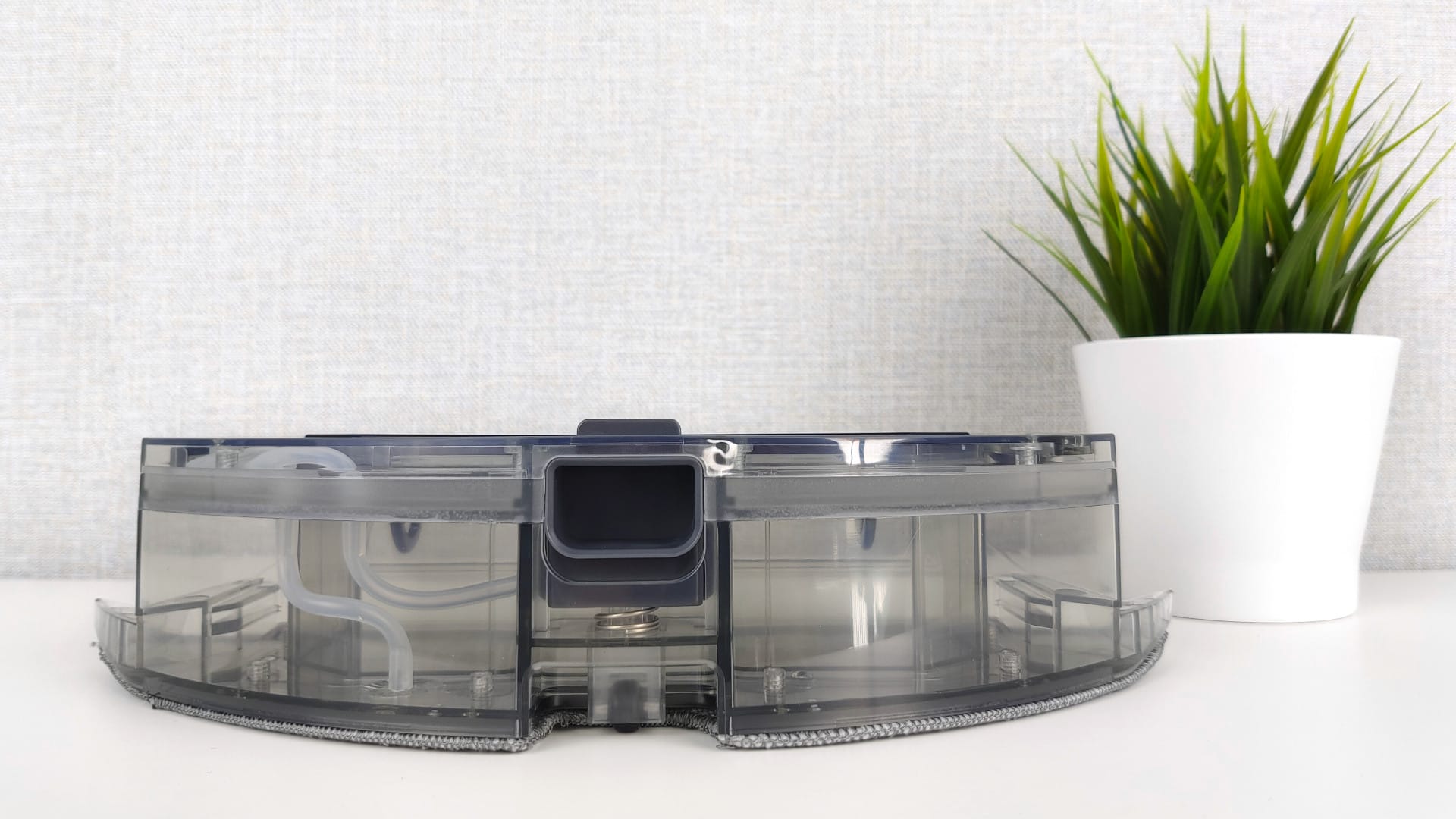
Water is filled into the water tank via a side opening. The dust container is inserted separately into the tank and, like the standard dust container, has a HEPA filter. An water pump integrated into the container enables 4-level water dispensing. Which room and the amount of water dispensed can be set via the app. To prevent wet carpets, "no-mop zones" should be defined in the app.
The robot vacuum simply drags the microfibre cloth behind it. So that the mopping function remains reasonably useful, realme has opted for two mopping patterns. The “S-shaped path” saves power. The “Y-shaped path” is intended to simulate manual mopping and thereby increase the cleaning effect.
The mopping function itself is good, but it does not replace manual mopping. In particular, the pressure applied during hand mopping is not achieved here. The mopping function is not sufficient for stubborn dirt and limescale marks.
Battery
The battery of the realme TechLife robot vacuum has a capacity of 5200 mAh. This is standard practice in this price range. In "Turbo" mode, the robot vacuum achieves a run time of approx. 130 minutes on a single charge. This is enough for the complete cleaning of an 180 m² area. Switching to "Normal" or "Quiet" mode extends the run time to up to 300 minutes. A full charging cycle takes approximately 6 hours.
Our verdict
The build quality is good, the cleaning performance is solid, the battery lasts a long time, and the navigation is largely flawless. Whether it is justified to offer the mopping kit as a purchasable feature is debatable.
realme’s first robotic vacuum is definitely not a disappointment and certainly doesn’t need to hide from the competition. However, the realme TechLife Robot Vacuum Cleaner is primarily just another competitor in its price range, as there are no innovative features that elevate it to another level.
Specifications
Cleaning
- Suction power
- up to 3000 Pa
- Suction modes
- *Quiet 500 Pa
- *Normal 1200 Pa
- *Turbo 2500 Pa
- *Max 3000 Pa
- Noise levels
- >55 dB
- Container
- 600 ml (300 / 350 ml 2-in-1)
Navigation
- Type
- LiDAR
- Sensors
- 38
- Room map
- Yes
- Room layout
- Yes
- Restricted areas
- Yes
- Virtual Wall
- Yes
Connectivity
- App
- realme Link
- Connection
- WiFi 2.4 GHz
- Alexa
- Yes
- Google Home
- Yes
Battery
- Capacity
- 5200 mAh
- Runtime
- up to 300 min.
- Charging time
- 6 hours
Size & weight
- Size
- 35 x 35 x 10 cm
- Weight
- 3.3 kg
What’s included
1x robot vacuum, 2x side brushes, 1x HEPA filter (spare), 1x cleaning tool, 1x charging station, 1x power supply, 1x manual


Comments