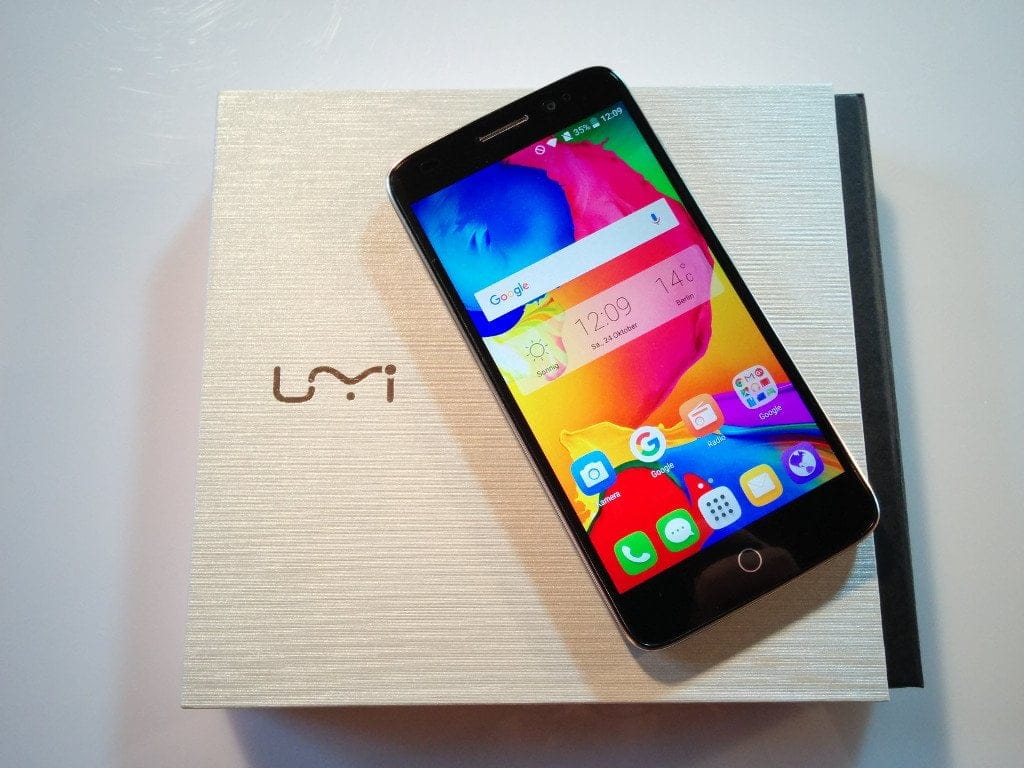
Contents
 Play video on YouTube
What’s included
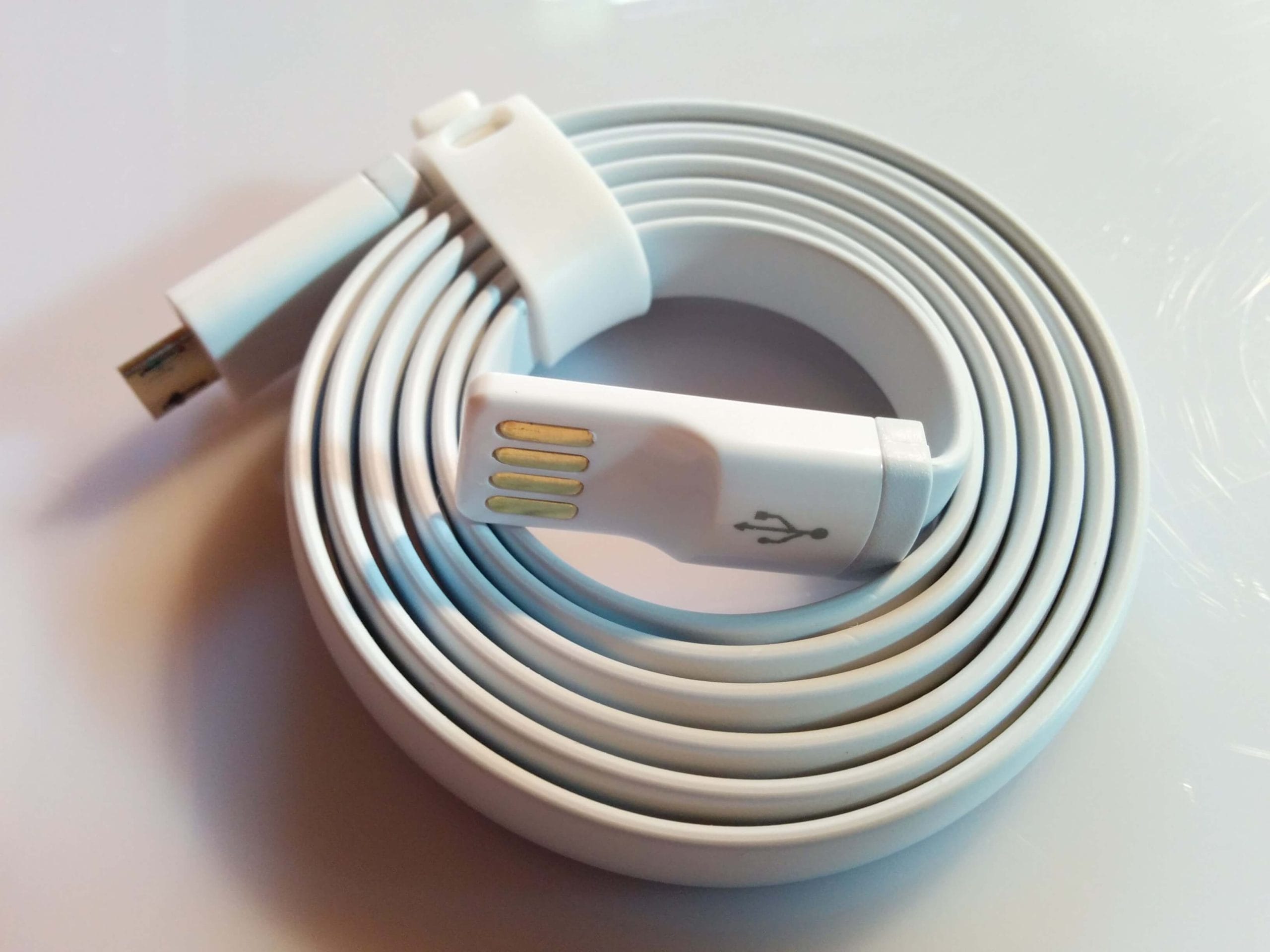
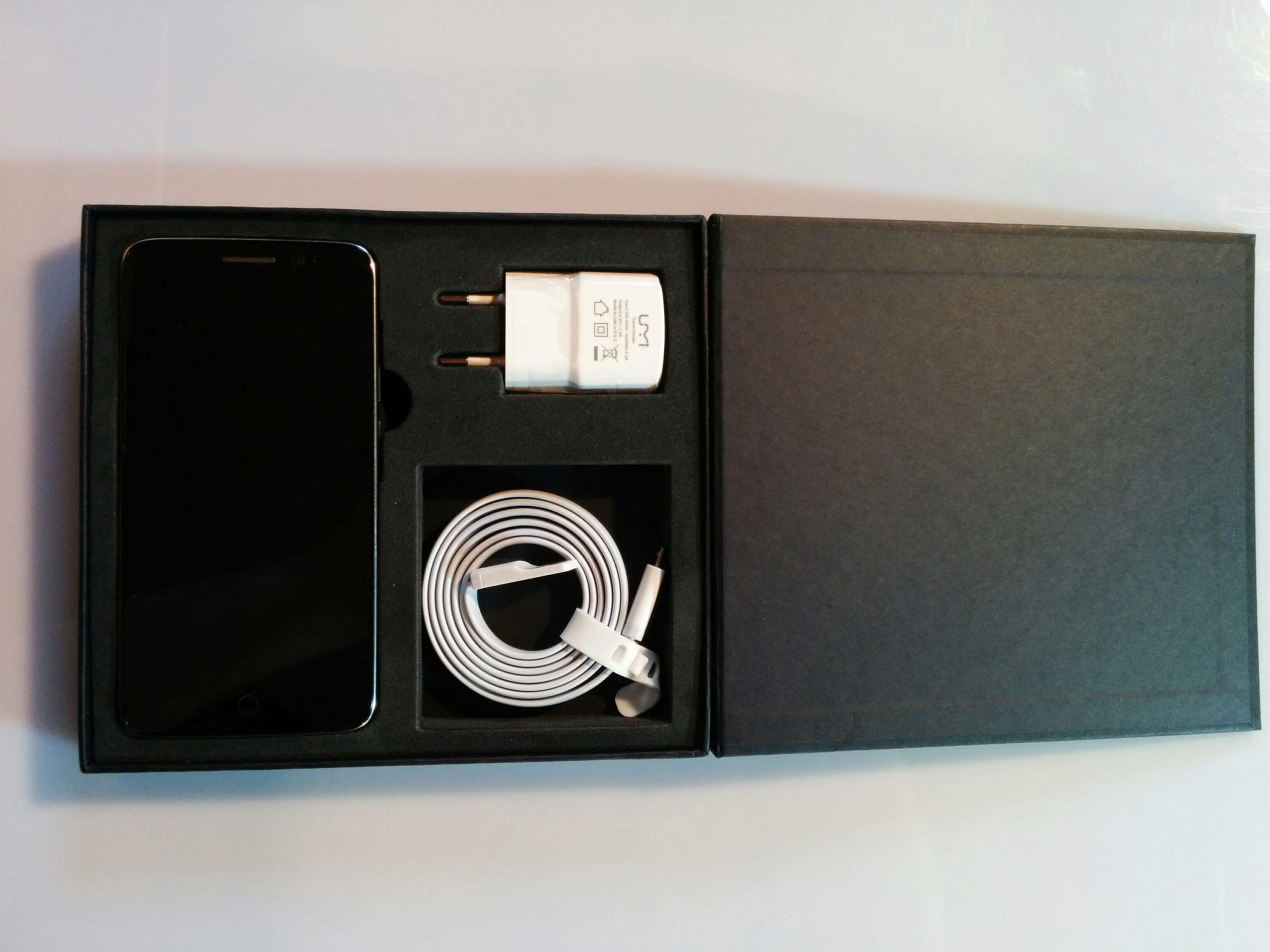
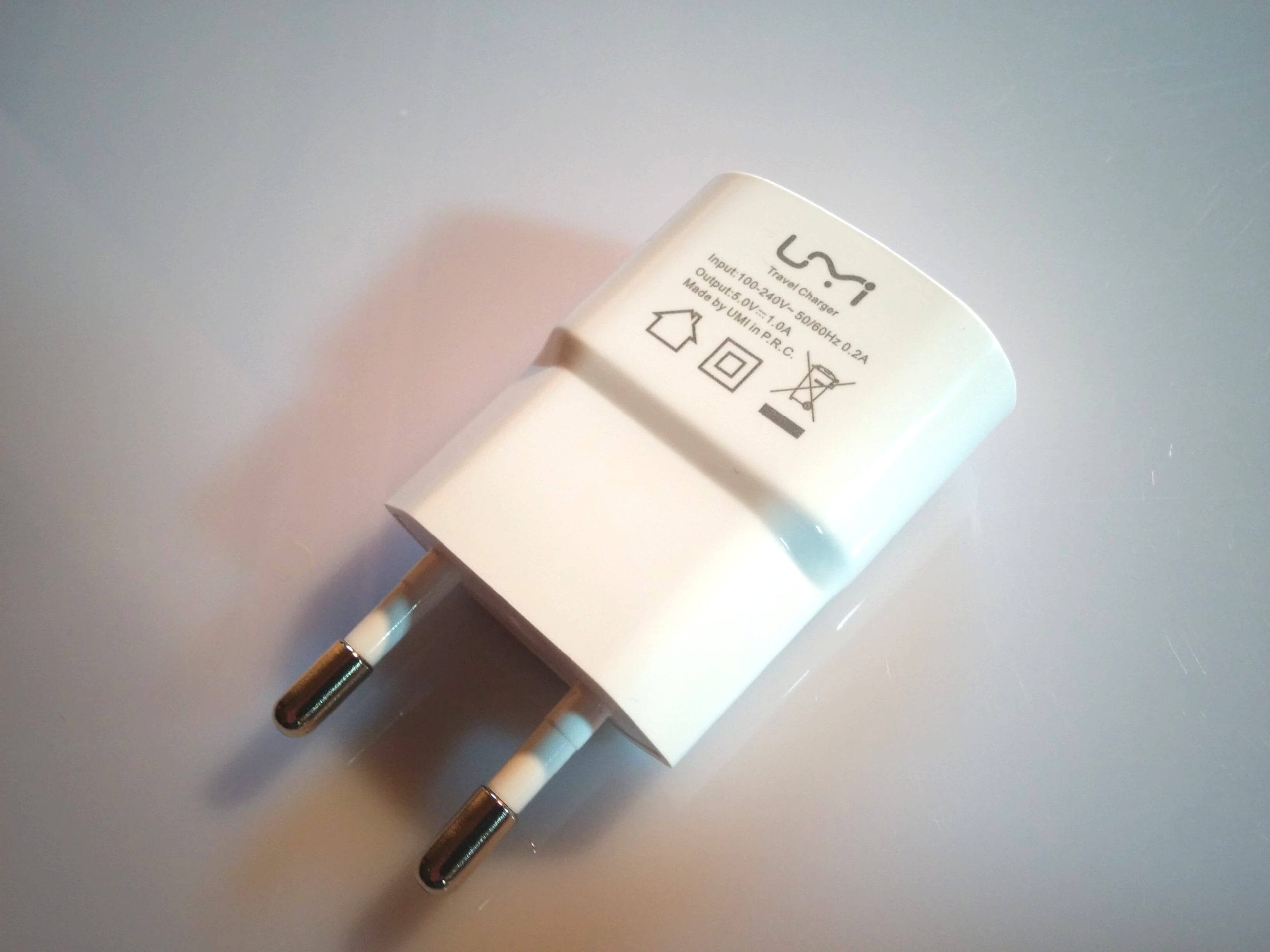
The Umi Emax Mini smartphone arrived in a fairly attractive slide-out box. The front bears the "UMI" logo, while the back displays the smartphone's specifications. After pulling out the inner part of the box, you see the Umi Emax Mini nestled in foam, a flat USB data and charging cable, and an EU USB power adapter. A rather brief English user manual was also included. A screen protector was already applied to the smartphone.
First impressions
Both the chassis frame and the back of the 5-inch (according to CPU-Z 4.97-inch) smartphone are made of hardened plastic with a anthracite-coloured look. The back is also grooved and can be completely removed. The back also features a 13-megapixel rear camera (Sony IMX 214) and an LED flash.
The Umi Emax Mini measures 139.8x69.6x8.9mm overall and weighs 130g. The bezel, at 4mm, is rather average.
The device's physical buttons, the volume rocker and power button, are located on the right edge of the housing. The smartphone has no other physical buttons. Below the display are three capacitive buttons, with the middle button visually highlighted. The buttons on the left and right light up when used.
Above the display are the 8-megapixel front camera (Samsung ISOCELL), the speaker, the notification LED and the light sensor.
Upon initial inspection, the Umi Emax Mini definitely surprised me positively. Despite the plastic casing, it feels high-quality and is well-built.
 Play video on YouTube
Display
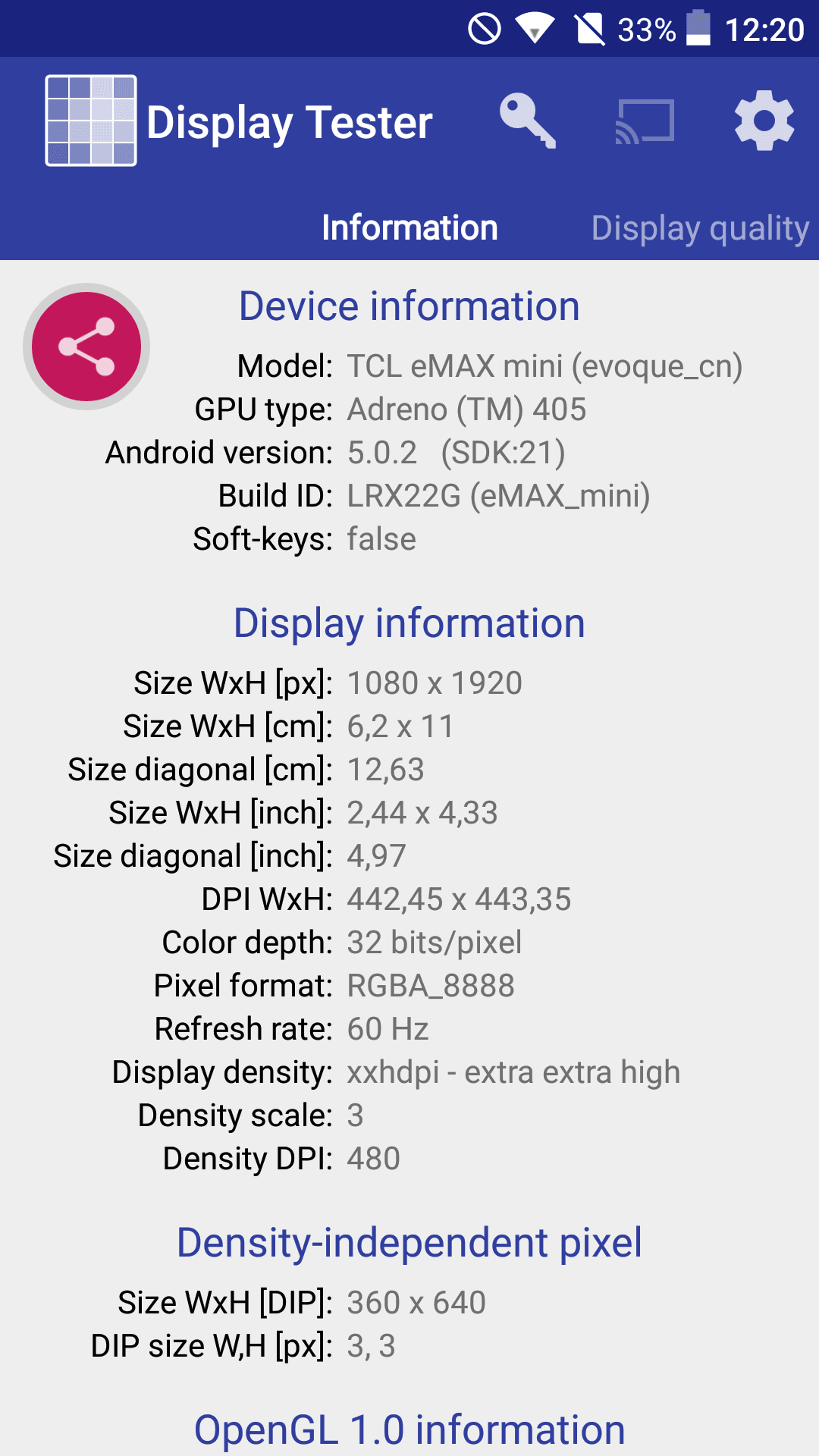
For the 5-inch display, Umi uses a high-quality panel from Sharp. The resolution is 1920x1080 pixels, with a pixel density of 443 dpi. The display is razor-sharp, the colours appear vivid and lively, and the viewing angle stability was also convincing. I could read the display easily even under strong sunlight. Although MiraVision was omitted from this smartphone, the display was perfectly calibrated out of the box.
Performance
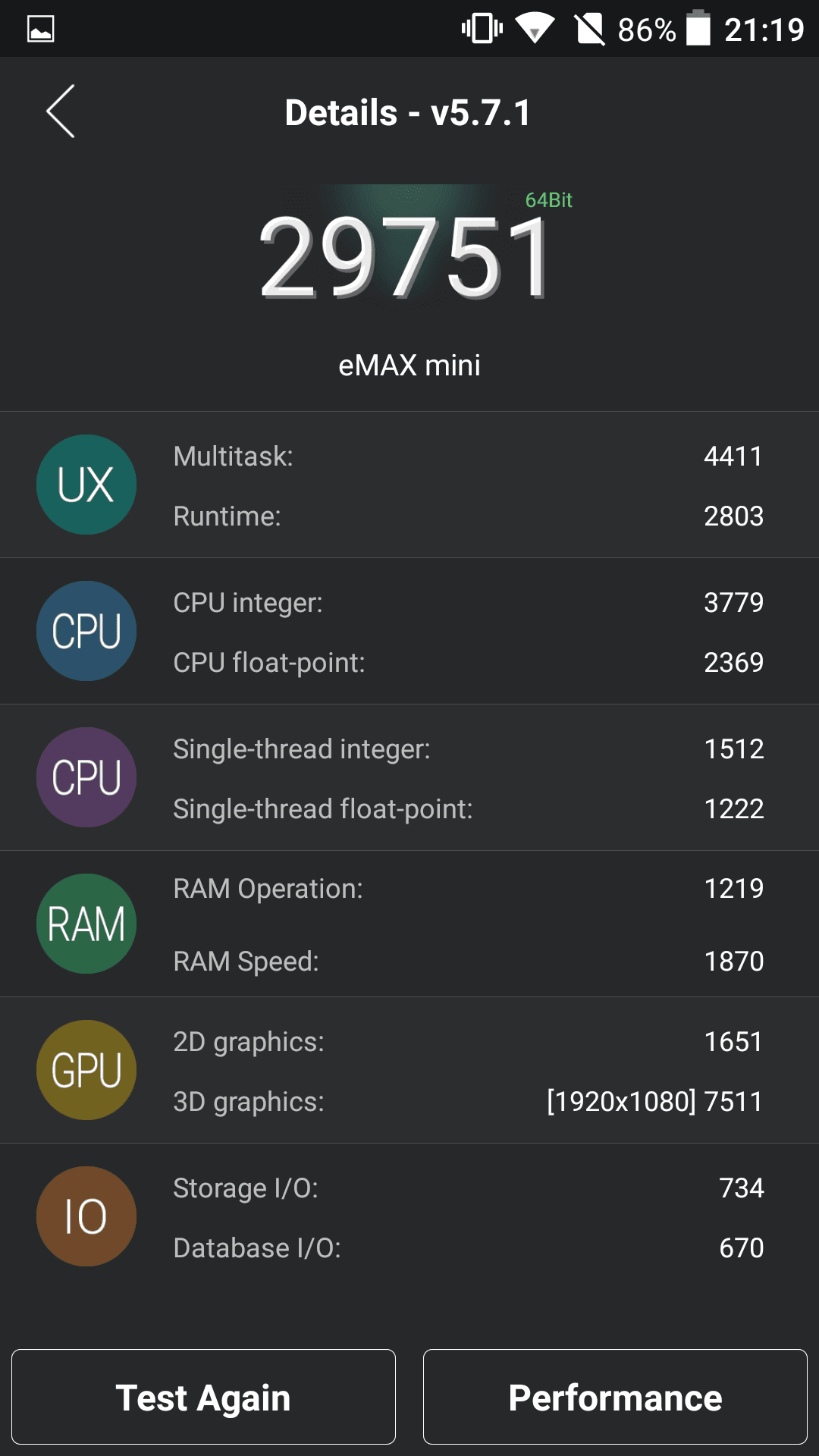
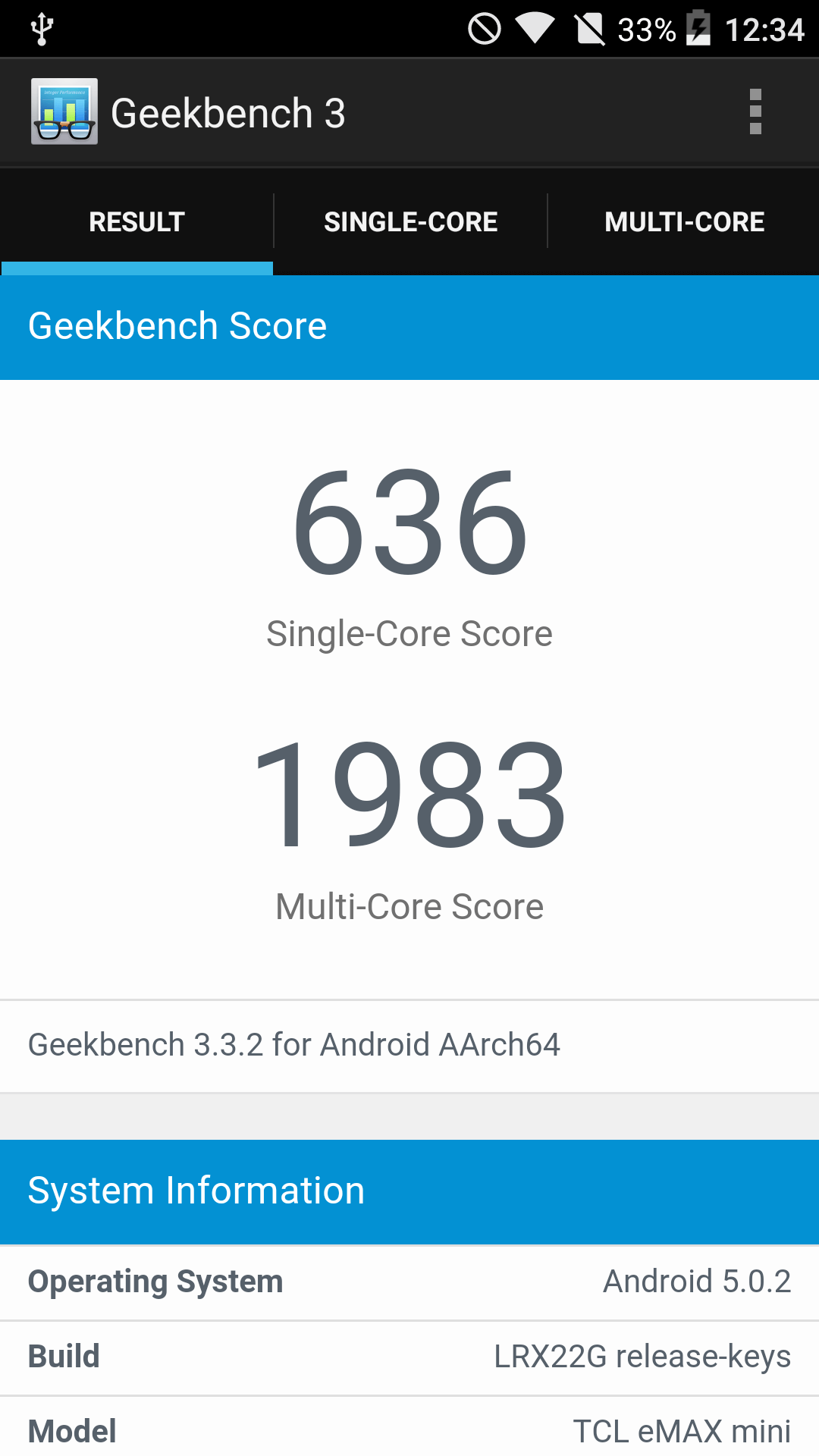
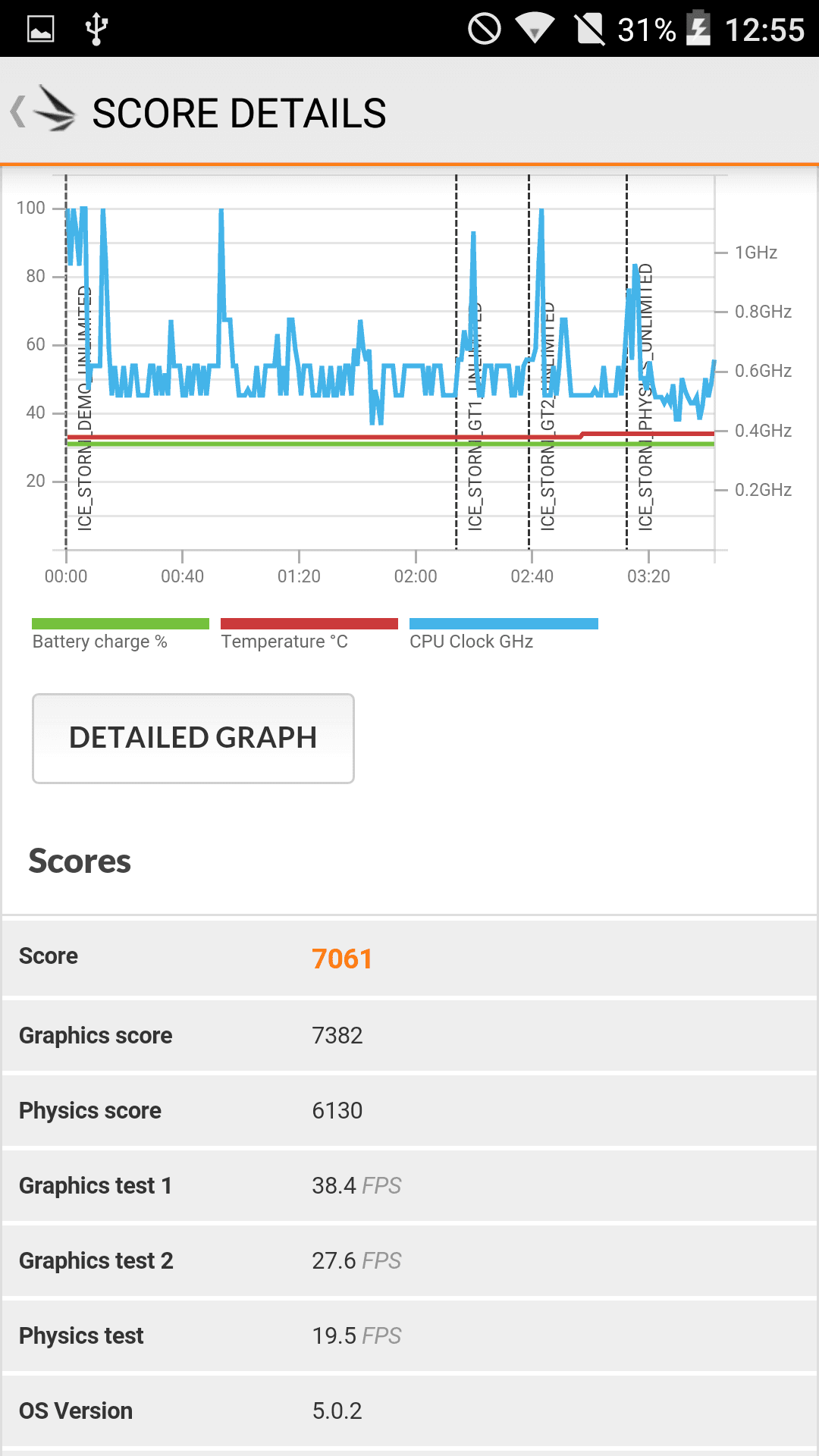
The Umi Emax Mini features a Snapdragon 615 SoC. This is a 64-bit octa-core processor, where 4 cores clock at up to 1.5 GHz and 4 cores at up to 1.11 GHz. The graphics unit is an Adreno 405 with 550 MHz. In addition, the smartphone also has 2 GB of RAM. While this is mid-range hardware overall, the total performance is extremely impressive. Navigation through Android 5.0.2 is consistently smooth, and apps open quickly as well. However, even this smartphone can experience frame drops in resource-intensive games. Here are the results of individual benchmark tests:
User interface
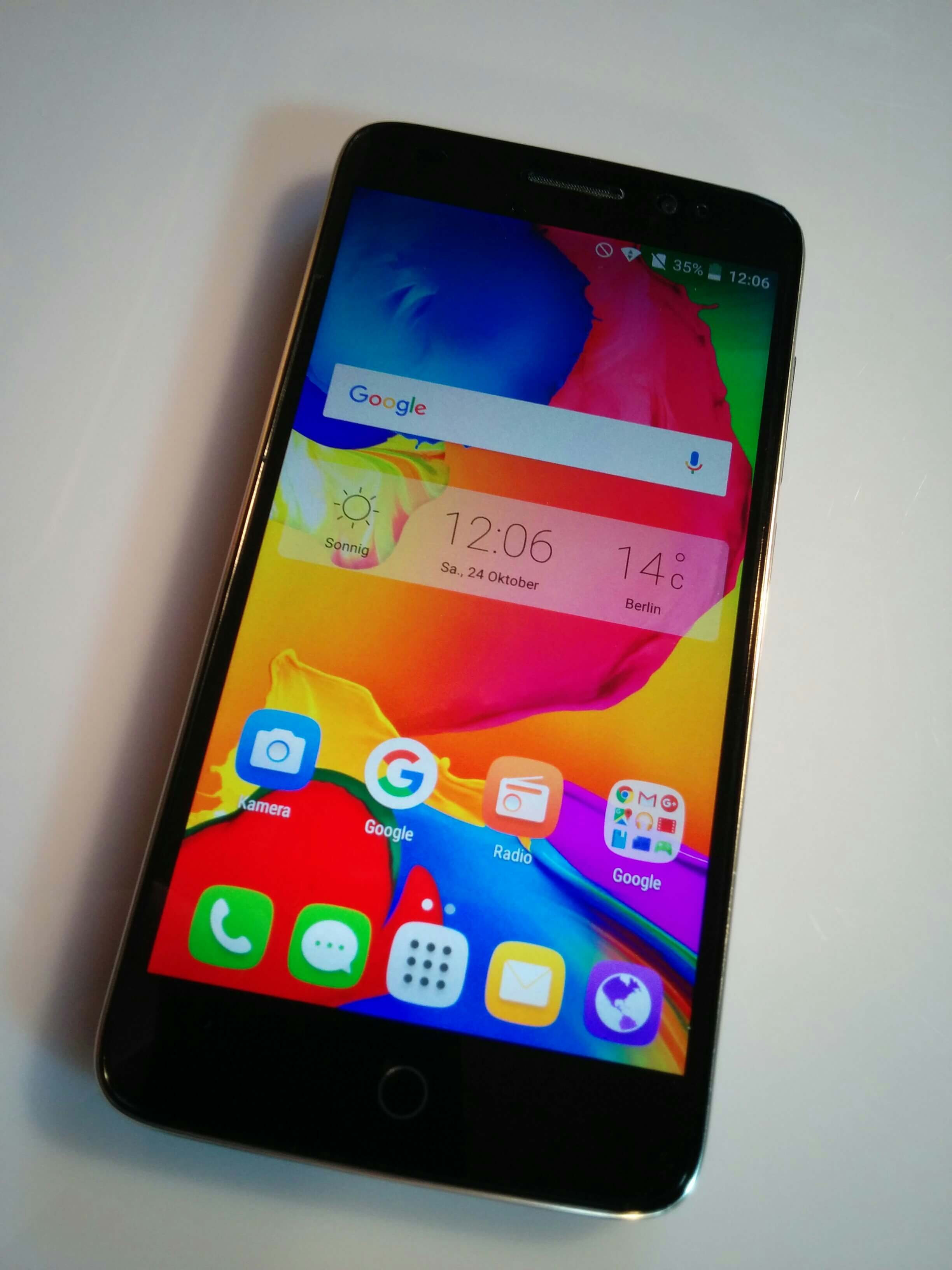
The operating system used is Android 5.0.2. Even on the lock screen, it is noticeable that Umi does not use stock Android. The lock screen features several quick-start icons, which can be used to open, among other things, the calculator app, the camera app, the music app, the contacts app and a barcode scanner.
The rounded custom icons immediately stand out in the user interface. Otherwise, the Umi user interface differs very little from stock Android. Third-party apps were installed, but apart from one untranslated Chinese app, I could not find any suspicious apps.
Within the settings menu, there are a few additional functions. For example, gesture control can be configured, and the LED notifications can be adjusted. Unfortunately, the gesture control offers very few features. There is a "Double Tap 2 Wake" function and a function that silences the smartphone if you place it display-side down. Under the "LED Notifications" menu item, you can only turn notifications on or off.
The Umi Emax Mini can be updated via OTA updates, which are received directly from the manufacturer.
Camera
I was particularly looking forward to this test point. Umi has equipped the Emax Mini with a 13-megapixel rear camera featuring a Sony IMX214 image sensor and an 8-megapixel front camera with a Samsung ISOCELL image sensor. Especially for a mid-range smartphone, this is very good hardware.
The camera app is a custom app that offers, in addition to the usual functions, a time-lapse function, a barcode scanner, or a “Beauty Shot” mode. Photos can be taken at 10 and 13 megapixels, and videos are recorded in up to 1080p. An image stabiliser can also be activated via the camera settings.
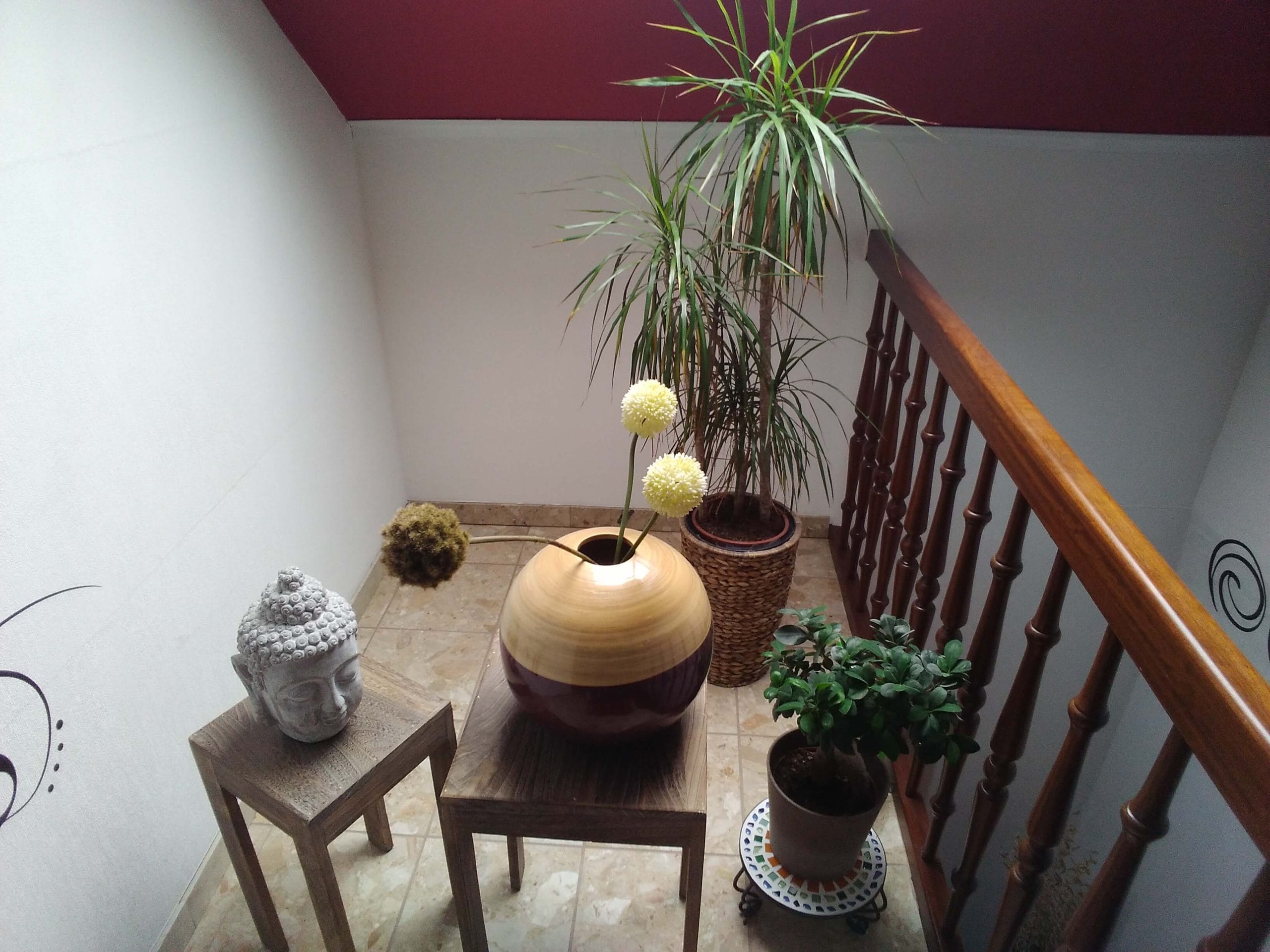
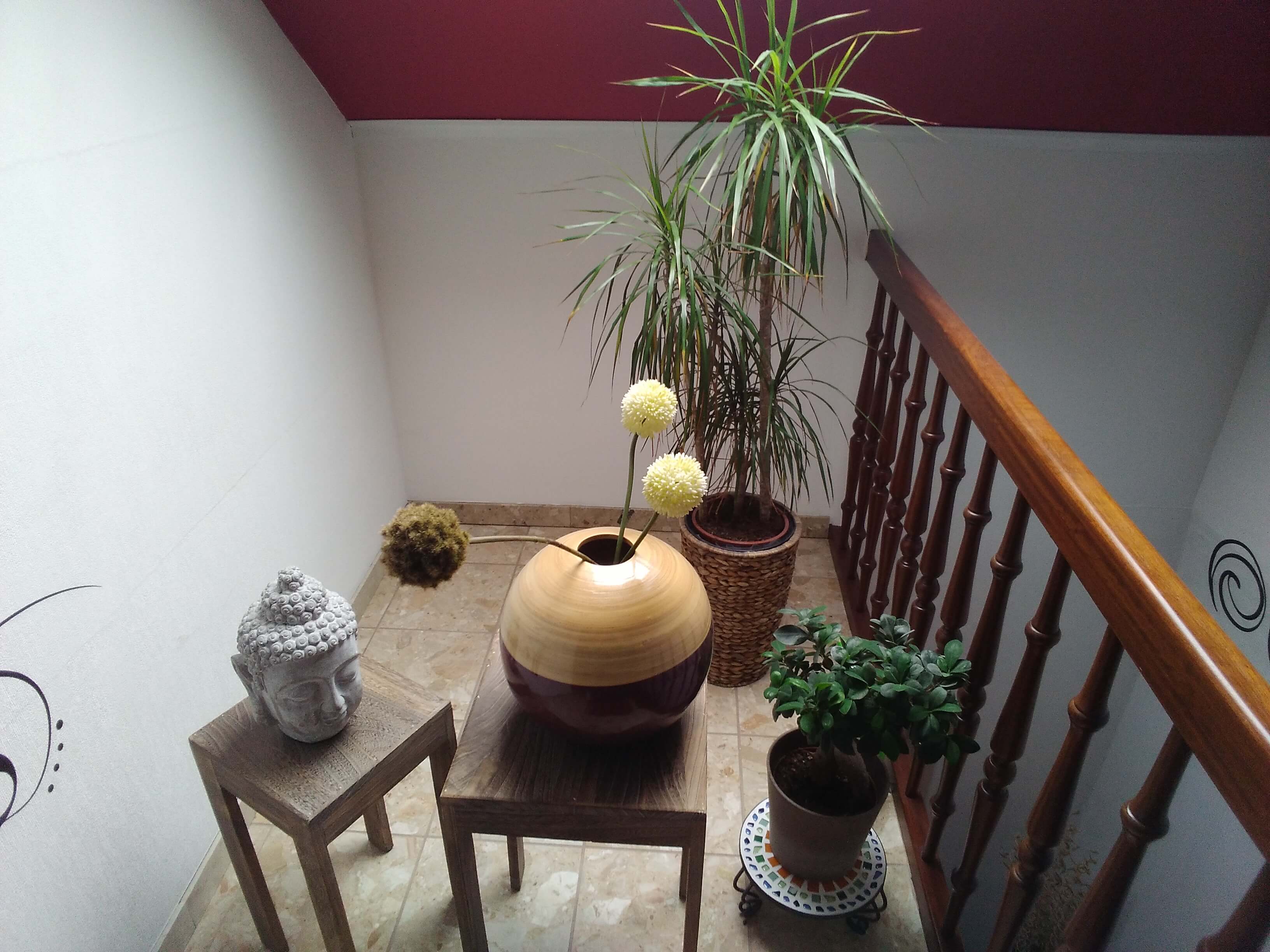
The 13-megapixel rear camera delivers decent images in daylight, with virtually no image noise visible. The colours look genuine and not oversaturated. Under poorer lighting conditions, stronger noise is unfortunately noticeable.
The shutter time is quick. Flash photographs are also processed quickly. I had no issues with the autofocus either.
The 8-megapixel front camera is also good, although image noise is noticeable here too in poor lighting conditions.
Rear camera



Front camera
Telephony, Wi-Fi, Bluetooth
I would describe the call quality as good. I could hear my conversation partner well, and they could also understand me properly. I did not notice any interference noise. The integrated speaker is also quite usable and suitable as a hands-free function.
What I miss with so many Chinese smartphones, and also with the Emax Mini, is LTE band 20, i.e., LTE 800MHz. Especially if you live in the countryside, you have to do without LTE. However, LTE reception is possible in cities.
Both the Wi-Fi and Bluetooth connections are stable, and the range is average.
GPS
Here too, I could not find anything negative. The GPS fix was fast and problem-free. The signal was constant and stable.
Battery
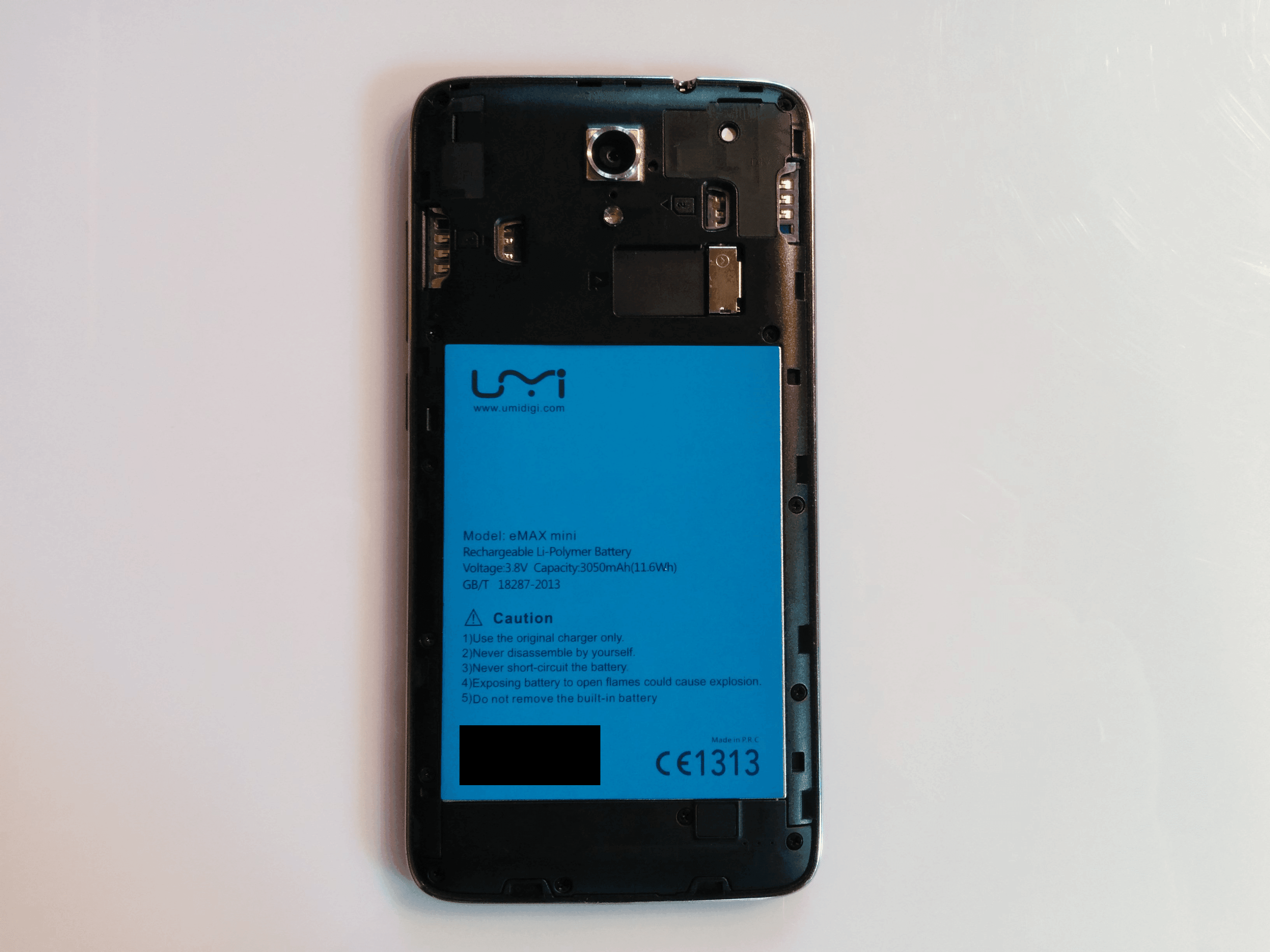
The Chinese phone has a built-in 3050mAh battery, which is quite remarkable for a 5-inch smartphone. After 2 days of normal use with 4 hours SOT (screen on time) and all tests, the battery still had approximately 35%. The Emax Mini is a real battery monster.
Unfortunately, there is a downside here. The smartphone's battery is not replaceable.
Our verdict
The Emax Mini is a genuinely solid mid-range smartphone that gets almost everything right. You get a truly fair overall package that can even stand out from comparable smartphones. However, this smartphone is not an all-round miracle worker either. For instance, Umi once again omits LTE band 20, and the OS does not yet run as smoothly, which is noticeable, among other things, in the notification LED, which has not been correctly configured.
Update: Unfortunately, no update has been released for the Umi Emax Mini so far. This circumstance is particularly problematic because no recovery has been integrated. If, for example, one tries to flash Cyanogenmod, it is quite possible to render one's smartphone unusable.
Specifications
General
- *OS
- Android 5.0
- *SoC
- MSM8939 Octacore 1.5GHz
- *GPU
- Adreno 405
- *RAM
- 2GB
- *ROM
- 16GB
- *Extended Storage
- 64GB
- *Screen Type
- IPS OGS full lamination technology
- *Screen Size
- 5.0 inch
- *Screen Resolution
- 1920*1080 Pixels
- *Wireless Connectivity
- GSM, 3G, 4G, GPS, Wi-Fi, Bluetooth
- *Frequency
- GSM, 3G, 4G, GPS, Wi-Fi, Bluetooth
- *2G
- GSM 850/900/1800/1900 MHz
- *3G
- WCDMA 900/1900/2100MHz
- *4G
- FDD-LTE 1800/2100/2600 MHz
- *Bluetooth
- Yes, 4.0
- *WiFi
- Yes, IEEE 802.11b/g/n, supports Wi-Fi hotspot
- *GPS
- Supports GPS and AGPS
- *Camera type
- 13MP Sony IMX214 rear, 8MP Samsung ISOCELL front
- *SIM
- Two standard micro-SIM cards, dual standby
- *TF
- Yes
- *Sensor
- Gravity sensor, light sensor, proximity sensor
- *Battery
- 3050mAh lithium
- *Dimensions
- 139.8x69.6x8.9mm
- *Weight
- 130g
What’s included
*Emax Mini *Battery *USB cable *Power adapter *User manual
Comments (2)
Hi. Have you flashed a CM onto the eMax Mini?
Hi Armin, I haven't flashed CyanogenMod onto the Emax Mini yet. Mine is still running an older ROM from the end of September 2015. Due to the faulty recovery mode at the time, I didn't want to take any risks and left the smartphone as it was.