Contents
Xiaomi 17T: Design, build and contents
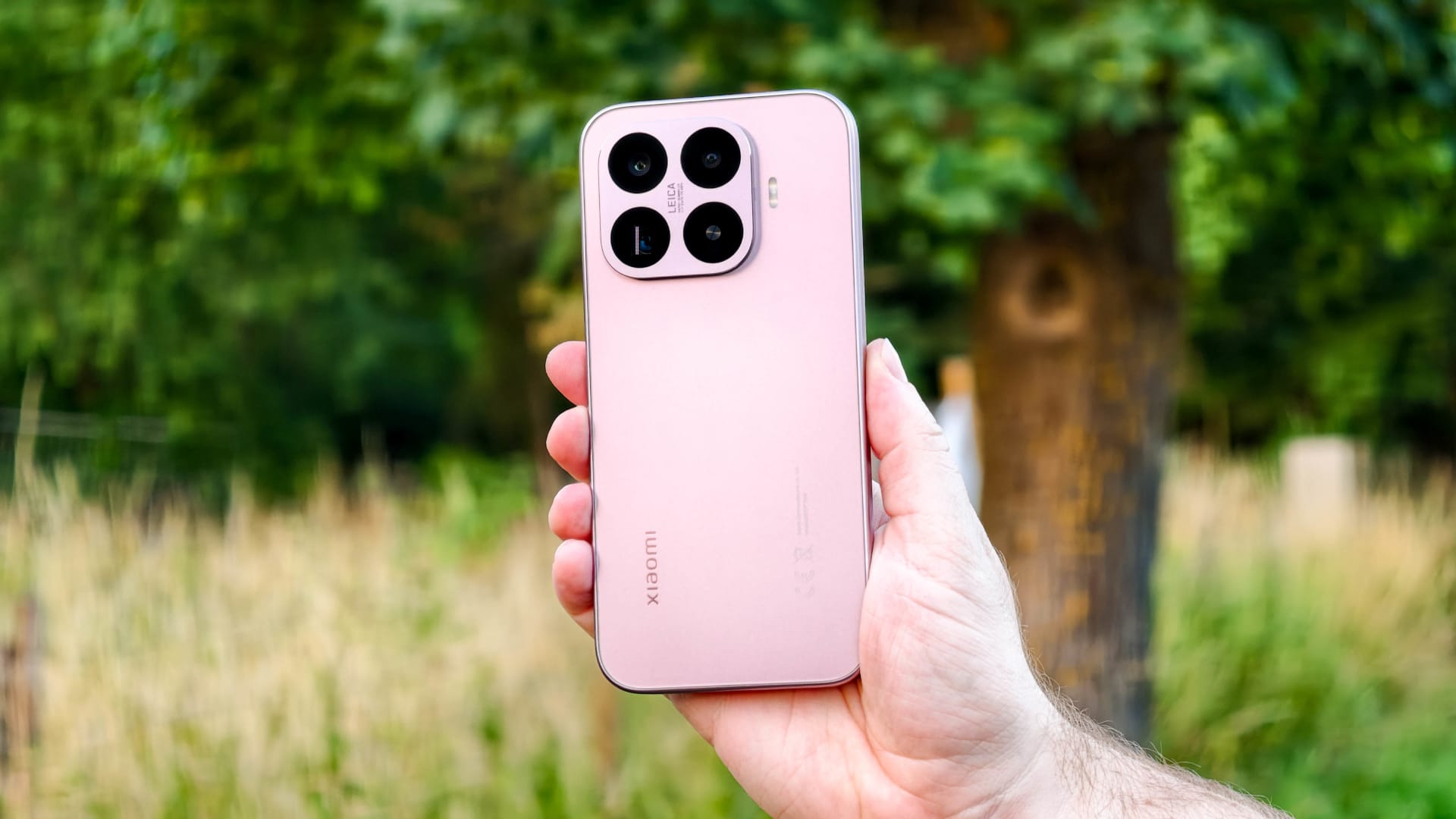
In terms of appearance, the Xiaomi 17T remains a fairly understated smartphone. Depending on the light, our Violet test device can look either subtly dark or much more striking. The smartphone is also available in Black, Opal White and Blue.
Compared with the Xiaomi 15T (read our review here), Xiaomi has adjusted the dimensions. Instead of 163.2 x 78.0 millimetres, the Xiaomi 17T measures just 157.6 x 75.2 millimetres, but it is slightly thicker at 8.17 millimetres and a few grams heavier than its predecessor at 200 grams. In practice, though, it feels better balanced than the 15T because it is narrower and no longer feels quite so large in the hand.

Even so, it cannot match the compactness of the Xiaomi 17 (read our review here). The flagship is clearly easier to handle with its 6.3-inch format and also feels more premium. With the Xiaomi 17T, you notice sooner that Xiaomi is still keeping its distance from the true high-end segment. The frame is not made of aluminium, but of plastic. This takes away some of the premium feel, but does not necessarily make the device feel cheap. The build quality is good, the buttons are firmly attached and the chassis feels sturdy.
The matt back is pleasantly resistant to marks in everyday use. Fingerprints are barely noticeable, and even after several photo walks around Vienna, the device did not look smeared straight away. The camera module sits symmetrically on the back and bears the Leica logo, giving the otherwise understated design its most distinctive feature.
The IP68 rating is another plus. Rain, wet hands, or brief contact with water are no problem. The display is protected by Corning Gorilla Glass 7i.
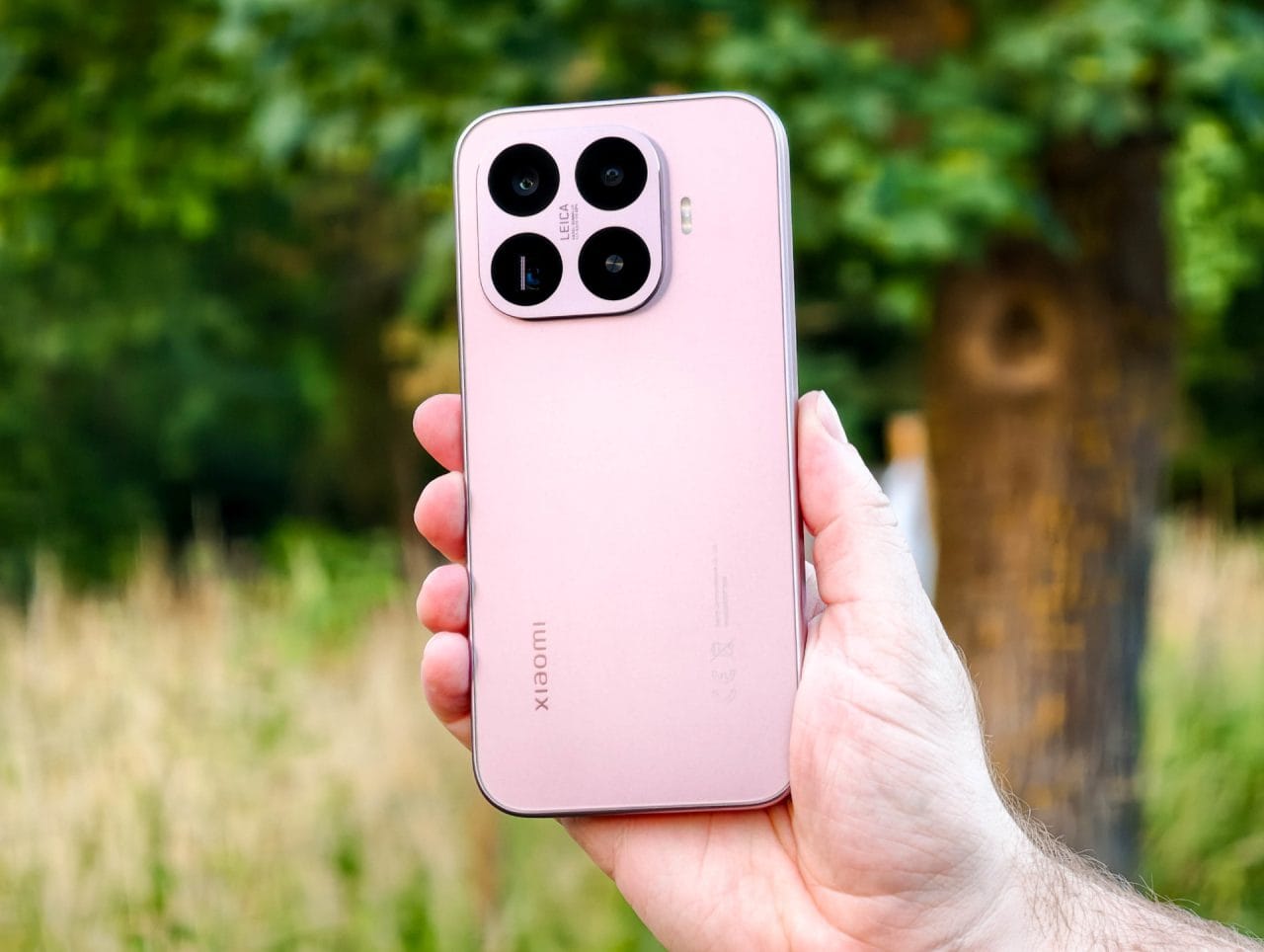
All the buttons are on the right-hand side, have a crisp click and are easy to reach. The bottom edge houses USB-C, the speaker, microphone and SIM tray. A conventional headphone jack has been gone for a long time, but the IR blaster remains. It is not visible in the top frame, but is hidden near the camera module.
In addition to the smartphone, the box contents include a USB-C cable, a SIM ejector tool, a protective case, and the usual paperwork. There is no power adapter. While that is now common, it is still a shame for a smartphone with 67W HyperCharge.
Xiaomi 17T: Display
The display is one of the areas where the Xiaomi 17T makes the biggest improvements over its predecessor. Although its 6.83-inch diagonal on the Xiaomi 15T has shrunk to 6.59 inches, the panel hardly feels smaller in everyday use. Instead, the smartphone feels more manageable, without any noticeable loss of space when reading, navigating or taking photos.
The resolution is 2756 x 1268 pixels, which again works out to around 460 ppi. Text looks very sharp, photos appear detailed, and even small UI elements remain easy to read. Colors are vivid but not oversaturated, blacks are deep as is typical of AMOLED, and HDR content benefits from Dolby Vision and HDR10+.
The Xiaomi 17T also ranks highly for brightness. Xiaomi quotes up to 3500 cd/m², slightly more than for the Xiaomi 15T. When taking test photos in Vienna, amid bright façades, reflective shop windows and direct sunlight, I only rarely had to shield the display with my hand. The framing, focus point and exposure could all be assessed reliably outdoors.

The refresh rate remains up to 120 Hz. Scrolling through websites, social networks or the gallery feels correspondingly smooth. Unlike the Xiaomi 17, however, it lacks a true LTPO panel that can adjust particularly finely down to 1 Hz. This is barely noticeable in everyday use, but it remains one of the ways the T model differs technically from the flagship.
The Xiaomi 17T offers a very high 480 Hz touch sampling rate and responds pleasantly directly to inputs. Wet Touch 2.0 is also back, so the display can still be operated after light rain or with damp fingers.
Xiaomi also has a lot to offer for sensitive eyes. Alongside 3840 Hz PWM dimming, there is DC dimming, several TÜV Rheinland certifications, and Xiaomi's Vision Care features. At low brightness, the panel feels easy on the eyes, for example when reading in the evening or glancing at your phone on the train.
Xiaomi 17T: Performance
The Xiaomi 17T is powered by the MediaTek Dimensity 8500-Ultra, a direct successor to the Dimensity 8400-Ultra in the Xiaomi 15T. On paper, the generational leap sounds bigger than it feels in everyday use. Both chips belong to the upper mid-range and offer more than enough performance for everything people typically do with a smartphone. Apps open quickly, multitasking runs smoothly, and even large photo galleries or image editing don't faze the device.
The processor is supported by 12 GB of LPDDR5X RAM and either 256 or 512 GB of UFS 4.1 storage. Storage cannot be expanded via microSD. So if you store a lot of photos, videos, or offline downloads, you should go straight for the larger version.
Compared to the Xiaomi 15T, the 17T feels a little smoother. HyperOS 3 feels a bit more polished, and the faster RAM helps with demanding apps, although its predecessor was already fast. The bigger difference is in efficiency and how it works with the larger battery.
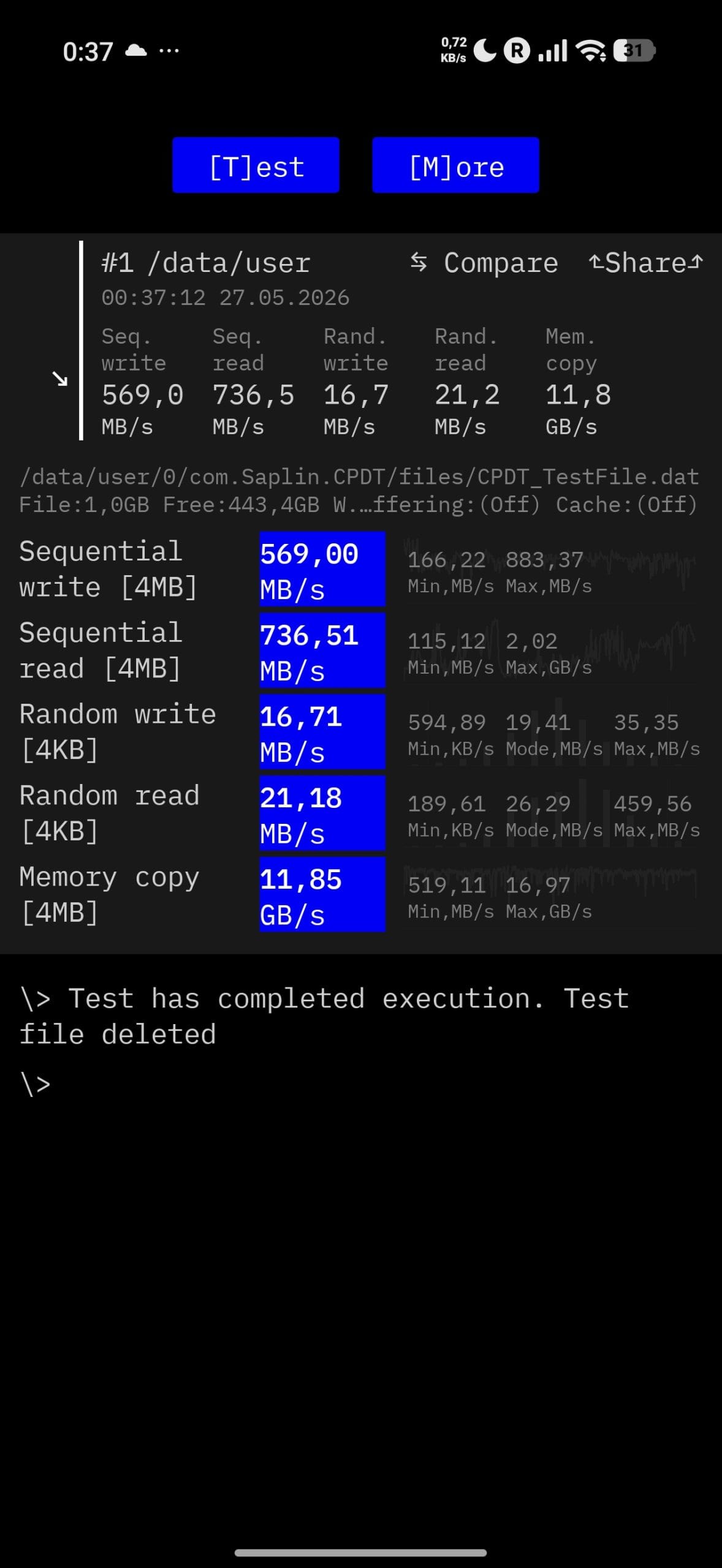
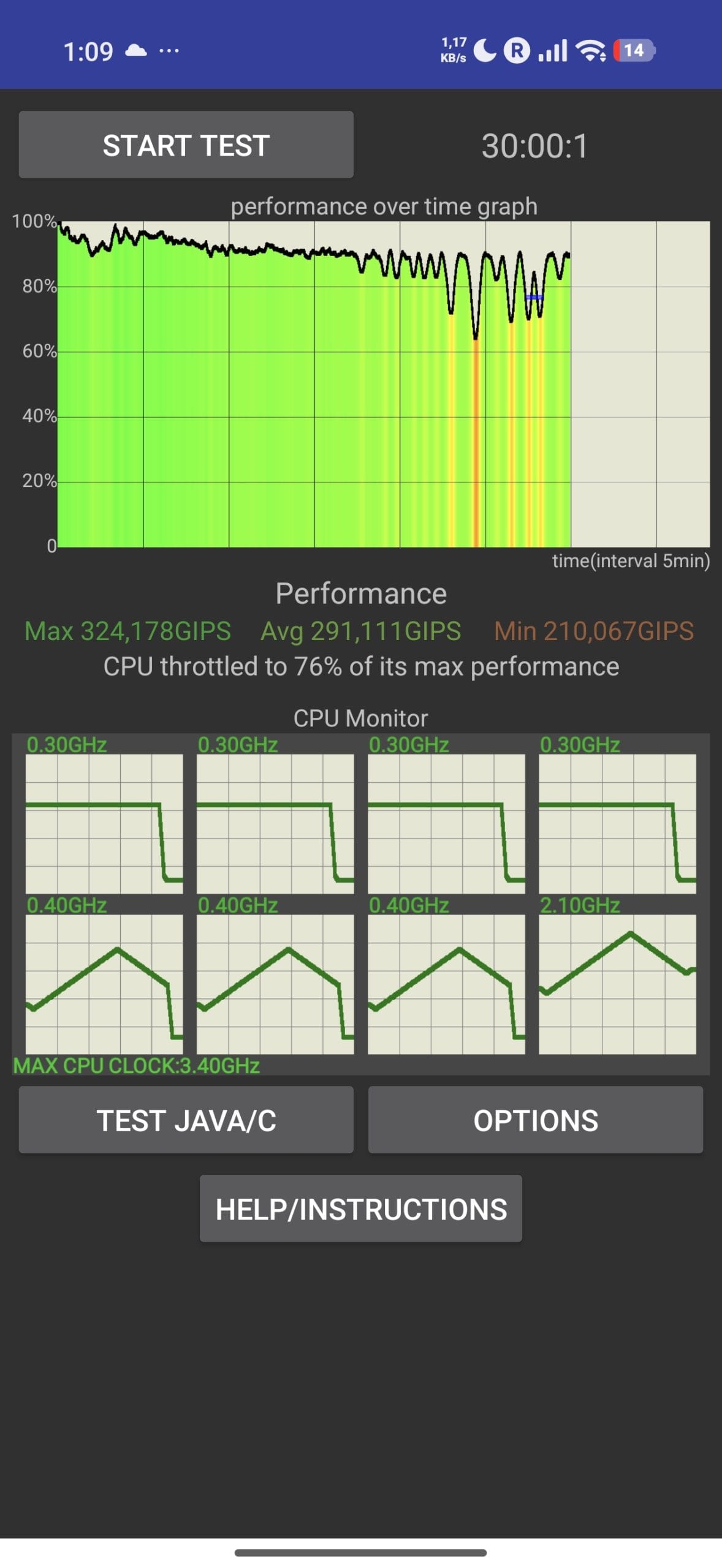
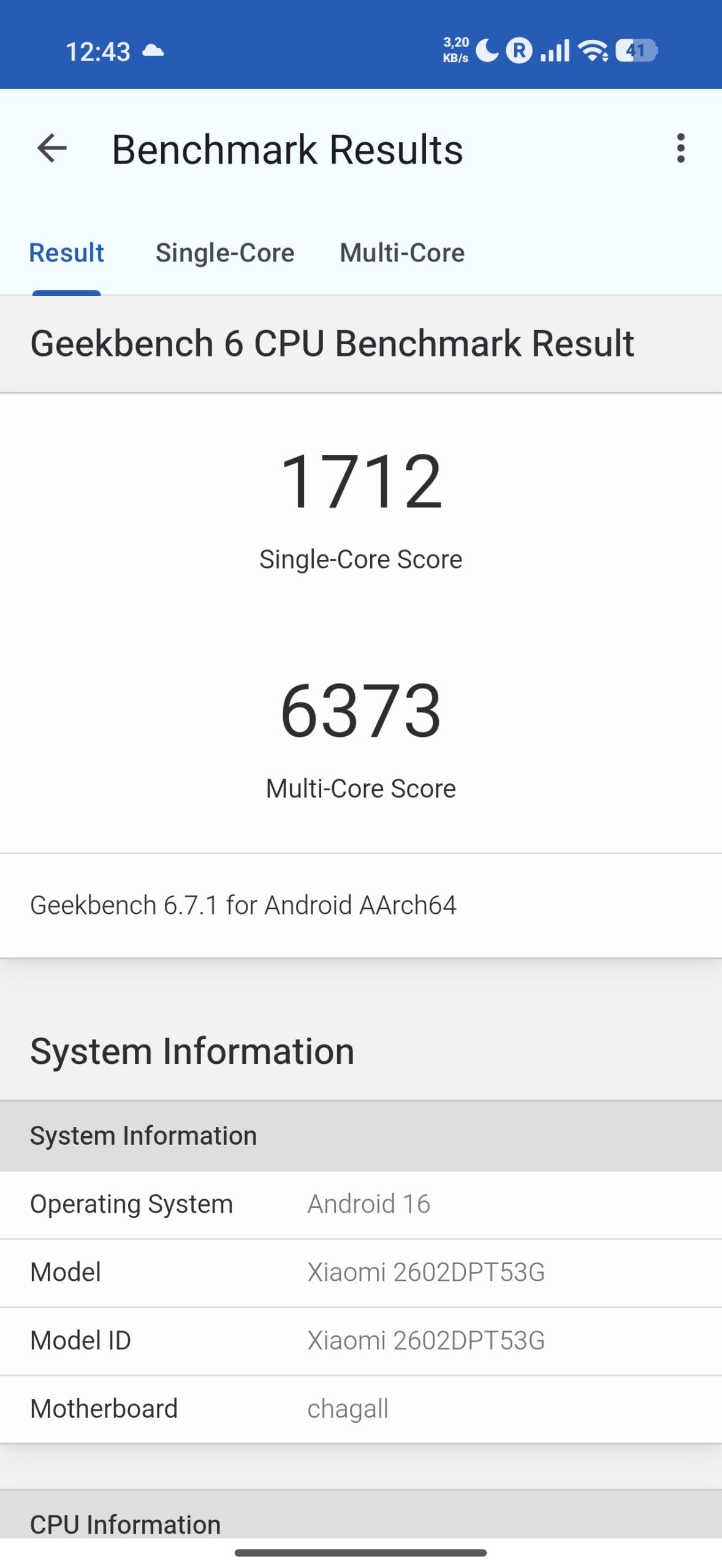
The Xiaomi 17, by contrast, remains clearly ahead. The Snapdragon 8 Elite Gen 5 in the flagship is noticeably more powerful, especially under sustained heavy loads, in demanding games and in processor-intensive tasks such as video exports. If you want maximum performance, the Xiaomi 17 delivers. But if you simply want a fast smartphone for everyday use, photography, navigation, social media and occasional gaming, you will have little to miss with the Xiaomi 17T.
Games also run smoothly on the Xiaomi 17T. Demanding titles are playable at high settings, though you can tell that this is not a true flagship chip when using the maximum graphics settings. The device remains pleasantly well controlled. The Xiaomi 3D IceLoop cooling distributes heat well across the casing, so the back gets warm but not uncomfortably hot.
Xiaomi 17T: Connectivity
In terms of connectivity, the Xiaomi 17T largely delivers what you would expect in this price range. It includes 5G, as well as eSIM, dual SIM, NFC for payments, Bluetooth 6.0, and, as mentioned earlier, an IR blaster. The latter is typical of Xiaomi and still practical in everyday life when you can't find the remote at a hotel, a friend's place, or at home. Basically, there is no significant difference here from its predecessor.
When navigating, the smartphone quickly finds its position and maintains it even between taller buildings. It supports, among other systems, GPS L1 + L5, Galileo E1 + E5a, GLONASS, BeiDou, QZSS and NavIC.
The USB-C port sticks with the older USB 2.0 standard. Anyone who regularly copies large video files to a computer will notice. It is no big deal for occasional photos, backups or normal file transfers, but a faster USB standard would have been a good fit for a smartphone with such a capable camera.
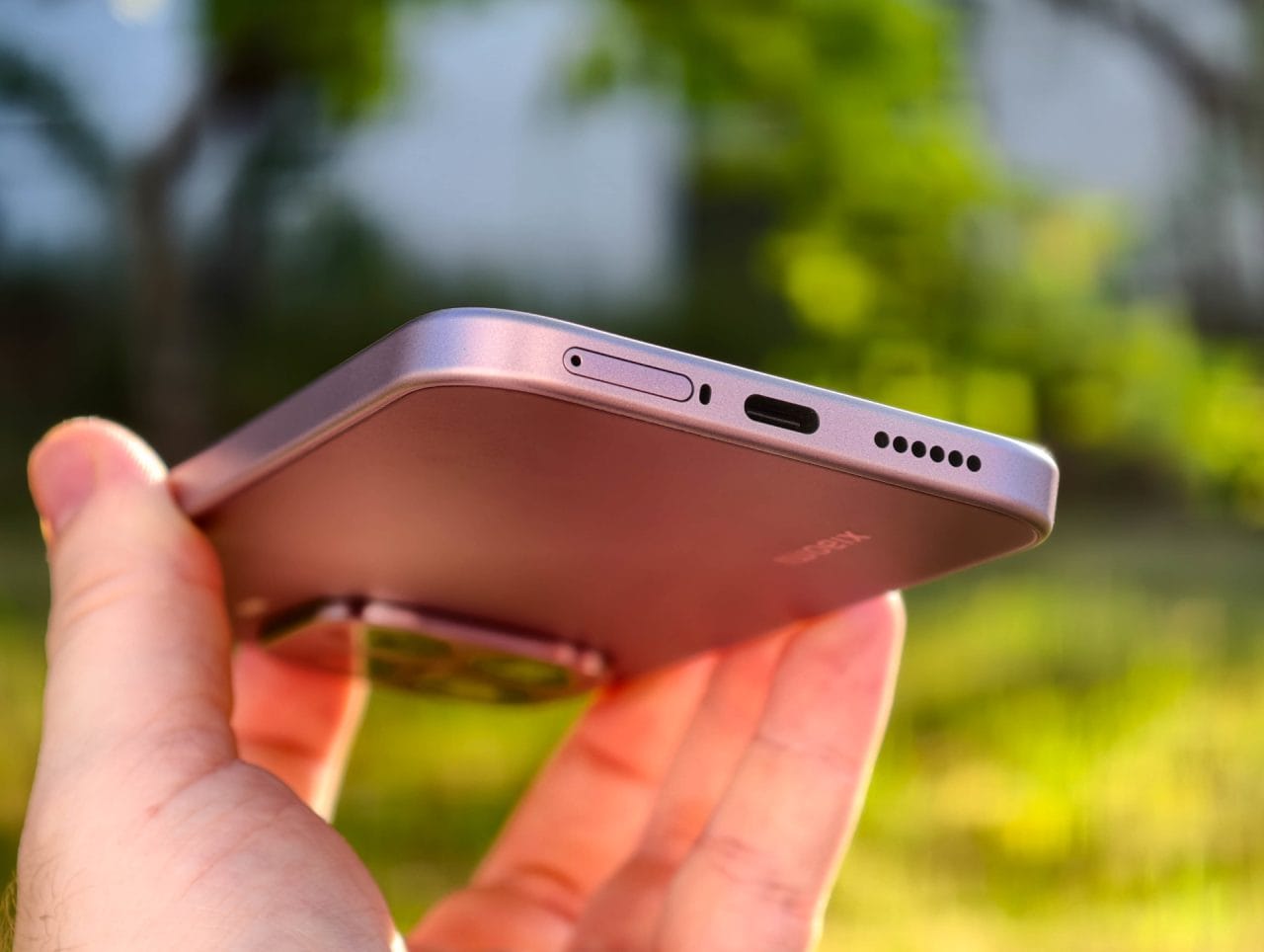
The stereo speakers deliver decent sound. Voices are clear, videos sound spacious enough, and the maximum volume is easily sufficient for YouTube, podcasts or navigation in a hotel room. However, as audio here is output only through the bottom speaker and the earpiece, the balance is somewhat lacking. When you hold the smartphone horizontally, one side sounds a little louder than the other. On the Xiaomi 15T, sound also came from a small opening in the frame at the top, which made the distribution a little more even.
For unlocking, Xiaomi uses an in-display fingerprint sensor and AI facial recognition. The fingerprint sensor is fast and reliable, but not quite as premium as the ultrasonic sensor in the Xiaomi 17. We had hardly any failed attempts in testing with dry fingers. The flagship has the advantage with wet fingers, but the Xiaomi 17T's optical sensor does a solid job in everyday use.
Xiaomi 17T: Operating system
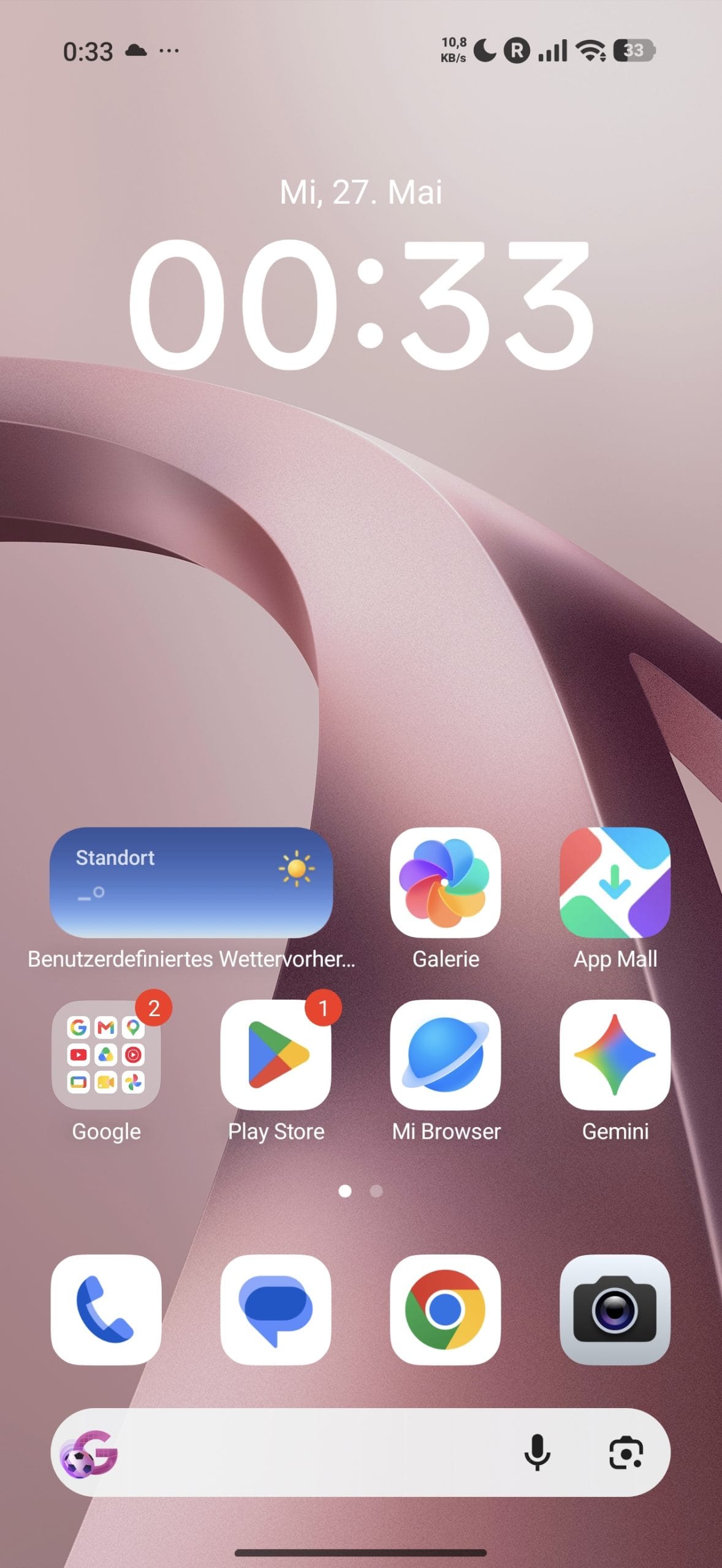
The Xiaomi 17T runs HyperOS 3 based on Android 16. Anyone who has used a recent Xiaomi smartphone will feel right at home. The interface feels fast and colorful, and is more heavily customized in many places than stock Android, but is no longer as cluttered as earlier MIUI versions.
The Dimensity 8500-Ultra handles the interface with ease. Animations look smooth, apps launch quickly, and during testing there were no noticeable stutters or crashes when switching between the camera, gallery, Maps and Messenger.
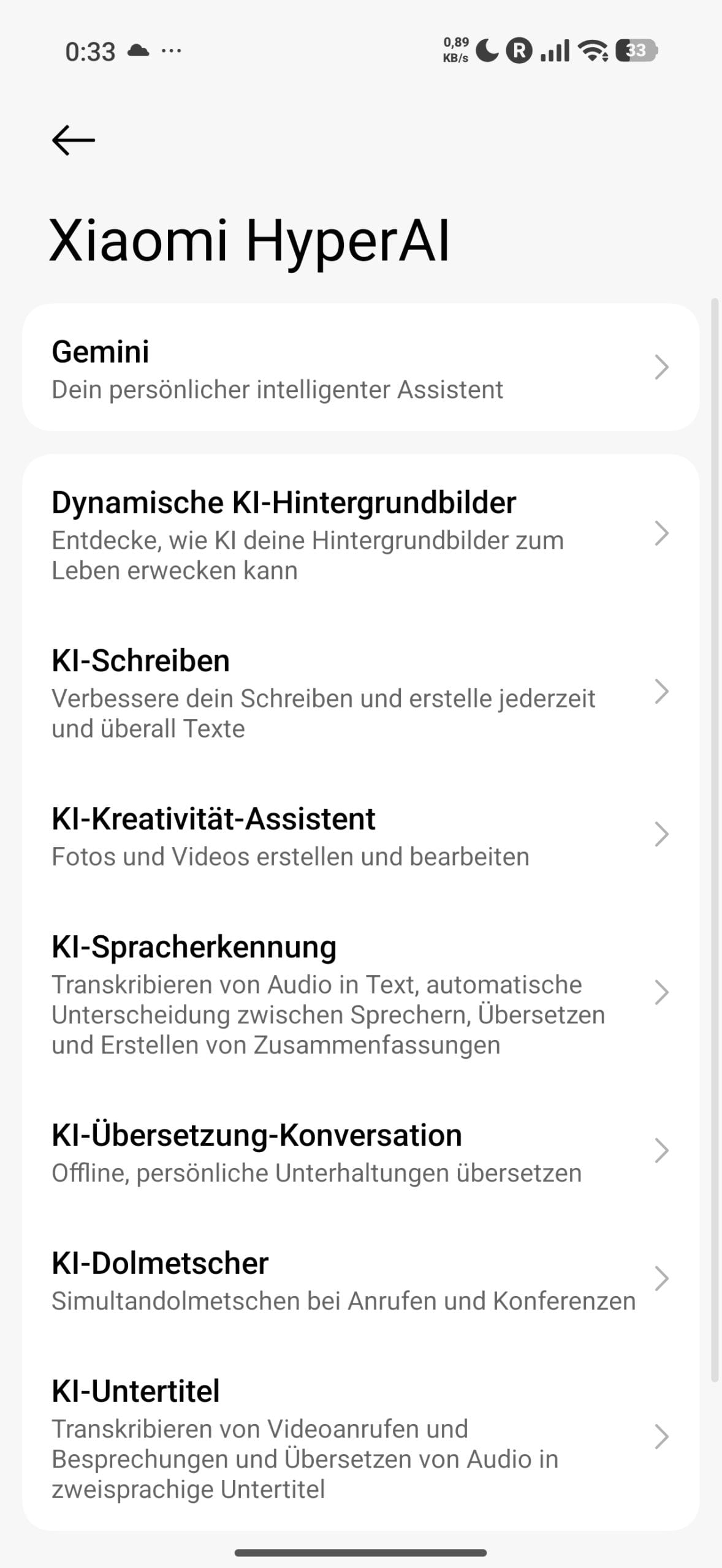
Xiaomi's HyperAI has also expanded, bringing together AI features such as AI writing, speech recognition, an interpreter, search, and dynamic wallpapers. Circle to Search with Google and Gemini are also included. Much of this is now standard in this price range, but Xiaomi integrates the features into the system quite well.

Xiaomi is also continuing to expand interconnectivity. If you also use a Xiaomi tablet, notebook, or other devices in the ecosystem, you'll get added convenience when sharing files, notifications, or clipboard content. HyperOS 3 is still easy to use for people without other Xiaomi devices, though, and doesn't make you feel forced into a closed ecosystem.
Preinstalled apps and ads that aren't really necessary on a smartphone in this price range are unfortunately present here once again. Many can be removed or disabled, but setup still feels less clean than on Google or Samsung devices. Since the rest of the system now feels so polished, this issue continues to stand out unnecessarily.
As for the software update policy, the Xiaomi 17T is reasonably solid for a more affordable T-series model. Xiaomi promises four major Android version updates and six years of security updates. This gives the device much better support than older T-series models, but it doesn't quite match the update leaders Google and Samsung. Still, most users should find the support period long enough to make good use of the smartphone for several years.
Xiaomi 17T: camera
The rear once again features a Leica triple camera. The main camera has a 50 MP resolution, uses the Light Fusion 800 sensor in a 1/1.55-inch format, has an f/1.7 aperture, and optical image stabilization. It is joined by a 50 MP periscope telephoto camera with a 115 mm focal length, OIS, and 5x optical zoom, as well as a 12 MP ultra-wide camera with a 120-degree field of view.

This time, Xiaomi has also fitted the regular T model with a 5x periscope telephoto lens, previously reserved for the Pro model. Its predecessor also had a 50 MP telephoto camera, but it offered only 2x optical zoom with a 46-millimetre focal length. This was useful for portraits, but often fell short for architecture, details or more distant subjects.
The Xiaomi 17 still has the edge, though. This compact flagship has an overall higher-quality camera system, with a better main camera and front camera, as well as different telephoto tuning. So the Xiaomi 17T hasn’t suddenly become the better camera phone. But it is the more compelling T model by far, because it offers more perspectives in everyday use than its predecessor.
Main camera
In daylight, the main camera takes sharp, high-contrast and pleasantly vivid photos. Xiaomi stays true to its Leica look. In "Leica Vibrant" mode, colours look richer and a little more modern, while "Leica Authentic" has a higher-contrast, more natural look. Switching between them is worthwhile, depending on the subject. Authentic often looks more cohesive with rust, concrete, forest paths or muted colours, while Vibrant brings more life to food, plants or colourful street scenes.


The dynamic range is good. Bright areas do not immediately blow out, and darker parts of the image generally retain enough detail. The Xiaomi 17T handles scenes with strong contrast confidently, especially those featuring bright patches of sky above dark industrial sites or dappled light in woodland.
The main camera is not quite on par with the Xiaomi 17, though. The compact flagship uses the larger Light Fusion 950 sensor, giving it more headroom, especially in difficult lighting conditions. Even so, the Xiaomi 17T’s main camera is very reliable and more than good enough for most everyday situations.
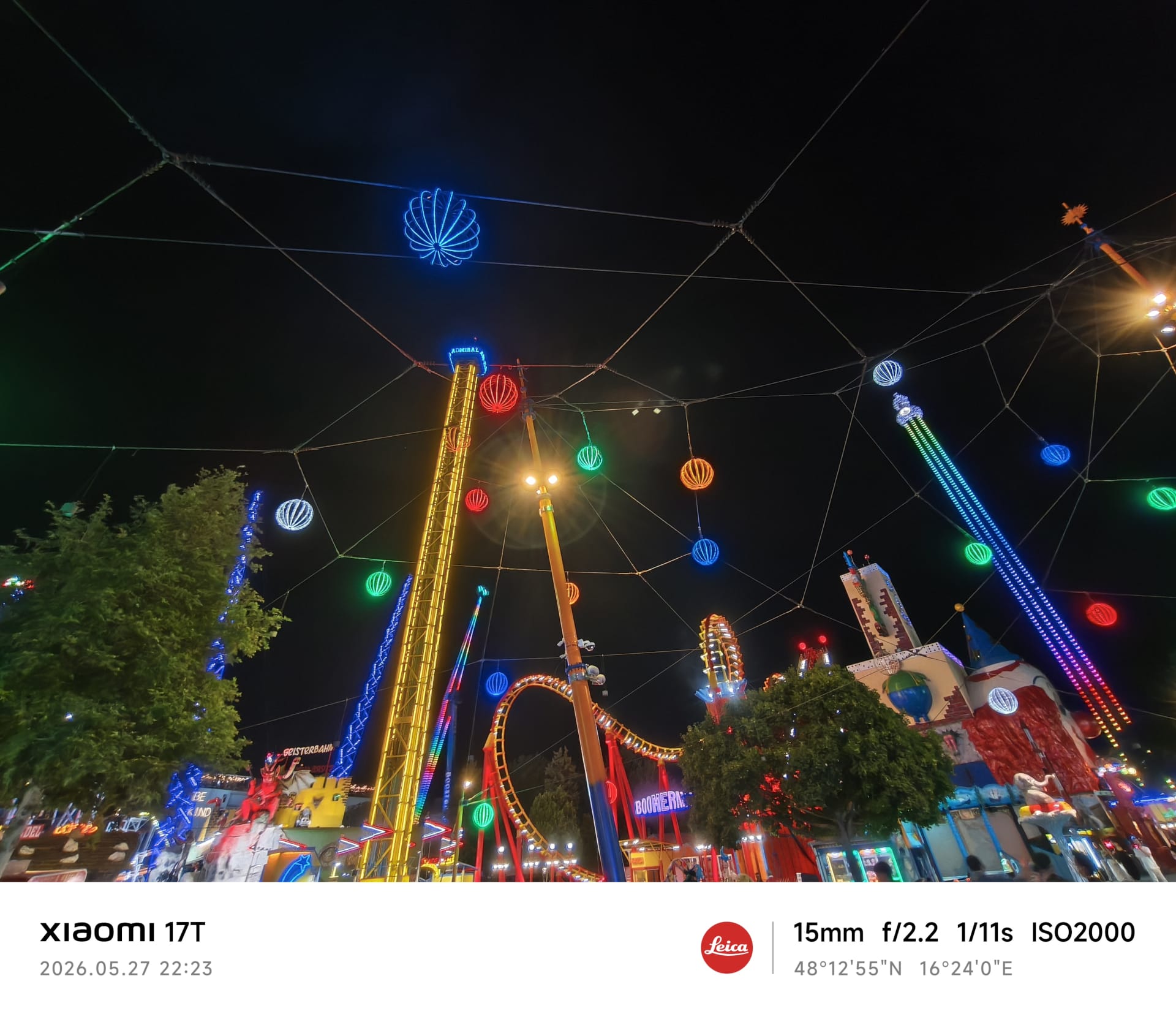
The Xiaomi 17T also performs well at night. Streetlights, shop windows, illuminated buildings and darker indoor areas are handled well, without the camera artificially brightening every scene. Image noise remains moderate, and colours do not noticeably look unnatural. The main camera does lose some detail in very dark areas, but overall the shots look balanced and usable.


Telephoto lens
The real improvement, however, is in the telephoto lens. Subjects that could only be digitally enlarged with the predecessor, and consequently looked soft, can now be captured up close with clarity. This is especially useful for details, making it possible to photograph pipes, steel beams, facades, signs, animals at a distance, or individual plants in the forest without having to stand right next to them—all without loss of quality.

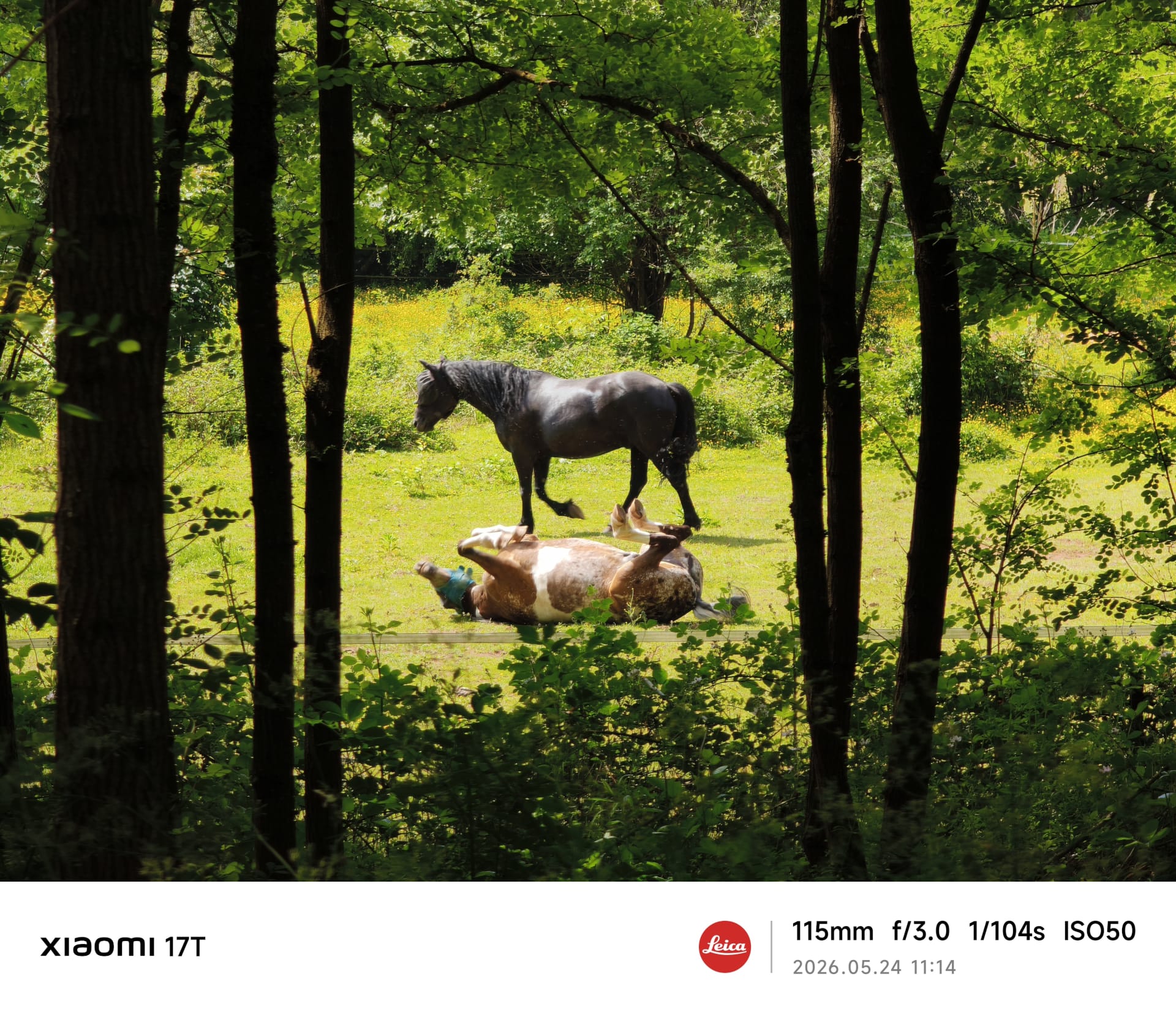
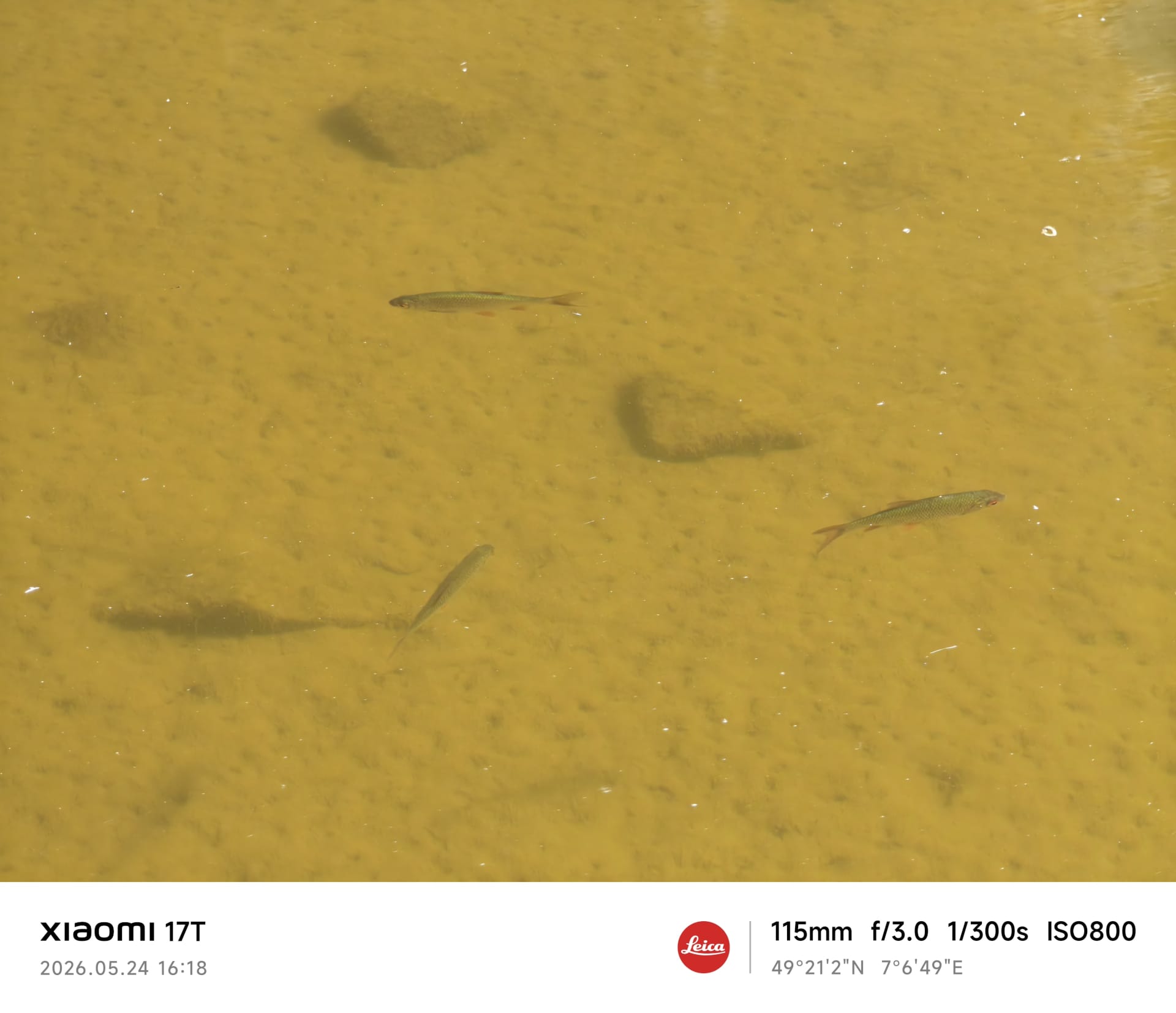


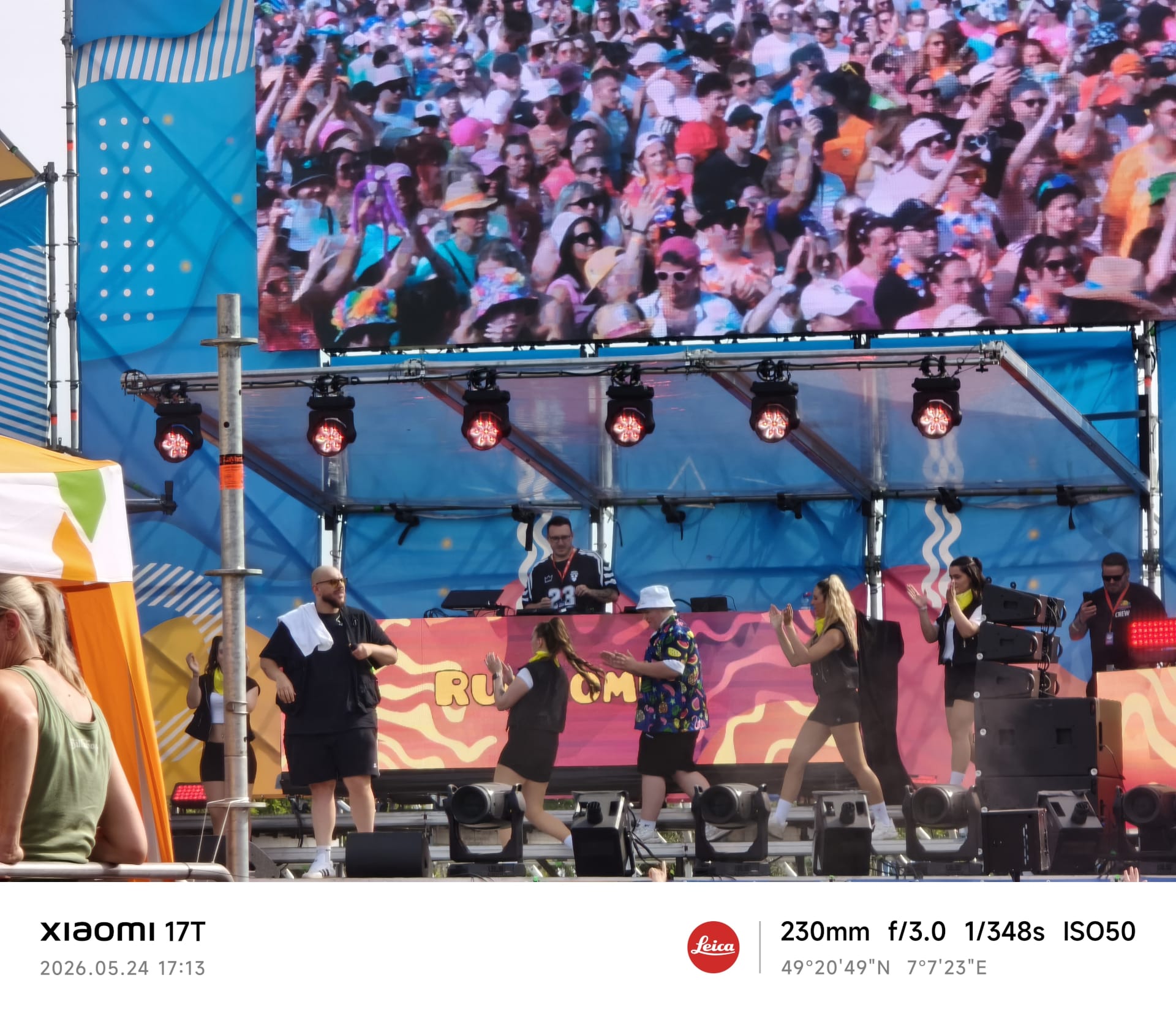


The telephoto camera is also interesting for portraits, although not in every situation. The 115 mm focal length creates a nice bokeh effect and separates subjects pleasingly from the background. However, you need to stand further back than with the Xiaomi 15T’s conventional 2x telephoto camera. The focal length can sometimes be too long for cramped indoor spaces or quick snapshots. It works all the better outdoors.
In good light, the telephoto lens delivers high sharpness, strong contrast, and color tuning that matches the main camera well. Even 10x zoom remains surprisingly usable in daylight. Of course, digital zoom is already involved at that point, but the results are much better than with the Xiaomi 15T.
The telephoto camera also performs reasonably well in low light, as long as there is still enough ambient light. In very dark scenes, the main camera is noticeably better, but the telephoto lens remains far more useful than you would expect from many devices in this class.


Ultra-wide-angle camera
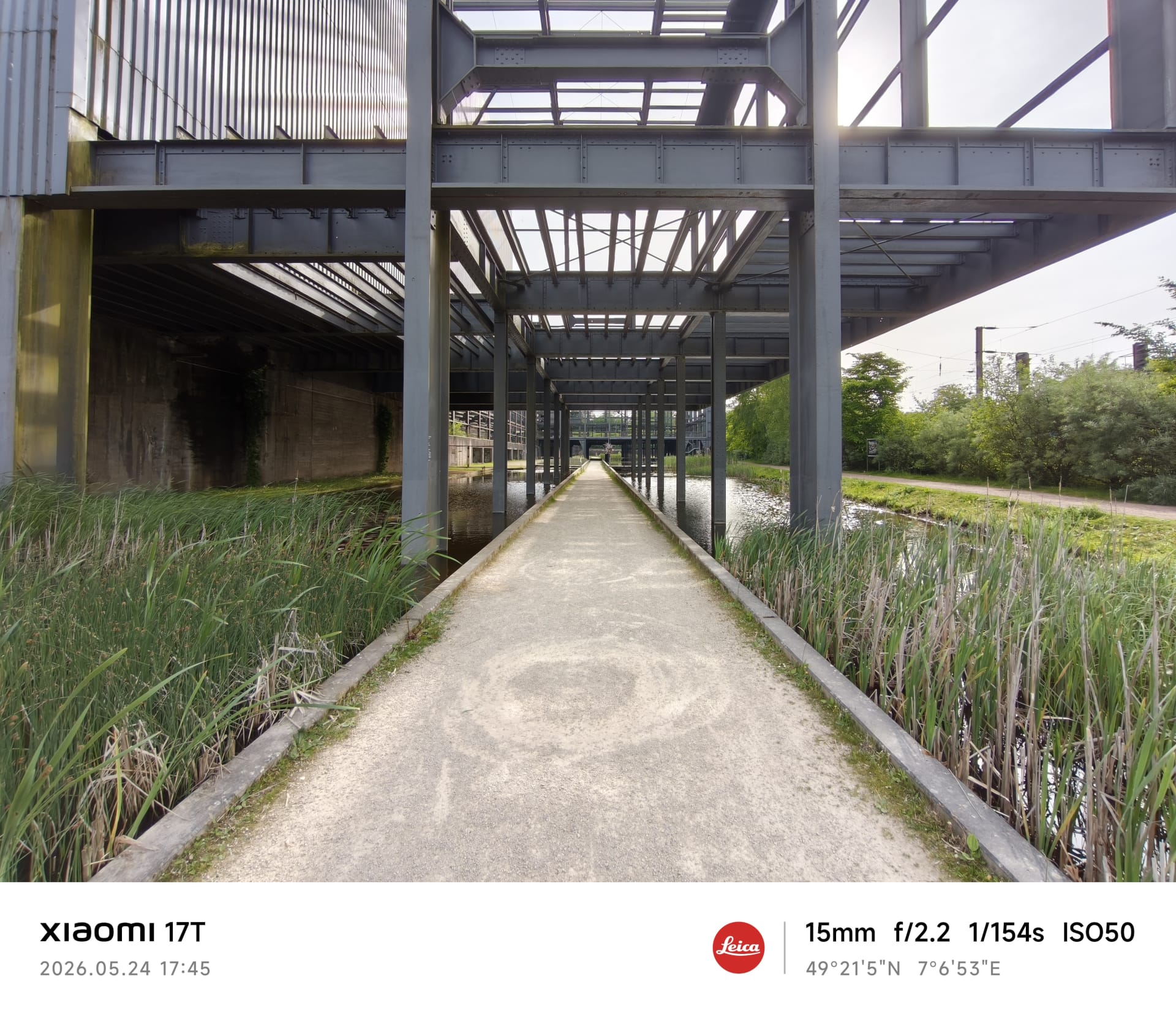
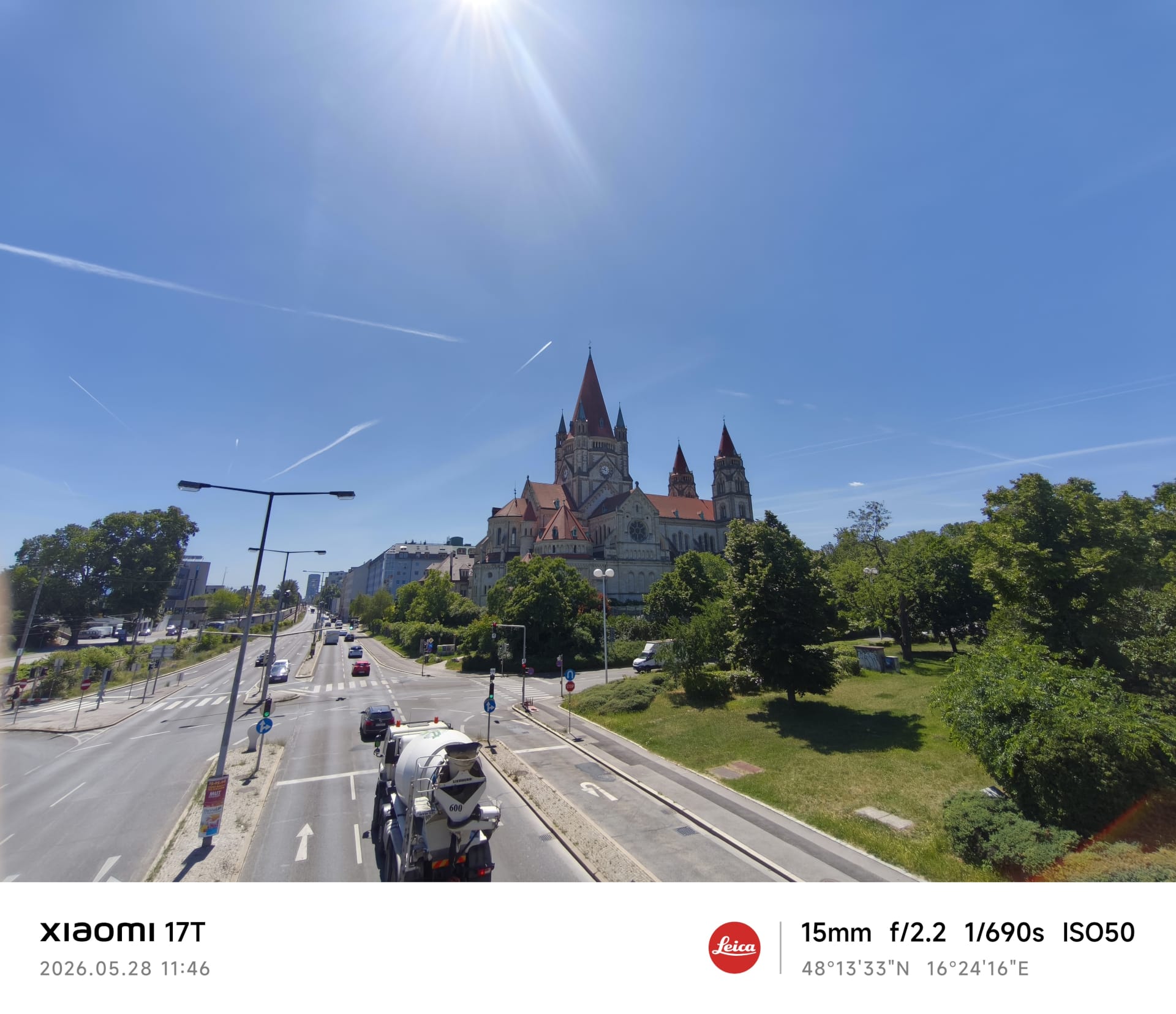
The ultra-wide camera is the least impressive part of the camera system. It offers 12 MP, f/2.2, a 120-degree field of view, and a 15 mm focal length. In daylight, it takes decent shots with good color tuning and usable dynamic range. It's handy for wide-open spaces, narrow alleys, interiors, or expansive landscapes. But compared directly with the main and telephoto cameras, it shows less detail and softer edges.
The lack of autofocus is a shame. This means the ultra-wide-angle camera is not suitable for macro shots, which was already a point of criticism with the Xiaomi 15T, but matters less with the Xiaomi 17T. If you want to photograph subjects up close, simply use the telephoto lens.

Front camera
The front camera has a 32 MP resolution and sits in a punch-hole cutout in the display. Selfies look decent in good light, with pleasant skin tones and sufficient sharpness. But don't expect miracles. The fixed focus continues to limit the camera when the distance isn't ideal. It's perfectly adequate for video calls, social media, and quick selfies, but can't match the Xiaomi 17's more capable 50 MP autofocus front camera.
Video
The main camera and the new 5x telephoto lens record in 4K at up to 60 frames per second, while the ultra-wide and front cameras are limited to 4K at 30 frames per second. There is no 8K or 4K at 120 fps, as found on more expensive models.
The main camera delivers sharp, high-contrast and well-stabilised video in daylight. The combination of optical and electronic stabilisation keeps movement while walking reasonably steady without smoothing the image too much. The clips do not look perfectly gimbal-like, but smaller steps and pans are reliably absorbed.
The telephoto lens also impresses, making the 17T much more versatile for filming than the Xiaomi 15T. It captures distant subjects with noticeably greater sharpness.
In low light, the main camera remains the best choice. The telephoto lens is still usable as long as there is enough ambient light, while the ultra-wide camera loses quality noticeably sooner. HDR10+, LOG video, ShootSteady, and Pro video features round out the Xiaomi 17T's video capabilities.
Xiaomi 17T: Battery
Instead of 5500 mAh like the Xiaomi 15T, Xiaomi has now fitted a 6500 mAh silicon-carbon battery. With active use of the camera, messaging apps, social media, music streaming and navigation, it comfortably lasts through the day. On quieter days, a battery life of one and a half to two days is also realistic. If you take a lot of photos on the go or regularly use your smartphone for navigation, you get more reserve capacity here than with the Xiaomi 15T.
The 17T also holds its own against the Xiaomi 17. The compact flagship also has a very large battery for its size, but the Xiaomi 17T actually has slightly more capacity at 6500 mAh and a less power-hungry chip in the form of the Dimensity 8500-Ultra.
Even so, the Xiaomi 17T isn’t the endurance champion within the new T series. The Xiaomi 17T Pro adds another 500 mAh, bringing its capacity to 7000 mAh. However, the Pro model is also larger and considerably heavier at 219 grams.

Charging is still available at up to 67 watts via cable, so there’s no improvement over the Xiaomi 15T. Only the Xiaomi 17T Pro charges faster, with 100W HyperCharge. Even so, a short charging break is enough to top up the Xiaomi 17T for many more hours of use.
Wireless charging is also missing and is reserved for the Pro model. At least the Xiaomi 17T supports wired reverse charging at up to 22.5 watts, in case your headphones or another device need power while you are out.
As mentioned earlier, no power adapter is included in the box. So, to use the full charging power, you need a suitable Xiaomi charger or a compatible charger with PPS fast charging.
Our verdict
For me, the Xiaomi 17T is the first standard T model in a long time that hasn’t had me constantly eyeing the Pro. Not because Xiaomi has suddenly stopped making compromises, but because it has made improvements in the right areas.
The telephoto camera is the biggest difference from its predecessor. The new focal lengths get much more out of the Leica camera and finally make zoom something you don’t just try out, but use regularly. Rather than simply moving subjects closer digitally, the 17T delivers cleaner detail shots, better photos from a distance and more interesting compositions than the Xiaomi 15T.
The rest fits the bill, too. The display is very good, the battery lasts a long time and performance is easily sufficient for everything that matters beyond benchmark comparisons. With its plastic frame and lack of wireless charging, the 17T still doesn’t feel like a true flagship, but that’s exactly where Xiaomi draws the line between it and the 17T Pro and Xiaomi 17.
Ultimately, the Xiaomi 17T is easier to handle, lasts longer and is significantly more interesting for photography than its predecessor. If you want maximum performance, wireless charging and the better main camera, go for the 17T Pro. If you want a more compact premium model, choose the Xiaomi 17. For everyone else, the Xiaomi 17T is the more sensible choice. I can give it an unequivocal recommendation.
Specifications
Processor and memory
- CPU
- MediaTek Dimensity 8500-Ultra (4 nm)
- – 1x Arm Cortex-A725 up to 3.4 GHz
- – 3x Arm Cortex-A725 up to 3.2 GHz
- – 4x Arm Cortex-A725 up to 2.2 GHz
- GPU
- Mali-G720 MC8
- AI
- NPU 880
- RAM
- 12 GB LPDDR5X 9600 Mbps
- Internal storage
- 256 GB / 512 GB UFS 4.1
- Storage expansion
- Not supported
Display
- Display size
- 6.59 inches
- Display resolution
- 2756 x 1268 pixels (460 PPI)
- Display refresh rate
- Up to 120 Hz
- Touch sampling rate
- 480 Hz, up to 3200 Hz instant touch sampling rate in Game Turbo mode
- Display brightness
- 3500 cd/m² (UHBM, APL25%)
- Display type
- AMOLED
- Protective glass
- Corning Gorilla Glass 7i
- Other
- – 12-bit color depth
- – 68 billion colors
- – 100% DCI-P3
- – 3840 Hz PWM dimming
- – DC dimming
- – Original Color PRO
- – Pro HDR
- – Wet Touch Technology 2.0
- – Xiaomi Vision Care
- – HDR10+, Dolby Vision
- – TÜV Rheinland certified (Low Blue Light hardware solution, Flicker-Free, circadian-friendly, Intelligent Eye Care)
Cameras
- Rear (Leica triple camera)
- – Main camera
- 50 MP (Light Fusion 800, 1/1.55", f/1.7, OIS, 23 mm)
- – Periscope telephoto lens
- 50 MP (f/3.0, OIS, 115 mm, 5x optical zoom)
- – ultra-wide-angle
- 12 MP (f/2.2, 120°, 15 mm)
- Lens
- VARIO-SUMMILUX 1
- 1.7–3.0/15–115 ASPH.
- Photo modes
- Leica Authentic Look / Leica Vibrant Look, Leica Filter, classic Leica shutter sound, Leica watermark, Xiaomi ProFocus, motion tracking, motion capture, Lightning Burst, AI Ultra Zoom up to 120x, HDR, Live Moment, automatic scene recognition, Portrait mode, Master Lens System (23/28/35/46/75/115 mm), 50 MP mode, Super Macro, Panorama, Long Exposure, Document mode, Quick Shot, Pro mode, RAW in Pro mode, HEIF, JPEG
- Video recording (rear camera)
- – 4K HDR10+ at 30/60 fps
- – 1080p HDR10+ at 30/60 fps
- – 720p at 30 fps
- – LOG video up to 4K at 30/60 fps
- – Night video up to 4K at 24 fps
- – Slow motion 720p at 120/240/960 fps
- – 1080p slow motion at 120/240/960 fps
- – Time-lapse up to 4K at 30 fps
- – ShootSteady
- – Pro mode
- – LUT parameters
- – 3-microphone array
- Front camera
- 32 MP selfie camera in the display (f/2.2, 21 mm)
- – 4K HDR10+ at 30 fps
- – 1080p HDR10+ at 30/60 fps
- – 720p at 30 fps
- – Slow motion up to 1080p at 120 fps
- – Time-lapse up to 4K at 30 fps
- – HDR
- – Live Moment
- – Portrait mode
- – Palm shutter
- – Voice trigger
- – Self-timer
- – Brightening
- – Dual Video
- – Video teleprompter
Mains
- Dual SIM (Nano-SIM + Nano-SIM / Nano-SIM + eSIM / eSIM + eSIM)
- eSIM support
- Yes
- 5G SA
- n1/ n2/ n3/ n5/ n7/ n8/ n12/ n20/ n26/ n28/ n34/ n38/ n39/ n40/ n41/ n48/ n66/ n71/ n75/ n77/ n78
- 5G NSA
- n1/ n2/ n3/ n5/ n7/ n8/ n20/ n28/ n38/ n40/ n41/ n66/ n71/ n75/ n77/ n78
- 4G LTE-FDD
- B1/2/3/4/5/7/8/12/13/17/18/19/20/26/28/32/66/71
- 4G LTE-TDD
- B34/38/39/40/41/42/48
- 3G WCDMA
- B1/2/4/5/8
- 2G GSM
- B2/3/5/8
Wireless
- Wi-Fi
- Wi-Fi 6E, 2x2 MIMO, Wi-Fi Direct
- Bluetooth
- 6.0
- NFC
- Yes
- Infrared
- Yes
- Audio
- Stereo speakers, Dolby Atmos, Hi-Res Audio, Hi-Res Wireless
- 3.5 mm jack
- No
- Supported audio formats
- MP3, FLAC, APE, AAC, OGG, WAV, AMR, AWB
- Supported video formats
- MP4, MKV, WEBM, 3GP, TS
- HDR playback
- HDR10, HDR10+, Dolby Vision
Navigation and positioning
- GPS (L1 + L5)
- Galileo (E1 + E5a)
- GLONASS (G1)
- BeiDou (B1I + B1C + B2a)
- QZSS (L1 + L5)
- NavIC (L5)
- A-GPS, Wi-Fi positioning, network-based positioning
Sensors
- Fingerprint sensor in the display
- AI Face Unlock
- Proximity sensor
- Ambient light sensor
- Accelerometer
- Gyroscope
- E-compass
- IR blaster
- Flicker sensor
- Color temperature sensor
- Linear X-axis vibration motor
Cooling system
- Xiaomi 3D IceLoop System
Battery
- Capacity
- 6500 mAh (silicon-carbon battery)
- Charging
- – 67W wired (HyperCharge)
- – 50W PPS
- – 22.5W wired reverse charging
- USB
- USB-C (PD3.0, PD2.0)
Operating system
- Xiaomi HyperOS 3
Artificial intelligence
- Xiaomi HyperAI
- – AI Writing
- – AI speech recognition
- – AI interpreter
- – AI search
- – Dynamic AI wallpapers
- – AI creativity assistant
- – Circle to Search with Google
- – Google Gemini integration
Protection rating
- IP68 (water- and dust-resistant)
Dimensions and weight
- – 157.6 x 75.2 x 8.17 mm
- – 200 g
Colors
- Violet, Blue, Opal White, Black
What’s included
1x Xiaomi 17T 1x USB-C cable 1x SIM eject tool 1x protective case 1x documents
Price comparison
| Store | Price | Link |
|---|---|---|
| Amazon | 479,00 € | Go to store |
| MediaMarkt | 479,00 € | Go to store |
Comments