Contents
Xiaomi Mi Notebook Pro - GTX Edition
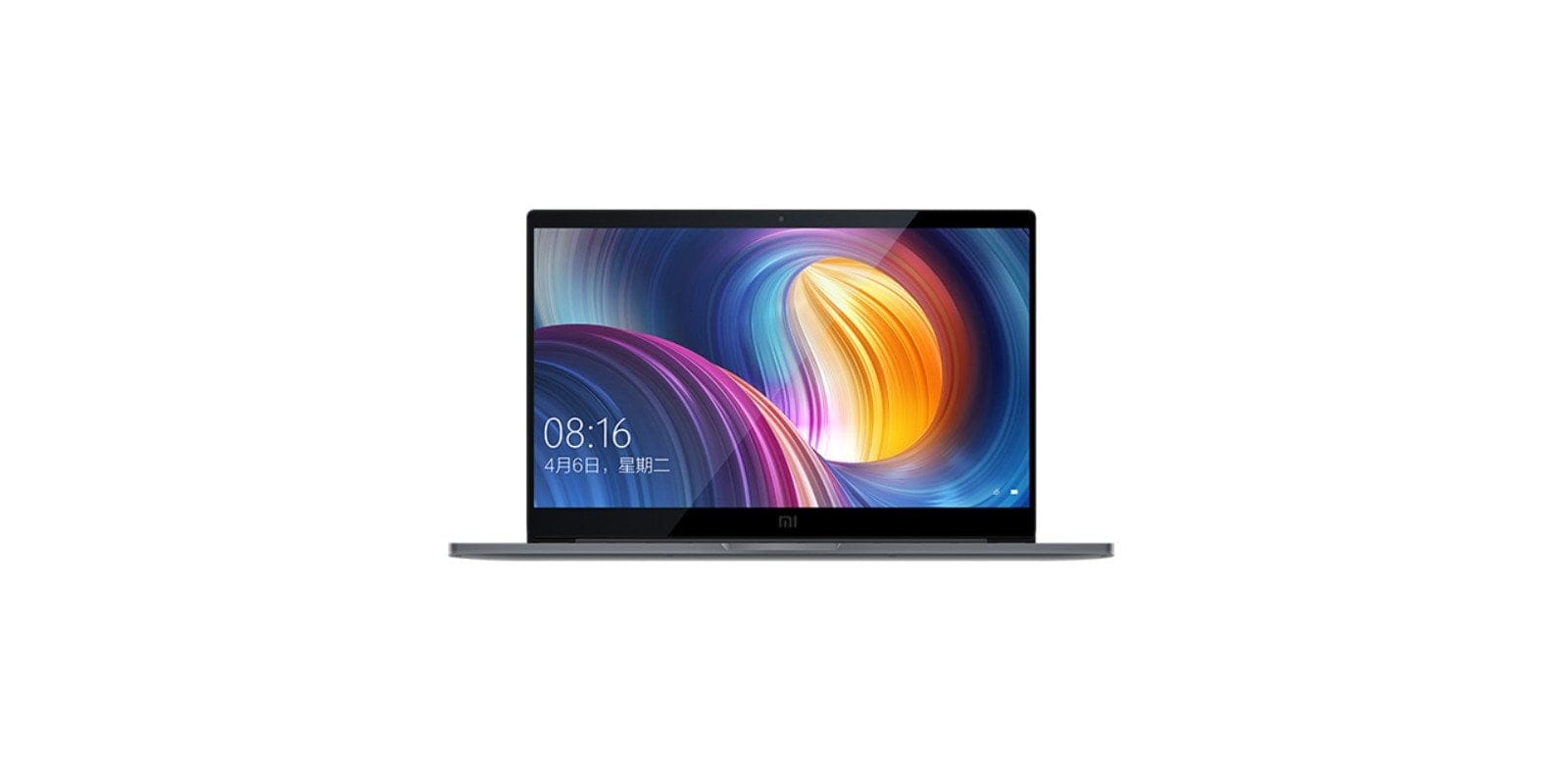
A successor to the Xiaomi Mi Notebook Pro has been expected in China for several weeks. Local tech websites had already reported on the "Xiaomi Mi Notebook Pro 2", a comprehensive revision of the predecessor model. At this year’s "ChinaJoy", Xiaomi finally revealed its hand. A comprehensive revision of the laptop did not materialise. Instead, the new "GTX Edition" represents a smaller hardware upgrade.
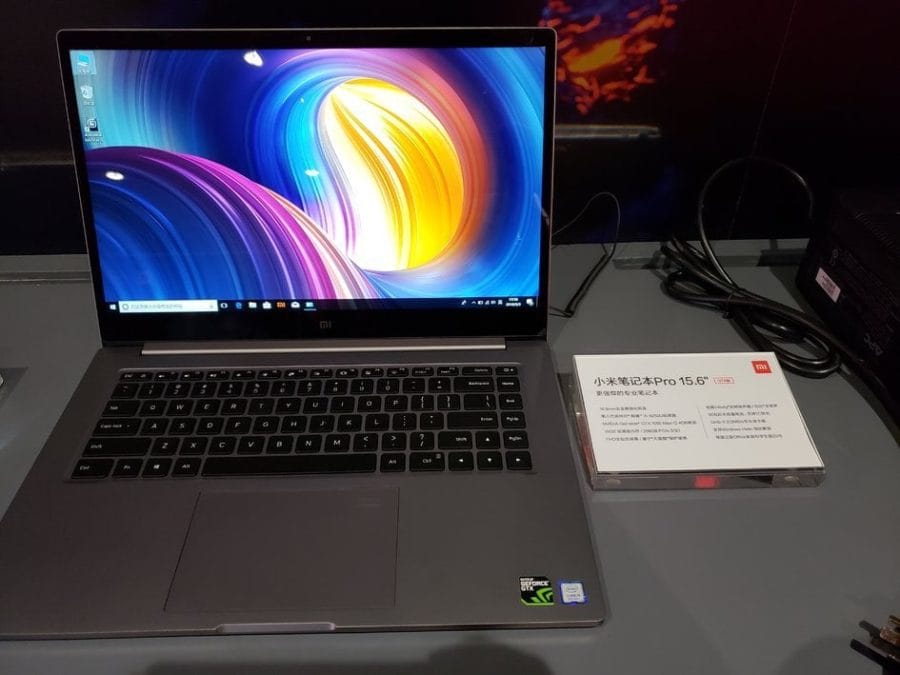
Xiaomi remains true to its previous design line. The design of the new Notebook Pro is identical to that of the predecessor model. A key design feature is a simple unibody metal casing, completely free of distracting manufacturer logos. The height of the notebook has been adjusted. It is now 16.9 mm, exactly 1 mm higher than the predecessor (15.9 mm). There are no changes to the keyboard. It is still a chiclet type and backlit. Below the keyboard is the glass trackpad with a fingerprint sensor.
The Xiaomi gaming range has also received a significant upgrade.
To the Xiaomi Gaming Laptop
The system-on-chip is an Intel Core i7-8550U, a quad-core processor released in summer 2017 and designed specifically for laptops and ultrabooks. The SoC’s 4 processor cores operate at a base clock of 1.8 GHz and reach a clock speed of up to 4 GHz in turbo mode. The integrated graphics card is an Intel UHD Graphics 620. The SoC’s performance depends heavily on cooling. There is also a less powerful variant with an Intel Core i5-8250U processor. This 4-core unit runs at a base clock of 1.6 GHz and reaches a clock speed of 3.4 GHz in turbo mode.
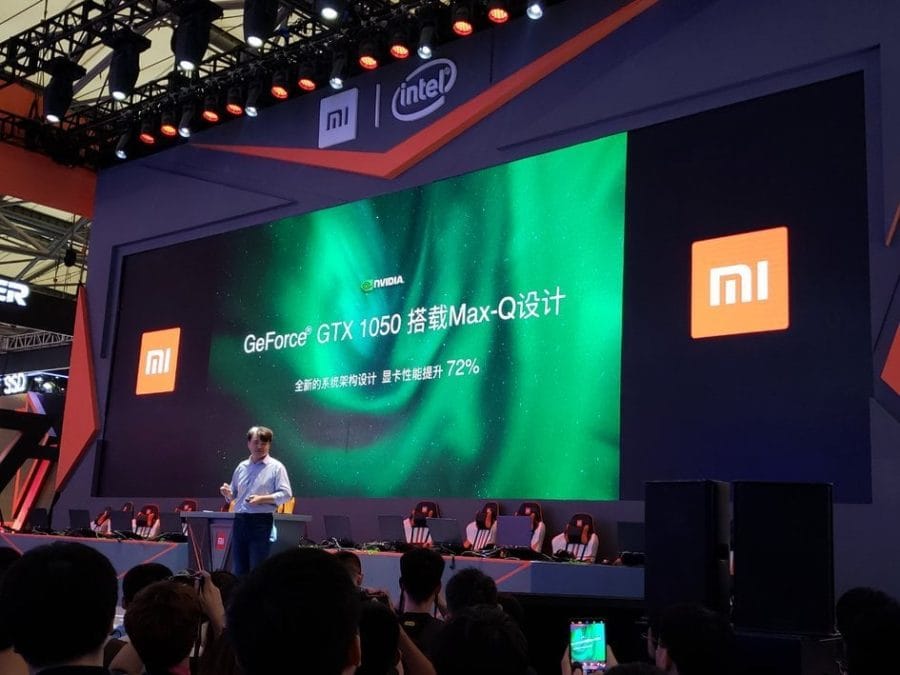
The dedicated graphics card is new. Xiaomi has replaced the predecessor's Nvidia MX150 with a faster Nvidia GTX 1050 Max-Q. Unlike the standard GTX 1050, the Max-Q is optimised for laptop use and accordingly works more efficiently. At the same time, however, the graphics unit is 10-15% slower than a regular GTX 1050! Based on experience, the GTX 1050 Max-Q is suitable for certain current PC games, provided graphics settings are adjusted accordingly. What is decisive is how well Xiaomi has adapted the cooling system to the new graphics card.
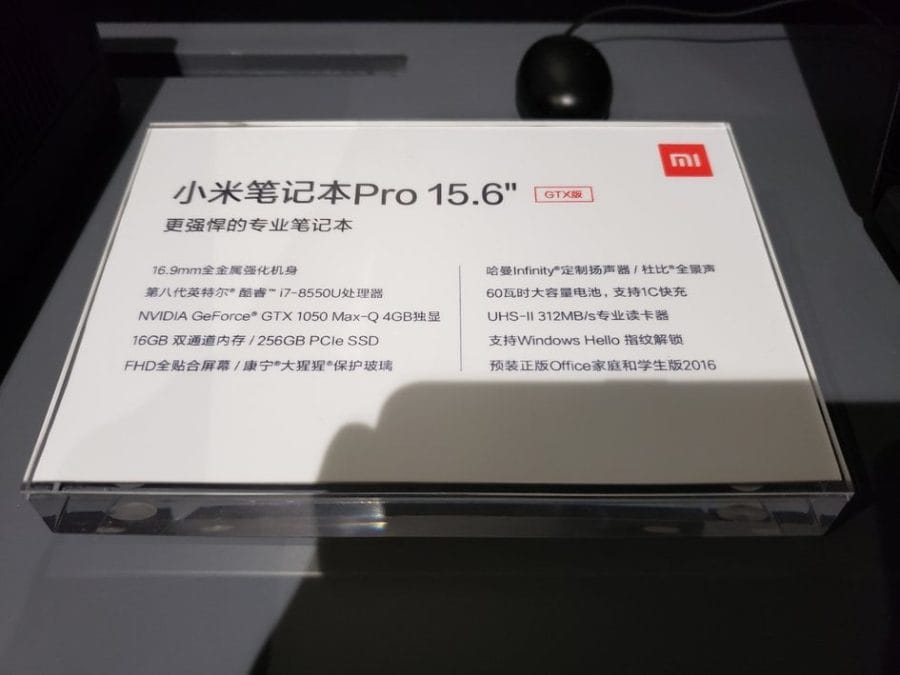
The memory configuration consists of 16GB / 8GB DDR4 RAM (dual-channel) and 256GB PCIe SSD storage. An additional SD card slot with UHS-II interface promises transfer speeds of up to 312 MB/s. The Stereo speaker system "Harman Infinity" is also included. The display offers Full HD resolution (1920 x 1080 pixels) on a 15.6-inch diagonal. Dual-AC WiFi and Bluetooth 4.1 enable fast wireless connectivity.
Specifications
Display
- Resolution
- 1920 x 1080
- Diagonal
- 15.6-inch
- Contrast ratio
- 800:1
- Brightness
- 300 cd/m²
Performance
- CPU
- Intel Core i7-8550U
- GPU
- Intel UHD Graphics 620 + Nvidia GTX 1050 Max-Q
- RAM
- 16GB DDR4 RAM (dual channel)
- Internal storage
- 256GB PCIe SSD
Ports
- 2x USB Type-C
- 2x USB 3.0
- 1x HDMI
- 1x SD (UHS-II)
- 1x headphone jack
Battery
- Capacity
- 60 Wh
- Runtime
- up to 11 hours
- Charging time
- 90 minutes
- Fast charging
- 1C Quickcharge
Other
- Wi-Fi
- Dual-band AC WiFi (2.4 + 5 GHz)
- Bluetooth
- BT 4.1
- Speakers
- Harman Infinity
- Fingerprint scanner
- Yes
Comments (2)
Hi,
Just a quick question: Where did you get the information that the laptop has an SD card slot with a UHS-II interface? The predecessor was only connected via USB-II and very slow. Do you also know if the USB-C ports support TB3?
Best regards
Benjamin
Hi Benjamin, you can check the specifications on the Chinese product page. Simply translate it with Google Translate. Here is the link: https://www.mi.com/mibookpro-gtx/specs/ TB3 is likely not supported. At least, I can't find anything about it :/.