Contents
UV Lasers: Bridging the Gap Between Diode and CO2
The desktop laser market has so far been broadly divided into two camps: affordable diode lasers (blue light) for hobbyists and more powerful CO₂ lasers (infrared) for ambitious makers. However, both technologies reach their physical limits when working with transparent or highly heat-sensitive materials.
xTool has now introduced the F2 Ultra UV, a system intended to fill this gap. The device uses ultraviolet light to enable material processing based less on thermal ablation and more on photochemical processes. With a pre-sale price of around 3,919 euros, the device is clearly aimed at semi-professional users and small business owners.
The Difference Between “Burning” and “Cold Processing”
To assess the benefits of the F2 Ultra UV, it is worth looking at how it works. Conventional lasers (diode, CO₂) heat the material until it evaporates or chars. With glass, this thermal shock often causes cracks. With plastics such as polyethylene or silicone, it creates melted, uneven edges. Diode lasers also often leave transparent materials such as clear acrylic untouched, as the beam passes through without transferring energy to the material.
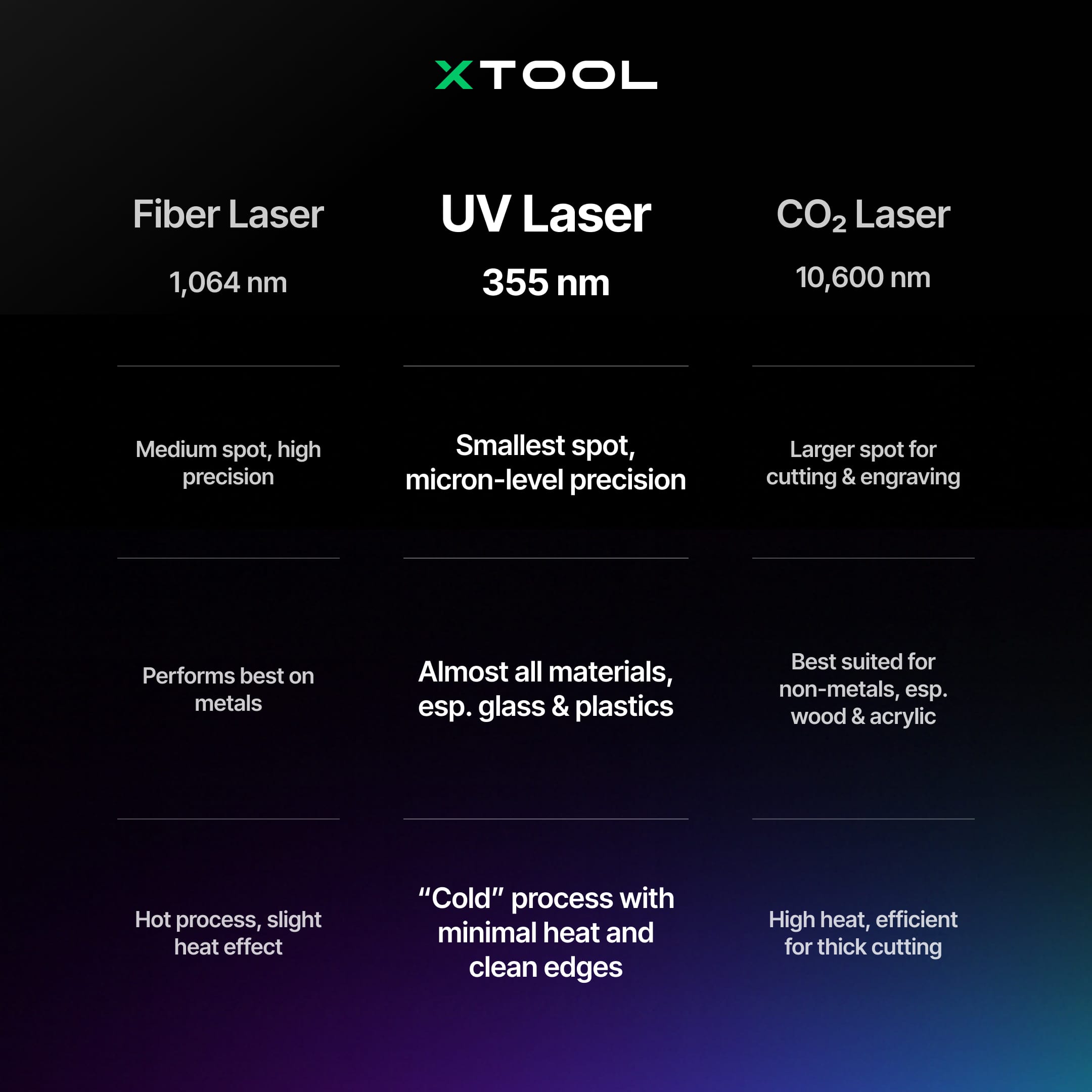

The F2 Ultra’s 5-watt UV laser operates at a wavelength of 355 nanometers. This allows its high-energy photons to break molecular bonds directly without generating much heat, a process also known as “cold processing”.
Plastics such as silicone, ABS and faux leather can be processed without melting edges or soot, while glass and acrylic can be engraved directly without pretreatment (no spray required). According to xTool, the spot size is less than 0.01 mm, significantly smaller than that of conventional CO₂ systems. This allows for fine markings, for example on electronic components or jewellery.
Unique Feature: 3D Subsurface Glass Engraving
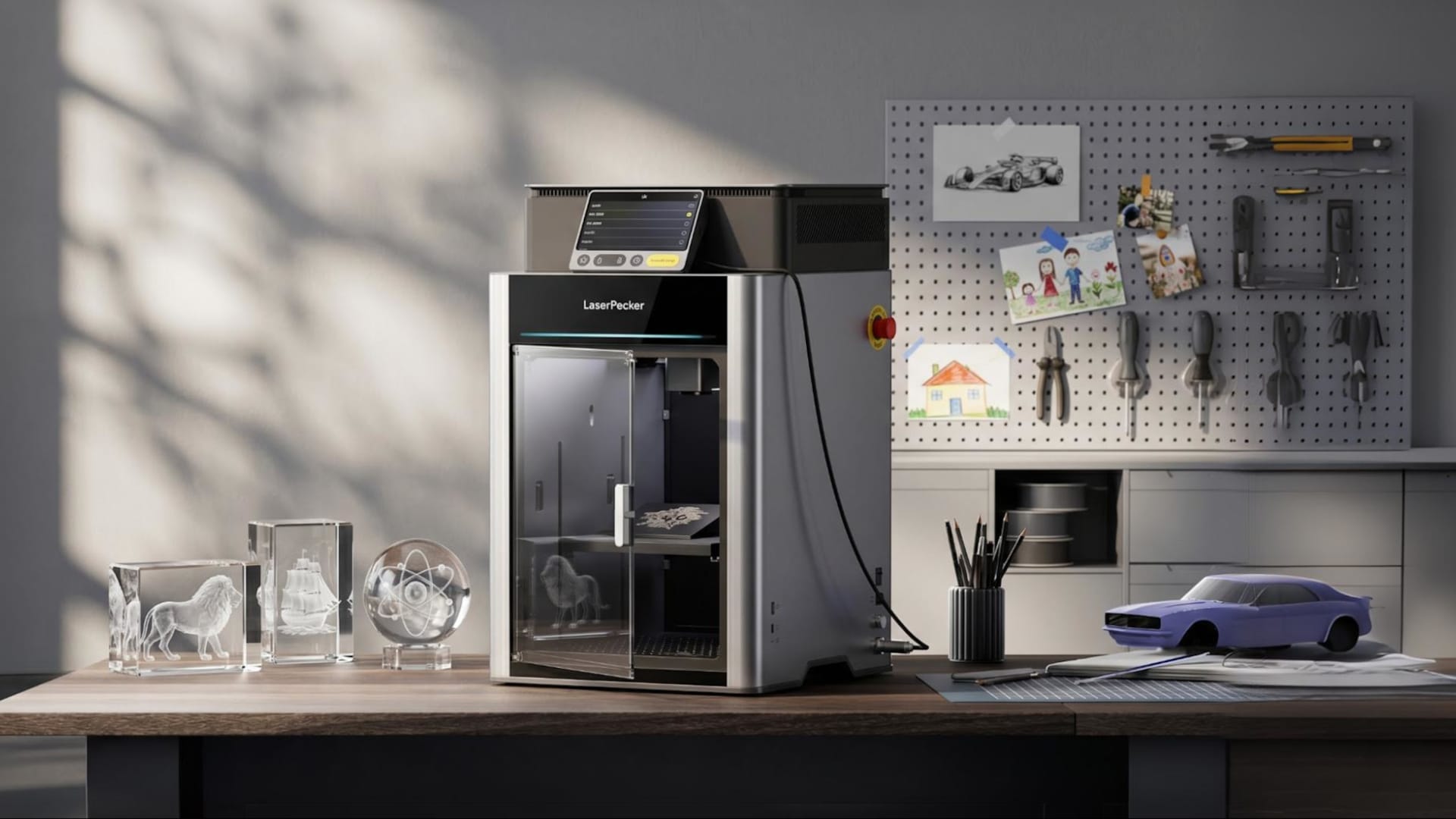
A unique feature in this class of device is support for subsurface glass engraving, a capability previously found only in considerably more expensive professional machines. The laser’s focal point is directed through the glass surface and into the material. Tiny microcracks inside the glass create the pattern, while the outer surface remains completely smooth and undamaged. A CO₂ laser would be ineffective here, since its IR radiation would be absorbed immediately at the surface, causing the glass to shatter.

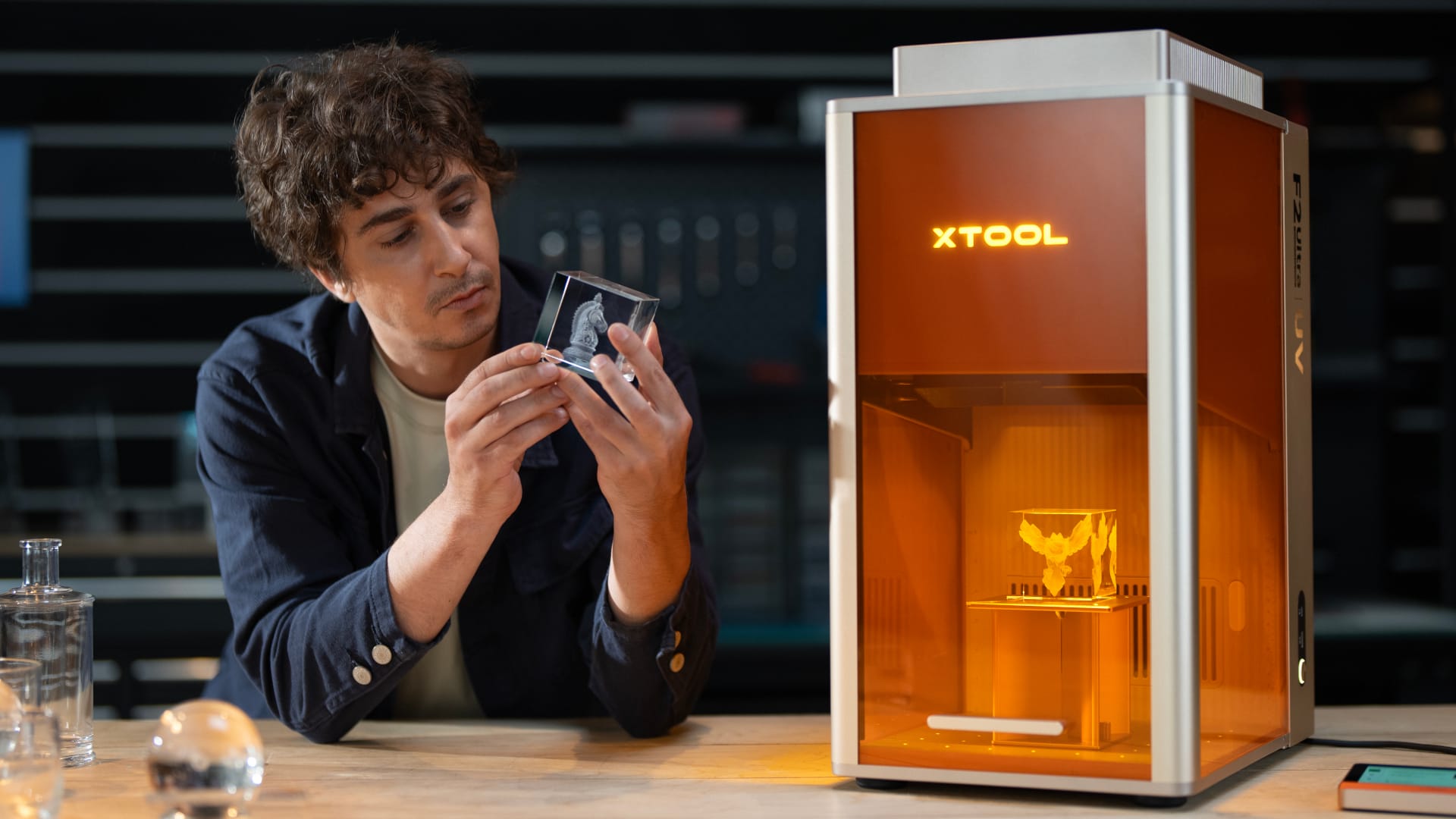
The process can be used, among other things, to create glass cubes with 3D motifs, familiar from souvenir shops. To make it as easy as possible to create the necessary 3D data, xTool uses the “AImake” software solution. It is designed to automatically convert 2D photos or graphics into spatial 3D point clouds using artificial intelligence. Depth layers, contrast, point density, and material parameters are determined automatically.
AImake also offers additional features to support the entire design process. These include image enhancement tools, automatic background removal, style transfers, and the ability to reconstruct missing image areas using AI models. For surface engravings, designs can be scaled, smoothed, or reinterpreted without the need for additional graphics software. If desired, more complex 3D models can also be generated from text prompts and then further processed directly in xTool Studio for subsurface or surface engraving.
Hardware and features
The F2 Ultra UV uses a galvo system (mirror deflection), enabling engraving speeds of up to 15,000 mm/s. Although the device is designed as a fully enclosed system, it falls into Laser Class 4. As long as the enclosure remains closed, the laser can be operated without additional protective eyewear. If the hood is opened, for example for maintenance, setup or changing workpieces, the usual protective measures for Class 4 systems apply.
To position and orient the workpiece, the F2 Ultra UV uses two 48-megapixel cameras and a LiDAR. One camera detects the position of the workpiece, the second handles autofocus, and the LiDAR measures height differences on the surface. This enables a visual preview at the object's actual size, as well as automatic focusing without manual intervention.
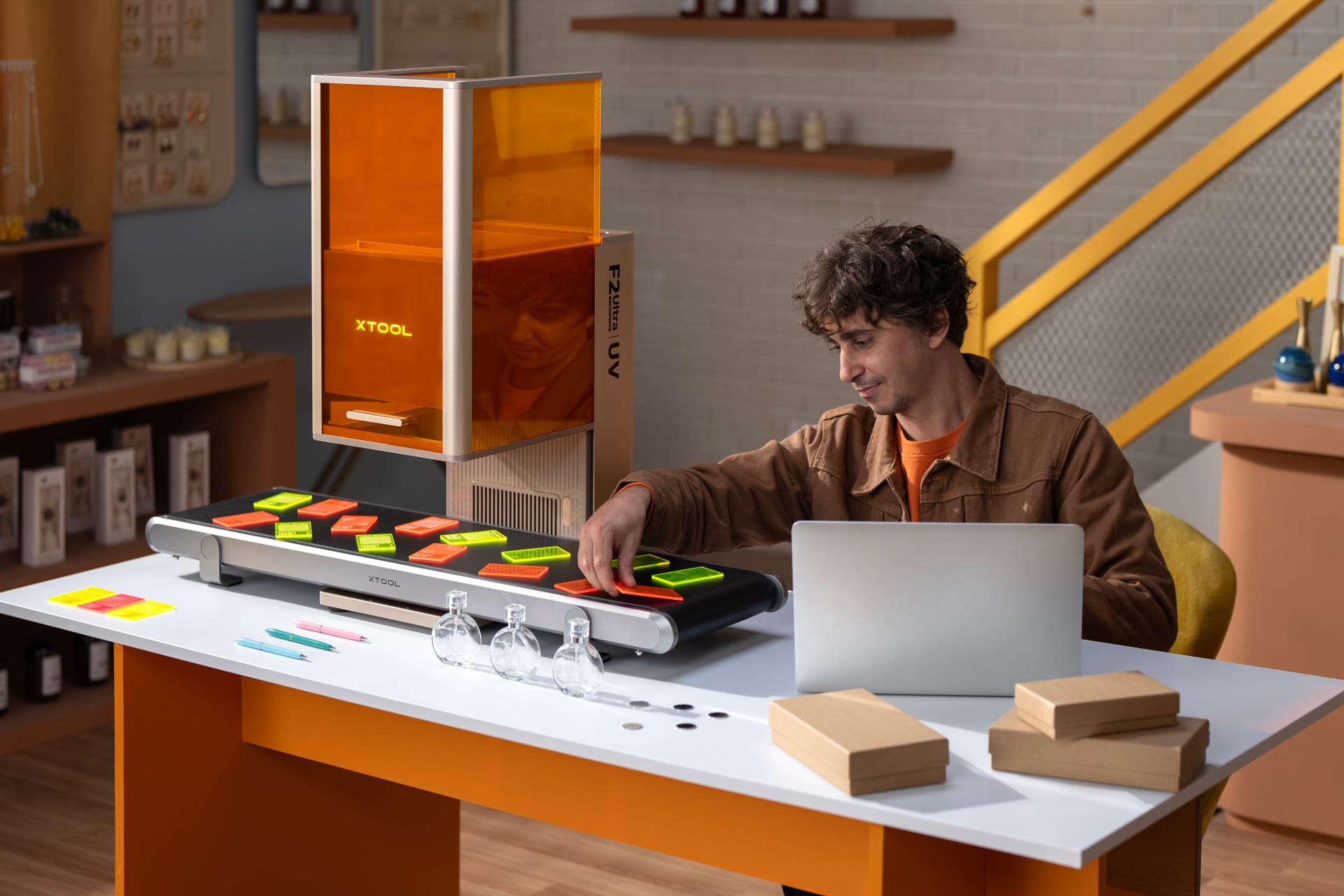
With a working area of 200 x 200 millimetres, the F2 Ultra UV is particularly suitable for smaller workpieces, such as keyrings or business cards. For batch production, the system supports accessories such as the Auto Streamline Conveyor conveyor belt, which expands the working area to 200 x 500 millimetres, and the RA3/RA2 rotary extension for cylindrical objects such as glasses or rings.
xTool F2 Ultra UV specifications at a glance
| Laser type | 5W 355 nm UV laser |
| Processing modes | Laser engraving, laser cutting |
| Supported materials | Engraving: glass, crystal, acrylic, wood, metal, leather, plastic, rubber, silicone, ceramic, etc. Cutting: paper, wood, plastic, glass, fabric, leather, etc. |
| Work area | 200 × 200 mm (surface) 70 × 70 mm (subsurface) 200 × 500 mm with conveyor belt |
| Maximum working speed | 15,000 mm/s (590.55 ips) |
| Max. cutting capacity (wood) | 15 mm (multiple passes) |
| Max. cutting capacity (acrylic) | 12 mm (multiple passes) |
| Maximum working height | 150 mm |
| Max. rotary diameter | 150 mm |
| Software | xTool Studio (Windows/macOS), compatible with AImake |
| Connection | USB, Wi-Fi, network/IP |
| 2D file formats | SVG, DXF, JPG, JPEG, GIF, PNG, BMP, WEBP |
| 3D file formats | STL, OBJ, AMF, 3MF, GLB, PLY |
| Pre-assembled | Yes |
| Camera system | 48 MP dual cameras |
| Positioning | Camera-based positioning |
| Focus mode | Autofocus |
| Distance measurement | LiDAR ranging system |
| Preview | Smart camera preview, high-speed light live preview |
| Laser spot size | 0.01 × 0.01 mm |
| Positioning accuracy | 0.2 mm (camera) |
| Ranging accuracy | 0.2 mm (camera) |
| Image resolution | 48 MP |
| Motion resolution | 0.00133 mm (inner engraving) |
| Vector fitting resolution | 0.001 mm |
| Safety certification | Laser class 4 |
| Device dimensions | 294 × 429 × 520 mm (11.6 × 16.9 × 20.5 inches) |
| Weight | 22.5 kg (49.6 lb) |
| Max. power consumption | 348 W |
| Mains voltage | 110–240 V AC, 50/60 Hz |
| Storage/operating temperature | -10 to 60 °C (storage), 10 to 30 °C (operating) |
| Storage humidity | 10–60% RH |
What a UV laser is less suitable for
Despite its wide range of compatible materials, a UV laser remains a tool for precise engraving and delicate structures. Its 5-watt power is sufficient for thin materials, but not for cutting thick wood or acrylic. High-power CO₂ lasers with infrared output are much more efficient for these tasks. The options are also limited when it comes to metals. The UV laser can create light markings on steel or aluminum, but cannot produce deep engravings or temper colors, so fiber lasers remain the obvious choice in this area.

Large-format projects are not a priority for the F2 Ultra UV either. Its work area is designed for small to medium-sized objects. Users who need to work on furniture parts, large signs or broad cut-outs will still have to turn to CO₂ or diode systems. Even those who want the typical charred look of a wood engraving will not get the result they are used to with UV, as UV engravings remain light and very fine.

Practical applications
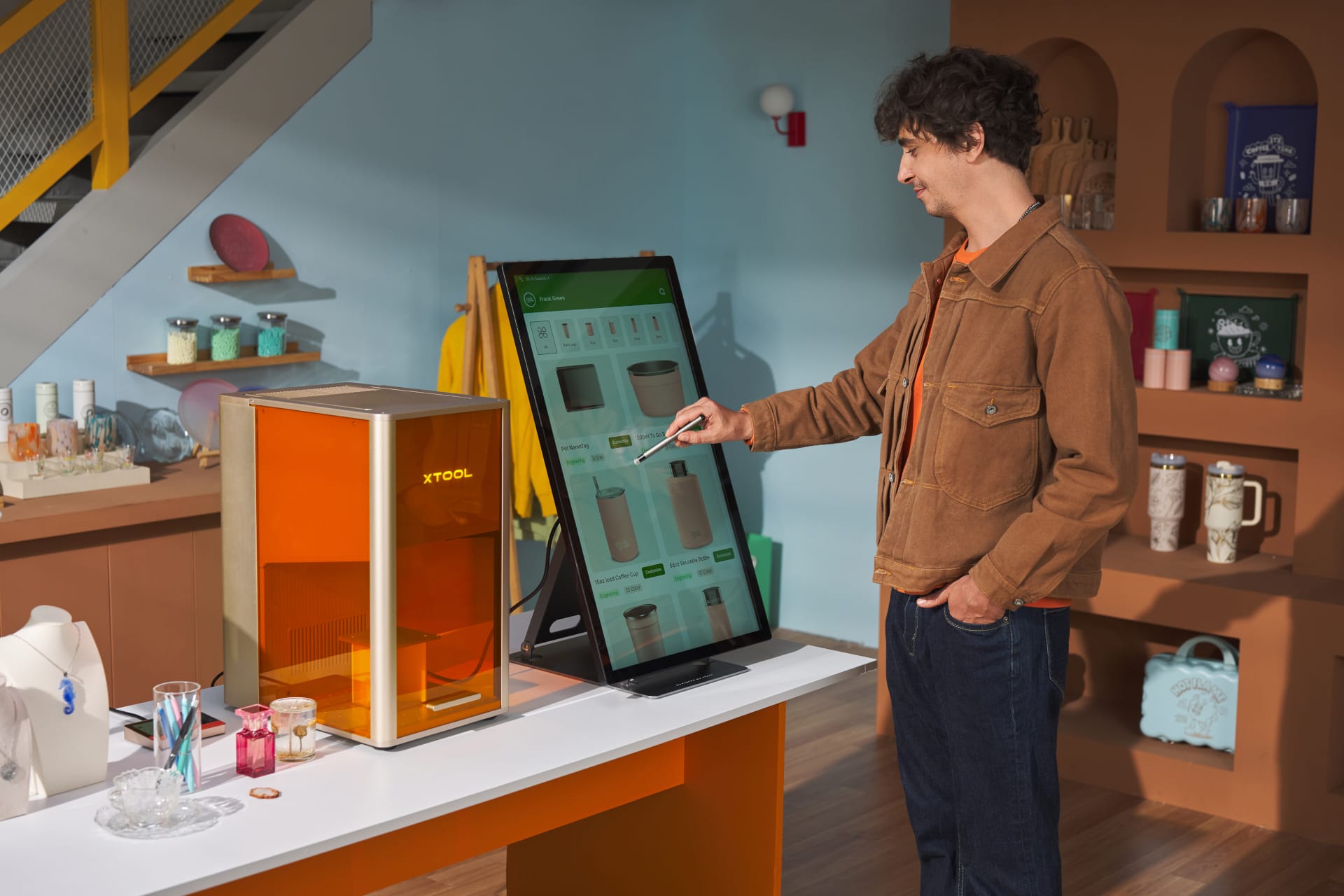
Small studios can work with sensitive plastics, clear acrylic surfaces, white ceramics, or decorative glass objects. Workshops and makerspaces benefit from precise markings on electronic components, prototypes, or tools. Retailers and in-store brand shops can engrave items directly for customers, as the enclosed housing makes safe operation easier. Artists and designers gain additional tools for finely textured surfaces and three-dimensional glass objects.
Price and availability
The xTool F2 Ultra UV is available for preorder now in the xTool shop. The regular list price is €4,559, while the device is available for €3,919 in the current presale. Deliveries are scheduled to begin at the end of November 2025.
Comments