Contents
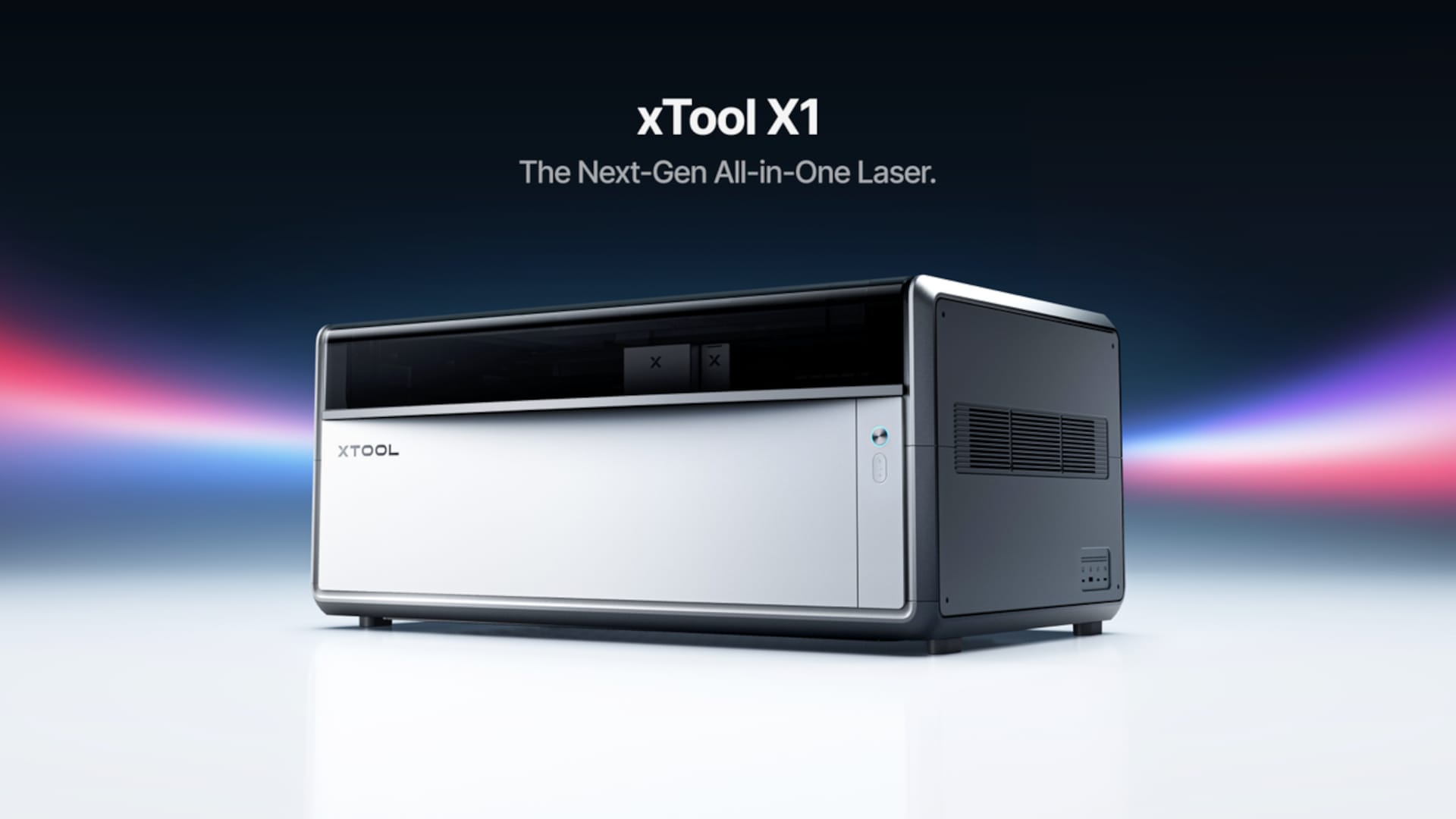
xTool is expanding its portfolio with the xTool X1, a modular laser platform for ambitious makers, creative professionals and small businesses. The new system is designed to bring together several device categories that have usually been separate: a conventional gantry laser with a larger work area, a fast galvo laser for engraving, and additional interchangeable laser sources.
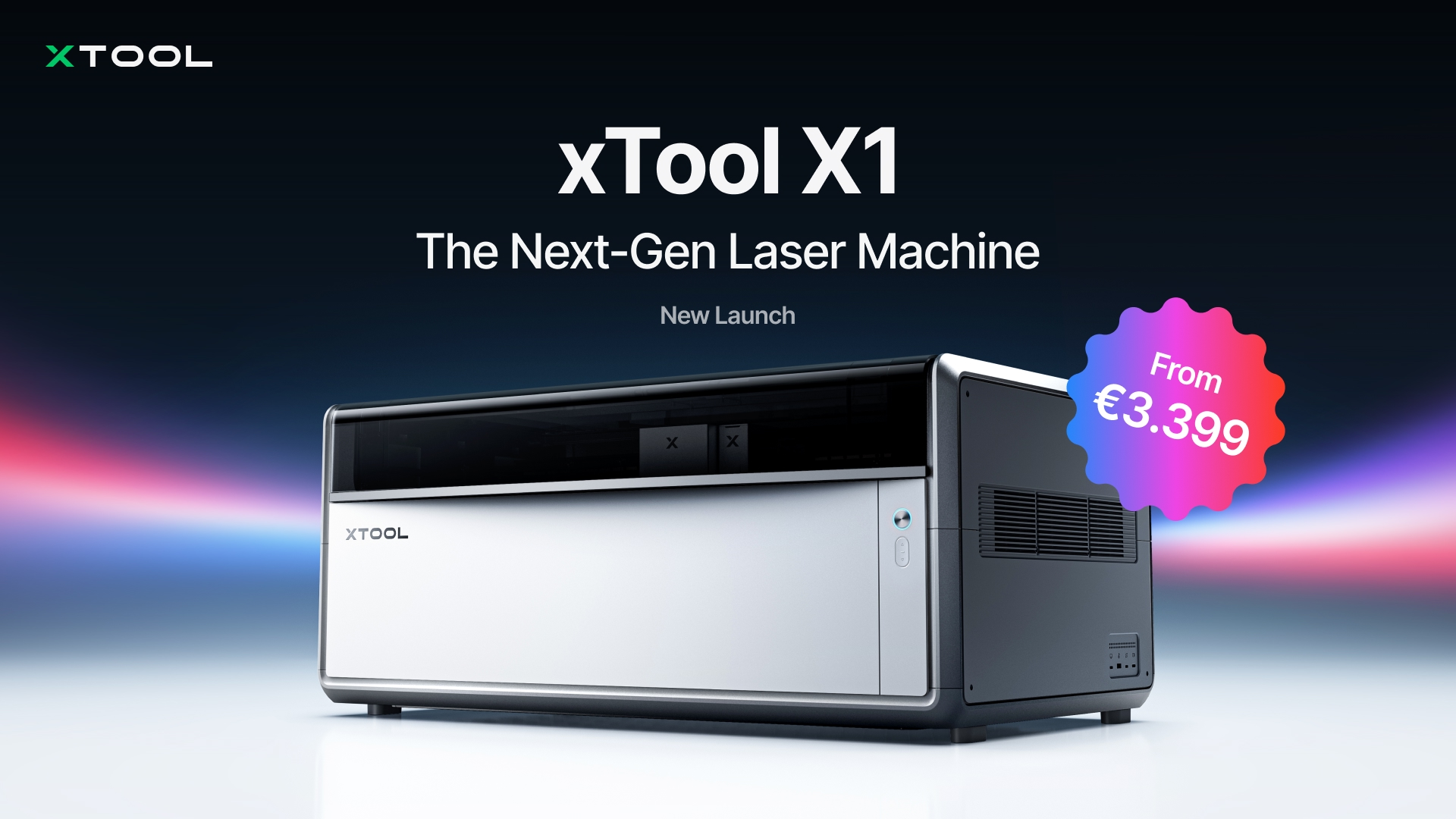
The reservation phase is set to begin at the end of September. xTool plans to officially launch sales in Germany at the end of October 2026. The X1 will also be on display at the IFA at the xTool booth in Hall 20, Booth 127. The manufacturer has not yet announced a price.
Hybrid Motion combines gantry and galvo
One of the X1’s key innovations is called xTool Hybrid Motion. It is a coordinated four-axis system that combines the motion mechanics of a gantry laser with a galvo system.
Gantry systems move the laser head along guide rails, making them suitable for comparatively large workpieces. Galvo lasers, by contrast, steer the beam using rapidly moving mirrors and achieve significantly higher engraving speeds, but normally operate within a smaller area. The X1 is designed to combine both approaches in a single machine.
According to xTool, the standard equipment includes a 55-watt CO₂ laser and a galvo head with an integrated 20-watt diode laser. The system, dubbed “Flying Galvo”, is designed to enable engraving speeds of up to 6,000 mm/s while also making use of the gantry system’s larger working area.
Laser Swap adds extra laser sources to the X1
The second key concept is called Laser Swap. This means the X1 is not limited to its two integrated lasers.
Additional modules are planned with:
- 30-watt fibre laser
- 60-watt MOPA laser
- 5-watt UV laser
More laser sources and power levels are expected to follow later.
The different lasers are suited to different materials and applications. CO₂ lasers, for example, are often used for wood, acrylic and other non-metallic materials, while fibre, MOPA and UV lasers broaden the range of applications to include metal marking and particularly fine engraving.
According to xTool, the various laser sources are routed through a shared optical assembly and the central Galvo head. Each source uses its own calibration model.
UniCast frame designed to provide greater stability
The technical foundation is the so-called UniCast Frame. xTool uses large die-cast aluminium parts rather than a structure made up of numerous individual components screwed together.
According to the manufacturer, three monolithic die-cast structures replace almost 100 conventional individual parts and more than 268 screws. According to xTool, the components are produced using a 4,000-tonne high-pressure die-casting process.
The construction is designed to reduce assembly tolerances while increasing rigidity. This is particularly important for the X1, as the fast galvo system, gantry mechanism and different optical paths all need to remain precisely aligned with one another.
Price and final specifications remain unknown
In addition to the price, details such as the final size of the working area, specific cutting capabilities for different materials, full material compatibility, and the prices and availability of the additional laser modules have yet to be announced.
The reservation phase is set to begin at the end of September, with sales in Germany scheduled to start at the end of October 2026.
Source: xTool press release


Comments