Contents
Two solar panels for longer runtimes
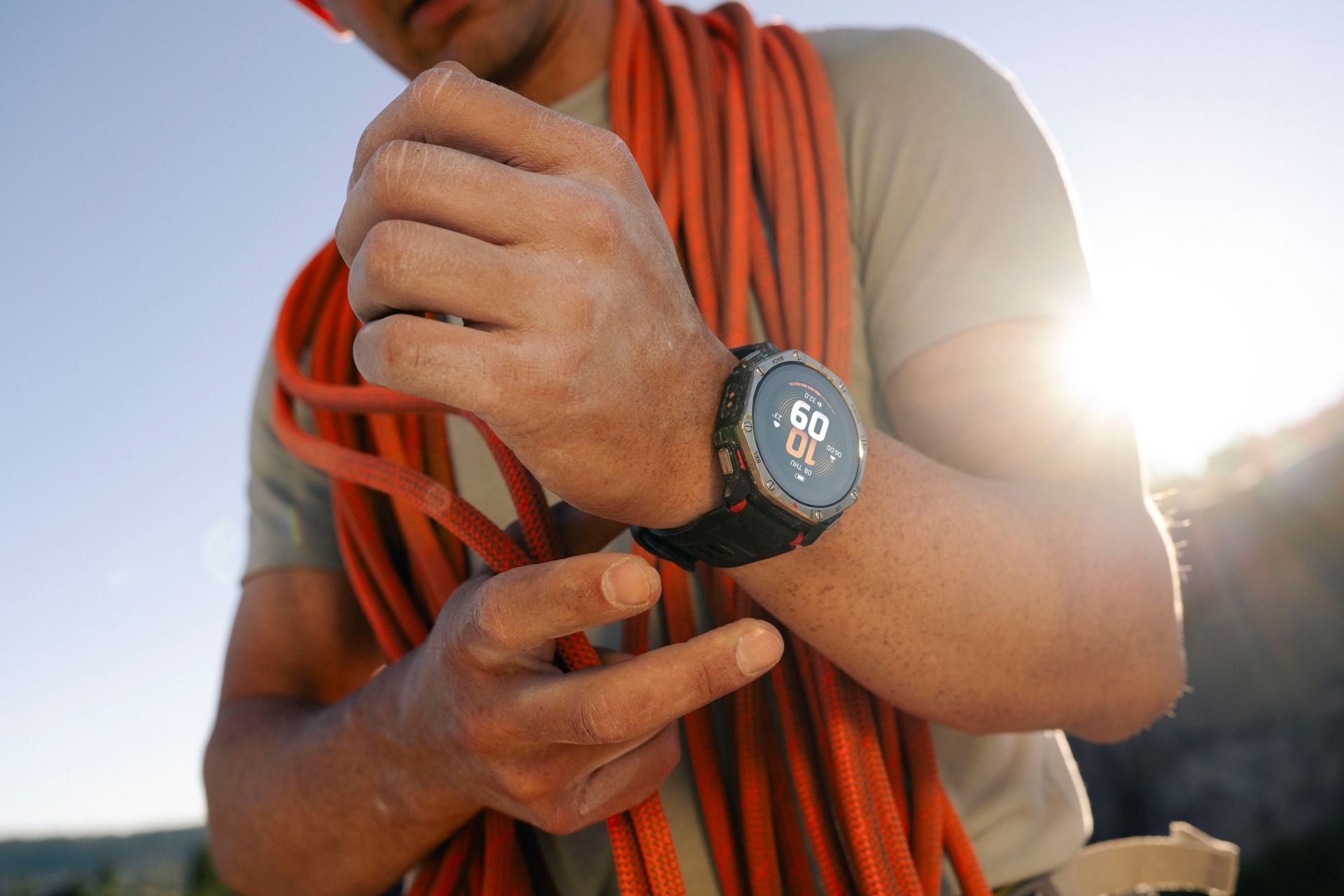
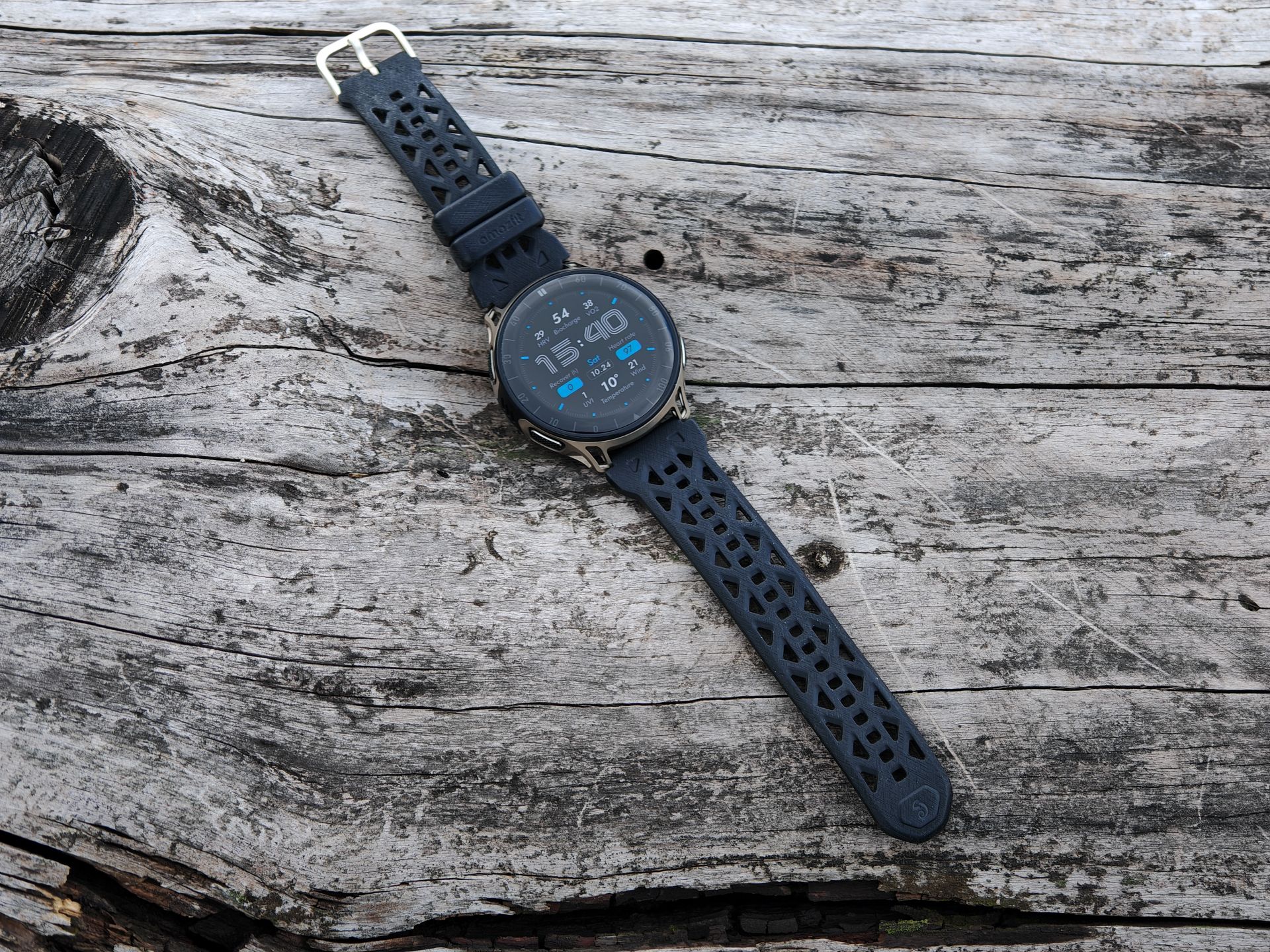
The front solar panel collects light while the watch is being worn. For the second panel, however, you have to take off the T-Rex Dual Solar and point its back towards the sun. This is practical, for example, during a longer break. According to Amazfit, the rear solar surface is twice as large and should therefore deliver energy more quickly.
For typical use, the manufacturer states a battery life of up to 25 days without solar assistance. If the front panel receives three hours of light at an illuminance of 50,000 lux each day, up to 34 days should be possible. Under the same conditions, Amazfit claims up to 51 days for the rear panel. These figures describe different usage scenarios and cannot simply be added together.
With intensive use, the stated battery life drops to as little as 13 days. Solar assistance is said to extend this to up to 15 days via the front and 18 days via the back. For sports use with navigation, the always-on display turned off and reduced screen brightness, Amazfit specifies up to 48 hours. With continuous illumination of the front panel at 50,000 lux, this figure increases to up to 57 hours.
The advertised 180 days also refer to a heavily restricted outdoor extreme mode. In this mode, the GPS position is recorded only once per hour, while the display, compass and flashlight are also used infrequently. The separate battery overview specifies continuous solar power via the back as a requirement for this figure.
Solar power is intended to offset energy consumption and extend the time between charges. According to the manufacturer, it does not replace charging via USB cable. How much the panels actually contribute on the go depends, among other things, on the light, orientation, temperature and functions used.
AMOLED, sapphire glass and titanium
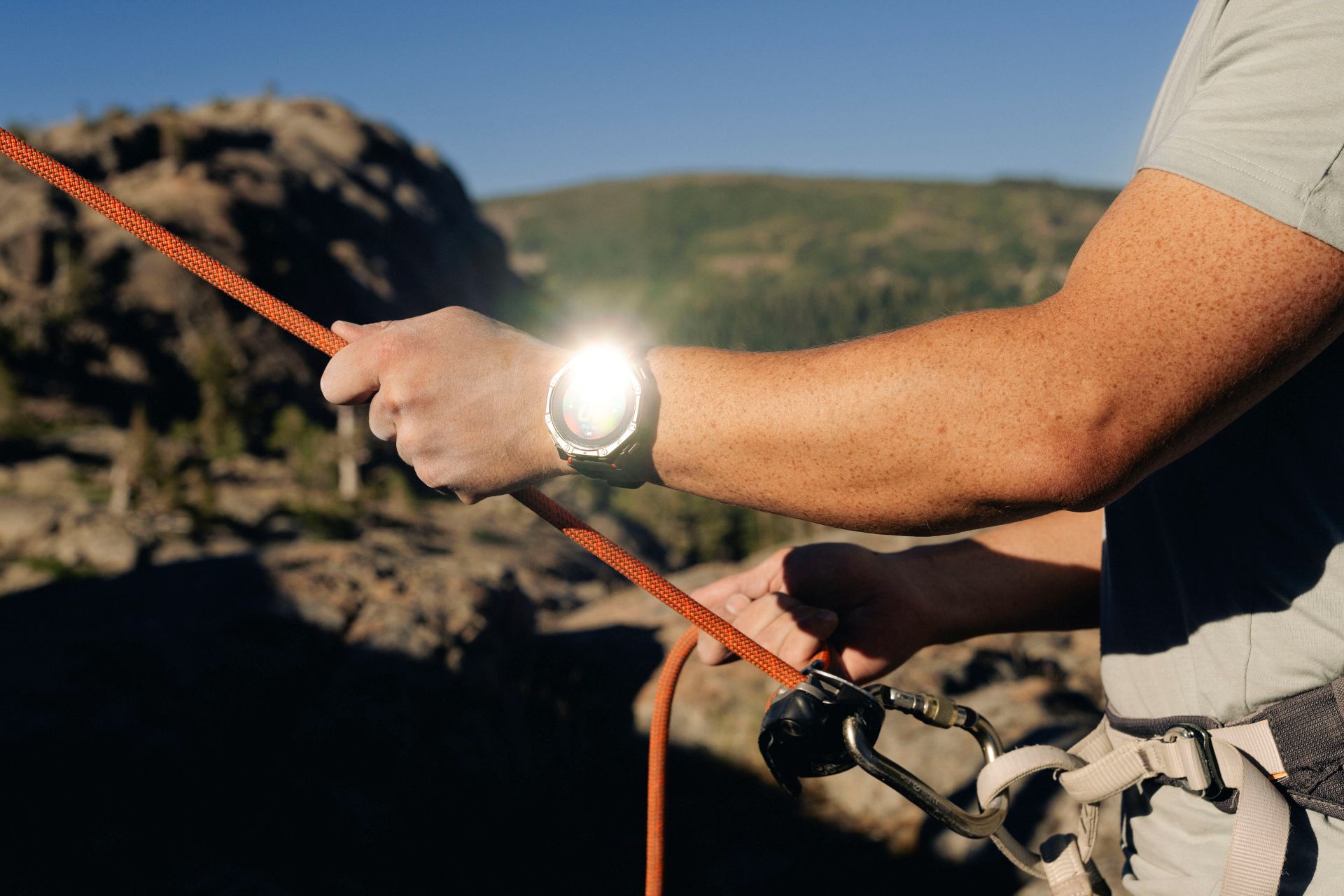
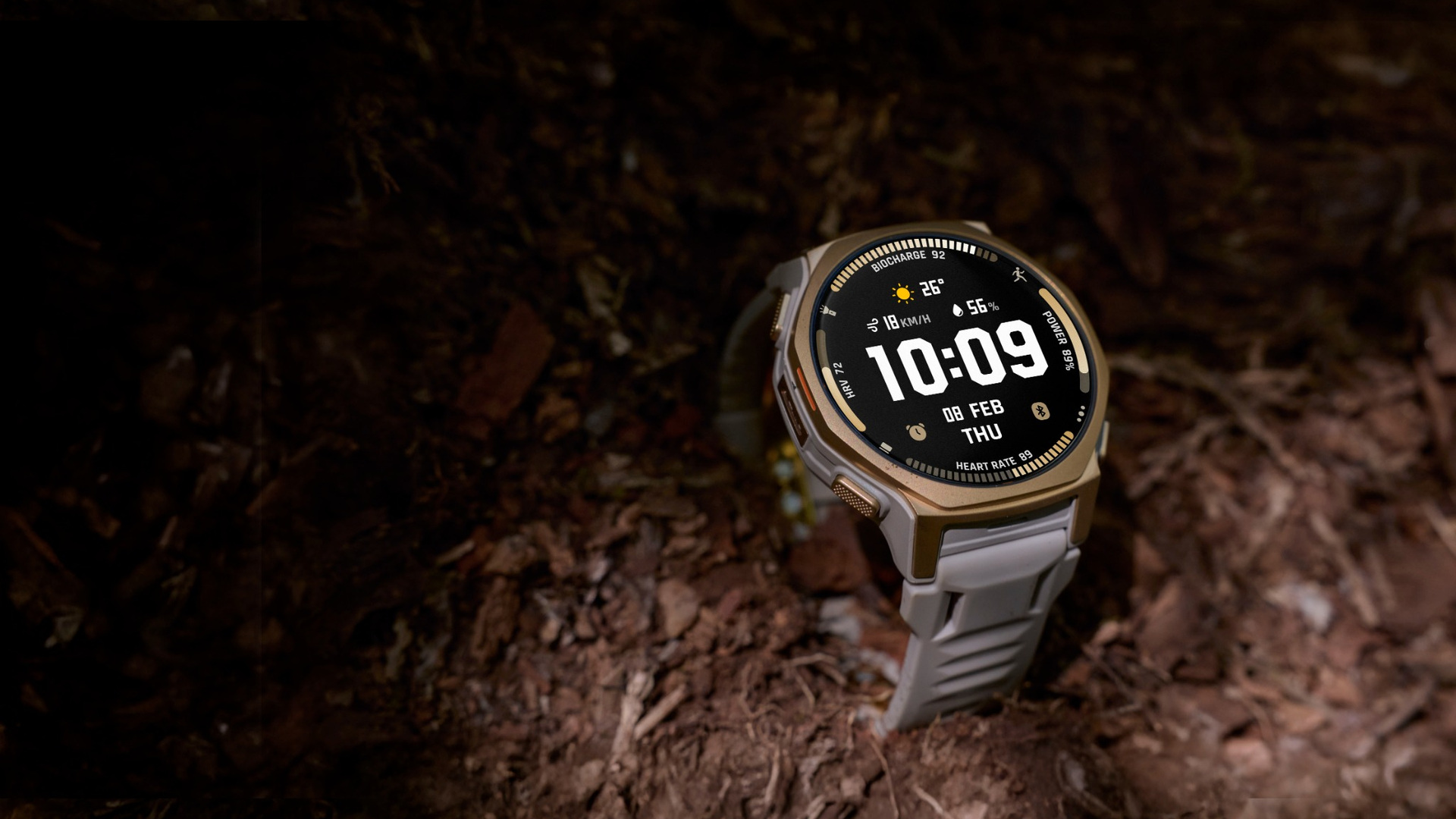
According to the spec sheet, the 1.32-inch AMOLED display reaches a peak brightness of up to 3,000 nits. It is covered by sapphire glass. Amazfit uses Grade 5 titanium for the bezel and four side buttons, while the rear solar panel is made of ceramic glass. The watch weighs 69 grams without the strap.
Amazfit specifies an operating temperature range of minus 30 to plus 70 degrees Celsius. However, this does not mean that solar charging is available across the entire temperature range. According to the battery overview, it is interrupted when a temperature threshold is exceeded to protect the watch.
The feature set also includes an LED flashlight with multiple brightness levels and an SOS mode. It can be useful for searching in a backpack or as an additional light source during a break.
Map navigation and location sharing via LiveShare
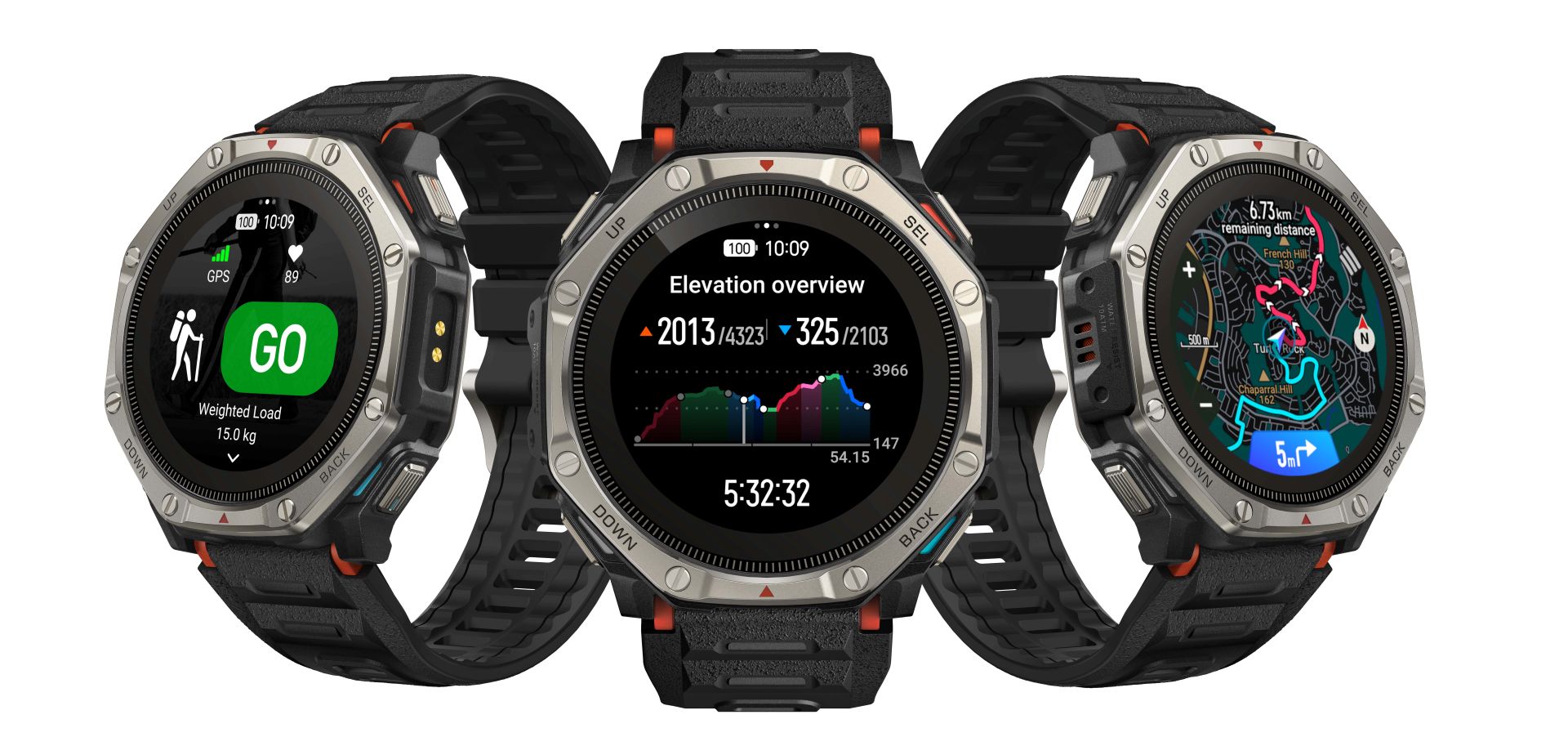
The Amazfit T-Rex Dual Solar uses six satellite systems, including GPS and Galileo, to determine its position. The watch supports turn-by-turn directions and downloadable topographic maps with contour lines, as well as ski maps. Waypoints, marked locations and a colour altitude profile round out the navigation features. This also makes upcoming climbs and descents easy to follow on the watch.
With LiveShare, selected people can follow an activity almost in real time. In addition to location, duration, distance, elevation gain and loss, heart rate and pace are shared. For example, anyone traveling alone can use it to keep family members informed about the progress of a hike. In the available documents, Amazfit does not describe automatic emergency detection as part of the feature.
For training, the watch tracks heart rate and blood oxygen saturation, among other metrics. The Zepp app provides an overview of training load and recovery. “Training Balance” and “Weekly Focus” are intended to help coordinate strength and endurance sessions. Additional apps can be added through the Zepp app, for example to estimate arrival time or remaining battery life.
Price and availability
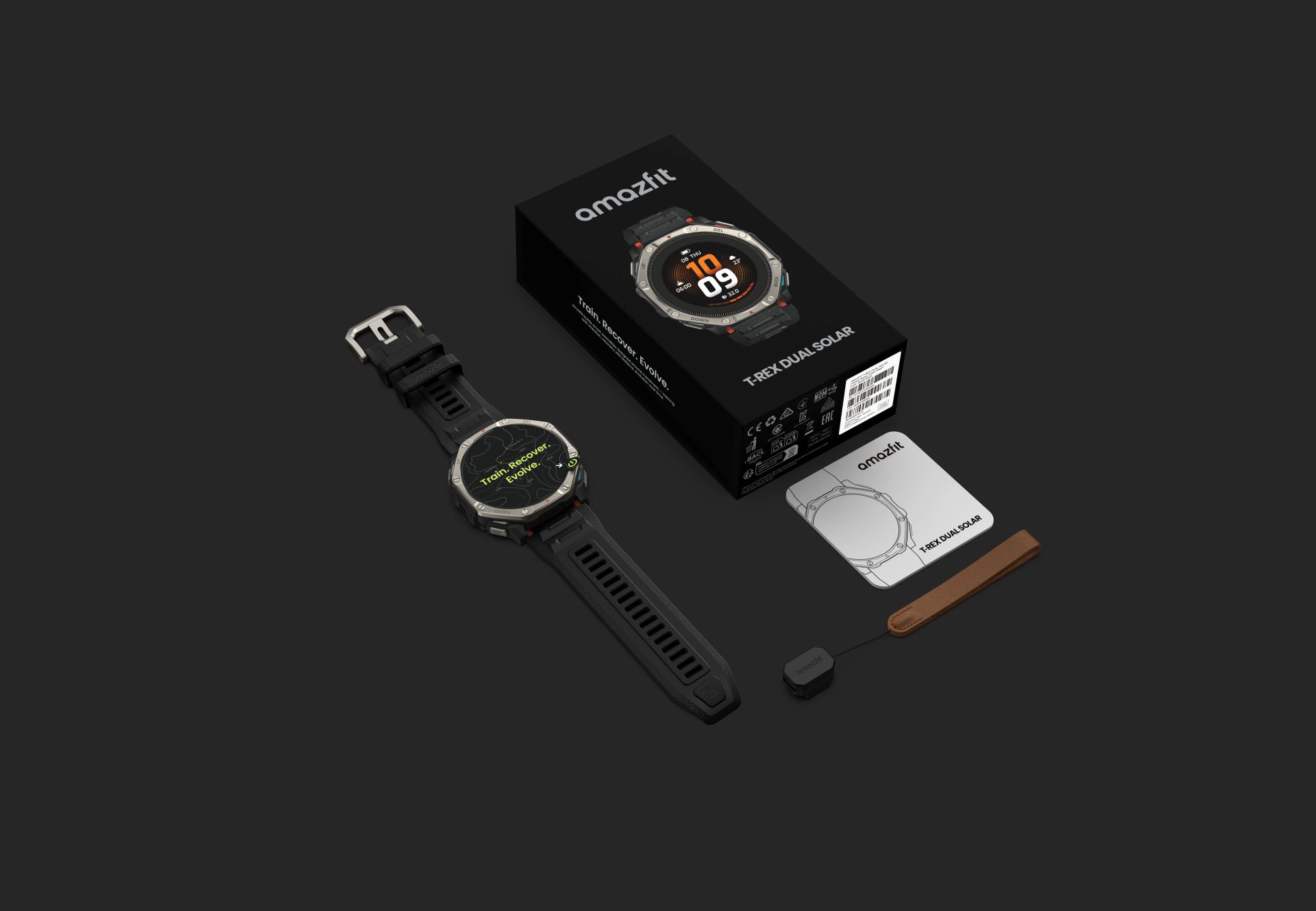
The Amazfit T-Rex Dual Solar costs 649.90 euros and, according to the manufacturer's latest announcement, is available now from the Amazfit shop. Pre-orders have been possible since September 22, 2026. The European version also supports NFC payments.
With its second solar panel, the watch is aimed primarily at users who want to top up the battery during breaks on longer trips. However, the additional energy gain depends on the back receiving enough light. A hands-on test will show how well this works on hikes and what battery life remains with regular navigation.
Specifications
General
- Model
- Amazfit T-Rex Dual Solar
- Weight without strap
- 69 g
- Bezel and buttons
- Grade 5 titanium
- Operation
- Touchscreen and four side buttons
- Operating temperature according to the manufacturer
- -30 °C to +70 °C
Display
- Type
- AMOLED
- Size
- 1.32 inches
- Peak brightness
- Up to 3,000 nits
- Display glass
- Sapphire glass
Battery & charging
- Typical use without solar
- Up to 25 days
- Typical use with front solar panel
- Up to 34 days
- Typical use with rear solar panel
- Up to 51 days
- Solar conditions for typical use
- Three hours a day at 50,000 lux
- Intensive use without solar power
- Up to 13 days
- Intensive use with front solar panel
- Up to 15 days
- Intensive use with rear solar panel
- Up to 18 days
- Solar conditions for intensive use
- Three hours a day at 50,000 lux
- GPS precision mode without solar
- Up to 41 hours
- GPS precision mode with front solar panel
- Up to 47 hours with continuous illumination at 50,000 lux
- Sports mode with navigation, without solar
- Up to 48 hours at 50% screen brightness with the always-on display turned off
- Sports mode with navigation and front solar panel
- Up to 57 hours with continuous illumination at 50,000 lux
- Outdoor extreme mode without solar
- Up to 40 days with GPS tracking once per hour
- Extreme outdoor mode with front solar panel
- Up to 47 days with three hours per day at 50,000 lux
- Extreme outdoor mode with rear solar panel
- Up to 180 days with continuous illumination at 50,000 lux, according to the battery overview
- Solar panels
- Front side in the display and rear side in the bottom of the casing
- Rear solar panel
- Ceramic glass, twice the surface area of the front panel
- Conventional charging
- USB charging cable
- Solar function
- Supplementary power supply; does not replace wired charging
- Battery life figures
- Manufacturer's figures, depending on settings, use and environmental conditions
Navigation
- Satellite systems
- Six, including GPS and Galileo
- GNSS
- Dual-frequency support
- Route guidance
- Turn-by-turn navigation
- Cards
- Color maps, downloadable topographic maps and ski maps
- Overview
- Contour lines, waypoints, POIs, colored elevation profile and compass
Health & training
- Measurements
- Heart rate and blood oxygen saturation
- Sleep
- Sleep and breathing monitoring
- Workout analysis
- Training load and recovery via the Zepp app
- Training features
- Training Balance and Weekly Focus
- Training planning
- Support for strength and endurance training
Connectivity & software
- Companion app
- Zepp
- Extensions
- Additional apps via the Zepp app
- LiveShare
- Sharing of location, activity duration, distance, elevation gain, heart rate and pace with selected people
- NFC payments
- European version
More features
- LED flashlight
- Adjustable brightness, Boost mode and SOS mode
- Warning features
- Sudden weather changes and climbing too fast
Price & availability
- Recommended retail price
- 649.90 euros
- Availability
- Available now in the Amazfit shop, according to the manufacturer’s latest announcement
Comments