Contents
360° video in 8K without a mechanical gimbal
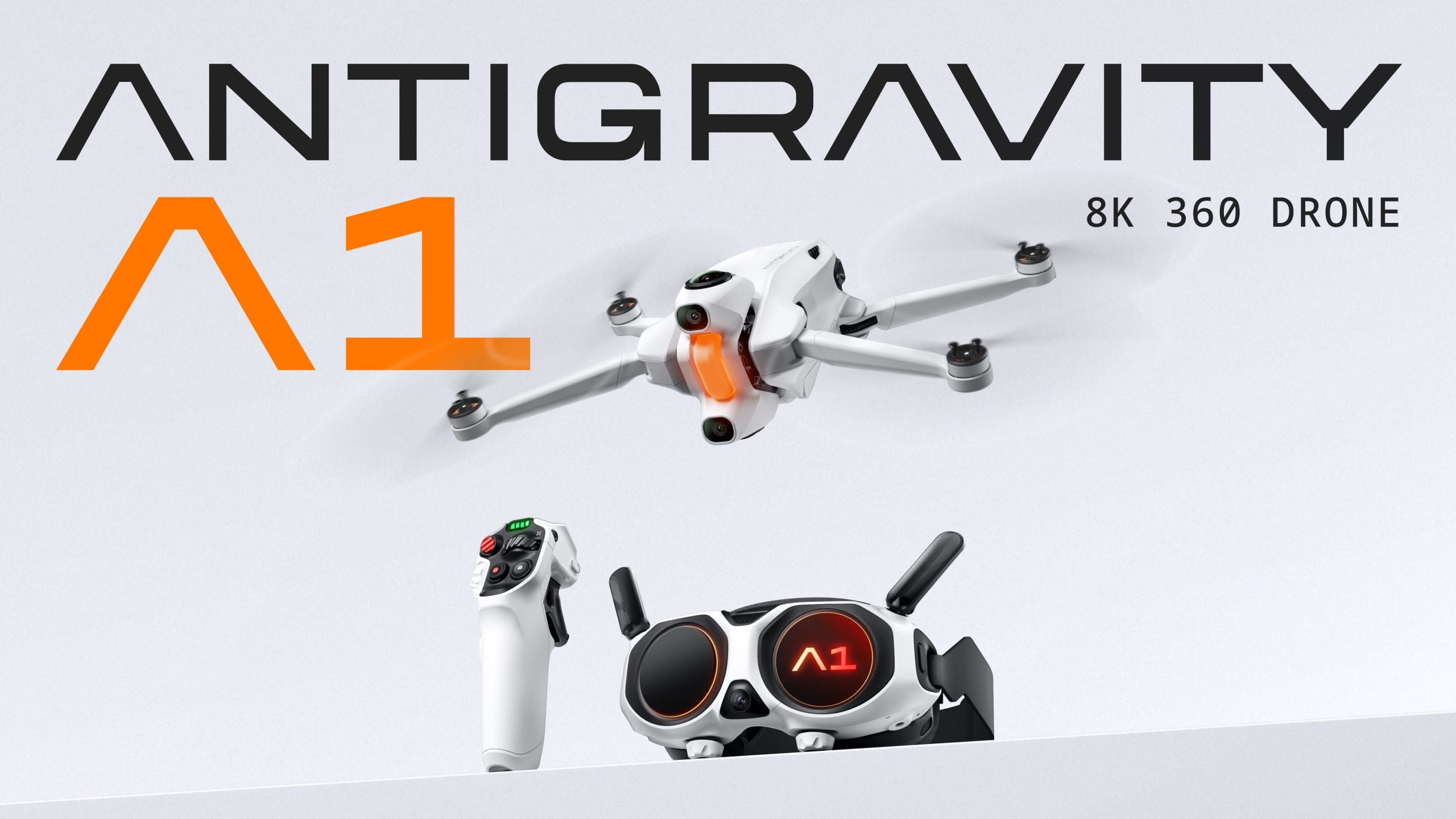
What sets the Antigravity A1 apart from other drones more than anything else is its 360° camera. Instead of relying on a single gimbal-stabilized camera, it features two 1/1.28-inch image sensors with a fast f/2.2 aperture.
There are no blind spots, as both sensors cover the entire 360° spherical surroundings. Stabilisation is purely electronic, using Insta360's FlowState technology.
Antigravity’s concept is “Shoot First, Frame Later”, which separates flying from camera work. During flight, the drone’s orientation is initially secondary, since the desired framing—whether 16:9, 9:16 for social media, or Tiny Planet—is determined only in post-production. The software removes the drone body using stitching algorithms, making the aircraft invisible in the finished video.
Videos are recorded at a maximum resolution of 8K (7680 x 3840 pixels) at 30 frames per second. For slow-motion footage, the frame rate can be increased to 60 fps in 5.2K or even 100 fps in 4K. With a maximum bit rate of 170 Mbps and support for H.264 and H.265 codecs, the drone delivers footage with plenty of headroom for post-production. The ISO range of 100 to 6400 also promises usable results at dusk.
C0 or C1? The dual-battery system
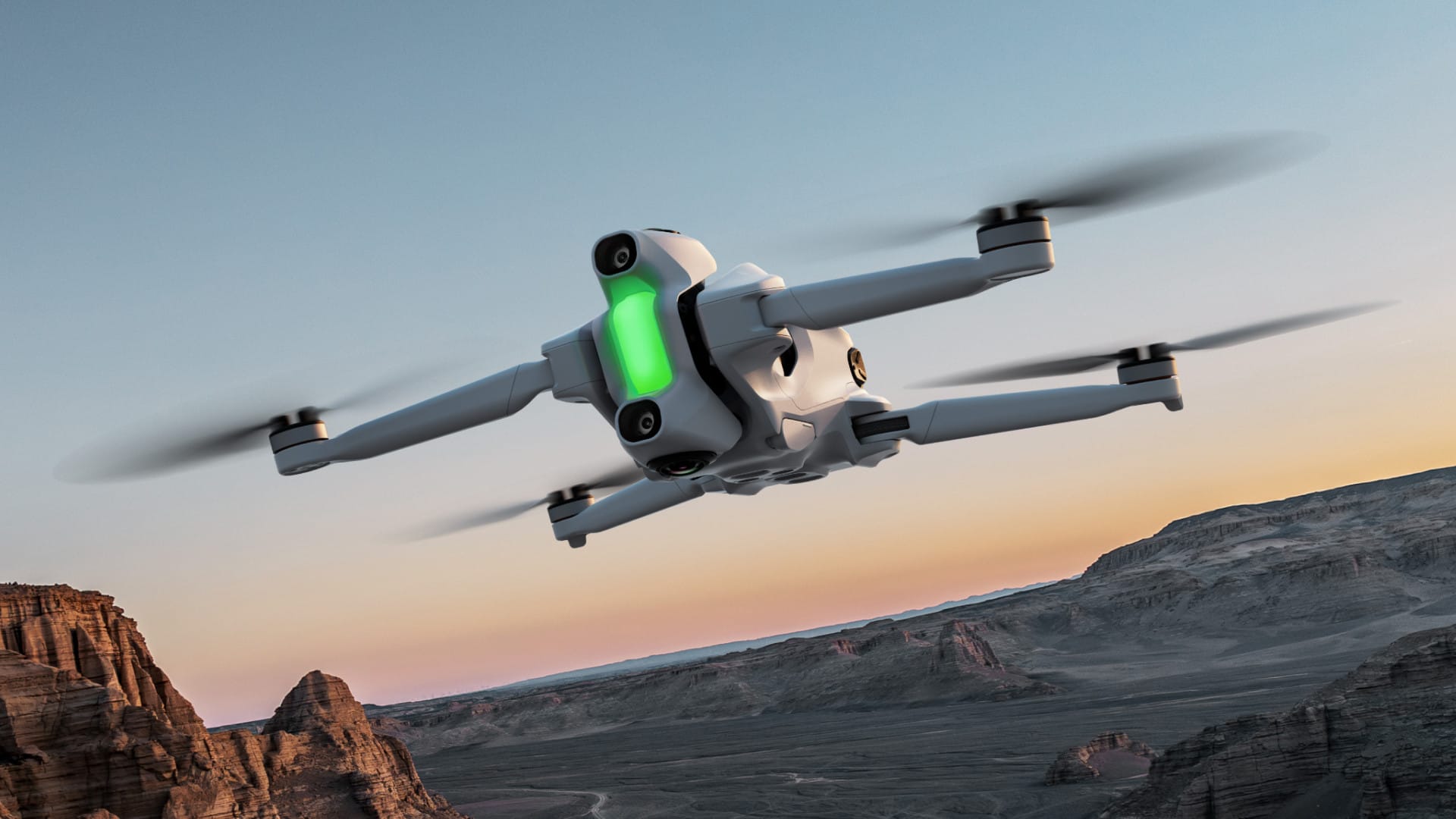
Antigravity has deliberately kept the A1's weight just below the limit. With the standard battery (2360 mAh, 16.9 Wh), the drone weighs exactly 249 grams, landing right at the upper limit of Class C0. In this configuration, flight time is around 24 minutes.
For longer flights, you can opt for a more powerful 4,345 mAh, 31.1 Wh battery. This extends flight time to 39 minutes, but also brings the takeoff weight to 291 grams, placing the drone in class C1 under the regulations. So you can choose between maximum regulatory freedom and maximum endurance. Charging times range from 45 to 103 minutes, depending on the charging hub.
Control and signal transmission
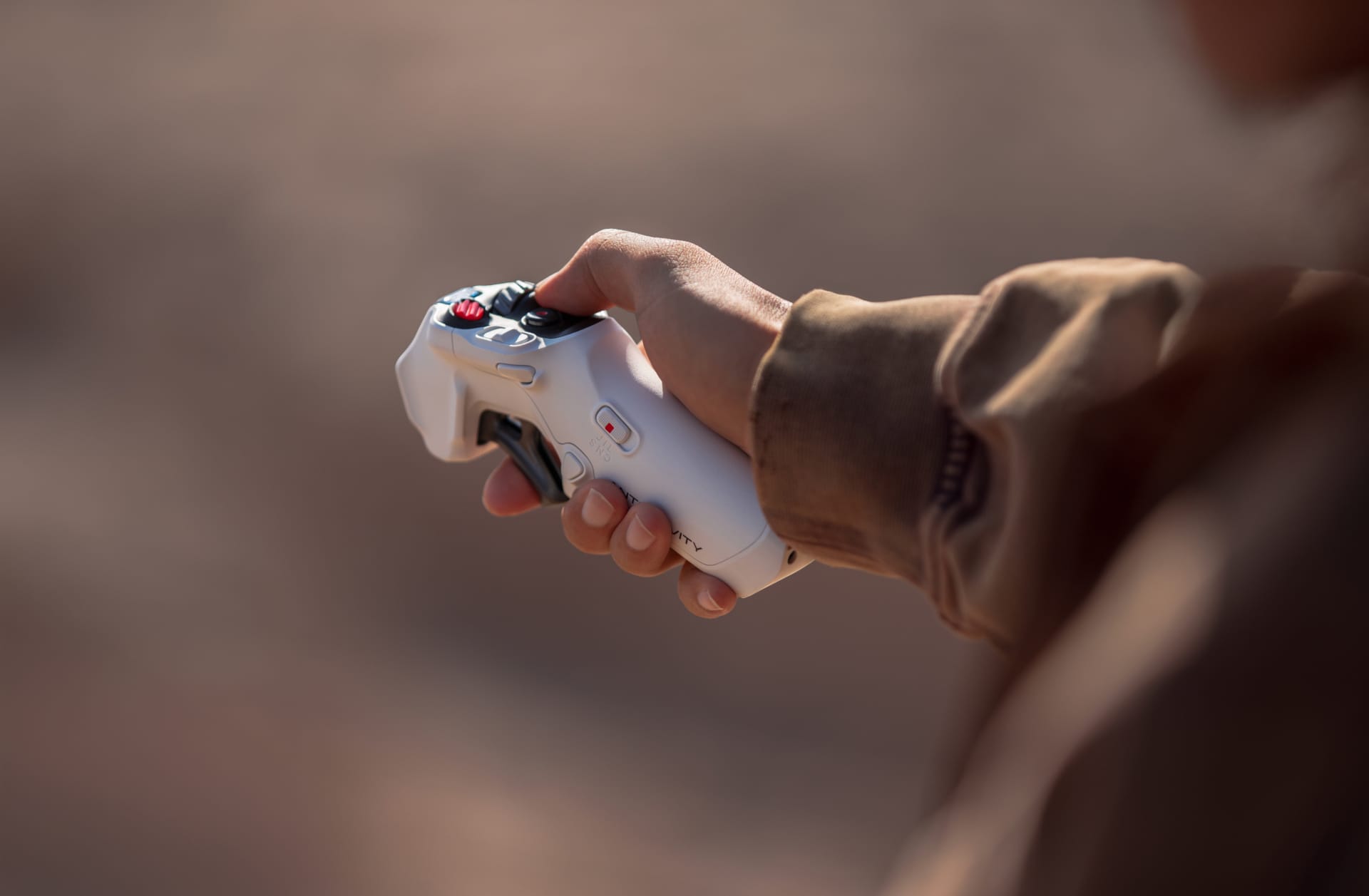
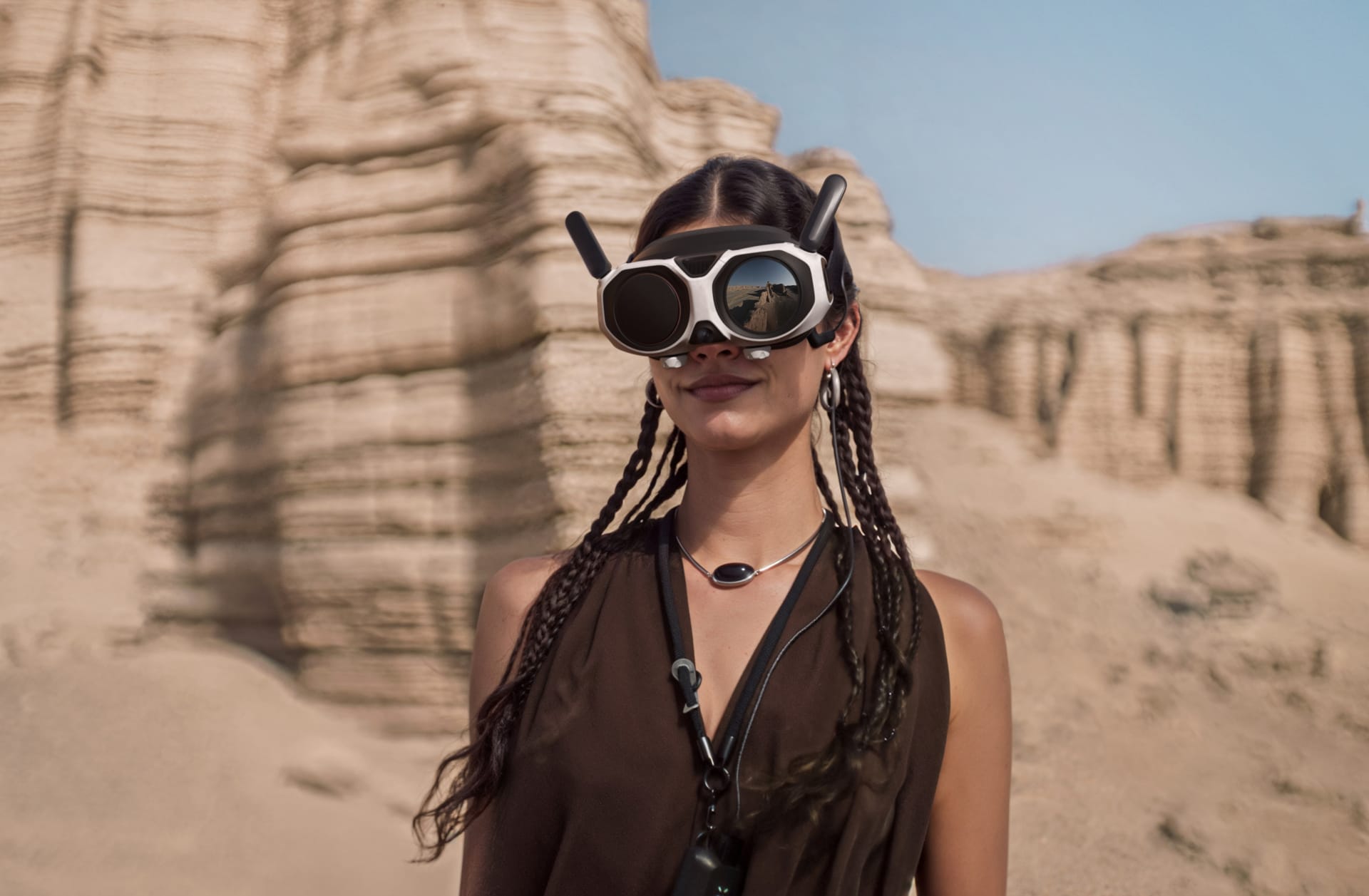
Control is primarily handled by the Grip Motion Controller, which translates hand movements into flight maneuvers. The Vision Goggles provide a view of the footage. Including the headband, the video goggles weigh 340 grams and use two Micro-OLED displays, each with a resolution of 2560 x 2560 pixels, a 90° field of view, and a 72 Hz refresh rate.
Glasses wearers can adjust the diopter range from -5 to +2 dioptres. A second camera system on the outside displays a square Real View image, allowing you to see your surroundings without having to take off the headset.
OmniLink 360 is used for communication between the drone and peripherals. It operates on the 2.4 GHz, 5.1 GHz and 5.8 GHz frequency bands and transmits live footage in 2K resolution with a latency of around 150 milliseconds. Under CE standards, the range is stated as up to 6 kilometres.
However, initial hands-on tests suggest that the connection, as is typical of 5.8 GHz systems, is sensitive to obstacles such as dense woodland or buildings, which can reduce its range in practice.
Verdict: No replacement for conventional cinema drones
Initial tests paint a picture of a drone that stands out above all for its creativity and fun factor. Its stabilization is described as excellent. Nevertheless, the A1 is no direct replacement for conventional camera drones with telephoto lenses.
The fisheye design gives the footage the wide-angle view of an action camera. The exposed lenses also require careful handling, although an automatic landing gear is intended to protect them during take-off and landing.
Pricing and availability
The Antigravity A1 is available now. The manufacturer is targeting the premium segment with its pricing:
- The standard bundle costs 1,399 euros and includes the drone, goggles, controller and a standard battery.
- The Explorer bundle for 1,599 euros expands the set with two additional standard batteries, a charging hub and a bag.
- The Infinity bundle for 1,699 euros includes three high-performance batteries (C1 class) instead of the standard energy storage units, as well as the accessories package.
Source: Press release
Comments