Contents
Design, build quality and installation
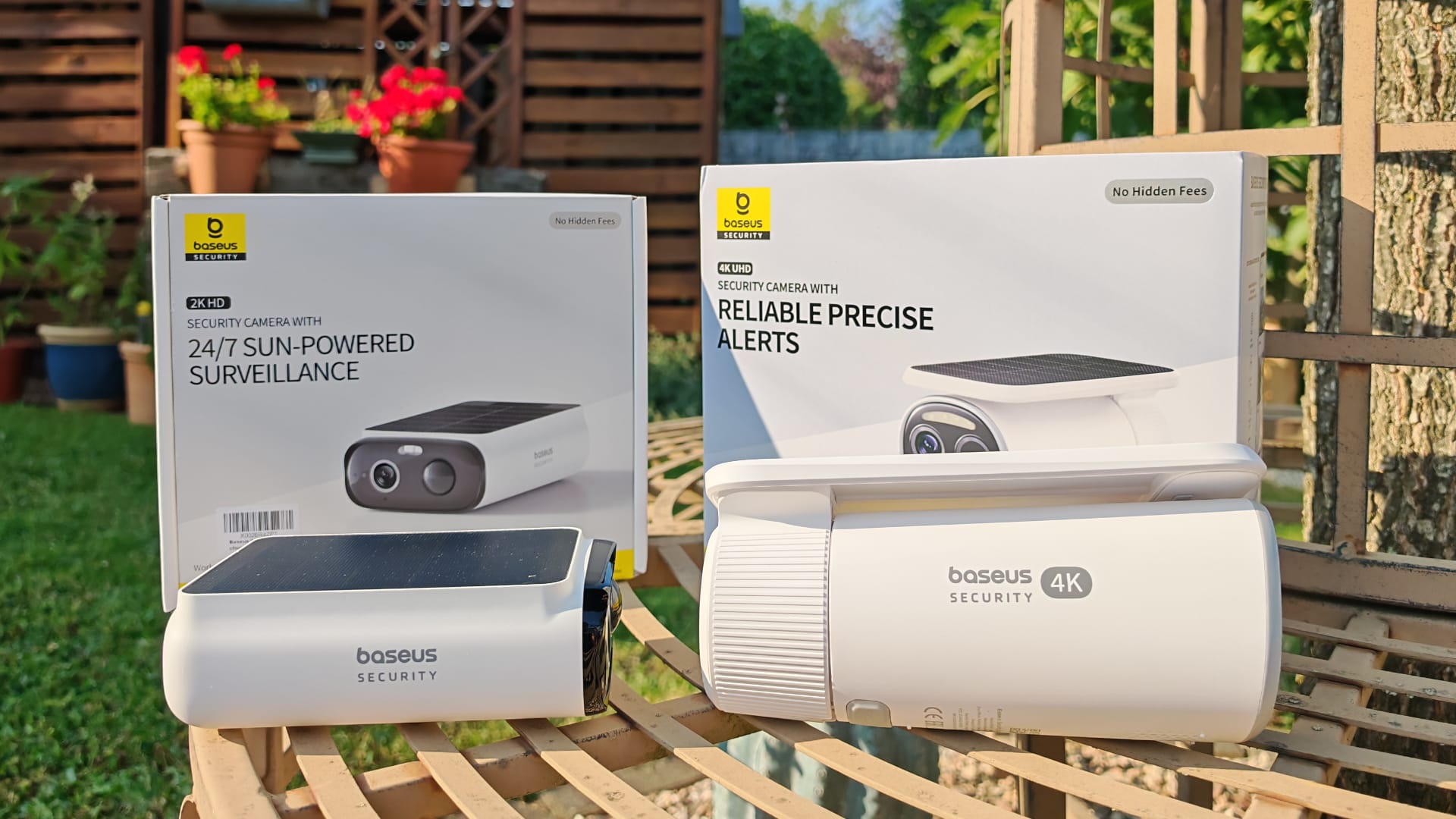
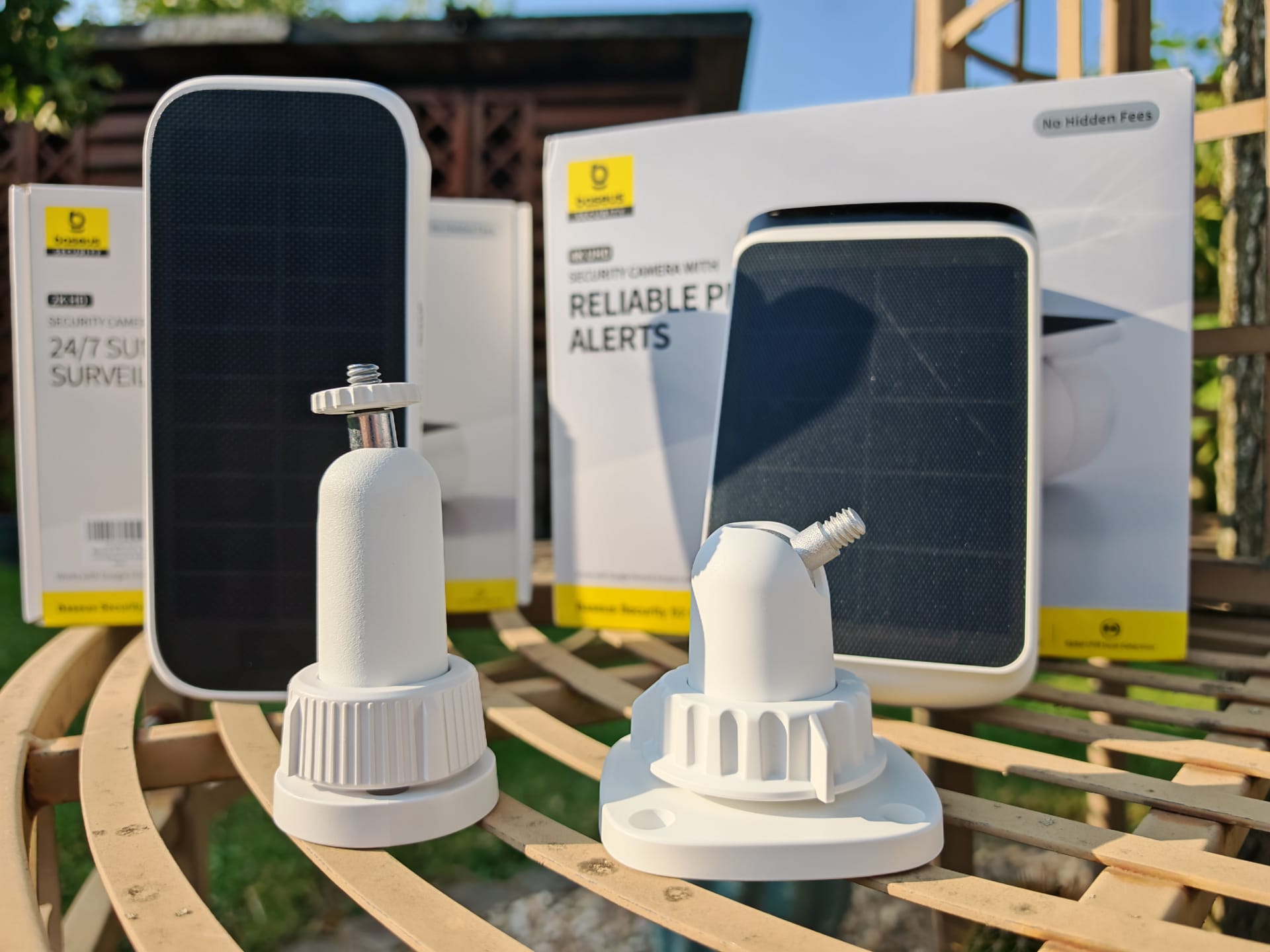
In terms of design, both Baseus cameras show themselves to be functional and solid. They are made of weather-resistant plastic with an IP67 protection rating and are therefore well protected against rain and dust. It is practical that the solar panel is integrated directly into the camera. This eliminates the need to lay power cables or mount a separate panel on the wall or balcony.
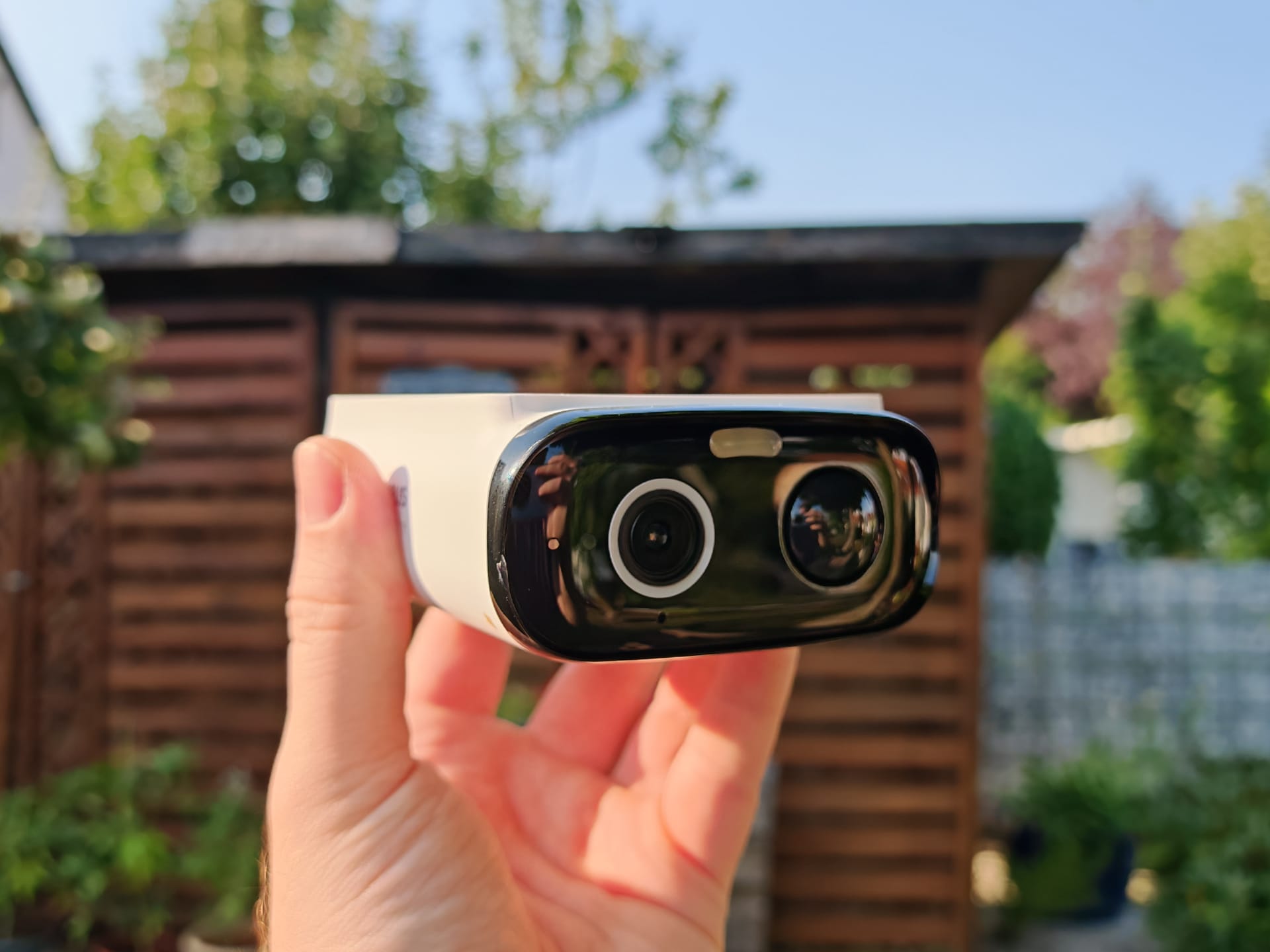
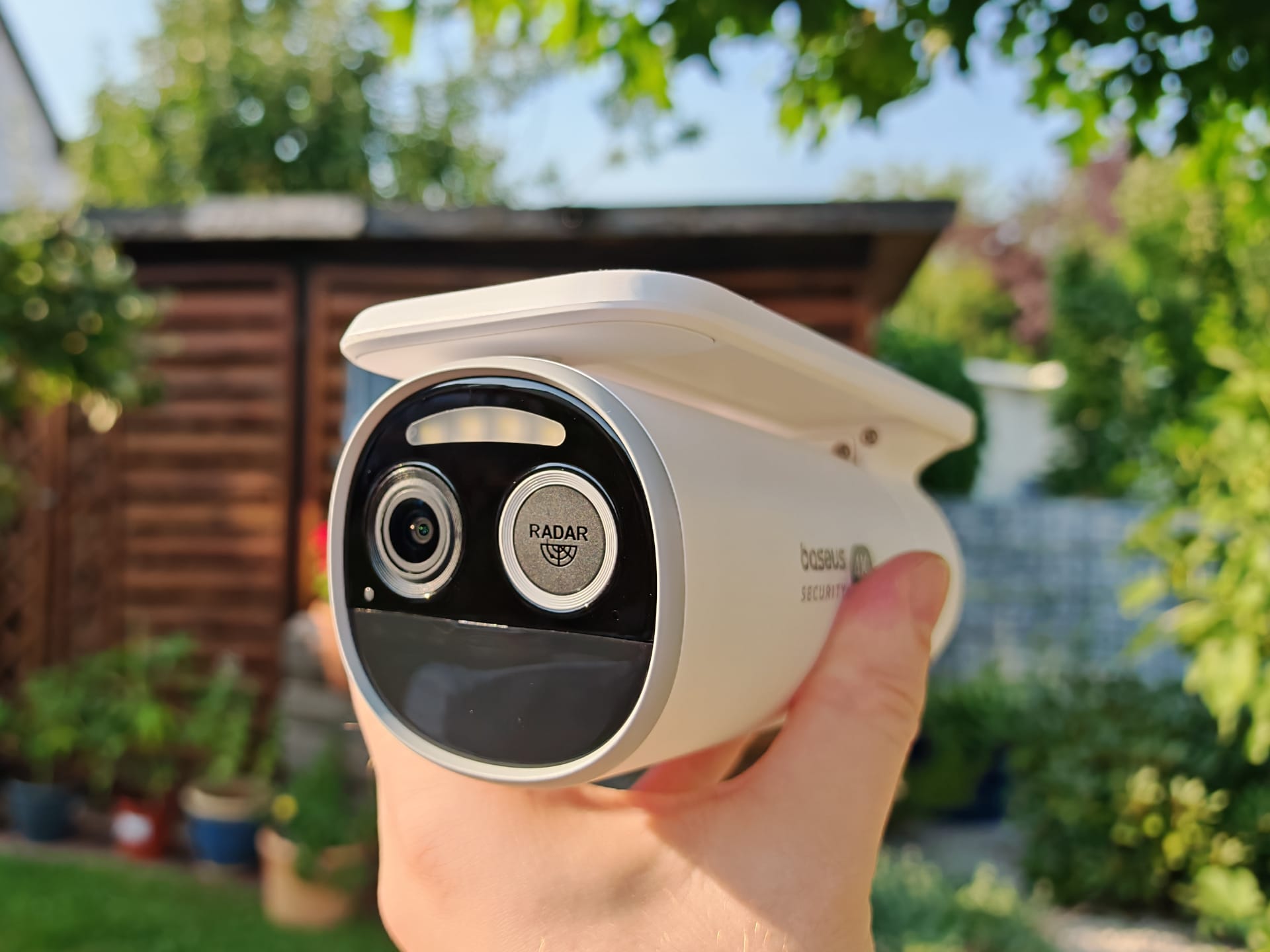
The Baseus S1 Lite is notably slim with its compact dimensions of 13 x 4 x 8.5 centimetres. The solar panel blends harmoniously into the housing and looks like an integral part of the design. By contrast, the Baseus S2 resembles a classic security camera. It is somewhat bulkier at 7.7 x 7 x 16.6 centimetres but offers a special extra. Its solar panel sits like a small umbrella above the camera and automatically adjusts to the position of the sun.
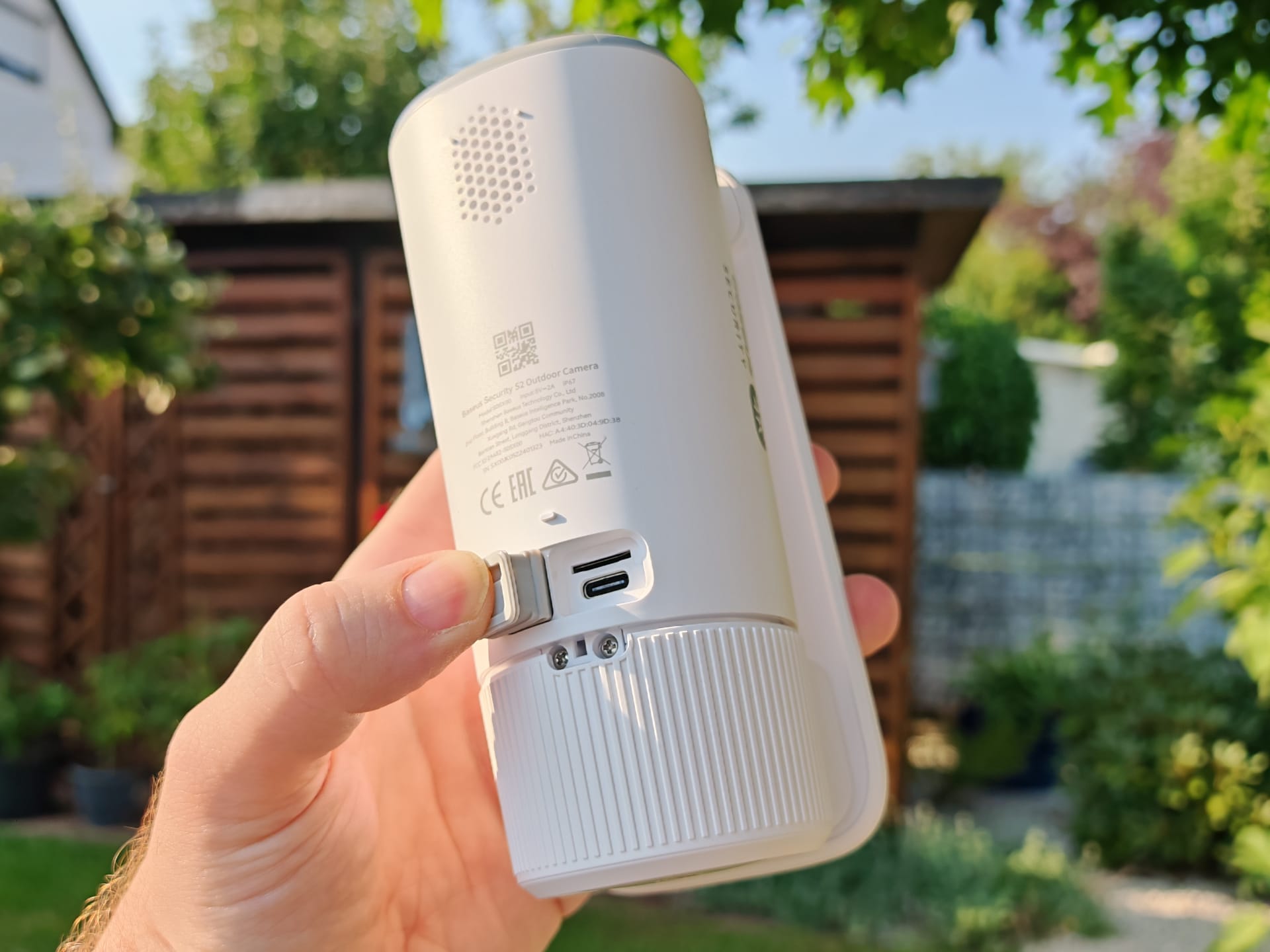
The USB-C port, reset button and microSD slot are sealed with a rubber cap on both models. Mounting is done via a standard tripod thread. This allows the use of existing or more stable universal mounts, which is recommended as the supplied mounts feel somewhat unstable.
The setup of the S1 Lite was quick and straightforward. Open app, scan QR code, select Wi-Fi and wait briefly. The camera was then ready for use.
Things were quite different with the S2. Initially, it refused to connect to the 2.4 GHz WLAN of the Fritzbox. Several attempts remained unsuccessful. Only by using the detour of a mobile hotspot with the same SSID and password could the camera be set up. After that, it automatically detected the Fritzbox's WLAN and worked without further issues. By the way, neither camera supports 5 GHz WLAN.
Equipment and features
Both cameras can be operated entirely independently, meaning they work without cloud services or a subscription. Recordings are saved locally to a microSD card, which can be up to 512 GB in size. At the time of testing, connection to a NAS or cloud backup was not possible. RTSP and ONVIF streaming are also not included in the features.
The Baseus S1 Lite operates with a 2K sensor and covers a field of view of 135 degrees. For night recording, infrared LEDs and an integrated spotlight are available. Motion detection distinguishes between general movements and people, automatically adjusting sensitivity.
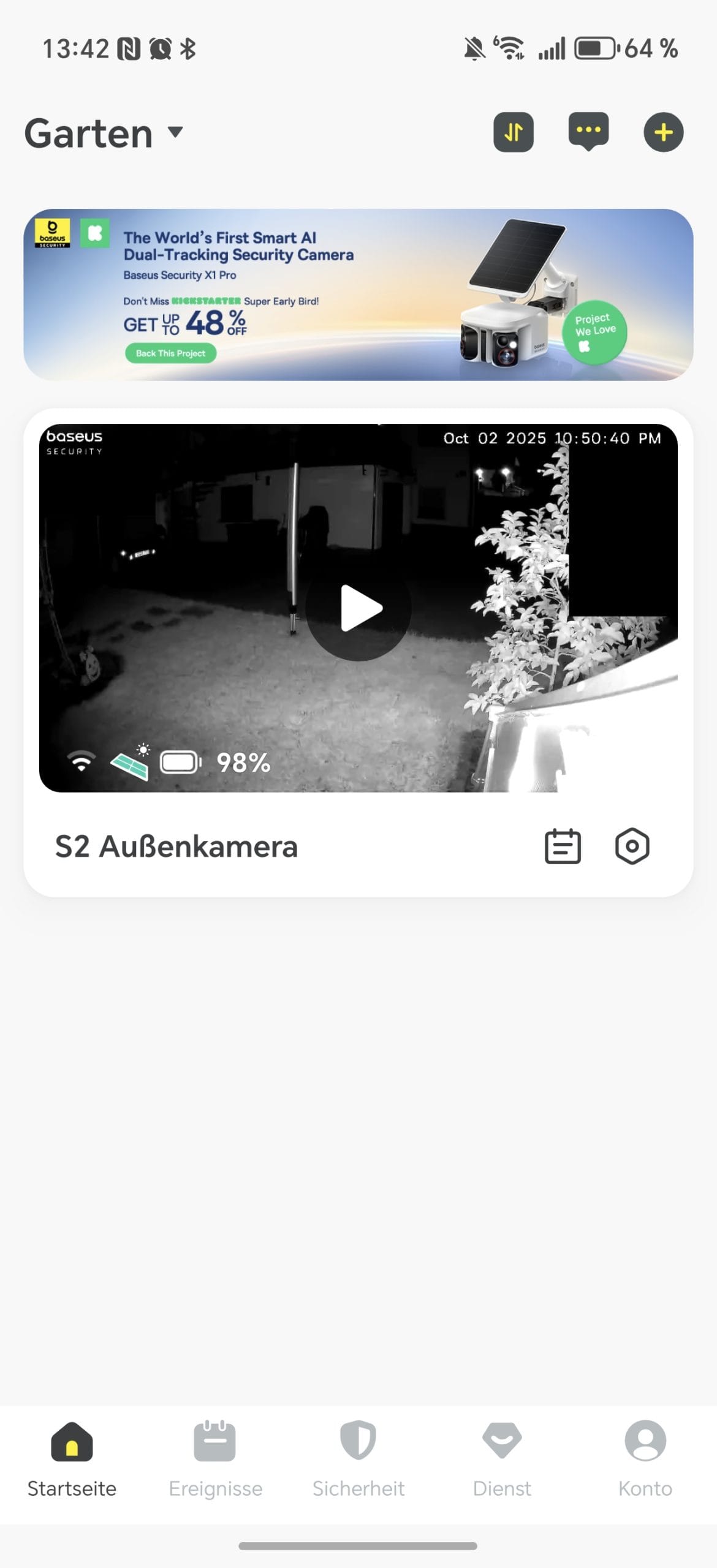
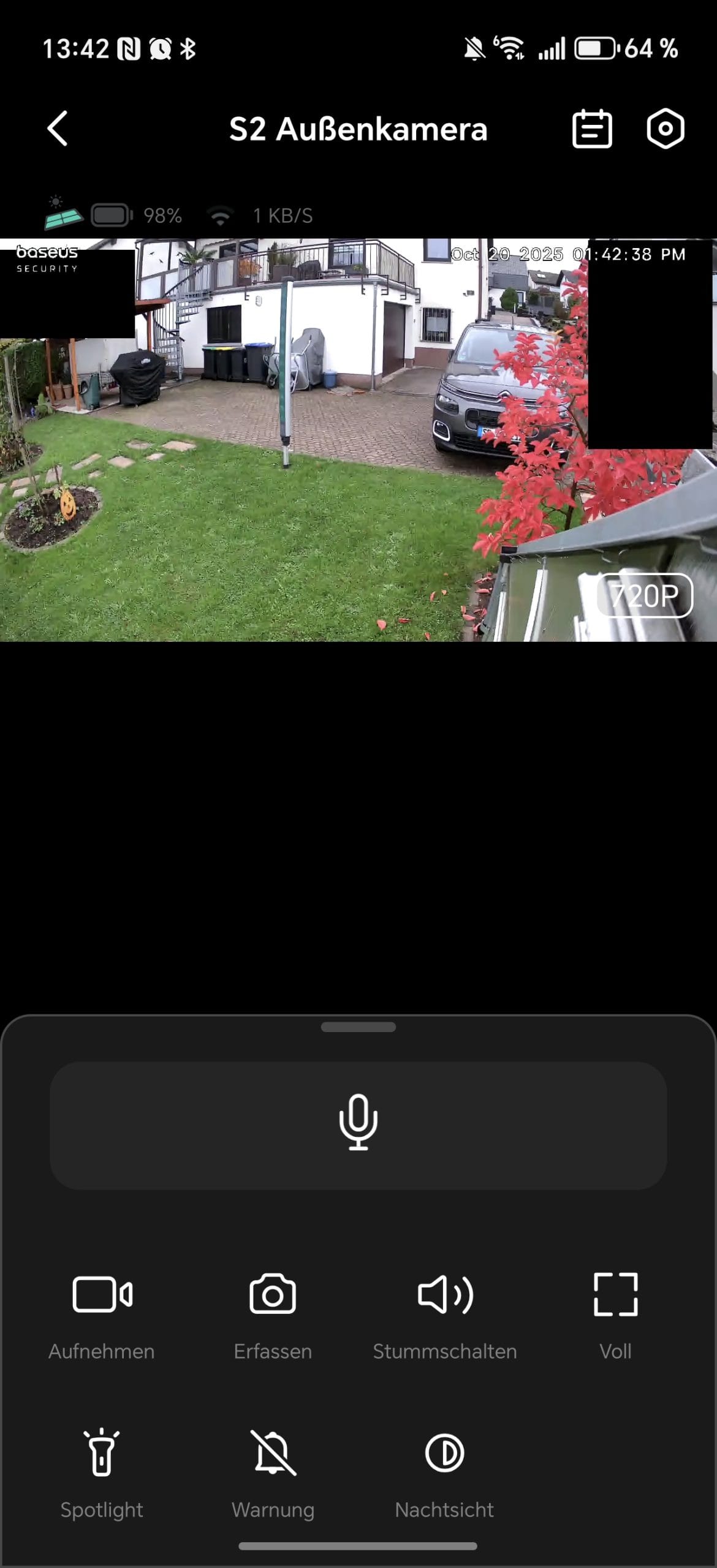
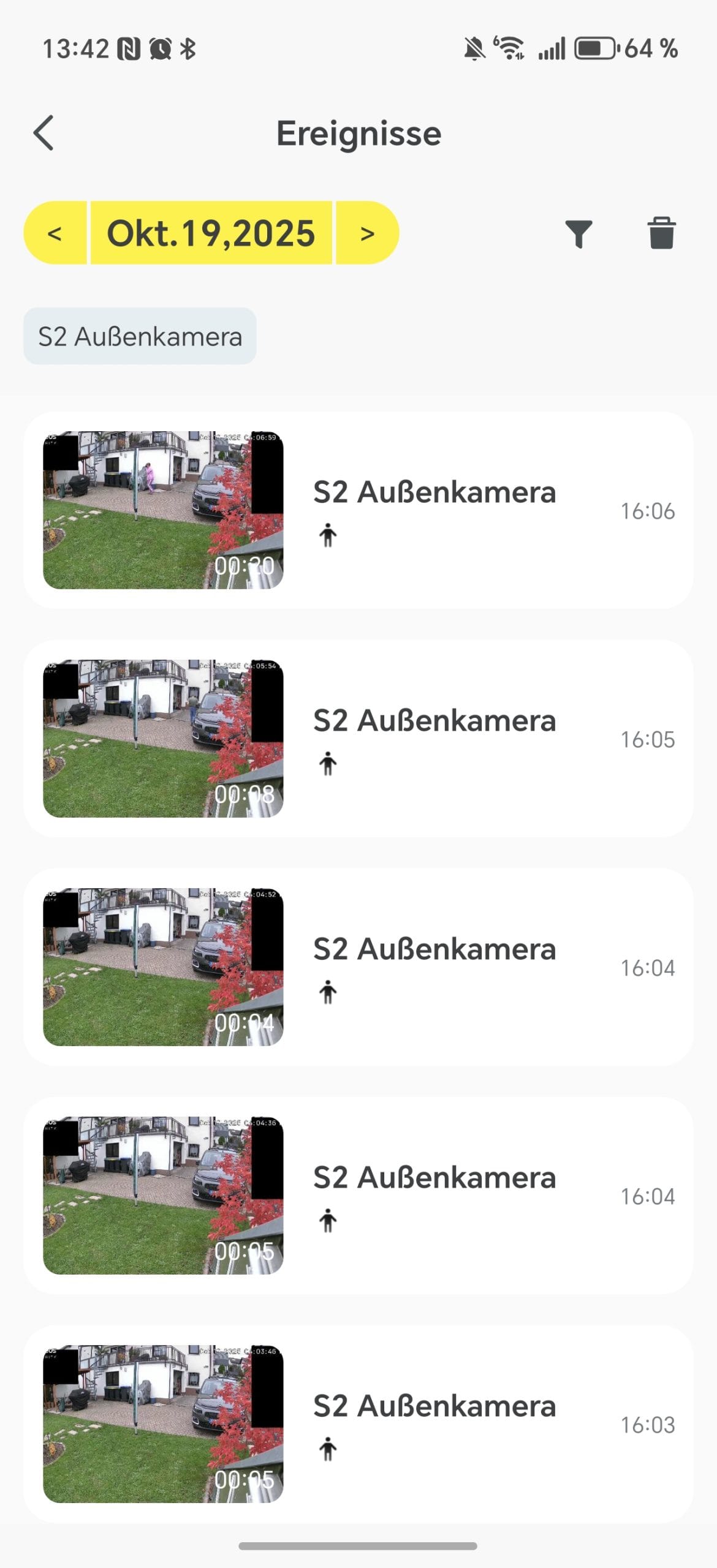
The Baseus S2 features a larger 4K sensor with a 145-degree field of view. It detects motion using a PIR and a radar sensor and automatically distinguishes between people, vehicles, animals and faces via AI. The spotlight is brighter than that of the S1 Lite and enables colour footage in the dark.
Both models have a microphone and a speaker, allowing real-time conversations via the app. They are also compatible with Amazon Alexa and Google Assistant, so the live stream can be displayed on devices such as the Echo Show or Nest Hub. HomeKit and Home Assistant are currently not supported.
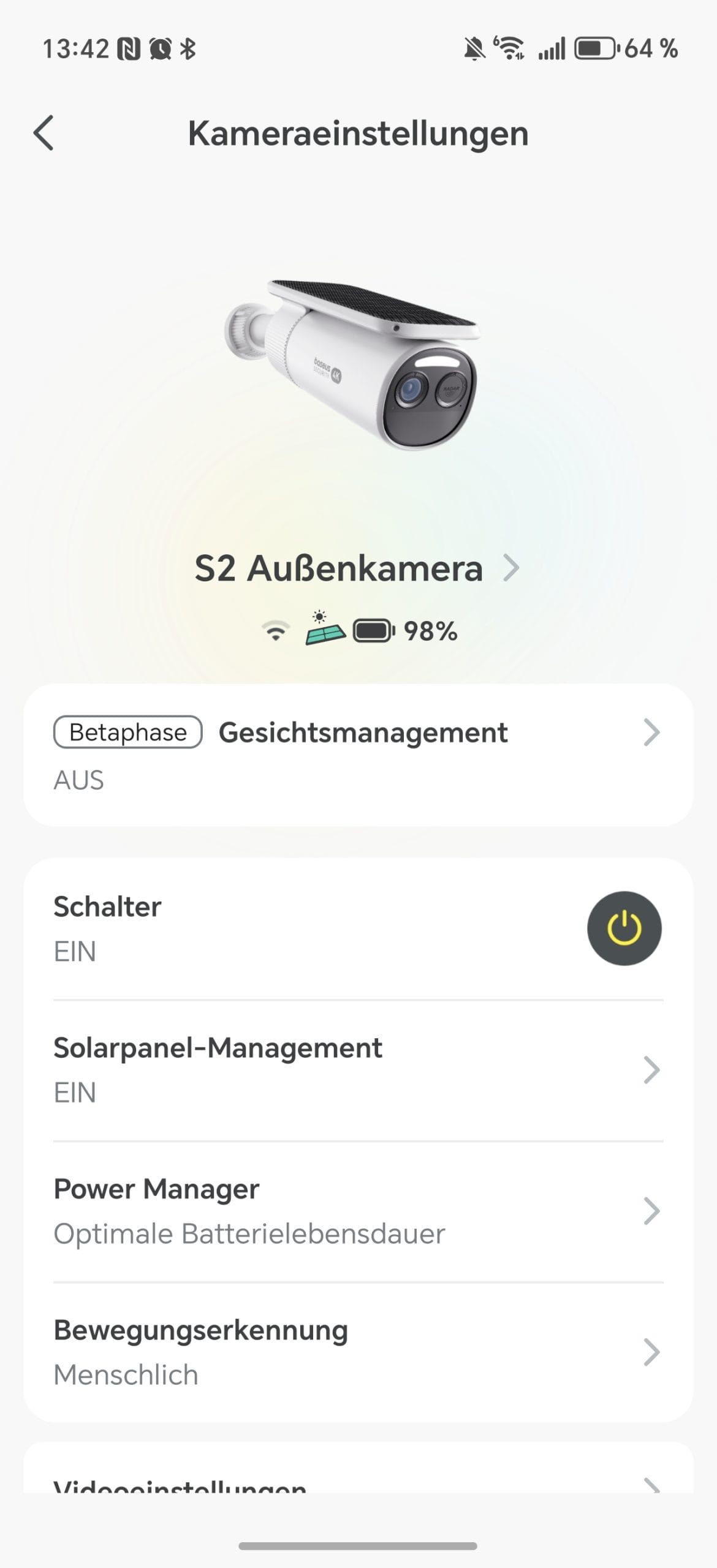
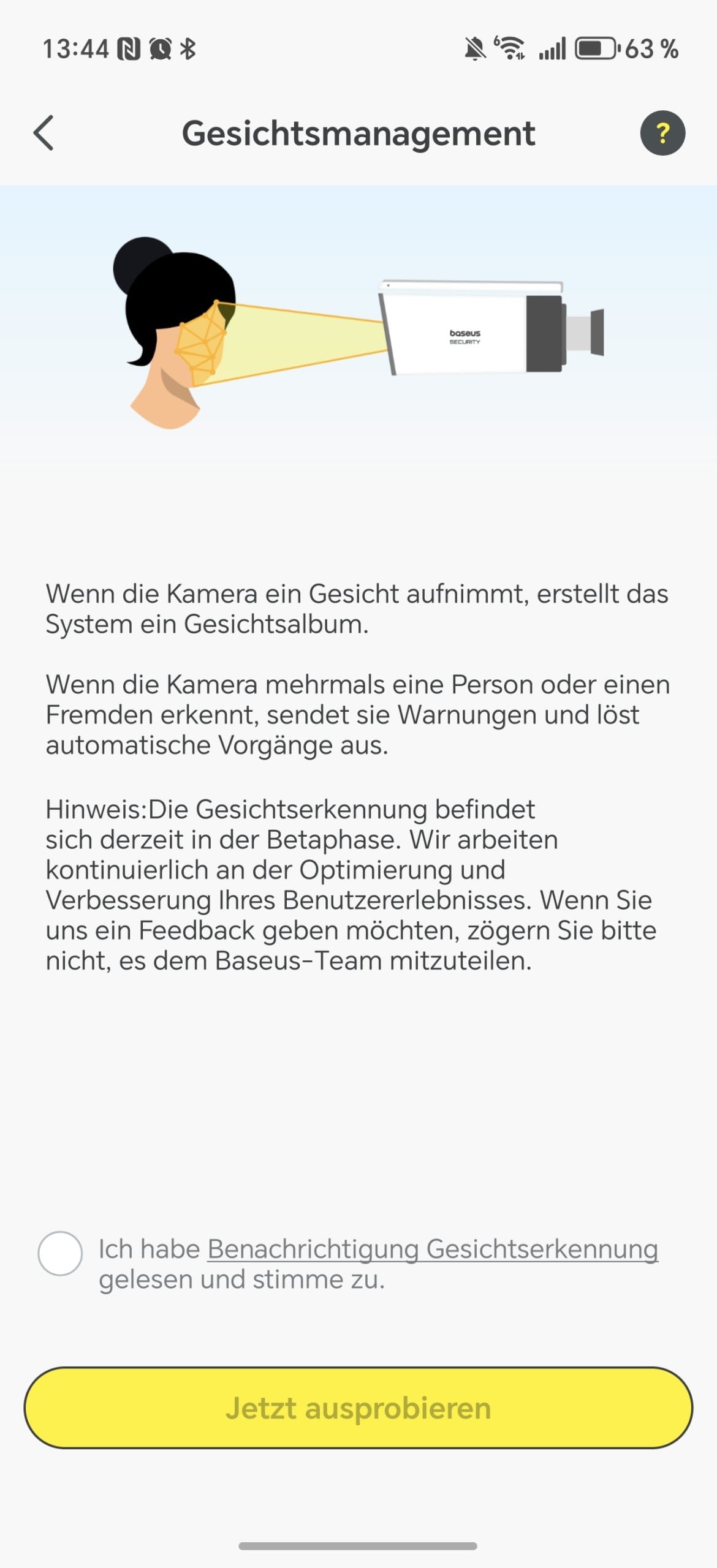
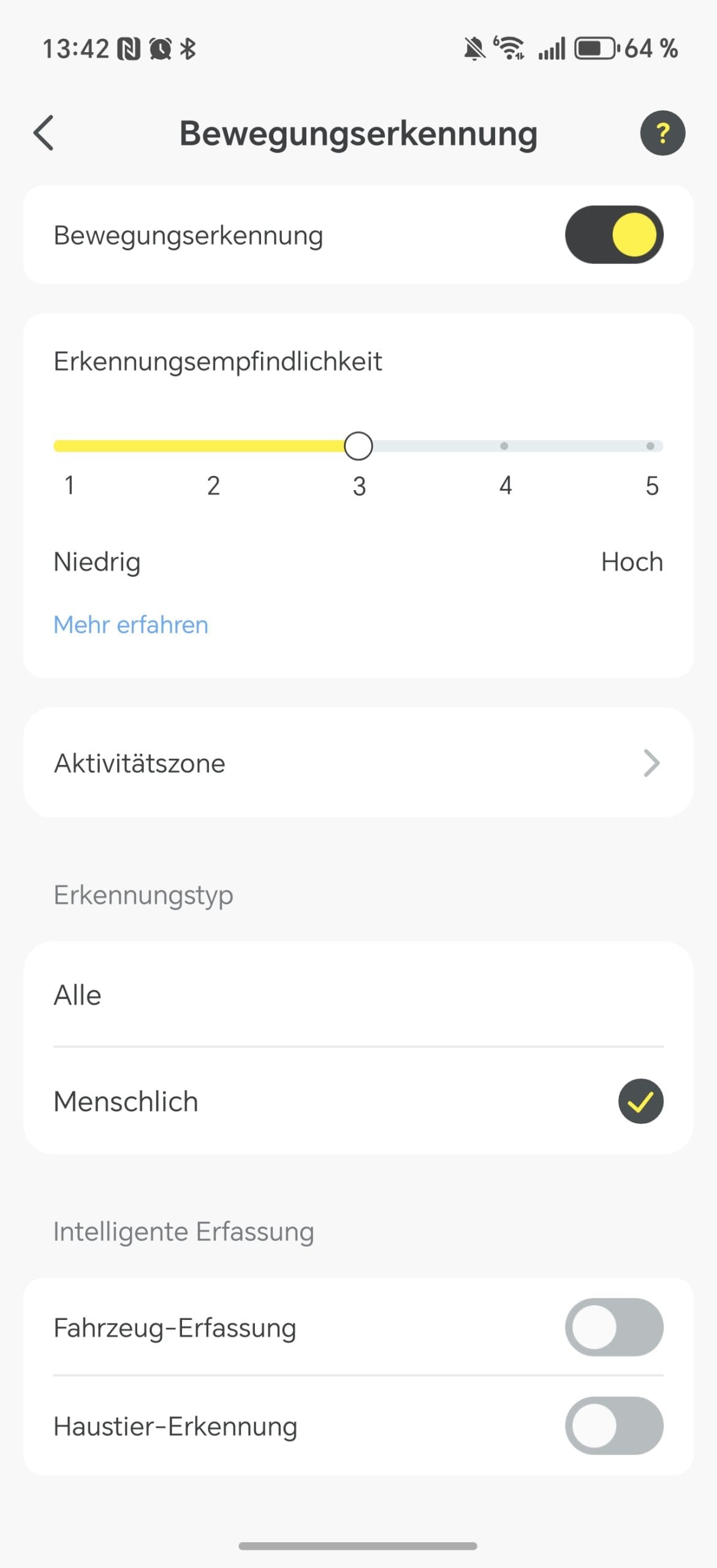
Control is via the Baseus Security App, available for Android and iOS. It provides access to the live image, stored recordings and all central settings. In the app, motion and privacy zones can be created, notifications configured, and the spotlight controlled. Events are displayed clearly with a timestamp and preview image, making it easier to track activities.
Everyday use and practical experience
I mounted the Baseus S1 Lite on the terrace, where it recorded for several weeks during the test. Despite the simpler range of features, the camera offers everything needed for a balcony or terrace. The image quality is good, colours look natural and details are clearly recognisable. Only the somewhat low frame rate is noticeable when something moves faster.
The S1 Lite also delivers solid results at night. The infrared image is high in contrast, with faces and movements remaining clearly recognisable. Sharpness decreases slightly at greater distances, which is perfectly acceptable for this price bracket. Audio is captured cleanly, voices are understandable, even if they sound slightly tinny. There is a small delay of about one second during two-way communication, which is hardly noticeable in everyday use.

Saved recordings can be viewed directly in the app. Playback starts quickly and runs largely smoothly. Videos are saved in the H.264 format, which saves storage space but occasionally leaves slight compression artefacts. Approximately two weeks' worth of clips can be stored on a 128 GB card before old recordings are overwritten. After several weeks outdoors, the camera showed no signs of wear. Neither moisture nor temperature fluctuations affected its function or the image quality.
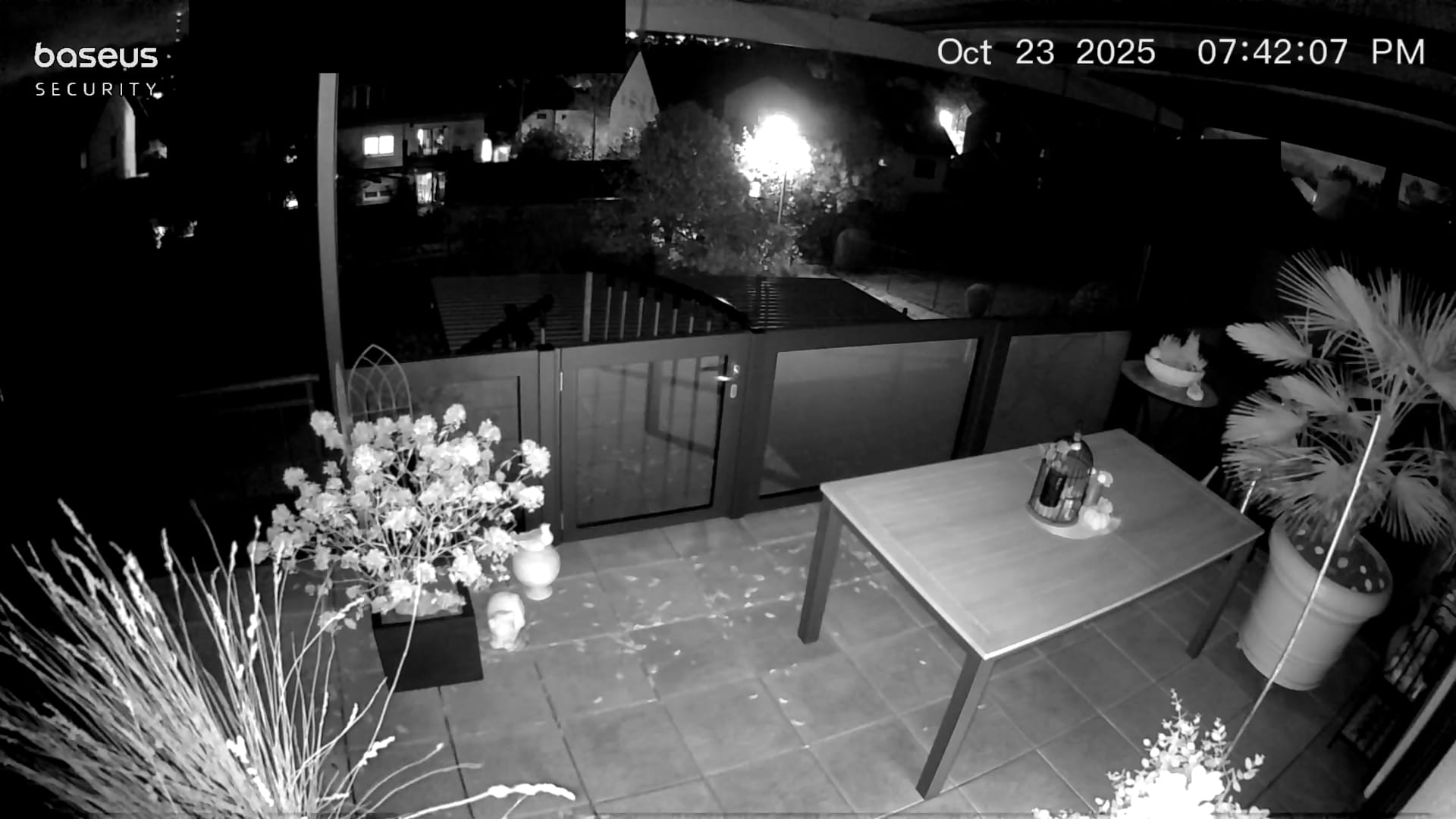
Testing the Baseus S2, which was mounted in the garden, went differently. It already showed itself to be more temperamental during setup and the connection remained weaker than with the S1 Lite even afterwards. Despite an additional access point, there were repeated brief interruptions in the live stream or missing recordings, despite movement being visible in the image.

Once the connection was established, the S2 delivered a very sharp image with plenty of detail. Faces and even number plates were clearly recognisable, and the colours appeared natural. After around four weeks of use, some dust and pollen had settled on the S2's lens, slightly impairing image sharpness. A quick clean with a microfibre cloth immediately restored clear images.
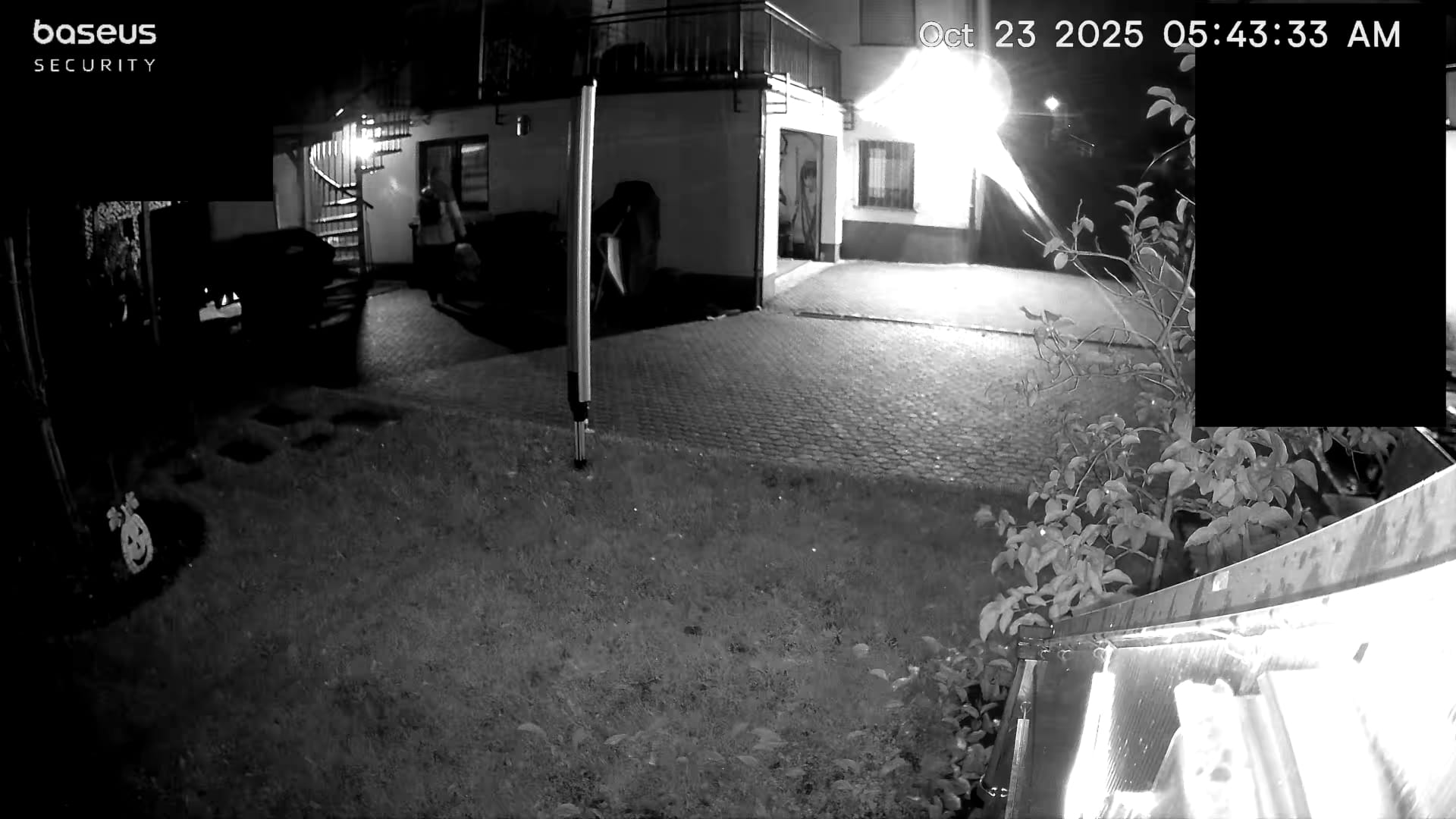
At night, the spotlight provides colourful recordings that turn out surprisingly bright. With nearby objects, overexposure can occasionally occur. The S2 also shows a slight delay between image and reality, which varies depending on the WLAN signal. The sound is generally clear, with a little echo, but without disturbing noise.
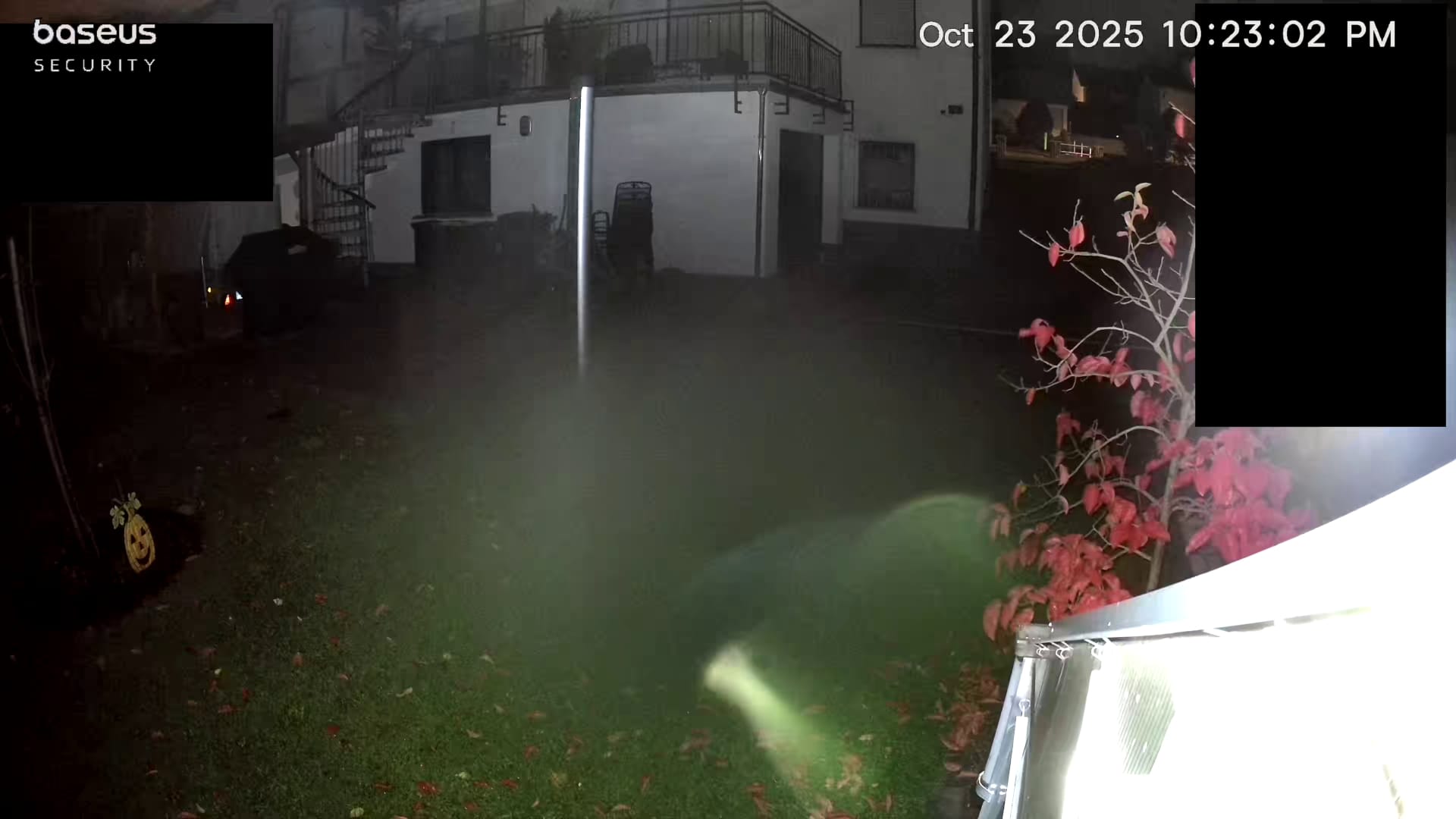
The power supply via the solar panel works very well with both cameras. Even in changeable weather, battery levels in the test remained consistently above 90 per cent. Only during several days of rain did the value drop slightly, which can quickly be compensated for via the USB-C port. Correct alignment of the panel is important. Tilting it southwards ensured optimal charging, while semi-shaded locations provided significantly less energy. How this works in the winter months remains to be seen.
Our verdict
The S1 Lite is exactly what you want from an affordable camera. It is quick to set up, reliable in operation and completely self-sufficient thanks to the integrated solar panel. It runs simply, sends reliable notifications and requires no cloud subscription.
The S2 seems more ambitious. With 4K video, radar and PIR detection, and face analysis, it is closer to models from Eufy or Reolink than to a typical budget camera. In practice, however, it turns out that all this technology is of little use if the Wi-Fi is weak. With a stable signal, it delivers crisp recordings and a strong night image, but with poor reception, dropouts accumulate.
In the end, both cameras are exciting solutions for everyone who wants to monitor their home without ongoing costs. The lack of cloud storage is both a curse and a blessing. On the one hand, you retain full control over your data, but on the other, you forgo convenience features such as backup or remote storage. An option to back up to a NAS or personal cloud would be a logical next step here.
Specifications
Baseus S1 Lite
- Model
- S00033
- Design
- Wireless outdoor surveillance camera with integrated solar panel
- Dimensions (H×W×D)
- 85 × 130 × 40 mm
- Weight
- approx. 600 g
Video & Optics
- Resolution
- 2K QHD (2304 × 1296 pixels)
- Viewing angle
- 135° wide angle
- Zoom
- 8× digital zoom
- Night vision
- Infrared + spotlight (100 lm, range up to 6 m)
- Frame rate
- approx. 15 fps
- Video codec
- H.264
Sensors & detection
- Motion detection
- AI-based (person detection)
- Additional sensors
- PIR
- Private zones
- 2 activity and 2 ignore zones configurable
Audio
- Speakers
- Integrated (two-way communication)
- Microphone
- Noise reduction
- Audio latency
- approx. 1 second
Storage & Security
- Memory card
- microSD up to 512 GB
- Cloud storage
- not supported
- RTSP/ONVIF
- not supported
- Encryption
- AES + RSA
Power supply
- Solar panel
- integrated (fixed)
- Battery
- 5200 mAh Li-ion
- Operation
- self-contained, USB-C port for manual charging
Network and app
- Wi-Fi
- 2,4 GHz
- Smart home
- Amazon Alexa, Google Assistant
- App
- Baseus Security (Android/iOS)
Baseus S2
- Model
- S0SX00
- Design
- Wireless outdoor surveillance camera with tracking solar panel
- Dimensions (H×W×D)
- 166 × 77 × 70 mm
- Weight
- approx. 960 g
Video & Optics
- Resolution
- 4K UHD (3840 × 2160 pixels)
- Viewing angle
- 145° wide-angle
- Zoom
- 8× digital zoom
- Night vision
- Coloured via spotlight (range up to 8 m)
- Frame rate
- approx. 15 fps
- Video codec
- H.264
Sensors & detection
- Motion detection
- Radar + PIR
- AI features
- Face, person, vehicle and animal detection
- Private zones
- configurable
Audio
- Speakers
- Integrated (two-way communication)
- Microphone
- Noise reduction
- Audio latency
- approx. 1–2 seconds
Storage & Security
- Memory card
- microSD up to 512 GB
- Cloud storage
- not supported
- RTSP/ONVIF
- not supported
- Encryption
- AES + RSA
Power supply
- Solar panel
- movable with automatic sun tracking
- Battery
- 7800 mAh Li-Ion
- Operation
- self-contained, USB-C port for manual charging
Network and app
- Wi-Fi
- 2,4 GHz
- Smart home
- Amazon Alexa, Google Assistant
- App
- Baseus Security (Android/iOS)
Price comparison
| Store | Price | Link |
|---|---|---|
| Amazon | 37,99 € | Go to store |
| Baseus | 49,99 € | Go to store |
Price history
| Store | Price | Link |
|---|---|---|
| Baseus | 139,99 € | Go to store |
Comments