
Contents
First impressions of the Cubot Cheetah 2
What’s included
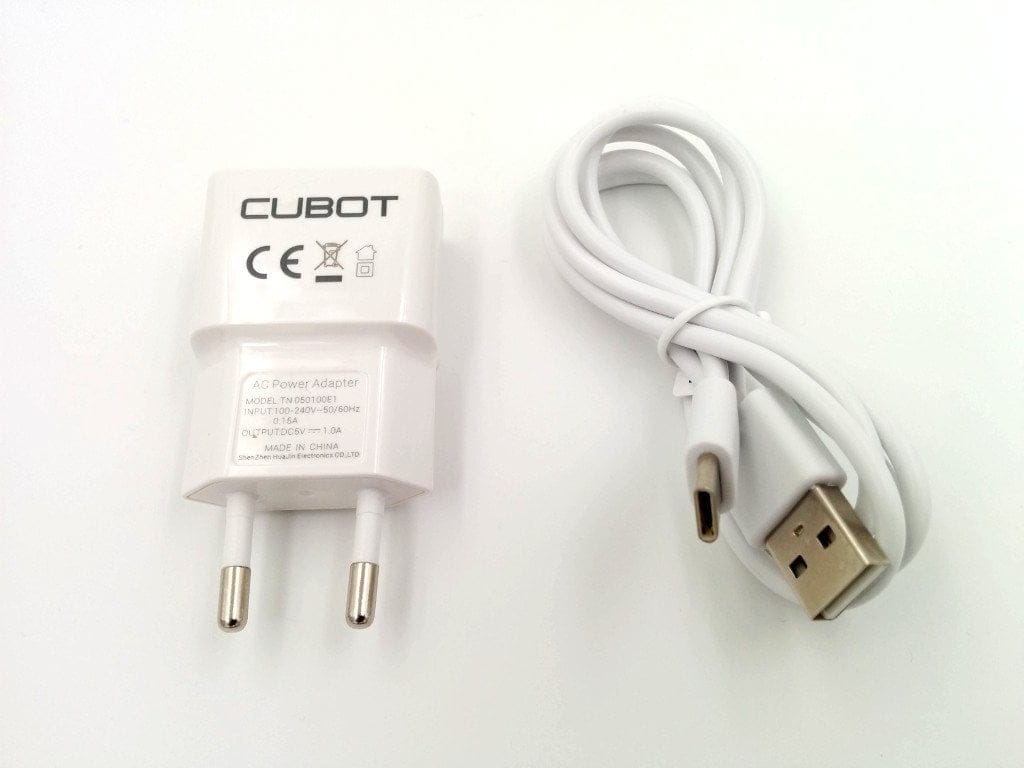
This smartphone is also supplied in the typical Cubot packaging. Included is the smartphone with a suitable silicone protective case, a charger with an output of 5V and 1A, a USB-C cable and a multilingual quick-start guide. A screen protector is already applied from the factory.

Design and build quality
The design of the Cubot Cheetah 2 is largely unspectacular and shares little in common with its predecessor. Only the frame is still made of metal. The smartphone weighs 195g, making it feel too heavy in the hand. The removable plastic back proved to be very slippery in testing. Due to the glossy piano lacquer look of the back, every single fingerprint is visible.


Those who think that Cubot has given the device a removable back cover so that the battery can be replaced will unfortunately be disappointed. The battery of the Cubot Cheetah 2 is not replaceable, despite the removable back cover! However, behind the back cover are two SIM card slots that can be populated with a Micro-SIM and a Nano-SIM. Additionally, the smartphone offers memory expansion via a Micro-SD memory card. This does not compromise the dual-SIM function!
The controls on the Cubot Cheetah 2 consist of a home button with fingerprint scanner located under the display, a volume rocker on the right side of the casing, and a power button, also on the right side of the casing. The side controls are firmly seated in the housing, and the pressure point is convincing. However, the home button failed in testing. The pressure point is poor, and with each press you can distinctly feel the button grinding and creaking in the front of the housing. To the left and right of the home button are two unlit, virtual control buttons.
The speaker is located on the lower edge of the frame, next to the USB Type-C port. On the top edge of the frame is a 3.5mm headphone jack. The placement is unobjectionable.


Interim verdict
The design of the Cubot Cheetah 2 can be described as average in a few words. The smartphone offers little visually new, even though it differs almost completely from its predecessor. A lower weight would have been desirable.
The device is completely unconvincing when it comes to build quality. A creaking and grinding Home button is a major no-go. Unfortunately, we cannot assess whether this issue only affects our review unit.
Display
The IPS display has a resolution of 1920 x 1080 pixels with a screen diagonal of 5.5 inches, corresponding to a pixel density of 401 PPI. So-called 2.5D curved glass ensures that the edges of the protective glass are rounded, which contributes primarily to better aesthetics.


Colour reproduction is accurate. Additionally, the colour temperature can be corrected in the display settings under the 'MiraVision' menu item. By default, the display is set rather cool. Worthy of praise are the maximum display brightness and the viewing angle stability. With a luminance of 450 cd/㎡, it remains very good for reading even under stronger sunlight. The good viewing angle stability is characterised by the fact that colour reproduction and readability are maintained even at extreme viewing angles.
The touchscreen of the Cubot Cheetah 2 is also faultless. Inputs were recognised accurately and without errors during testing. Up to 5 simultaneous inputs are possible with multi-touch.
Performance and user interface
Cubot has yet to adopt current MediaTek Helio processors and also uses a now older MediaTek MTK6753 processor in this smartphone. This is an octa-core processor clocked at a maximum of 1.3GHz. The memory configuration consists of 3GB of RAM and 32GB of internal storage. As mentioned, the internal storage can be expanded with a micro SD memory card.
In everyday use, the Cubot Cheetah 2 presents itself as a multitasking capable and smoothly operable smartphone. Apps open quickly and even with multiple apps open simultaneously, only a slight drop in performance is noticeable. Only with graphically demanding games does one notice that the no longer particularly current processor is struggling. The Mali T-720 GPU used is suitable for casual games that are not too demanding.


The operating system is a barely modified Android 6 Marshmallow. Compared to the predecessor, the OS is much less modified and there were no pre-installed bloatware, i.e. apps installed by the manufacturer. Deep modifications to the gesture control are nowhere to be found in the settings. The smartphone receives OTA (Over The Air) updates directly from the manufacturer. Security updates are likely. An update to Android 7, on the other hand, is unlikely.


Camera
According to Cubot, the main camera uses a 13-megapixel Samsung ISOCELL 38L image sensor and a wide f/2.0 aperture. It is difficult to verify this claim, but the Cubot Cheetah 2 clearly takes worse photos than the UMi Plus, which uses the same image sensor. Of course, the image sensor is not the sole determining factor for capture quality. Nevertheless, it is common for components that are hard to verify to be misrepresented. Additional features of the main camera include a dual LED flash and Phase Detection Autofocus (PDAF).
The front camera has a resolution of 8 megapixels and uses a Sony IMX219 image sensor.
Main camera capture quality
The recording quality of the main camera is still in line with the price and depends heavily on the lighting conditions. Under very good lighting conditions, usable images are produced with only minor image noise and well-defined details. Under normal lighting conditions, it is noticeably apparent that the camera does not perform as well. With the auto-flash enabled, the Cubot Cheetah 2's camera attempts to capture images using only the flash even under normal lighting conditions. If the auto-flash is disabled, it is evident that the images are significantly noisy and blurry. The autofocus works very sluggishly, and it takes several seconds before any focusing occurs. Additionally, there is the sluggishness of the live view output via the camera app. In the dark, the main camera is unusable without a flash, despite the large aperture.




Front camera recording quality
Surprisingly, the front camera is more convincing in terms of recording quality than the main camera. Considering the price, this camera does allow for decent images and is perfectly suited for video calls!


Telephony, Wi-Fi and Bluetooth
The Cubot Cheetah 2 is a dual-SIM smartphone that can accommodate a micro SIM and a nano SIM. As no "hybrid slot" is used, the SD memory card slot is separate from the SIM slots. All network standards common in this region are supported. The smartphone is also LTE compatible (LTE bands 1, 3, 7 and 20).
Voice quality on this smartphone is rather average. Network reception was consistently good, but the person on the other end sounded largely muffled. Conversely, I could be understood by the other person without problems and in good voice quality.
There is nothing to criticise regarding the transmission quality and range of the Wi-Fi and Bluetooth. The smartphone can connect to both 2.4GHz and 5GHz Wi-Fi networks.
Other
GPS
The Cubot Cheetah 2 finds a GPS fix within seconds. The signal strength is convincing and the positioning accuracy is also precise to within a few metres. An e-compass is integrated, allowing the smartphone to be used for pedestrian navigation.
Fingerprint scanner
The fingerprint scanner is located in the poorly implemented Home button. A maximum of 5 fingerprint profiles can be stored. During the testing phase, there was little to criticise about the fingerprint scanner. Of 10 unlock attempts, approximately 8 were successful. Only the unlock time felt like it could be slightly faster. It also happened once that the fingerprint was not recognised after several attempts, and only a device restart provided a solution.

Sensors
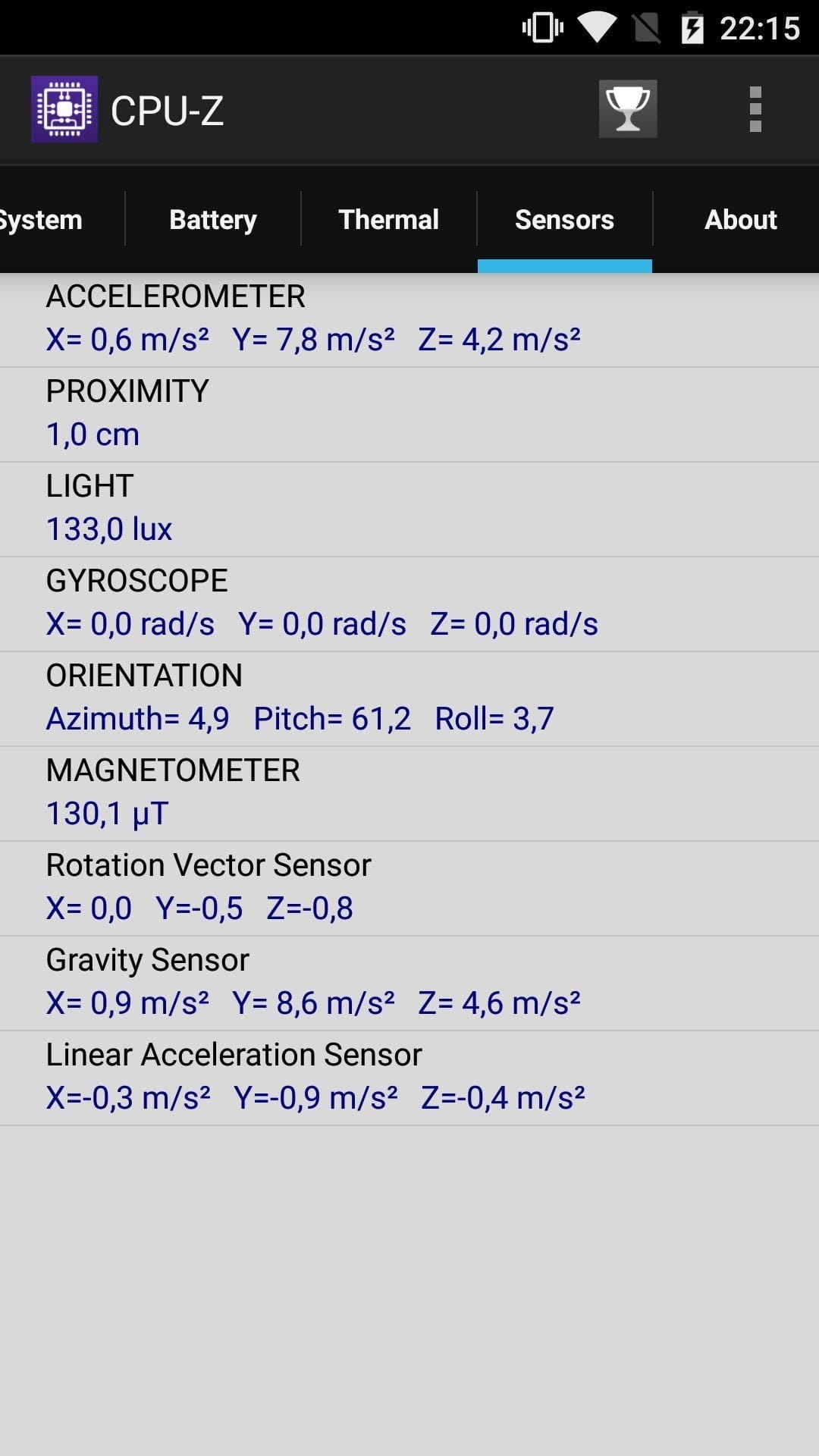
The sensors include a brightness sensor, a proximity sensor, a gyroscope, an accelerometer and, as already mentioned, an electronic compass. NFC is not present.
Speakers and headphone jack
At maximum volume, the speaker is comparatively quiet. The sound can be described as neutral. Fine details are represented, but the bass is audibly lacking. Sound quality via the 3.5mm headphone jack is good and free of interference.
Battery
The Cubot Cheetah 2 battery has a capacity of 3,000 mAh. Battery life with average use is approximately one day. I had to charge the device by no later than 1½ days. The smartphone charges via the new USB Type-C standard. Quick Charge is not supported, so it can take up to 3 hours for the smartphone to be fully charged.
Our verdict
6,7 out of 10 pointsIs the Cubot Cheetah 2 recommendable? Yes and no! The poorly implemented home button in particular proved to be extremely disruptive in the test. Unfortunately, it is not clear to what extent this is an isolated case or whether every Cubot Cheetah 2 exhibits this error. The smartphone's camera also speaks against a purchase. Measured against the price range under €150, it takes average shots, but other smartphones in this price range are certainly better! The outdated processor is also a criticism. It would be desirable for Cubot to finally switch to the current Helio series.
However, the display argues in favour of a purchase, particularly scoring points in terms of brightness and colour representation. The sensor equipment, the strong WiFi signal and the accurate GPS also convinced us. The user interface also scores with clean Android 6 without bloatware. If you like the look of the Cubot Cheetah 2 and can do without an average main camera, it is well worth considering this smartphone.
Specifications
General
- OS
- Android 6
- Display size
- 5.5 inches
- Display resolution
- FHD 1920 x 1080 pixels
- Contrast ratio
- 1300:1
- Luminance
- 450 cd/m²
- CPU
- MediaTek MTK6753 (Octa-Core)
- RAM
- 3GB
- Internal storage
- 32GB
- Storage expansion
- Yes (Micro-SD)
- Main camera
- 13 megapixels (Samsung S5K3L8)
- *Dual LED flash
- *PDAF
- Front camera
- 8 megapixels (Sony IMX219)
- Wi-Fi
- 2.4 GHz and 5 GHz
- Bluetooth
- 4.0
- USB
- USB Type-C
- Headphone jack
- 3.5mm
- Networks
- 2G
- GSM 850/900/1800/1900 MHz
- 3G
- WCDMA 850/900/2100 MHz
- 4G
- FDD-LTE 800/1800/2100/2600 MHz
- SIM
- Nano- and Micro-SIM
- Battery
- 3,000 mAh
- Size
- 75.0 x 153.6 x 8.5 mm
- Weight
- 195g
What’s included
1x Cubot Cheetah 2 1x Silicone protective case 1x Charger 1x USB Type-C cable 1x User manual
Comments