Contents
Omnidirectional sensing instead of a downward sensor
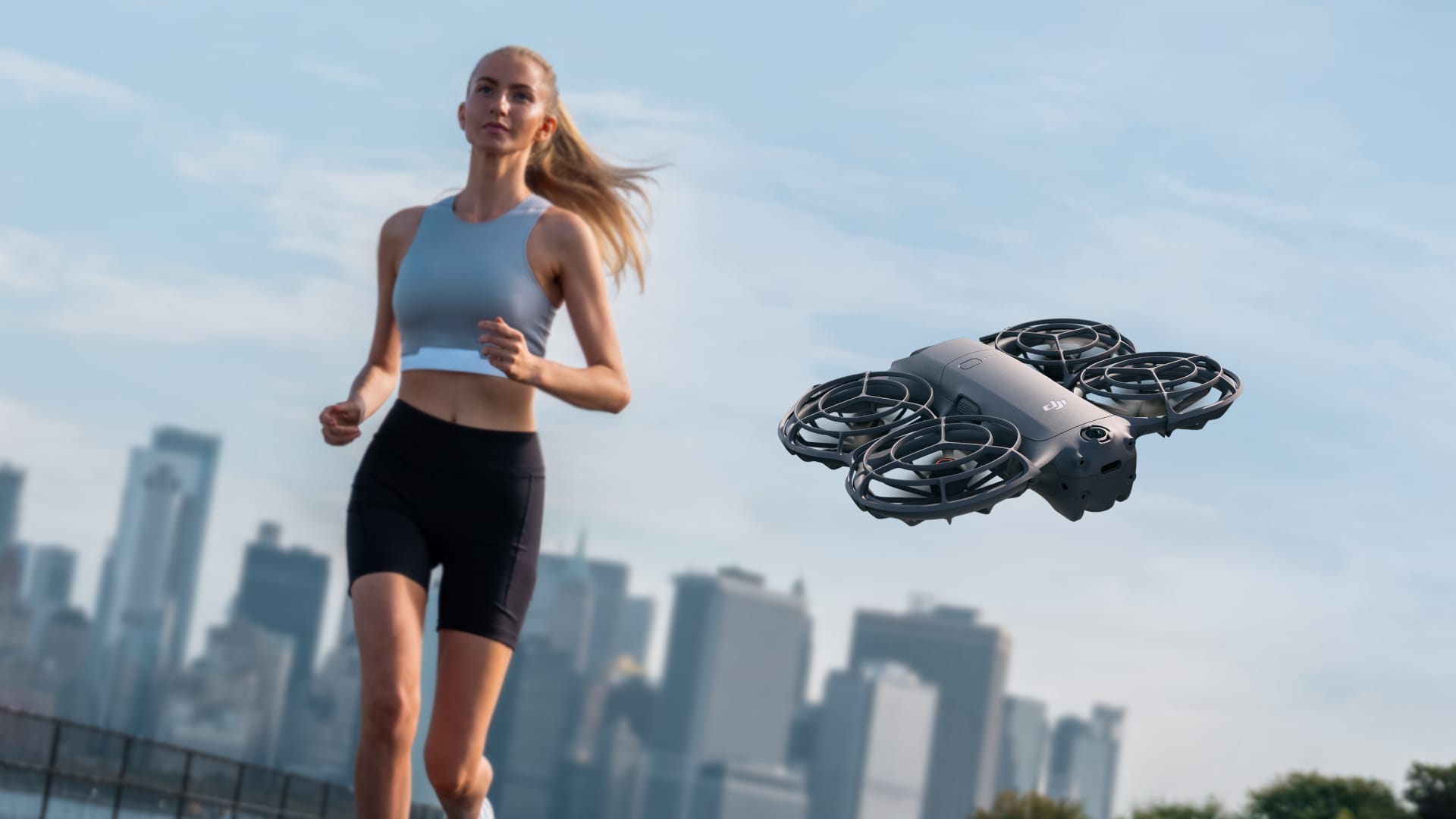
While the original Neo used only a downward-facing vision system, DJI has equipped the Neo 2 with a considerably more complex sensor array. The aircraft uses an omnidirectional monocular vision system, forward-facing LiDAR and a downward-facing infrared sensor.
This allows the drone to detect obstacles in all horizontal directions for the first time and automatically make course corrections. The maximum detection speed is up to 8 m/s at the sides and rear, while the LiDAR operates within a range of 0.3 to 8 metres. Wind resistance increases from 8 to 10.7 m/s, improving stability when filming outdoors.

Two-axis gimbal and higher frame rates
The camera still uses a 1/2-inch, 12-megapixel sensor, but the imaging pipeline has been revised. The gimbal now stabilizes on two axes (tilt and roll); the predecessor had mechanical stabilization on only one axis.
Videos are now supported in 4K at up to 60 fps, as well as 4K/100 fps slow-motion footage, when using a remote control or motion control. Vertical videos are recorded in 2.7K. The lens has a faster f/2.2 aperture (Neo: f/2.8), and the field of view widens slightly to 119.8 degrees.
Eight-direction tracking
The ActiveTrack system has been enhanced for Follow-Me use. The drone now tracks subjects in eight directions and can follow movements of up to 12 m/s. Its all-round sensors allow it to change course when needed, without users having to intervene.
The new SelfieShot feature automatically adjusts framing for portraits, full-body shots, or groups. The package is rounded out by QuickShots, Dolly Zoom, and MasterShots.
Gesture control and lift-to-wake
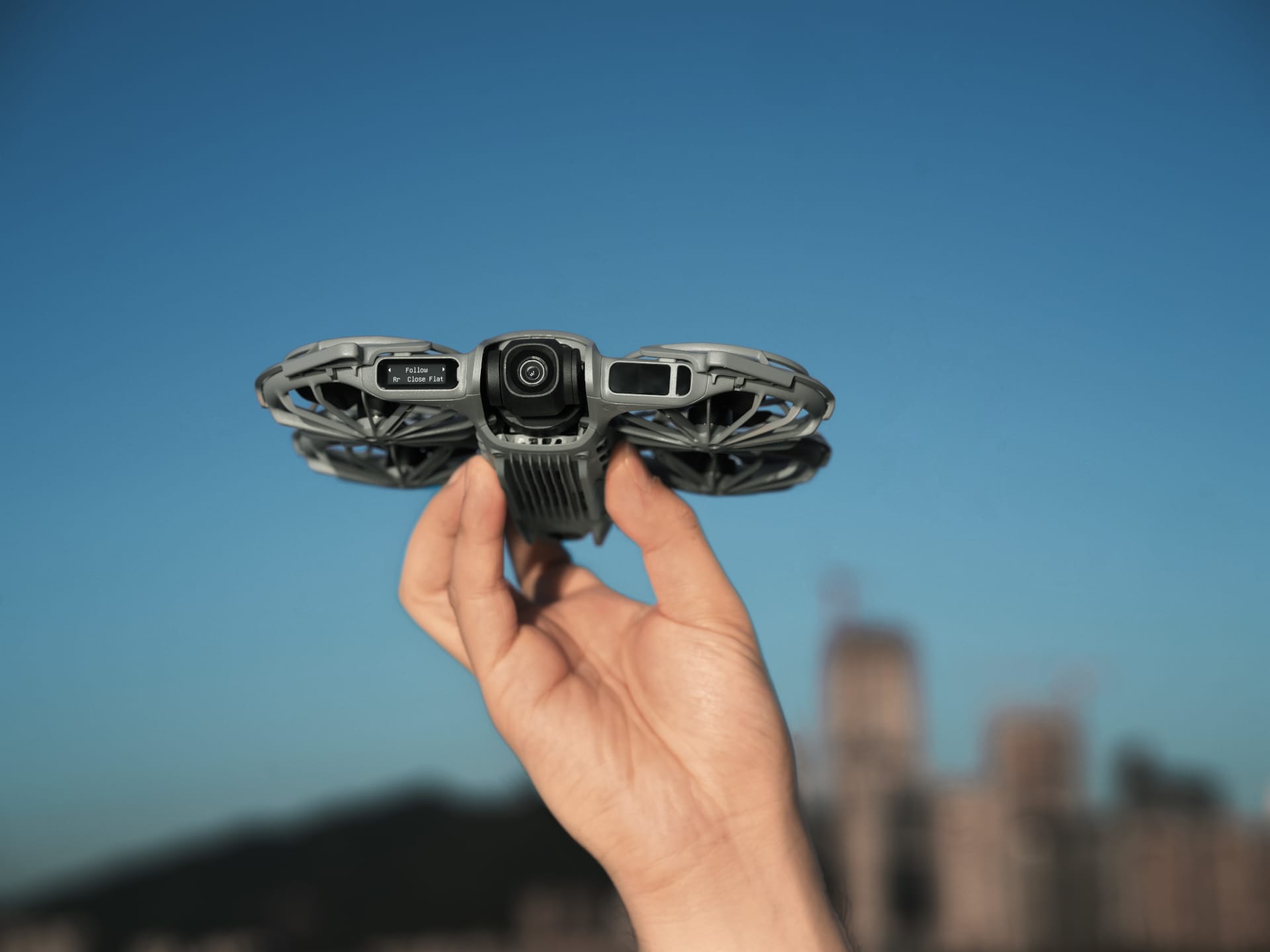
As an extension of its control system, the Neo 2 can be operated entirely with gestures. Users can control the direction and distance of movement with one or both palms. Basic flight commands can be carried out using voice commands (via a smartphone or Bluetooth headset).
Take-off still starts from the palm, now complemented by Return-to-Palm, which lets the drone automatically locate the hand and land on it.
Flight time and storage
Flight time remains almost unchanged at up to 19 minutes. Internal storage increases from 22 GB to 49 GB; storage expansion via an SD card is still not supported.
Wi-Fi transmission now reaches 80 MB/s instead of 25 MB/s, increasing the effective range in Wi-Fi mode from around 50 to about 500 metres. With the optional DJI RC-N3 remote controller or the O4 transmitter, ranges of 6 to 10 kilometres are possible.

Comparison: DJI Neo 2 vs. DJI Neo
| Category | DJI Neo 2 | DJI Neo |
| Weight | 151 g | approx. 135 g |
| Dimensions | 147 × 171 × 41 mm | 130 × 157 × 48.5 mm |
| Obstacle detection | Omnidirectional + front LiDAR + downward IR | Down only |
| Wind resistance | 10.7 m/s | 8 m/s |
| Max. speed (Sport) | 12 m/s | 8 m/s |
| Climbing speed (Sport) | 5 m/s | 3 m/s |
| Camera sensor | 1/2" 12 MP, f/2.2 | 1/2" 12 MP, f/2.8 |
| Gimbal | 2-axis (tilt + roll) | 1-axis (tilt) |
| Max. video resolution | 4K60 / 4K100 fps | 4K30 fps |
| Vertical video | 2,7K (9:16) | 1080p (9:16) |
| Video bitrate | 80 Mbit/s | 75 Mbit/s |
| Internal storage | 49 GB | 22 GB |
| Wi-Fi download | up to 80 MB/s | up to 25 MB/s |
| Wi-Fi range | approx. 500 m | approx. 50 m |
| Tracking | 8-direction tracking, 12 m/s | Basic tracking |
| Gesture control | Yes | No |
| Voice control | Yes | No |
| Return-to-Palm | Yes | No |
| Flight time | approx. 19 minutes | approx. 18 minutes |
Prices
The Neo 2 is available now:
- Neo 2: 239 euros
- Neo 2 Fly More Combo (Drone only): 329 euros
- Neo 2 Fly More Combo: 399 euros
- Neo 2 Motion Fly More Combo: 579 euros
Source: DJI
Comments