Contents
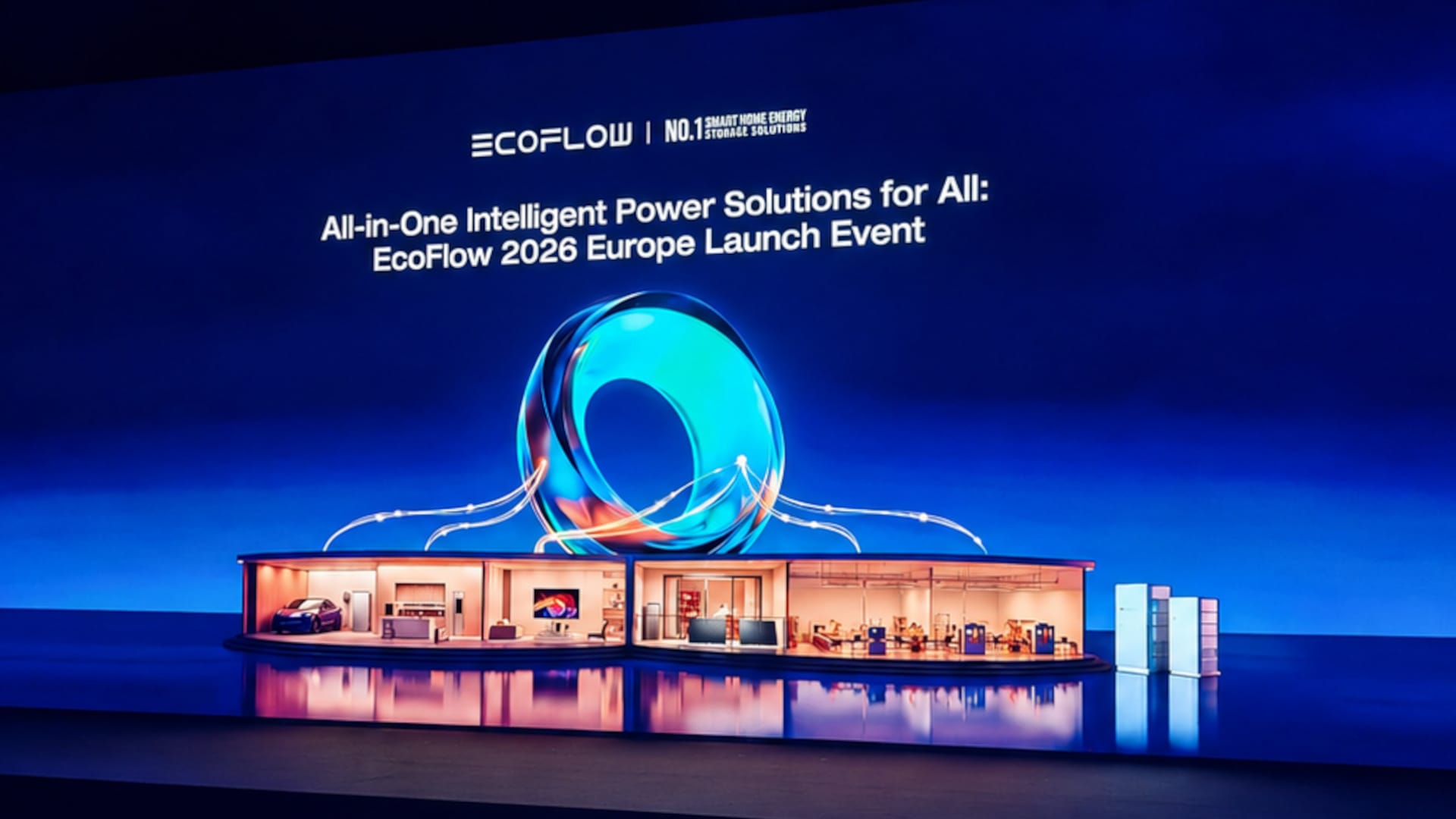
Under the guiding principle "Solar Savings Made Simple", EcoFlow presented a whole range of new products and platform features. The focus was on OASIS 3.0, the AI energy assistant EcoBot, the new STREAM 2 series, OCEAN 2 for larger home energy storage installations, and, with the A-Series, energy storage solutions for commercial and industrial applications in Europe for the first time.#
OASIS 3.0: The control centre for household energy
The most important announcement was not so much a single device as the new control layer behind it. With OASIS 3.0, EcoFlow is bringing the next generation of its energy management platform to Europe. It is designed to bring solar panels, storage, household consumption, electricity tariffs, weather forecasts and connected devices together in one system.
Rather than leaving users to figure out curves, schedules and menus on their own, OASIS 3.0 is designed to automatically detect when electricity should be generated, stored or consumed. To do this, the platform takes into account dynamic electricity tariffs, consumption patterns, solar forecasts and the status of connected devices, among other things.
What is interesting here is not just the automation itself, but also the transparency. At the event, EcoFlow described a feature designed to explain why the system is currently charging, discharging or following a particular strategy.

EcoBot: Energy management in natural language
OASIS 3.0 is complemented by the new EcoFlow EcoBot. The AI-powered energy assistant is designed to make the system much easier to use. In the future, users will be able to change settings, create energy plans or get recommendations using natural language.

EcoFlow wants to lower the barrier to intelligent energy management. Anyone who does not want to constantly search through app menus or manually set charging times should simply be able to tell EcoBot what to do. EcoBot is therefore less of a gimmick and more a building block in EcoFlow’s broader strategy to make energy management as simple as using other smart home devices.
STREAM 2: Getting started with the modular home energy system
For private households, the new STREAM 2 series is likely to be the most tangible product innovation. EcoFlow positions it as a flexible solution for different living situations, such as conventional plug-in solar systems, households with an existing PV system but no storage, and households looking to gradually move towards a comprehensive home energy system.
The portfolio includes STREAM 3000, STREAM 5000 and STREAM AC 5000. The STREAM 3000 offers 3 kWh of storage capacity, while the STREAM 5000 has 5 kWh. The STREAM AC 5000 is designed for households that already have a solar installation. The system is complemented by expansion batteries, a smart meter and a gateway.
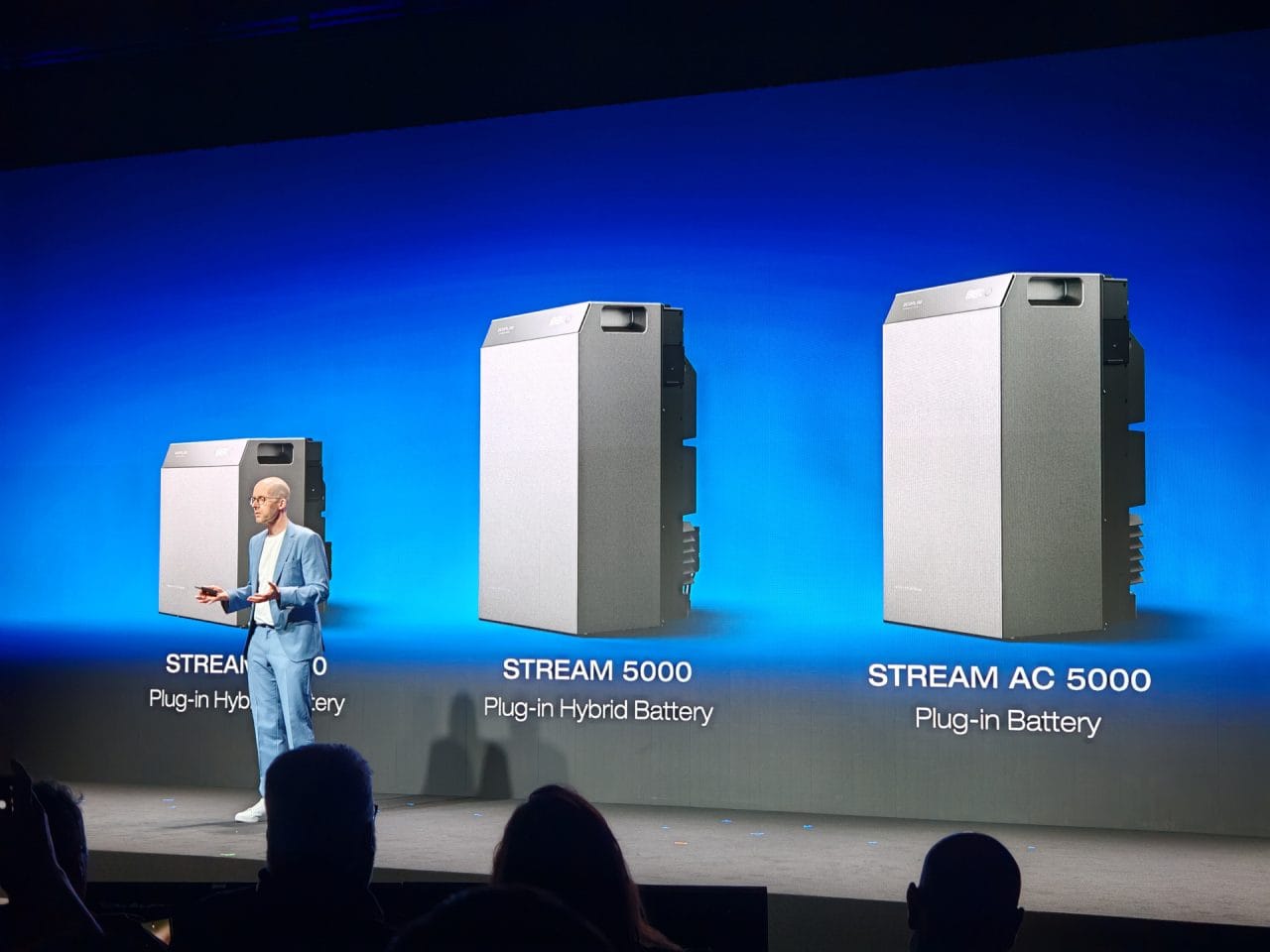
The modular approach is key. Not every household has its own roof, not everyone needs a large storage system straight away, and many people want to start small. STREAM is designed to fill precisely this gap. EcoFlow also emphasised the compact design of the STREAM 5000. The vertically oriented storage unit takes up little floor space and is intended to fit more easily into flats, basements or utility rooms.
Alongside automatic modes, EcoFlow STREAM 2 also offers manual controls. The Intelligent Mode is designed to handle as much as possible automatically, the Self-consumption Mode to optimise self-consumption, and the Custom Mode to allow individual charging times. The Local Mode is particularly useful. The system should continue running without an internet connection and remain controllable locally via the app. Cloud features such as weather forecasts will then be unavailable, but the basic functions will remain.
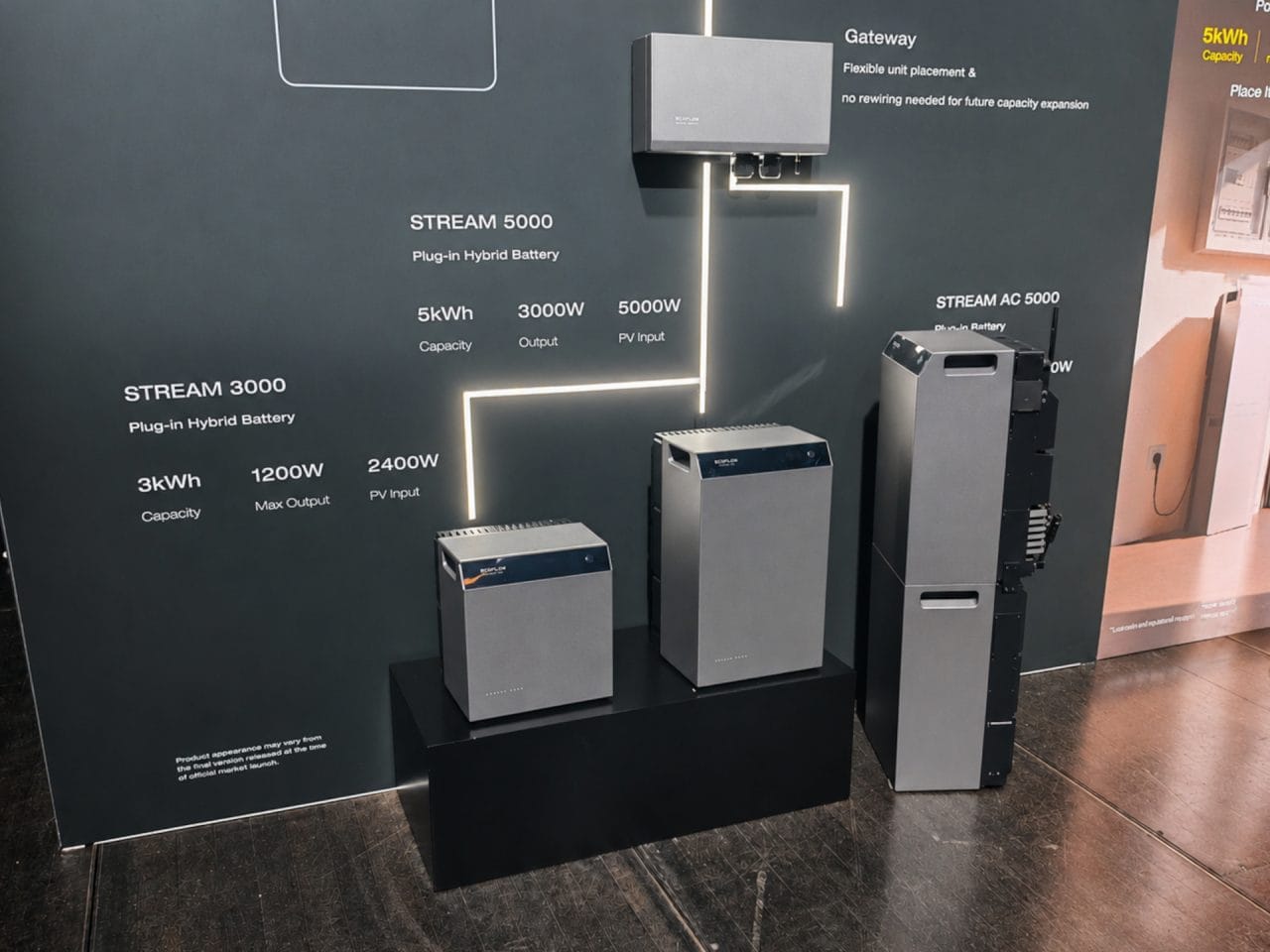
In the event of a power cut, connected devices are said to be powered via backup sockets with up to 3,000 watts. EcoFlow also states that STREAM offers 10,000 charge cycles, a service life of 15 years and a 10-year warranty.
OCEAN 2: More power for the whole home
While STREAM is aimed primarily at entry-level users and small to medium-sized homes, OCEAN 2 is designed for households with higher energy requirements. EcoFlow showed single- and three-phase systems, as well as OCEAN 2 Plus with outputs from 3 to 15 kW.
A new 8 kWh battery is compatible with existing PowerOcean and OCEAN 2 systems. This allows storage capacity to be expanded flexibly. According to EcoFlow, the system can start at 5 kWh and grow to up to 96 kWh. For larger solar installations, OCEAN 2 supports up to 24 kW of PV input.
OCEAN 2 is clearly designed as a whole-home solution, combining storage, backup power and intelligent energy management via OASIS 3.0. EcoFlow also highlights support for more than 500 dynamic electricity tariff providers and integration with over 35 smart home brands. This enables generation, storage, consumption and EV charging to be coordinated centrally.

A-Series and Alps: EcoFlow enters the commercial market
With its new A series, EcoFlow is also taking the step into the European market for commercial and industrial energy storage solutions. The series’ first product is called Alps and is aimed at businesses, commercial PV-plus-storage projects and larger sites.
Technically, Alps uses a DC-coupled high-voltage architecture designed to reduce conversion losses and improve efficiency. The system is based on modular 20 kWh units and can be expanded to suit the application. For commercial use, EcoFlow cites a stackable design, IP66 protection and a multilevel safety concept covering the cell, system and software levels.
OASIS 3.0 also plays a central role here. The platform is designed to take account of load profiles, electricity prices and solar generation, while also enabling connections to virtual power plants and external energy management platforms. This area is less relevant to ordinary households, but is strategically important. EcoFlow does not want to limit its platform to balcony solar systems and home batteries; in the longer term, it also intends to manage larger energy infrastructures.

Prices, Market Launch and Intersolar
For Germany, the EcoFlow STREAM 5000 Plug-in Battery was presented at the event with an early-bird price of 1,299 euros. According to EcoFlow, 0 per cent VAT applies. Early-bird sales in Germany start on 12 August 2026, with the official market launch following on 15 September 2026.
For the Netherlands, the STREAM AC 5000 Plug-in Battery was announced at an early-bird price of 1,399 euros, including 21 per cent VAT. Early-bird sales there begin on 15 July 2026, with the official launch planned for 15 August 2026.
Comments