Contents
ENGWE P26: Unboxing
Ready, steady, go! The ENGWE P26 is embedded in a lot of packaging material, enough to make the yellow bin sweat. Detaching all the cable ties and packaging parts made not only the yellow bin sweat, but also me.
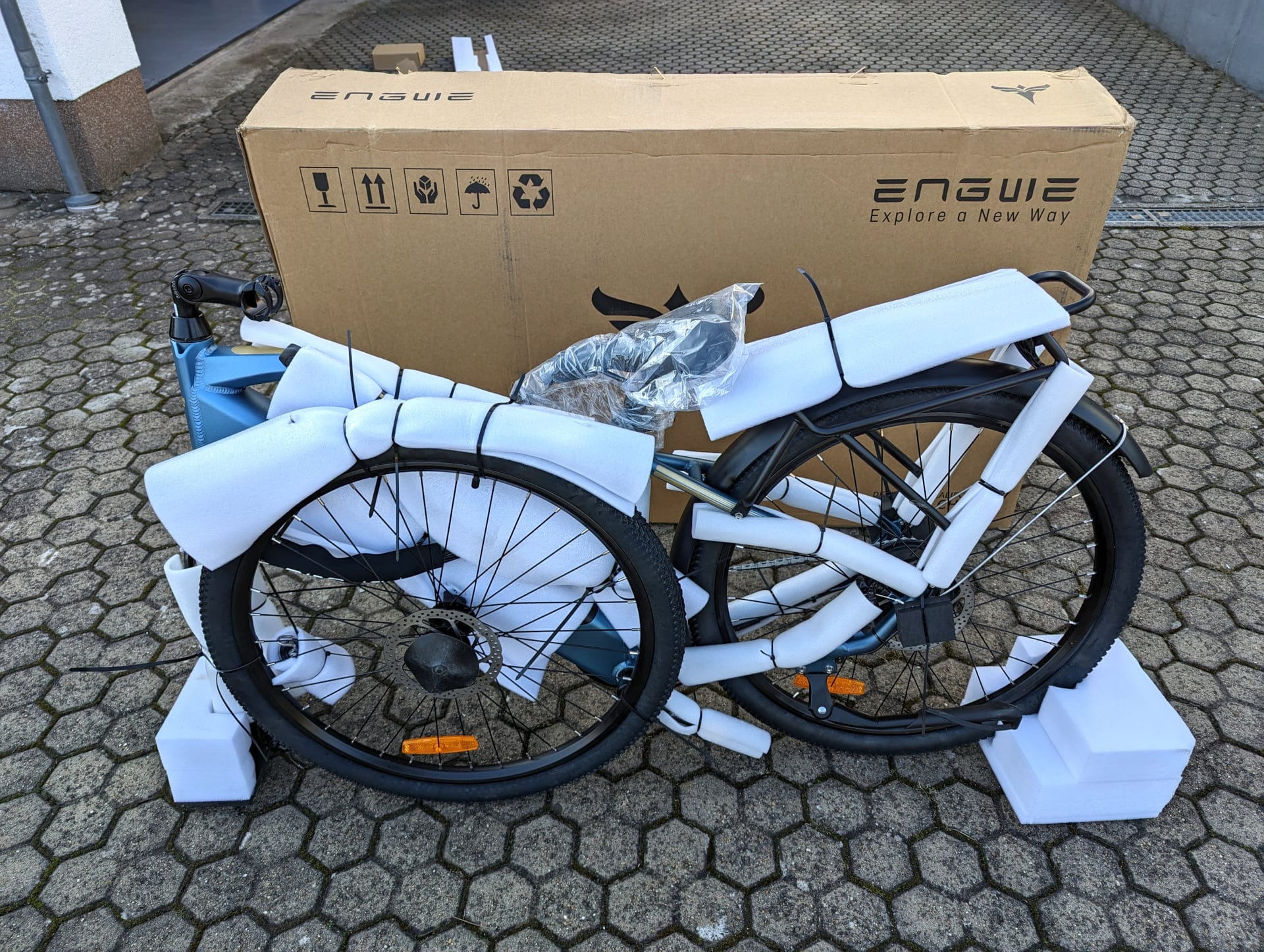
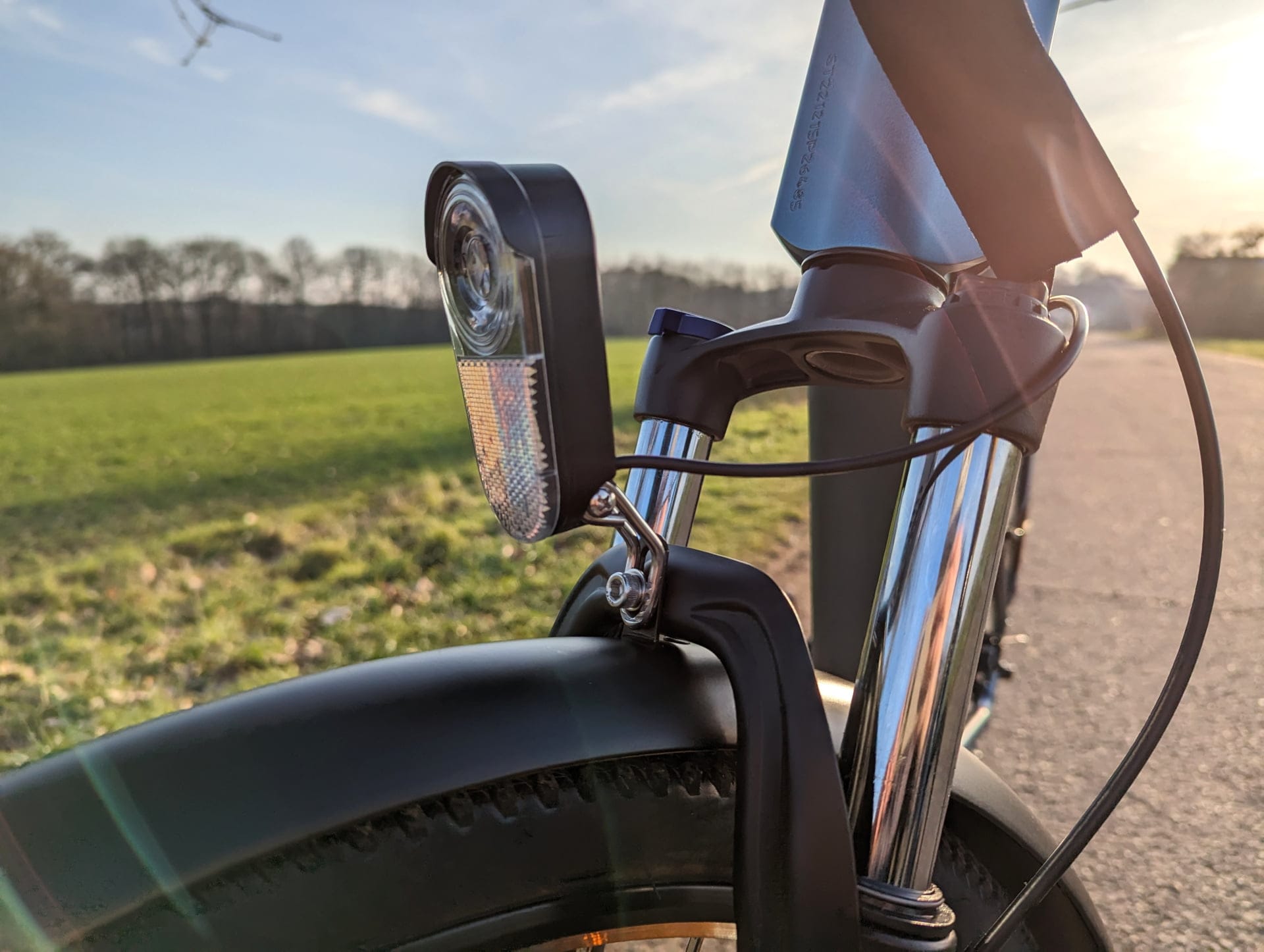
Next comes the assembly, as the ENGWE P26 is not delivered fully assembled. The front wheel, handlebars and pedals must first be attached to the frame. The front mudguard is also only included separately and must be bolted to the frame together with the LED front headlight. At least the luggage rack is already installed.
Assembly and adjustment take approximately 20 minutes. The individual assembly steps are briefly explained in the included instructions. Allen keys and a spanner are included in the scope of delivery. Nevertheless, it is recommended to use your own tools. A 42V 2.0A charger is also included.
ENGWE P26: Features and build quality
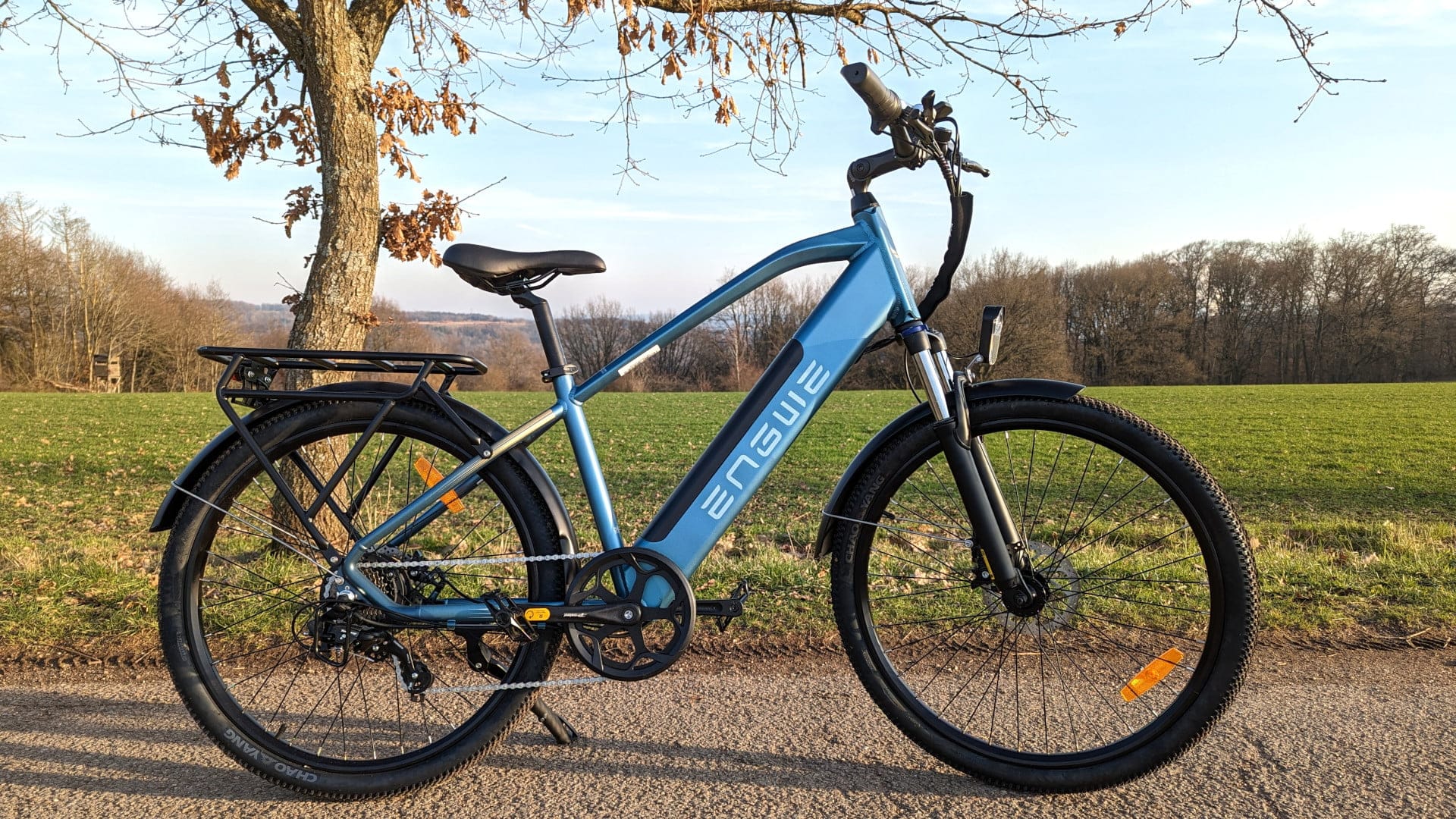
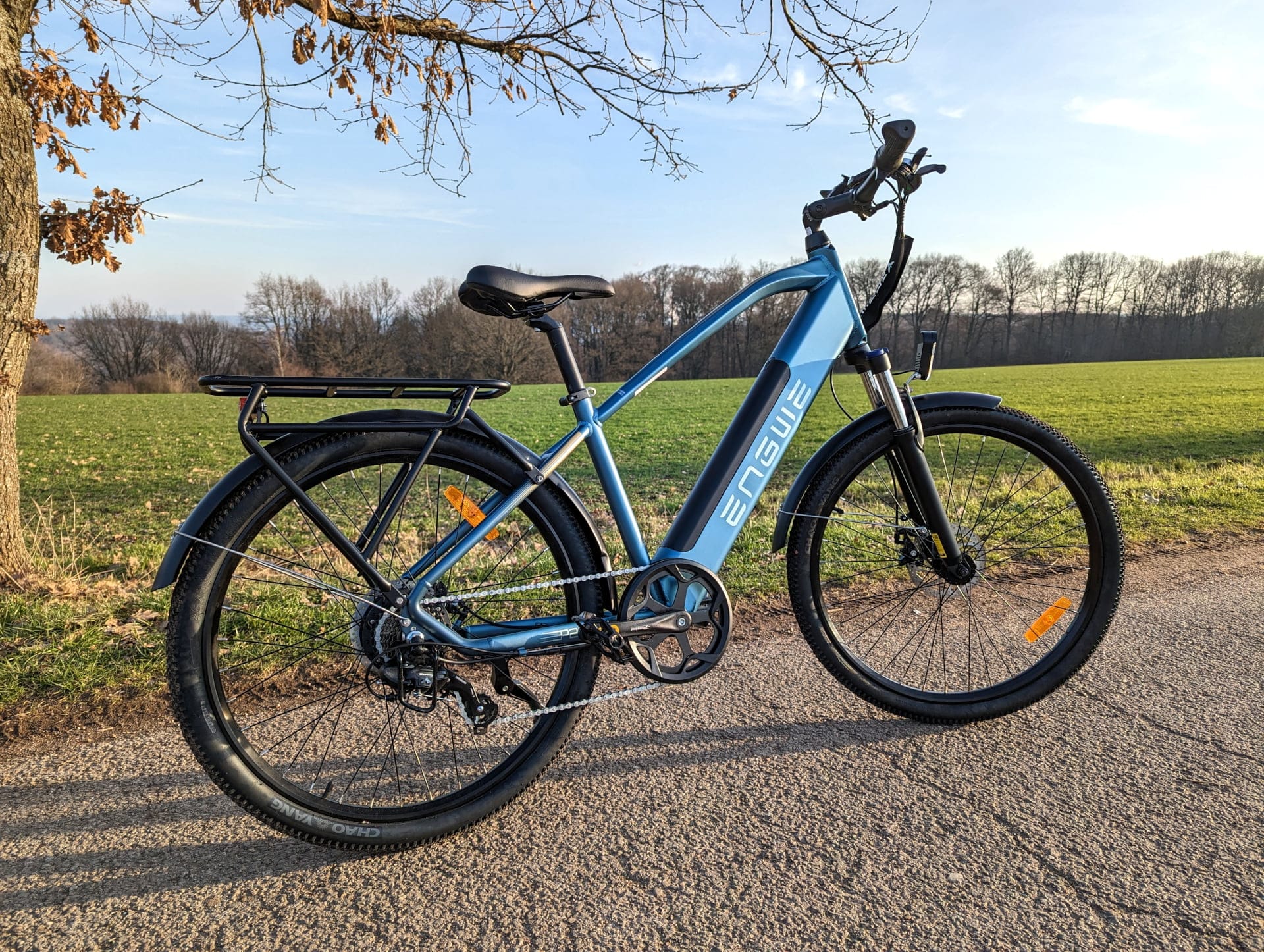
The frame of the ENGWE P26 is made of lightweight 6061 aluminium. You can choose between a metallic glossy blue or silver finish.
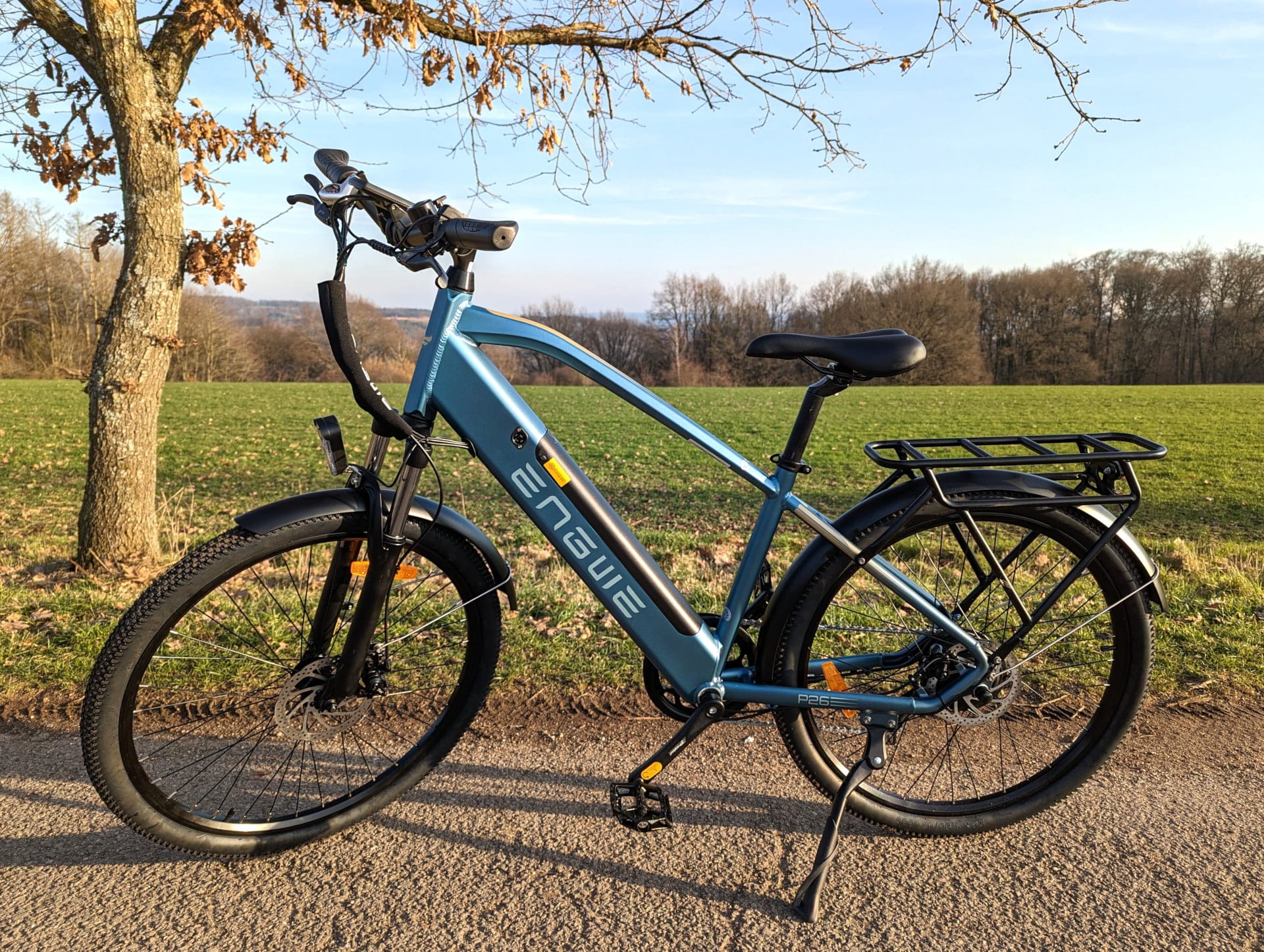
Assembled, the bike measures 173 x 55 x 112 cm and weighs 26.2 kg. The manufacturer states a maximum load capacity of 150 kg. The e-bike makes a good ergonomic impression. The frame height is suitable for riders with a height of 155 cm to 210 cm.
The angle of the stem can be adjusted by loosening the joint screw with a hex key and tightening it again at the desired position. This also changes the handlebar height, which ranges from a minimum of 115 cm to a maximum of 155 cm above the ground. The saddle is fixed via a quick-release lever. Here, the minimum height is 83 cm and the maximum is 99 cm above the ground.
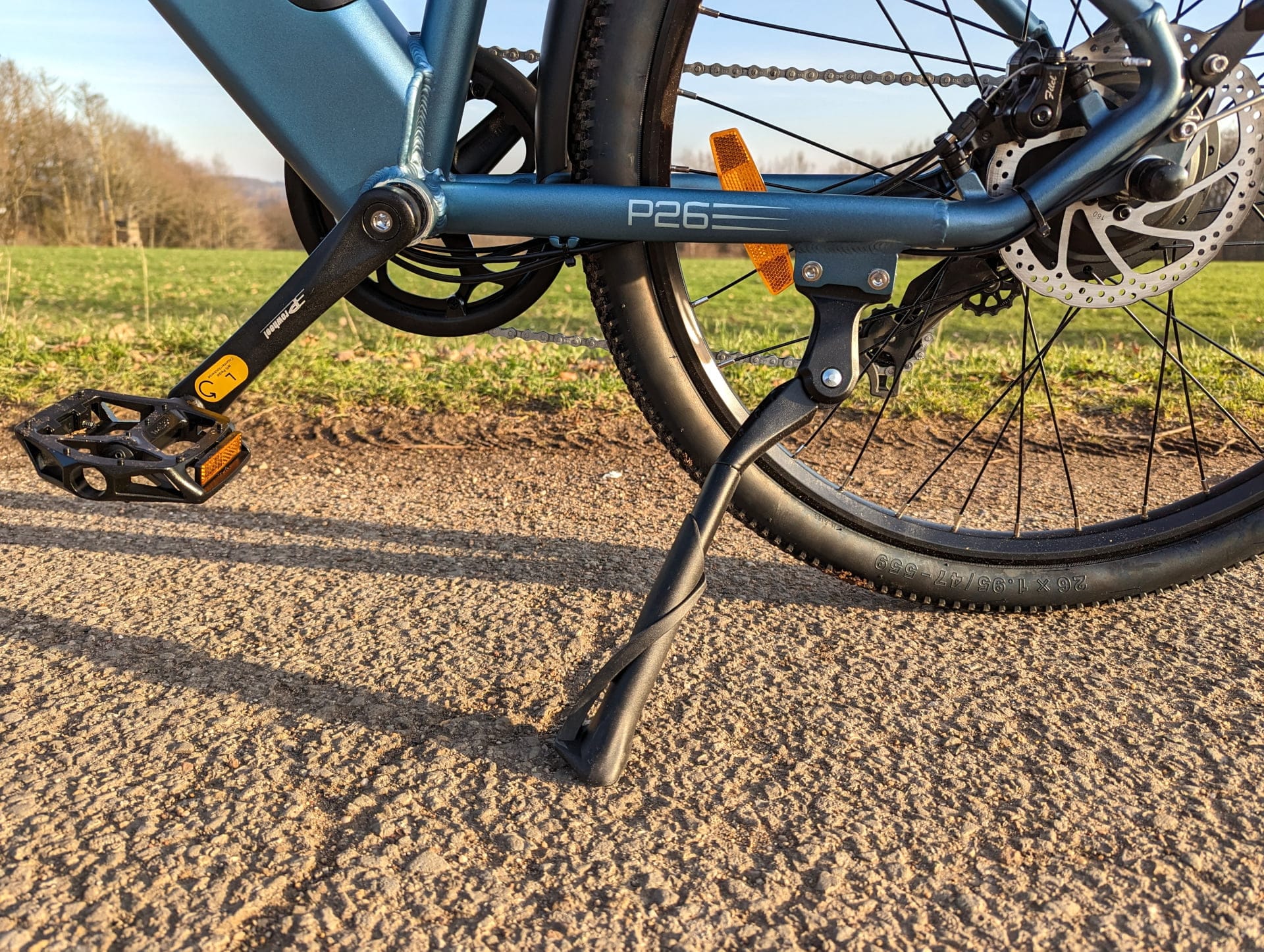
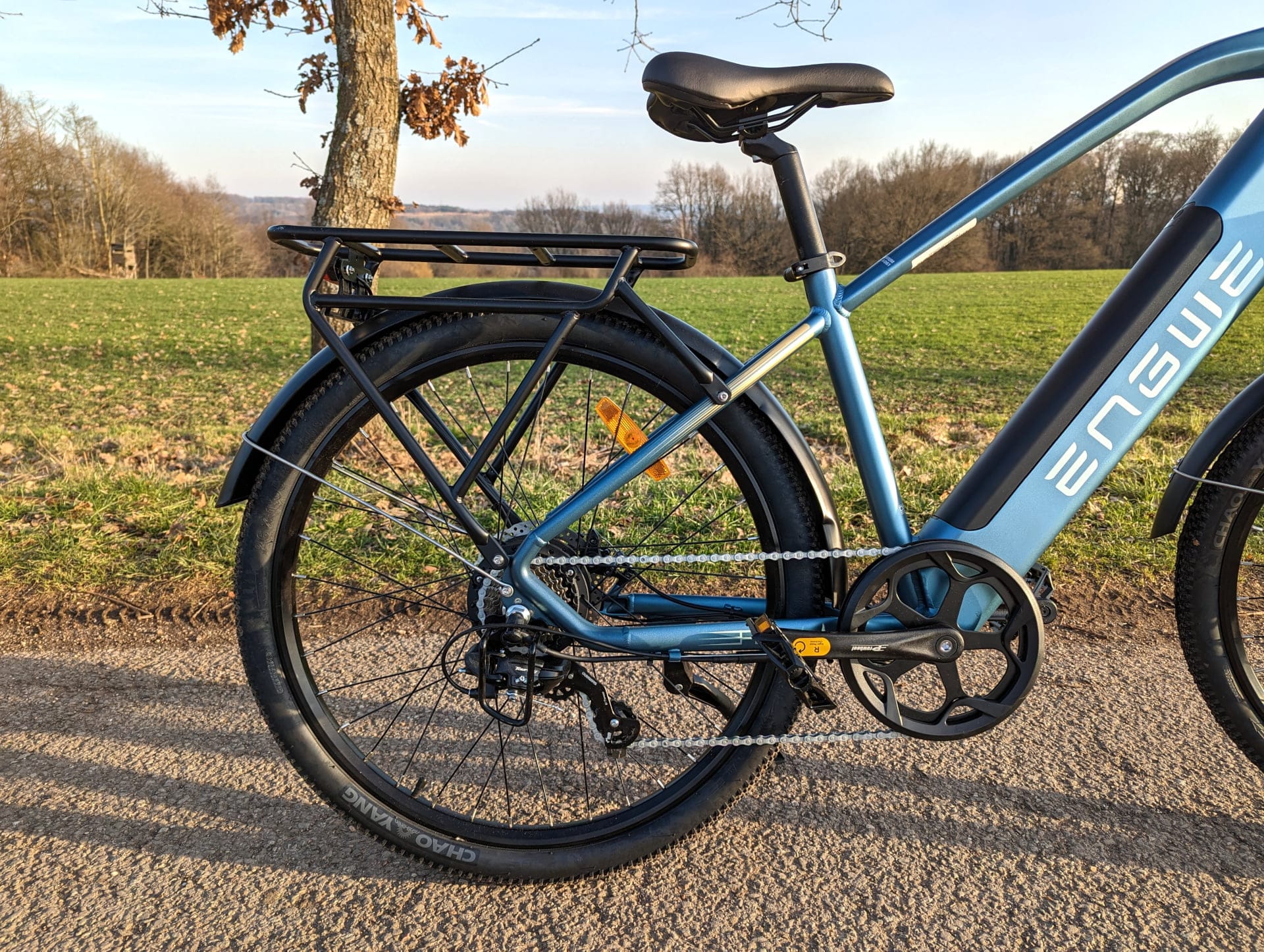
The tyres are 47-559 all-rounders. The mechanical disc brakes on the front and rear wheels are clearly visible. There are also mudguards. These are made of metal, which lends the overall impression a little more quality. Additionally, there is a rear rack above the rear wheel.

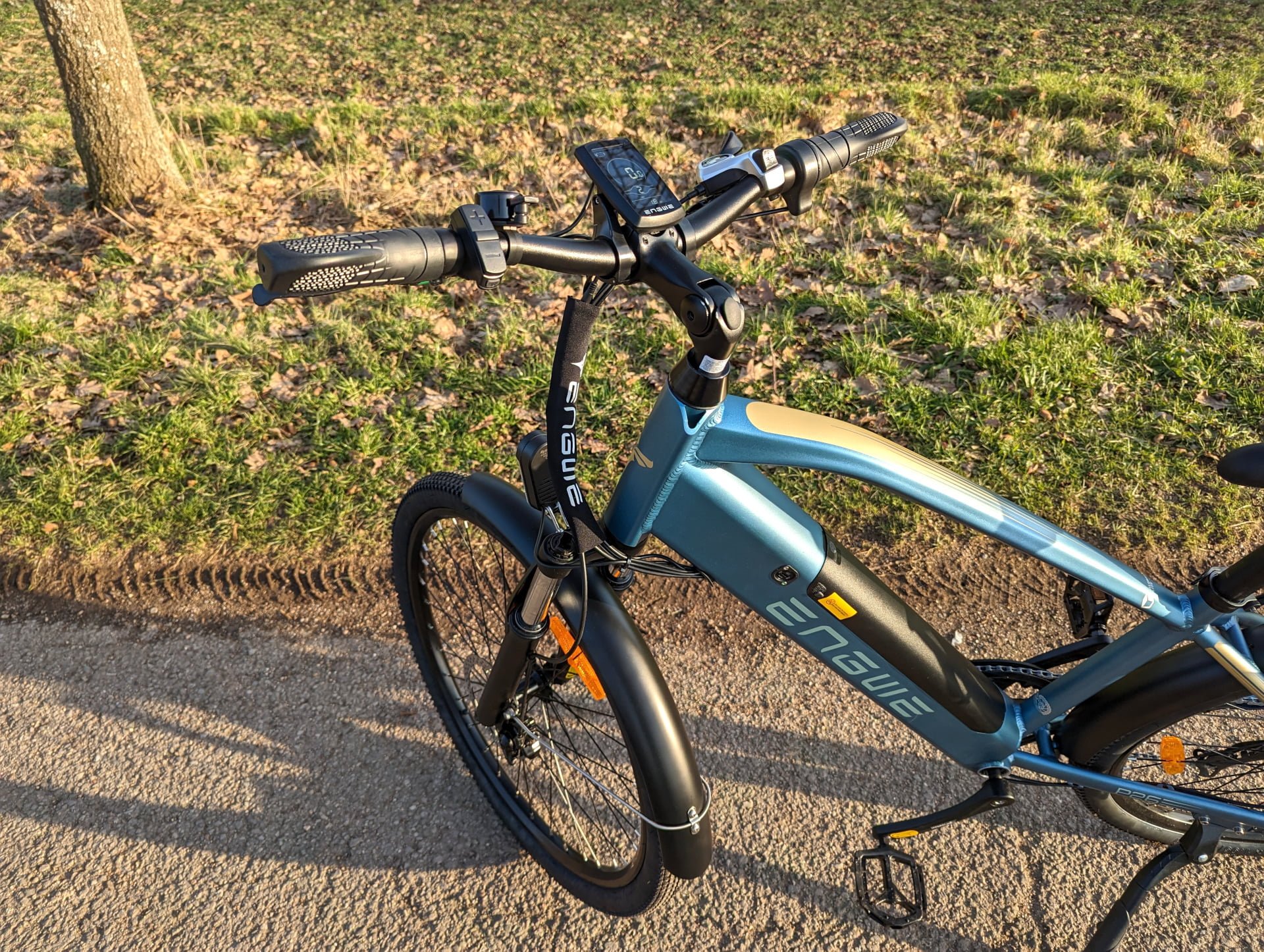
The front of the ENGE P26 is suspended by a suspension fork. This can be adjusted and locked as required. In the middle of the handlebars is the display, which informs about speed, assistance level, remaining battery and range (total mileage & trip).
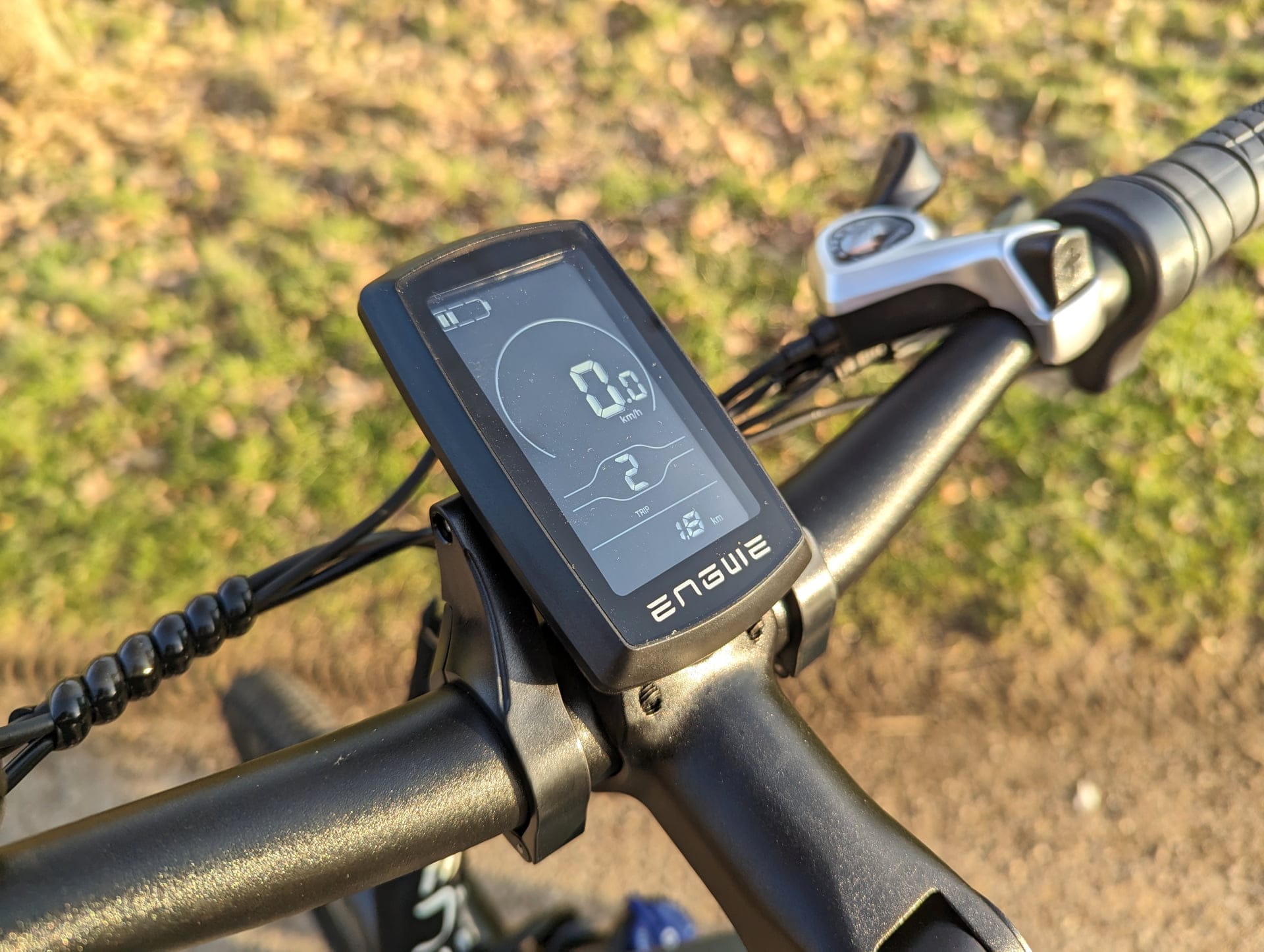
To the right of the display is the gear shift lever. It uses a Shimano Tourney 7-speed gearbox, which is commonly found on affordable Chinese e-bikes.
The same applies to the brake levers. The WUXING brake levers used here have come across my radar several times during various e-bike tests. They are made of metal and barely meet the quality expectations for a 1000 Euro e-bike. Those who like to tinker will however replace the parts very quickly.
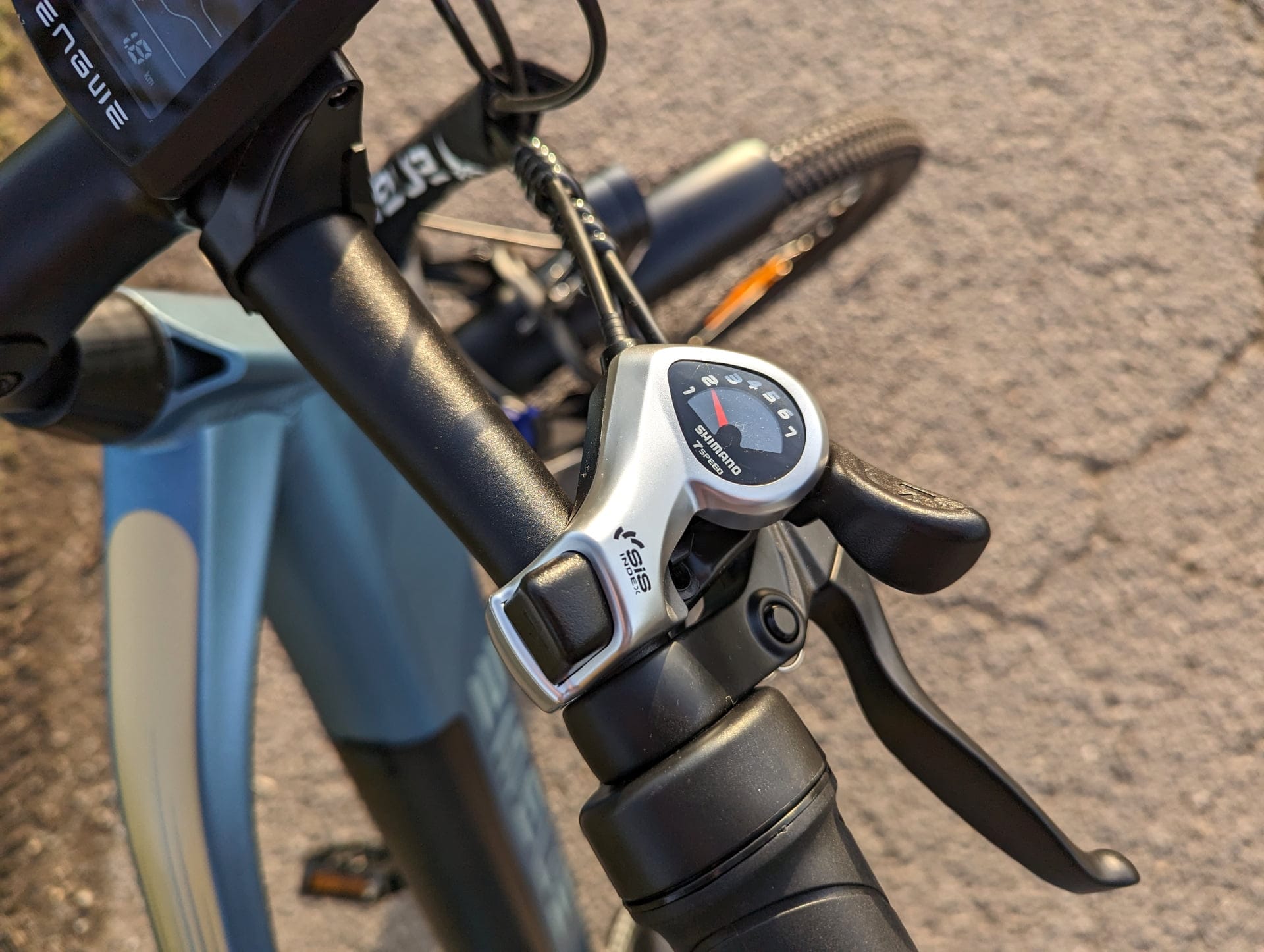
Incidentally, ENGWE has not done without the throttle lever, as the e-bike is also sold outside the EU. However, if you order the ENGWE P26 as the EU version, the throttle lever is deactivated. Instructions on how to unlock it can be found on the manufacturer's product page.
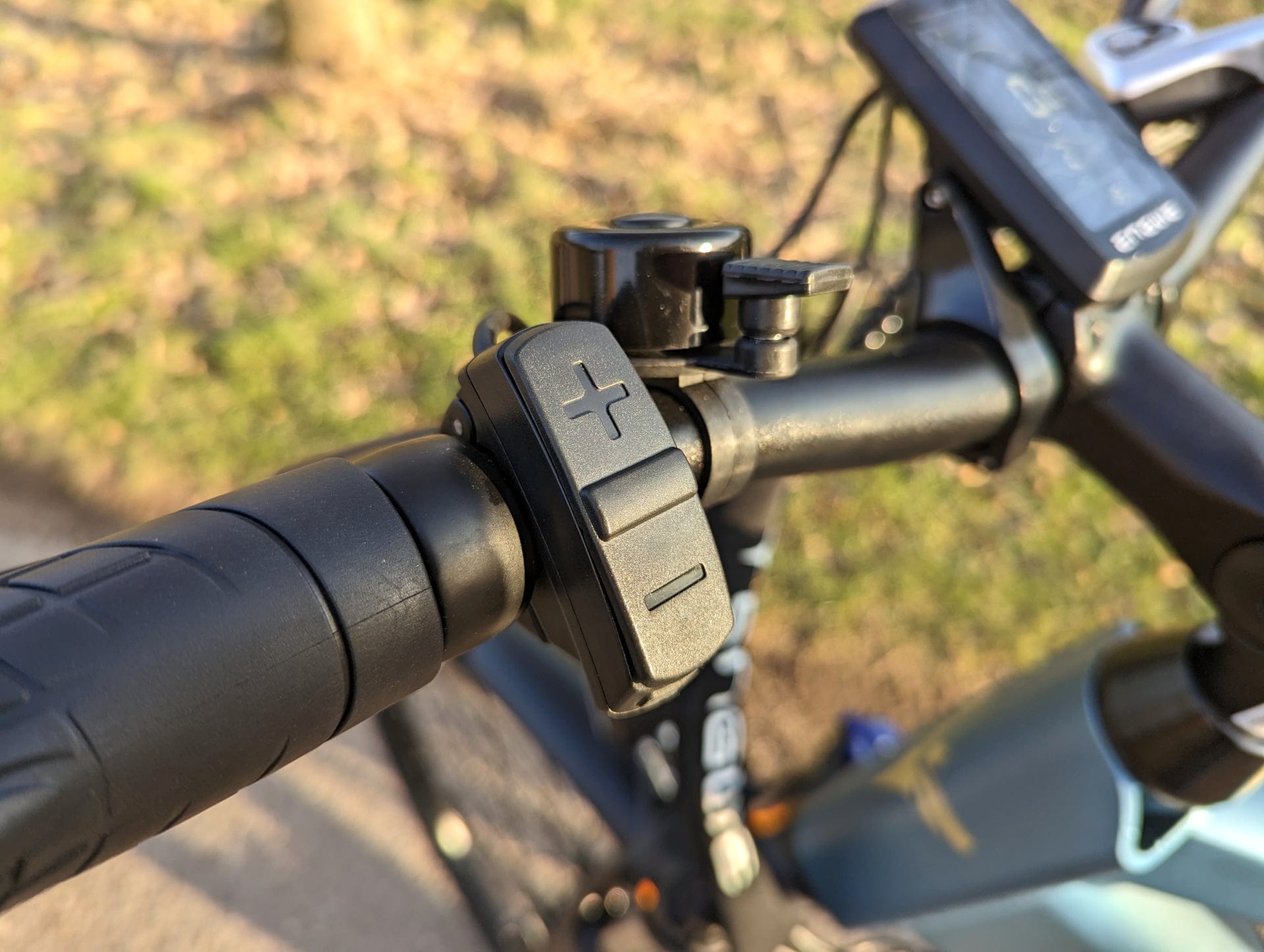
By the way, the bell and the control unit, which allow you to switch on the e-bike and adjust the support level, are located on the left handlebar.
The 250-watt electric motor of the ENGWE P26 is located in the rear wheel hub. It requires a voltage of 36V and has a torque of 40 Nm. In general, hub motors are robust and require minimal maintenance.

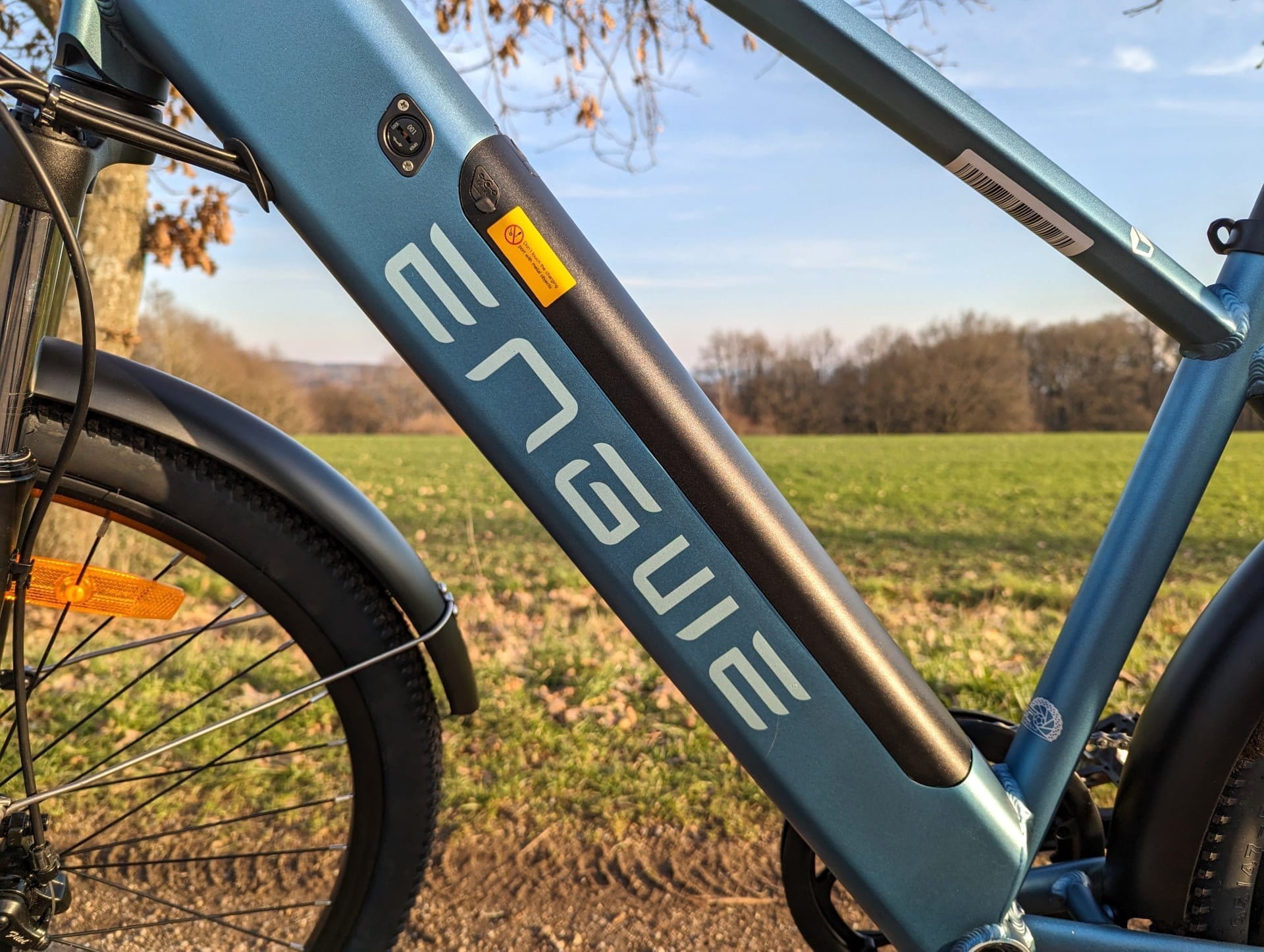
ENGWE has integrated the removable 36V 17Ah battery into the frame tube. This means the frame design is barely disturbed, and the battery is also protected from external influences. The battery is locked with a lock. The battery level can be checked at the press of a button directly on the battery.

(Almost) all bicycle reflectors required by the StVZO are present. The LED headlight with reflector is at the front. At the rear, on the luggage rack, is the tail light, also with a reflector and illumination. The pedals, which are made of metal here, have yellow reflectors on the front and back.
The ENGWE P26 only has one reflector in the spokes per wheel. However, the StVZO requires two reflectors per wheel unless there are reflective strips on the wheel or spokes. This is an issue that can be quickly resolved.
The manufacturer offers an EU declaration of conformity for download. According to ENGWE, the CE marking, which is still missing, will be supplied later.
There is nothing to criticise about the build quality. Weld seams on the frame are visible, although this is common in this price range. The cables running to the handlebars are held in position and protected by a textile sheath. Overall, the build quality of the ENGWE P26 leaves a solid impression.
ENGWE P26: Practical test
Press the power button on the handlebar and you are ready to go. The electronics of the ENGWE P26 generally work well. The electric motor engages with a slight delay after about one rotation and also reacts with a slight delay when stopping. Compared to other e-bikes in this price range, the behaviour of the ENGWE P26 is by no means unusual, as these often use a sensorless motor. The motor switches off quickly when braking.
A total of 5 support levels control the final speed of the motor, which ends at 15 km/h on level 1 and reaches a maximum speed of 25 km/h on level 5. From here, the motor switches off reliably. Acceleration is pleasantly smooth, independent of the respective support level and the selected gear.
To test the riding behaviour of the ENGWE P26, we went over various road surfaces and field paths. In the city, the e-bike manoeuvres through traffic with good agility. The suspension is acceptable and sufficient for a short detour over field paths. Over rough terrain, however, it becomes quite bumpy and one quickly recognises that the e-bike was designed for flat roads.
The electric drive already reaches its limits on moderate gradients, and even at the highest assistance level, you have to pedal hard. The ENGWE P26 cannot compete with more powerful e-bikes, such as the ENGWE EP-2 Pro.
Although the cheap Shimano Tourney derailleur is usually not highly regarded, it functioned reliably during the ENGWE P26 test. It shifted cleanly from 1st to 7th gear, without any issues occurring during the ride.

Thanks to the high gearing, the ENGWE P26 unfolds considerable speed potential, allowing you to achieve considerable speed beyond 25 km/h with pedal power. The mechanical disc brakes grip well even when wet and bring the e-bike to a safe stop.
A few words about the range. ENGWE itself states this as up to 100 km. A very optimistic figure, which in reality depends on many individual factors. During the test, a good 60 km was achieved on predominantly flat terrain and with a body weight of 85 kg before the battery had to be plugged in. The charging time is approximately 6 hours.
Our verdict
The ENGWE P26 is well-built and offers good ergonomics thanks to its variable stem. The metal mudguards are high quality, and a suitable luggage rack is pre-installed.
The ENGWE P26 is primarily designed for flat roads. The 250-watt motor quickly runs out of steam on inclines. In line with EU regulations, the electric motor switches off at a top speed of 25 km/h. Due to the high gear ratio, it then continues under pedal power.
ENGWE states the battery range as up to 100 km. In my opinion, this is an overly optimistic value, so you should rather expect a range of around 60 km.
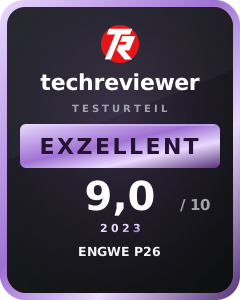
Overall, the ENGWE P26 is a very well-equipped city e-bike at a fair price.
Specifications
Motor
- Type
- Brushless
- Performance
- 250W
- Torque
- 40 Nm
- Speed
- up to 25 km/h
Battery
- Type
- Lithium-ion
- Tension
- 36 V
- Charge
- 17Ah
- Energy
- 612 Wh
- Range
- 65 - 80 km
- Charging time
- ~5-7 hours
Features
- Gears
- 7 (Shimano Tourney)
- Operating modes
- Manual, e-bike, (throttle when unlocked)
- Tires
- 26" x 1,95"
- Brakes
- Mechanical disc brakes
- Computers
- Yes
- Splash protection
- Yes
- Suspension
- Yes (suspension fork)
General
- Material
- Aluminium 6061
- Load capacity
- 150 kg
- Size
- 173 x 55 x 112 cm
- Weight
- 26.2 kg
Price comparison
| Store | Price | Link |
|---|---|---|
| Geekbuying | 1.049,00 € | Go to store |
| Geekmaxi | 1.049,00 € | Go to store |
Comments (1)
Thank you very much for your informative test. I received the e-bike a few days ago. Initially, I was sceptical because the price for an e-bike was set quite low and I had not previously heard of the manufacturer.
My first impression is, however, more than positive. The bike is very well made, the frame size is perfect, and it rides very well after a short test ride, as far as I can judge so far. I will look into it in more detail this weekend.