Contents
Essential Phone
2K edge-to-edge display
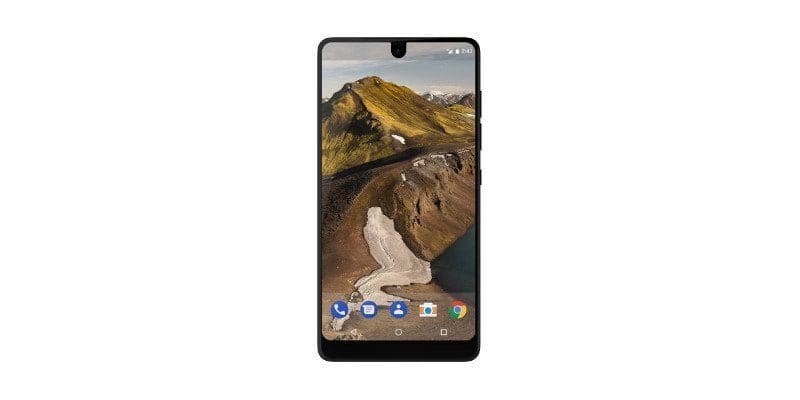
The fact that the Essential Phone features an edge-to-edge display was already apparent from the initial teasers. Since today, it is known that the smartphone will have a high-resolution 2K (2560 x 1312) LTPS display, achieving a screen diagonal of 5.73 inches with a chassis size of just 141.5 x 71.1 x 7.8 mm. Thus, the smartphone is even more compact than conventional devices with a 5-inch screen diagonal! Particularly prominent visually is the small cutout for the front camera, which is located above the display on the Essential Phone and is literally surrounded by it. With a brightness of 500 nits, the display shines above average brightness and should remain clearly readable even in strong sunlight. The contrast ratio is a typical 1:1000. The display is protected by Corning Gorilla Glass 5.
Snapdragon 835 and 4GB RAM
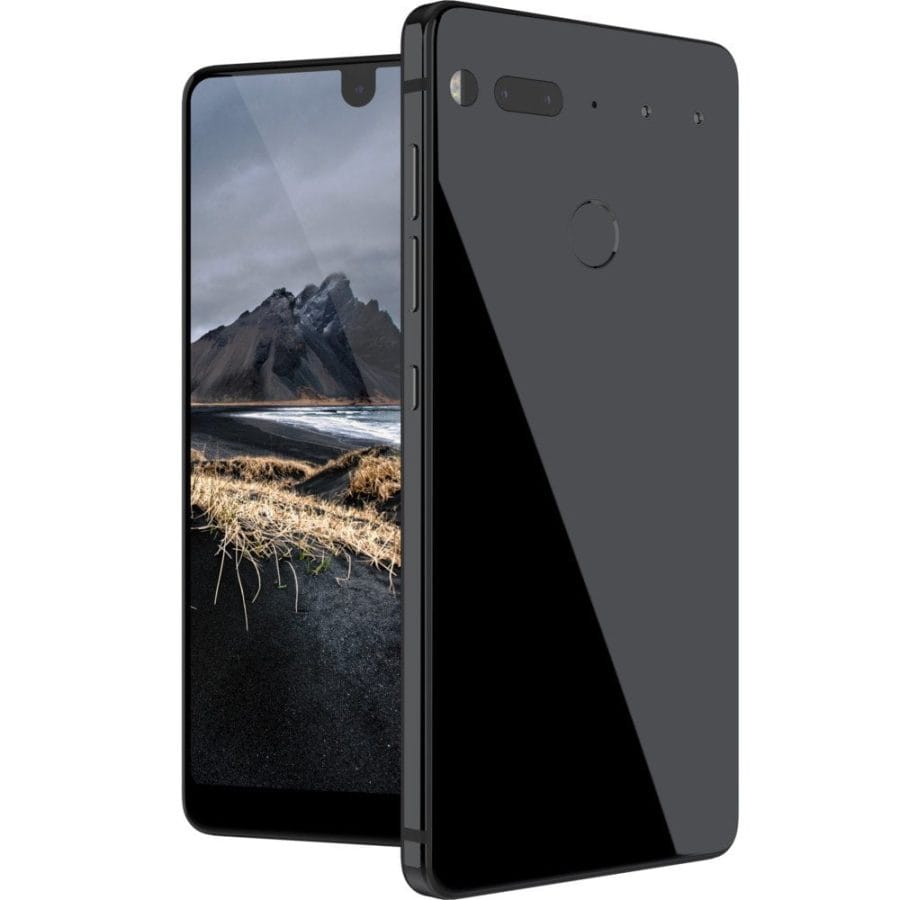
As is proper for a high-end smartphone, the Essential Phone is equipped with Qualcomm's current Snapdragon 835 processor. This octa-core processor, manufactured using a 10nm process, is among the most powerful smartphone processors currently on the market and is also used in the international model of the Samsung Galaxy S8. It is supported by 4GB of RAM, which will ensure smooth multitasking. For internal storage, Essential relies on 128GB of UFS 2.1 storage. A storage expansion is not provided.
Connectivity
The smartphone supports all common network standards, up to and including LTE. Naturally, the device is also equipped for the LTE bands common locally. At the same time, 4 microphones ensure the best possible call quality. What is not supported, however, is the use of two SIM cards. The slot holds only one nano-SIM here. The built-in Wi-Fi module supports Dual-Band AC and also the new MU-MIMO. Bluetooth is supported up to the new Standard 5.0 LE, which is characterised primarily by higher data rates and improved range. The Essential Phone uses GPS and GLONASS for positioning. Whether the smartphone works with Beidou and Galileo is unknown. The physical connection option is limited to a USB-C socket. Following the trend, the device has no 3.5 mm headphone jack!
The sensor suite is comparable to other flagship models. In addition to the typical brightness sensor, proximity sensor, gyroscope and accelerometer, there is also a barometer and a magnetometer. A fingerprint scanner is located on the back of the housing. NFC is available.
Cameras
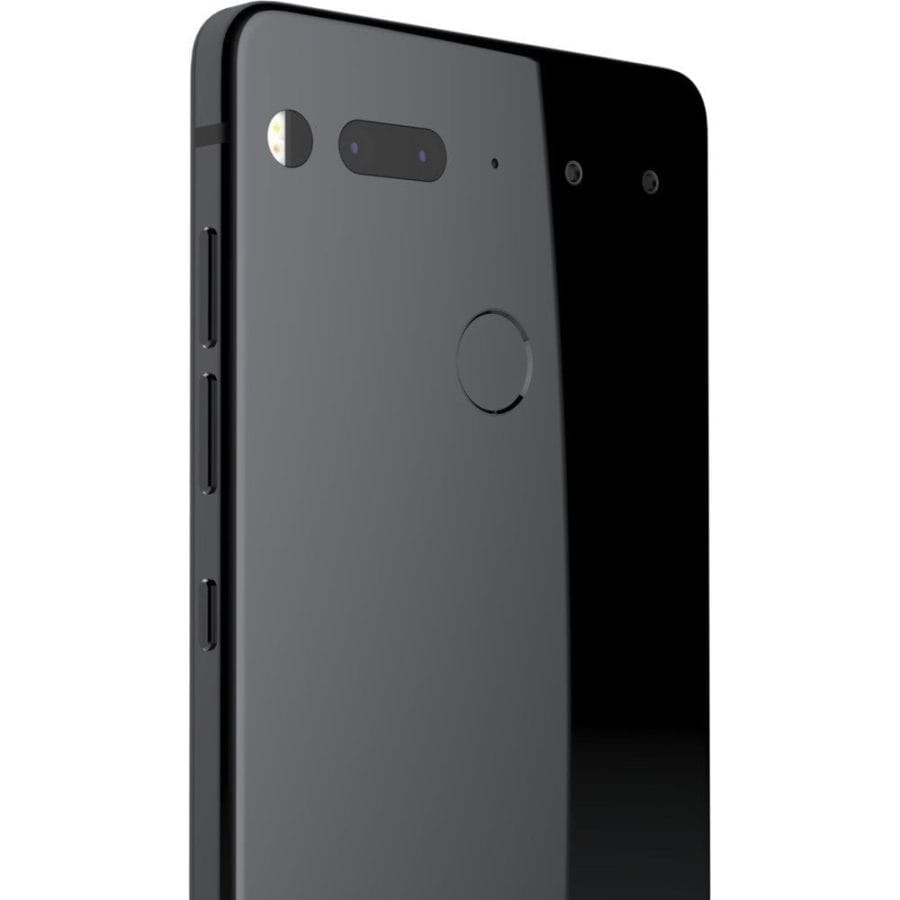
The Essential Phone has a dual main camera consisting of a 13 megapixel RGB colour sensor and another monochrome 13 megapixel sensor. Essential provides no information about the sensors used. It is known that the main camera has an aperture of f/1.85, it will feature a hybrid autofocus consisting of PDAF, IRAF and contrast AF, and that the main camera will be capable of recording 4K videos at 30 frames per second. Whether optical image stabilisation is included is also not yet known. The front camera uses an 8 megapixel image sensor of unknown origin. The aperture is f/2.20. The front camera is also capable of recording high-resolution 4K videos.
Titanium housing, battery and accessories
A titanium housing frame and a ceramic back panel ensure an appealing design. Unlike most aluminium housings on other smartphones, Essential promises higher impact and shatter resistance from this housing. The battery has a capacity of 3040 mAh and can be recharged very quickly using an unspecified fast-charging feature. The accessories announced so far include a wireless charging dock and a detachable 360° camera.
Price and availability
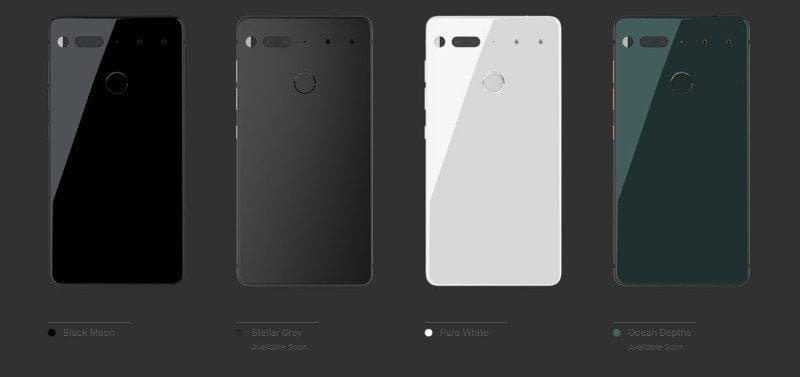
The manufacturer has not yet announced when the Essential Phone will appear. A release is likely expected in the coming months. Those who do not wish to wait any longer can already pre-order the smartphone via the official homepage. The smartphone is available in a total of 4 colours and costs $699 (approx. 626€). As a limited-time offer, the smartphone is available as a set with the 360° camera for $749 (approx. 670€). As soon as we hear more about the Essential Phone or even get our hands on a test unit, news and the review will follow at this point!
More at: essential.com
Specifications
Processor and memory
- CPU
- Qualcomm Snapdragon 835
- GPU
- Adreno 540
- RAM
- 4 GB
- Internal storage
- 128 GB UFS 2.1
- Storage expansion
- No
Display
- Display type
- CGS / LTPS
- Display glass
- Corning Gorilla Glass 5
- Display size
- 5.71 inches
- Display resolution
- 2560 x 1312 QHD
- Luminance
- 500 nits
- Contrast ratio
- 1:1000
- Multitouch
- 10 fingers
Cameras
- Main camera
- 2x 13 megapixels (RGB + monochrome)
- *Aperture
- f/1.85
- *Hybrid AF
- *LED flash
- Front camera
- 8 megapixels
Wireless
- Wi-Fi
- 802.11a/b/g/n/ac MU-MIMO
- Bluetooth
- 5.0 LE
- GPS
- Yes
Sensors
- *Brightness sensor
- *Proximity sensor
- *Gyroscope
- *Accelerometer
- *Magnetometer
- *Barometer
Mains
- UMTS/HSPA+
- 1, 2, 4, 5 6, 8
- GSM
- 850, 900, 1800, 1900 MHz
- CDMA EV-DO Rev. A
- 0, 1, 10
- FDD-LTE
- 1, 2, 3, 4, 5, 7, 8, 11, 12, 13, 17, 20, 21, 25, 26, 28, 29, 30, 66
- TDD-LTE
- 38, 39, 40, 41, 42, 43
- TD-SCDMA
- 34, 39
Battery
- Battery
- 3,040 mAh
- Quick-Charge
- Yes
- Connection
- USB Type-C
Other
- SIM
- 1x Nano
- Fingerprint scanner
- Yes
- NFC
- Yes
- Operating system
- Android
- Size
- 141.5 x 71.1 x 7.8 mm
- Weight
- 185g
Comments (2)
features similar to the S8 but much cheaper. Sounds good so far. Now please add stock Android and a good camera, and I would seriously consider whether this won't be my next one.
Not only narrower bezels than the Samsung, the total display area is also larger (display ratio 19:10 vs 18.5:5) and I personally find the aspect ratio itself more charming (I simply find an aspect ratio of over 2:1 too narrow)
Incidentally, am I the only one who feels that manufacturers make the aspect ratio so extreme just so they can advertise a larger diagonal? Example Galaxy S8: With the classic 16:10 aspect ratio, the display area would be 14.3% larger with the same diagonal. I find that enough to not just round it down.
Keep an eye out for that ^^