Contents
Foreword: Google Pixel 3
When Google introduced the two new Pixel smartphones on 9 October, many fans of the smartphone series were greatly disappointed. The notch, arguably the most controversial design feature of 2018, made its way onto the Google Pixel 3 XL. Google even went a step further, giving the XL smartphone not a subtle notch, but an oversized one that extends far into the display.
The high price level of the new Pixel generation also causes incomprehension. The starting prices are 849€ for a Pixel 3 and 949€ for a Pixel 3 XL! The following test deals with the Google Pixel 3.
Design, build quality, and included accessories
Design
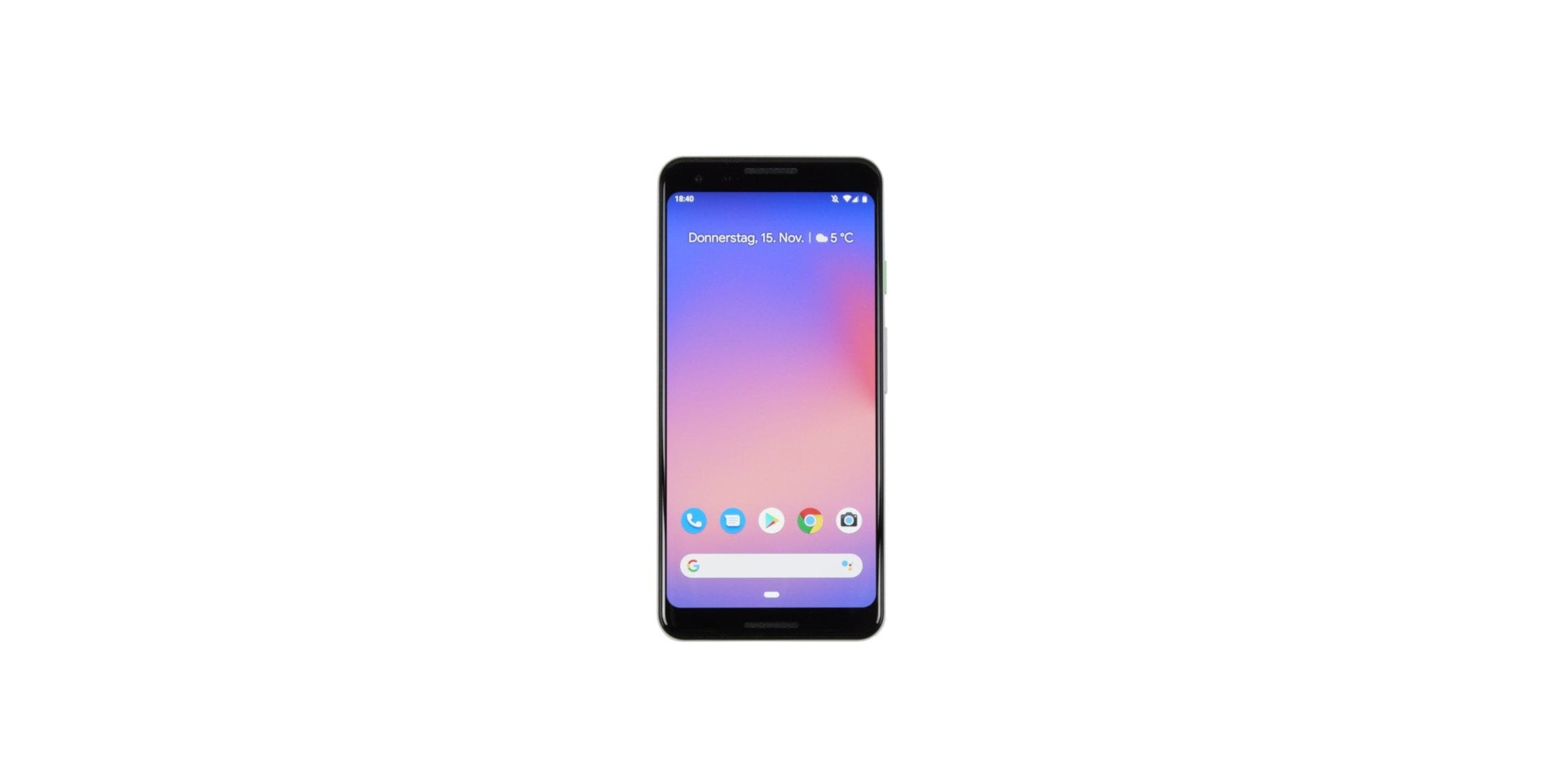
The Google Pixel 3 is an extremely compact smartphone that largely adheres to the design of its predecessor. The dimensions are just 145.6 x 68.2 x 7.9 mm, with a weight of only 148g.
The Pixel 3 is structured as follows:
Although the housing dimensions of the Pixel 3 are very similar to those of its predecessor, the screen diagonal has grown from 5 inches to an impressive 5.5 inches. This is made possible by the significantly reduced screen frame (bezel) at the top and bottom. The visibly rounded display corners are striking, although these are only generated by masking individual pixels on the software side. We do not need to worry about a notch on the Pixel 3. To the delight of notch critics, it did not make it onto the small Pixel smartphone.
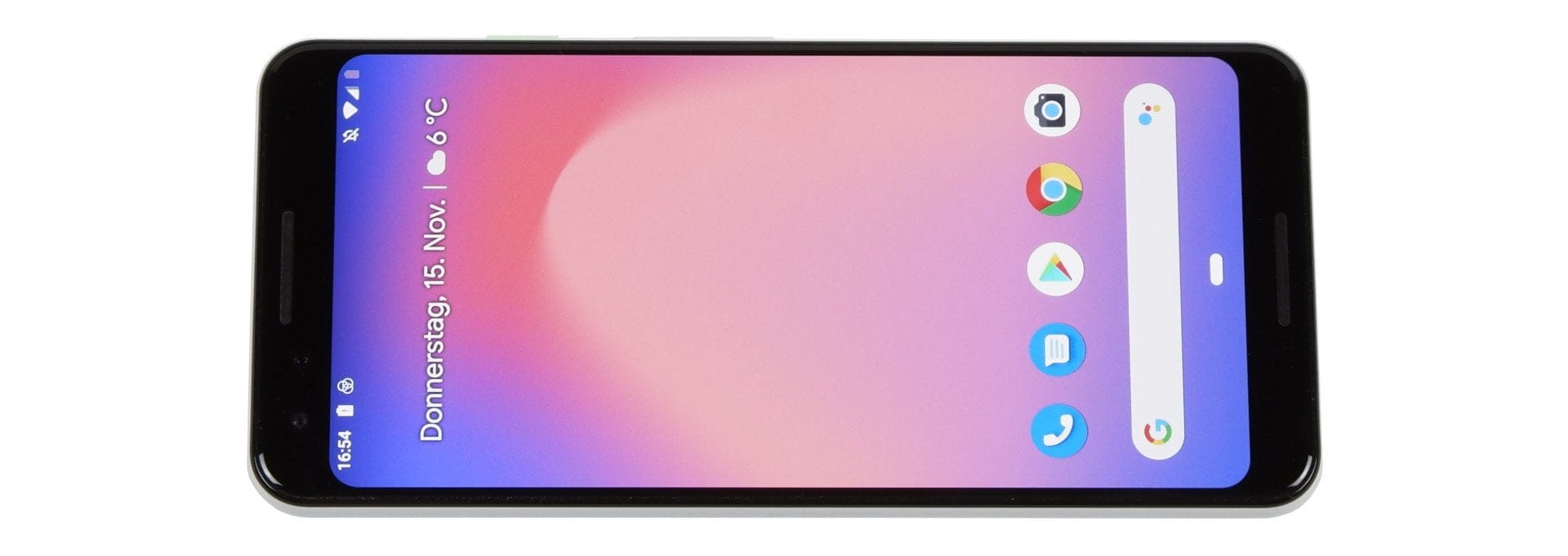
Above the display is the earpiece, which simultaneously acts as the front loudspeaker. In parallel, there is another loudspeaker below the display in the same design. Further design features of the front side are the two 8-megapixel front cameras with wide-angle and telephoto lenses, as well as the proximity and ambient light sensors. There is no notification LED. Instead, missed calls and other notifications are displayed directly on the Always-On Display.
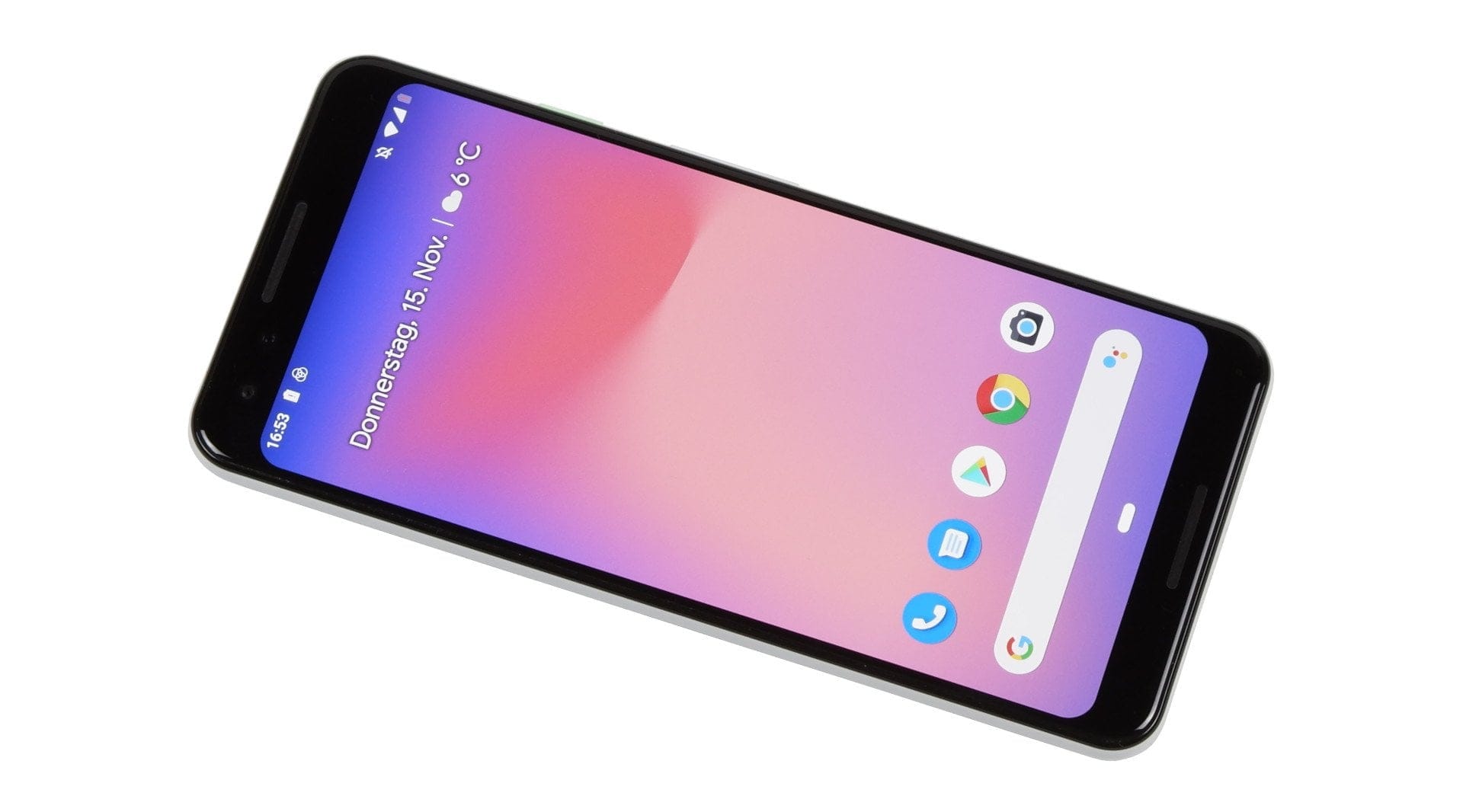
The smartphone is available in “Just Black", “Clearly White" and “Not Pink". The frame is made of aluminium. On the right is the power button with the volume rocker below it. A distinctive design feature of the Pixel 3 is the coloured accent on the power button in mint green (Clearly White) or orange (Not Pink). The nano-SIM slot (single SIM) is located within the bottom frame, to the left of the USB-C port (USB 3.1). According to IP68 protection rating, the smartphone is dustproof and protected against prolonged submersion.
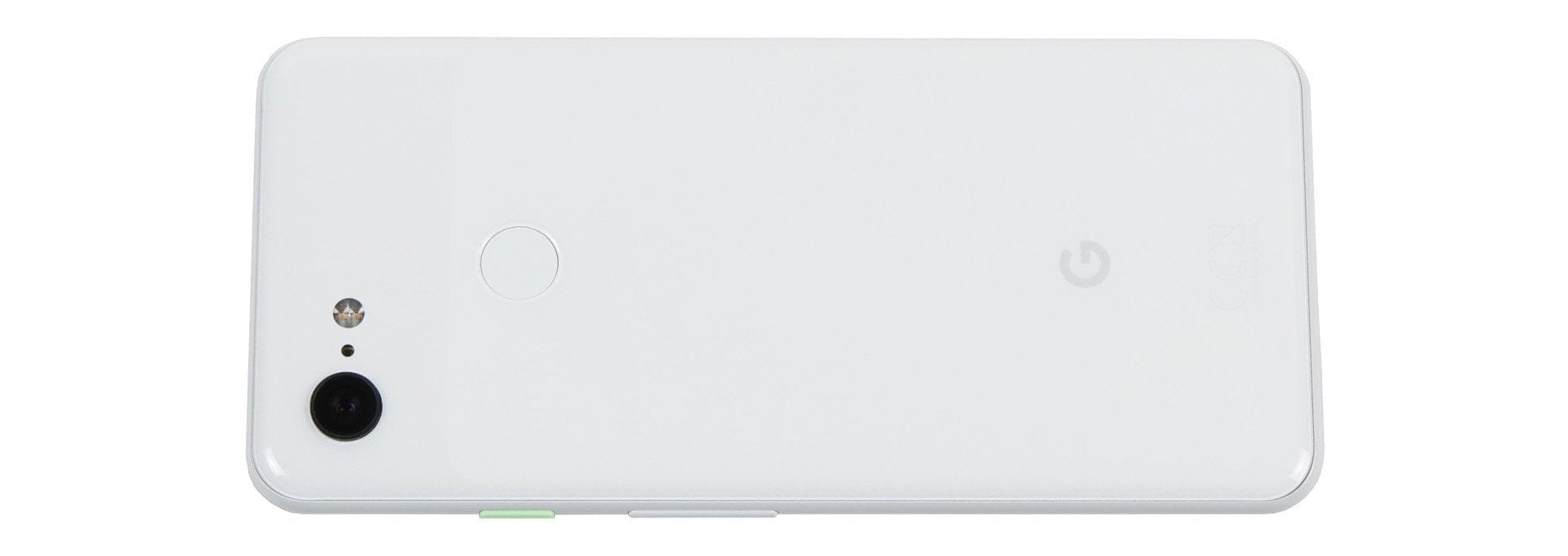
The back of the Pixel 3 is made of toughened Corning Gorilla Glass 5. This is not only scratch-resistant but also particularly shatter-resistant. For better grip, the majority of the back is fitted with a matte coating. Since the coating lies on top of the Gorilla Glass, the glass itself is not protected from scratches. Keys and other items carried with you can definitely scratch the coating! A small cutout above the fingerprint scanner is left without coating. This surrounds the main camera, the spectral and flicker sensor next to it, and the LED flash.
Build quality
The build quality of the Pixel 3 is impeccable. The smartphone is cleanly assembled without unsightly gaps. The SIM slot closes flush and the control buttons sit firmly in the casing with a good pressure point.
What’s included
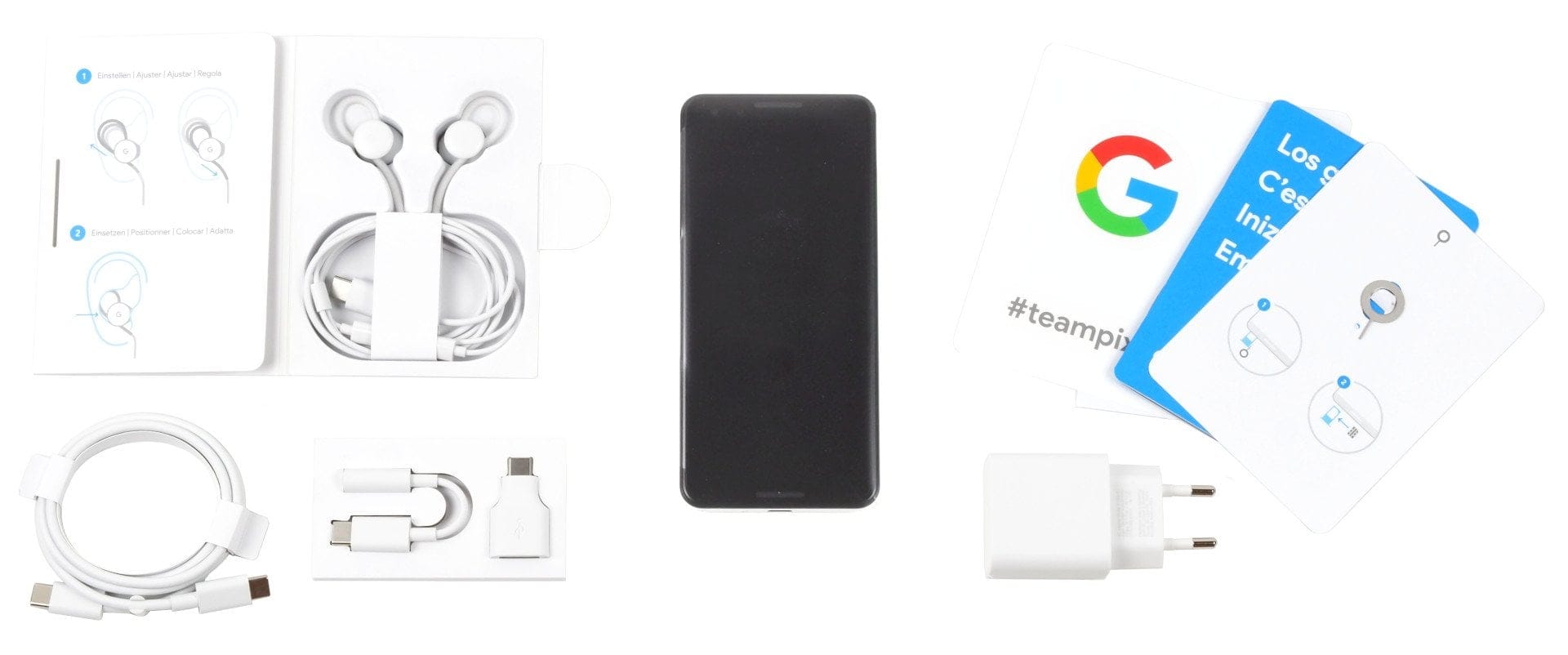
The included accessories are generous and comprise, in addition to the smartphone, a quick-switch adapter from USB Type-A (female) to USB Type-C (male), a USB-C to USB-C charging and data cable, a Pixel USB-C headphone, a USB-C to 3.5 mm jack headphone adapter, a SIM ejector tool, stickers and a quick guide. Suitable protective cases and screen protectors are available as optional accessories.
Display
The Google Pixel 3 features a 5.5-inch POLED display. The display resolution is 2160 x 1080 pixels. This results in a pixel density of 443 PPI and an aspect ratio of 18:9. The POLED panel is manufactured by LG.
Display settings and features
Within the display settings, brightness can be adjusted manually, and there is an adaptive brightness mode that automatically adjusts brightness to ambient light. A Night Light mode filters blue light, which is considered particularly disruptive to sleep. This mode can be activated manually or on a schedule. For color adjustment, three color profiles are available. There is a "Natural" color mode, a "Vivid" mode for slightly more saturated colors, and an "Adaptive" color mode that presents colors especially rich and vibrant.
Further adjustment options are available for font size, display orientation, background, display size, screensaver and inactive display.
Display measurement
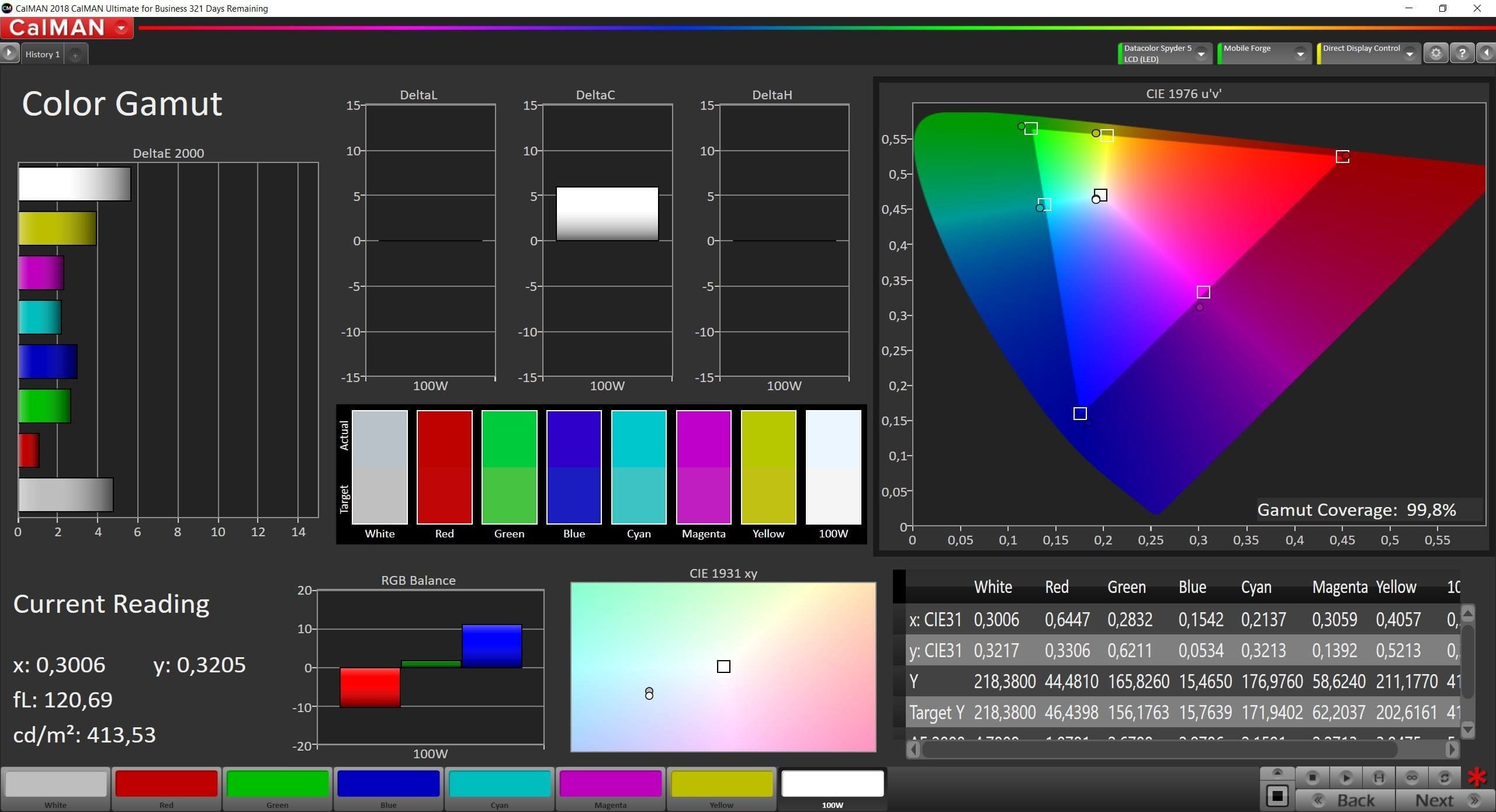
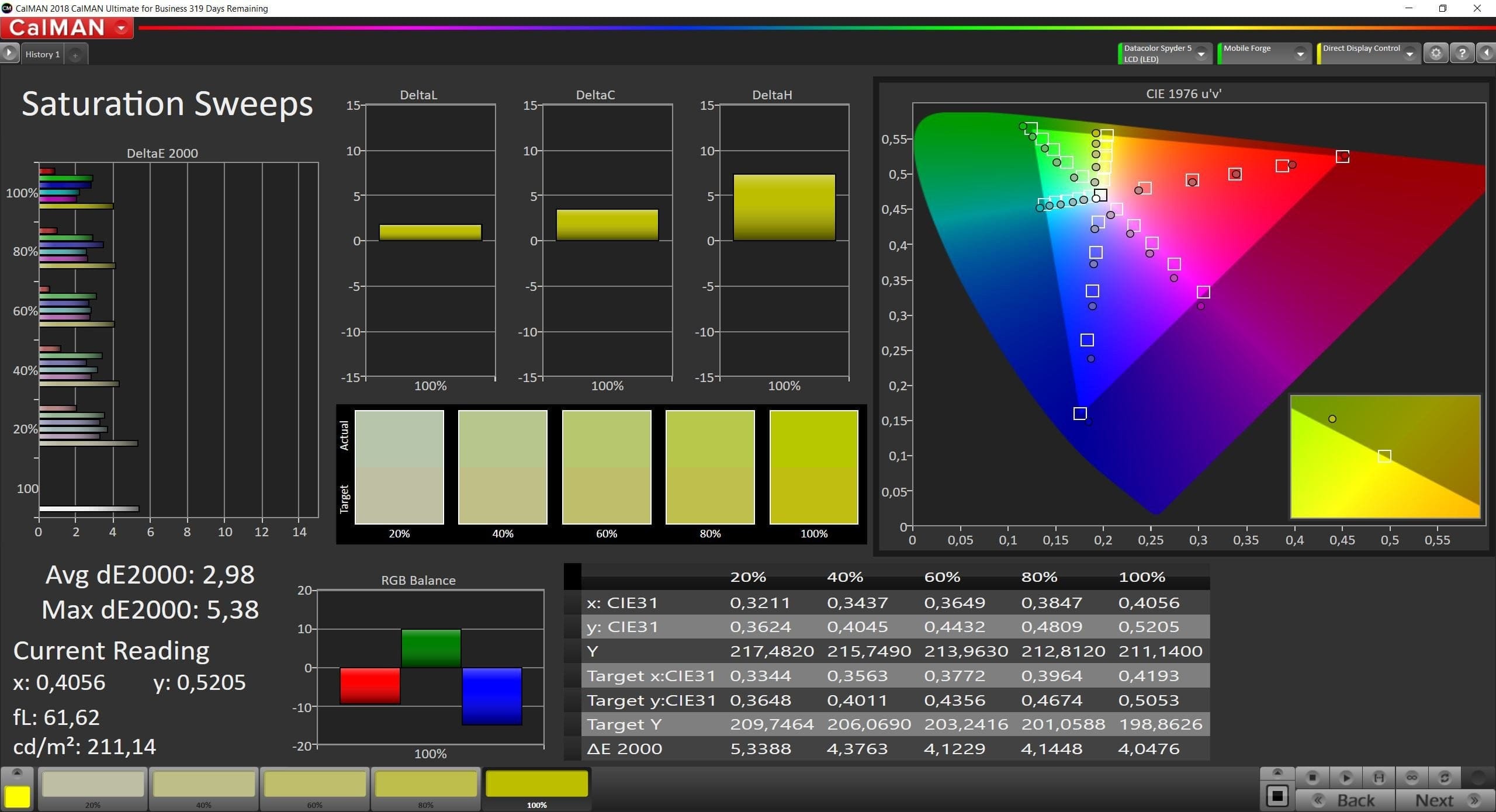
Display measurements were taken using a Spyder5 colorimeter and CalMAN analysis software. The measurements revealed a maximum brightness of 428 cd/m² and a minimum brightness of 3 cd/m². The measured black level is, as expected, 0 cd/m² (0 lux), which is thanks to POLED display technology. A POLED display does not require a backlight; instead, each pixel emits light independently. To display black, the pixels simply remain switched off! One of the advantages is a virtually infinite contrast (0 lux).

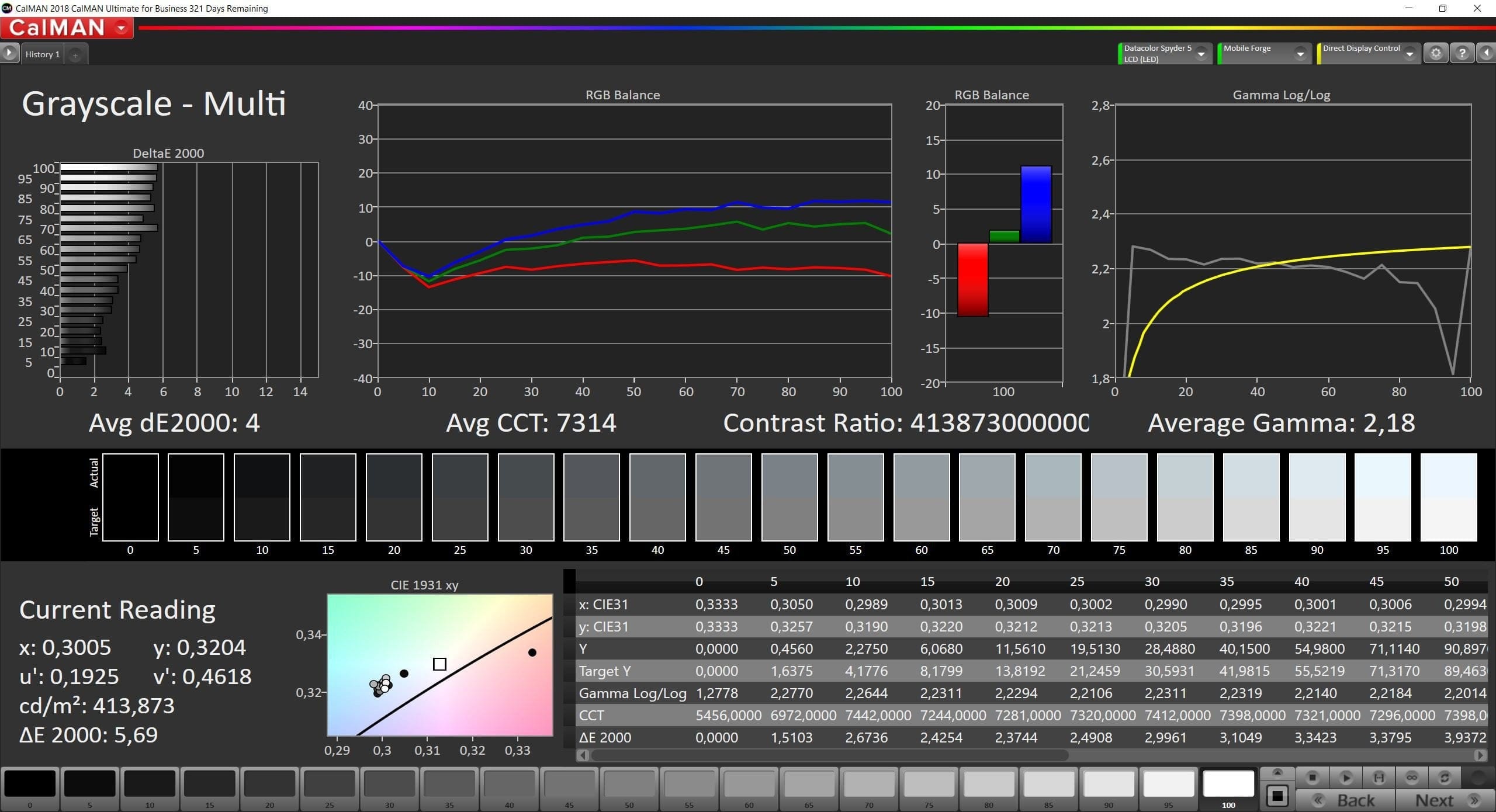
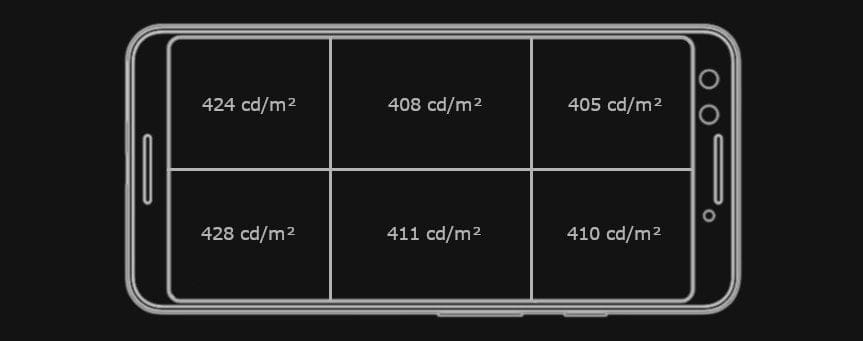
The display backlighting is largely uniform, without visible irregularities. The luminance deviation is a maximum of 23 cd/m², with the highest brightness at the bottom edge of the display and the lowest at the top edge. The Pixel 3 comes closest to the sRGB color space in Natural Color mode. The average color deviation is a Delta E of 3.3, with a maximum of 5.7. A slightly increased blue tint is visible in the greyscales.
Display in everyday use
In everyday use, the Pixel 3’s display makes a good impression. The three colour profiles offer a suitable colour representation for every taste. Despite a comparatively low brightness, the display remains well readable outdoors, especially in sunlight. Flat viewing angles do not lead to significant colour or brightness distortions. Worth mentioning is the display's dimming capability. With significantly reduced display brightness, the screen is particularly comfortable to read in the dark.
Touchscreen
The touchscreen responds reliably and recognises up to 10 simultaneous inputs. Touches are detected precisely and without input lag. The display surface has a pleasant glide and is particularly scratch- and break-resistant thanks to the Corning Gorilla Glass 5 used.
Performance
Qualcomm Snapdragon 845
Like almost every 2018 high-end smartphone that is not from Samsung or Huawei, the Google Pixel 3 also uses the powerful Qualcomm Snapdragon 845 system-on-chip. The CPU consists of 8 Kryo 385 processor cores, which are in turn divided into a performance cluster and an energy-saving cluster. The Snapdragon 845 in the Pixel 3 does not exploit its maximum possible clock speed. Google lowered the clock speed of the performance cluster from 2.8 to 2.5 GHz and that of the energy-saving cluster from 1.8 GHz to 1.6 GHz.
The graphics processing unit (GPU) is an Adreno 630 GPU. Regarding memory configuration, Google opted for 4GB LPDDR4X RAM and a choice of 64GB or 128GB UFS2.1 storage. Additional storage expansion via a microSD card is not provided for.
Benchmark
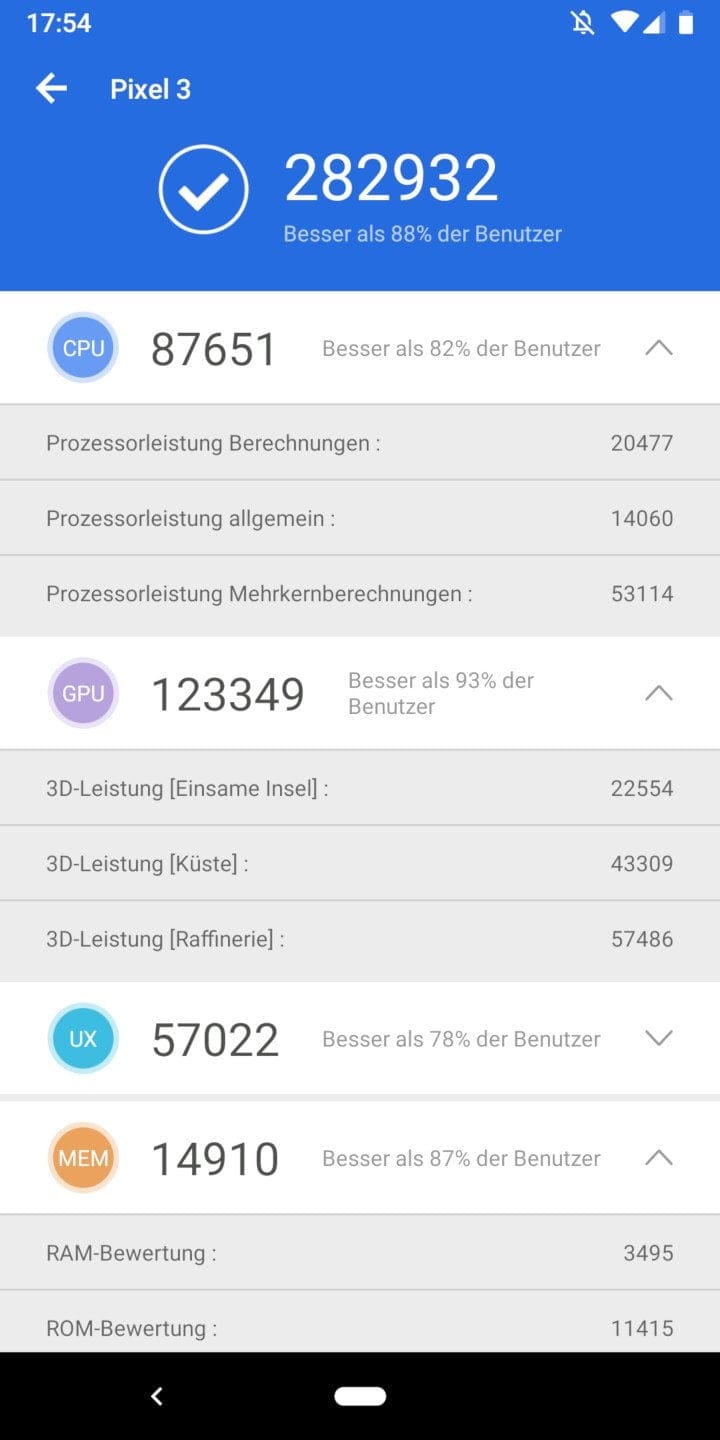
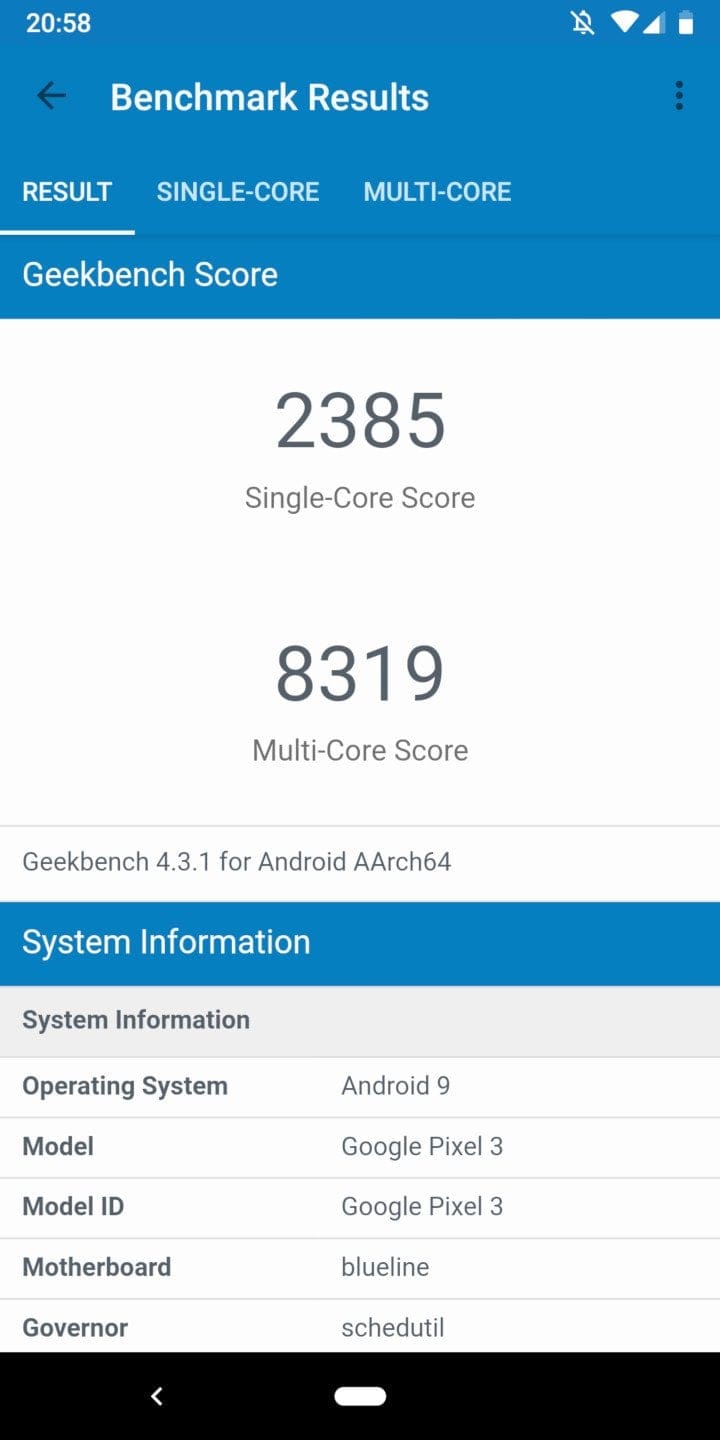
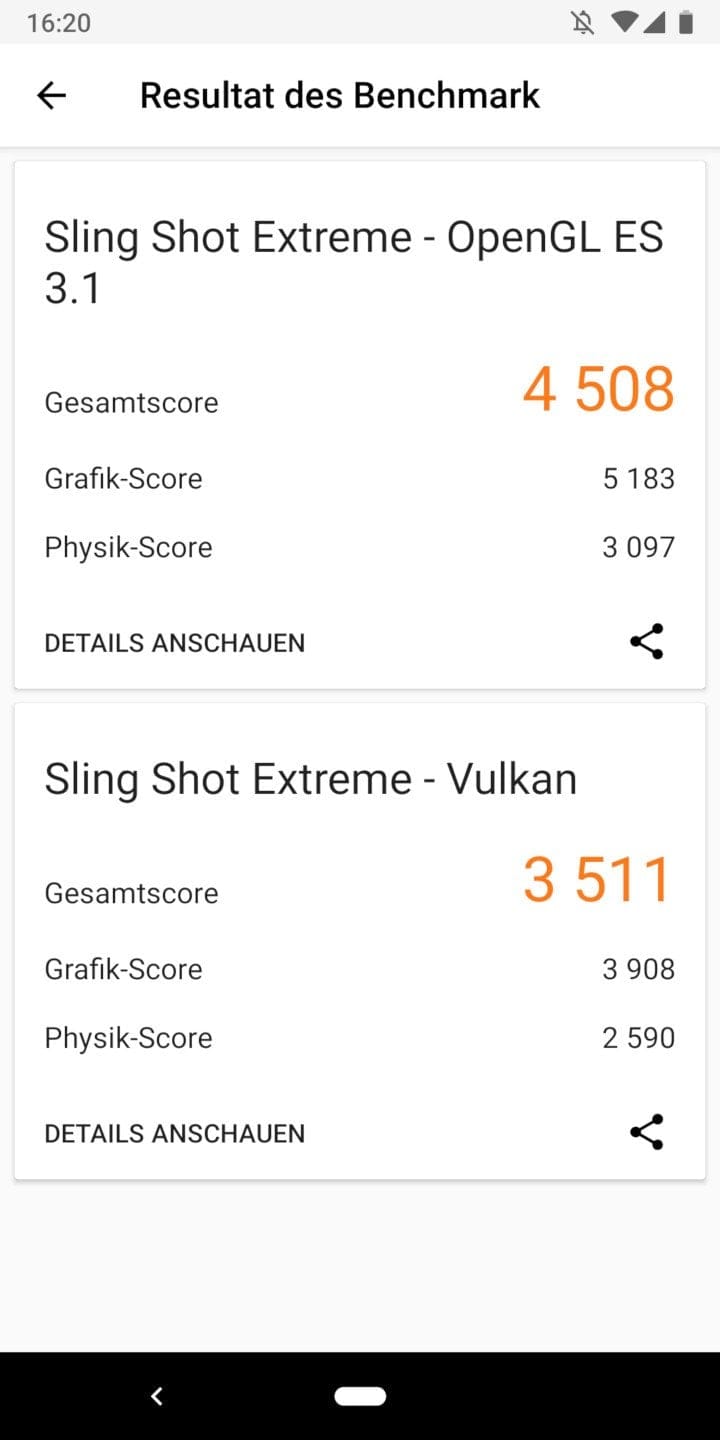
Despite the reduced clock speed, the Pixel 3 performs acceptably in individual benchmarks. In the AnTuTu benchmark, an average of 282,000 points is achieved, meaning the Pixel 3 matches other Snapdragon 845 devices. In Geekbench, too, the smartphone performs only slightly worse in both the single-core and multi-core tests. The measured RAM speed reaches 15,700 MB/s. The write speed of the data storage averages 184 MB/s, while the measured read speed reaches 760 MB/s.
Performance in everyday use
The Google Pixel 3 is up to the task even for complex operations. The hardware’s performance is already evident in the system startup, which takes only a few seconds. The system runs very smoothly and apps open promptly. However, there is one point of criticism. Apps are removed from memory too quickly. The aggressive memory management kicks in after just a few simultaneously opened apps. This is particularly annoying if you have a streaming service running in the background and opening another app stops it. Google is aware of the problem and has already promised a fix.
Gaming
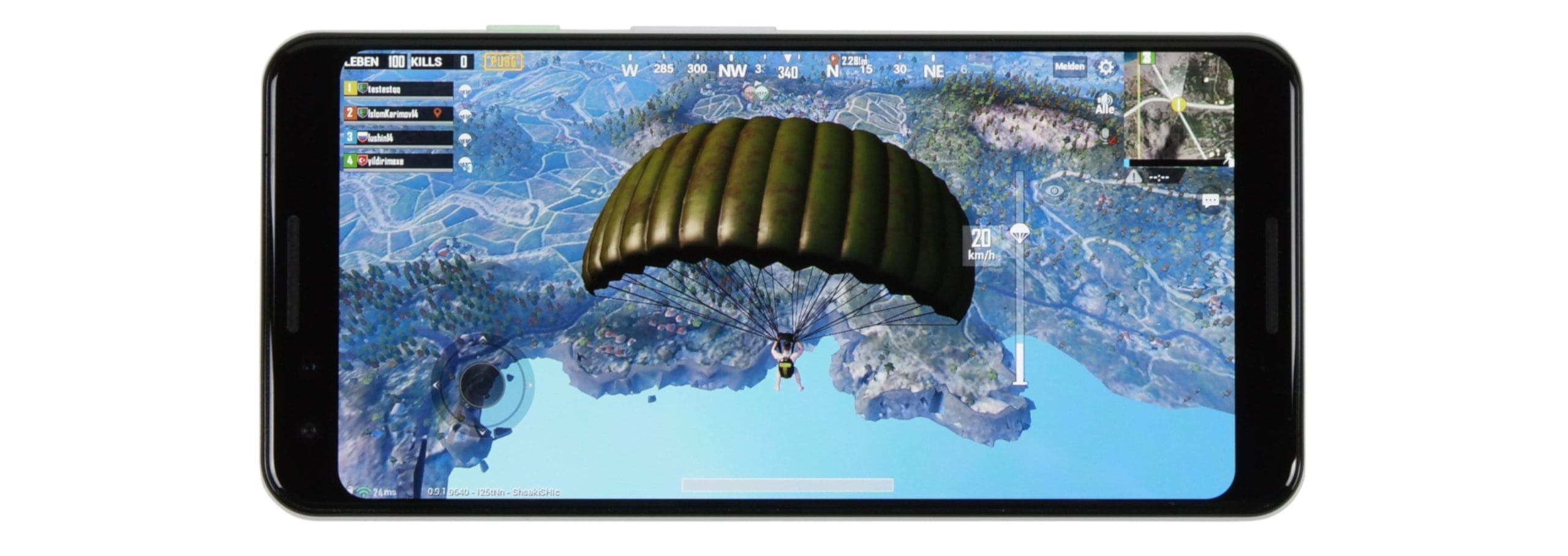
With the Adreno 630 GPU, the Pixel 3 handles all current mobile games with ease. Games like PUBG Mobile are playable at the highest settings without stuttering. So-called thermal throttling does not occur during gaming. The temperature measured under load reaches a maximum of 40°C at the hottest spot.
User interface
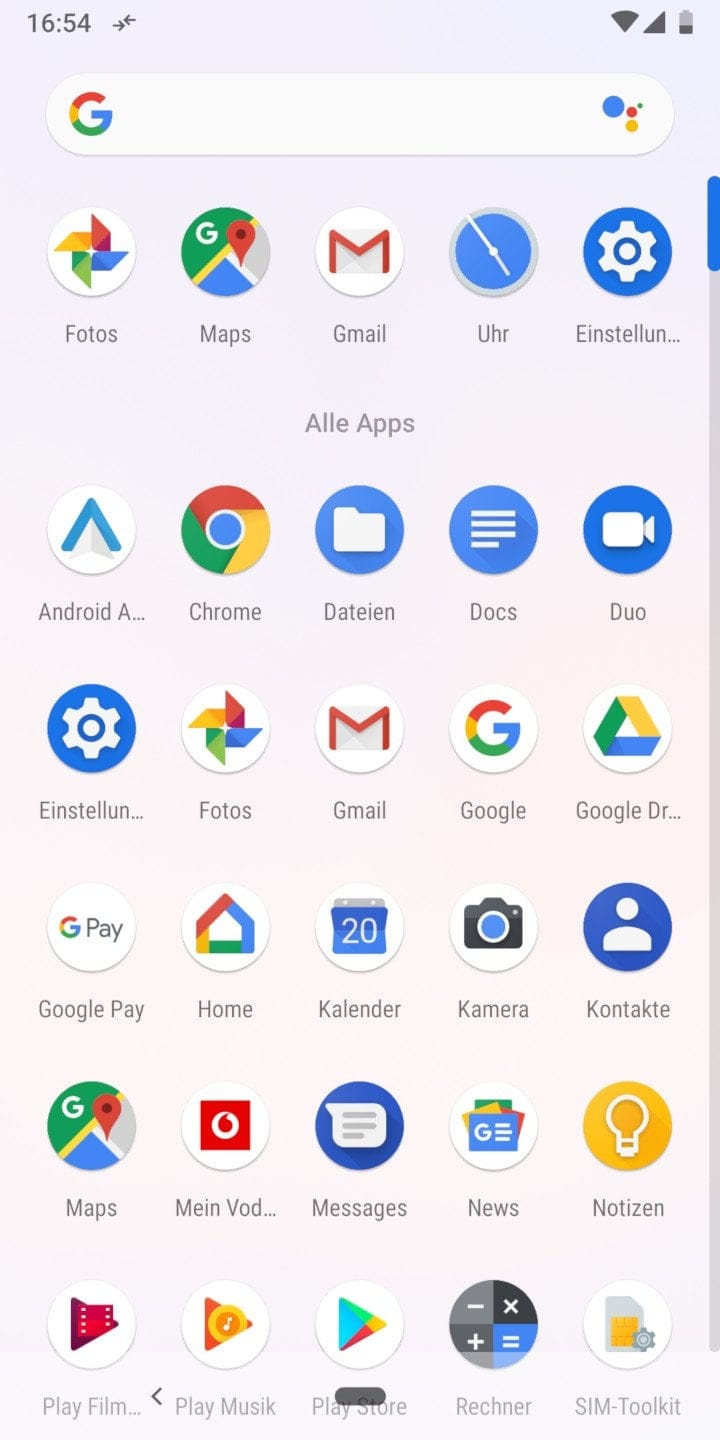
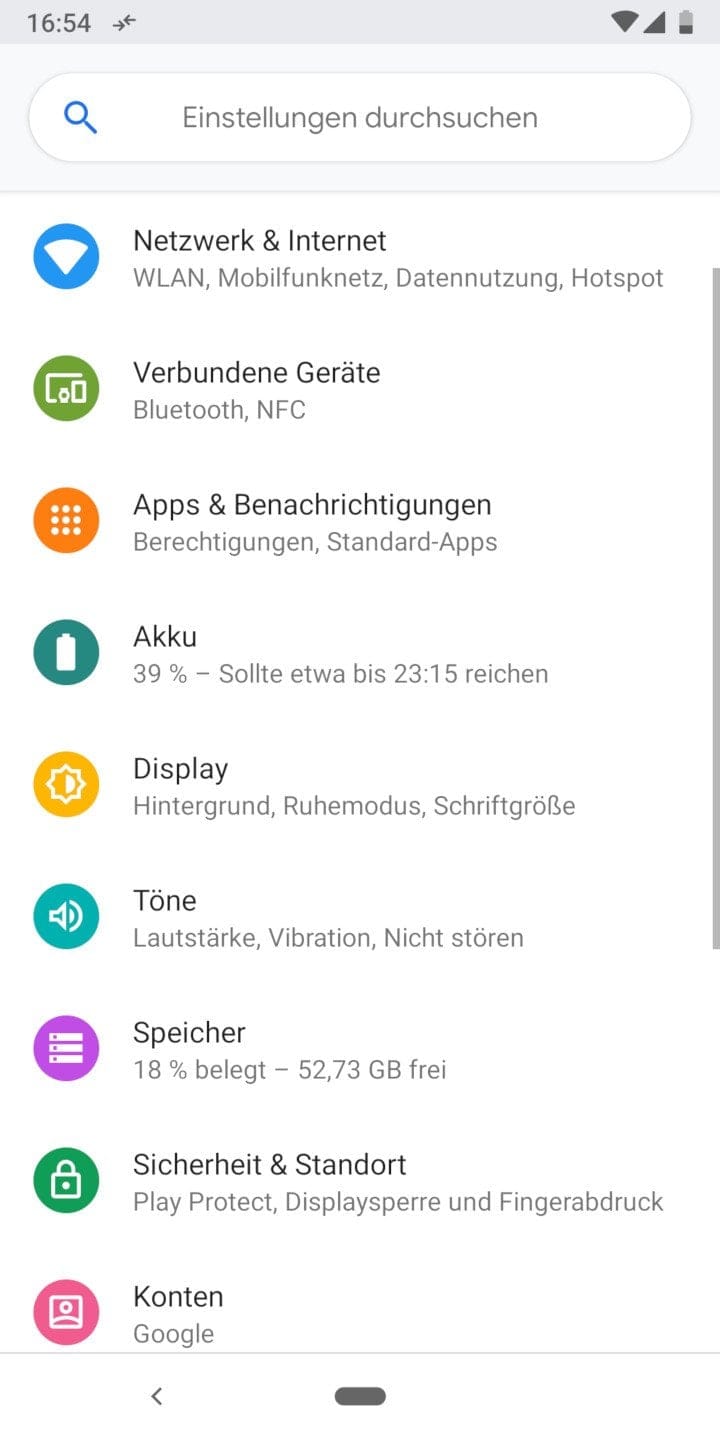
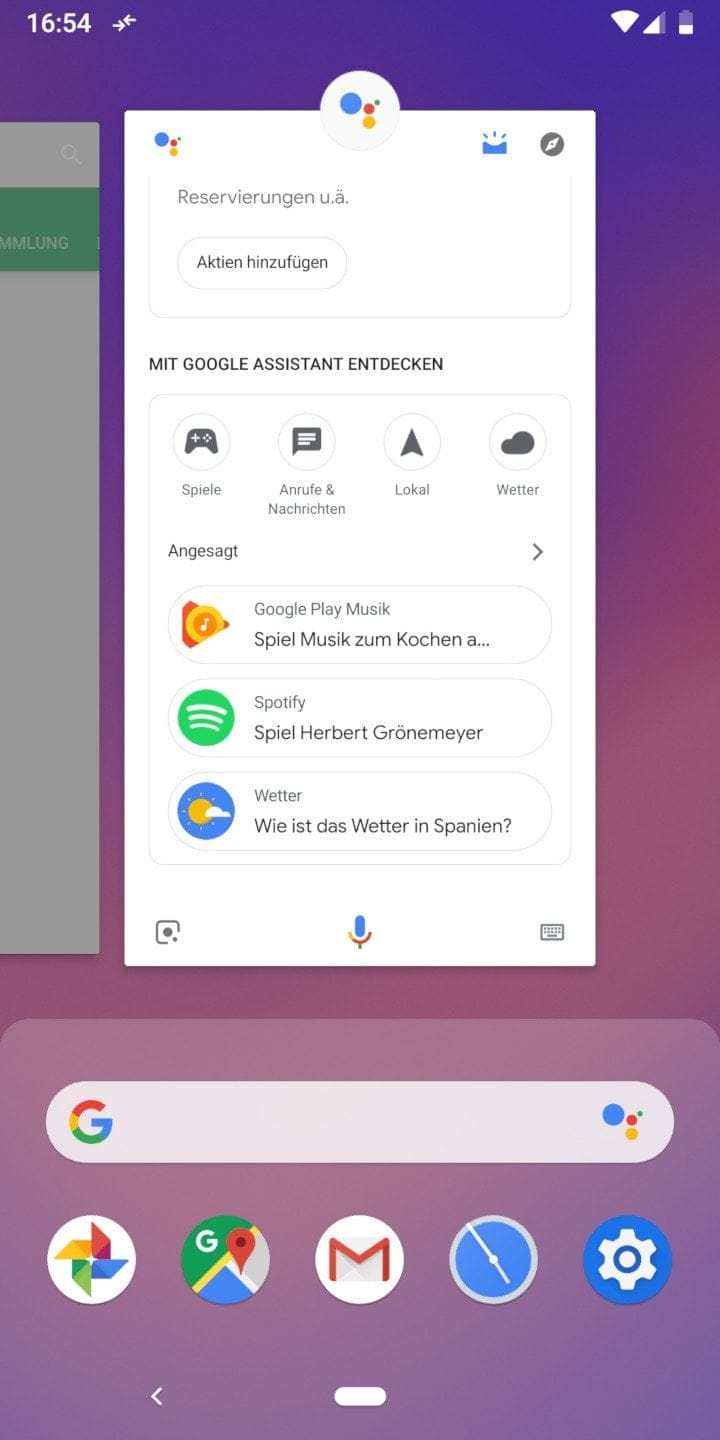
When it comes to new Android versions, Google Pixel smartphones are the first choice. The Google Pixel 3 ships with Android 9.0 Pie. Google guarantees system and security updates until 2021. Annoying third-party apps are nowhere to be found in "Pure Android". The system is clean and tidy.
Camera
The main camera of the Google Pixel 3 smartphone uses a Sony IMX363 image sensor with 12.2 megapixels (1.4 µm per pixel) resolution. This image sensor features an f/1.8 aperture and PDAF + LDAF (autofocus). Footage is stabilised optically (OIS) and electronically (EIS). A dual-LED flash assists the main camera in the dark.
The front camera, on the other hand, uses a rather unknown Sony IMX355 image sensor. One of the sensors is an 8-megapixel sensor with an f/2.2 aperture, 97° wide angle and fixed focus. The other sensor also has an 8-megapixel resolution, uses an f/1.8 aperture, autofocus and a 75° wide angle.
Main camera real-world test
Photo mode
Although the Google Pixel 3 is “only” equipped with a single-sensor main camera, it captures excellent landscape and portrait photos. In photo mode, subjects are rendered in detail, with rich colours and sharpness right to the edges of the image.

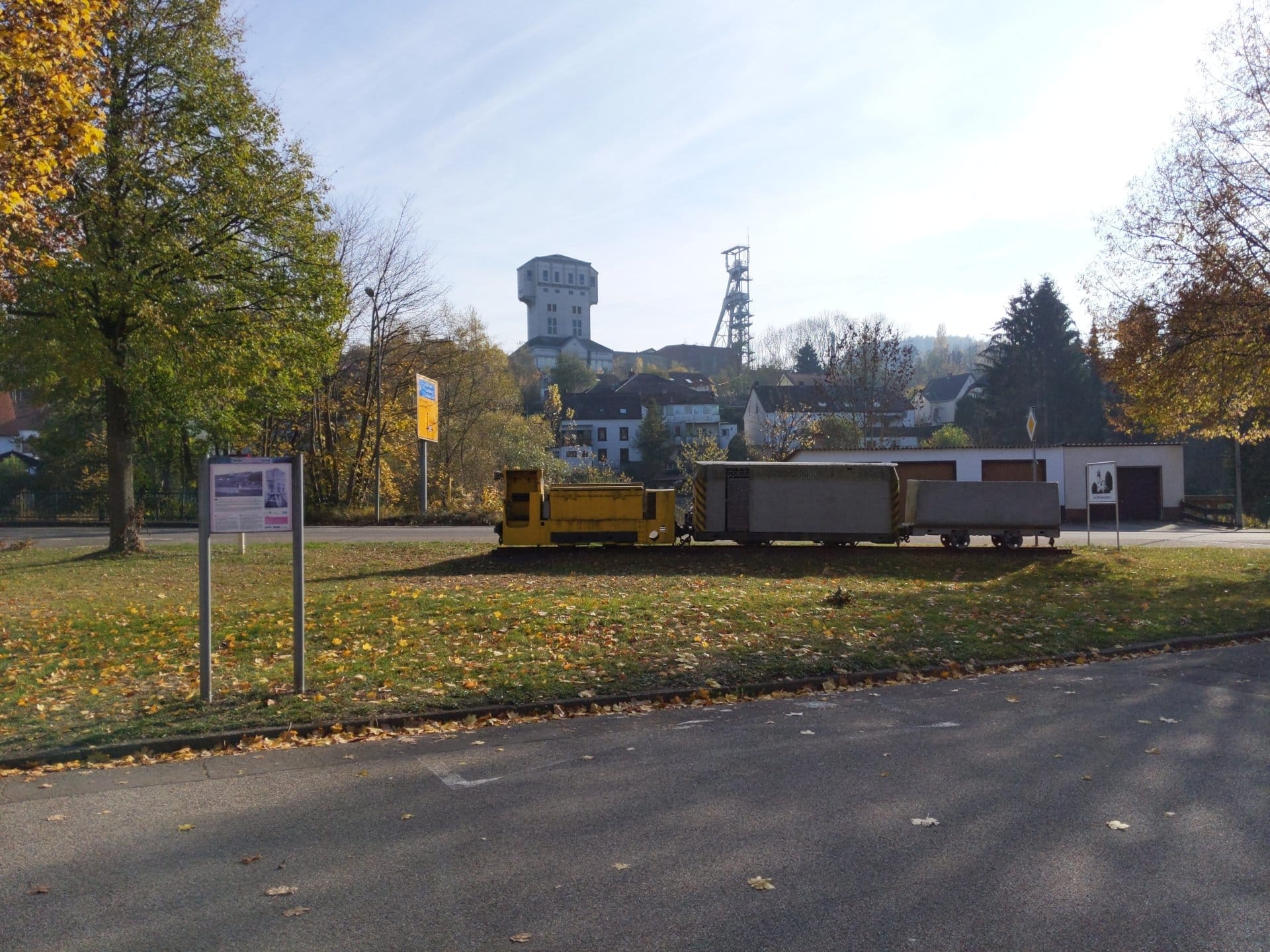
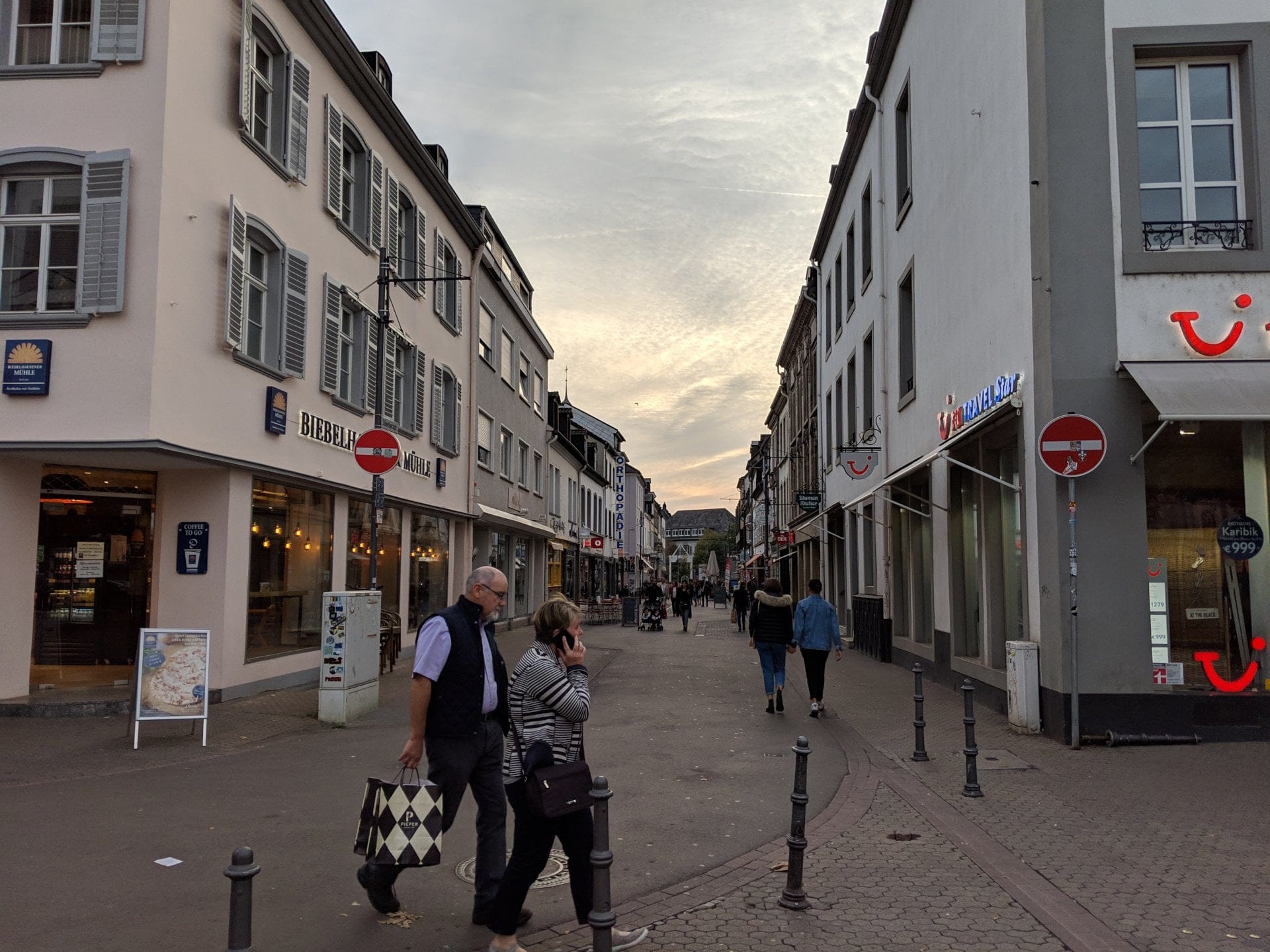


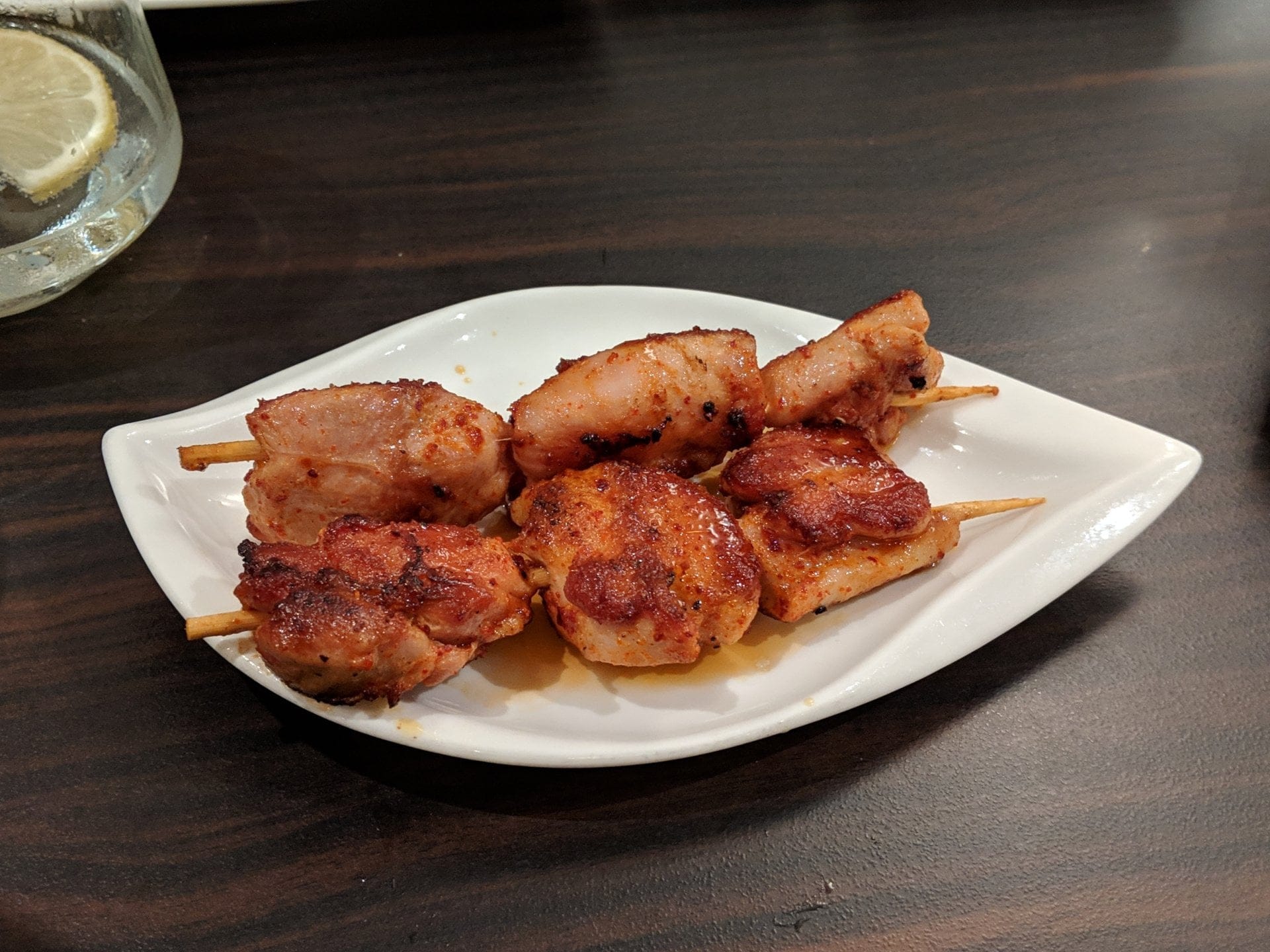


The dynamic range is convincing. Bright areas of the image do not suffer from significant loss of detail, and dark areas are rendered with good illumination. Fine structures in particular are very well recognisable. Imaging errors in the form of chromatic aberration do not occur. The Dual-Pixel Phase-Detection Autofocus focuses precisely and quickly.
Night mode
The Pixel 3 main camera shows its strengths in low-light conditions or in the dark. Activating the night mode, the camera AI conjures up particularly detailed, sharp and colourful shots even in the dark. Even if practically nothing can be seen with the naked eye, the Pixel 3 brings light to the darkness. Muddy image artefacts or strong image noise are not to be found! A single shot is created from multiple exposures with different exposures. The exposure time varies between 1 and 7 seconds.


Bokeh
The Pixel 3's bokeh mode is also impressive. The separation between the sharp foreground and the blurred background is done fully automatically by the camera AI. No secondary sensor is required to calculate the depth of field.
The Pixel 3 cleanly extracts objects and people. The smartphone handles even difficult contours well. The blur intensity can be adjusted in post-processing.


Top photo and Pixel Shift
Introduced with the Google Pixel 3 are the Top Shot feature and Pixel Shift. Top Shot suggests the best image from a burst sequence to the user. For group photos or selfies, for example, the image is selected where no one is blinking. However, the prerequisite is that the camera's Motion function is activated. In the test, Top Shot worked quite well and the suggestions made were all plausible. However, it is worth criticising that only the suggestions made by Google can be saved in high quality. All other photos in the sequence are only available in 0.8 megapixels.
The Pixel 3 makes use of the Pixel Shift method. This increases the resolution of an image through multiple, slightly shifted shots. The camera therefore takes several images simultaneously and combines them into one. By overlaying multiple shots, more detail is preserved, and the image is additionally sharpened. What sounds good in theory was less impressive in practice. Especially compared to other high-end smartphones, the Pixel 3's images are by no means sharper or more detailed.
Zoom
There is no optical zoom due to the lack of a zoom lens. Software-based algorithms are once again relied upon entirely. With the Super-Res zoom, the Pixel 3 combines several images into one shot. The result is impressive, but it cannot compete with other smartphones that use a zoom lens.


Video mode
In video mode, the Pixel 3 also convinces with decent recording quality. Like the photo mode, the images impress with high levels of detail, rich colours and pleasant sharpness. However, what the video mode lacks is a 4K 60 FPS mode. Those who like to record at a smooth 60 FPS must settle for 1080p. The optical image stabilisation makes handheld filming easy. The audio quality was less convincing in the test. The recorded sound is quiet and thin.
Front camera practical test
Thanks to the two sensors with different wide-angle lenses, the front camera of the Pixel 3 is suitable for both single and group selfies. The smartphone handles bokeh shots with a blurred background in both standard and wide-angle modes. The image quality of the front camera is impressive and convinces with natural skin tones and a pleasant level of detail.

Connectivity
The Google Pixel 3 is well equipped for LTE in this region. All LTE bands common in Germany are present. If you like to travel, you don't need to worry about mobile networks abroad either. The Pixel 3 is usable worldwide. The following frequencies and bands are supported:
- GSM: 850, 900, 1,800 and 1,900 MHz
- UMTS: 1/2/4/5/8/9/19
- FDD-LTE: 1/2/3/4/5/7/8/12/17/18/19/20/25/26/28/29/30/32/66/71
Mobile transfer rates are first-class. The Cat 16 LTE modem enables speeds of up to 1 Gbit/s. Google unfortunately omits dual-SIM support. Instead, you have to make do with a nano-SIM or eSIM. Phone calls can be made excellently with the Pixel 3. Voice quality is outstanding in both directions. VoLTE and HD Voice are supported.
Wi-Fi and Bluetooth
The smartphone works with 2.4 GHz and 5 GHz WiFi networks. Dual-AC enables particularly fast and stable transfer rates. The maximum speeds measured via WLAN are 650 Mbit/s download and 550 Mbit/s upload. Another wireless connection standard is Bluetooth 5.0.
GPS and sensors
Positioning uses GPS, Glonass, Galileo and BeiDou. A GPS fix is established within seconds and is accurate to within a few metres. When navigating with Google Maps, the Pixel 3 proves reliable. The signal is constant and without deviations.
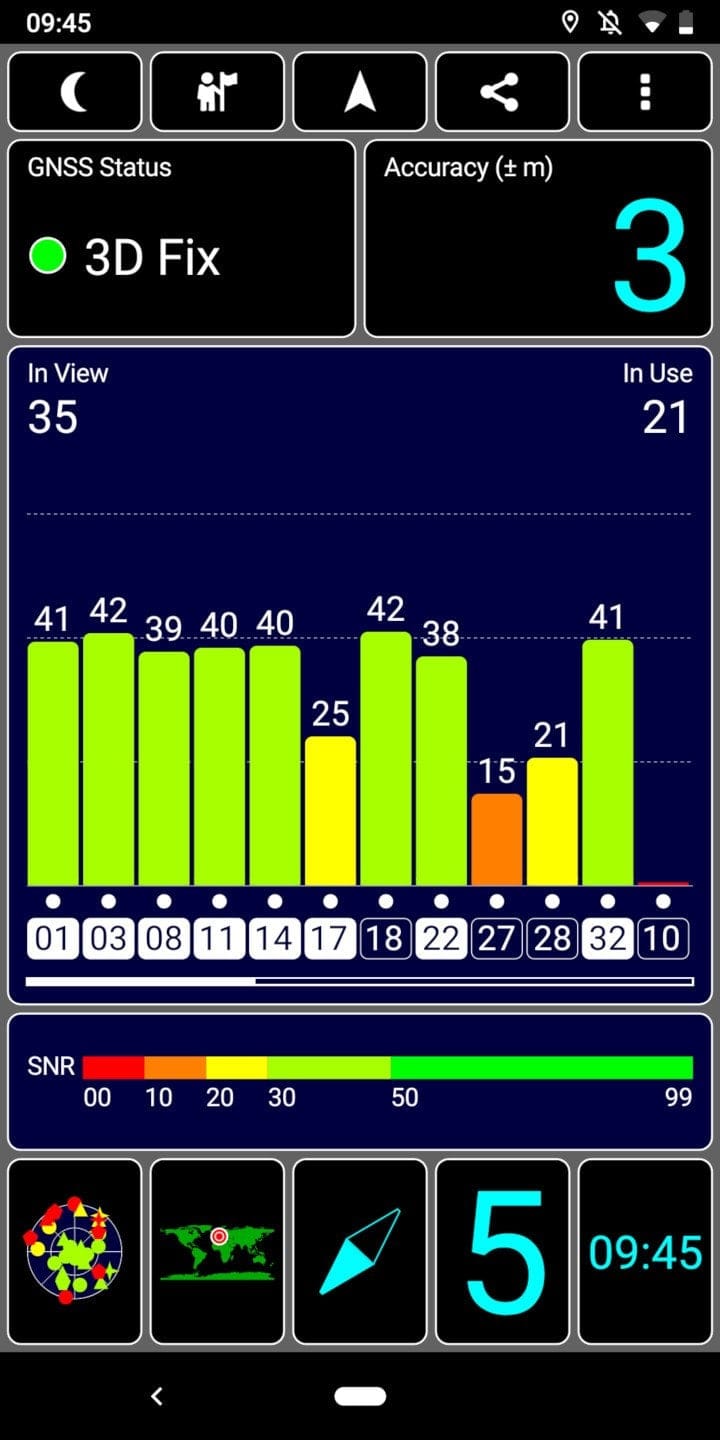
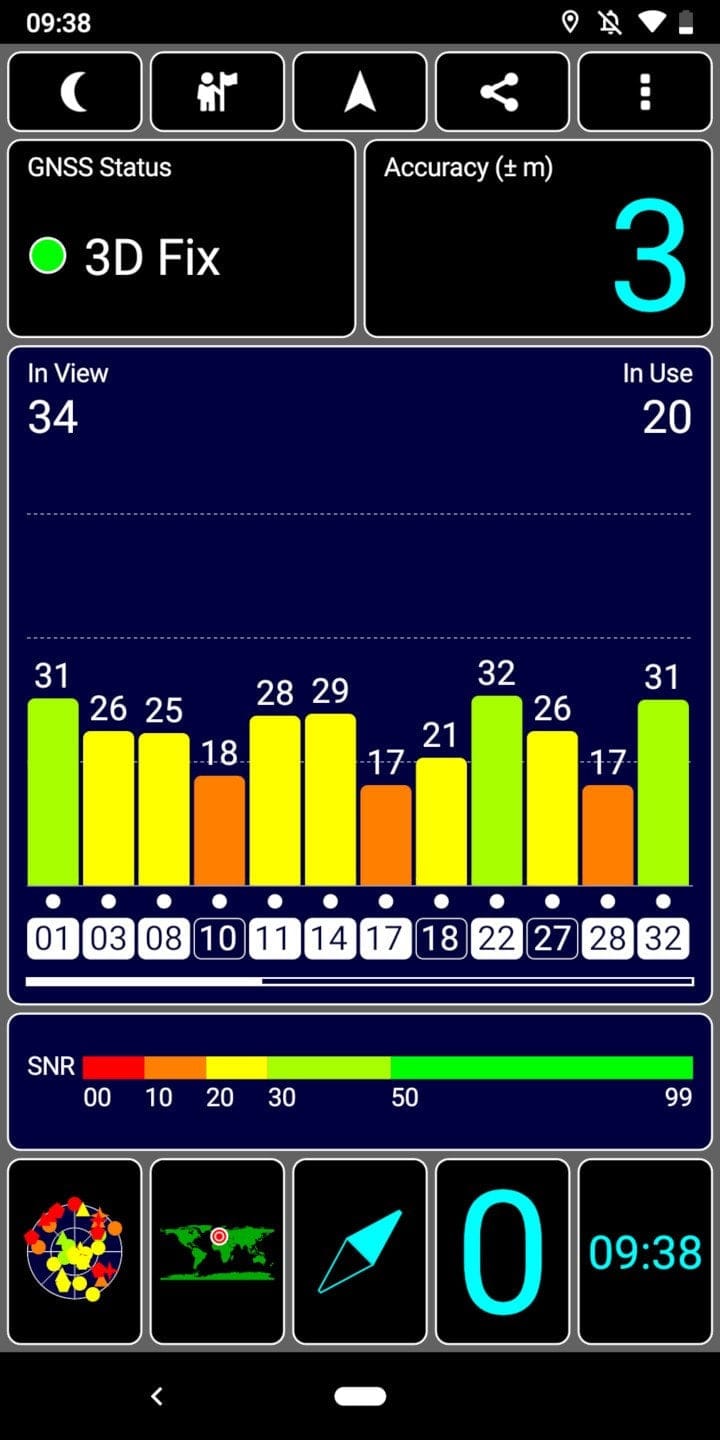
The sensor suite includes, among other things, an NFC module. Mobile payments via Google Pay or other banking apps are possible without issues. A fingerprint scanner on the back of the smartphone unlocks it quickly and securely. Additional sensors include a 3-axis gyroscope, a 3-axis accelerometer, a proximity sensor, an ambient light sensor and an electronic compass.
Battery
The battery capacity is 2,915 mAh. Compared to other top models, this is not particularly high, but the Pixel 3 is comparatively energy-efficient. With some phone calls, web browsing and YouTube, you can easily get through the day. Additional mobile gaming drains the battery significantly faster, so it lasts only about 2 ½ hours.
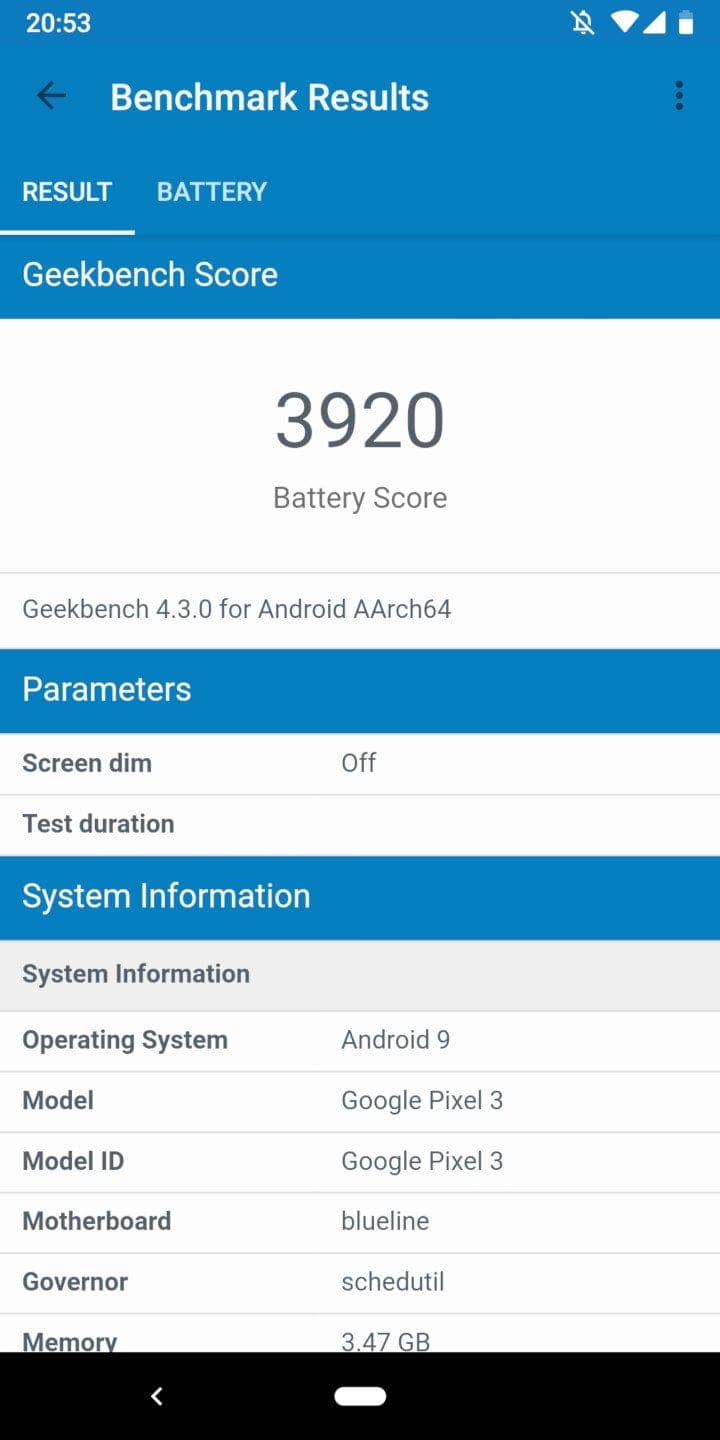
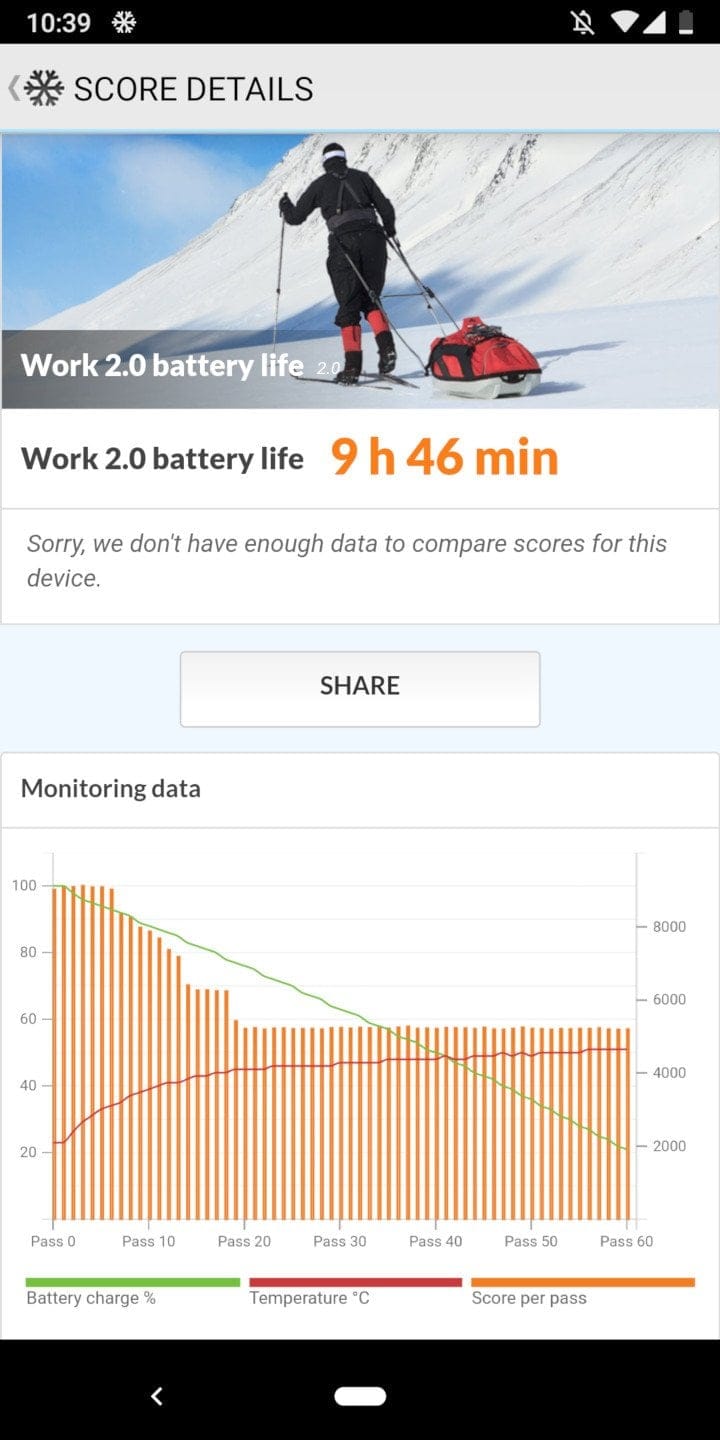
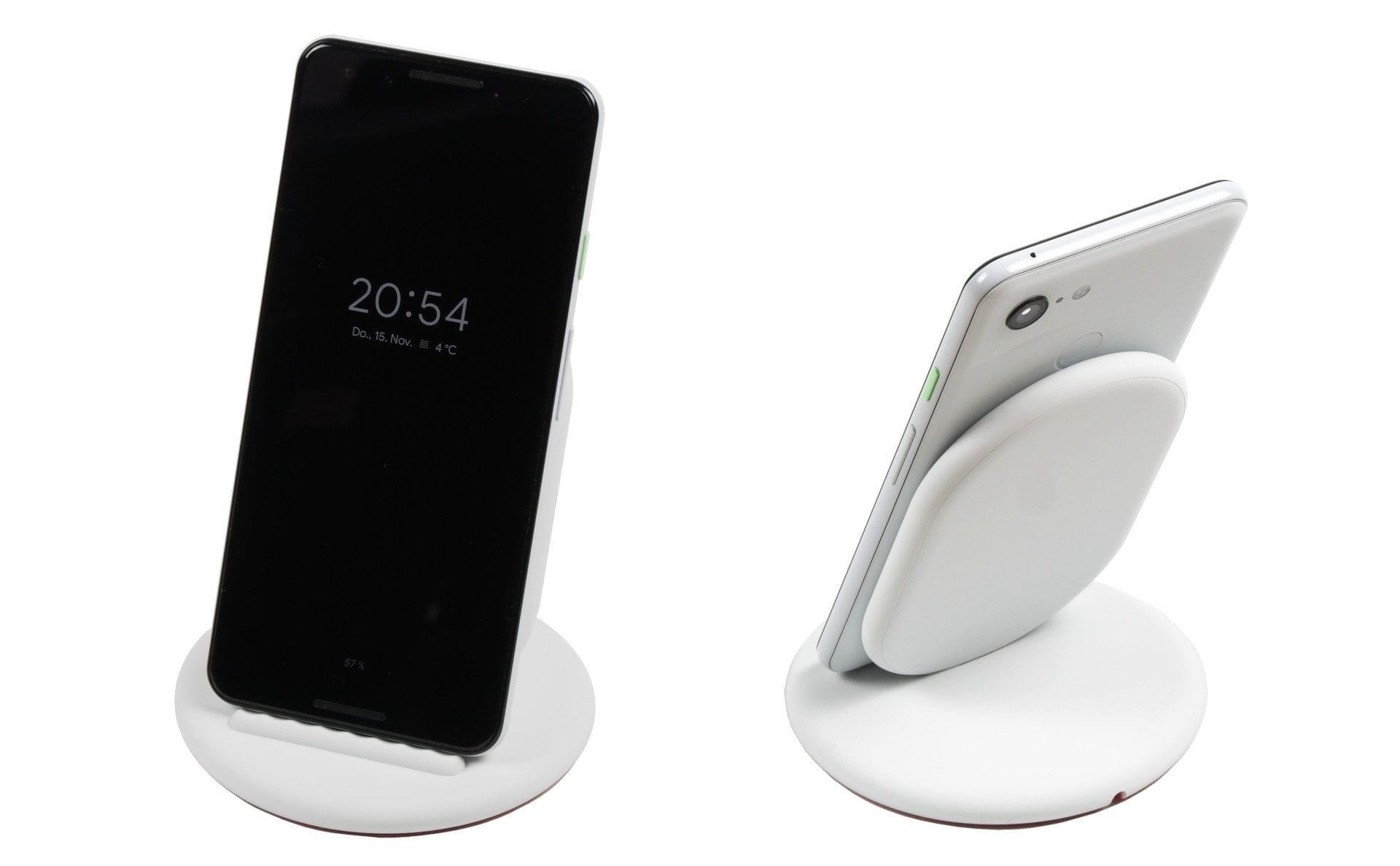
The Pixel 3 is fully charged after about 105 minutes. A 50% charge takes only 40 minutes. However, this requires using the included 18-watt fast charger. The fast charging standard is USB Power Delivery. Despite the Qualcomm processor, Qualcomm Quick Charge is not supported. Optionally, the Pixel 3 can also be charged via wireless Qi charging. The Google Pixel Stand charges the smartphone in just under 145 minutes.
Our verdict
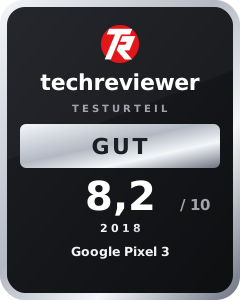
The Google Pixel 3 also remains a niche smartphone that will most likely not appeal to the average consumer. Compared to the many other high-end smartphones, the Pixel 3 is just one of many. Unfortunately, there are no significant innovations to be found.
Those who nevertheless decide on a Pixel 3 receive an extremely compact smartphone with current hardware and a "Pure Android Experience". That a smartphone doesn't necessarily need 2, 3 or 4 camera sensors is shown by the Pixel 3's Artificial Intelligence, which shines with clean bokeh shots, an excellent night mode and features such as Top Shot. The Pixel 3 also scores points with its excellent mobile network support, its fast WLAN connection, NFC and the Qi charging function.
Larger criticisms include the scratch-prone coating on the back, the aggressive storage management, which Google intends to address with a software update, and the lack of dual-SIM and storage expansion capabilities.
Specifications
Processor and memory
- CPU
- Qualcomm Snapdragon 845
- GPU
- Adreno 630
- RAM
- 4GB (LPDDR4x)
- Internal storage
- 64GB / 128GB (UFS2.1)
- Storage expansion
- No
Display
- Display size
- 5.5 inches
- Display resolution
- 2160 x 1080 pixels
- Screen protector
- Corning Gorilla Glass 5
- Multitouch
- 10 fingers
Cameras
- Main camera
- 12.2 Megapixel Sony IMX363
- *Aperture f/1.8
- *4-axis OIS
- *AI mode
- *Autofocus
- *Dual-tone LED flash
- Front camera
- 8+8 megapixel Sony IMX355
- *Bokeh
- *HDR
- *97° wide-angle
Mains
- Dual SIM
- No
- SIM size
- Nano SIM
- eSIM
- Yes
- GSM
- 850, 900, 1800 and 1900 MHz
- UMTS
- 1/2/4/5/8/9/19
- FDD-LTE
- 1/2/3/4/5/7/8/12/17/18/19/20/25/26/28/29/30/32/66/71
Wireless
- Wi-Fi
- 802.11 a/b/g/n/ac MU-MIMO
- Bluetooth
- 5.0
- GPS
- Yes
Sensors
- *Ambient light sensor
- *Accelerometer
- *Proximity sensor
- *Hall sensor
- *E-compass
- *Gyroscope
- *Fingerprint sensor
- *NFC
Battery
- Battery
- 2,915 mAh
- Fast charging function
- Power Delivery
- Qi charging
- Yes
- Connection
- USB-C
Other
- Operating system
- Android 9 Pie
- Size
- 145.6 x 68.2 x 7.9 mm
- Weight
- 148g
What’s included
1x Smartphone, 1x SIM tool, 1x Charging cable, 1x Charger, 2x Adapters, 1x Headphones, 1x Sticker, 1x User manual
Comments