Contents
Yuka Mini 500: Design and Build Quality
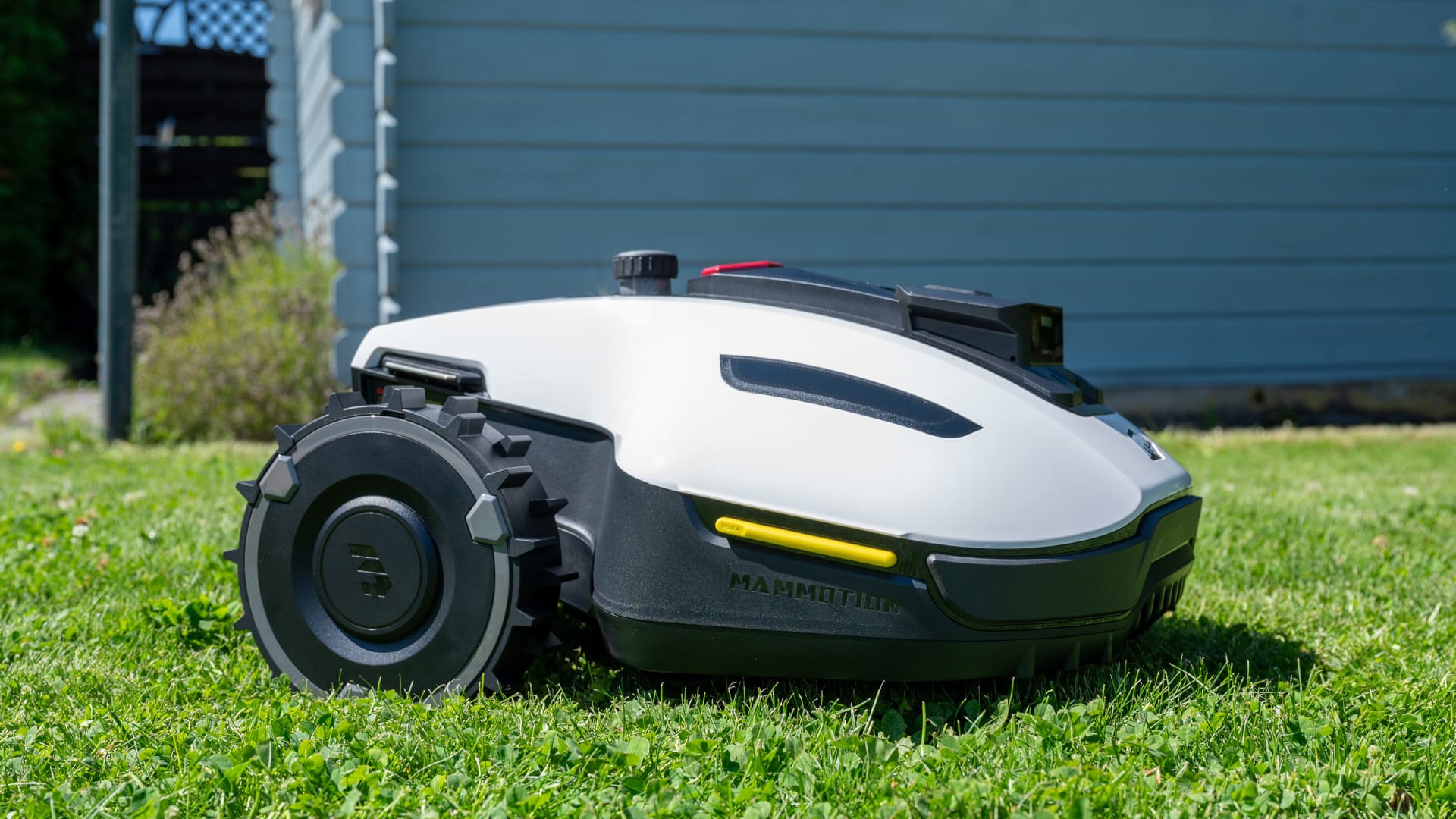
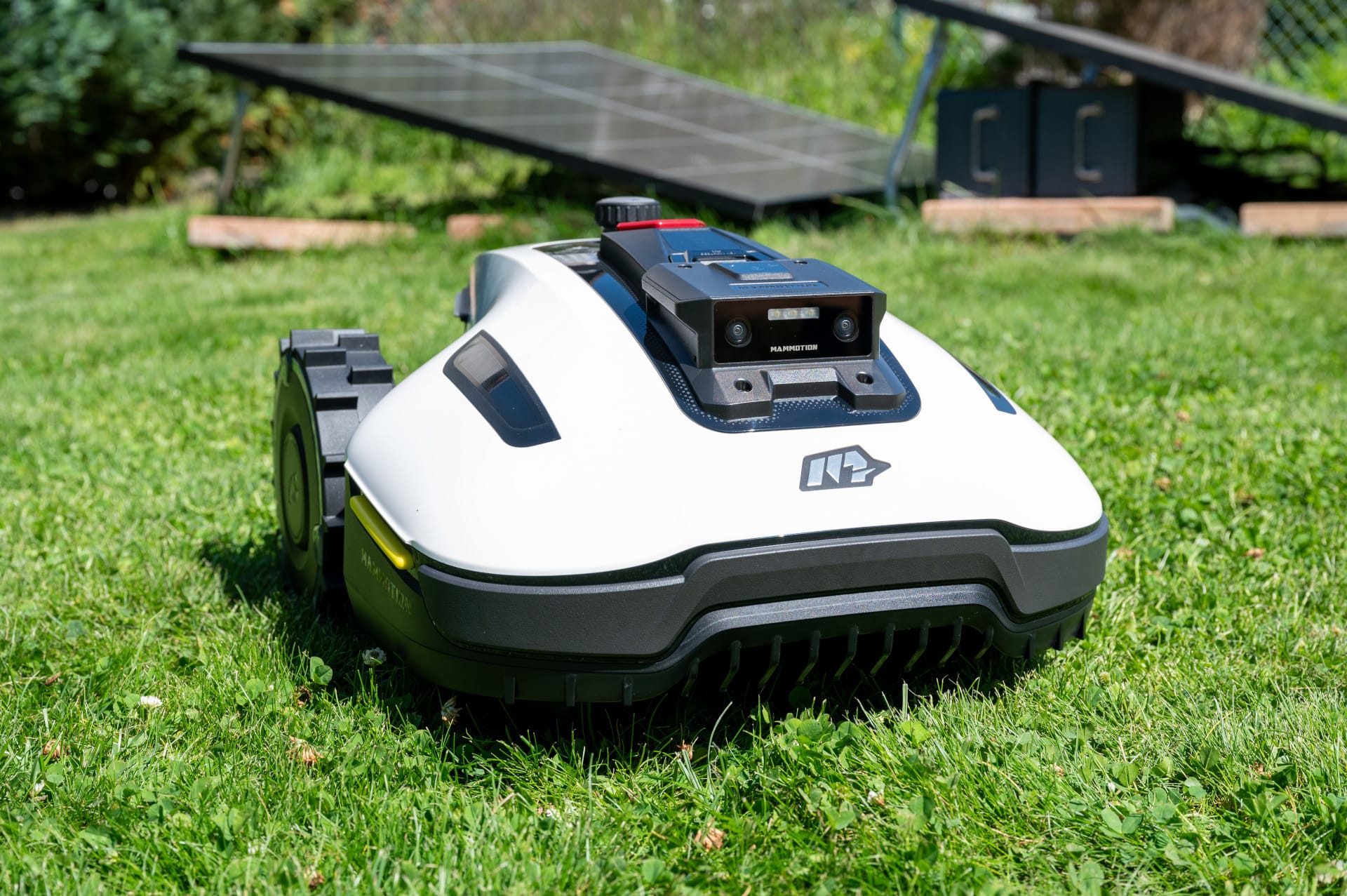
The Yuka Mini is currently the smallest model among Mammotion robotic mowers. With dimensions of 52.5 x 41.3 x 28.1 cm and a weight of just 10.6 kg, it is one of the lightweight options among robotic mowers. If you want to move it, you can lift and carry it to the next area without effort, even though Mammotion has done without a carrying handle.

The casing is kept in simple white, with modern but unobtrusive lines. The focus is clearly on functionality. There is nothing to criticise about the choice of materials or workmanship. The same applies to the accessories, which appear robust and distinguish themselves positively from the often cheap-looking items included by other manufacturers.
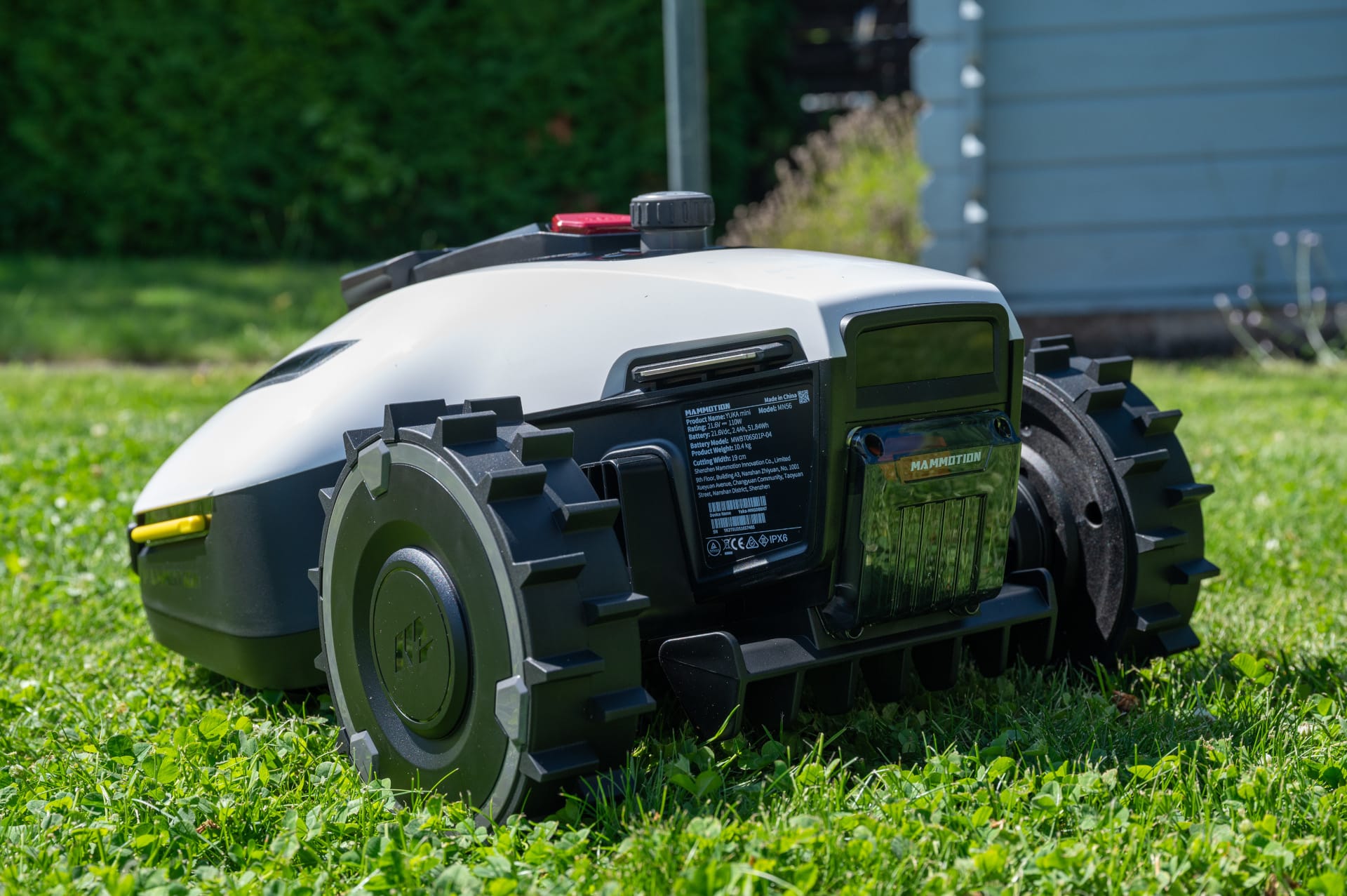
For propulsion, the Yuka Mini relies on two rear wheels instead of all-wheel drive. Combined with the compact design and low weight, this ensures especially good manoeuvrability. However, on difficult terrain with steep inclines, the Mini is less sure-footed than larger all-wheel drive models. The exposed design of the wheels is again practical. Grass and dirt can be removed particularly easily as a result.

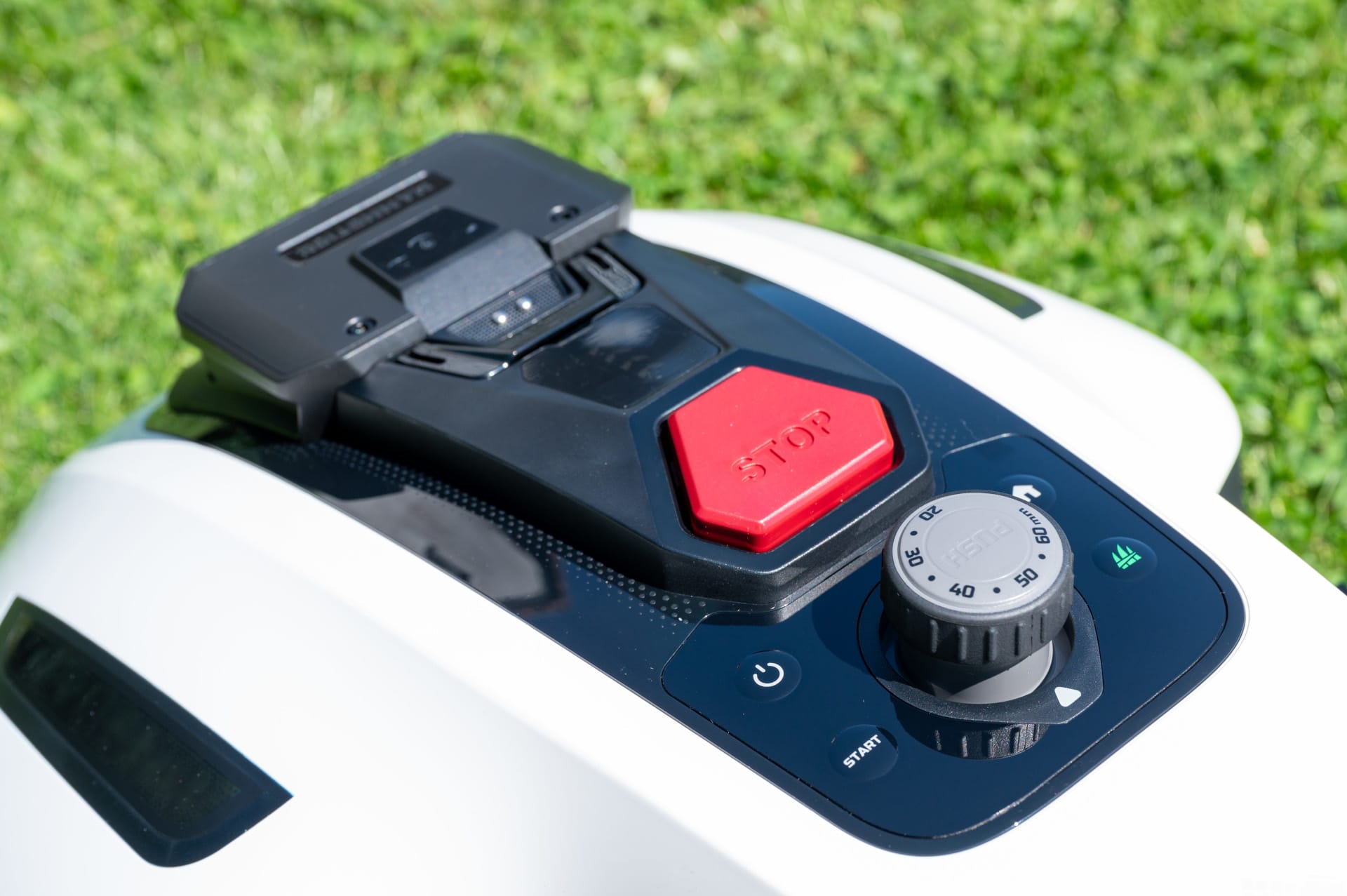
The control buttons are easily accessible on the top. In the centre sits a large red emergency stop button, next to the dial for adjusting the cutting height between 20 and 60 mm. This is supplemented by four function buttons and the security key.
Although there is no display, LED indicators on the robot, the base station and the RTK station provide information about the charge status, readiness for operation or errors. At first glance, this seems minimalist, but it proves to be perfectly sufficient in everyday use.
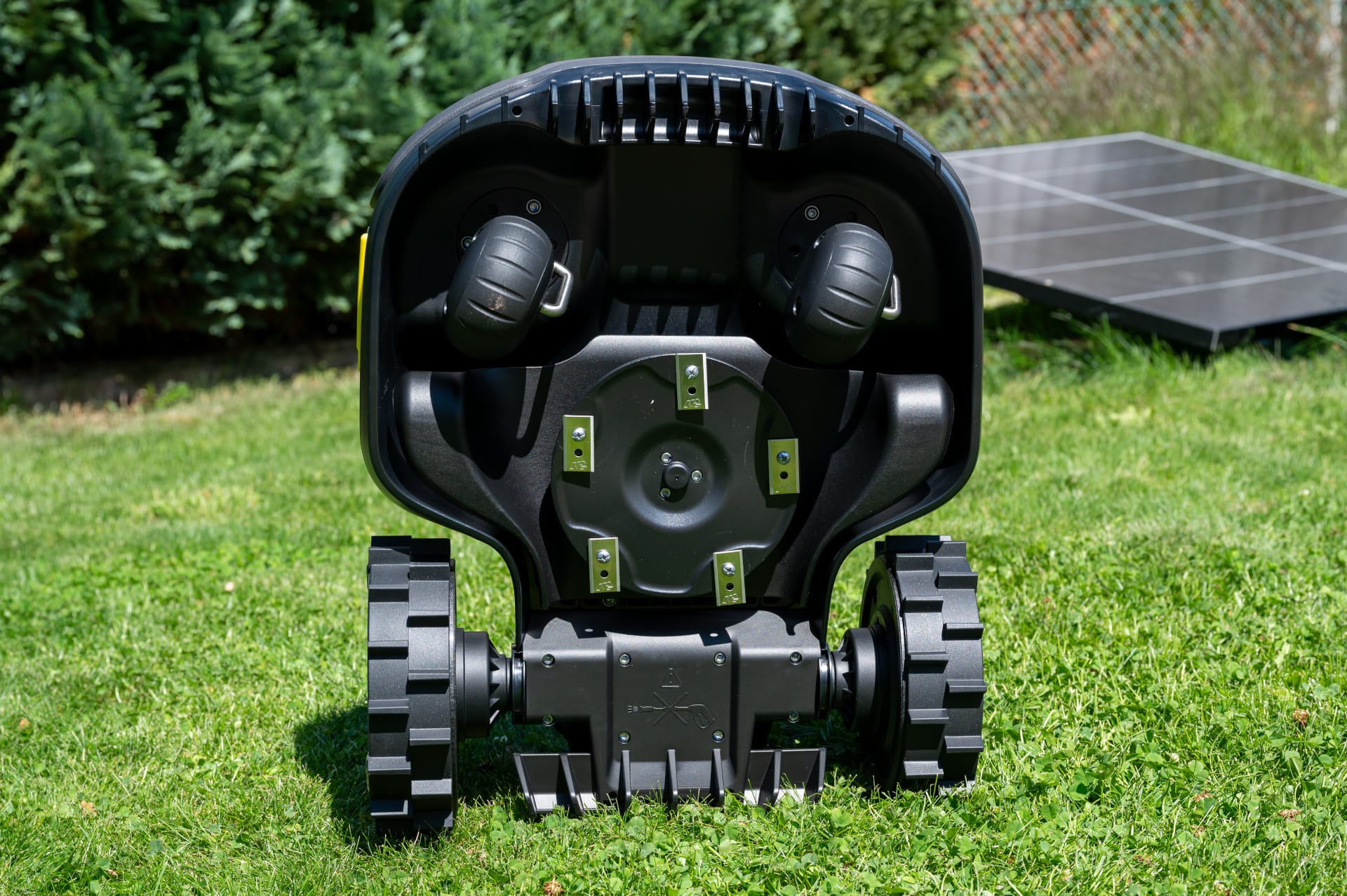
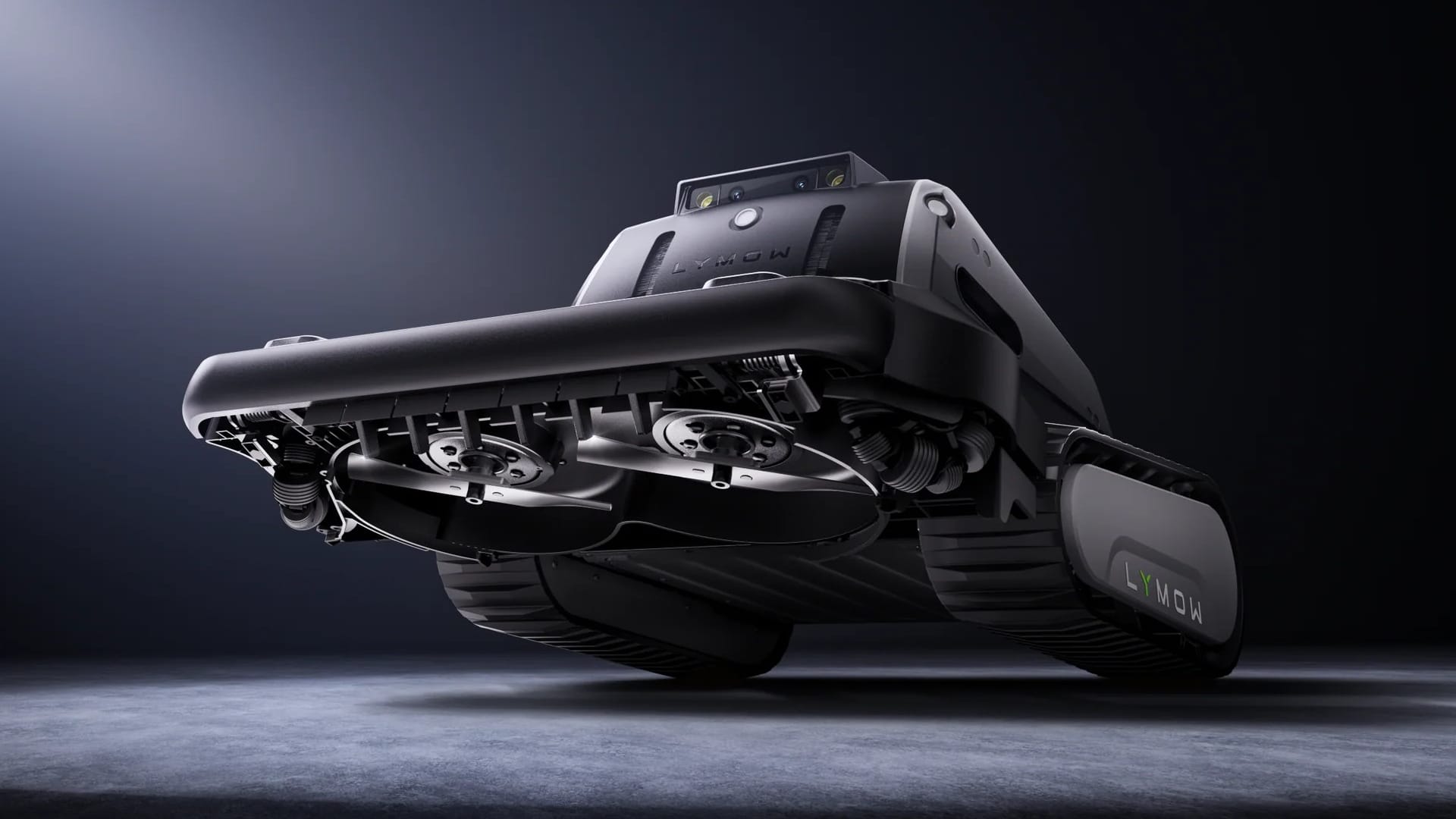
Under the housing lies the cutting technology. A disc with five free-swinging blades handles the mowing. Mammotion includes two spare sets, and changing them takes just a few simple steps. With a cutting width of 19 cm, it is smaller than larger models but perfectly suited to the concept of the Mini, which is designed for lawns up to 500 m².
Although the Yuka Mini does not have extras such as camera wipers, we did not miss them in the test. The first impression is most important, and there the Yuka Mini 500 presents itself like a small workhorse, sleek and practical at the same time.
By the way, the Yuka Mini is available in four different versions. The differences lie in the battery size and the resulting runtime. For an overview, here is the comparison table of the different Yuka Mini models.
| Feature | Yuka Mini 800 | Yuka Mini 700 | Yuka Mini 600 | Yuka Mini 500 |
| Recommended lawn area | up to 800 m² (0.20 acre) | up to 700 m² (0.17 acre) | up to 600 m² (0.15 acre) | up to 500 m² (0.12 acre) |
| Maximum mowing area | 1,200 m² (0.30 acre) | 1,100 m² (0.27 acre) | 800 m² (0.20 acre) | 700 m² (0.17 acre) |
| Max. number of zones | 15 zones | 15 zones | 15 zones | 15 zones |
| Max. climbing ability | 50 % (27°) | 50 % (27°) | 50 % (27°) | 50 % (27°) |
| Drive | 2-wheel drive | 2-wheel drive | 2-wheel drive | 2-wheel drive |
| Drive-over edge height | 3.5 cm (1.4 inch) | 3.5 cm (1.4 inch) | 3.5 cm (1.4 inch) | 3.5 cm (1.4 inch) |
| Limit | Centimetre-accurate virtual boundary Vision GeoFence | Centimetre-accurate virtual boundary Vision GeoFence | Centimetre-accurate virtual boundary Vision GeoFence | Centimetre-accurate virtual boundary Vision GeoFence |
| Dimensions (L × W × H) | 413 × 525 × 281 mm (16.3 × 20.7 × 11.1 inches) | 413 × 525 × 281 mm (16.3 × 20.7 × 11.1 inches) | 413 × 525 × 281 mm (16.3 × 20.7 × 11.1 inches) | 413 × 525 × 281 mm (16.3 × 20.7 × 11.1 inches) |
| Weight | 10.6 kg (23 pounds) | 10.6 kg (23 pounds) | 10.6 kg (23 pounds) | 10.6 kg (23 pounds) |
| Package weight | 18 kg (40 pounds) | 18 kg (40 pounds) | 18 kg (40 pounds) | 18 kg (40 pounds) |
| Package size (L × W × H) | 660 × 470 × 375 mm (26 × 18.5 × 14.7 inches) | 660 × 470 × 375 mm (26 × 18.5 × 14.7 inches) | 660 × 470 × 375 mm (26 × 18.5 × 14.7 inches) | 660 × 470 × 375 mm (26 × 18.5 × 14.7 inches) |
| Charging station size (L x W x H) | 617 × 437 × 263 mm (24.2 × 17.2 × 10.4 inches) | 617 × 437 × 263 mm (24.2 × 17.2 × 10.4 inches) | 617 × 437 × 263 mm (24.2 × 17.2 × 10.4 inches) | 617 × 437 × 263 mm (24.2 × 17.2 × 10.4 inches) |
| Cutting width | 190 mm (7.5 inches) | 190 mm (7.5 inches) | 190 mm (7.5 inches) | 190 mm (7.5 inches) |
| Cutting height adjustment | manual | manual | manual | manual |
| Mowing discs | 1 | 1 | 1 | 1 |
| Cutting system | 5 floating blades | 5 floating blades | 5 floating blades | 5 floating blades |
| Cutting height | 20–60 mm (0.8–2.4 inches) | 20–60 mm (0.8–2.4 inches) | 20–60 mm (0.8–2.4 inches) | 20–60 mm (0.8–2.4 inches) |
| Cutting disc motor output | 88 W | 88 W | 88 W | 88 W |
| Battery type | Li-Ion | Li-Ion | Li-Ion | Li-Ion |
| Tension | 21,6 V | 21,6 V | 21,6 V | 21,6 V |
| Battery capacity | 6.1 Ah | 4.5 Ah | 2.4 Ah | 2.4 Ah |
| Replaceable battery | Yes | Yes | Yes | Yes |
| Area per charge | 380 m² (4,100 ft² / 0.09 acres) | 270 m² (2,900 ft² / 0.07 acre) | 150 m² (1,600 ft² / 0.04 acre) | 150 m² (1,600 ft² / 0.04 acre) |
| Charging time | 230 minutes | 180 minutes | 90 minutes | 90 minutes |
| Mowing time per charge | 150 minutes | 110 minutes | 55 minutes | 55 minutes |
| Positioning and navigation | UltraSense AI Vision + RTK | UltraSense AI Vision + RTK | UltraSense AI Vision + RTK | UltraSense AI Vision + RTK |
| RTK coverage | 5 km mesh and 100 m data link | 5 km mesh and 100 m data link | 5 km mesh and 100 m data link | 5 km mesh and 100 m data link |
| Anti-theft garage | optional, date open (Q2 2025) | optional, date open (Q2 2025) | optional, date open (Q2 2025) | optional, date open (Q2 2025) |
| GPS anti-theft tracking | Yes | Yes | Yes | Yes |
| Geo-alarm | Yes | Yes | Yes | Yes |
| Vision Geofence | to follow | to follow | to follow | to follow |
| Auxiliary light | Yes (0.6 W) | Yes (0.6 W) | Yes (0.6 W) | Yes (0.6 W) |
| Vision AI obstacle detection | Yes | Yes | Yes | Yes |
| Vision AI object detection | Yes | Yes | Yes | Yes |
| Ultrasonic radar | No | No | No | No |
| Mechanical bumper | No | No | No | No |
| Lift sensor | Yes | Yes | Yes | Yes |
| Tilt sensor | Yes | Yes | Yes | Yes |
| Real-time garden monitoring | Yes (720p) | Yes (720p) | Yes (720p) | Yes (720p) |
| Connectivity | Bluetooth, Wi-Fi and 4G | Bluetooth, Wi-Fi and 4G | Bluetooth, Wi-Fi and 4G | Bluetooth, Wi-Fi and 4G |
| Noise levels | 60 dB | 60 dB | 60 dB | 60 dB |
| Water resistance | IPX6 | IPX6 | IPX6 | IPX6 |
| Power Supply Charger Station Performance | 30 W | 30 W | 30 W | 30 W |
| Power adapter output RTK | 12 W | 12 W | 12 W | 12 W |
| Rain sensor | Yes | Yes | Yes | Yes |
| Warranty | 3 years | 3 years | 3 years | 3 years |
Yuka Mini 500: Features and contents
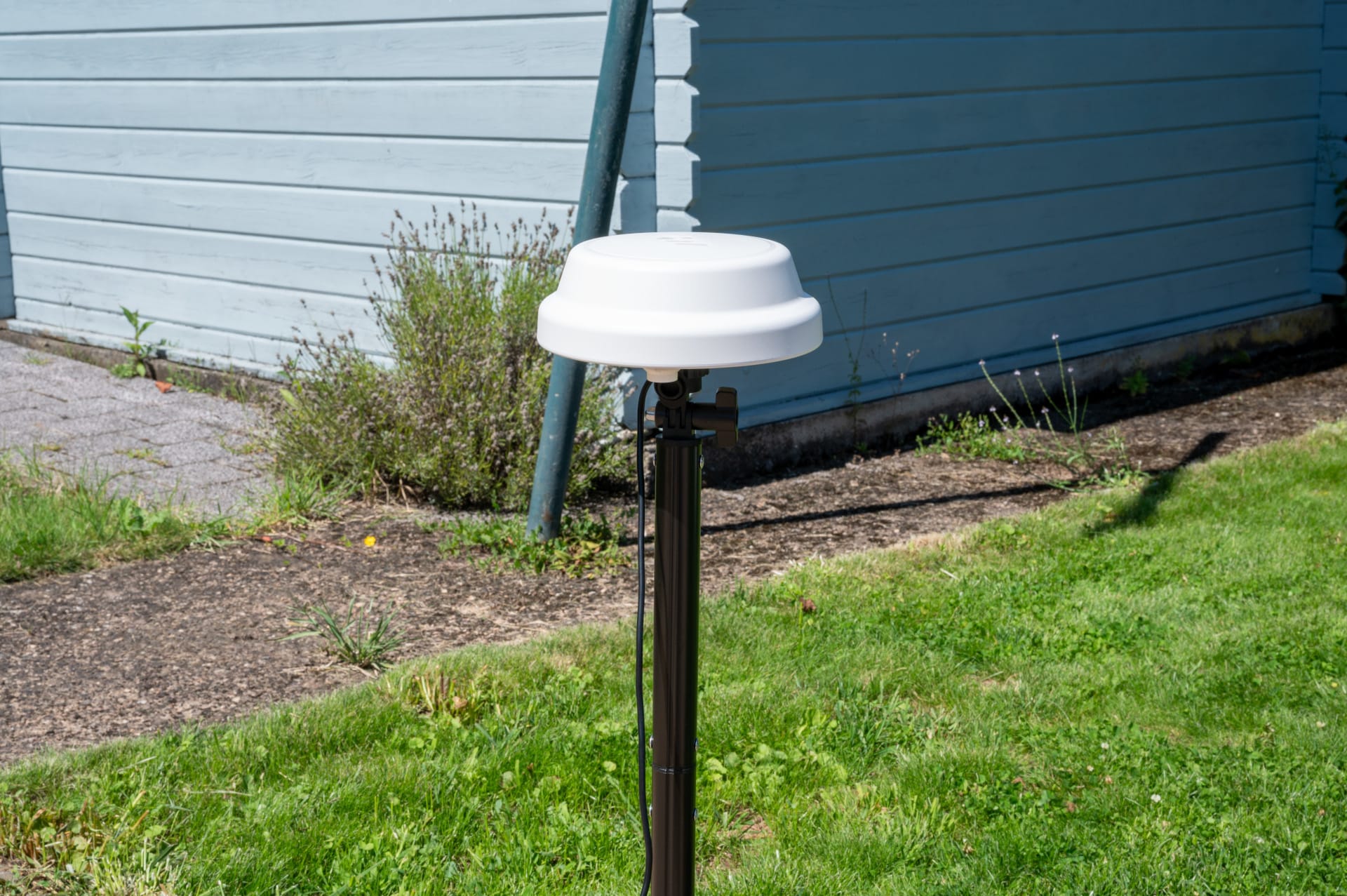
Mammotion includes a well-thought-out set of accessories with the Yuka Mini 500. Alongside the robot itself, the charging station with base plate and power supply unit as well as the RTK station are included. The latter offers various mounting options. It can either be placed directly in the lawn with a ground spike, mounted on a wall, or attached to a mast using plug-in elements.

The scope of delivery also includes six spare blades with screws, a replacement key, cable clips and cable ties for a clean installation, as well as a small brush for cleaning. A screwdriver and a hex key are also included, so you do not need any additional tools for assembly.

Also available optionally are a weatherproof garage for the charging station (approx. €199), a spare battery (approx. €159) and a solar panel for the RTK station (approx. €269). This allows the robot to be operated even more flexibly, for example if there is no power connection available at the optimal location for the station.
Yuka Mini 500: Setup and app
Setting up the Yuka Mini 500 is straightforward and quick. Once the charging station and RTK station are set up, the robot connects via Bluetooth to the Mammotion app (Android and iOS). From there, you handle the configuration, pair it with your home Wi-Fi, and install a firmware update if necessary. Those operating the robot exclusively with iNavi, meaning without an RTK station, reach their goal even faster, as no alignment or fixed positioning is required.

The app guides you step by step through the setup process and offers two mapping options. You can either let the robot map the area autonomously or control it manually with a virtual joystick to define boundaries more precisely.
No-go zones for flower beds, trees or play areas can also be set up. In total, up to 15 such separate areas can be saved, which is sufficient for most gardens.

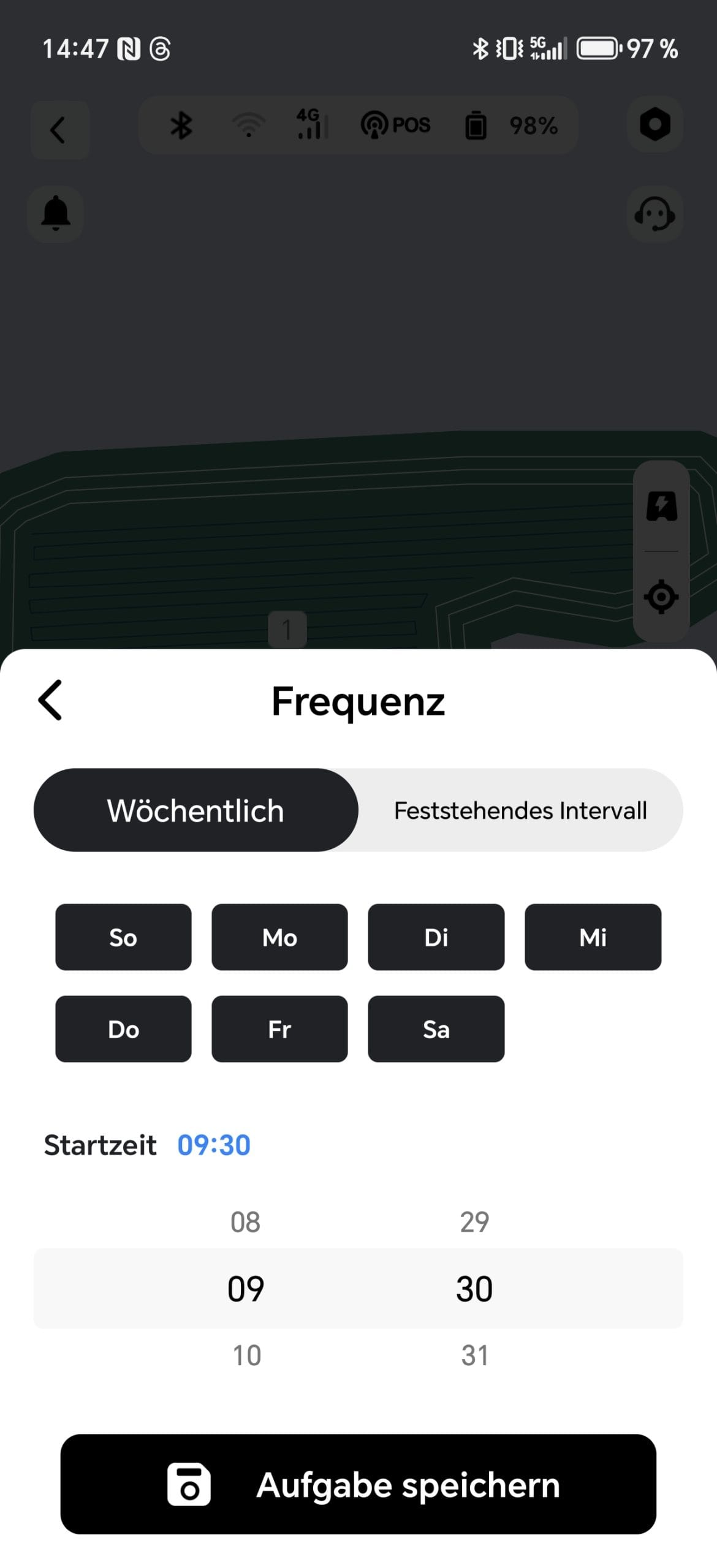
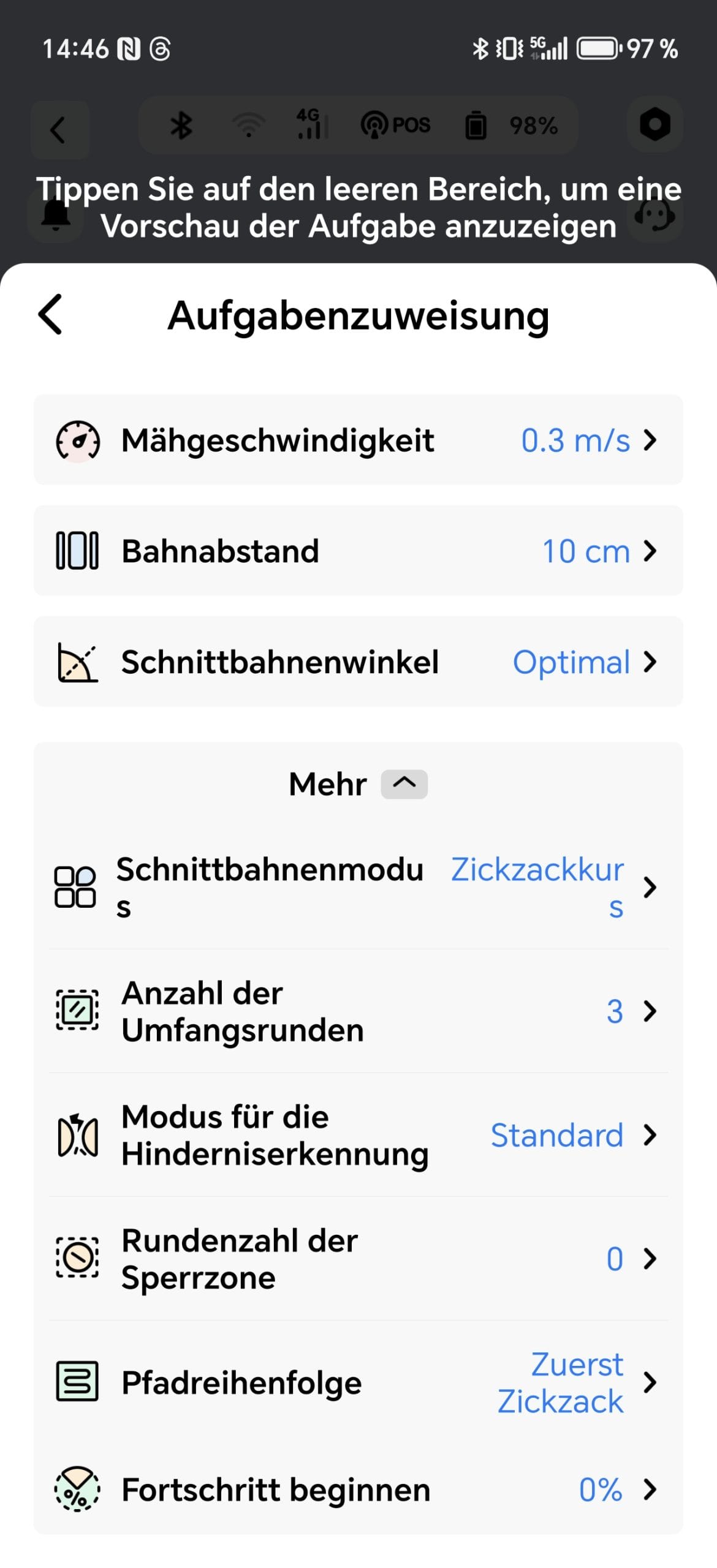
In addition to the map functions, the app offers numerous settings. You can select patterns such as zigzag or checkerboard, adjust the sensitivity of the obstacle detection or specify how often the robot cleans the edges. Schedules are also possible, although the display here still has room for improvement. Instead of a classic weekly overview, the app currently works with start and duration specifications.
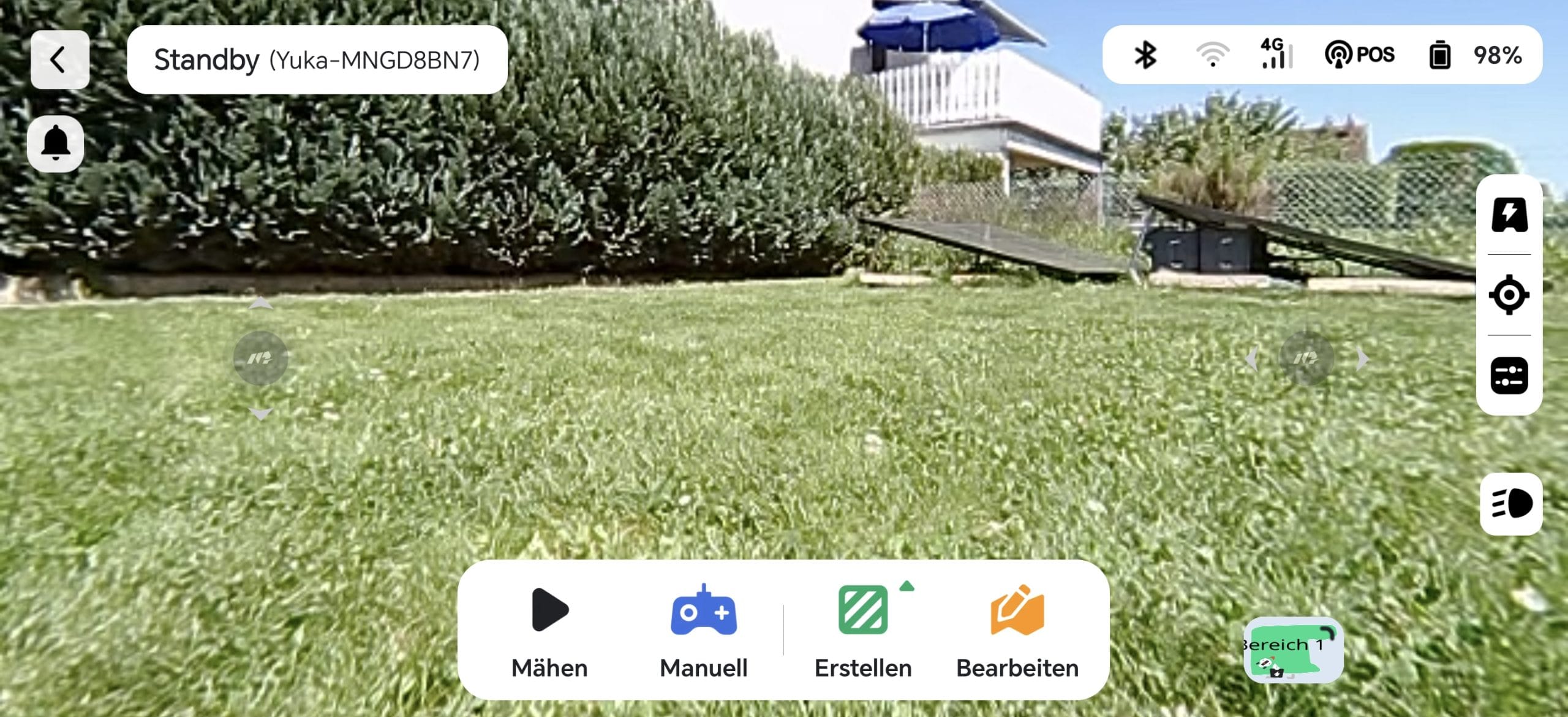
A nice detail is the live camera view, which shows the robot from a first-person perspective. This makes steering more intuitive during mapping, but does not replace a security camera, as the image transmission is not consistently smooth. Additionally, the Yuka Mini features GPS tracking and a geo-fence alarm, so it can be located via the app in the event of theft and the owner is notified immediately.
Smart home integration is also provided for. The Mini works with Alexa, Google Home and Home Assistant, so mowing cycles can also be started or stopped via voice command. In practice, this is rather a bonus, but it shows that Mammotion intends to expand the software long-term.
Overall, the app gives a tidy impression and proved stable during testing. Particularly positive is that regularly provide new features with updates. This means the control system is continuously evolving.
Yuka Mini 500: Mowing, navigation and obstacles
We tested the Yuka Mini 500 on a relatively small lawn area of around 45 m². The area is manageable but has its challenges. Several solar panels from a balcony power station stand in the middle of the lawn, and there are curbs marking off the vegetable patch. This makes the area a good example of a scenario where a robot lawn mower needs to navigate precisely and reliably detect obstacles.
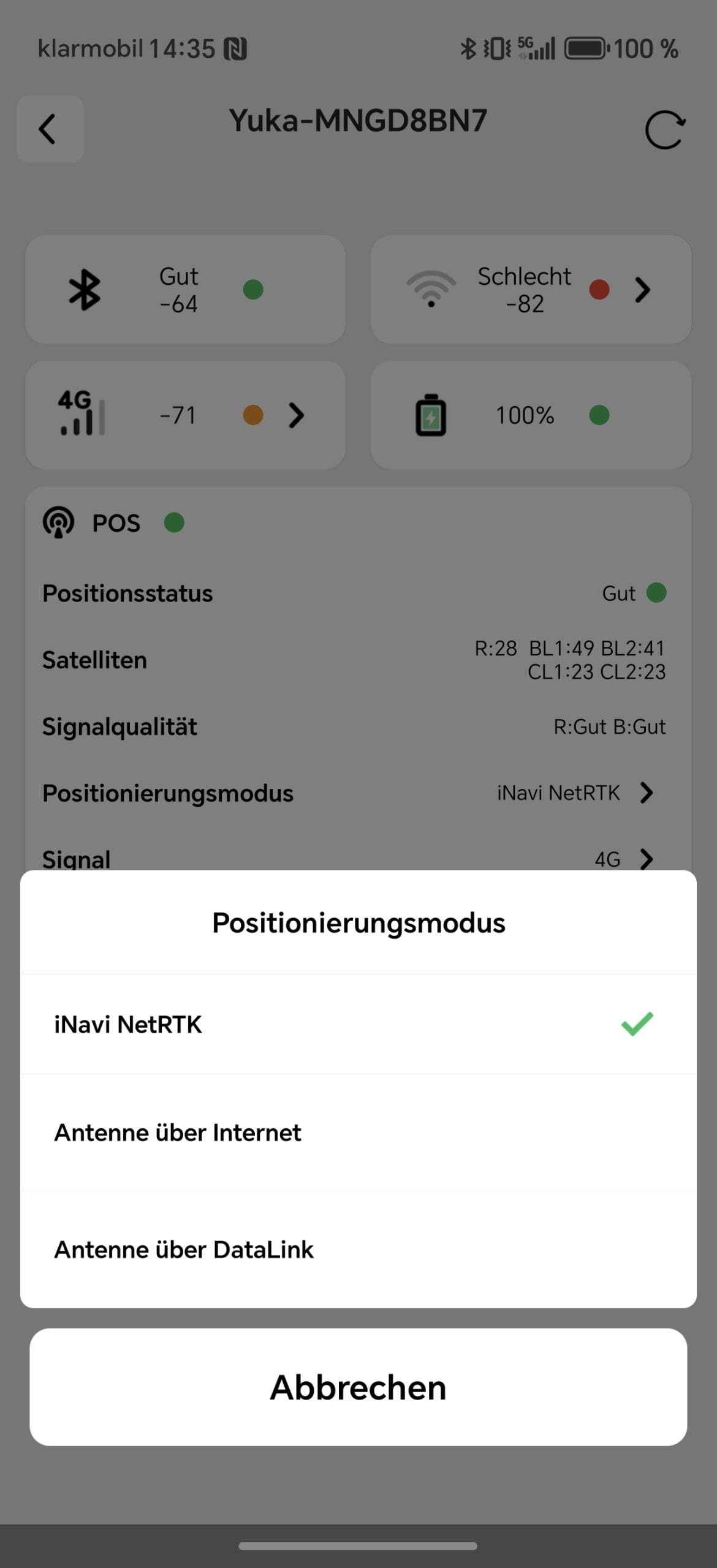
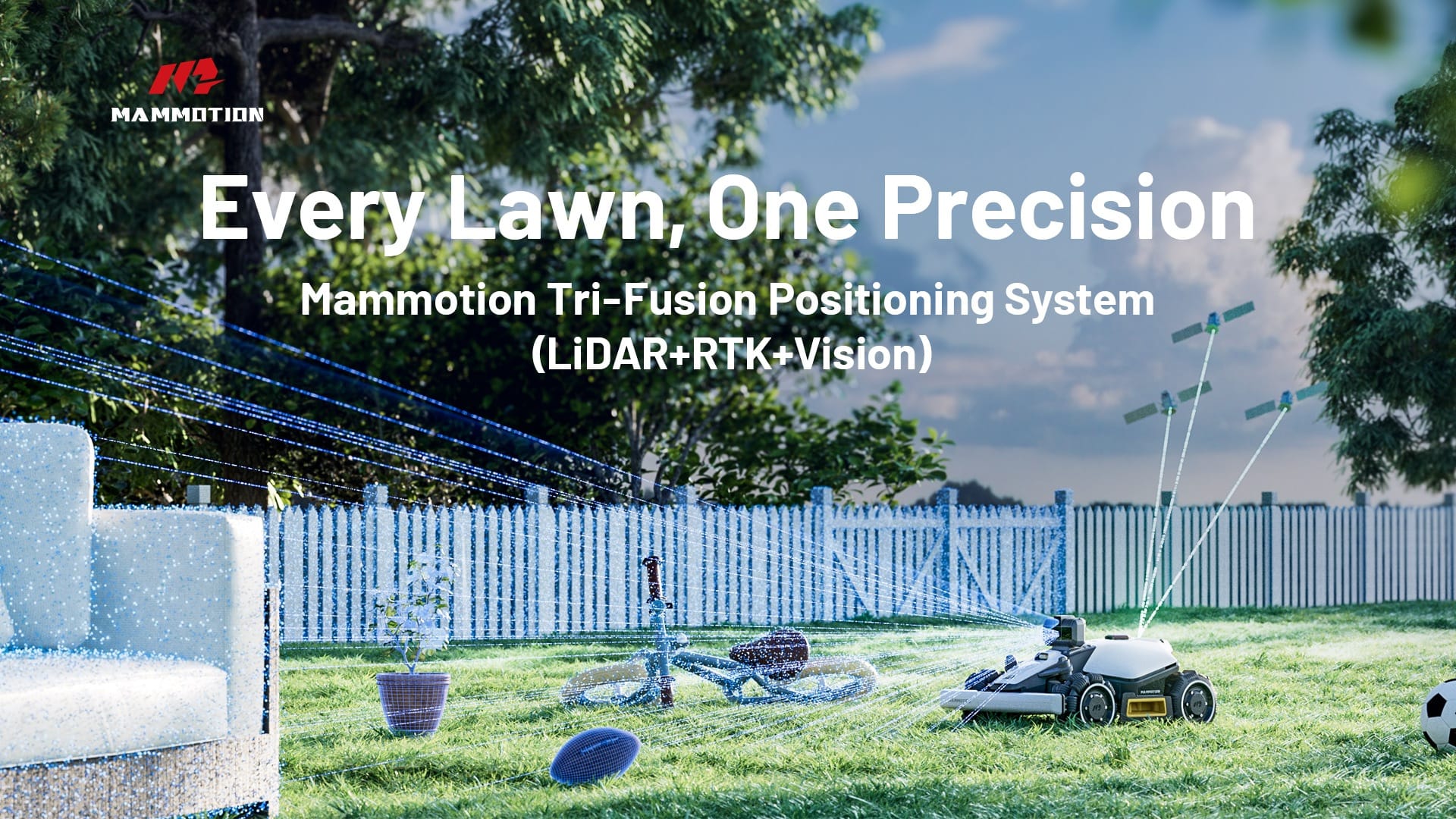
In our test, we predominantly relied on the antenna-free iNavi positioning, which works with NetRTK via 4G mobile network and functions surprisingly well. Even in garden areas shaded by trees or walls, the Mini maintains its course.
With the RTK station, precision can be increased further, although the result depends heavily on the antenna's location. iNavi offers a free trial period until the end of 2025. Afterwards, there are annual costs of around €49.90, which should be considered in the overall budget.
The Mini cuts the lawn in clear paths. Instead of moving chaotically across the lawn, it drives systematically in straight lines, evenly covering even small patches of grass. The cut looks neat; there are no bare spots or uncut areas, at least where it has a clear path. Its compact design pays off here. It passes between panel stands without any problems, even if the distance is barely sufficient.
The obstacle detection works with camera and AI. The robot reliably recognises larger objects such as solar panels, garden furniture or trees and safely drives around them. It shows some weaknesses with smaller items, such as fallen branches or gloves. It sometimes ignores such objects or reacts over-cautiously, resulting in small patches remaining uncut. It does not automatically revisit these areas, which means some manual follow-up work is required in practice.

This is also evident at the edges of the vegetable bed. Here, the mini reaches its limit. Because the cutting unit is positioned centrally, a strip of almost ten centimetres remains uncut. Anyone who values clean edges must tidy up with a trimmer. At level transitions, such as to a terrace, this problem does not occur. There, the robot drives right up to the edge and leaves a clean cut.
The low noise level is a positive aspect. At around 60 decibels, the Mini is one of the quieter robotic mowers. This means it can be used early in the morning or late in the evening without issues. Even night operation is conceivable. The app features a mode that reduces speed to protect animals.
Yuka Mini 500: Battery
The installed lithium-ion battery offers a capacity of 2.4 Ah and lasts in practice for around 55 minutes of mowing time (approx. 150 m²). On our test area of 45 m², this means the Mini easily handles the lawn in one pass and still has enough reserve left.
When the battery is empty, the robot automatically returns to the charging station. It takes around 90 minutes there to recharge fully. For small areas this is perfectly adequate, but those with larger lawns will hit the limits of the 500 model sooner. In such cases, it is worth looking at the larger models in the series, which are functionally identical but equipped with a slightly larger battery, offering longer runtimes.
A clear advantage of the Yuka Mini series is that, unlike many other manufacturers, the battery is not permanently installed. It is located behind a cover that can be removed with a few screws. If the battery weakens over time, it can be easily replaced yourself without having to send the robot in for repairs. Replacement batteries are available separately and cost around 159 euros.
Yuka Mini 500: Cleaning and maintenance
As with all robotic lawnmowers, this also applies to the Yuka Mini 500: a well-maintained device operates more reliably and lasts longer. In everyday use, maintenance proves pleasantly straightforward. Thanks to the exposed rear wheels, grass clippings hardly accumulate and can be removed with just a few hand movements. For cleaning, Mammotion even includes a small brush, which is particularly suitable for the cutting deck cover and the sensor areas.

Under the housing sit five freely suspended blades, which last several weeks with regular use. Changing them is quick, as only a few screws need to be loosened. Two replacement sets are already included in the scope of delivery, and replacements are available in the accessories shop. It is positive that the blades are not firmly glued or complicatedly mounted, but were deliberately designed for easy maintenance.
The housing itself is certified water-resistant to IPX6. This means the compact device withstands heavy rain and can, if necessary, be gently rinsed with a garden hose. However, pressure washers should be avoided as the water jet could damage sensitive seals. A damp cloth is sufficient for the camera unit and sensors.
The electronics play a role too. When it starts raining, the robot automatically returns to the charging dock. If you additionally protect the dock with an optional garage, you reduce the burden from weather influences and thus extend the lifespan.
Our verdict
In testing, the Yuka Mini 500 shows that Mammotion has hit the right niche with the smallest model in its series. It is not a jack-of-all-trades for large, confusing areas, but a specialist for smaller gardens. With its compact construction, precise navigation and quiet operation, it is ideal for smaller lawns up to around 500 m².
The reliable iNavi navigation is particularly positive, working very precisely even without an RTK station. For typical urban gardens with trees, flower beds, and narrow passages, the two different positioning systems prove to be a clear advantage.
Control via the app is straightforward, offers numerous setting options and is continuously improved through regular updates. The fact that Mammotion also thinks about details such as an easily replaceable battery or robust accessory quality shows that practical usability is the priority here.
There are drawbacks in edge treatment and with smaller obstacles, which are not always reliably detected. Those who require longer runtimes or want to cover larger areas should go for the 700 or 800 models. Overall, it remains to be noted: for small gardens, the Yuka Mini 500 is a true champion among robot mowers.
Specifications
Navigation & mapping
- Navigation system
- iNavi™ (RTK + AI Vision), optionally with RTK station
- Obstacle detection
- Camera with AI-supported object detection
- Route planning
- Systematic patterns (zigzag, chessboard, edge cutting)
- Mapping
- Automatic or manual via app (virtual joystick)
- Multi-zone management
- Up to 3 surfaces can be saved
- No-go zones
- Supported
- Passages
- Single or double mowing (pattern selectable)
- Pinch points
- from approx. 60 cm
Mowing performance
- Max. recommended area
- up to 500 m²
- Maximum mowing area
- up to 700 m²
- Mowing area per charge
- approx. 150 m²
- Cutting width
- 19 cm
- Cutting height
- 20 – 60 mm (manually adjustable)
- Number of blades
- 5 floating blades
- Max. gradient
- 27° (50 %)
- Noise level
- approx. 60 dB
Drive & battery
- Drive
- 2-wheel drive (rear wheels)
- Battery type
- 21.6 V lithium-ion
- Battery capacity
- 2.4 Ah
- Grinding duration
- Approx. 55 minutes
- Charging time
- approx. 90 minutes
- Automatic return & resumption
- Yes
- Replaceable battery
- Yes, spare battery available separately (approx. 159 €)
Controls & app
- App
- Mammotion (Android/iOS)
- Connection
- Wi-Fi, Bluetooth, 4G (for iNavi)
- Remote control
- Virtual joystick, live camera view
- App features
- Timetables, zone management, pattern selection, edge trimming, night mode
- Smart Home
- Alexa, Google Home, Home Assistant
- OTA updates
- Yes
Safety
- Sensors
- Lift, tilt and lean sensor
- Rain sensor
- Yes (automatic return to base)
- Emergency stop button
- Yes (large and centrally located)
- PIN protection
- Yes (security key)
- GPS & Anti-theft protection
- Yes (Tracking + Geo-Alarm via app)
- Noise emission & protection
- Noise level
- approx. 60 dB
- Protection rating
- IPX6
- Cleaning
- With a brush or gentle water hose (no pressure washer)
Dimensions & Weight
- Robot dimensions
- 525 × 413 × 281 mm
- Dimensions of charging station
- 617 × 437 × 263 mm
- Weight robot
- 10.6 kg
- Package weight
- 18 kg
What’s included
Yuka Mini 500 robot lawn mower Charging station with power adapter RTK station with mounting options (floor stand, wall bracket, poles) 6 replacement blades with screws Replacement wrench Screwdriver & hex key Cable clamps, cable ties Cleaning brush
Price comparison
| Store | Price | Link |
|---|
Comments (3)
Hello everyone, I would like to share my experience with this tiny device here. First, some data about the garden. The garden boundary is made of granite blocks of varying heights, up to 30 cm max. To give the mower enough space to react, 15 cm of slabs were laid in front of the stones. So the mower should have sufficient space to react. Instead, it drives into the stone wall and, with its hard tyres, which incidentally have no grip on hard surfaces - dry ground - digs up the lawn. When defining the mowing area at the boundary, I leave about 13 cm of the stone slabs free to the wall. This should actually be enough to cut a clean edge. It just isn't. The mower drives straight for a stretch, then turns towards the wall, bumps into it, digs itself in, and this happens x times. The problem is so glaring that I don't understand how such a good review comes about. I tried the programming options without success. Oh, and by the way, it cut my flower bed flat. The mower has been in operation since 2025. My recommendation: mowing result on the surface is good, edge mowing is rubbish. Since the edge is essential and is not mowed satisfactorily, this cannot be a buying recommendation. Instead of gimmicks like mowing patterns, it would make sense to revise the software towards edge mowing.
Hi Reimund,
Thanks for sharing your experiences. I think one should bear in mind that every garden is individual and local conditions can vary greatly. In my case, the Yuka Mini works reliably at the edges and has not caused any comparable problems so far.
For RTK lawn mowers, factors such as exact mapping, ground conditions, the position of boundaries, and local reception conditions play a significant role. This is why experiences from one garden cannot always be transferred to other installations.
Of course, it is annoying when the mower hits boundaries or damages flowerbeds. At the same time, many positive reviews from other users show that the device works quite satisfactorily in many gardens. I, for my part, cannot confirm the described problems.
Hello Timo,
For 2 weeks I have owned the Yuka mini 2 500.
In my garden, I laid rows of stones 8 cm wide at lawn height, between walls, beds, and the pool.
The idea is that the mower can drive over the edge with its right or left side, leaving a clean edge cut with the cutting unit.
During manual mapping, I always drove the mower with one wheel over these stones to ensure a clean edge cut and avoid having to trim afterwards.
However, when it mows, it does not proceed as previously defined, but usually misses the area.
Is there another mapping?
The result is even worse with automatic mapping.
Regards
Jens