Contents
Design and build quality
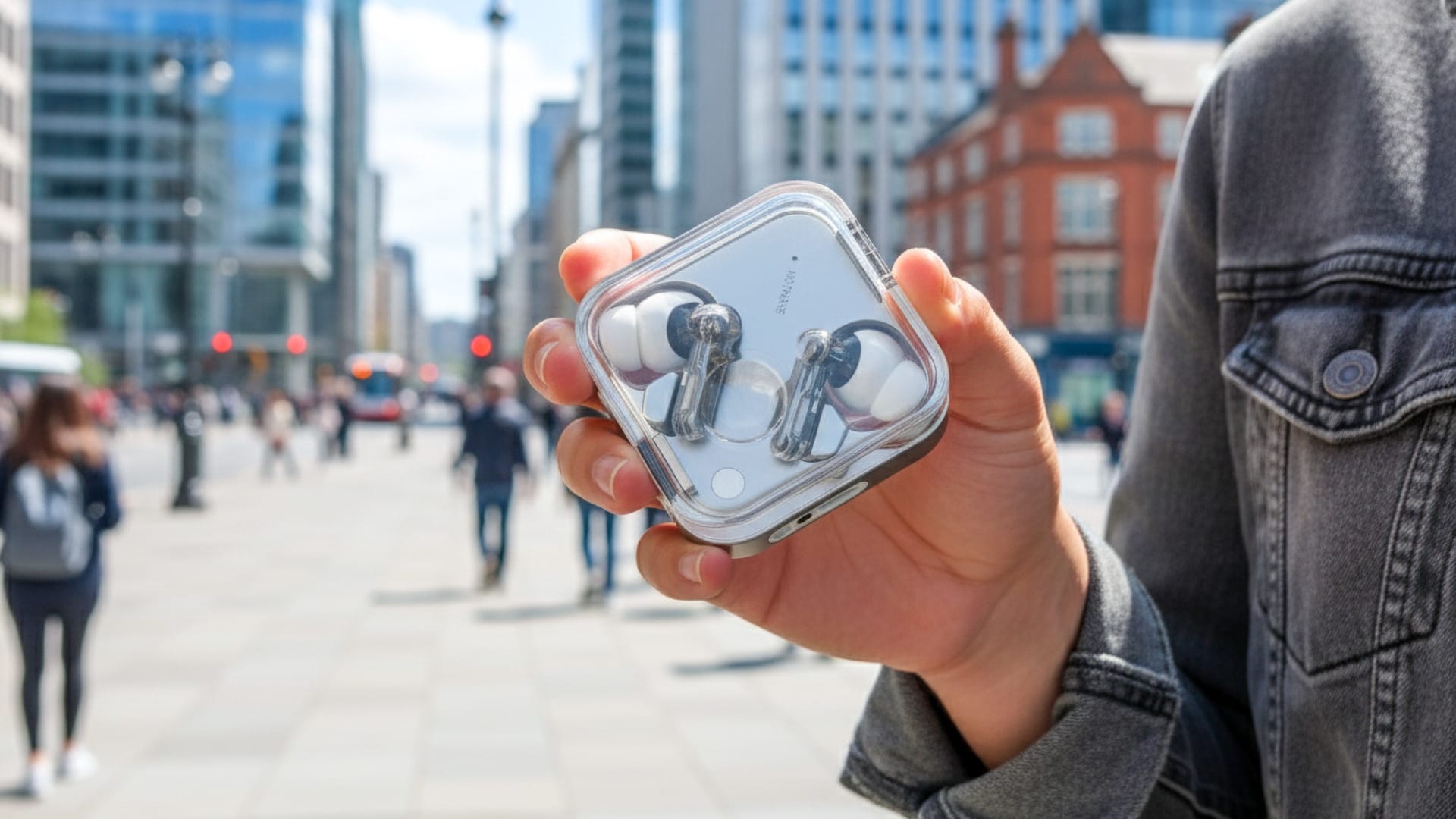
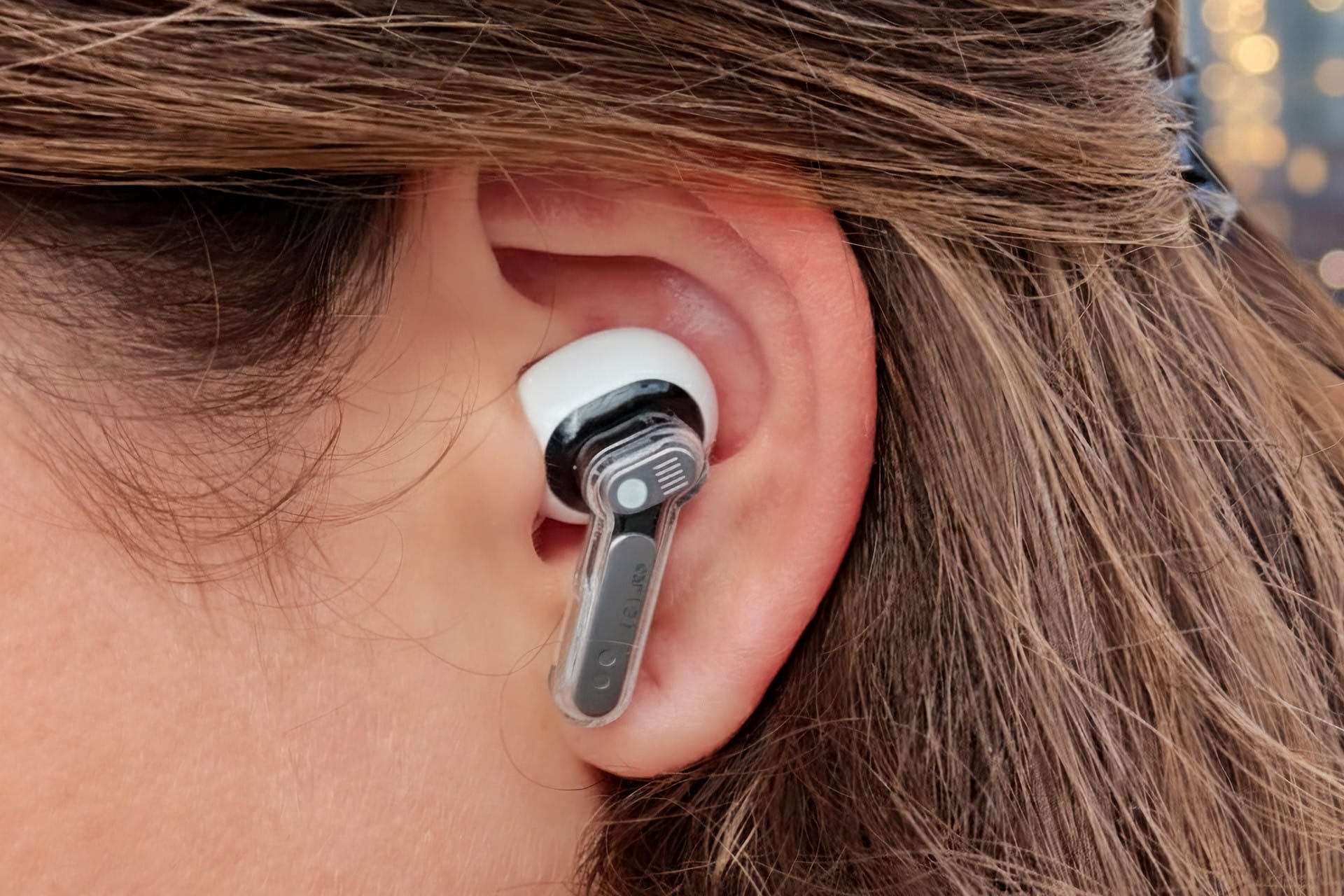
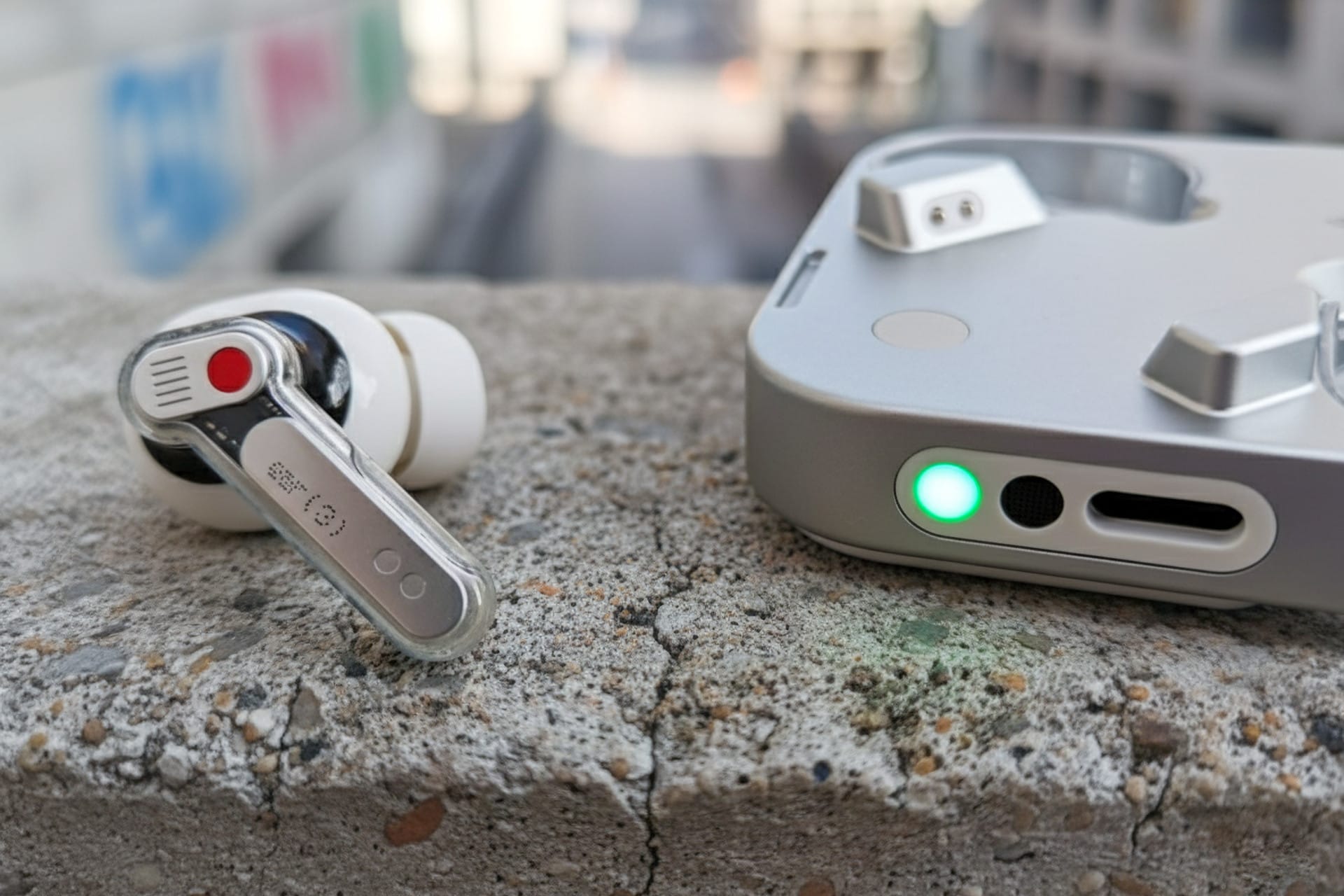
At first glance, the Nothing Ear (3) look familiar, but a lot has changed in the details. The buds remain transparent but now feature subtle metal accents. Nothing introduced this design element with the Headphone (1) and it also suits the in-ear headphones very well. As a result, they look more modern and elegant without losing the typical Nothing look.
The charging case has noticeably grown and weighs around 71 grams together with the buds. This makes it almost 20 grams heavier than its predecessor. This is noticeable in your pocket, but it feels more robust and higher quality in your hand. Aluminium surfaces give the case a cool touch and make it clear that Nothing has taken a step forward in terms of materials.
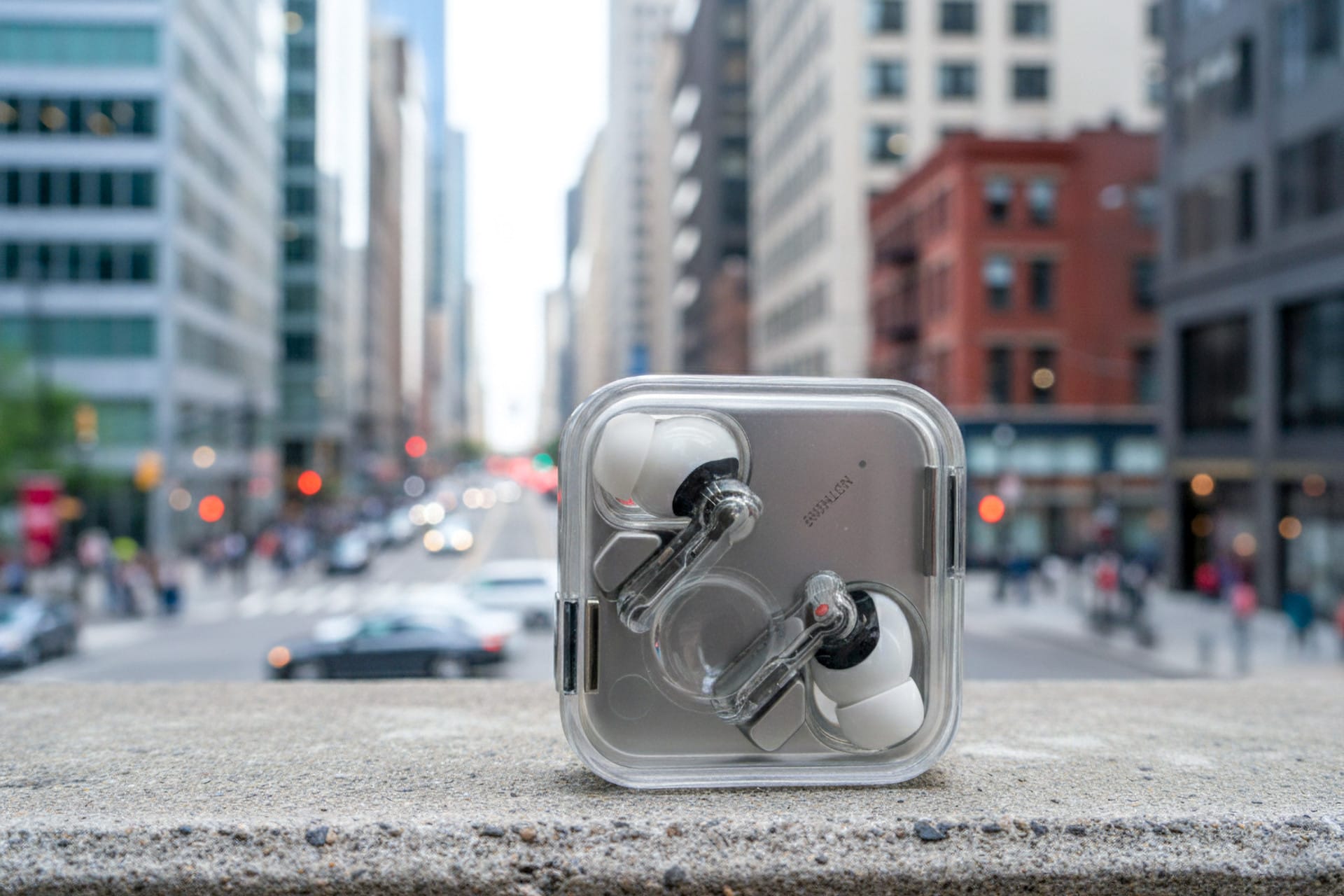
Notable new features are the Talk button and the small microphone opening on the side, meaning the charging case can do more than just charge. There is also now a loop for a lanyard, allowing you to quickly attach the case to a backpack or keyring.
The earbuds themselves have also grown slightly, weighing around 5 grams each. Despite this small increase, they sit comfortably in the ear, and minor adjustments to the angle make them even more pleasant to wear. On a flight to Ponta Delgada, I had them in my ears for nearly five hours continuously without any pressure points forming.

Secure fit is ensured by the included ear tips in multiple sizes, though I was fine with the standard tips immediately. The buds stayed stable even during rapid head movements or when I fell asleep on a plane. Those needing a particularly tight seal can alternatively use memory foam tips.
The buds and case are also IP54 certified and therefore protected against dust and water splashes. So a shower or a sweaty workout won't affect them.
Controls and app
Control of the Ear (3) continues via pressure-sensitive stems that respond with clear click feedback. This feels more precise than touch surfaces and prevents accidental inputs. In the Nothing X app, gestures can be freely customised. Whether changing tracks, switching ANC or activating the voice assistant, each click can be assigned.
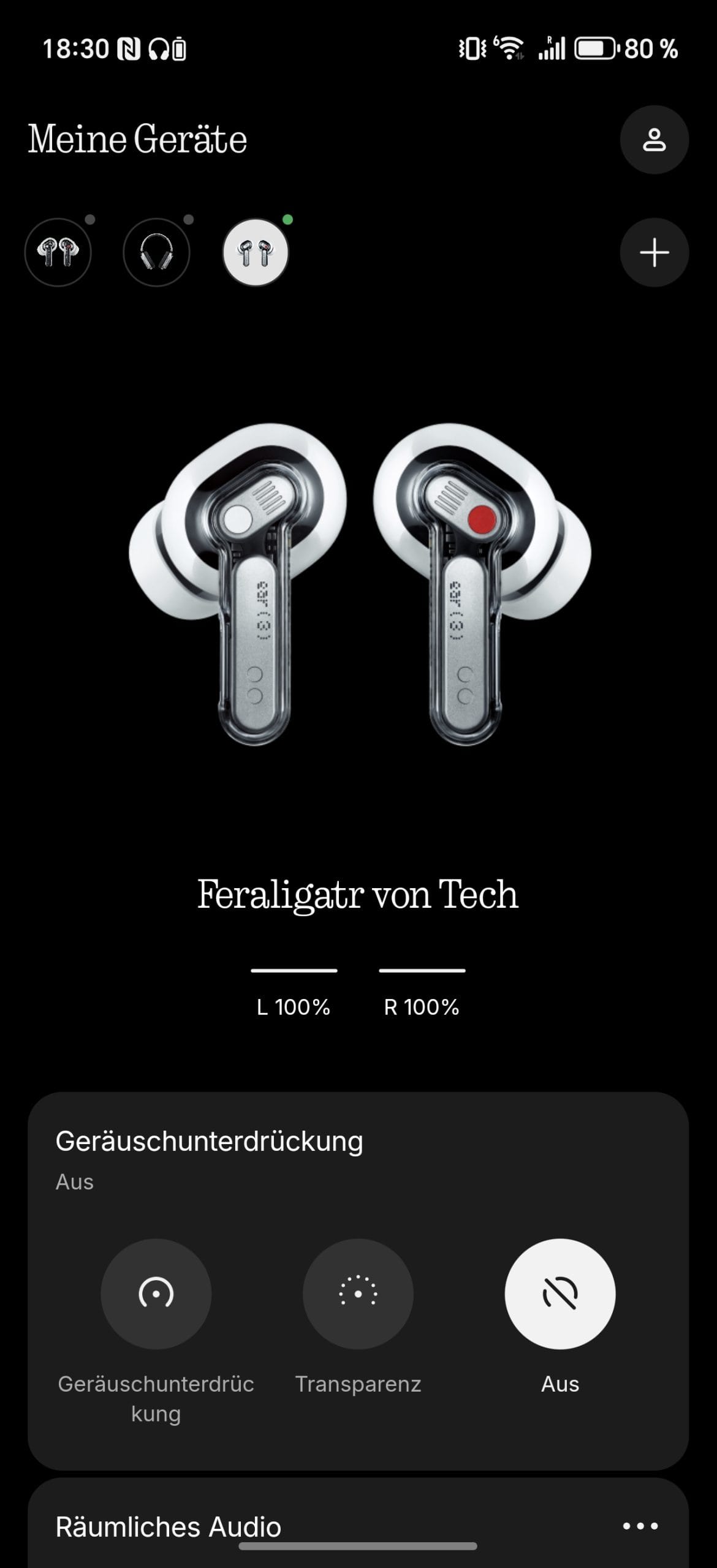
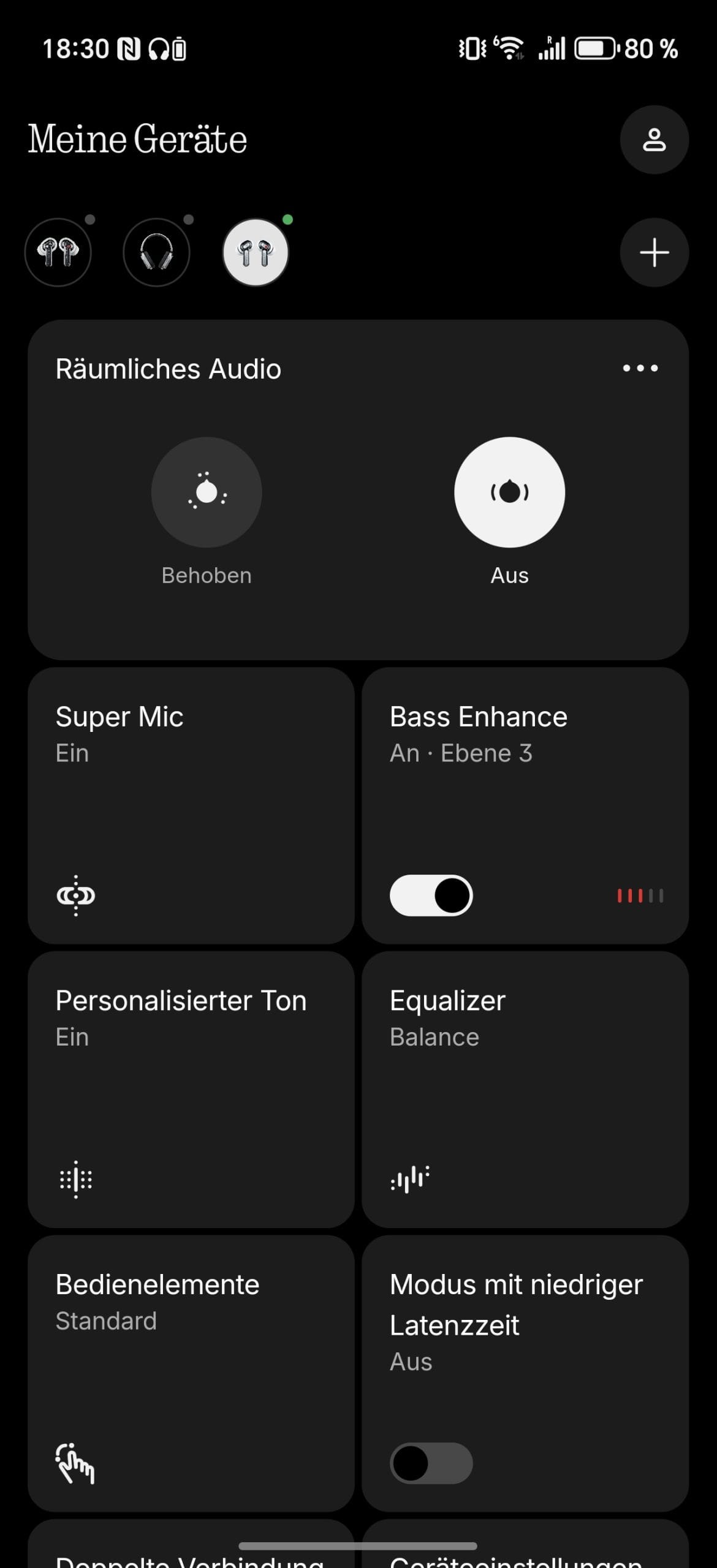
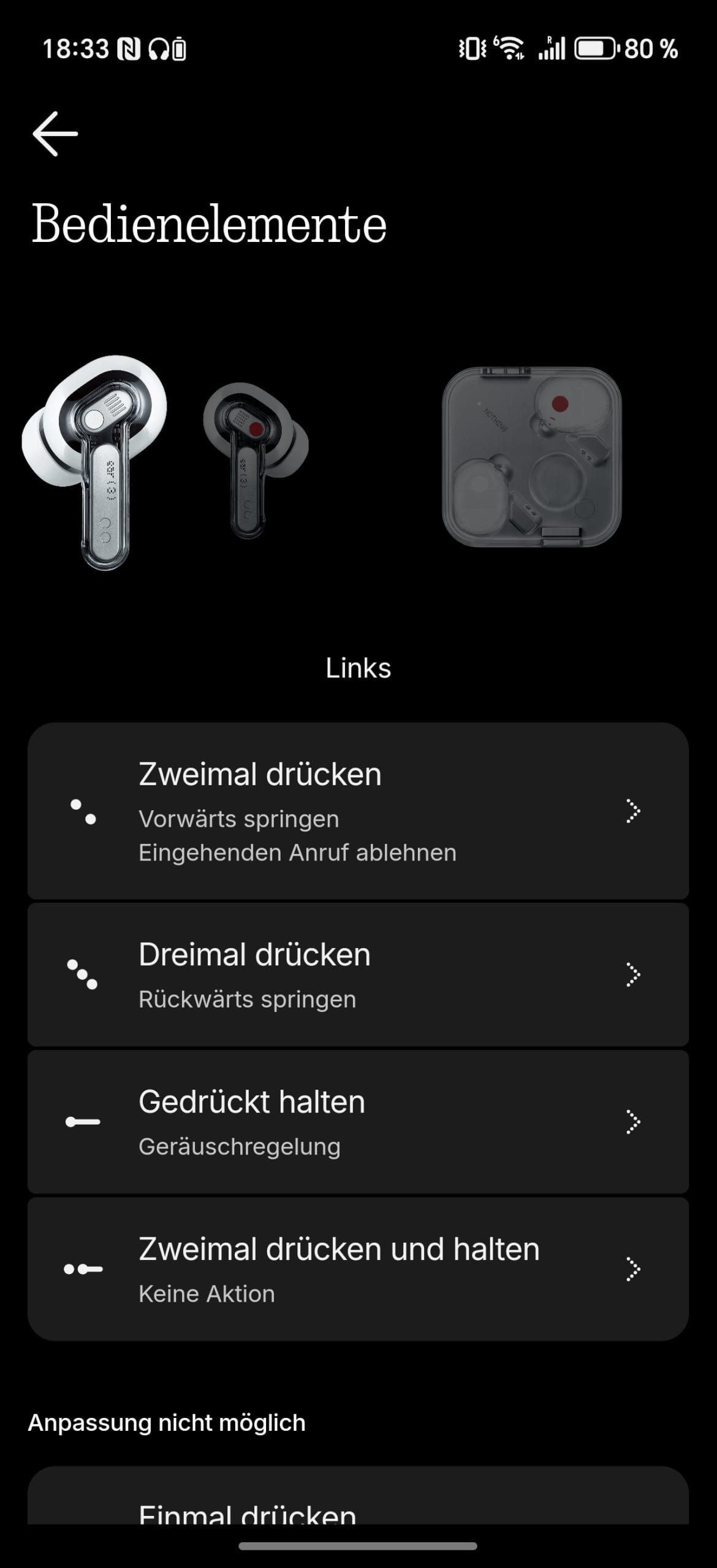
On the home screen, the app displays the battery levels of the buds and case, along with the status of ANC and Super Mic. The in-ear detection is handy, automatically pausing playback when you remove a bud and resuming it when you insert it. If you misplace your buds, you can make them emit a tone using the Find My function.
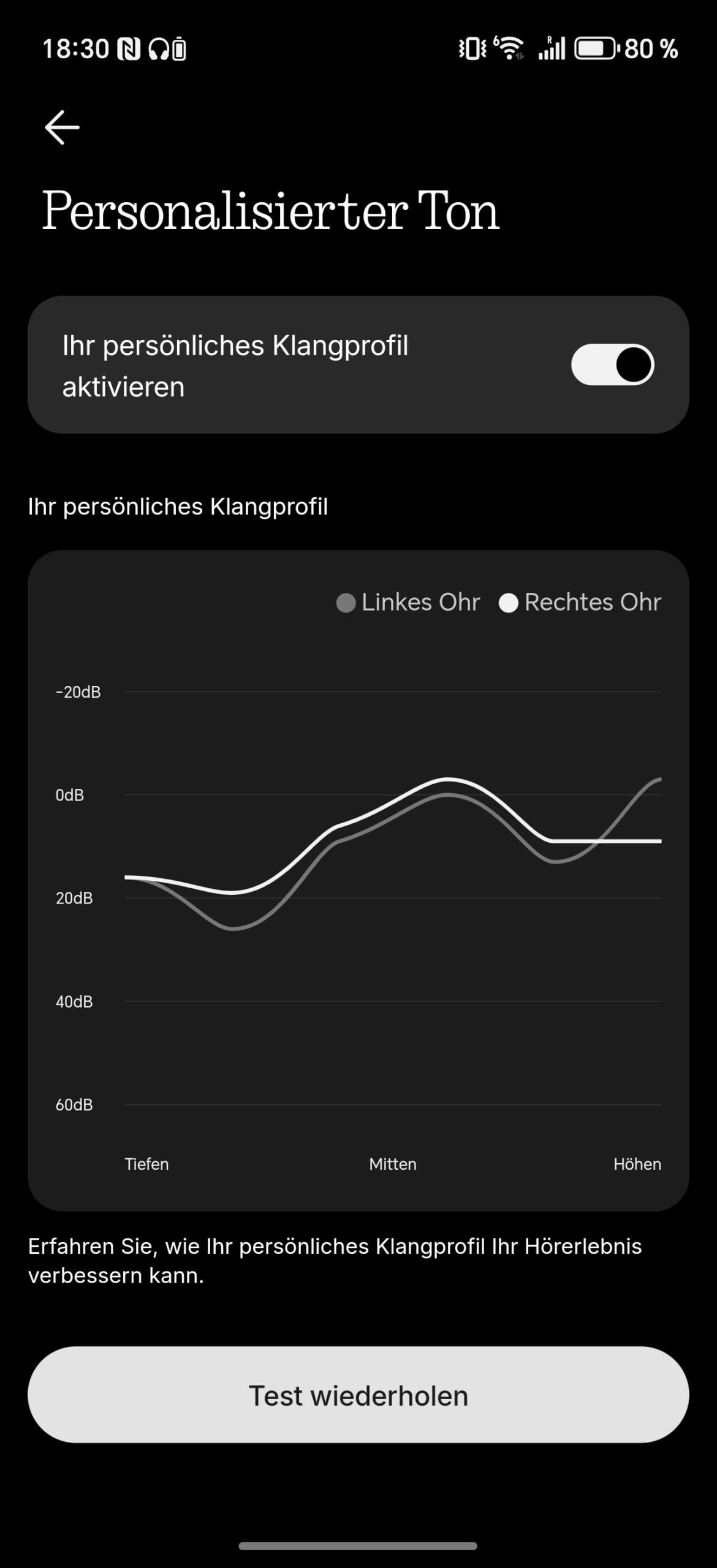
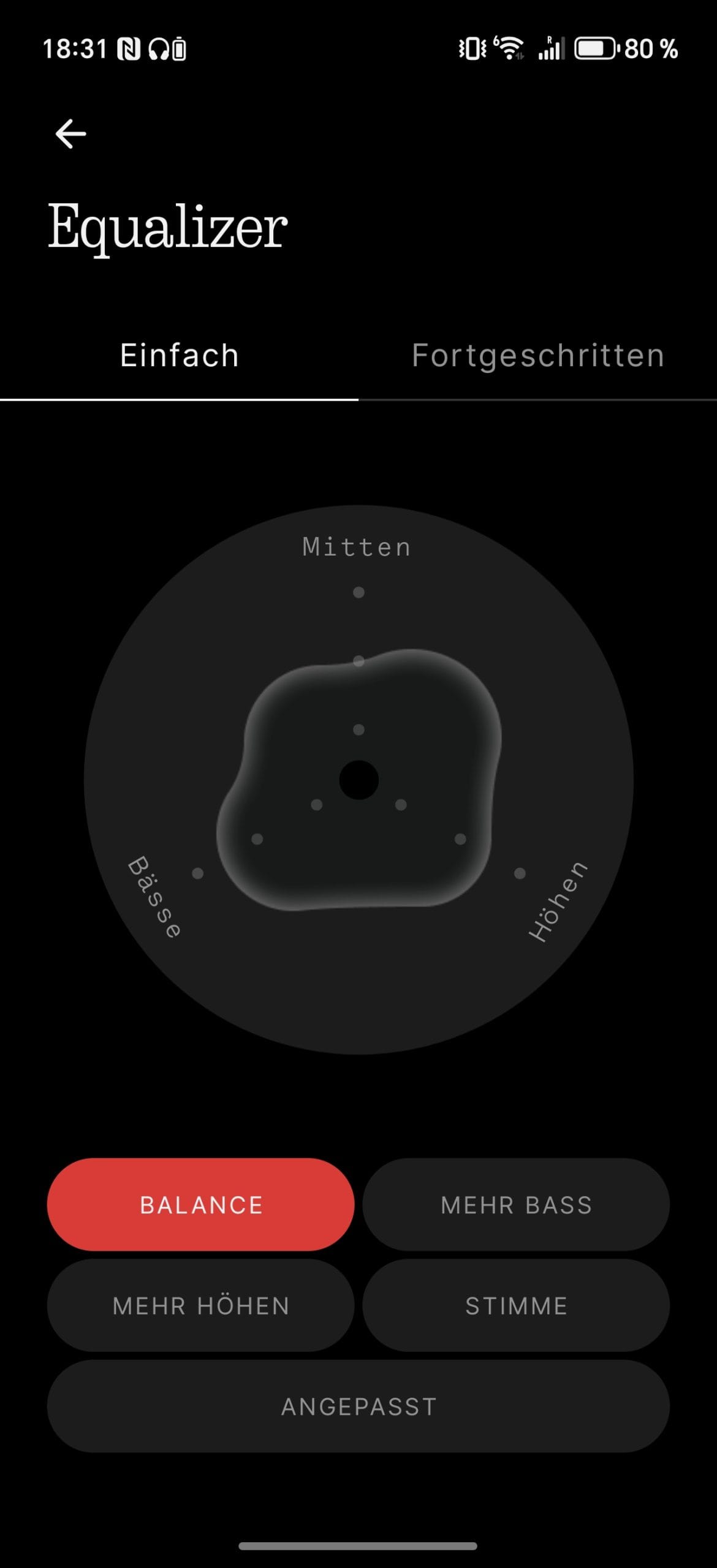
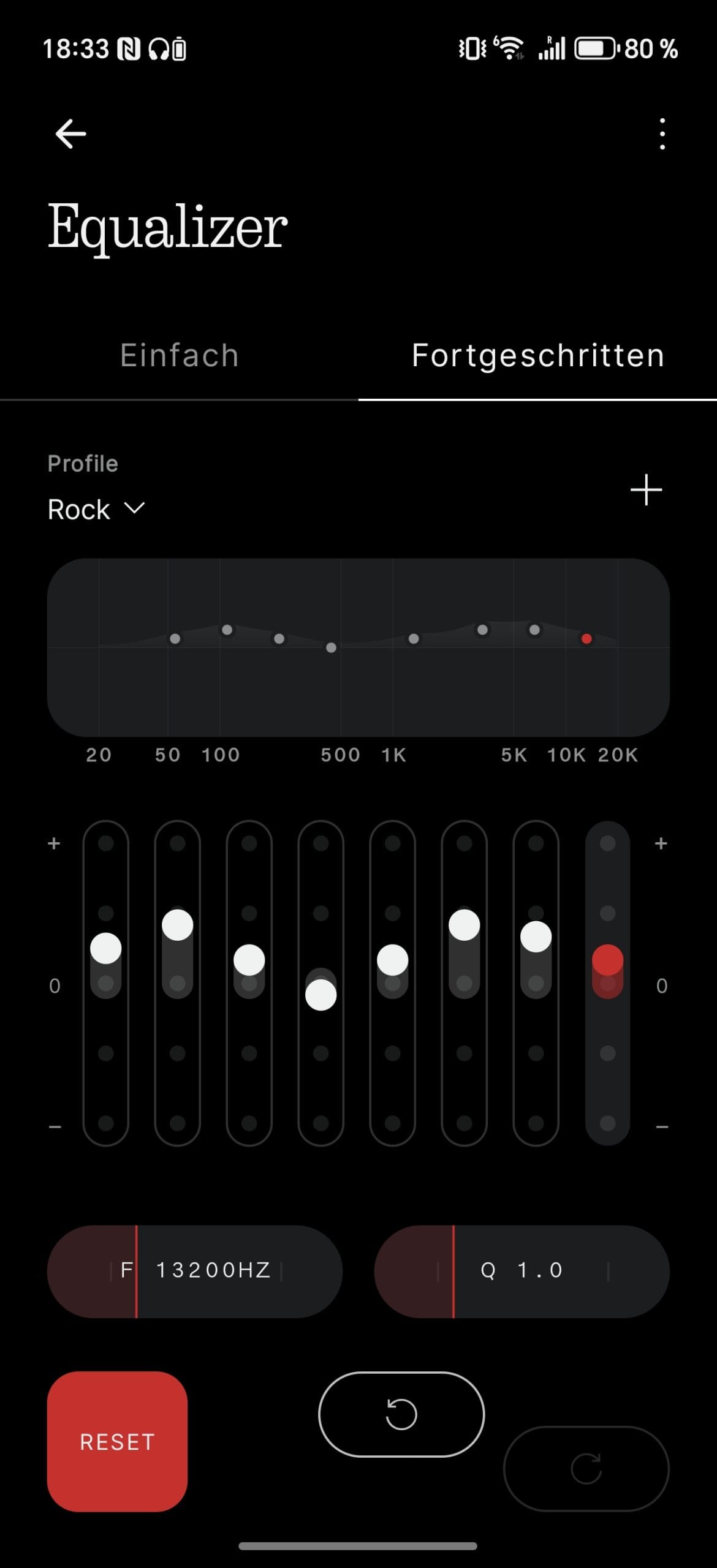
There are three levels of sound options. The equalizer is available in a simple version with presets and an advanced 8-band variant. The generated EQ curves can be saved and loaded in profiles. Additionally, Nothing offers the feature "Personalised Sound". This is a hearing test that creates an individual sound profile for each ear, based on the frequencies actually heard. The result is sound tailored to your own hearing ability, which makes an audible difference, particularly for voices and fine details.
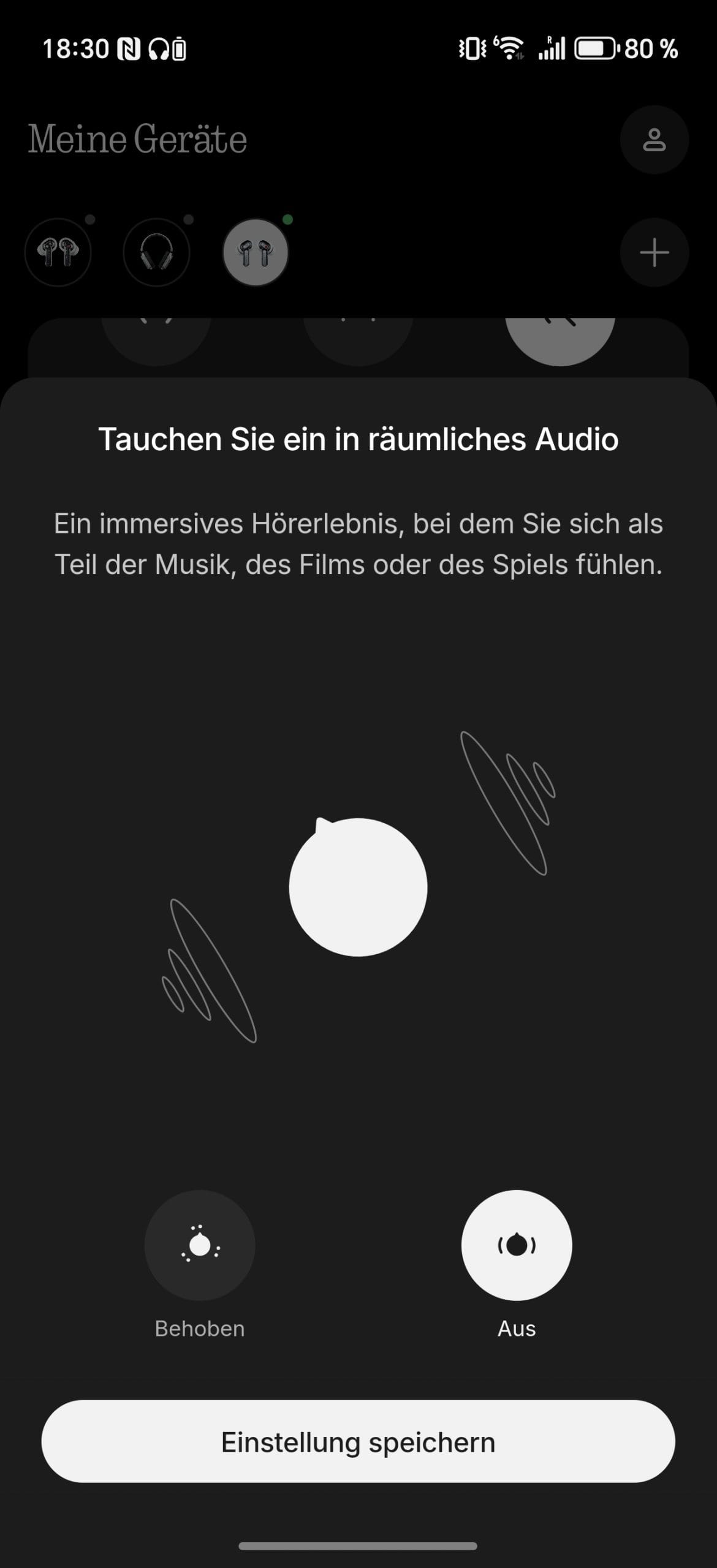
New is Spatial Audio, which is used for the first time in Nothing in-ear headphones. This artificially widens the sound, making music or films appear more immersive. If you activate the function, the Bass Enhancer and Equalizer automatically switch off. The app displays a notification for this. If you deactivate Spatial Audio again, you must manually reactivate the previous settings, as they are not saved. In dual-connection mode, the app also points out limitations, such as the Super Mic not being fully usable.
The noise cancellation can be controlled flexibly. Besides the adaptive mode, which automatically selects the appropriate intensity, there are three fixed levels, a transparency mode, and the option to turn off ANC completely. This is practical in everyday life when switching between the office, traffic, and aeroplanes, requiring more or less shielding depending on the situation.
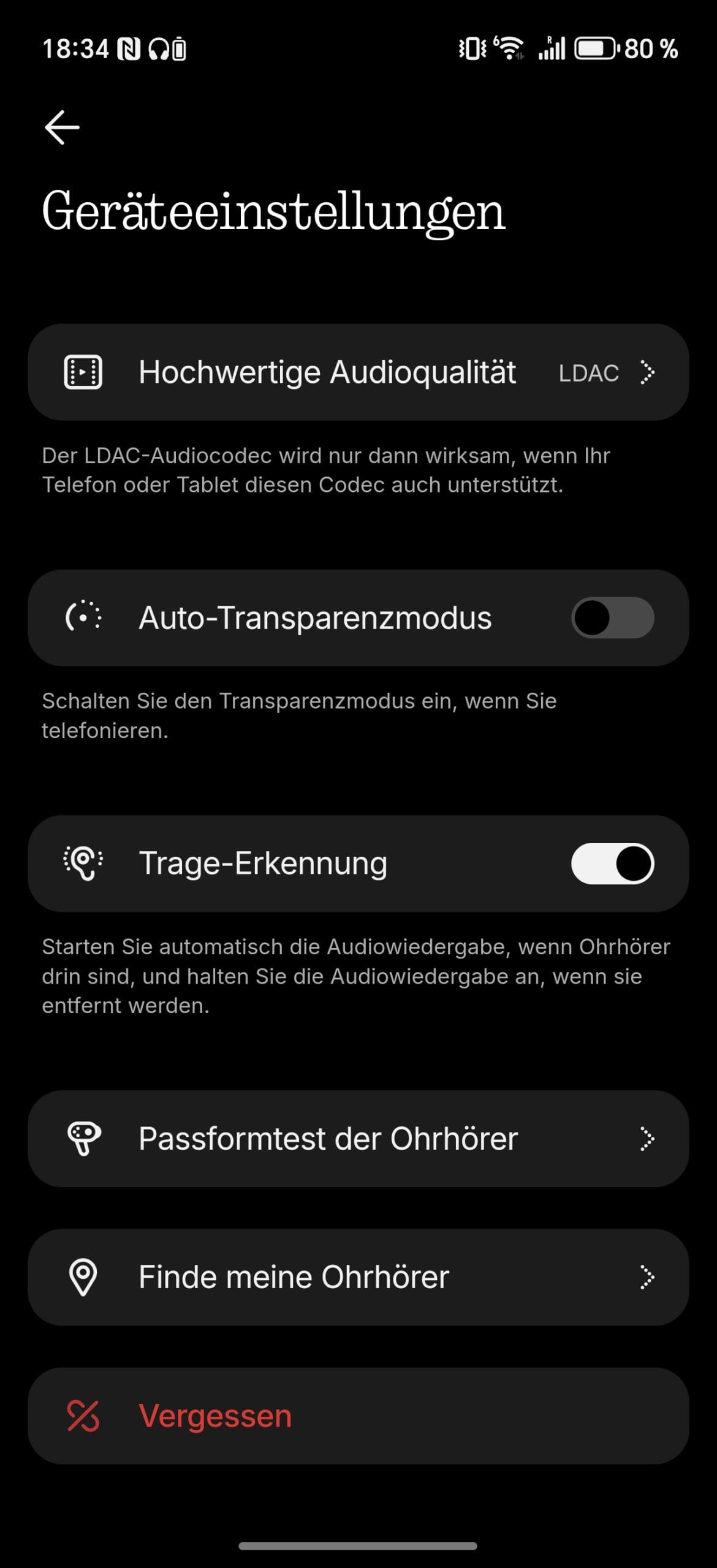
Specifically for gamers, there is low lag mode, which reduces latency. But even without this mode, image and sound were synchronised without problems in the test, whether streaming or mobile gaming. Firmware updates run via the app as usual.
Sound quality and ANC
With the Ear (3), Nothing has increased the drivers from 11 to 12 millimetres and now uses a combination of a PMI membrane and an elastic TPU edge. This ensures noticeably greater dynamics and more foundation in the bass. On the flight to Ponta Delgada, this was particularly noticeable. Even with a high noise floor, the bassline remained full without becoming boomy. Voices and highs sounded clearer than in the previous model, and the overall sound stage was wider.

The sound continues to follow an energetic tuning with strong bass and present highs. With Michael Jackson's "Billie Jean", the iconic bassline comes through crisply, while the vocals remain clearly in the foreground. In Led Zeppelin's "Stairway to Heaven", the Ear (3) convince with a detailed reproduction of the acoustic guitar, before the electric guitars enter with impact and width in the second part. Electronic tracks also benefit; "Lose Yourself to Dance" by Daft Punk plays with a full groove, while the bass remains controlled and does not mask the mids.
Those who prefer a more neutral sound can adjust it using the equalizer. Especially in combination with "Personalized Sound", details are noticeably better highlighted. For me, it sounded as if vocals were more emphasised and instruments were separated more clearly from each other. In combination with LDAC, the high-resolution codec that the Ear (3) now supports by default, acoustic pieces and complex arrangements sound more detailed, provided the source supports it.
Spatial Audio was less convincing to me. Instead of an immersive 3D effect, I felt more like I was sitting in a box. The sound sounded unnaturally reverberant. However, I know this phenomenon from other headphones with Spatial Audio, which is why I personally rarely use the function. It might be interesting for films, but when listening to music, I prefer to stick with classic stereo with EQ.
Nothing has also improved the noise cancellation. The Ear (3) should block out up to 45 dB. In the full terminal at Frankfurt airport, I hardly noticed the monotonous murmur of conversations anymore. On the subsequent flight, the ANC evenly reduced the drone of the turbines, so music and podcasts came through without problems even at medium volume. Sudden noises such as rattling drink trolleys or conversations from fellow passengers are less consistently suppressed. A typical shortcoming of in-ears, which remains noticeable here too. The adaptive mode responded reliably to changing environments, but in very loud situations felt hardly different than the highest setting.
The transparency mode, on the other hand, sounds very natural. While waiting at the gate, I could clearly understand announcements without having to take out the buds. A quick switch between ANC, transparency and off can be comfortably done via pinch gesture or app.
Super Mic and telephony
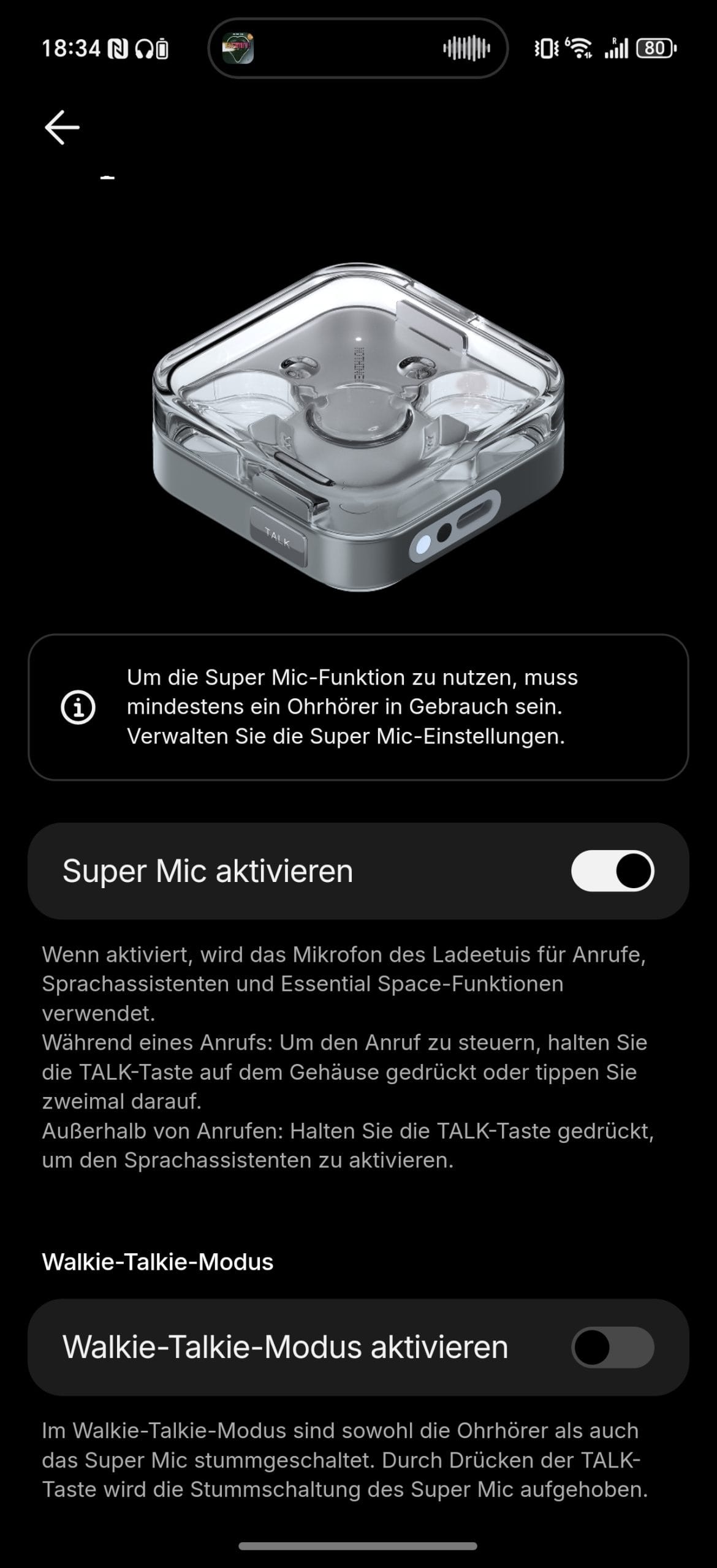
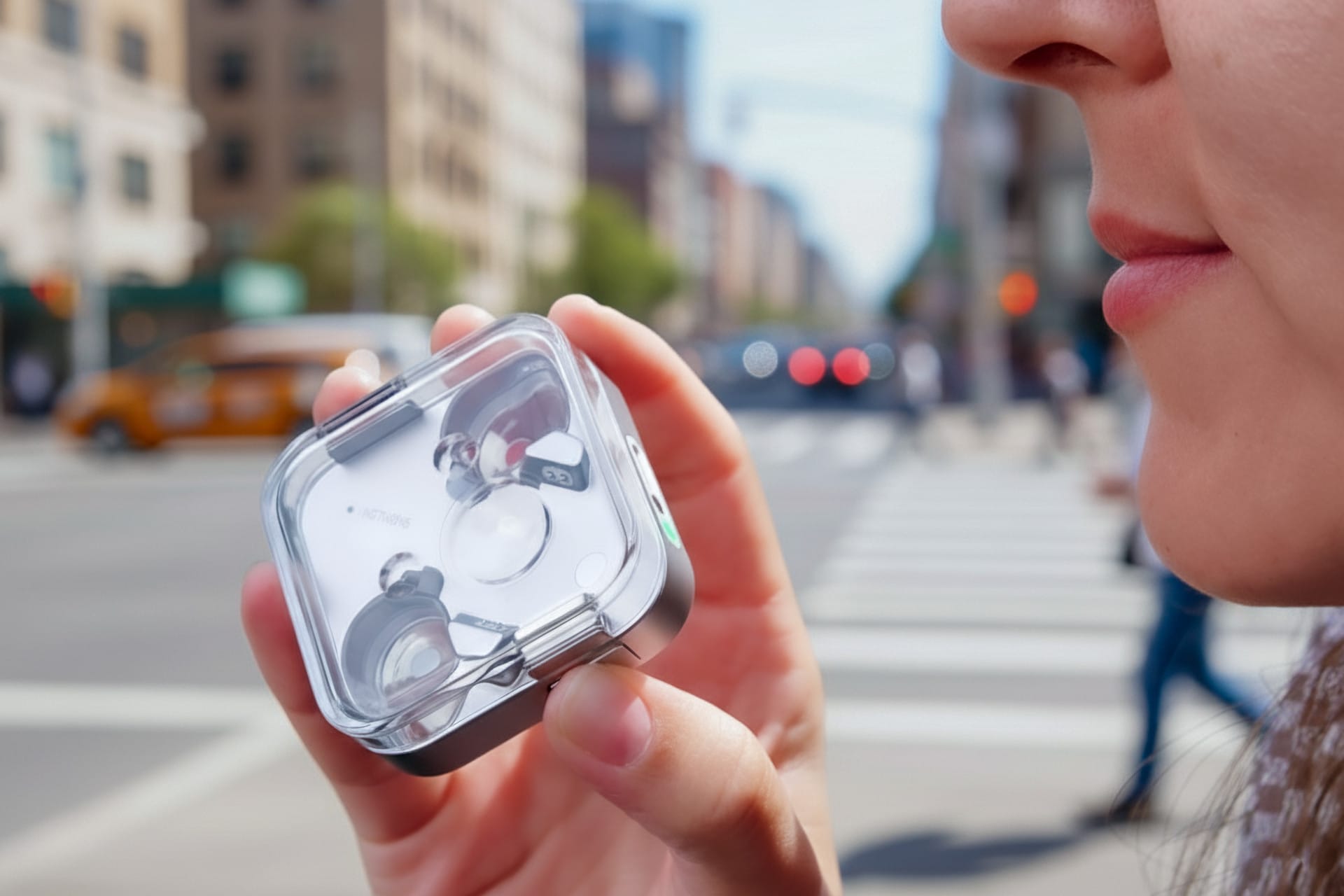
The most notable new feature of the Ear (3) is the so-called Super Mic, located in the charging case. A talk button on the side activates the microphone, allowing you to speak directly into the case rather than through the buds. At first glance, speaking with the case in front of your mouth seems a bit odd, but in everyday use, it is surprisingly practical.
I made the first test calls at Frankfurt Airport. With Super Mic activated, my voice sounded clearer and less digitised to the other party than when I only used the buds' microphones. The background noise of the environment was not completely filtered out, but sounded significantly muffled. Even in the dense crowds at the gate, I was easily understood.
On the plane, I used the Super Mic for short voice memos. This allowed me to speak more quietly than usual without the recording losing clarity. This is a useful feature if you want to quickly save notes on the go. If you use a Nothing Phone, you can record voice memos directly in Essential Space and have them automatically transcribed.
Even without Super Mic, the Ear (3) delivers strong call quality. Each earbud houses three microphones that work together with a Voice Pickup Unit (VPU). This VPU detects vibrations on the jawbone and ensures that your own voice is better separated from background noise. Calls via the Ear (3) sound clean, wind noise or passing cars were reliably filtered during my conversations on the Azores. In direct comparison to the predecessor, voices sound less tinny and significantly more natural.
However, the feature does not work without limitations. In our test, some apps did not automatically detect the Super Mic and continued to use the earbuds' microphones. It worked perfectly with WhatsApp and Zoom, but I had to intervene manually with the standard voice memo app on my smartphone.
Battery and battery life
Nothing has upgraded the batteries in the Ear (3). Each bud now houses 55 mAh, and the case provides 500 mAh. According to the manufacturer, this should provide up to 10 hours without ANC or 5.5 hours with ANC. With the case, battery life is extended to up to 38 hours. With LDAC, the duration is shortened as usual, as the codec consumes more energy.
During a five-hour flight to Ponta Delgada, a pair of buds with active ANC and LDAC lasted almost the entire journey. They ran out of battery shortly before landing. This means the Ear (3) comfortably covers a medium-haul flight. After a brief charge in the case, they had enough power again for the transfer from the airport to the accommodation.
Fast charging is also back on board. Ten minutes on the cable were enough in the test for around ten hours of music enjoyment (buds plus case, AAC, ANC off). The buds are fully charged in about 70 minutes, wirelessly it takes around two hours. Those who often forget to recharge in everyday life will easily get through the day with a short pit stop.
Compared to its predecessor, this is a noticeable improvement. Where the Nothing Ear lasted barely four hours with ANC enabled, the Ear (3) now delivers a solid five. The case has also become more efficient, achieving slightly longer total runtime despite the same capacity. However, the Super Mic draws additional power from the case. Those who use it regularly should keep this in mind.
For absolute power users, there are models on the market that last even longer. However, the battery life of the Ear (3) is more than sufficient for commuters, weekend trips or a flight across Europe, and in combination with the practical Qi charging, the energy concept fits well into the overall package.
Our verdict
Rather than a radical redesign, the Ear (3) offers refinements in almost every area. The design remains distinctive but appears more refined and premium thanks to the new metal accents. The case also sits more securely in the hand and introduces the Talk Button, a feature not previously seen on any other true wireless model.
Acoustically, the Ear (3) deliver the best performance in the series to date. More punch in the bass, clearer highs and a wider stage ensure that music sounds more vibrant than on the predecessor. The ANC is strong enough for flights and open-plan offices, although flagship models from Bose or Sony still provide more effective noise isolation. The transparency mode impresses with a natural sound profile.
The new Super Mic is particularly exciting. At first glance, it may seem like a gimmick, but in practice it can really make a difference during calls and voice memos. Not everyone will feel comfortable holding the case in front of their face in public, but those who make a lot of phone calls will get a useful extra here.
Battery life is now sufficient for longer trips as well. Nearly five hours with ANC and LDAC are solid, and fast charging along with Qi charging make power management straightforward. However, the Ear (3) are not built for absolute marathon users, but they are more than sufficient for everyday use.
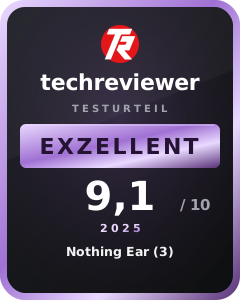
All in all, the Ear (3) are a clever upgrade with noticeably better sound, more flexible ANC and a Super Mic that initially seems odd but turns out to be surprisingly useful. For those who value style and expect substance, the Ear (3) offer a strong all-rounder with typical Nothing flair and a touch of charming weirdness.
Specifications
General
- Drivers
- Dynamic driver
- Size
- 12 mm
- Diaphragm
- PMI + TPU
- Frequency range
- 20 Hz – 40 kHz
- Impedance
- 32 Ω
- Sensitivity
- Unbekannt
Bluetooth
- Standard
- 5.4
- Range
- up to 10 meters
- Codec
- *SBC
- *AAC
- *LDAC (Hi-Res 24-bit certified)
Functions
- *In-Ear wearing detection
- *Google Fast Pair
- *Microsoft Swift Pair
- *Dual Connection
- *Low Lag Mode (up to 110 ms)
- *Static Spatial Audio
- *Transparency Mode
- *Personal EQ (Nothing X App)
- *Dynamic Bass Enhancement
- *Super Mic (with VPU, talk button on case)
- *Customizable Controls
- *Firmware updates via Nothing X
- *Find My Buds
- *Fit test for ear tips
Battery
- Capacity
- 55 mAh (earbuds), 500 mAh (case)
- Playback (AAC)
- *ANC off
- up to 10 hours (buds) / 38 hours (with case)
- *ANC on
- up to 5.5 hours (buds) / 22 hours (with case)
- Playback (LDAC)
- *ANC off
- up to 5.5 hours (Buds)
- *ANC on
- up to 3.5 hours (buds)
- Talk time
- *ANC off
- 5 hours (buds) / 19 hours (with case)
- *ANC on
- 4 hours (buds) / 15.5 hours (with case)
- Charging time
- *Wired (USB-C)
- approx. 70 minutes
- *Wireless (Qi, 2.5 W)
- approx. 120 minutes
- *Fast charging
- 10 minutes = up to 10 hours of playback (buds + case, AAC, ANC off)
Other
- ANC
- Adaptive noise cancellation up to 45 dB
- ANC frequency range
- up to 5,000 Hz
- Microphone
- 3 MEMS + 1 VPU per side (Clear Voice Technology / Super Mic)
- Operation
- Pressure sensors on the buds, talk button on the case, app (Nothing X)
- Water resistance
- IP54 (buds & case)
- LED status indicator for battery and pairing
- CO₂ footprint
- 2.87 kg CO₂e
- Sustainability
- *100% recycled aluminium in the midframe
- *Plastic-free packaging
- *Final assembly with 100 % renewable energy
- *Amazon Climate Pledge Friendly
Size & weight
- Size (Earbud)
- 30.5 × 21.5 × 20.75 mm
- Weight (Earbud)
- 5,2 g
- Size (case)
- 56 × 55.5 × 22.25 mm
- Weight (Buds + Case)
- 71,4 g
What’s included
Nothing Ear (3) charging case, 3 pairs of ear tips, USB-C to USB-C cable, user manual, safety and warranty information
Price comparison
| Store | Price | Link |
|---|---|---|
| Nothing | 109,00 € | Go to store |

Comments (1)
Hi, can I also place the case on the table, record meetings and then transcribe them? Similar to a Plaud Note.