Contents
Higher, Faster, OPPO
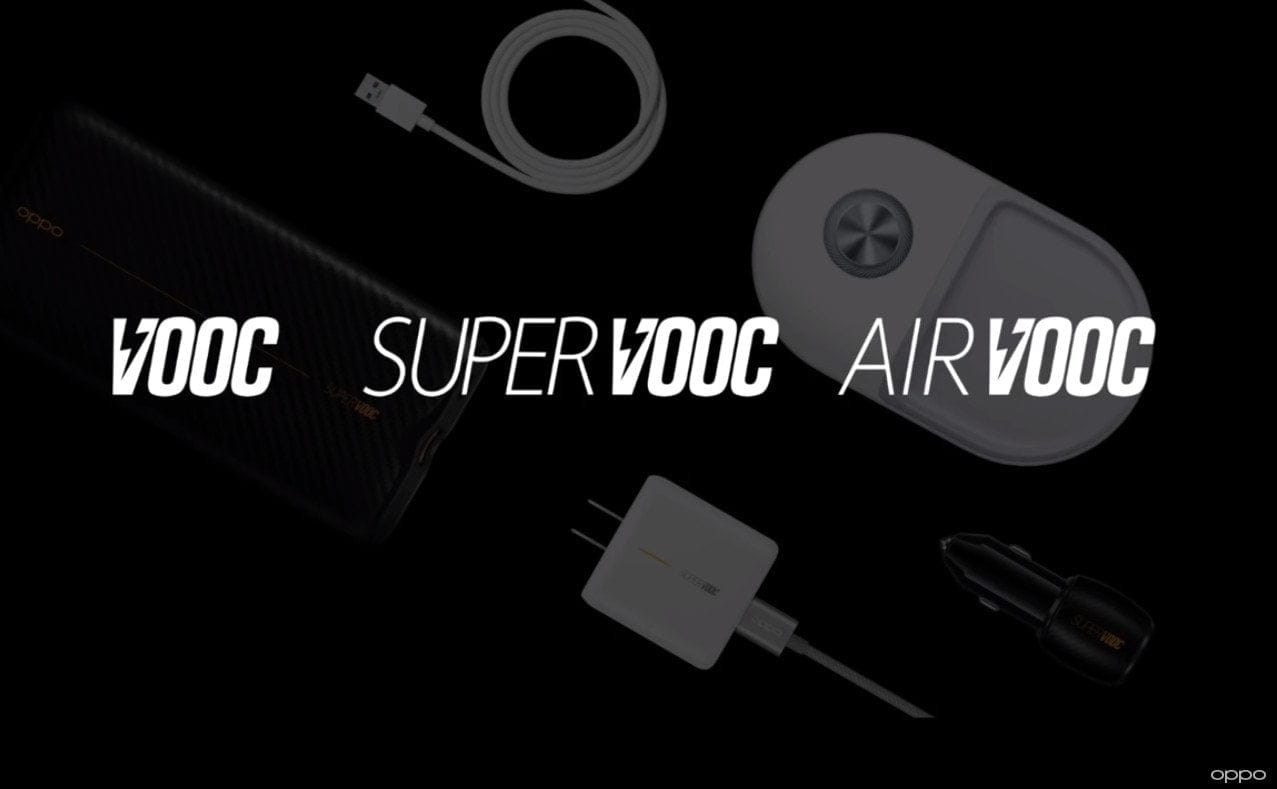
125W fast charging technology
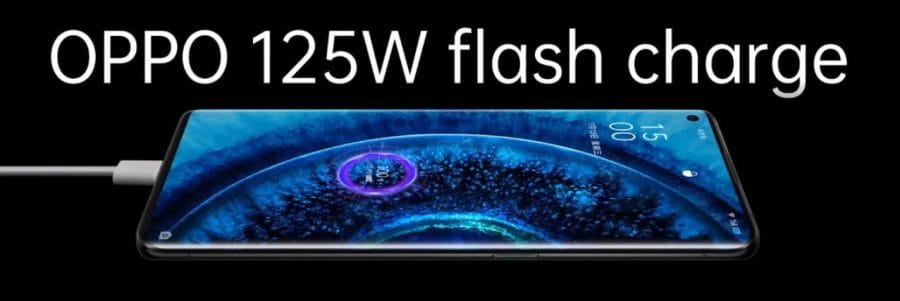
OPPO sets a new milestone in fast-charging technology. As a further development of SuperVOOC technology, the new flash-charge standard charges the smartphone with up to 125 watts (20V / 6.25A). A 4000 mAh battery can be charged to 41 percent in 5 minutes. In just 20 minutes, the battery is even fully charged to 100 percent! To enable this power boost, OPPO has extensively revised the hardware architecture of the new charging system. Smaller and, at the same size, more powerful components ensure less energy loss with higher efficiency.

To control the enormous performance, OPPO has also strengthened the system's safety protection functions. More than 10 temperature sensors, sophisticated overvoltage protection, and a secure 128-bit encryption algorithm monitor the charging process and ensure maximum security during it. Incidentally, the new fast charging technology is also compatible with previous SuperVOOC and VOOC fast charging protocols. At the same time, common protocols such as 65W PD and 125W PPS are supported.
65W AirVOOC

In addition, OPPO has unveiled its new 65 Watt AirVOOC fast charging technology with a parallel dual-coil design and Qi compatibility. The wireless charging standard fully charges a 4,000 mAh battery in just 30 minutes. Here too, OPPO has integrated several mechanisms to ensure particularly safe charging. As demonstrated by the also-presented conceptual 65W AirVOOC charger, foreign objects are detected, and effective thermal regulation is achieved through semiconductor coolers and ventilation.
Source: Press release


Comments