Contents
Test: OPPO A72
Gradually, OPPO’s product portfolio is also growing in local markets. OPPO smartphones are now represented in all price ranges. In addition to the high-end models of the Find series and the mid-range Reno Series, the budget A-Series, which includes the OPPO A72, is also growing.
Design and build quality
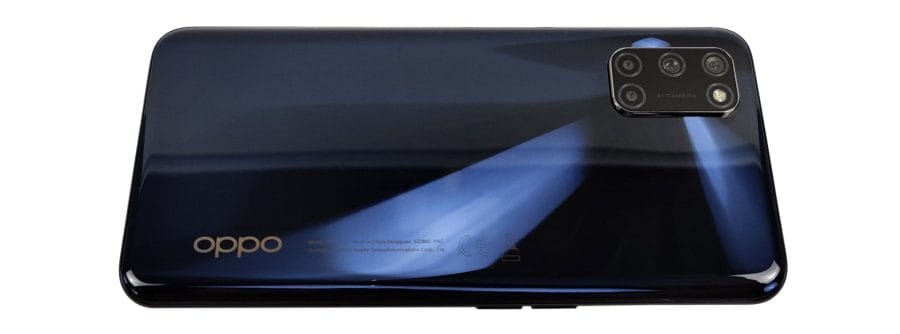
A starry sky in your hand – OPPO describes the design of the OPPO A72 with this succinct phrase. The smartphone is available in exactly two colours: the understated Twilight Black, which looks particularly elegant, and the striking Aurora Purple, which is sure to turn heads. The rear of the housing is made of plastic, which you can also feel. It does not feel quite as smooth as a smartphone with a glass back. However, since we are in the budget price range, this minor compromise is acceptable.
A fingerprint scanner is conspicuously absent from the back. OPPO has conveniently integrated it directly into the power button. This not only makes it easily accessible but also contributes to a cleaner appearance. The rear-mounted, rectangular protruding camera unit, which houses the four camera sensors and the LED flash, is notable. The OPPO logo is located at the bottom right.
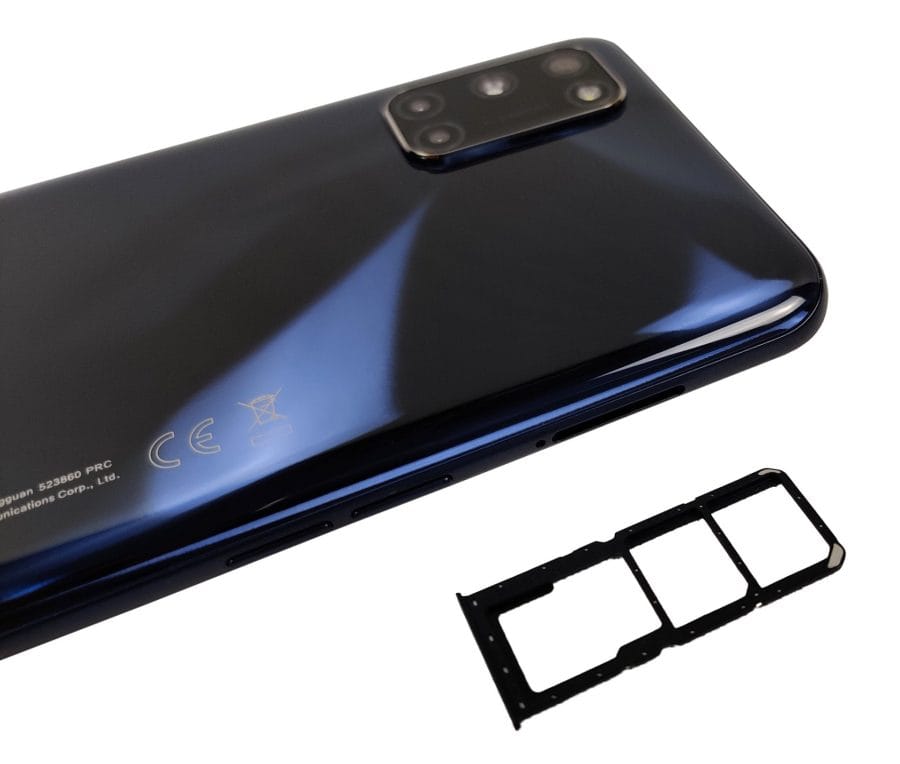
The transition from the back to the housing frame, which incidentally is also made of plastic, is nicely rounded. When we take a closer look at the frame of the 162 x 75.5 x 8.9 mm sized and 192g heavy OPPO A72, the main activity takes place in the lower section of the housing. In the middle there is a USB-C port, additionally surrounded by a 3.5 mm headphone jack, a microphone and a speaker. The volume rocker is located in the upper third of the left frame side, the power button on the right. This arrangement is common and makes it easier to unlock the smartphone with the right hand. Above the volume rocker on the OPPO A72 is the triple SIM slot, which can be populated with two nano SIM cards and a microSD memory card.
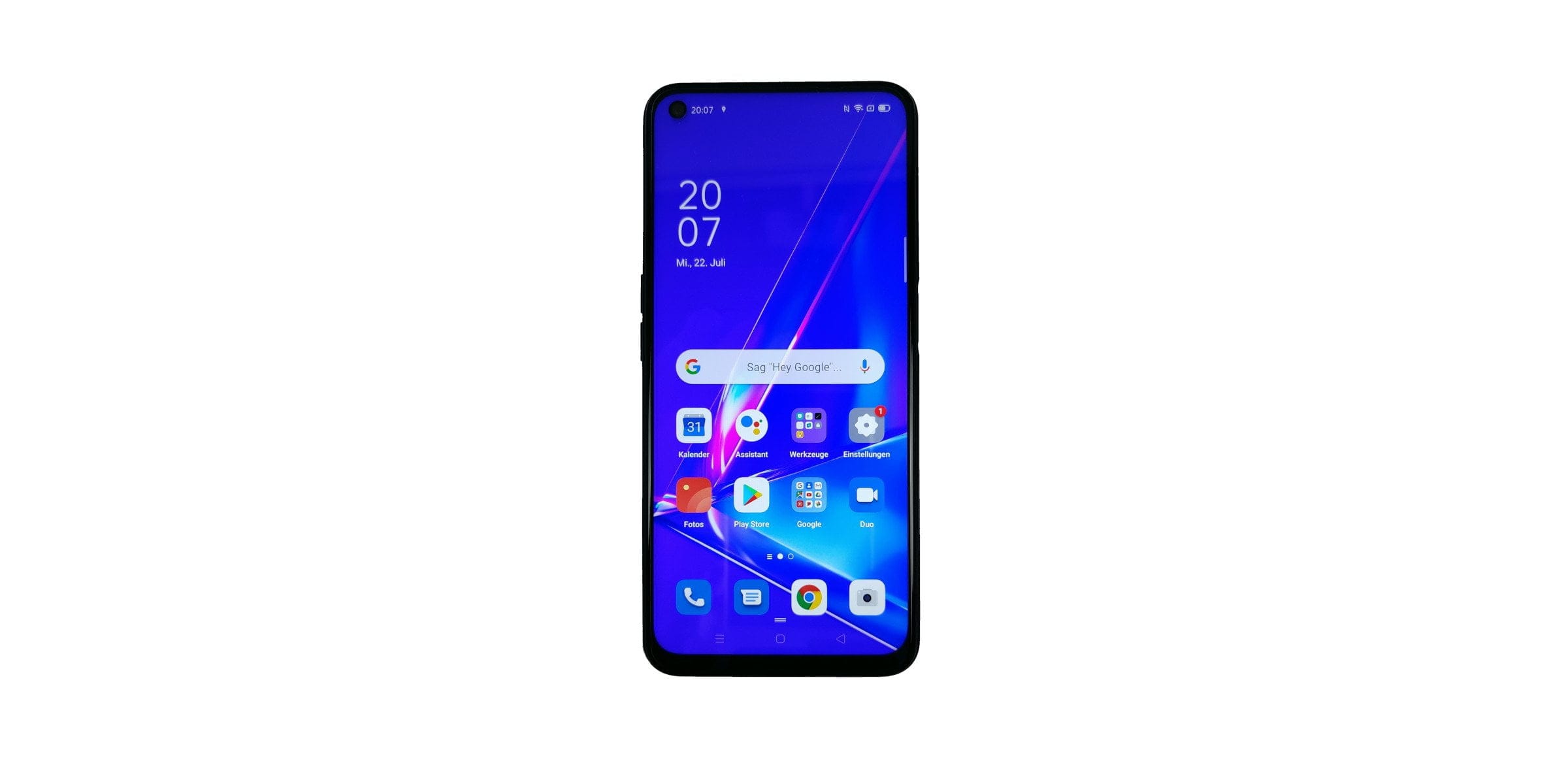
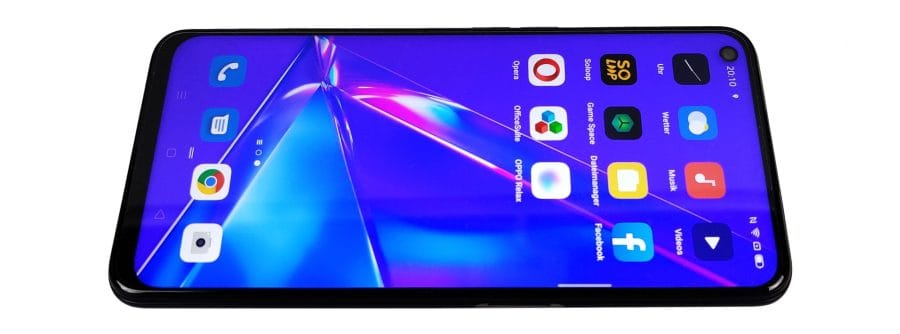
A look at the front does not reveal the OPPO A72 as a budget smartphone. The black bezels surrounding the 6.5-inch IPS display are comparatively narrow for a budget smartphone. At the top and on the sides, the display extends almost to the edge. The "punch-hole" front camera is discreetly hidden within the display. The elongated earpiece above the display is also barely visible. However, there is no notification LED to be found.
The build quality matches the device's price. There were no notable issues or build defects on our test unit. The OPPO A72 presents itself well in this regard!
Display
Let’s take a closer look at the display, which has a resolution of 2400 x 1080 pixels on a 6.5-inch diagonal. While the IPS display type is not quite as colour-rich or contrasty as an AMOLED display, the OPPO A72 in particular stands out with crisp, sharp image reproduction, good viewing angle stability and high display brightness. As expected, there is no refresh rate beyond 60 Hz. The touchscreen responds precisely to input.
Display measurement
The measured brightness of an average of 440 cd/m² roughly corresponds to OPPO's specification (480 cd/m²). Taking into account the black level, which settles at 0.4 cd/m², this results in a static contrast ratio of 1080:1 - "not great, not terrible".


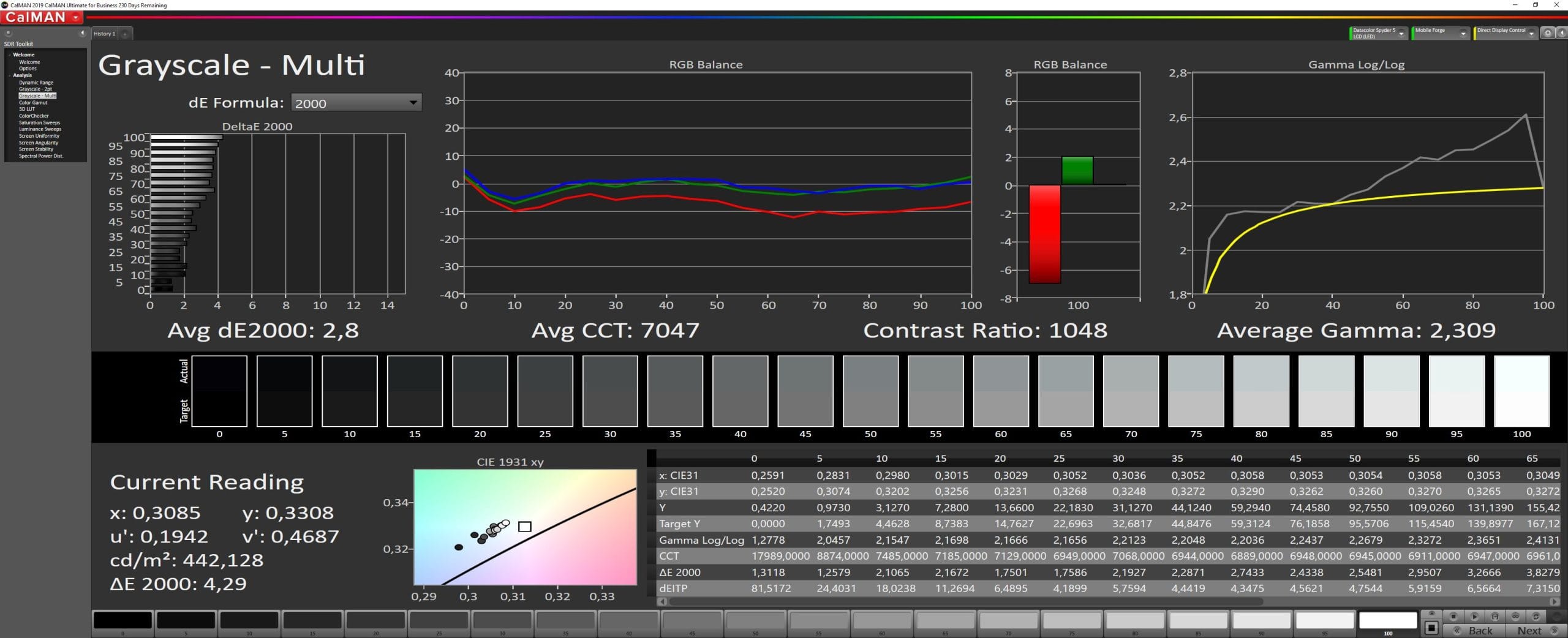
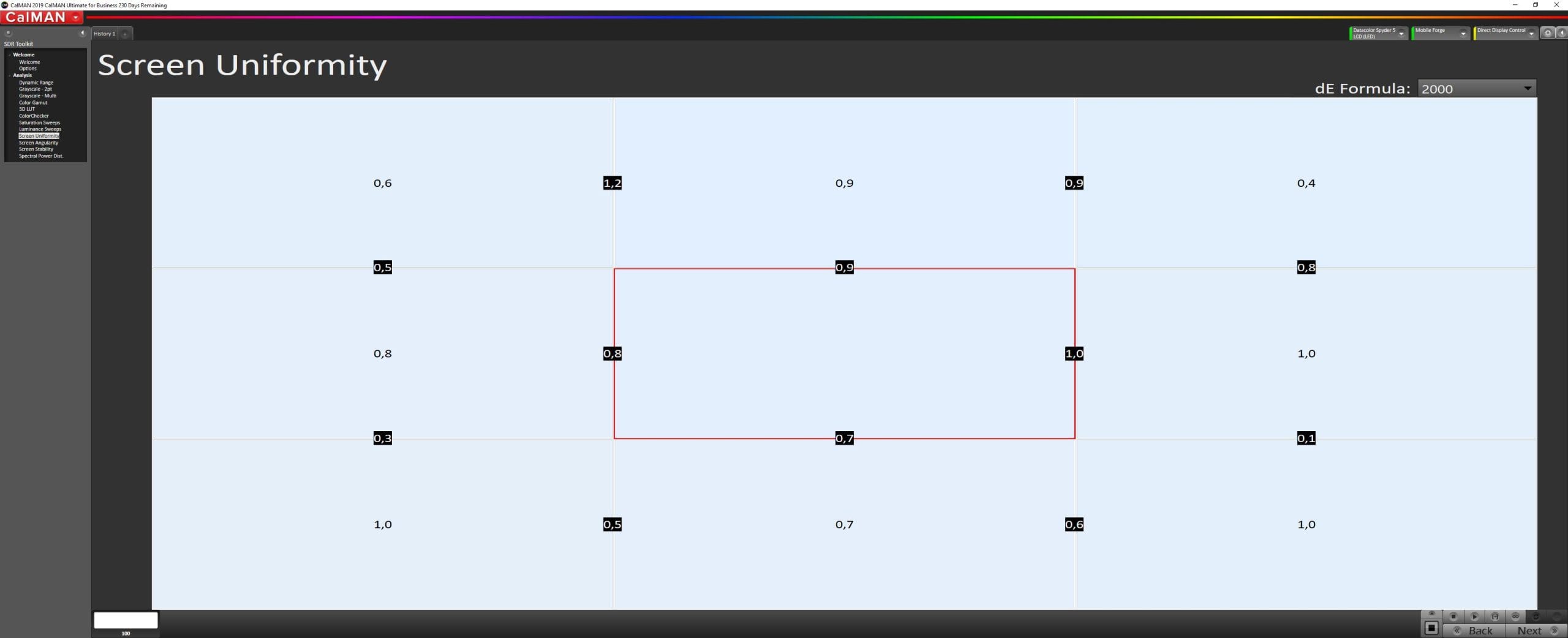
The luminance deviation distributed across the display is at most 30 cd/m². Depending on the colour temperature mode, the colour representation deviates with an average DeltaE of 4.29 - 7.30. The sRGB colour space is fully covered or slightly exceeded. The colour temperature is rather cool in the standard mode. This is due to the increased blue component.
Display settings
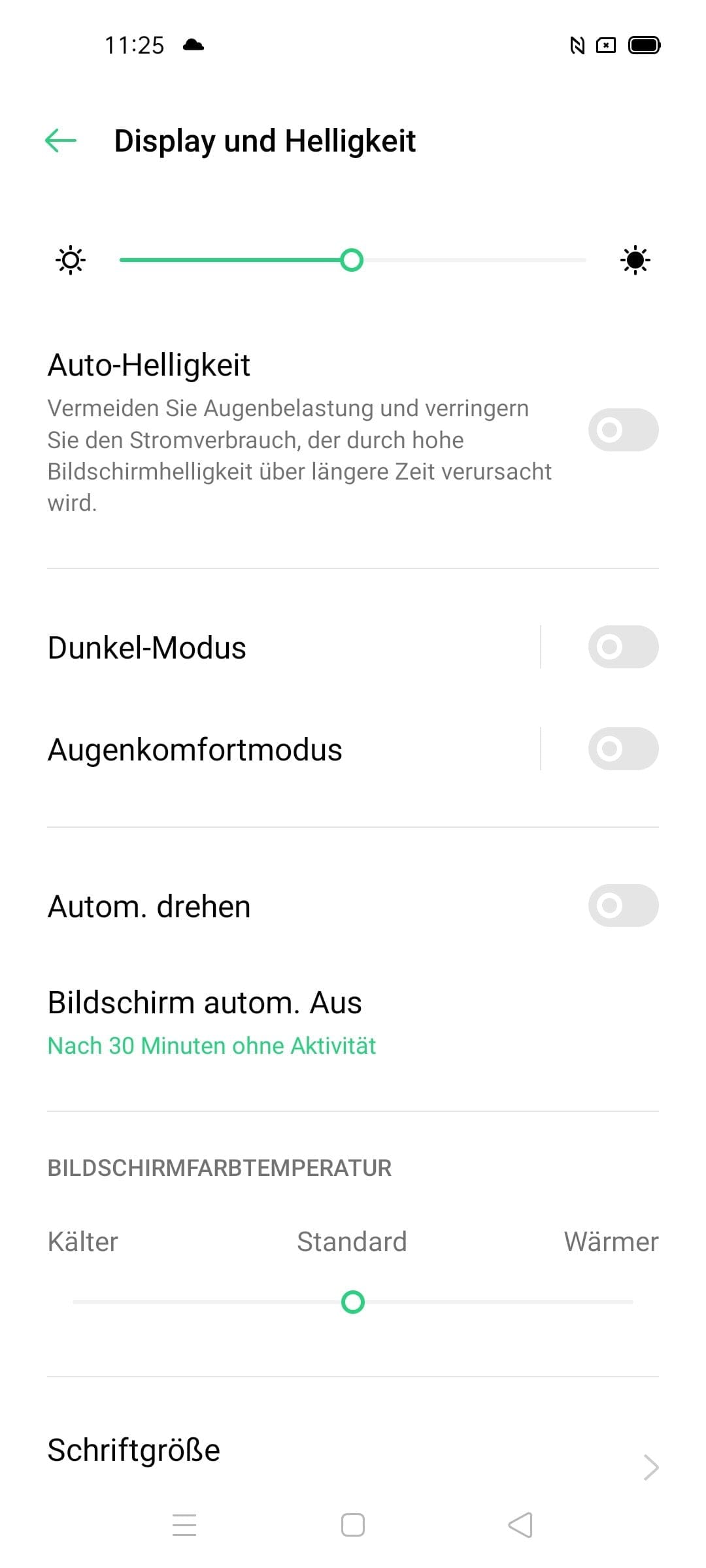
The display settings are limited but sufficient for normal requirements. There is an automatic brightness mode, which smoothly adjusts the display brightness to ambient light, a Dark Mode that can be activated on a schedule, an eye comfort mode that filters blue light in an eye-friendly way, and the previously mentioned colour temperature mode, which allows you to adjust the colour temperature using a slider with options "Cooler - Standard - Warmer".
Performance
Inside the OPPO A72 is the Snapdragon 665 system-on-chip from 2019. The ARMv8-based SoC features eight cores, which are divided into two clusters. The high-performance cluster consists of four Kryo 260 Gold cores (Cortex-A73) clocking at up to 2 GHz. The energy-saving cluster, consisting of four Kryo 260 Silver cores (Cortex-A53) with a maximum clock rate of 1.8 GHz, handles less demanding tasks. Particularly interesting for gamers is the Adreno 610 GPU, which, compared to the Adreno 512 of the predecessor chip (Snapdragon 660), promises a performance boost in mobile games and graphics calculations.
The internal hardware is rounded off by 4GB LPDDR4X RAM and 128GB UFS2.1 storage. For those who need more, it is possible to expand the storage with a MicroSD memory card.
Benchmark
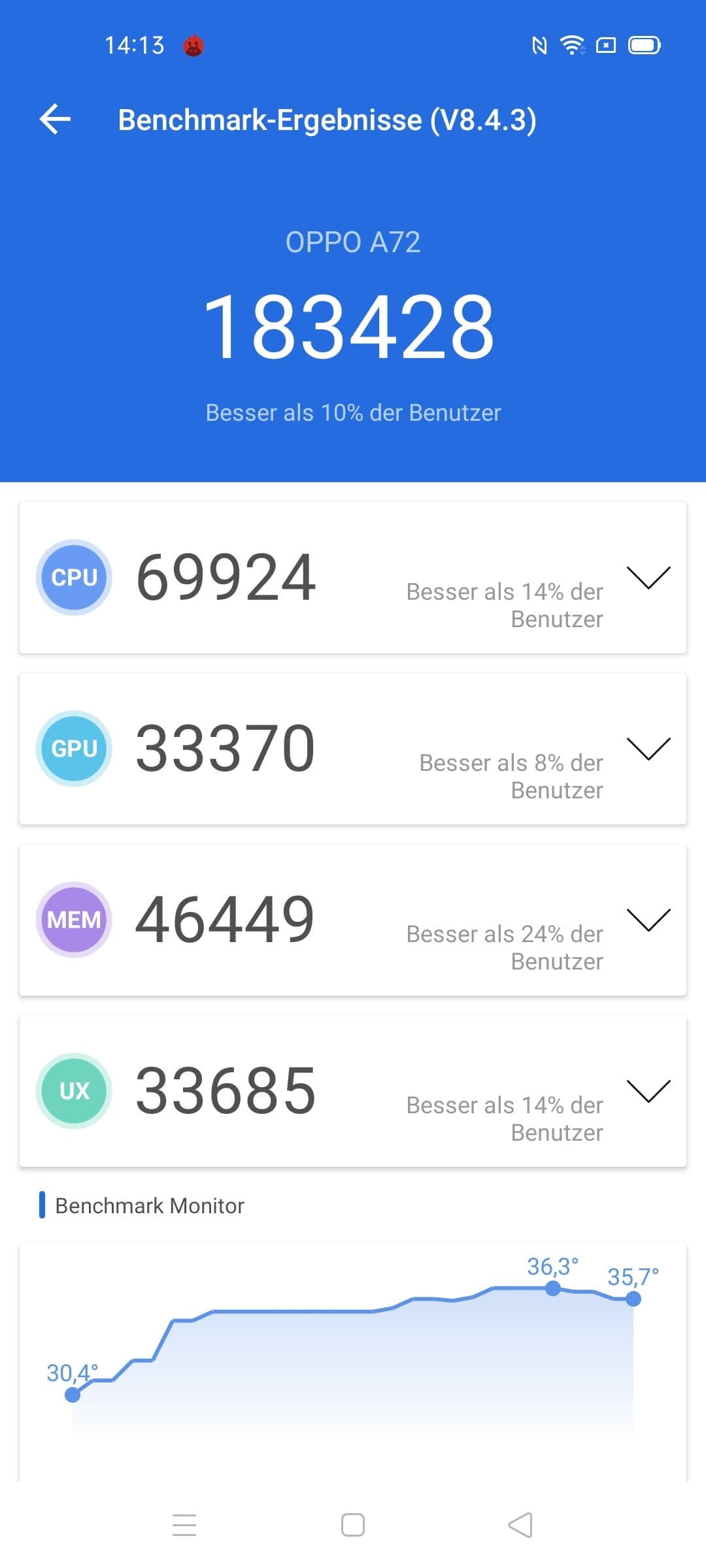
In the various benchmarks that the OPPO A72 completed during our test, the smartphone ranks in the lower mid-range. As expected, the Snapdragon 665 does not match the performance of the Snapdragon 700 series. Nevertheless, the results are impressive, as can be seen in the individual screenshots. The results are comparable to a Samsung Galaxy A51.
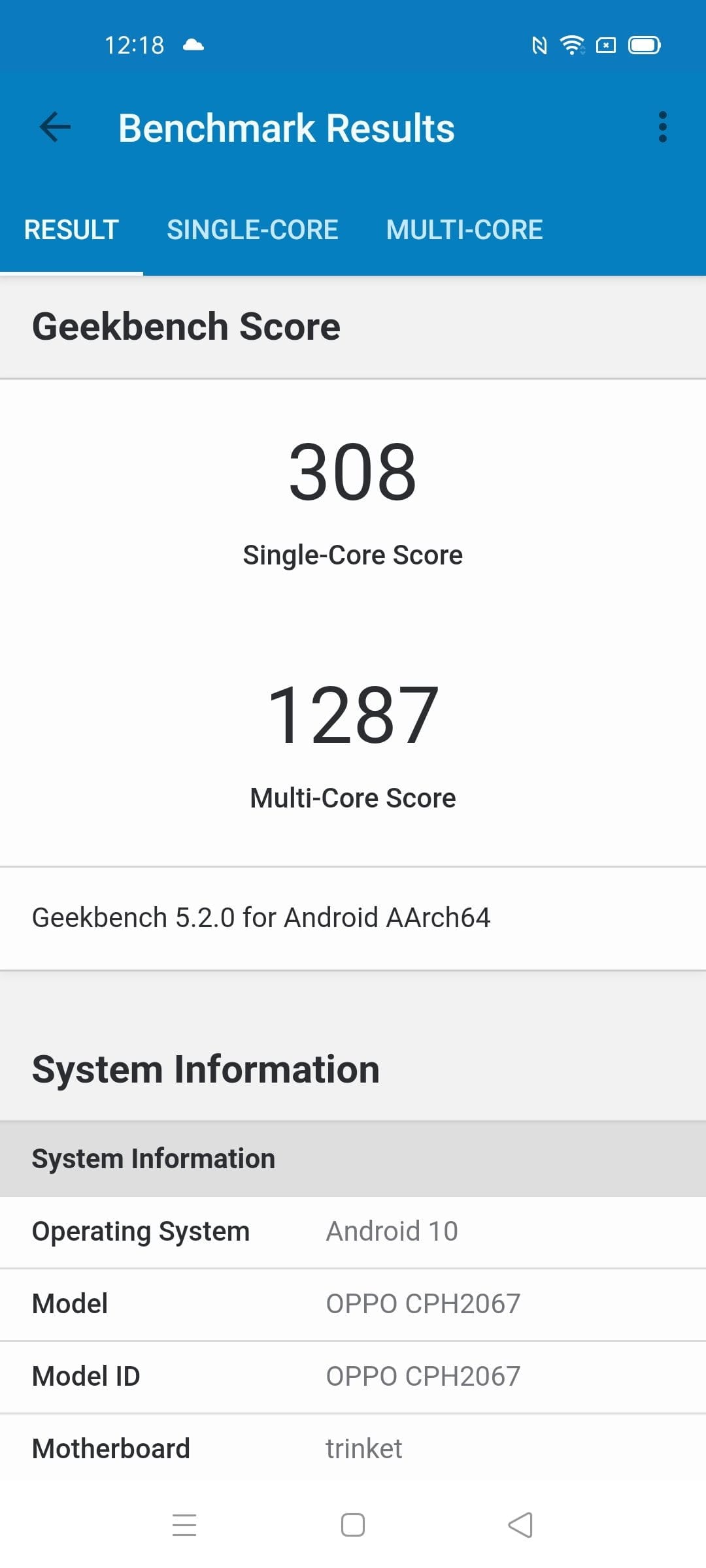
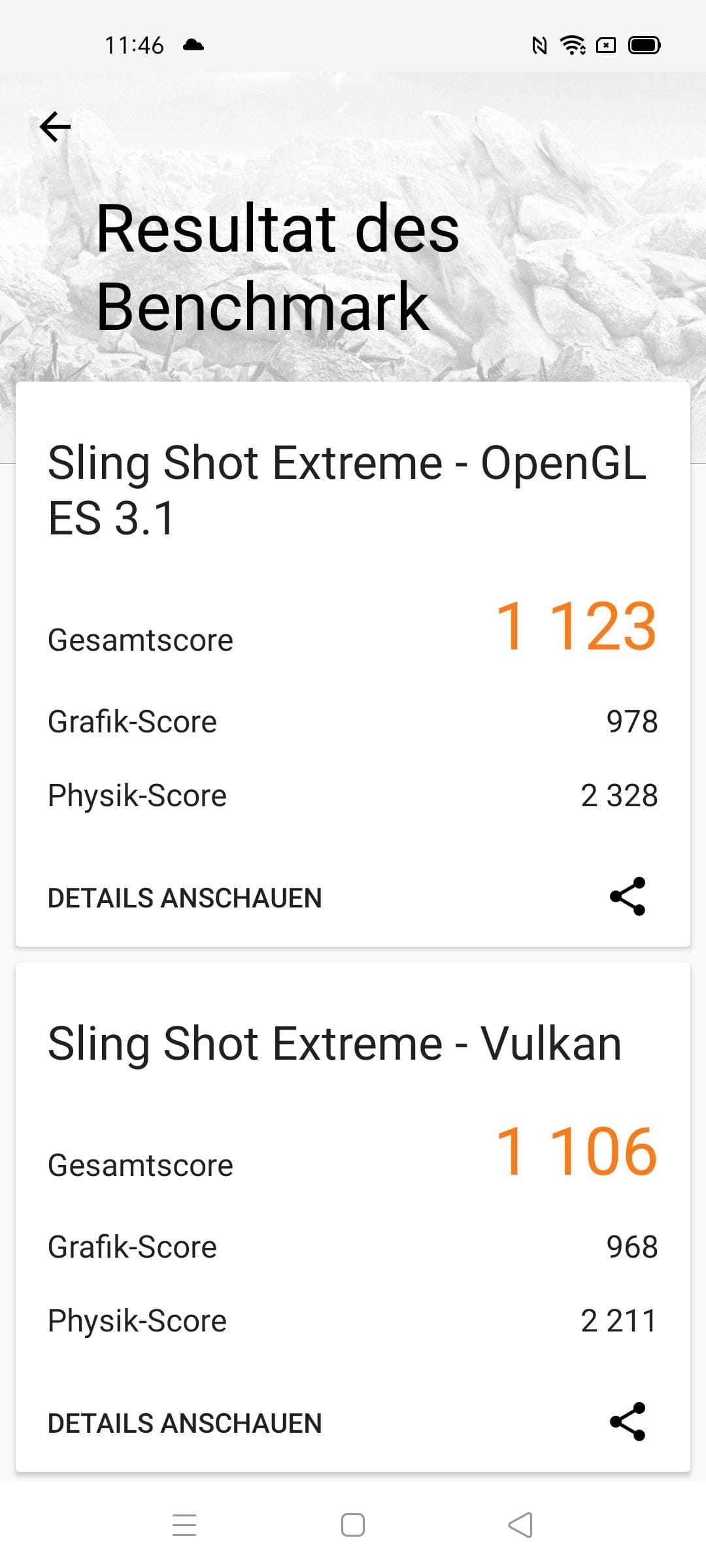
In the storage test, the read and write speeds are slightly below the average for UFS 2.1 data storage. Multiple measurements averaged 485 MB/s for sequential read (256 KB) and 235 MB/s for sequential write (256 KB). The same applies to the LPDDR4X working memory, which falls short of expectations with a measured 5.5 GB/s.
Everyday life
More important than benchmark performance is performance in everyday use. Here, the OPPO A72 performs well. The ColorOS user interface is largely smooth to operate, and only with a critical eye does one notice that it is a budget smartphone. Thus, loading certain apps can take slightly longer, and user interface animations may stutter here and there. Despite the 4GB of RAM, apps are kept in memory pleasantly long and remain ready for instant access.
Gaming
The gaming performance of the OPPO A72 is sufficient to play some mobile games smoothly. The smartphone is up to the task for less demanding games. As soon as we approach more demanding titles, such as PUBG Mobile or Genshin, graphics settings need to be adjusted. The smartphone does not get uncomfortably hot while gaming. Thermal throttling, i.e. the temperature-related downclocking of the SoC, also does not occur.
User interface
The OPPO A72 ships with Android 10. More specifically, it uses ColorOS 7.1, a user interface developed by OPPO for its own smartphones. The focus is on an innovative design that appears elegant and tidy. The user interface is easy to use and can be individually adapted to user preferences. As a feature-rich operating system, useful functions and apps are already integrated into the system. In terms of performance, ColorOS 7.1 impresses with high performance, well-functioning battery management and efficient memory management.
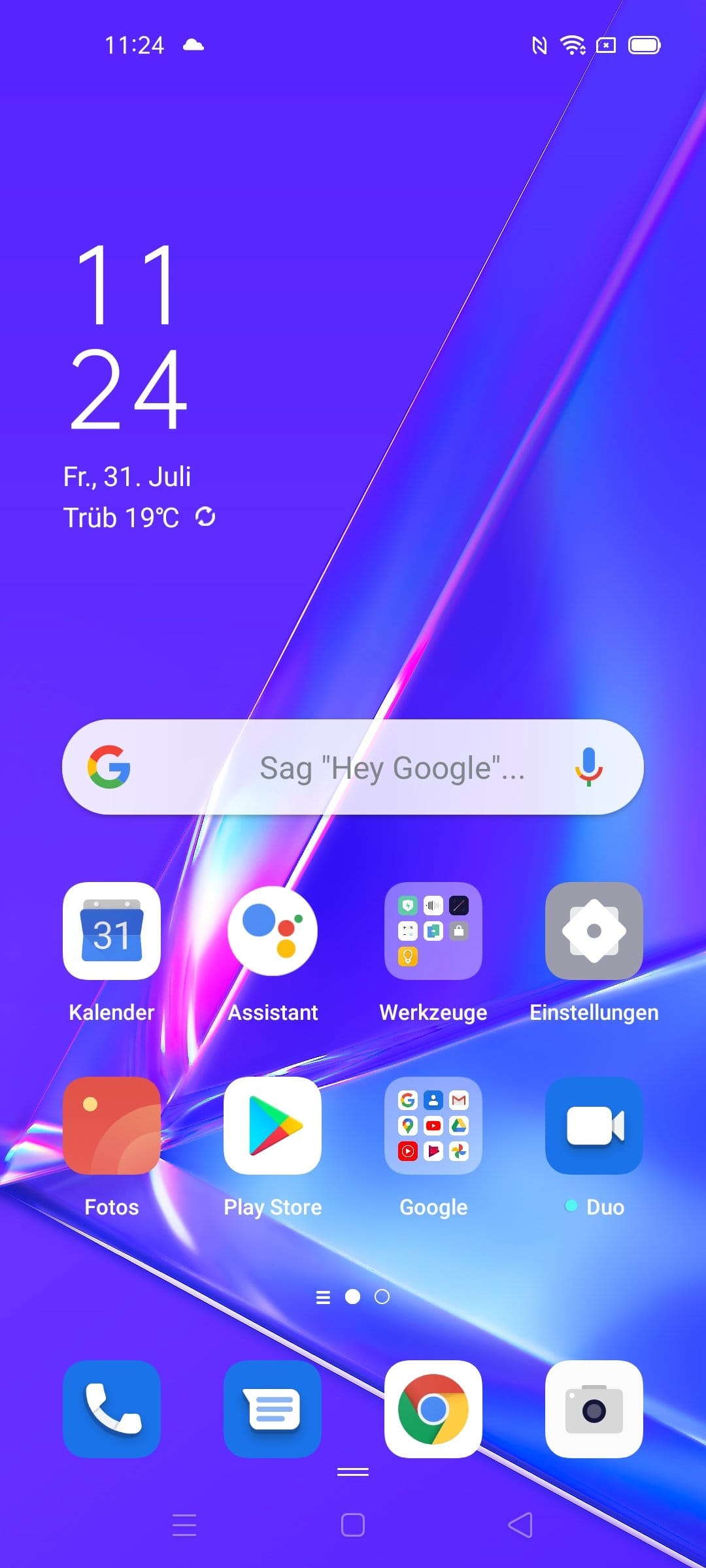
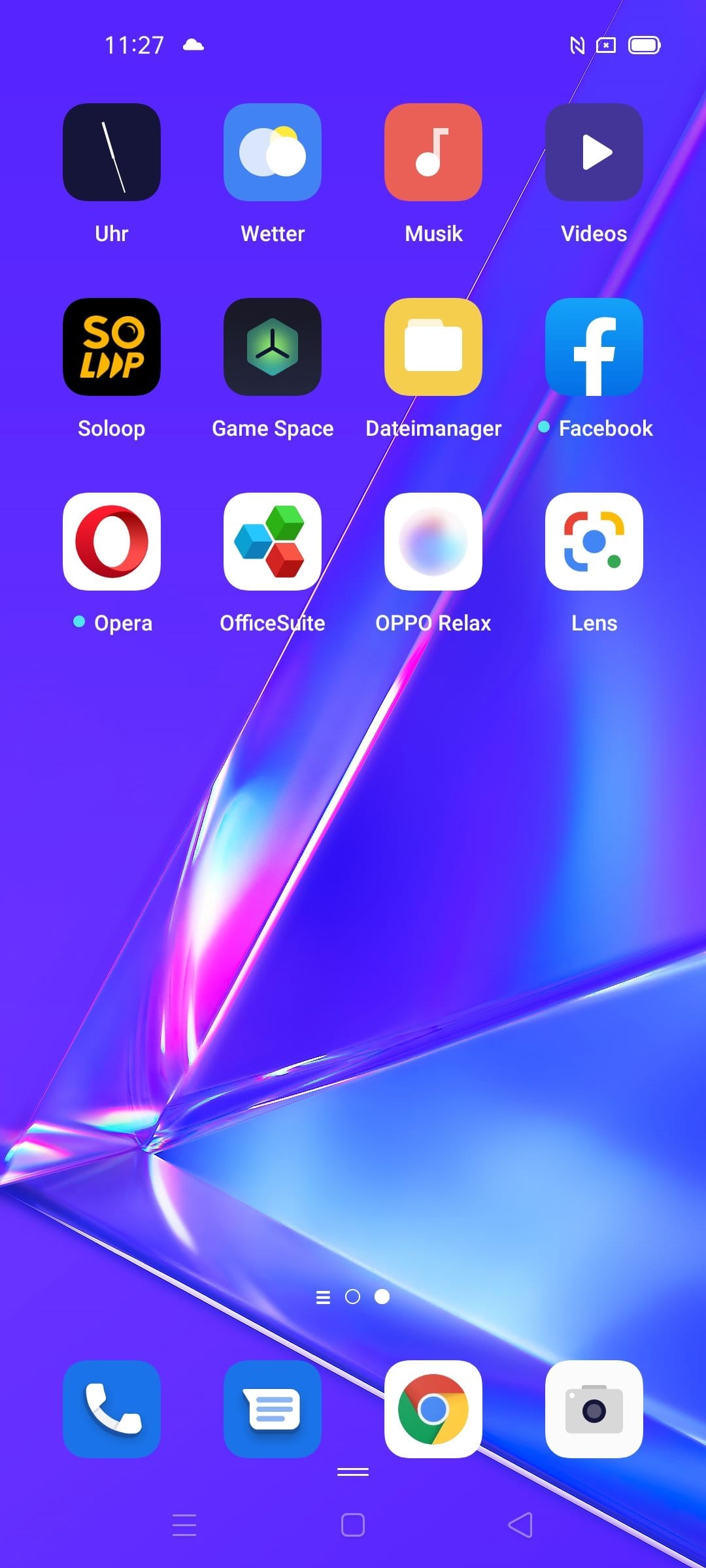
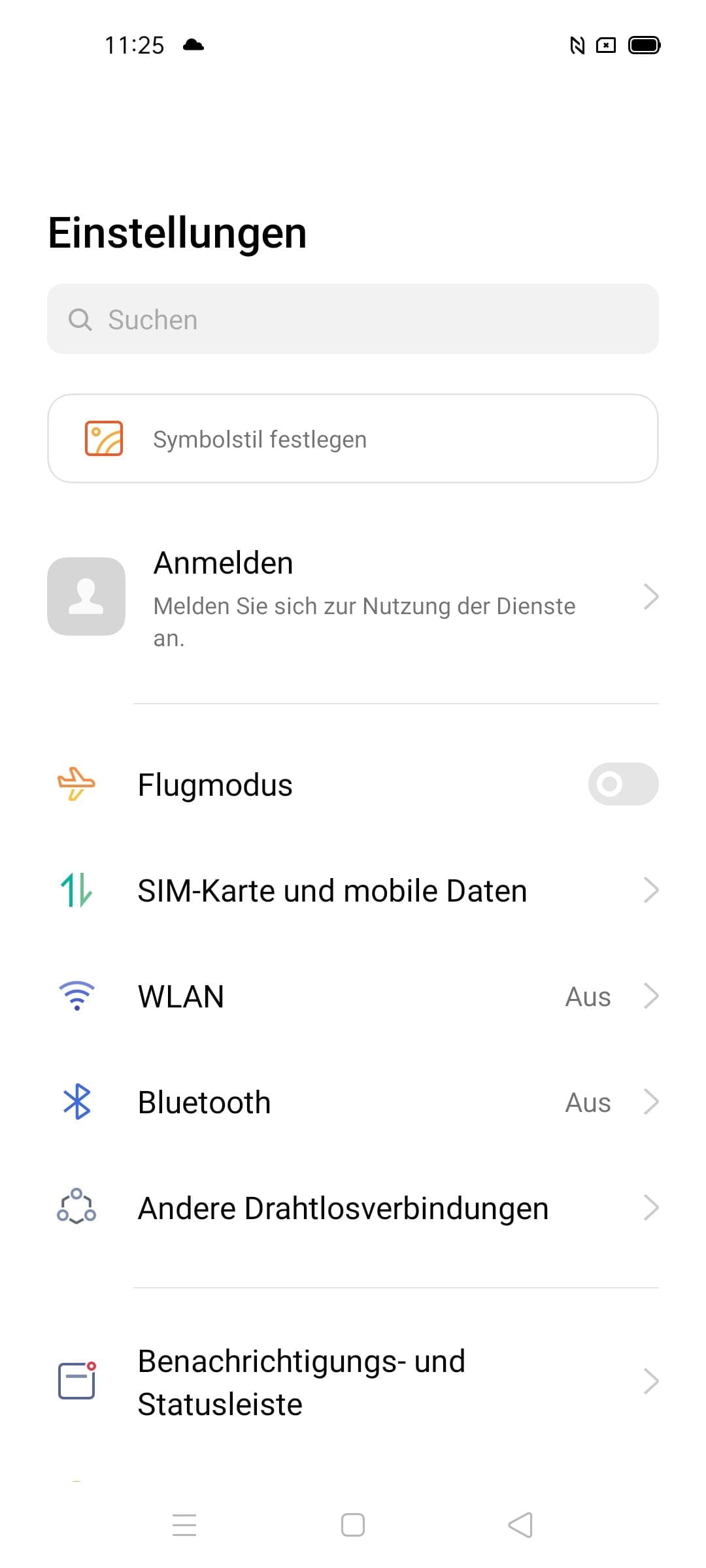
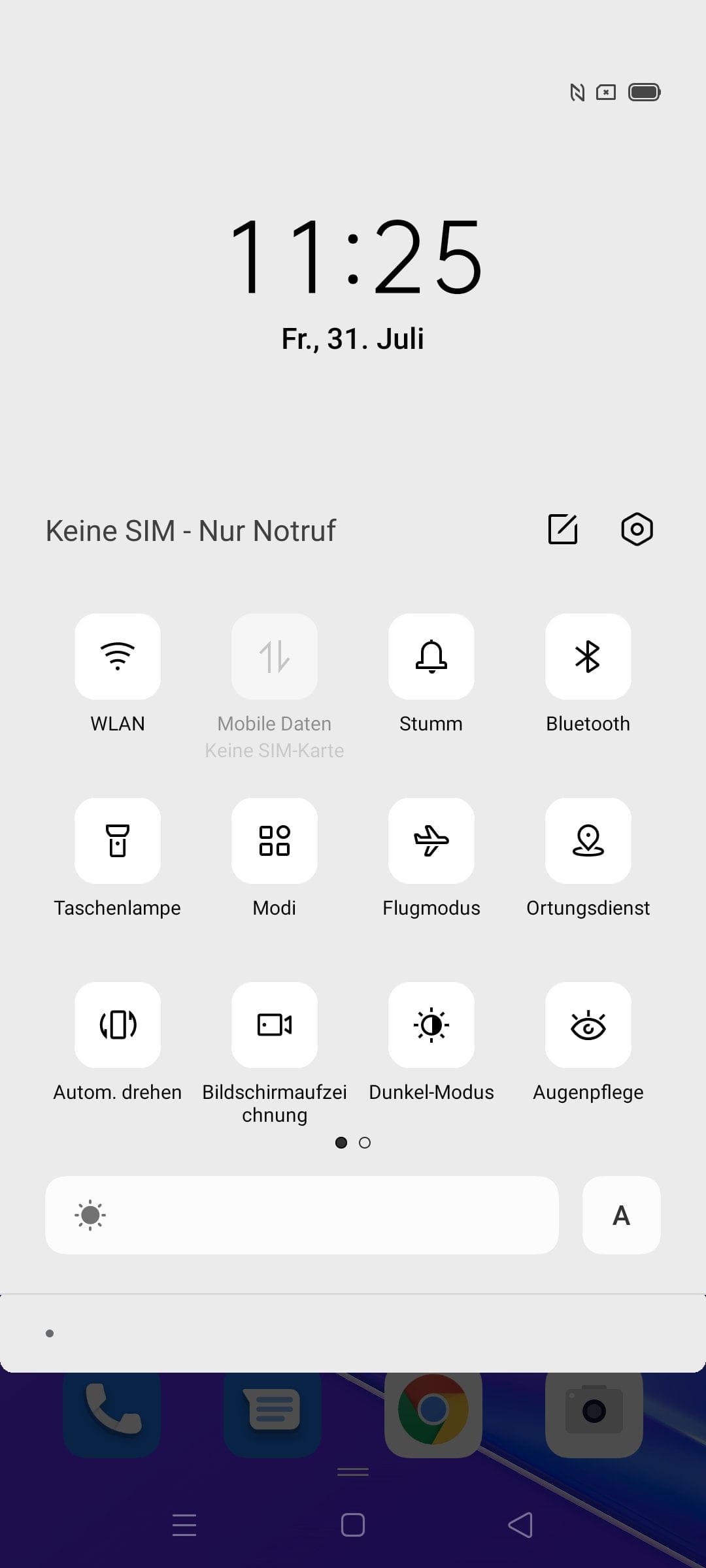
An update of the OPPO A72 to ColorOS 11 (Android 11) is said to be rolled out in China as early as December. The Western market is to follow in 2021.
Camera
The rear of the OPPO A72 features a 48+8+2+2 megapixel quad-camera setup. OPPO does not provide the exact designation of the individual sensors. Nevertheless, the manufacturer provides details on sensor and pixel size, as well as the aperture. The following cameras or sensors are included in the quad camera:
- 48-megapixel main camera (1/2.8"/1.25um; aperture f/1.7)
- 8-megapixel ultra-wide-angle camera with 119° wide angle (1/4"/1.12µm; f/2.2 aperture)
- 2-megapixel monochrome camera (1/5"/1.75um; aperture f/2.4)
- 2 Megapixel portrait camera (1/5"/1.75um; aperture f/2.4)
The front camera has a resolution of 16 megapixels (1/3.1''/1um; aperture f/2.0).
Main camera real-world test
48 MP main camera
The OPPO A72’s main camera is at a good mid-range level. In good lighting conditions, it produces usable shots that are convincing in terms of image sharpness and level of detail. Images are pleasantly sharp right up to the edges. Image noise is not noticeable, at least under good lighting conditions. In terms of dynamic range, both bright and dark image areas are well represented. Colours are reproduced realistically with a pleasantly warm tone. Even with vivid colours, the OPPO A72 does not tend to exaggerate. The autofocus reacts quickly, and manual refocusing is only required in rare cases.
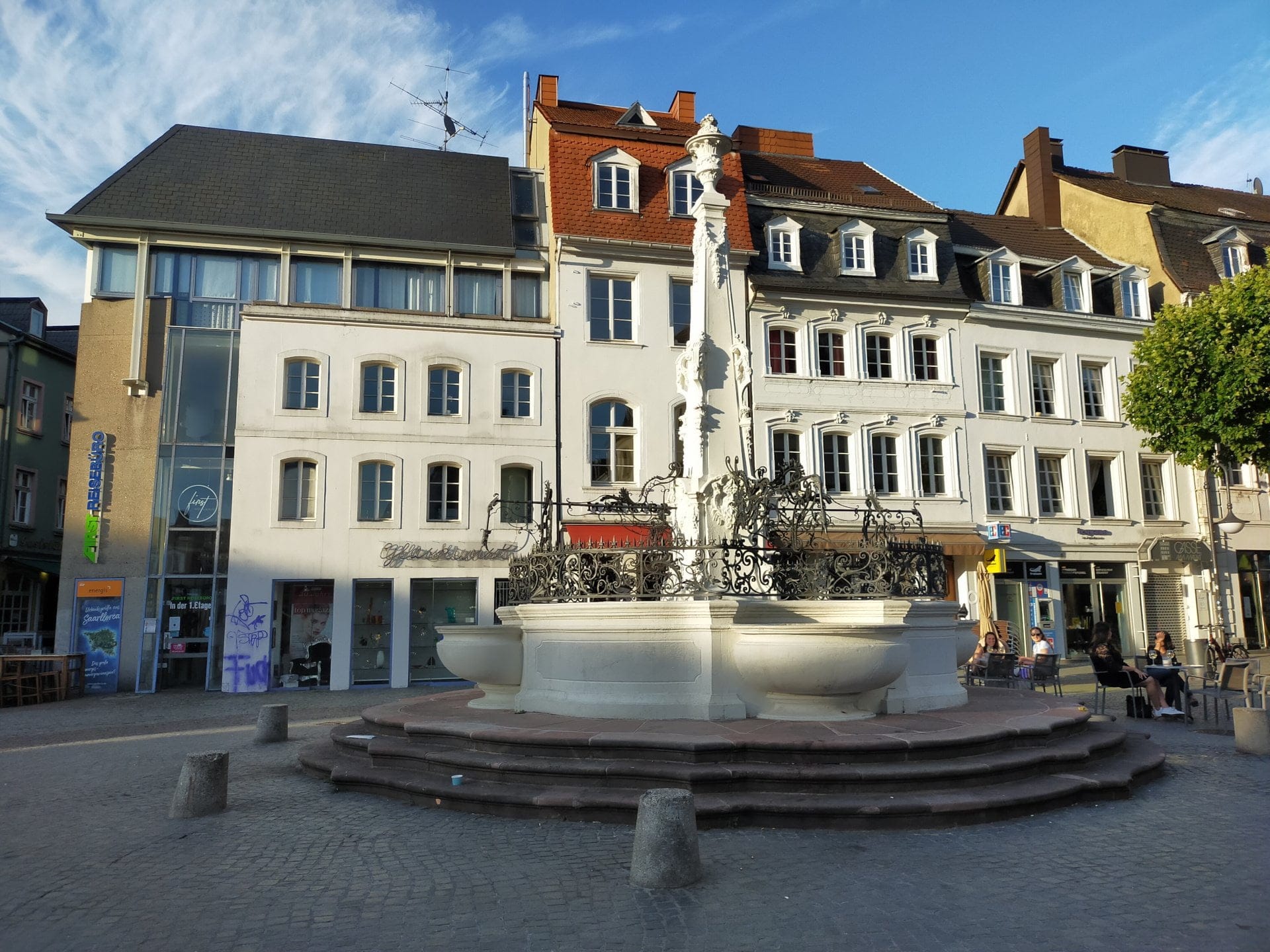











You can find these and other test shots in full resolution via this link.
Zoom
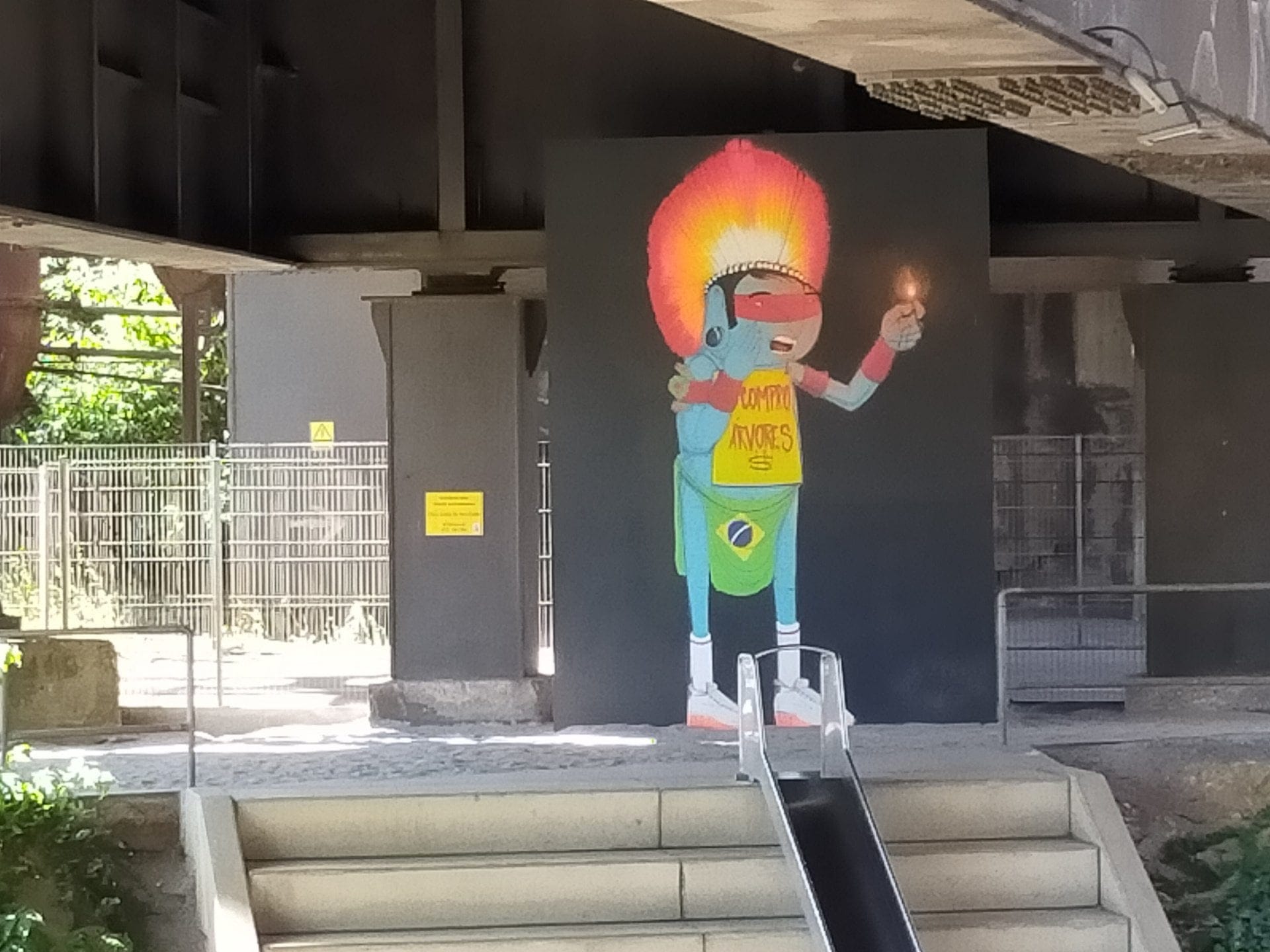
The OPPO A72 can zoom with a maximum 10x magnification. The magnification is purely digital, which is why image quality deteriorates very quickly. With 2x magnification, shots are still usable and the level of detail decreases only slightly. As you approach the maximum 10x magnification, detail loss and image noise increase.



Ultra-wide angle
The wide-angle camera is not one of the OPPO A72's strengths. Compared to the main camera, the dynamic range is reduced. Detail levels are lower, and image noise occurs even in good lighting conditions. Imaging errors in the form of chromatic aberration are noticeable here as conspicuous colour fringing.


Portrait mode
The portrait mode of the OPPO A72 works well. The subject is cleanly highlighted in most cases and the background fades into pleasant blur. It doesn't matter whether the subject is a person or an object.


High Dynamic Range (HDR)
HDR is a practical solution to artificially expand the dynamic range. In the case of the OPPO A72, the function has been well implemented, as the following comparison shows.


Night shots
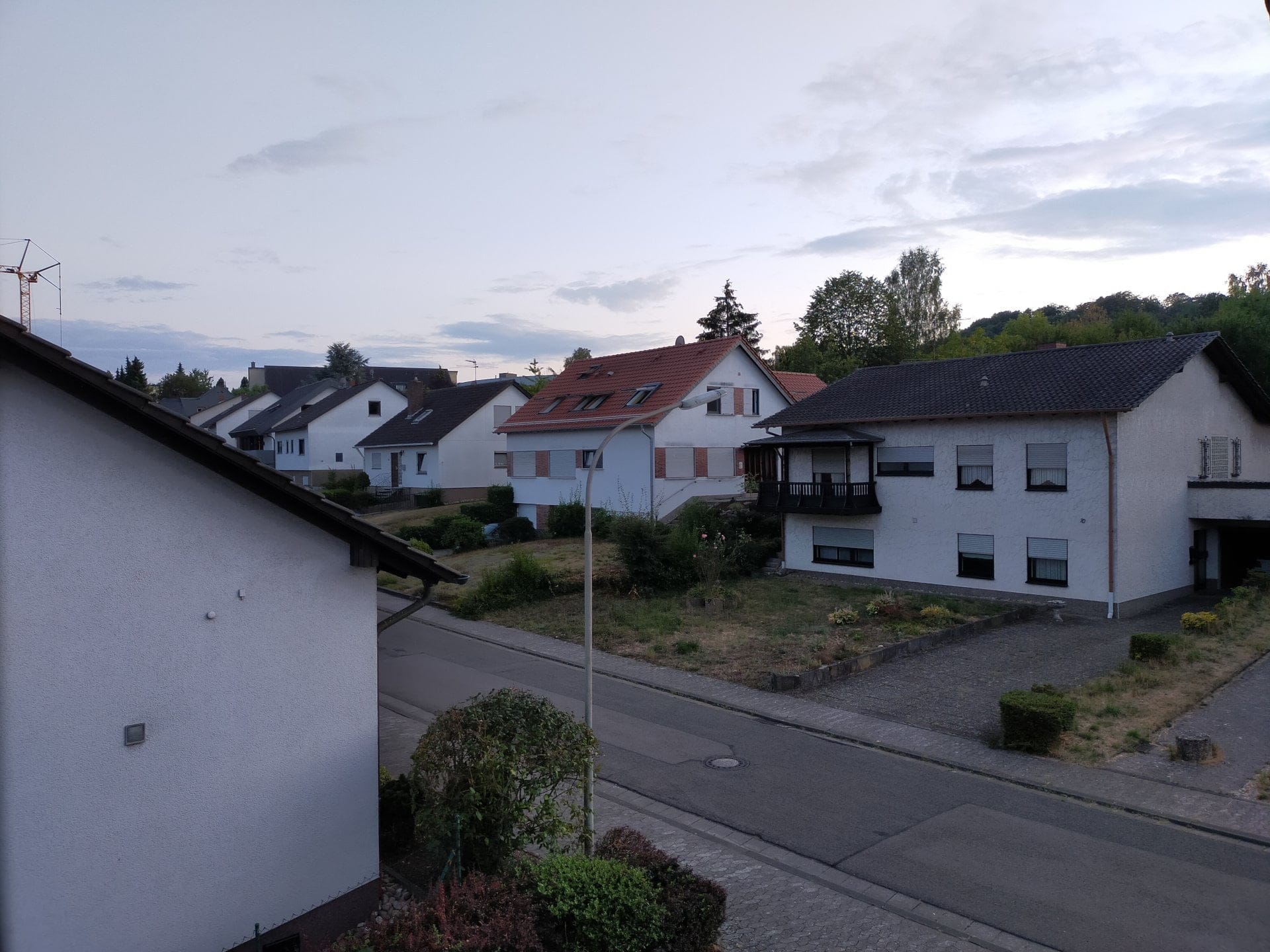
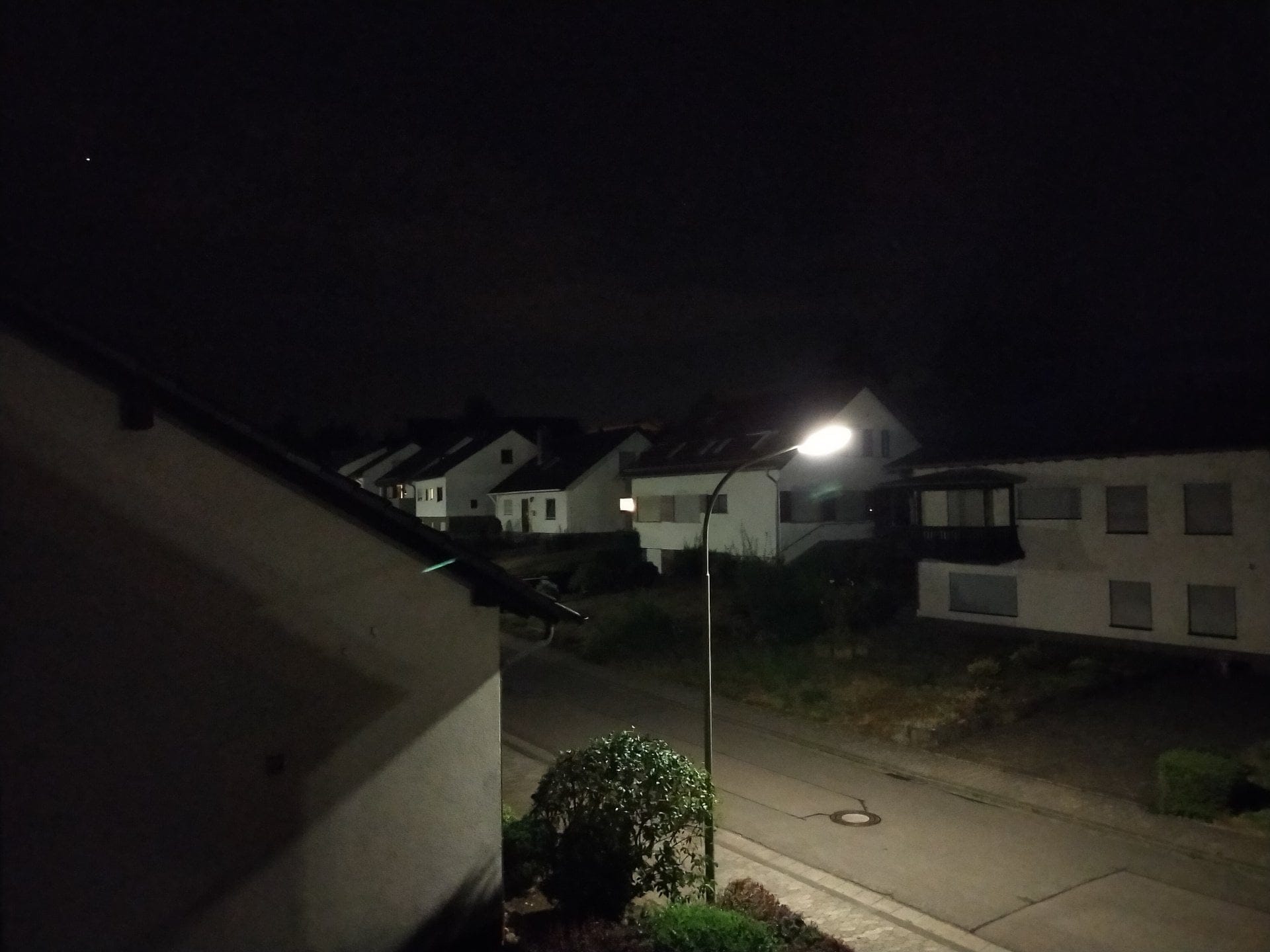
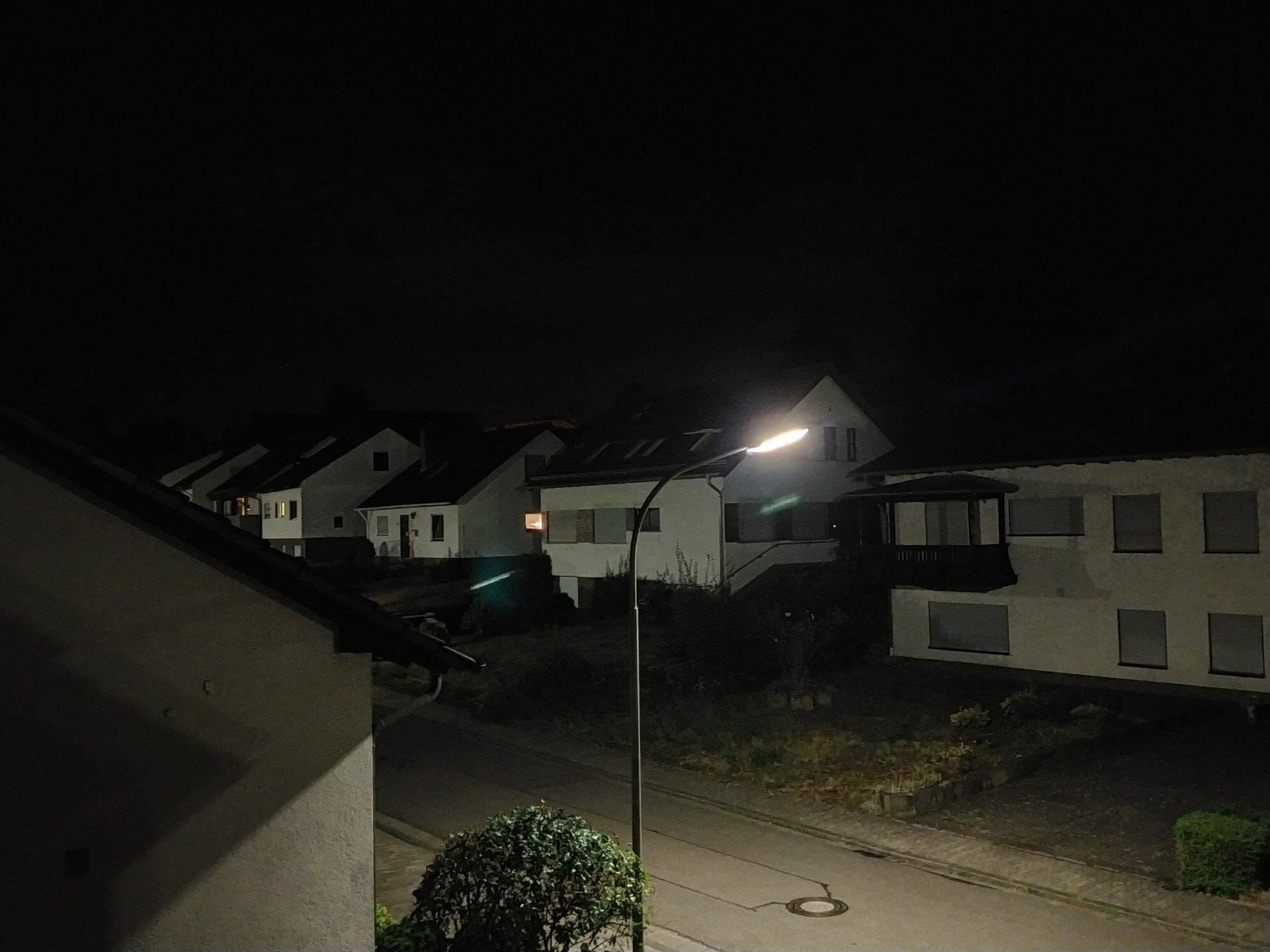
The OPPO A72's main camera does not cope quite so well in low light. This is hardly surprising, as even expensive high-end smartphones suffer reduced recording quality under poor lighting conditions. In the case of the OPPO A72, noise levels in the image visibly increase and details are lost.
The night mode tries to counteract this somewhat with different exposure times. This preserves more details, particularly around light sources. However, you should not have excessively high expectations of the night mode. The OPPO A72 is still far removed from a Google Pixel night mode or the night mode of an iPhone!
Video mode
The main camera of the OPPO A72 records videos in UHD (4K), 1080p and 720p. The maximum frame rate is limited to 30 frames per second across all resolutions. Only in slow-motion mode are 120 frames per second achieved. Shaky footage can be counteracted to a certain extent using Electronic Image Stabilization (EIS). However, this is only available in 1080p mode. The audio recorded with the video is slightly muted but understandable.
Front camera practical test
The 16-megapixel front camera is sufficient for the occasional selfie. Issues appear in the dynamic range, which quickly reaches its limits in high-contrast scenes. Image sharpness and detail levels are not particularly high, but are adequate for an acceptable mid-range front camera. The portrait mode places the subject cleanly in the foreground in most cases. The front camera records videos in 1080p.


Connectivity
Telephony
The OPPO A72 scores highly in terms of connectivity. The X12 LTE modem of the Snapdragon 665 system-on-chip communicates via the usual LTE frequencies and bands. Next-generation mobile technologies such as VoLTE (telephony over the LTE/4G mobile network) and Wi-Fi calling are supported. The triple SIM slot enables the simultaneous use of two nano-SIM cards and a microSD card.
- GSM: 850/900/1800/1900MHz
- WCDMA: Bands 1/2/4/5/6/8/19
- FDD-LTE: Bands 1/2/3/4/5/7/8/12/17/18/19/20/26/28/66
- TD-LTE: Bands 38/39/40/41
The voice quality is good in both directions. The reception strength also leaves nothing to be desired.
Wi-Fi, Bluetooth and NFC
Dual-AC Wi-Fi, Bluetooth 5.0 and NFC are available for setting up wireless connections. Wi-Fi transfer speeds are at a good mid-range level. The OPPO A72 also shows no issues in Bluetooth connectivity. A noteworthy advantage is NFC support. This makes mobile payments via Google Pay possible!
GPS and sensors
The OPPO A72 receives precise position data via GPS, Beidou, Glonass and GALILEO. Location is determined quickly and with minimal deviation. The sensor suite includes a geomagnetic sensor, a light sensor, a proximity sensor and an accelerometer.
Audio
The OPPO A72 is equipped with two speakers and capable of producing stereo sound. Playback is pleasantly loud and differentiated. The action takes place primarily in the mid-range. Deep bass is expectedly absent, and highs are limited. No unpleasant distortion occurs at maximum volume. Sound enhancers, such as "Dirac Mobile Audio", contribute to an overall better sound image.
Battery
The OPPO A72 is well-equipped with its 5000 mAh battery. The test achieved a screen-on time (auto brightness) of 16 hours. Even with heavy usage, it is difficult to drain the battery in a single day. On average, the battery needs charging every 1 1/2 days.
The OPPO A72 can charge at up to 18W. A suitable fast charger is included in the scope of delivery. A full charge from 0 to 100 per cent takes approximately 150 minutes. One hour on the charger charges the battery to 60 per cent. Wireless Qi charging is not supported.
Our verdict
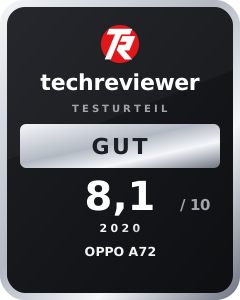
Those who opt for the OPPO A72 are certainly not making a mistake. In the price range under 250 euros, the A72 presents itself as a solid mid-range smartphone that scores well in many areas. These include good everyday performance, even though the Snapdragon 665 isn't one of the most powerful processors, the display with high brightness, crisp colour reproduction and good sharpness, as well as the 48-megapixel main camera, which captures satisfactory photos and videos. Compromises must be made regarding the smartphone's build quality and the wide-angle camera.
However, there are also some special features that other smartphones in this price range rarely offer. These include the triple SIM slot, NFC and the stereo speaker. We were particularly convinced by the strong mobile reception of the OPPO A72. Although it omits the new 5G mobile standard, the X12 LTE modem still provides excellent readiness for the European mobile network in the coming years.
Specifications
Processor and memory
- CPU
- Qualcomm Snapdragon 665
- GPU
- Adreno 610
- RAM
- 4GB (LPDDR4x)
- Internal storage
- 128GB (UFS2.1)
- Storage expansion
- Yes
Display
- Display size
- 6.5 inches
- Display resolution
- 2400 x 1080 pixels
- Display type
- TFT-LCD
- Screen protector
- Unbekannt
- Multitouch
- 10 fingers
Cameras
- Main camera
- 48 MP (1/2.8'' size, f/1.7 aperture)
- Ultra-wide angle
- 8 MP (1/4'' size, f/2.2 aperture)
- Macro sensor
- 2MP (1/5'' size, f/2.4 aperture)
- Depth sensor
- 2MP (1/5'' size, f/2.4 aperture)
- Front camera
- 16 MP (1/3.1'' size, f/2.0 aperture)
Mains
- SIM type
- Dual Nano-SIM + MicroSD card
- SIM size
- Nano-SIM
- eSIM
- No
- GSM
- 850/900/1800/1900 MHz
- WCDMA
- Bands 1/2/4/5/6/8/19
- FDD-LTE
- Bands 1/2/3/4/5/7/8/12/17/18/19/20/26/28/66
- TD-LTE
- Bands 38/39/40/41
Wireless
- Wi-Fi
- 802.11 a/b/g/n/ac
- Bluetooth
- 5.0
- GPS
- Yes
Sensors
- *Ambient light sensor
- *Accelerometer
- *Proximity sensor
- *Gyroscope
- *Fingerprint sensor (side)
- *NFC
Battery
- Battery
- 5,000 mAh
- Fast charging function
- 18 watts
- Qi charging
- No
Other
- Operating system
- Android 10 (ColorOS)
- Connection
- USB-C, 3.5 mm audio
- Size
- 162 x 75.5 x 8.9 mm
- Weight
- 192g
What’s included
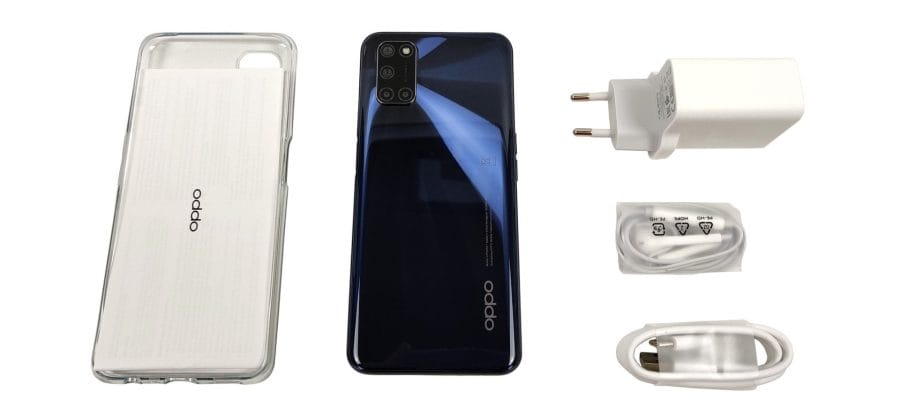
1x OPPO A72 1x Headset 1x USB cable 1x Adapter 1x SIM card pin 1x Protective case 1x Screen protector applied to the display 1x Quick start guide 1x Warranty card
Comments (4)
Hi Timo, I am faced with the decision to buy the A72. It is important to me that the smartphone receives radio. Can you tell me if there is an FM receiver? The specs on the manufacturer's website do not list one, but some websites say there is one. Others write that there isn't one. I am completely unsure now.
Hi Patti, unfortunately I cannot verify this myself, as the test device is no longer with me. I have checked the data sheet, which was sent to me directly by OPPO at the time. FM radio is not listed there either. I also do not recall seeing a radio app on the smartphone.
Thanks for the quick reply. It then really looks as though there is no radio.
Hey everyone, thanks a lot for the review. Is it known yet whether there will be an update to Android 11, or what OPPO’s update policy looks like?