Contents
Review: POCO M4 Pro 5G
Following the success of the Poco M3 Pro 5G, POCO is already sending the successor into the race half a year later. In a direct comparison, the POCO M4 Pro 5G offers a slightly larger display, an improved main camera, more performance and faster charging.
Most improvements, however, are in the details and the POCO M4 Pro does not make huge leaps compared to its predecessor. We have listed all differences in the table below.
| Model | POCO M4 Pro | POCO M4 Pro 5G | POCO M3 Pro 5G |
| Chip | MediaTek Helio G96 - 7nm | MediaTek Dimensity 810 – 6nm | MediaTek Dimensity 700 - 7nm |
| CPU | Octa-core (2x 2.05 GHz Cortex-A76 & 6x 2.0 GHz Cortex-A55) | Octa-core (2x2.4 GHz Cortex-A76 & 6x2.0 GHz Cortex-A55) | Octa-core (2x 2.2 GHz Cortex-A76 & 6x 2.0 GHz Cortex-A55) |
| GPU | Mali-G57 MC2 | Mali-G57 MC2 | Mali-G57 MC2 |
| Storage | 6+128GB, 8+256GB UFS2.2 | 4+64GB, 6+128GB UFS2.2 | 4+64GB, 6+128GB UFS2.2 |
| Display | 6.43-inch AMOLED - 90 Hz - 1080 x 2400 pixels - DCI-P3 | 6.6-inch LC display - 90 Hz - 1080 x 2400 pixels - DCI-P3 | 6.5-inch LCD display - 90 Hz - 1080 x 2400 pixels - sRGB |
| Sampling rate | 180 Hz | 240 Hz | 180 Hz |
| Cameras | 64 MP, f/1.8, 26mm, PDAF 8 MP, f/2.2, 118˚ wide-angle 16 MP, f/2.4, front |
50 MP, f/1.8, 26mm, PDAF 8 MP, f/2.2, 119˚ wide-angle 16 MP, f/2.5, front |
48 MP, f/1.8, 26mm, 1/2.0", 0.8µm, PDAF 2 MP, f/2.4, Macro 2 MP, f/2.4, Depth 8 MP, f/2.0, Front |
| Speakers | Stereo | Stereo | Mono |
| NFC | Yes | Yes | Yes |
| Battery | 5000 mAh - 33W fast charging | 5000 mAh - 33W fast charging | 5000 mAh - 18W Fast Charging |
| Size & weight | 159.9 x 73.9 x 8.1 mm - 179.5g | 163.6 x 75.8 x 8.8 mm - 195 g | 161.8 x 75.3 x 8.9 mm – 190 g |
POCO has now also released a POCO M4 Pro without fast 5G mobile connectivity. The smartphone is equipped with a slightly weaker system-on-chip but offers larger storage, an AMOLED display instead of an LC display, and a 64 MP main camera. There are also some differences in design. Unlike the POCO M4 Pro 5G, the POCO M4 Pro is the more compact device. The following review refers to the POCO M4 Pro 5G.
POCO M4 Pro: Design and build quality
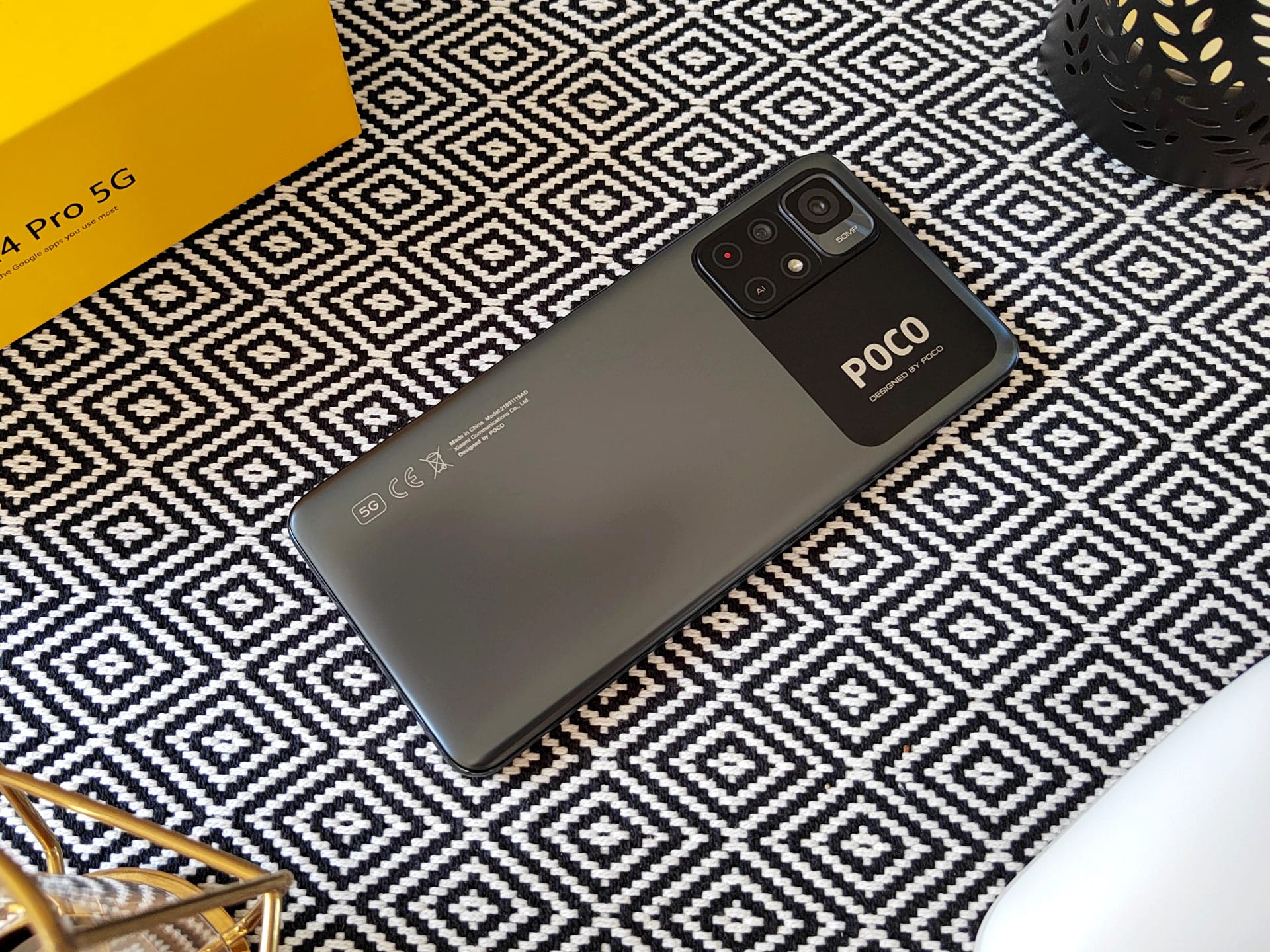
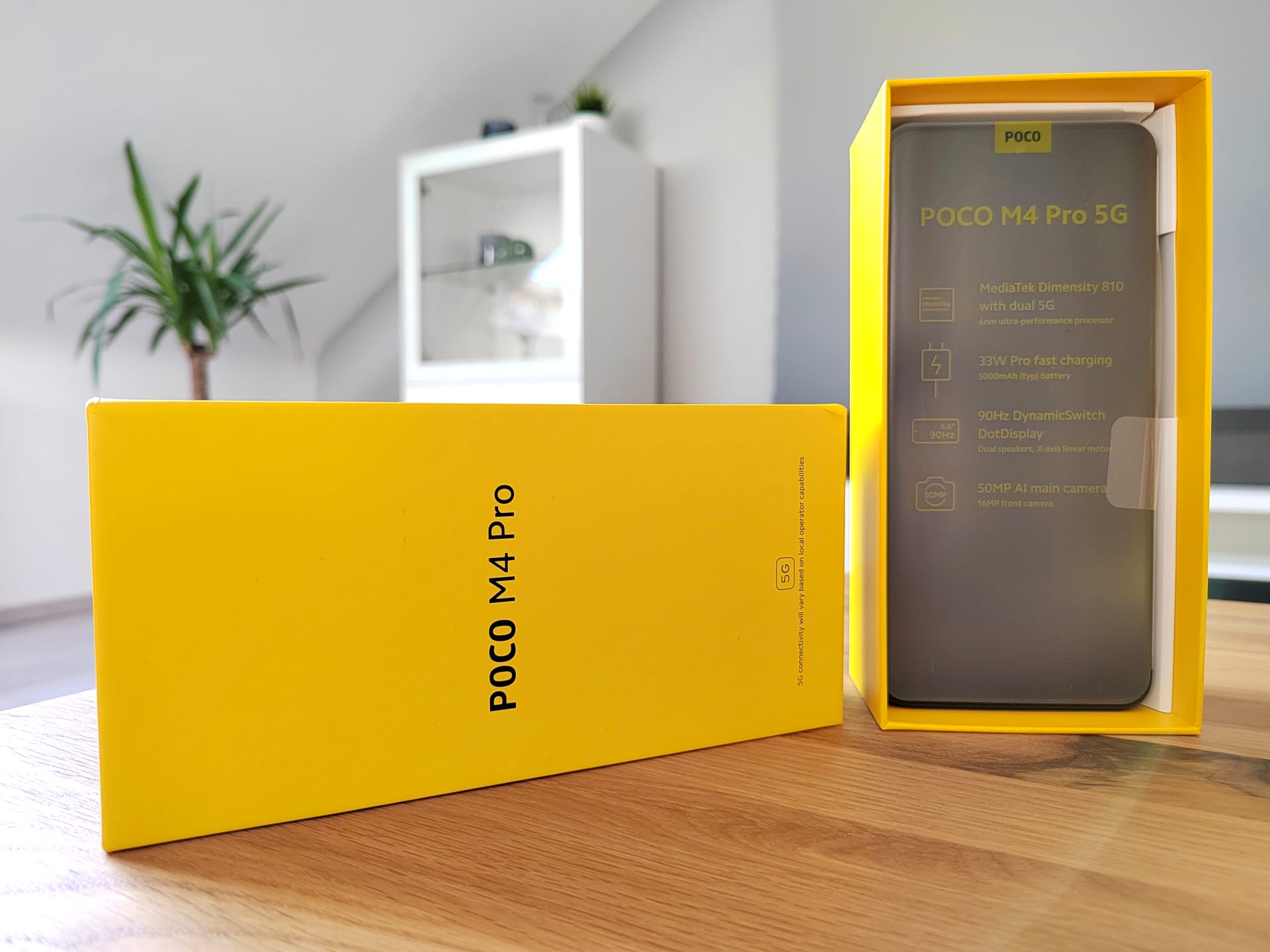
POCO's corporate colour is yellow, as already shown by the bright yellow box containing the smartphone as well as a transparent protective case, a 33W fast charger, a USB-C cable, a SIM pin, stickers and a quick start guide.
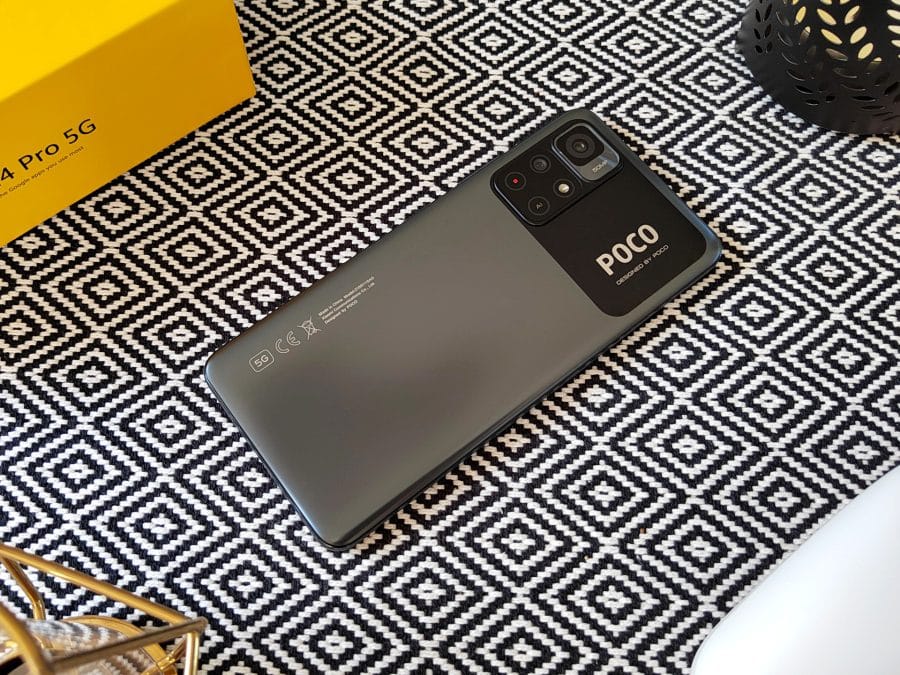
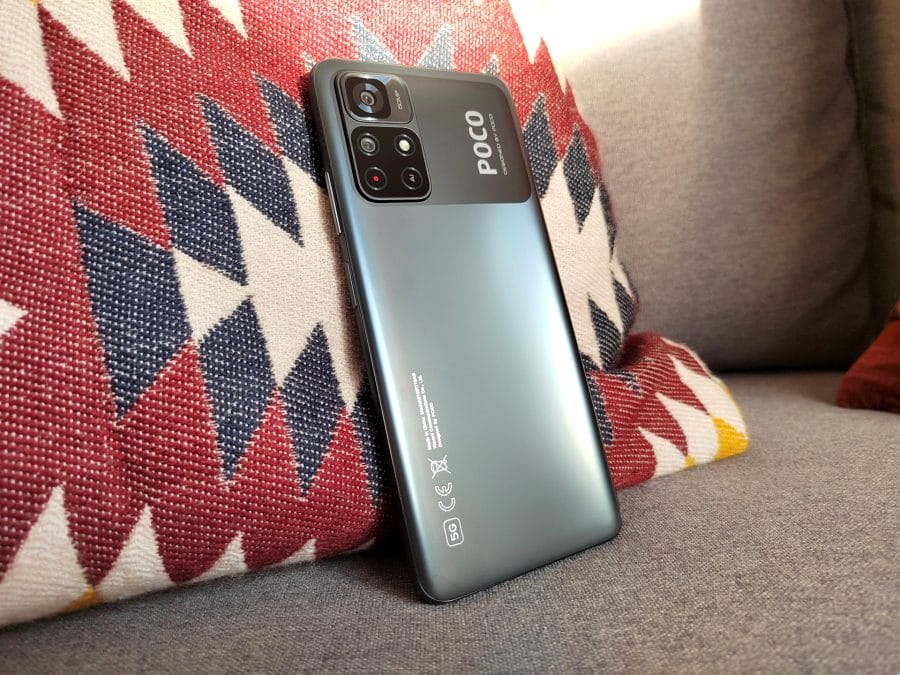
The design of the POCO M4 Pro is unmistakable. The rear side is particularly striking, as the camera is surrounded by a huge black box that provides a strong contrast to the rest of the housing colour. The smartphone is available in “Cool Blue”, “POCO Yellow” and “Power Black”. There should be something for everyone. Our test device was in the colour “Power Black”, which looks less like black and more like a dark grey.

But back to the black casing, which features a large POCO logo alongside the camera. The camera is on the left and protrudes only a few millimetres. At first glance, one might think there are 5 cameras. In fact, the POCO M4 Pro has only 2 cameras built in. The other “cameras” are purely decorative and merely printed on. If you imagine the black frame away, the POCO M4 Pro resembles the Redmi Note 11, recently introduced in China. The hardware of both smartphones is even identical.
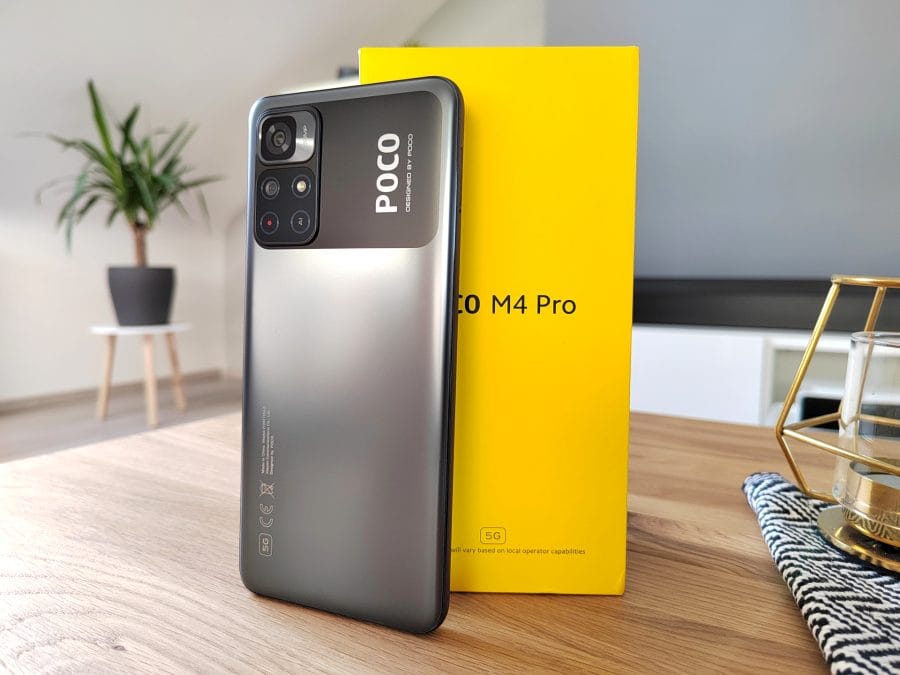
The plastic back eventually transitions into the frame, which is also made of plastic. Despite the extensive use of plastic, the smartphone does not feel cheap. However, its tendency to attract fingerprints can be criticised. Once held, smudges are already visible on the back of our grey test unit.
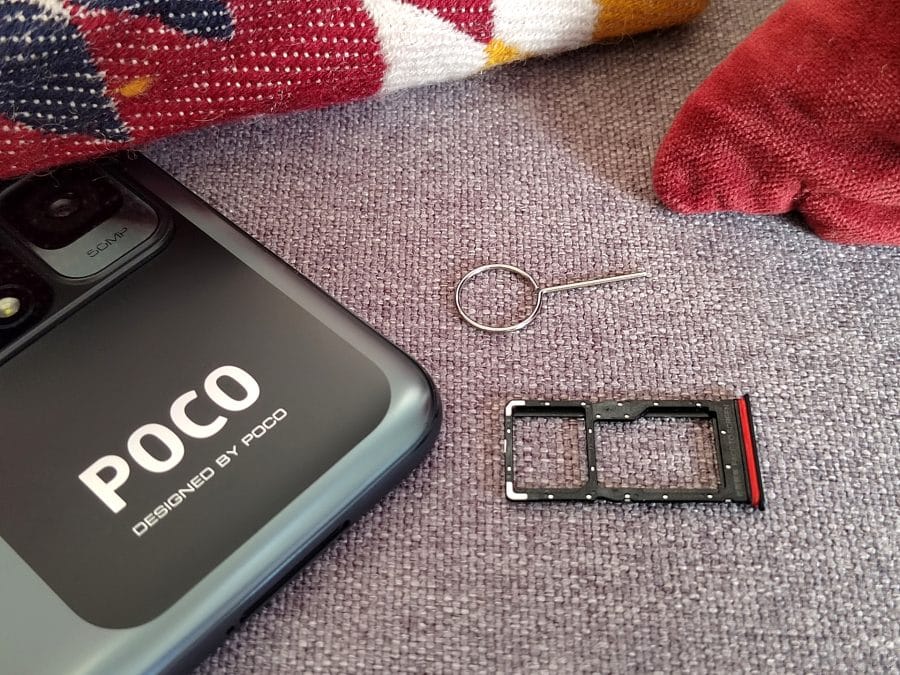
According to IP53, the smartphone is not completely waterproof, but it is very well protected against splash water such as rain. You notice this when removing the SIM slot, which is equipped with a red sealing ring. Either two nano-SIM cards or one nano-SIM card and a microSD memory card can be inserted into the SIM slot.
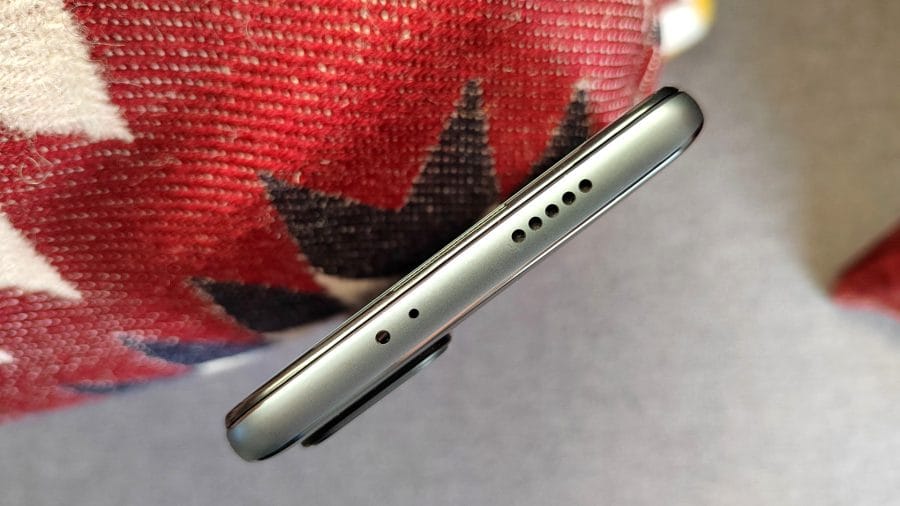
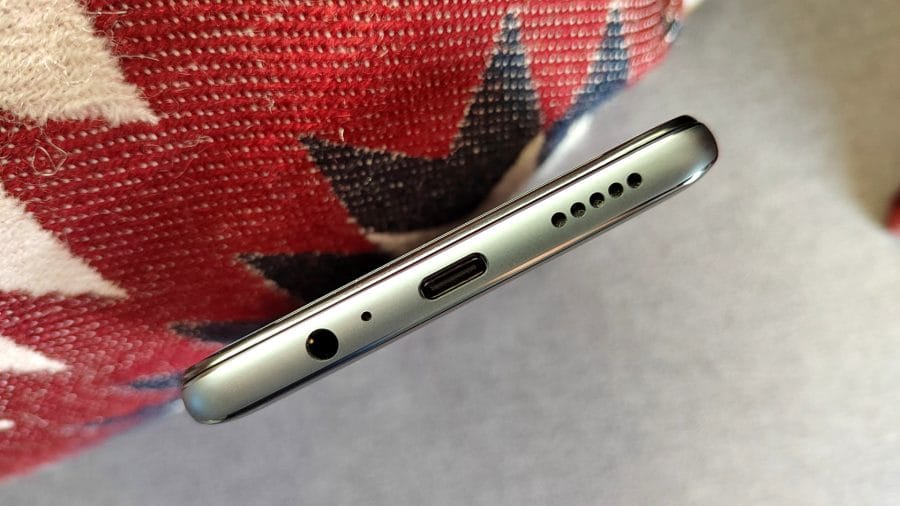
Looking around the frame, the bottom houses the USB-C port, a microphone, a 3.5 mm jack socket, and one of the two speakers. On the sides, there is the SIM card tray on the left, and on the right the power button with an integrated fingerprint scanner and the volume rocker above it. The buttons are easy to reach with one hand and the smartphone sits securely in the hand. At the top, we have the second speaker, another microphone, and an IR transmitter, which can control televisions and other devices with IR receivers.
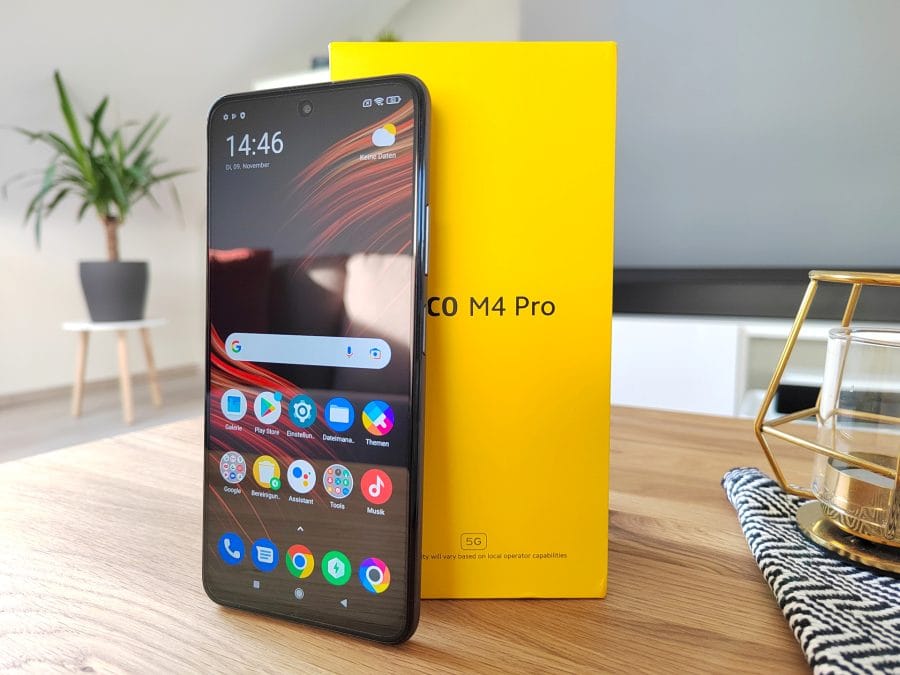
At the front, we finally have the 6.6-inch LC display, which is protected by scratch- and shatter-resistant Corning Gorilla Glass 3. The black display bezels are not particularly small, but that is not unusual in this price range. POCO has hidden the 16MP front camera in a punch hole at the top centre.
POCO M4 Pro: Display
We also have a 6.6-inch LC display with a resolution of 1080 x 2400 pixels and a pixel density of 399 PPI. In direct comparison with the POCO M3 Pro, which achieves 405 PPI due to its smaller screen diagonal and the same resolution, there is no change in display sharpness for the POCO M4 Pro despite the lower PPI. The display is particularly smooth thanks to the 90 Hz refresh rate. Anyone who wonders why the display feels choppy after the first start should quickly check the display settings.
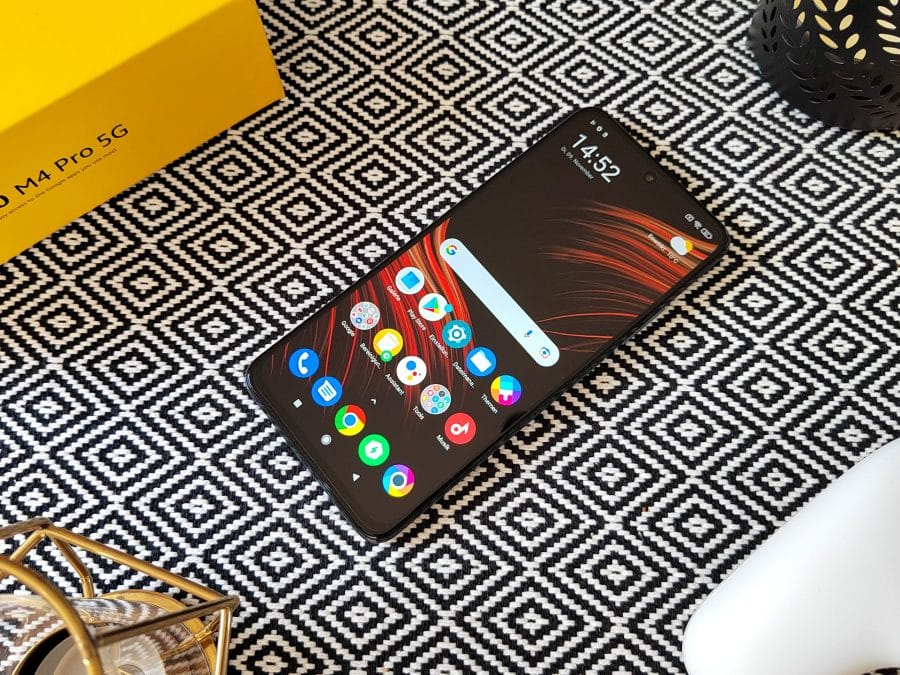
Our test device was set to 60 Hz by default. Selecting 90 Hz makes the difference immediately noticeable. However, the higher refresh rate also reduces battery life. To counteract this, the smartphone adjusts the refresh rate dynamically (50, 60 and 90 Hz) to the content. The sample rate is 240 Hz, allowing the touchscreen to operate quickly and precisely.
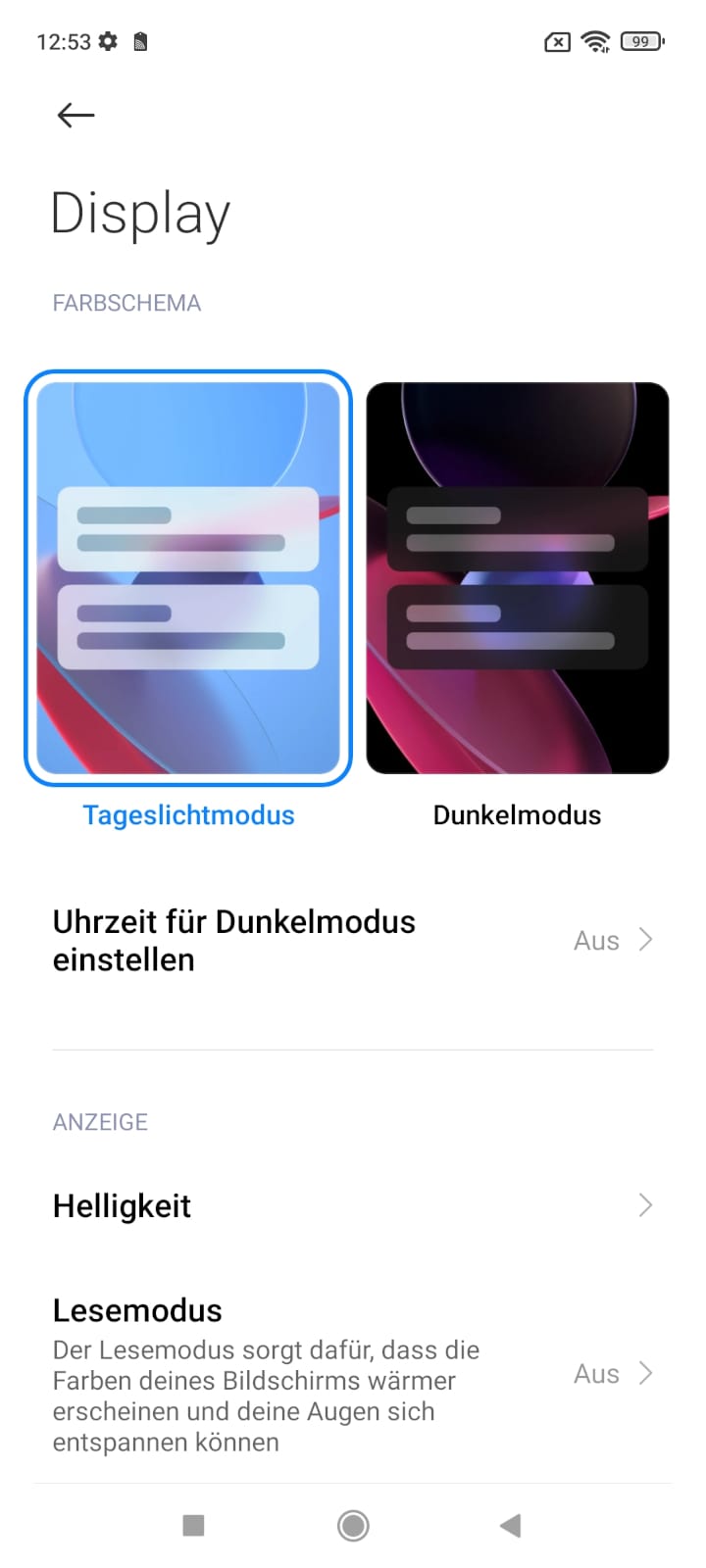
Although the POCO M4 Pro does not have an AMOLED display, the colours are pleasantly punchy and the contrast is good. The POCO M4 Pro now covers the wider DCI-P3 colour gamut. This colour space plays a crucial role, particularly in US film production. Widevine L1 is also supported, allowing Netflix, Disney+ and other streaming services to be streamed in high resolution. Individual display settings can be configured via the display settings. In this respect, the POCO M4 Pro does not differ from other mid-range smartphones. In addition to (adaptive) brightness adjustment, you can choose between a daylight mode and a dark mode, and you can adjust the colours using three predefined colour profiles.
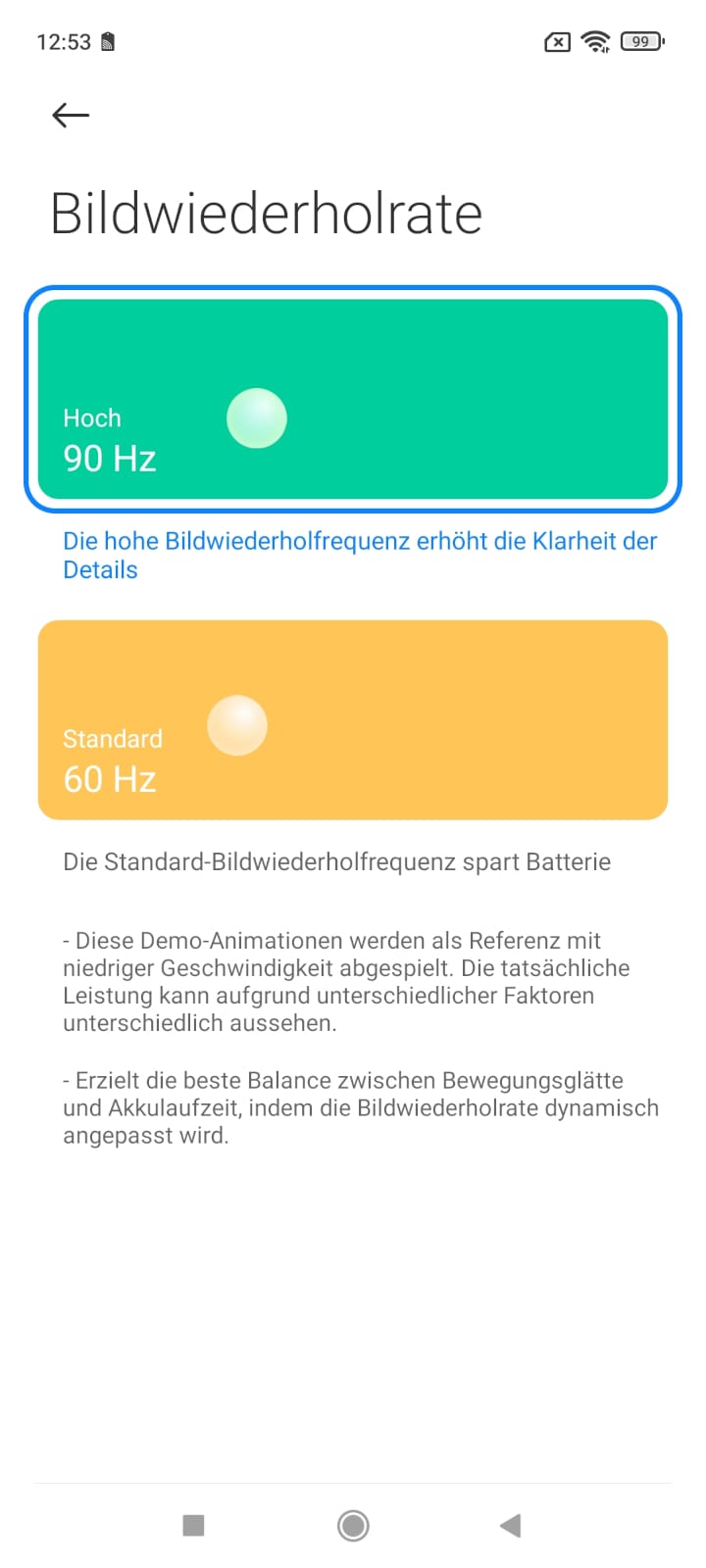
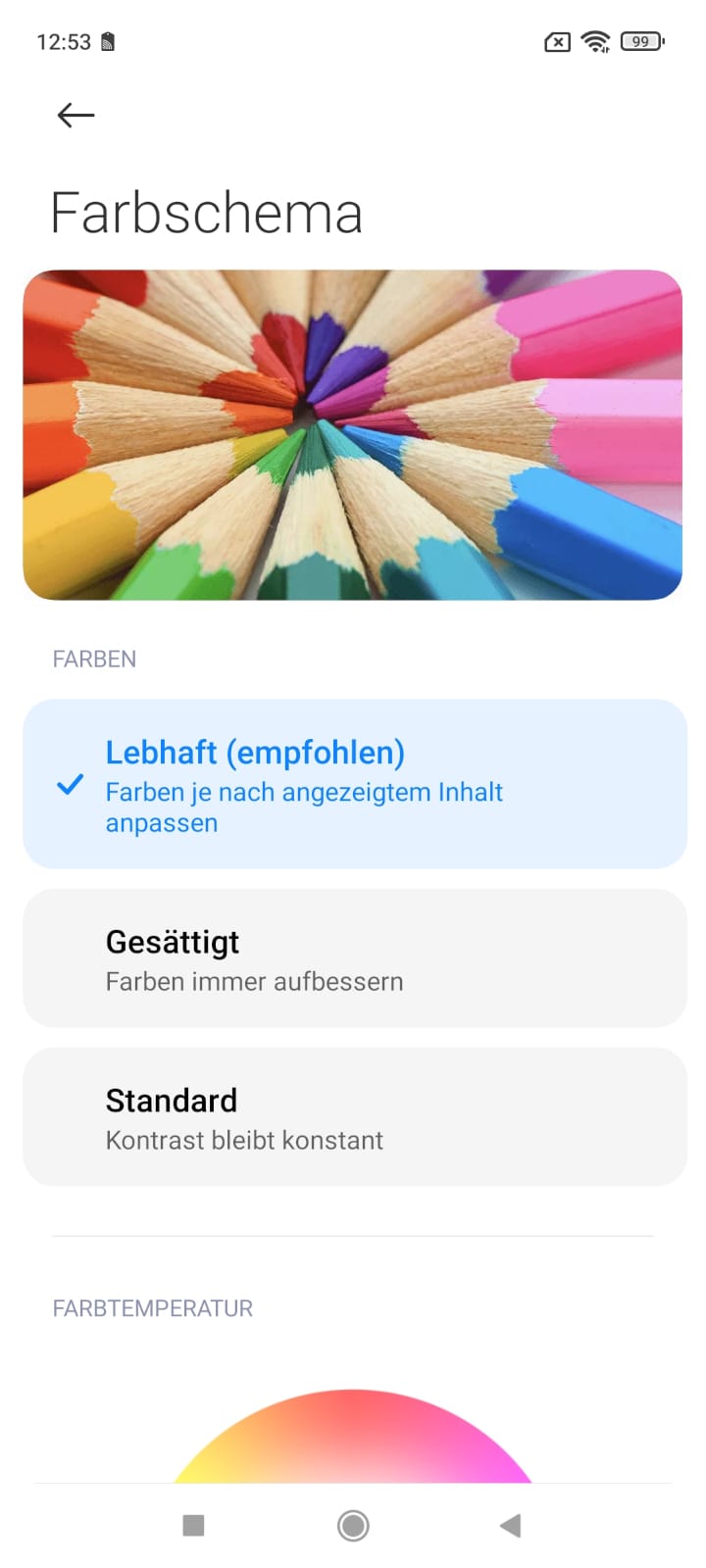
The display brightness is just adequate to read the screen reasonably well in sunlight. If the sun shines directly onto the display, even the sunlight mode, which increases the display brightness further, no longer helps. The strongly reflective display glass is also to blame. Other smartphones in this price range are neither better nor worse in this respect.
POCO M4 Pro: Performance and user interface
The POCO M4 Pro is powered by a MediaTek Dimensity 810 chip, which includes an 8-core CPU (2 x 2.4 GHz Cortex-A76 & 6 x 2.0 GHz Cortex-A55), a Mali-G57 MC2 GPU and a 5G modem. Compared to the Dimensity 700 in the POCO M3 Pro, the chip has slightly higher CPU performance and is manufactured using the more efficient 6nm process. You can see the details above in the table. However, this difference is barely noticeable in benchmarks. Even less so in everyday use.
Regarding storage, you can choose between 4+64GB or 6+128GB. The working memory is LPDDR4X type, the data storage is UFS2.2 type. In the test, both storages showed high read and write rates. The POCO M4 Pro performs well in everyday use. The Android 11-based MIUI 12.5 user interface responds quickly and is smoothly operable, apps open without significant loading times, and already open apps are kept in memory for a long time.
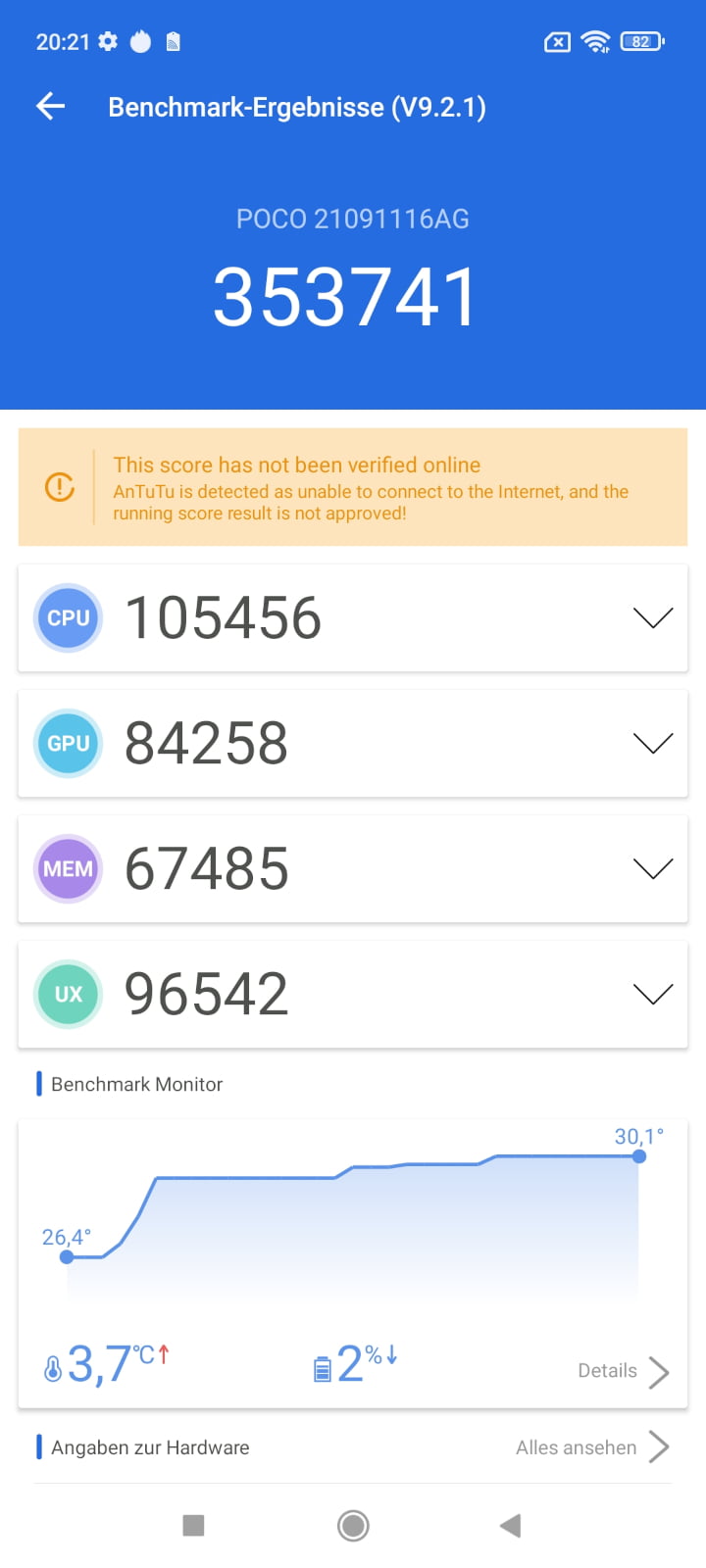
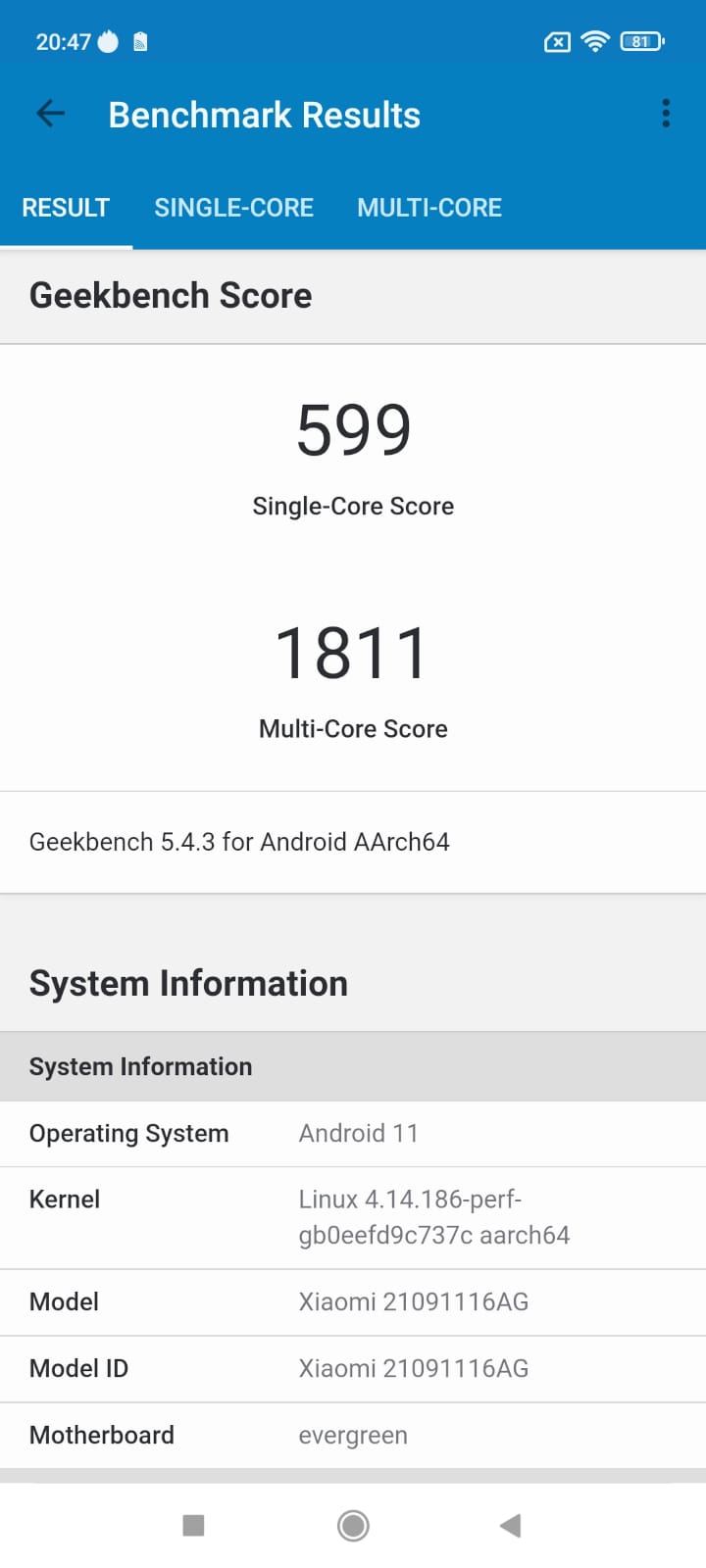
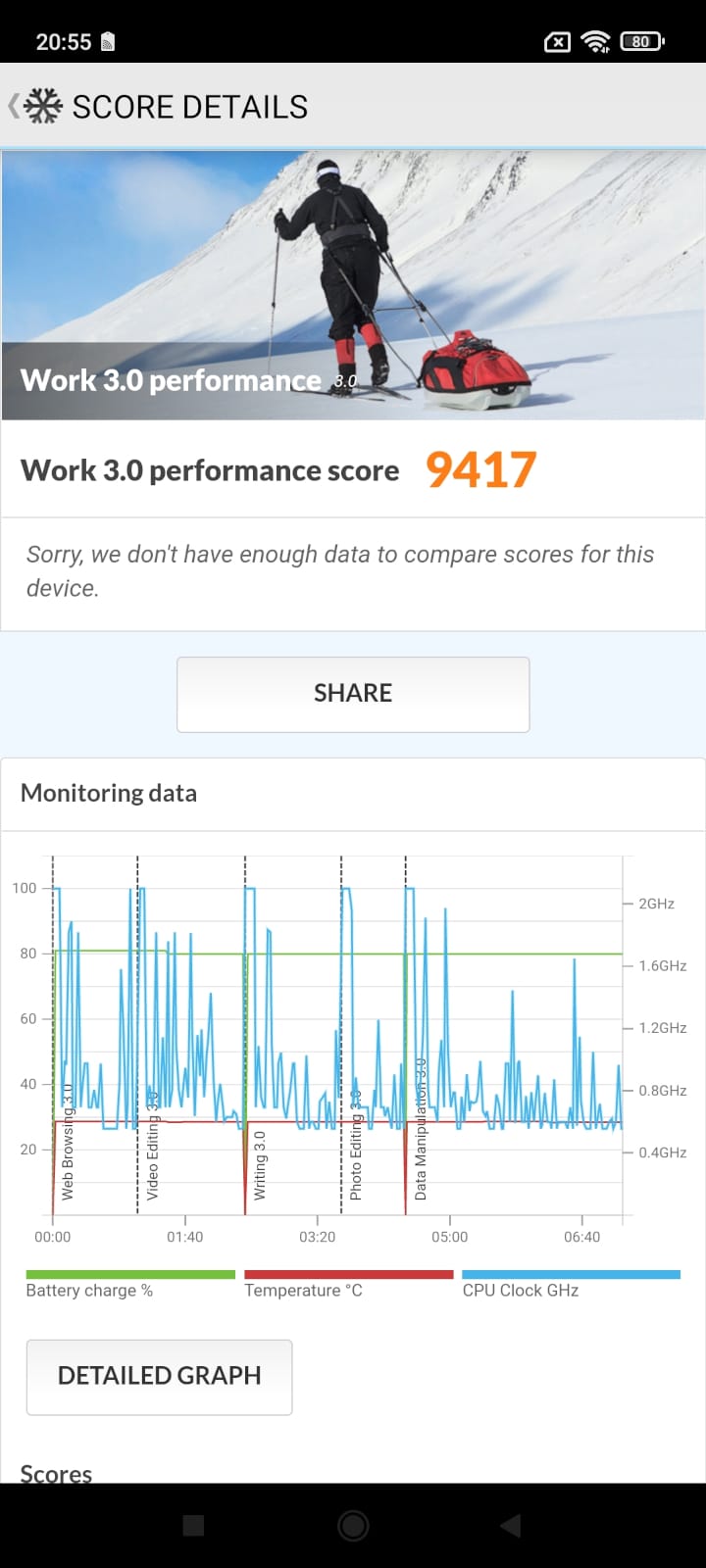
In mobile games, it becomes noticeable that the POCO M4 Pro is not a high-end device. If you like playing demanding games, you have to turn down the graphics details. However, most games are playable smoothly on low detail settings. POCO has heat development under control. Thermal throttling, i.e. downclocking of the performance, does not occur.
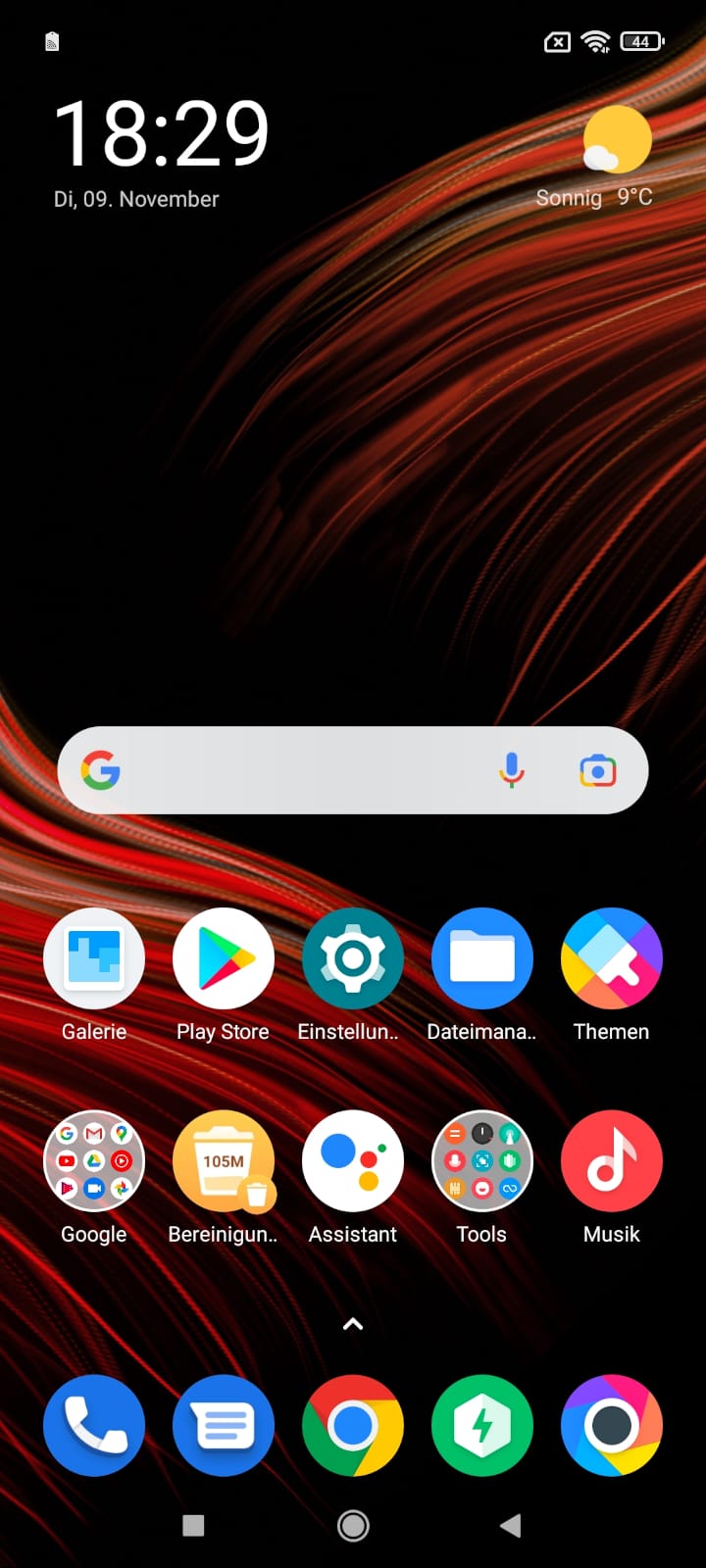
MIUI 12.5 is used not only on Xiaomi devices but also on POCO. The user interface is clearly structured and particularly feature-rich. With the help of extensive themes, the design (icons, backgrounds, effects) can be individually customised. Unfortunately, POCO has not done without annoying third-party apps and games. However, unwanted apps can be uninstalled via the app settings.
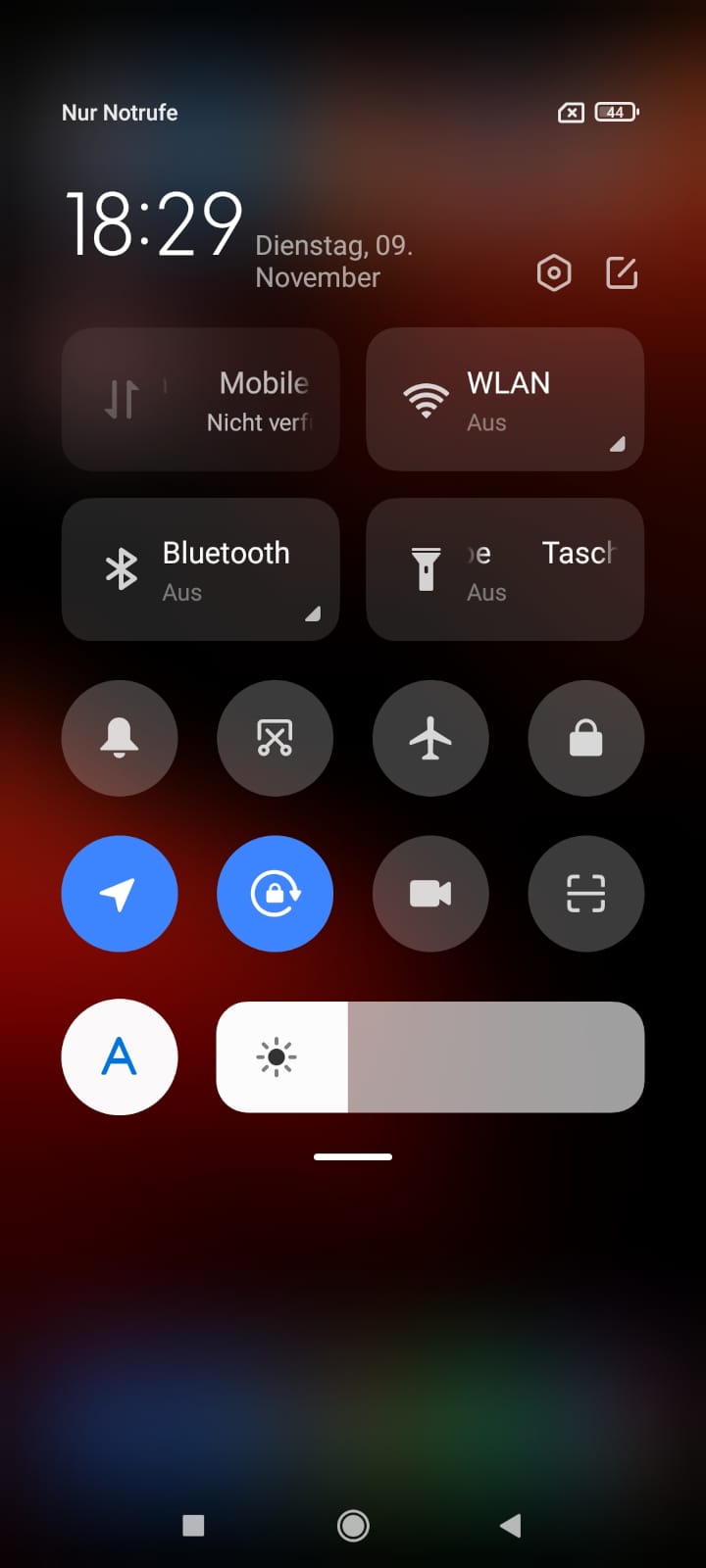
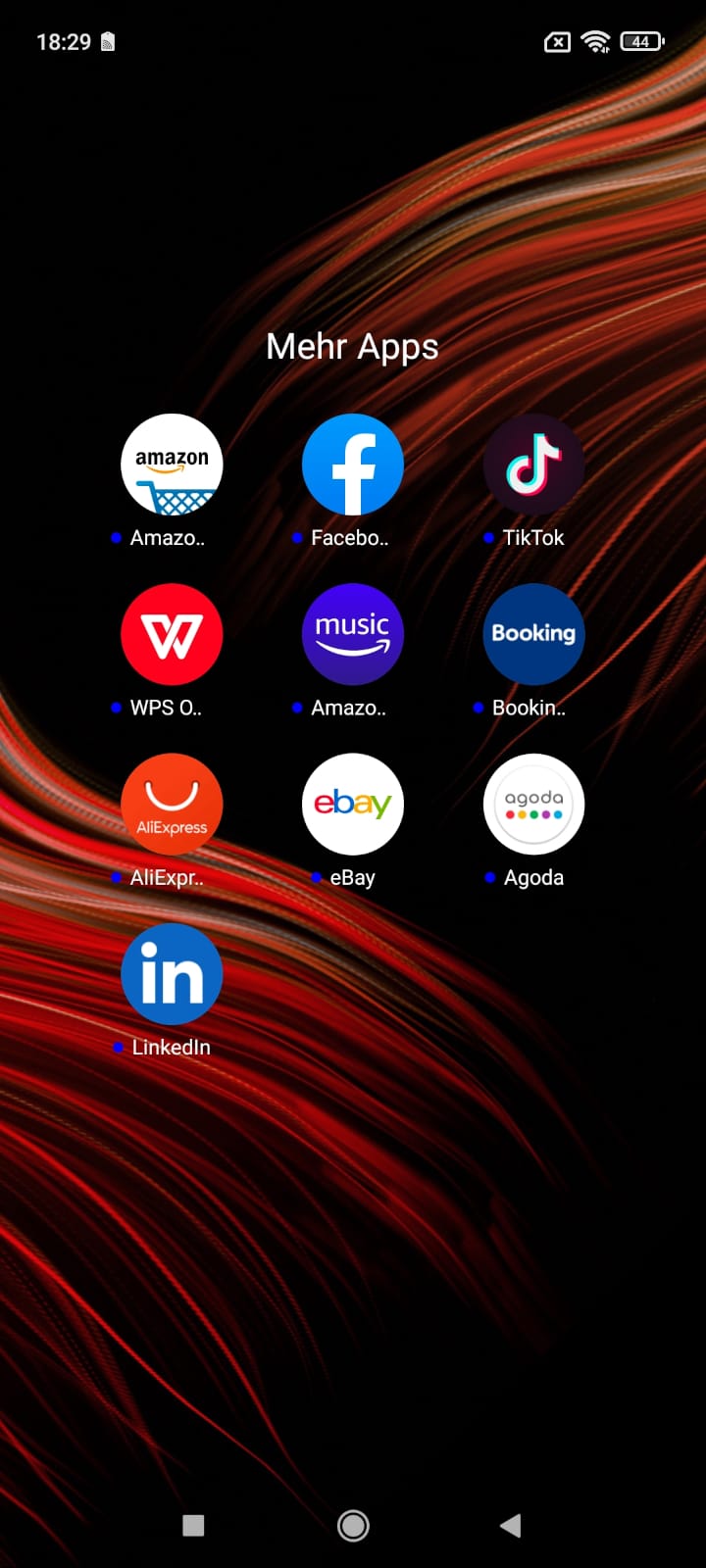
In addition, there are also a range of useful tools, such as a QR code scanner, an FM radio, a screen recording function, a split-screen mode and advanced privacy settings. If you link the smartphone to a Mi account, you gain access to further Xiaomi services, such as the Xiaomi Cloud. An update to Android 12 will most likely be released over the course of the next year.
POCO M4 Pro: Camera
POCO has cut costs on the camera and dropped the macro and depth sensor of the POCO M3 Pro, fitting the POCO M4 Pro with a 8MP ultra-wide-angle camera alongside the new main camera.
However, there is no reason to mourn the omitted sensors, because here less is more. The two 2MP sensors of the POCO M3 Pro are much more of a waste than they bring any real benefit. An 8MP ultrawide camera is clearly more advantageous here (provided the recording quality is good).
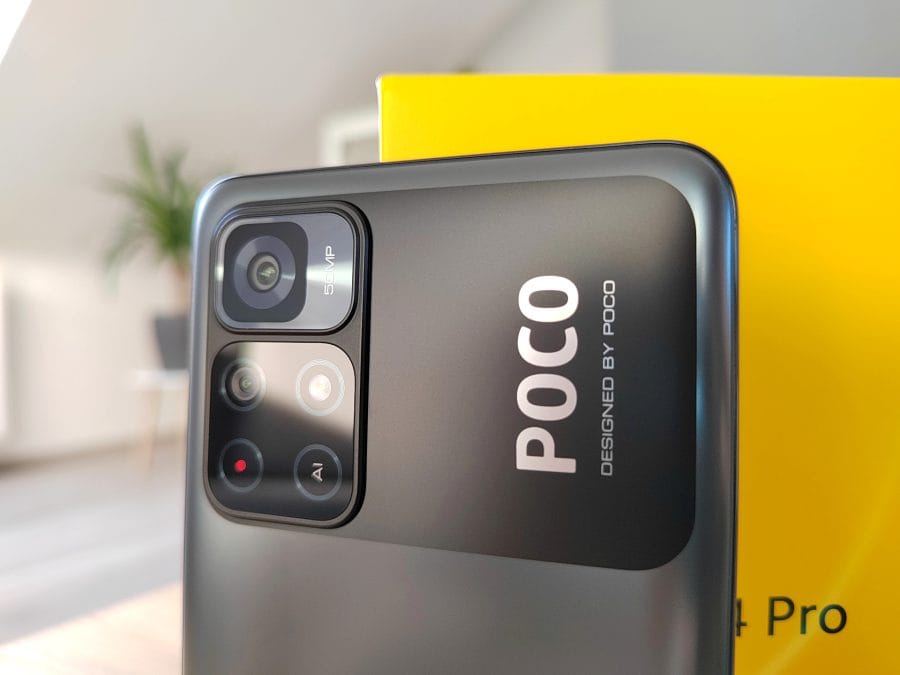
The POCO M4 Pro’s main camera uses the same 50 MP Samsung ISOCELL S5KJN1 image sensor that was already installed in the Redmi 10 (our test). The sensor uses Samsung’s Tetracell technology (pixel binning), which combines four individual pixels into one large pixel.
This reduces the image resolution by a quarter, but the technology improves the signal-to-noise ratio and increases light sensitivity, which theoretically results in better night shots. The following images were taken with the main camera.
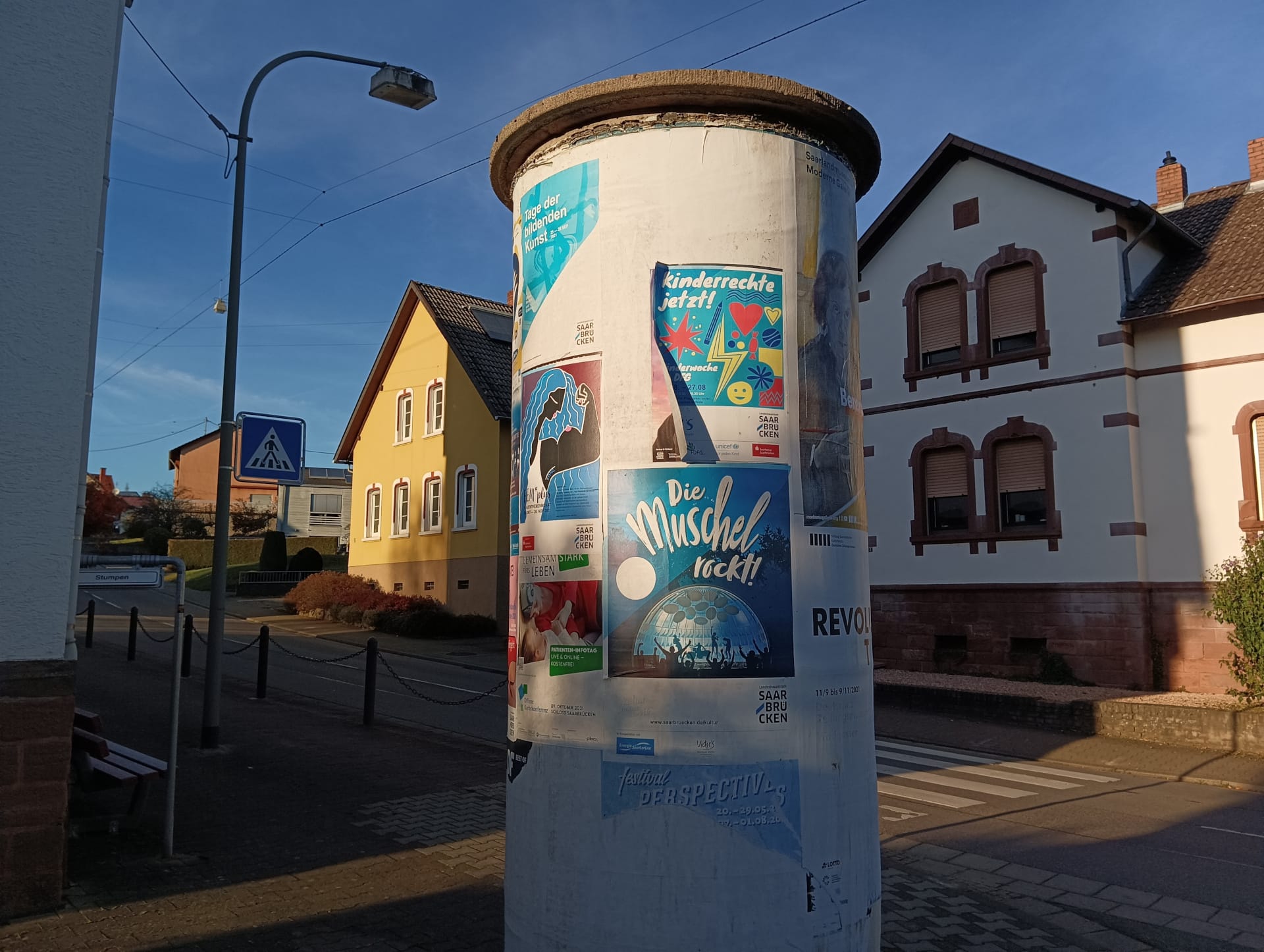





The main camera is capable of taking good pictures. Colours are not oversaturated and look realistic. The main camera also convinces in terms of image sharpness and dynamic range. The Auto-HDR mode hardly needs to intervene. Image noise is not noticeable in good lighting conditions. As lighting conditions decrease, the noise level in the image remains low, but image sharpness decreases and colours become increasingly faded. The night mode can somewhat salvage the result.
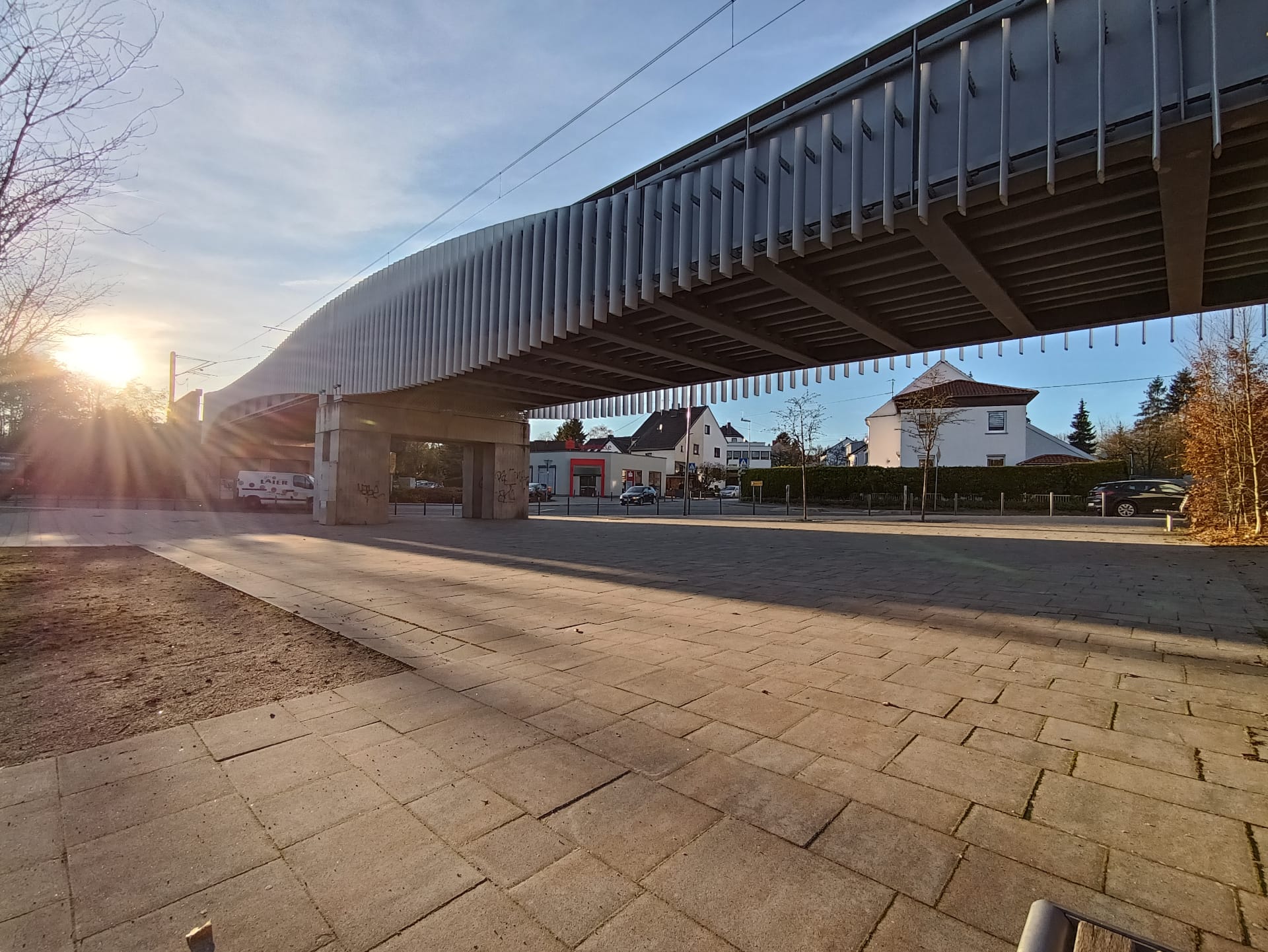
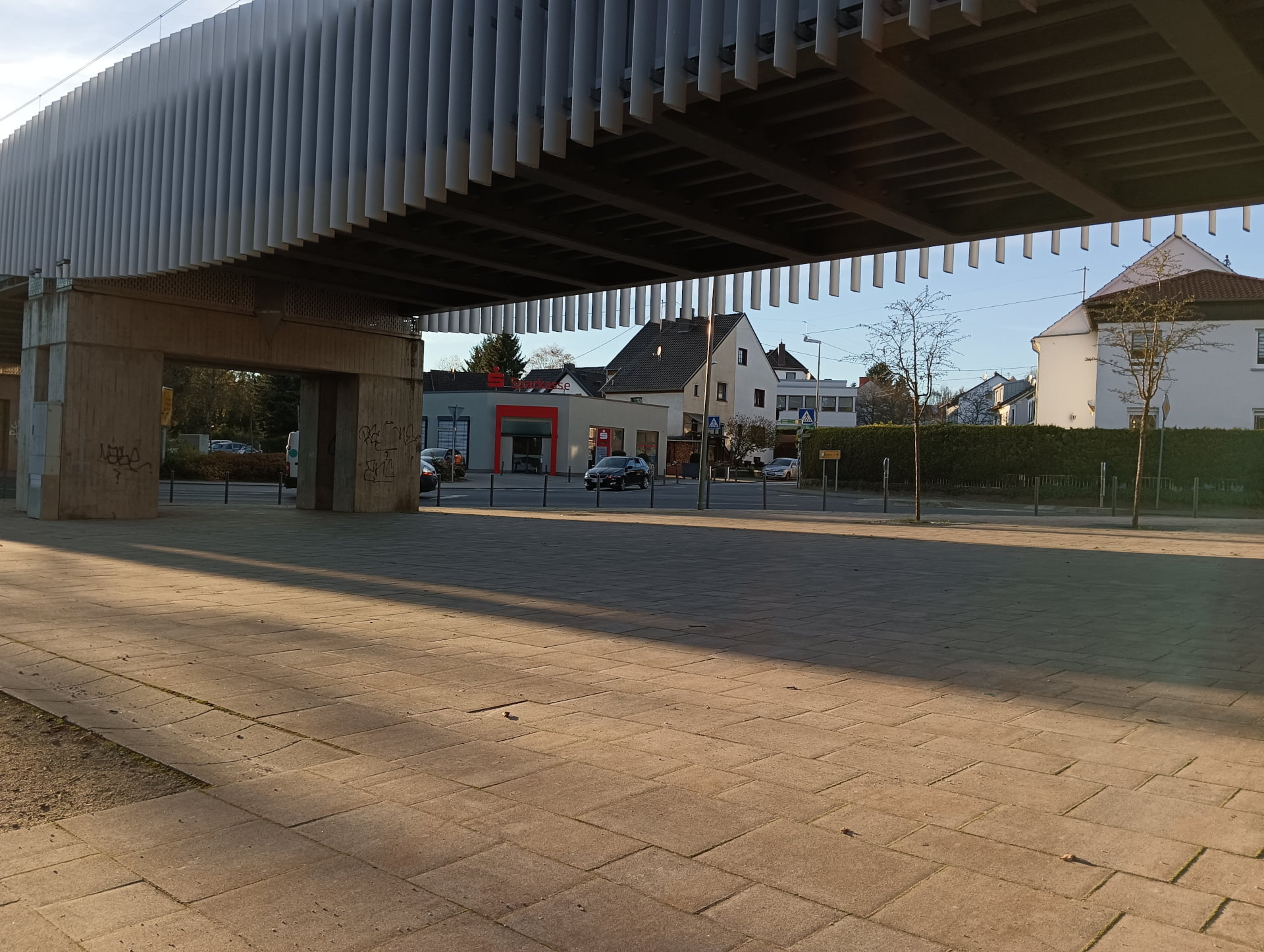
The ultra-wide-angle camera was a pleasant surprise, producing undistorted and sharp images right to the edges. Colours and detail levels are also accurate here, and the camera handles high-contrast scenes well. However, the ultra-wide-angle camera becomes increasingly useless in the dark.
POCO M4 Pro: Cellular connectivity
Mobile network
The POCO M3 Pro was one of the first smartphones to bring fast 5G mobile connectivity to the affordable mid-range. The POCO M4 Pro builds on this and is also capable of connecting to fast 5G mobile networks. This is even possible on both SIM card slots (dual standby). In addition to 5G, 4G (LTE), 3G and 2G are naturally also supported. Here is an overview of the available frequencies and bands:
- GSM: 850/900/1800/1900
- WCDMA: B1/B2/B4/B5/B8
- FDD LTE: B1/B2/B3/B4/B5/B7/B8/B12/B17B20/B28/B32/B66
- TDD LTE: B38/B40/B41
- 5G NSA/SA: n1/3/5/7/8/20/28/38/40/41/66/77/78
Mobile reception of the POCO M4 Pro is good. Unexpected network dropouts or instabilities did not occur in the Vodafone network. Calls can be made in good quality via both the earpiece and the speakerphone. VoLTE and VoWiFi are supported.
Wi-Fi and Bluetooth
On Wi-Fi (dual-band AC), the POCO M4 Pro is fast and convinces with high data throughput and stable range. Bluetooth version 5.1 is available.
GPS and sensors
Navigation is also no hurdle for the POCO M4 Pro. The GPS module quickly finds enough satellites to determine the position with an accuracy of a few metres. The signal is kept constant while in the car. In addition to GPS, the satellite navigation systems Galileo, GLONASS, and Compass (Beidou) are supported.
The remaining sensors include an ambient light sensor, an e-compass, a gyroscope, an accelerometer, and an IR blaster. If you have misplaced the TV remote control, you can use the IR blaster or infrared transmitter to control the television. All you need is an app (e.g. Mi Remote Controller), which can be downloaded free of charge from the Google Play Store.
Fingerprint scanner and NFC
The fingerprint scanner is located on the side in the power button. The smartphone can be quickly unlocked via this. The recognition rate is good. NFC is also included. Payment providers such as Google Pay are supported.
Audio
The stereo speaker does a good job. The sound is balanced at the top and bottom and reaches a high volume. In any case, the POCO M4 Pro's stereo speaker does not sound like a tin can. Bass frequencies are reproduced reasonably well, and the treble is also well covered. The mids are somewhat indistinct, which is particularly noticeable with vocals, which sometimes sound blurred.
Although many users have now switched to wireless headphones, the 3.5 mm jack connector is pleasingly still present.
Battery
The 5000 mAh battery of the POCO M4 Pro will definitely get you through the day. Even more than 2 days of runtime is realistic, if you are a frugal user who mainly uses the smartphone for calling, WhatsApp and web browsing. The consumption in standby or overnight is very low, with only a few percentage points used.
In our test, we naturally also checked the 33W fast charging function. From fully depleted, the battery was back at 100 percent after exactly 63 minutes. This is very close to the 59 minutes POCO advertises. If you connect the smartphone to power for just 30 minutes, the percentage indicator already jumps to 55 percent.
Wireless charging is not supported. Although mentioned almost nowhere, the POCO M4 Pro supports so-called "reverse charging". This allows the smartphone to act like a power bank and charge other devices' batteries in reverse.
Our verdict
In the price range below 200 euros, the POCO M4 Pro is one of the few smartphones that offers fast 5G mobile connectivity. The 90 Hz display is of good quality and convincing in its presentation. The performance of the Dimensity 810 chip is entirely sufficient for everyday tasks. In demanding mobile games, however, the chip quickly reaches its limits. Although the camera offers little functionality, in good lighting conditions the 50MP main camera captures decent photos and videos.
NFC for mobile payments and the large 5000 mAh battery with fast-charging capability round off the overall positive impression. However, a standout highlight is hard to find. This is not a problem, as in its price bracket the POCO M4 Pro is still a well-equipped smartphone for which we can confidently issue a recommendation.
Specifications
Processor and memory
- CPU
- MediaTek Dimensity 810
- GPU
- Mali-G57 MC2
- RAM
- 4GB / 6GB LPDDR4X
- Internal storage
- 64GB / 128GB UFS2.2
- Storage expansion
- Yes
Display
- Display size
- 6.6 inches
- Display resolution
- 2400 x 1080 pixels
- Display refresh rate
- 90 Hz
- Display brightness
- 450 nits
- Display type
- IPS
- Screen protector
- Corning Gorilla Glass 3
- Sampling rate
- 240 Hz
Cameras
- Main camera
- 50 MP (f/1.8 aperture )
- Ultra-wide-angle camera
- 8 MP (119° - f/2.2 aperture)
- Front camera
- 16 MP (f/2.45 aperture)
Mains
- Dual SIM
- Yes
- SIM size
- Nano SIM
- eSIM
- No
- GSM
- 850/900/1800/1900
- WCDMA
- B1/B2/B4/B5/B8
- FDD LTE
- B1/B2/B3/B4/B5/B7/B8/B12/B17B20/B28/B32/B66
- TDD LTE
- B38/B40/B41
- 5G NSA/SA
- n1/3/5/7/8/20/28/38/40/41/66/77/78
Wireless
- Wi-Fi
- 802.11 a/b/g/n/ac
- Bluetooth
- 5.1
- GPS
- Yes
- NFC
- Yes
Sensors
- *Ambient light sensor
- *Accelerometer
- *Proximity sensor
- *E-compass
- *Gyroscope
- *Fingerprint sensor
- *IR blaster
Battery
- Battery
- 5,000 mAh
- Fast charging function
- 33 watts
- Qi charging
- No
Other
- Operating system
- Android 11 (MIUI 12)
- Audio
- 3.5mm headphone jack / stereo loudspeaker
- Connection
- USB-C
- Size
- 163.56 × 75.78 × 8.75 mm
- Weight
- 195g
Price comparison
| Store | Price | Link |
|---|
Comments