Contents
Design, build quality, and included accessories
Catchy colour names and extravagant back panels now play a major role in smartphones. This is also the case with the realme 8 Pro, which is available in the colours Infinite Blue, Infinite Black and Punk Black. My test device in Infinite Black has an additional feature. The brand's slogan – “DARE TO LEAP” – is emblazoned in large letters on the plastic back, appearing almost three-dimensionally reflective.
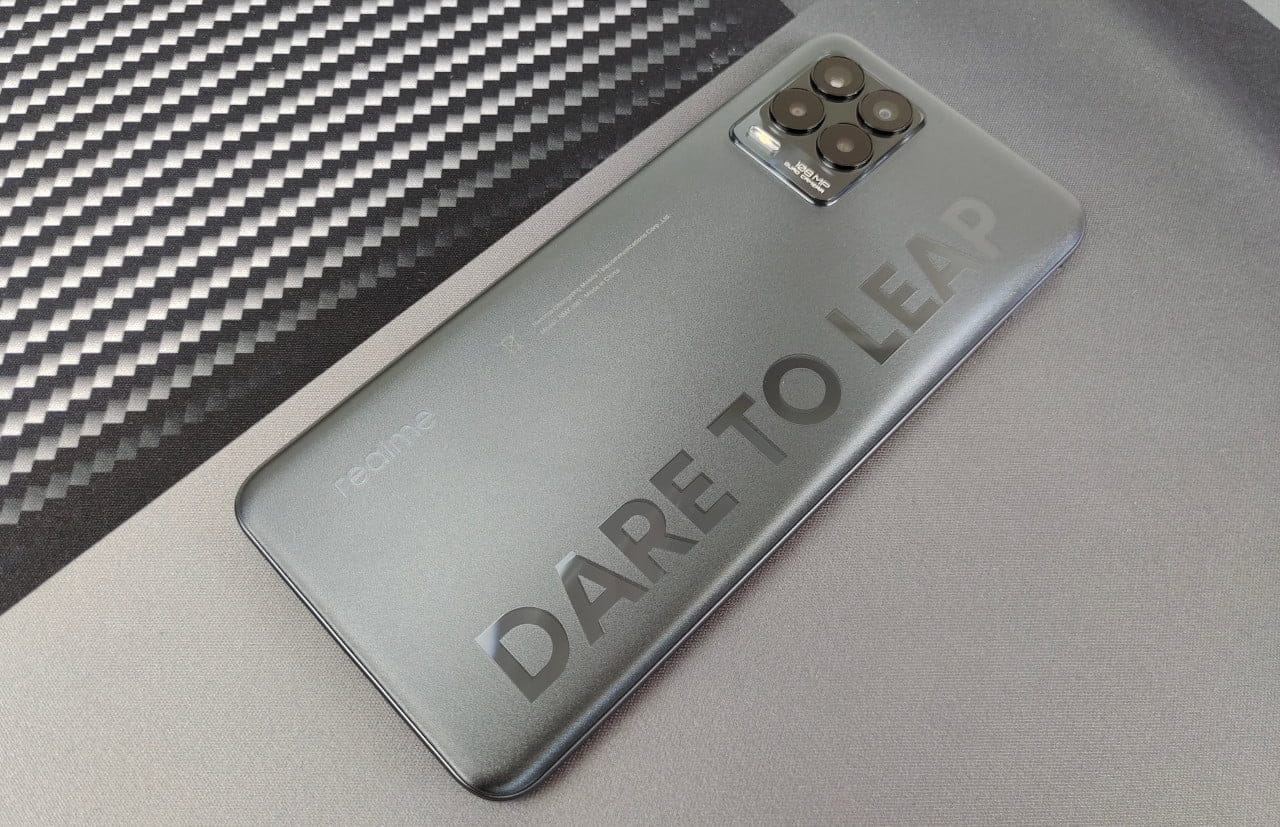
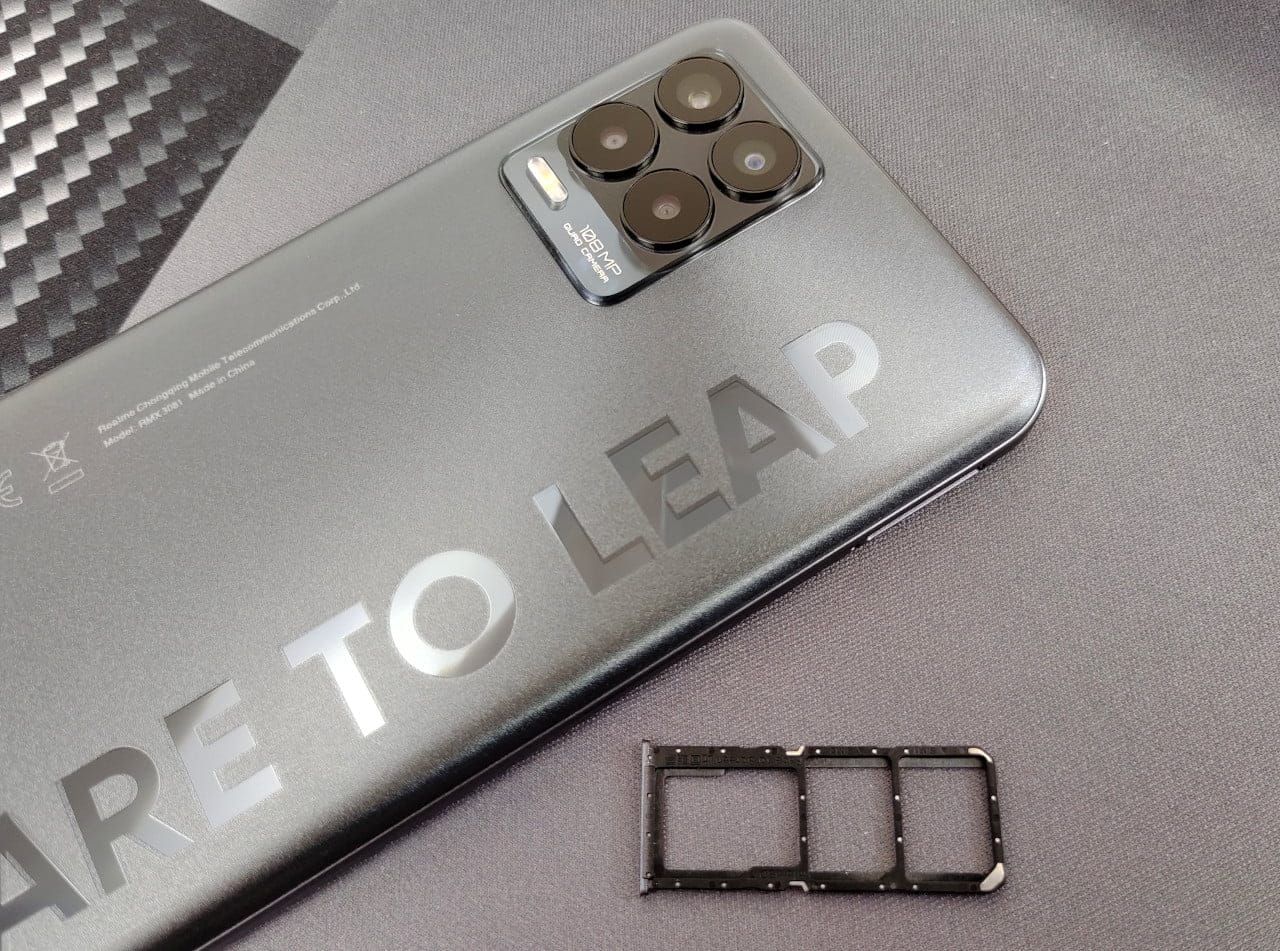
The fine microstructure on the back gives the 160.6 x 73.9 x 8.1 mm sized and relatively light 176 g smartphone a good grip. The framed quad-camera system visibly protrudes from the back. The slightly curved edges of the back also ensure a pleasant feel and a smooth transition to the housing frame.
On the right side of the frame are the easily accessible power button and volume rocker, both with a crisp click. On the opposite side, realme has placed the triple-SIM slot, which can be populated with two nano-SIM cards and a microSD memory card. There is no water protection, which is also evident from the missing sealing rings on the SIM slot. The top of the frame features only the opening for one of the two microphones. The bottom is more spectacular, housing the USB-C port, the speaker, another microphone and even a 3.5 mm headphone jack.
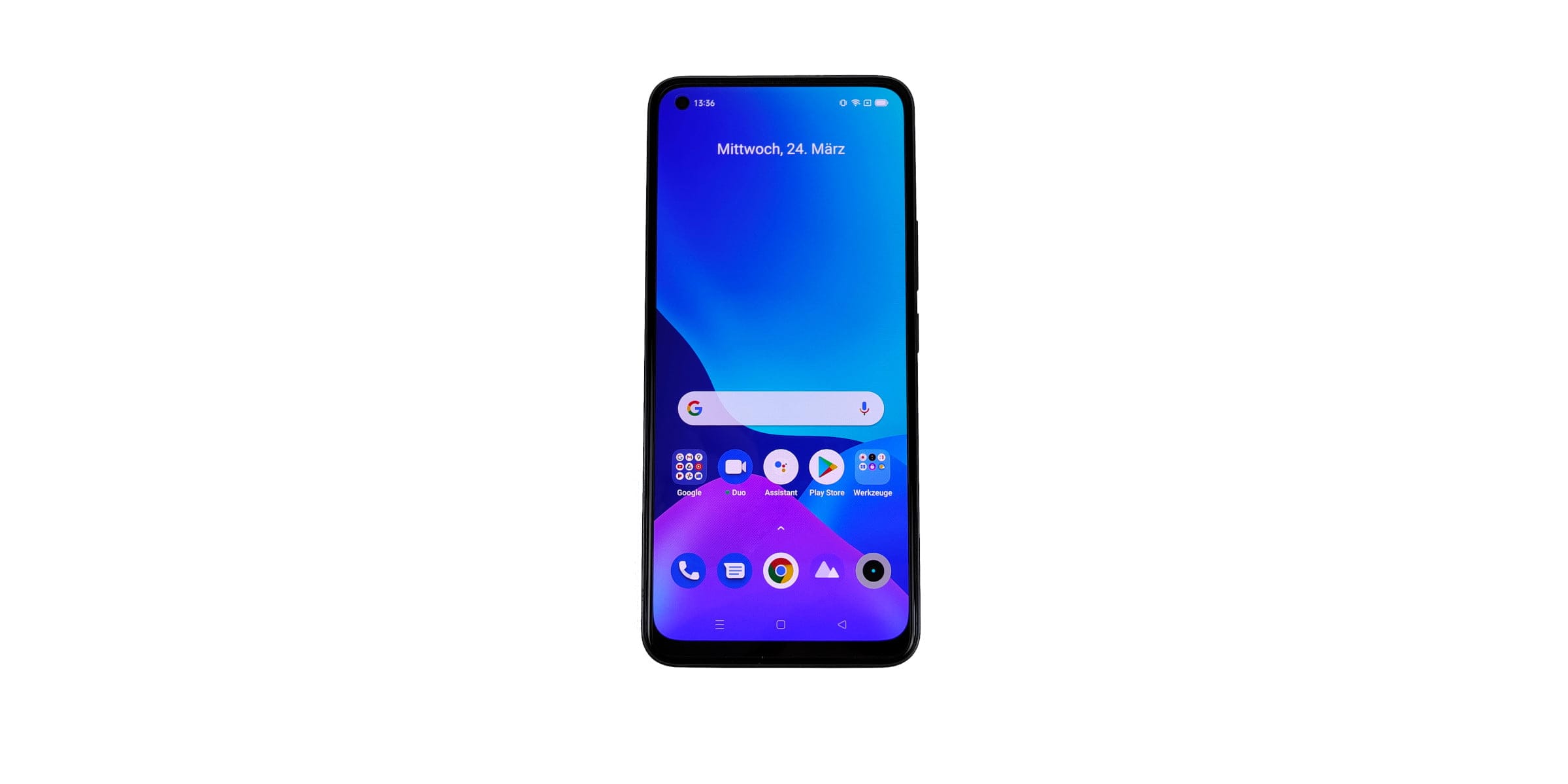
The front features a 6.4-inch Super AMOLED display. The front camera is integrated into the display in a punch-hole style at the top left. Hidden in the lower part of the display is the in-display fingerprint scanner, which is designed to unlock the smartphone reliably and quickly. The emphasis here is on 'designed', because during testing, the fingerprint scanner did not always unlock the smartphone at the first attempt.
The width of the display bezels is at a good mid-range level. Not particularly narrow, but not too wide either. Above the display, we find the narrow and inconspicuous earpiece. There is no notification LED. Instead, realme relies on an always-on display (AOD). More on this later.
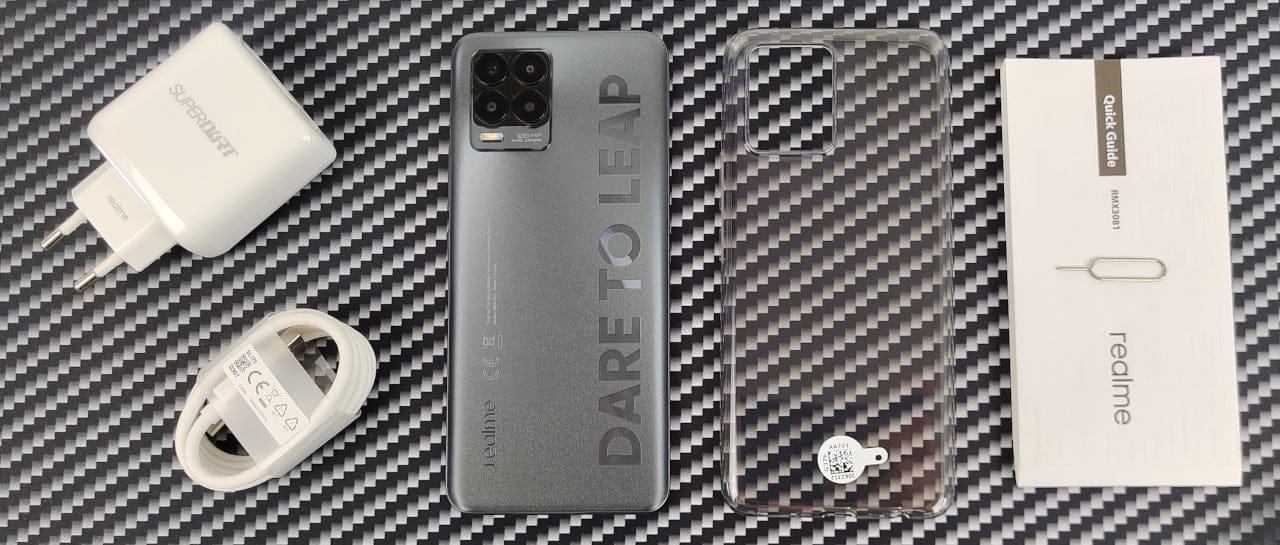
The workmanship is beyond reproach. The scope of delivery includes, in addition to the smartphone, a silicone protective case, a 65-watt SuperDart fast charger, a USB-A to USB-C charging cable, a SIM tool and a quick guide.
Display
Realme has fitted the realme 8 Pro with a 6.4-inch Super AMOLED display with FHD+ (2400 x 1080 pixels) resolution. The maximum display brightness of 1000 cd/m² is sufficient to ensure the display remains readable in sunlight. Colours are displayed particularly vividly, typical for AMOLED. The contrast is almost infinite.
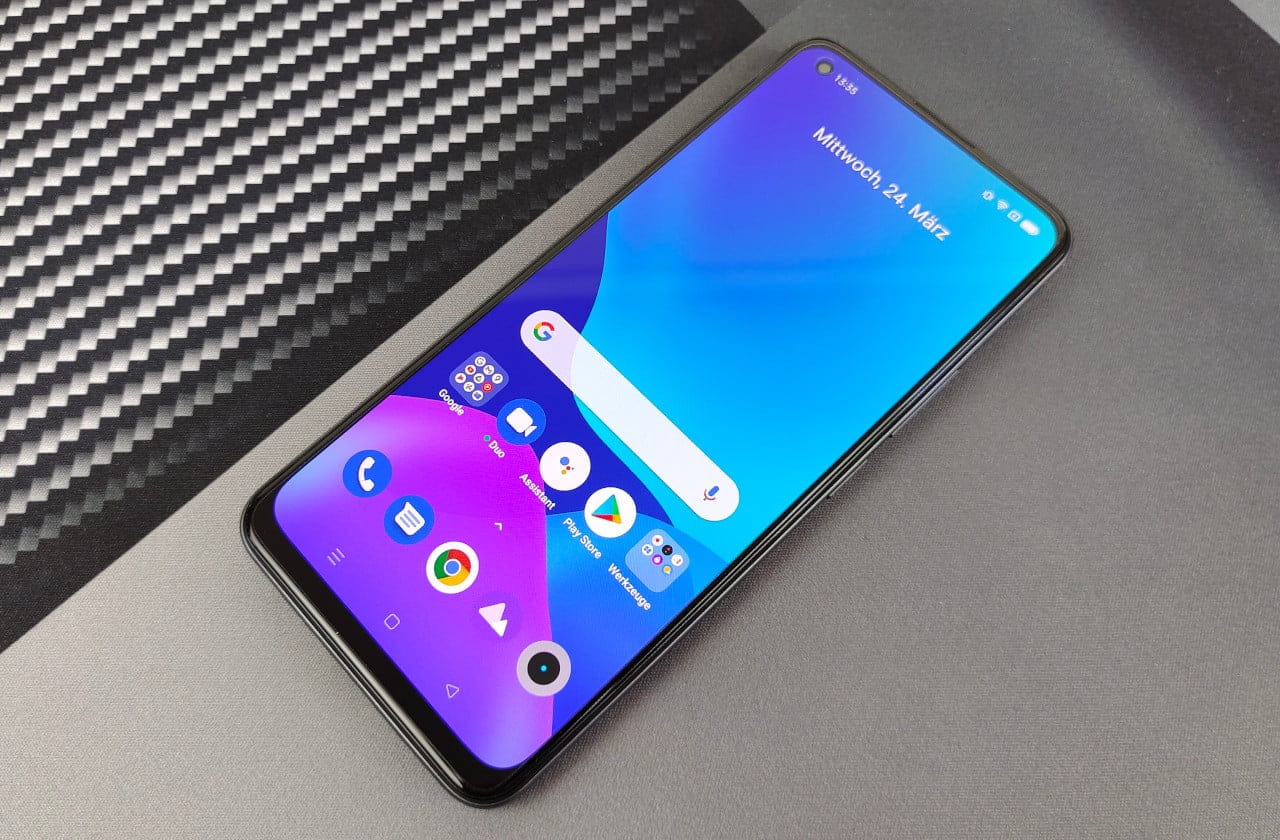
realme makes compromises with the refresh rate. Instead of 90 or even 120 Hz, the panel of the realme 8 Pro only achieves 60 frames per second. As a result, content is not displayed quite as smoothly as on smartphones that are usually significantly more expensive and feature 90Hz+ displays. Fast touchscreen response times are guaranteed by a touch sampling rate of 180 Hz. I was able to confirm this in testing. The touchscreen responds precisely and quickly.
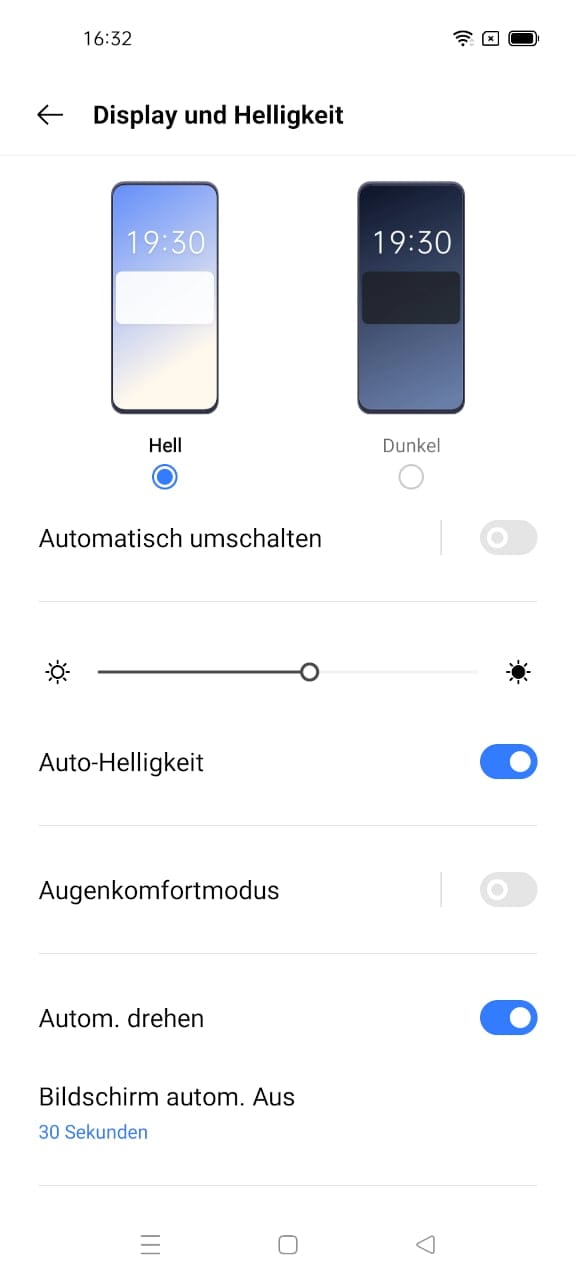
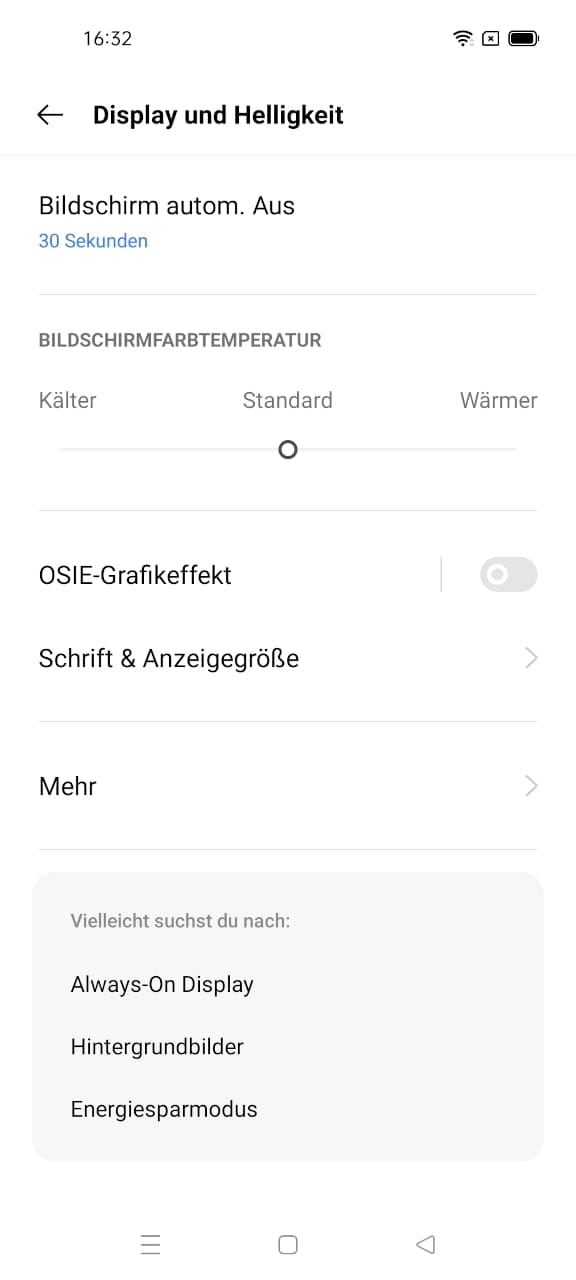
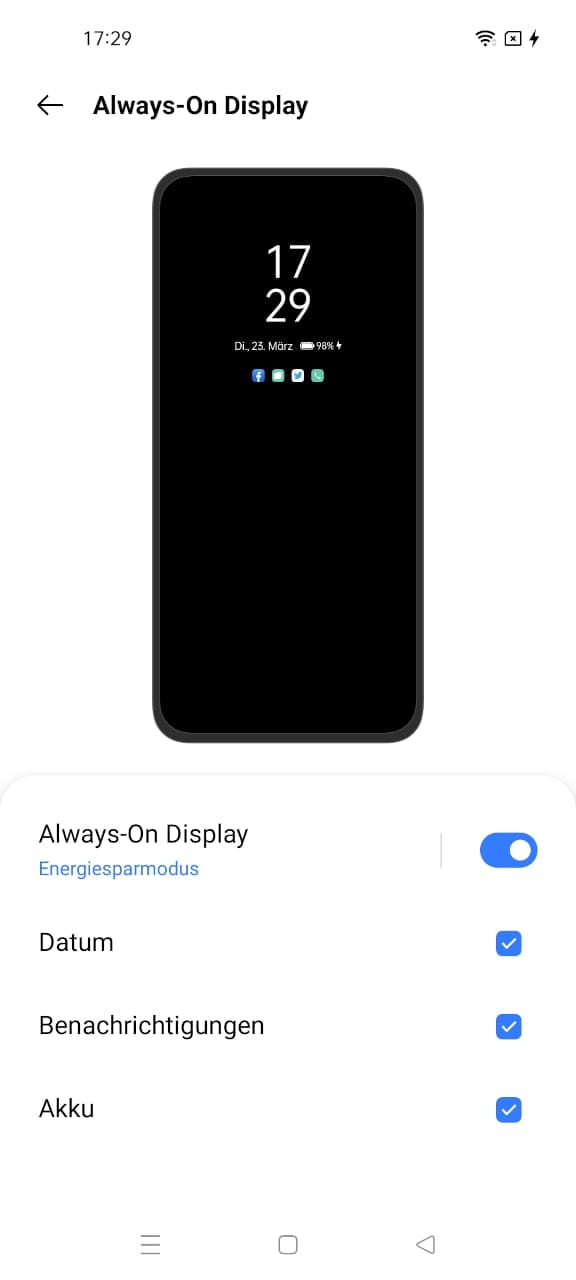
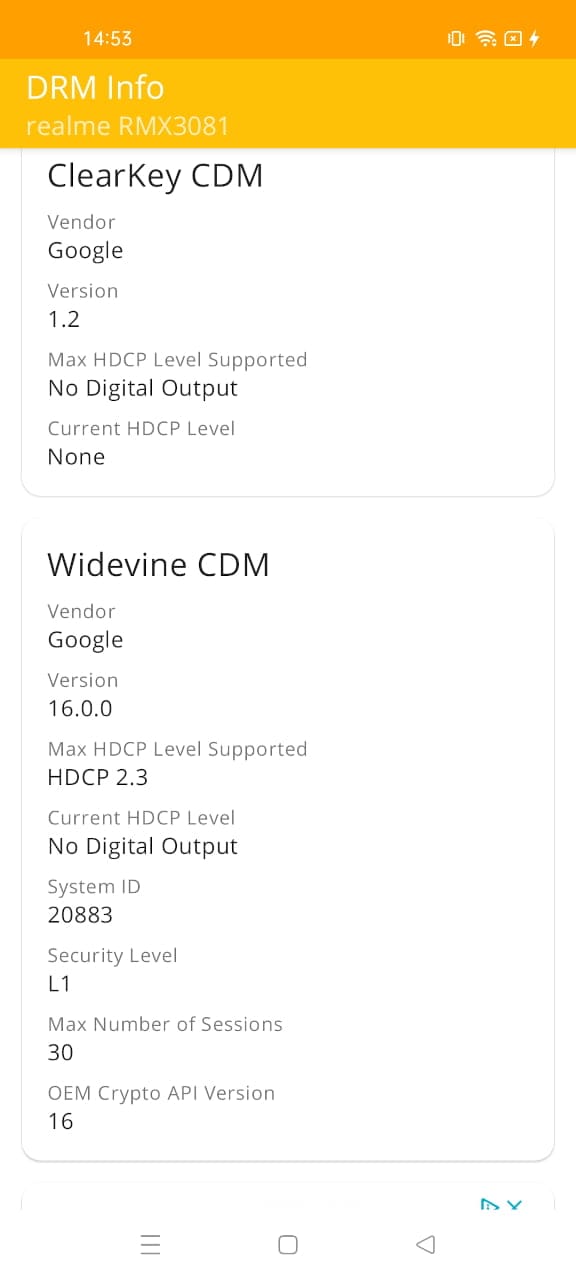
An advantage is the existing Widevine L1 certification, allowing users to enjoy content from streaming providers such as Netflix, Prime Video or Disney+ in full resolution. The display's always-on function replaces the notification LED. Incoming notifications on the smartphone, date and time are displayed on the screen even when the smartphone is in standby mode. Due to the energy-efficient AMOLED display, battery consumption is not significantly increased.
Performance and user interface
The realme 8 Pro is powered by a Qualcomm Snapdragon 720G system-on-chip. The chip, manufactured using an 8nm process, consists of two fast Cortex-A76 cores (2.3 GHz) and six power-efficient Cortex-A55 cores (1.8 GHz). The GPU is an Adreno 618, which is up to the task for more demanding mobile games. Regarding memory, the smartphone comes with either 6GB or 8GB LPDDR4X RAM and 128GB UFS2.1 storage. The storage can be expanded further with a microSD card.
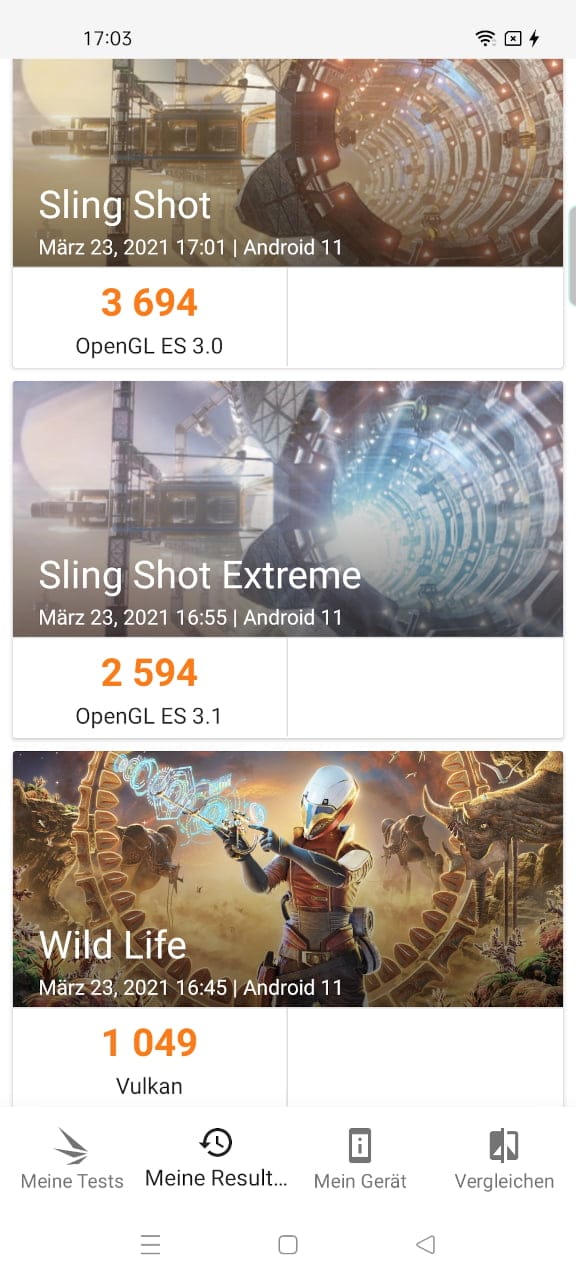
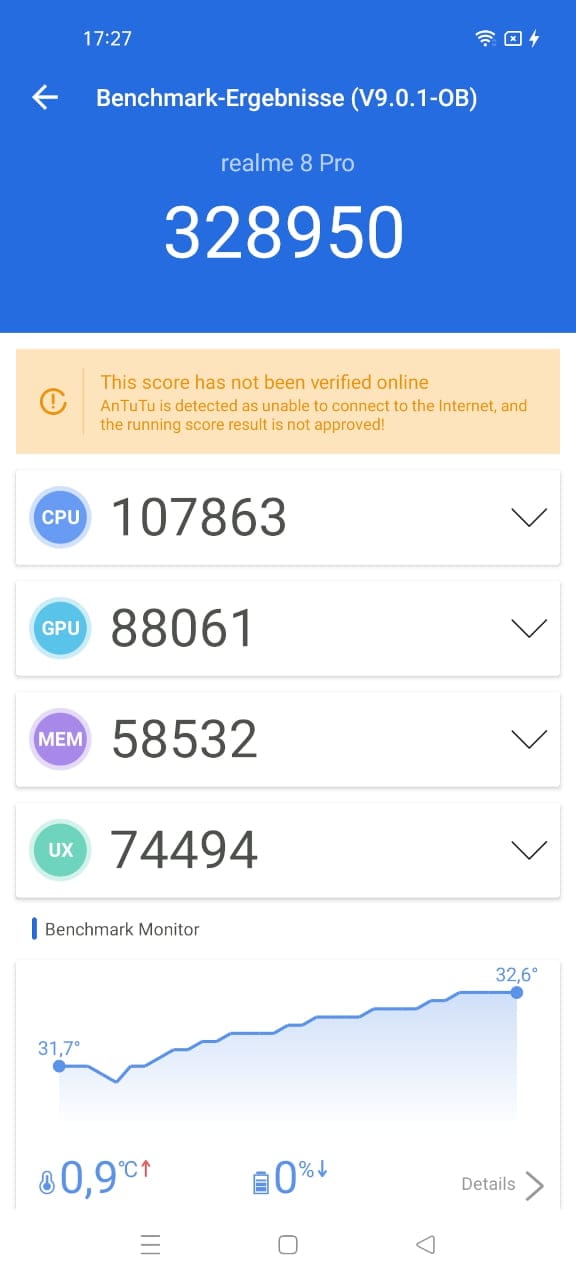
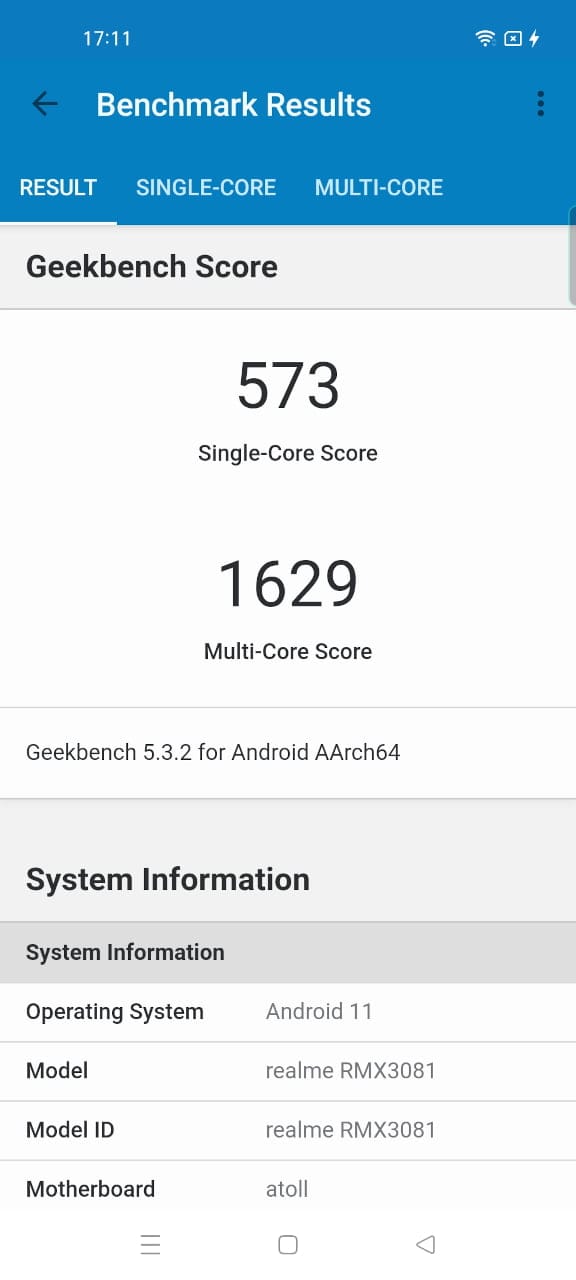
Everyday performance is good. The realme UI 2.0, based on Android 11, operates smoothly and runs stably. The system is slim and largely oriented towards stock Android. Apart from Facebook, there are no annoying third-party apps pre-installed.
Multitasking is no problem for the realme 8 Pro thanks to its generous memory. Mobile gamers do have to make compromises with the display, but high refresh rates in demanding mobile games are also hard to find in this price bracket. The performance is perfectly sufficient for casual gaming. Thermal throttling does not affect the smartphone. From a performance perspective, the realme 8 Pro delivers exactly what you can expect at this price point.
Camera
Let's turn to the key feature of the realme 8 Pro, namely the camera. Particular attention is paid to the 108-megapixel main sensor of the quad-camera setup. The sensor used is none other than the promising Samsung ISOCELL HM2. The image sensor was announced in autumn 2020 and succeeds the ISOCELL HM1, which was used in the Samsung S20 Ultra, among others.
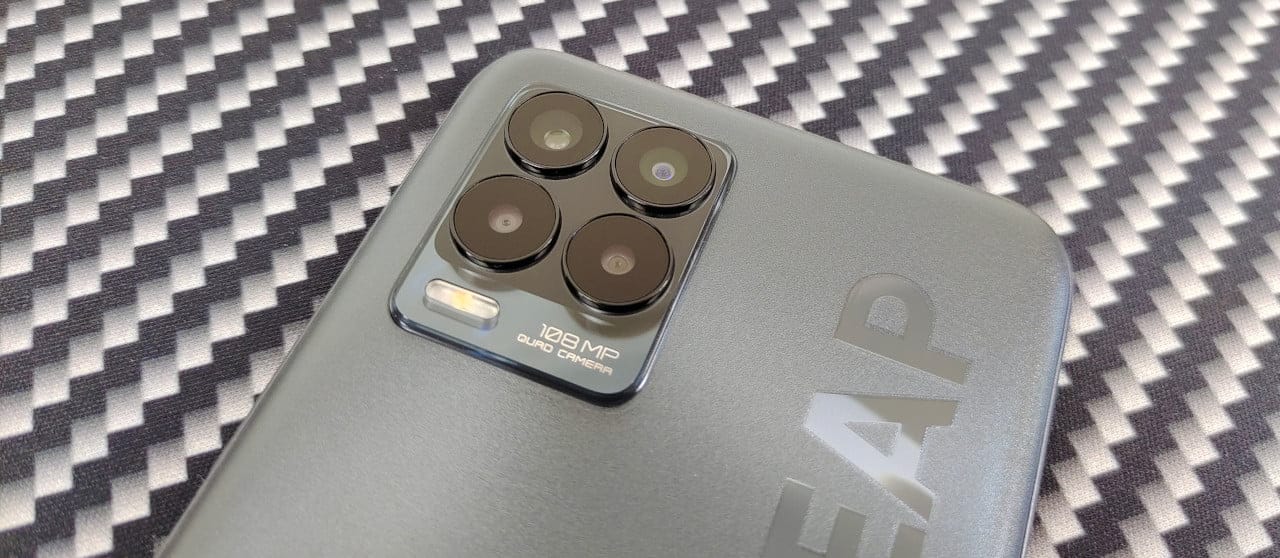
Alongside Xiaomi, realme is thus another manufacturer implementing the high-resolution sensor in a mid-range smartphone.
Samsung ISOCELL HM2
Warning, things are about to get a bit technical. The ISOCELL HM2 is not necessarily better than its predecessor, the ISOCELL HM1. With a sensor size of 1/1.52″ and a pixel size of 0.7 μm, Samsung's ISOCELL HM2 is more compact than the predecessor (1/1.33″, 0.8 μm). This initially suggests a slightly lower light yield, which Samsung aims to compensate for with its Nanocell technology (9-in-1 pixel binning).
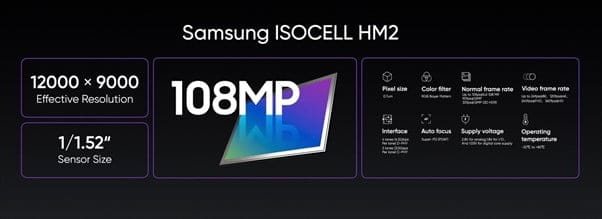
By combining 3 x 3 pixels, 2.1 micrometre large pixels are created. The photo resolution is indeed reduced from 108 megapixels to just 12 megapixels, but the combination benefits photo quality in poor lighting conditions. The formation of larger pixel blocks results in higher light sensitivity, which simultaneously improves the signal-to-noise ratio.
Practical test
What is much more important, however, is how the camera setup of the realme 8 Pro performs in everyday use. Let's start with the 108 MP main camera (f/1.88 aperture).
108-megapixel main camera
In normal photo mode, pixel binning is active and photos are saved at 4000 x 3000 pixels, i.e. 12 megapixels. Remarkable is the consistency of detail and almost non-existent image noise, even in poor lighting conditions. The main camera handles high-contrast scenes well even without HDR mode. The HDR automatic mode rarely needs to intervene.
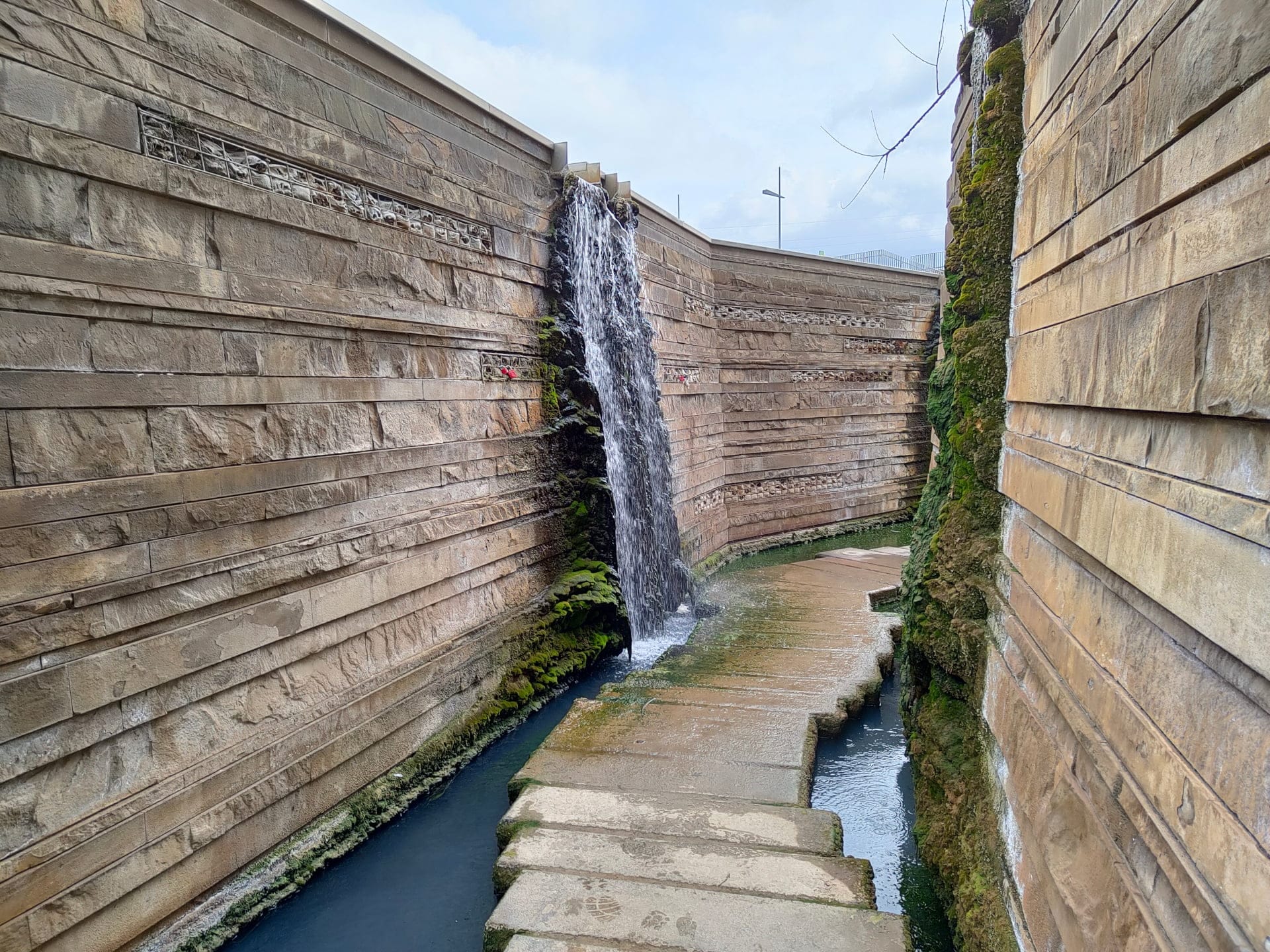





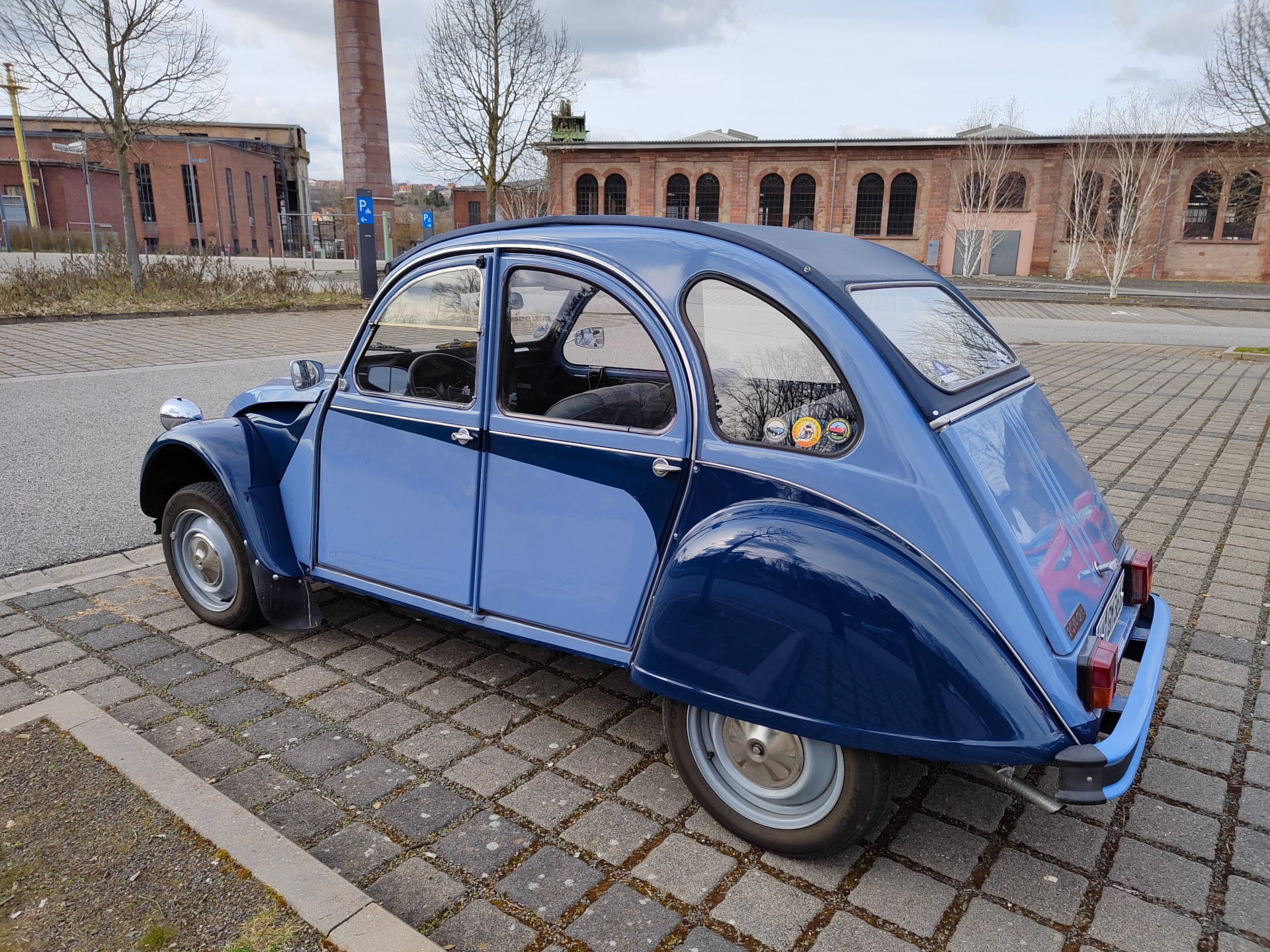

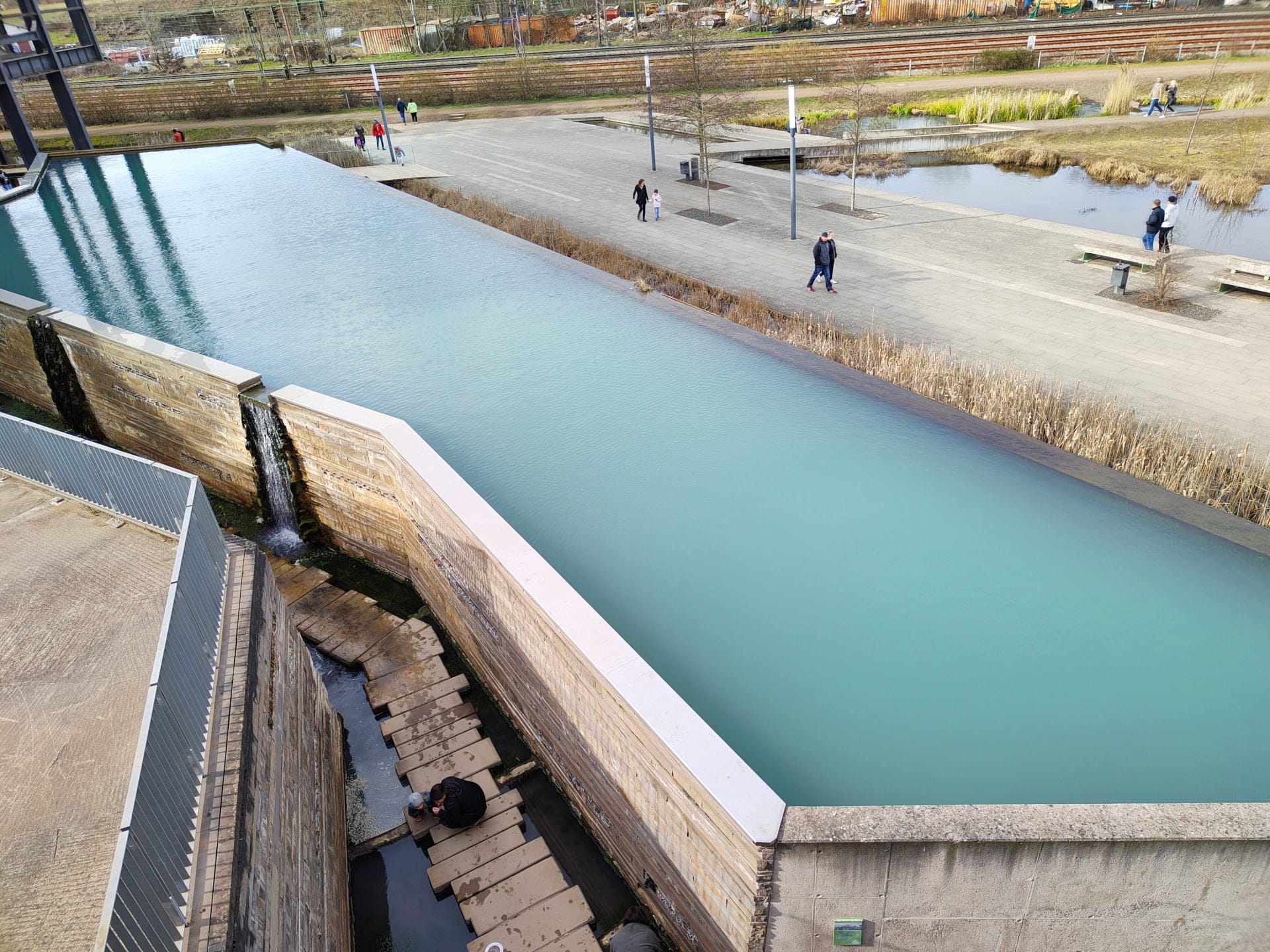
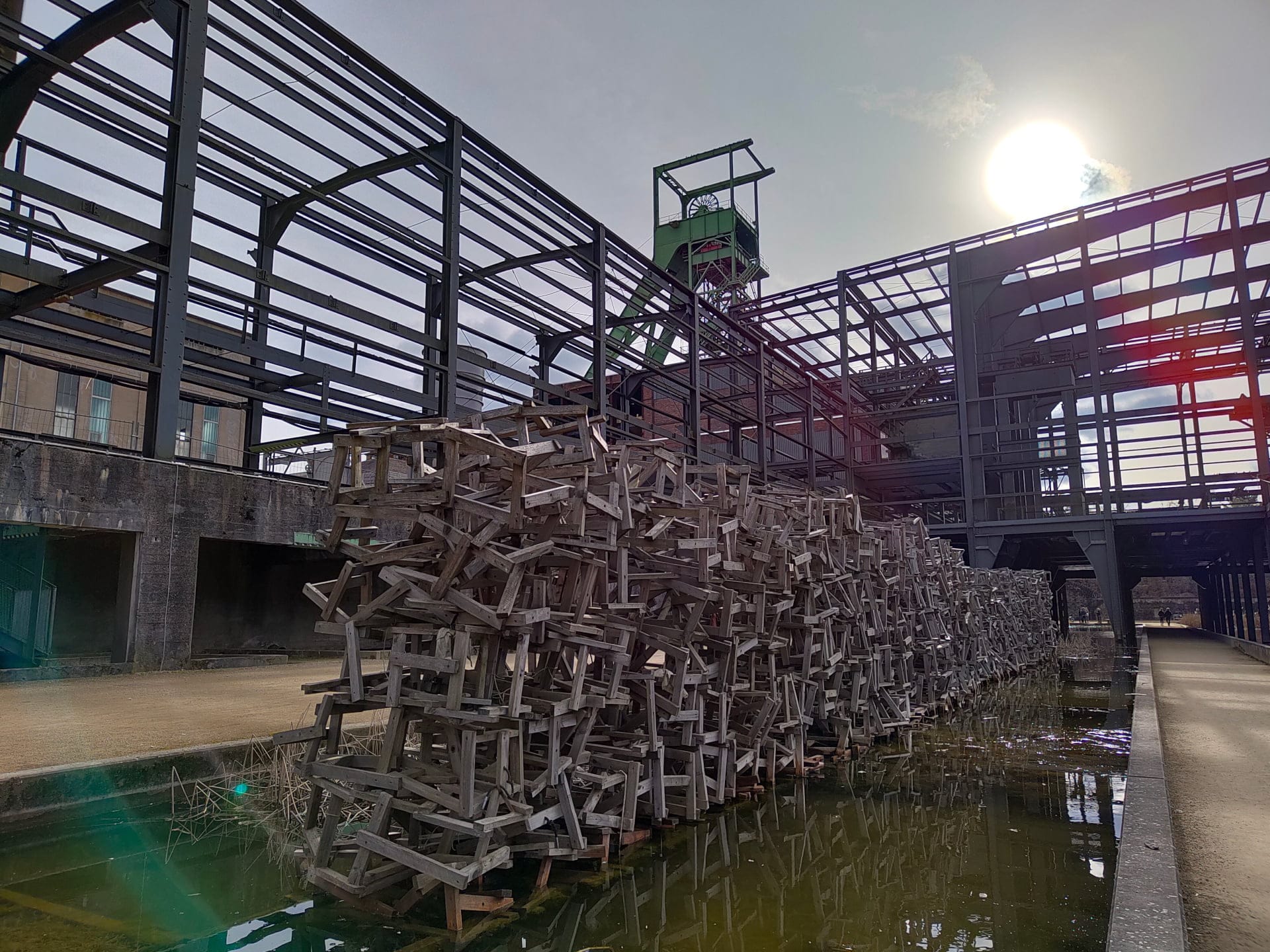
The colour reproduction is vibrant and can be described as realistic. The camera AI usually recognises subjects reliably and further adjusts colour and brightness to the scene. One criticism is slight distortions at the corners of photos. However, these are only noticeable upon close inspection.
For 108-megapixel shots, the realme camera app includes a dedicated 108 MP mode. Unlike the standard photo mode, there is no HDR support or colour filters. Only camera AI is available as an image enhancer.


The differences between the standard photo mode and the 108 MP mode are visible upon close inspection. In the enlarged image section, the 108 megapixel shots show a higher level of detail.
In everyday use, the normal shooting mode is perfectly sufficient. As mentioned, the differences only become visible when heavily zooming into a section of the image. At the same time, the file size increases many times over, which complicates the use of the photos. In-sensor zoom is better here, delivering the same result.
In-sensor zoom
For camera zoom, realme relies on a digital “In-Sensor-Zoom”. The enlarged crop is reduced to 12 megapixels, captured eight times and combined via an algorithm. According to realme, this enables faster and sharper zoom shots, surpassing smartphone cameras with dedicated telephoto lenses.




In practice, hands-free zooming actually works surprisingly well and gives no indication of purely digital zoom. Usable shots are still possible even beyond 5x magnification.
Ultra-wide-angle camera
The 8-megapixel ultra-wide-angle camera (119° wide angle, f/2.25 aperture) has room for improvement. Photos taken in wide-angle mode have a reddish tint and show slight distortion at the edges of the image. This is accompanied by increased noise, susceptibility to chromatic aberrations and a slightly reduced dynamic range.
Portrait mode
The realme 8 Pro renders bokeh shots very well. Persons and objects are largely extracted reliably and cleanly from the background. The degree of sharpness is adjustable via a slider.


Macro mode
The macro mode is a nice gimmick for taking a closer look at beer foam. Getting the subject into the 4 cm focus range is not exactly easy. You can see what a macro shot with the realme 8 Pro looks like in the image below.

Night shots
In low-light situations or at night, the realme 8 Pro's main camera convinces. The amount of noise is low, colours are reproduced almost accurately, and it still retains a lot of detail regarding sharpness (provided there is some light).
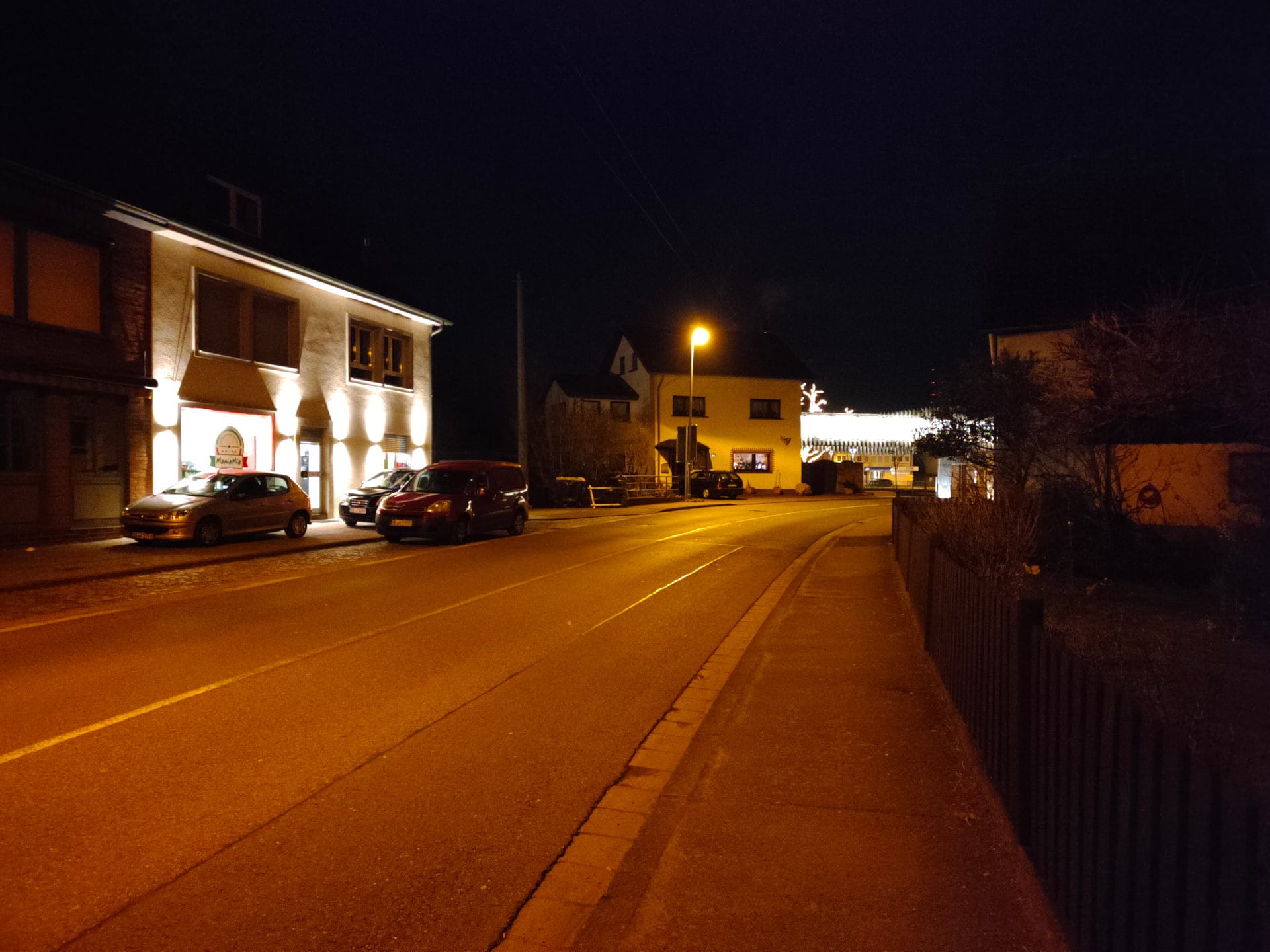
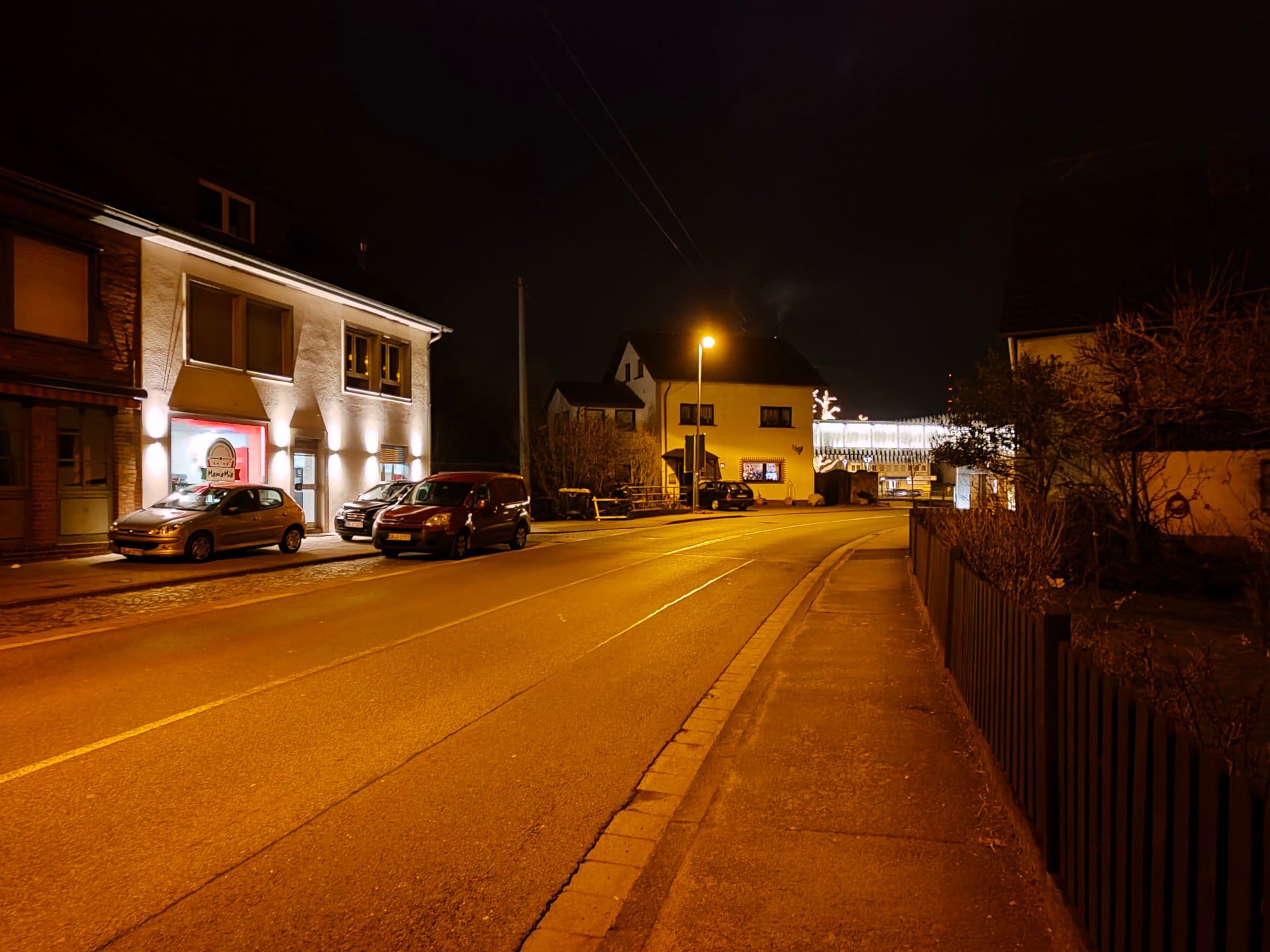
A well-implemented night mode is available, although even this reaches its limits in complete darkness.


Video mode
The realme 8 Pro records videos at a maximum of 4K at 30 frames per second. If you activate the "Ultra Stabilizer", the resolution is automatically reduced to 1080p. Movements are then smoothed using electronic image stabilisation (EIS). Other resolutions include 1080p@30/60 and 720p@30/60. In the video below, you can take a look at the 4K video quality of the realme 8 Pro.
 Play video on YouTube
Video recording via the wide-angle camera is not supported. Zooming is possible with up to 5x magnification in video mode. Image enhancers in the form of camera AI, filters and blur effects are integrated into the video mode. Sound is recorded in stereo and good quality.
Connectivity
The realme 8 Pro supports the 4G mobile frequencies and bands common in this region. VoLTE and VoWiFi are supported. The voice quality can generally be described as good. The same applies to the audio output via the mono speaker, which does not produce a voluminous sound but does not distort either. Wirelessly, the smartphone is equipped with dual-band AC WiFi and Bluetooth 5.0. Range and data throughput are high and the connection is stable.
NFC is pleasingly present, so the realme 8 Pro can also be used for mobile payments. The location is determined via GPS, Galileo, Glonass and Beidou. Location tracking is fast and consistently stable.
Battery
Finally, a few words about the battery, which is also a key feature of the realme 8 Pro. The highlight is the 50W SuperDart charging technology, which charges the 4500 mAh battery from 0 to 100 per cent in just 47 minutes. In terms of power consumption, the realme 8 Pro is extremely frugal. Under normal use, the smartphone only needs to be charged every 2-3 days. Heavy users charge it approximately every 1 1/2 days.
Our verdict
The realme 8 Pro is a recommended mid-range smartphone with many strengths and only a few compromises. Starting with the display, the installed AMOLED panel convinces with a sharp and vivid image. Due to the low refresh rate of only 60 Hz, content does not appear quite as fluid as on competing models with 90 or even 120 Hz. The Snapdragon 720G processor, also used in the predecessor, is sufficient for largely smooth operation in everyday use.
The 108 MP main camera was convincing, producing satisfactory photo and video recordings both day and night. In particular, the in-sensor zoom barely reveals that the zoom is purely digital. The smartphone maintains a strong connection on mobile networks. The same applies to wireless transfers via Wi-Fi or Bluetooth. The realme 8 Pro also gains extra points for battery life, which often exceeds 2 days, and for the 50 watt fast charging feature, which fully charges the smartphone in just 47 minutes.
Specifications
Processor and memory
- CPU
- Qualcomm Snapdragon 720G
- GPU
- Adreno 618
- RAM
- 6GB / 8GB (LPDDR4x)
- Internal storage
- 128GB (UFS2.1)
- Storage expansion
- Yes
Display
- Display size
- 6.4 inch
- Display resolution
- 2400 x 1080 pixels
- Display type
- Super AMOLED
- Refresh rate
- 60 Hz
- Sampling rate
- 180 Hz
Cameras
- Main camera
- 108 MP Samsung ISOCELL HM2 (1/1.52", f/1.88 aperture)
- Ultra-wide angle
- 8 MP (119° ultra-wide-angle lens and f/2.25 aperture)
- Macro sensor
- 2MP (4 cm focus, f/2.4 aperture)
- Depth sensor
- 2MP (f/2.4 aperture)
- Front camera
- 16 MP Sony IMX471 (f/2.45 aperture)
Mains
- Dual SIM
- Yes
- SIM size
- Nano SIM
- eSIM
- No
- GSM
- 850/900/1800/1900
- WCDMA
- B1/5/8
- TDD LTE
- B38/40/41(2535-2655MHz)
- FDD LTE
- B1/2/3/4/5/7/8/20/28
Wireless
- Wi-Fi
- 802.11 a/b/g/n/ac
- Bluetooth
- 5.0
- GPS
- Yes
Sensors
- *Ambient light sensor
- *Accelerometer
- *Proximity sensor
- *Hall sensor
- *E-compass
- *Gyroscope
- *Fingerprint sensor
- *NFC
Battery
- Battery
- 4500 mAh
- Fast charging function
- 50 watts
- Qi charging
- No
Other
- Operating system
- Android 11 (realme UI 2.0)
- Connection
- USB-C, 3.5 mm audio
- Size
- 160.6 x 73.9 x 8.1 mm
- Weight
- 176 g
What’s included
1x Smartphone, 1x SIM tool, 1x Charging cable, 1x Charger (65 watts), 1x Protective case, 1x User manual
Comments (4)
It feels like a new Realme, Xiaomi, ... smartphone comes out every 3 weeks. Who still keeps track?
Nobody. That is the strategy behind it.
Hello, are the extra £20 worth it for the 8GB version? Is it faster or what are the benefits?
Hi Frank, if the surcharge is low, I would always recommend the model with more RAM. More RAM or cache memory can reduce app loading times, because the smartphone can keep more apps in cache memory.