Contents
Test: Redmi Note 11 Pro 5G
In mid-February, Xiaomi unveiled the Redmi Note 11 series, which is set to replace the Redmi Note 10 series launched last year. At the top sits the Redmi Note 11 Pro 5G tested here, followed by the Redmi Note 11 Pro (without 5G), the Redmi Note 11S and the budget smartphone Redmi Note 11 (review).
Quite confusing, isn't it? You can see how the smartphones differ from each other in the table below.
| Model | Redmi Note 11 Pro 5G | Redmi Note 11 Pro | Redmi Note 11S | Redmi Note 11 |
| Chip | Qualcomm Snapdragon 695 | MediaTek Helio G96 | MediaTek Helio G96 | Qualcomm Snapdragon 680 |
| CPU | Octa-core (2x Cortex-A77 @ 2.2 GHz, 6x Cortex-A55 @ 1.7 GHz) | Octa-Core (2x Cortex-A76 @ 2.05GHz, 6x Cortex-A55 @ 2.00GHz) | Octa-Core (2x Cortex-A76 @ 2.05GHz, 6x Cortex-A55 @ 2.00GHz) | Octa-core (4x Cortex-A73 @ 2.2 GHz, 4x Cortex-A53 @ 1.8 GHz) |
| GPU | Adreno 619 | Mali G57 MC2 | Mali G57 MC2 | Adreno 610 |
| Storage | 6+64 GB / 6+128 GB / 8+128 GB LPDDR4X + UFS 2.2 | 6+64 GB / 6+128 GB / 8+128 GB LPDDR4X + UFS 2.2 | 6+64 GB / 6+128 GB / 8+128 GB LPDDR4X + UFS 2.2 | 4+64GB / 4+128GB / 6+128GB LPDDR4X + UFS2.2 |
| Display | 6.67-inch AMOLED – 120 Hz + 360 Hz – 1080 x 2400 pixels – DCI-P3 | 6.67-inch AMOLED – 120 Hz + 360 Hz – 1080 x 2400 pixels – DCI-P3 | 6.43-inch AMOLED - 90 Hz + 180 Hz - 1080 x 2400 pixels - DCI-P3 | 6.43-inch AMOLED - 90 Hz + 180 Hz - 1080 x 2400 pixels - DCI-P3 |
| Cameras | 108 MP, f/1.9, 1/52' Samsung HM2 8 MP, f/2.2, 118˚ wide-angle 2MP, f/2.4, macro 16 MP, f/2.4, front |
108 MP, f/1.9, 1/52' Samsung HM2 8 MP, f/2.2, 118˚ wide-angle 2MP, f/2.4, macro 16 MP, f/2.4, front |
108 MP, f/1.9, 1/52' Samsung HM2 8 MP, f/2.2, 118˚ wide-angle 2MP, f/2.4, macro 16 MP, f/2.4, front |
50 MP, f/1.8 8 MP, f/2.2, 118˚ ultra-wide 2MP, f/2.4, macro 13 MP, f/2.4, front |
| Speakers | Stereo | Stereo | Stereo | Stereo |
| NFC | Yes | Yes | Yes | Yes |
| Battery | 5000 mAh - 67W | 5000 mAh - 67W | 5000 mAh - 33W | 5000 mAh - 33W |
| Size & weight | 164.19 x 76.1 x 8.12 mm - 202g | 164.19 x 76.1 x 8.12 mm - 202g | 159.87 x 73.87 x 8.09 mm - 179g | 159.87 x 73.87 x 8.09 mm - 179g |
That is not all. The POCO X4 Pro 5G (review), which was also unveiled in February and already tested by us, is nearly identical to the Redmi Note 11 Pro 5G.
On the hardware side, the entire datasheet has simply been taken over. Differences are only found in the design of the rear, which is noticeably more understated on the Redmi Note 11 Pro 5G.
Redmi Note 11 Pro 5G: Design and build quality
We also start with the design of the Redmi Note 11 Pro 5G. The smartphone measures 164.19 x 76.1 x 8.12 mm and weighs 202g. It is therefore quite large but still falls within the norm of today's smartphone sizes. Those who prefer a more compact smartphone should take a look at the Redmi Note 11S, which is at least slightly narrower in length and width.
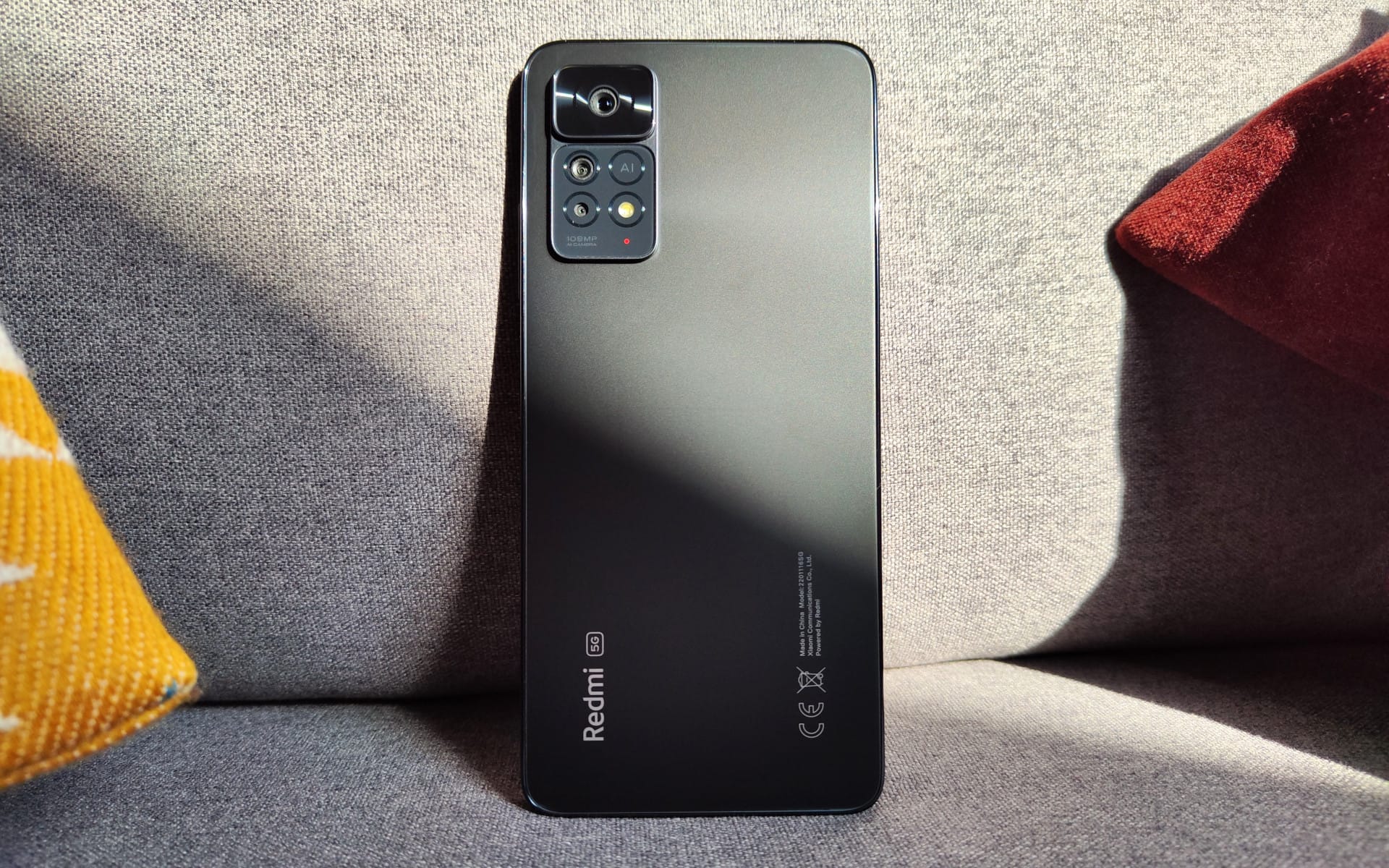
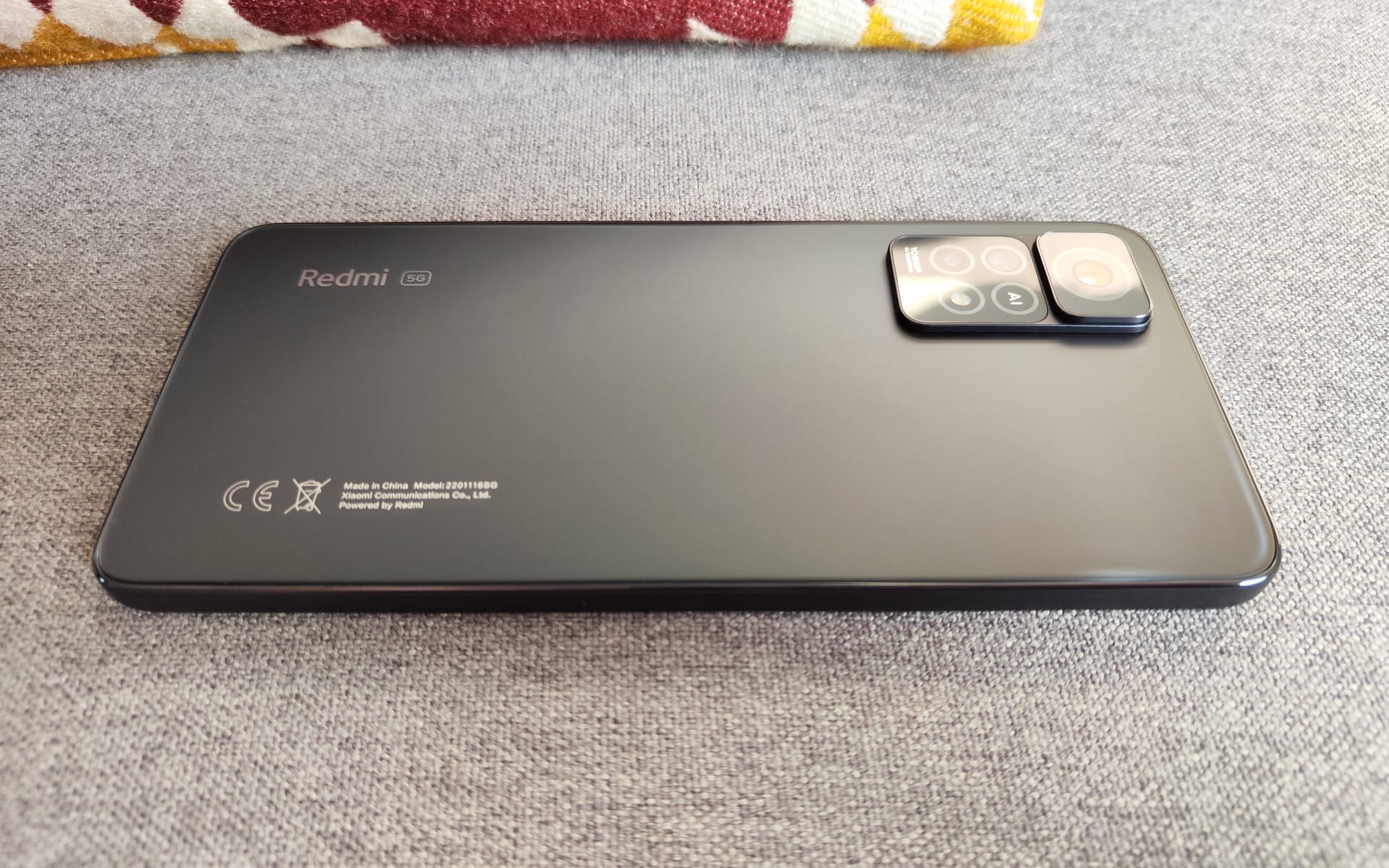
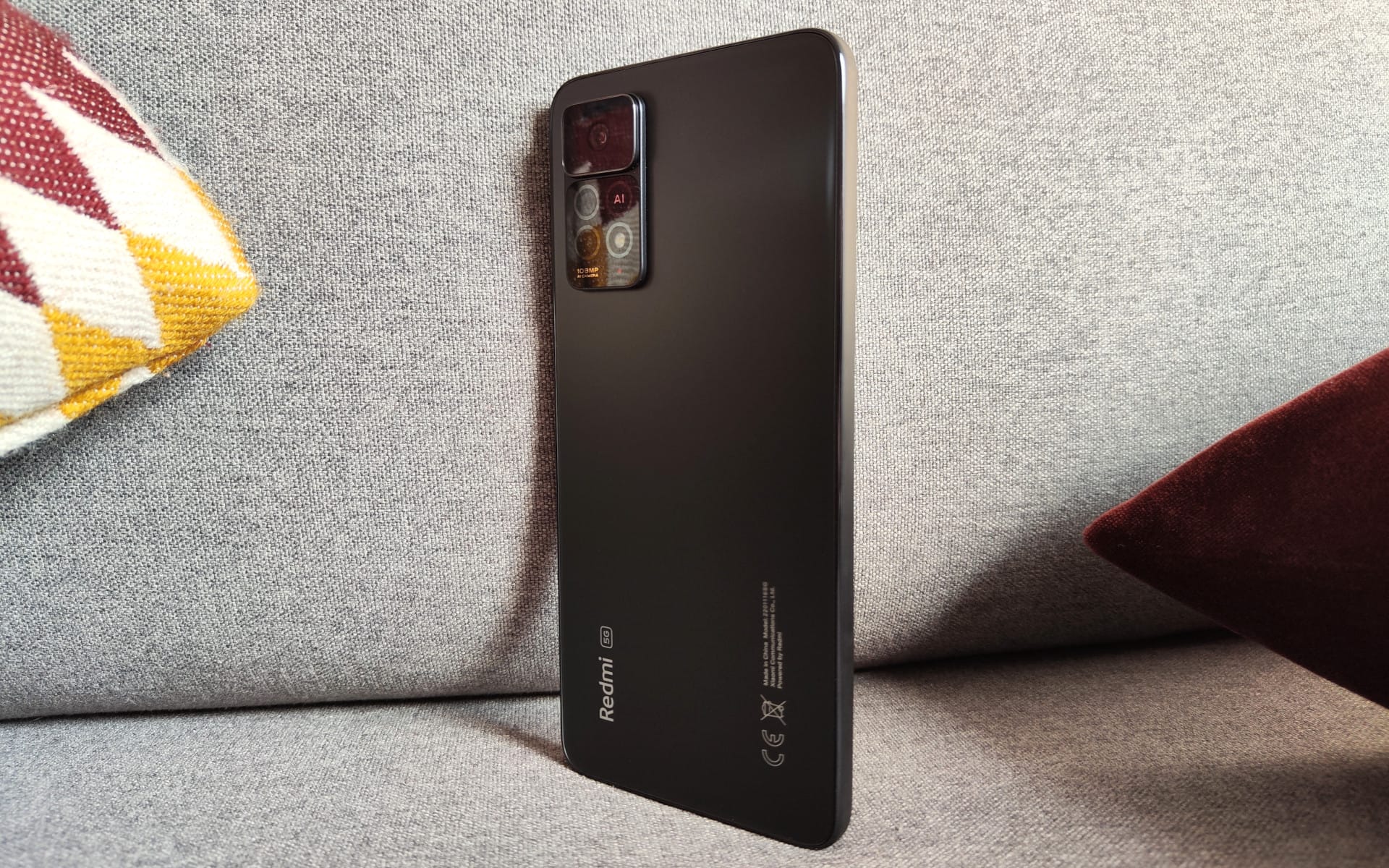
In contrast to the cheaper models of the Redmi Note 11 series, the back of the Redmi Note 11 Pro 5G is made of glass. Xiaomi does not mention whether any special protective glass was used. However, no scratches occurred despite daily use without a protective case during the test phase. The glass back is also very resistant to dirt and unsightly fingerprints. Colours available are "Graphite Gray", "Polar White" and the somewhat more striking "Atlantic Blue", which also features a mirror effect.
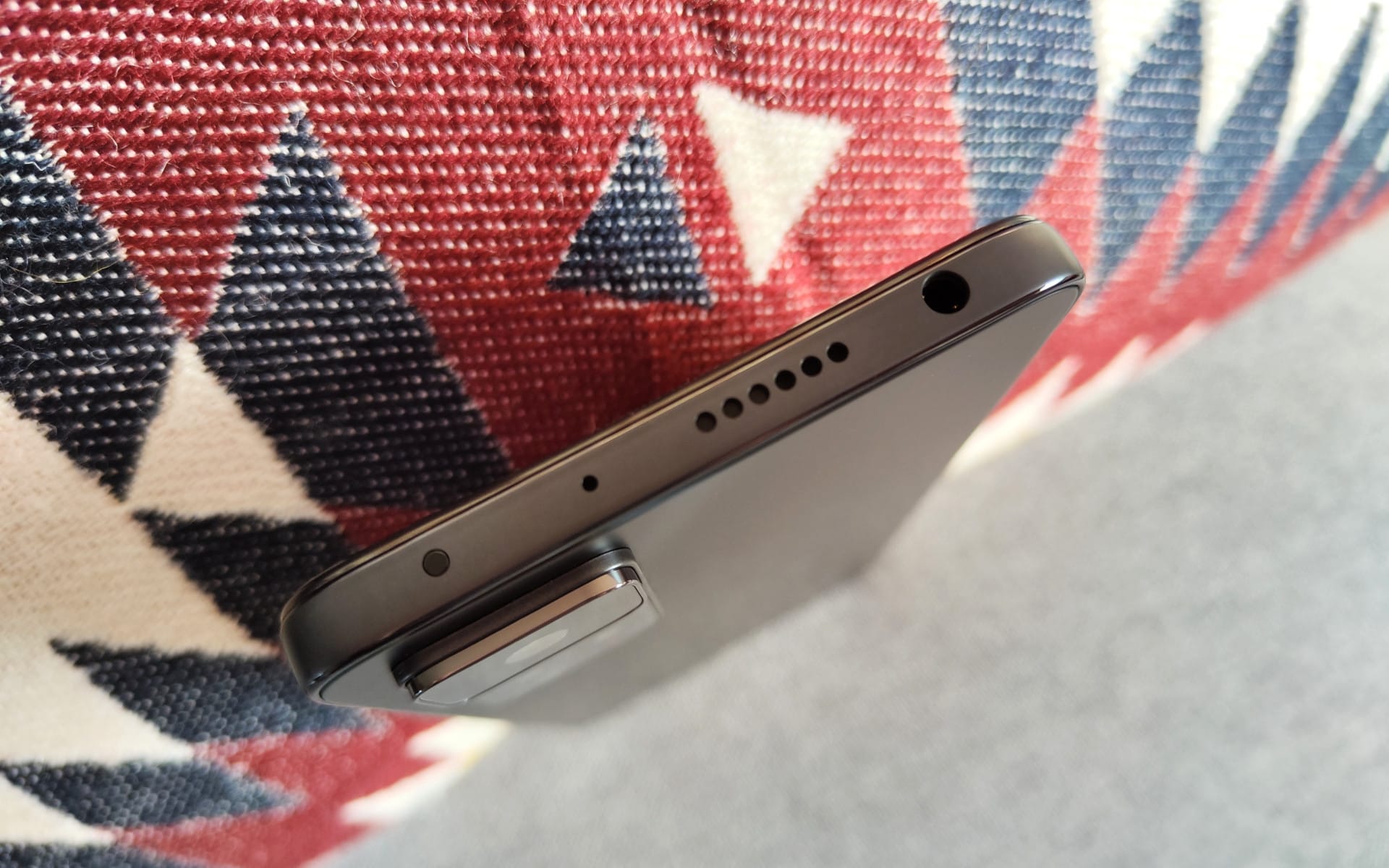
The angular frame, which therefore slopes away flatly, is made of plastic. Personally, I like the feel of the flat frame in the hand. The smartphone sits firmly in the hand as a result. However, the tactile feel is a matter of taste. Some people might prefer a rounded frame. Operating the device with one hand is still just about possible. The power button on the side, which incidentally also houses the fingerprint scanner, is easily accessible. Above it is the volume rocker, which can also be reached quite well.
According to IP53 protection class, the smartphone is protected against dust and water spray. For example, the SIM tray has the typical rubber ring intended to keep water out. This does not make the smartphone waterproof, but it can withstand heavier rain.
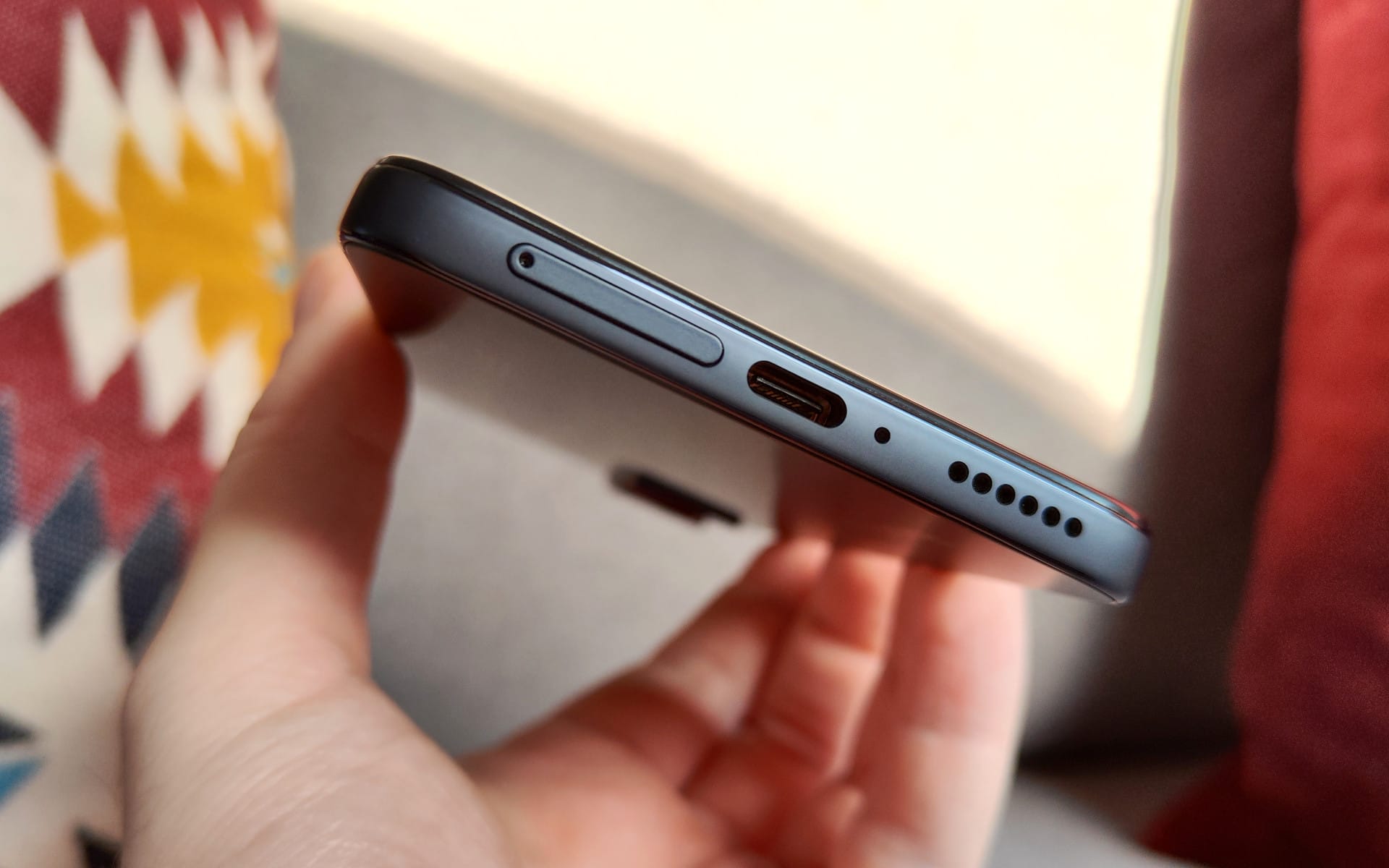
The ports are arranged as follows: at the bottom, as is quite typical, is the USB-C socket. To its left is the SIM tray, which can be loaded with either two nano-SIM cards or one nano-SIM and one microSD memory card. To its right is a microphone and one of the stereo speaker outputs. The right side of the frame has been left completely free. Moving to the top, there is a 3.5 mm headphone jack, another speaker output and another microphone, as well as an infrared transmitter. Xiaomi has done a good job on the build quality.

Redmi Note 11 Pro 5G: 120 Hz AMOLED display
Xiaomi uses a 6.67-inch AMOLED display with a 120 Hz refresh rate in the Redmi Note 11 Pro 5G. Displays with such features are becoming increasingly common in the mid-range, yet they are still rather exceptional in this price segment.
There is also a high display resolution of 1080 x 2400 pixels, which corresponds to a sharp display of 395 PPI . The display is protected by especially scratch- and shatter-resistant Corning Gorilla Glass 5.
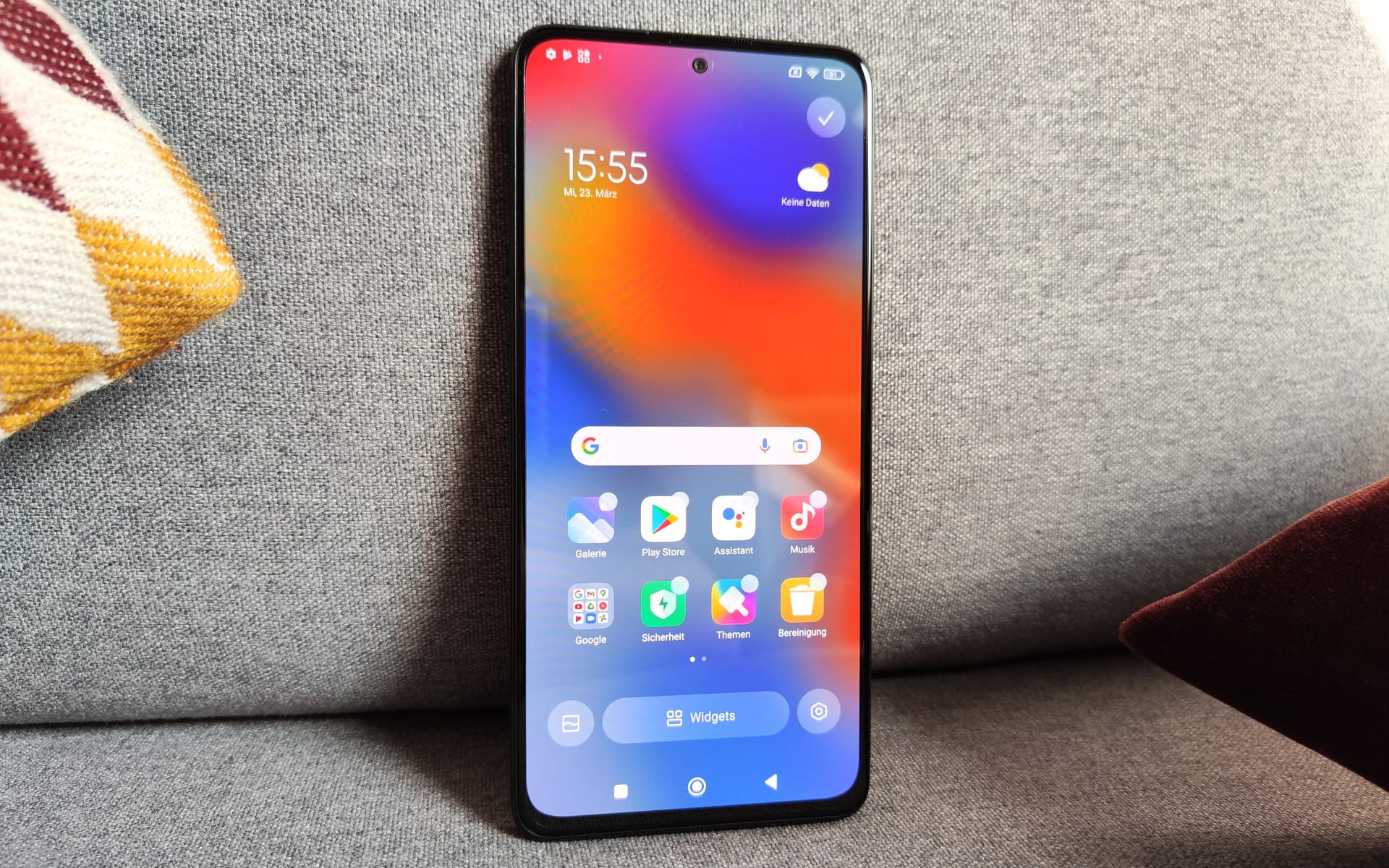
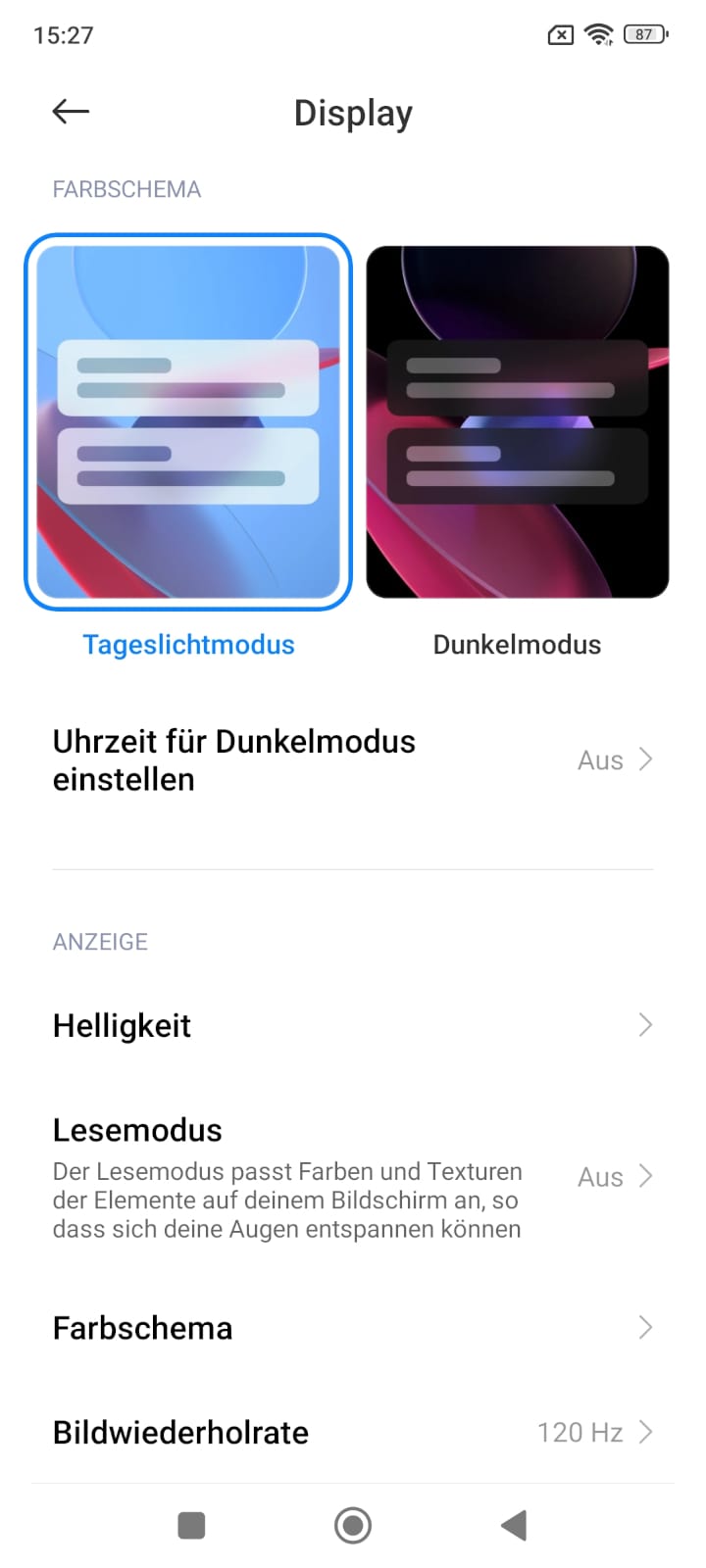
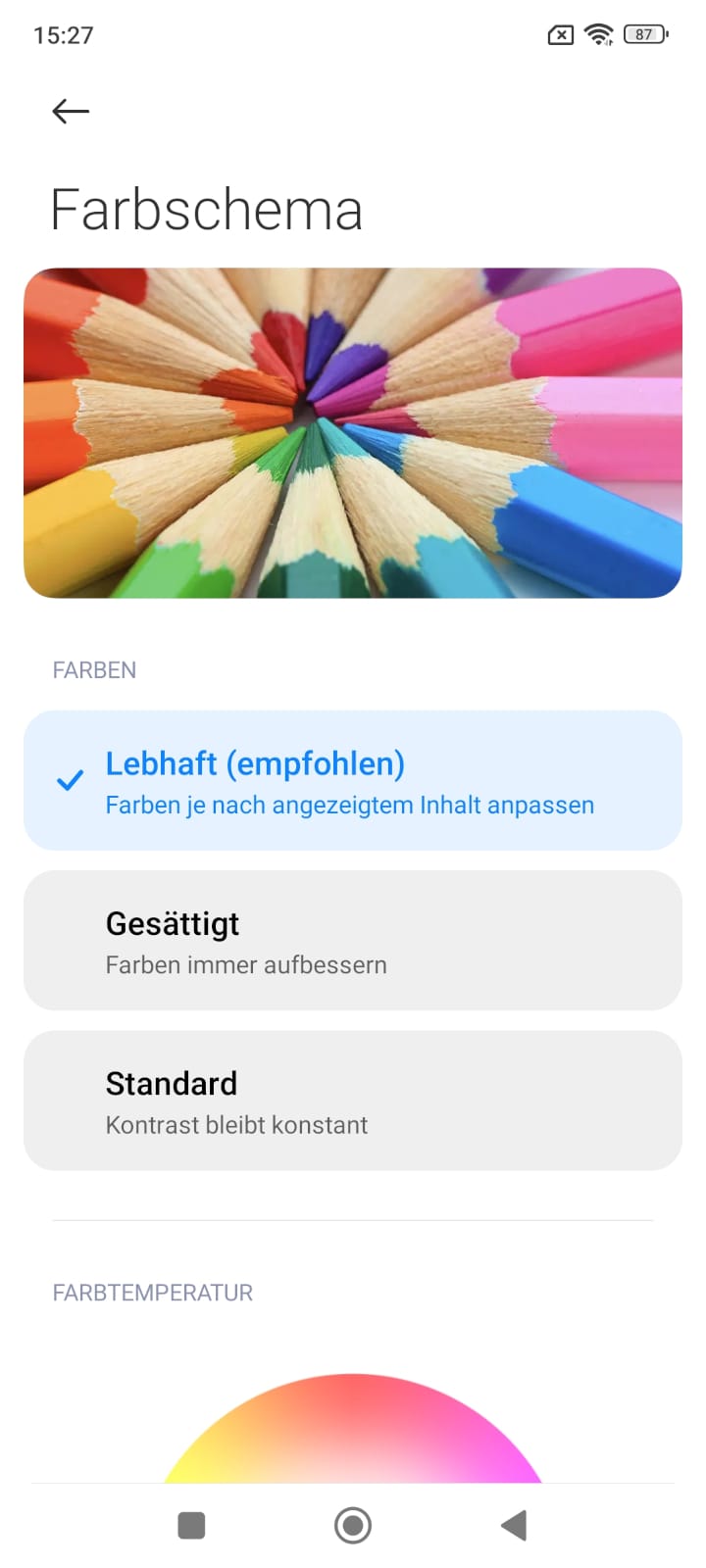
The display is optimised for the DCI-P3 colour space. In the display settings, colours can be adjusted in "Vivid", "Saturated" and "Standard" modes. Depending on the mode, colours appear more vivid or cooler or warmer. The colour temperature can also be adjusted via several modes or a colour wheel. Typically for AMOLED, the display of the Redmi Note 11 Pro 5G convinces with excellent colour accuracy, a strong contrast ratio and deep black levels.
Good readability in sunlight also speaks in favour of the display. In automatic mode, the display brightness quickly adapts to the surroundings. With up to 700 nits in "High Brightness Mode" and 1200 nits in "Peak", the display shines surprisingly brightly. Good reports can also be made about viewing angle stability. Shallow viewing angles do not significantly affect readability and representation.
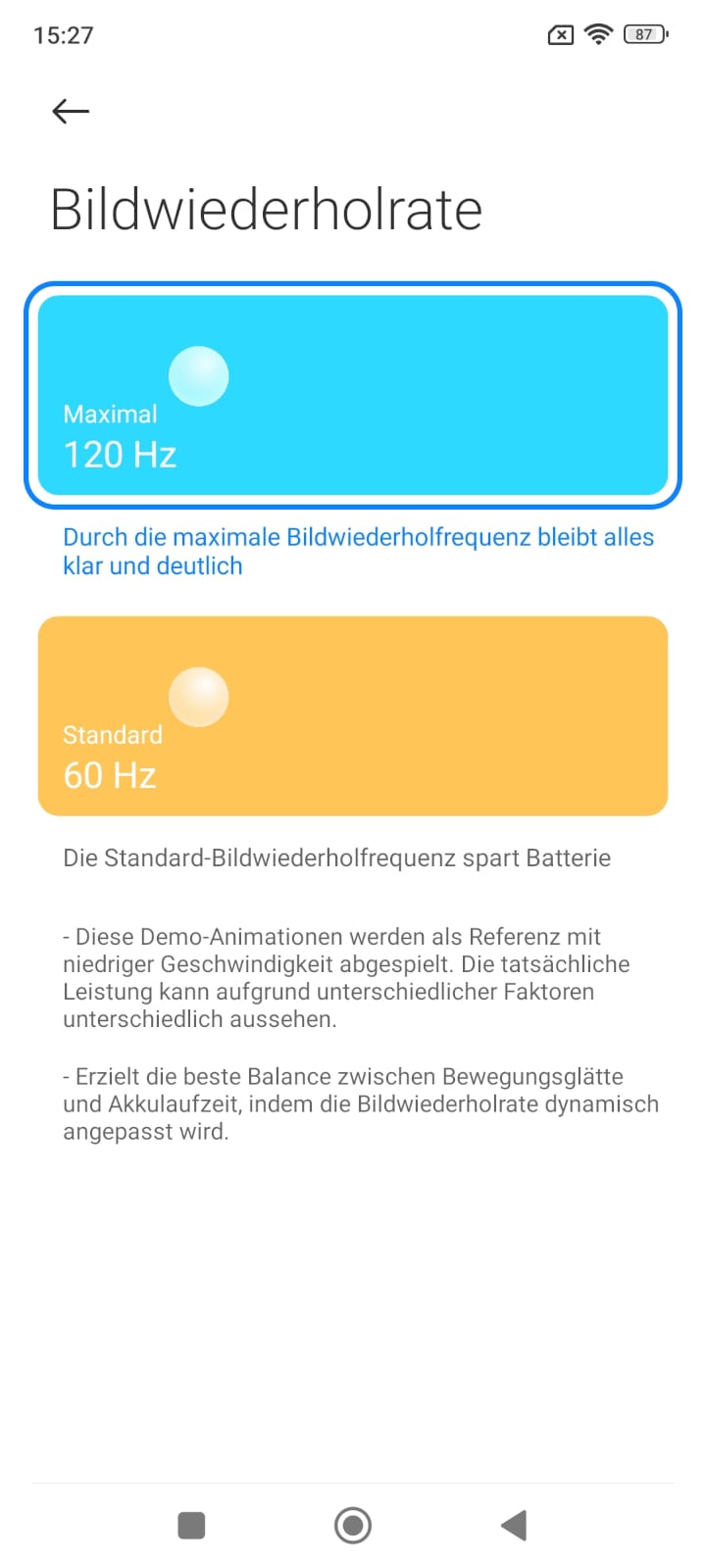
Another key feature is the 120Hz refresh rate, which ensures particularly smooth content display. However, you must first activate 120Hz in the display settings. By default, the smartphone is set to 60Hz. One drawback of the high refresh rate is the somewhat underpowered Snapdragon 695, which offers no significant performance reserves and cannot fully utilise 120Hz in most apps and mobile games.
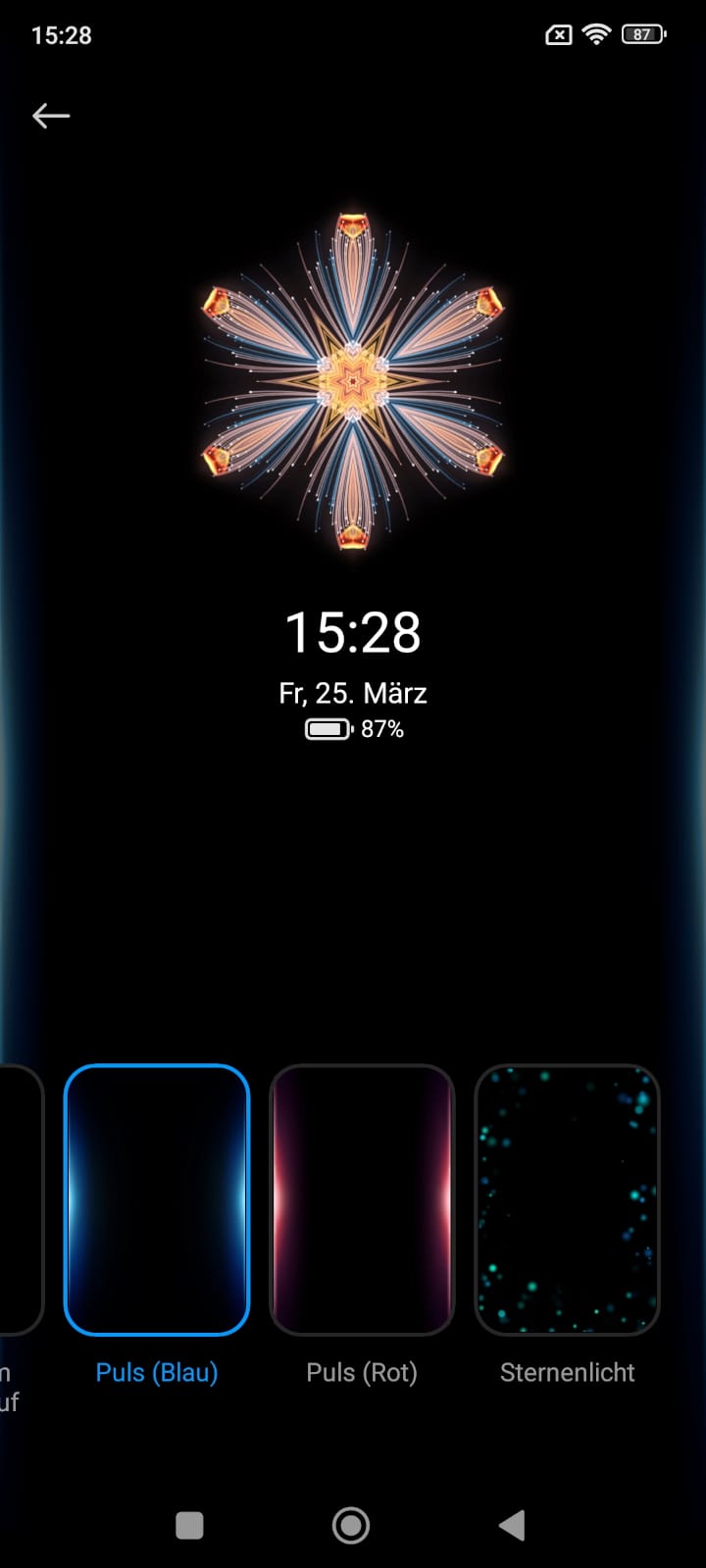
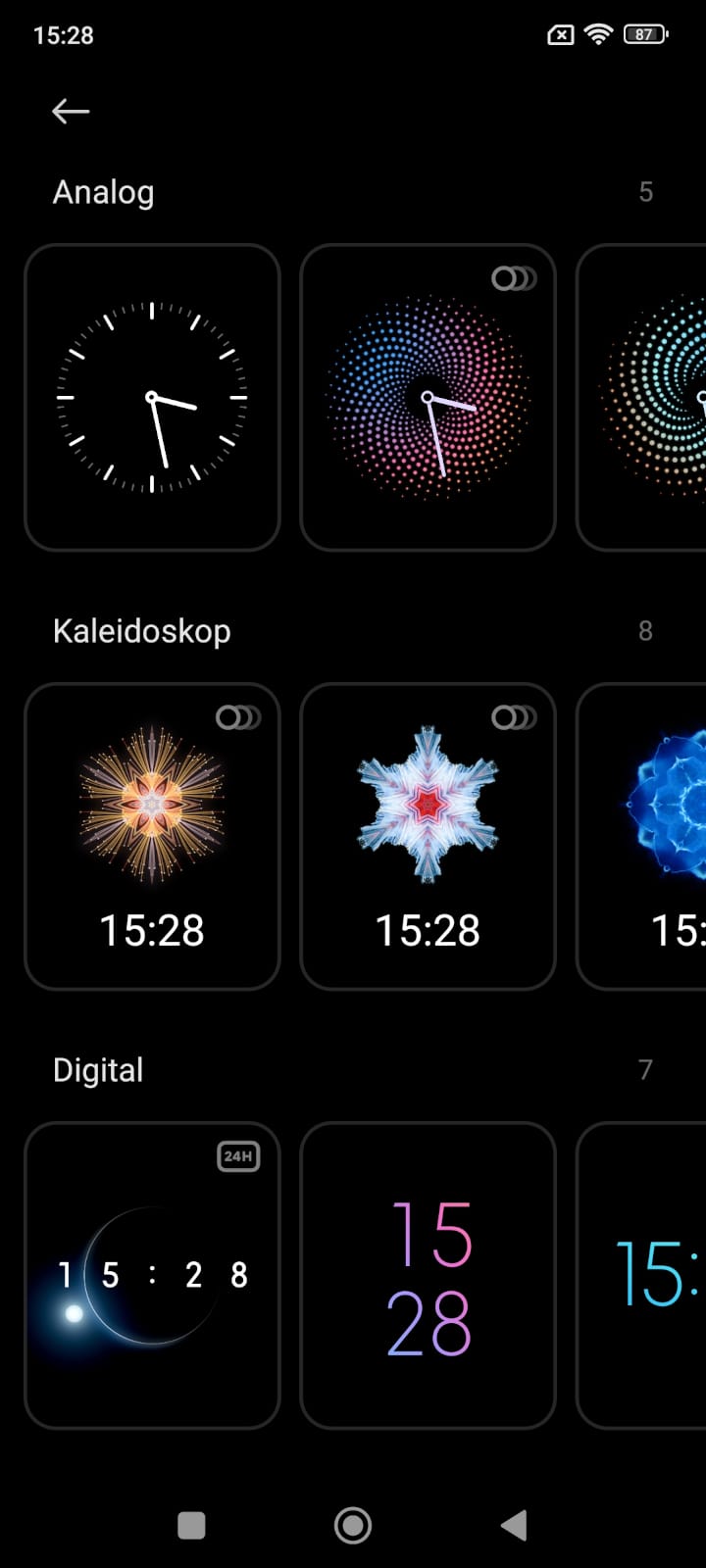
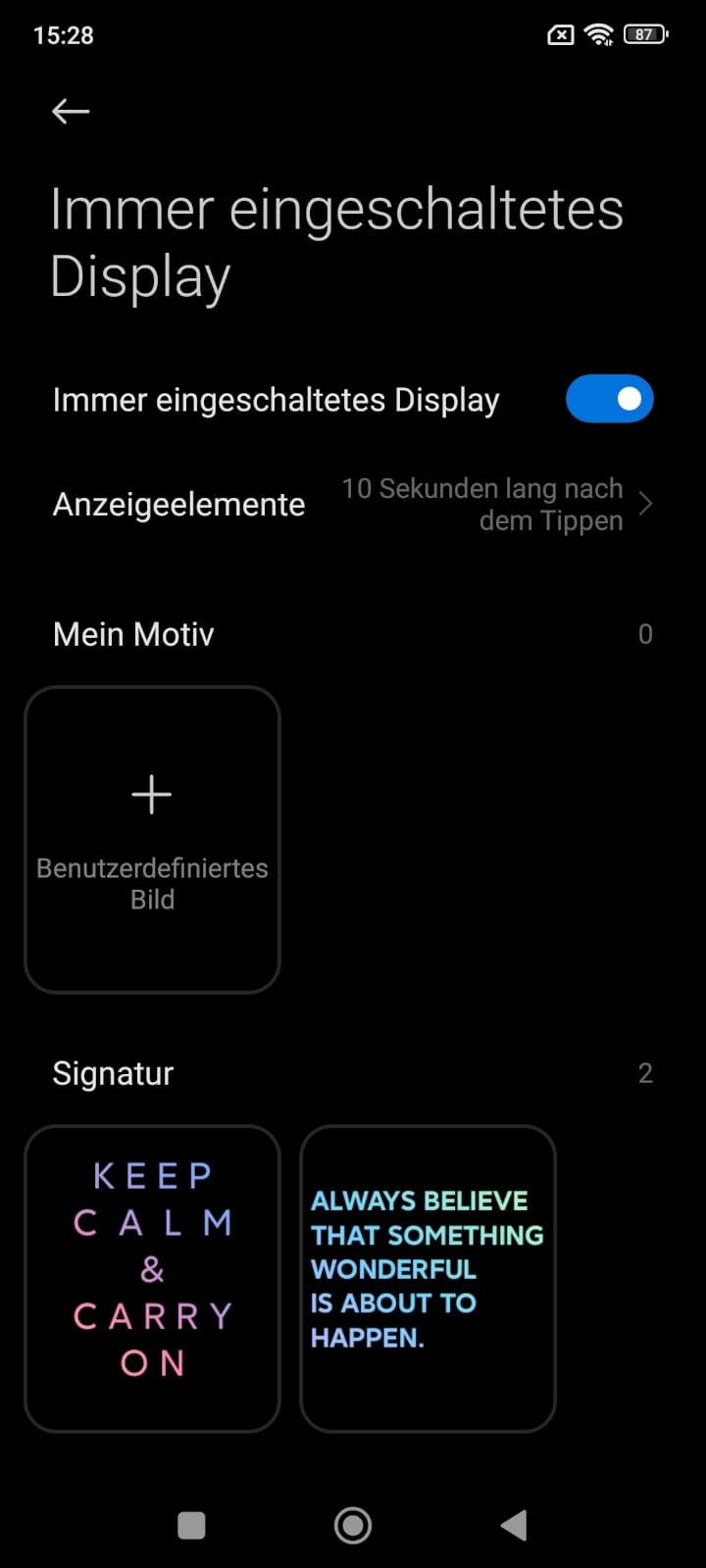
The Always-On feature of the display is puzzling. Normally, this term refers to the continuous status display on the screen when it is turned off. Xiaomi defines "Always-On" differently.
Although there is a function with various setting options, the display remains active for only 10 seconds. To quickly check the time or notifications, this form of AOD is completely useless because you still have to pick up the smartphone. Let's hope that Xiaomi reacts to this in future updates!

Another notification feature is the display edge notification effect. Incoming notifications are signalled by short flashes on the edge. Various effects are also available here.
Streaming enthusiasts can enjoy Netflix and the like in high resolution. The necessary Widevine L1 certification is present. Lovers of HDR10 and Dolby Vision unfortunately get no support!
Redmi Note 11 Pro 5G: Snapdragon 695
The Redmi Note 11 Pro 5G is equipped with the ARMv8-based Qualcomm Snapdragon 695 mobile platform, whose octa-core CPU features two Cortex-A77 cores (2.2 GHz) and six Cortex-A55 cores (1.7 GHz). The GPU is an Adreno 619. Thanks to 6nm manufacturing, the chip promises decent energy efficiency.
The memory types are LPDDR4X RAM and fast UFS2.2 storage. Here you can choose between 6+64GB, 6+128GB or 8+256GB storage. That is the theory.
As previously mentioned, the Snapdragon 695 does not have particularly large performance reserves, which the benchmark results also show. In everyday use, however, this is less noticeable. Here, the smartphone behaves smoothly and confidently in terms of performance most of the time. Complex websites load quickly in the browser test. The sequential read rate of the storage is good. Apps start at a pleasant speed and are held in memory for a sufficient amount of time.
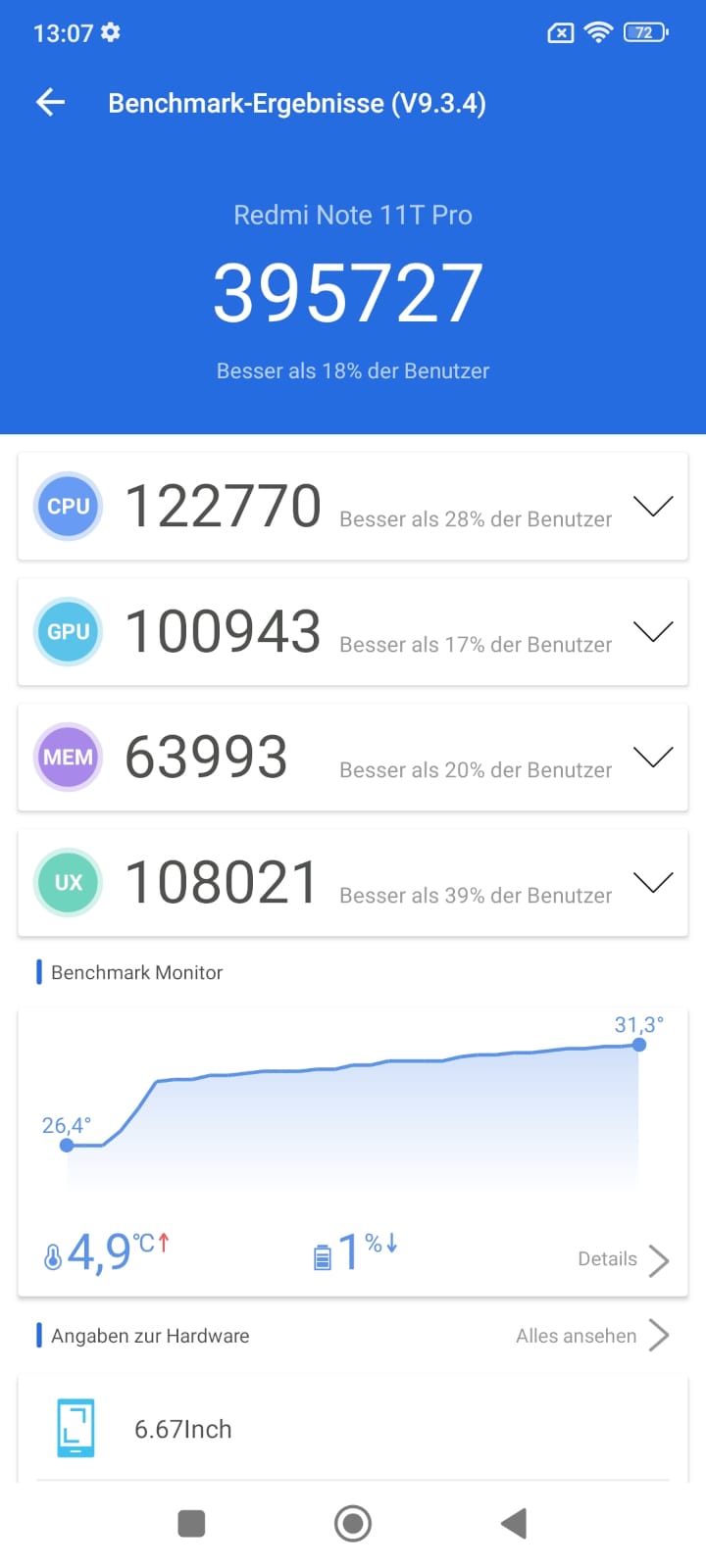
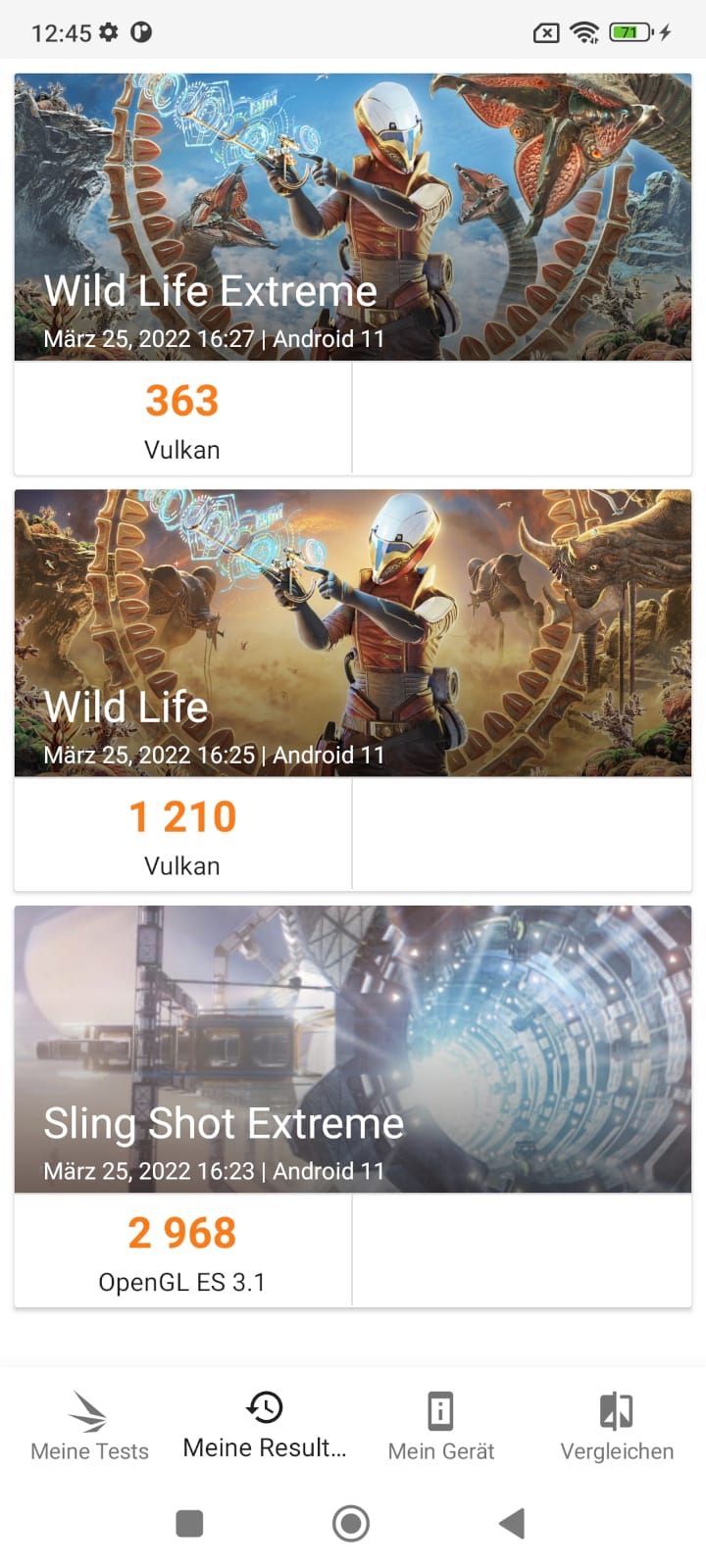
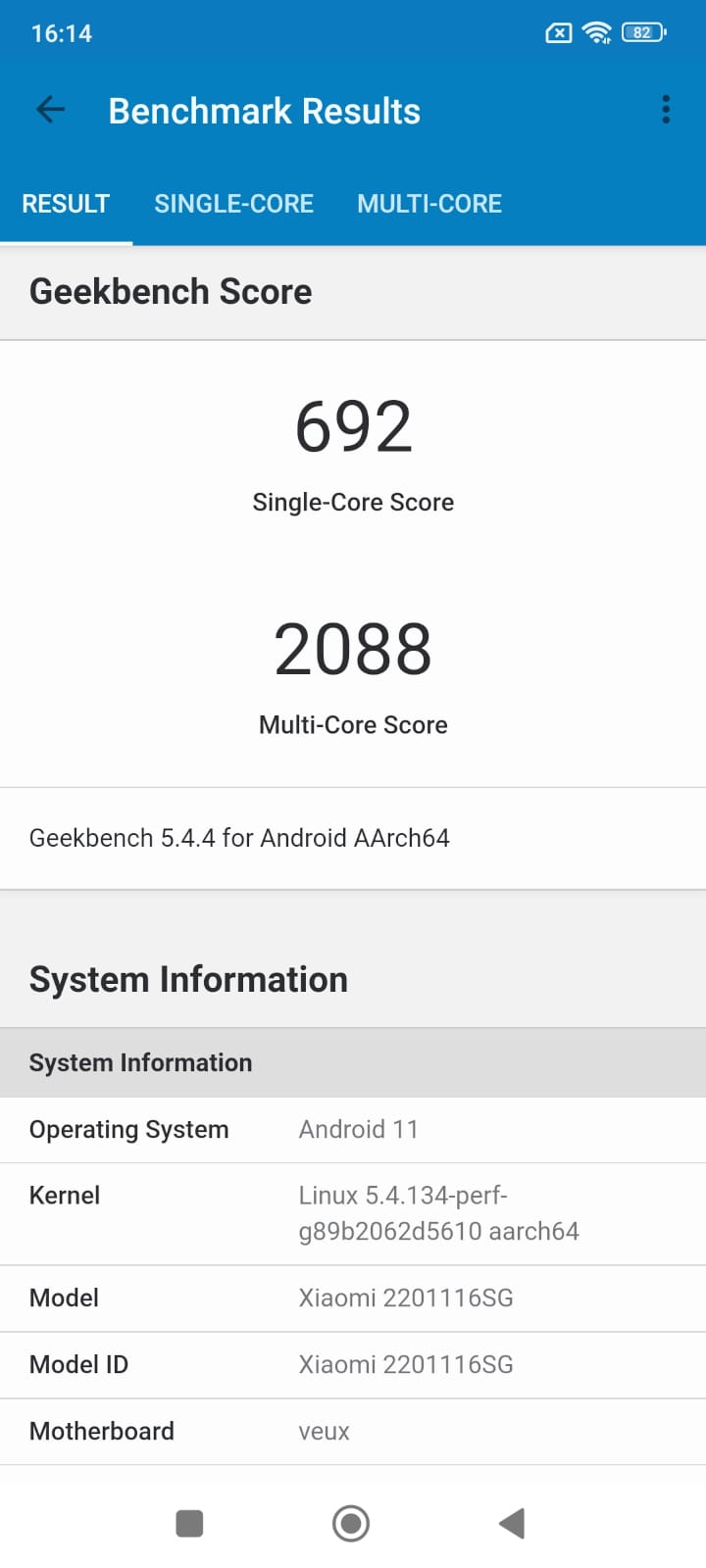
The Snapdragon 695 shows weaknesses in demanding mobile games. It should be noted that the Redmi Note 11 Pro 5G is less recommended for mobile gamers. Games such as PUBG or Asphalt 9 are playable, but the detail level should be significantly reduced to avoid stuttering. The smartphone remains calm in almost any situation. Performance drops due to high heat generation do not occur.
Redmi Note 11 Pro 5G: User interface
Software-wise, MIUI 13 is already installed on the smartphone, which was still based on Android 11 at the time of the test. An update to Android 12 will be released in the near future.
The pre-installed apps are diverse. In addition to numerous Google and Xiaomi apps, there is also a lot of bloatware pre-installed. In total, 19 such apps from the gaming, social media and shopping categories are pre-installed on the smartphone. Fortunately, each of these apps can be uninstalled.
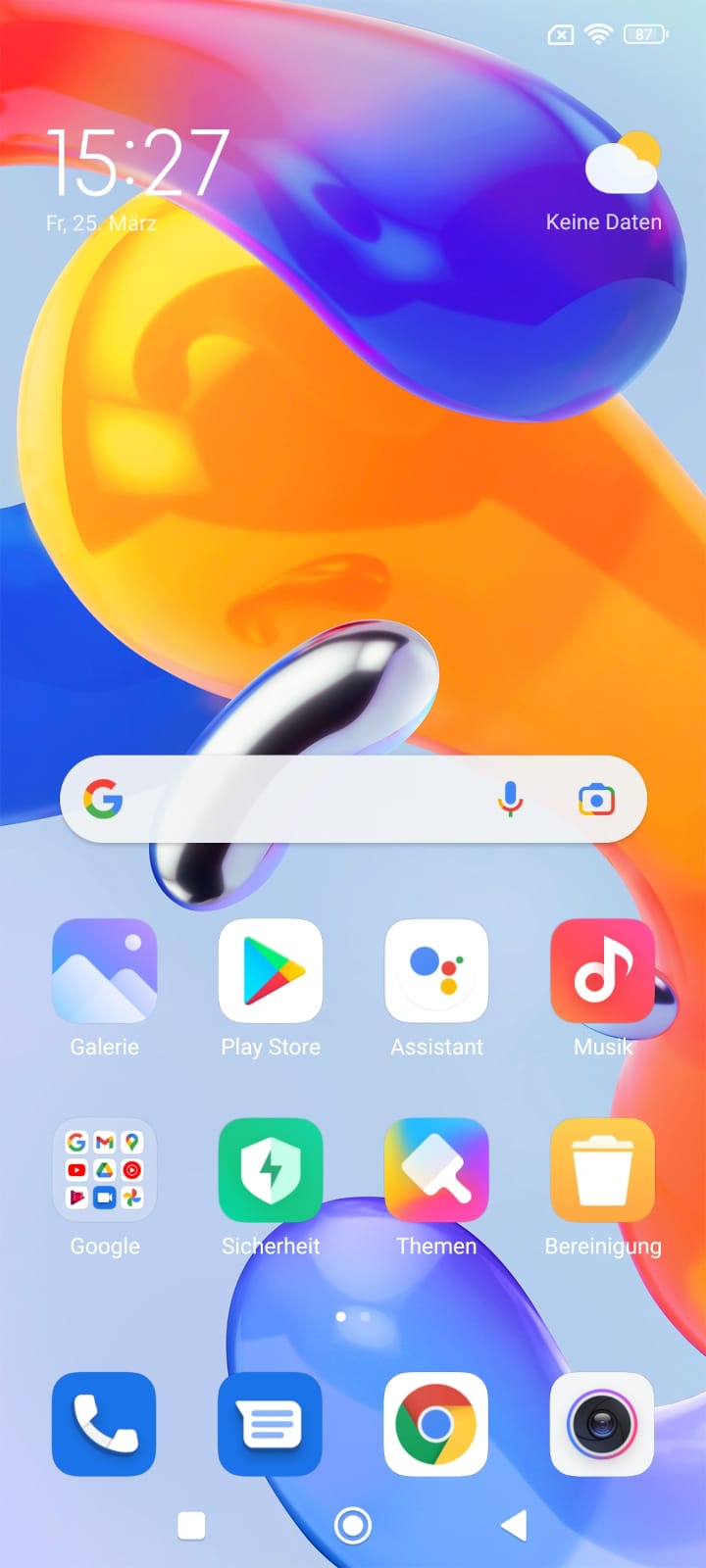
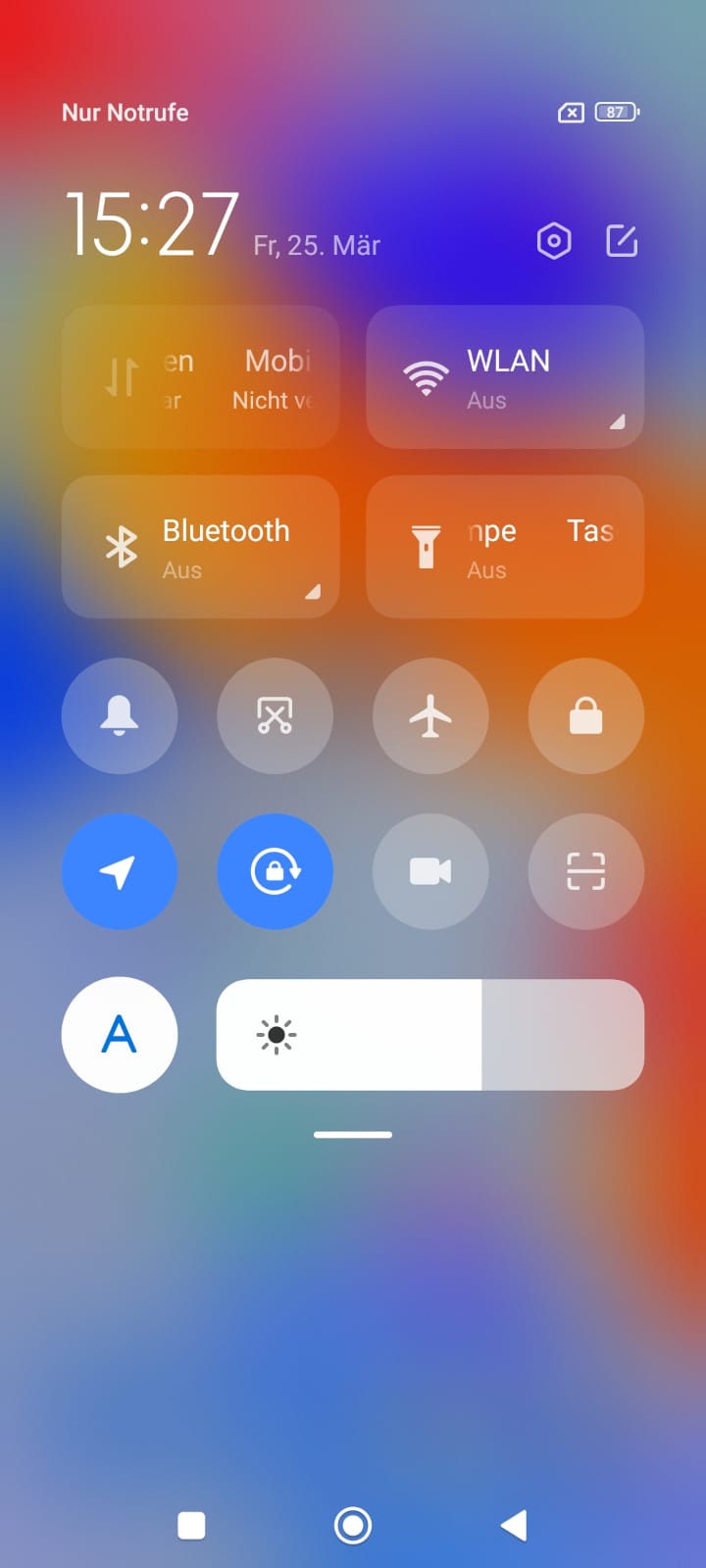
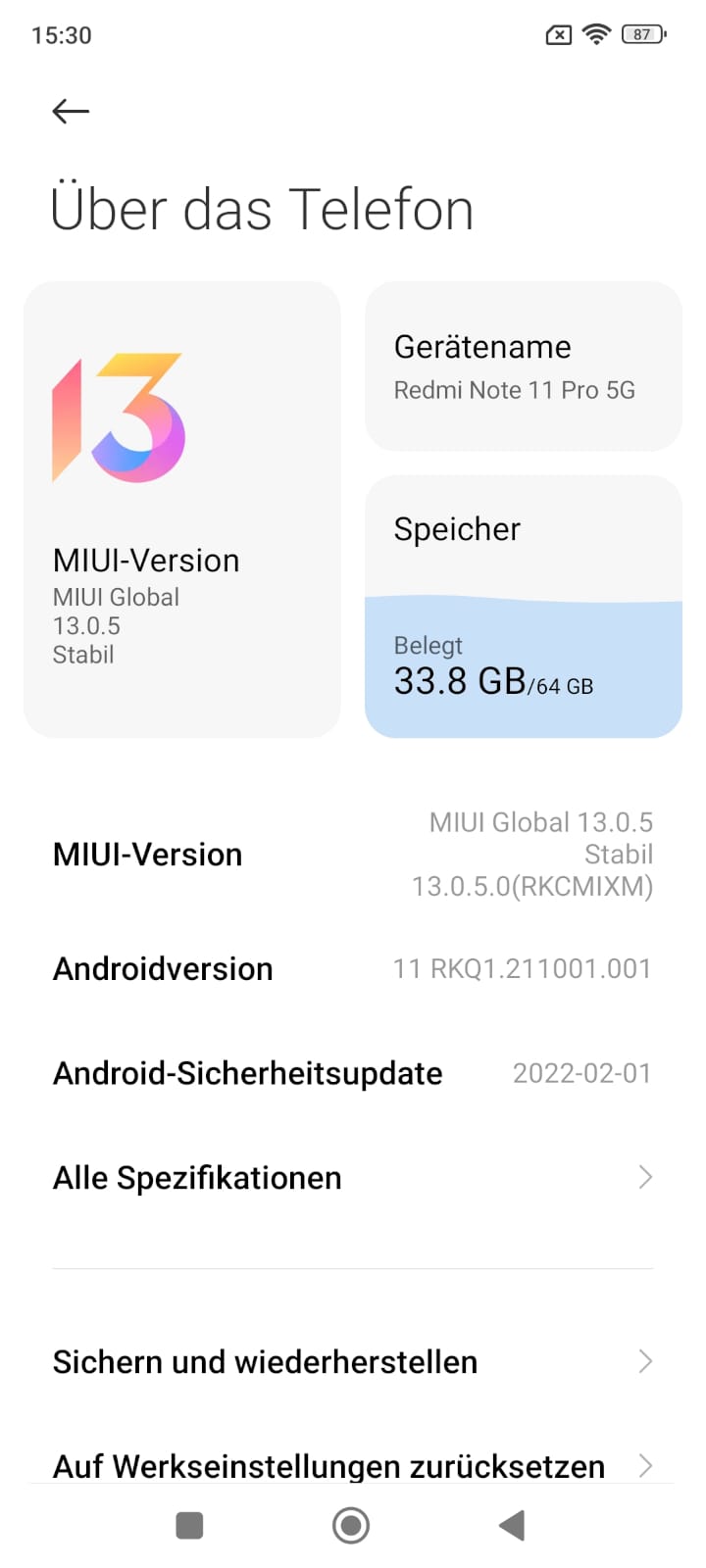
The MIUI user interface itself is feature-rich and well-structured. The integrated Theme Store with a huge selection of themes offers extensive customisation options. This allows the look of the interface to be changed in an instant. If you link the smartphone with a Mi Account, you gain access to the Xiaomi Cloud, where important files and photos can be stored.
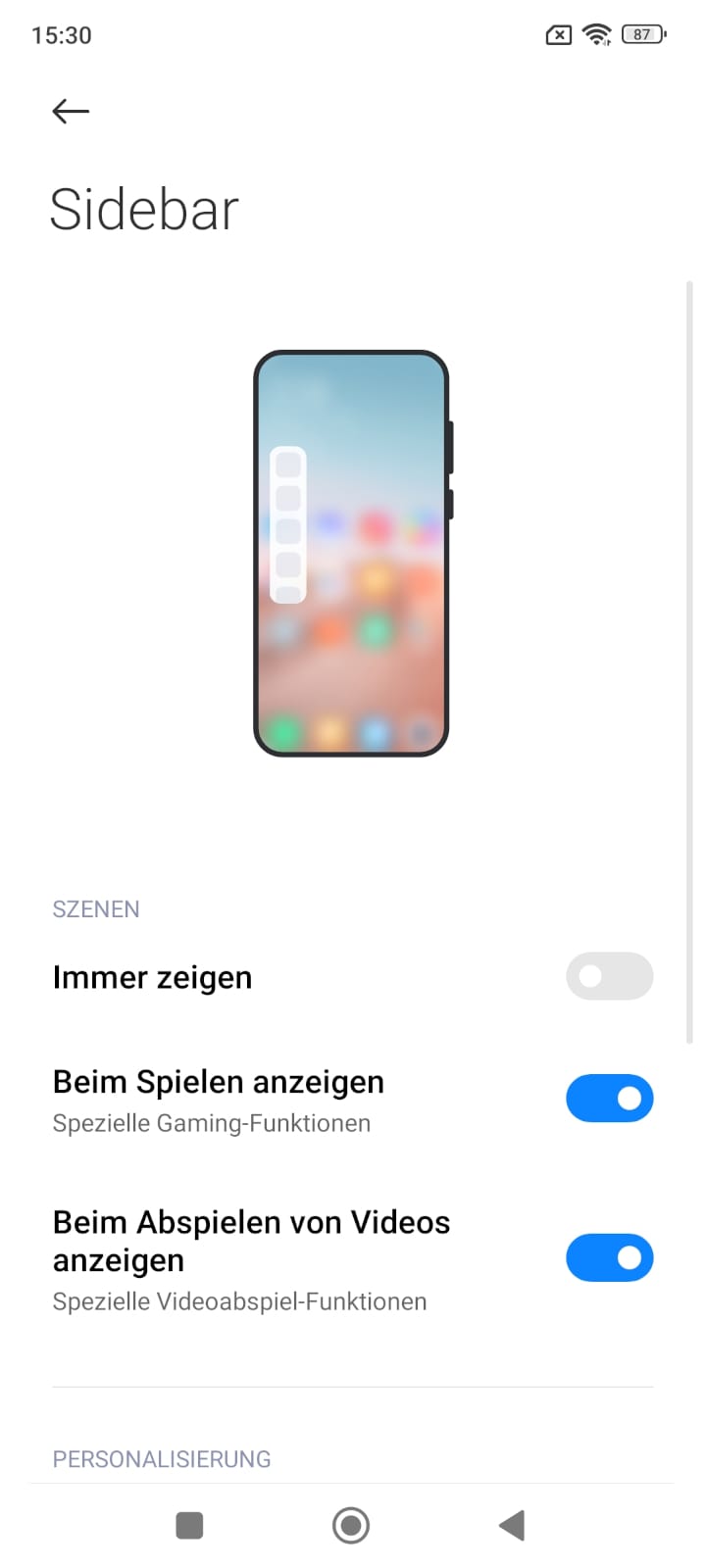
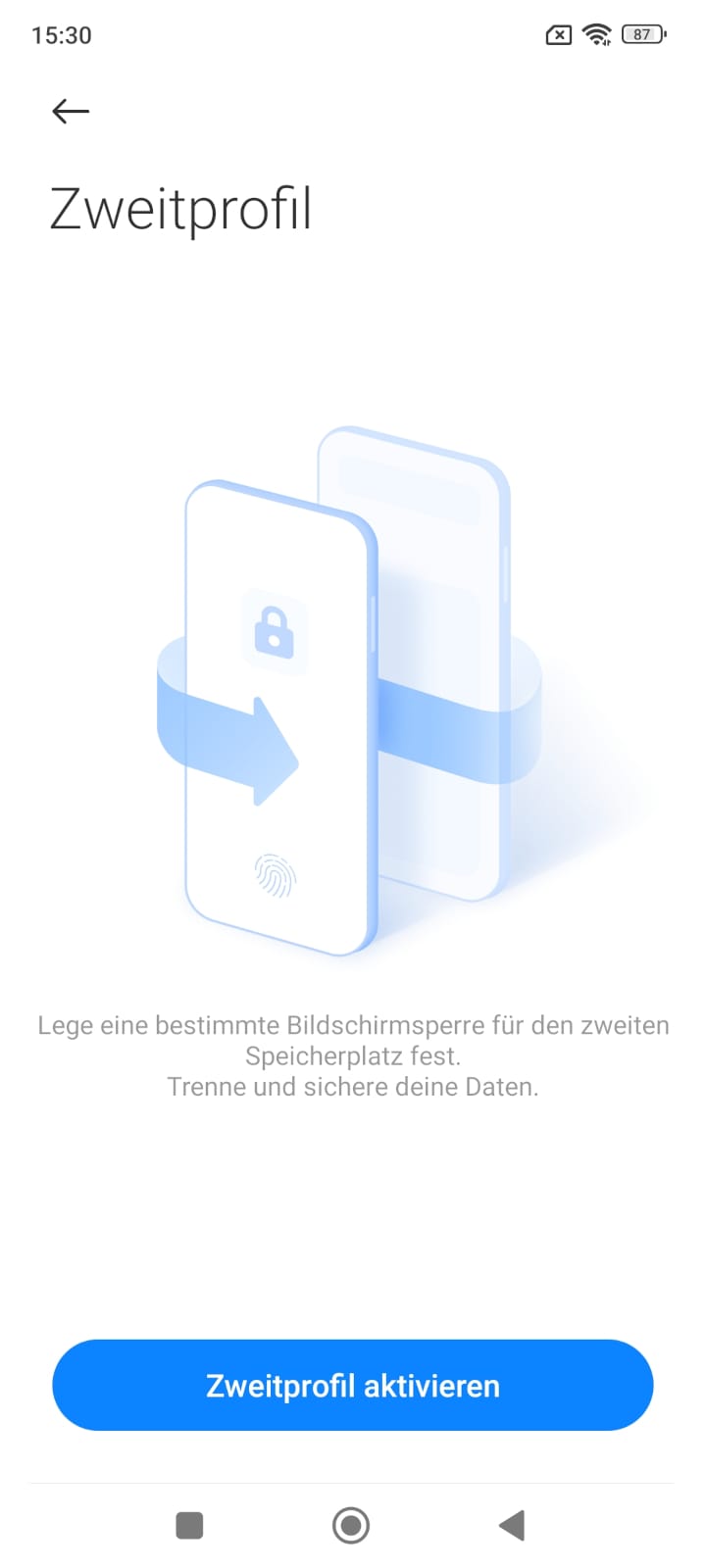
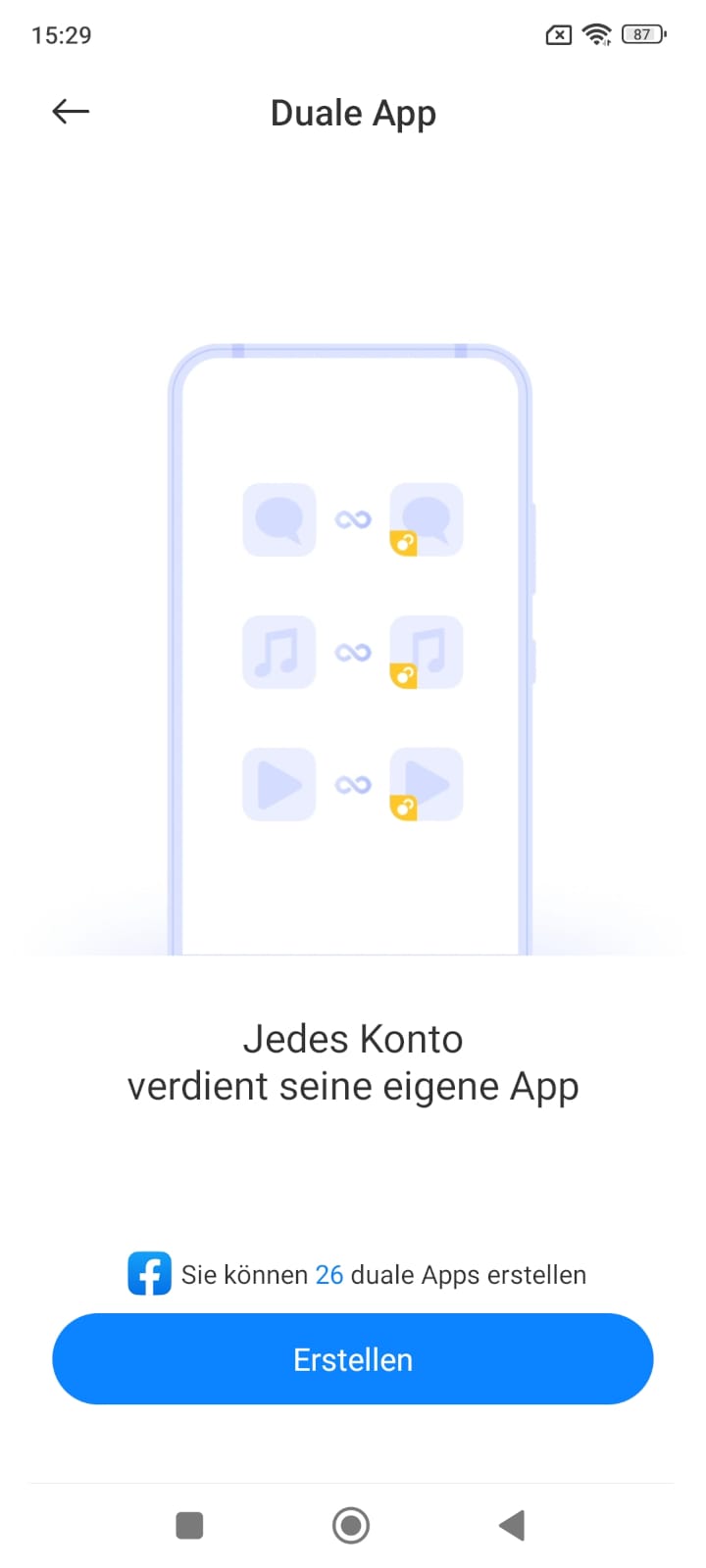
The "Dual Apps" function allows users to clone applications. The "Second Profile" function is more extensive, allowing the creation of an additional user account with its own home screen. The "Sidebar" is also useful, offering quick access to apps via an overlay. There are also many other useful functions. Going into detail on these would exceed the scope of this section.
Redmi Note 11 Pro 5G: Camera
The rear triple camera uses the 108 MP Samsung HM2 image sensor (f/1.9 aperture, 1/52") from last year's Redmi Note 10 Pro. There, the camera sensor had already proven its capabilities, convincing with good photo and video quality (considering the price class).
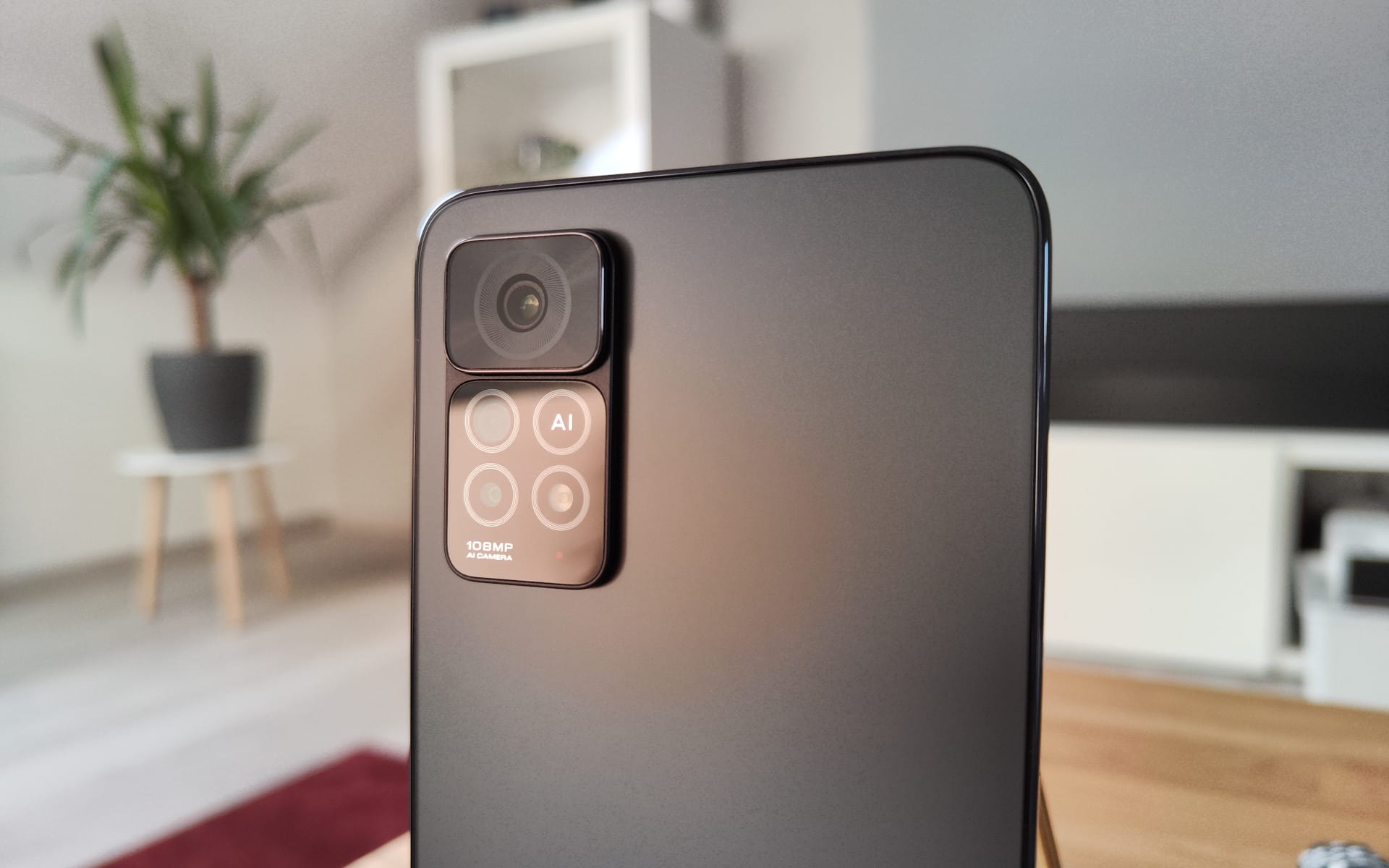
The remaining sensors are divided into an 8 MP Sony IMX355 ultrawide camera with 118° wide angle and a 2 MP macro camera (aperture f/2.4). Experience shows that the 2 MP macro camera is merely a gimmick with little added value. A 16 MP Omnivision OV16A1Q front camera is responsible for selfies.
Main camera
Considering the price range, the 108 MP main camera of the Redmi Note 11 Pro 5G produces good photos. The images are pleasantly sharp, details are well rendered and the colours look natural. Focus is set quickly without much manual adjustment needed.
The shots become slightly more detailed and sharper in 108 MP mode. However, this only becomes really visible when you zoom into the shot. Good lighting conditions are also required, as the removal of pixel binning simultaneously increases the image noise.
The dynamic range of the main camera is certainly not limitless. The automatic HDR function rarely needs to intervene. Here are several shots taken in daylight and at sunset.


The Redmi Note 11 Pro 5G also performs well in poor lighting conditions. Colours remain well preserved, and image noise is not significantly increased. As expected, the level of detail decreases slightly. The night mode provides some assistance by brightening the image and bringing out details more effectively.


Ultra-wide-angle camera
The Redmi Note 11 Pro 5G also produces good ultra-wide-angle shots. While the image quality cannot compete with the main camera due to reduced detail and lower dynamic range, it is perfectly adequate for snapshots. The difference is hardly noticeable on small displays. On a large monitor, however, it becomes all the more apparent.


Other sensors and recording functions
The macro camera is only there to make the spec sheet look better. In practice, the shots do not provide any real added value. The camera app is simple and easy to understand. You quickly find the feature you are looking for, and settings can be changed in no time. Alternatively, it is worth experimenting with Gcam mods, as the camera software can also significantly affect recording quality.

The Redmi Note 11 Pro 5G records videos at a maximum 1080p30 resolution. This is a shame, as nowadays even affordable mid-range smartphones are expected to support high-resolution 4K video recording. This limitation to a maximum 1080p resolution is due to the Snapdragon 695, whose image processor does not support 4K. Even 1080p60 is not available. The recorded audio is convincing.
At the front we finally have the 16 MP front camera, which takes quite nice selfies in daylight. In poor lighting conditions, the images become increasingly less detailed and blurrier.
Redmi Note 11 Pro 5G: Connectivity and sensors
Mobile network
As the name suggests, the Redmi Note 11 Pro 5G is a smartphone with 5G cellular support. The mobile frequencies and bands commonly used in this country are fully supported. Here is an overview of the frequencies and bands:
- 2G: GSM: 850 900 1800 1900MHz
- 3G: WCDMA: 1/2/4/5/8/19
- 4G: LTE FDD: 1/2/3/4/5/7/8/12/13/17/18/19/20/26/28/32/66
- 4G: LTE TDD: 38/40/41
- 5G: n1/3/5/7/8/20/28/38/40/41/66/77/78
Making phone calls and mobile browsing works seamlessly. The smartphone convinces with good reception and equally good voice quality, whether via the earpiece or speakerphone. The VoLTE and VoWiFi standards are available. The SAR value is 0.956 W/kg at the head and 0.596 W/kg at the body.
Wi-Fi and Bluetooth
The smartphone supports dual-band AC Wi-Fi (802.11 a/b/g/n/ac) as well as Bluetooth 5.1. Wi-Fi range and data throughput are high. Bluetooth connections are stable and without restrictions.
GPS and sensors
The Redmi Note 11 Pro 5G determines its position using GPS, GLONASS, Galileo and Beidou. The satellites are quickly acquired and the location is determined with high accuracy. Navigation works flawlessly, whether navigating through urban or rural areas. An electronic compass is included.
Additionally, the sensor suite includes a proximity sensor, an ambient light sensor, an accelerometer, a gyroscope, a G-sensor and a Hall sensor. Devices with an infrared receiver, such as TVs, can be controlled via the infrared transmitter (IR blaster). The required Mi Remote app comes preinstalled on the smartphone.
NFC is included and the use of Google Pay is therefore possible.
Fingerprint scanner
The smartphone can be unlocked quickly and reliably via the fingerprint scanner. This is located in the side power button. Alternatively, pattern, PIN, password or face recognition are available as additional unlocking methods.
Stereo speakers
We were particularly impressed by the stereo speakers. The sound is powerful and loud, and sound effects are even provided via Dolby Atmos. For connecting headphones, you can choose between 3.5 mm jack, Bluetooth or USB-C. High-resolution audio codecs such as aptX are supported for Bluetooth connections. With wired headphones, it is even possible to receive FM radio.
Redmi Note 11 Pro 5G: Battery
With a capacity of 5000 mAh, the Redmi Note 11 Pro 5G has a battery size that is now standard. The energy-efficient consumption of the Snapdragon 695 has a positive impact. Users who use the smartphone for everyday tasks such as calling, internet surfing, and social media can expect approximately 2 days of battery life.
Fast charging is possible at up to 67 watts. A full charge takes just under 41 minutes. Just 15 minutes connected to a power source charges the smartphone to 55 percent. Reverse charging, i.e. charging in the reverse direction similar to a power bank, is supported. Wireless charging, as expected, is not available.
Our verdict
The Redmi Note 11 Pro 5G is a good mid-range smartphone that will likely build on the success of its predecessor. The number one reason to buy is the excellent display, which faces little competition in this price segment (at least at the time of this test).
The 2th buying argument is the battery, which lasts a long time and is fully charged in just 41 minutes with the 67 watt fast-charging function.
The third buying argument is the 108 MP main camera, which captures photos of good quality in both day and night conditions. However, video enthusiasts must settle for a maximum resolution of 1080p30.
One should also be aware of the mediocre graphics performance of the Snapdragon 695. Demanding mobile games are playable, but stuttering can only be avoided at reduced detail settings. Thus, the Redmi Note 11 Pro 5G is rather unsuitable for hardcore gamers. On the other hand, the smartphone is up to the task for everyday duties.
Specifications
Processor and memory
- CPU
- Qualcomm Snapdragon 695
- GPU
- Adreno 619
- Storage
- 6GB / 8GB LPDDR4X + 128GB / 256GB UFS2.2
- Storage expansion
- Yes
Display
- Display size
- 6.67 inches
- Display resolution
- 2400 x 1080 pixels
- Display refresh rate
- 120 Hz
- Display type
- AMOLED
- Screen protector
- Corning Gorilla Glass 5
- Multitouch
- 10 fingers
Cameras
- Main camera
- 108 MP Samsung HM2 1/1.52", 0.7µm, PDAF, f/1.9
- Ultra-wide-angle camera
- 8 MP, f/2.2, 118° wide angle
- Macro camera
- 2 MP, f/2.4
- Front camera
- 16 MP, f/2.4
Mains
- Dual SIM
- Yes
- SIM size
- Nano SIM
- eSIM
- No
- 2G GSM
- 850 900 1800 1900MHz
- 3G WCDMA
- 1/2/4/5/6/8/19
- 4G LTE FDD
- 1/2/3/4/5/7/8/12/13/17/18/19/20/26/28/66
- 4G LTE TDD
- 38/39/40/41
- 5G NSA / SA
- n1/n3/n5/n7/n8/n20/n28/n38/n40/n41/n77/n78/n66
Wireless
- Wi-Fi
- 802.11 a/b/g/n/ac
- Bluetooth
- 5.1
- GPS
- Yes
- NFC
- Yes
Sensors
- *Ambient light sensor
- *Accelerometer
- *Proximity sensor
- *E-compass
- *Gyroscope
- *Fingerprint sensor
- *IR blaster
Battery
- Battery
- 5,000 mAh
- Fast charging function
- 67 watts
- Qi charging
- No
Other
- Operating system
- Android 11 (MIUI 13)
- Audio
- 3.5mm headphone jack / stereo loudspeaker
- Connection
- USB-C
- Size
- 164.2 x 76.1 x 8.1 mm
- Weight
- 202g
What’s included
1x Redmi Note 11 Pro 5G 1x 67W charger 1x charging cable 1x protective case 1x SIM eject tool 1x manual
Price comparison
| Store | Price | Link |
|---|---|---|
| Amazon | 270,42 € | Go to store |
| MediaMarkt | 341,77 € | Go to store |
Comments