Contents
Review: Redmi Note 11
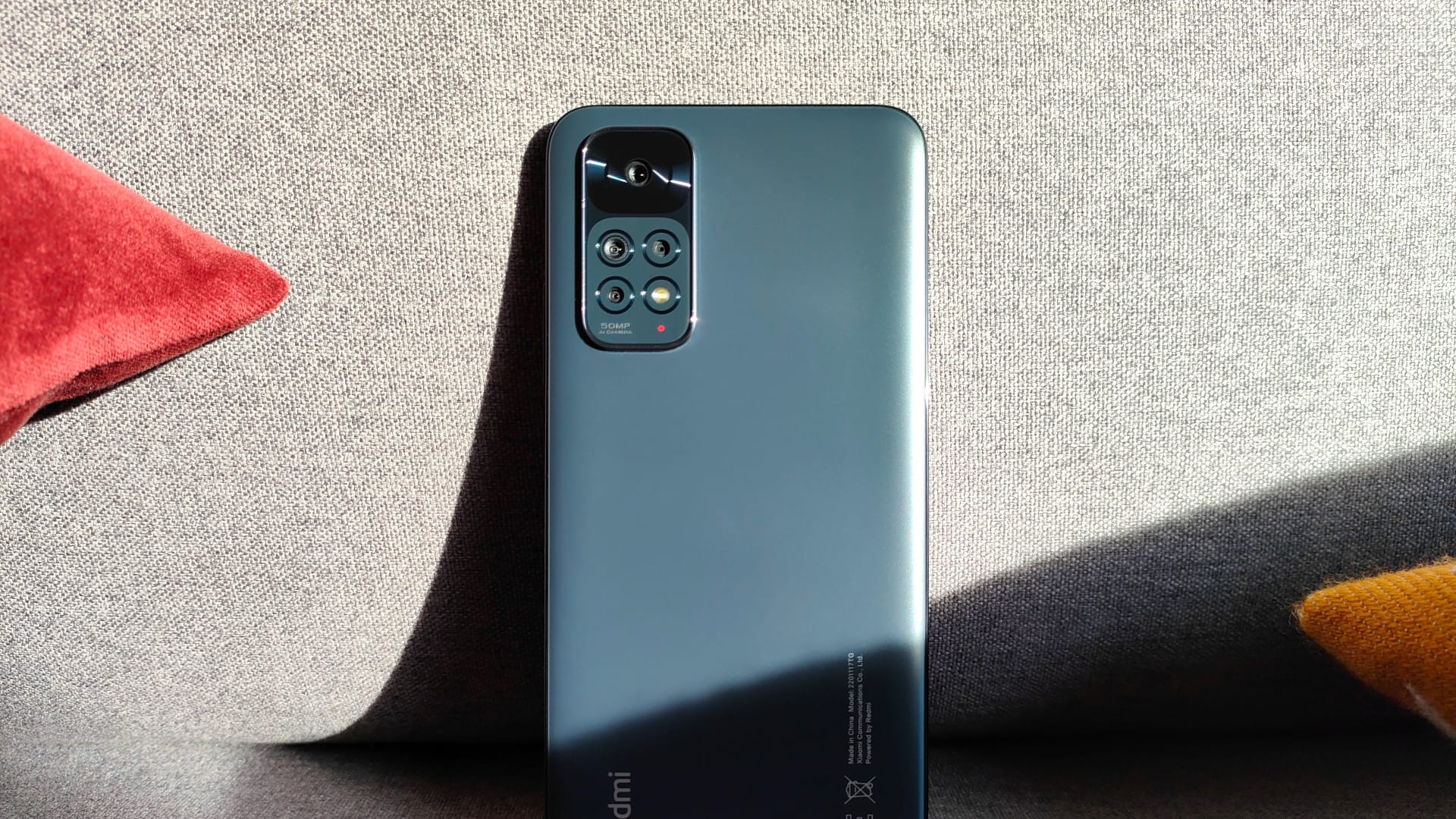
The Redmi Note series is, year after year, one of the most successful smartphone lines in the budget and mid-range segments. Every year, Xiaomi adds an extra touch, showcasing the Redmi Note series in a new look and with partially new technology.
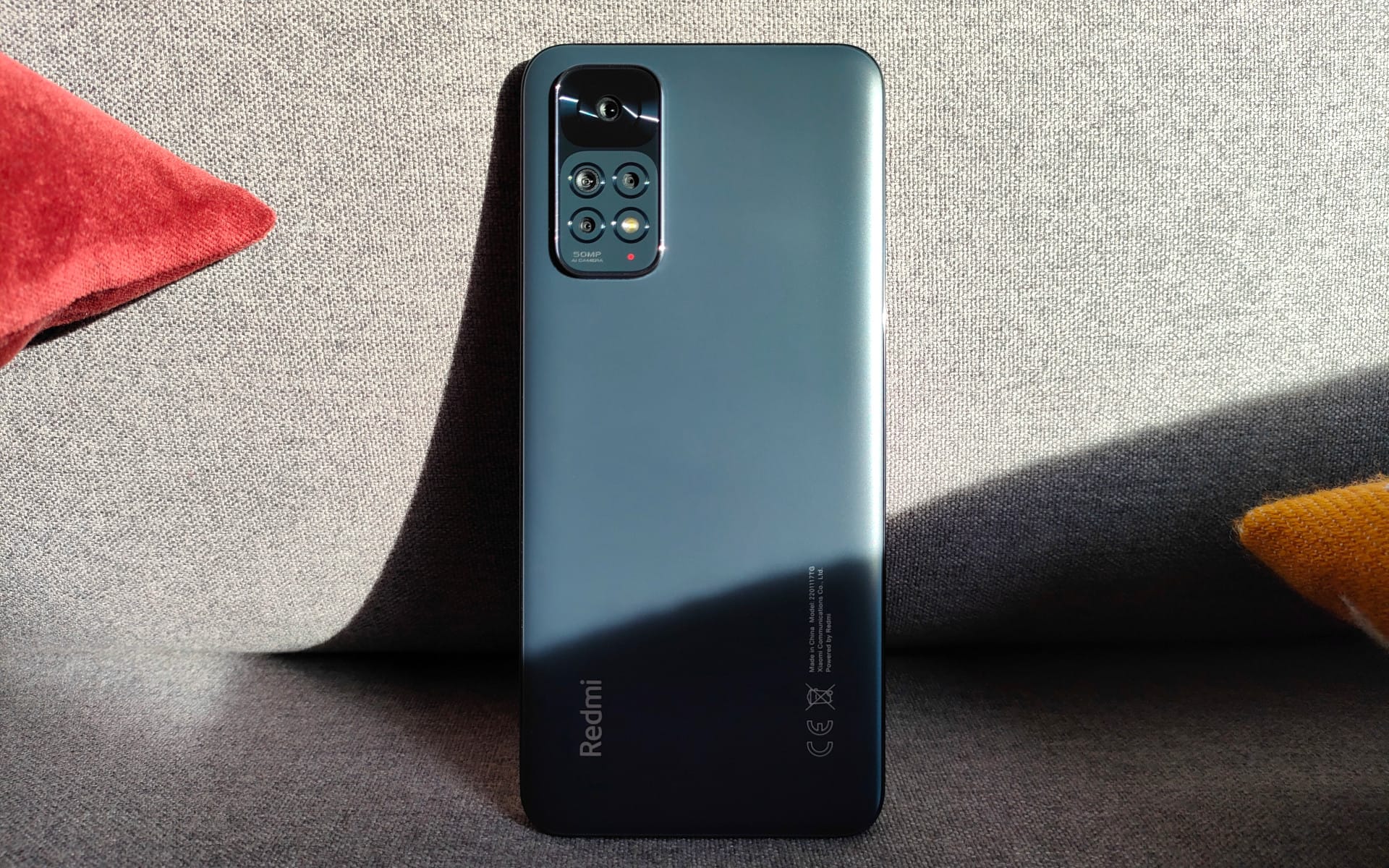
This year, the company has reached the Redmi Note 11 series, which, although it does not make a (technical) quantum leap compared to the previous year's range, definitely builds on the success.
Redmi Note 11: Design and build quality
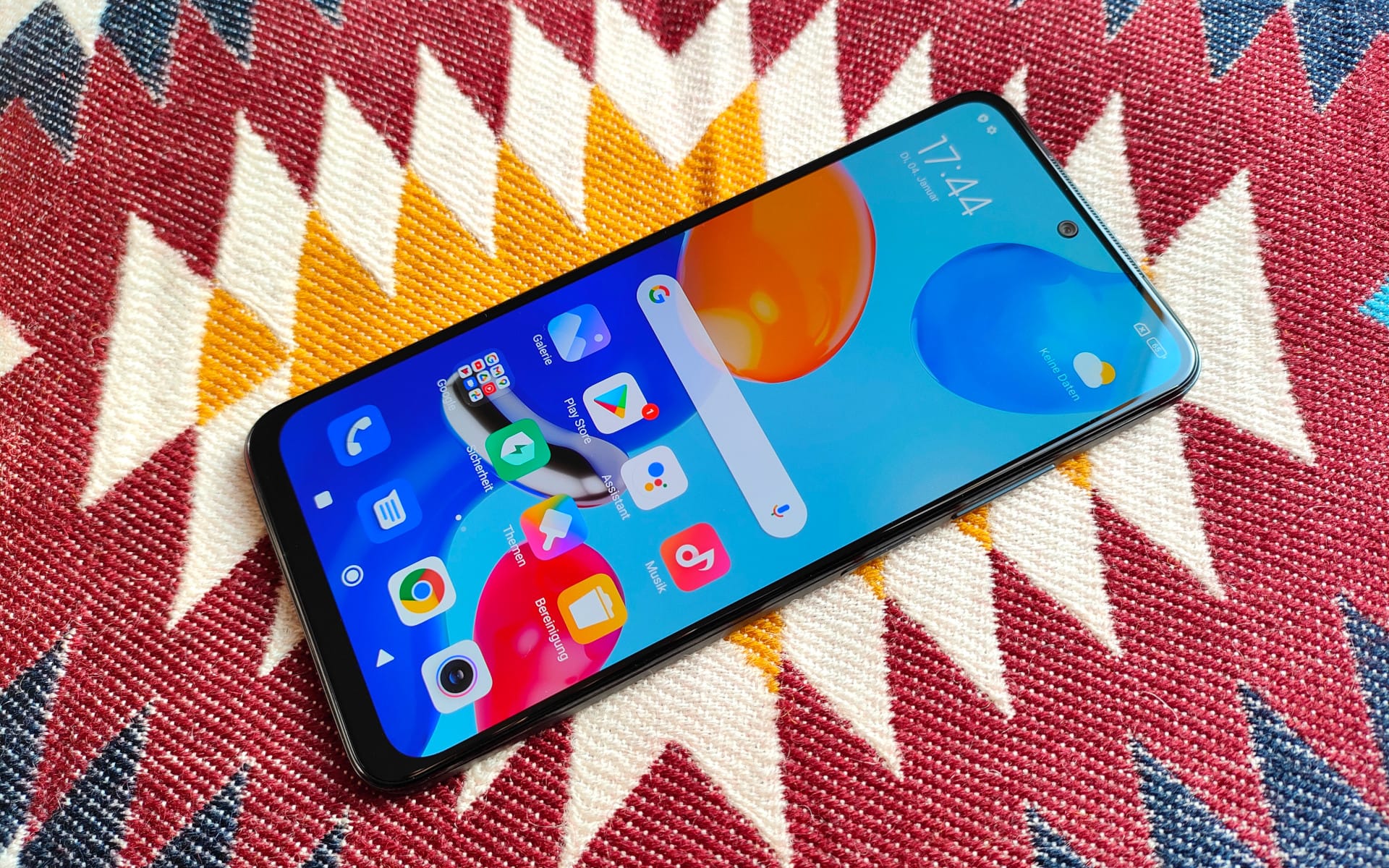
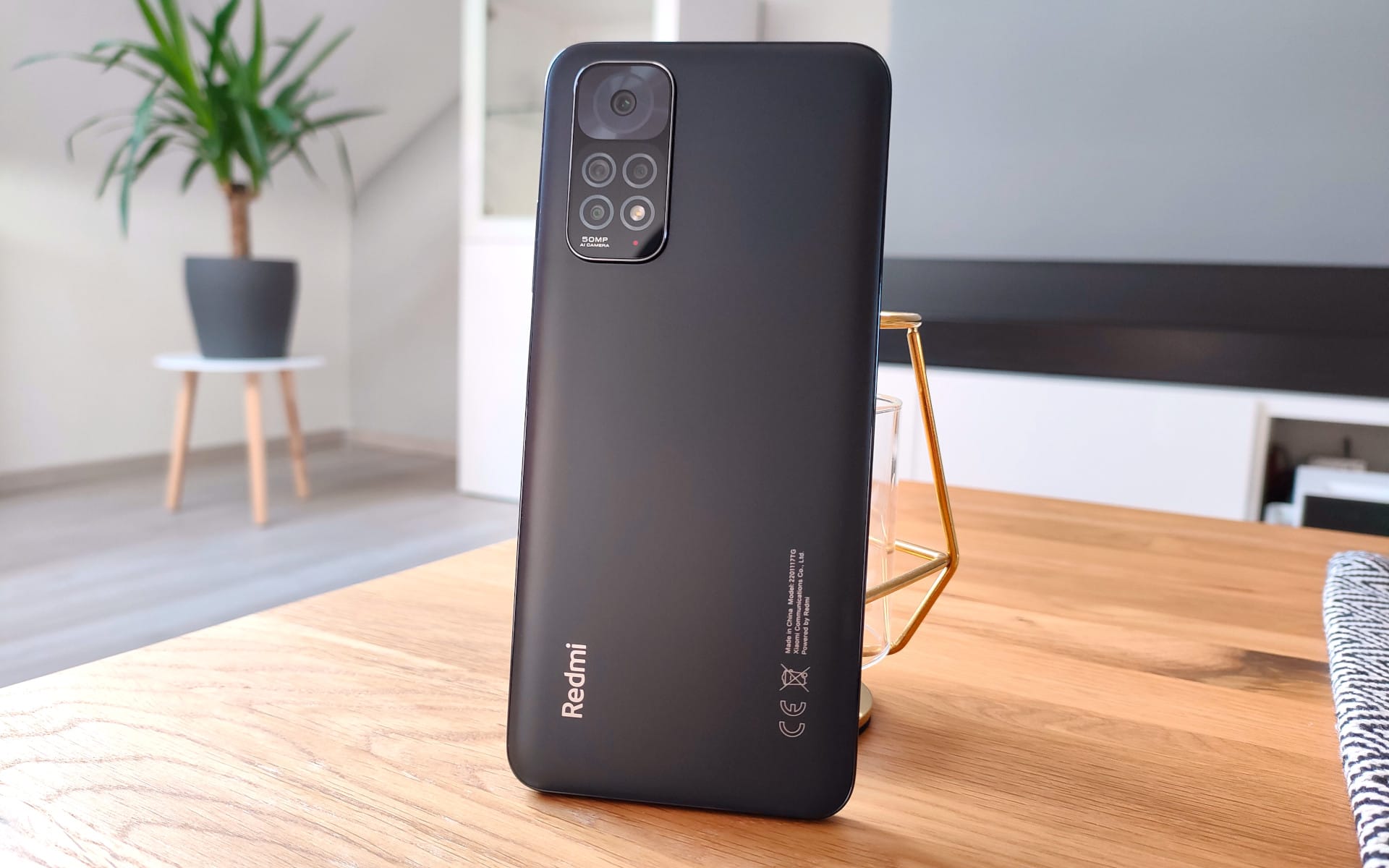
I would classify the Redmi Note 11 in the category of “elegant budget phones”. You wouldn't guess the price of €159 from the smartphone. Phones in slightly higher price brackets don't necessarily look better, which also shows that the Redmi Note 11 and the more expensive Redmi Note 11S share the same chassis.
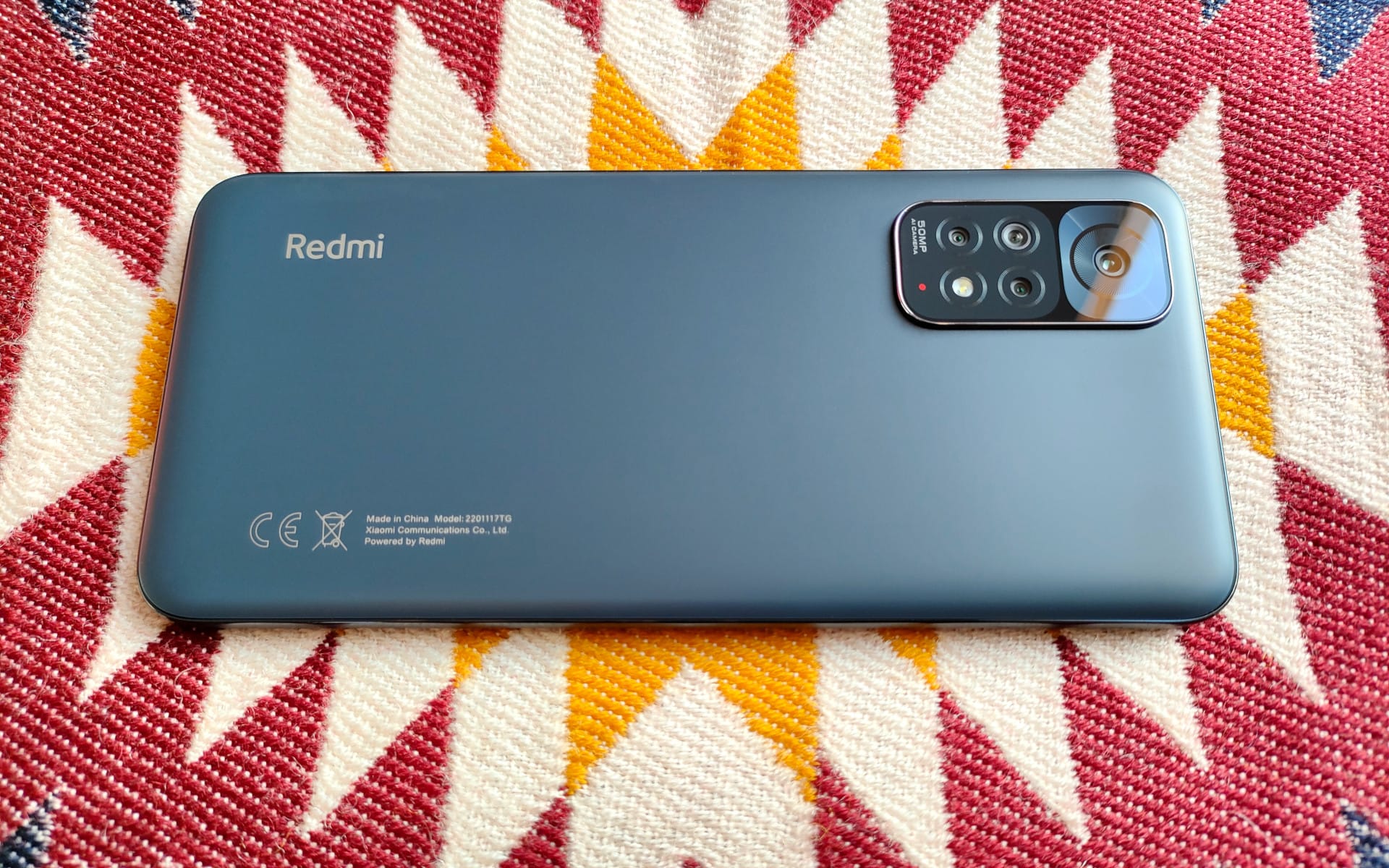
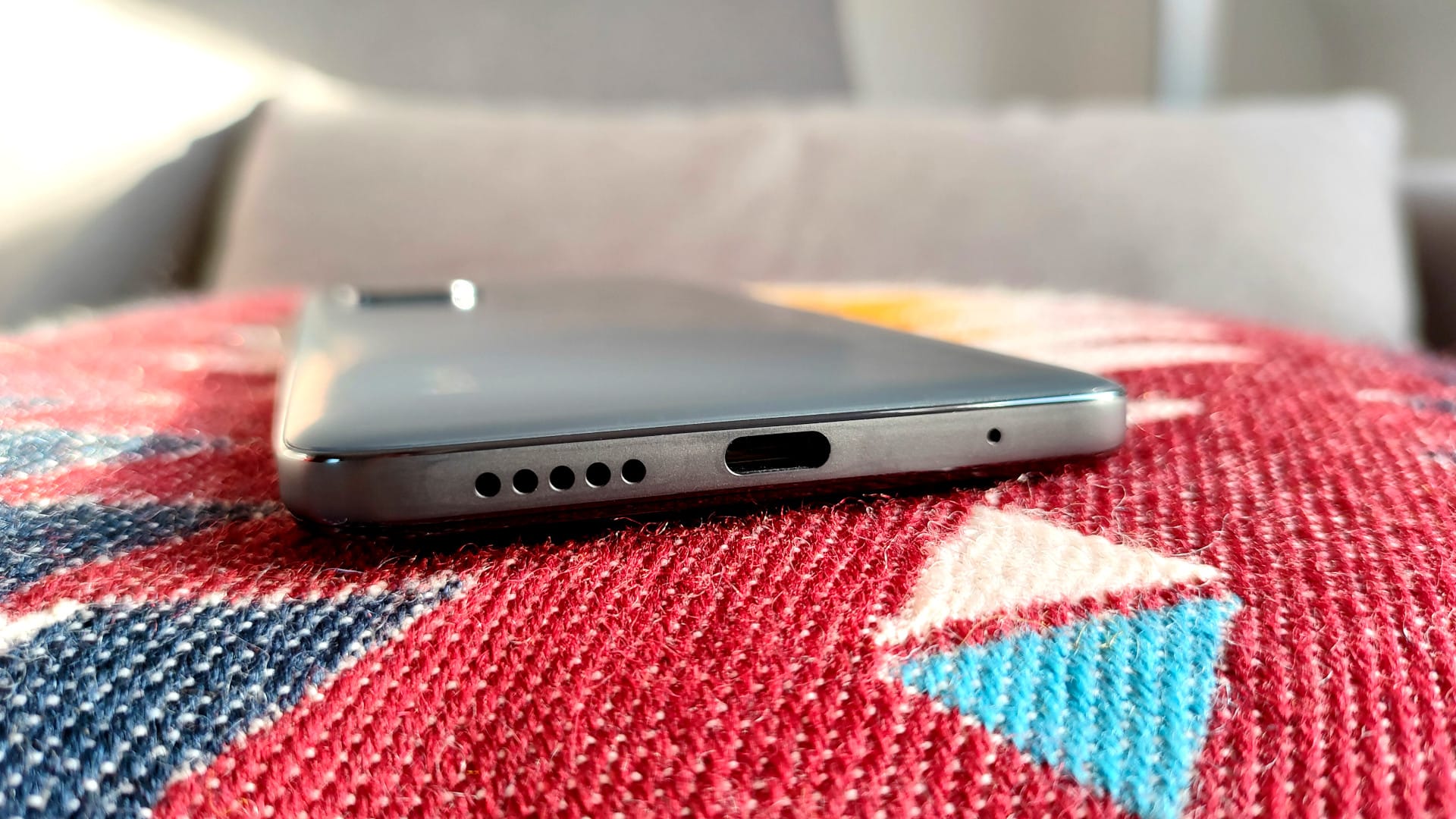
In terms of design, Xiaomi relies on more edges. The flat-tapering housing frame and rounded corners give the Redmi Note 11 a look that somewhat mimics Apple’s current iPhone series. Instead of metal, they rely almost entirely on plastic. Both the frame and the back are made from this material and are responsible for the light weight of just 179g. Only the side control buttons are made of aluminium.
I am particularly impressed by the size of the smartphone. Measuring just 159.87 x 73.87 x 8.09 mm, it is one of the more compact devices available today. You can choose from “Graphite Grey”, “Star Blue” or “Twilight Blue”. The back of my test device is in plain “Graphite Grey”. An elegant colour with no unnecessary frills. The two blue shades are a bit more playful.
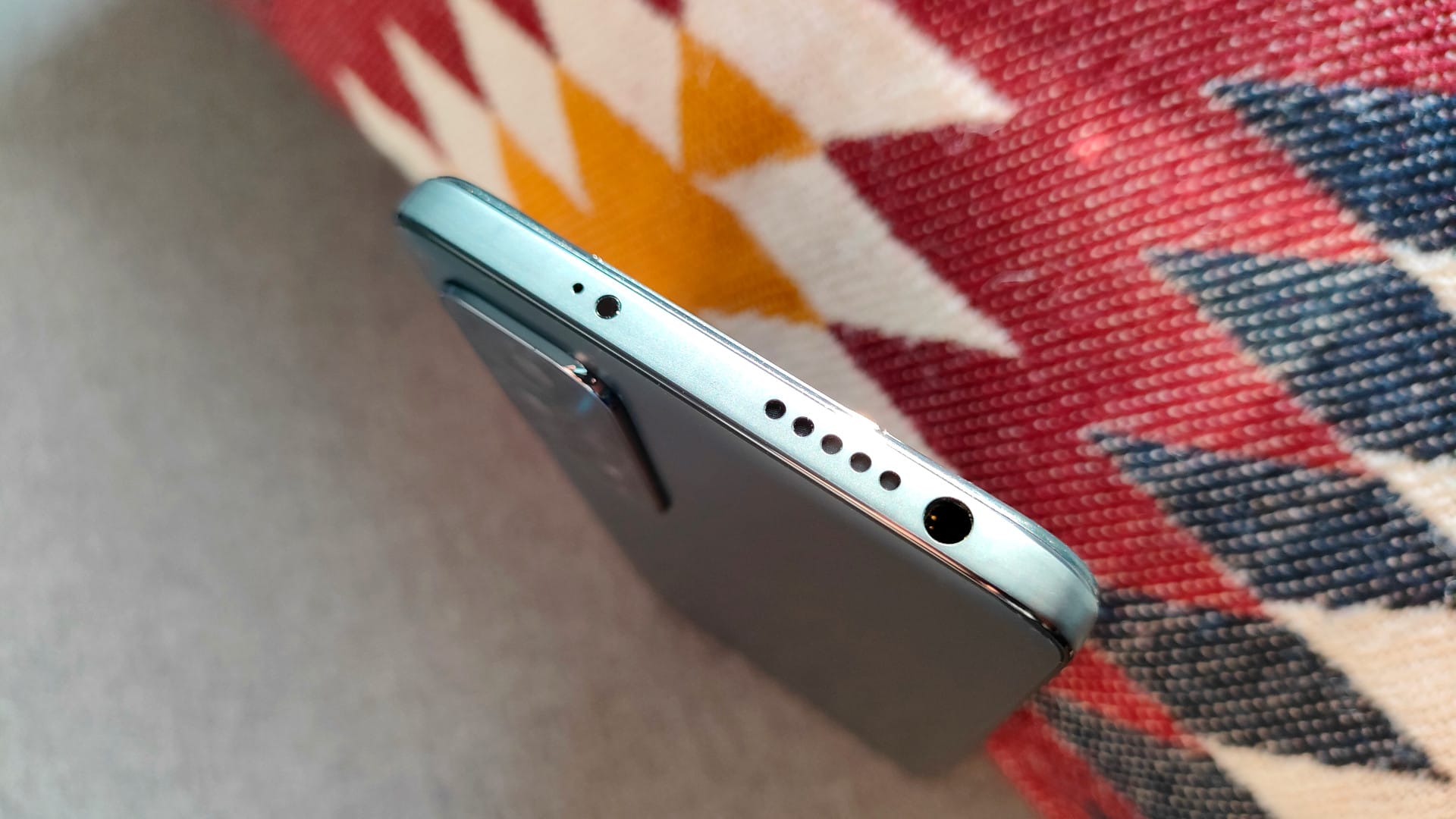
Feel and build quality are impressive. Thanks to the flat frame, the smartphone is grippy in the hand. The matte plastic back feels far from slippery but attracts fingerprints quickly. The same applies to dust, which often settles along the edges of the camera bump, slightly dampening its appealing look.
Redmi Note 11: Display
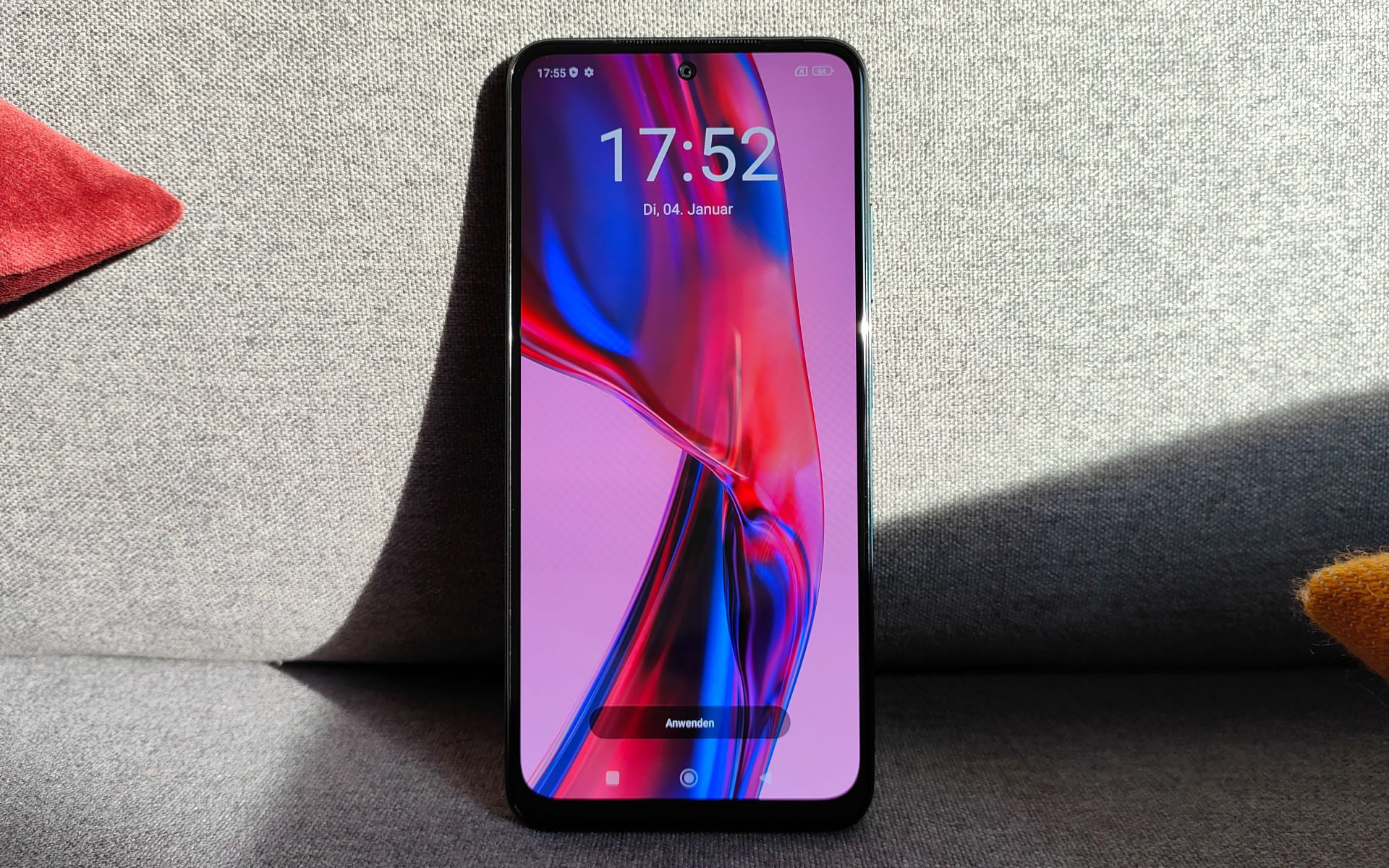
In last year's Redmi Note 10, Xiaomi had already installed an AMOLED display, after LCD dot displays had long been prevalent in Xiaomi's budget segment. Now they are adding more, fitting the Redmi Note 11 with a 6.43-inch AMOLED display featuring 2400 x 1800 pixel resolution (409 PPI) and a 90 Hz refresh rate.
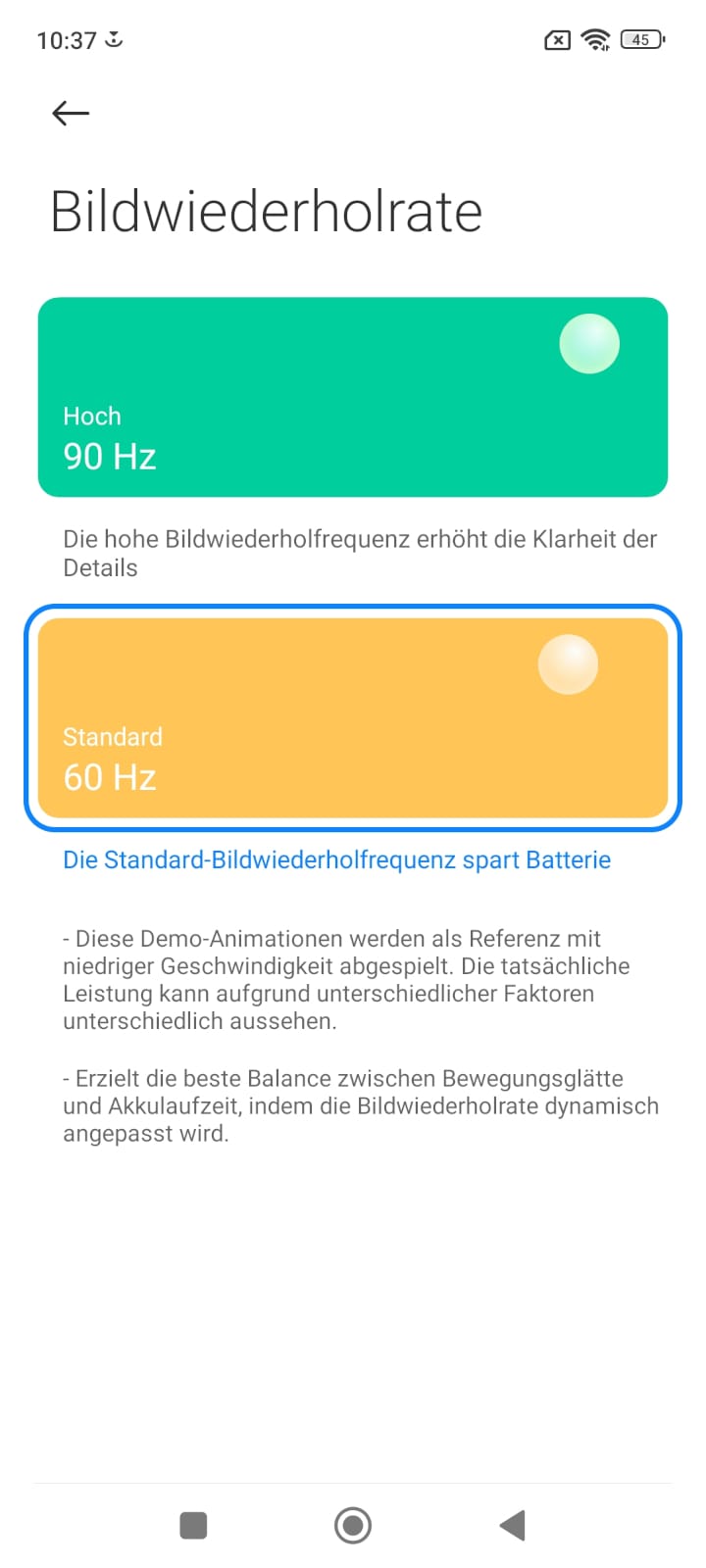
The 90 Hz refresh rate ensures a particularly smooth visual experience for the eye. The higher refresh rate is noticeable especially when scrolling quickly through menus. The display appears overall "smoother" and motion blur is reduced. By default, the Redmi Note 11 is set to 60 Hz. However, you can activate 90 Hz in no time via the display settings. The only disadvantage: battery consumption can theoretically be slightly higher and not every app supports the high refresh rate. There is no adaptive adjustment of the refresh rate.
In everyday use, the AMOLED display performs well. The colours are vibrant, the blacks are deep, and thanks to the high pixel density of 409 PPI, the display is razor-sharp. The maximum display brightness is excellent, ensuring good readability outdoors. Only the slightly reflective display glass and the automatic brightness adjustment, which sometimes dims too much, are criticised. Different viewing angles do not affect the display or readability.
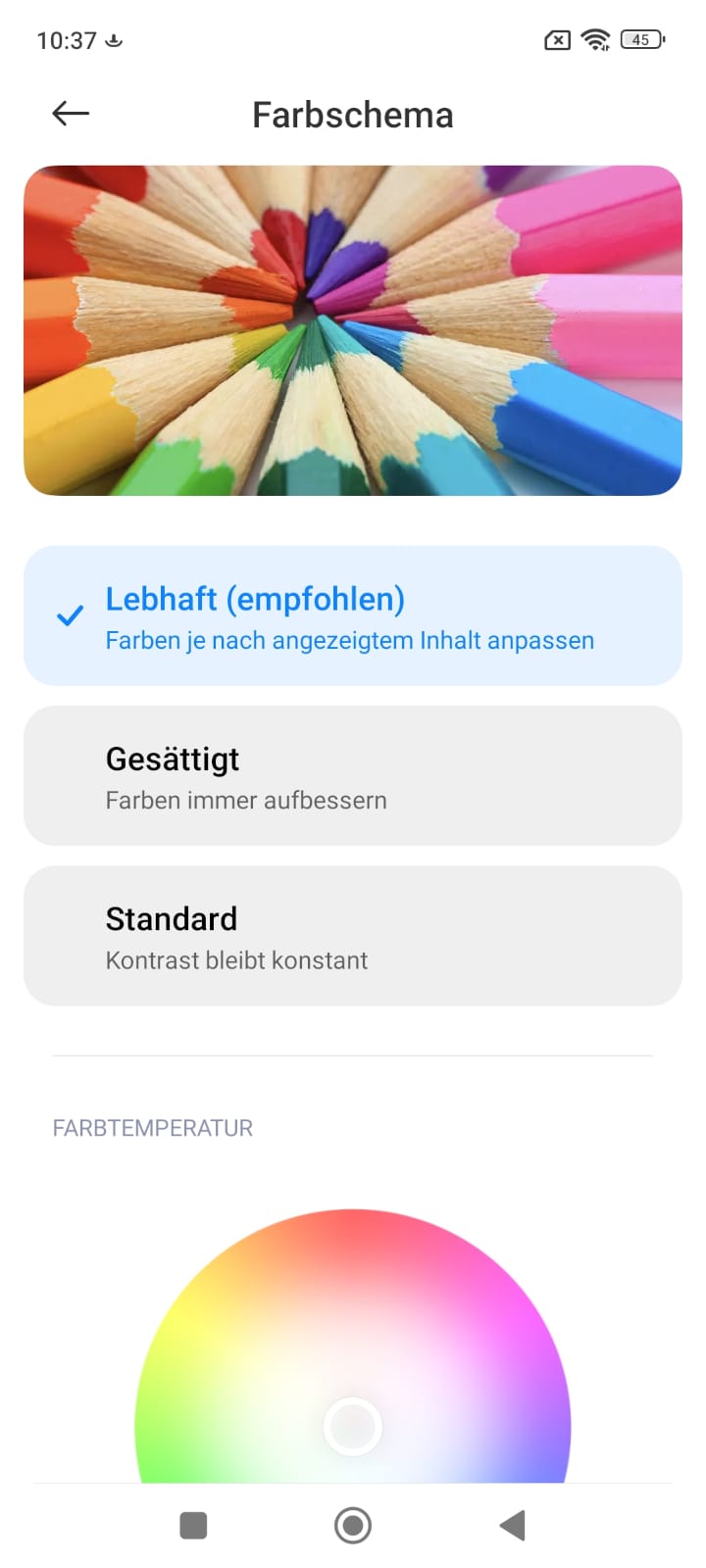
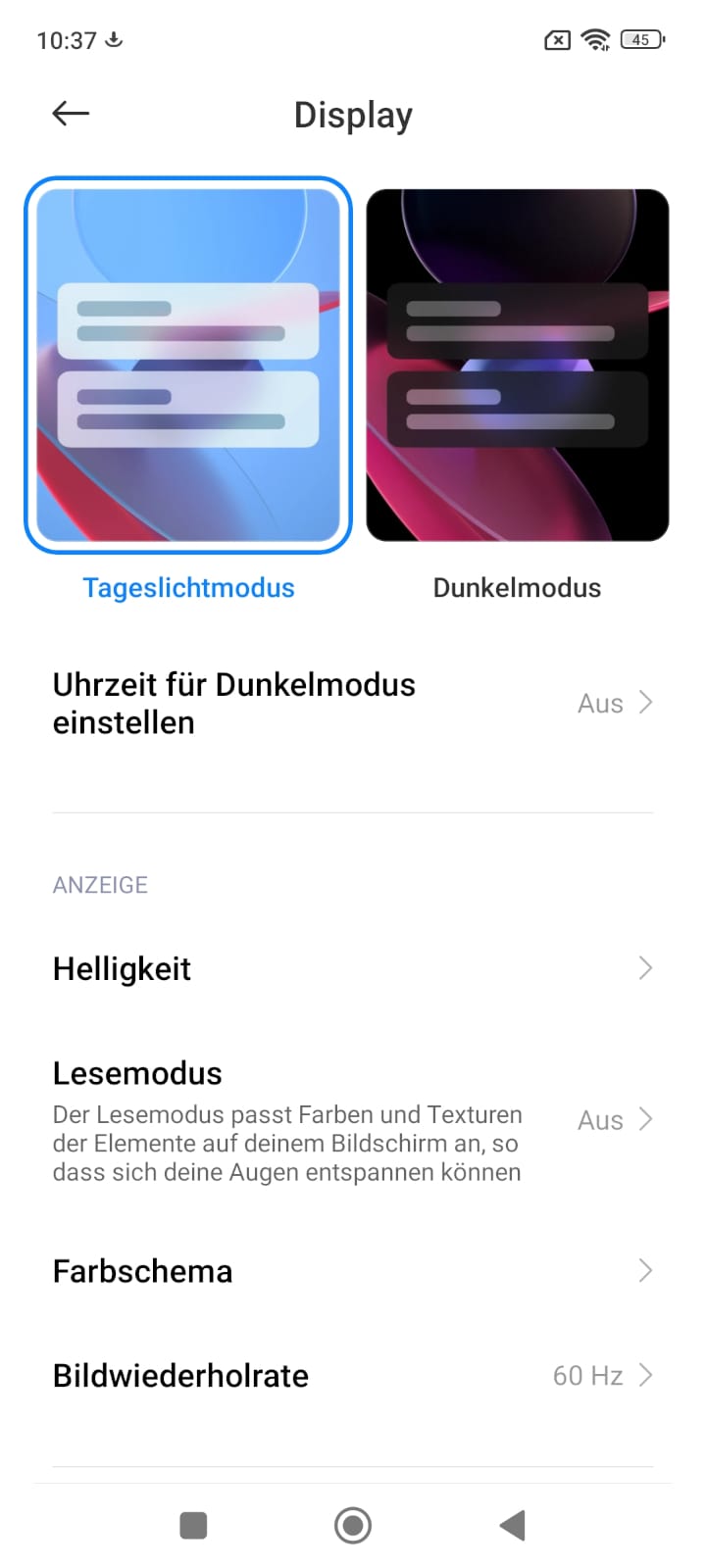
Let's take a look at the display settings. There, the dark mode can be activated manually or according to a schedule, there is a reading mode that filters blue light and advanced settings for the colour scheme. The colour scheme settings include the presets "Vivid", "Saturated" and "Standard". Additionally, the colour temperature can be adjusted using a colour wheel or in the "Standard", "Warm" and "Cool" modes.
Redmi Note 11: Performance
As one of the first smartphones, the Redmi Note 11 uses the Qualcomm Snapdragon 680 mobile platform introduced at the end of 2021. The chip is manufactured using a 6nm process, offers an 8-core CPU clocked at up to 2.4 GHz, and an Adreno 610 GPU.
Mobile network support is limited to 4G LTE. For storage, you have the choice between 4+64 GB, 4+128 GB or 6+128 GB. The RAM is of the LPDDR4X type, and the internal data storage is of the UFS2.2 type. The data storage can be expanded using a microSD card.
In benchmarks, the Redmi Note 11 lands in the lower positions of current smartphone rankings as expected. When comparing the AnTuTu score of the Redmi Note 11 with that of last year's Redmi Note 10 (Snapdragon 678), it is actually slightly lower than its predecessor.
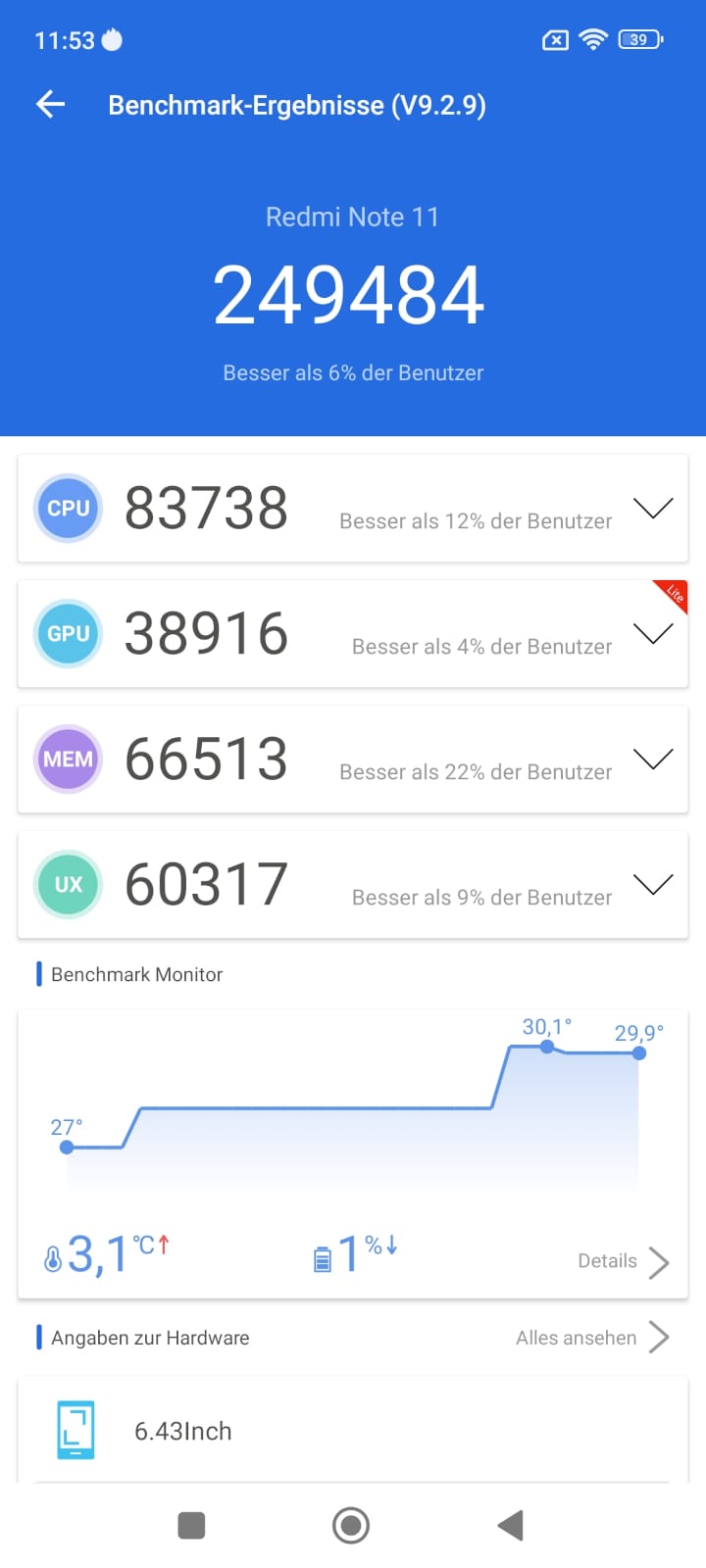
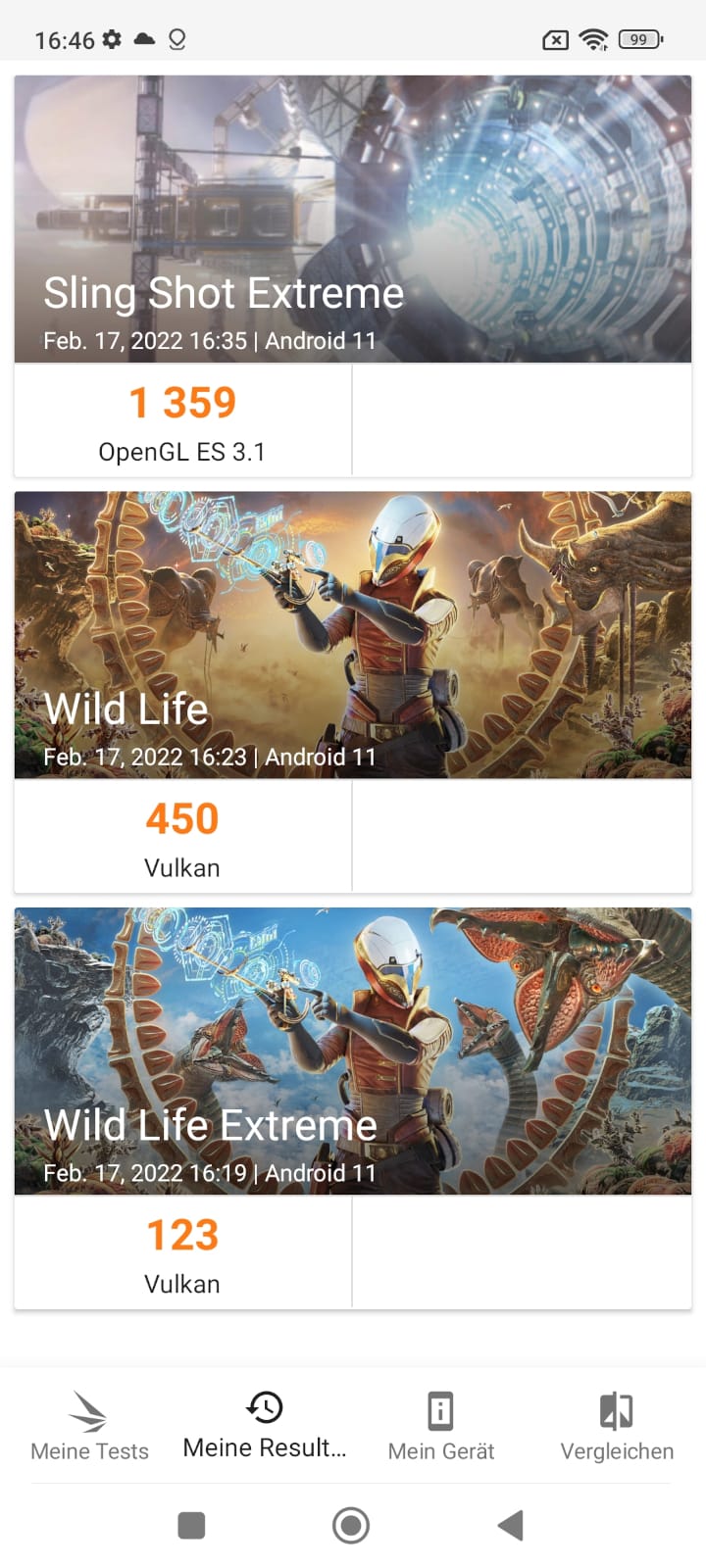
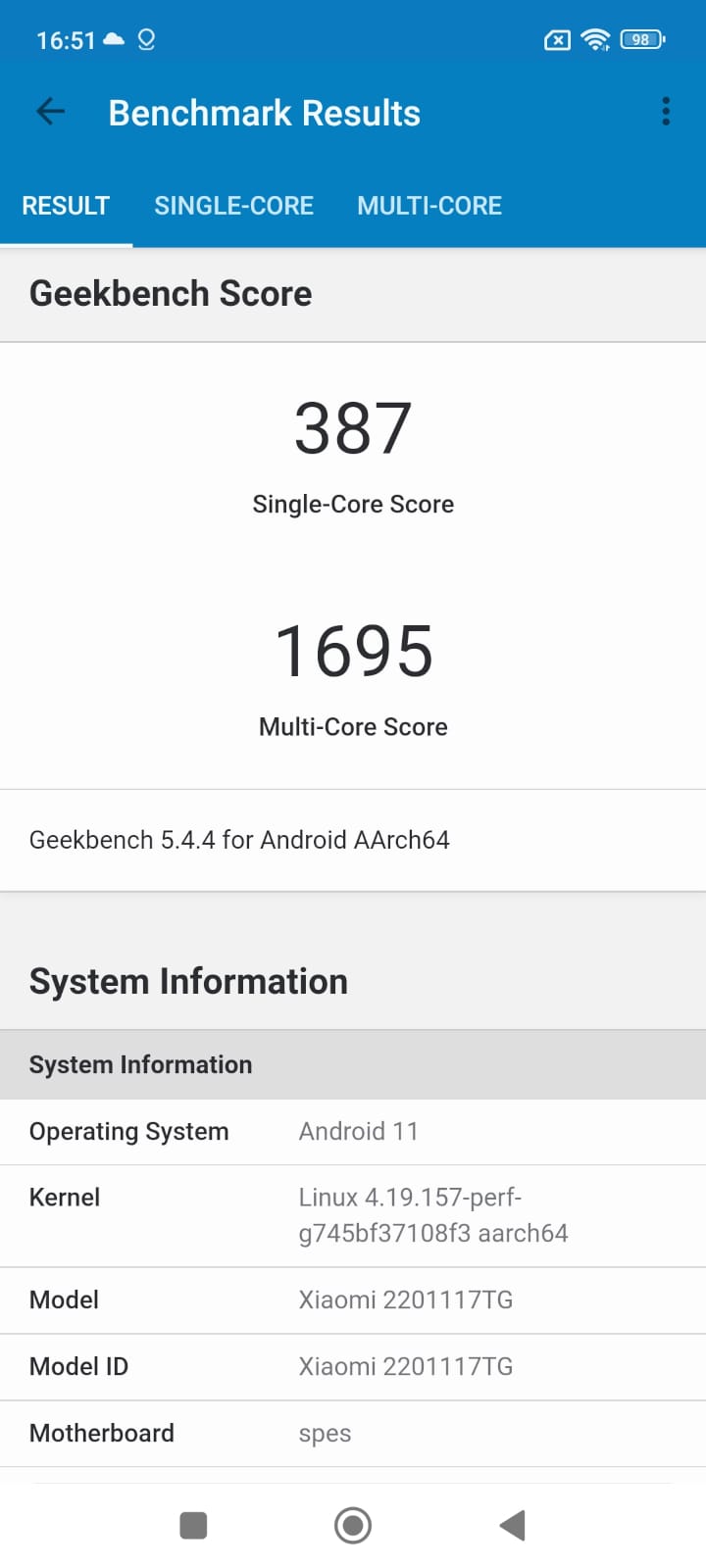
Comparing the Snapdragon 680 with the Snapdragon 678 is good proof that a ‘higher number’ does not always mean ‘more power’. In fact, the Snapdragon 680 hides a slight performance downgrade. Instead of Kryo 460 cores, slower Kryo 265 cores are used. The Snapdragon 680 in the Redmi Note 11 compensates for the performance difference, noticeable in benchmarks but not in everyday use, with higher efficiency (6nm vs. 11nm), a better image processor and support for 90 Hz displays.
With normal use, the performance of the Redmi Note 11 feels good. Navigating through the menus works mostly smoothly and without major lag. Apps load in acceptable time and remained active for a long time despite the small amount of RAM. Starting a mobile game like PUBG and switching to Chrome during a match, then to WhatsApp and back to PUBG, works without any problems.
Most demanding mobile games (PUBG, Asphalt, etc.) run smoothly at low detail settings. There is no abnormal heat generation accompanied by performance drops under full load.
Redmi Note 11: User interface
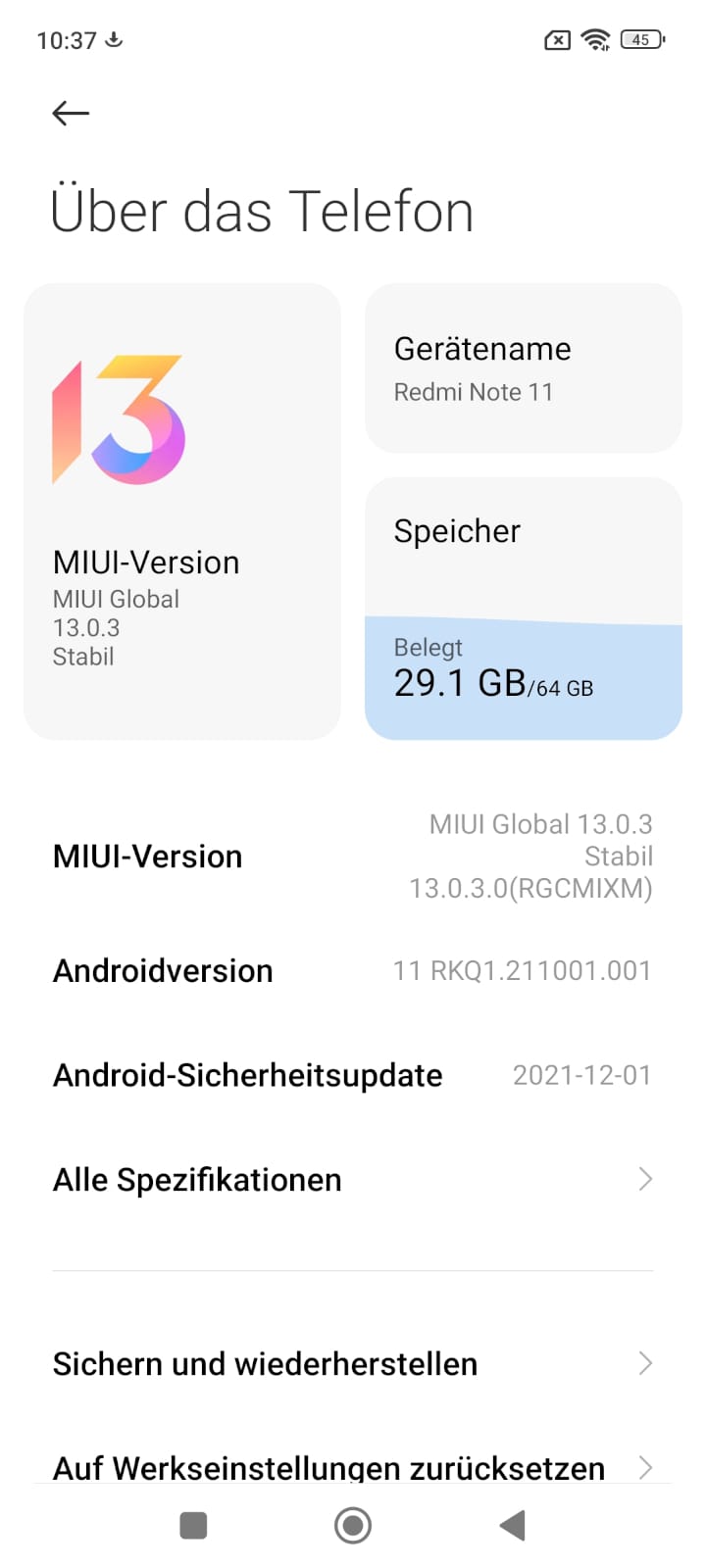
The Redmi Note 11 series is the first Xiaomi smartphone series to be delivered with the new MIUI 13. Although MIUI 13 is still based on Android 11, it is set to be updated to Android 12 in the coming months.
The new features in MIUI 13 take place primarily in the background. These include performance improvements through optimised background processes and more efficient memory usage. "Floating windows" for simplified multitasking or a "Lite mode", which reduces visual frills and enlarges fonts, are some of the features that MIUI 13 has to offer.
What somewhat spoils the overall impression of MIUI 13 are the numerous third-party apps pre-installed by default. I counted a total of 20 apps, excluding Xiaomi's own apps and Google apps. Naturally, the apps can be uninstalled. It is still annoying!
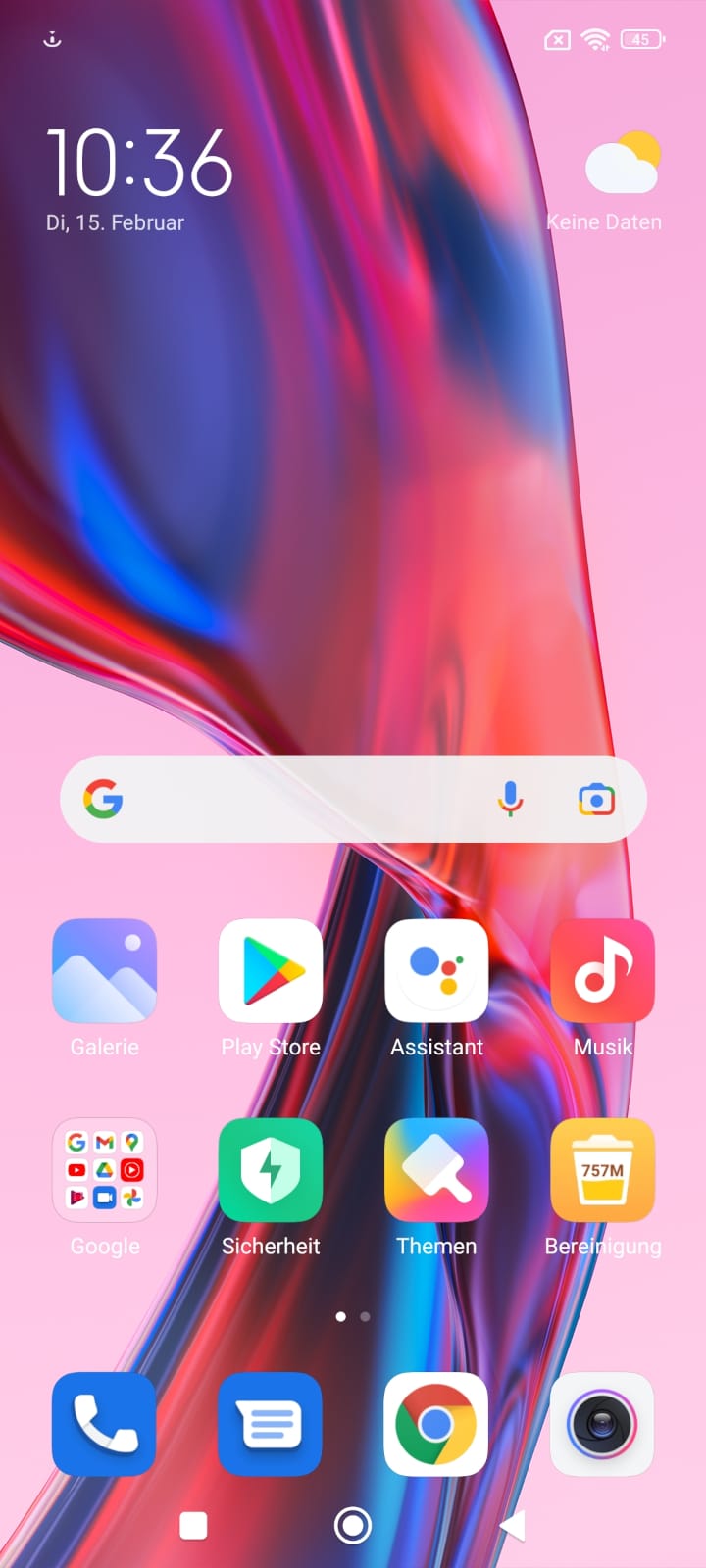
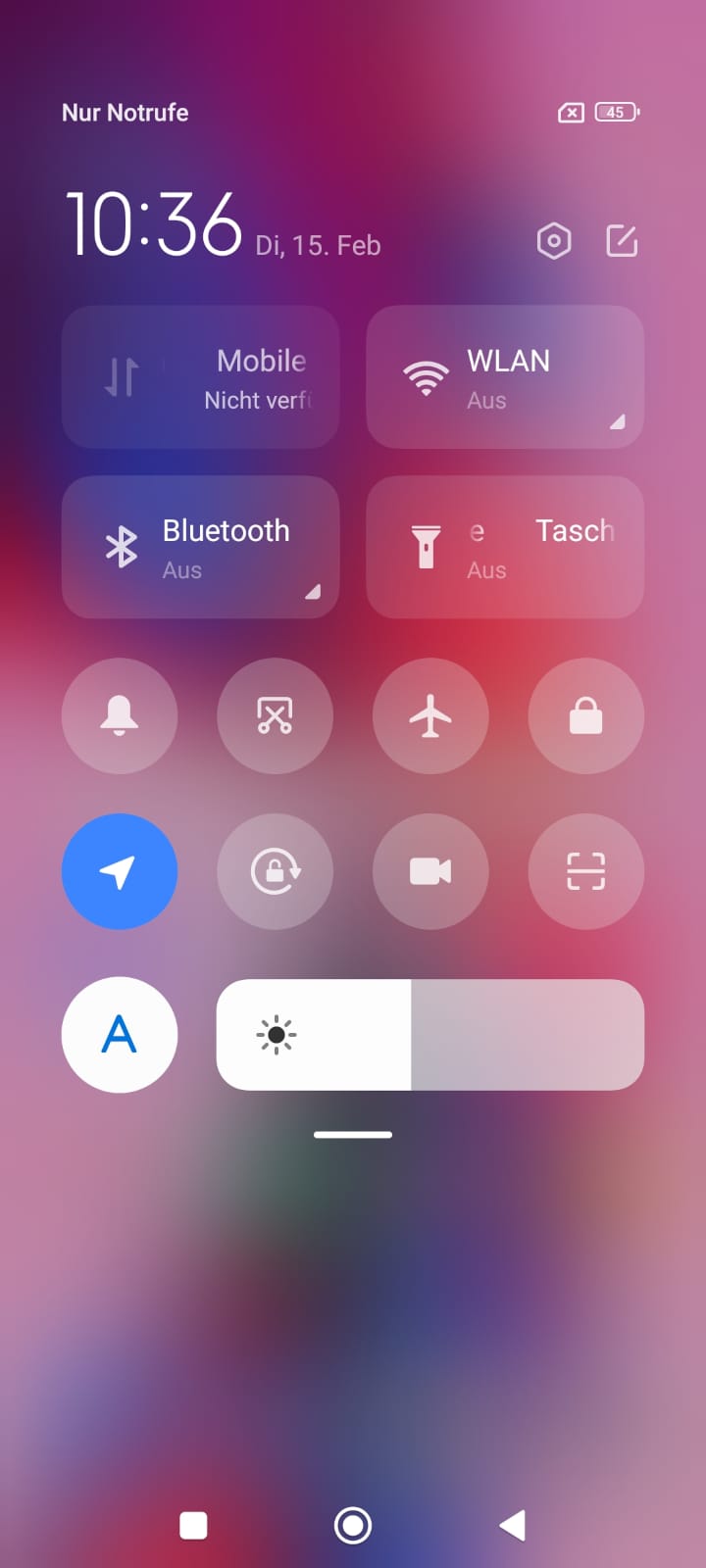
Otherwise, the Xiaomi operating system supports all Google services and is Widevine L1 certified. This means content from streaming providers such as Netflix or Prime Video can be streamed in full HD.
Redmi Note 11: Camera
Let's move on to the camera equipment. Xiaomi takes no risks here and uses a 50 MP Samsung S5KJN1 image sensor with an f/1.8 aperture as the main camera in the Redmi Note 11. The same one is used in the Redmi 10, which sits in the same price bracket.
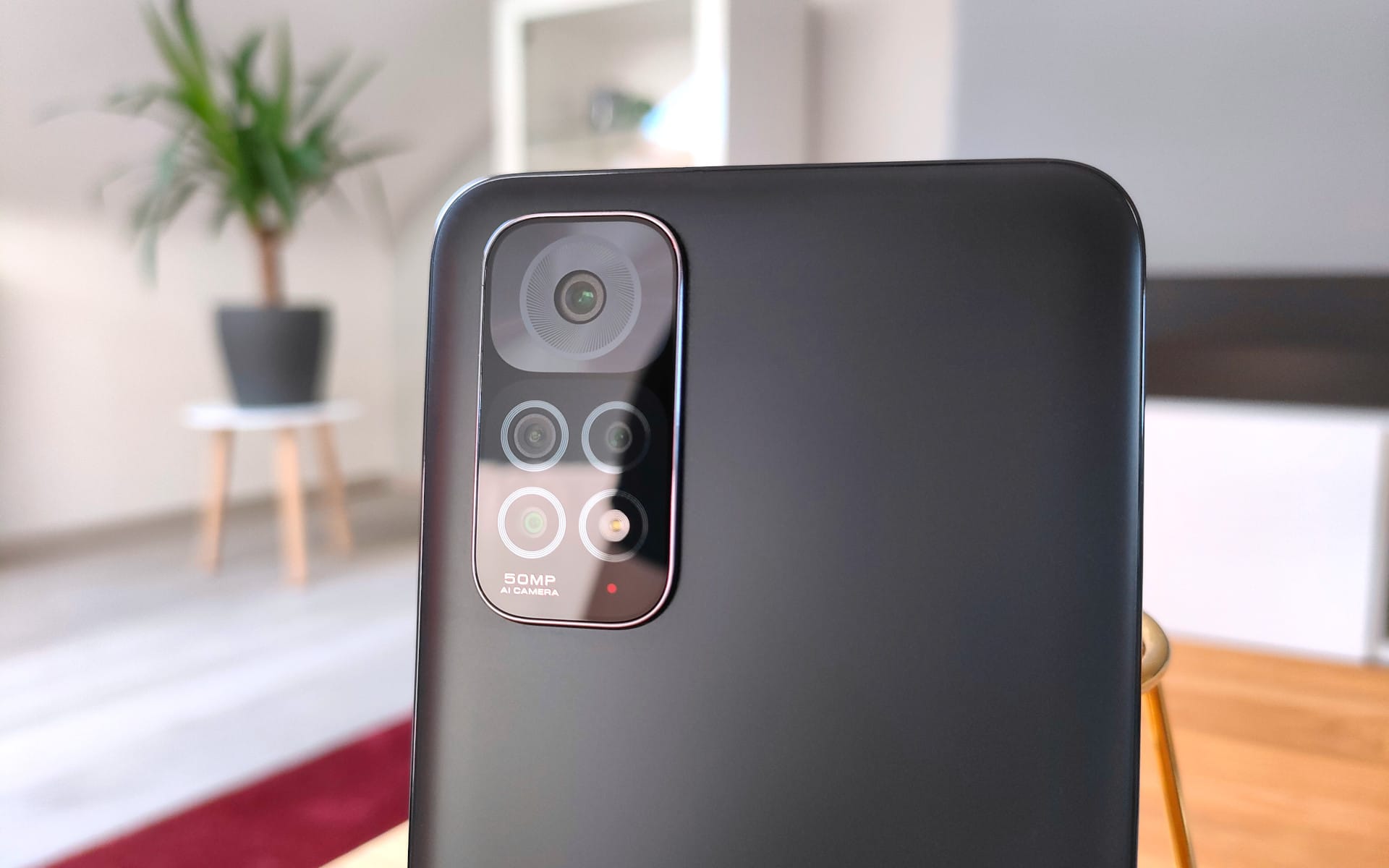
The other sensors also reveal a surprising similarity to the camera equipment of the Redmi 10. There is a 8 MP wide-angle camera with 118° field of view and f/2.2 aperture and two 2 MP “gap-filler sensors” with f/2.4 aperture. It can be assumed that Xiaomi has simply transferred the complete camera setup of the Redmi 10 (Here is the review) to the Redmi Note 11.
Main camera
I never really warmed to the Redmi Note 11's main camera. Backlit shots quickly push the camera to its limits, revealing the limited dynamic range. Shadows blow out, and highlights are sometimes clipped. The automatic HDR mode only helps to a limited extent.
Somehow, the metering isn't working as it should. The main camera can't find an acceptable compromise between light and dark, and photos taken in bright sunlight are far too dark. Despite identical sensor hardware, the Redmi 10 delivers better results. So one can hope that Xiaomi will improve things on the software side.

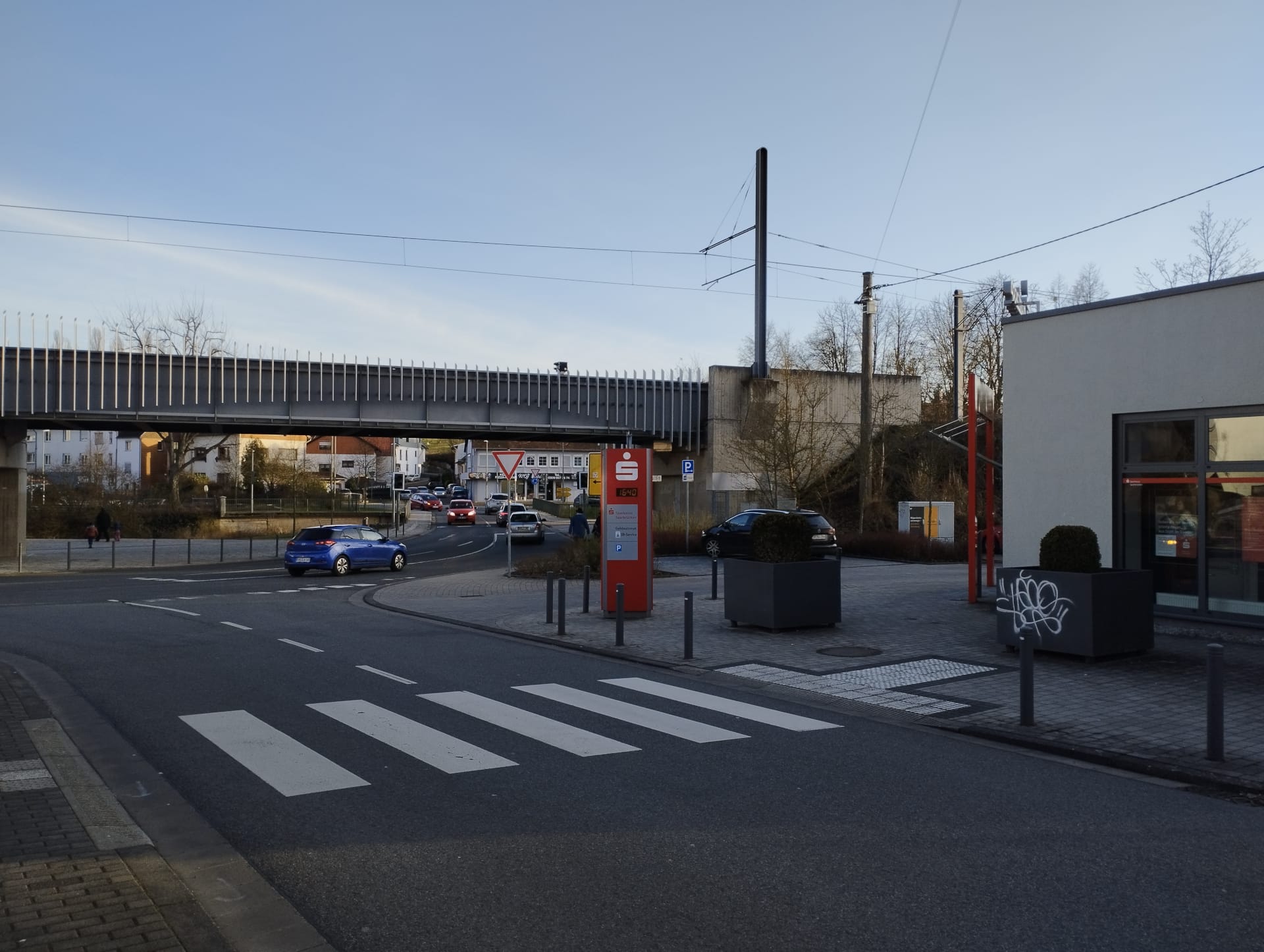



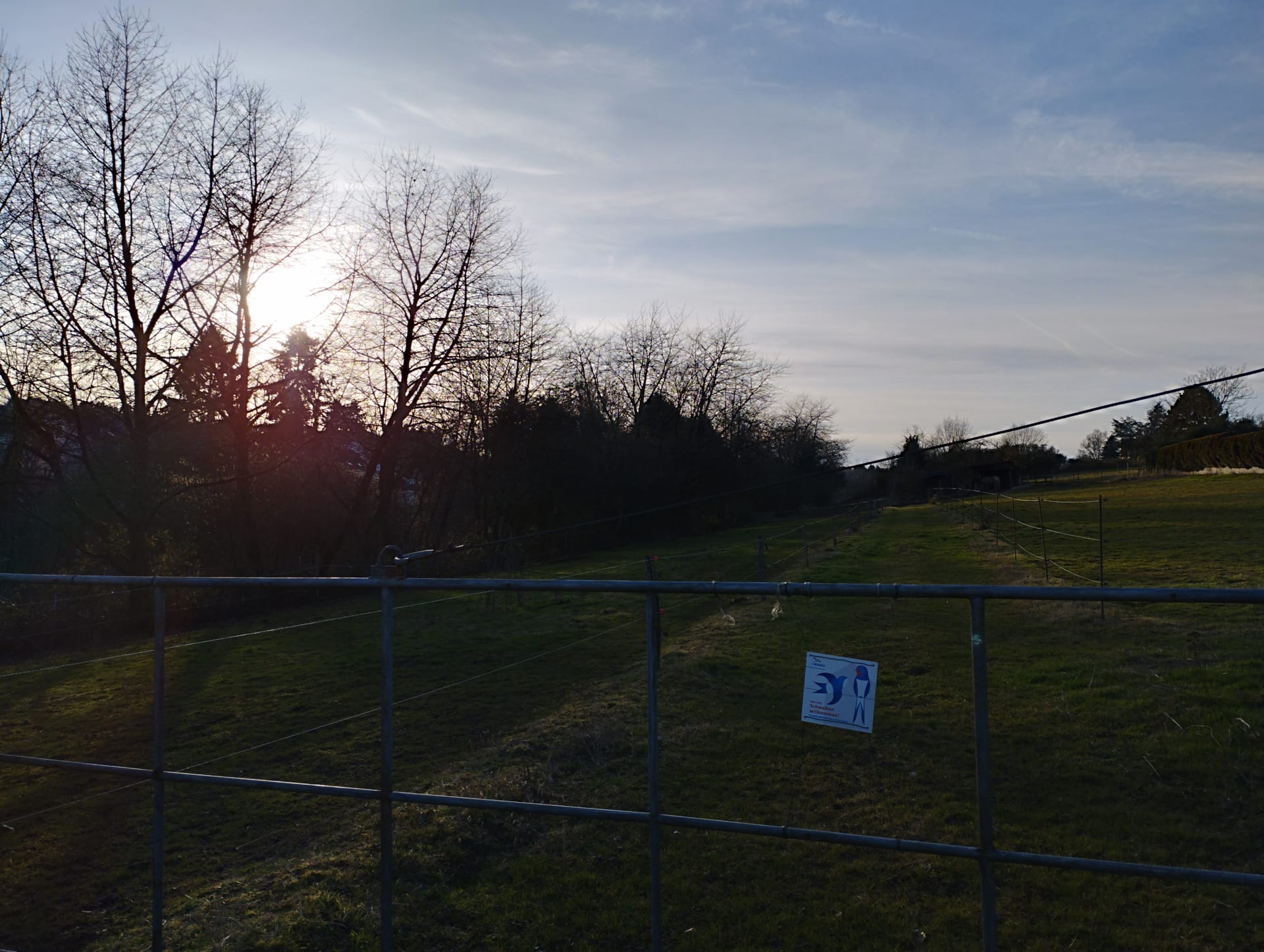


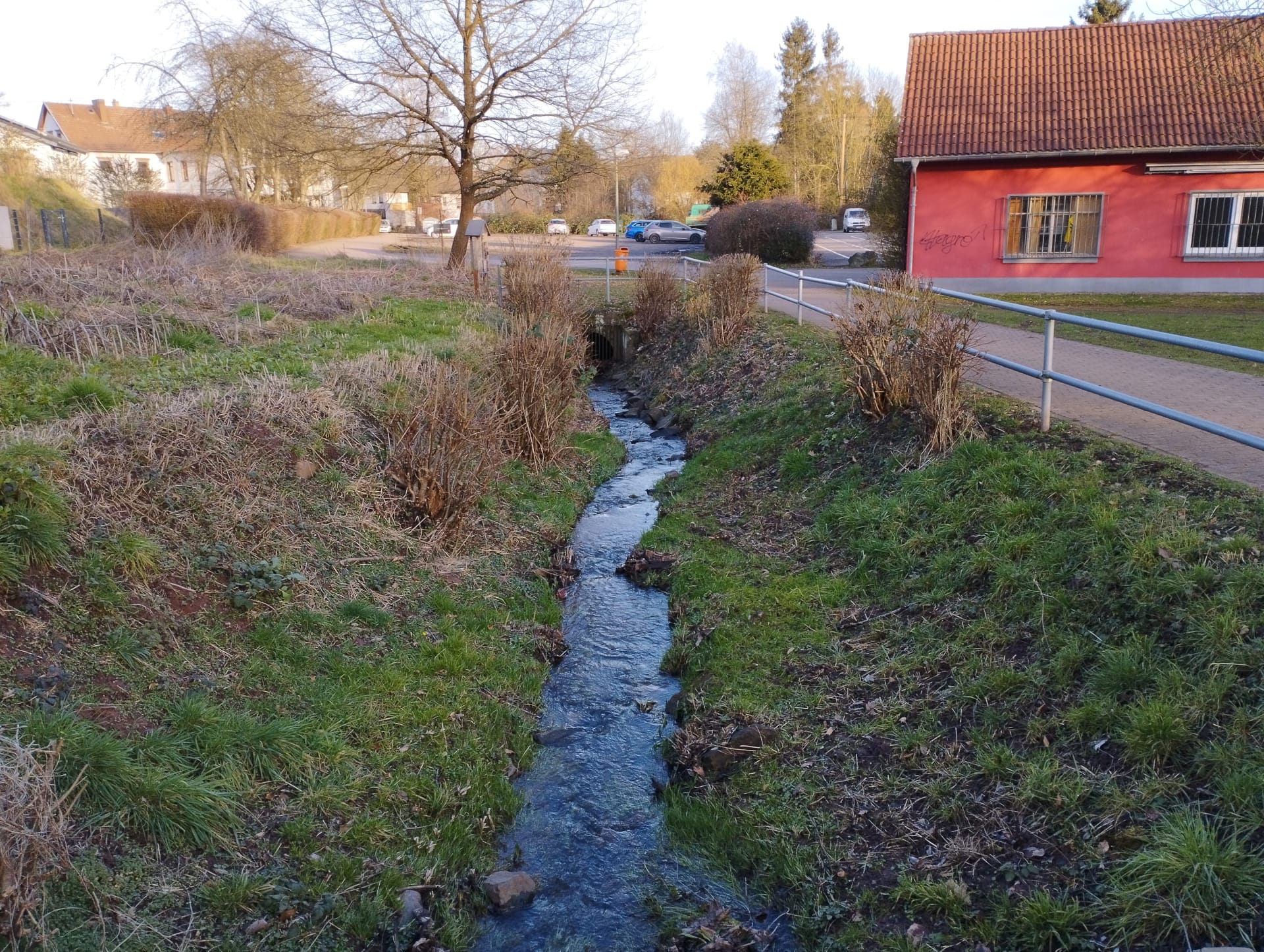
But there are also good aspects of the Redmi Note 11 main camera. The autofocus focuses quickly and precisely, the colour reproduction looks natural, and the level of detail is reasonably high for the price range.
One should not have too high expectations regarding capture quality under poor lighting conditions. The level of detail is reduced, blurriness increases and color intensity visibly decreases at the same time.






Unfortunately, night mode does not help. Although image dynamics are slightly increased by brightening the dark image portions, detail reproduction does not improve as a result.


Ultra-wide-angle
Taking the price range into account, the ultra-wide-angle camera delivers acceptable shots. There are definitely better wide-angle cameras in terms of image sharpness and level of detail. When looking at the shots on a large screen, everything seems a bit lacking in detail and mushy. For small screens, the shots are perfectly adequate.


A major advantage over the main camera is the image dynamics, which are much more consistent. Unpleasant distortions at the edges do not occur.
Other sensors and recording functions
The macro camera can be ignored. It is not capable of producing detailed macro shots. Rather, the camera is a filler to make the spec sheet look better.
Bokeh or portrait shots turn out reasonably well. People and objects are mostly cleanly separated from the background. The blur effect is pleasantly soft. The blur effect can be further adjusted via image editing.

The Redmi Note 11 records videos at a maximum of 1920 x 1080 pixels at 30 frames per second. Footage is stabilised using electronic image stabilisation (EIS). A continuous switch to the wide-angle camera does not work. The video quality does not redeem the main camera's shortcomings.
These and other recordings in full resolution are available for download here.
Redmi Note 11: Connectivity
Mobile network
The Snapdragon 680's X11 LTE modem supports the mobile network frequencies common here, VoLTE and VoWiFi. The connection to the mobile network is stable and calls are possible with good voice quality. The SIM card slot can be populated with two nano-SIM cards. The option to expand storage is not lost through the use of dual SIM.
Wi-Fi and Bluetooth
Over Wi-Fi, the Redmi Note 11 supports common IEEE-802.11 standards up to 802.11ac. It does not yet support WiFi 6 – it is a budget smartphone after all. The transfer rate is reasonably high in both directions and the connection is very stable. Bluetooth is available in version 5.0.
GPS and sensors
There is nothing to criticise when it comes to positioning. The Redmi Note 11 navigates reliably from A to B. To this end, the smartphone supports communication via GPS and the other satellite navigation systems GLONASS, BDS and Galileo. The Redmi Note 11 also provides reliable navigation on foot in cities and the countryside. An e-compass makes this possible.
Otherwise, in addition to the conventional smartphone sensors, there is an IR blaster. TV sets with infrared receivers can be controlled this way. The appropriate Mi Remote app is already pre-installed. NFC for mobile payments (e.g. Google Pay) depends on the respective country version. The Redmi Note 11 tested here does not have NFC. However, the German version can be expected to include NFC.
Fingerprint scanner
Xiaomi has integrated this into the power button on the right. Unlocking the smartphone with it works well and quickly.
Audio
The stereo speaker makes a positive impression. Music sounds from the top and bottom of the smartphone. The volume is high, and the sound is pleasantly balanced. There is no annoying distortion or shrill tones, even at maximum volume.
Xiaomi has also included a 3.5 mm headphone jack. Headphones connected via Bluetooth benefit from aptX, provided the headphones support the high-resolution audio codec. Connecting headphones via USB-C is also possible.
Redmi Note 11: Battery
The battery of the Redmi Note 11 scores positively. It has a generous capacity of 5000 mAh and even supports 33 watt fast charging.
The 90 Hz display is not a dealbreaker for long battery life. The average user who uses their smartphone for calls, WhatsApp, web browsing and social media can easily achieve two days of runtime. However, even intensive smartphone users will certainly get through the day. A full charge took approximately 65 minutes in testing.
Our verdict
The smartphone market is fast-paced, and manufacturers attempt to outdo each other in price and features almost weekly. Today it is Xiaomi that has introduced the first smartphone with a 90 Hz AMOLED display in the under €200 price bracket with the Redmi Note 11.
The display is the decisive factor giving the Redmi Note 11 its justification for existing, as otherwise the budget smartphone offers few new features compared to its predecessor. In fact, it is even a slight performance downgrade, considering the somewhat weaker Qualcomm Snapdragon 680, which ranks below the Snapdragon 678 of the Redmi Note 10 in benchmark tests. In everyday use, however, this has no significant impact. There, the Redmi Note 11 presents itself as pleasantly fast, even if not every mobile game runs smoothly at high detail levels.
There is room for improvement in the main camera's image quality. Xiaomi has not yet fully mastered the 50 MP sensor in terms of software. Images taken in bright sunlight are sometimes very dark and visibly lack dynamics. It remains to be seen how much Xiaomi will improve this with a software update.
Battery life is all the more positive. Despite the 90 Hz display, average users get more than 2 days of runtime. On top of that, there is 33W fast charging that fully charges the smartphone in 65 minutes.
Buying a Redmi Note 11? Anyone looking for a well-equipped smartphone that offers excellent value for money, particularly in terms of the display, connectivity and battery, will be very well served by the Redmi Note 11.
Specifications
Processor and memory
- CPU
- Qualcomm Snapdragon 680
- GPU
- Adreno 610
- Storage
- 4+64GB, 4+128GB, 6+128GB (LPDDR4X + UFS2.2)
- Storage expansion
- Yes
Display
- Display size
- 6.43 inches
- Display resolution
- 2400 x 1080 pixels
- Display refresh rate
- 90 Hz
- Display type
- AMOLED
- Screen protector
- Corning Gorilla Glass 3
- Multitouch
- 10 fingers
Cameras
- Main camera
- 50 MP Samsung S5KJN1 (f/1.8 aperture)
- Ultra-wide-angle camera
- 8 MP Sony IMX355 (120° - f/2.2 aperture)
- Macro camera
- 2 MP (f/2.4 aperture)
- Depth camera
- 2 MP (f/2.4 aperture)
- Front camera
- 13 MP (f/2.4 aperture)
Mains
- Dual SIM
- Yes
- SIM size
- Nano SIM
- eSIM
- No
- 2G GSM
- 850 900 1800 1900MHz
- 3G WCDMA
- 1/2/4/5/8
- 4G LTE FDD
- 1/2/3/4/5/7/8/20/28
- 4G LTE TDD
- 38/40/41
Wireless
- Wi-Fi
- 802.11 a/b/g/n/ac
- Bluetooth
- 5.0
- GPS
- Yes
- NFC
- Yes (EU version)
Sensors
- *Ambient light sensor
- *Accelerometer
- *Proximity sensor
- *E-compass
- *Gyroscope
- *Fingerprint sensor
- *IR transmitter
Battery
- Battery
- 5,000 mAh
- Fast charging function
- 33 watts
- Qi charging
- No
Other
- Operating system
- Android 11 (MIUI 13)
- Audio
- 3.5mm headphone jack / stereo loudspeaker
- Connection
- USB-C
- Size
- 159.87 x 73.87 x 8.09 mm
- Weight
- 179g
Price comparison
| Store | Price | Link |
|---|---|---|
| Amazon | 129,07 € | Go to store |
Comments (4)
Great review, thanks! For me, the most interesting smartphone in the series. The display and software are the reasons I would say I'll buy the Redmi Note 11 for my mum. Cameras haven't been a reason to buy for a long time anyway. Under €200, it is all a bit of a mishmash.
How can I tell if it is the version with NFC?
Hi Manni, most shops state this in the listing. For example, with Goboo you can get the Redmi Note 11 with NFC. It also says so in the product page title.
You can also see the difference in the model number. The model with NFC has the 2201117TY. Our test device without NFC has the 2201117TG. The model 2201117TI should also be without NFC.
Thanks again, ordered from Goboo and received the version with NFC. According to the settings, it is the 2201117TY. The smartphone arrived after 4 days. So far, I am satisfied. 🙂