Contents
Technical specifications
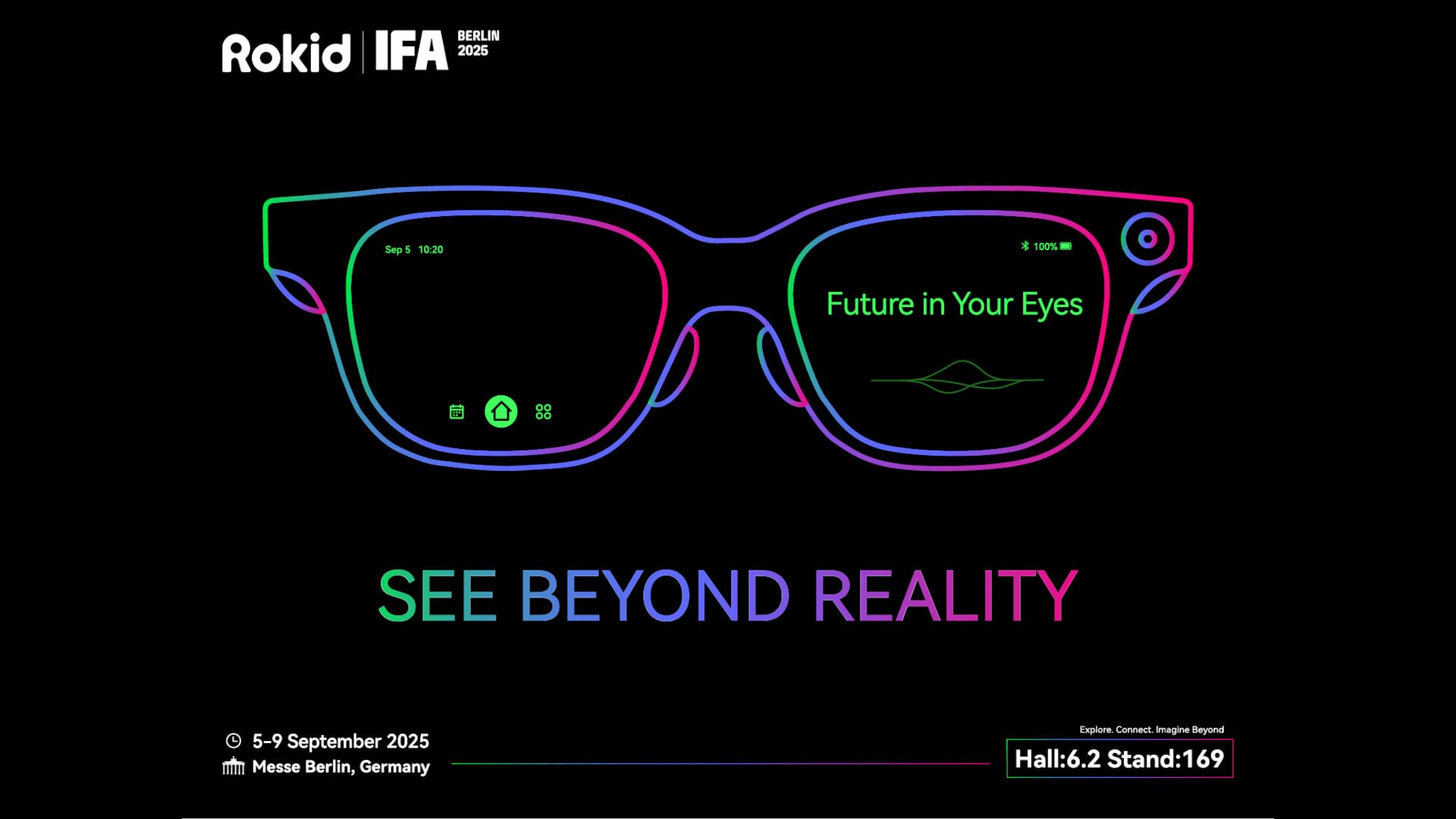
At just 49 grams, the Rokid Glasses are barely heavier than a normal pair of sunglasses. They are not aimed at elaborate mixed-reality experiences but at practical functions for everyday life and work. While the Ray Ban Meta relies on camera and voice control and offers no display, Rokid displays information directly in the field of view. This is reminiscent of Google's early experiments with the 2013 Google Glass, which failed due to short battery life, weak functions and privacy issues.
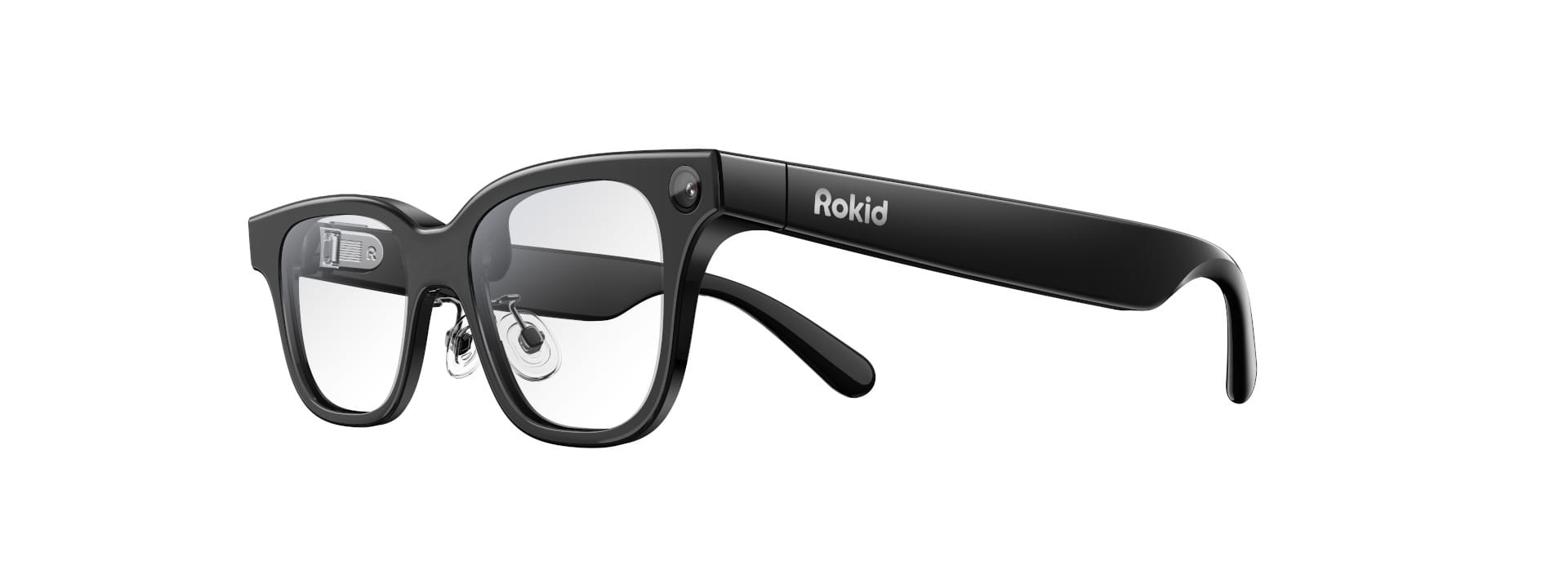
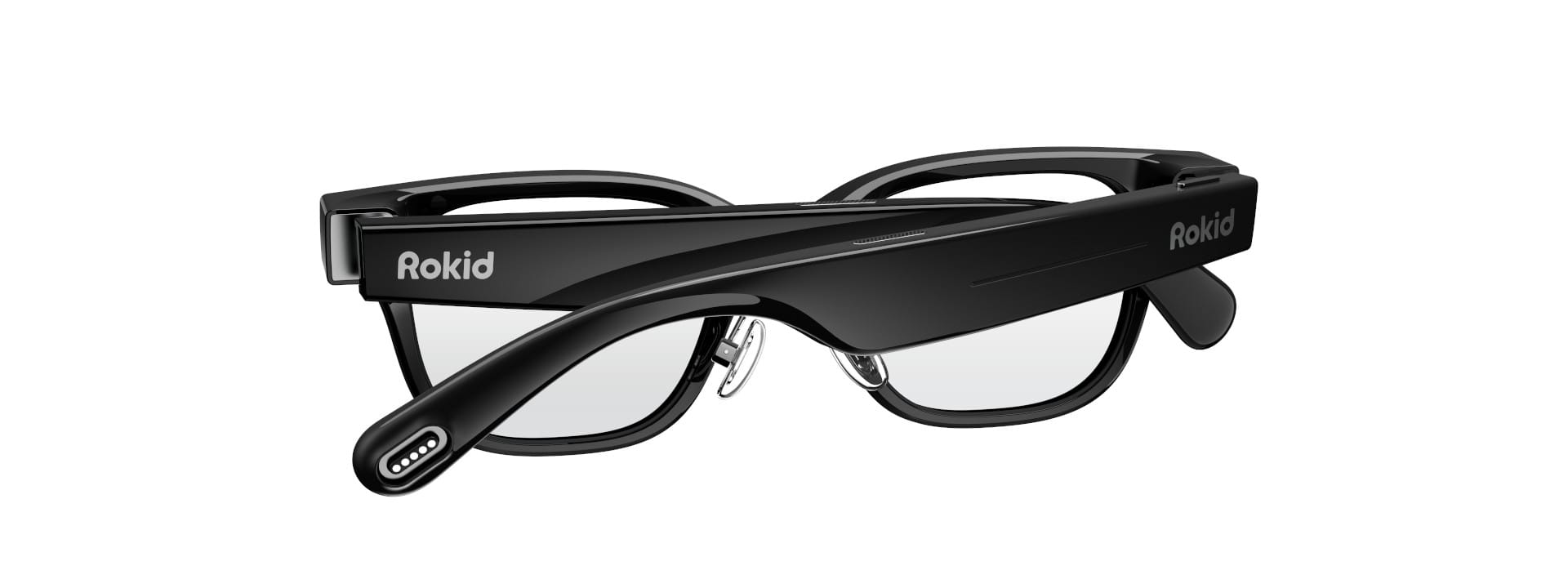
Inside the Rokid Glasses works Qualcomm's Snapdragon AR1 chip, supplemented by 2 GB RAM and 32 GB storage. The housing consists of a magnesium-aluminium alloy with TR90 temples and is protected against splashes according to IPX4. For spectacle wearers, magnetically attachable corrective lenses can be used.
The display is based on Micro LED waveguide technology. 480 × 398 pixels are available per eye, with a maximum brightness of 1,500 nits. The field of view is 23 degrees, the virtual image distance over six meters.
Camera and audio
A 12-megapixel camera (Sony IMX681) with a 109-degree field of view is integrated directly into the frame. In addition to photos, it supports video recording at up to 60 frames per second. Electronic image stabilisation, HDR processing and a visible status light are included.
For audio playback, Rokid has incorporated two directional speakers. A four-microphone array with AI-powered noise suppression is used for voice commands and calls.
AI features
The Rokid Glasses are designed primarily to serve as a smart assistant in everyday life. The integrated features include:
- Real-time translation with subtitles
- Object detection and scene analysis
- Live transcription of conversations
- Teleprompter mode for presentations
- HUD navigation with route information overlay
The glasses are controlled via voice commands, a touchpad on the temple and side buttons.
Power supply and connectivity
The glasses themselves have a 210 mAh battery. A charging case allows up to ten additional full charges and supports fast charging. For connectivity, Wi-Fi 6 and Bluetooth 5.3 are available.
The Kickstarter campaign runs parallel to the IFA, where the glasses can be tried out from 5 to 9 September 2025.
Source: Rokid / Kickstarter
Comments