Contents
Cat litter meets smart home
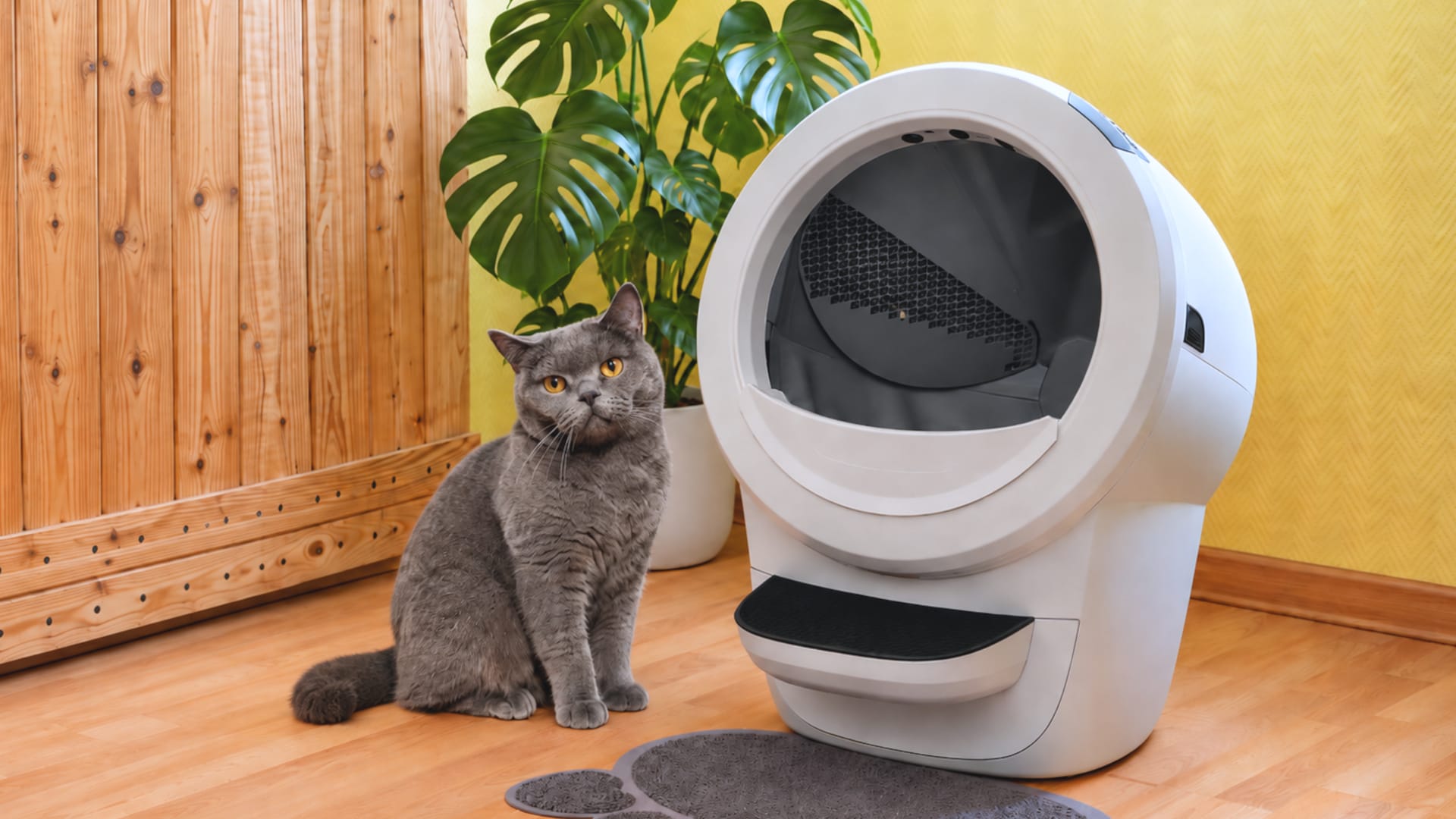
There are now several automatic litter boxes on the market. The Litter-Robot 4 from Whisker is among the more technically advanced models. Rather than dragging waste through the litter with a rake, the entire drum rotates after the cat has used it. Clean litter is sifted through, while clumps and faeces are automatically removed from the toilet area.
There are also sensors, Wi-Fi, an app, weight measurement and various automatic functions. Quite a lot of technology for something that has so far also worked with a plastic tub and a scoop.
I had the opportunity to try out the Litter-Robot 4 for more than two months. It quickly became clear, though, that the technology is only half the story. The other half is the cat, which can certainly have a mind of its own when it comes to this kind of thing.

Large and hard to miss
Before getting into how it works, bear in mind that the Litter-Robot 4 is fairly large, measuring around 56 centimetres wide, 69 centimetres deep and just under 75 centimetres high, and takes up quite a bit of space.
It also needs a power outlet and should ideally be placed on a firm, level surface. So be sure to measure the intended space before buying.
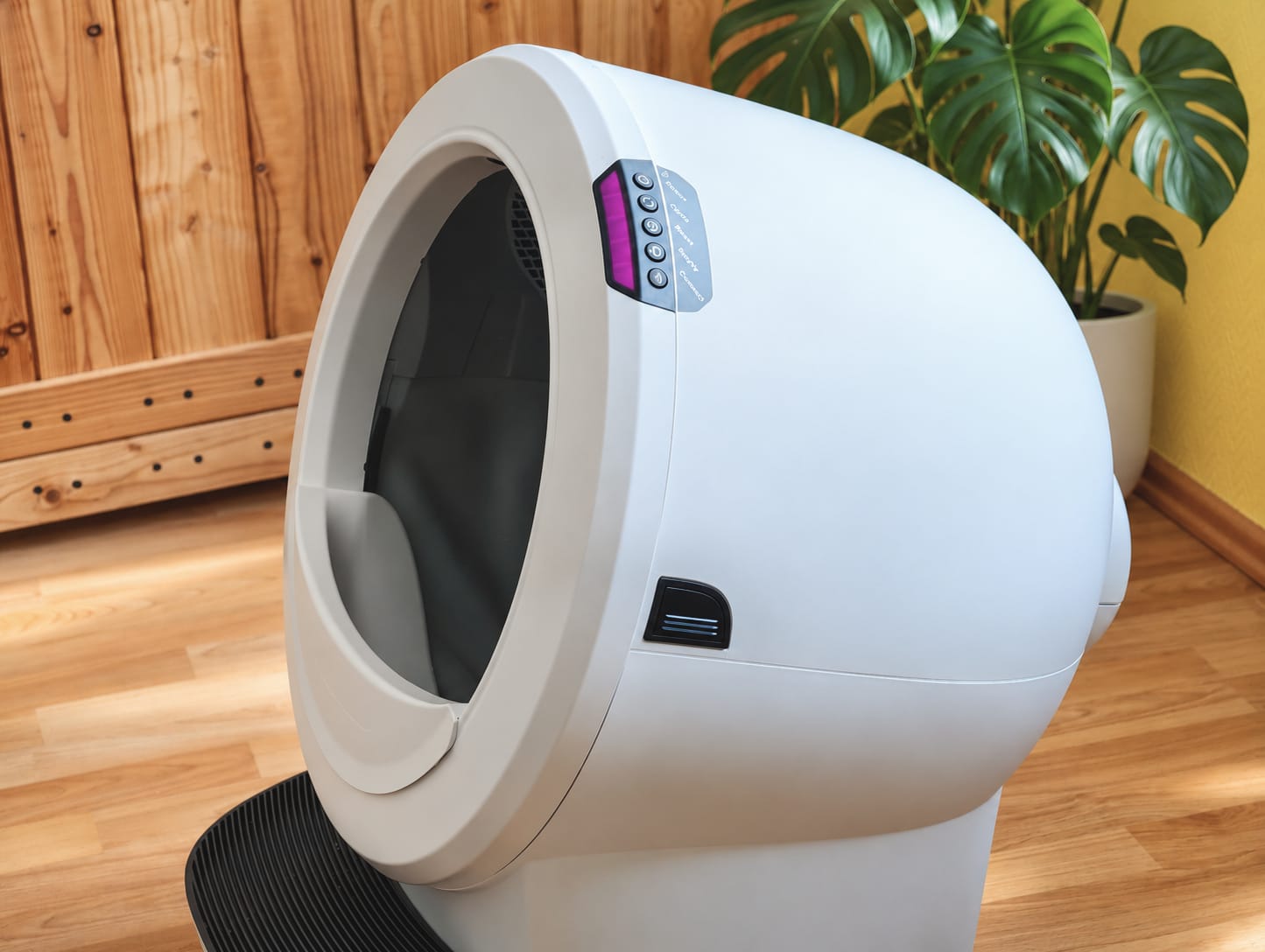
In my opinion, Whisker has nevertheless done a pretty good job with the design. The round opening and largely enclosed housing make the Litter-Robot look more like a modern household appliance than an oversized litter tray.
The control buttons are conveniently located on the top. They can be used to start cleaning cycles, empty all the litter, and control Wi-Fi and other functions.
There isn't much to assemble. The Litter-Robot arrives almost ready to use straight out of the box. Add litter, connect it to power and optionally pair it with the Whisker app, and you're ready to go.
The bigger problem, however, is the cat.

Malu was curious, but not convinced
My test cat Malu is an eight-year-old British Shorthair and an indoor cat. Before the Litter-Robot, she had only ever used a conventional litter tray.
At first, things looked promising. Malu was curious, checked out the new device, and actually used it once or twice at the beginning. At that point, it looked as though the transition might be surprisingly straightforward.
In retrospect, that was probably more curiosity than genuine acceptance.
Whenever she had the choice, Malu still preferred her familiar litter tray. So I left both toilets in place side by side for several weeks, hoping the Litter-Robot would become more interesting over time.
That did not happen, however.
After a few weeks, we finally tried removing the traditional litter tray altogether. At some point, a decision has to be made: after all, a self-cleaning litter tray makes little sense if the regular one still has to stay beside it permanently.
That did not work either.
After two days, it was clear that Malu would not accept the Litter-Robot as her only toilet. The traditional litter tray was brought back, and she used it again almost immediately.
That brought the Litter-Robot 4 experiment with Malu to an end.
This is also one of the most important findings of this test for me, because an automatic litter box that works well technically is of little use if your cat simply refuses to use it.
A second try with Balu and Nala
The test could really have ended there. Instead, the Litter-Robot went on to friends who have two British Shorthair cats.
Tomcat Balu and cat Nala, live there, and the difference from Malu could hardly have been greater.
While Malu was still wary of the new litter box after several weeks, Balu and Nala were interested from practically the first minute. Both climbed inside, inspected the drum and immediately accepted the Litter-Robot as a litter box.
No weeks-long acclimation period, no coaxing, and no reverting to the familiar model.
This made it quite clear just how individual a cat’s acceptance of an automatic litter box can be. Even with cats of the same breed, it is almost impossible to predict how they will react.
Malu wanted her usual litter box back. Balu and Nala, on the other hand, had no problem with the Litter-Robot at all.
Anyone considering a purchase should therefore be sure to factor in a possible adjustment period and also be prepared for it not to work at all in the worst case.

How automatic cleaning works
When a cat has done its business and left the Litter-Robot, nothing happens at first. This is intentional, as the litter needs some time for the urine to clump properly.
After the set waiting time, the drum slowly starts to rotate. The clean litter passes through a sieve, separating it from larger clumps and faeces. The waste falls into the lower part of the device, after which the drum rotates back and the clean litter returns to its original place.
The principle is simple, but it works remarkably reliably.
During the test, the mechanism never jammed, nor did a cleaning cycle fail to work altogether.
However, choosing the right litter is important. The Litter-Robot is designed for clumping litter. Non-clumping varieties and coarse wood pellets, for example, are not suitable for its sifting system.
When filling it, more is not automatically better. There is a mark inside indicating the intended fill level. If you add too much, excess clean litter may be needlessly discarded during the next cleaning cycle.

Surprisingly quiet and low-odor
Before the test, I expected a motorised litter box to be quite disruptive, especially at night. The opposite is true, as the motor itself runs very quietly. What you mainly hear is the litter trickling through the sieve as it rotates.
Unless the Litter-Robot is right next to the bed, the cleaning process is unlikely to be much of a disturbance in most homes.
The movement itself is also slow. Several sensors monitor the entry area and the interior. If a cat approaches or enters the Litter-Robot during a cycle, the movement stops.
During the first few days, this is quite useful. After all, a moving cat litter tray is interesting not only to people. Malu also watched the drum curiously at first, although she later showed little interest in its actual purpose.
The Litter-Robot 4 does a good job of keeping unpleasant odors under control. Waste and urine clumps are removed from the clean litter after a short time, while an activated carbon filter also helps prevent odors from forming.
It does not eliminate odours completely, but in everyday use the Litter-Robot performs significantly better than a conventional open litter tray.
Huge on the outside, surprisingly cramped inside
One aspect increasingly bothered me during the test. As large as the Litter-Robot is on the outside, the actual space for the cat inside is quite limited.
Although the round opening is generously sized, the actual spreading area is significantly smaller due to the drum design.
There was still enough room for Malu. Even so, it quickly gets cramped when turning around or scratching extensively.
Balu is also a somewhat stockier tomcat, and bears out this impression. He manages with the Litter-Robot, but the litter box does not seem particularly spacious for him.
That is why I would recommend the Litter-Robot 4 for small to medium-sized cats.
Large cats, and especially hefty tomcats who turn around several times before doing their business or like to scratch around extensively, have relatively little room to move.
That is somewhat paradoxical: on the one hand, you need quite a lot of space in your home, but that does not automatically mean the cat gets a lot of space.
Something went wrong once
The brief period of using Malu did not go entirely smoothly either.
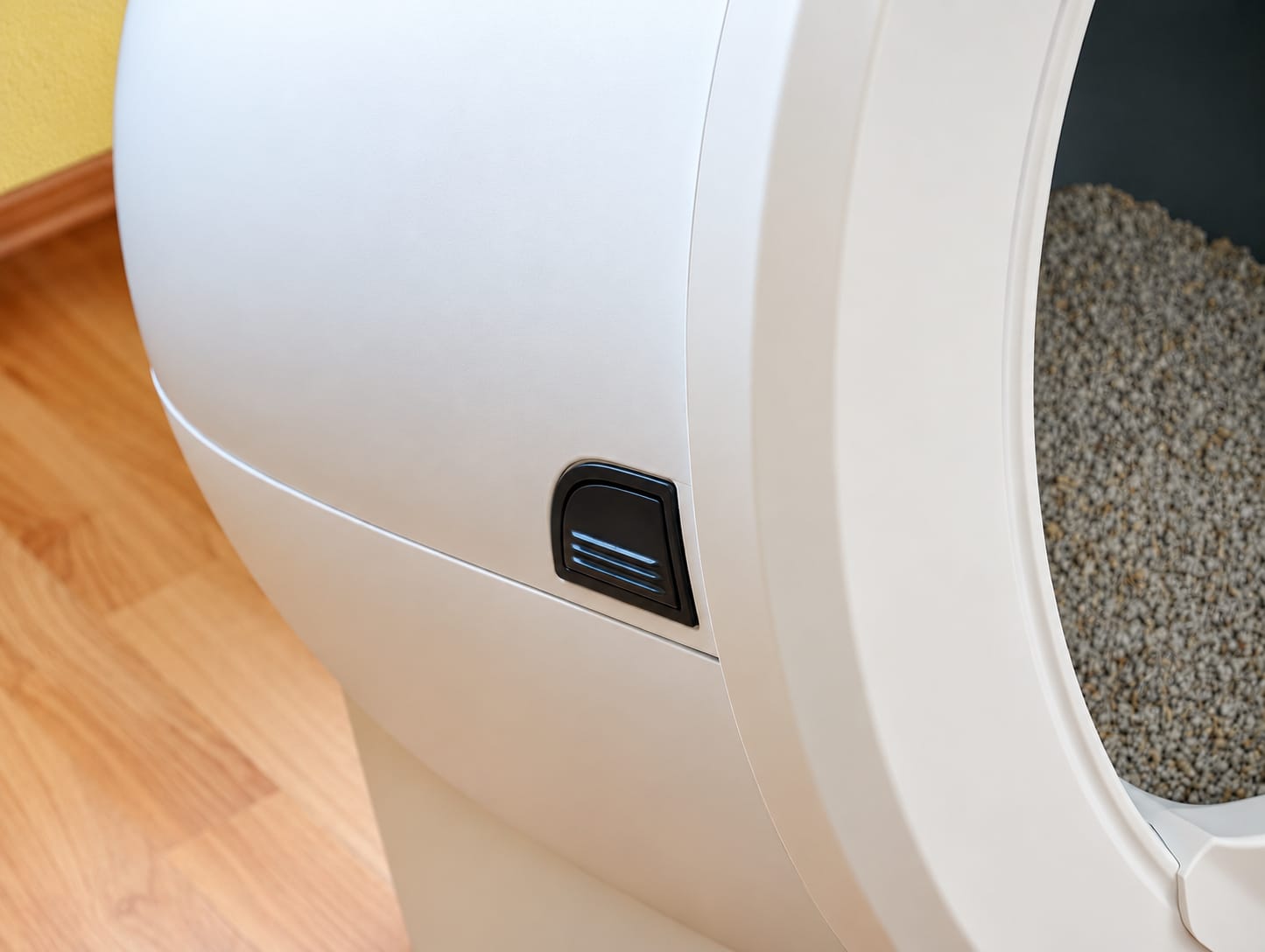
During one of her first attempts, she urinated in such an awkward position at the front that some of the liquid ran past the entrance. Some of it got between the footboard and the housing and eventually collected further down inside the device.
With a regular litter box, a quick wipe would have been enough. With the Litter-Robot, it turned into a somewhat more involved cleaning job.
On the plus side, the device can be taken apart quite extensively. The drum can be removed from the base, and other casing parts can also be detached. This gave me access to the affected areas, allowing me to clean everything thoroughly.
If your cat likes to urinate right at the front or with its rear end facing the entrance, this is worth bearing in mind. Whisker offers various guards and other accessories for the entrance area that are intended to help contain such situations.
Even apart from mishaps like these, the Litter-Robot is not entirely maintenance-free. Litter dust, hair and small residues accumulate over time, so the rubber coating inside and the sensor areas in particular should be cleaned occasionally. This makes a thorough clean a little more involved than with a simple plastic tray, but it is needed much less often.

Whisker app with surprisingly useful data
Of course, a smart litter box also needs an app, which Whisker offers for Android and iOS.
The home screen shows, among other things, how much litter is still in the device, when the litter box was last used and when it needs to be emptied.
The Litter-Robot also tracks the cat’s weight. This can be particularly useful with regular use, since changes can be monitored over a longer period. It certainly does not replace a vet, but noticeable weight fluctuations can at least provide an additional indication.
I also find the usage history useful. For example, if you have just one cat at home, you can quickly see whether and how regularly it has used the litter box.
When there are several cats, the SmartScale feature tries to distinguish between them based on their weight. Naturally, this works best when the cats differ significantly in weight.
The app also lets you set how long the device waits after a visit to the litter box before starting the cleaning cycle. Depending on the litter used, a slightly longer wait can be useful to give urine time to clump properly.
Night light, sleep mode and manual cleaning, as well as notifications, are also part of the feature set.
Our verdict
The Whisker Litter-Robot 4 impressed me technically. Nevertheless, it failed as a litter box for Malu.
The automatic cleaning works well, the motor is quiet, and the Whisker app provides useful information about usage, fill level, and weight. Odor control is also a clear advantage over a traditional open litter box.
None of this helped Malu.
After one or two curious attempts, she lost interest and continued to prefer her usual litter box. Even several weeks with both litter boxes available made no difference. When I finally removed the regular litter box, it was clear after two days that the experiment had to end.
The subsequent trial with Balu and Nala showed the other side of things. Both British Shorthairs accepted the Litter-Robot almost immediately and use it without any problems.
For me, this is the most important takeaway from the entire test: the Litter-Robot 4 can work exceptionally well, but only if the cat accepts it.
The high price, large footprint and surprisingly small interior for its external dimensions are also drawbacks. I would therefore only recommend it with reservations, especially for very large cats and hefty tomcats.
However, if you have an easygoing small or medium-sized cat, or want to spend as little time as possible on daily cleaning in a multi-cat household, this is one of the most convenient solutions to this very everyday problem.
Specifications
General
- Manufacturer
- Whisker
- Model
- Litter-Robot 4
- Product type
- Automatic self-cleaning litter box
- Colors
- White, Black
- Suitable for
- Up to 4 cats
- Minimum cat weight
- approx. 1.4 kg
Dimensions and weight
- Width
- 56 cm
- Depth
- 68.6 cm
- Height
- approx. 75 cm
- Entry opening
- 40 x 40 cm
- Weight
- 10.9 kg
- Power supply
- 15 V DC
Cleaning
- Cleaning system
- Rotating sifting system
- Suitable litter
- Clumping litter
- Cleaning delay
- 3, 5, 7, 15, or 30 minutes
- Odour filter
- Activated carbon filter
- Automatic waste detection
- Yes
- Automatic debris level detection
- Yes
Sensors
- Cat detection
- Laser and weight sensors
- Weight measurement
- Yes
- Waste fill-level detection
- Yes
- Safety stop when a cat is detected
- Yes
Connectivity
- Wi-Fi
- Yes
- App
- Whisker
- Compatibility
- Android and iOS
- Usage history
- Yes
- Weight history
- Yes
- Notifications
- Yes
- Remote control of cleaning cycles
- Yes
More features
- Night light
- Yes
- Sleep mode
- Yes
- Multi-cat profiles
- Yes
- Replaceable activated carbon filter
- Yes
- Optional accessories
- LitterHopper, Ramp, Shield, Carpet Tray
- Warranty
- 2 years
- Test period
- 90-day returns from the manufacturer
Price comparison
| Store | Price | Link |
|---|---|---|
| Amazon | 799,00 € | Go to store |

Comments