Contents
First impressions - Xiaomi Mi Mix
What’s included
The innovative Xiaomi Mi Mix is delivered in an inconspicuous, black cardboard box, on which only the words "MIX DESIGNED BY MI" appear. But it's not just the smartphone that is included; the scope of delivery also includes a leather back cover, a fast charger with Type-A plug, a USB Type-C cable, a SIM pin to open the SIM tray, and a Chinese user manual.

Design and build quality
In terms of design, the Mi Mix has no rival – or so one might think – but that is not entirely true. Just a few years ago, Sharp released concept smartphones similar to the Aquos Crystal and Aquos Xx models, which come very close to this design. The bezel-less Sharp models failed to gain traction, and otherwise, these devices were mainly intended for the Japanese market.
Full-ceramic housing with pros and cons
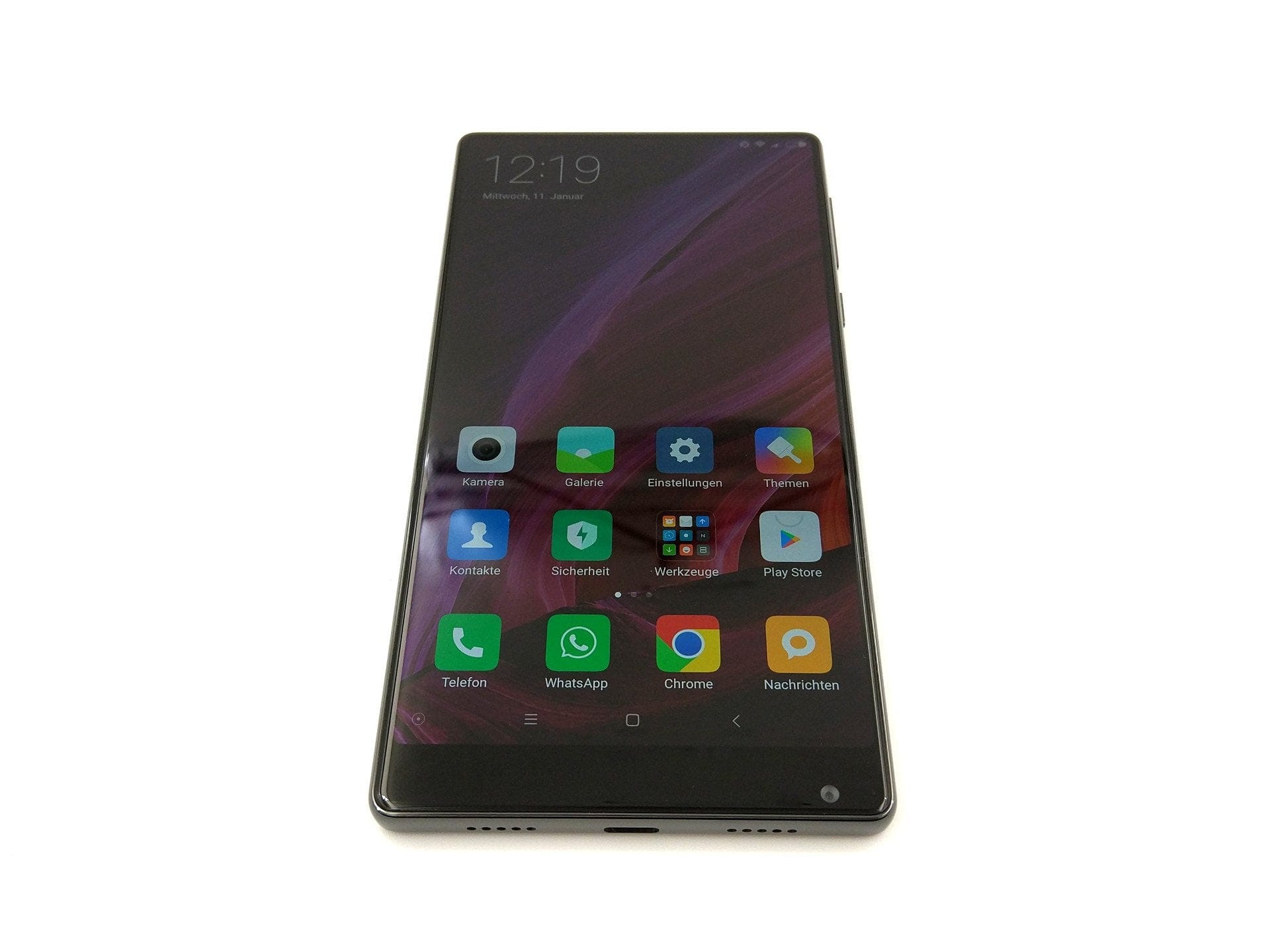
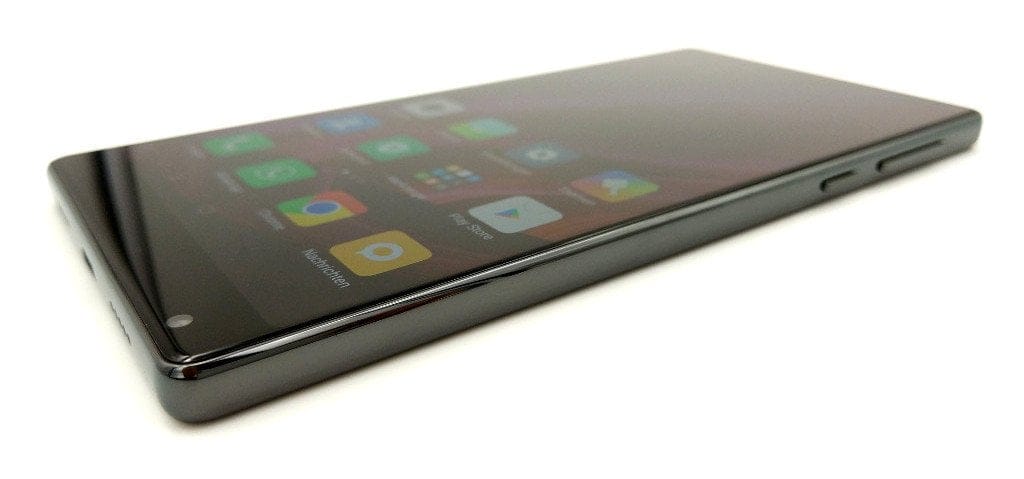
The bezel-less design of the Xiaomi Mi Mix receives far greater attention. Not only does the front design surprise, but the rest of the smartphone casing is also a real eye-catcher. In collaboration with French designer Philippe Starck, a smartphone casing has been created in which really all components, including the frame and control buttons, are made of ceramic. In particular, higher scratch and break resistance are characteristics of ceramic. However, as individual drop tests on YouTube show, ceramic is not a perfect solution either. The frame is especially susceptible to breakage.
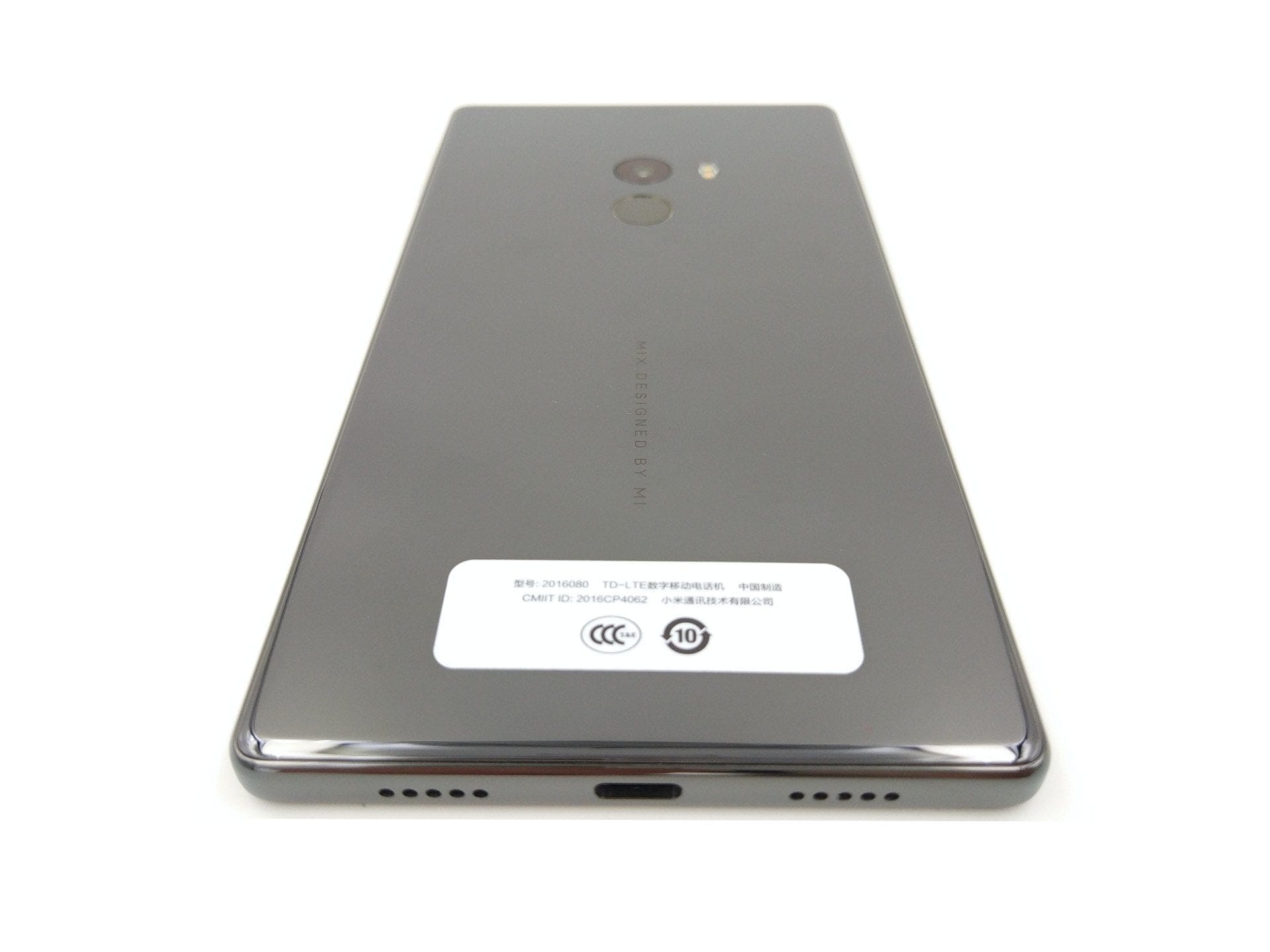
It is also frequently criticised that the smartphone feels very slippery in the hand. While the slippery feeling is quite understandable, it cannot really be regarded as a major disadvantage of the device. Smartphones with plastic backs perform at a similar level. Those who handle the device carefully will have nothing to fear.
Far more annoying is the susceptibility to fingerprints. After unboxing the smartphone and removing the protective film on the back, it took less than 5 seconds and the glossy back was covered with unsightly fingerprints. The included case provides a solution, but this hides the beautiful ceramic housing.
Connections and control buttons
On the bottom side, centrally located between the microphone and speaker grilles, is a USB Type-C port. A 3.5mm headphone jack is located on the opposite side. The SIM card slot is placed on the left side of the housing. Opposite it are the power button and a volume rocker. The user interface is operated exclusively via the display! A configurable notification LED, which lights up in various colours, is located centrally below the display.
Build quality of the smartphone and accessories
The build quality of the Xiaomi Mi Mix is unblemished. The entire smartphone is finished cleanly and without defects. The accessories included in the delivery also show no flaws and deliver the build quality typical of Xiaomi.
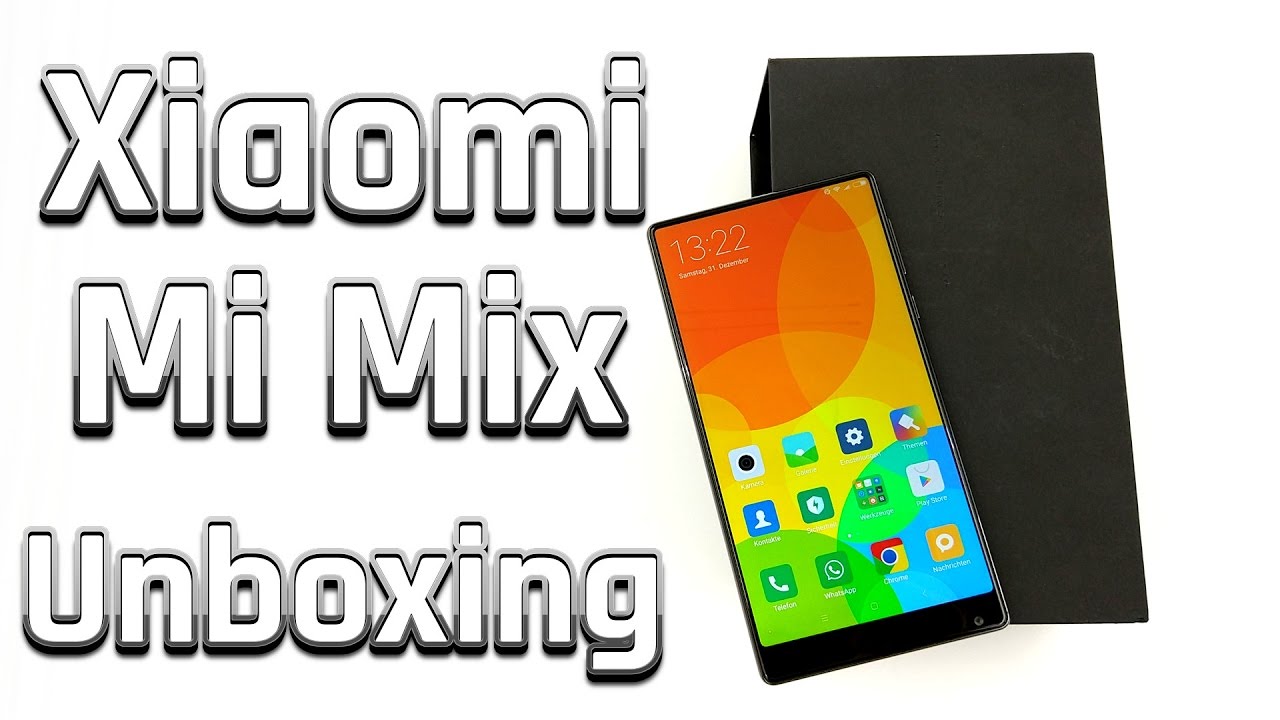 Play video on YouTube
Display and acoustics system
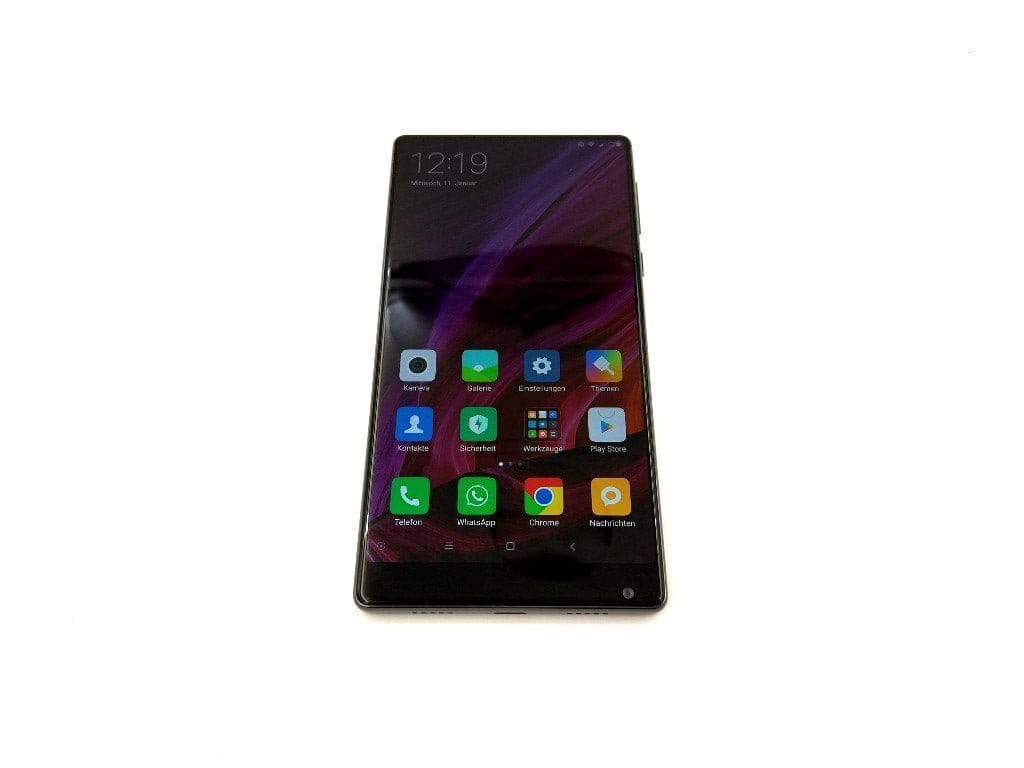
The almost bezel-less, 6.4-inch display stands out. Despite the very large display diagonal, the smartphone's dimensions are no larger than those of a 5.5-inch iPhone 7 Plus. The Xiaomi Mi Mix achieves a screen-to-body ratio of about 85 percent by eliminating the entire top area, including the earpiece. Xiaomi itself states a value of 91.3 percent, which is not entirely correct. The transition from display to housing edge is approximately 2 mm at the top, left and right. At the corners, the display is additionally rounded, which saves a lot of space and looks damn good.
Since a smartphone without a pinna would be pretty nonsensical, Xiaomi developed a piezoelectric ceramic acoustic system where sound is transmitted solely through the housing. This turns the entire Xiaomi Mi Mix housing into the 'pinna'.
The display itself has a resolution of 2,040 x 1,080 pixels, which corresponds to a rather unusual aspect ratio of 17:9. When playing video content in a 16:9 ratio, there are unsightly black bars on the left and right sides. Nevertheless, the display is convincing. With a pixel density of 362 PPI, the representation is razor-sharp. Colour reproduction appears lively and can be individually adjusted in the display settings. It cannot keep up with the maximum display brightness (500 cd/m²) of the Xiaomi Mi5S we tested a few weeks ago, but it is still above average. The same applies to the viewing angle stability.
Multitouch is supported with up to 10 simultaneous inputs. The touchscreen responded flawlessly and precisely throughout the entire test phase. Xiaomi remains silent on how well the display is protected by branded display glass (such as Corning). But even after more than two weeks of daily use without a screen protector, no scratches could be detected on the display.
Performance
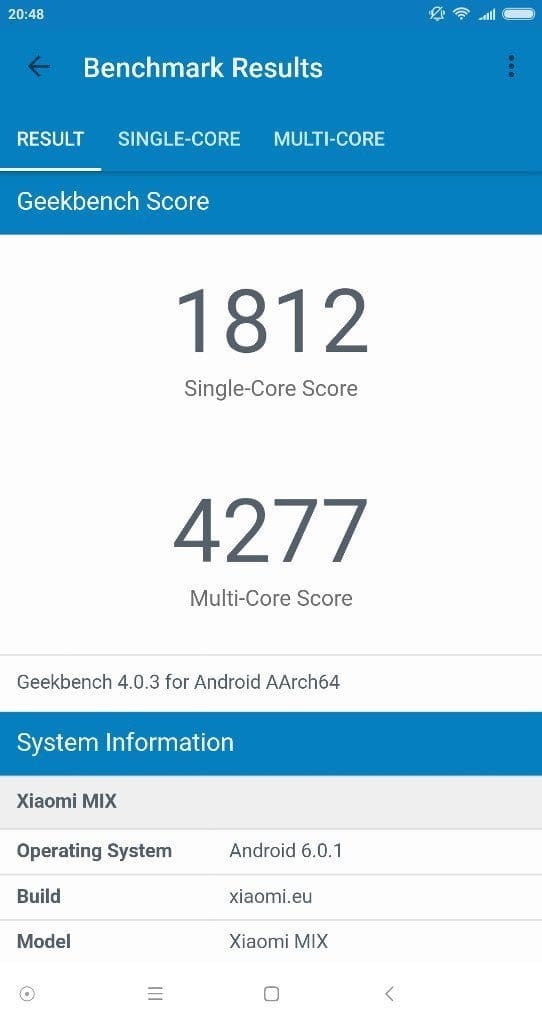
Like the recently released Xiaomi flagship models, the Mi Mix also relies on a Qualcomm Snapdragon 821 processor. The currently fastest available Qualcomm SoC offers 4 Kyro cores clocked at up to 2.35GHz, ensuring top-level performance. The memory configuration of our test unit consists of 4GB of RAM and 128GB of internal storage. No storage expansion is provided. Alternatively, the Xiaomi Mi Mix is also available with 6GB of RAM and 256GB of internal storage.
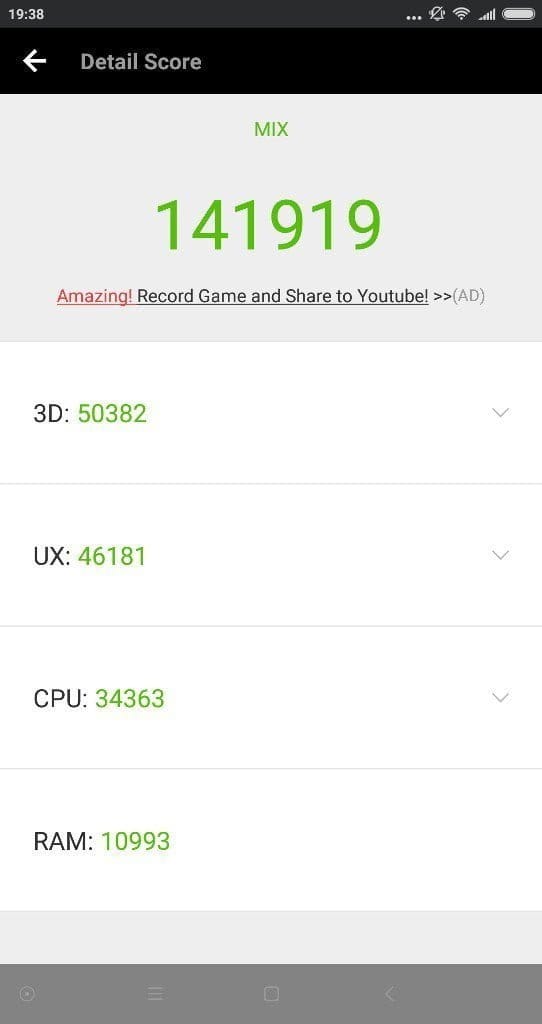
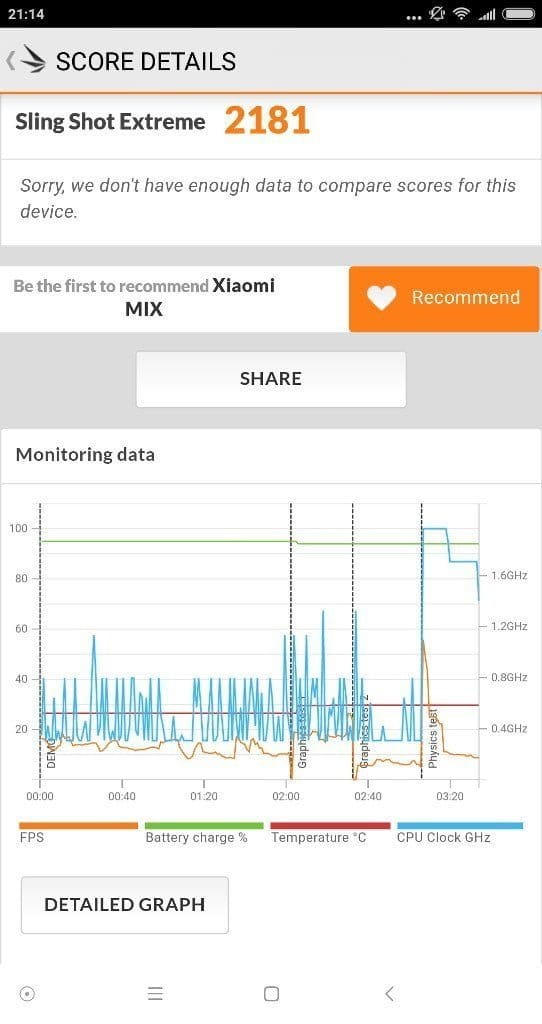
In terms of performance, the device leaves little to be desired. Apps start without delay and even if you "load up" the memory with simultaneously started apps, no significant performance drops are noticeable. With graphically demanding games, the SoC's (System on Chip) Adreno 530 graphics processor can also show its strengths, delivering smooth gameplay.
User interface
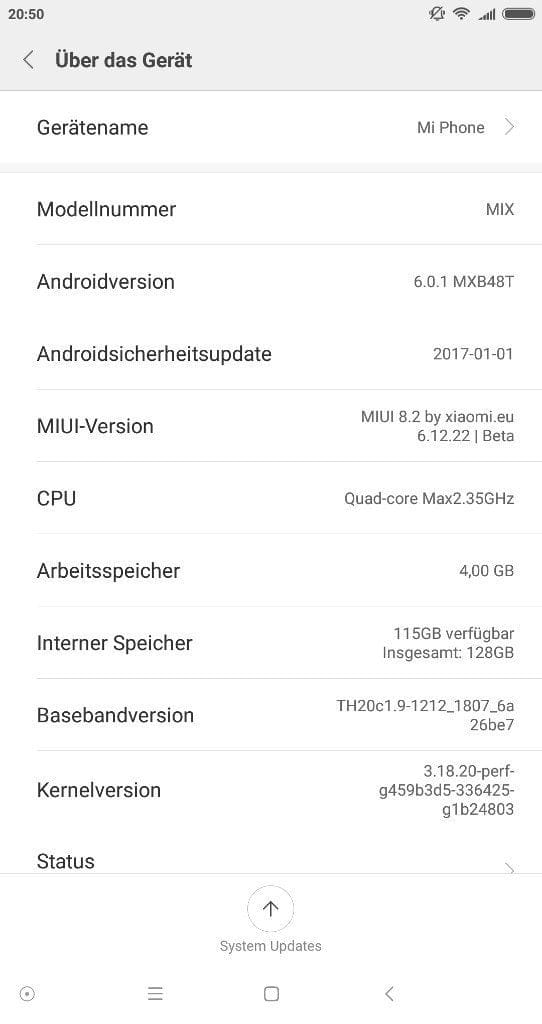
The Xiaomi Mi Mix runs MIUI 8 based on Android 6. An update to Android 7 Nougat is already planned and will be released later this year.
Shop ROM vs. China ROM
Those who buy the smartphone have either a so-called “shop ROM” or the official China ROM preinstalled. Unfortunately, a shop ROM was preinstalled on our test unit, which we received from Gearbest. For those who have little experience with flashing ROMs, the shop ROM compared to the China ROM also offers a German language option and has most Google services preinstalled. The biggest disadvantage of a shop ROM is the lack of update options and the risk of malware.
MIUI 8
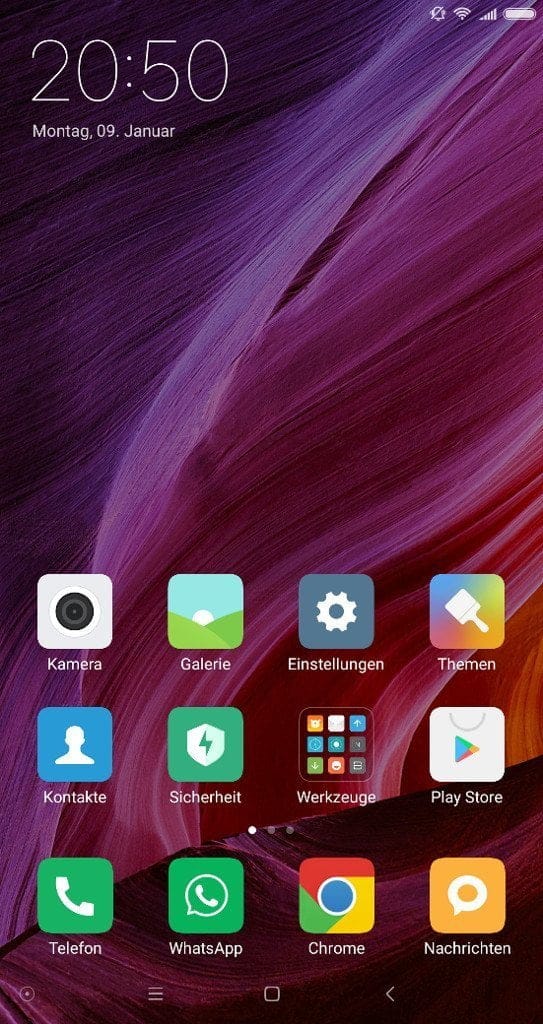
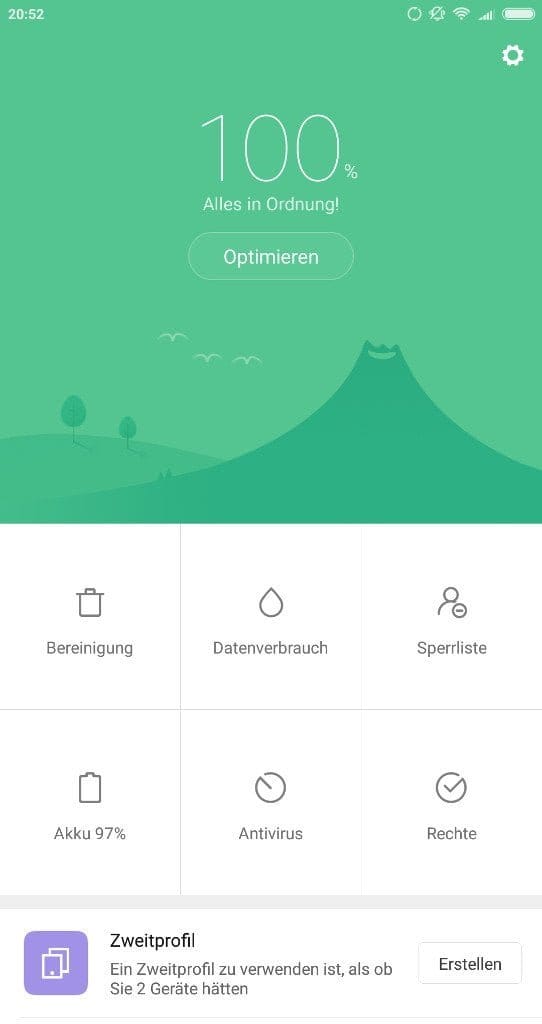
All Xiaomi smartphones come with the proprietary MIUI user interface. MIUI is far from pure stock Android, offering not only a completely different look but also numerous features. MIUI omits an app drawer. Instead, all apps are placed on the home screen and can be managed in folders. The appearance can be further customised via a dedicated Theme Store. Themes, wallpapers or fonts downloaded via the store can be activated and switched with one click. Not all features of MIUI 8 can be covered in this review. Overall, the Xiaomi user interface is above all one thing – versatile!
Camera
Now we come to the biggest criticism of this smartphone. At a price of around €700, one expects a flagship smartphone with a decent main camera. However, a cheap 16-megapixel OmniVision OV16880 image sensor with an f/2.0 aperture has been installed, which is occasionally also found in much more inexpensive LeTV LeEco models.
Main camera
Consequently, the image and video quality of the main camera is also disappointing. In truly very good lighting conditions, the main camera still produces reasonably usable photos. The worse the lighting conditions become, the more pronounced the image noise, and the image overall becomes blurrier. For close-ups, the dual LED flash provides some relief, though it could be a bit brighter. The autofocus of the Xiaomi Mi Mix failed in our test. Focusing is quick, but the smartphone often misses the mark with the result. The camera does convince with its accurate colour reproduction.
Video recording is not a joy with the Mi Mix either. The video resolutions range from SD through HD and Full HD to 4K. There is no electronic or optical image stabilization. If you record video with the smartphone, you quickly become frustrated due to the poor autofocus. With active autofocus, constant pulsing and refocusing becomes noticeable, which makes even the most careful video recording unsightly. With manual autofocus, the constant refocusing is indeed a torment, but in good lighting conditions the video recordings can certainly hold up.








Front camera
The 5-megapixel front camera is located below the display. To use it, the smartphone must be held upside down. Image and video recording quality is passable in good lighting conditions.


MIUI camera app
In addition to various photo modes and effects, the MIUI Camera app also offers a manual shooting mode where you can adjust white balance, focus, exposure, and ISO freely. Unlike fully automatic shooting, with some skill you can squeeze the best possible results out of the camera. The app's face recognition is also a nice feature, allowing you to determine the age and gender of the person in the picture. A very useful function is QR code detection. Overall, the app is well-equipped and easy to use.
Connectivity
As a dual-SIM smartphone, the Mi Mix can be fitted with two nano-SIM cards. It supports 2G, 3G and 4G network standards. As is typical with Xiaomi, however, the LTE Band 20, which is highly sought after here, is missing, which can result in no LTE coverage, particularly in rural areas.
Telephony
There’s nothing to complain about in terms of network quality with the Mi Mix. The connection to the mobile network is stable, and no interference was noticeable during calls. What is somewhat unusual, however, is the piezoelectric ceramic acoustic system. The conversation partner sounds slightly quieter, as if they were further away. Speech doesn’t sound quite as voluminous as through an earpiece either. Nevertheless, the call quality is sufficient for pleasant phone conversations. Conversely, the transmission quality of the smartphone’s total of three microphones is excellent.
Wi-Fi and Bluetooth
In addition to the common WLAN standards, the Xiaomi Mi Mix is also Dual Band WiFi (802.11ac) compatible. Bluetooth is supported up to version 4.2. A constant and interference-free wireless transmission succeeds with both WiFi and Bluetooth.
NFC, GPS and sensors
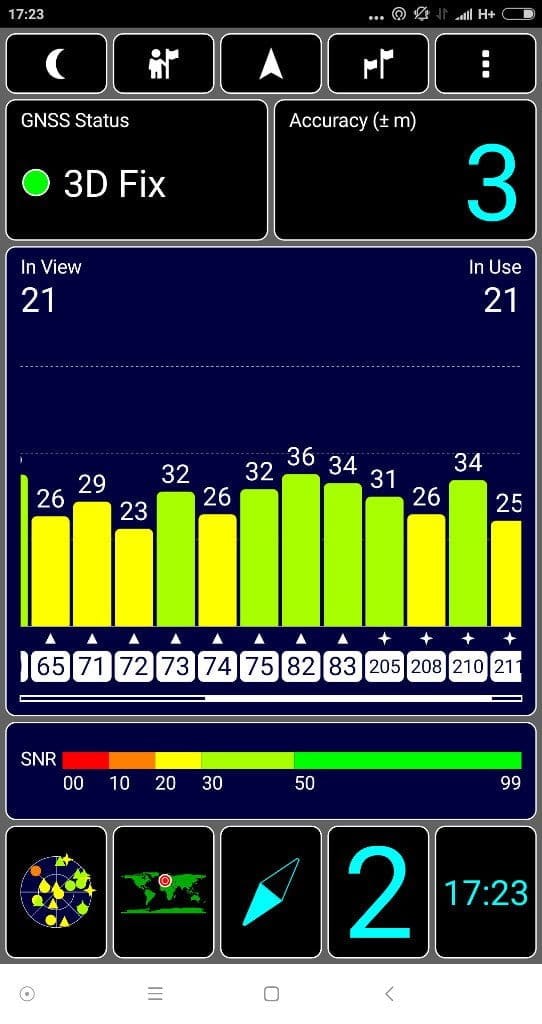
The GPS module performs excellently. A GPS fix is acquired within seconds, and indoor positioning was accurate to within 10 meters. A test navigation run was first-rate, and the integrated electronic compass also works accurately. In addition to GPS, GLONASS and Beidou are also supported. Positioning via the European satellite system “Galileo” would be possible with the Qualcomm Snapdragon 821 SoC, but requires an update from Xiaomi.
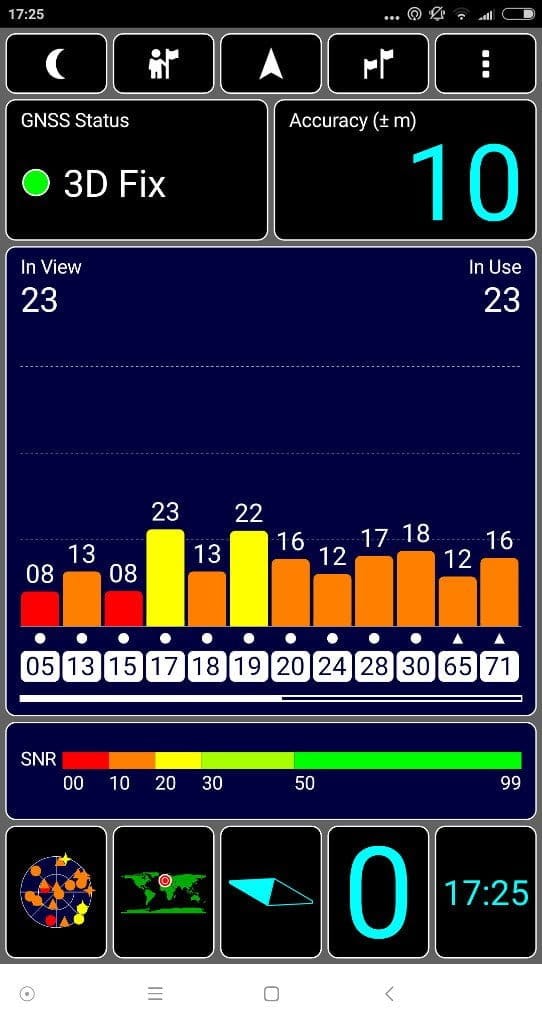
NFC works as it should. The available sensors include a brightness sensor, an accelerometer, a gyroscope, the previously mentioned electronic compass, a barometer, and a proximity sensor. Due to the bezel-free design, no infrared proximity sensor was used, but rather a ultrasonic proximity sensor. In everyday use, the difference is not noticeable.
Fingerprint scanner
The fingerprint scanner of the Xiaomi Mi Mix is located on the back, below the main camera. In practice, the fingerprint scanner shines with a high recognition rate and very fast unlocking of the smartphone. The number of stored finger profiles is limited to a maximum of 5.
Sound
The speaker sounds average. There is a lack of volume and bass, resulting in a flat sound. The maximum volume is sufficient. There is no crackling at maximum volume.
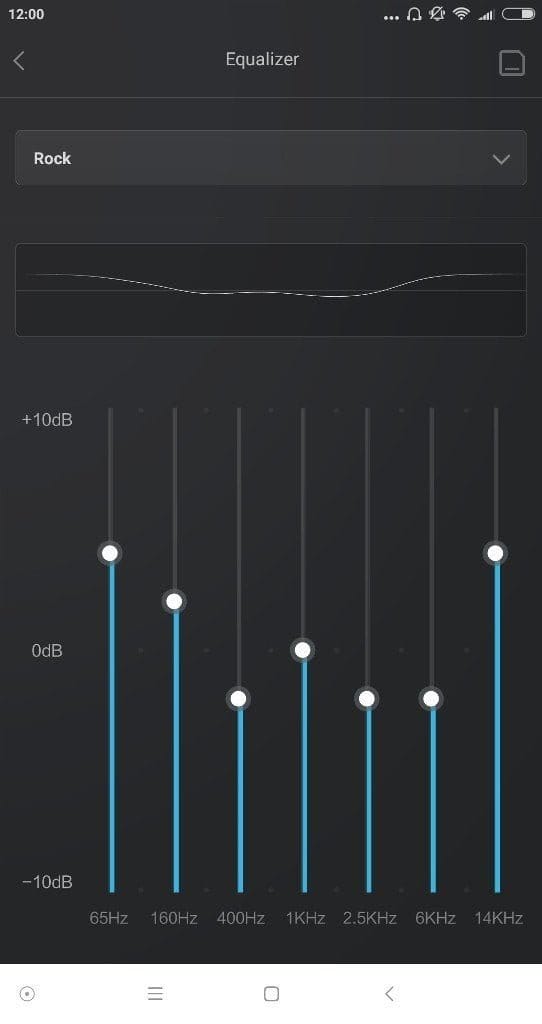
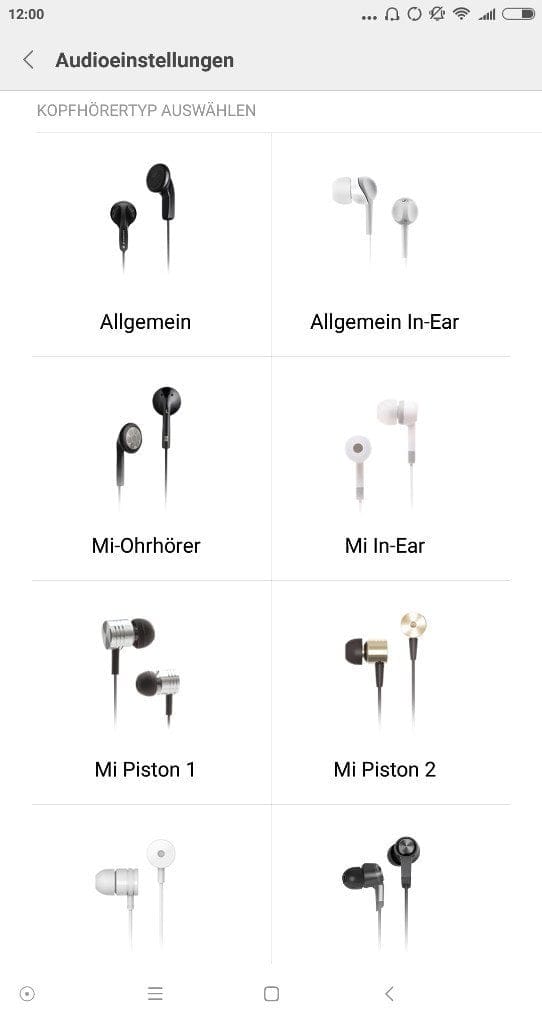
Playback quality via the 3.5mm headphone jack is more promising. Music is reproduced very clearly and without noise. The equalizer integrated into MIUI 8, which can be individually adjusted, is also interesting. MIUI 8 even offers various sound profiles for the numerous Xiaomi in-ear headphones, which can be activated at the press of a button.
Battery
The Xiaomi Mi Mix features a 4,400 mAh battery that appears very large at first glance. Due to the very large display and powerful processor, battery life is only slightly above that of other flagship models. Those who mainly use their smartphone for WhatsApp or some web browsing can expect around 2 days of battery life from the Mi Mix. With conventional use, the battery lasts 1 ½ days. With intensive use, the battery lasted about one day.
Thanks to Quick Charge 3.0, the smartphone charges very quickly. A complete charge takes between 1 ¾ and 2 hours. A half charge of the battery takes only 45 minutes! There is no unusually high heat development during charging.
Our verdict
As I was writing this review, the iPhone turned 10 years old. Looking back 10 years, today's smartphones have hardly changed in terms of design. Sure, displays have become larger, bezels narrower and housings thinner. Innovative concept smartphones were "leaked" many times over the years, but mostly it remained at render images that were never realised.
With the Xiaomi Mi Mix, the Chinese manufacturer dared to present a real concept smartphone to the public and actually market it. Although the Mi Mix is not perfect in all areas and is far from a flagship smartphone in some areas, such as the camera, Xiaomi practically challenges other manufacturers to also push the smartphone market forward. Innovative technologies such as an edgeless display, the piezoelectric acoustic system, or the ultrasonic proximity sensor create incentives, and as a tech geek – but also as a conventional consumer – one can only be curious about what Xiaomi will present in 2017!
Specifications
Processor and memory
- CPU
- Qualcomm Snapdragon 821 @ 2.35 GHz
- GPU
- Adreno 530
- RAM
- 4GB / 6GB
- Internal storage
- 128GB / 256GB
- Storage expansion
- No
Display
- Display size
- 6.4 inch
- Display resolution
- 2048 x 1080 pixels
- Display type
- IPS
- Multitouch
- 10 fingers
Cameras
- Main camera
- 16 Megapixel OmniVision OV16880
- *Aperture f/2.0
- *Autofocus
- *Dual-LED flash
- Front camera
- 5 megapixels
Wireless
- Wi-Fi
- 802.11a/b/g/n/ac
- Bluetooth
- 4.2
- Navigation
- GPS / GLONASS / Beidou
- NFC
- Yes
Sensors
- *Brightness sensor
- *Accelerometer
- *Gyroscope
- *E-compass,
- *Barometer
- *Proximity sensor
Mobile network
- SIM
- Dual SIM
- SIM type
- Nano
- Networks
- 2G
- GSM B2/B3/B5/B8
- 3G
- WCDMA B1/B2/B5/B8
- 4G
- FDD-LTE: B1/B2/B3/B4/B5/B7/B8
Battery
- Capacity
- 4400 mAh
- Quick-Charge
- V3.0
Other
- Fingerprint scanner
- Yes
- Operating system
- MIUI 8 (Android 6)
- Size
- 15.80 x 8.19 x 0.79 cm
- Weight
- 211g
What’s included
1x Xiaomi Mi Mix 1x USB Type-C cable 1x Charger (Type-A plug) 1x Leather Back Case 1x SIM needle 1x User manual
Comments (20)
Great and honest review! Shame the camera isn't better. The missing Band 20 was expected. Are you still using the pre-installed firmware? Is it possible for beginners to reinstall such a Xiaomi smartphone?
Thank you :). The camera is really far from a flagship smartphone. I have no idea what Xiaomi was thinking. The lack of LTE Band 20 does not bother me personally, as I mostly receive HSDPA anyway.
Regarding the ROM: As soon as I receive a Xiaomi smartphone with the shop ROM, I flash it over immediately. Once I left the ROM on a Redmi smartphone and was bombarded with ads appearing over the home screen after a week. Since then, I always unlock the bootloader first and then flash a Xiaomi EU ROM or the official Global ROM. It can be quite difficult for beginners. However, if you follow the available guides online, even beginners should manage. Unlocking the bootloader is always the most important first step!
Now just remove the selfie camera and a bezel-less display. Maybe Xiaomi will release something like this this year :D. Otherwise a really very cool device.
Exactly. The front camera is certainly something you can do without. I’m also curious to see what Xiaomi has in store for 2017 and whether other manufacturers will become more experimental.
Do I need a separate Quick Charge charger for the smartphone, or can I use any smartphone charger?
You can, of course, charge the smartphone with any smartphone charger. However, if you want to use the Quick Charge 3.0 function, you also need a corresponding charger that supports Quick Charge 3.0. I personally use the original Chinese charger with a suitable adapter.
Thanks for the detailed review! Because of the large display, I wonder if the Mi Mix can still be operated easily with one hand. Do you also know whether Galileo has already been activated on the phone? Or is there a ROM with which you can activate it yourself?
Difficult; I usually operate the Mi Mix with both hands. When holding the smartphone in one hand, the thumb cannot reach the outer edge of the display.
There is currently no information available regarding the Galileo navigation system, let alone an update from Xiaomi. The ROMs released so far are also minor modifications of MIUI 8. It may take some time before Lineage OS (CyanogenMod) is available for the device, as the source code for the Mi Mix has not yet been made public. I personally have currently flashed the Xiaomi EU ROM, which runs stably and contains few errors.
Thanks, then I will wait a little longer for the smartphone after all. I have seen that the Mi Mix is now also available in white. Let's see if I get the white model then, but it definitely has to be the Mix. Greetings
Hi, I also bought the Mi Mix and have this dealer ROM on mine. I know a bit about flashing and my Mi Account is also unlocked for the bootloader. Which ROM can you currently recommend?
I personally have a Xiaomi.eu ROM on the smartphone. The disadvantage is the lack of OTA updates, which means you have to install updates manually. The advantages are the good translation and the absence of bloatware, as all Xiaomi.eu ROMs are openly accessible. If you want original MIUI with OTA updates, your only option currently is to flash the MIUI China ROM. A Global Stable / Dev version is not yet available for the Xiaomi Mi Mix.
Hi again. I’ve now installed the China ROM on the phone and I’m happy with it. I was able to install the Google apps without any problems. No errors, no crashes, and everything runs very stably, unlike the pre-installed ROM. I might also install the Xiaomi.eu ROM or just wait for the Global ROM.
Hey, have you tried other camera apps with the Mix? I am interested to know whether OpenCamera detects the Mix's Camera2 API, or whether you still have to modify build.prop. Also, please test if FreeDcam runs on it. I have had the best experience with that so far! Otherwise, good review. Keep it up!
Hello, and thank you very much for the tip. The Camera2 API is not enabled by default, but you can enable it by adding the following line to build.prop (/system/): “persist.camera.HAL3.enabled=1”. The Camera2 API is then also detected by the Manual Camera Compatibility Test. You can enable the API in OpenCamera as well, and FreeDCam also works (you can get it here: https://github.com/troop/FreeDcam).
I will compare the apps with the MIUI camera app as soon as possible and see what image quality can be achieved. I will then add the update to the review.
Hello, if I buy the smartphone, will I also get a warranty? Or how does it work with these Chinese phones?
Hi, the warranty always depends on the specific shop you order from. Most large online shops from China offer a 12-month warranty with free repair. However, you then have to return the smartphone to China at your own expense. I have not had any experience with this myself.
Great, thanks for the quick reply. I suspected there was a catch. I will order it anyway. What could go wrong hehe.
Don't worry, I have used quite a few Chinese smartphones so far, and most of my acquaintances have one too. So far, no one has had any problems, let alone had to send the device to China. With the Mi Mix, it is a bit of a different story because it is expensive and you probably can't repair much yourself, but Xiaomi smartphones are of good quality and do not fail quickly. Enjoy the Mi Mix. It's a great smartphone, which I am currently using too :).
Hi, is MIUI 8 based on Android N already available for the Mi Mix? Good review, by the way!
Hi, there is no official Stable based on Android N yet. I recommend flashing the Xiaomi EU weekly, as it is based on N :).