Contents
First impressions of the Xiaomi Mi5s
Update (July 2017)
The Xiaomi Mi5s has been on the market for almost 10 months now. Since then, a lot has happened around the smartphone, which is why we are updating this review to the latest status. I personally still use this smartphone as a secondary device, which is why the review has been expanded with my current experiences. To what extent the smartphone has been improved software-wise, bugs have been fixed, or whether new errors have appeared, you will learn in the green boxes under the respective categories!
What’s included
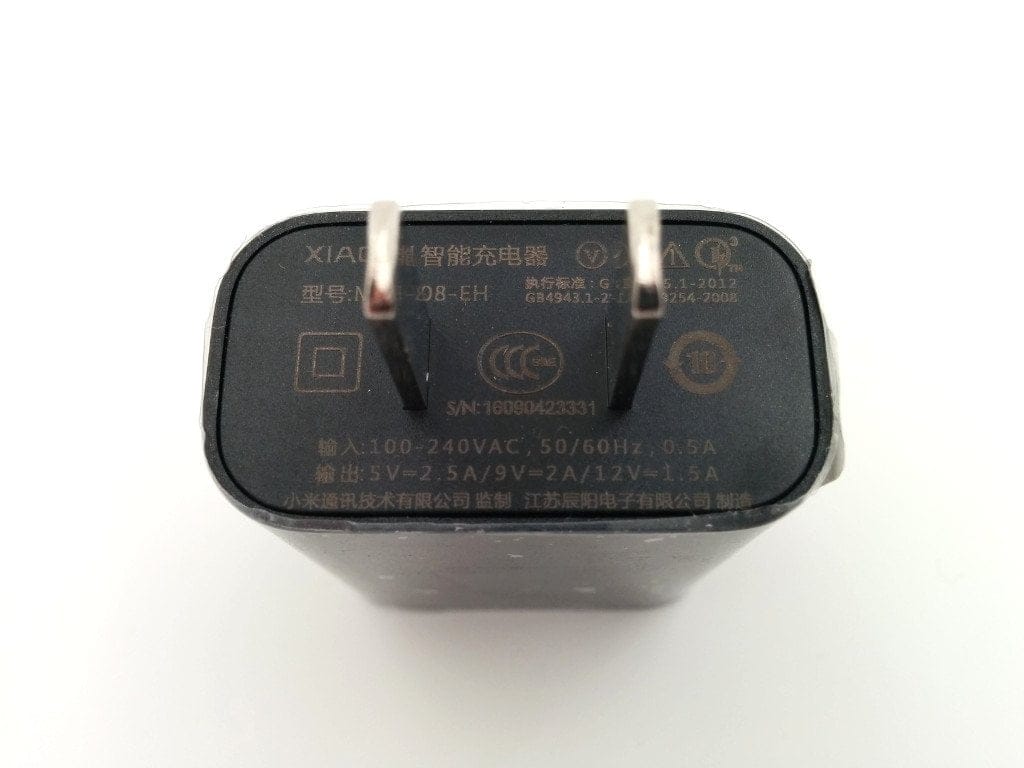
The accessories included with the Xiaomi Mi5s are limited. In addition to a fast charger (5V 2.5A) and a USB Type-C cable, there is a Chinese user manual including a SIM needle. Xiaomi smartphones are usually intended for the Chinese market, which is why the charger has a Type-A plug and not the Type-C plug common here. Most online retailers include an adapter.
 Play video on YouTube

Design and build quality
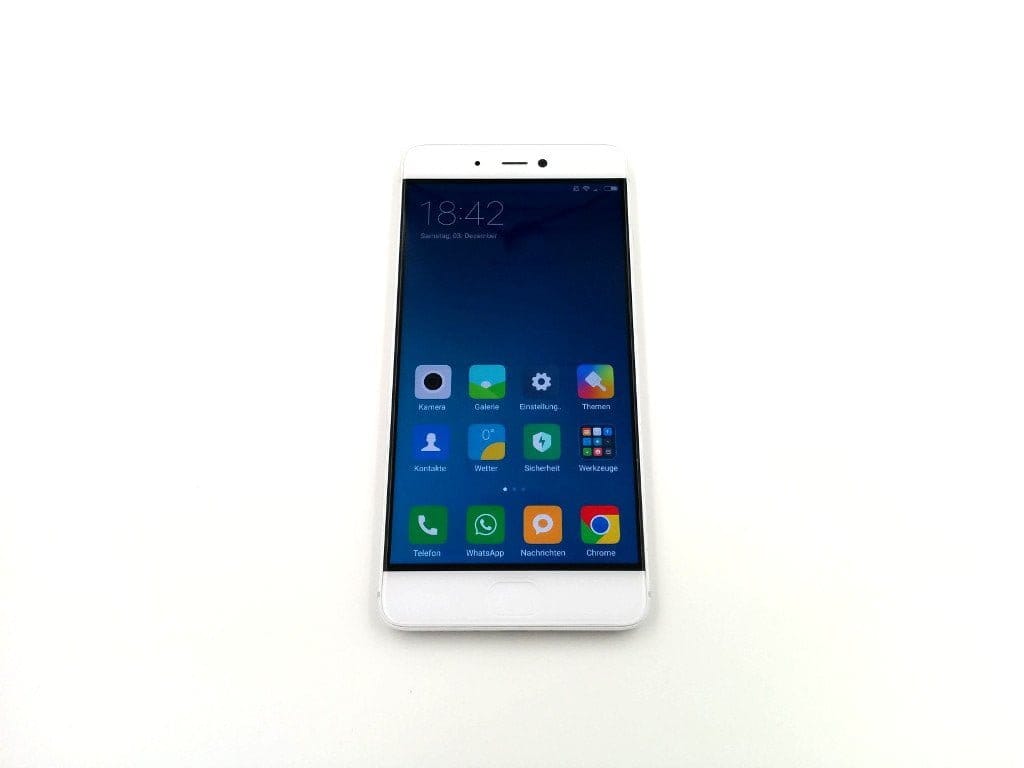
The smartphone is available in 4 different colours. Our test unit is in “Silver”. Other colours include “Rose Gold”, “Gold” and “Deep Gray”. Only the “Deep Gray” model has a black front. The other three colour variants have a white front.
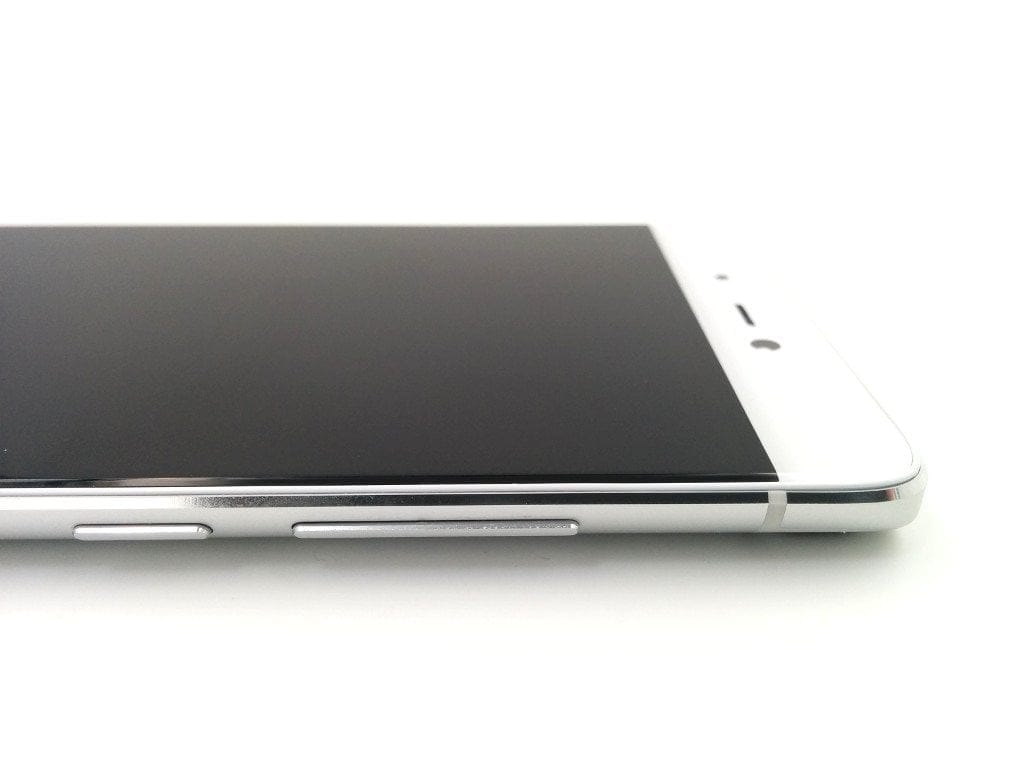
The housing is made of metal and features an optically appealing unibody design. The back cover is not removable, which means the battery cannot be replaced. The housing is slightly rounded on the sides, allowing the smartphone to sit very comfortably in the hand. The side control buttons are also made of metal, are easy to reach and are neatly integrated into the frame. The pressure point of the buttons is convincing and no annoying rattling is noticeable during quick movements. Overall, there is nothing to criticise regarding the build quality of the Xiaomi Mi5s.
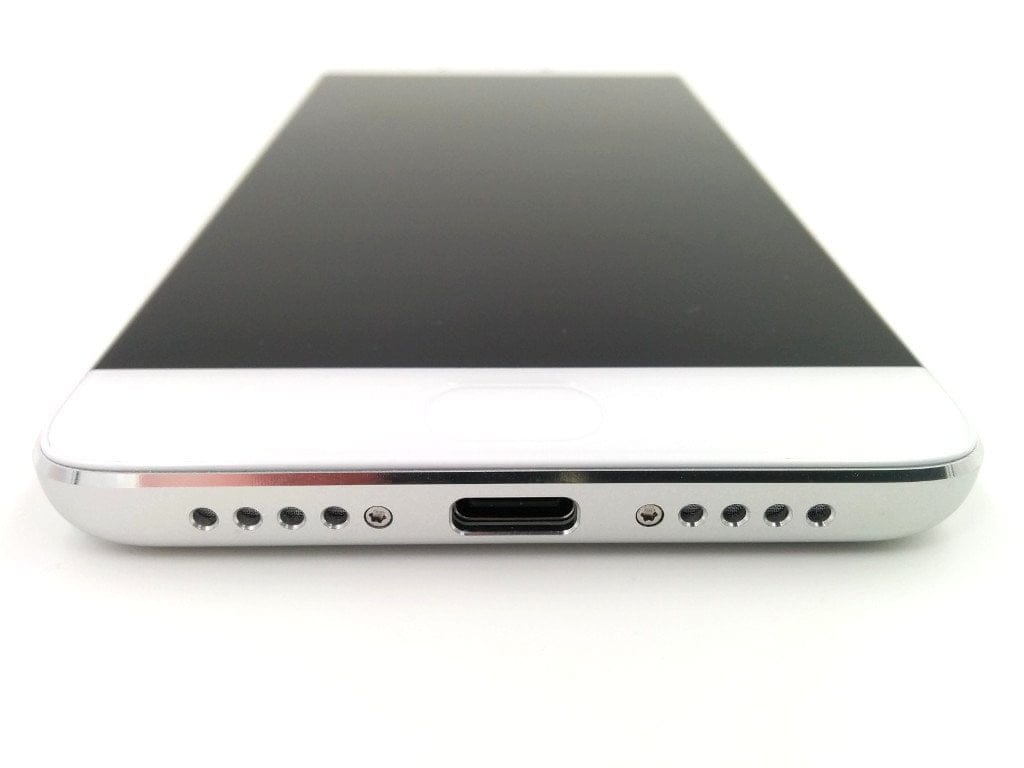
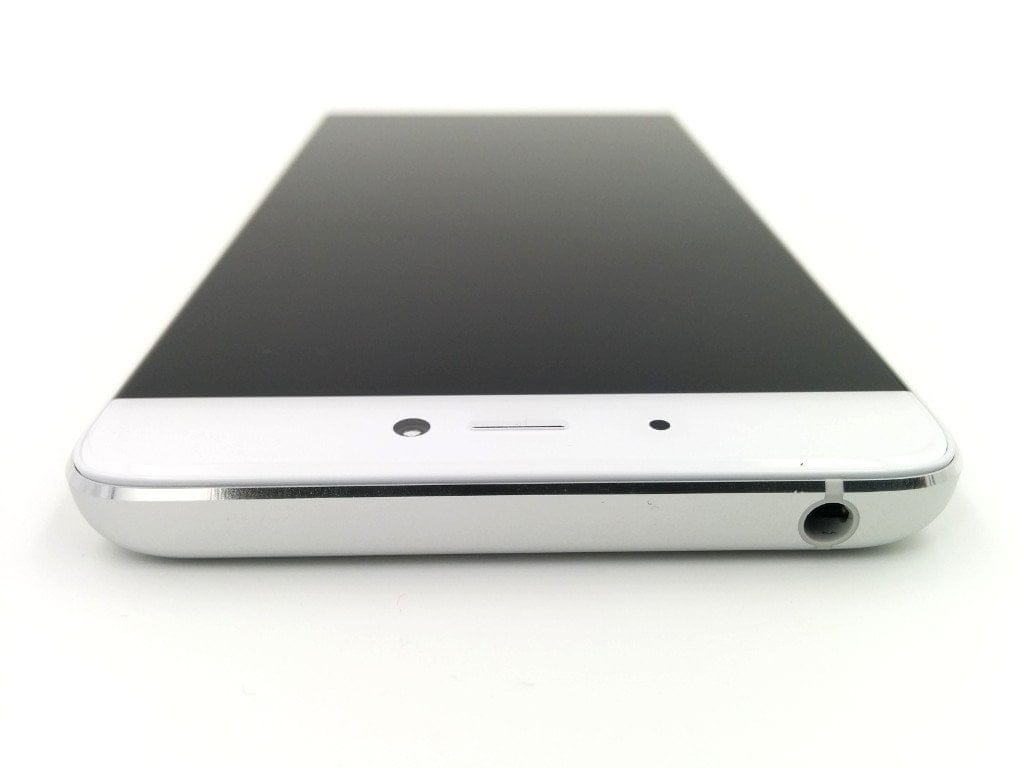
The design is a matter of taste. With its metal casing, the Xiaomi Mi5s leans more towards models from the Redmi series. A major advantage of the metal casing is that it is less slippery to hold compared to the glass or ceramic back of the Xiaomi Mi5. The placement of the fingerprint scanner is very nice; it is not located on the back but integrated into the capacitive home button. Two other illuminated capacitive navigation buttons are located to the left and right of the home button. The 2.5D curved glass of the display gives the smartphone a sleek look. However, the bezels remain rather average. Above the display is a freely configurable notification LED.
Display and touchscreen
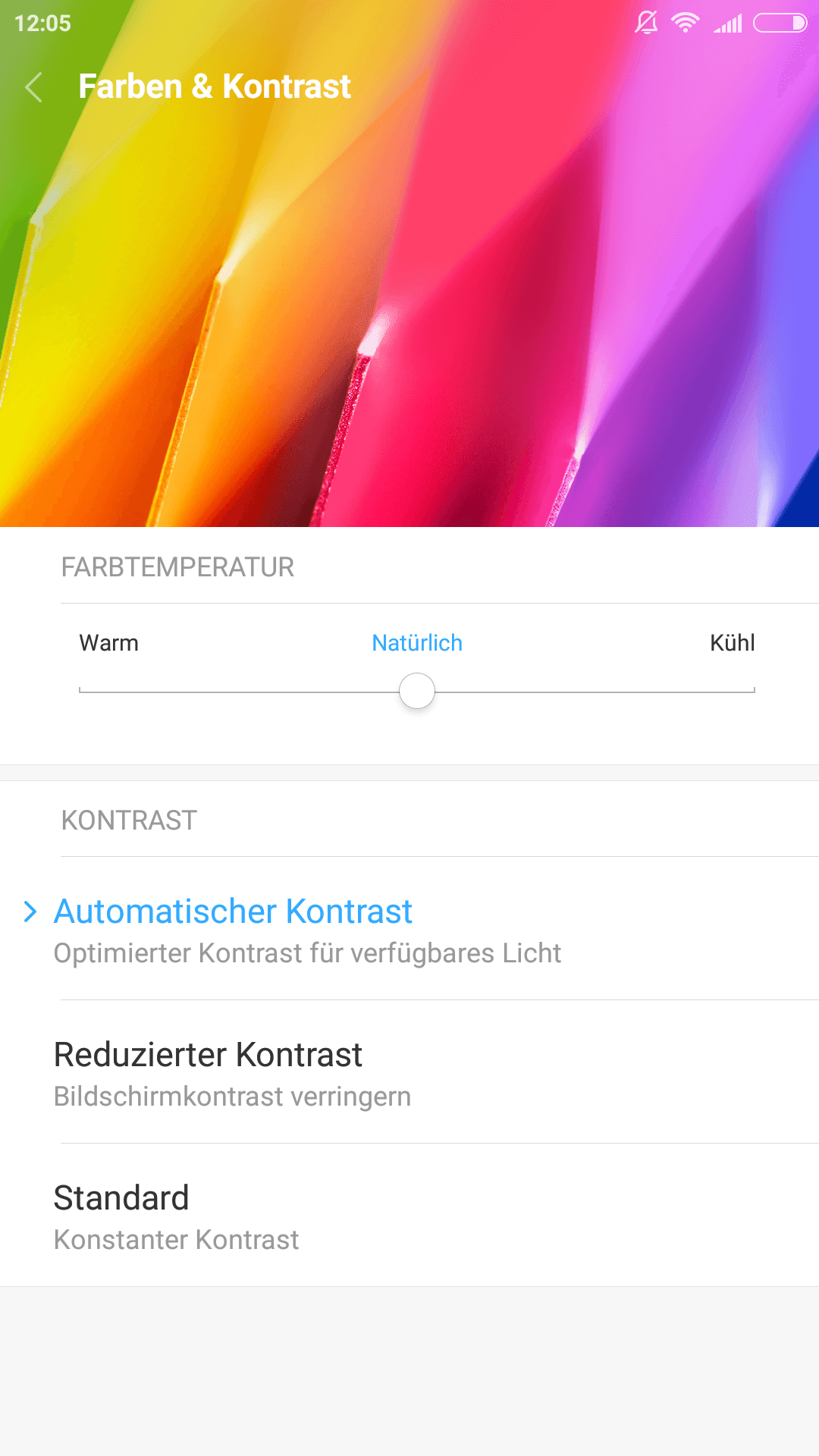
The display offers Full HD (1920 x 1080 pixels) resolution. With a display diagonal of 5.15 inches, this results in a crisp 428 DPI, meaning individual pixels are no longer visible to the naked eye. The colour reproduction of the IPS display is convincing. Colours are displayed vividly and powerfully. If the display appears too cool, users can adjust the colour temperature to their liking in the MIUI 8 display settings.
The smartphone scores points with its maximum screen brightness. With a luminance of 600 nits, this display is one of the brightest! When using the smartphone in the dark, you can indeed be dazzled if automatic brightness adjustment is deactivated. In sunlight, the display remains well readable. Under direct sunlight, readability is also slightly impaired with this display. Viewing angle stability was also convincing. No matter how you rotate or tilt the smartphone, the image remains unchanged.
Xiaomi provides no information about the display glass. Presumably, no Corning Gorilla Glass was used, but rather conventional display glass. After several weeks of active use, I have not noticed any scratches on the display. Nevertheless, you should apply a screen protector as a precaution!
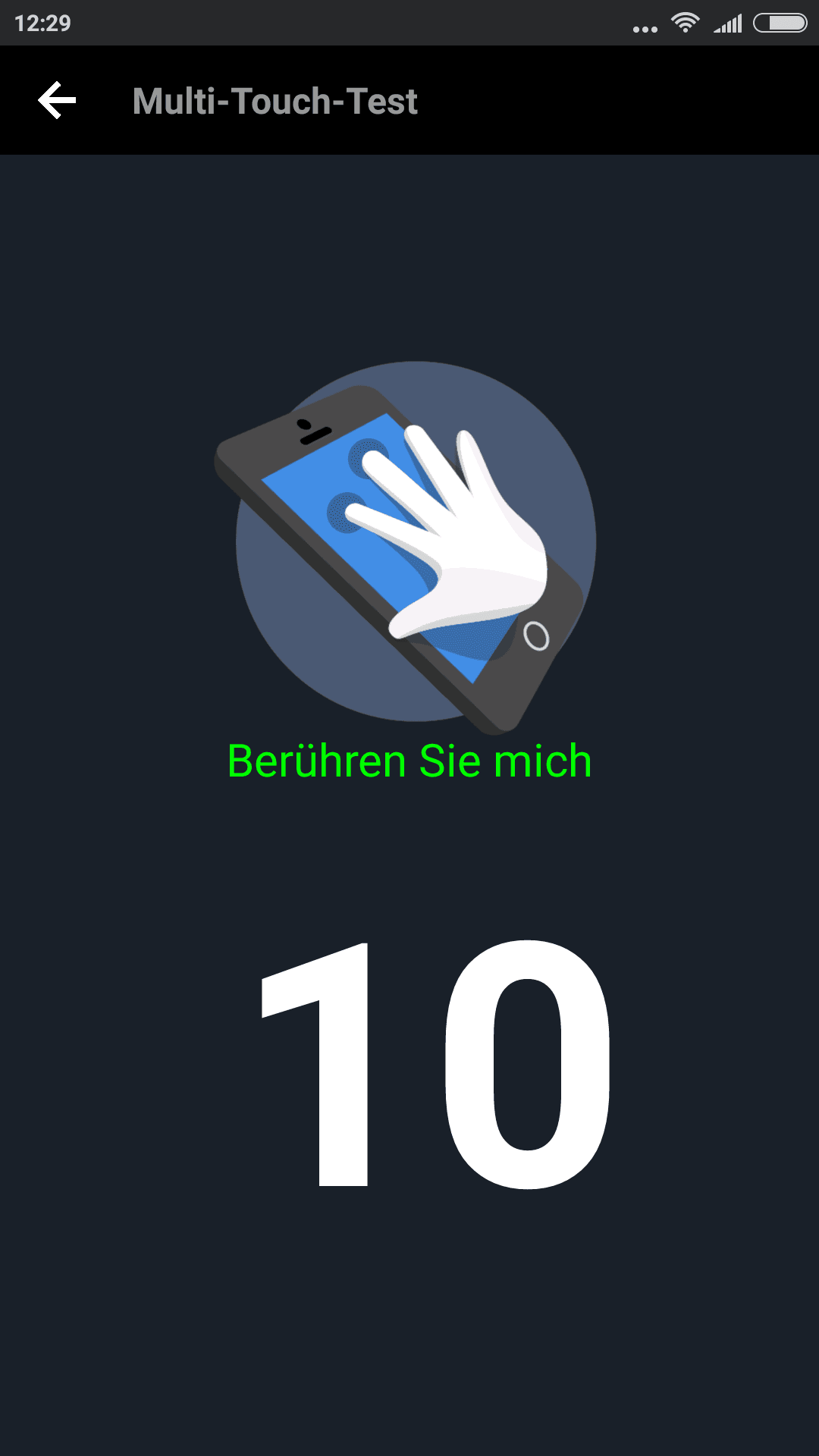
The touchscreen impressed in testing with precise recognition of individual inputs. With the Xiaomi Mi5s, Xiaomi introduced "3D Touch" or "Force Touch", known from Apple iOS devices, for the first time. This is a pressure-sensitive control element, with which compatible apps are equipped with shortcuts. Currently, this function is only offered by the model with 4GB of RAM! It is not yet known whether the 3GB model will also receive this function! Technically, it would be quite possible to support 3D Touch on the 3GB model, as the same Synaptics touch firmware is used. The only difference between the models is the size of the RAM and the internal storage.
Update: Force Touch can now also be enabled on the 3GB model!
Performance of the Xiaomi Mi5s
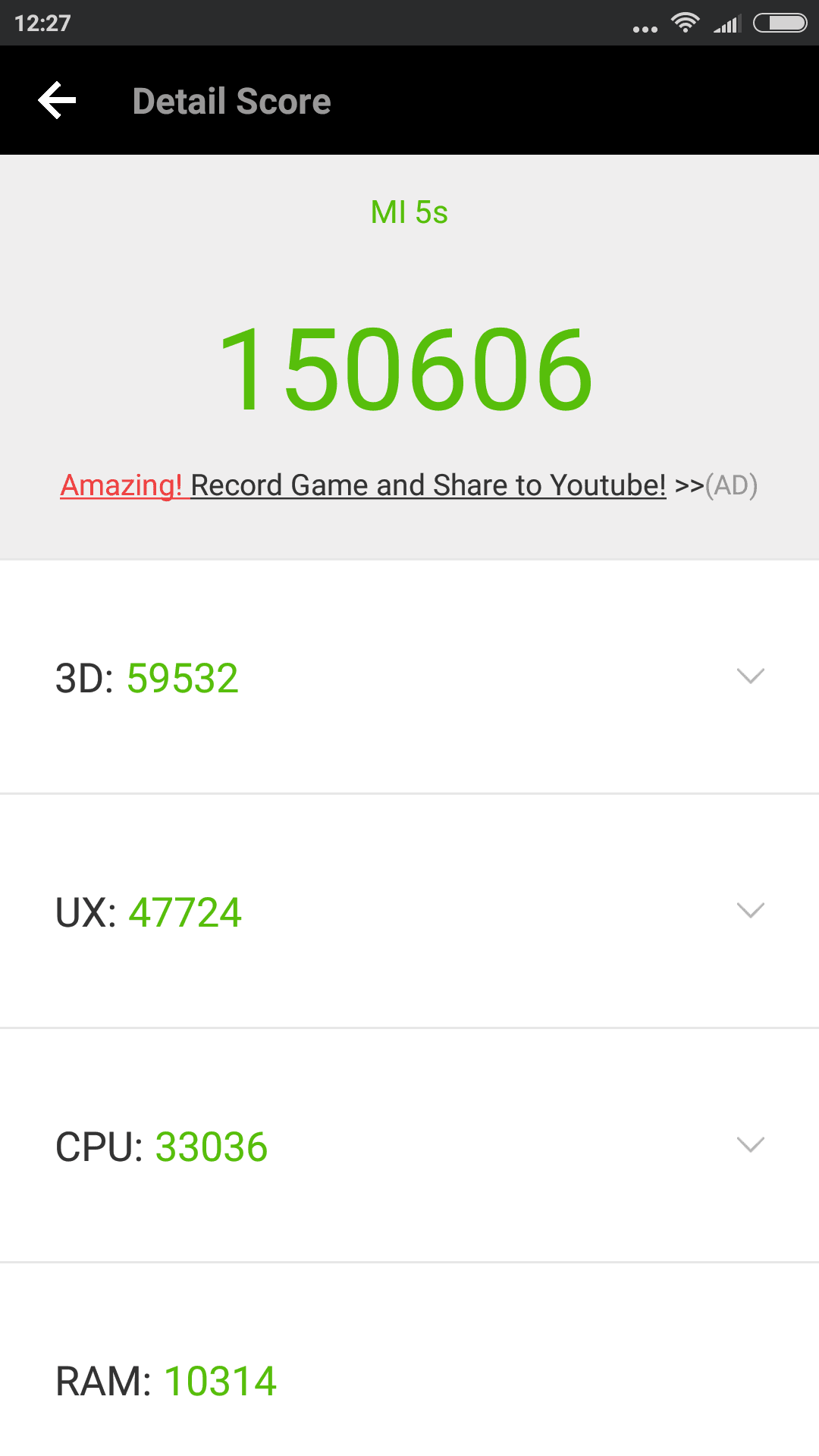
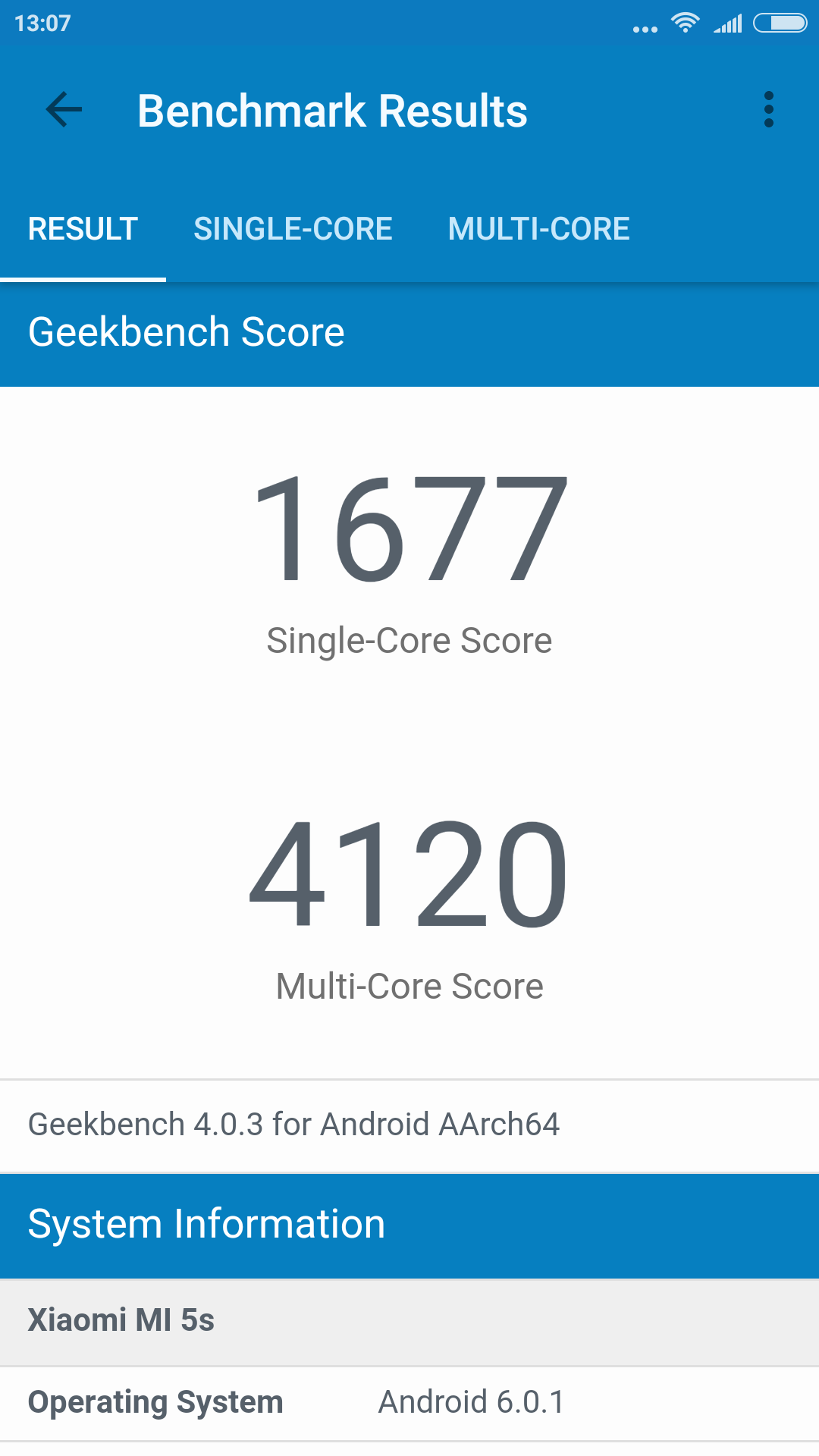
With the Qualcomm Snapdragon 821, the handheld is equipped with the currently most powerful Snapdragon SoC. It relies on a total of four Kryo cores clocked at up to 2.4 GHz. However, the clock speed of the Snapdragon 821 in this smartphone has been reduced to 2x 2.0 GHz and 2x 2.15 GHz. Only the larger handheld, the Xiaomi Mi5s Plus, offers clock speeds of up to 2.35 GHz. Compared to the Snapdragon 820, performance has increased by approximately 10%.
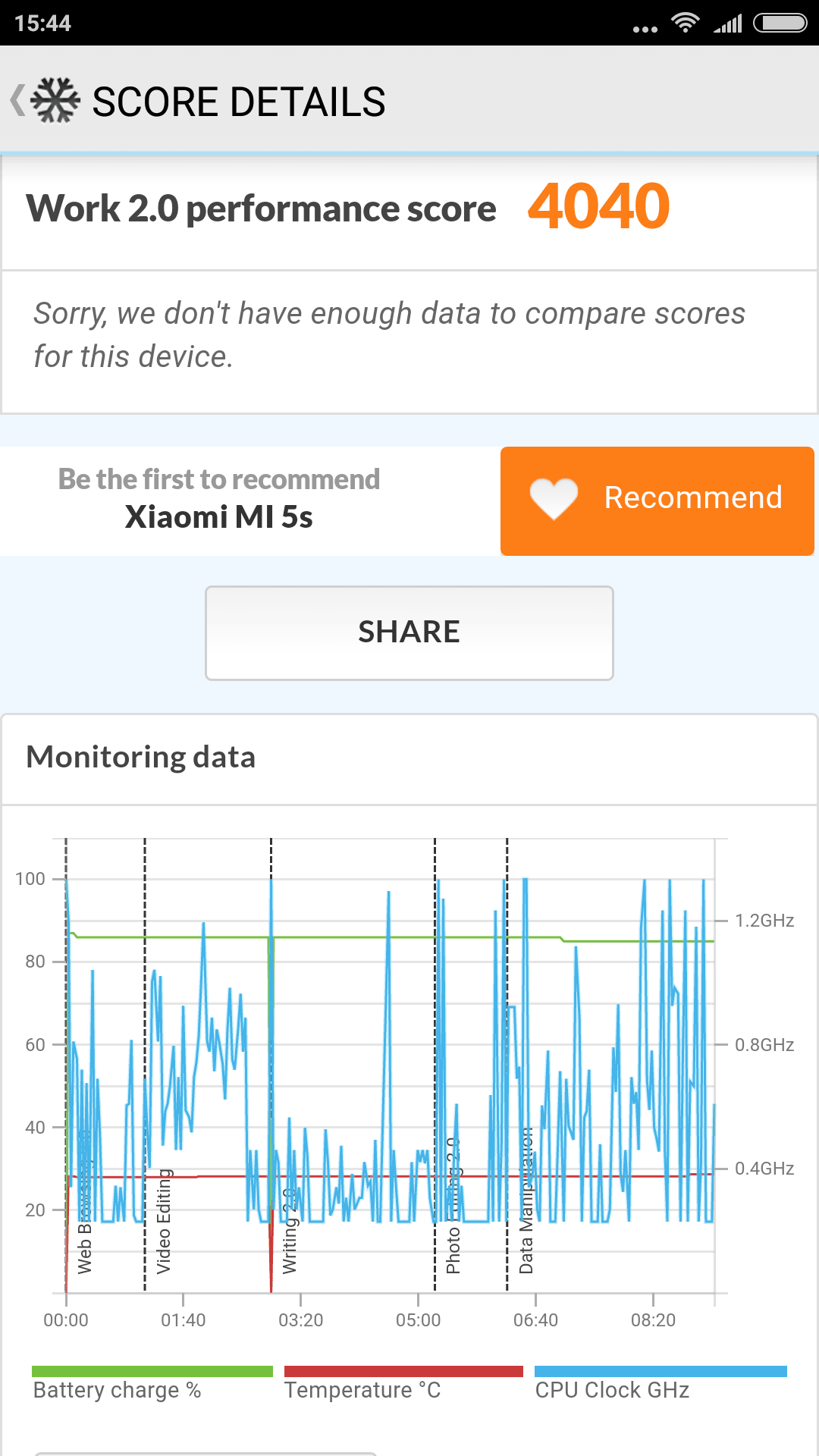
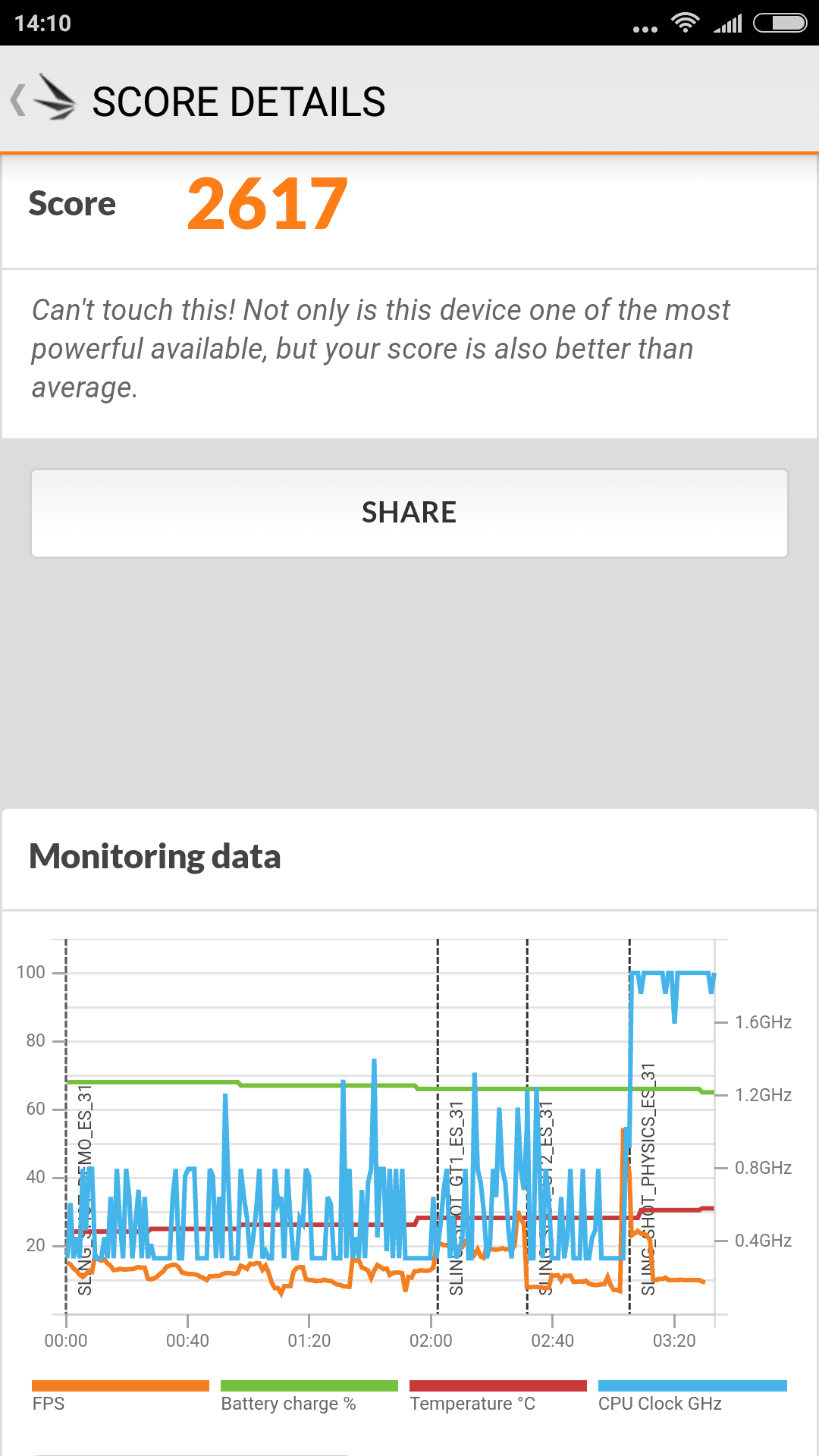
The Xiaomi Mi5s we tested features 3GB of RAM (LPDDR4) and 64GB of internal storage (UFS2.0). However, the smartphone is also available with 4GB of RAM and 128GB of internal storage. There is no option to expand the storage!
Everyday performance could hardly be better. Applications open at the touch of a button, and the handheld shows no weaknesses in multitasking either. Of a total of 3GB RAM, the system uses a solid 1.8GB, leaving approximately 1.2GB available for other apps. The Mi5s also makes a good impression with current Android games. The Adreno 530 processor graphics can certainly cope with graphically demanding games and is also suitable for various emulators.
User interface
MIUI 8
If you buy a Xiaomi smartphone from a Chinese online retailer, you will receive a device with the MIUI “Shop-ROM” in 90% of cases. A “Shop-ROM” usually only extends the language options, but “bloatware” is often also preinstalled, which you naturally do not want on your smartphone. Furthermore, no updates are provided! Anyone familiar with flashing ROMs can flash the official MIUI 8 ROM or the Xiaomi.eu ROM in just a few steps. It is best to ask the retailer to keep the original ROM on the smartphone.
A "Shop-ROM" was also pre-installed on our test device, which we received from Gearbest. Fortunately, the bootloader was already unlocked, allowing us to flash any compatible ROM. MIUI 8 runs extremely smoothly on the Xiaomi Mi5s. Xiaomi's update policy is praiseworthy. So-called Dev updates are released weekly, constantly improving MIUI. Although Android 7 is not yet in sight, it is reasonable to expect that an update to Android 7 Nougat will definitely be released!
CyanogenMod / LineageOS
There is now also the first CyanogenMod 13 port for the Xiaomi Mi5s. Unfortunately, the ROM has only been published in the Chinese MIUI forum so far, but the ROM developer is also active in the XDA-Developers forum. According to information, the kernel source is also due to be released this year, so further custom ROMs are expected soon!
Here is the link to the CyanogenMod thread in the XDA-Developers forum: xda-developers.com
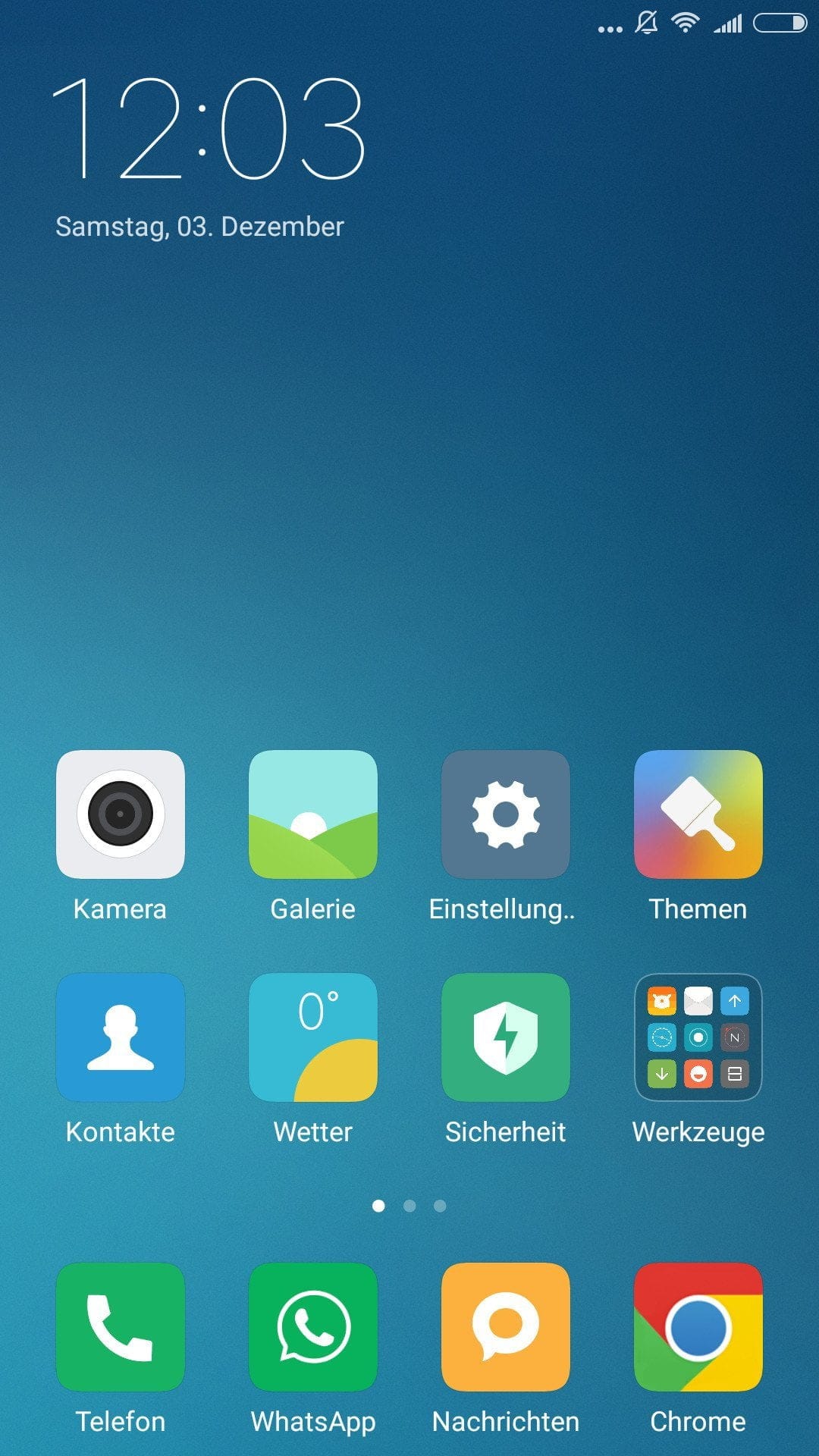
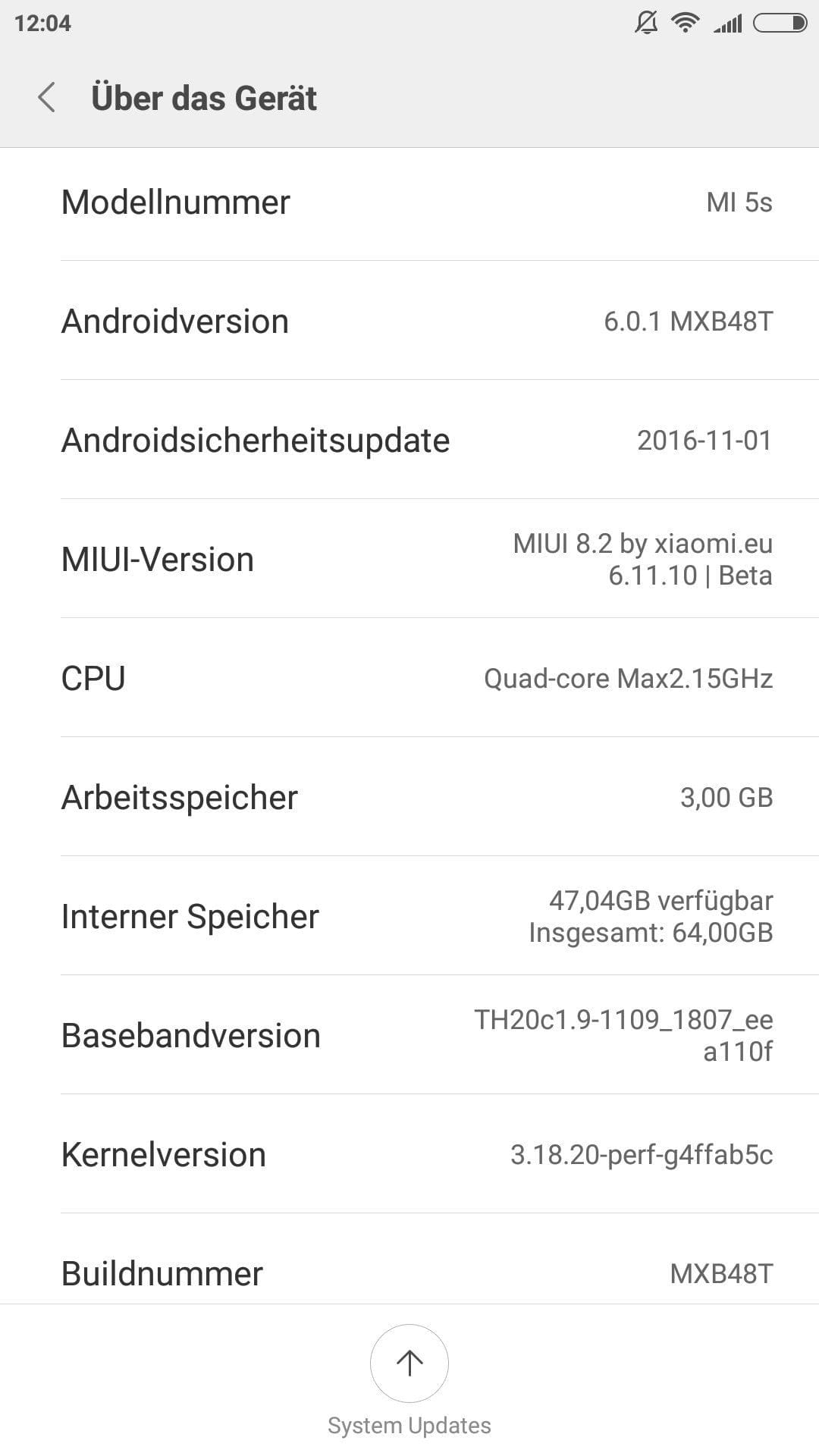
Update: Xiaomi has released the "Global ROM". The Global ROM is adapted for the international market, offers an expanded language selection, and comes with the Google Play Store pre-installed.
Update: Meanwhile, the kernel source for the Xiaomi Mi5s has also been released. Official ROM ports, particularly LineageOS, are expected soon! Custom kernels are also already in development and should appear shortly.
Camera
Main camera
The Xiaomi Mi5s uses the same Sony IMX 378 image sensor in the main camera, which is also found in the Google Pixel phone. The same image sensor does not necessarily mean that the image and video quality is comparable. Rather, software optimisation, the lens, and other fine details play a decisive role when it comes to recording quality. The Sony IMX 378 is a 1/2.3-inch image sensor that enables photo captures of up to 12 megapixels. The aperture is f/2.0. Videos are recorded at a maximum resolution of 4K.
Main camera real-world test
The main camera is clearly among the best Chinese smartphone cameras. Under good lighting conditions, very detailed and colourful photos are created that show hardly any image noise. In poor lighting conditions, it is considerably more difficult to take passable shots. Especially due to the lack of optical image stabilisation, night shots quickly become blurred with the slightest movements. However, with a steady hand or external stabilisation, very pleasing shots can also be taken at night. The “Phase Detection Auto Focus”, which focuses without delay, is a positive point. The shutter speed for image capture is also commendable.
As already mentioned, videos are recorded at a maximum 4K resolution at 30 frames per second. The recording quality is also convincing here! Unfortunately, due to the lack of image stabilisation, the slightest movements are reflected accordingly. At a resolution of 1080p, an electronic image stabilisation can be activated, which does a good job. The low bitrates are again disappointing. A 4K video recording has an average bitrate of 35 Mbit/s and 83 kbit/s for audio!
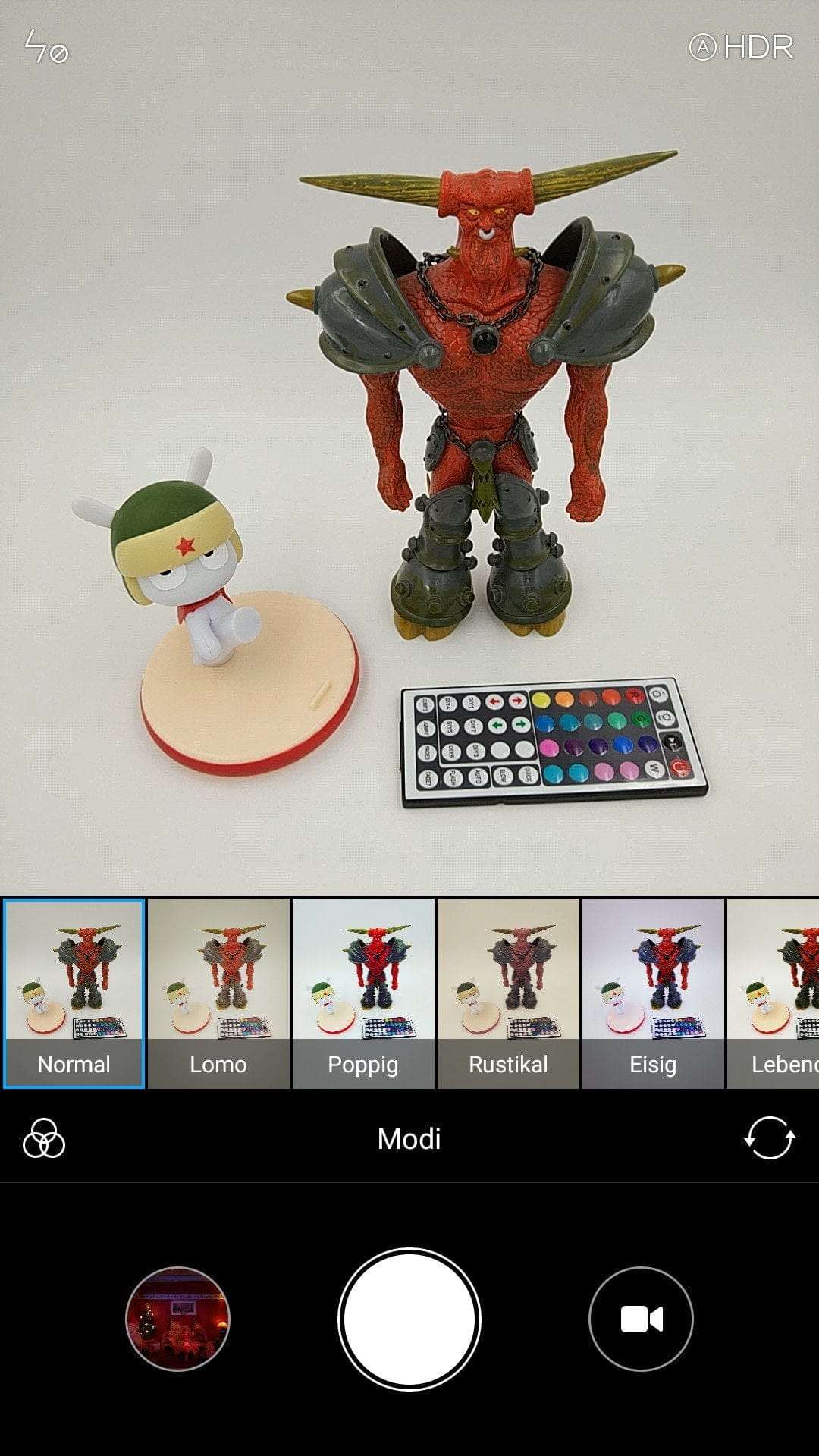
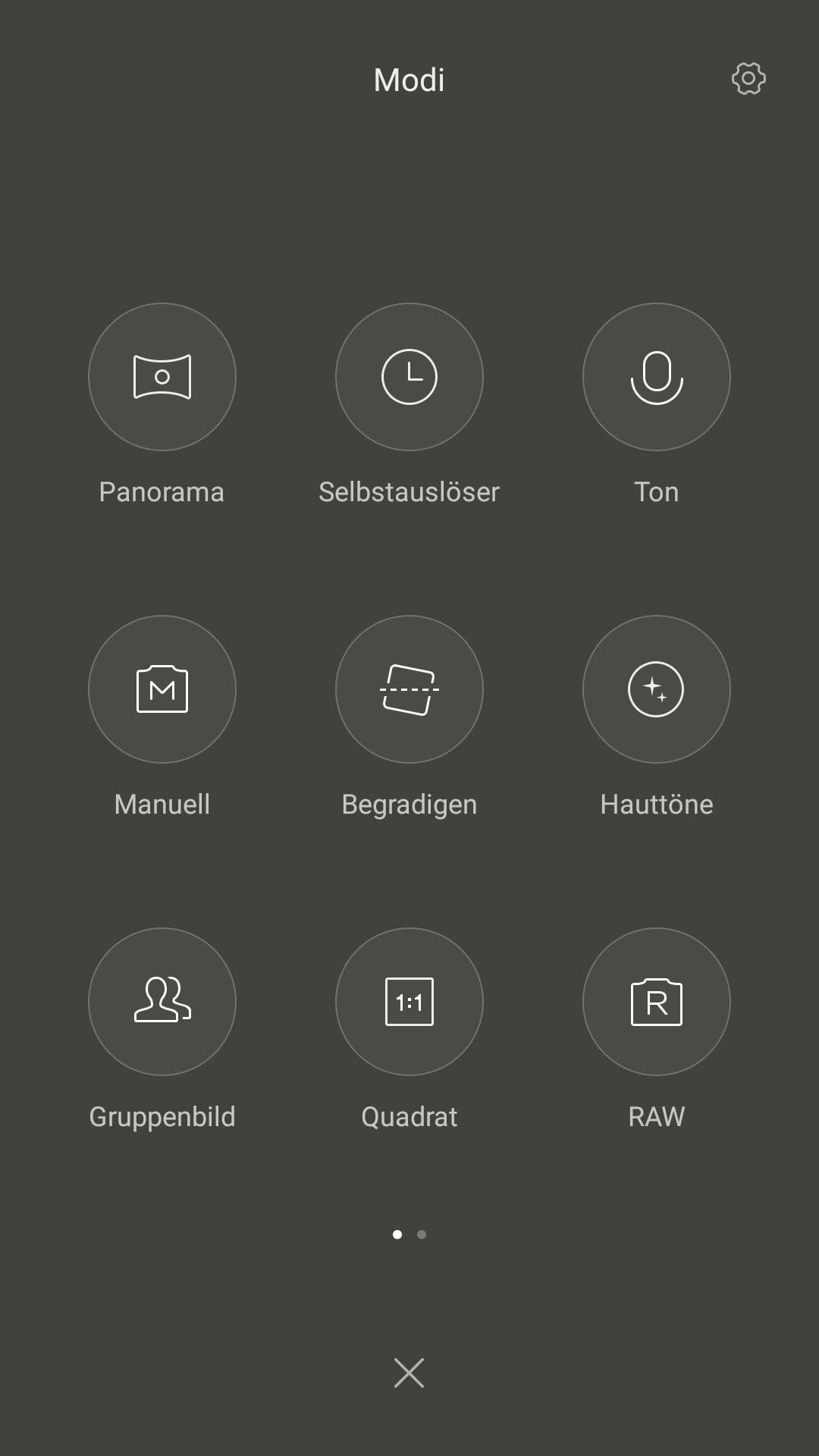
The adjustment options of the MIUI Camera app are also interesting. In addition to various photo effects similar to Instagram filters, there are also more specific camera settings, such as for white balance, focus or exposure. In video mode, there is a time-lapse and slow-motion mode in addition to the manual recording mode. Due to Camera2 API compatibility, the adjustment options are almost unlimited.







Front camera
The front camera uses an unknown 4-megapixel image sensor and an f/2.0 aperture. The camera records videos at up to 1080p. Thanks to the particularly wide 80° field of view and the "Beauty Mode", the front camera is quite suitable for decent selfies. In poor lighting conditions, the frame rate becomes increasingly unstable and slight image noise becomes noticeable!


Fingerprint scanner
There is also a novelty with the fingerprint scanner. It no longer works capacitively, but with the help of ultrasound. Xiaomi expects this to offer advantages primarily in terms of detection rate. In practice, the new ultrasonic fingerprint scanner has not yet been entirely convincing. The detection rate hardly differs from that of a conventional fingerprint scanner. The same applies to the unlock time, which could feel faster!
We are not the only ones to have noticed the rather average fingerprint scanner. There are also sporadic reports in the official forums regarding the less convincing recognition rate. According to Xiaomi, however, this is a software issue. Upcoming updates should therefore provide a remedy!
Connectivity
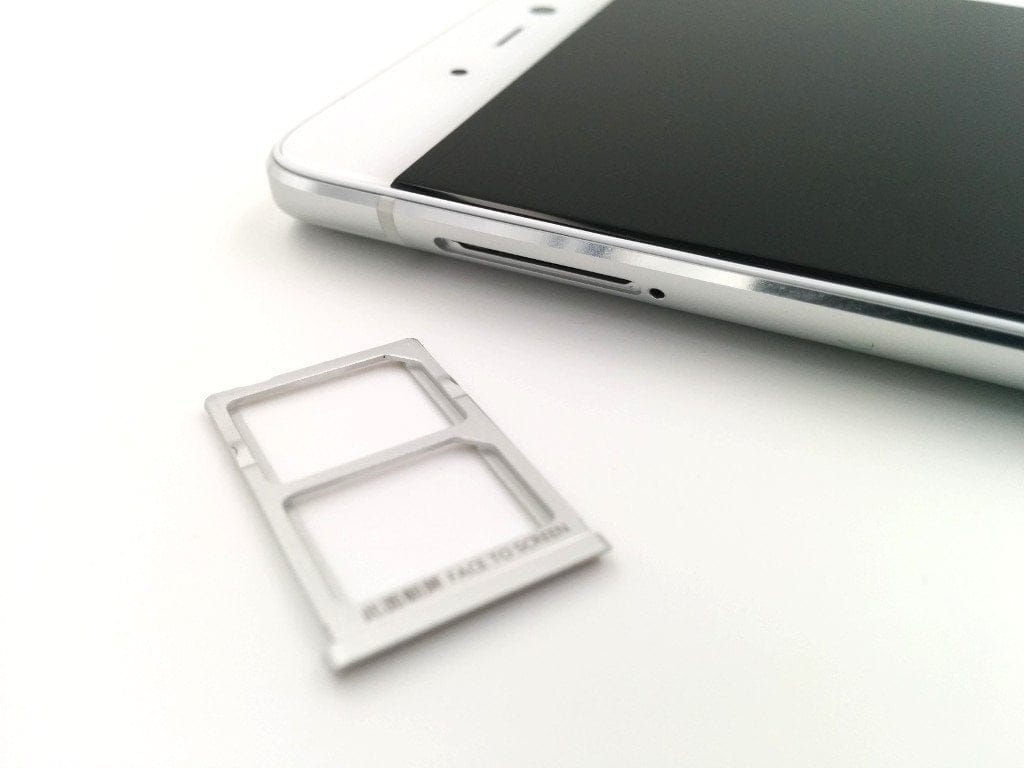
All common 2G and 3G network standards are fully supported. The LTE bands 3 and 7 used in this region are also available. As is typical for Xiaomi, the Mi5s also lacks LTE band 20. But this doesn't matter, as you can still move around very quickly with HSDPA. There is nothing to complain about regarding voice quality in either direction. Speech sounds crisp and free of noise. The SIM slot is located on the left side of the housing and can accommodate two nano-SIM cards.
The smartphone performs excellently on both 2.4G and 5G WLAN. The transmission range is above average, and the signal is exceptionally stable. The same applies to Bluetooth transmission. It supports the latest Bluetooth standard with Bluetooth 4.2.
Headphones and speakers
Music plays without interference via the 3.5mm headphone jack. The speaker is rather mediocre. Music played through it sounds comparatively flat. The speaker is quite suitable as a hands-free device.
GPS and sensors
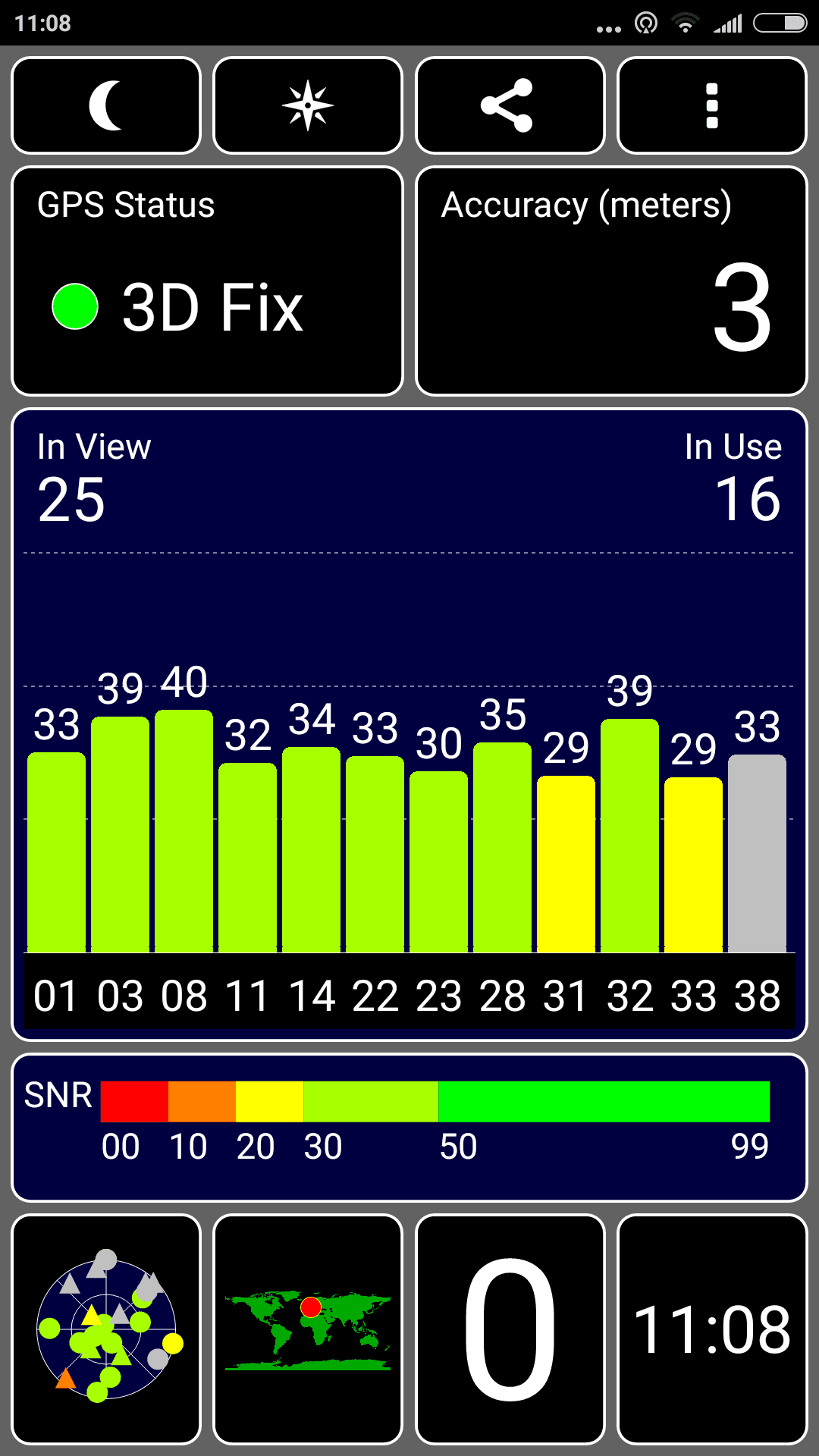
The smartphone achieves a GPS fix within a few seconds. Even indoors, a GPS fix succeeded after about 20 seconds. Precise navigation is completely unhindered with this smartphone! In addition to GPS, AGPS, GLONASS and Beidou are also supported.
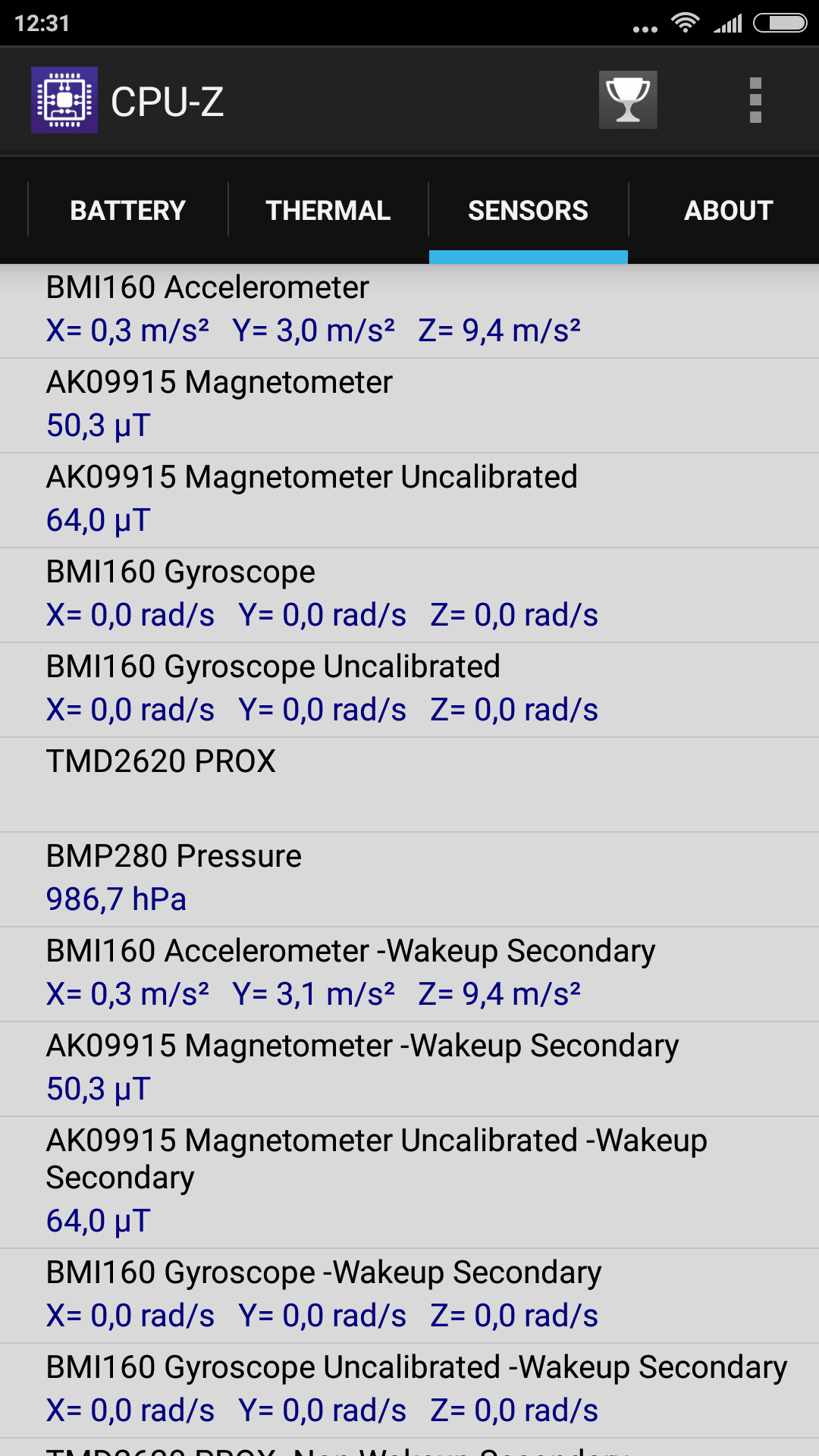
The sensors consist of a brightness sensor, a proximity sensor, a gyroscope, an accelerometer, a Hall sensor, a barometer and an electronic compass. None of the sensors have caused any negative issues in everyday use. NFC support including card emulation is available. "Mi Pay" for contactless payment is available by default. Android Pay is also supported, but is not yet available in this country!
Battery
The battery capacity is 3,200mAh. The battery cannot be replaced! With normal everyday use, it easily lasts a day. However, the battery needs to be recharged after 1 ½ days at the latest. Charging times are significantly reduced by Quick Charge 3.0. A full charge takes 1 hour and 40 minutes with the charger included in the delivery.
Our verdict
With the Xiaomi Mi5s, the Chinese smartphone manufacturer once again presents a decent flagship smartphone. Considering that Google's Pixel Phone has similar specifications and costs more than twice as much as the Xiaomi Mi5s, you get a smartphone at a bargain price here.
Nevertheless, this device still has plenty of room for improvement. While the camera is convincing, it still requires software optimisation. The same applies to the ultrasonic fingerprint scanner.
Specifications
General
- Display type
- IPS
- Display size
- 5.15 inches
- Display resolution
- 1920 x 1080 (FHD)
- CPU
- Qualcomm Snapdragon 821
- Cores
- 2.15GHz, Quad Core
- GPU
- Adreno 530
- RAM
- 3 GB RAM
- Storage
- 64GB internal storage
- Storage expansion
- No
- Battery
- 3200mAh
- WIFI
- 802.11a/b/g/n/ac
- Bluetooth
- 4.2
- SIM
- Dual SIM (Nano SIM), dual standby
- Networks
- 2G
- GSM B2/B3/B5/B8
- CDMA
- CDMA 1X/EVDO BC0
- 3G
- WCDMA B1/B2/B5/B8
- TD-SCDMA
- TD-SCDMA B34/B39
- 4G
- FDD-LTE B1/B3/B5/B7
- TDD/TD-LTE
- TD-LTE B38/B39/B40/41
- Main camera
- 12.0 megapixels with AF and flash
- Front camera
- 4.0 megapixels
What’s included
1x Xiaomi Mi5s 1x Charger 1x USB Type-C charging cable 1x SIM pin 1x User manual
Comments (12)
Great review, I like it :). I don't think the night photos are bad at all. Did you take them with flash? And how do you cope without LTE band 20?
Many thanks! I took the pictures without flash and using the Xiaomi camera app. It can certainly produce acceptable shots in manual mode.
The omission of LTE band 20 is not dramatic for me. I have HSDPA almost everywhere, which is more than sufficient. I also did not notice any disadvantages in reception.
Hi, how can I flash a different ROM? I have 0 knowledge about that. Do you have any tips?
Hi Fabian, here is a rough overview of what to consider:
The bootloader should be unlocked. If you purchased the smartphone from Gearbest, it is likely that the bootloader is already unlocked. You can also apply for access to the bootloader. To do this, you need a Mi account. You can find all information at this URL: http://en.miui.com/unlock/
Once the bootloader is unlocked, you can flash any compatible ROM using the Mi Flash Tool. Detailed guides can be found, for example, in the MIUI Germany forum or via Google.
If you have never flashed a smartphone before, it may seem quite complicated at first glance. However, it is worth flashing an official ROM!
I ordered the Mi5S from Gearbest and selected Priority Line for shipping. How long does it usually take for the smartphone to arrive?
Hi Nuk, it usually takes 10 to 14 days. However, Gearbest should also have sent you a tracking number. You can use it to track your parcel, for example, on Sky56!
Hey, the Xiaomi Mi5S has the Snapdragon 821, after all. Do you know whether it also supports the new European satellite system “Galileo”? I couldn’t find anything about it online!
Hello M.B., theoretically the processor would support the Galileo satellite system. However, the manufacturer, i.e. Xiaomi, would have to release an update.
Thanks for the detailed review! I ordered it from GB and added a note that the original software should remain installed. Hopefully, this will be implemented as requested.
Do you think it will soon be possible to unlock band 20? Other smartphones with the same processor also support band 20 and others, don't they?! You might also be following the topic of LTE unlocking on XDA. What do you make of it?
You’re welcome :). With a bit of luck you might really get a Mi5S with the original ROM.
Regarding LTE Band 20: Yes, I know the thread and the processor would indeed be capable of supporting LTE Band 20. Xiaomi is also expected to publish the kernel source for the Mi5S in the first half of 2017, providing more freedom in that direction. Activating LTE Band 20 retrospectively should certainly work. The NVRAM values can already be changed, but the necessary configuration for Band 20 is missing within the modem. A good approach would be to compare the non-HLOS.bin of a Note 2 Global (which has LTE Band 20) with that of other Xiaomi Snapdragon 821 devices.
Hello, has the ultrasonic fingerprint sensor improved by now?
Hi, the Xiaomi.eu ROM has not yet shown any noticeable improvement. According to discussions in relevant forums, official ROMs also have not improved the fingerprint scanner.