Contents
DJI Dock 4 automatically swaps the battery in 25 seconds
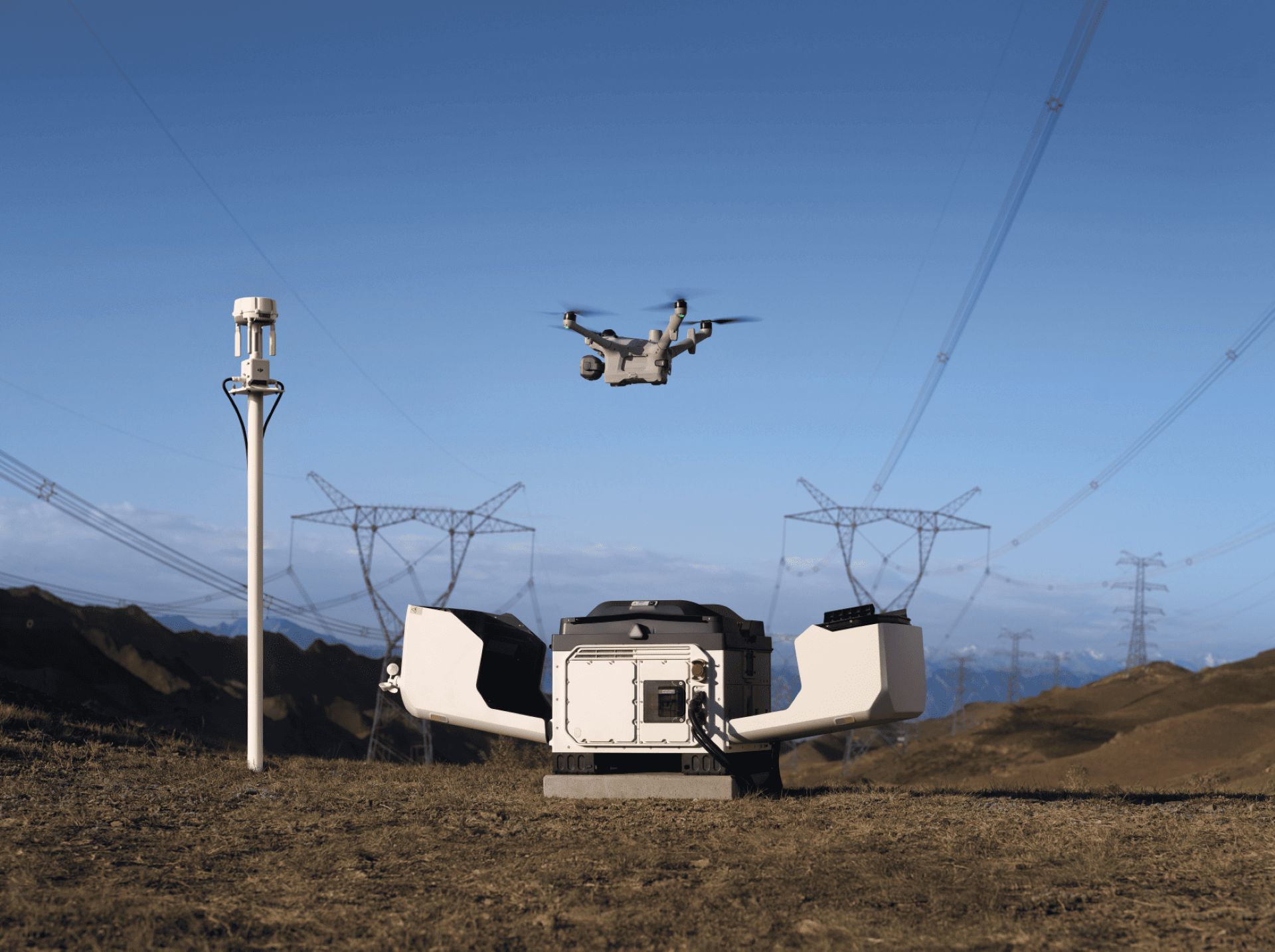
With the Dock 4, DJI has unveiled its first drone docking station with automatic battery swapping. The system replaces the battery on the also-new Matrice 5TD in 25 seconds. According to the specifications, the total time from landing to taking off again is under 45 seconds under test conditions. This means the same drone does not have to take a lengthy charging break after a mission. The dock has four battery compartments, of which no more than three can be occupied at the same time for the swapping mechanism. Two batteries can be charged in parallel. DJI specifies a charging time of 27 minutes to go from 15 to 95 percent at 25 °C.
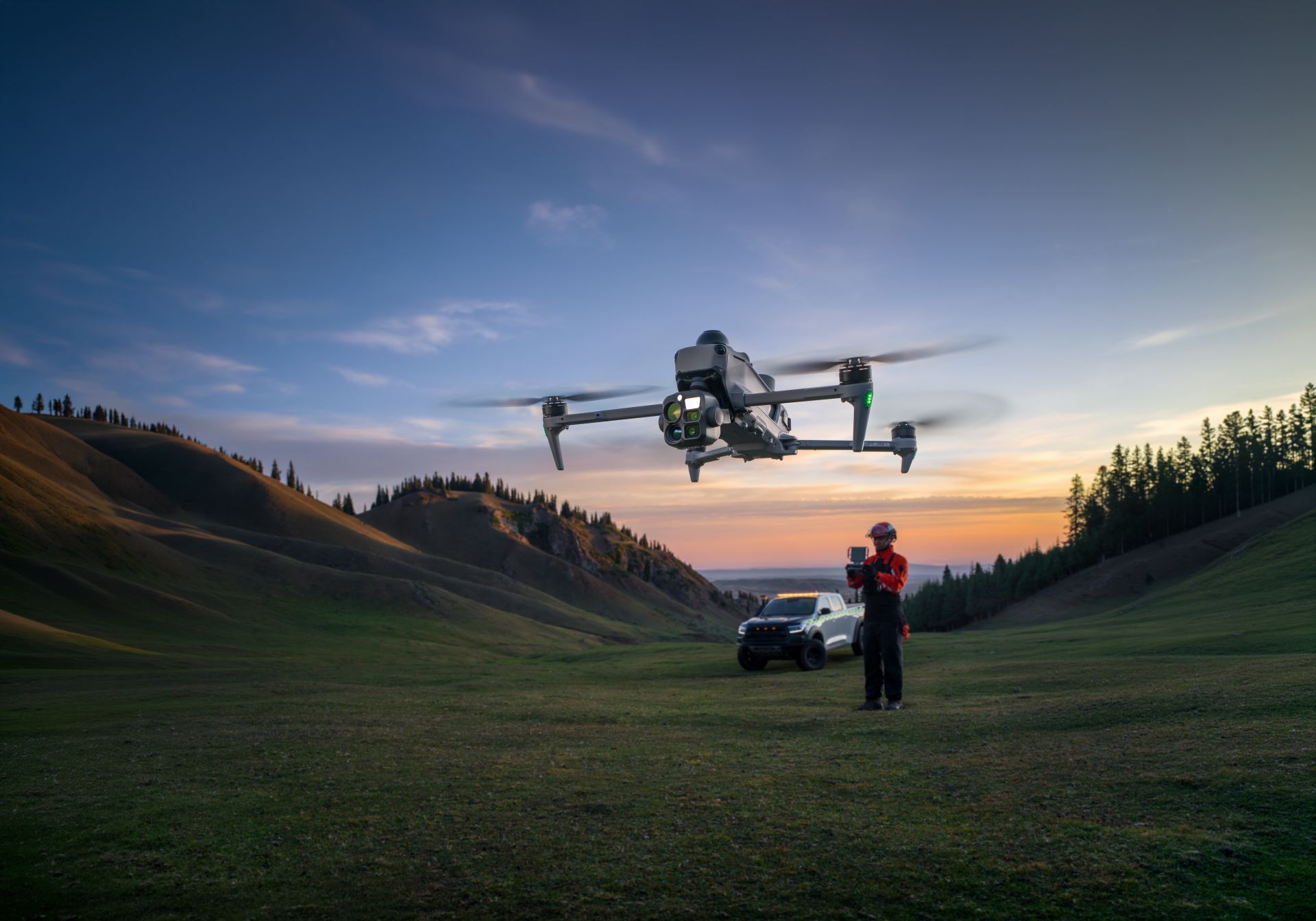
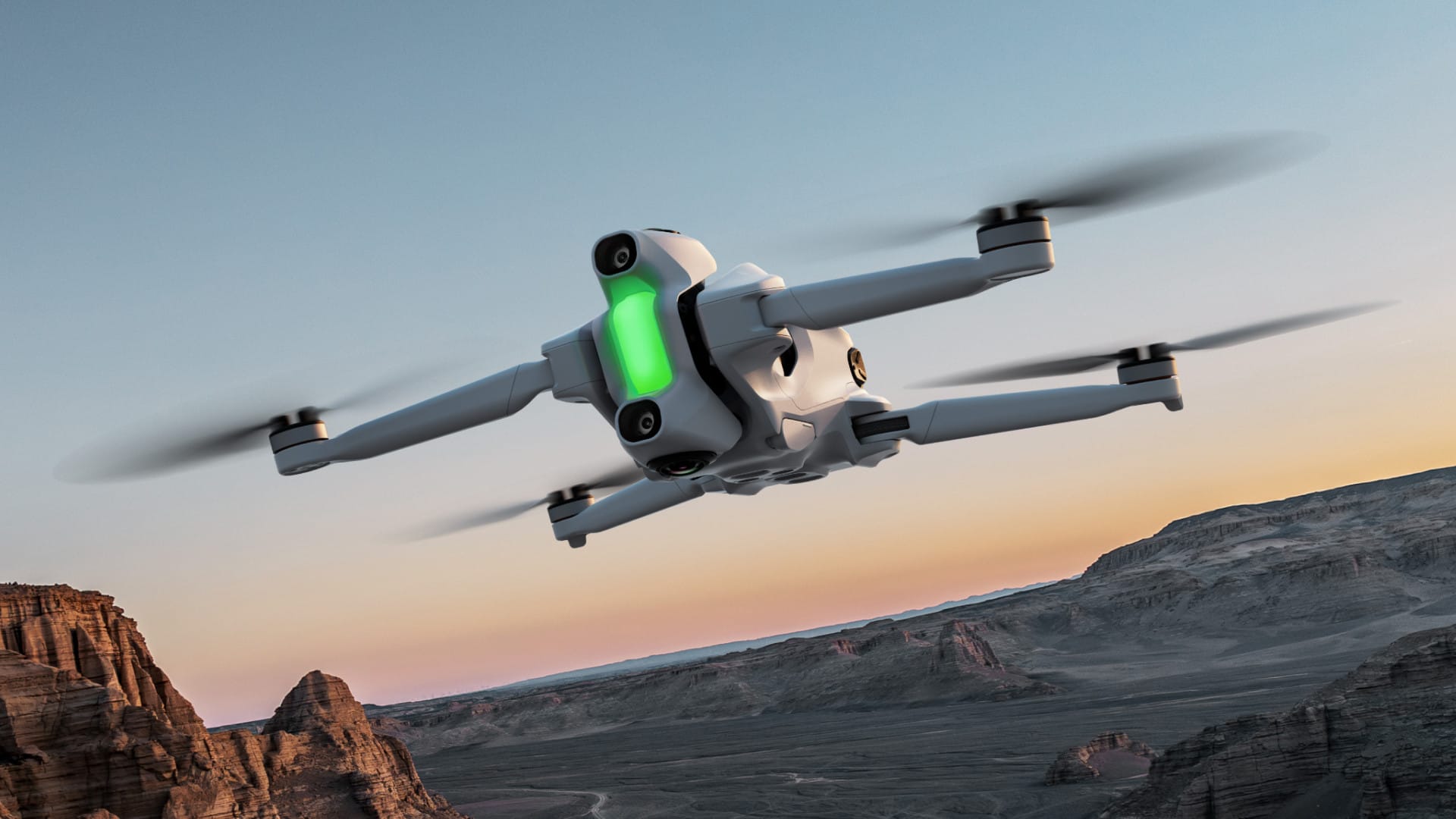
The combination is aimed, among others, at emergency services, operators of critical infrastructure and companies with regular inspection needs. After receiving a start command remotely, the Matrice 5TD can fly to a site and transmit the first live images. On so-called FlyTo missions, it reaches up to 21 m/s, or around 76 km/h. In other flight modes, the maximum speed is 15 m/s. The maximum flight time is 59 minutes under the test conditions specified by DJI. The manufacturer states a minimum latency of 160 milliseconds for transmission between the drone and the FlightHub 2 cloud. The actual delay depends, among other things, on the network connection.
Matrice 5TD with telephoto camera, thermal imaging and night vision
The Matrice 5TD combines a wide-angle camera with two telephoto cameras and a thermal camera. Each of the three visible-light cameras has a resolution of 50 megapixels and covers equivalent focal lengths of 23.5, 70 and 252 mm. The longest focal length corresponds to around 11x telephoto zoom compared with the wide-angle camera. DJI cites capturing details from up to 400 meters away and inspecting small defects on power lines from a distance of 100 meters as examples of use. However, how clearly such details can be identified also depends on lighting, visibility and the subject.
The thermal camera has a native resolution of 1280 × 1024 pixels. In UHR mode, it outputs images and videos at 2560 × 2048 pixels. The feature set also includes 32x digital zoom and spot and area temperature measurement. Edge fusion and overlay fusion can be used to combine thermal images with the visible camera image. This can make it easier, for example, to associate unusual temperatures with a specific component. The drone also offers 4K full-color night vision for nighttime missions. The NIR auxiliary light enables black-and-white night-vision recordings. Under suitable conditions, the integrated laser rangefinder has a range of up to three kilometers and can display distances and PinPoint coordinates directly in the live view.
Radar, LiDAR and weather-resistant construction for outdoor use
For obstacle detection, DJI combines a three-direction mmWave radar with a rotating LiDAR and a visual sensor system with six detection directions. Six fisheye cameras designed for low-light conditions help scan the surroundings. The combination is intended to detect even thin obstacles such as power lines and make flights in complex environments easier, for example among the technical installations of a substation. For challenging radio conditions, the DJI O4 Ground Station can be installed at an elevated position to improve the connection, for example between buildings or behind walls.
The Dock 4 weighs 66 kg without batteries or a drone and measures 639 × 640 × 836 mm when closed. With the covers open, it measures 1750 × 640 × 550 mm. The dimensions include the wind meter and mounting brackets. The station is IP56-rated and designed for temperatures from −40 to +50 °C. In cold conditions, the batteries are preheated automatically; in hot conditions, an integrated air-conditioning system cools them. The Matrice 5TD has an IP55 rating and is also specified for this temperature range. Including the battery, propellers and microSD card, it weighs 2.6 kg. The maximum takeoff weight is 3.05 kg, leaving up to 450 g available for additional payload.
Accessories planned include speakers, spotlights and a parachute system. An adjustable warning light is already integrated into the drone. DJI specifies a maximum wind speed of 12 m/s for take-off, flight and landing. If the wind speed rises too much during the return journey, the Matrice 5TD can reduce its altitude and adjust its return flight accordingly. A flight abort system can be triggered manually and stops the propellers. It is activated automatically when a predefined geocaging limit is exceeded. DJI describes the system as an important technical requirement for C6 compliance.
AI object search, service offers and availability
According to DJI, the Matrice 5TD’s integrated AI detects 17 types of objects in real time, including cars, boats and animals. In the virtual cockpit of DJI FlightHub 2, users can also search for specific objects by entering text or providing a reference image. Notifications can be configured for automated workflows via SMS, email or platform alerts. If the system detects a previously defined anomaly, actions such as taking photos, recording video, tracking an object or hovering can be linked to it. AI analysis of ongoing live footage is also planned.
For the first time, DJI Care Enterprise Plus is also available for the docking station. Within the agreed scope of coverage, it includes free replacement of eligible repair materials. For the Matrice 5TD, DJI lists, among other things, one battery replacement per year and flyaway protection. The separate DJI Extended Warranty Service extends the warranty period by one year. The DJI Dock 4 (Link) is available from authorized DJI Enterprise dealers (Link). DJI has not announced a price.
Source: DJI press release
Specifications
General
- Manufacturer
- DJI
- Docking station
- DJI Dock 4
- Drone
- DJI Matrice 5TD
- Control platform
- DJI FlightHub 2
- Availability
- Through authorized DJI Enterprise dealers
Docking station
- Automatic battery replacement
- 25 seconds
- Operating temperature
- −40 to +50 °C
- Temperature control
- Automatic battery preheating and integrated air conditioning
Flight performance
- Maximum flight time
- Up to 59 minutes
- Maximum speed
- 21 m/s (around 76 km/h)
- Maximum wind speed during takeoff, flight and landing
- 12 m/s
- Additional payload
- Up to 450 g
Camera system
- Cameras
- Wide-angle, telephoto and infrared cameras
- Telephoto zoom
- 11-speed
- Equivalent telephoto focal length
- 252 mm
- Infrared resolution in UHR mode
- Up to 2560 × 2048 pixels
- Additional infrared features
- 2K recording and 32x zoom
- Image fusion
- Edge fusion and overlay fusion
- Night vision
- 4K full-colour night vision
- NIR support
- Black-and-white night vision with additional light
- Laser rangefinder
- Up to 3 km
Sensors and obstacle detection
- Radar
- Three-directional mmWave radar
- LiDAR
- Rotating LiDAR sensor
- Visual obstacle detection
- In six directions
- Surround-view cameras
- Six high-resolution fisheye sensors for low-light conditions
- Wire detection
- Detection of thin obstacles such as power lines, even at night
Transmission and AI
- Latency between drone and cloud
- Up to 160 ms, according to DJI
- Supplementary radio technology
- DJI O4 Ground Station
- AI object detection
- 17 object types in real time
- Object search
- Via text or a reference image using DJI FlightHub 2
- Notifications
- SMS, email and platform alerts
- Automated actions
- Taking photos, recording video, tracking and hovering
Safety and accessories
- Flight abort system
- Manually triggerable FTS with automatic activation when the geofencing boundary is exceeded
- Return function
- Adjusting flight altitude when wind speed is exceeded
- Warning light
- Integrated and adjustable
- Accessory options
- Speakers, spotlights and parachute systems
Comments