Contents
Build quality and ports
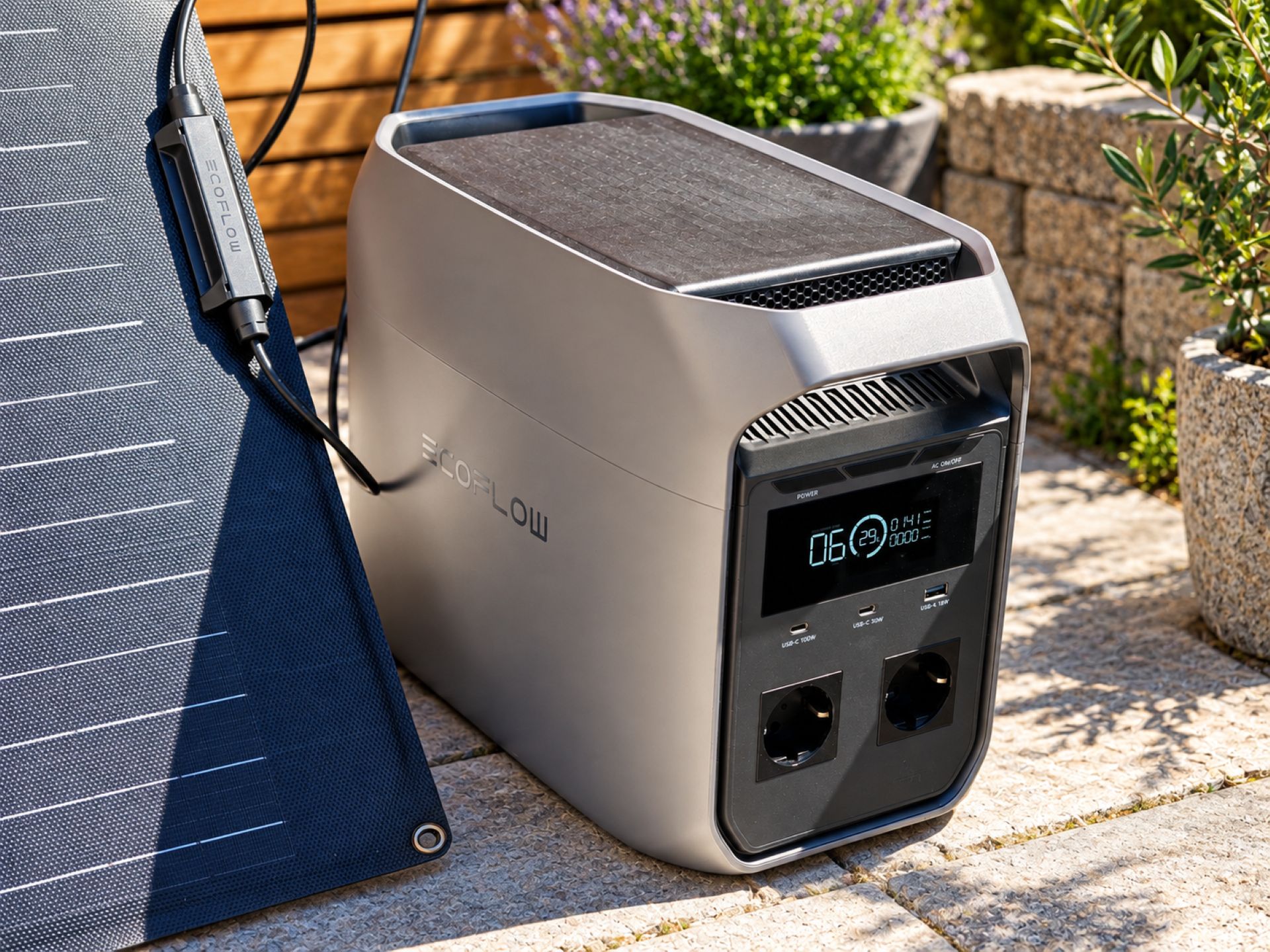
With the DELTA 3 Classic, EcoFlow offers a compact power station that deliberately focuses on the essentials. Rather than providing the most comprehensive feature set possible, it prioritizes high output power, short charging times, and straightforward operation. Measuring 398 × 200 × 283 millimeters and weighing around 12.1 kilograms, the power station is still easy to transport.
The typical light grey EcoFlow casing looks functional and comes with integrated carrying handles. It is designed for mobile use, but the Classic does not have a weatherproof construction, with its IP20 rating. Rain and prolonged exposure to moisture should therefore be avoided.
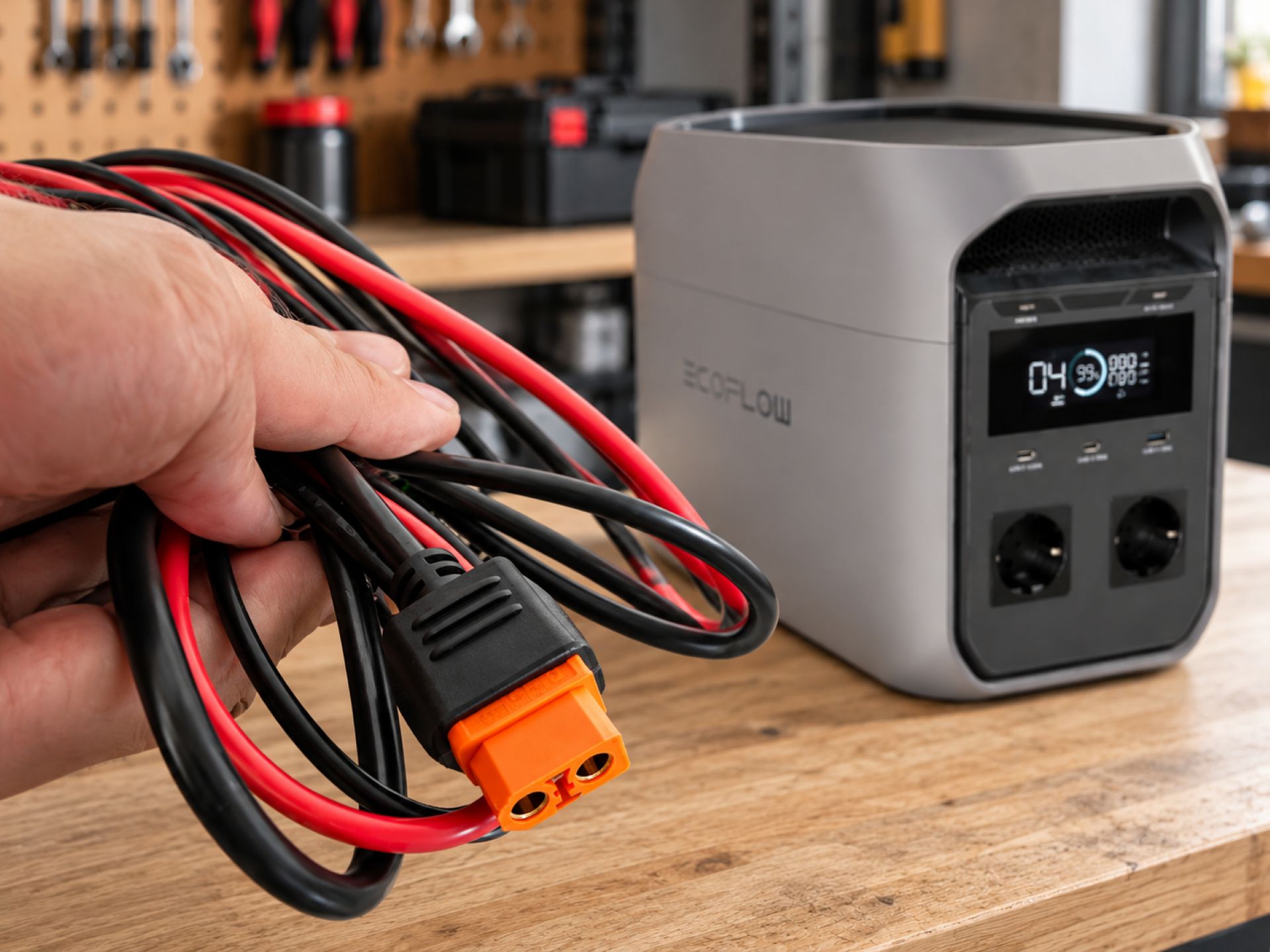
The display, controls and main power outputs are on the front. The display shows the current battery level, input and output power, and estimated remaining runtime. The ports reveal where EcoFlow has cut costs compared with its higher-end models. There are two 230-volt sockets, one USB-A port rated at up to 18 watts and two USB-C ports rated at 100 and 30 watts respectively.
That’s enough for a laptop, smartphones, and an additional household appliance. However, the number of ports is somewhat limited if you want to power many devices at once. The lack of a conventional 12-volt car outlet and additional DC ports is particularly disappointing. Camping coolers can therefore only be powered via a suitable 230-volt adapter, resulting in additional conversion losses. There is also no port for expansion batteries.
Power, battery capacity, and runtime
Inside is a lithium iron phosphate (LiFePO4) battery with a capacity of 1,024 Wh. Continuous AC output is 1,800 watts, with peak output of up to 3,600 watts available for short periods, according to the manufacturer. This is enough to run coffee machines, smaller kettles, power tools and other appliances with similarly high power demands.
The inverter produces a pure sine wave, which can also power more sensitive electronics such as laptops, monitors and chargers. For devices with a higher rated power, EcoFlow also offers X-Boost technology. It enables compatible devices with a power requirement of up to 2,400 watts to be operated by adjusting the output voltage. This works particularly well with simple heating loads, but does not mean that the power station can continuously supply more than its standard 1,800 watts.
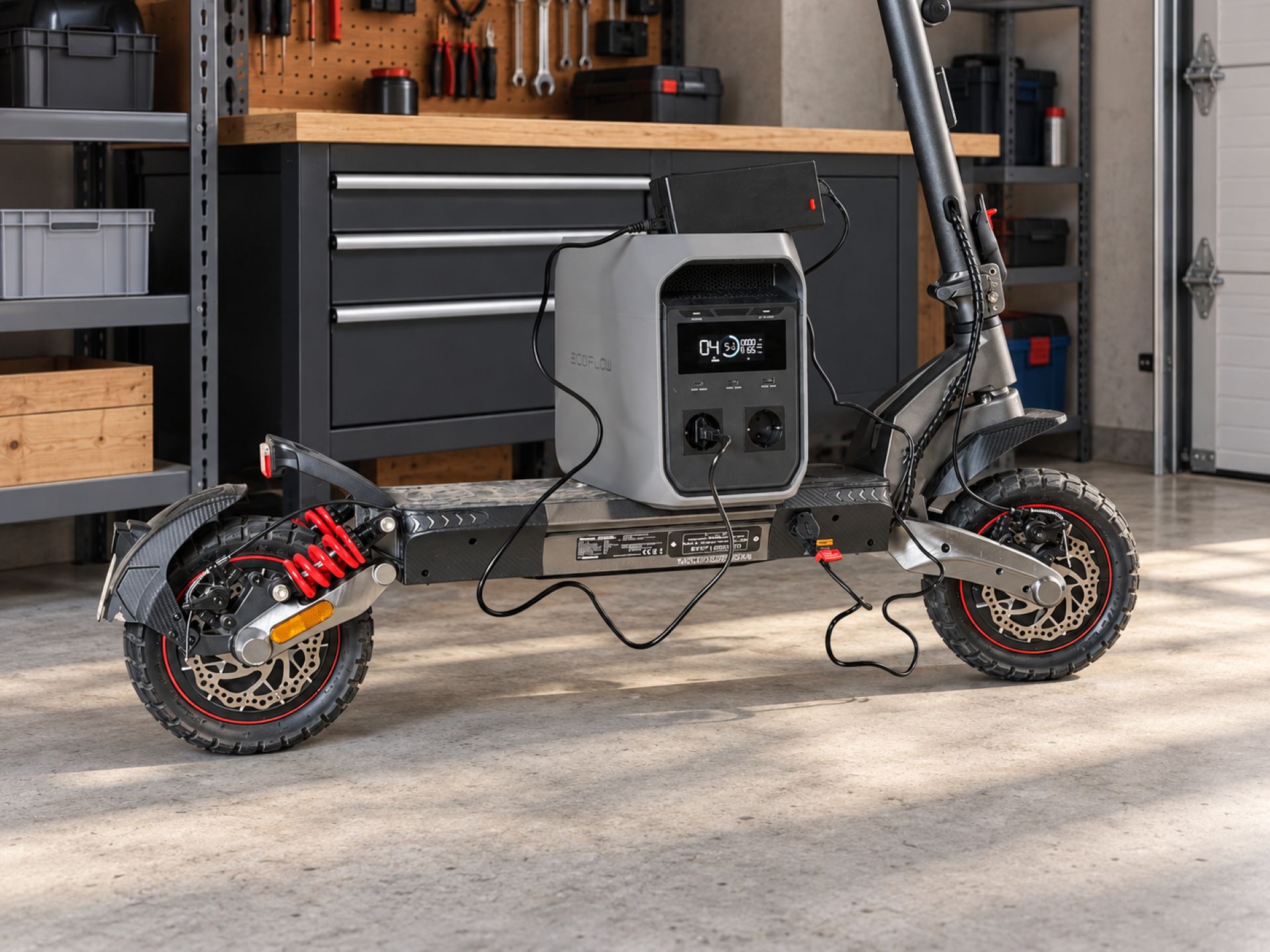
Runtime is naturally limited by the battery capacity. A device drawing 100 watts could theoretically run for more than ten hours, while at 500 watts, only around two hours would be possible. At the maximum continuous load of 1,800 watts, the energy storage would theoretically be depleted after about 34 minutes. In practice, these figures are lower due to power consumption and conversion losses.
The DELTA 3 Classic is therefore particularly suitable for short-term use in the garden, when camping or as a backup power source for smaller devices. The LFP battery technology is a positive feature, as it is designed for a high cycle count and long service life. An integrated battery management system monitors operation. The power station also supports a UPS function with a stated switchover time of up to 10 milliseconds. However, whether connected devices can actually withstand a power cut without interruption also depends on their power supplies.
Charging speed and solar power
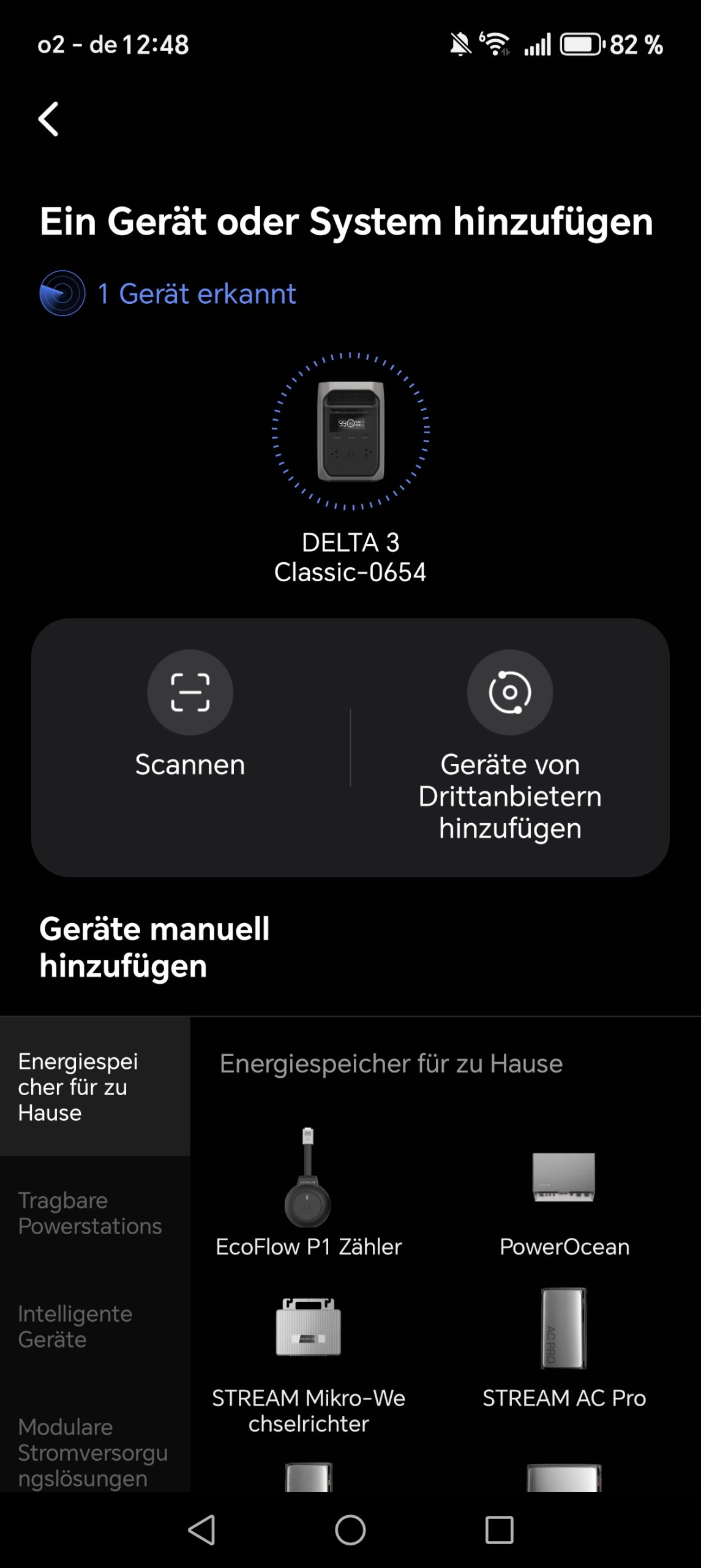
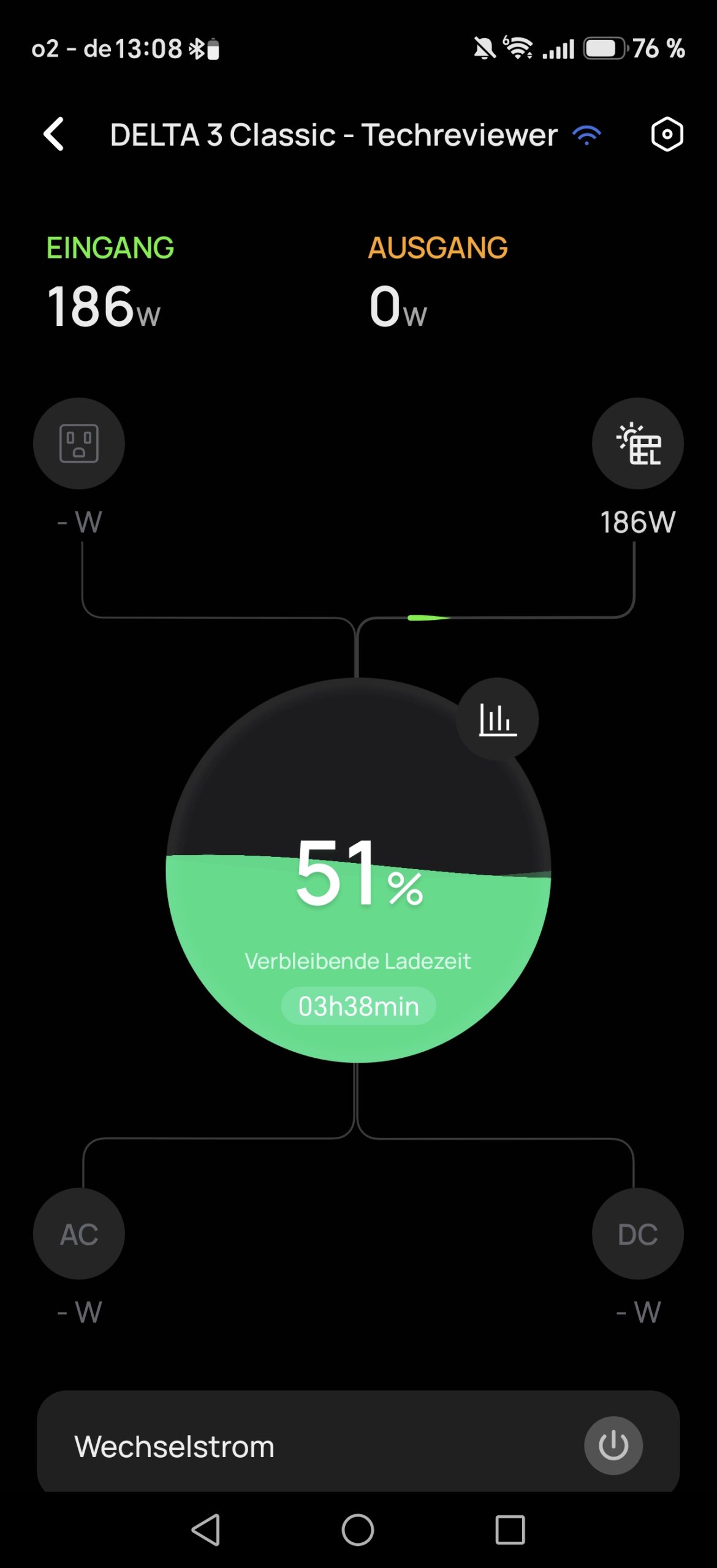
One particular strength of the DELTA 3 Classic is its high charging speed. Using a standard power socket, the power station draws up to 1,400 watts and reaches an 80 per cent charge in around 45 minutes. A full charge takes about an hour in fast-charging mode.
If you can’t use a power outlet, you can alternatively harness solar energy. The XT60 solar input supports voltages of 11 to 60 volts at a maximum of 15 amps and accepts up to 500 watts. With a sufficiently powerful solar panel or a suitable combination of several panels, a full charge is possible in around two and a half hours under favorable conditions.
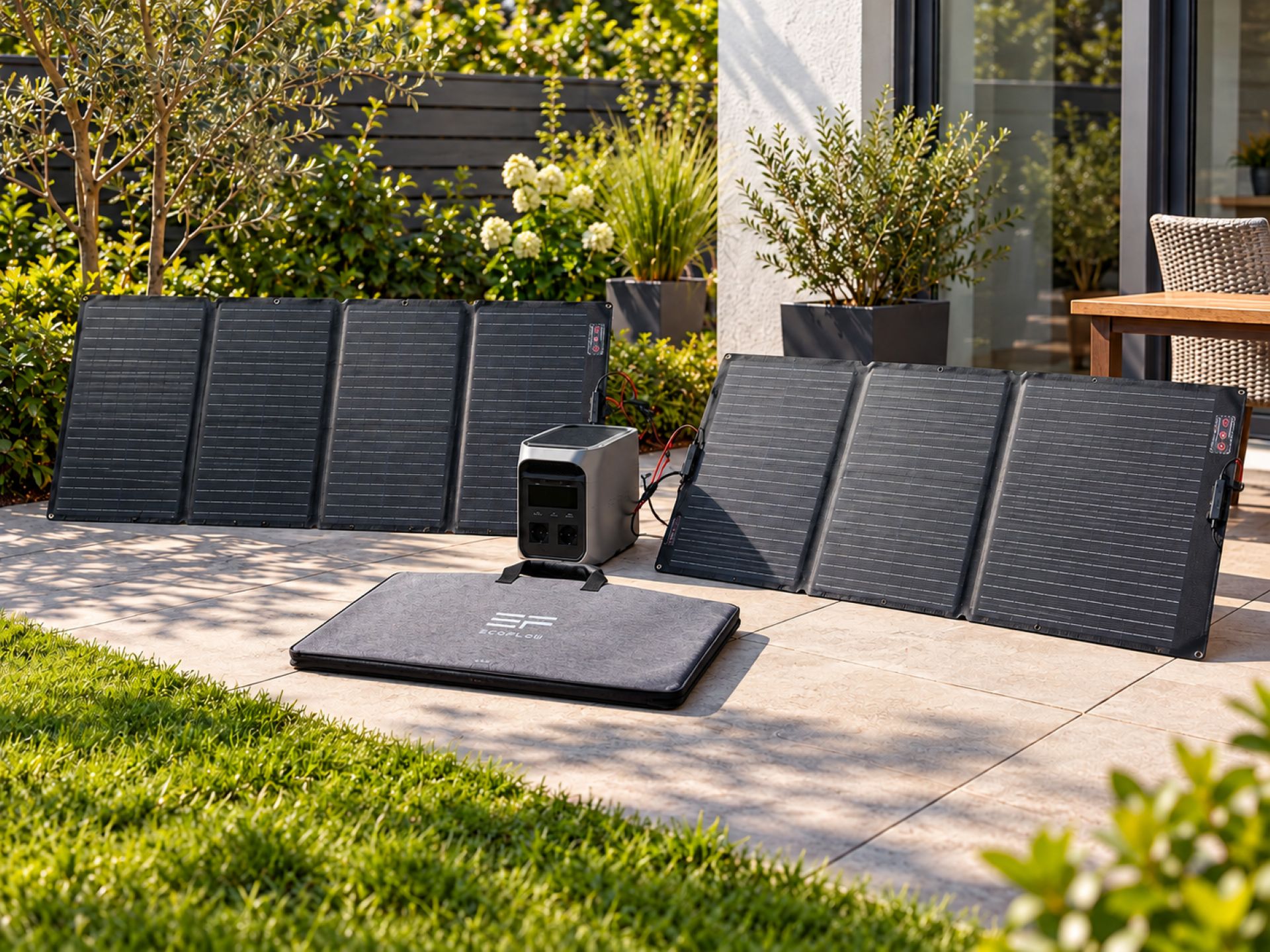
The foldable 160-watt EcoFlow solar panel, for example, is a good complement to the power station. It can be transported compactly and set up in the garden or at a campsite when needed. While its rated output is well below the Classic’s maximum solar input, it offers a practical way to recharge on the go. At a constant 160 watts, a full charge would take more than six hours purely in theory.
Operation, EcoFlow app and noise levels
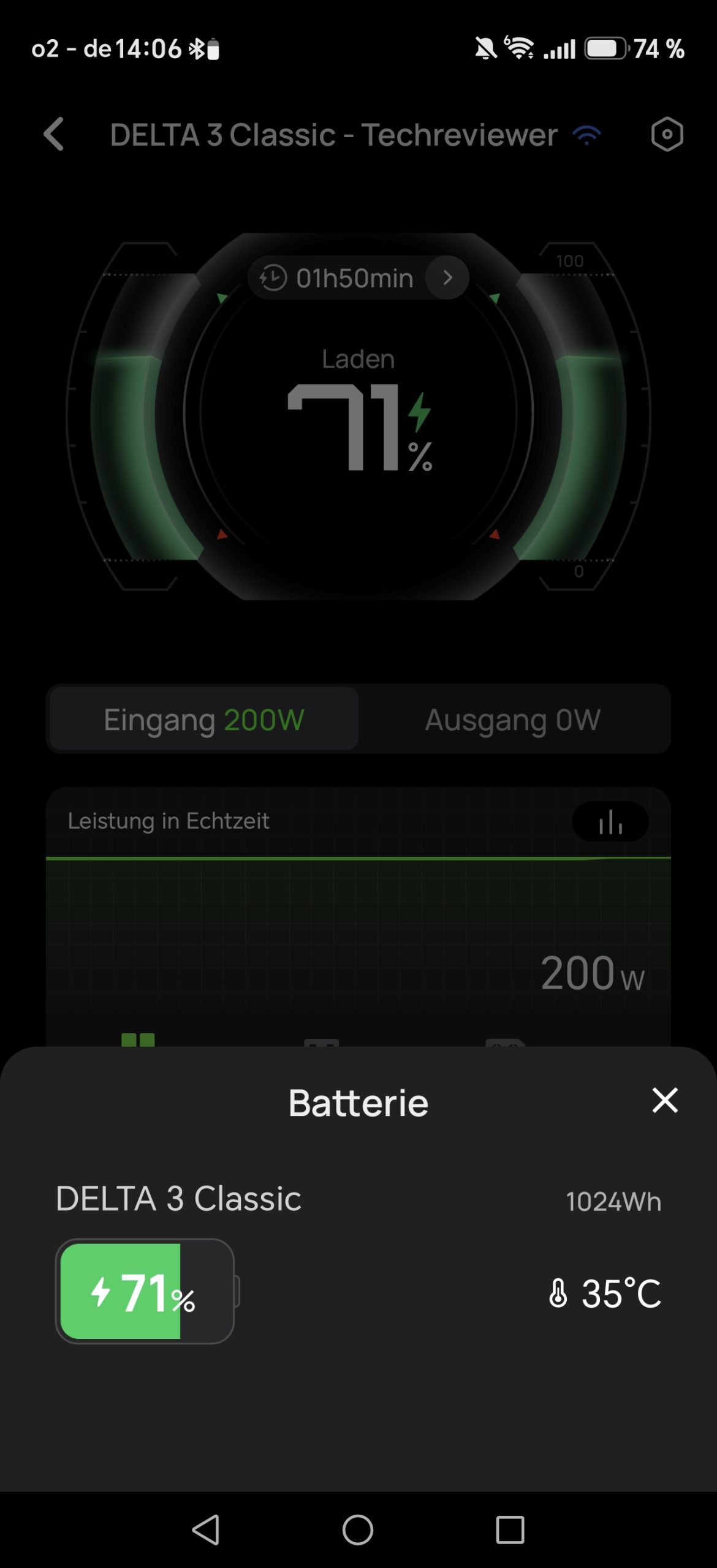

In addition to the controls on the device, the DELTA 3 Classic can also be operated via the EcoFlow app. It connects via Bluetooth or Wi-Fi, and the app provides a clear overview of the current energy flow. In addition to the battery level, it displays the input and output power as well as the remaining runtime. You can also change charging settings and automate certain processes.
OASIS 3.0 offers features such as scheduled charging and discharging, as well as Storm Guard. The latter is designed to ensure that the power station is prepared in good time as a power reserve when severe weather is forecast. The app therefore usefully complements the controls on the device, without being essential for basic functions.
EcoFlow has also improved noise levels. At a load of 600 watts, noise reaches a maximum of 30 dB; at 1,200 watts, it stays below 40 dB. This makes the Classic one of the quieter power stations in its performance class, which is worth bearing in mind when using it in living spaces or a motorhome.
Our verdict
The EcoFlow DELTA 3 Classic focuses on the essentials and impresses with a 1,024 Wh battery capacity, 1,800 watts of continuous output and particularly fast charging times. Its straightforward operation, comprehensive EcoFlow app and long-lasting LFP battery technology make it a reliable power source for the garden, camping and occasional emergencies.
There are compromises when it comes to connectivity. Two sockets, three USB ports and the lack of a 12-volt output limit its flexibility. The battery capacity also cannot be expanded later. If you can do without these features, the DELTA 3 Classic is a powerful and relatively compact power station offering good value for money.
Specifications
General
- Manufacturer
- EcoFlow
- Model
- DELTA 3 Classic
- Model number
- EF-DL3-C
- Color
- Light grey
- Dimensions
- 398 × 200 × 283 mm
- Weight
- approx. 12.1 kg
- Protection rating
- IP20
Battery
- Capacity
- 1,024 Wh
- Battery type
- Lithium iron phosphate (LiFePO4)
- Nominal voltage
- 51,2 V
- Battery management
- Integrated BMS
- Lifespan
- Designed to last up to 10 years
- Expandability
- None
Output power
- AC continuous power
- 1.800 W
- AC peak output
- 3.600 W
- X-Boost
- Up to 2,400 W
- Output voltage
- 230 V / 50 Hz
- Inverter
- Pure sine wave
- UPS switchover time
- Up to 10 ms
Ports
- AC outputs
- 2x 230 V
- USB-A
- 1x up to 18 W
- USB-C
- 1x up to 100 W
- USB-C
- 1× up to 30 W
- 12 V car output
- Not available
- DC5521 outputs
- Not available
- Total number of outputs
- 5
Charging functions
- AC input power
- Up to 1,400 W
- AC charging time 0–80%
- approx. 45 minutes
- AC charging time, 0–100%
- approx. 60 minutes
- Solar input power
- Up to 500 W
- Solar input
- XT60, 11–60 V / 15 A
- Car charging
- Supported
- Generator/battery charger
- Compatible accessory required
Connectivity
- Display
- Integrated
- Bluetooth
- Yes
- Wi-Fi
- 2,4 GHz
- App control
- EcoFlow app
- Storm Guard
- Supported
- Scheduled charging and discharging functions
- Yes
Other
- Noise level at 600 W
- Under 30 dB (manufacturer’s figure)
- Noise level at 1,200 W
- Below 40 dB (manufacturer's specification)
- Charging temperature
- 0 to 45 °C
- Discharge temperature
- -10 to 45 °C
- Warranty
- 3 years + 2 years after registration
What’s included
1x EcoFlow DELTA 3 Classic power station 1x AC charging cable 1x user manual and warranty documents
Price comparison
| Store | Price | Link |
|---|---|---|
| Amazon | 718,00 € | Go to store |

Comments