Contents
Design, build and handling
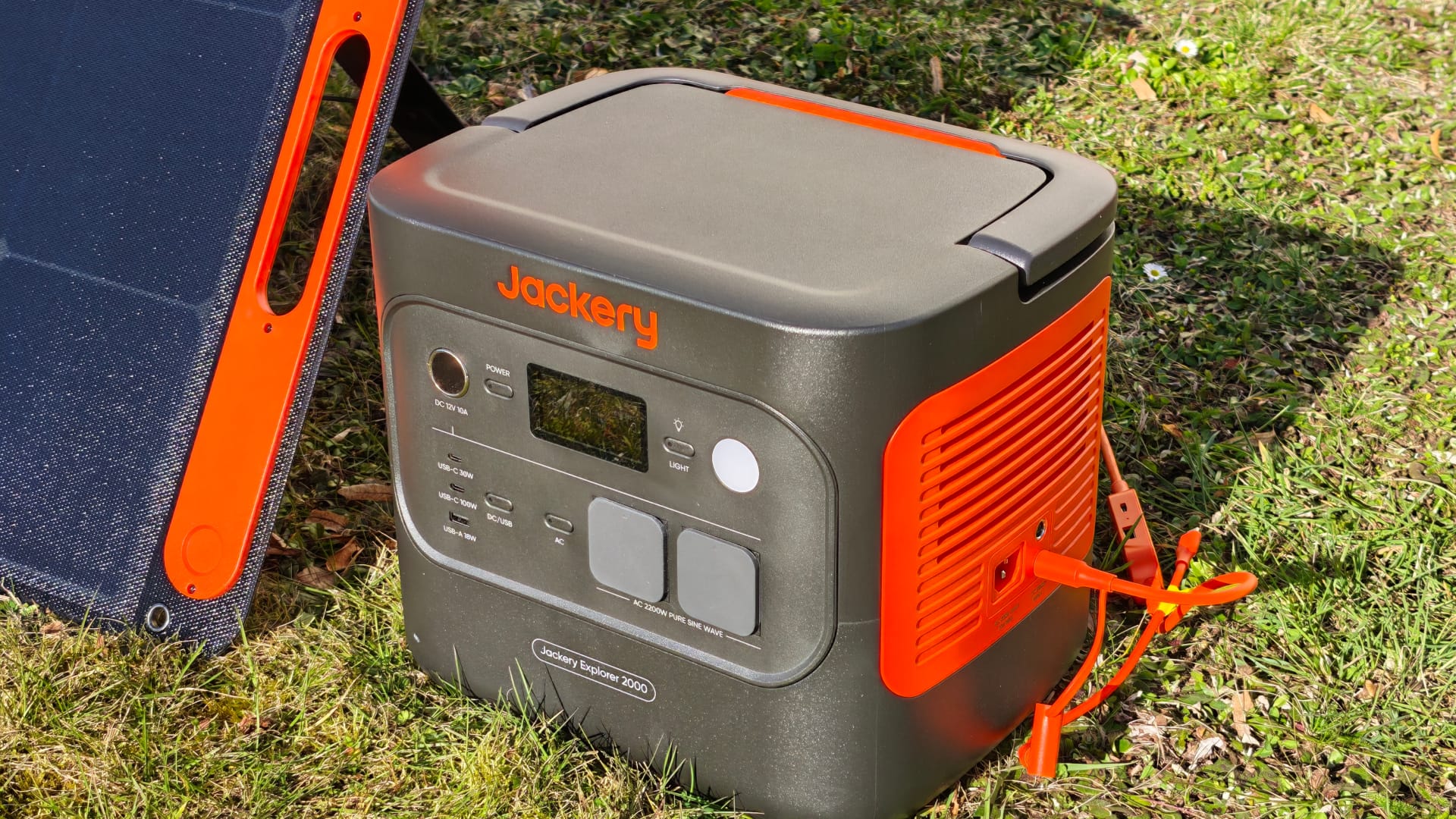
At 17.5 kg, the Explorer 2000 v2 is no lightweight, but it is still easy enough to carry for its class. Taking it from the car to a pitch or into the garage is no problem, but you probably would not want to carry it much further.
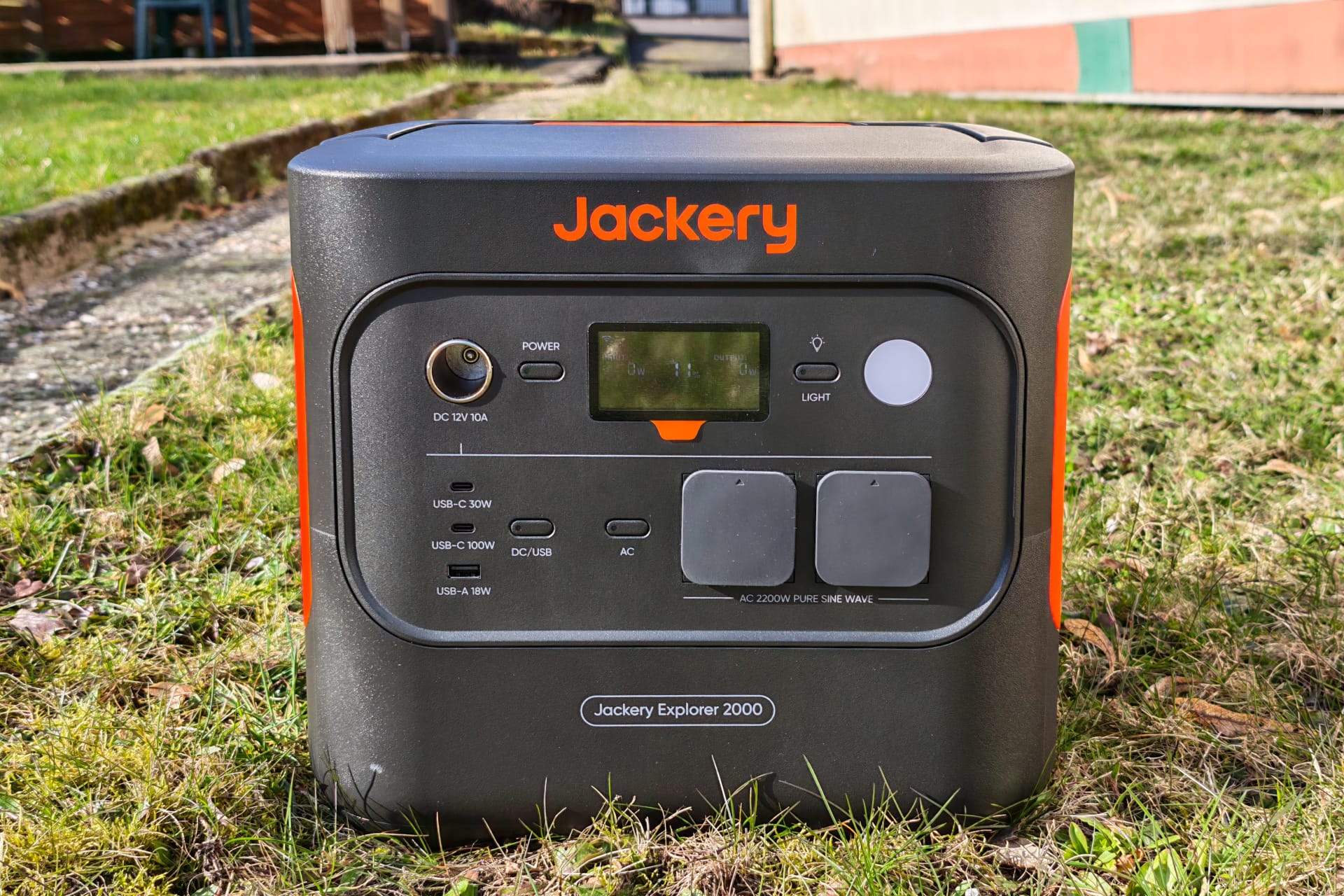
Measuring around 38.5 x 36.6 x 28 cm, it is compact enough not to take up much space in a boot or camper van. Its shape is almost cube-like, making it easier to stow than elongated devices.
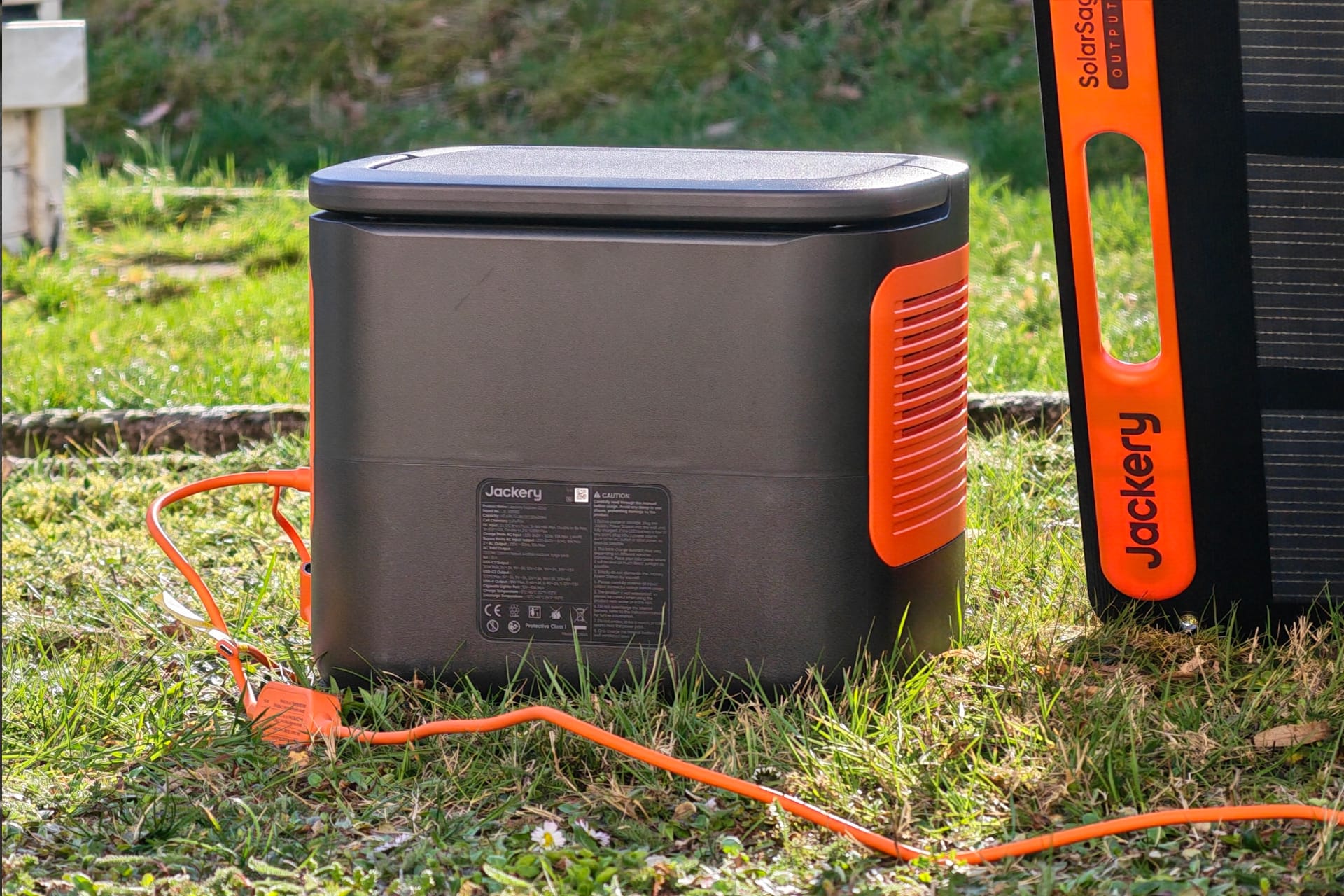
The handle is sturdy and firmly attached, with no wobbling. The plastic housing is well finished, with no obvious weak points. Its compact, practical shape fits well in a trunk or under a camper van bench seat.
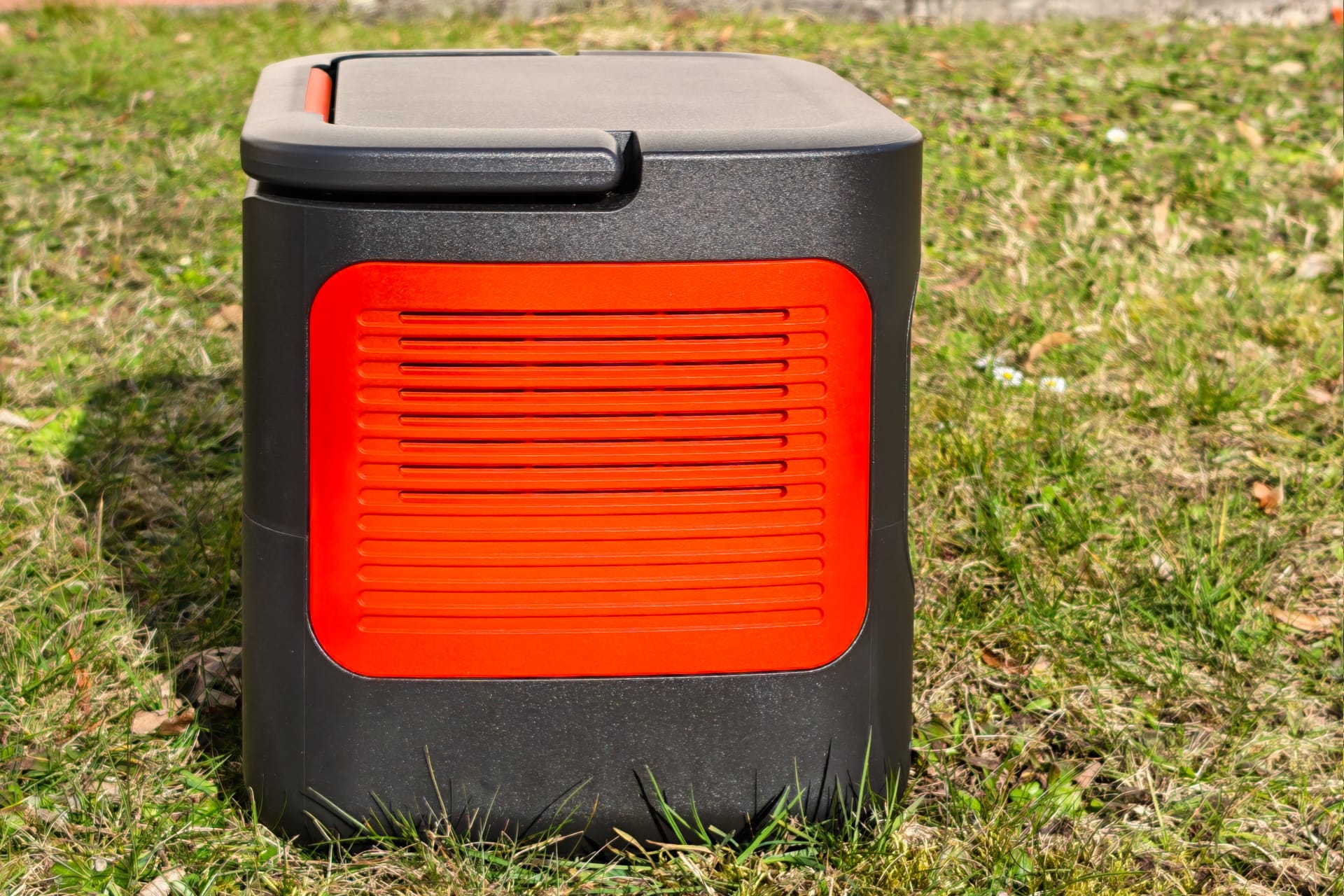
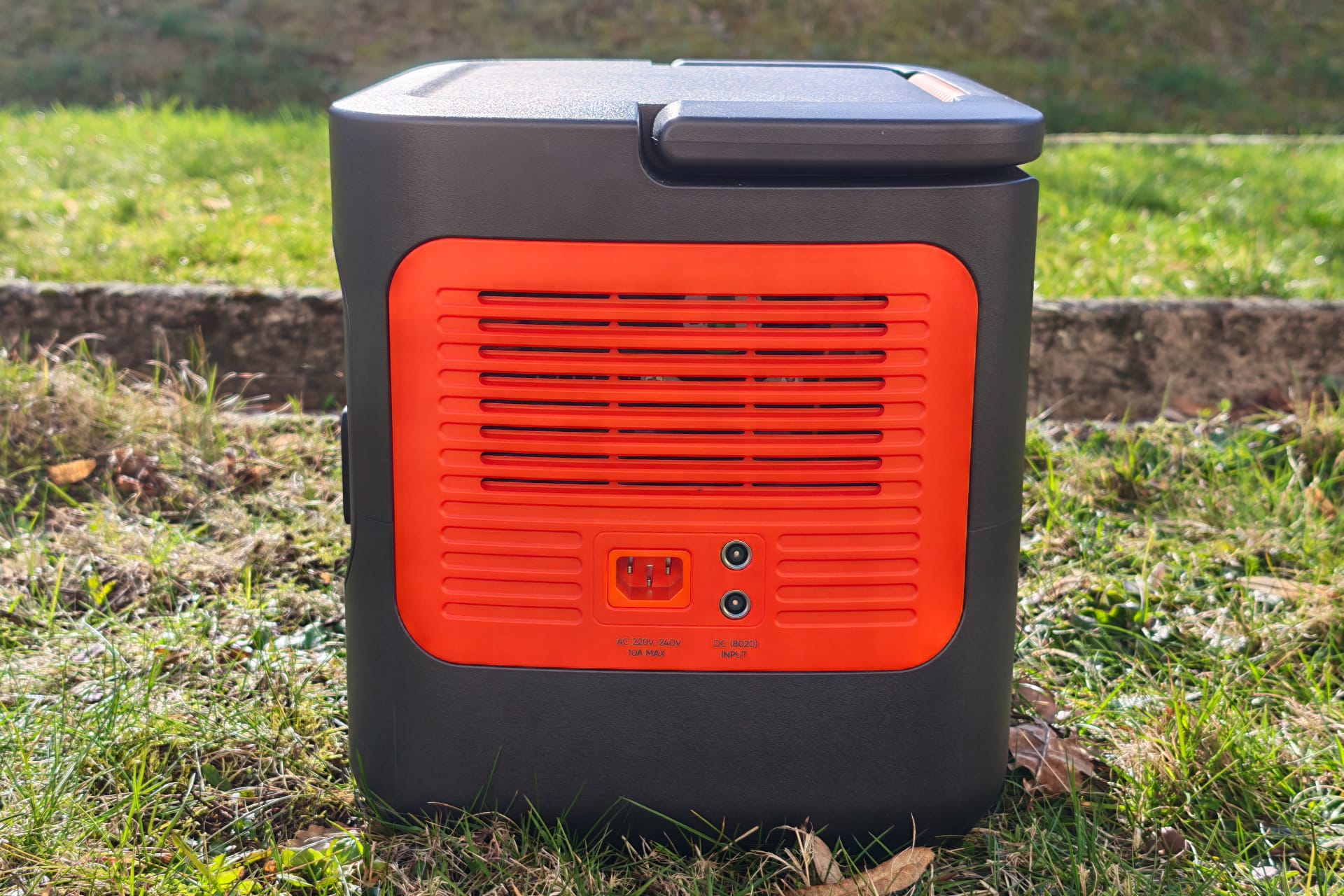
The display is easy to read and shows what you need: input, output and battery level. The controls consist of a few buttons and are self-explanatory.
Ports and features
On the front are three standard 230V sockets. There are also two USB-C ports with up to 100 watts, two USB-A ports and a 12V output.
The USB-C ports are particularly practical for everyday use. You can charge a laptop, camera or tablet directly, without an extra power adapter.
There are enough ports for most scenarios. Running three AC devices at once is realistic; you rarely need more.
Everything is neatly separated and can be switched on and off individually. So you don’t always have to keep the whole device running when only one output is in use.
One detail: An adapter is required for solar panels from other manufacturers, as Jackery uses its own connector.
Performance and efficiency
The 2,200 W continuous output is enough for almost anything you would use day to day. Kettles, coffee machines and hotplates work without issue, as long as you do not run everything at once. The Explorer v2 can power small devices such as a laptop, monitor and lights simultaneously and reliably for several hours.
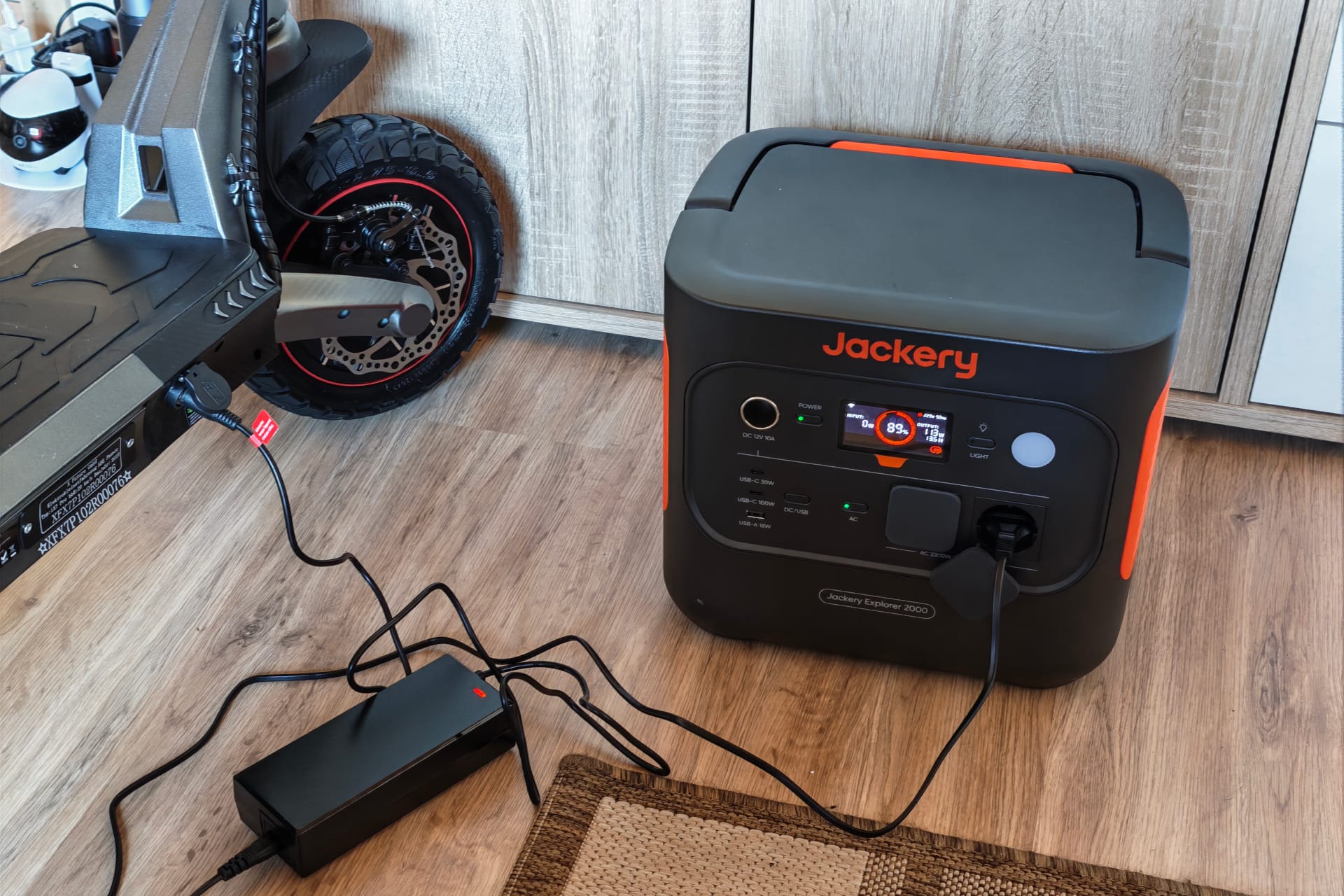
If the power fails, the power station's UPS function switches on automatically in under 20 ms. Devices such as routers, NAS systems and a running PC usually remain active without interruption.
Even appliances with a high starting current are no problem for the Explorer 2000 v2. A fridge or power tool starts reliably without the power station switching off.
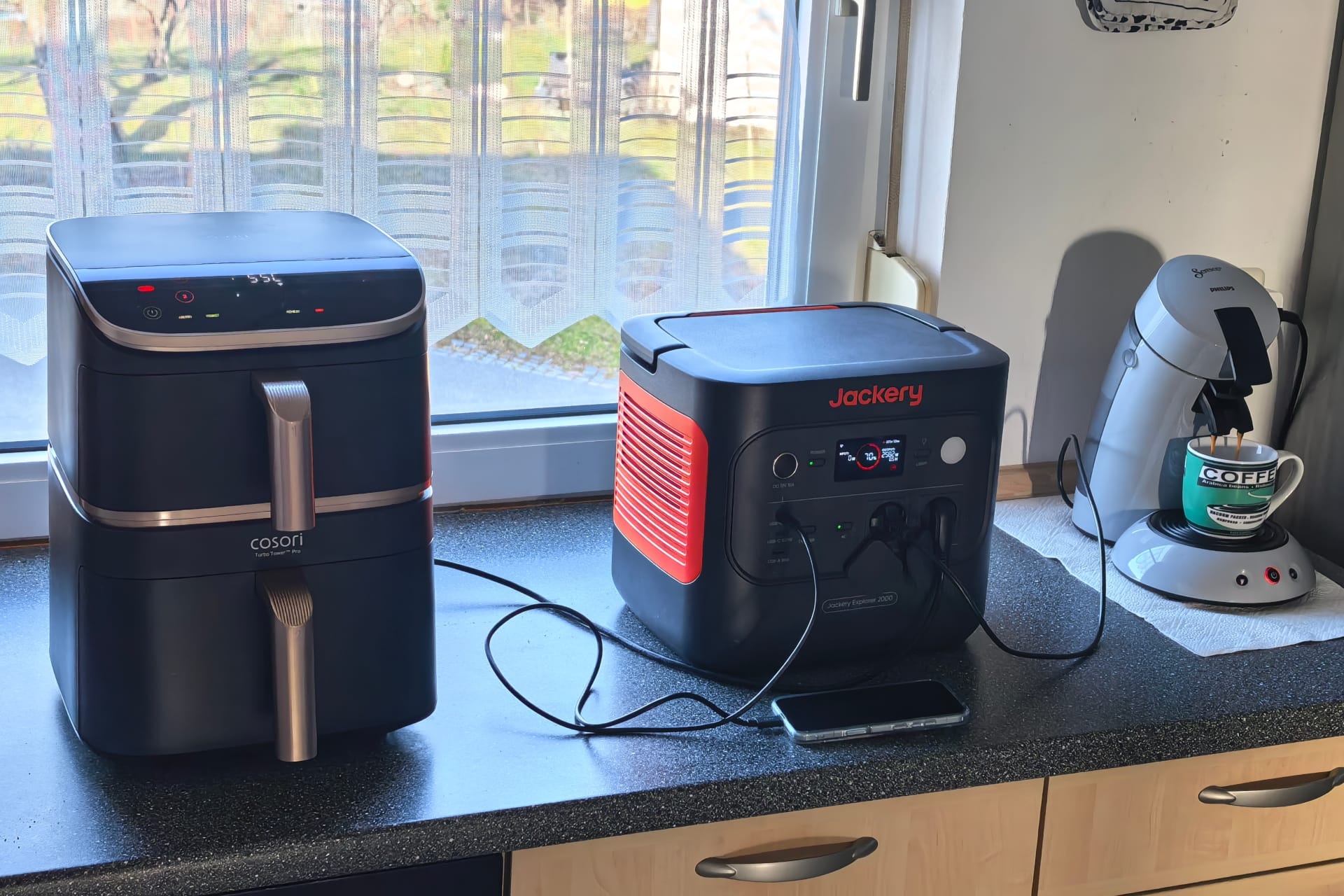
In practice, less than 2,042 Wh is available. Depending on usage, the inverter results in losses of around 10 to 15%. Around 1,700 to 1,800 Wh is usable in reality.
In our tests, we achieved the following runtimes:
- Compressor cooler (~40 W): around 40–45 hours
- Mobile workstation (~130 W): around 12–14 hours
- Household refrigerator (~120 W): approx. 14–16 hours
Charging and solar
It uses LiFePO4 cells, designed to retain 80% of their capacity after around 4,000 charge cycles. Even if you fully charge and discharge the power station once a day, that amounts to more than 10 years of use before its capacity noticeably declines.
The Explorer 2000 v2 charges fastest from a mains socket. Depending on the mode, charging from empty to full takes around 2.5 hours. Charging in a car is possible, but takes correspondingly longer and is intended more for use on the go.
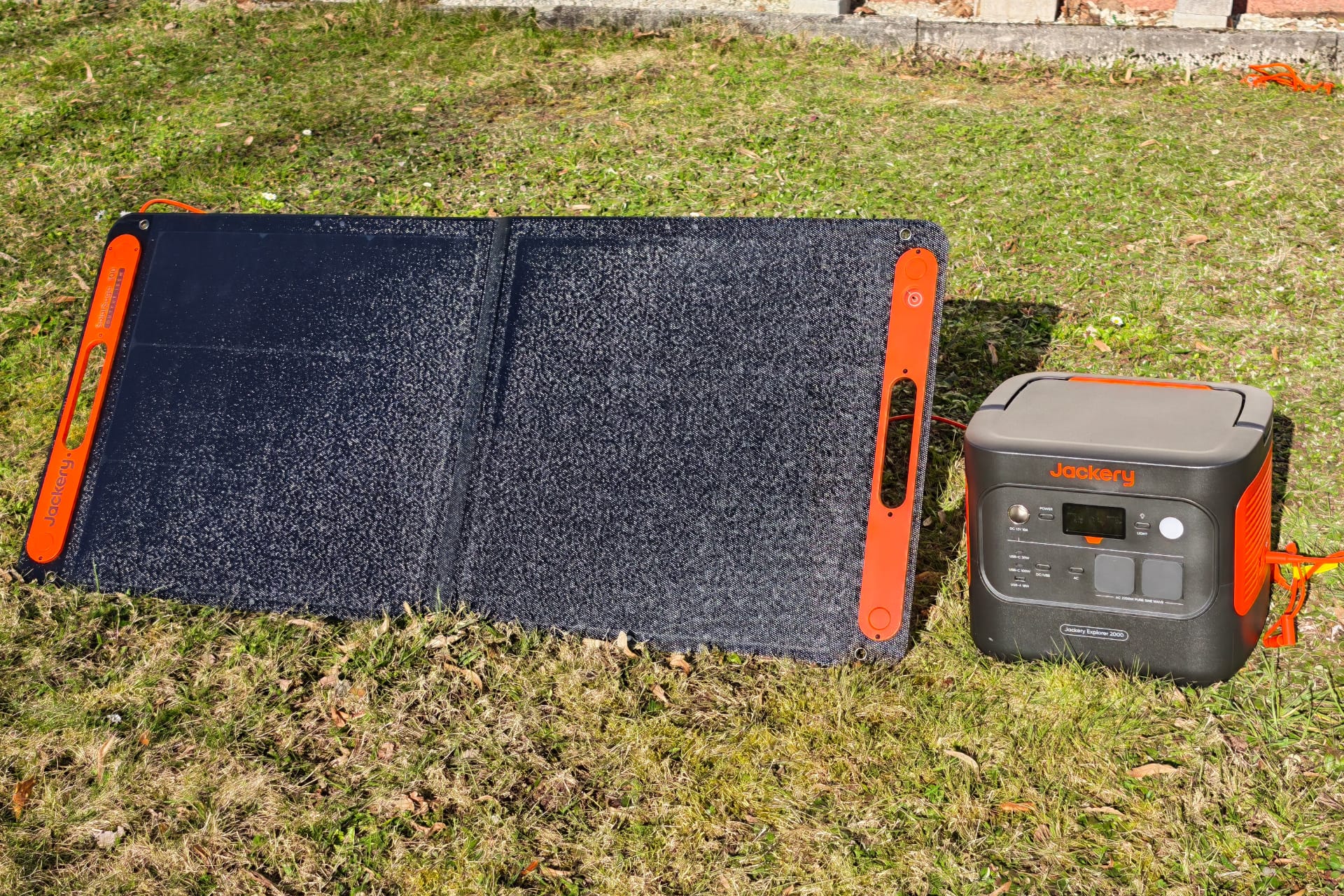
Solar charging works, but it’s the weakest point. With a maximum input of 400 watts, a full charge takes about 6 hours. It takes longer in changeable weather. Solar is enough for occasional top-ups. If you use a lot of power regularly, you’ll struggle without charging from the mains.
Important in everyday use: the power station can charge and supply devices at the same time. This is particularly useful with solar power when the electricity generated is used directly.
App and operation
The power station can be operated entirely on the unit itself, but there’s also an app (Android / iOS). It shows the battery level and input and output power, and lets you switch the outputs on or off. The connection is via Bluetooth or Wi-Fi.
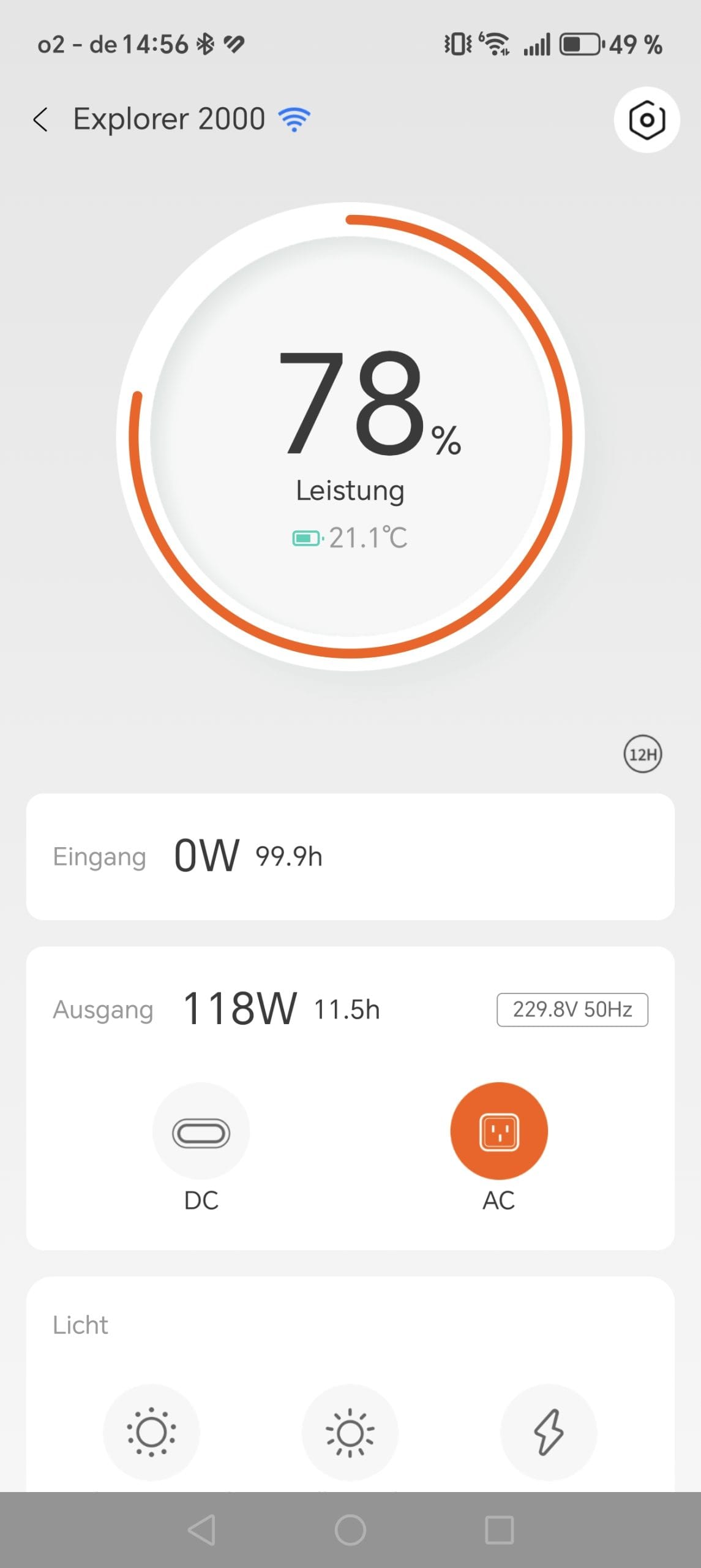
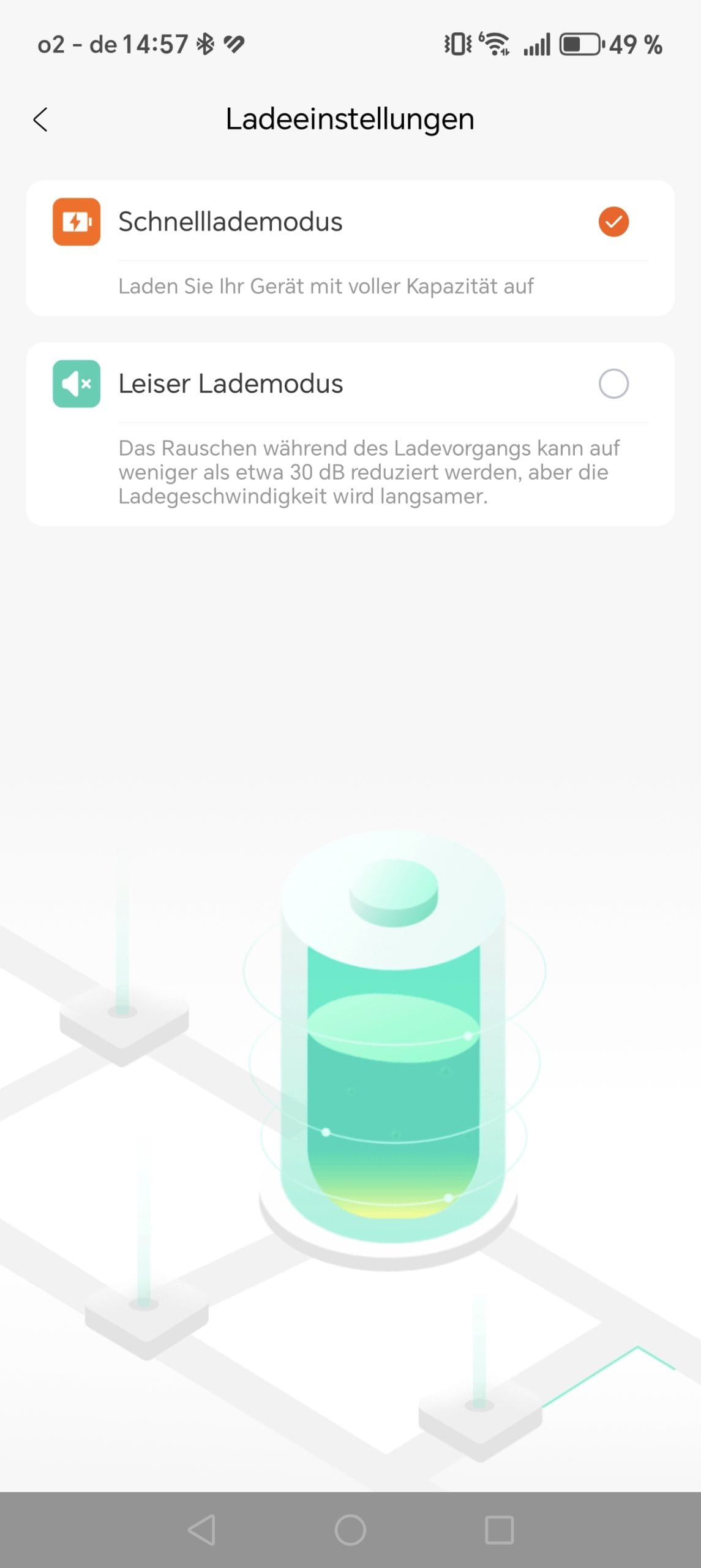
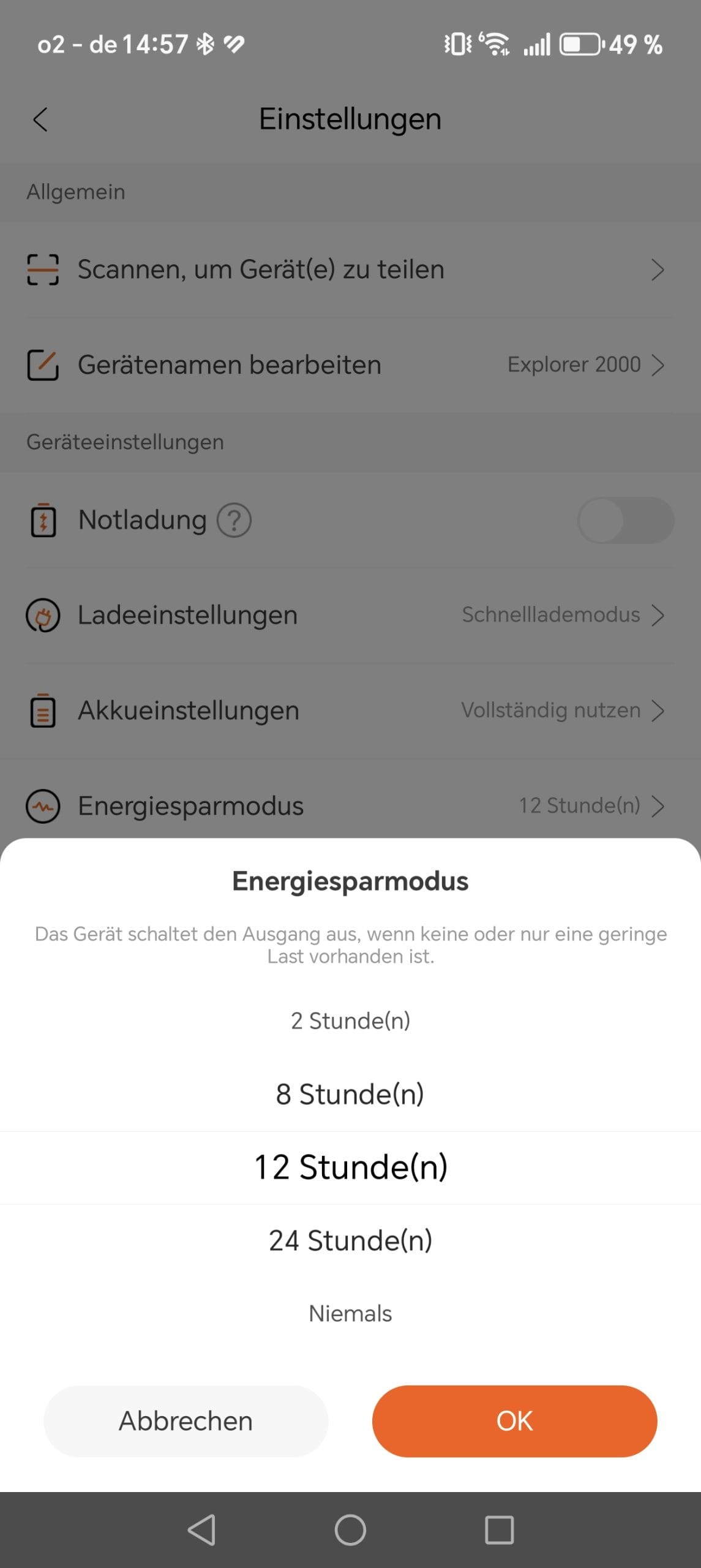
The app is particularly useful when the power station isn’t within easy reach. For example, in a camper van, when the power station is in the back and you’re lying in bed at the front. The app lets you see right away how much battery is left or whether anything is still drawing power.
This is also useful when charging with solar power. You can quickly check how much power is coming in without having to go to the power station each time.
Noise levels
The power station stays quiet under a light load. If it’s only powering a laptop or a light, you can barely hear it.
As soon as more power is drawn, the fans kick in. They then become audible, but not annoyingly loud. Compared with a generator, it’s no issue at all.
You notice it in a camper van or in a room, especially under continuous load. It is borderline for use right next to the bed, but no problem during the day.
Our verdict
The Jackery Explorer 2000 v2 hits the sweet spot in the 2 kWh class. It offers enough power for most applications while remaining portable. In everyday use, its stable power output and easy operation are particularly impressive.
Its strengths are its power, good efficiency and durable LiFePO4 technology. The UPS function also makes it an appealing backup solution.
The solar performance is a weak point. The 400-watt input is rather low for the capacity. At higher consumption, it cannot keep up over the long term. The power station also cannot be expanded.
All in all, the Explorer 2000 v2 is a good choice for camping, mobile use and as an emergency power solution. Anyone planning to rely heavily on solar power or expand the system later should look at alternatives.
Specifications
General
- Capacity
- 2,042 Wh
- Battery type
- LiFePO4
- Cycle life
- approx. 4,000 cycles until 80%
- Weight
- approx. 17.5 kg
- Dimensions
- approx. 38.5 x 36.6 x 28 cm
Performance
- Continuous output
- 2.200 W
- Peak power
- 4.400 W
- UPS switchover time
- 20 ms
Ports
- 3x AC 230 V
- 2x USB-C 100 W PD
- 2x USB-A
- 1x DC 12–30 V max. 200 W
Input
- AC
- Solar 12–30 V, max. 400 W
- Car 12 V
What’s included
1x Jackery Explorer 2000 v2 1x mains cable 1x car charging cable 1x user manual
Comments