Contents
Nothing Ear (a): Design, build quality and box contents
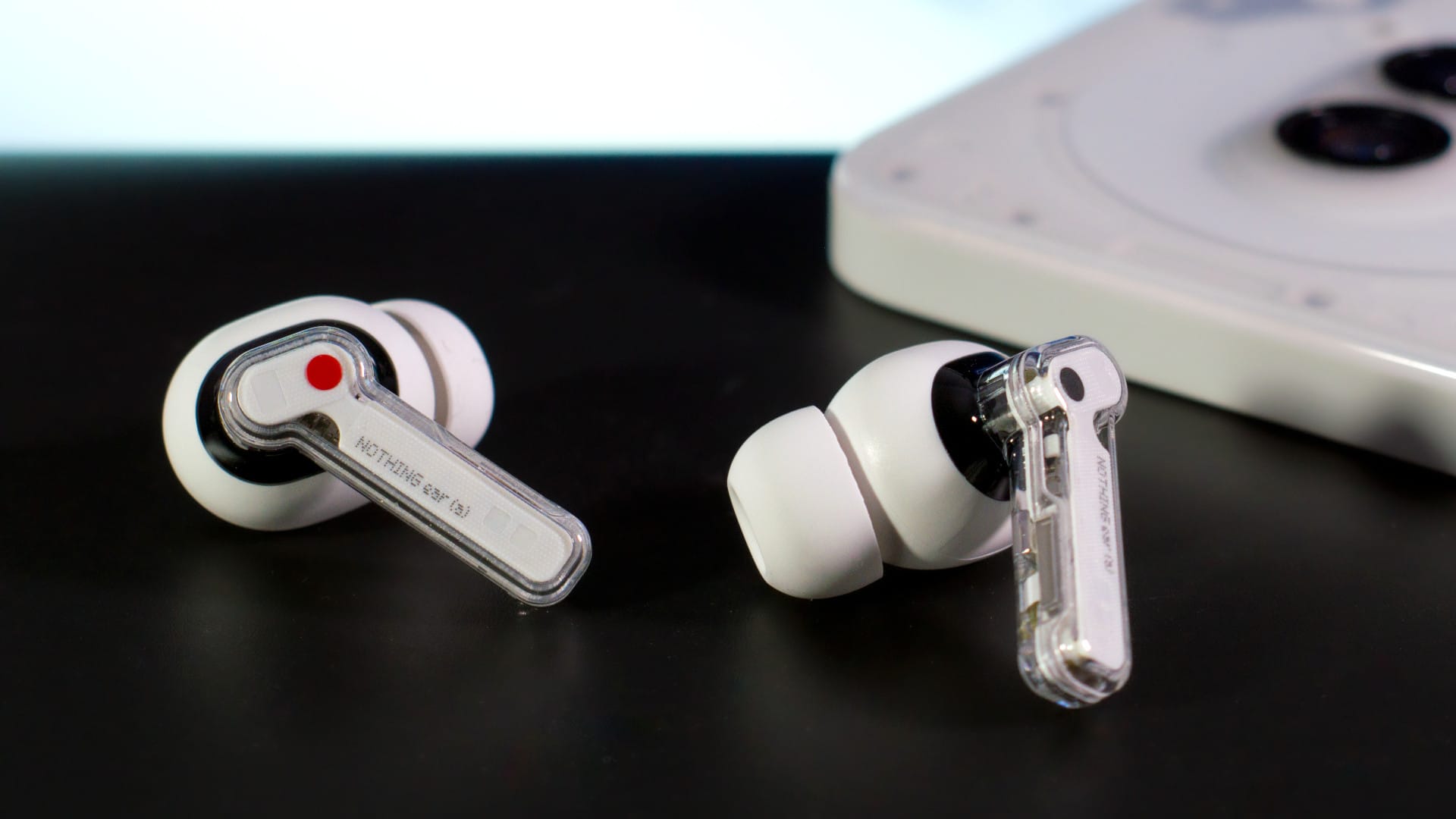
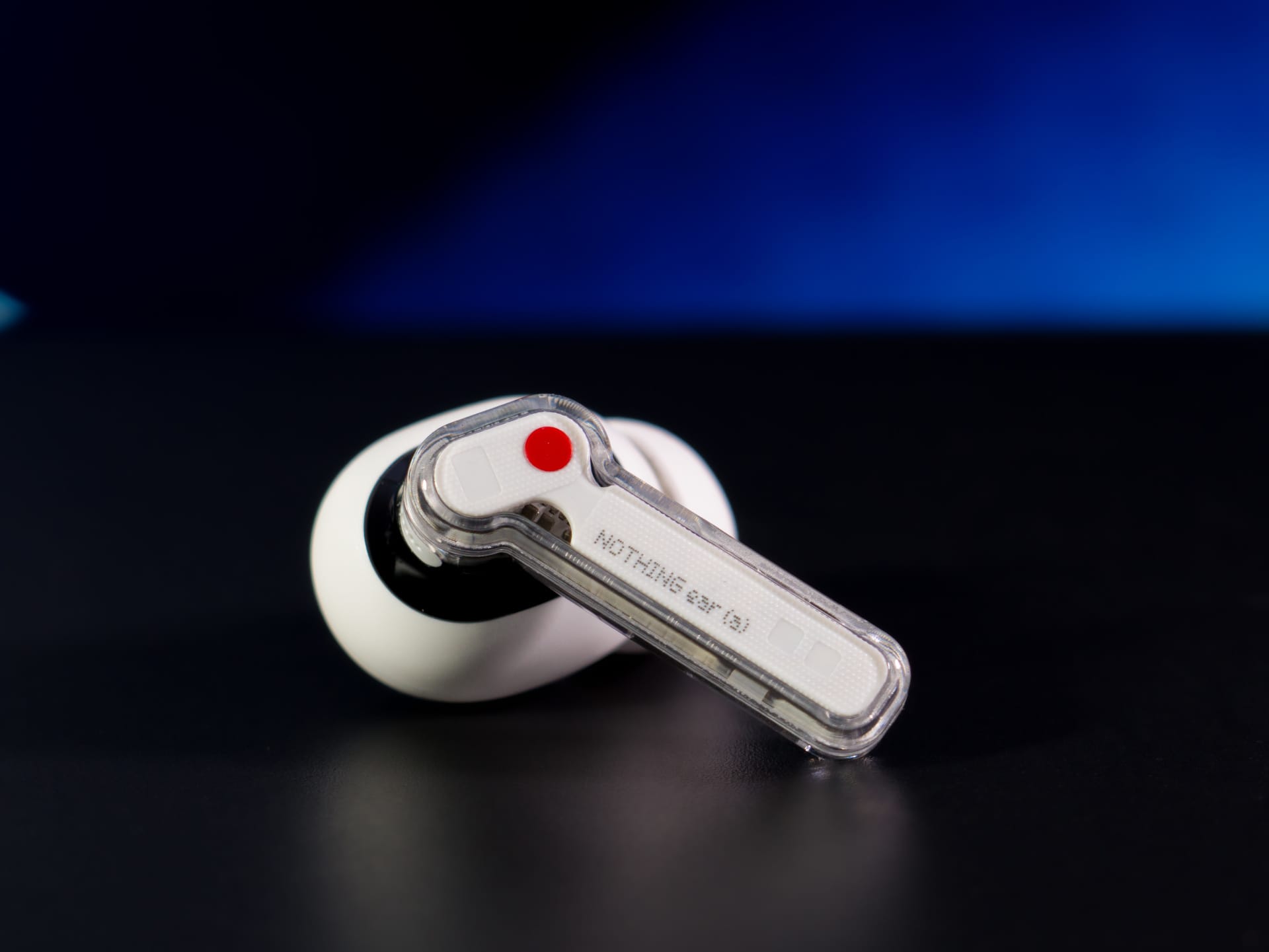
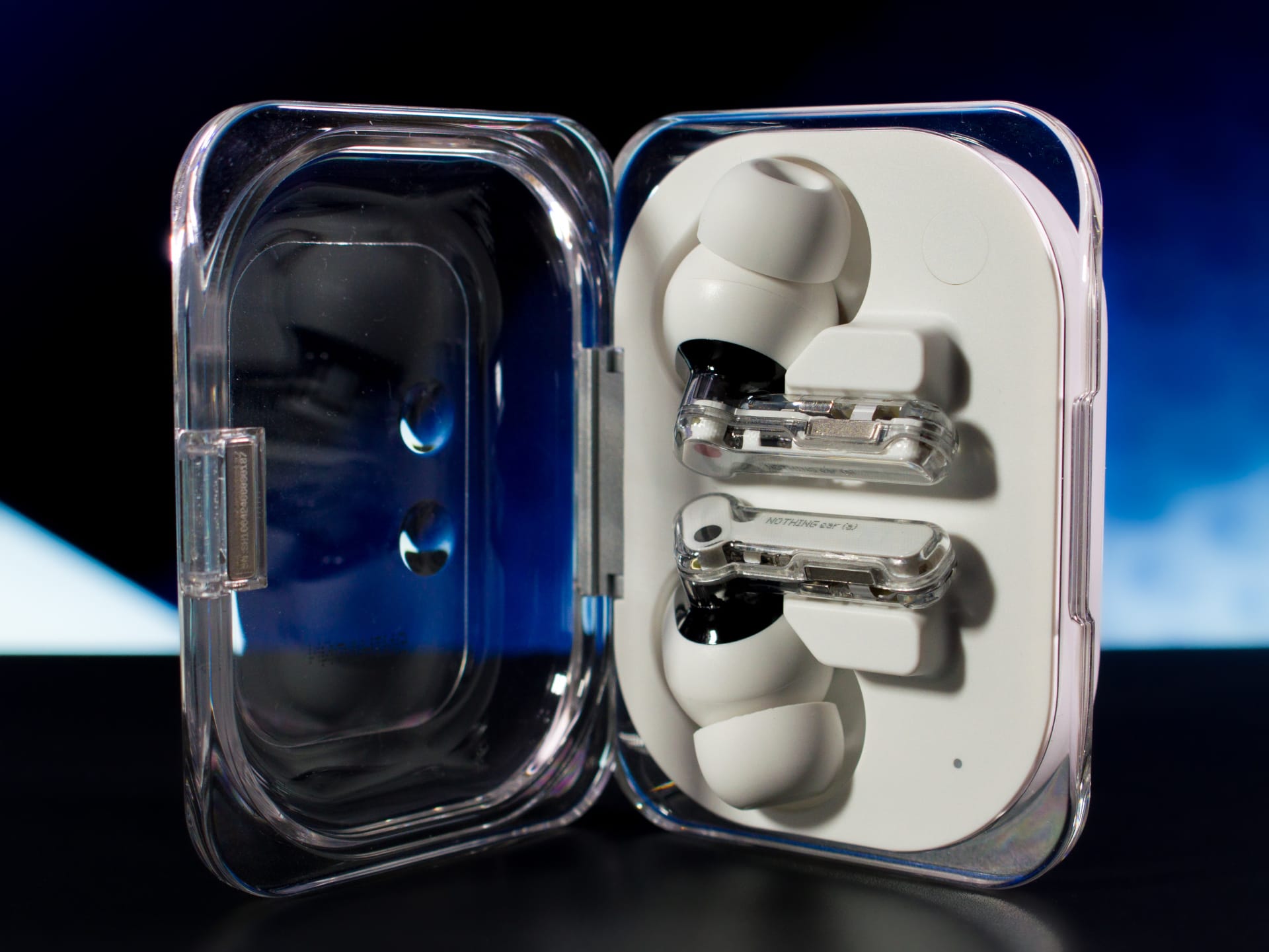
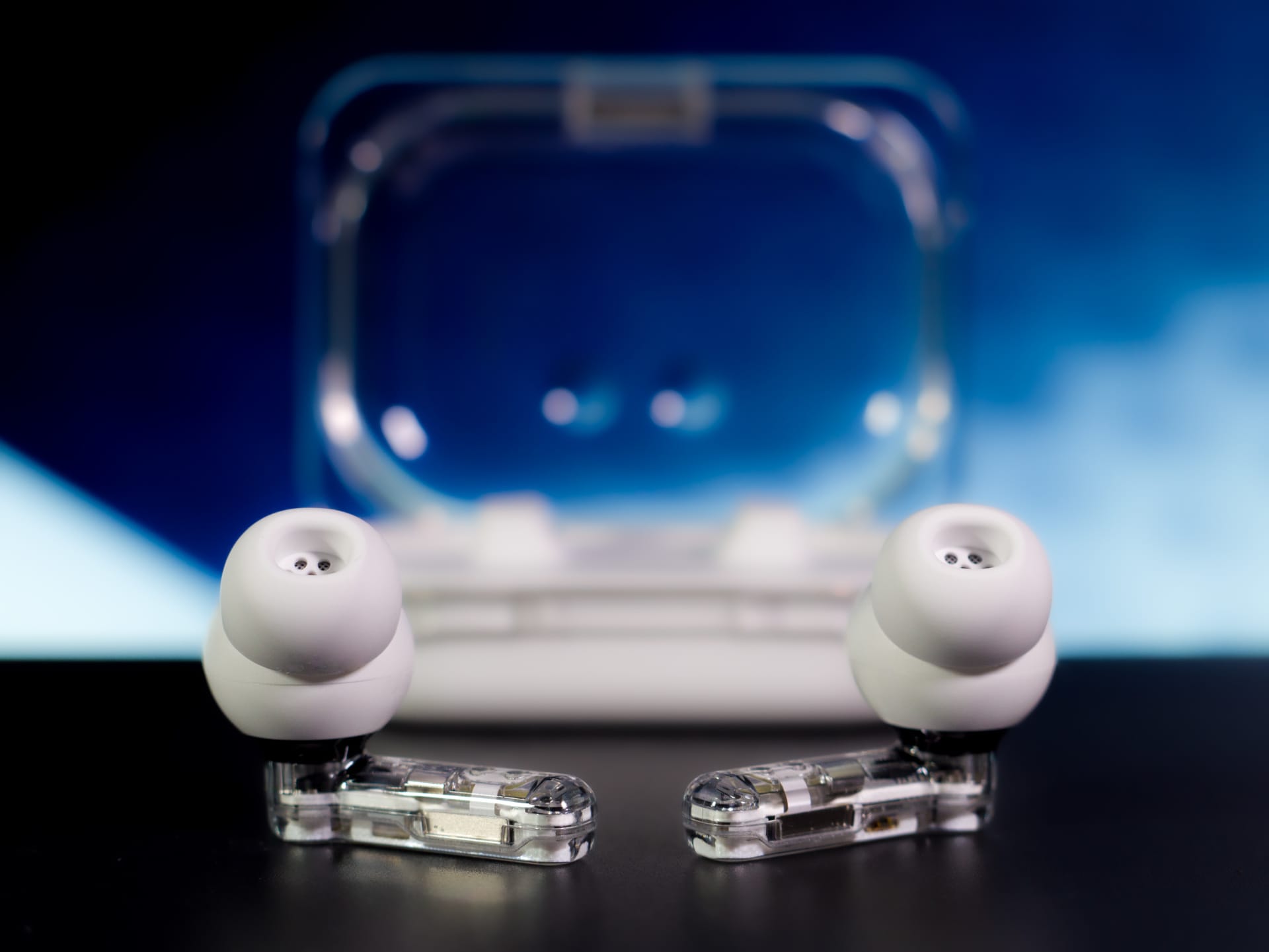
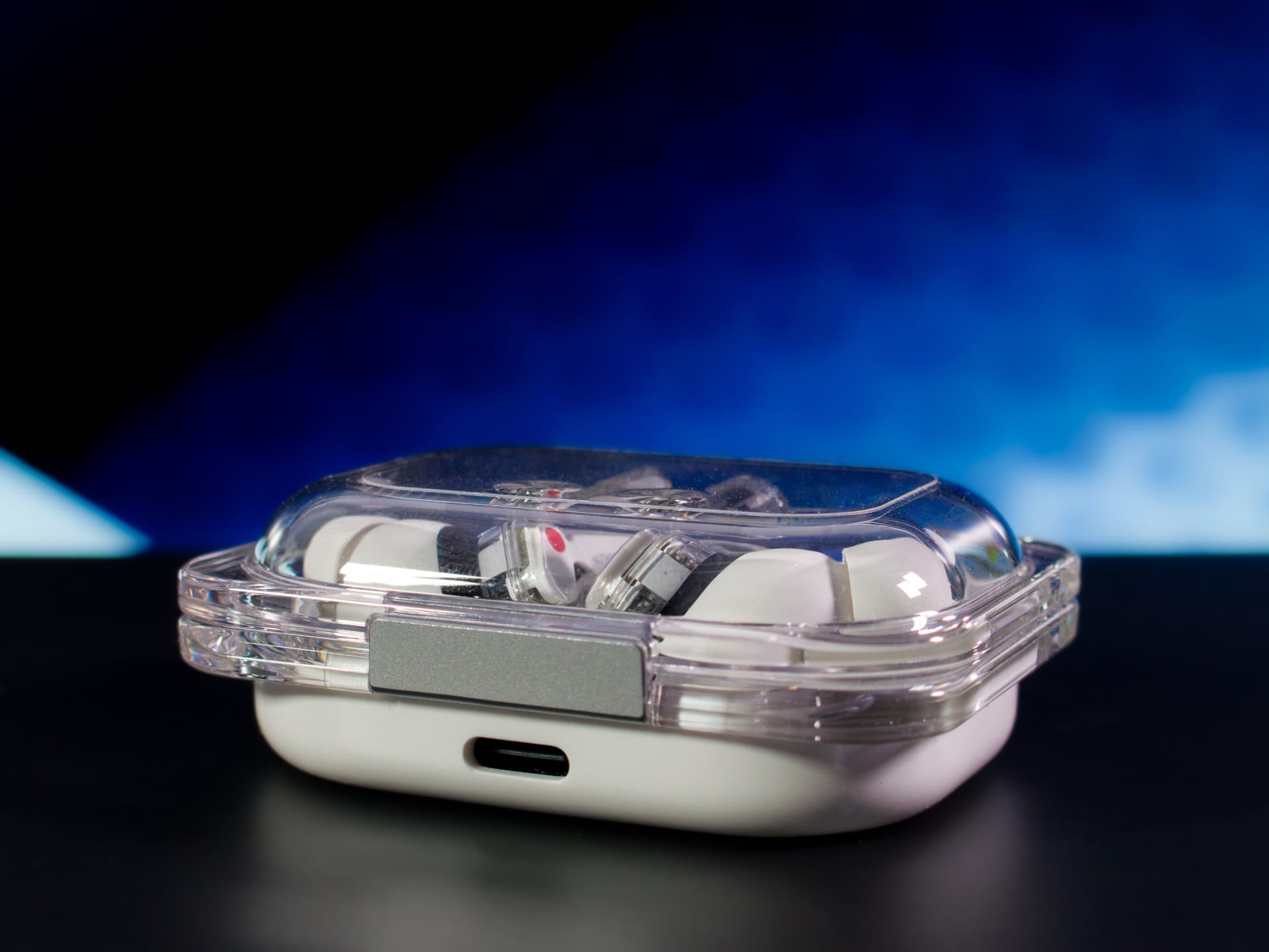
Unusual designs are standard for Nothing. The Ear (a) shares the semi-transparent look with its predecessors, but the charging case has been given a completely new shape. Inspired by a pill case, with dimensions of just 47.6 x 63.3 x 22.7 millimetres and a lightweight 39.6 grams, it is a true pocket favourite.

In addition to classic black and white, the Ear (a) is available for the first time in a new colour, namely a bright yellow, just like a rubber duck. It sounds bold, but definitely looks cool! A shade we will certainly see more often from Nothing in the future.
Of course, you can't expect miracles in terms of build quality for 99 euros. The case creaks in places, the plastic doesn't feel quite as high-quality as the Nothing Ear and despite the "protective film", the first scratches appear on the case fairly quickly. However, the earbuds sit very comfortably in the ear and rarely slip, even during sports.
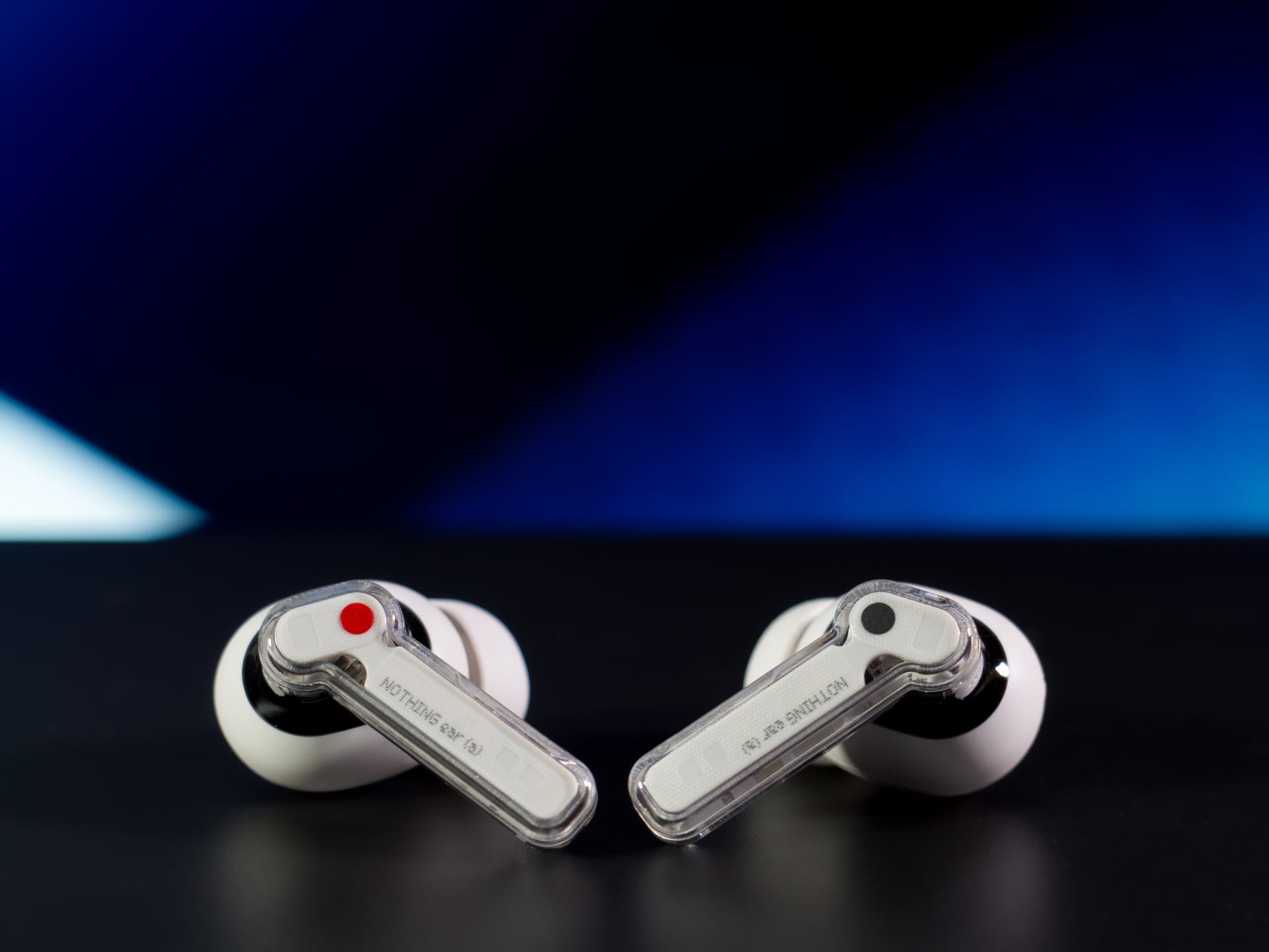
The case is protected against dripping water according to IPX2. This is perfectly sufficient for everyday use. The earbuds themselves meet the IP54 standard and can easily withstand sweat and rain.
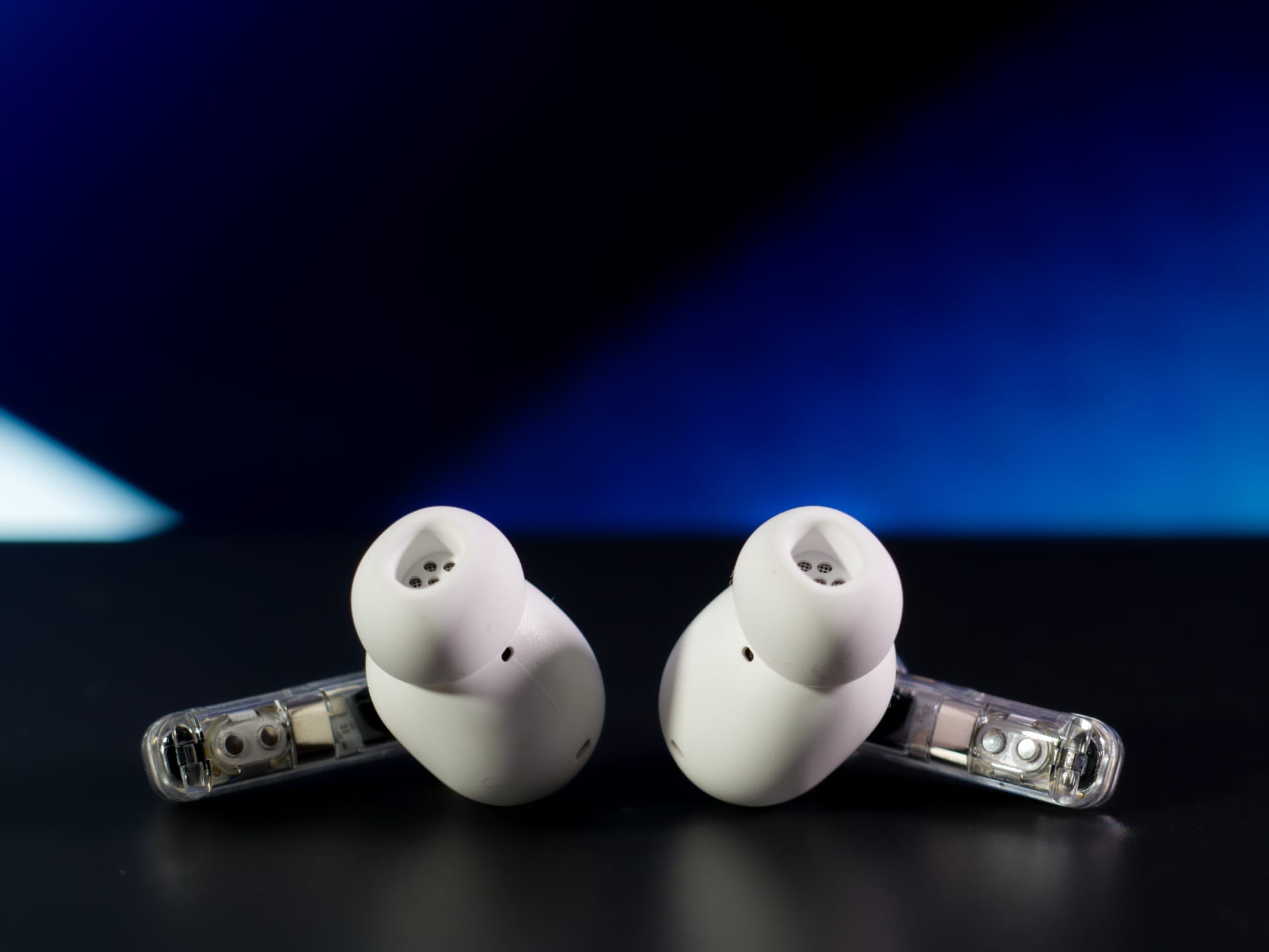
The delivery contents include, in addition to the case and earphones, a USB-C charging cable and silicone ear tips in three sizes.

Nothing Ear (a): Sound
Hardware
Just as it does in the Nothing Ear, Nothing uses dynamic 11 mm drivers in the Ear (a). The diaphragm, however, is not made of ceramic as in the larger model, but consists of a mixture of PMI (rigid plastic) and TPU (thermoplastic polyurethane). Where the sound differences lie, I will explain shortly.
The Bluetooth codecs SBC, AAC and LDAC are supported (up to 990 Kbit/s at 32 Bit/96 kHz) for high-resolution streaming. What is missing is LHDC 5.0. This is only available with the more expensive Nothing Ear.
Sound quality
Bass lovers will find the Ear (a) ideal. Tracks such as AWOLNATION's "Sail" or Kid Cudi's "Day 'N' Nite" are great fun due to the rich bass, and the new Bass-Enhance mode adds extra punch without the Ear (a) losing control. The basses do sound slightly artificially boosted, but little more depth can be expected from tiny earbuds anyway.
On rock tracks such as "Everlong" by the Foo Fighters, the guitars come across powerfully and vividly. The highs are somewhat restrained but still sufficiently detailed. Dave Grohl's voice is reproduced clearly and prominently, and overall the Ear (a) delivers a balanced sound.
The highs are a bit more sluggish. For vocals such as "Someone Like You" by Adele, it lacks some airiness and micro-dynamics. Adele's voice seems somewhat constrained and the accompaniment could do with more space. This is also the biggest sound difference to the Nothing Ear, which score with a wider soundstage and better detail reproduction.
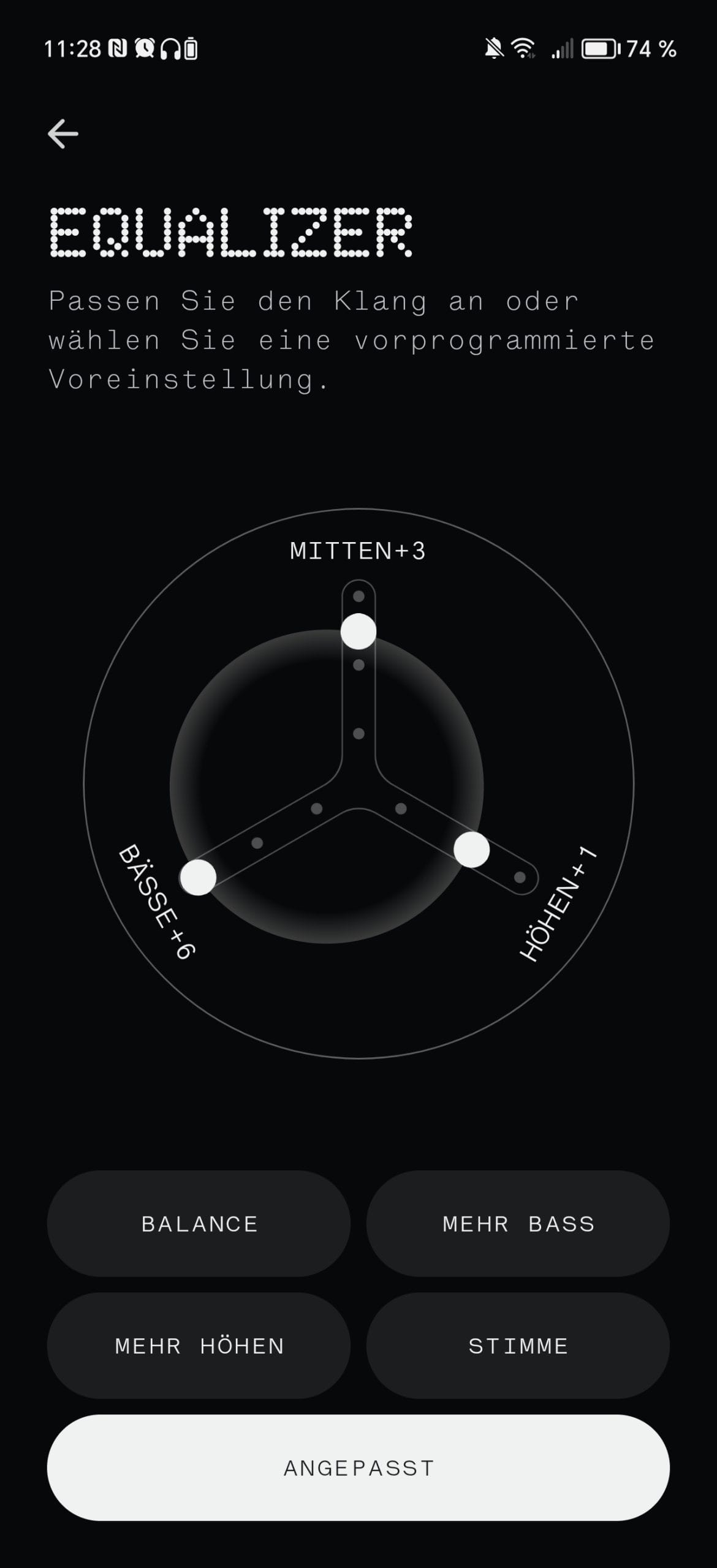
Overall, the Ear (a) offers a very solid sound for its price, although it is somewhat bass-heavy. The 3-band equalizer in the app helps with adjustment but misses the fine-tuning of a pro equalizer found in the more expensive Ear models. Personal sound profiles also cannot be created.
Nothing Ear (a): Features
The control centre for all functions is the Nothing X App. It allows users to control multi-level noise cancellation, reassign controls, or fine-tune the equalizer. The app is available in the respective stores for Android and iOS.

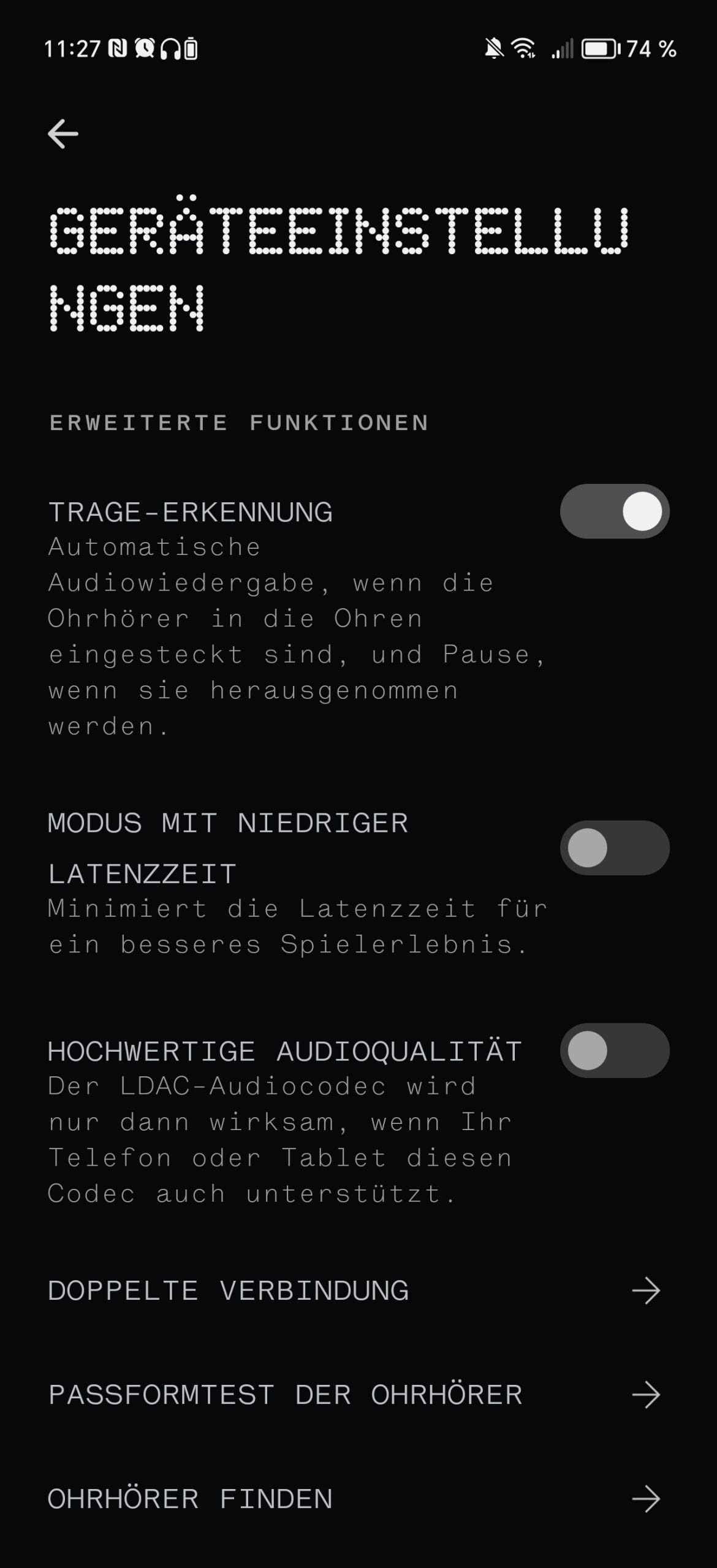
Active Noise Cancelling (ANC)
For under 100 Euro, the Nothing Ear (a) delivers decent active noise cancellation. It even performs better than last year's Nothing Ear (2). In particular, monotone noises at lower frequencies are well filtered out. Even better ANC is only available at a significantly higher price point.
The app offers ANC levels Low, Medium, High and an adaptive mode. The latter automatically selects the appropriate setting. In addition, the "Smart ANC" algorithm checks whether sounds are leaking between the earbud and the ear and increases noise cancellation if necessary.
In contrast, the transparency mode amplifies ambient noise, allowing you to perceive the outside world without having to remove the earbuds. This works well but comes with a slight background hiss.
Touch controls and wear detection
Controls work similarly to the AirPods, using a "pinch gesture" on the stems. Single, double or triple pinches control music, skip tracks and answer calls. Pinching and holding switches between ANC and transparency mode. The assignments can be customised in the app.
The touch controls respond well, though unintentional actions can occasionally occur. The wear detection also generally works reliably, but it fails from time to time, causing the music to simply continue playing when an earbud is removed.
Low latency mode
The low-latency mode is interesting for gamers and series fans. It reduces the delay between image and audio, thus preventing annoying desynchronisation. But even without this mode, we did not notice any desynchronisation.
Microphone and call quality
For phone calls, each earbud is equipped with three microphones. Most background noise during calls is largely filtered out. In heavy ambient noise or wind, the microphones still have room for improvement. Overall, however, call quality is perfectly adequate.
Nothing Ear (a): Battery
The battery of the Nothing Ear (a) lasts up to 9.5 hours without noise cancellation. With noise cancellation, it lasts at least 5.5 hours. Together with the charging case, the total runtime is 42.5 hours without noise cancellation or 24.5 hours with noise cancellation.
These are at least the values Nothing specifies. In practice, the battery life at medium volume, with ANC enabled and the LDAC codec is approximately 4.5 hours.
In the case, the earbuds charge enough power for 1.2 hours of music in 10 minutes. A full charge takes about 45 minutes. It is a pity that Nothing omitted wireless charging for the Ear (a). Those who still want to charge wirelessly must resort to the more expensive Nothing Ear.
Our verdict
With the Ear (a), Nothing demonstrates a good eye for stylish earbuds. The semi-transparent design and the new, vibrant yellow colour variant bring fresh air into the product range and stand out from the crowd.
In terms of sound, the Ear (a) deliver dynamic audio with rich bass, gaining even more punch thanks to the Bass Enhance mode without losing precision. The highs could use a bit more brilliance, but for the price, the audio quality is perfectly acceptable.
All in all, the Nothing Ear (a) are a well-rounded package and a clear recommendation for anyone looking for stylish, well-equipped earbuds at a fair price. There is hardly any competition in this price segment that can match them in terms of design, sound and features.
Specifications
General
- Drivers
- Dynamic driver
- Size
- 11 mm
- Diaphragm
- PMI + TPU
- Frequency range
- Unbekannt
- Impedance
- Unbekannt
- Sensitivity
- Unbekannt
Bluetooth
- Standard
- 5.3
- Range
- up to 10 meters
- Codec
- *SBC
- *AAC
- *LDAC
Functions
- *In-Ear wearing detection
- *Google Fast Pair
- *Microsoft Swift Pair
- *Dual Connection
- *Low Lag Mode
Battery
- Capacity
- 46 mAh (earbuds), 500 mAh (case)
- Battery life (without ANC)
- 9.5 hours / 42.5 hours
- Battery life (with ANC)
- 5.5 hours / 24.5 hours
- Charging time
- 10 minutes for 10 hours of playback
- Wired
- USB-C
- Wireless
- No
Other
- ANC
- Yes, up to 45 dB
- Microphone
- Yes (Clear Voice Technology )
- Operation
- Touch, App (Nothing X)
- Water resistance
- IP54 (earbuds), IPX2 (case)
- Size (Earbud)
- 30.9 x 21.7 x 24.3 mm
- Size (case)
- 47.6 x 63.3 x 22.7 mm
- Weight (Earbud)
- 4,8 g
- Weight (case)
- 39,6 g
Price comparison
| Store | Price | Link |
|---|---|---|
| Nothing | 89,00 € | Go to store |
Comments (2)
Hello Timo, I have the Ear (stick), but the charging case is far too big for me. Do you think switching to the Ear (a) is worth it?
Hi Olli, I still have the stick here. The charging case for the Ear (a) is significantly more compact, and I personally find the sound better too. If you ask me, it is definitely worth switching.