Contents
Foreword: Nubia Z17 Lite
Nubia smartphones are relatively unknown on the domestic market. However, ZTE is better known, a leading global manufacturer of mobile devices to which Nubia belongs as a subsidiary. Recent Nubia smartphones have impressed primarily with their excellent hardware specifications, good build quality and highly appealing design. However, many of the manufacturer's smartphones are intended mainly for the Chinese market. The Nubia Z17 Lite is also only available in China so far. As the previous model, the Nubia Z17, showed, a global launch is quite possible, which is why we put the Chinese model with international ROM through a test in advance.

Design, build quality, and included accessories
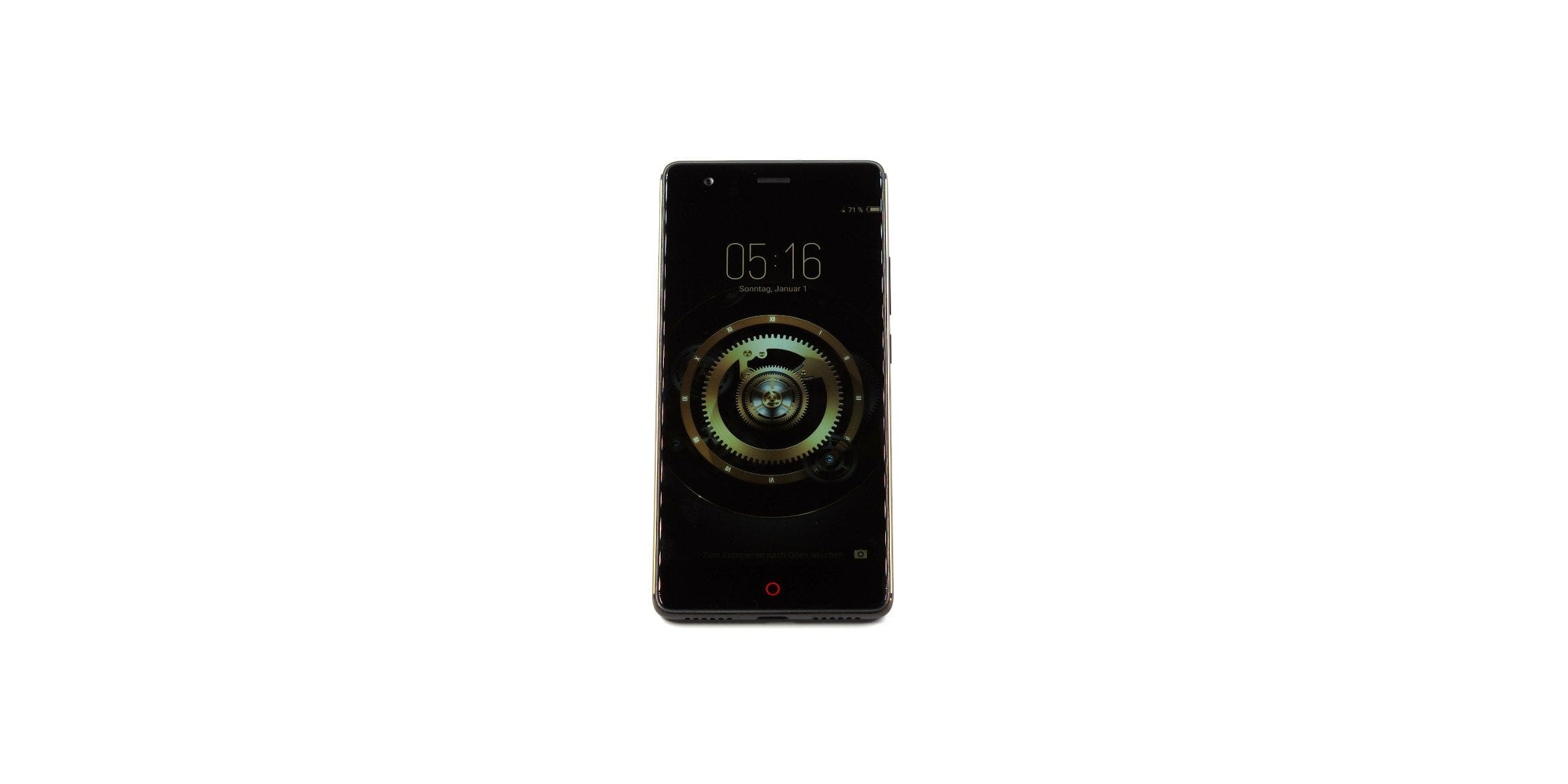
Nubia places great importance on a noble and, above all, striking design in the appearance of its smartphones. The same applies to the Nubia Z17 Lite. The smartphone is designed in the so-called unibody design. The back of the housing and the frame are made from a single piece and form a unit. The housing material is aluminium. The smartphone is available in colours Black, Black-Gold and Blue.

The Nubia Z17 Lite is constructed as follows:
Starting with the front, a first visual special feature immediately catches the eye. The Z17 Lite is one of the few smartphones whose display actually extends right to the inner edge of the housing, creating an excellent bezel-less look thanks to the additional curved glass. Below the 5.5-inch display, Nubia has placed three capacitive control buttons. In the centre is a circular home button that glows in striking red. This also serves as a notification LED and pulses red when notifications come in. The control buttons on the left and right also light up red when pressed. Above the display, the earpiece is placed in the centre. To the left of it, Nubia has integrated the 16-megapixel front camera.

The housing frame and rear housing form a single unit and, as already mentioned, are finished in matte black on our test model. The haptics are positive, although the smartphone feels somewhat slippery in the hand. To the right of the housing frame are the power button and the volume rocker. To the left is the SIM slot, which can be populated with two nano-SIM cards. Nubia has omitted a 3.5 mm jack audio socket. A corresponding 3.5 mm jack to USB-C adapter is included. Accordingly, the underside of the frame is equipped with a USB-C socket in the centre. To the left and right of this are speaker openings, although only one actually functions as a speaker opening (mono). Behind the other opening is instead the microphone. Another noise-reducing microphone is placed on the top of the frame.
Moving on to the back of the housing. The gold-coloured Nubia lettering is striking. Above it is a circular fingerprint scanner with a bevelled, also gold-coloured edge. Finally, on the back there is also a dual main camera with a protruding red rim and an LED flash located to its right.

The build quality of the Nubia Z17 Lite is first-class. The scope of delivery includes the smartphone, a charger, a USB-C cable, a 3.5 mm jack audio to USB-C adapter, a SIM needle and a user manual.

Display
The Nubia Z17 Lite is an almost bezel-less smartphone that stands out due to particularly thin bezels. The visual effect almost resembles a curved display of the current Samsung Galaxy S series, although Nubia has not installed a curved display. Instead, Nubia lets the display area extend to the inner edge of the housing. The curved effect is caused by display glass that curves towards the edges. A disadvantage of this is that, because the curved glass transitions into the curvature above the display, unlike many other smartphones, a distinct rainbow effect with slight distortion becomes visible. However, in everyday use, this effect is not particularly distracting.
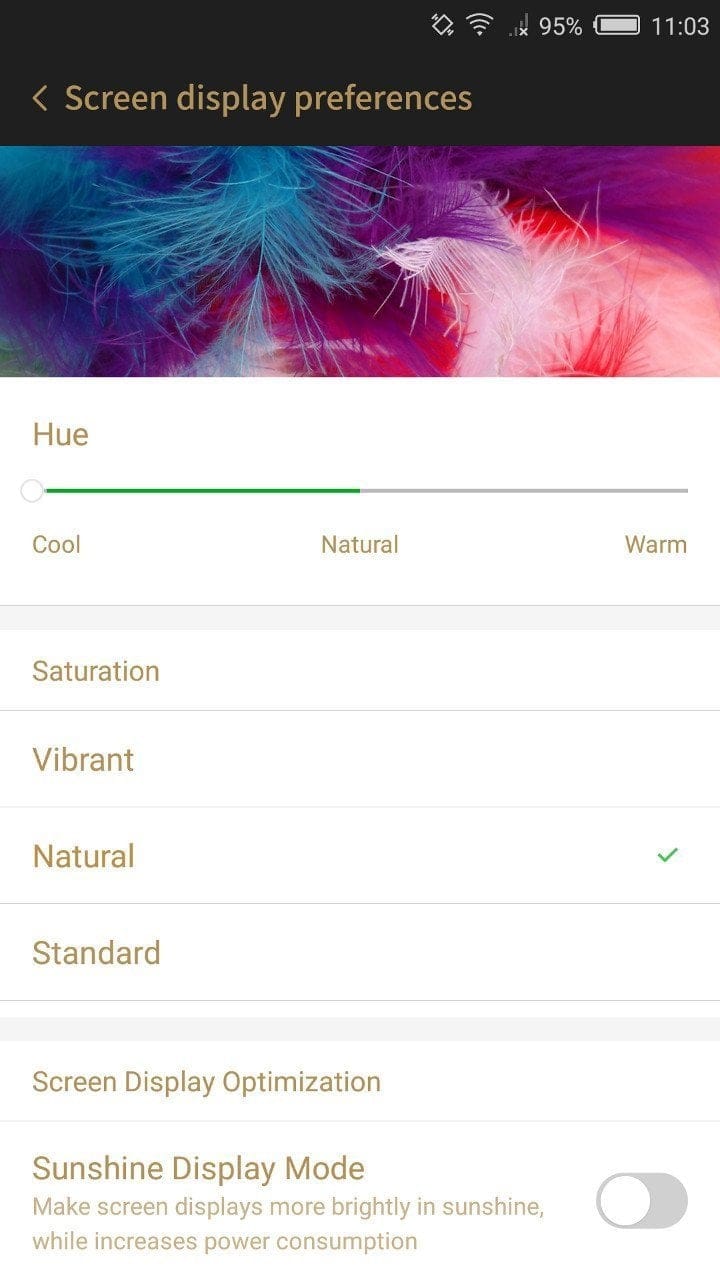
The smartphone is equipped with a 5.5-inch display of the In-Cell type. In an In-Cell display, the LCD and the touchscreen are connected to each other without an intermediate layer. This allows panels to be made even thinner, which often results in a thinner and lighter smartphone. The resolution of the display is 1920 x 1080 pixels. Due to the resulting pixel density of 403 PPI, individual pixels are no longer visible to the naked eye.
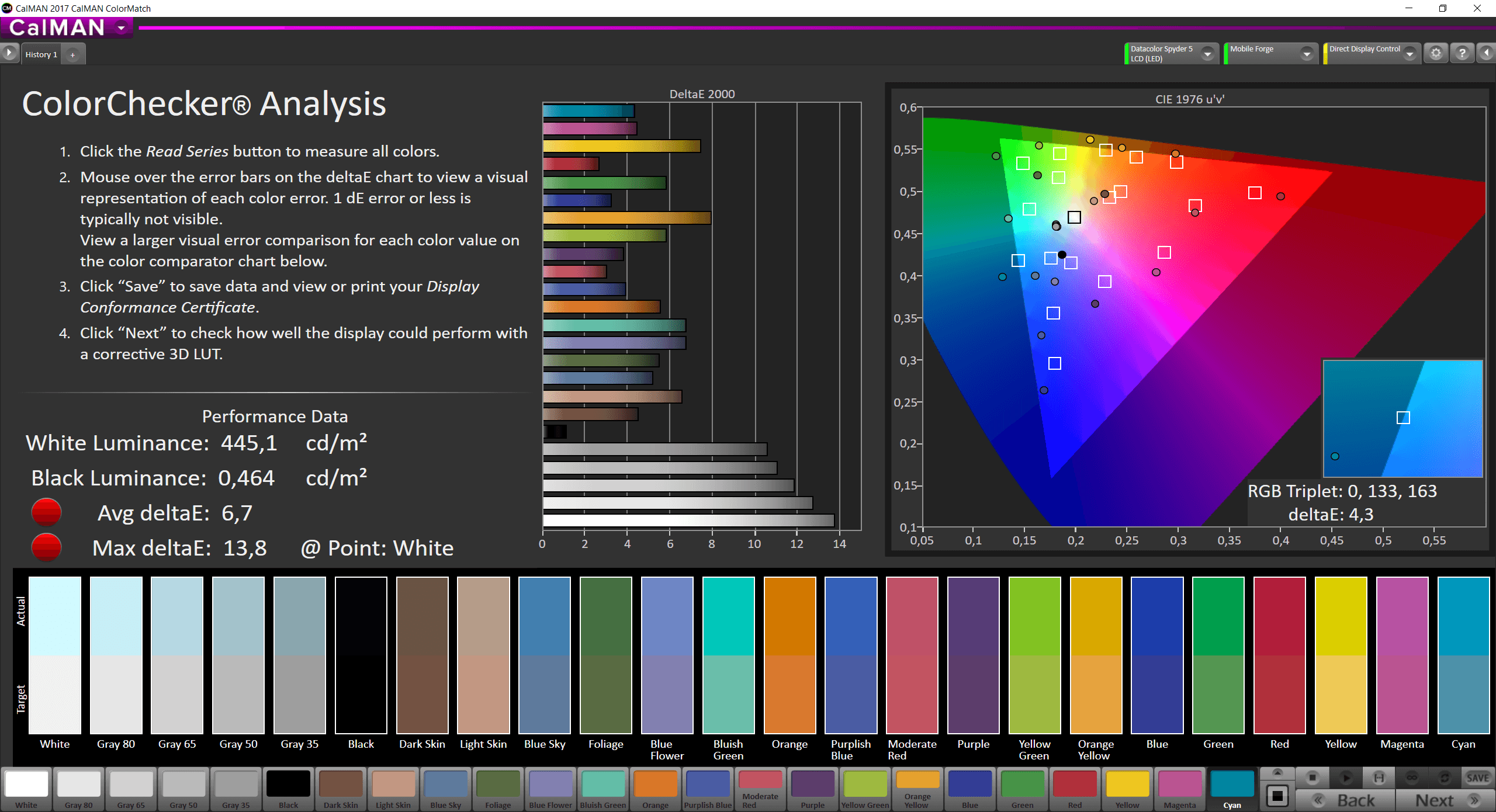
The display impresses with rich colours, albeit with a slight blue tint that is less noticeable in everyday use, a very good contrast and high viewing angle stability. Within the display settings, colour representation can be individually adjusted. The maximum brightness of the display is around 445 cd/m². Even under strong light conditions, the display remains easily readable.

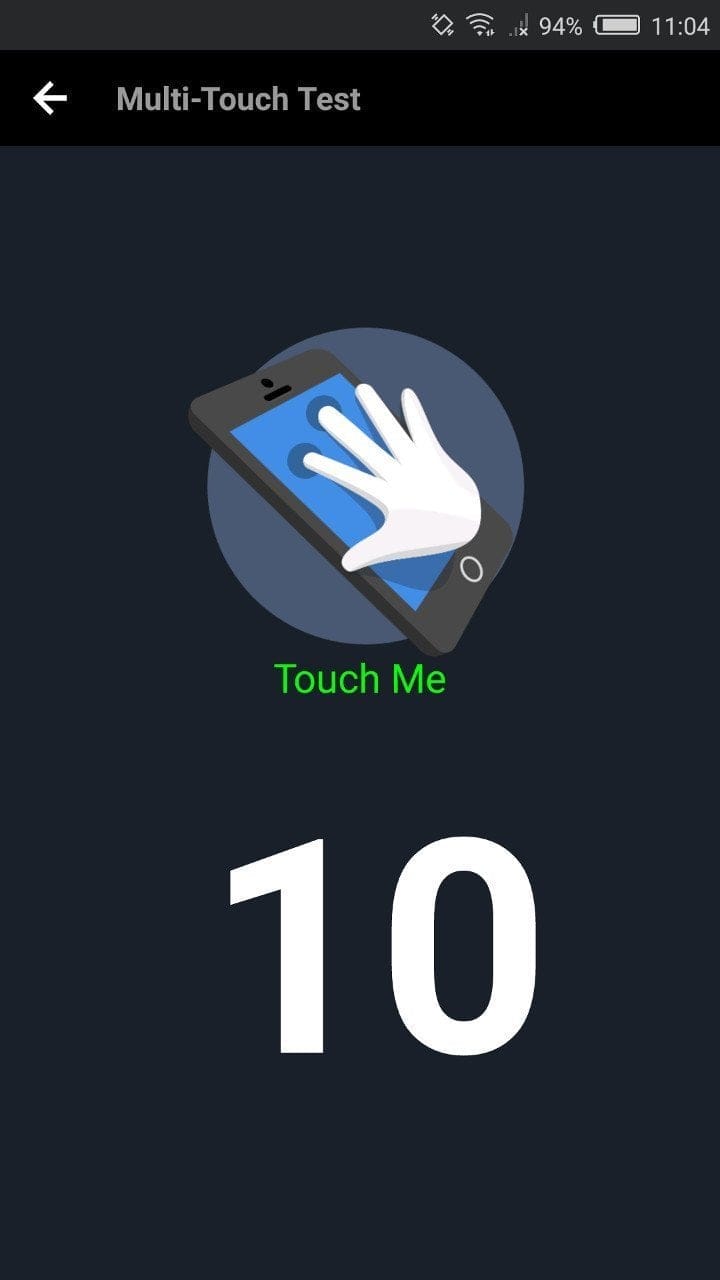
The touchscreen operates precisely and recognises up to 10 simultaneous inputs. The coated and hardened Corning Gorilla Glass ensures smooth gliding and scratch protection.
Performance
In contrast to many other Chinese smartphone manufacturers, who usually rely on MediaTek processors, Nubia uses Qualcomm processors. The Z17 Lite is equipped with a Qualcomm Snapdragon 653. This mid-range processor features 4 Cortex A72 and 4 Cortex A53 processor cores clocking at up to 1.95 GHz. According to the so-called big.LITTLE architecture, the cores are divided into two clusters, a performance cluster and an efficiency cluster. The goal of this “heterogeneous computing architecture” is more efficient performance distribution. The memory configuration is generous, consisting of 6GB LPDDR3 RAM and 64GB eMMC5.1 flash storage. Storage expansion via a microSD card is not provided. The graphics processor of the system-on-chip is an Adreno 510 GPU.


In everyday use, the Nubia Z17 Lite proves to be extremely performant. The RAM speed of 8,787 MB/s is top-notch despite the LPDDR3 module, even surpassing some other smartphones with LPDDR4X RAM. Switching between apps is smooth, and the smartphone handles numerous simultaneously open apps without any issues. The internal eMMC5.1 flash storage delivers meager but still average write and read speeds of 153 MB/s and 186 MB/s respectively. The Nubia Z17 Lite also puts up a good showing in gaming. Games such as Asphalt 8 run smoothly, and frame drops are rare. There is no excessive heat generation.
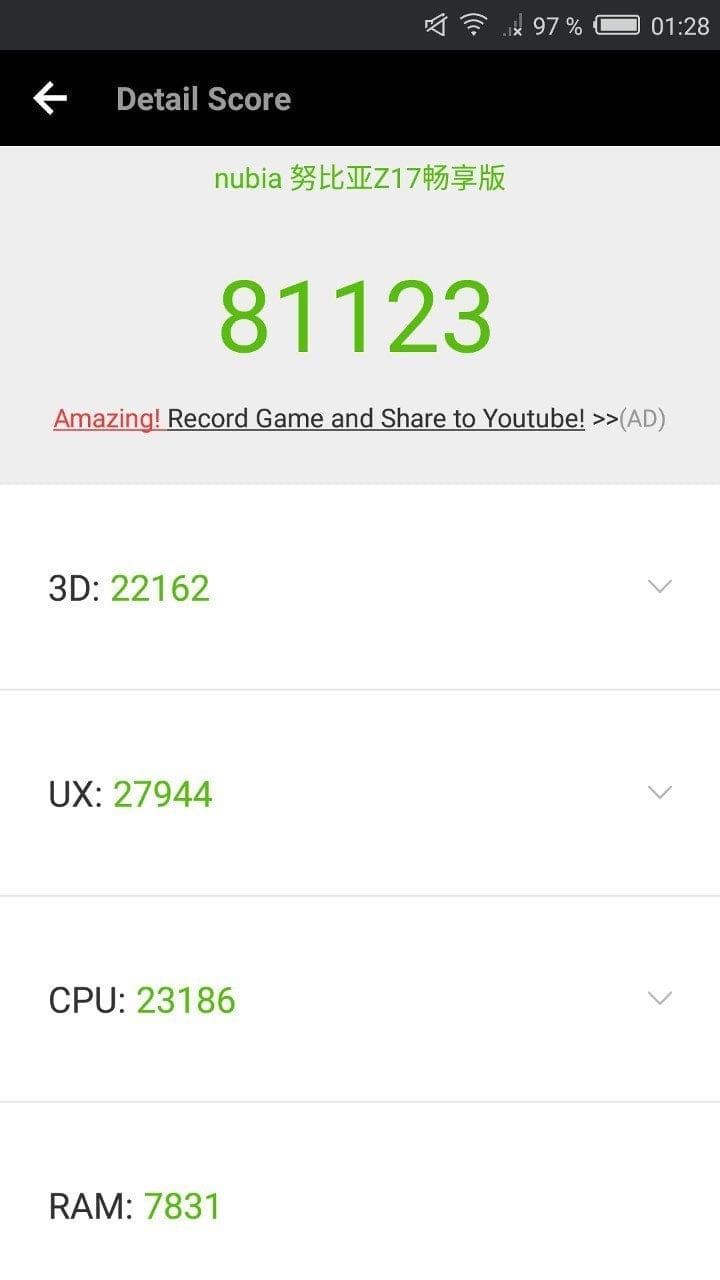

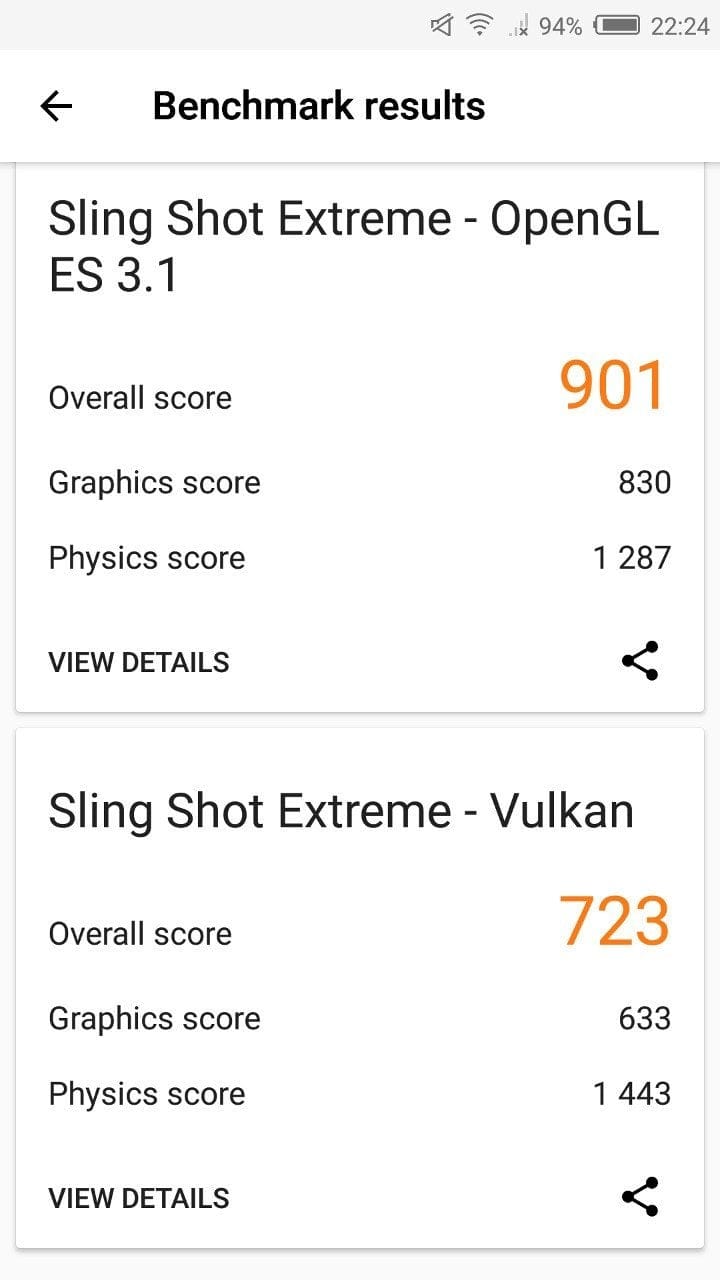
Despite the good everyday performance, there are anomalies in the benchmark tests. A test with Geekbench 4 showed that the smartphone does not fully utilise the processor performance. Particularly in the multi-core test, below-average results are achieved, which are almost 50% lower than the measured results of other smartphone models with identical specifications. It appears that this is a software-related problem. A look at the Geekbench test result database reveals that the Nubia Z17 Lite achieved better results with earlier firmware versions. Should the error be fixed with future updates (currently V1.03), this section will of course be corrected!

User interface
The manufacturer’s ROM „Nubia UI 5.0“ is used as the user interface. As with many other smartphone manufacturers, the user interface is indeed based on Android 7.1.1, but it deviates strongly from stock Android both visually and, in some places, functionally.
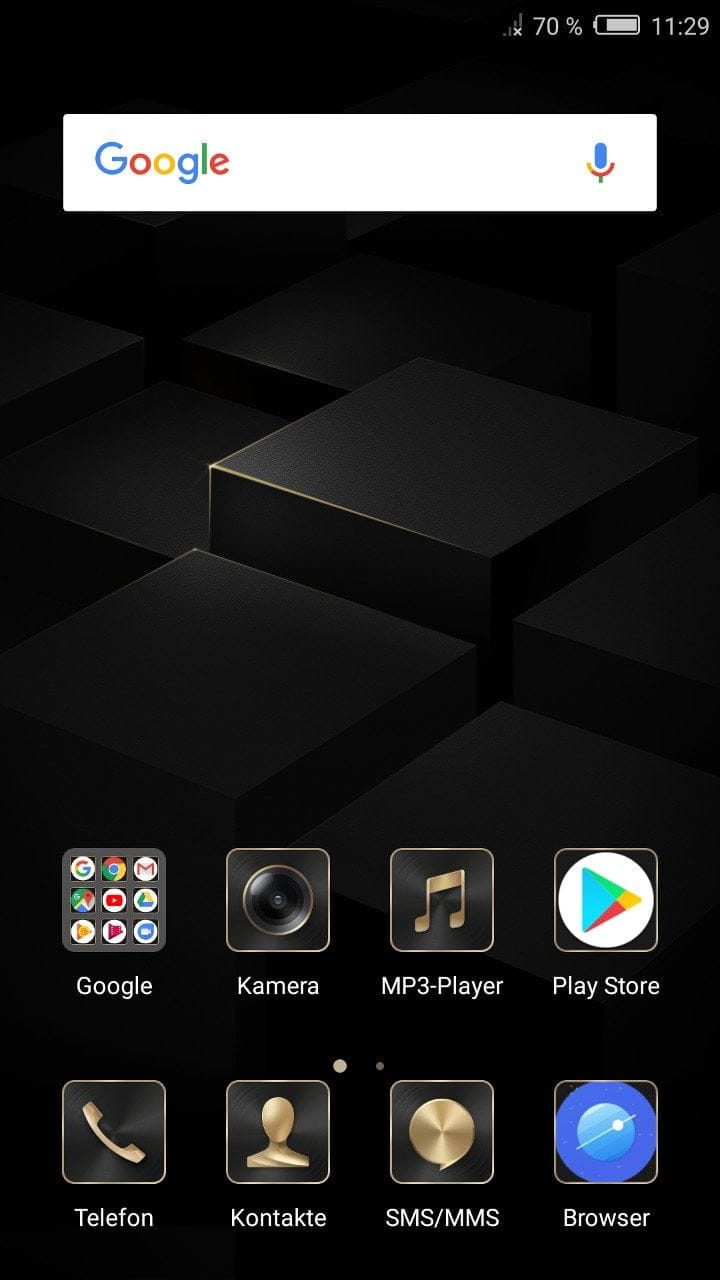
Adapted to the smartphone's design, Nubia UI 5.0 uses custom icons in a gold-and-black tile look. If you want to change the appearance, you are of course free to install any theme launcher. There is no app drawer. Apps are placed on pages instead.

The quick access panel has also been updated. Quick access to settings and notifications has been separated. A swipe from the top down opens a notification panel. A swipe from the bottom up opens the quick access to apps and settings. Functional additions include various gesture and smart sensing options. For instance, apps can be switched with a three-finger swipe. Smart Sensing allows, among other things, clearing notifications and closing recently opened apps simultaneously by shaking the device. Edge gestures are triggered by swiping across the display edge to, for example, adjust brightness, launch and switch between predefined apps, or clear memory. As a security feature, apps can be individually locked. For improved power management, the allocated performance of each app can be adjusted.
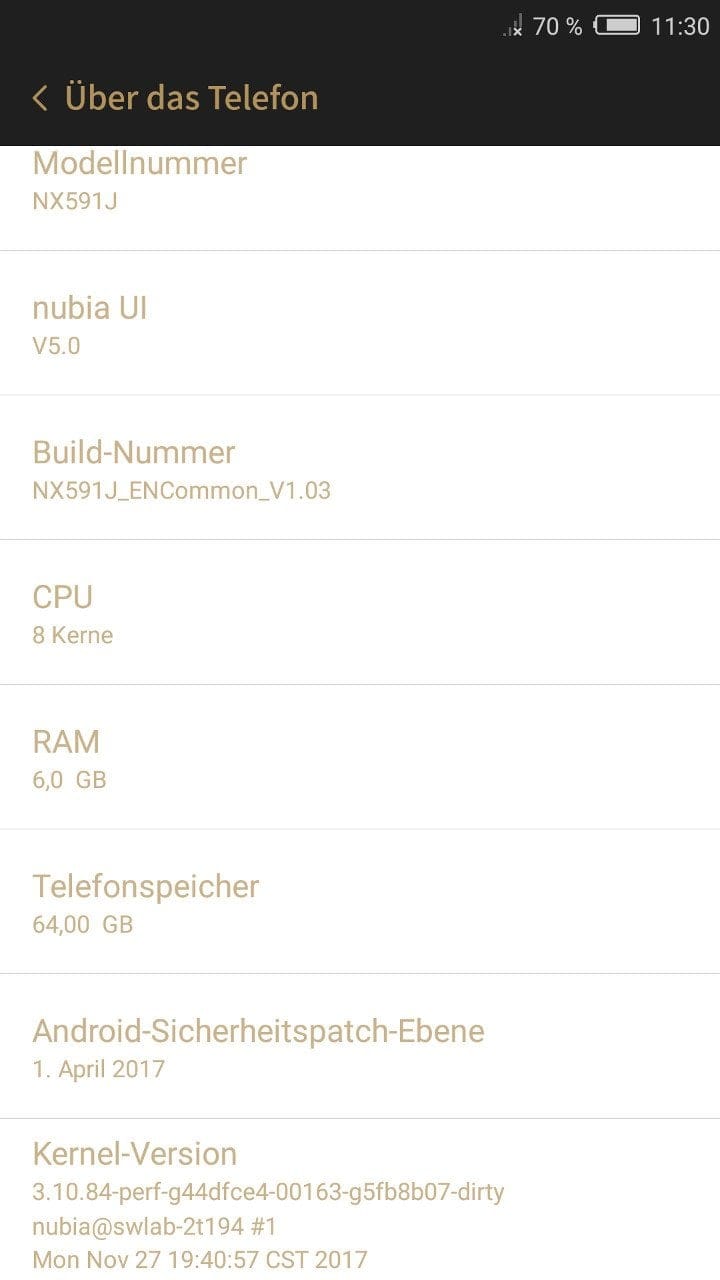
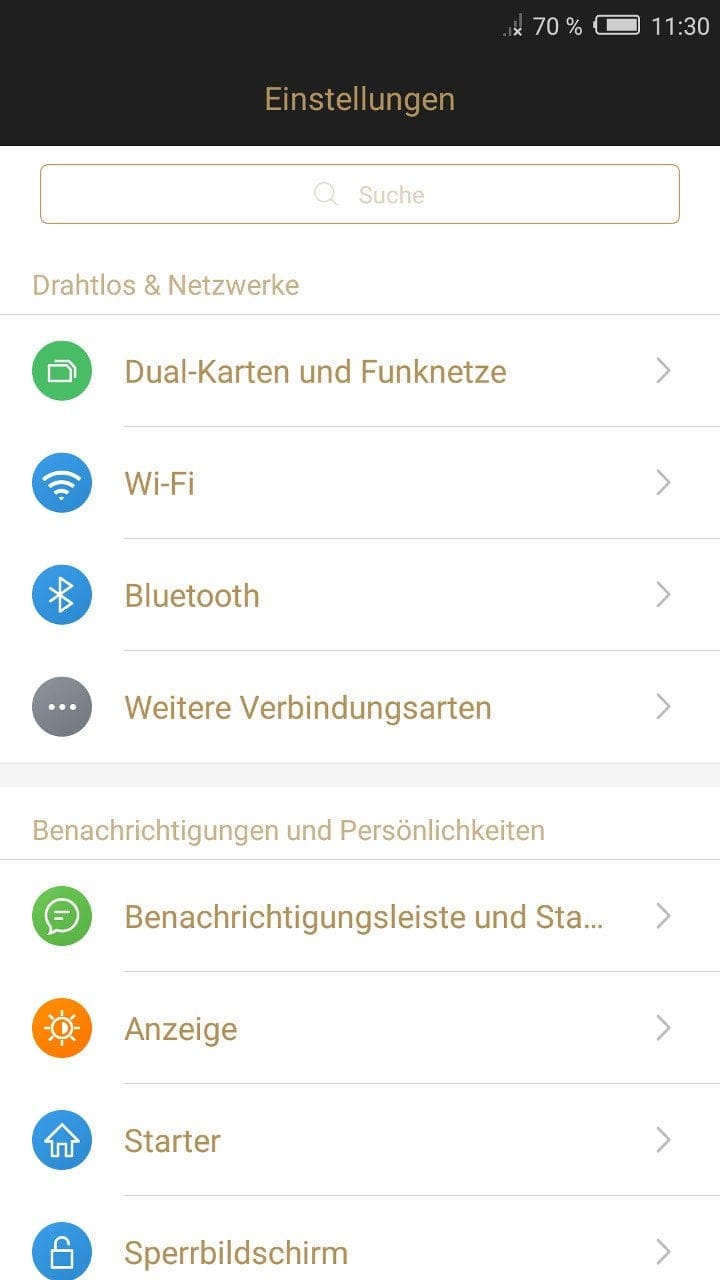
One problem that many Nubia smartphones share is the confusing situation regarding ROMs. With the exception of a few models from the manufacturer that were also released on the international market, Nubia mainly produces for the Chinese market. Accordingly, many devices are shipped with a Chinese user interface, which usually allows a language change, but does not have Google apps, in particular the Google Play Store, pre-installed. The Google Play Services must therefore be installed on the smartphone via sideloading, which already led to numerous problems with the larger Nubia Z17.
Our test unit was already delivered with an international and thus multilingual ROM including Google Apps. Sideloading Google Play Services was therefore not necessary. However, many ROMs adapted for the international market are so-called "Shop ROMs", which the seller adjusts and installs accordingly.
Camera
The smartphone is equipped on the rear with a dual main camera. The sensors consist of a Sony IMX258 colour sensor and another Sony IMX258 sensor which acts as a “helper sensor” but only captures monochrome, i.e. single-colour images. Nubia specifies the aperture of the main camera as f/2.2. Further features include Phase Detection Autofocus (PDAF) and a dual-tone LED flash.
The image sensor of the front camera is made by Samsung and has a resolution of 16 megapixels. Thanks to the 80° wide angle, a particularly large image area is captured. The aperture of the front camera is f/2.0.
Main camera real-world test
Considering the Nubia Z17 Lite sits in the mid-range segment, the smartphone's camera equipment delivers convincing image quality. The focus is primarily on Nubia's “NeoVison 7.0”, a custom camera system designed specifically for Nubia smartphones that offers numerous shooting options and enhances photos with smart AI.
Image capture is convincing with vivid but natural colour reproduction. The smallest details appear crisp, and barely any image blurring is noticeable even towards the edges. Under poor lighting conditions, colour reproduction remains reasonably good, but images are subject to noticeable image noise, accompanied by significant loss of detail. Nevertheless, the Nubia Z17 Lite delivers still acceptable image quality, especially compared to other mid-range smartphones, even in poor lighting. Understandably, it cannot compete with current flagship models.
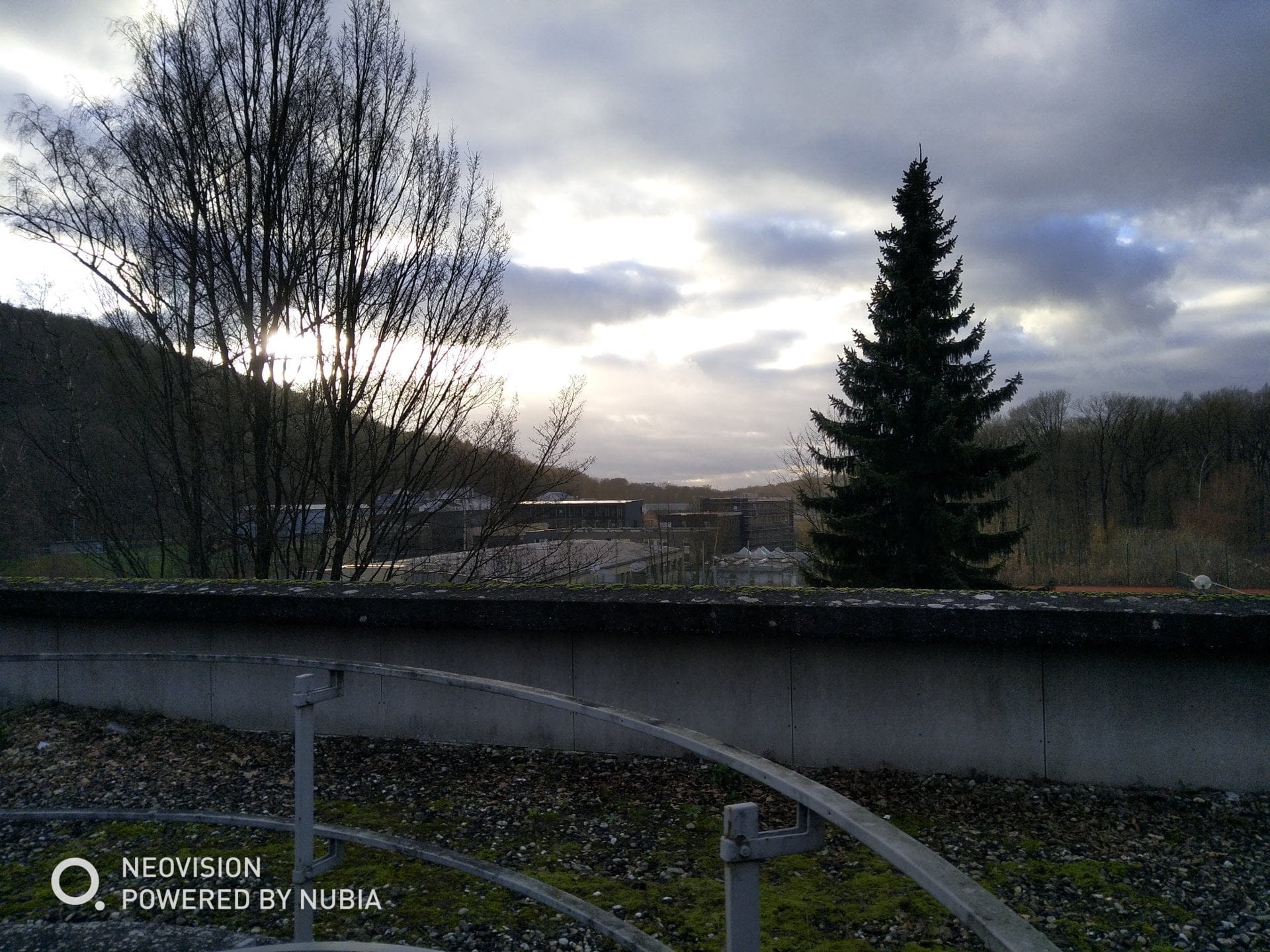

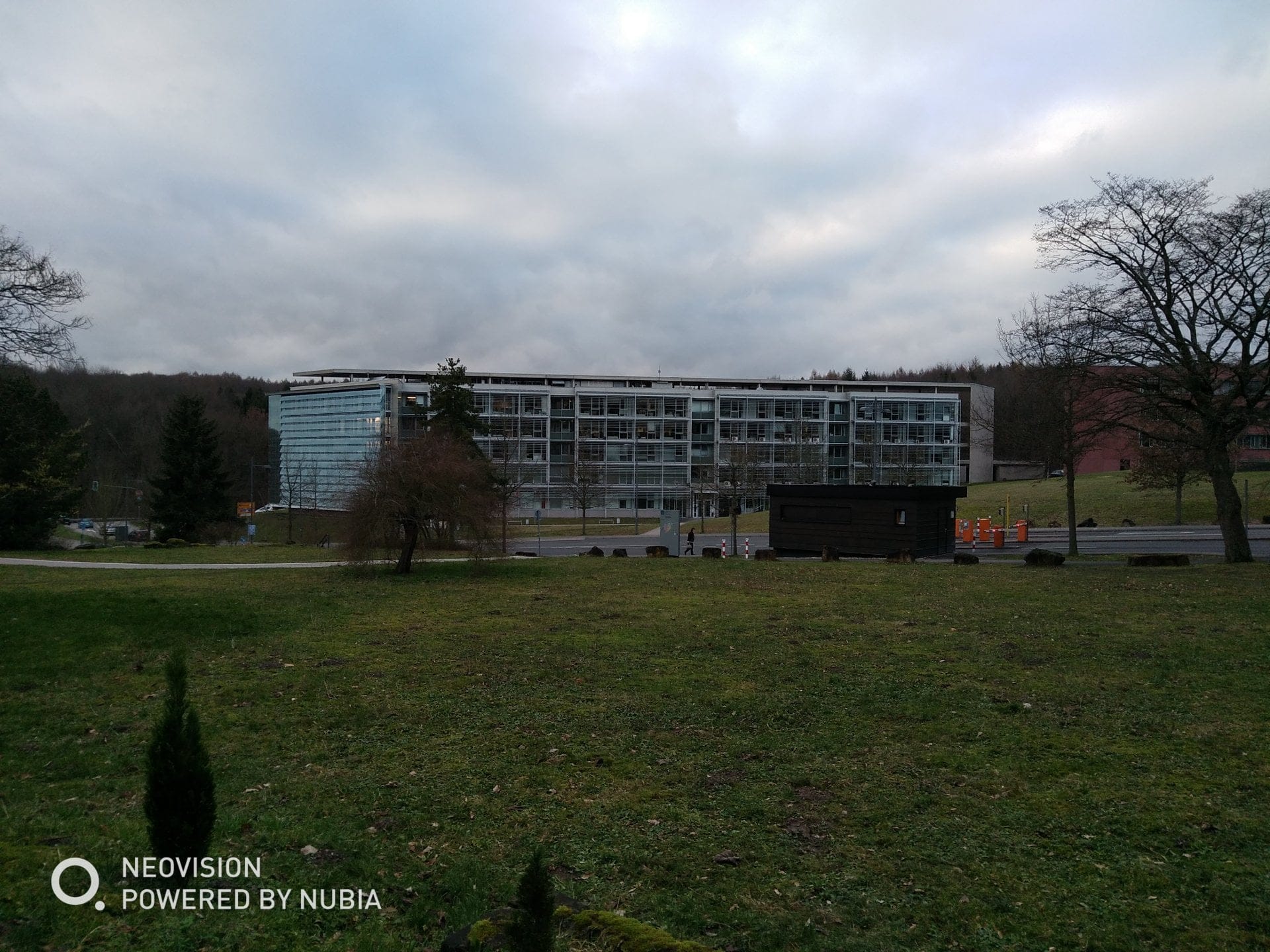

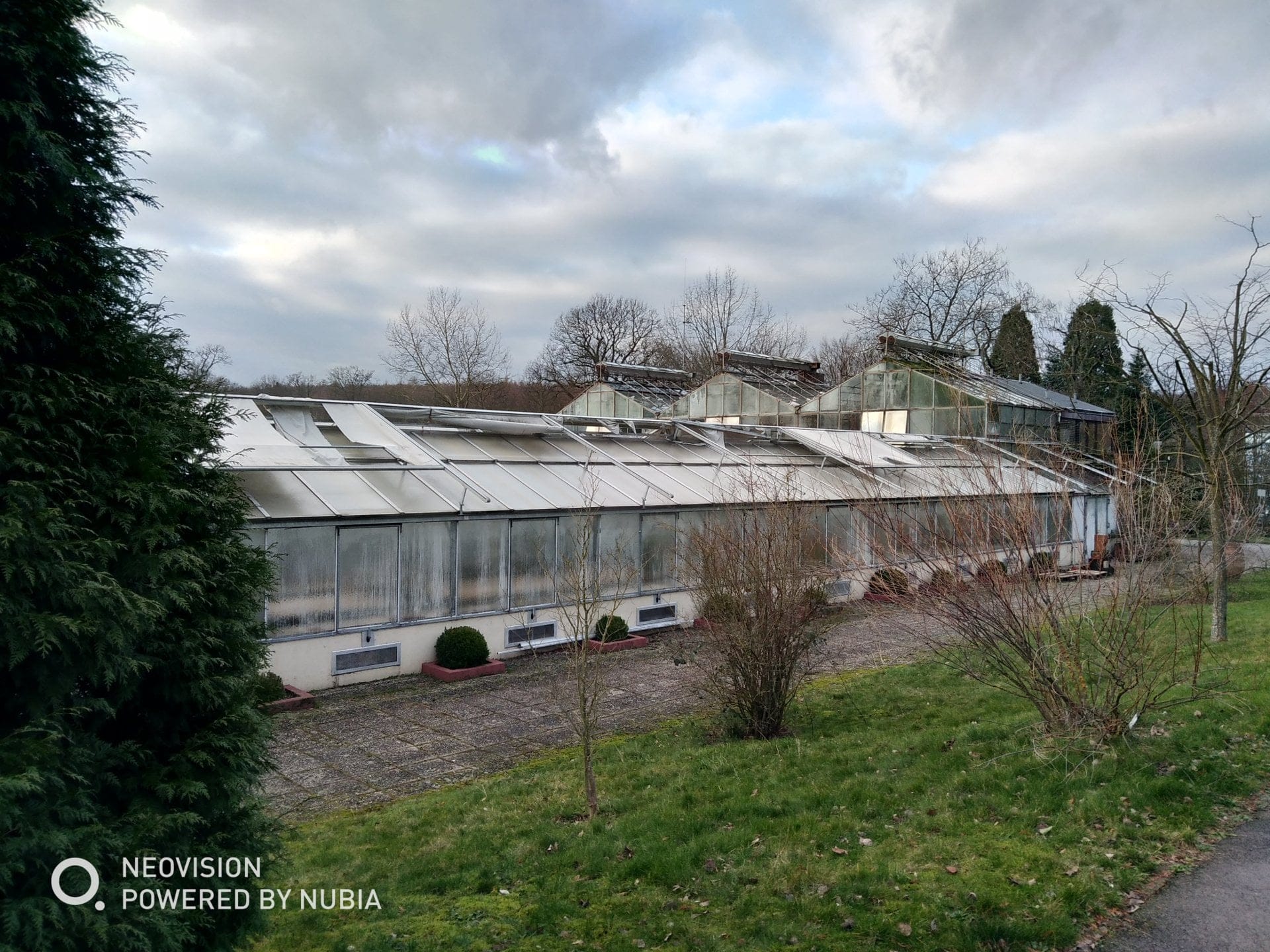
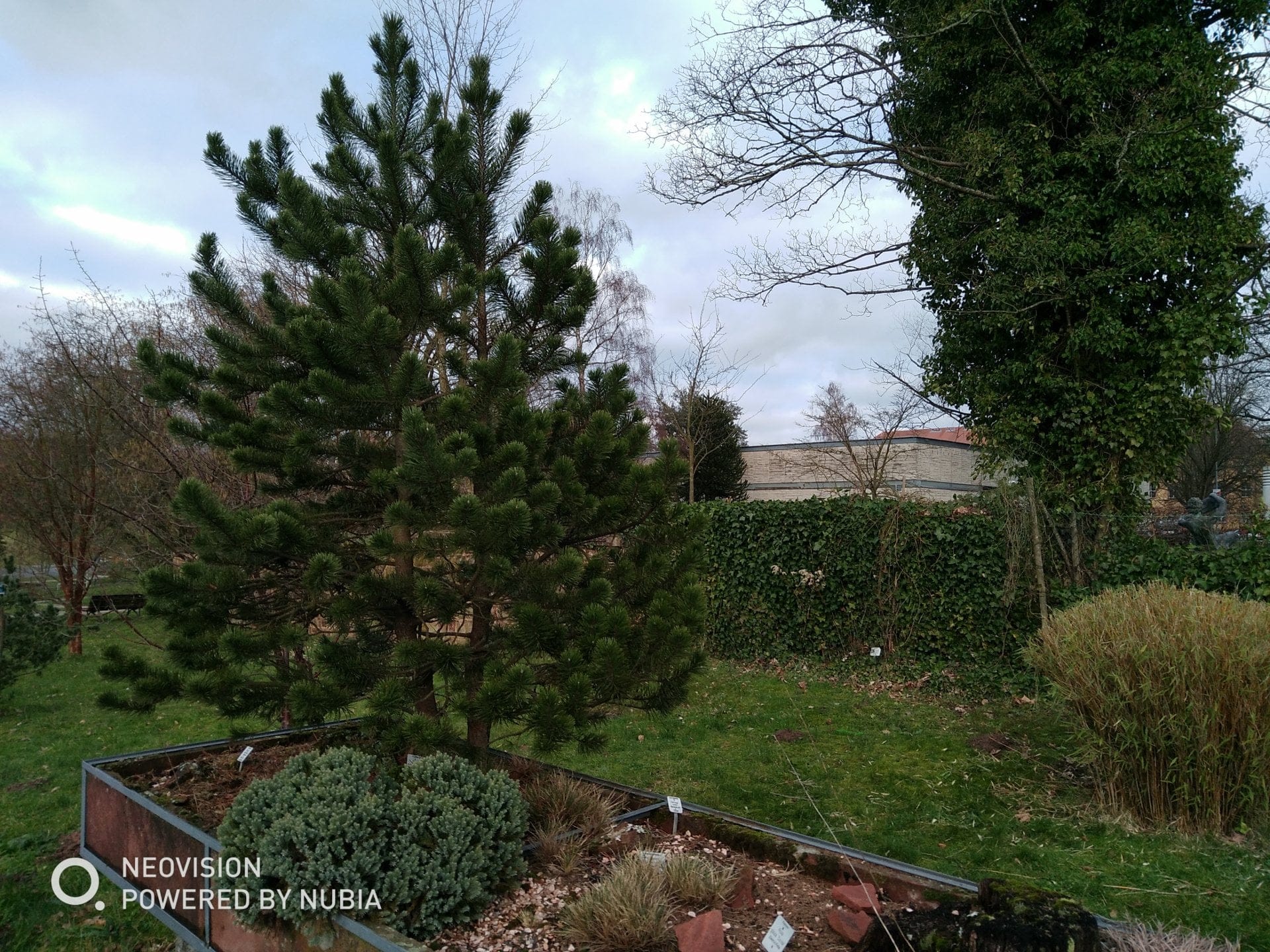

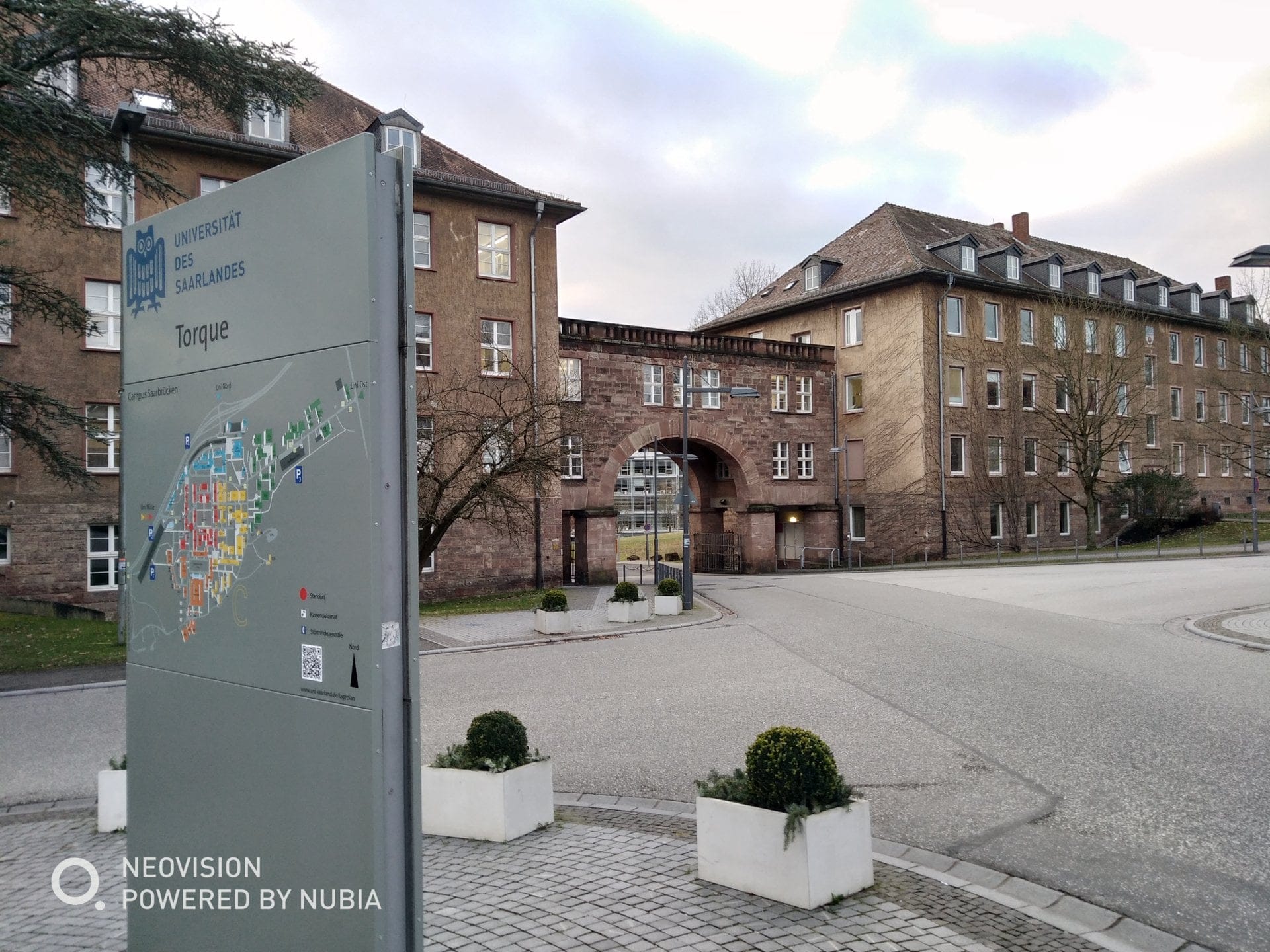
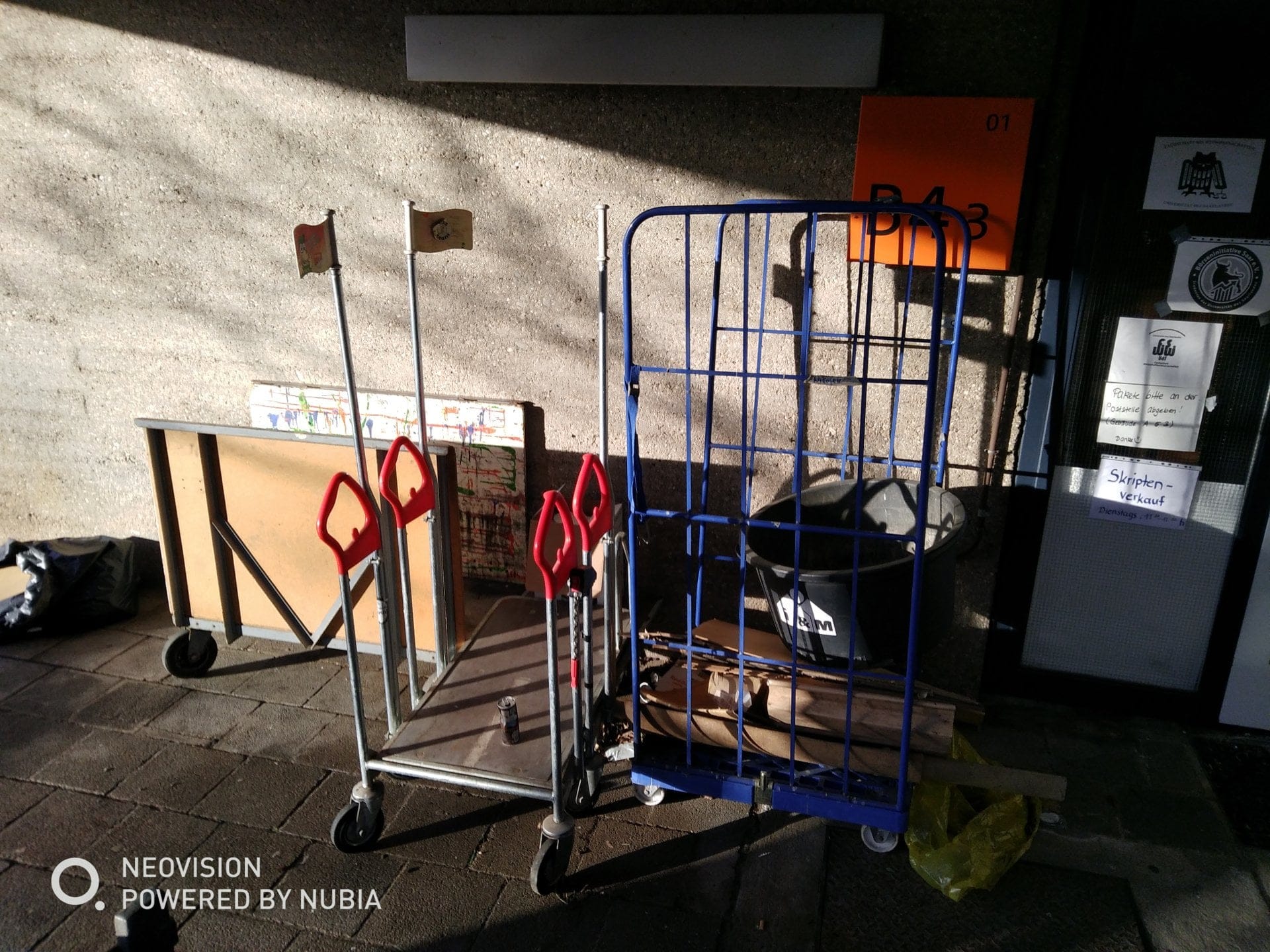
The Phase Detection Autofocus (PDAF) works precisely and focuses in no time. The shutter lag is average. Especially in poor lighting conditions, the shutter lag increases, which can sometimes lead to blurred images. There is no optical image stabilisation (OIS). Instead, Nubia relies on a built-in electronic image stabilisation (EIS). The monochrome image sensor allows for genuine black-and-white shots. Zooming is possible with up to 8x (digital) magnification.
Of course, a smartphone with a dual camera must not lack a bokeh or depth effect mode (sharp foreground – blurred background). On the Nubia Z17 Lite, this is heavily dependent on lighting conditions. Under particularly good lighting, details are cleanly extracted. Under poor lighting, however, the blur area becomes increasingly imprecise. The blur area can be adjusted subsequently in image editing.

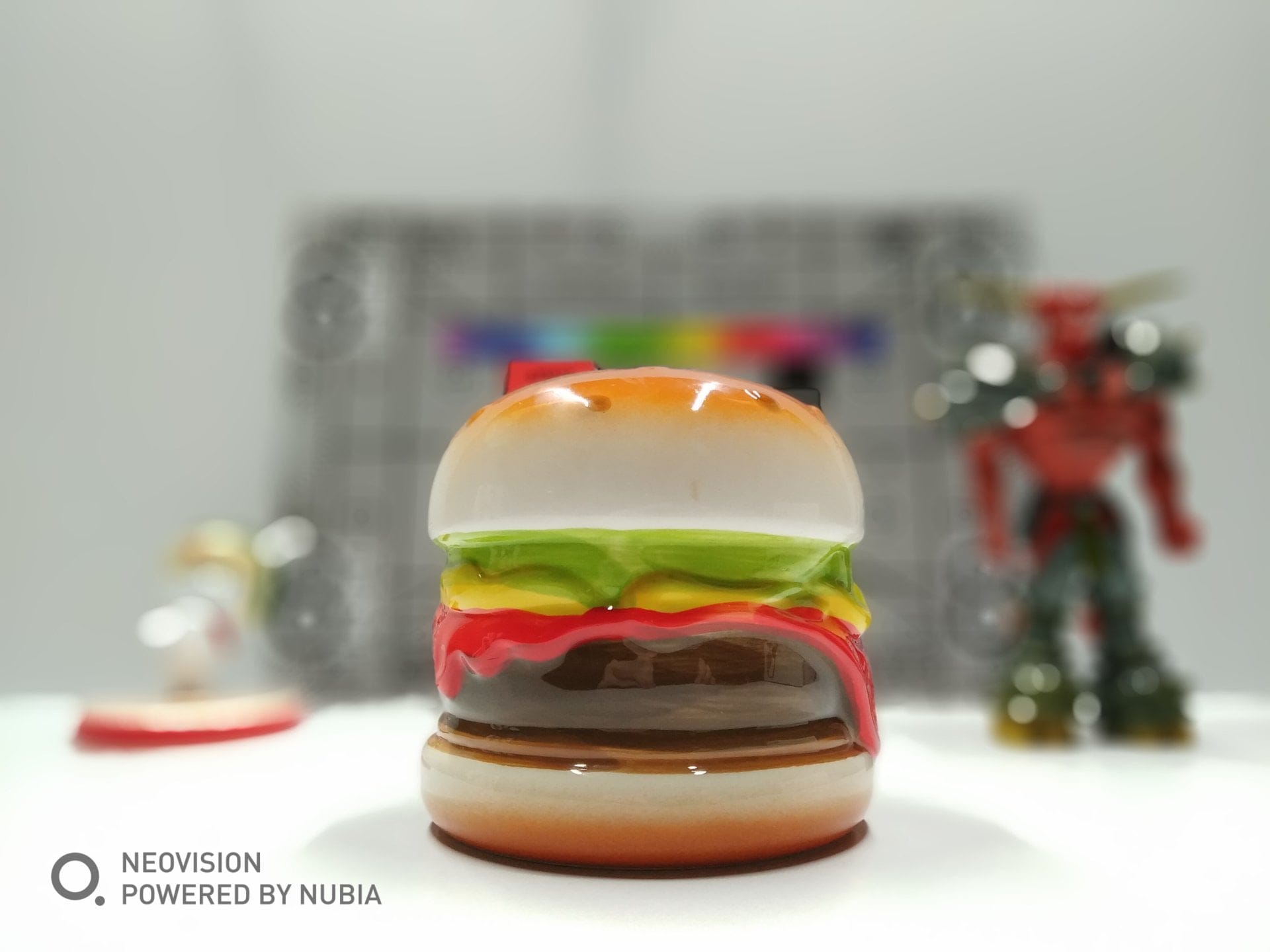
An HDR mode ensures an improved dynamic range. It can be turned on or off, or set to automatic mode. When Auto-HDR mode is active, NeoVision decides when it makes sense to enable HDR. In testing, Auto-HDR mode proved extremely effective, producing high-contrast images without crushed shadows or blown-out highlights. Even handheld HDR shots work fine despite the lack of optical image stabilization (OIS). The Nubia Z17 Lite's Auto-HDR mode tolerates minor camera movements.


The main camera records videos at a maximum 4K resolution (3840 x 2160) at 30 frames per second. At a resolution of 1080p, it achieves smooth 60 frames per second. There are no frame drops as lighting conditions deteriorate. The frame rate remains constant. The video recording quality, like the photo quality, scores points with pleasant colour and detail reproduction. Only in poorer lighting conditions does image noise increase significantly in video mode. The autofocus works precisely, focusing within seconds without subsequently pulsing. The audio recording quality is convincing.
Camera app
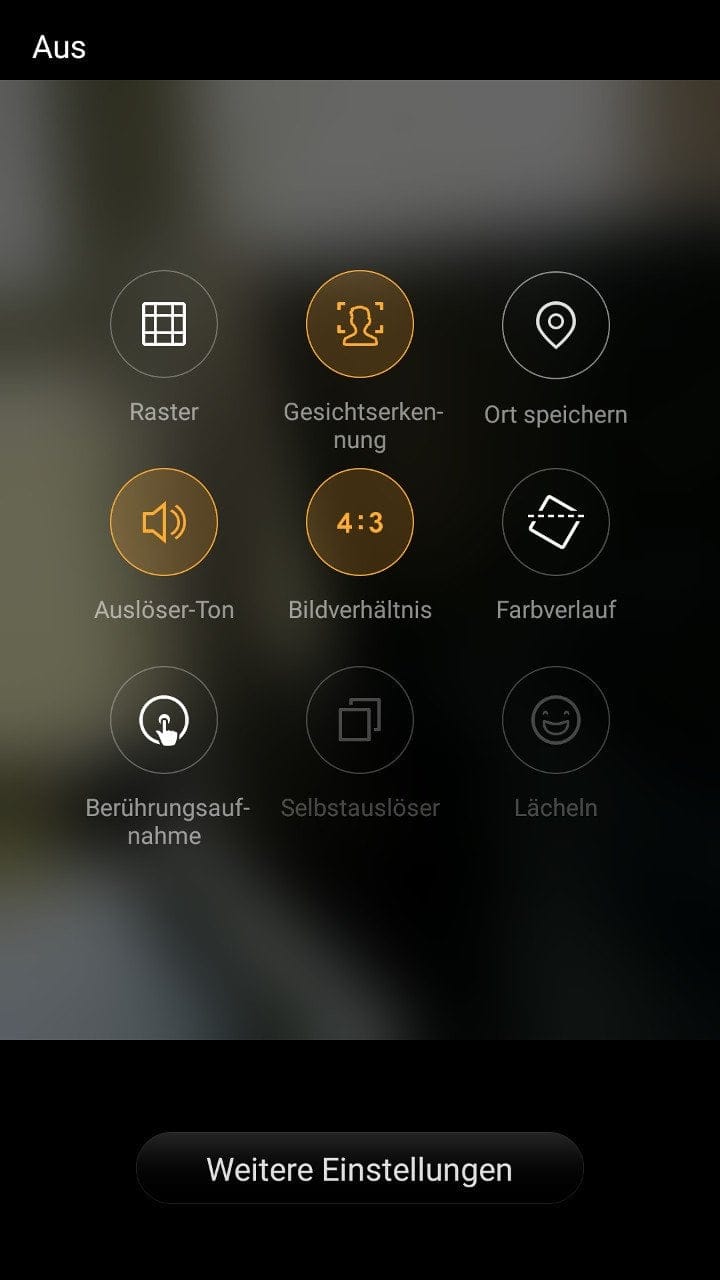
The Nubia UI 5.0 camera app is one of the best and most feature-rich camera apps available. In the general photo mode alone, there are 16 different effects and presets to choose from. This allows you, for example, to easily create light painting with a button press, capture the starry sky in a special starry sky mode, or create shots with a clone effect or image overlay. So-called “wigglegrams”, 3D images primarily known from iPhone users, can also be captured with the Nubia camera app. A total of 9 colour filters provide an Instagram-like effect. An integrated image editor allows for extensive post-editing of captured shots.


The Pro camera mode allows adjustments to shutter speed (1/60000 – 2 sec.), white balance (2250 – 7750 K), ISO (100 – 12800) and focus. Photo captures can also be saved in lossless Digital Negative (DNG) format.


Front camera practical test
Nubia also did not skimp on the front camera, equipping the Z17 Lite with a 16-megapixel Samsung image sensor. The manufacturer does not provide details on the exact sensor designation. However, assuming one of the usual Samsung ISOCELL sensors was installed, which typically act as main cameras rather than front cameras in many mid-range smartphones, the Nubia Z17 Lite would be comparatively well-equipped.

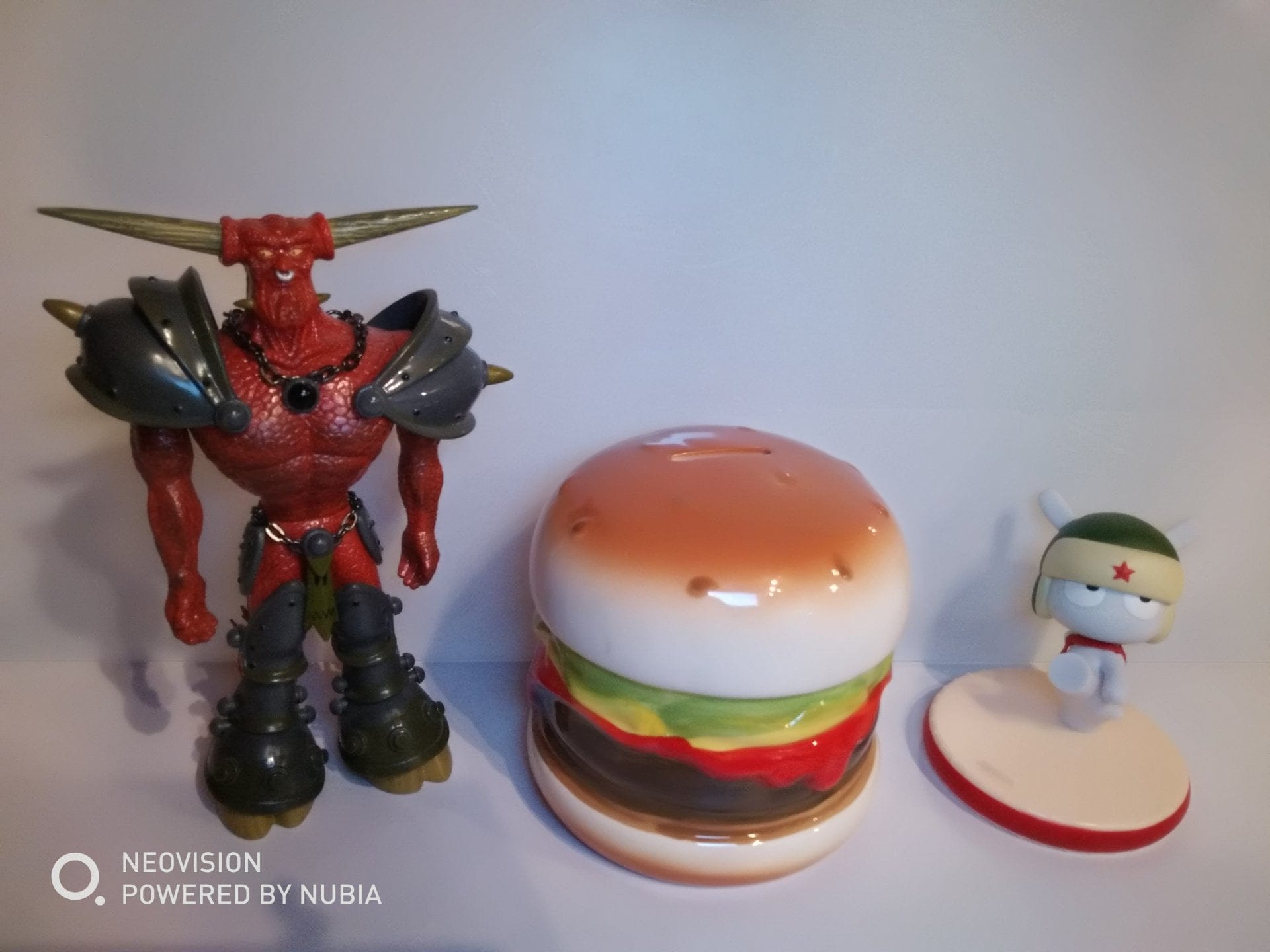
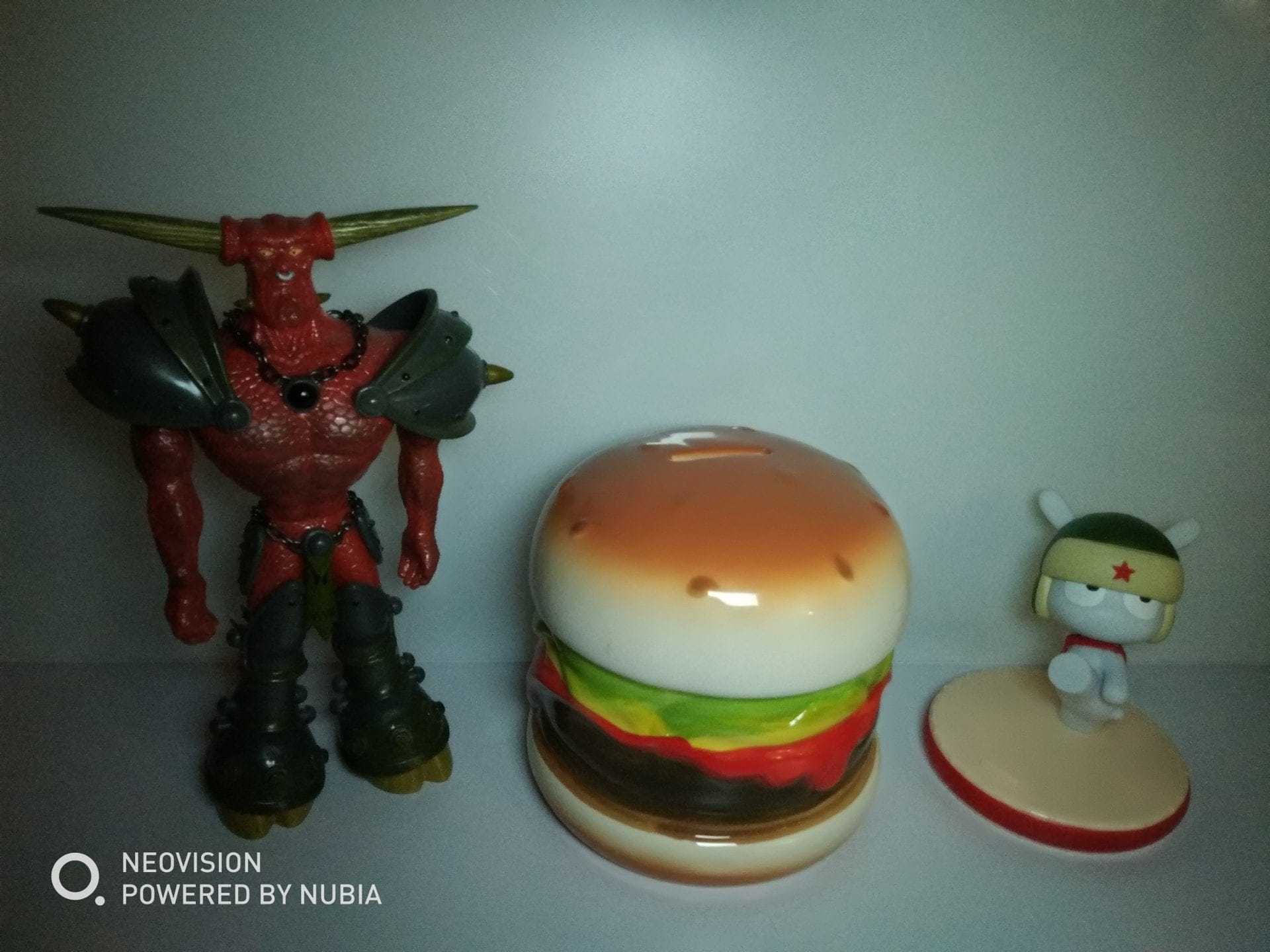
The front camera recording quality is excellent and clearly outperforms many smartphones from much higher price brackets. The front camera captures photos with pleasant sharpness. Colours are captured accurately. Even in poor lighting conditions, the front camera captures enough detail to produce usable selfies. The same applies to videos, which the front camera records in a maximum 1080p resolution. There is no autofocus. Instead, the front camera relies on an “Infinity Focus”. For selfie enthusiasts, there is also a “Beauty Face” mode, which slims the face and offers stepless softening.
Connectivity
Telephony
The Nubia Z17 Lite handles 2G, 3G and 4G mobile networks well, but as is often the case, Band 20 is not supported, which is widely used for LTE in this region. The smartphone can be used simultaneously with 2 Nano-SIM cards (Dual-SIM). Mobile performance in terms of calls and mobile internet browsing is very solid. The call quality is faultless both via the earpiece and the speakerphone.
Wi-Fi and Bluetooth
The smartphone supports WiFi protocols 802.11 /b/g/n/ac. Over Wi-Fi, the Z17 Lite achieves a decent data throughput. Connection range and stability are above average and thus not to complain about. Bluetooth is supported in version 4.2. Here too, the smartphone delivers convincing connection and transmission quality.
GPS and sensors
Criticism is due regarding the navigation usability of the Nubia Z17 Lite. Although many satellites are within range and a GPS fix is found relatively quickly, the accuracy of the position determination leaves much to be desired. Whether navigating through the city or in the countryside, the signal strength is comparatively low, which means that deviations can occur more frequently during navigation.

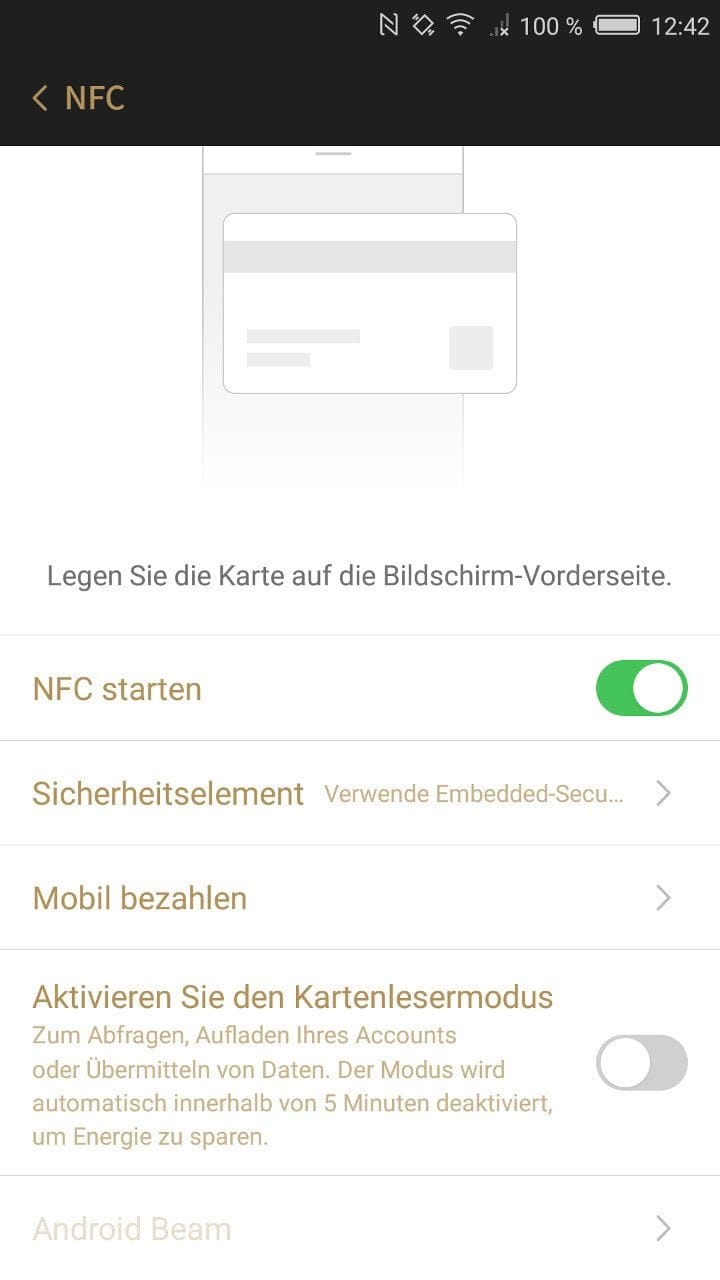
The sensor suite includes a proximity sensor, gyroscope, accelerometer, E-compass, and ambient light sensor. On the back, there is also a fingerprint sensor that unlocks the smartphone without significant delay and impresses with a high recognition rate. It also features NFC.
Audio
Following the trend, the Nubia Z17 Lite also lacks a 3.5 mm audio jack. Headphones or external speakers can only be connected via cable using the smartphone's USB-C port. A USB-C to 3.5 mm jack audio adapter is included in the scope of delivery. The sound quality via the adapter leaves nothing to be desired.
The sound via the mono speaker is also convincing. The maximum volume is adequate without distorting. Music played through the speaker sounds powerful and clear.
Battery
The fixed battery has a capacity of 3200 mAh. The measured capacity matches the manufacturer’s specification. In everyday use, the Nubia Z17 Lite proves to be very power-efficient. The “Power Management” specifically integrated into Nubia UI 5.0 controls battery consumption very well and ensures fair performance distribution without impairing performance.

BWith normal use, the smartphone can easily last 1 ½ days without needing to be recharged. A runtime of 2 days is quite possible with conventional use. For fast charging, Qualcomm Quick Charge 3.0 is supported. However, a corresponding charger is not included with the Global version of the smartphone. With the included charger, the smartphone is fully charged after 2 ½ hours. But even with various Quick Charge 3.0 compatible chargers, no better charging time could be achieved during the test period. Although charging occurred with a slightly higher voltage and current, the charging time was just under 2 hours, only 30 minutes shorter than with a conventional charger.
Our verdict
The Nubia Z17 Lite is a successful mid-range smartphone that clearly stands out from many competing models in the same price class. There is very little to criticise about this smartphone; it convinces primarily with an appealing design featuring good build quality, an almost borderless display, good everyday performance, a convincing camera setup and overall good battery life. Shortcomings, as is often the case with Chinese smartphones, exist in terms of mobile network support, as the LTE Band 20, which is more common here, is not supported.
Specifications
Processor and memory
- CPU
- Qualcomm Snapdragon 653
- GPU
- Adreno 510
- RAM
- 6GB (LPDDR3)
- Internal storage
- 64GB (eMMC5.1)
- Storage expansion
- No
Display
- Display type
- In-Cell
- Display size
- 5.5 inches
- Display resolution
- 1920 x 1080 pixels
- Screen protector
- Corning Gorilla Glass
Cameras
- Main camera
- 2x 13 Megapixel Sony IMX258
- *Aperture f/2.2
- *PDAF
- *Dual-tone LED flash
- Front camera
- 16 megapixels
- *Aperture f/2.0
- *Wide angle 80°
Mains
- Dual SIM
- Yes
- SIM size
- Nano SIM
- GSM 850 / 900 / 1800 / 1900 MHz
- CDMA EVDO 800 MHz
- WCDMA 850 / 900 / 1900 / 2100 MHz
- TD-SCDMA B34 / B39
- FDD-LTE bands 1 / 3 / 5 / 7 / 8
- TDD-LTE B34 / B38 / B39 / B40 / B41
Wireless
- Wi-Fi
- 802.11 b/g/n/ac
- Bluetooth
- 4.2
- GPS
- Yes
Sensors
- *Ambient light sensor
- *Accelerometer
- *Proximity sensor
- *E-compass
- *Gyroscope
- *Fingerprint sensor
- *NFC
Battery
- Battery
- 3,200 mAh
- Fast charging function
- Quick Charge 3.0
- Connection
- USB-C
Other
- Operating system
- Android 7.1 (Nubia UI)
- Size
- 152.75 x 72.55 x 7.60 mm
- Weight
- 168g
What’s included
1x Nubia Z17 Lite 1x Charger 1x USB-C cable 1x USB-C to 3.5 mm jack adapter 1x SIM pin 1x User manual

Comments